


Exterior window trim may seem like a small architectural detail, but it can completely change how a house looks from the street.
The right exterior window trim can make windows look larger, add definition to a simple facade, connect windows with the front door and roofline, or give an older home a cleaner, more updated appearance.
But window trim isn’t only decorative.
Exterior trim is also part of a wall assembly that has to manage water and weather. Flashing, sealants, drainage details, siding transitions, window installation, and the compatibility of different materials all matter. A beautiful trim detail isn’t successful if it traps water behind the siding or interferes with the window manufacturer’s installation requirements.
From classic white surrounds and bold black trim to natural wood and subtle tone-on-tone designs, here are 17 exterior window trim ideas to help you create a more finished and cohesive home exterior.
Start With the Architecture of Your House
Before choosing a trim style or color, look at the entire exterior.
Consider:
- Siding
- Stucco
- Brick
- Stone
- Roof
- Gutters
- Fascia
- Front door
- Garage door
- Window frame color
Then look at the architectural style.
A traditional Colonial-inspired house may suit crisp, substantial trim.
A modern home might look better with minimal trim or a recessed window detail.
A cottage can handle a softer, more character-rich surround.
The goal isn’t to make the windows look decorated.
It’s to make them look integrated into the architecture.
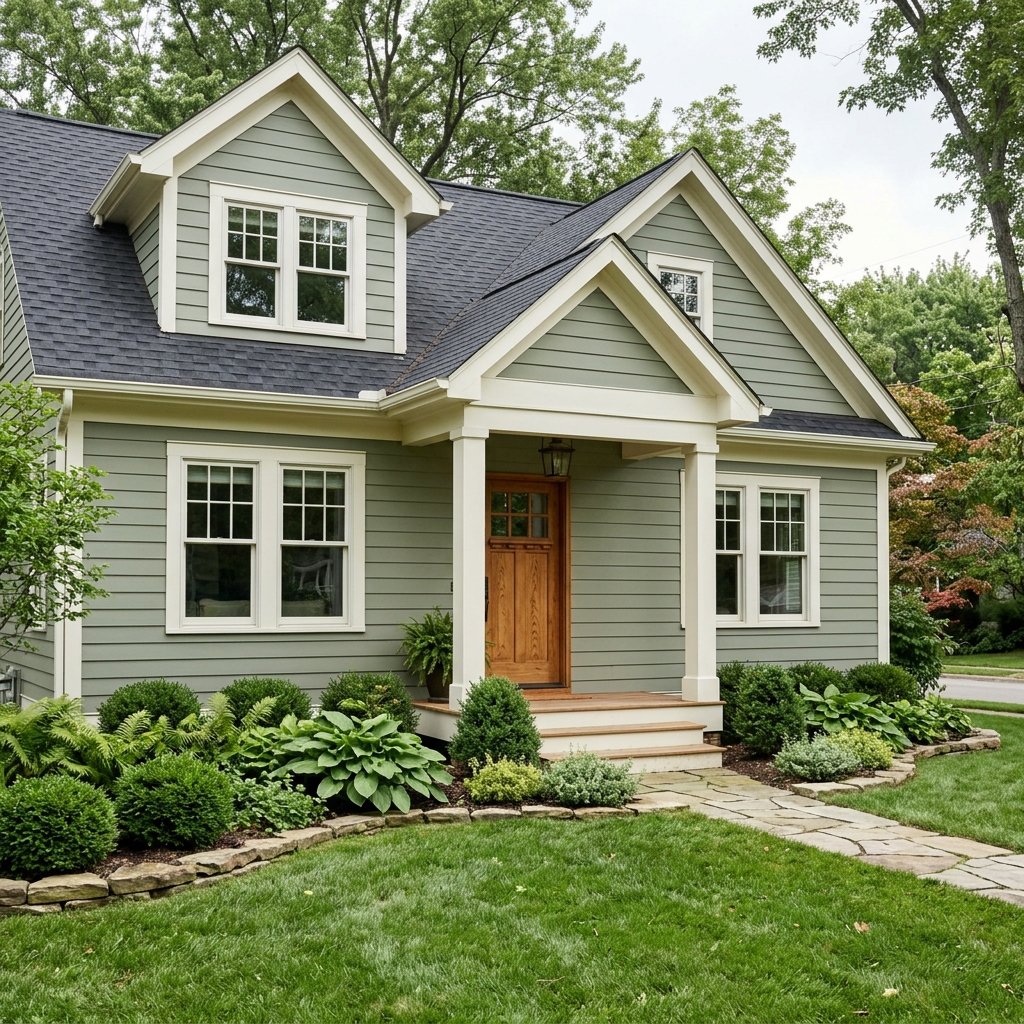
1. Classic White Window Trim
White exterior window trim is one of the most versatile choices.
It creates definition without requiring a bold color.
White trim works especially well with:
- Gray siding
- Blue siding
- Green siding
- Brick
- Taupe siding
- Dark siding
Pay attention to undertones.
A creamy exterior may look better with warm white trim than a stark blue-white.
2. Warm Cream Window Trim
Cream creates softer contrast than bright white.
It can be especially attractive with:
- Warm brick
- Beige stone
- Taupe siding
- Brown roofing
- Stucco
If the house has an earthy palette, cream can connect the materials more naturally than a crisp white.
3. Black Exterior Window Trim
Black trim creates strong architectural definition.
It can look striking on:
- White houses
- Cream exteriors
- Light gray homes
- Modern facades
But consider the window frames themselves.
If you already have black windows, matching or closely coordinating the surrounding trim can create a clean appearance.
If you have white windows, a black trim surround may create multiple contrasting outlines.
That can still work, but look at the complete window composition before deciding.
4. Charcoal Window Trim
If black feels too harsh, try charcoal.
A deep gray can create definition while feeling slightly softer.
Charcoal works beautifully with:
- Warm white
- Greige
- Light gray
- Natural wood
- Stone
Repeat the charcoal elsewhere through the roof, gutters, lighting, or another exterior element so it doesn’t feel isolated.
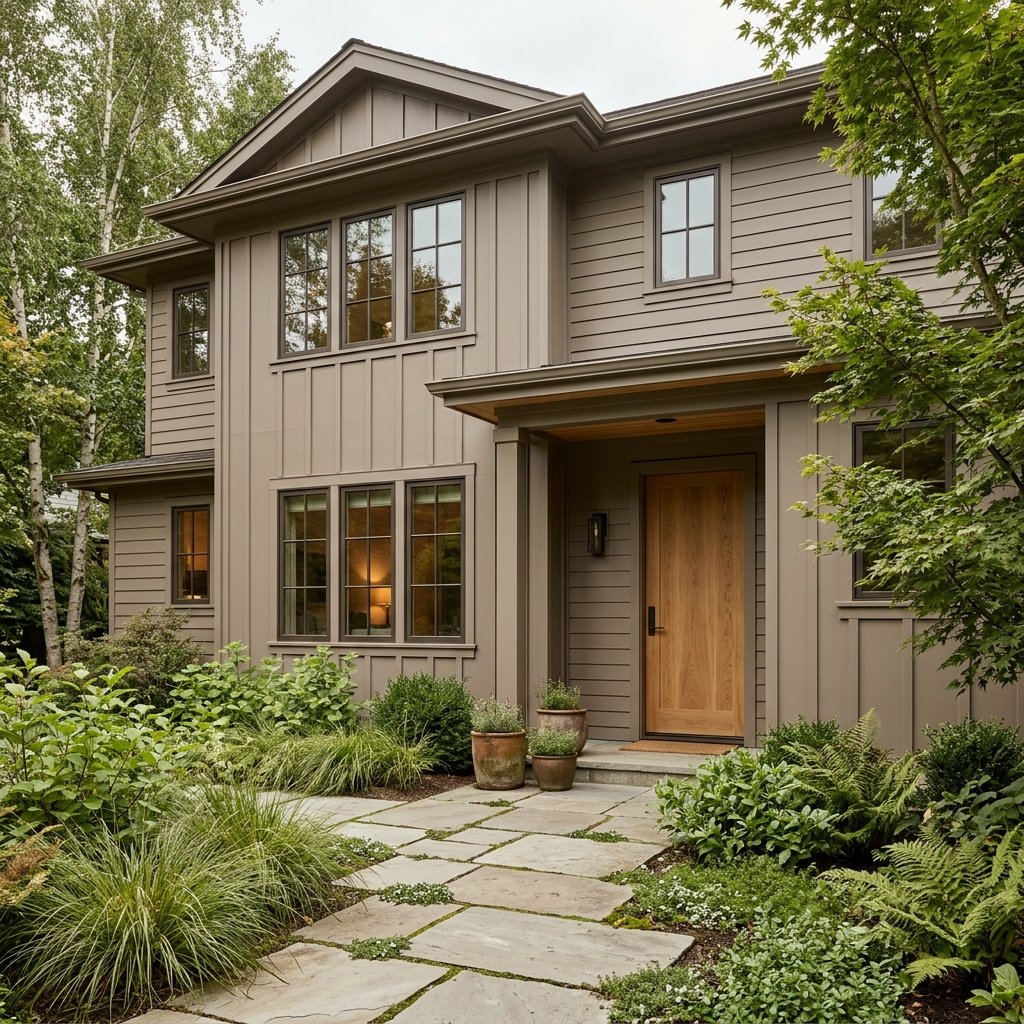
5. Match the Trim to the Siding
Exterior window trim doesn’t have to contrast.
Painting the trim the same or nearly the same color as the siding creates a quieter, more contemporary appearance.
For example:
Warm white siding + warm white trim
or:
Taupe siding + taupe trim
The window frames and architectural shadows provide the definition.
This approach works particularly well when the house already has other strong features.
6. Use Slightly Lighter Tonal Trim
For subtle contrast, choose trim that’s slightly lighter than the main exterior color.
For example:
Medium greige siding + light greige trim
This adds definition without creating strong outlines around every window.
Tonal palettes can make an exterior feel calm and cohesive.
7. Use Slightly Darker Tonal Trim
You can reverse the idea.
Try:
Light taupe siding + medium taupe window trim
or:
Soft sage siding + deeper green trim
This can create depth while remaining relatively understated.
The difference doesn’t need to be dramatic.
8. Add Natural Wood Window Trim
Natural wood can bring warmth and texture to an exterior.
It works particularly well with:
- Dark siding
- White stucco
- Black metal
- Stone
- Modern architecture
However, exterior wood needs to be appropriate for the climate and installation.
Species, finish, moisture management, maintenance, UV exposure, and detailing all affect longevity.
Follow material and finish manufacturer requirements rather than choosing wood based on appearance alone.
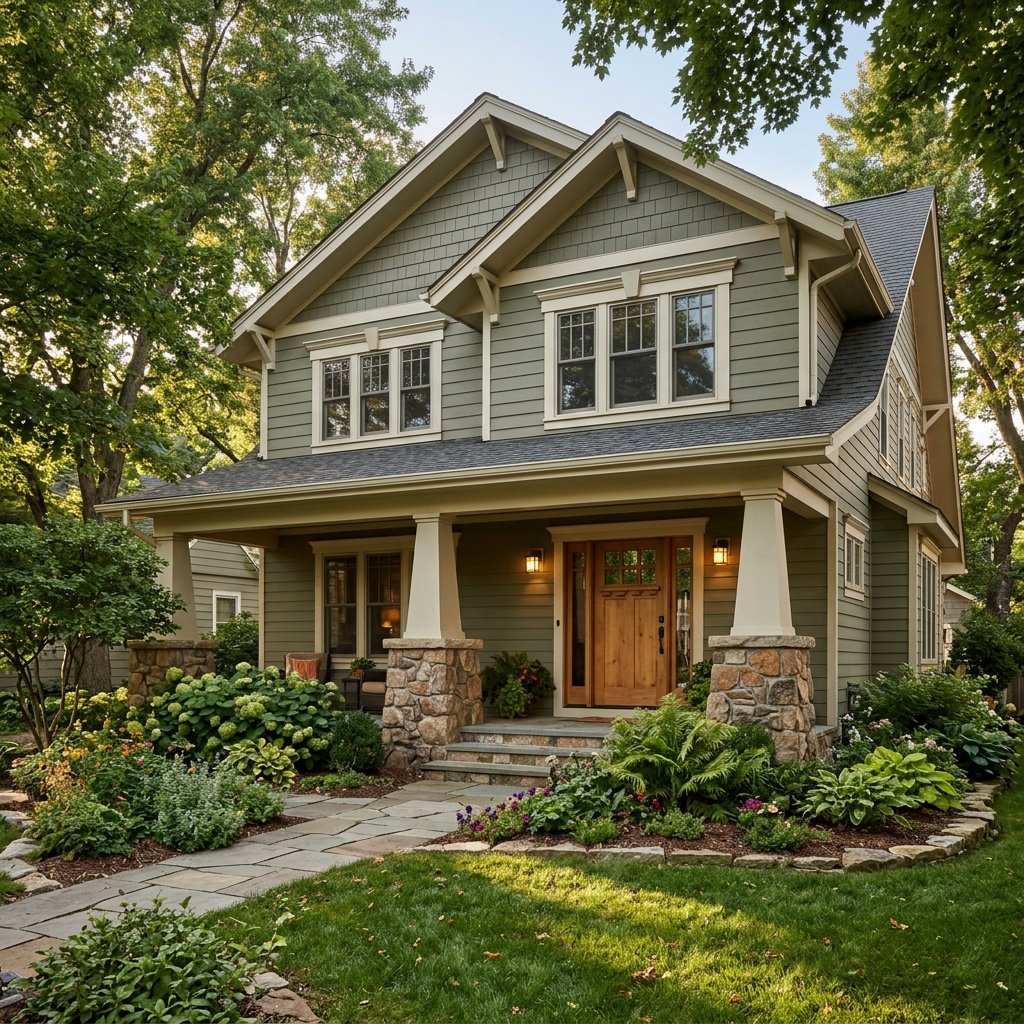
9. Create a Craftsman-Style Window Surround
Craftsman-inspired homes often benefit from substantial window trim.
The details may include:
- Wider side casing
- Defined head trim
- Sill details
- Layered proportions
Keep the trim consistent with the home’s existing architecture.
Adding overly elaborate Craftsman details to a very simple modern facade may look disconnected.
10. Use a Simple Flat Trim Profile
A flat, uncomplicated trim profile can work across many styles.
It looks particularly good on:
- Transitional homes
- Farmhouses
- Cottages
- Simple modern exteriors
The key is proportion.
Trim that is visually too narrow may disappear, while excessively wide trim can overwhelm small windows.
Evaluate the facade from the street rather than only standing next to the window.
11. Add a Strong Header Detail
A slightly more substantial detail above the window can add architectural character.
This is common on traditional and Craftsman-inspired homes.
Keep it relatively simple unless the house has genuinely ornate architecture.
You can also coordinate the header detail with door trim to connect the facade.
12. Add a Window Sill Detail
A defined sill can give a window more architectural weight.
Depending on the wall construction and design, the sill may be:
- Trim material
- Stone
- Masonry
- Another approved exterior product
Water management is especially important around horizontal projections.
The detail should shed water away from the wall rather than create a place for moisture to collect.
13. Frame Windows With Brick
On brick homes, the masonry itself may create the window surround.
Brick detailing can include:
- Soldier-course headers
- Sills
- Decorative masonry patterns
If the brick already provides architectural definition, you may not need additional contrasting trim.
Sometimes the simplest solution is to let the original masonry details stand out.
14. Use Stone Around Windows
Stone can add substantial visual weight.
But use it carefully.
If the house already has a stone base, columns, or entry feature, repeating a related stone around selected windows may create continuity.
Avoid adding random stone borders to every window simply to make the exterior look more expensive.
Stone works best when it appears structurally and architecturally intentional.
15. Add Dark Trim to a White House
A white exterior with dark window trim creates a strong graphic look.
Try:
- Black
- Charcoal
- Dark bronze
Then soften the contrast with:
- Natural wood
- Warm stone
- Landscaping
If the house has many small windows, remember that outlining every opening in a dark color can create a busy facade.
Step back and consider the entire elevation.

16. Use White Trim With Dark Siding
The opposite approach can be equally striking.
Try warm white trim with:
- Navy
- Charcoal
- Deep green
- Dark gray
The light trim makes each window more visible.
For a traditional home, this can create a crisp, classic appearance.
For something quieter, use a cream or slightly muted white instead of the brightest possible white.
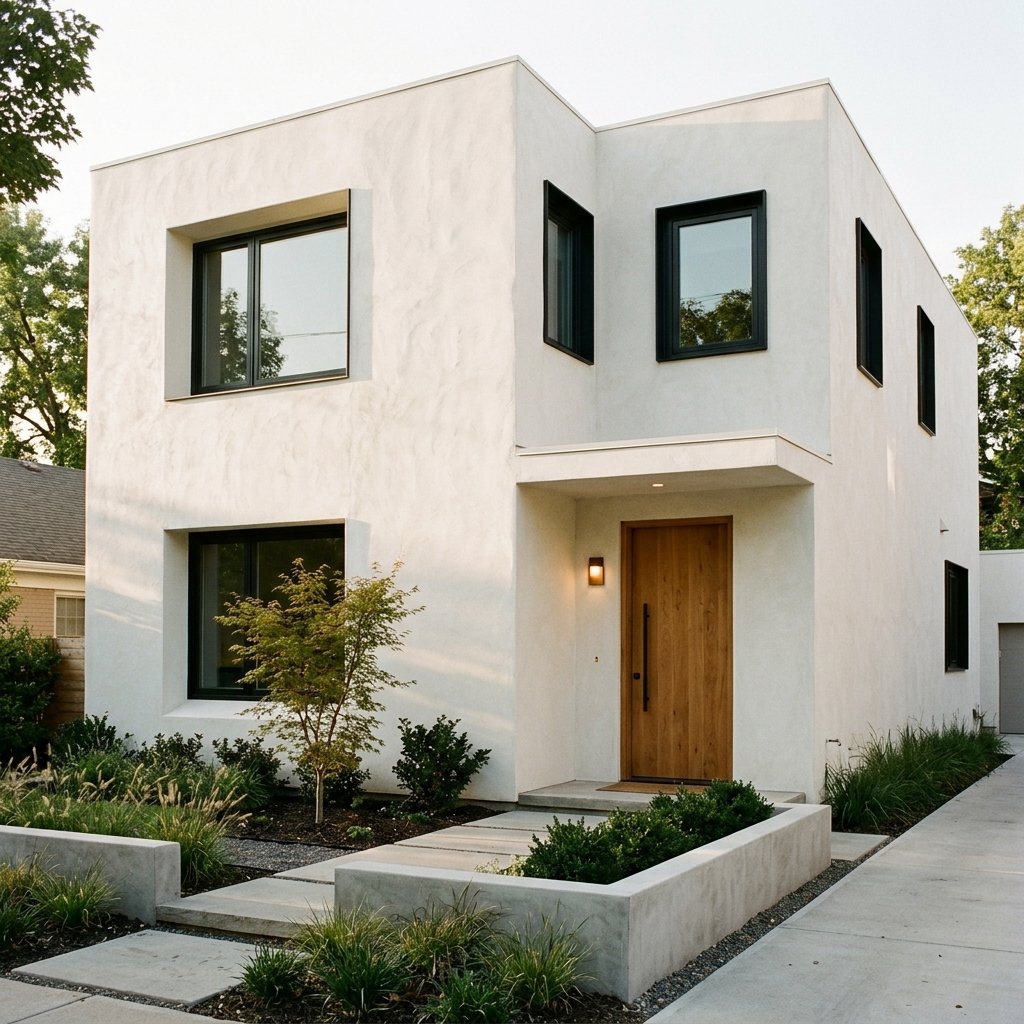
17. Keep Modern Window Trim Minimal
Some contemporary homes look best with very little visible trim.
The windows may appear:
- Recessed
- Flush
- Surrounded by the same wall finish
- Defined mainly by dark frames
This creates a clean architectural look.
However, minimal appearance doesn’t mean minimal technical detailing.
Proper flashing, drainage, sealant joints, compatible materials, and manufacturer-approved installation are still essential.
Exterior Window Trim for a White House
White houses offer several options.
For a soft look:
White house + matching white trim
For contrast:
White house + black or charcoal trim
For warmth:
White house + natural wood accents
Consider how the windows relate to the front door, garage, roof, and gutters.
You don’t need every element to become a contrasting feature.
Exterior Window Trim for a Brick House
Brick should lead the color palette.
Look closely at the masonry.
You may find:
- Red
- Orange
- Brown
- Cream
- Taupe
- Charcoal
Then choose a trim color that relates to one of those undertones.
Possible options include:
- Cream
- Warm white
- Taupe
- Dark bronze
- Charcoal
A warm red brick house can look especially beautiful with cream or dark bronze trim.
Exterior Window Trim for a Stucco House
Stucco homes often look best with restrained trim.
Try:
- Matching stucco color
- Slightly lighter trim
- Warm white
- Dark bronze
- Natural wood where appropriate
Spanish and Mediterranean-inspired homes may already have enough architectural character from arches, tile roofs, and textured walls.
Heavy contrasting trim isn’t always necessary.
Exterior Window Trim for a Stone House
Stone usually contains several colors.
Choose one of the quieter undertones for the trim.
For example, stone containing cream, taupe, and warm gray might work with:
- Warm white
- Taupe
- Charcoal
Avoid trying to match the stone exactly.
Coordination generally looks more natural.
Exterior Window Trim for a Gray House
Gray siding can work with:
- White
- Cream
- Charcoal
- Black
- Wood
Look at whether the gray is warm or cool.
A warm gray may pair more naturally with cream, while a cooler gray may look crisp with white or charcoal.
Exterior Window Trim for a Blue House
Blue siding and white trim is a classic combination.
For something different, consider:
- Cream
- Dark navy
- Charcoal
- Natural wood accents
If the blue is already dark, lighter trim creates more definition.
Exterior Window Trim for a Green House
Green exterior colors work beautifully with:
- Warm white
- Cream
- Dark green
- Charcoal
- Natural wood
For a softer look, pair sage siding with warm white trim.
For something moodier, use tonal green trim.
Exterior Window Trim for a Beige or Taupe House
Avoid automatically using bright white.
Try:
- Cream
- Warm white
- Deeper taupe
- Dark bronze
- Charcoal
A tonal combination can make a beige exterior feel much more sophisticated.
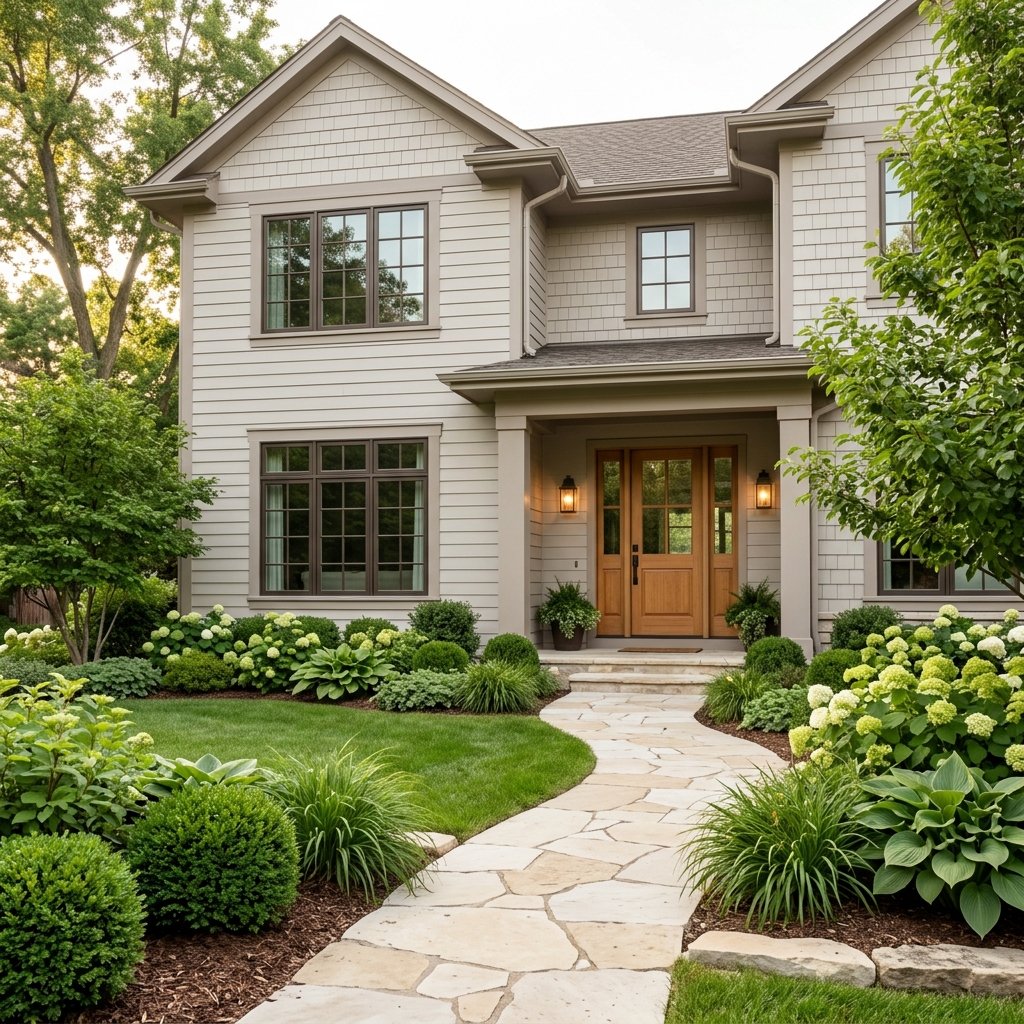
Black Windows vs. Black Window Trim
These aren’t necessarily the same thing.
The window itself may have a black frame while the architectural trim surrounding it is:
- White
- Cream
- Matching siding
- Black
Think of the window as layers.
You may have:
Glass → window frame → trim → siding
Each layer affects the overall appearance.
A black window surrounded by matching light-colored trim can look softer than a completely black surround.
Should Exterior Window Trim Match the Front Door?
It can, but it doesn’t have to.
A black front door and black window trim can create repetition.
But a natural wood door can also work beautifully with black windows and white trim.
Think about the whole palette rather than matching individual elements.
Should Window Trim Match the Fascia?
Matching trim and fascia is a traditional approach and can help unify the exterior.
For example:
Warm white window trim + warm white fascia
But tonal modern exteriors may use several closely related shades instead.
Again, consistency matters more than a rigid rule.
Should Window Trim Match the Garage Door?
Not necessarily.
If you want the garage to visually recede, it may be better to paint it close to the siding color.
The window trim can remain a contrasting architectural detail.
This keeps the windows prominent without turning the garage into the focal point.
How Wide Should Exterior Window Trim Be?
There isn’t one universal trim width.
The right proportion depends on:
- Window size
- House scale
- Architectural style
- Siding profile
- Door trim
- Other exterior details
Instead of relying on a generic measurement, mock up the proposed trim visually.
Use painter’s tape, temporary boards, or a digital elevation drawing.
Then step across the street or far back from the house.
Exterior details need to look proportional from a distance.
How to Choose an Exterior Window Trim Color
Use this process.
Start With the Roof
It’s usually one of the largest fixed elements.
Look at Brick or Stone
Identify the undertones.
Consider the Siding
Decide whether you want contrast or a tonal look.
Look at the Window Frames
White, black, bronze, or another finish?
Consider the Front Door
Does it need to relate to the trim?
Test Samples Outside
Exterior light changes color significantly.
Look at samples in direct sun and shade before making a final decision.
Exterior Window Trim Materials
Exterior trim may be made from different materials depending on the wall assembly, architecture, climate, and construction.
Possible categories include:
- Wood
- Engineered exterior trim products
- Cellular materials
- Fiber-cement trim products
- Metal details
- Masonry
- Stone
Each has different installation, expansion, fastening, finishing, and maintenance requirements.
Don’t substitute materials based solely on appearance.
Follow the trim, siding, window, flashing, and coating manufacturers’ instructions for compatibility and installation.
Exterior Window Trim and Water Management
This is the most important technical part of exterior window trim.
Trim should not be treated as a decorative frame glued around a window.
The window opening is part of the building’s water-management system.
Depending on the wall assembly, important components can include:
- Flashing
- Head flashing
- Sill pan or sill flashing
- Drainage plane
- Weather-resistant barrier
- Sealant joints
- Proper overlaps
- Siding clearances
The exact details vary with the window, siding, wall construction, climate, and manufacturer.
If you’re replacing trim and discover rot, staining, damaged sheathing, or other signs of moisture, don’t simply cover the problem with new material.
Find and correct the source first.
Replacing Rotted Exterior Window Trim
Rot usually indicates prolonged moisture exposure.
Replacing the visible damaged board without addressing the water source can allow the problem to return.
Potential contributors may include:
- Failed sealant
- Improper flashing
- Damaged siding
- Poor drainage
- Exposed end grain
- Deteriorated coatings
The correct repair depends on the wall and window assembly.
Significant deterioration or hidden water damage may require evaluation by a qualified contractor.
Painting Exterior Window Trim
Good preparation matters as much as color.
Depending on the existing material and coating condition, preparation may include:
- Cleaning
- Removing loose coating
- Repairing damaged material
- Sanding where appropriate
- Priming where required
- Sealing appropriate joints
Use coatings compatible with the trim material and existing finish.
Follow manufacturer instructions for preparation, temperature, moisture, application, recoat, and cure conditions.
Don’t paint over active rot or unresolved moisture problems.
How to Make Exterior Window Trim Look More Expensive
Focus on proportion and consistency.
Try:
- Appropriately scaled trim
- Consistent details throughout the facade
- Simple color palette
- Coordinated door trim
- Clean transitions between materials
Avoid adding complicated decorative trim simply to make the house look more elaborate.
Simple, substantial details often create a more convincing architectural result.
Budget-Friendly Exterior Window Trim Updates
If the existing trim is sound, you may not need to replace it.
Depending on its condition, you might update the exterior through:
- New trim color
- Siding color
- Front door color
- Landscaping
- Updated exterior lighting
Changing the contrast between the siding and trim can dramatically alter the facade without changing the trim profile itself.
How Exterior Window Trim Affects Curb Appeal
Window trim helps establish rhythm across the facade.
If every window has a different-looking surround, the exterior can feel disconnected.
Repeating:
- Trim color
- Trim proportion
- Header details
- Sill details
helps the house feel cohesive.
This is especially important on homes with many visible windows.
Common Exterior Window Trim Mistakes
Choosing Trim Without Considering the Window Frame
Look at both layers together.
Using Trim That’s Visually Too Small
Judge scale from a distance.
Adding Overly Decorative Details
Let the architecture guide the design.
Using Too Many Exterior Colors
A restrained palette is easier to coordinate.
Ignoring the Roof
It is part of the color scheme.
Ignoring Brick and Stone Undertones
Fixed materials should guide your choices.
Assuming Trim Is Only Decorative
Water management matters.
Covering Rot With New Trim
Find the moisture source first.
Improperly Sealing Drainage Paths
Exterior assemblies need to shed and drain water as designed.
Copying Another House Exactly
Architecture, materials, light, and proportions vary.
A Simple Exterior Window Trim Design Formula
Use this process when planning an exterior update.
Step 1: Identify the Architectural Style
Let the house guide the trim.
Step 2: Study the Existing Windows
Note frame color and proportions.
Step 3: Identify Fixed Materials
Roof, brick, stone, and siding.
Step 4: Decide on Contrast
High contrast, low contrast, or monochromatic?
Step 5: Choose a Trim Profile
Simple, traditional, Craftsman-inspired, or minimal.
Step 6: Check the Scale
Mock it up before installing.
Step 7: Coordinate Doors and Fascia
Create repetition without matching everything.
Step 8: Plan Water Management
Follow the window and wall assembly requirements.
Step 9: Choose Suitable Exterior Materials
Consider climate and maintenance.
Step 10: Review the Entire House
Step back and evaluate the whole facade.
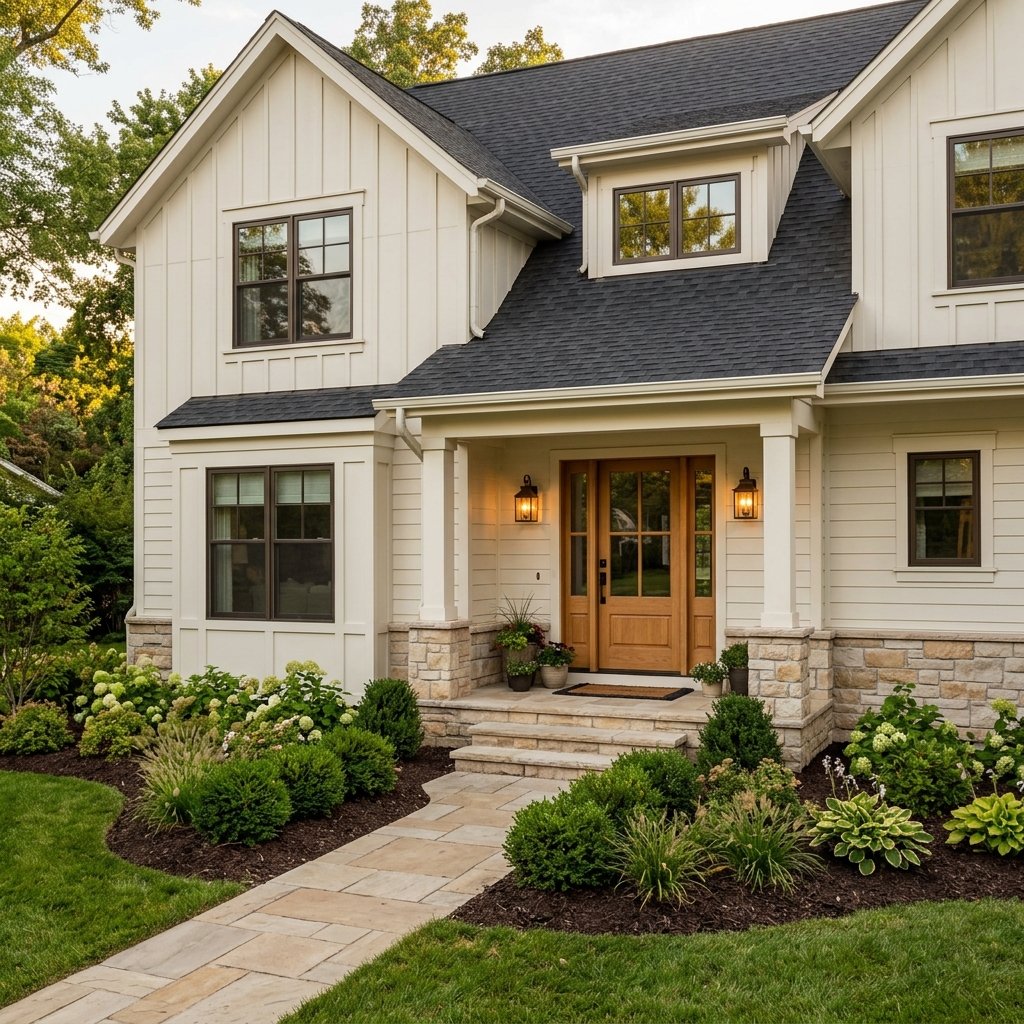
FAQ About Exterior Window Trim
What is the best color for exterior window trim?
There isn’t one best color. Warm white, cream, black, charcoal, tonal neutrals, and natural wood can all work depending on the siding, roof, window frames, brick, stone, and architectural style.
Should exterior window trim be lighter or darker than the house?
Either can work. Lighter trim creates traditional contrast, darker trim adds definition, and matching trim creates a quieter monochromatic appearance.
Should window trim match the windows?
It doesn’t have to. Black windows can be surrounded by white, cream, matching siding, or dark trim depending on the desired effect.
Is black exterior window trim still a good choice?
Black trim can create strong architectural definition, particularly against light exteriors. Consider the overall facade and existing window-frame color before committing.
What color trim looks good on a brick house?
Cream, warm white, taupe, dark bronze, and charcoal are useful possibilities, but the best choice depends on the undertones of the specific brick.
What trim looks good with stucco?
Stucco often works well with matching trim, tonal trim, warm white, dark bronze, or restrained natural wood accents where appropriate.
Can exterior window trim be the same color as the siding?
Yes. Matching or nearly matching the trim and siding can create a sophisticated, low-contrast exterior.
How wide should exterior window trim be?
There is no universal width. Choose proportions based on the window size, architecture, siding, door trim, and scale of the house. Mock up the proposed dimensions before installation.
Can I replace exterior window trim myself?
Some trim replacement may be approachable for experienced DIYers, but window openings require proper water-management detailing. If the project involves hidden rot, flashing, siding removal, or uncertainty about the wall assembly, professional help may be appropriate.
Why does exterior window trim rot?
Wood trim can deteriorate after prolonged moisture exposure. The underlying cause should be identified rather than simply covering or replacing the visible damage.
Final Thoughts
The best exterior window trim doesn’t call attention to itself.
Instead, it makes the whole house look more finished.
Start with the architecture.
Then look at the roof, siding, brick, stone, windows, doors, and fascia.
Decide whether the windows need more contrast or less.
A traditional home might benefit from substantial warm white trim.
A modern house may look better with trim that nearly disappears into the wall.
A dark exterior can come alive with cream window surrounds, while a white house can gain definition from charcoal or black.
But don’t treat window trim as decoration alone.
The details around windows play an important role in managing weather and moisture. Proper materials, flashing, drainage, sealants, and installation are just as important as choosing the right color and profile.
When those technical details are handled correctly, you can focus on the part everyone sees.
Keep the proportions appropriate.
Repeat the details consistently.
Use a restrained color palette.
And make the windows feel like they were designed as part of the house from the beginning.

