

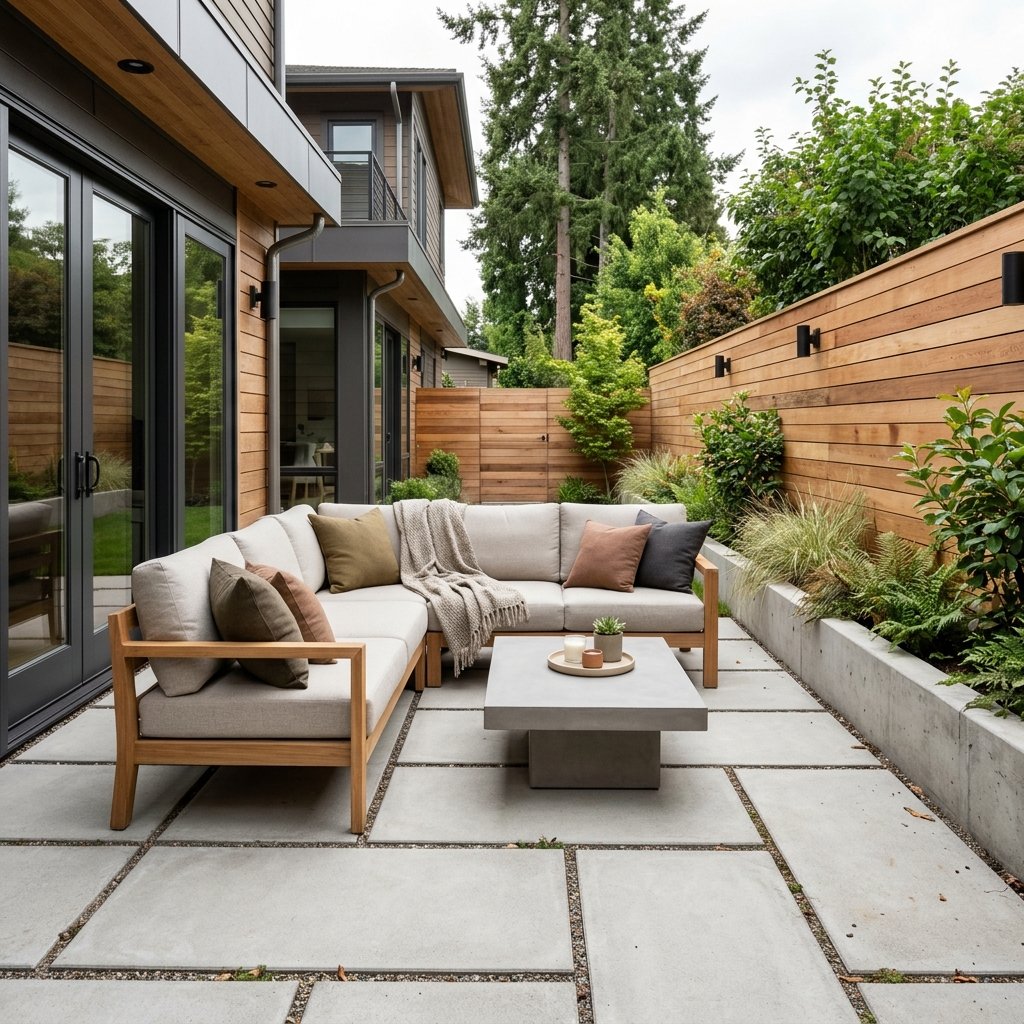
A privacy wall can completely change how comfortable an outdoor space feels.
Whether your patio overlooks a neighboring yard, your deck is visible from the street, or your seating area feels too exposed, the right privacy feature can create a more secluded space without making the backyard feel closed in.
And privacy doesn’t always require building a tall solid wall.
Wood slats can partially screen a deck while allowing light and air through. A decorative panel can hide a specific sightline. A pergola screen can define an outdoor room. Planters and climbing plants can soften a structural wall and make it feel like part of the landscaping.
The best solution depends on exactly what you’re trying to block.
Before building anything, stand or sit where you normally use the space and identify the actual sightline. You may discover that one strategically placed screen provides all the privacy you need.
You also need to consider structure, wind, property lines, utilities, drainage, and local requirements. A tall outdoor wall can experience significant wind forces, so construction and anchoring shouldn’t be treated as purely decorative DIY details.
Here are 21 privacy wall ideas for patios, decks, pools, porches, and backyards, along with practical tips for making the finished space feel private without becoming dark or boxed in.
Start by Identifying Where You Need Privacy
Don’t automatically screen the entire yard.
Instead, determine what you’re trying to hide.
It might be:
- Neighboring window
- Adjacent patio
- Street
- Parking area
- Pool equipment
- Utility area
Then determine where privacy actually matters.
A dining table may need screening while an open lawn doesn’t.
This targeted approach can save money and preserve light, views, and airflow.
1. Build a Horizontal Wood Privacy Wall
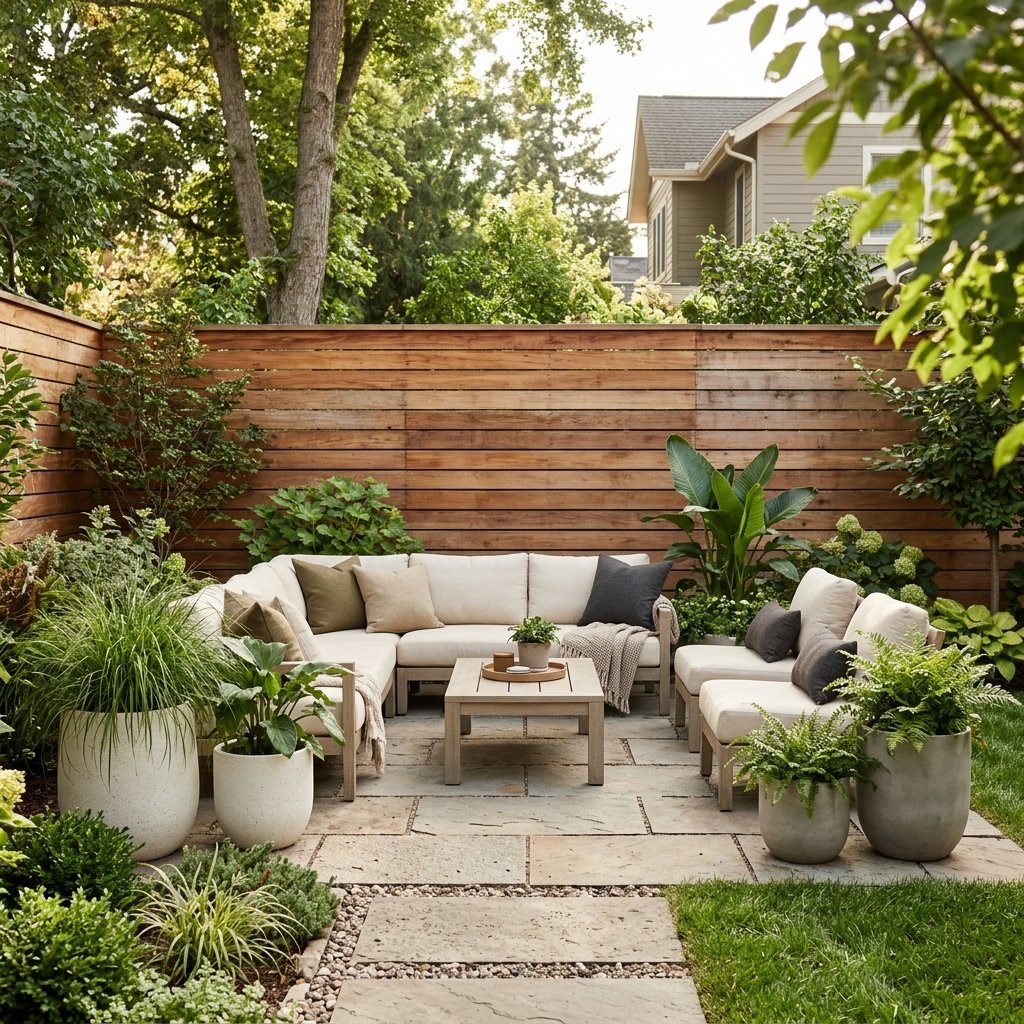
Horizontal wood boards can create a clean, contemporary backdrop.
Depending on spacing, the screen can provide partial or substantial visual privacy.
Natural wood also adds warmth to patios dominated by concrete or stone.
Choose wood, fasteners, finishes, and construction details appropriate for exterior exposure and your climate.
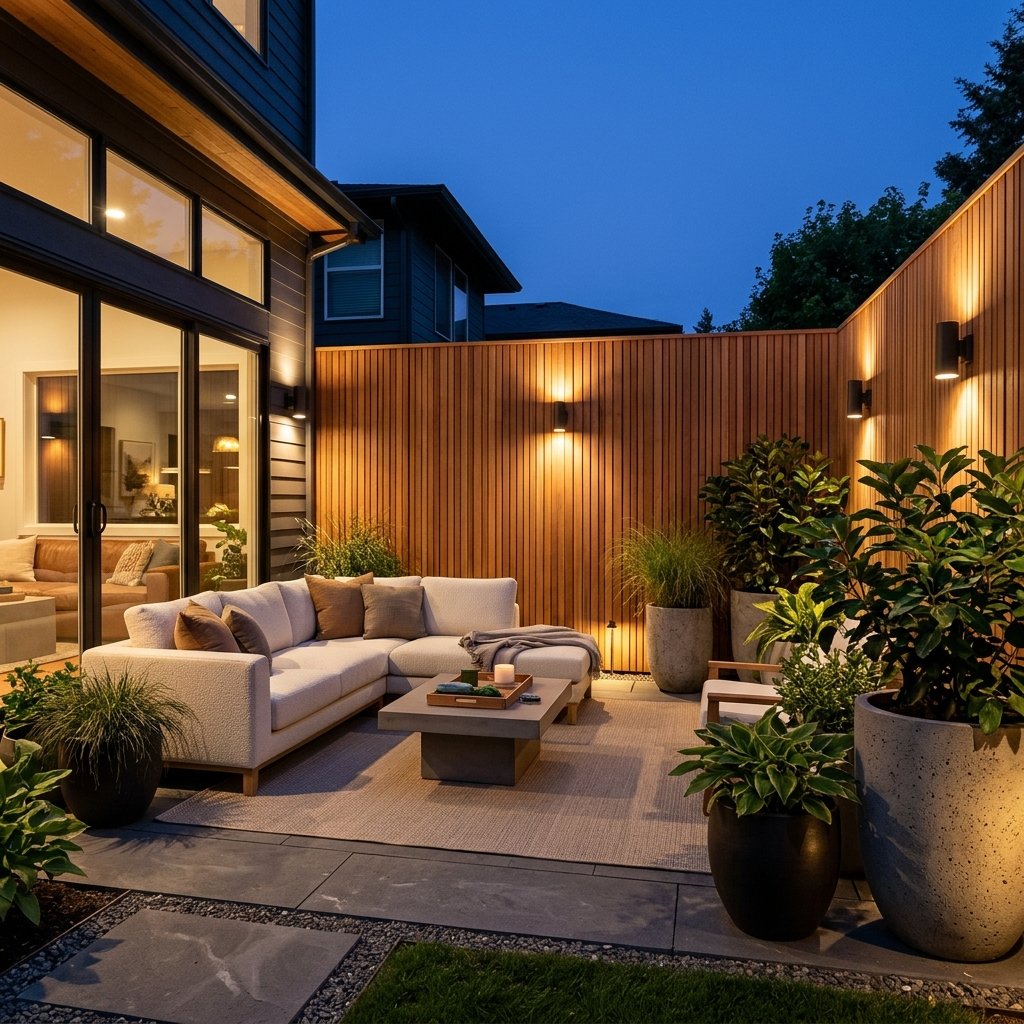
2. Use Vertical Wood Slats
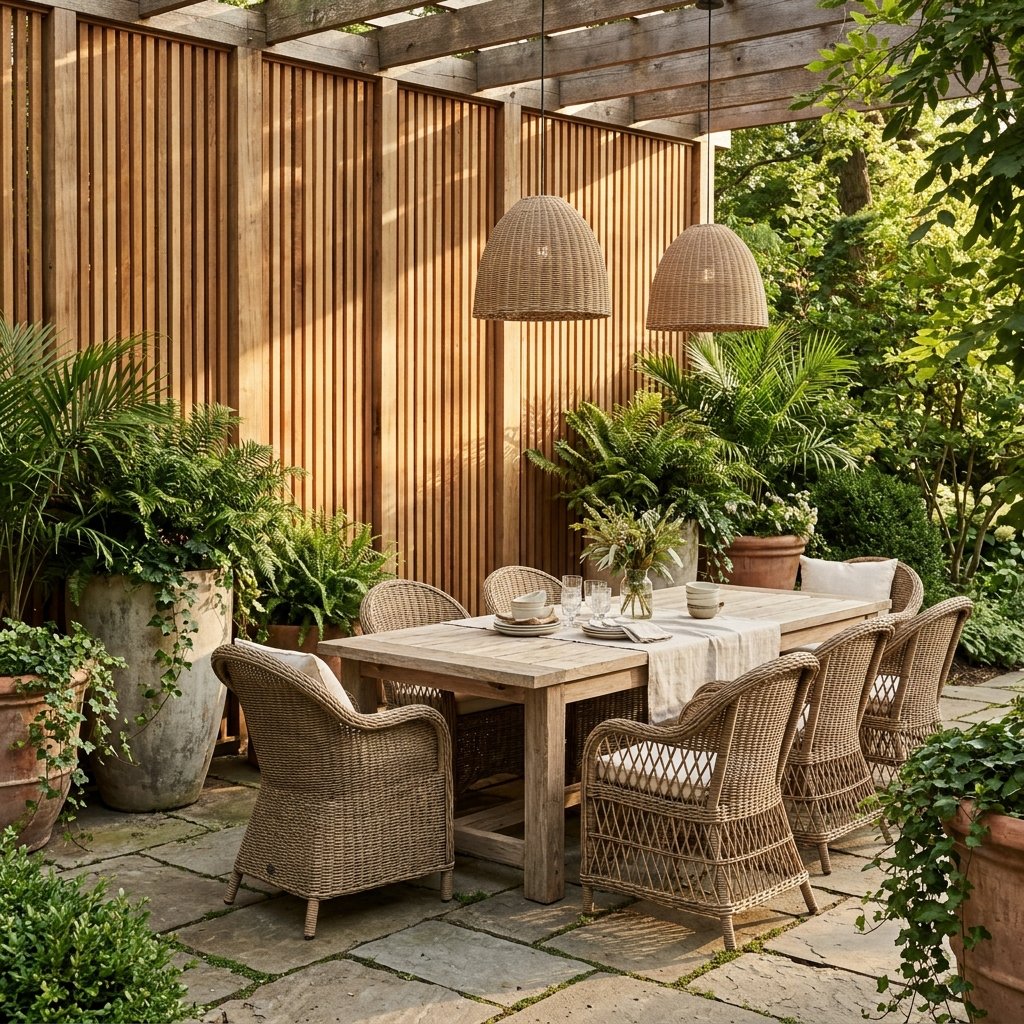
Vertical slats can create a taller visual effect.
They’re particularly useful for contemporary and transitional outdoor spaces.
Try them behind:
- Patio sofa
- Dining area
- Outdoor kitchen
Spacing determines how much privacy the wall provides.
Remember that a screen that appears opaque when viewed straight on may reveal much more when viewed from an angle.
3. Create a Narrow Slatted Screen
If you only need to block one specific sightline, build a narrower screen rather than an entire wall.
For example, a strategically placed slatted section might block a neighbor’s patio while leaving the rest of your yard open.
This can be particularly useful in smaller backyards.
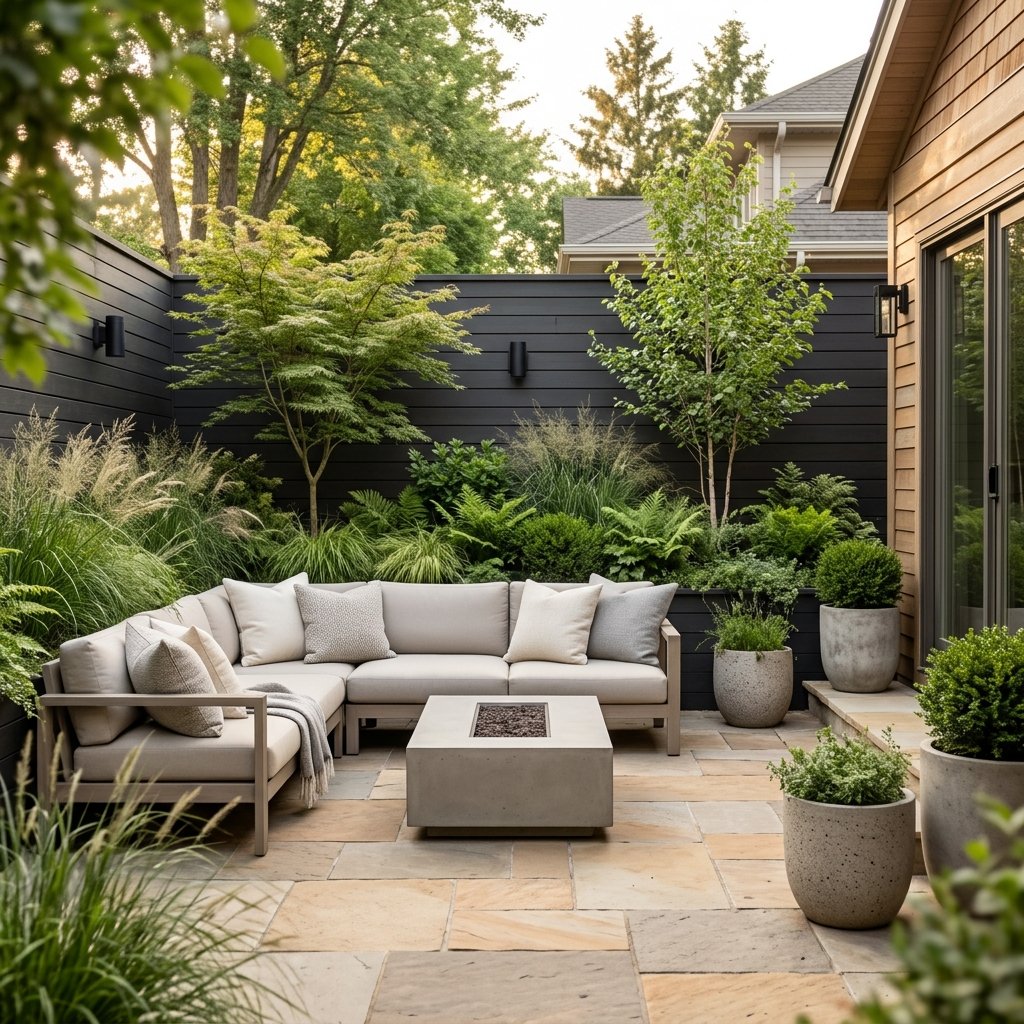
4. Try a Black Privacy Screen
A black privacy screen can create a dramatic modern backdrop.
It pairs beautifully with:
- Warm wood
- Green plants
- Cream furniture
- Concrete
Dark screens visually recede in some landscaped settings, especially when surrounded by greenery.
Consider heat and sun exposure when selecting materials and finishes.
5. Paint a Privacy Wall White
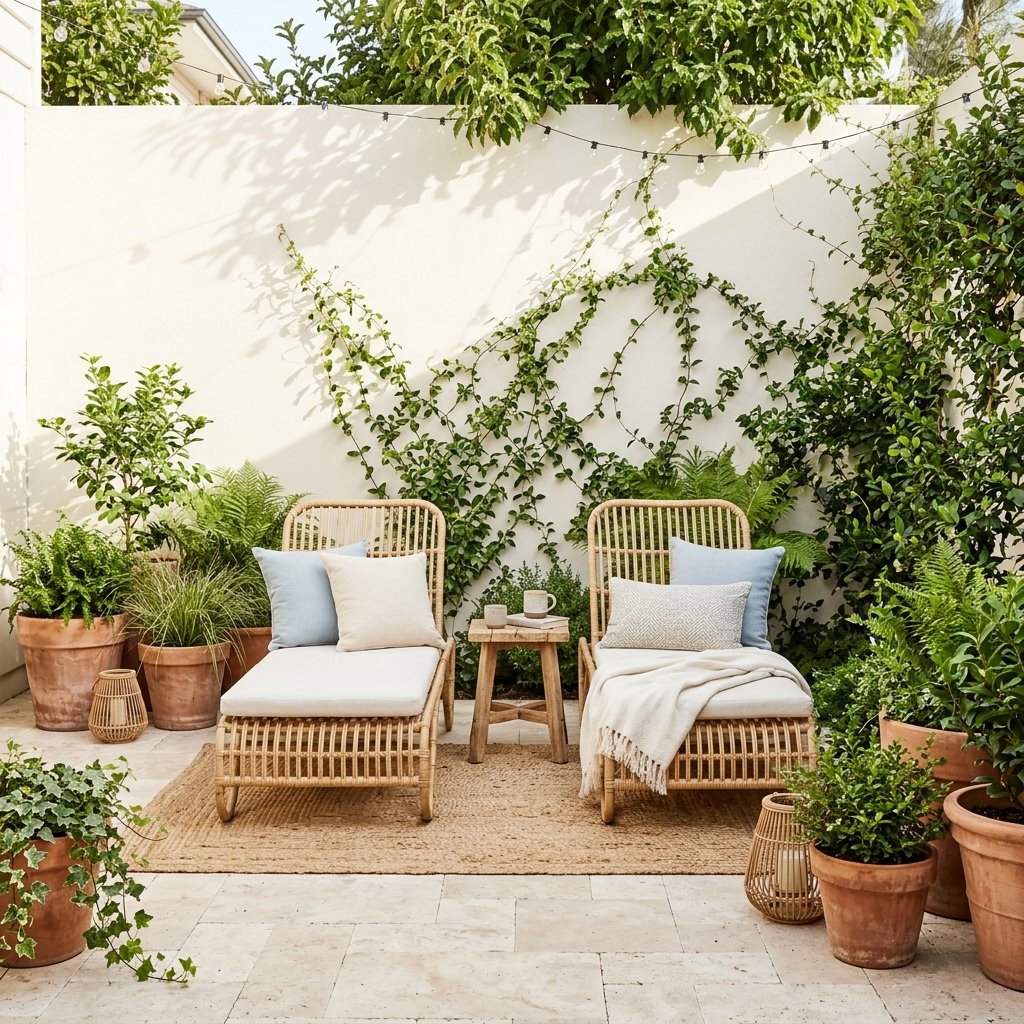
A white privacy wall can help a small patio feel bright.
It works particularly well with:
- Coastal homes
- Cottage gardens
- Light-colored patios
Add plants in front so the wall doesn’t feel flat.
Choose exterior materials and coatings suitable for the substrate and exposure.
6. Match the Privacy Wall to the House
A privacy wall doesn’t have to become a major focal point.
Paint or finish it to coordinate with the home’s exterior.
For example:
Warm white house + warm white screen
or:
Dark siding + charcoal screen
This can make the structure feel architectural rather than added later.
7. Coordinate It With a Wood Deck
Repeating a deck’s wood tone can help a privacy wall feel integrated.
You don’t necessarily need an exact match.
Instead, keep the undertones related.
If the deck is warm brown, avoid introducing an unrelated cool gray-brown screen unless the contrast is intentional.
8. Add a Privacy Wall to a Deck
Decks often need privacy because they’re elevated above the surrounding yard.
A screen can be incorporated along one side of the seating area.
However, adding a tall wall to an existing deck introduces structural and wind-load considerations.
The deck, framing, connections, footings, guard system, and screen need to be suitable for the loads involved.
Don’t simply fasten a tall panel to an existing railing without confirming that the assembly can safely support it.
9. Add a Privacy Wall to a Patio
Ground-level patios offer many design possibilities.
Use a privacy wall to define:
- Lounge area
- Dining area
- Hot tub zone
- Outdoor kitchen
A freestanding wall still requires proper support.
Its foundation and anchoring need to be designed for the wall height, material, soil conditions, wind exposure, and local requirements.
10. Create Privacy Around an Outdoor Dining Area
Dining areas often benefit from partial screening.
Place the privacy wall behind one side of the table rather than enclosing the entire space.
Add:
- Planters
- Soft lighting
- Greenery
The wall becomes a backdrop for the dining area while preserving openness elsewhere.
11. Add Privacy Behind an Outdoor Sofa
A privacy wall can make outdoor seating feel more like a room.
Position the sofa in front of the wall and add a substantial planter at one end.
Keep enough clearance behind and around furniture for maintenance and airflow where appropriate.
12. Use Decorative Privacy Panels
Decorative panels can create screening while allowing some light and airflow.
Patterns range from simple geometric designs to more intricate motifs.
Keep the architecture in mind.
A very ornate panel may compete with a minimalist house.
Also remember that perforated panels may provide less privacy at night when the area behind them is brightly lit.
13. Use Lattice for a Traditional Look
Lattice can suit cottage and traditional outdoor spaces.
Paint it:
- White
- Cream
- Green
Or use an exterior-rated natural finish where appropriate.
Lattice is particularly effective when combined with plants.
Make sure panels and framing are strong enough for their location and expected wind exposure.
14. Create a Trellis Privacy Wall
A trellis can define a patio without creating a completely solid barrier.
It can also support appropriate climbing plants.
Choose plants based on:
- Climate
- Sun
- Mature size
- Growth habit
- Support requirements
Some vigorous climbers can become extremely heavy or difficult to maintain.
The structure should be designed for the mature plant, not just its size when planted.
15. Add Climbing Plants
Greenery can soften a structural screen.
Depending on your region and growing conditions, suitable climbing plants may provide seasonal or longer-lasting coverage.
Research the specific plant before using it against a wall or structure.
Consider:
- Mature weight
- Root behavior
- Attachment method
- Maintenance
- Toxicity
- Local invasiveness concerns

16. Place Planters in Front of the Wall
Large planters can make a privacy wall feel less imposing.
Use a few substantial containers rather than lining the entire wall with tiny pots.
Choose plants with different heights.
For example:
Tall foliage + medium shrub + trailing plant
Make sure containers have suitable drainage and are appropriate for the weight and surface beneath them.
17. Combine a Low Wall With a Screen Above
You don’t always need a full-height wood wall.
A low masonry or solid wall with a lighter slatted screen above can create privacy while adding architectural interest.
This combination can work particularly well around patios.
The lower wall and upper screen both need appropriate structural design and weather detailing.
18. Add Privacy to a Pergola
A pergola can feel exposed if all four sides are open.
Add screening to one side using:
- Wood slats
- Trellis
- Suitable outdoor panels
Screen the direction that needs privacy and leave the other sides open.
Any added panels affect how wind acts on the pergola, so the original structure and connections need to be suitable for the modification.
19. Create a Privacy Wall Around a Hot Tub
Hot tubs usually require more privacy than ordinary seating areas.
But don’t place walls so tightly that they interfere with:
- Access
- Cover operation
- Equipment servicing
- Ventilation
- Required clearances
Wet conditions also affect material choices.
Electrical installations near spas and hot tubs have special safety requirements, so qualified professional work may be appropriate.
20. Add a Pool Privacy Wall
A privacy wall can help a pool area feel more secluded.
Use it to block views from:
- Neighboring property
- Street
- Adjacent buildings
However, pool barriers are safety-critical.
A decorative privacy wall should never compromise required pool fencing, gates, visibility, access, or other applicable safety requirements.
Verify local rules before construction.
21. Combine a Privacy Wall With Landscaping
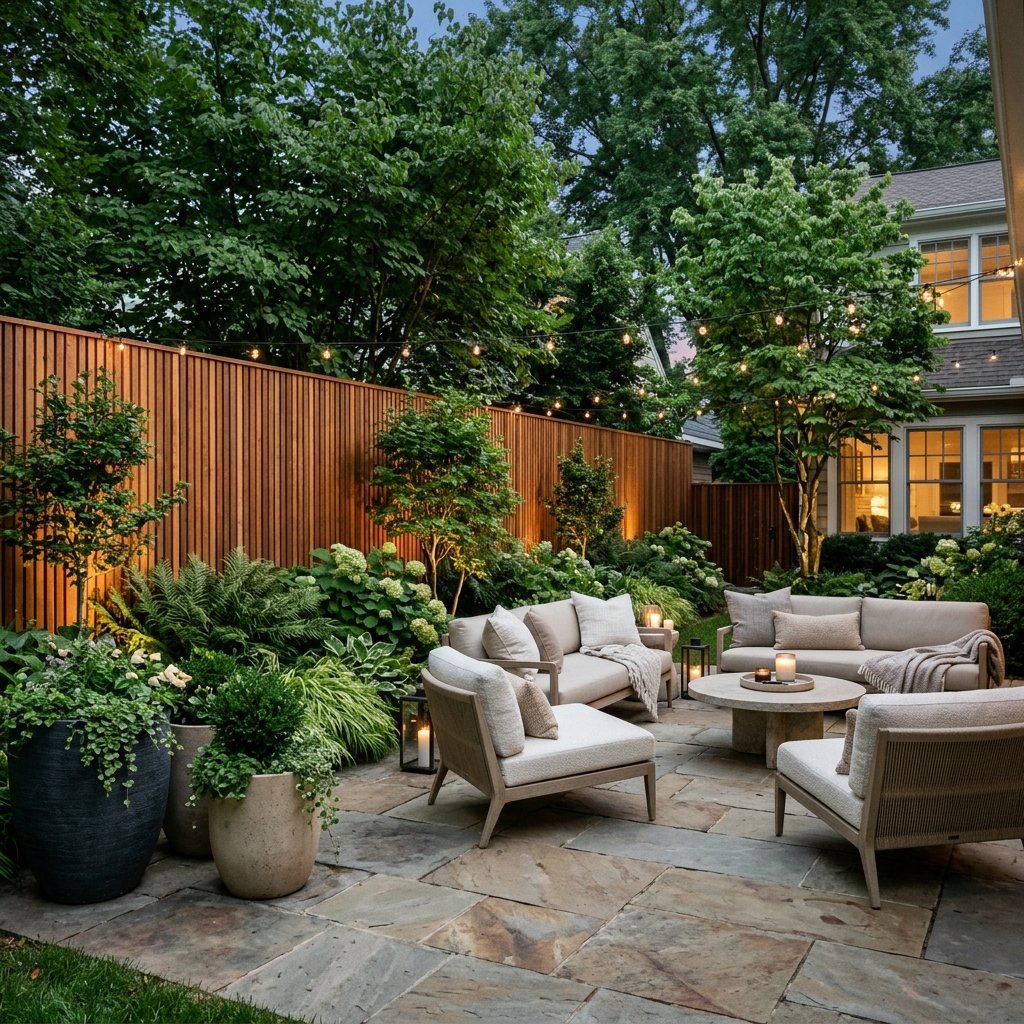
Some of the best privacy designs use both structure and plants.
The wall provides immediate screening.
Plants soften it over time.
Try:
Wood screen + shrubs
or:
Dark wall + ornamental grasses
or:
Trellis + climbing greenery
The combination often looks more natural than a bare wall alone.
Small Patio Privacy Wall Ideas
On a small patio, avoid automatically building a solid wall on every side.
That can make the area feel much smaller.
Instead, block only the most important sightline.
Use:
- Narrow slatted panel
- Trellis
- Decorative screen
- Tall planter arrangement
Keeping part of the perimeter open can preserve light and airflow.
Privacy Wall Ideas for a Large Backyard
A large yard usually doesn’t need a wall around the entire entertaining area.
Use privacy walls to create smaller outdoor rooms.
For example:
Lounge Zone
Wood screen + sofa + fire feature where safely appropriate
Dining Zone
Trellis + table
Pool Zone
Code-compliant barrier plus strategic landscape screening
This creates definition without making the property feel enclosed.
Privacy Wall Ideas for a Townhouse
Townhouse patios often have close neighbors and limited width.
A simple vertical screen can work well because it doesn’t require a deep planting bed.
Keep the color related to the house or existing fencing.
Before making changes, check property, association, landlord, or local requirements where applicable.
Privacy Wall Ideas for a Balcony
Balconies require extra caution.
Don’t attach tall screens or heavy objects to balcony railings without approval and confirmation that the structure and attachment are suitable.
Wind can place substantial loads on panels, especially at height.
Building or association rules may also restrict balcony screens.
For this situation, approved solutions specifically intended for the balcony may be safer than improvised construction.
Privacy Wall Ideas for a Porch
A porch screen can create a more intimate sitting area.
Use:
- Vertical slats
- Lattice
- Trellis
Keep the screen away from doors and stairs.
Don’t reduce required access or compromise railings, guards, structural columns, or exits.
Privacy Wall Ideas Around an Outdoor Kitchen
A privacy wall can become a beautiful backdrop behind an outdoor kitchen.
However, cooking appliances require special consideration.
Walls, screens, roofs, and decorative materials must maintain the clearances and ventilation required by the specific appliance and installation.
Don’t place combustible wood screening close to grills or other heat-producing equipment unless the appliance manufacturer and applicable requirements permit it.
Privacy Wall Ideas for a Fire Pit Area
Use extreme caution with privacy walls around fire features.
Wood screens, plants, fabrics, and other combustible materials can create hazards when placed too close.
Follow the fire feature manufacturer’s required clearances and local rules.
Never rely on a decorative inspiration image to determine safe spacing.
Privacy Wall With String Lights
String lights can make a screen feel more inviting after dark.
Only use lights and electrical equipment rated for the intended outdoor location.
Secure them according to the manufacturer’s instructions.
Don’t puncture electrical cords with nails or staples.
Keep cords and connections away from walking paths and water where required.
Privacy Wall With Outdoor Sconces
A substantial wall may provide an opportunity for permanent lighting.
Exterior electrical work needs appropriate weather protection and installation.
Don’t hide electrical junctions or create inaccessible connections behind decorative panels.
Privacy Wall Color Ideas
The color affects how prominent the wall feels.
Natural Wood
Warm and organic.
Black
Modern and dramatic.
Charcoal
Softer than pure black.
White
Bright and coastal.
Warm Gray
Quiet and versatile.
Green
Can blend into landscaping.
Coordinate the color with the house, deck, patio materials, and furniture.
Horizontal vs. Vertical Privacy Wall
Both can work.
Horizontal
Feels contemporary and visually wide.
Vertical
Emphasizes height and can feel slightly more traditional depending on the design.
Choose based on your architecture rather than relying on a rule about which direction makes a space look larger.
Solid vs. Slatted Privacy Wall
A solid wall provides greater visual screening but may block more:
- Light
- Airflow
- Views
A slatted wall can feel lighter.
The right spacing depends on your privacy needs and viewing angles.
Mock up the spacing before building if possible.
How Tall Should a Privacy Wall Be?
There is no universal ideal height.
The correct height depends on:
- Sightline
- Sitting vs. standing privacy
- Neighboring elevations
- Property conditions
- Local regulations
- Structural design
Instead of choosing an arbitrary height, identify the actual view you’re trying to block.
Local rules may limit wall or fence height, particularly near property boundaries, streets, driveways, or easements.
Where Should You Put a Privacy Wall?
Stand where you need privacy and look toward the unwanted view.
Then position the screen as strategically as possible.
A wall placed closer to the seating area may sometimes block the view more effectively than a taller wall farther away.
Consider sun, wind, drainage, and circulation as well.
Privacy Wall vs. Privacy Fence
A fence usually defines a larger boundary.
A privacy wall or screen can be used more selectively around a particular outdoor space.
If you only need privacy around a patio, a targeted screen may preserve more openness than replacing an entire perimeter fence.
Privacy Wall vs. Landscaping
Plants can provide beautiful privacy, but they require time and maintenance.
They can also change with the seasons.
A structural screen provides immediate privacy.
Combining both can provide the best balance:
Wall now + plants over time
How to Make a Privacy Wall Look Expensive
Keep the design simple.
Use:
- Consistent spacing
- Clean edges
- Substantial posts
- Coordinated finish
- Larger plants
Avoid adding several unrelated decorative elements to the wall.
The craftsmanship itself should provide most of the visual impact.
Budget Privacy Wall Ideas
If you’re working with a smaller budget, focus on the exact sightline you need to block.
A narrow screen may solve the problem without constructing a full wall.
Other possibilities include:
- Simple trellis
- Limited slatted panel
- Existing fence upgraded with landscaping where appropriate
Don’t reduce structural support to save money.
Wind resistance and safe anchoring are essential.
DIY Privacy Wall Considerations
A small decorative screen may be approachable for an experienced DIYer, but larger privacy walls can become structural projects.
Before building, consider:
- Property lines
- Underground utilities
- Footing requirements
- Soil
- Frost depth where applicable
- Wind
- Wall height
- Post spacing
- Fasteners
- Material movement
- Drainage
- Local permits or restrictions
Call the appropriate utility-location service before digging where required.
Never assume a fence post or deck railing can support a tall screen simply because it feels sturdy.
Privacy Wall Materials
Possible materials include:
- Exterior-rated wood
- Composite products
- Vinyl systems
- Metal panels
- Masonry
- Purpose-built decorative panels
Every material has different installation and maintenance requirements.
Choose a complete system suitable for your climate and application rather than selecting solely by appearance.
Wood Privacy Wall Maintenance
Exterior wood is exposed to:
- Sun
- Rain
- Temperature changes
- Moisture
Maintenance depends on the species, finish, climate, and desired appearance.
Follow the coating and material manufacturer’s recommendations.
Inspect periodically for deterioration, loose fasteners, movement, or damage.
Privacy Wall Safety
A tall wall can act like a sail in strong wind.
That makes structural support one of the most important considerations.
Keep these points in mind:
- Use adequate foundations and anchoring.
- Account for wind exposure.
- Don’t attach large panels casually to deck guards.
- Locate underground utilities before digging.
- Check property boundaries.
- Follow local height and setback requirements.
- Keep screens clear of required exits and access.
- Maintain appliance clearances.
- Use outdoor-rated electrical components.
- Keep combustible walls away from fire features as required.
- Don’t compromise pool barriers.
- Secure heavy planters and decorative elements.
When structural design, elevated decks, retaining conditions, pools, electrical work, or complex site conditions are involved, professional guidance may be appropriate.
Common Privacy Wall Mistakes
Screening the Entire Yard
Block the actual sightline instead.
Making the Wall Taller Than Necessary
Determine the required height based on the view.
Ignoring Wind
Tall panels experience significant forces.
Attaching a Wall to a Deck Railing
Confirm structural suitability first.
Forgetting Property Lines
Verify boundaries before construction.
Blocking Too Much Light
Consider slats or partial screening.
Ignoring Viewing Angles
Test privacy from different locations.
Forgetting Maintenance Access
Leave room around equipment and utilities.
Putting Combustible Screens Near Fire
Follow required clearances.
Forgetting Landscaping
Plants can make a structural wall feel much more integrated.
A Simple Privacy Wall Planning Formula
Step 1: Identify the Problem View
Know exactly what you want to block.
Step 2: Sit in the Space
Check privacy from normal eye level.
Step 3: Determine the Minimum Effective Area
Don’t automatically build a full wall.
Step 4: Check Local Requirements
Confirm height, setback, permit, and property restrictions.
Step 5: Check Utilities
Do this before digging.
Step 6: Choose the Material
Match it to the house and exposure.
Step 7: Plan the Structure
Consider wind, foundations, and connections.
Step 8: Add Greenery
Soften the finished wall.
Step 9: Add Lighting if Appropriate
Use properly rated equipment.
Step 10: Check the View Again
Make sure you’ve created privacy without unnecessarily closing in the space.
FAQ About Privacy Walls
What is the best privacy wall for a patio?
It depends on the view you’re trying to block, architecture, climate, and desired level of privacy. Wood slats, trellises, decorative panels, and solid walls are common options.
How can I create privacy without building a full fence?
Use a targeted privacy screen around the area where you actually sit or dine. A narrow wall, trellis, or strategic combination of screening and landscaping may be enough.
Is horizontal or vertical screening better?
Neither is universally better. Horizontal slats often look contemporary, while vertical slats emphasize height. Choose the direction that works with your home’s architecture.
How tall should a privacy wall be?
Only as tall as necessary to block the important sightline while complying with local requirements and structural considerations.
Can I attach a privacy wall to my deck?
Possibly, but a tall screen adds wind loads to the deck and its connections. The existing structure needs to be evaluated for the added loads rather than simply attaching panels to the railing.
How do I make a privacy wall look less harsh?
Add landscaping, large planters, climbing plants where appropriate, or use a slatted design that allows some light through.
Can I put a privacy wall around a fire pit?
Only when required clearances and other safety requirements can be maintained. Combustible screens and plants should not be placed too close to fire features.
Can a privacy wall be used around a pool?
Yes, but it must not compromise required pool barriers, gates, access, or other safety requirements. Local pool regulations should be checked before construction.
What is the cheapest way to create patio privacy?
Rather than screening the entire property, identify the specific unwanted view and install the smallest appropriately designed screen that blocks it. Landscaping may provide additional privacy over time.
How do I make an outdoor privacy wall look modern?
Use simple lines, consistent spacing, restrained colors, substantial framing, and minimal decoration. Vertical wood slats, charcoal panels, or warm natural wood can all create a modern look.
Final Thoughts
A successful privacy wall doesn’t have to make your backyard feel like a fortress.
The goal is to create privacy where you actually need it while preserving as much light, airflow, and openness as possible.
Start by identifying the exact sightline.
You may only need a narrow screen beside the patio rather than a wall stretching across the entire yard.
Choose materials that coordinate with your house.
Natural wood can add warmth.
Black or charcoal can create a modern backdrop.
White can brighten a small patio.
And plants can soften almost any structural screen.
But don’t treat a privacy wall as purely decorative.
Height, wind, foundations, structural connections, property boundaries, utilities, fire clearances, and local requirements all matter.
This is especially important when adding screening to elevated decks, balconies, pergolas, pools, hot tubs, outdoor kitchens, or areas near fire features.
With thoughtful placement and proper construction, a privacy wall can do more than block an unwanted view.
It can turn an exposed patio, deck, or backyard seating area into a comfortable outdoor room that feels intentionally connected to your home.