

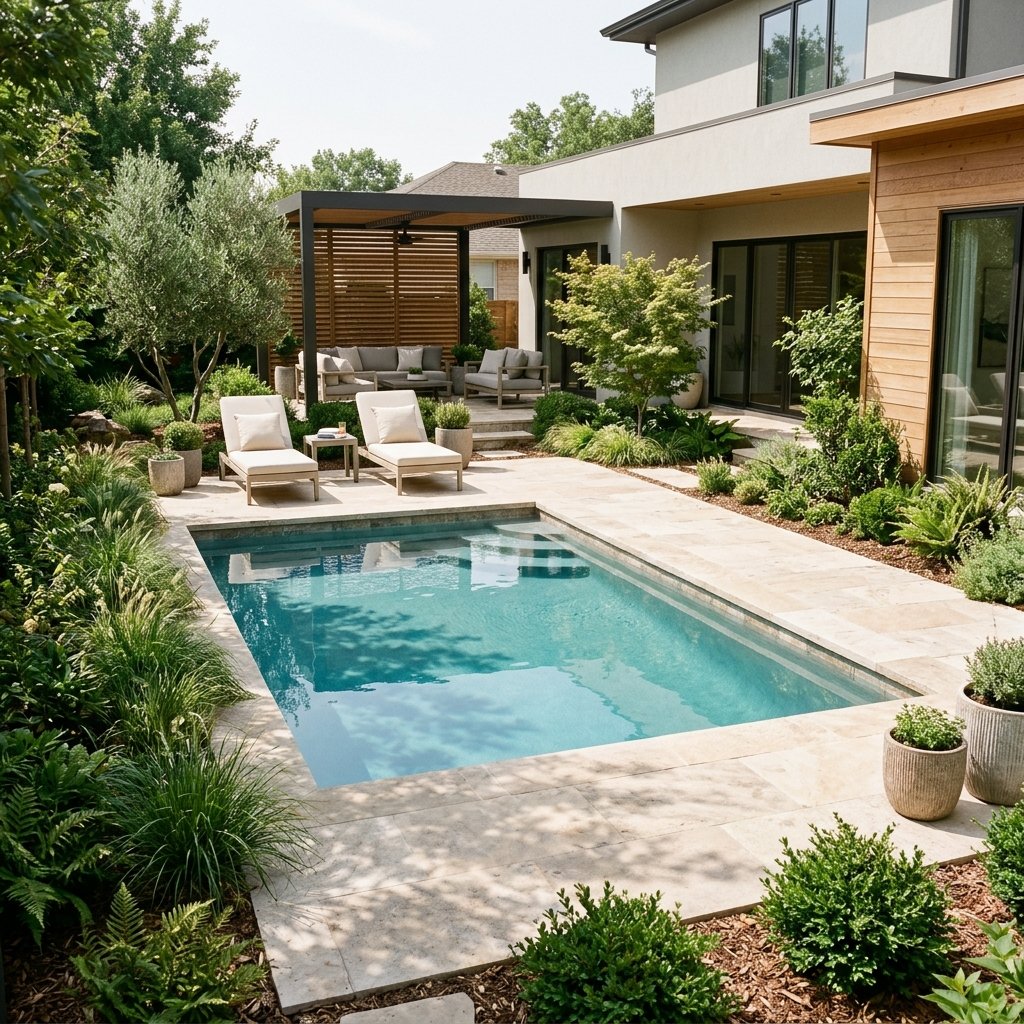
Thoughtful backyard pool landscaping can turn a basic swimming pool into an outdoor space that feels private, welcoming, and connected to the rest of your home.
The landscaping around a pool has several jobs to do.
It can soften hard pool decking, provide privacy from neighbors, create shade, define seating areas, and make the view from inside the house more attractive. At the same time, plants and landscaping materials need to work around water, foot traffic, pool equipment, drainage, maintenance, and safety requirements.
That means the prettiest plant isn’t always the most practical plant beside a pool.
Plants that constantly drop leaves, flowers, fruit, thorns, or sticky debris can create unnecessary maintenance. Aggressive roots may be problematic near structures or hardscape. And large shrubs placed without considering their mature size can eventually block paths, equipment, lighting, or important sightlines.
The goal is to create a landscape that looks lush without making the pool harder to use.
Whether you have a small backyard pool, a large in-ground pool, or a simple rectangular pool surrounded by a patio, these 21 backyard pool landscaping ideas can help you create a more beautiful and functional outdoor retreat.
Start With How You Use the Pool
Before buying plants, think about the entire pool area.
Where do people:
- Enter the pool?
- Sit?
- Walk?
- Dry off?
- Store towels?
- Supervise children?
- Access equipment?
Also identify where you need:
- Privacy
- Shade
- Lighting
- Open views
- Drainage
- Equipment access
Good pool landscaping supports these functions rather than simply filling empty planting beds.
1. Create Layers of Greenery
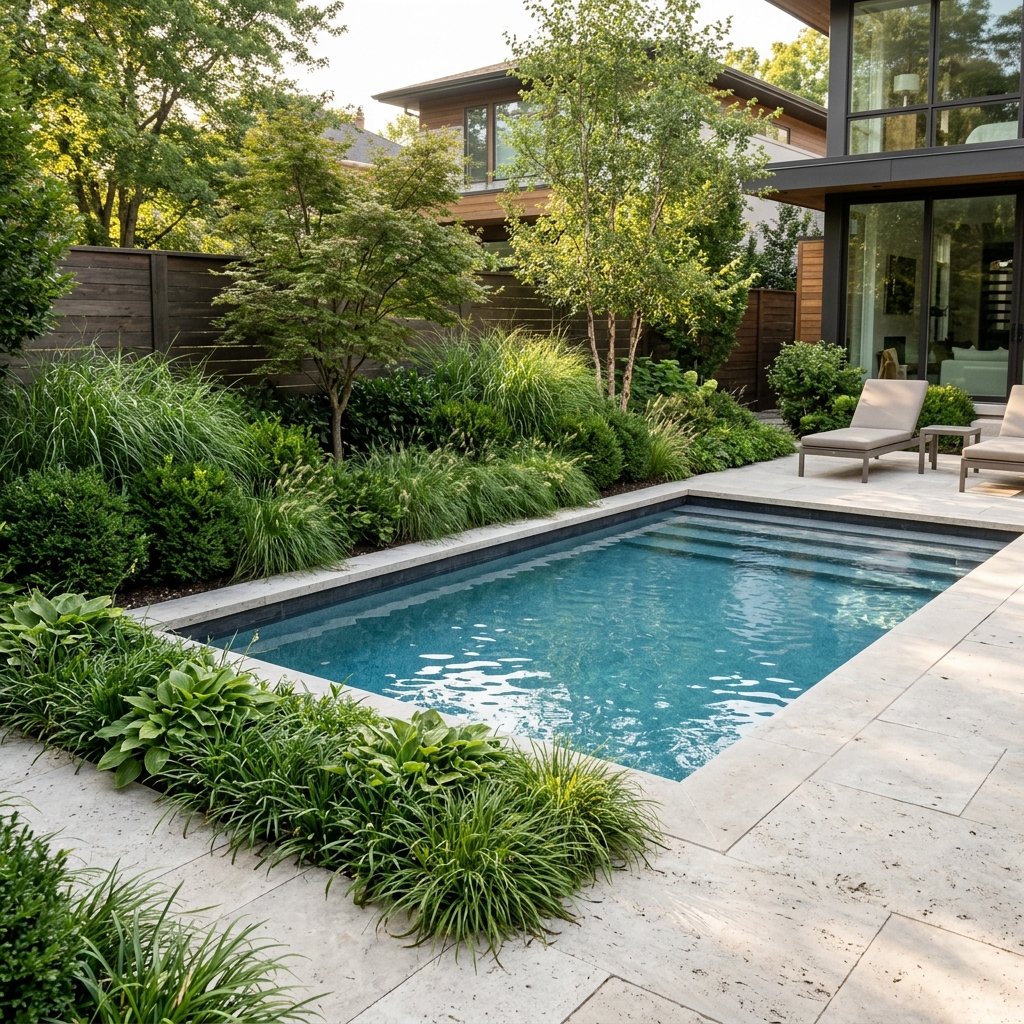
One of the easiest ways to make pool landscaping look established is to use plants at several heights.
Think in layers:
Tall
Small trees or appropriate screening plants.
Medium
Shrubs and ornamental grasses.
Low
Groundcovers and compact plants.
This creates depth and prevents the landscaping from looking like a single row of identical shrubs.
Choose plants appropriate for your climate, soil, sun exposure, water availability, and pool environment.
2. Keep the Plant Palette Simple
You don’t need 20 different plant varieties.
Repeating a smaller selection can make the landscape feel more cohesive.
For example:
Small tree + evergreen shrub + ornamental grass + low groundcover
Repeat those plants around the pool.
A restrained palette can also make maintenance easier because you’re caring for fewer types of plants.
3. Add Ornamental Grasses
Grasses can soften the edge of pool decking and add movement.
They work particularly well in:
- Modern landscapes
- Coastal-inspired yards
- Naturalistic gardens
Choose varieties suited to your climate and pool conditions.
Consider mature size and whether the plant produces significant seasonal debris before placing it immediately beside the water.
4. Use Evergreen Shrubs
Evergreen plants can provide structure throughout the year.
Use them to:
- Define beds
- Screen views
- Soften fencing
- Hide equipment from appropriate locations
Keep shrubs far enough from pathways and equipment that their mature growth won’t create problems.
5. Add Small Trees for Height
Trees can make a pool area feel more established.
But tree selection matters.
Before planting, consider:
- Mature canopy
- Root behavior
- Leaf or fruit drop
- Shade
- Distance from pool structures
- Local climate
A tiny nursery tree can become a substantial plant, so plan for its mature size.
6. Create Privacy With Landscaping
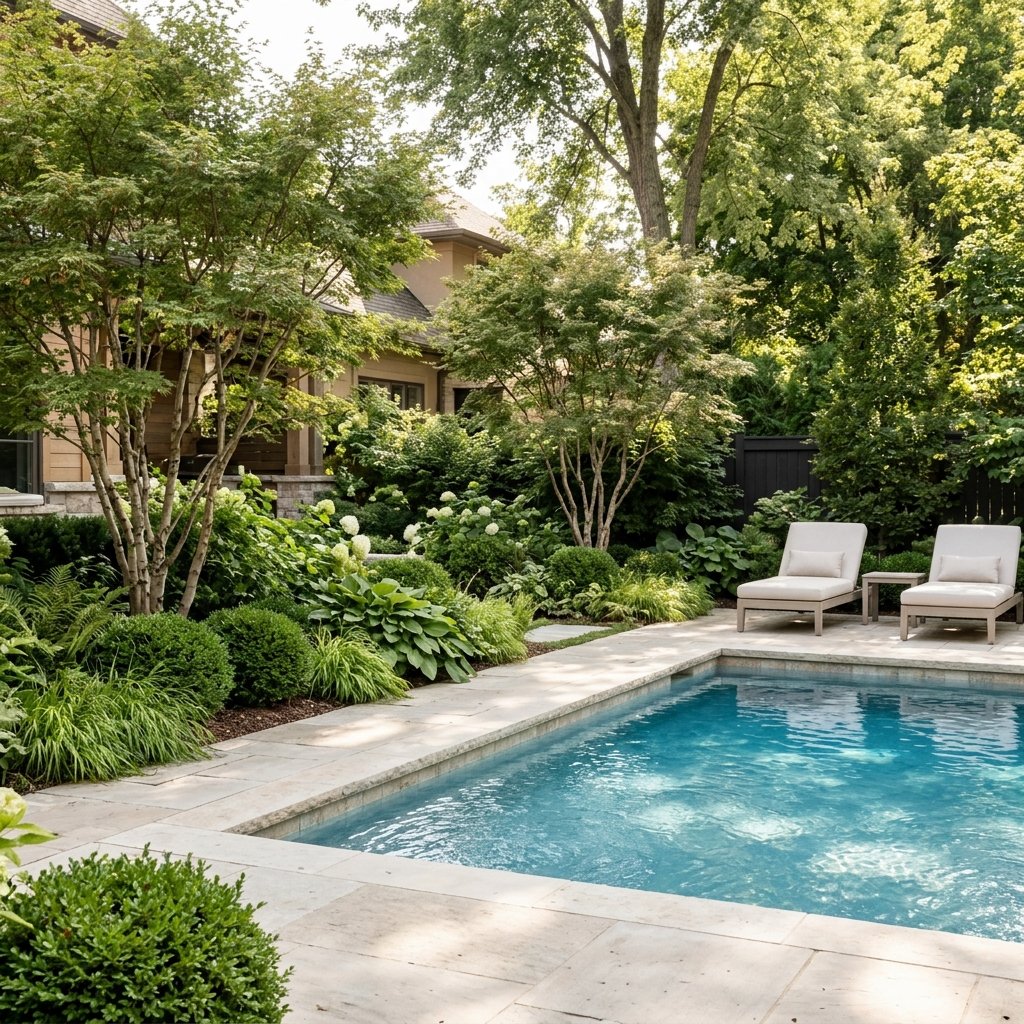
Plants can help screen neighboring homes and nearby outdoor areas.
Depending on your climate and available space, use:
- Trees
- Tall shrubs
- Hedges
- Grasses
- Vines on suitable structures
Don’t automatically plant one continuous wall of the same plant.
Layered screening can feel more natural and may provide better visual depth.
7. Combine Landscaping With a Privacy Screen
If you need immediate privacy, plants alone may take years to provide it.
Combine a structural screen with landscaping.
Try:
Wood slat screen + shrubs
or:
Dark privacy wall + grasses
or:
Trellis + suitable climbing plant
Make sure walls, screens, and trellises comply with local requirements and do not compromise required pool barriers.
8. Soften a Pool Fence With Plants
Pool fencing is often necessary for safety, but it doesn’t have to dominate the landscape.
Use plants outside appropriate clearance zones to soften the fence visually.
Avoid creating landscaping arrangements that make a required pool barrier easier to climb or interfere with gates and latches.
Pool barrier requirements vary significantly by location, so verify the rules that apply to your property.
9. Use Large Planters Around the Pool
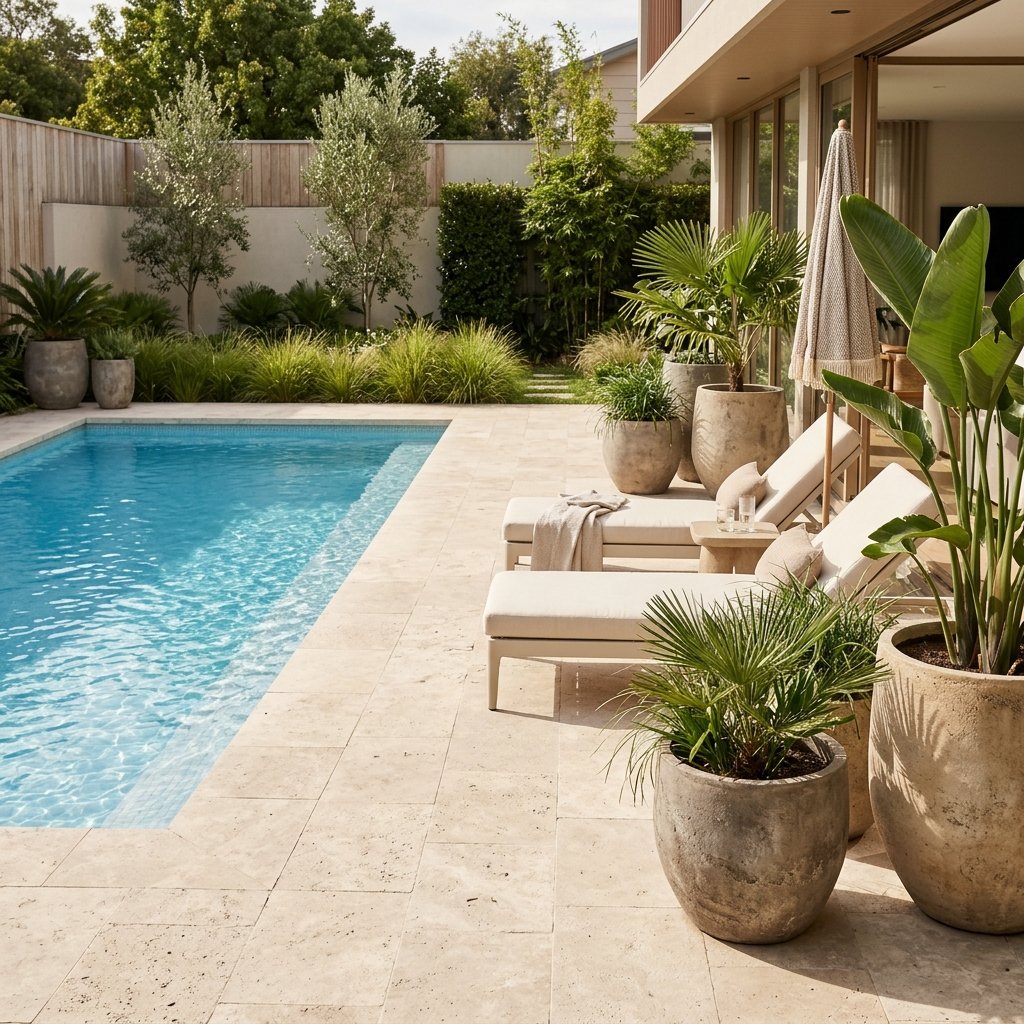
Containers can bring greenery onto a large pool deck without permanent planting beds.
A few oversized planters usually look more intentional than many tiny pots.
Try:
- One planter beside a lounge area
- Pair near a seating zone
- Group of different heights
Use stable containers appropriate for outdoor conditions.
Planters can become extremely heavy when filled, so consider the supporting surface, especially on elevated structures.
10. Create a Dedicated Lounge Area
Landscaping should support the furniture layout.
Create a clear zone for lounge chairs with greenery behind or beside them.
Avoid placing plants where they:
- Crowd chairs
- Scratch people
- Block walkways
- Drop excessive debris onto seating
Leave enough room to move comfortably around the furniture.
11. Add a Shaded Seating Area
A shaded seating zone can make the pool area more useful during the hottest part of the day.
Shade might come from an appropriately designed:
- Pergola
- Pavilion
- Umbrella
- Mature tree
Freestanding umbrellas should have stable bases appropriate for their size and exposure.
Permanent shade structures require proper foundations, connections, wind consideration, and applicable approvals.
12. Landscape Around a Pool House
If you have a pool house, cabana, or pavilion, connect it visually to the pool with landscaping.
Repeat plants used elsewhere around the property.
Keep entrances and paths clear.
Avoid placing plants where mature growth will block doors, vents, windows, utilities, or service access.
13. Add a Simple Lawn Area
Not every inch of the pool yard needs to be hardscape or planting beds.
A simple area of lawn can provide:
- Visual relief
- Play space
- Soft contrast to stone
Whether traditional turf is practical depends on your climate, water availability, maintenance preferences, and local conditions.
14. Use Gravel in Appropriate Areas
Gravel can provide textural contrast around planting beds and low-traffic areas.
However, loose gravel directly beside the pool may be uncomfortable under bare feet and can migrate onto the pool deck or into the water.
Use it strategically rather than automatically surrounding the entire pool.
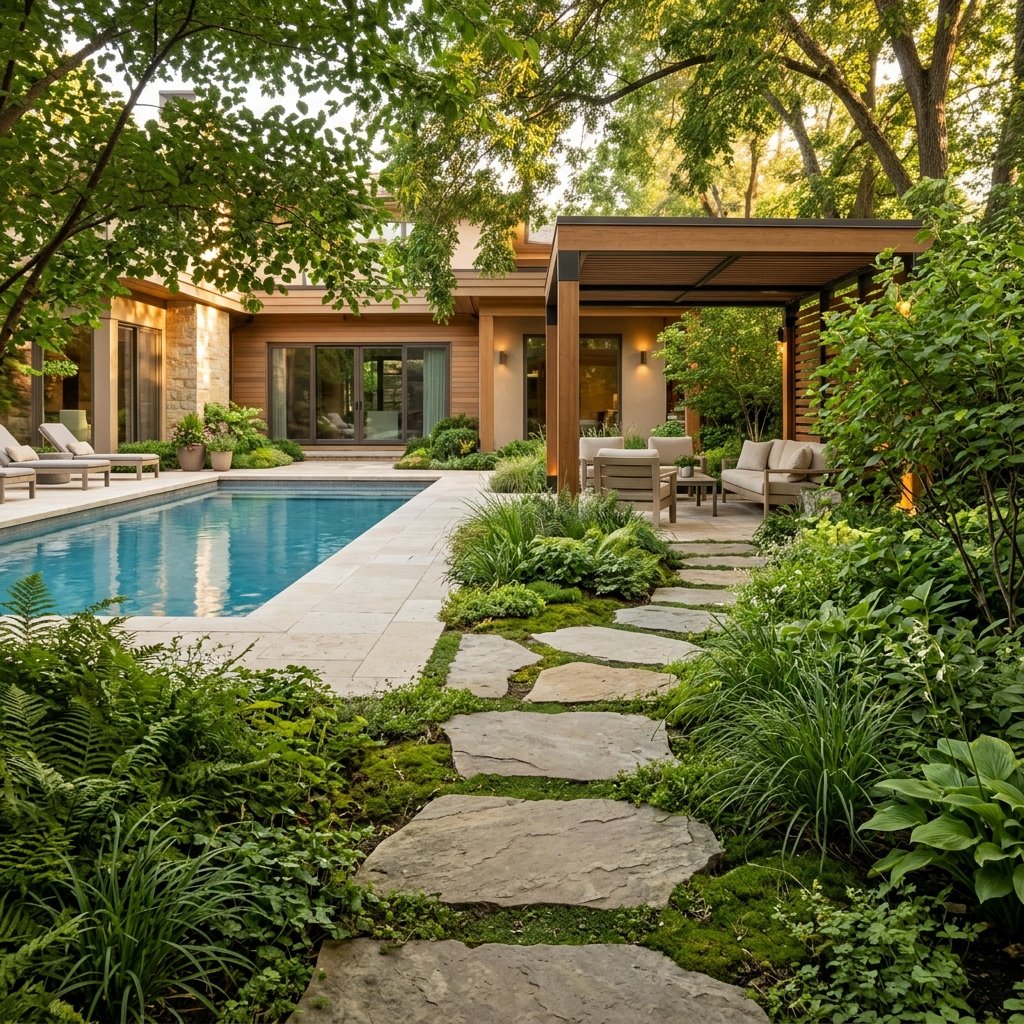
15. Add Stepping Stones
Stepping stones can connect the pool to:
- House
- Garden
- Outdoor shower
- Seating area
Make sure walking surfaces are stable and appropriate for wet conditions.
Avoid creating irregular paths where people are likely to run barefoot.
16. Create a Tropical-Inspired Pool Landscape
A tropical pool doesn’t require filling the yard with dozens of exotic plants.
Start with broad-leaved greenery appropriate for your climate.
Combine it with:
- Simple stone
- Warm wood
- Neutral furniture
Research plant suitability carefully.
Some tropical-looking plants may not tolerate your local winters, while others can become invasive in certain regions.
17. Create a Mediterranean-Inspired Pool Landscape
For a Mediterranean feel, focus on a restrained combination of:
- Silvery foliage
- Herbs
- Sculptural shrubs
- Warm stone
- Terracotta
Plant choices need to suit your climate and pool environment.
Keep the design relaxed rather than adding too many themed accessories.
18. Try Modern Pool Landscaping
Modern pool landscaping often uses fewer plant varieties in larger groups.
Think:
Clean paving + repeated grasses + sculptural shrubs + simple trees
Strong geometry can connect the planting beds to a rectangular pool.
Keep the palette restrained.
19. Create Cottage-Style Pool Landscaping
A cottage-inspired pool landscape can be softer and more layered.
Use a mixture of appropriate:
- Flowering plants
- Shrubs
- Herbs
- Grasses
But avoid planting thorny or extremely messy plants immediately beside high-traffic pool areas.
A cottage garden can still be practical.
20. Add Poolside Lighting
Landscape lighting can make the pool area more inviting after dark and improve visibility along paths.
Consider lighting:
- Walkways
- Steps
- Seating areas
- Landscape features
Water and electricity require special care.
Pool-area electrical installations are safety-critical and subject to specific requirements, so use properly rated equipment and qualified installation where appropriate.
21. Keep Some Space Empty
One of the most overlooked pool landscaping ideas is simply leaving enough open space.
You don’t need plants against every edge.
Open areas make room for:
- Walking
- Towels
- Furniture
- Pool maintenance
- Supervision
A little negative space can also make the landscaping you do have look more intentional.
Backyard Pool Landscaping for Privacy
Privacy is one of the most common reasons to add landscaping around a pool.
First identify the actual sightlines.
Look from:
- Pool
- Lounge chairs
- Dining area
- House
Then screen only where needed.
A strategically positioned tree or cluster of shrubs may be more effective than surrounding the entire pool with a tall hedge.
Backyard Pool Landscaping for Small Yards
A small pool area benefits from restraint.
Try:
- Narrow planting beds
- Vertical greenery
- One small tree
- A few large planters
Avoid filling every available edge with plants.
Maintaining open deck space can make the yard feel larger and easier to use.
Backyard Pool Landscaping for Large Yards
A large property can be divided into zones.
For example:
Pool Zone
Simple planting and lounge chairs.
Dining Zone
Table beneath shade.
Lawn Zone
Open play space.
Garden Zone
More detailed planting away from the water.
This gives the yard structure without making the pool responsible for filling the entire landscape.
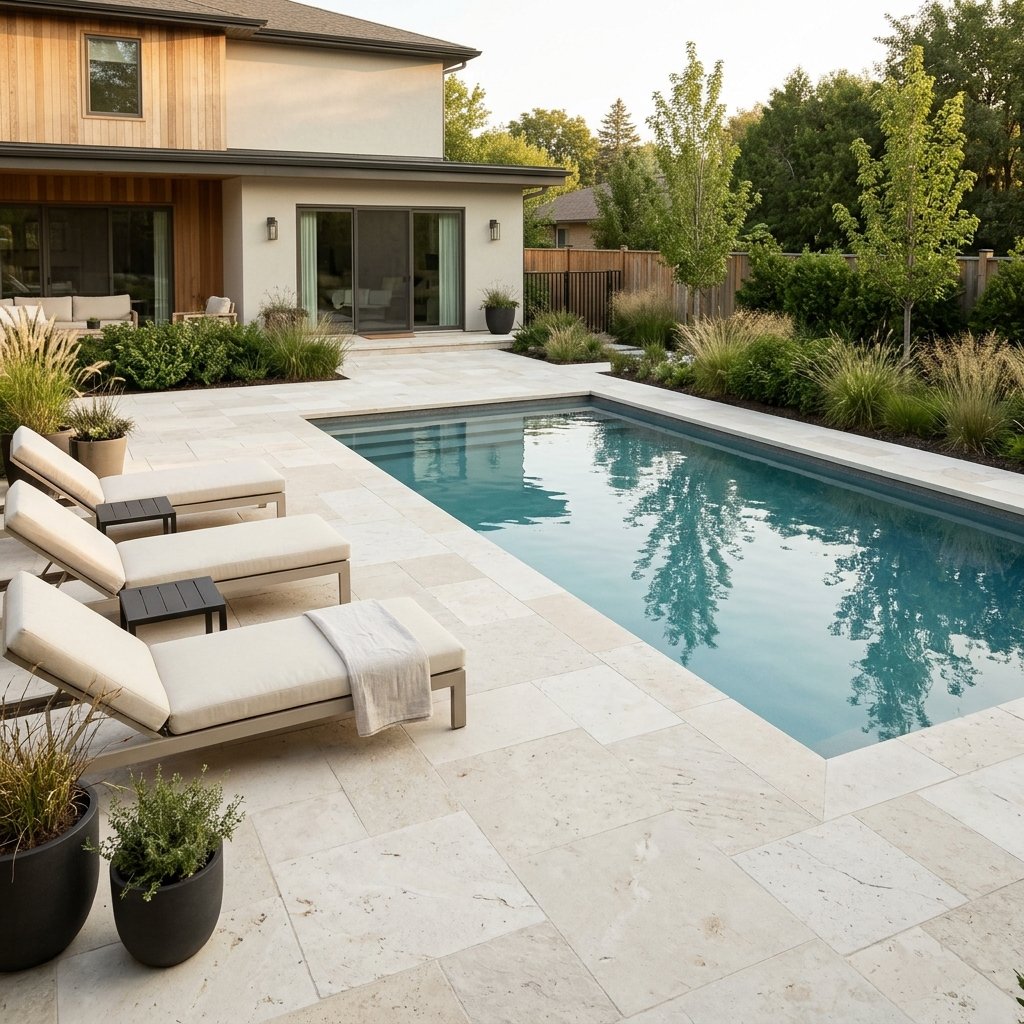
Landscaping Around a Rectangular Pool
Rectangular pools pair naturally with structured landscaping.
Repeat the pool’s geometry through:
- Straight planting beds
- Large-format pavers
- Repeated shrubs
- Rows of grasses
Then soften the hard lines with plants.
Landscaping Around a Freeform Pool
A freeform pool can support a looser landscape.
Use curved planting beds and layered greenery.
Avoid trying to make everything overly symmetrical.
Let the planting follow the general movement of the pool.
Landscaping Around an Above-Ground Pool
Above-ground pools can benefit from landscaping that visually connects the pool to the yard.
Consider:
- Decking
- Planting beds
- Grasses
- Shrubs
Maintain required access to the pool structure, equipment, supports, and mechanical components.
Never pile soil, mulch, or landscaping materials against components unless the pool manufacturer permits it.
Pool Landscaping With Rocks
Stone can add texture to a pool landscape.
Use larger landscape stones or carefully designed rock features where appropriate rather than scattering many small rocks randomly.
Be cautious with rough or sharp materials near barefoot traffic.
Pool Landscaping With Mulch
Mulch can help planting beds look finished and may provide horticultural benefits depending on the plants and climate.
Keep it contained so it doesn’t constantly wash or blow onto the pool deck.
Follow appropriate practices for the plants, soil, and local conditions.
Pool Landscaping With Artificial Turf
Artificial turf may appeal to homeowners who want a green surface without maintaining conventional lawn.
However, products vary in:
- Heat
- Drainage
- Installation requirements
- Surface feel
- Maintenance
Research the specific product and its suitability around pools rather than assuming all artificial turf performs the same way.
Pool Landscaping With Pavers
Pavers can create beautiful pool decking and pathways.
For pool areas, consider:
- Slip characteristics
- Heat underfoot
- Drainage
- Freeze-thaw exposure where relevant
- Maintenance
Product performance varies, so select materials specifically appropriate for poolside use and your climate.
Choosing Plants Around a Pool
Before buying a plant because it looks beautiful, ask:
- How large will it get?
- Does it drop leaves or fruit?
- Does it have thorns?
- How aggressive are the roots?
- Is it suitable for my climate?
- How much water does it need?
- Will it tolerate the site conditions?
- Is it considered invasive locally?
- Is it appropriate around children or pets?
The best pool plant is one that still works after it reaches mature size.
Low-Maintenance Pool Landscaping
Low-maintenance doesn’t mean maintenance-free.
Simplify by using:
- Fewer plant varieties
- Repeated plants
- Appropriate mature sizes
- Durable hardscape
- Clearly defined beds
Avoid choosing plants that require constant pruning simply to keep them out of walkways.
How to Hide Pool Equipment
Pool pumps, filters, heaters, and other equipment can be visually distracting.
Screen them carefully with:
- Landscaping
- Purpose-built enclosure
- Appropriately positioned wall
However, equipment may require:
- Ventilation
- Service clearance
- Drainage
- Safe electrical access
- Manufacturer-required clearances
Don’t build a tight decorative box around equipment without understanding those requirements.
How to Make Pool Landscaping Look Expensive
Use repetition.
A few large, well-positioned plants often look more polished than dozens of small unrelated plants.
Focus on:
- Defined planting beds
- Consistent materials
- Large planters
- Layered greenery
- Coordinated furniture
- Thoughtful lighting
Let the pool remain the focal point.
Budget Backyard Pool Landscaping Ideas
You don’t need to finish the entire landscape at once.
Start with the areas that have the biggest visual impact.
Prioritize:
- Clean edges
- Important privacy areas
- Main seating zone
- A few substantial plants
- Mulch or another appropriate bed finish
Add additional planting gradually.
Just remember to plan for mature plant sizes from the beginning.
Pool Landscaping and Drainage
Water needs somewhere appropriate to go.
Pool decks, patios, planting beds, and lawns should work together rather than directing water toward the house or creating persistent puddles.
Drainage design depends on:
- Site slope
- Soil
- Pool construction
- Hardscape
- Local rainfall
Significant drainage issues may require professional evaluation.
Pool Landscaping and Tree Roots
Trees provide valuable shade and scale, but location matters.
Roots, mature canopy size, leaf drop, and the specific pool structure should all be considered.
There is no universal safe planting distance for every tree and pool.
Choose species and locations based on mature characteristics and site conditions.
Pool Landscaping and Safety
A beautiful pool landscape should never compromise safety.
Consider:
- Required pool barriers
- Self-closing or self-latching gates where required
- Clear walking paths
- Slip-resistant surfaces
- Visibility
- Safe lighting
- Electrical safety
- Equipment access
- Plant toxicity
- Thorny plants
- Trip hazards
Local pool barrier and electrical requirements vary significantly.
Verify applicable rules before making changes.
Don’t Block Pool Visibility
Privacy is important, but so is supervision.
Avoid landscaping that unnecessarily blocks critical views of the pool from primary supervision areas.
This is especially important in households with children.
The ideal design creates privacy from neighboring properties while preserving useful visibility within your own yard.
Pool Landscaping Near Fire Features
Fire pits and outdoor fireplaces require appropriate clearances.
Keep plants, furniture, umbrellas, fences, and other combustible materials outside required distances.
Follow the specific fire feature manufacturer’s instructions and applicable local requirements.
Pool Landscaping Near Outdoor Kitchens
Grills and cooking appliances also require ventilation and clearances.
Don’t allow shrubs or climbing plants to grow into hot surfaces or vents.
Keep cooking areas positioned so traffic between the pool and seating areas doesn’t create unnecessary hazards.
Common Backyard Pool Landscaping Mistakes
Planting Too Close to the Pool
Plan for mature size.
Choosing Messy Plants
Consider debris before planting.
Using Too Many Varieties
Repeat plants for cohesion.
Blocking Equipment Access
Leave appropriate service space.
Creating a Climbable Pool Barrier
Keep landscaping from compromising safety requirements.
Forgetting Drainage
Hardscape and planting should manage water properly.
Adding Too Many Small Pots
Use fewer, larger containers.
Blocking Important Views
Balance privacy with supervision.
Ignoring Barefoot Comfort
Consider surface temperature and texture.
Overlandscaping
Leave room for people to actually use the pool.
A Simple Backyard Pool Landscaping Formula
Step 1: Map the Functional Areas
Pool, paths, seating, equipment, and entrances.
Step 2: Identify Privacy Needs
Screen specific sightlines.
Step 3: Keep Required Safety Zones Clear
Plan barriers and access first.
Step 4: Choose a Simple Plant Palette
Use a few dependable varieties.
Step 5: Add Height
Use carefully positioned trees or screening plants.
Step 6: Add Medium Greenery
Shrubs and grasses create fullness.
Step 7: Fill Lower Areas
Use appropriate compact plants and groundcovers.
Step 8: Add a Few Large Planters
Bring greenery onto hardscape.
Step 9: Plan Lighting
Illuminate paths and gathering spaces safely.
Step 10: Leave Breathing Room
Don’t landscape every square foot.
FAQ About Backyard Pool Landscaping
What is the best landscaping around a pool?
The best landscaping uses plants and materials suited to your climate, pool environment, maintenance preferences, and safety requirements. Layered greenery with a restrained plant palette is often an effective approach.
What plants are good around a pool?
Suitable plants depend heavily on climate and site conditions. Look for plants with manageable mature sizes and consider debris, thorns, roots, water needs, toxicity, and local invasiveness before planting.
How can I make my pool area more private?
Use strategically positioned trees, shrubs, hedges, screens, or trellises to block specific neighboring sightlines while maintaining useful visibility around your own pool.
How can I landscape a small pool area?
Use narrow beds, vertical greenery, a small number of larger plants, and oversized containers rather than filling every edge with vegetation.
How do I make my pool landscaping look expensive?
Repeat plants, simplify the palette, use clearly defined beds, choose a few substantial specimens, incorporate large planters, and keep furniture and hardscape materials cohesive.
Should I plant trees near a swimming pool?
Trees can provide valuable shade and scale, but species, mature size, root characteristics, debris, and distance from the pool need to be considered carefully.
Can I use gravel around a pool?
Yes in appropriate locations, but loose gravel immediately beside the pool may migrate onto the deck or into the water and can be uncomfortable for bare feet.
How do I hide pool equipment with landscaping?
Use strategically placed plants or an appropriate enclosure while preserving ventilation, drainage, electrical access, service space, and manufacturer-required clearances.
What should I avoid planting around a pool?
Be cautious with plants that produce excessive debris, thorns, aggressive roots, problematic fruit, toxic parts, or growth that will eventually obstruct paths and equipment.
How do I make a pool area feel like a resort?
Use a restrained landscape palette, layered greenery, comfortable coordinated furniture, shade, oversized planters, clean hardscape, and thoughtfully designed lighting.
Final Thoughts
Beautiful backyard pool landscaping is about much more than surrounding the water with plants.
The best landscapes make the entire pool area easier and more enjoyable to use.
Start with function.
Identify where people walk, sit, enter the water, supervise swimmers, and access pool equipment.
Then decide where you need privacy and shade.
Build the planting plan around those needs.
Use trees carefully for height.
Add shrubs and grasses for fullness.
Bring greenery onto the deck with a few large planters.
And repeat plants rather than introducing a different variety in every available spot.
Most importantly, leave some space empty.
A pool needs room for walking, lounging, towels, furniture, maintenance, and safe supervision.
When landscaping supports those activities instead of competing with them, the entire backyard feels calmer and more intentional.
With the right combination of layered greenery, practical hardscape, privacy, lighting, and open space, even a relatively simple swimming pool can become the centerpiece of a beautiful outdoor retreat.