

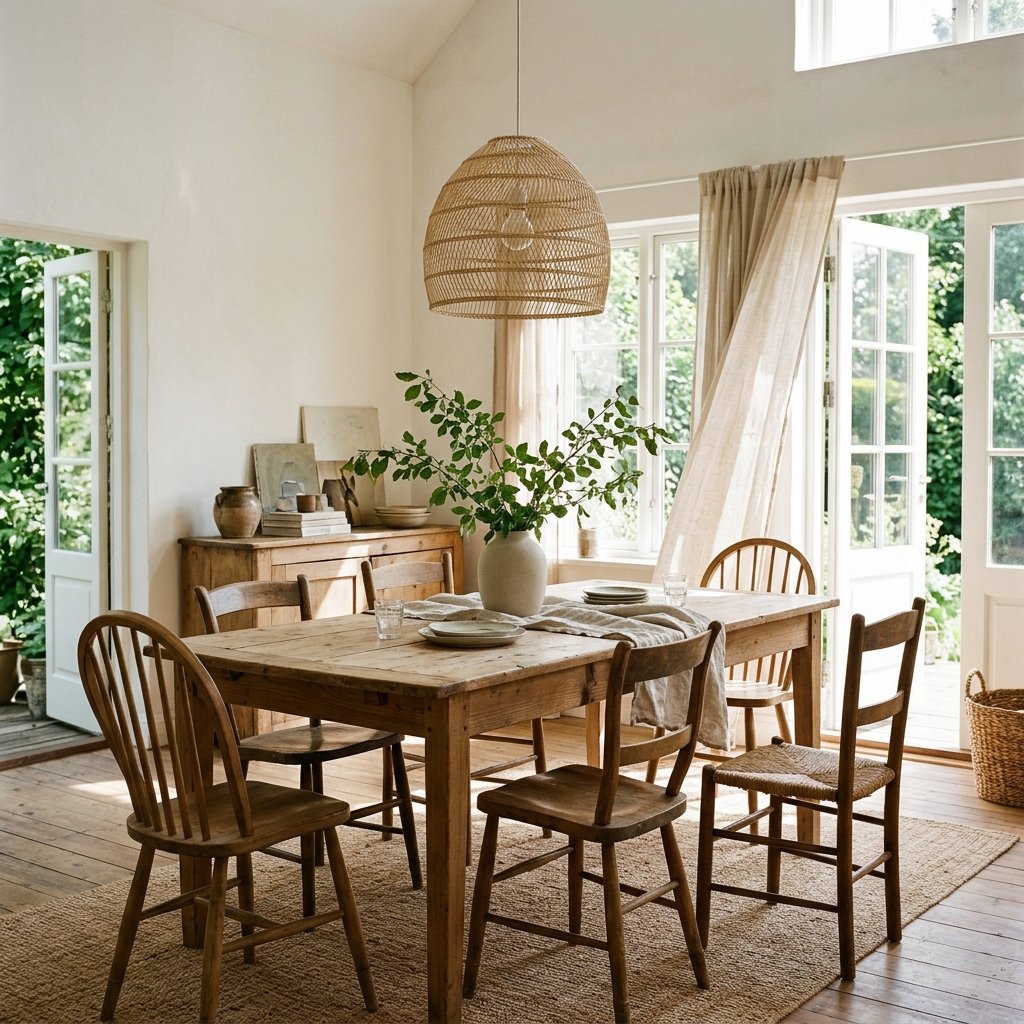
The most inviting summer house interiors feel relaxed, bright, and easy to live in.
Whether your summer house is a coastal cottage, lakeside cabin, backyard retreat, vacation home, or simply a space you want to give a lighter seasonal look, the goal doesn’t have to be creating a heavily themed interior.
Instead, focus on materials and colors that naturally make a room feel comfortable in warmer weather.
Think warm white walls, natural wood, woven textures, lightweight curtains, comfortable slipcovered furniture, simple stripes, vintage pieces, baskets, greenery, and just enough color to give the rooms personality.
A summer house should also be practical.
Furniture needs to accommodate people coming in from outdoors. Storage should handle towels, shoes, games, and everyday clutter. Fabrics should suit the way the house is actually used, and rooms should feel comfortable rather than overly precious.
These 21 summer house interior ideas can help you create a beautiful retreat that feels fresh for summer while still looking timeless enough to enjoy year after year.

What Makes a Summer House Interior Feel Relaxed?
A relaxed summer interior usually has a few things in common:
- Light or warm neutral colors
- Natural materials
- Comfortable furniture
- Simple window treatments
- Useful storage
- A little vintage character
- Uncluttered surfaces
It doesn’t need to look perfectly coordinated.
In fact, a slightly collected room often feels more appropriate for a summer retreat than one where every piece of furniture belongs to the same set.
1. Start With Warm White Walls
Warm white is an easy foundation for summer house interiors.
It reflects light while creating a neutral backdrop for:
- Wood
- Blue
- Green
- Woven texture
- Vintage furniture
Before painting, test several samples in the actual room.
A white that looks warm in one house can appear gray, yellow, or stark in another depending on daylight, flooring, and surrounding finishes.
2. Add Natural Wood
Wood keeps a light interior from feeling cold.
Bring it in through:
- Coffee table
- Dining table
- Side tables
- Chairs
- Shelves
You don’t need every wood tone to match.
A mix of light and medium woods can make the house feel naturally collected.
3. Choose a Cream Sofa
A cream or warm off-white sofa creates a soft foundation for a summer living room.
If the house gets heavy use, consider how practical the upholstery is for your household.
Removable or washable covers may be useful in homes where people regularly come inside from the beach, lake, garden, or pool.
4. Try Slipcovered Furniture
Slipcovers naturally suit casual summer interiors.
They can make furniture feel:
- Relaxed
- Comfortable
- Less formal
Cream, white, pale beige, and subtle stripes can all work.
Check the specific fabric’s cleaning instructions rather than assuming every slipcover is machine washable.
5. Add Woven Chairs
Rattan, cane, wicker, and other woven textures can add visual warmth.
Try one woven chair rather than buying an entire matching furniture set.
It can work beside:
- Sofa
- Window
- Fireplace
- Bookshelf
A single textural piece often provides enough summer character.
6. Use Blue and White
Blue and white is a classic summer combination.
But it doesn’t have to become nautical.
Use faded or muted blues through:
- Pillows
- Artwork
- Rugs
- Bedding
- Table linens
Keep larger furniture neutral so the room remains easy to update.

7. Add Soft Green
Green is another natural summer color.
Sage, muted olive, and soft botanical greens can connect indoor rooms to the landscape outside.
Pair green with:
- Cream
- Warm white
- Natural wood
- Woven materials
A few green accents can be enough.
8. Use Simple Stripes
Stripes add pattern without overwhelming a relaxed room.
Try them on:
- Pillows
- Throw
- Rug
- Bedding
- Dining cushions
Blue-and-white stripes create a coastal feeling, while beige-and-cream stripes feel more neutral.
Keep the scale and number of patterns controlled.
9. Choose Lightweight Curtains
Heavy drapery can visually weigh down a summer house.
Consider lighter-looking curtains in appropriate fabrics.
Hang them high enough to emphasize the windows while making sure the panels still function properly.
If privacy, glare, or heat control is important, combine decorative curtains with a practical shade or other suitable window treatment.
10. Use Woven Shades
Woven shades can add texture without taking up much visual space.
They work particularly well with:
- White walls
- Wood furniture
- Simple curtains
Choose window treatments based on the room’s actual privacy and light-control requirements.
11. Add a Natural-Fiber-Look Rug
A woven or natural-fiber-look rug can provide texture and define the seating area.
Before using a specific material, consider:
- Moisture
- Barefoot comfort
- Cleaning
- Pets
- Children
In high-traffic vacation homes, an easy-care alternative with a similar woven appearance may be more practical.

12. Bring in Vintage Furniture
One or two vintage pieces can keep a summer house from looking overly new.
Consider:
- Small dresser
- Side table
- Cabinet
- Bench
Mix older furniture with simple contemporary upholstery.
If you’re using older painted furniture, take appropriate precautions before sanding or disturbing unknown finishes.
13. Create a Casual Dining Room
Summer dining should feel easy.
Use a substantial table and comfortable chairs rather than an overly formal arrangement.
A simple combination might be:
Wood table + mixed chairs + woven pendant + flowers
Leave enough clearance around the table for comfortable movement.
14. Add a Dining Bench
A bench can make a dining area feel casual and may provide flexible seating.
It works especially well along a wall or beneath windows where the layout allows.
Make sure the bench is stable and appropriately sized for its intended use.
15. Create a Breakfast Nook
A small breakfast nook can become one of the most-used spaces in a summer house.
Add:
- Small table
- Bench or chairs
- Simple cushion
- Pendant or wall light
Keep the styling practical enough for morning coffee, games, and casual meals.
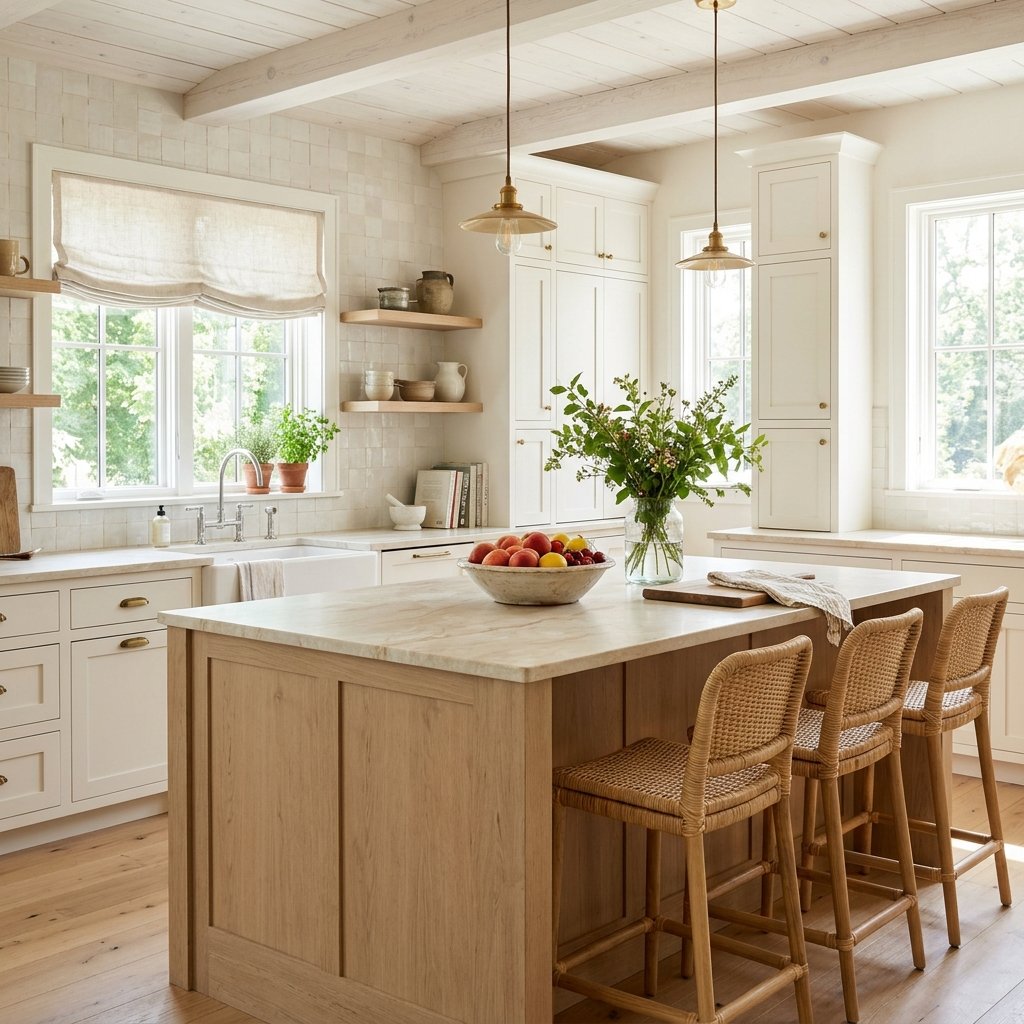
16. Keep the Kitchen Light and Simple
A summer house kitchen doesn’t need complicated decorating.
Focus on:
- Clear counters
- Warm cabinetry
- Wood accents
- Simple hardware
- Good lighting
A bowl of fruit, small plant, or stack of cutting boards may be all the decoration you need.
17. Add Open Shelves Carefully
A few open shelves can add casual character.
Use them for attractive items you genuinely use:
- Glasses
- Bowls
- Pitchers
- Cookbooks
Don’t turn every shelf into a display.
In kitchens, shelves near cooking areas may also collect grease and require more frequent cleaning.
18. Create a Relaxed Summer Bedroom
Keep the bedroom simple.
Start with:
- Light bedding
- Comfortable pillows
- Small nightstands
- Soft lighting
Add one subtle color through a quilt, pillow, or throw.
A summer bedroom should feel restful rather than heavily decorated.
19. Use Lightweight Bedding
Heavy layers can make a bedroom look visually warm even when the air conditioning is running.
For summer, consider a simpler arrangement such as:
Sheets + lightweight blanket or quilt
or:
Sheets + lightweight duvet suited to your sleeping environment
Comfort depends on room temperature, humidity, materials, and personal preference, so choose bedding based on how you actually sleep.
20. Add Simple Floral Patterns
A small floral pattern can bring cottage character to a summer house.
Try it on:
- Pillow
- Quilt
- Curtain
- Chair cushion
Pair florals with solids and simple stripes rather than introducing many competing patterns.
21. Let the House Feel Collected
One of the easiest ways to make a summer house feel welcoming is to avoid making everything perfect.
Mix:
- New sofa
- Old wood table
- Woven chair
- Simple pottery
- Family books
- Art you love
A summer retreat should feel like a place people actually use.

Summer House Living Room Ideas
Start with comfortable seating.
A practical formula is:
Sofa + two chairs + coffee table + rug
Then add:
- Side tables
- Lamps
- Curtains
- Artwork
Avoid filling every wall.
A little empty space makes the room feel calmer.
Small Summer House Interior Ideas
Small rooms benefit from furniture that earns its space.
Try:
- Storage ottoman
- Small dresser instead of decorative console
- Dining bench
- Side table with drawers
Don’t automatically use tiny furniture.
A properly scaled sofa can make a small living room feel more intentional than several undersized pieces.
Summer House Bedroom Ideas
Bedrooms can be especially simple.
Choose a restrained palette such as:
Blue and White
Fresh and classic.
Cream and Green
Soft and natural.
Warm Neutral
Cream, beige, and wood.
Cottage Floral
Warm white with small floral accents.
Keep bedside surfaces relatively uncluttered.
Summer House Kitchen Ideas
Focus on function first.
Use decorative elements that can actually serve the room:
- Cutting boards
- Fruit bowl
- Ceramic pitcher
- Cookbooks
- Small plant
Keep decor away from burners and other hot surfaces, and maintain manufacturer-required clearances around cooking appliances.
Summer House Dining Room Ideas
Use materials that don’t feel too formal.
Wood, woven textures, linen-look textiles, and simple ceramics can create a relaxed dining area.
For a centerpiece, try:
- Garden flowers
- Branches
- Bowl of fruit
Keep arrangements low enough that people can comfortably see across the table.
Summer House Bathroom Ideas
Carry the same relaxed palette into the bathroom.
Try:
- Warm white
- Light wood
- Pale blue
- Soft green
- Beige
Use materials appropriate for wet and humid conditions.
Natural-looking finishes are beautiful, but suitability for bathrooms should come before appearance.
Summer House Entryway Ideas
A summer house entry needs to handle real life.
Create places for:
- Shoes
- Bags
- Hats
- Towels
A bench, hooks, and baskets can be more useful than purely decorative furniture.
Keep walking paths and exits clear.
Summer House Mudroom Ideas
If your retreat is near a beach, lake, pool, or garden, a mudroom or drop zone can be invaluable.
Use:
- Durable flooring
- Hooks
- Baskets
- Bench
- Towel storage
Choose materials that tolerate the moisture and dirt the room will realistically encounter.
Coastal Summer House Interiors
Coastal style works best when it is subtle.
Instead of covering the house with anchors and seashells, use:
- Warm white
- Faded blue
- Natural wood
- Woven texture
- Relaxed linen-look fabrics
Let the colors and materials suggest the setting.
Cottage Summer House Interiors
For a cottage look, mix:
- Cream
- Florals
- Gingham
- Painted furniture
- Natural wood
- Vintage pieces
Keep the palette restrained so the room feels collected rather than cluttered.
Modern Summer House Interiors
Modern summer houses can still feel warm.
Use:
- Warm white
- Pale wood
- Black accents
- Simple furniture
- Large-scale greenery
Keep decorative accessories minimal and let texture provide interest.
Rustic Summer House Interiors
For a more rustic retreat, use natural materials generously.
Try:
- Medium wood
- Stone
- Woven baskets
- Textured rugs
Balance heavier materials with cream upholstery and lighter walls.
Summer House Color Ideas
A few easy palettes include:
Classic Summer
Warm white + faded blue + natural wood
Garden-Inspired
Cream + sage green + medium wood
Warm Neutral
Warm white + beige + oak
Coastal
Cream + pale blue + woven tan
Cottage
Warm white + dusty floral colors + wood
Modern
Warm white + light oak + black
Use one palette throughout connected rooms for a more cohesive house.
How to Mix Wood Tones in a Summer House
Wood tones don’t have to match.
Choose one dominant wood and repeat it a few times.
Then introduce one secondary tone.
For example:
Light oak dining table + medium vintage side table
The variation can make the interior feel more natural.
How to Mix Patterns
Start with one main pattern.
Then add a smaller secondary pattern.
For example:
Floral + stripe
or:
Gingham + solid
Keep the colors related.
You don’t need pattern on every upholstered surface.
How to Decorate a Summer House on a Budget
Start by removing unnecessary items.
A lighter room may need less decor rather than more.
Then consider inexpensive updates such as:
- Pillow covers
- Lightweight curtains
- Paint
- Baskets
- Secondhand furniture
- Simple artwork
- Fresh branches or flowers
Spend more on furniture that gets heavy everyday use.
No-Buy Summer House Decorating Ideas
You may already own what you need.
Try moving:
- Woven baskets
- Blue pillows
- Wood stools
- White pottery
- Small lamps
- Vintage art
from other rooms.
Remove heavy winter throws and overly dark accessories.
Even rearranging furniture to emphasize windows and outdoor views can change the feeling of a room.
How to Make a Summer House Feel Expensive
Keep the styling restrained.
Focus on:
- Properly scaled furniture
- Large rug
- Full curtains
- Good lighting
- Natural materials
- Substantial artwork
Avoid scattering many small accessories around the room.
One large vase or piece of art often has more impact than a collection of tiny decor.
How to Make a Summer House Feel Cozy
Light doesn’t have to mean cold.
Add warmth with:
- Wood
- Woven texture
- Soft upholstery
- Rugs
- Lamps
- Warm neutral colors
At night, table and floor lamps can make a light summer interior feel much more intimate.

Summer House Lighting Ideas
Take advantage of natural light during the day.
For evenings, layer:
- Ceiling fixtures
- Table lamps
- Floor lamps
- Wall sconces where appropriate
Use lighting that supports the room’s function rather than relying on one bright ceiling fixture.
Summer House Window Treatments
Keep window treatments visually light while meeting practical needs.
Depending on the room, you may need:
- Privacy
- Glare reduction
- Heat control
- Room darkening
A bedroom may need more substantial light control than a living room.
Choose treatments based on function first.
Summer House Storage Ideas
Casual homes still need organization.
Use:
- Baskets
- Closed cabinets
- Dressers
- Benches with storage
- Hooks
Store items close to where they’re used.
Towels near the entrance or bathroom are more useful than hidden in a distant bedroom closet.
Decorating With Flowers and Greenery
Summer is the perfect time for simple botanical decor.
Try:
- Garden flowers
- Branches
- Herbs
- Potted plants
Keep arrangements relaxed.
Before bringing plants indoors, consider toxicity if children or pets can access them.
Summer House Outdoor Connection
The interior should relate to what is outside.
Arrange furniture to take advantage of:
- Garden views
- Water views
- Patio
- Porch
Keep windows visually open where privacy allows.
Repeating a few interior materials outside—such as wood tones or woven textures—can also help the spaces feel connected.
Practical Summer House Decorating Tips
A beautiful retreat should be easy to maintain.
Choose finishes with real life in mind.
Consider:
- Wet swimsuits
- Sandy or muddy feet
- Children
- Pets
- Frequent guests
Washable textiles, durable finishes, and practical storage may contribute more to a relaxed atmosphere than delicate decor that constantly needs protection.
Summer House Safety Considerations
Keep the relaxed look practical.
Make sure:
- Walking paths remain clear.
- Rugs don’t create slip or trip hazards.
- Tall furniture is secured where appropriate.
- Window coverings don’t create unsafe cord hazards.
- Furniture doesn’t block exits.
- Lamps and electrical equipment are used appropriately.
- Candles and open flames remain away from curtains and other combustibles.
- Heavy mirrors and artwork are securely mounted.
- Cooking areas remain clear of combustible decor.
- Wet-area materials are suitable for their location.
If you’re making structural, electrical, plumbing, or other substantial changes to a summer house, follow applicable local requirements and use qualified professional help where appropriate.
Common Summer House Interior Mistakes
Making Everything Blue and White
Add wood and neutral texture for balance.
Buying Matching Furniture Sets
Mixing pieces can feel more relaxed.
Using Too Many Coastal Accessories
Let the palette create the mood.
Choosing Only White Furniture
Natural wood provides useful contrast.
Ignoring Storage
Vacation homes can become cluttered quickly.
Filling Every Surface
Leave breathing room.
Using Heavy Window Treatments
Choose treatments that suit the room’s light and privacy needs without unnecessary visual weight.
Forgetting Evening Lighting
Lamps make a major difference after sunset.
Choosing Impractical Fabrics
Consider how the house will actually be used.
Making Every Room Different
Repeat a few colors and materials throughout the house.
A Simple Summer House Decorating Formula
Step 1: Lighten the Background
Use warm white or another soft neutral.
Step 2: Add Natural Wood
Bring warmth into the room.
Step 3: Choose Comfortable Seating
Prioritize function.
Step 4: Add One Summer Color
Blue or green works beautifully.
Step 5: Introduce Woven Texture
Use chairs, baskets, rugs, or shades.
Step 6: Add One Simple Pattern
Stripe, floral, or gingham.
Step 7: Keep Window Treatments Light
While meeting privacy and light-control needs.
Step 8: Add Practical Storage
Baskets and cabinets keep clutter contained.
Step 9: Layer the Lighting
Include lamps for evening.
Step 10: Stop Before the Room Feels Overdecorated
Summer houses benefit from simplicity.

FAQ About Summer House Interiors
How do you decorate a summer house?
Start with a light neutral background, comfortable furniture, natural wood, woven textures, and a small amount of seasonal color. Keep the room relaxed and practical rather than heavily themed.
What colors are good for summer house interiors?
Warm white, cream, beige, faded blue, sage green, and natural wood tones are versatile choices for a light, relaxed interior.
How do I make a summer house feel cozy?
Use wood furniture, rugs, woven materials, soft upholstery, lamps, and warm neutral colors. A light interior can still feel comfortable and inviting.
How do I make a summer house look expensive?
Use fewer, larger pieces, appropriately scaled furniture, full window treatments, a substantial rug, good lighting, natural materials, and restrained styling.
What furniture works in a summer house?
Comfortable sofas, woven chairs, wood tables, benches, dressers, and practical storage pieces all work well. Choose furniture based on how the house will actually be used.
How can I decorate a summer house on a budget?
Paint, rearrange existing furniture, shop secondhand, change pillow covers, add lightweight curtains, use baskets, and bring in simple flowers or greenery.
Does a summer house have to be coastal?
No. Summer houses can be coastal, cottage, rustic, modern, traditional, or a mixture. A relaxed feeling is more important than following a specific decorating theme.
What curtains are good for a summer house?
Light-looking curtains work well, but choose window treatments based on privacy, heat, glare, and room-darkening needs. Bedrooms may need more light control than living areas.
How can I make a small summer house feel bigger?
Use a cohesive palette, reduce visual clutter, choose appropriately scaled furniture, emphasize natural light, and keep pathways clear.
How do I connect summer house interiors to the outdoors?
Arrange furniture around outdoor views, use natural materials, bring in botanical colors and greenery, and keep window treatments visually simple where privacy permits.
Final Thoughts
The most beautiful summer house interiors don’t need complicated decorating.
They need to feel comfortable.
Start with a light, warm background.
Bring in natural wood.
Choose a sofa people can actually relax on.
Add a woven chair, a large rug, simple curtains, and a few blue or green accents.
Then give the house a little character through vintage furniture, pottery, books, flowers, or artwork.
Don’t worry about making every piece match.
A summer retreat often looks better when it feels collected gradually rather than decorated all at once.
Most importantly, make the interior work for the way you spend summer.
Create storage for towels and shoes.
Choose fabrics that suit your family.
Keep furniture away from busy walkways.
Make the dining area comfortable enough for long meals and games.
And add lamps so the rooms feel just as welcoming after the sun goes down.
With a restrained palette, comfortable furniture, natural materials, and a practical approach to decorating, a summer house can feel light and fresh without becoming overly seasonal—a relaxed retreat you’ll be happy to return to every year.