

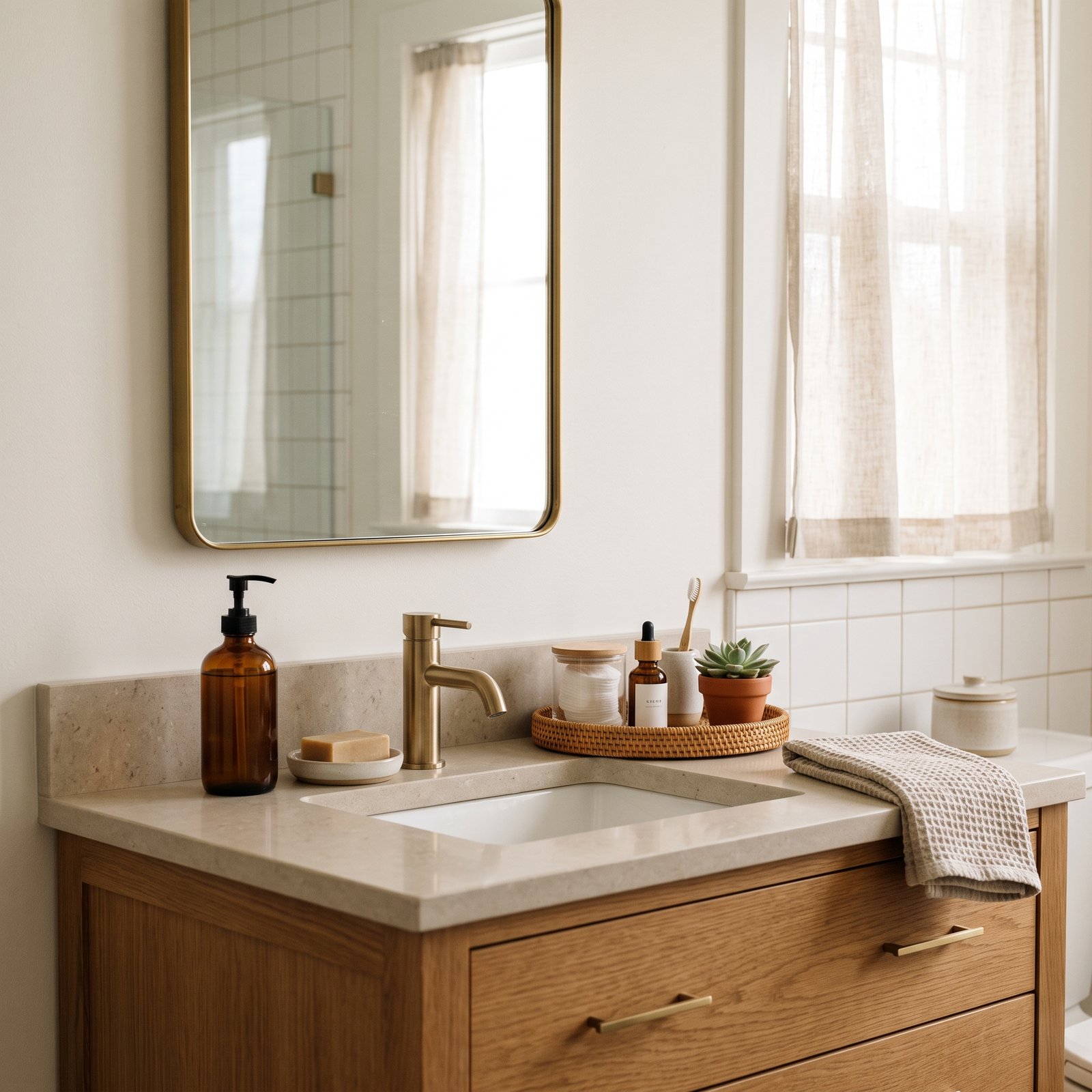
Learning how to decorate a bathroom is less about filling every empty surface with accessories and more about making practical choices that help the room feel comfortable, cohesive, and intentional.
Bathrooms can be challenging to decorate because they need to work hard. You need storage, good lighting, easy-to-clean surfaces, privacy, and enough open space to move comfortably. At the same time, even a small bathroom can feel surprisingly stylish when the colors, textiles, lighting, storage, and finishing details work together.
You also don’t necessarily need a renovation. Changing a mirror, shower curtain, towels, artwork, hardware, or lighting can have a noticeable impact without replacing the vanity or tearing out tile.
Whether you’re decorating a small guest bathroom, a primary bathroom, or a basic builder-grade space, these ideas will help you create a bathroom that feels finished without making it cluttered.
1. Start With a Simple Color Palette
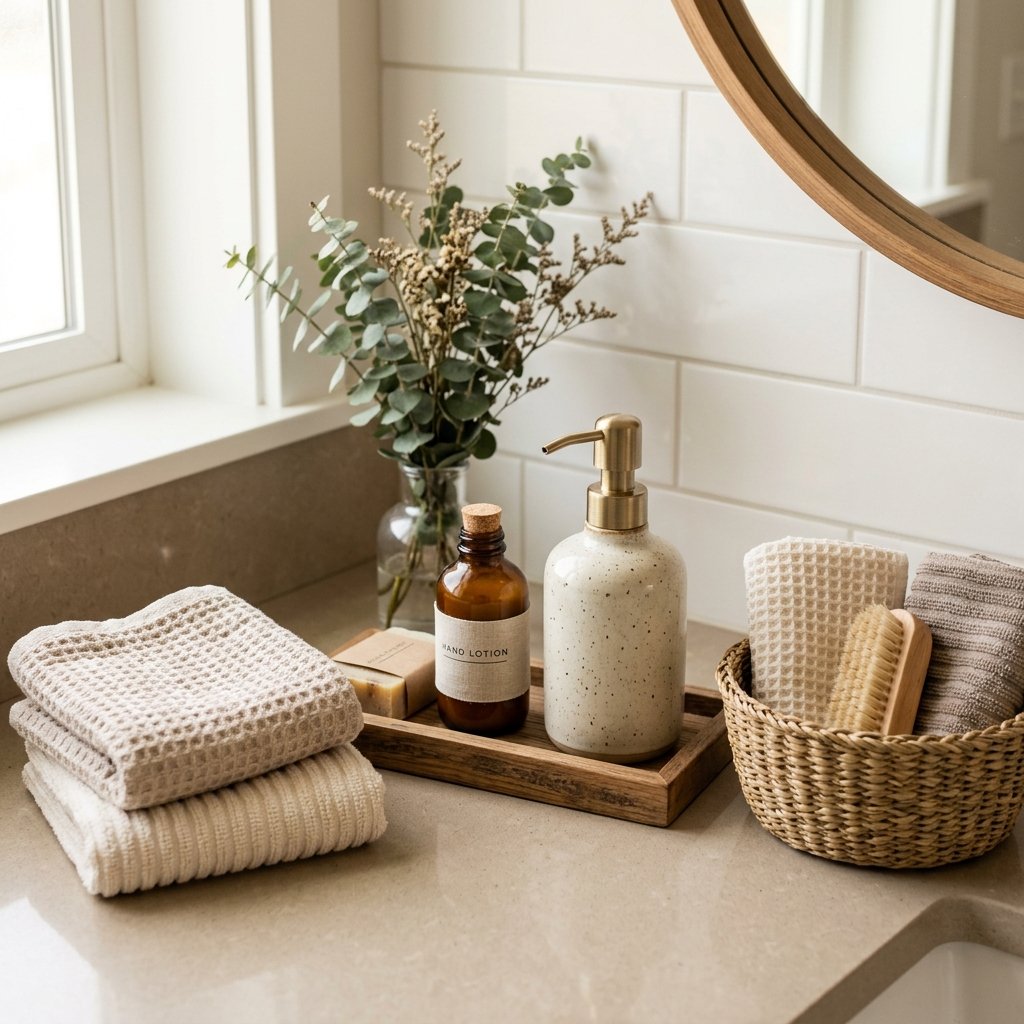
Before buying bathroom decor, decide on a basic color direction.
A limited palette makes it much easier to choose towels, rugs, artwork, storage baskets, hardware, and accessories that look like they belong together.
You might choose:
- Warm white, beige, and natural wood
- White, black, and warm brown
- Soft sage green and cream
- Pale blue, white, and light wood
- Taupe, ivory, and brass-toned accents
- Charcoal, white, and medium wood
If your bathroom already has permanent finishes such as tile, countertops, or a vanity, use those as your starting point rather than fighting against them.
Pay particular attention to undertones.
A bathroom with warm beige tile, for example, may feel more cohesive with creamy whites and warm woods than with icy gray accessories.
You don’t need every item to match exactly. Instead, repeat two or three colors throughout the room so everything feels connected.
2. Make the Vanity the Main Focal Point
In many bathrooms, the vanity is one of the first things you notice when you walk through the door.
Use that to your advantage.
You don’t necessarily need to replace an outdated vanity. Depending on its material and condition, painting or refinishing it may be an option. Changing the hardware can also alter its appearance considerably.
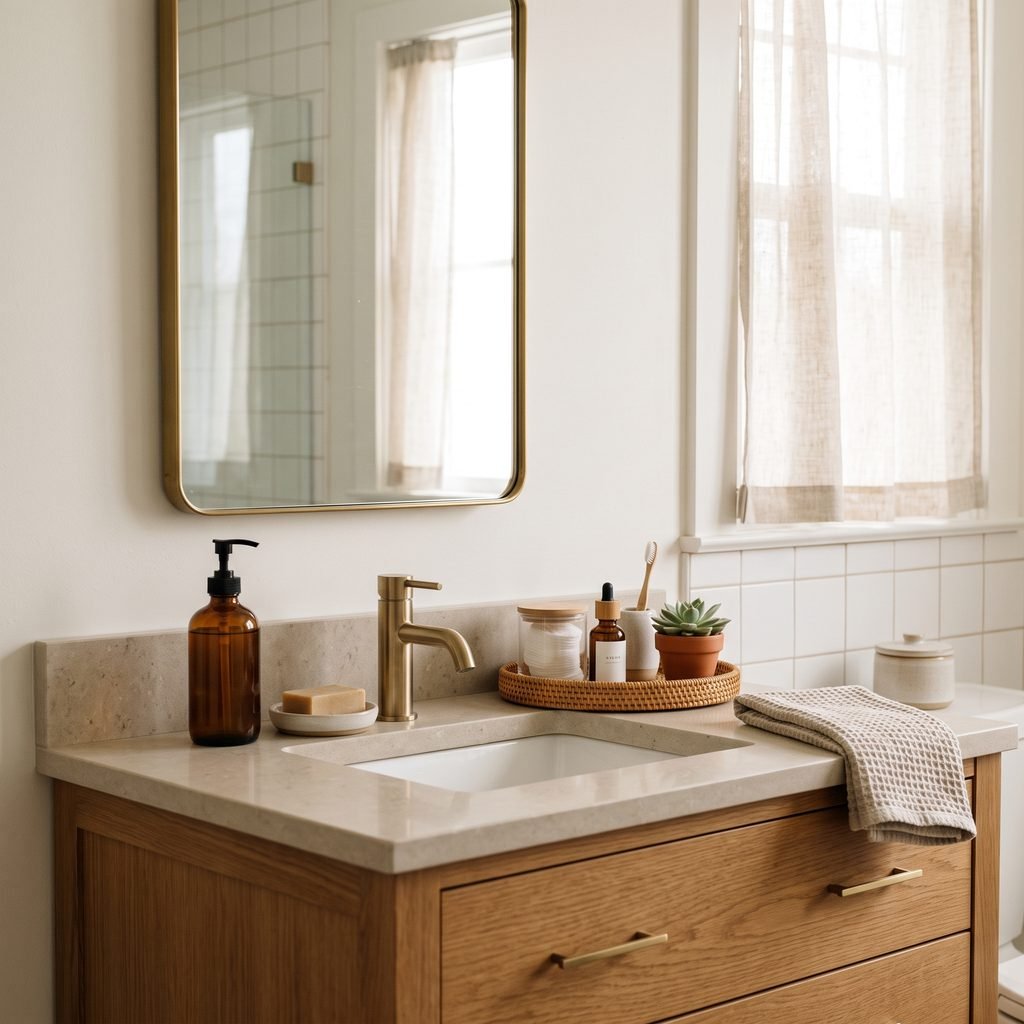
If the vanity is already attractive, keep the countertop relatively uncluttered.
A few practical items are usually enough:
- Soap dispenser
- Small tray
- Toothbrush holder
- Small plant or vase
- Frequently used toiletries in attractive containers
Avoid decorating every inch of countertop. Empty space is part of the design.
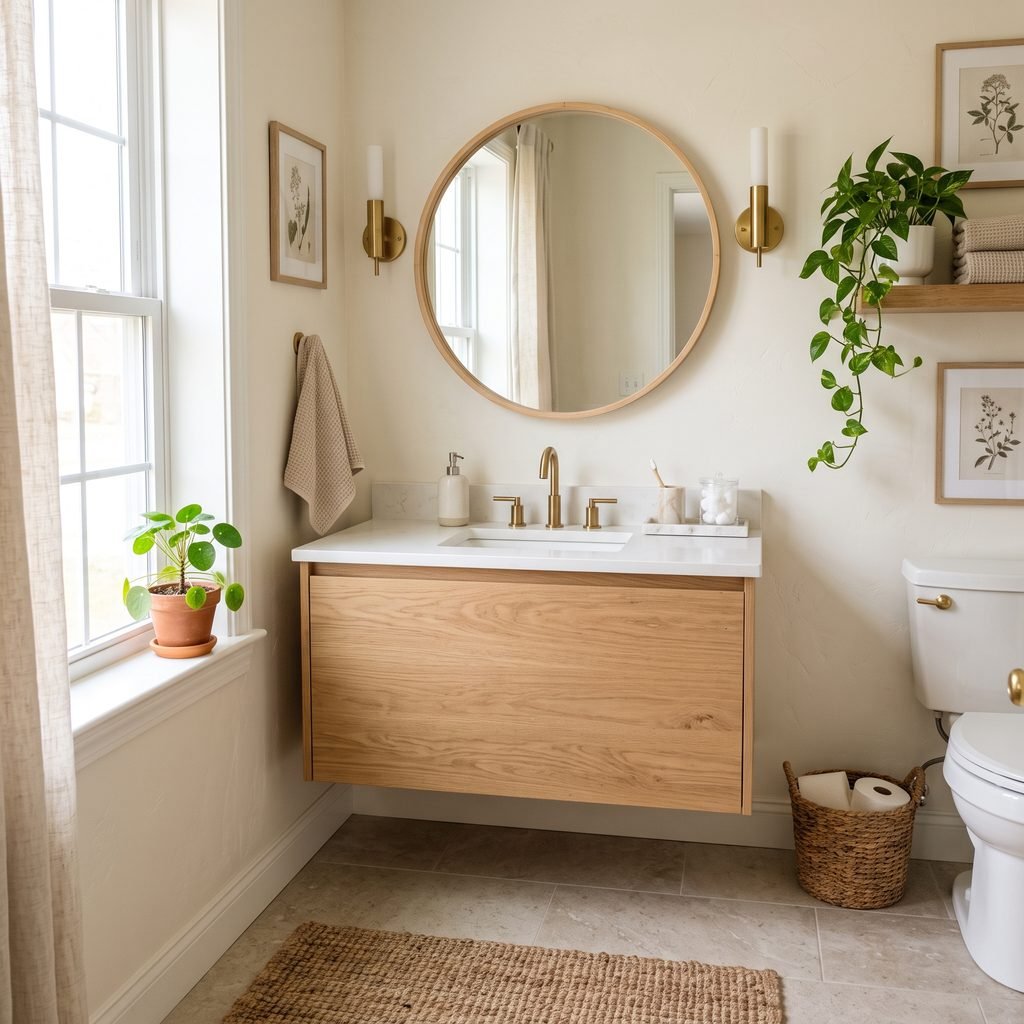
3. Upgrade the Bathroom Mirror
A mirror is functional, but it can also serve as one of the largest decorative elements in the bathroom.
If your current mirror feels plain, damaged, or out of proportion, changing it can refresh the whole vanity area.
Popular shapes include:
- Large rectangular mirrors
- Rounded rectangles
- Arched mirrors
- Circular mirrors
- Simple framed mirrors
Choose a frame finish that relates to something else in the bathroom, such as the faucet, cabinet hardware, lighting, or wood tones.
Scale matters too.
A very small mirror over a wide vanity can feel disconnected, while an oversized mirror can visually open a compact bathroom.
Before changing a mirror, check its mounting method and weight. Large mirrors need appropriate hardware and secure attachment to suitable framing or anchors according to the hardware manufacturer’s requirements.
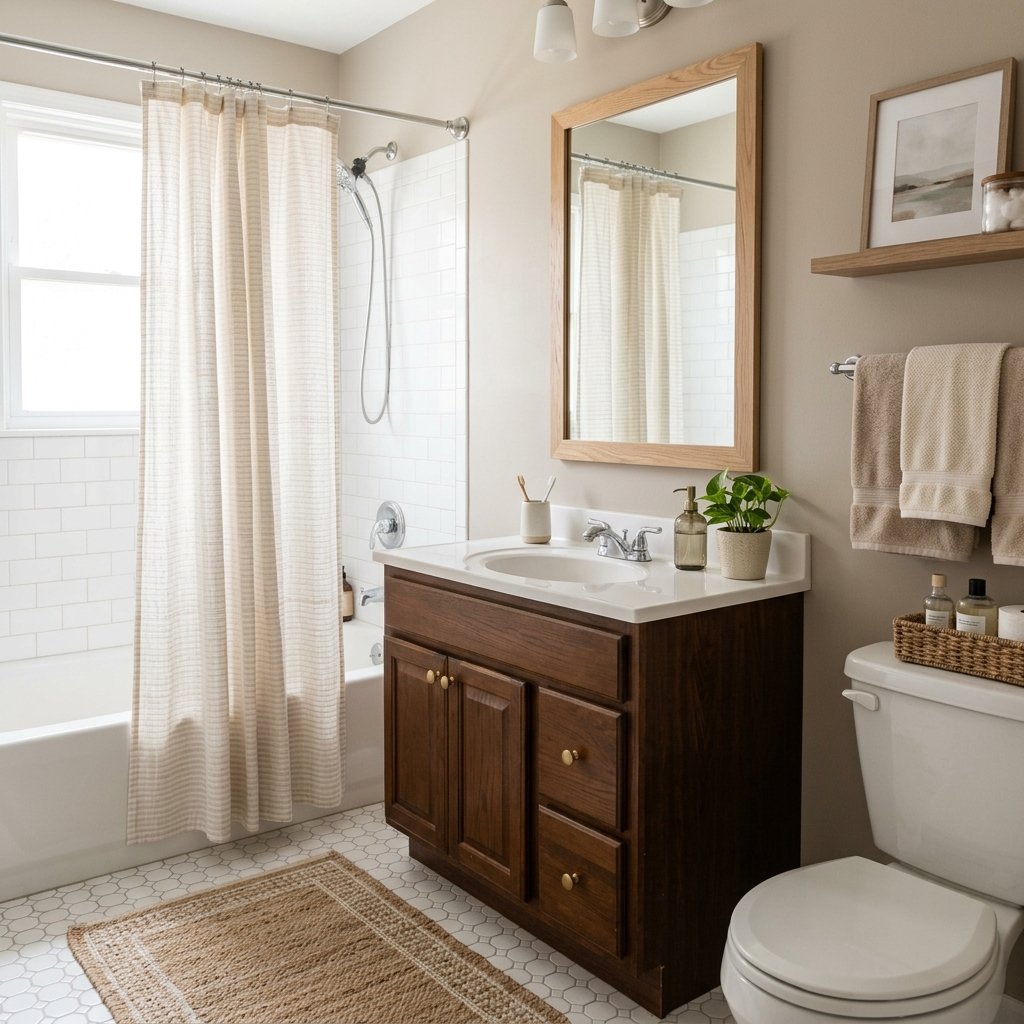
4. Choose a Shower Curtain That Looks Intentional
If your bathroom has a shower curtain instead of a glass enclosure, treat the curtain as decor.
Because it covers such a large vertical area, it can influence the appearance of the entire room.
For a calm, airy bathroom, consider:
- White or cream
- Subtle stripes
- Small-scale patterns
- Muted botanical prints
- Textured neutral fabrics
If the rest of the bathroom is plain, a patterned curtain can become the focal point.
Use a suitable shower liner where needed to manage water and protect the decorative curtain.
You can also experiment with visually raising the curtain rod where the installation and curtain dimensions allow. A longer vertical line can make the room feel taller, but make sure the curtain and liner still function properly at the tub or shower edge.
5. Add Softness With Towels and a Bathroom Rug
Bathrooms contain many hard surfaces—tile, glass, mirrors, countertops, metal fixtures, and porcelain.
Textiles soften all of those materials.
Choose towels that coordinate with your overall palette rather than buying several unrelated colors. White towels create a clean, classic appearance, while earthy colors can make a bathroom feel warmer.
A bathroom rug provides another opportunity for color and texture.
Choose something suitable for a bathroom environment, easy to clean, and appropriately sized so it doesn’t interfere with doors or create an unnecessary tripping hazard.
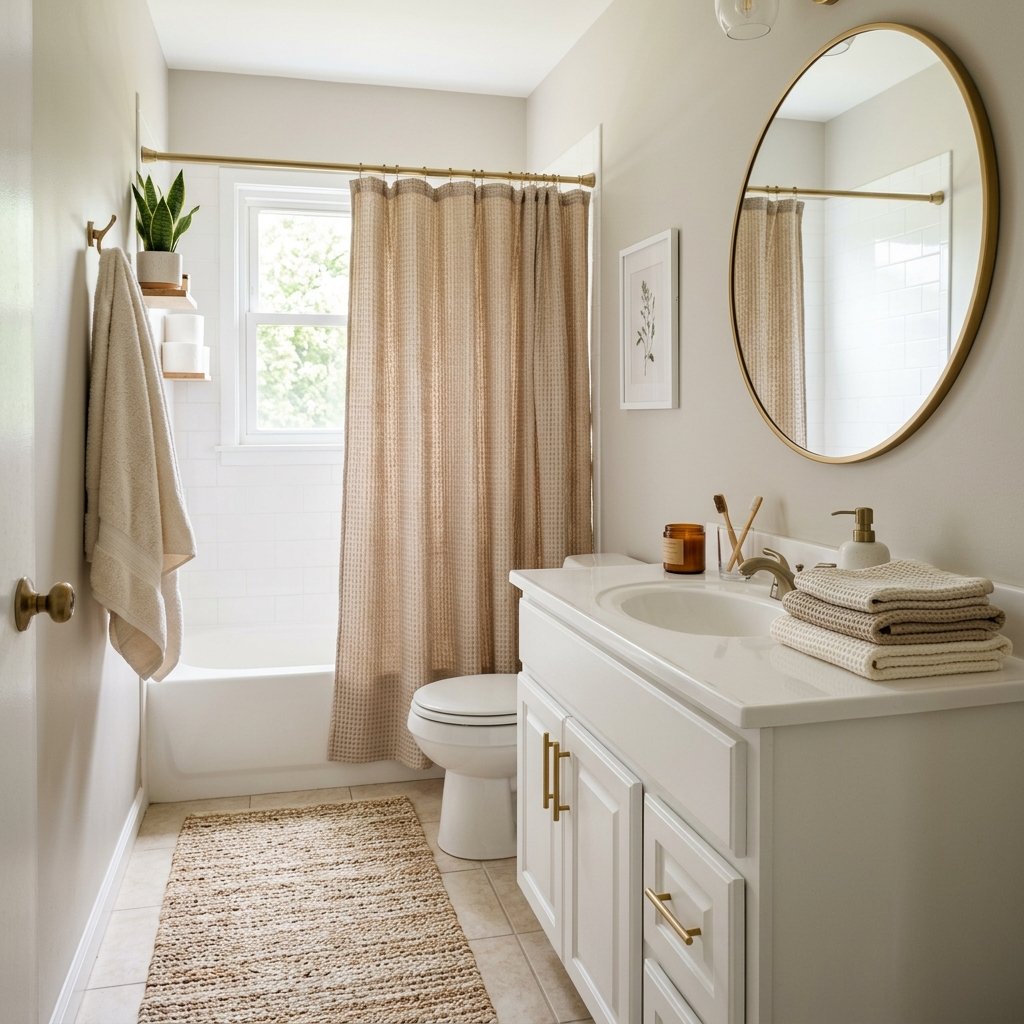
6. Decorate With Useful Accessories
The easiest way to overcrowd a bathroom is to treat every accessory as decoration.
Instead, let useful items do some of the decorating.
A coordinated soap dispenser, attractive tissue box cover, simple tray, woven storage basket, or good-looking towel hooks can be both functional and decorative.
This approach is especially useful in small bathrooms because you don’t have to sacrifice valuable space simply to add personality.
Try grouping countertop accessories instead of spreading them around.
For example, place a soap dispenser and small container on a tray. The tray visually connects the items and makes the arrangement feel deliberate rather than cluttered.
7. Bring in Natural Wood Tones
If your bathroom feels cold or sterile, wood tones can add warmth.
You don’t need a wood vanity to achieve this.
Try introducing wood through:
- A mirror frame
- Small stool
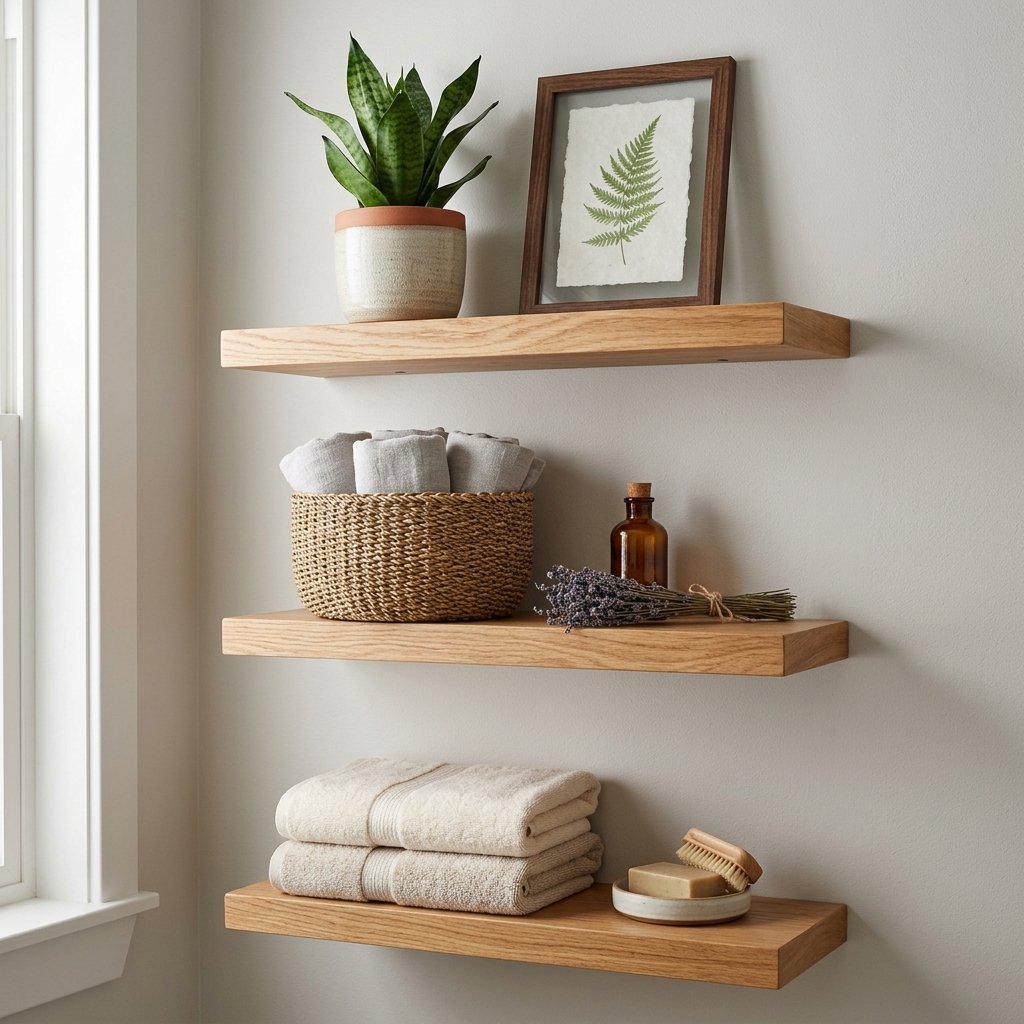
- Floating shelf
- Picture frames
- Storage containers
- Vanity accessories
- Decorative tray
The goal is contrast.
Warm wood can soften an otherwise white bathroom, while lighter woods can balance dark tile or cabinetry.
Because bathrooms are humid environments, choose materials and finishes appropriate for the intended location and keep items that aren’t designed for frequent water exposure away from wet areas.
8. Add Bathroom-Friendly Greenery
A touch of green can make a bathroom feel fresher and more relaxed.
If the room receives suitable natural light, consider a plant that can tolerate the bathroom’s specific light, temperature, and humidity conditions.
If natural plants aren’t practical, a convincing artificial plant can provide a similar decorative effect without requiring sunlight.
Keep scale in mind.
A tiny plant works well on a vanity or shelf, while a larger plant can help fill an awkward empty corner in a spacious bathroom.
Avoid putting plants where they interfere with sinks, doors, shower access, or frequently used countertop space.
9. Use Wall Art Carefully
Bathroom walls are often overlooked, but you don’t need to fill every empty section.
One or two thoughtfully chosen pieces are usually enough.
Good locations include:
- Above the toilet
- Beside the vanity
- On a long empty wall
- Above a freestanding tub where conditions and installation allow
Botanical prints, landscapes, abstract artwork, simple photography, and vintage-inspired pieces can all work.
Keep humidity in mind when selecting materials. Valuable, irreplaceable, or moisture-sensitive artwork may not be appropriate in a steamy bathroom.
Also avoid placing decor where it could be repeatedly splashed or interfere with fixtures.
10. Create Storage That Looks Good
Bathroom storage is part of decorating because clutter can quickly overpower the design.
Start by removing expired products, empty containers, and items that don’t need to live in the bathroom.
Then divide remaining items into two categories:
Things you use frequently: Keep these easy to reach.
Things you use occasionally: Store these inside drawers, cabinets, baskets, or closets where possible.
Attractive storage options can include:
- Lidded baskets
- Drawer organizers
- Matching containers
- Wall cabinets
- Shelving
- Vanity organizers
- Small bins inside cabinets
Open storage works best when it holds a limited number of visually tidy items.
You don’t need to display every skincare bottle you own.
11. Style Shelves Without Overcrowding Them
Bathroom shelves can provide useful storage, but too many small decorations can make them look messy.
Try combining practical and decorative objects.
For example, a shelf might hold folded hand towels, a small plant, and one decorative object.
Another might contain a storage basket and a framed print.
Varying the heights of objects creates more visual interest than lining up several similarly sized containers.
Leave some empty space around each grouping. Shelves generally look more polished when every available inch isn’t occupied.
12. Pay Attention to Bathroom Lighting
Lighting has a major effect on how a bathroom looks and functions.
A beautifully decorated bathroom can still feel uninviting if the lighting is harsh, dim, or poorly positioned.
Ideally, think in layers.
General lighting illuminates the room, while vanity lighting helps with tasks such as grooming.
The appearance of the fixtures matters as well. Replacing an outdated vanity light can help modernize the space, especially when its finish coordinates with other elements in the room.
Electrical work in bathrooms requires extra care because water and electricity are a dangerous combination. Fixtures must be appropriate for their location and installation needs to comply with applicable electrical requirements.
If you’re not qualified or comfortable doing the work safely, use a licensed electrician.
13. Update Small Hardware Details
You might not need to replace the vanity to make it feel different.
Cabinet knobs and pulls, towel bars, hooks, toilet paper holders, and other small hardware pieces can subtly change the room’s style.
Common finishes include:
- Matte black
- Chrome
- Nickel tones
- Brass tones
- Bronze tones
Don’t feel obligated to make every metal finish identical.
Mixed metals can look intentional when one finish is dominant and another is repeated in a few places. What usually looks less cohesive is having several unrelated finishes that each appear only once.
Before purchasing replacement hardware, measure existing holes and mounting locations. Choosing compatible sizes can make the update much simpler.
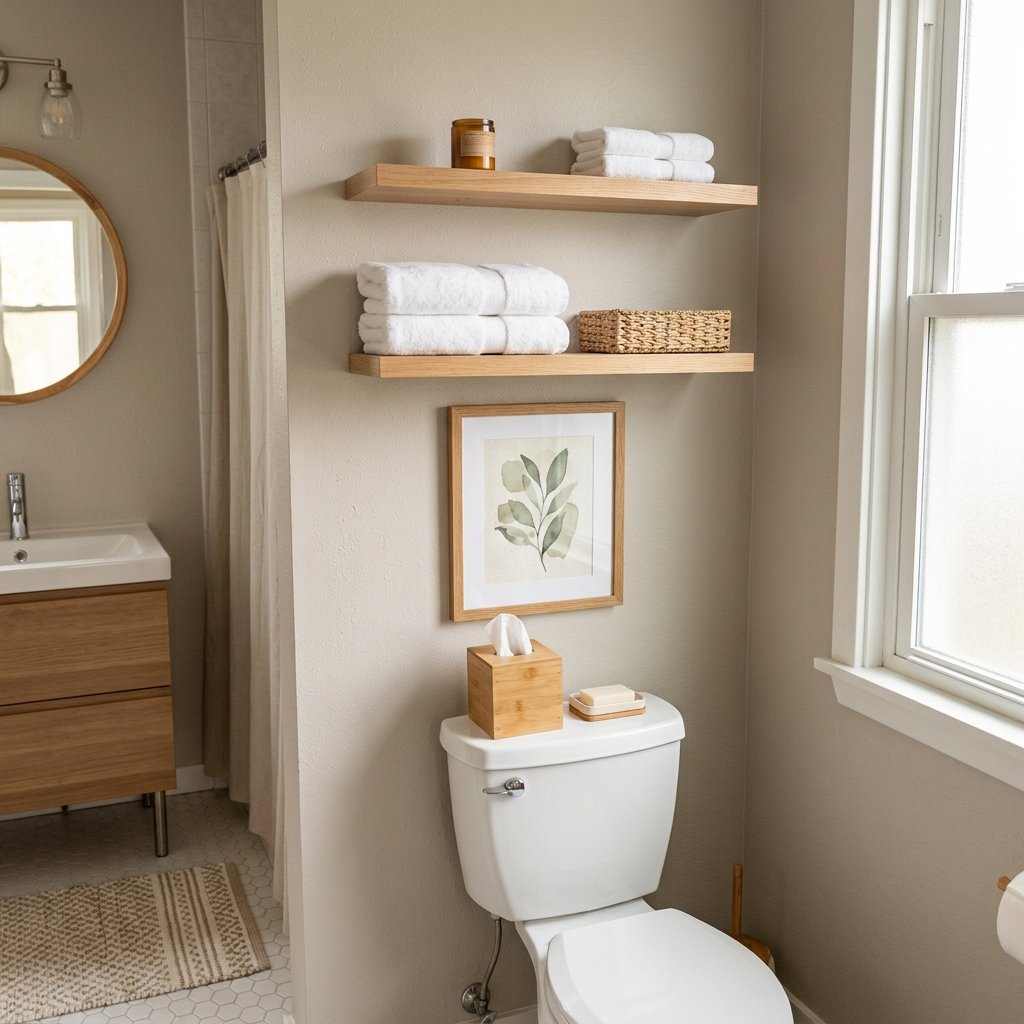
14. Decorate the Space Above the Toilet
The wall above the toilet is often unused, especially in small bathrooms.
Depending on the room, it could accommodate:
- One piece of artwork
- A small wall cabinet
- One or two shelves
- A shallow storage unit
Keep the arrangement proportionate to the toilet and surrounding wall.
If you’re adding shelves or cabinets, secure them appropriately for their weight and intended contents. Don’t place heavy or poorly secured objects where they could fall.
For a small bathroom, combining storage and decoration here can be more useful than adding purely decorative pieces elsewhere.
15. Make a Small Bathroom Feel Bigger
Decorating a small bathroom is often about what you don’t add.
Too many colors, tiny accessories, shelves, containers, and wall decorations can visually shrink the room.
Instead, keep the larger surfaces relatively simple.
A few strategies that can help a small bathroom feel more open include:
- Using a restrained color palette
- Choosing a generously sized mirror
- Keeping counters clear
- Using wall-mounted storage where practical
- Limiting small decorative objects
- Maintaining consistent visual lines
- Using good lighting
- Keeping the floor as visually open as possible
You don’t have to use white everywhere. Deep green, navy, charcoal, and other darker colors can create beautiful small bathrooms too.
The key is intentional contrast and a cohesive palette rather than assuming every compact room needs to be pale.
16. Give the Bathroom a Subtle Theme
A theme can help guide your decorating decisions, but it doesn’t need to be literal.
Instead of filling a coastal bathroom with shells, anchors, and signs, for example, create the feeling through soft blues, sandy neutrals, natural textures, and relaxed artwork.
For a spa-inspired bathroom, use soft neutral colors, simple containers, warm wood, plush towels, and uncluttered surfaces.
For a modern bathroom, focus on clean shapes, simple hardware, strong contrast, and restrained accessories.
For a cottage look, incorporate warm colors, vintage-inspired art, painted cabinetry, subtle patterns, and natural materials.
The style should come through in the overall atmosphere rather than a collection of themed objects.
17. Finish With the Small Details
Once the main decorating decisions are made, look at the bathroom as a whole.
Are there five different colors competing for attention?
Is the vanity crowded?
Does the rug feel too small?
Are the towels coordinated?
Is there an awkward empty wall that actually needs something—or would leaving it empty make the room feel calmer?
Often the final step is editing rather than adding.
Remove anything that doesn’t contribute to the room’s function or overall look.
A bathroom with eight carefully chosen elements can feel far more polished than one filled with twenty-five unrelated decorations.
How to Decorate a Bathroom on a Budget
You don’t have to replace tile, countertops, or plumbing fixtures to make a noticeable change.
If the budget is limited, concentrate on highly visible updates.
Paint is often one of the first things worth considering when the existing walls are suitable for repainting. Choose a coating appropriate for bathroom conditions and follow the manufacturer’s instructions for preparation, ventilation, application, and drying.
After paint, consider inexpensive changes such as a new shower curtain, towels, rug, mirror, cabinet hardware, artwork, and storage baskets.
You can also reuse things from other rooms. A small framed print, basket, stool, tray, or vase may work perfectly in the bathroom without requiring another purchase.
Try changing only a few elements at first.
You may discover that the room doesn’t need nearly as much decor as you initially thought.
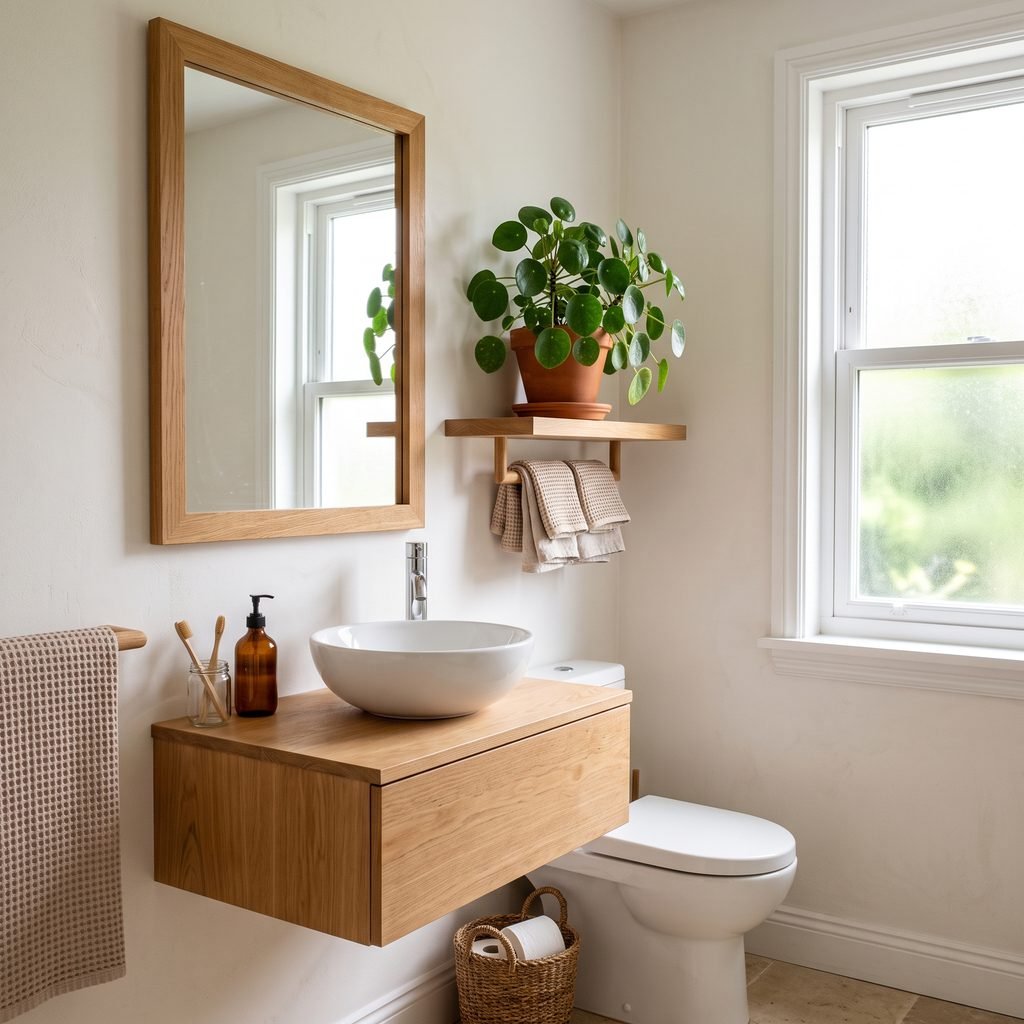
Common Bathroom Decorating Mistakes
Even beautiful individual pieces can make a bathroom feel awkward if they’re used without considering the room as a whole.
Adding Too Many Accessories
Small bathrooms become cluttered quickly. Choose fewer, larger, more useful items rather than covering every surface with small decorations.
Ignoring Scale
A tiny rug, undersized mirror, or miniature artwork on a large wall can look disconnected.
Measure before buying and consider how each item’s proportions relate to the surrounding fixtures.
Buying Everything From One Matching Set
Coordination is useful, but perfect matching can sometimes make a bathroom feel more like a showroom than a home.
Mix complementary materials and textures while maintaining a consistent palette.
Forgetting About Moisture
Bathrooms are different from living rooms and bedrooms.
Choose materials, coatings, fixtures, adhesives, storage, and decorative objects appropriate for the conditions where they’ll be used.
Good ventilation is also important for controlling excess humidity.
Sacrificing Function for Decoration
Don’t place decorative items where you constantly have to move them to use the sink, shower, drawers, or cabinets.
A bathroom should be easy to use first.
Following Trends Too Literally
Trends can be useful inspiration, but permanent finishes are expensive to change.
If you enjoy a current color or pattern, consider introducing it through easily replaceable pieces such as towels, artwork, rugs, or shower curtains rather than automatically committing to it across every permanent surface.
A Simple Bathroom Decorating Formula
If you’re staring at your bathroom and don’t know where to begin, use this straightforward order:
- Choose a three- or four-color palette.
- Declutter the countertops and visible storage.
- Update the wall color if necessary.
- Address the mirror and lighting.
- Choose a shower curtain if applicable.
- Add coordinated towels and a rug.
- Organize everyday toiletries.
- Add one natural element such as wood or greenery.
- Hang one or two pieces of wall decor.
- Step back and remove anything that feels unnecessary.
You don’t need to complete every step.
Sometimes changing four or five details is enough to make an ordinary bathroom feel completely different.
FAQ About Decorating a Bathroom
How can I make my bathroom look more luxurious?
Focus on simplicity rather than adding more objects. Coordinated towels, a generously sized mirror, good lighting, attractive hardware, neat storage, a well-chosen rug, and uncluttered countertops can create a more polished appearance.
What decor should you put in a bathroom?
Useful bathroom decor can include towels, rugs, shower curtains, mirrors, artwork, baskets, trays, plants, attractive soap dispensers, and carefully styled shelves. Choose pieces according to the size and function of your room.
What colors make a bathroom feel relaxing?
Warm whites, creams, beige, taupe, muted greens, soft blues, and natural wood tones can create a calm atmosphere. Darker colors can also feel relaxing when balanced with appropriate lighting and complementary finishes.
How do I decorate a very small bathroom?
Keep the palette cohesive, limit countertop clutter, use a suitably sized mirror, make storage work harder, and avoid filling every wall with decor. A few well-scaled pieces generally work better than many tiny accessories.
How do I make a boring bathroom look better without renovating?
Start with high-impact decorative changes: paint where appropriate, a mirror, shower curtain, rug, towels, cabinet hardware, artwork, lighting, and better organization. You may be able to change the character of the room while leaving the expensive permanent surfaces alone.
Final Thoughts on How to Decorate a Bathroom
Knowing how to decorate a bathroom isn’t about following one particular style. It’s about creating a room that feels intentional while still functioning well every day.
Start with what you already have. Identify the colors and permanent finishes that need to stay, remove unnecessary clutter, and establish a simple palette.
Then focus on the elements that make the biggest visual difference: the vanity area, mirror, lighting, shower curtain, textiles, storage, and wall decor.
Add warmth through texture, wood, baskets, plants, or artwork, but resist the temptation to decorate every available surface.
Whether you’re working with a tiny guest bath or a larger primary bathroom, a few thoughtful updates can make the room feel more comfortable, organized, and finished—without requiring a complete renovation.