

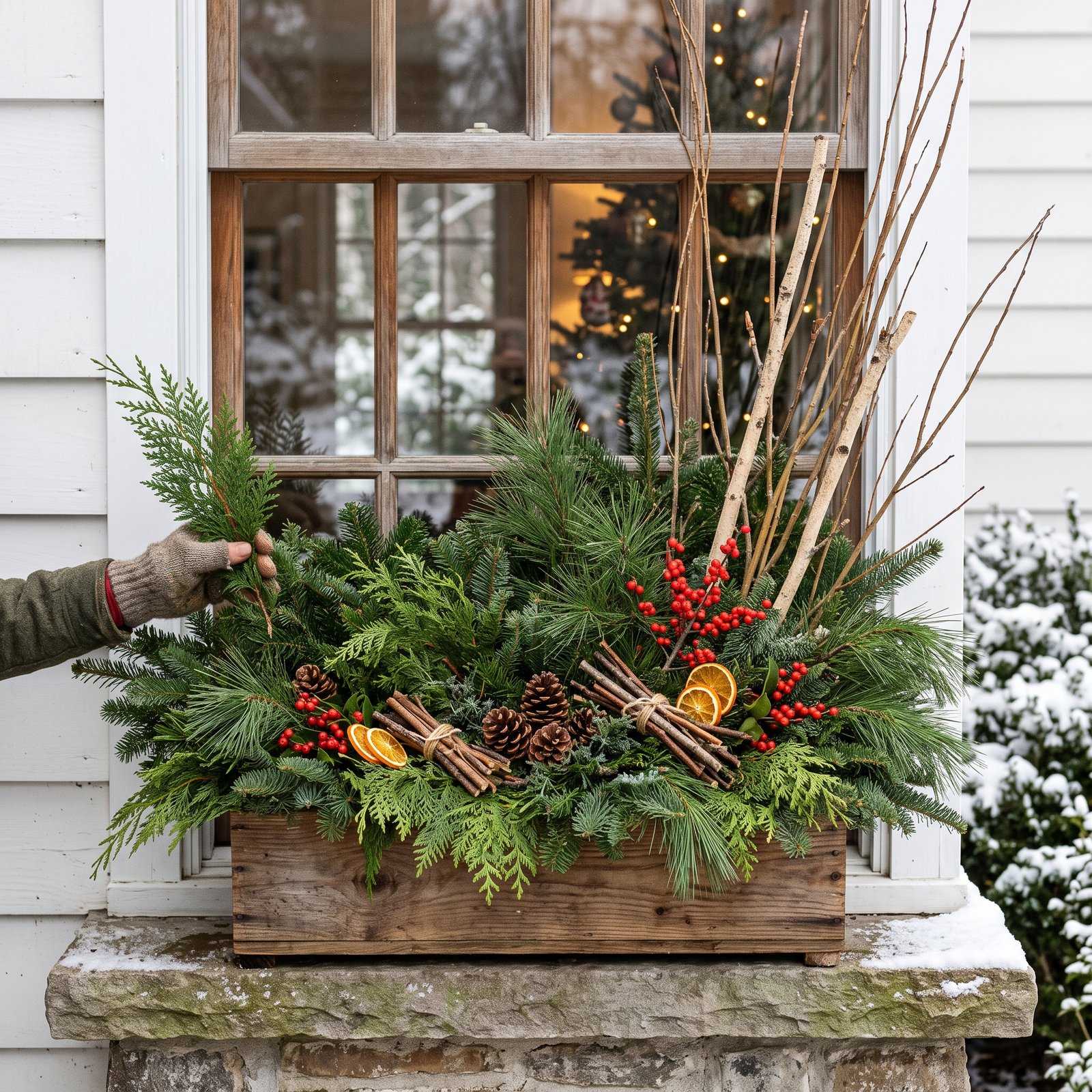
A DIY Christmas window box is one of the easiest ways to make the outside of your home feel festive without decorating every inch of the porch or yard. A simple mix of evergreen branches, pinecones, berries, ribbon, and a few seasonal accents can turn an empty planter into a beautiful holiday focal point.
The best part is that you do not need to plant anything permanently.
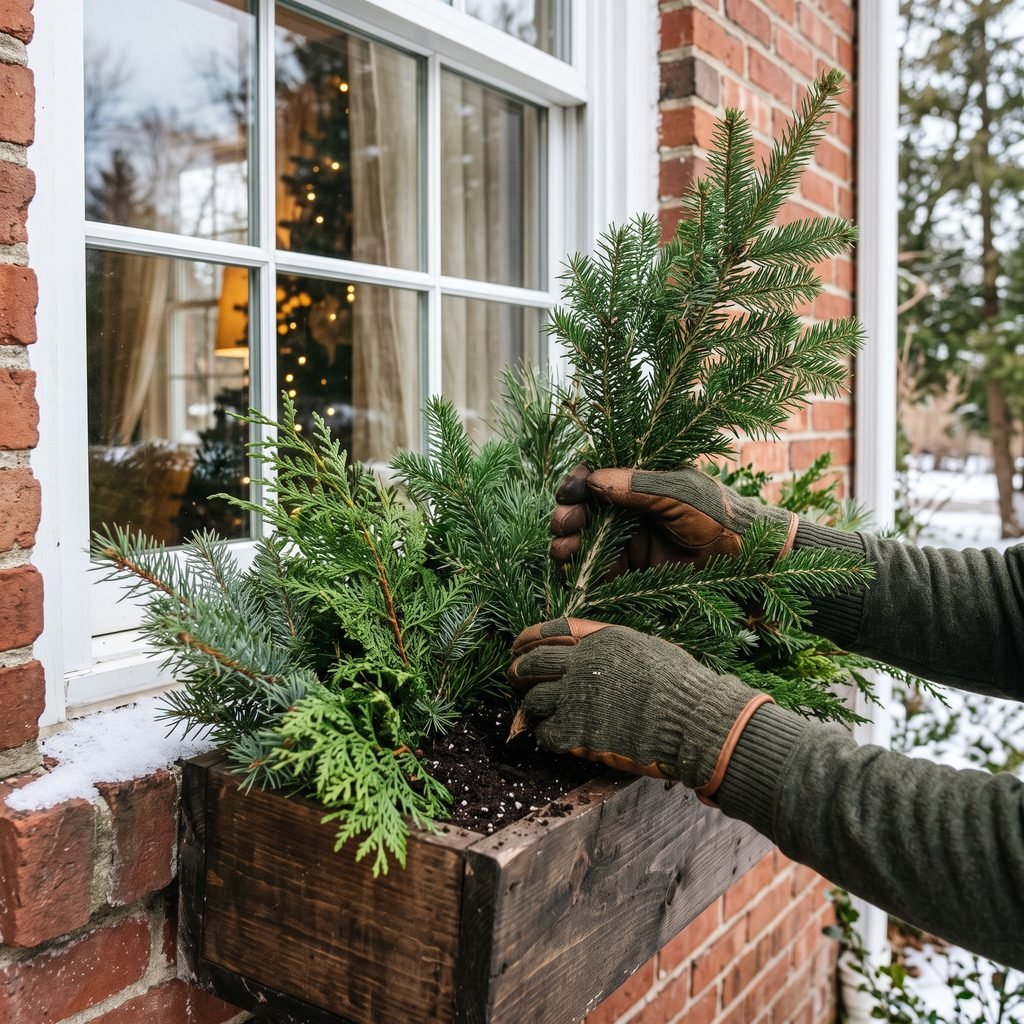
For many winter window boxes, the arrangement is built by inserting cut greenery and decorative stems into an existing planter filled with soil, floral foam designed for outdoor use, or another suitable support material. That means you can often use a window box you already have and simply refresh it for the season.
A Christmas window box can look traditional, rustic, natural, elegant, or modern depending on the materials you choose. You can keep it simple with pine and cedar or create a fuller arrangement with berries, branches, ornaments, and lights.
Below, you’ll find a beginner-friendly process, styling ideas, safety tips, and practical advice for creating a holiday window box that looks balanced and festive.
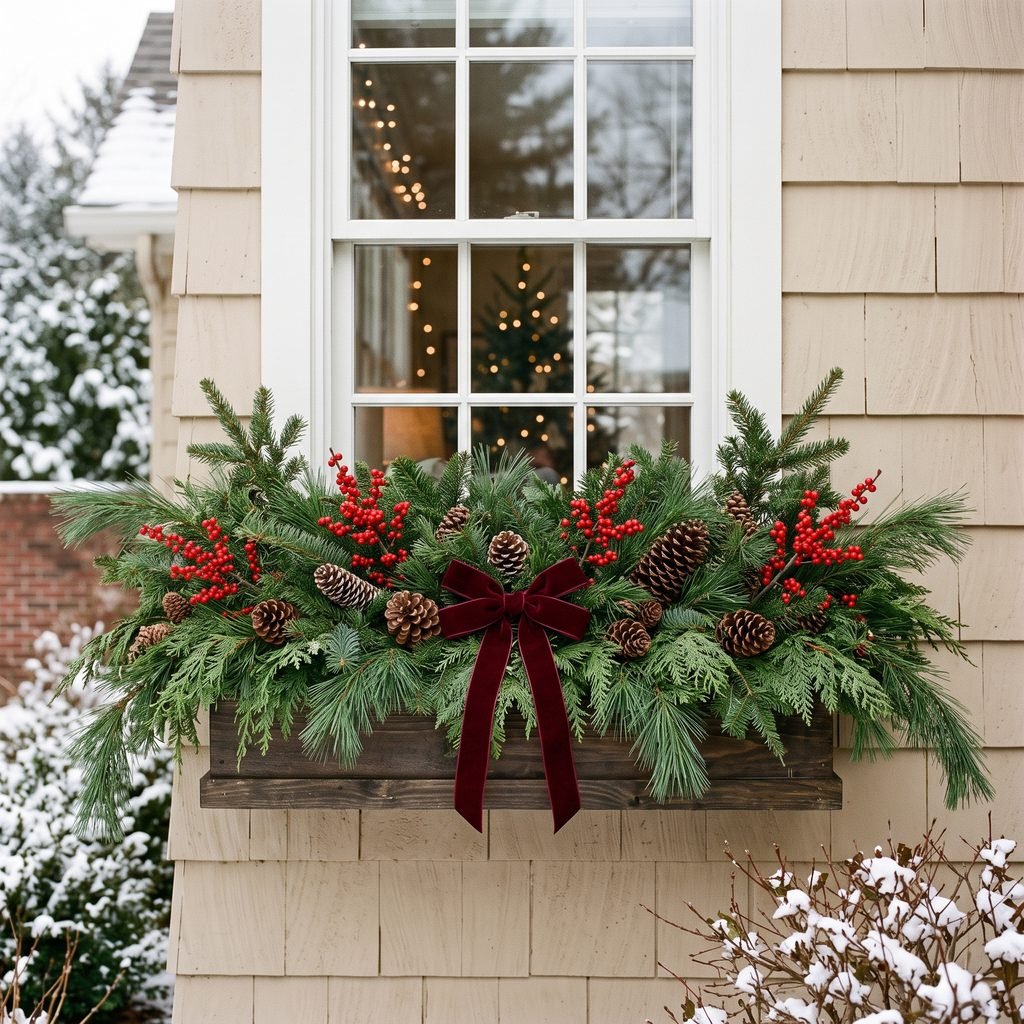
Why Decorate a Window Box for Christmas?
Window boxes are already positioned at eye level, which makes them ideal for seasonal decorating.
A festive arrangement can add curb appeal without requiring a complicated installation. It can also tie together other outdoor decorations such as a wreath, garland, porch planters, or string lights.
Christmas window boxes work especially well because they can add:
- Color during a dull winter season
- Texture around windows
- Natural greenery near the house
- A festive focal point
- Balance to front porch decor
- Seasonal interest without permanent changes
If your home already has several window boxes, repeating the same basic materials in each one can create a polished, cohesive exterior.
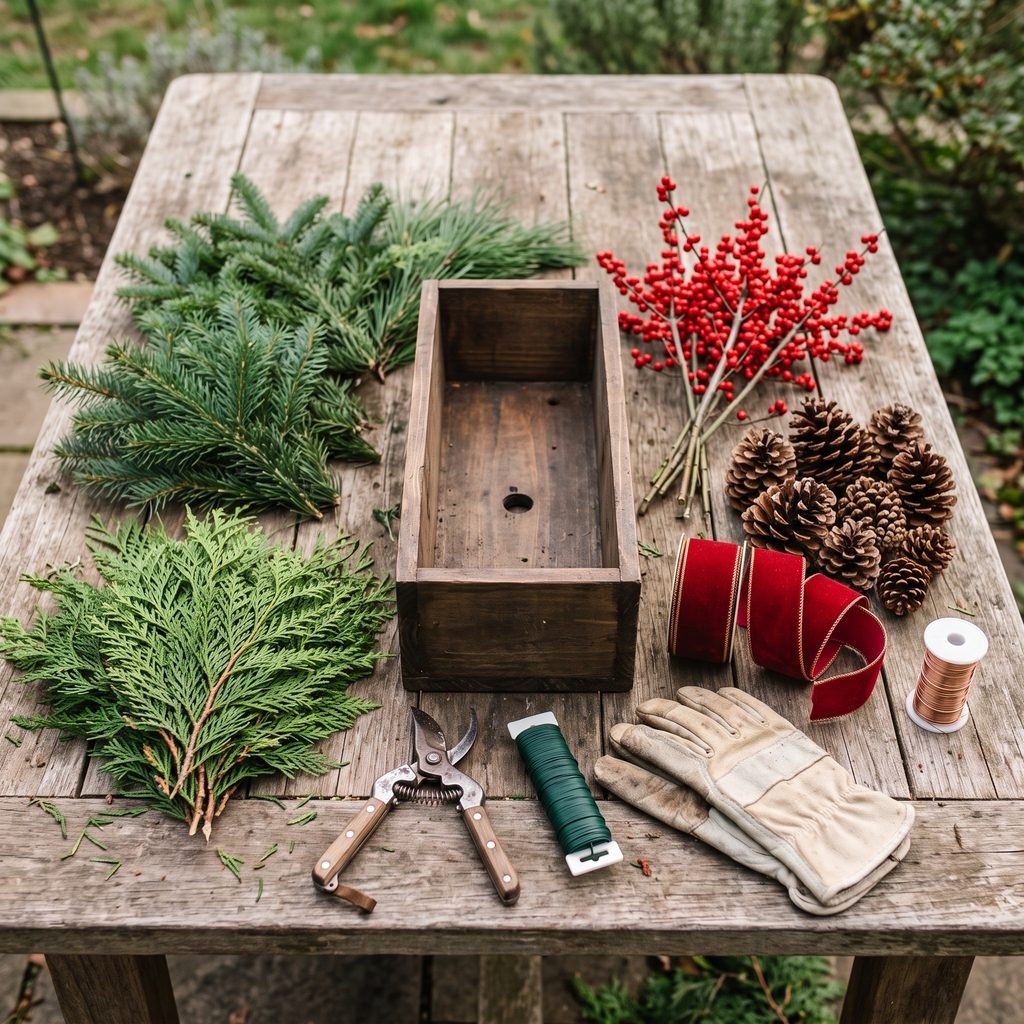
Materials for a DIY Christmas Window Box
You do not need every item on this list.
Choose a small group of materials that fit your style.
Possible supplies include:
- Existing window box or planter
- Potting soil or suitable support material
- Fresh or faux evergreen branches
- Pine or cedar-style greenery
- Fir-style greenery
- Juniper-style branches
- Magnolia leaves
- Red berry stems
- Pinecones
- Decorative branches
- Ribbon
- Outdoor-safe floral wire
- Pruning shears
- Work gloves
- Optional outdoor-rated lights
- Optional ornaments suitable for outdoor use
If you are using fresh greenery, choose material that looks healthy and flexible rather than brittle or already dried out.
If you are buying decorative picks, check whether they are intended for exterior use.
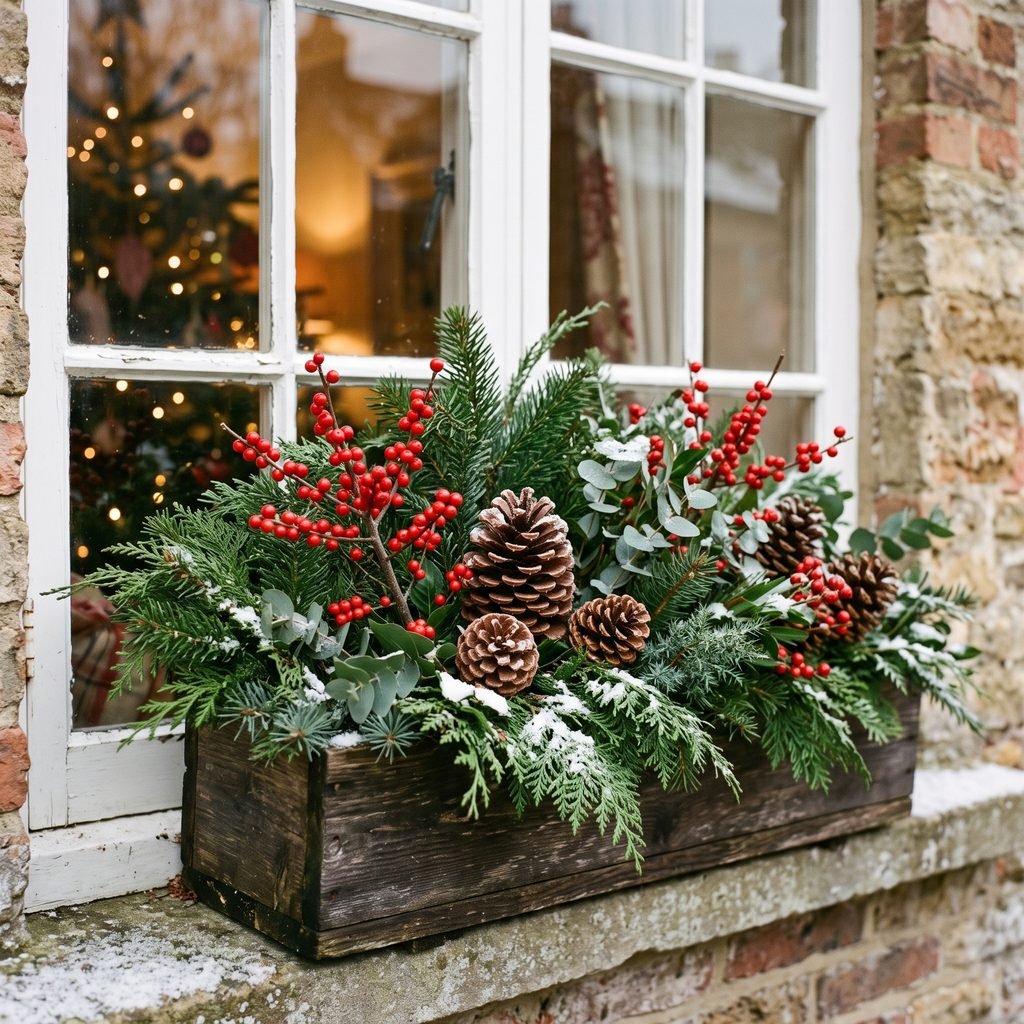
Step 1: Prepare the Window Box
Start by cleaning out the planter.
Remove dead annuals, leaves, and loose debris.
If the box already contains soil, you may be able to leave it in place and use it to anchor greenery.
If the soil is frozen solid, inserting branches may be difficult. Depending on your climate, it may be easier to assemble the window box before extended freezing temperatures arrive.
Check the box itself as well.
Make sure it is securely mounted and in good condition before adding extra seasonal weight.
A Christmas arrangement can become surprisingly heavy once you add wet greenery, pinecones, branches, and snow or rain.
Step 2: Choose a Simple Color Palette
Before adding anything, decide on two or three main colors.
That will make the final arrangement feel much more intentional.
Classic Christmas Palette
Use:
- Deep green
- Red
- Natural brown
- Small touches of gold or brass tone
Rustic Palette
Use:
- Green
- Brown
- Cream
- Natural wood
Elegant Neutral Palette
Use:
- Deep green
- Cream
- White
- Black
- Soft metallic accents
Woodland Palette
Use:
- Green
- Brown
- Burgundy
- Natural pinecones
Avoid introducing too many colors at once.
The greenery already provides plenty of visual texture, so a restrained palette often looks more polished.
Step 3: Create the Greenery Base
Begin with the largest evergreen branches.
Insert them toward the back of the window box so they create height and form the background of the arrangement.
Then add branches that extend slightly outward on both sides.
This creates a fuller, more natural shape.
After that, fill the center and front with shorter pieces.
A useful approach is to think in three directions:
- Up
- Out
- Forward
That keeps the arrangement from looking like a flat row of branches.
Do not make every stem the same height.
Variation helps the box look more organic.
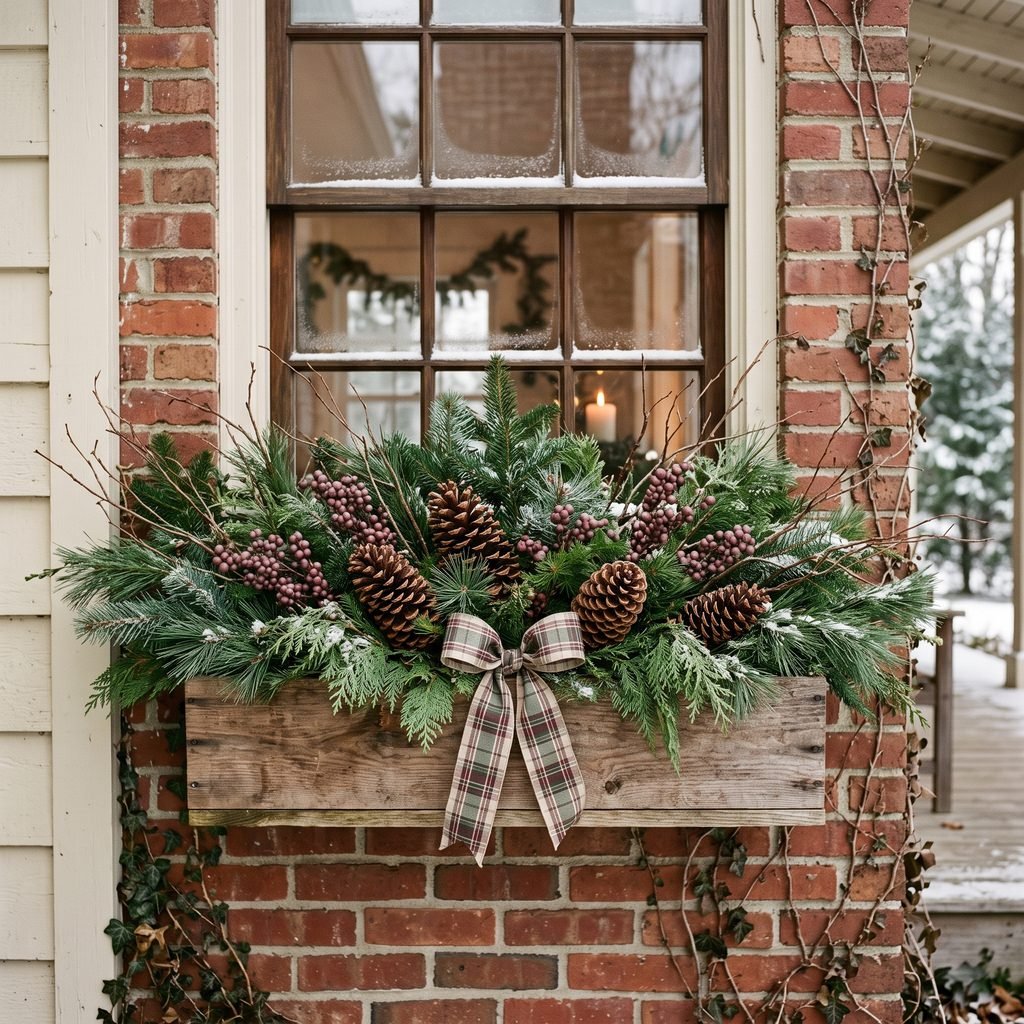
Step 4: Mix Different Evergreen Textures
One type of greenery can look beautiful, but mixing two or three textures usually creates more depth.
For example, combine:
- Pine with cedar-style greenery
- Fir with juniper
- Cedar with magnolia
- Pine with eucalyptus-style faux stems
Long pine needles create a different texture from flat cedar sprays, so the contrast makes the arrangement feel more layered.
Use the fuller greenery to create the main mass, then weave more delicate pieces between it.
Do not add every variety you can find.
Two or three types are usually enough.
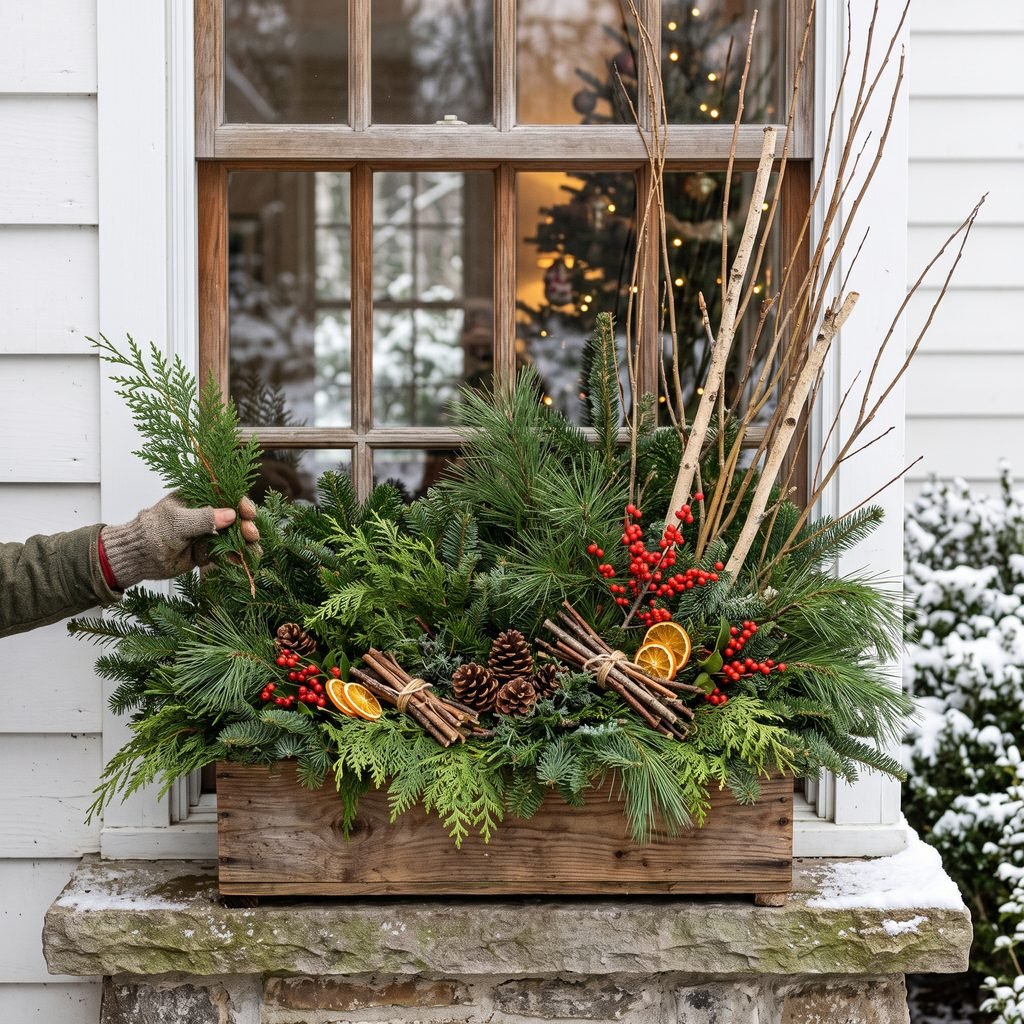
Step 5: Add Height With Decorative Branches
Once the greenery base feels full, add a few taller branches.
These can be:
- Bare twigs
- Red twig-style branches
- Birch-style branches
- Curly willow
- Faux berry branches
Place them toward the back or center.
The branches should add height without overwhelming the window.
If the box sits directly beneath a window that opens outward, make sure the arrangement does not interfere with its operation.
A few tall branches can make a simple window box look much more dramatic, especially from the street.
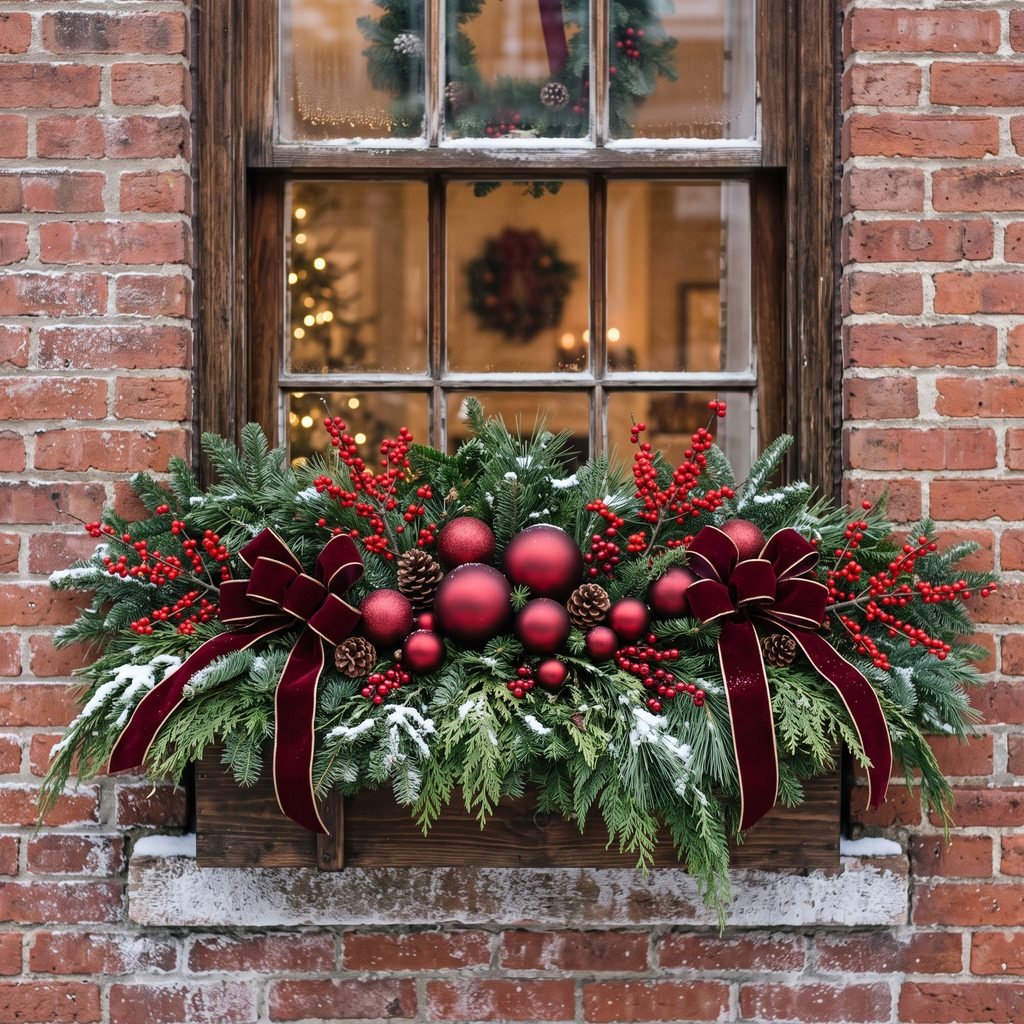
Step 6: Add Berries for Color
Red berries are one of the easiest ways to make evergreen arrangements look festive.
You do not need many.
Place a few clusters throughout the box rather than creating one large red section.
This spreads the color across the arrangement and keeps the eye moving.
If you prefer a quieter look, use:
- Burgundy berries
- White berries
- Natural seed pods
- Small pinecones
For outdoor arrangements, choose artificial berry stems designed to tolerate exterior conditions when possible.
Some decorative finishes can fade or deteriorate outdoors.
Step 7: Add Pinecones
Pinecones add natural texture and help connect the arrangement to rustic winter decor.
You can tuck them directly between branches or attach them with floral wire if needed.
Try grouping pinecones in small clusters rather than spacing every one perfectly.
Natural arrangements rarely look perfectly symmetrical.
A little unevenness can make the box feel more relaxed.
You can use:
- Small pinecones
- Large pinecones
- Mixed sizes
If you gather natural pinecones, make sure they are clean, dry, and free of insects before bringing them into your work area.
Step 8: Add Ribbon Carefully
Ribbon can make the arrangement feel more obviously Christmas-themed, but it is easy to overdo.
A single bow or a few ribbon loops may be enough.
Choose ribbon that is suitable for outdoor exposure if the window box is uncovered.
Wired ribbon is particularly useful because it can hold its shape more easily.
Try:
- Red velvet-look ribbon
- Plaid ribbon
- Cream ribbon
- Black-and-white stripe
- Burlap-style ribbon
- Deep green ribbon
Secure the ribbon firmly so it does not blow loose.
Avoid very long tails near walkways or areas where wind could whip them against the house.
Step 9: Add Optional Ornaments
Ornaments can work beautifully in a Christmas window box when used sparingly.
Choose shatter-resistant pieces rather than fragile glass.
Large ornaments tend to show up better from a distance than very small ones.
You can cluster two or three together or distribute a few throughout the greenery.
Good colors include:
- Red
- Gold
- Silver
- White
- Burgundy
- Green
Use floral wire or another secure outdoor-appropriate attachment method rather than simply balancing ornaments between branches.
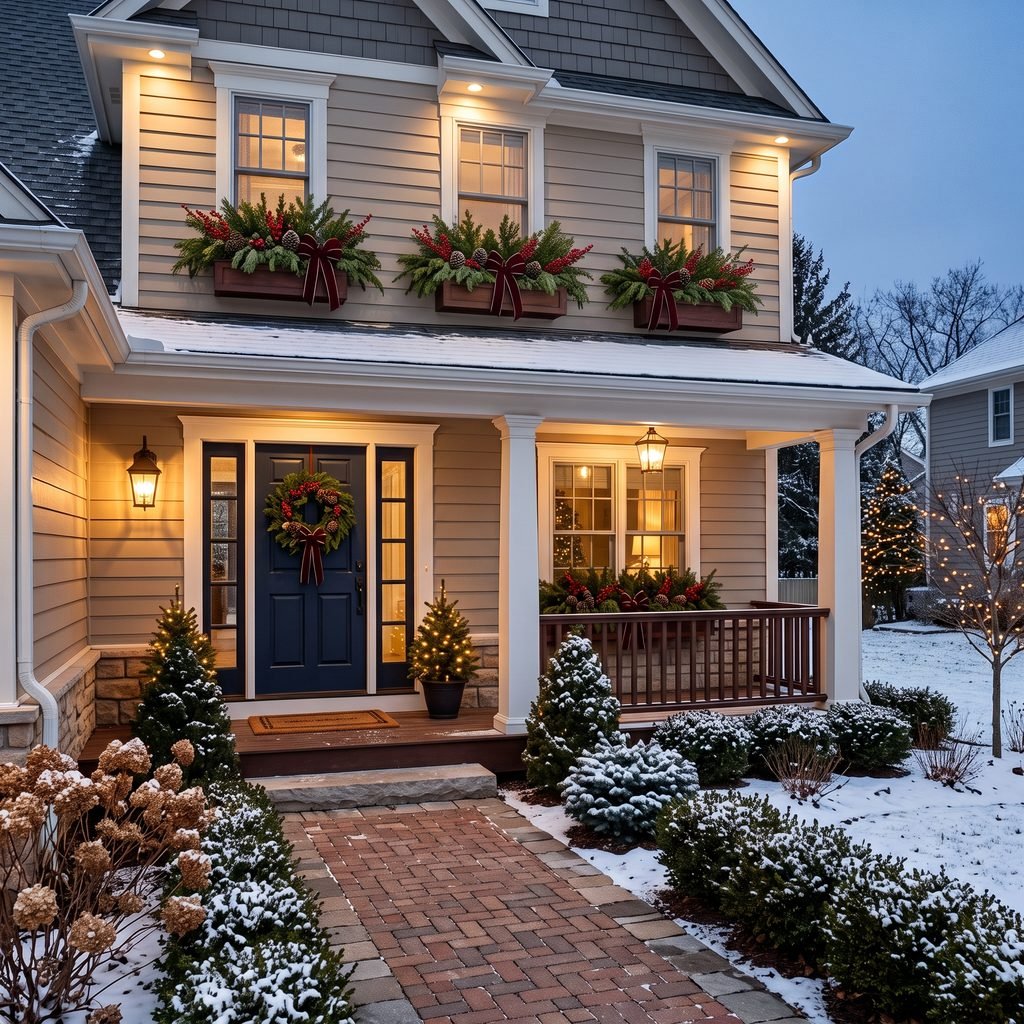
Step 10: Add Lights if You Want Evening Impact
Small lights can turn a daytime arrangement into an evening focal point.
Use lights specifically rated for outdoor use.
Battery-operated options can be convenient where there is no nearby outlet, while plug-in lights may work well if a properly protected exterior power source is available.
Follow the lighting manufacturer’s instructions regarding moisture, connections, extension cords, timers, and outdoor use.
Do not use indoor-only electrical products outside.
Keep wires as hidden as practical without wrapping them so tightly that they damage fresh branches.
A Simple Christmas Window Box Formula
If you want an easy combination that is hard to get wrong, use this formula:
- One main evergreen
- One secondary greenery texture
- A few tall branches
- Red berries
- Pinecones
- One ribbon accent
That is enough to create a full seasonal display.
You do not need ornaments, bells, lights, picks, ribbon, berries, and five types of greenery in every box.
The simpler version often looks more expensive because the individual materials have room to stand out.
Rustic DIY Christmas Window Box Idea
For a rustic arrangement, use natural materials and muted colors.
Start with pine and cedar-style greenery.
Add:
- Natural pinecones
- Bare branches
- Burgundy berries
- Cream or plaid ribbon
Skip shiny ornaments.
If you want more texture, tuck in a few magnolia leaves or dark faux greenery.
This style works especially well with brick, stone, wood siding, and traditional homes.
Elegant Christmas Window Box Idea
For a more polished look, keep the palette controlled.
Use deep green foliage with:
- Cream ribbon
- White berries
- Brass-toned bells
- Matte ornaments
- Dark branches
Avoid mixing too many finishes.
For example, use matte and natural elements instead of adding glitter, shiny metallics, patterned ribbon, and berries all at once.
This can create a sophisticated display without needing expensive materials.
Traditional Red and Green Window Box
If you love classic Christmas decor, lean into it.
Use deep green branches as the base.
Then add:
- Red berries
- Red ribbon
- Red ornaments
- Pinecones
The key is scale.
If the berries and ornaments are already bright, keep the ribbon relatively simple.
A window box decorated entirely in strong red accents can become visually busy very quickly.
Neutral Christmas Window Box
A neutral holiday window box can be beautiful if you prefer understated decor.
Use:
- Evergreen
- Pinecones
- Cream ribbon
- White berries
- Natural branches
You could also add a few matte champagne or soft metallic ornaments.
The contrast between deep green and pale accents keeps the arrangement festive without relying on traditional bright red.
Small Christmas Window Box Ideas
A small window box does not need to be overflowing to look good.
Keep the design proportionate.
Use one primary greenery, a small group of berries, and two or three pinecones.
You may want to skip large ornaments and oversized bows.
For a narrow box, focus more on horizontal greenery and less on tall branches.
A compact arrangement can still have plenty of impact if the materials are well chosen.
How to Decorate Multiple Window Boxes
If your home has several window boxes, repeat the same core ingredients.
They do not need to be identical.
Instead, use the same:
- Greenery types
- Ribbon
- Berry color
- Ornament finish
You can vary the exact branch placement while maintaining a consistent style.
From the street, repetition makes the entire home feel coordinated.
Avoid making every window box completely different unless you intentionally want an eclectic look.
Fresh vs. Faux Greenery
Both options can work.
Fresh Greenery
Fresh branches provide natural fragrance and texture.
Possible options include pine, fir, cedar-style greenery, or other evergreen material available in your area.
How long fresh greenery stays attractive depends on the species, climate, temperature, sun exposure, and moisture conditions.
In colder climates, outdoor greenery can often hold up better than greenery indoors.
Faux Greenery
Artificial greenery can be reused and does not shed needles in the same way.
Choose pieces that look relatively realistic, especially if the box is close to the front door or walkway.
For uncovered outdoor displays, check whether the greenery is designed for exterior use.
You can also mix fresh and faux materials.
For example, use real evergreen as the base and add reusable faux berry stems and ribbon.
How to Keep Fresh Greenery Looking Better
Start with fresh branches rather than dry, brittle ones.
Keep them cool before arranging.
Cut stems as needed and insert them securely into the planter.
Some greenery-preservation products are sold for cut foliage, but application instructions and suitability vary, so follow the specific product guidance if you choose to use one.
The biggest factors affecting longevity are often temperature, sun, wind, and moisture.
A shaded northern exposure may preserve greenery differently from a sunny south-facing window box.
Make Sure the Window Box Can Handle the Weight
This is easy to overlook.
Fresh greenery, wet soil, snow, ice, and decorative materials can all increase the load.
Before decorating, inspect:
- Brackets
- Screws
- Fasteners
- Box condition
- Wall attachment
Do not use a loose or deteriorated window box for a heavy winter arrangement.
If the mounting method is unclear or the structure looks damaged, repair it before adding seasonal decorations.
Outdoor Decorating Safety Tips
Outdoor Christmas decorating introduces a few additional considerations.
Use gloves when handling sharp evergreen needles, floral wire, and rough branches.
Use pruning shears correctly and keep fingers clear of the blades.
If using a ladder to reach upper window boxes, follow ladder safety guidance and avoid working from an unstable position.
For lights, use only products rated for outdoor use and follow the manufacturer’s instructions for power connections and weather exposure.
Keep decorations away from:
- Dryer vents
- Exhaust openings
- Outdoor heating equipment
- Electrical service equipment
- Doors and windows that need to open
- Walkways where loose pieces could become hazards
If strong wind is common where you live, secure decorative elements particularly well.
Common Christmas Window Box Mistakes
Making Every Stem the Same Height
This can make the arrangement feel flat.
Vary branch heights and directions.
Using Too Many Decorations
Greenery should still be visible.
A few berries and pinecones can often create more impact than dozens of tiny decorations.
Ignoring the View From the Street
Step back periodically while decorating.
Something that looks full from two feet away may look sparse from the curb.
Forgetting Window Operation
Make sure branches do not interfere with windows, shutters, vents, or doors.
Using Indoor-Only Decor Outside
Some ribbon, ornaments, lights, and faux greenery are not designed for exterior conditions.
Check the product information when the box is exposed to weather.
Failing to Secure Decorations
Wind can easily move lightweight ornaments, ribbon, and branches.
Wire or otherwise secure loose pieces appropriately.
FAQ About DIY Christmas Window Boxes
What do you put in a Christmas window box?
Common materials include evergreen branches, cedar-style greenery, pine, fir, berries, pinecones, decorative branches, ribbon, outdoor-safe ornaments, and outdoor-rated lights.
Can I use the existing soil in my window box?
Often, yes. Existing soil can help support inserted greenery if it is suitable and not frozen solid. Make sure the planter remains structurally sound and can handle the final weight.
How do you make a Christmas window box look full?
Start with larger evergreen branches at the back and sides, then add shorter greenery toward the front. Mix a few textures and vary stem height rather than placing everything in one flat row.
How many types of greenery should I use?
Two or three types are usually enough. Mixing too many can make the arrangement feel cluttered.
Can Christmas window boxes use fresh greenery?
Yes. Fresh evergreen branches can create a natural winter display. Longevity varies with weather, plant type, exposure, and temperature.
Can I add Christmas lights?
Yes, as long as the lights and related electrical components are rated appropriately for outdoor use and installed according to the manufacturer’s safety instructions.
How do I secure decorations in a window box?
Branches can often be anchored into soil or another suitable support material. Pinecones, ornaments, ribbon, and decorative picks can be secured with outdoor-appropriate floral wire or another suitable method.
Final Thoughts
A DIY Christmas window box does not need to be complicated to make a big difference to your holiday curb appeal.
Start with a sturdy planter and create a full base using one or two types of evergreen.
Then add height with a few branches and bring in seasonal color with berries, pinecones, or ribbon.
From there, decide whether the arrangement truly needs anything else.
For a simple rustic look, greenery, pinecones, and ribbon may be enough. For a more traditional display, add red berries and a few shatter-resistant ornaments. For a neutral design, stick with deep greens, cream, natural branches, and soft metallic accents.
The key is balance.
Vary the height and direction of the branches, repeat your colors throughout the arrangement, and secure everything so it can handle winter weather.
With a few basic materials and a little layering, an empty window box can become one of the prettiest parts of your outdoor Christmas decor.