

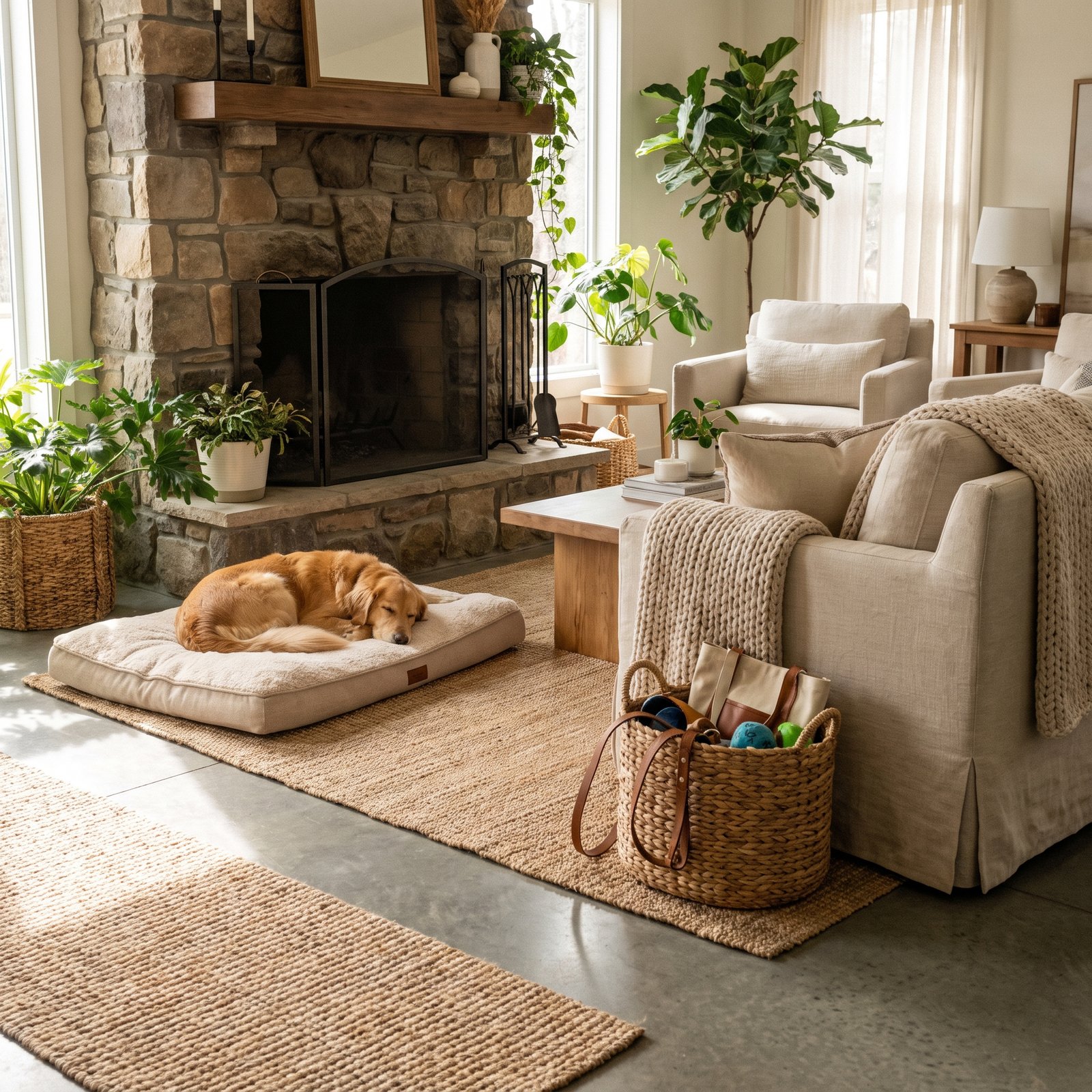
If you are constantly wondering how to keep your house clean, the answer usually is not spending an entire day cleaning every week. A cleaner home is much easier to maintain when you handle small messes before they turn into big ones.
The goal is not to make your house look perfect all the time. It is to create a simple routine that keeps clutter, laundry, dishes, dust, and everyday mess from piling up.
A few daily habits can make a surprisingly big difference. When those habits are combined with a short weekly cleaning routine and occasional deeper cleaning, the house becomes much easier to manage.
Whether you live alone, have children, share your home with pets, or simply feel like cleaning never ends, these practical strategies can help you keep things under control without spending all your free time with a mop in your hand.
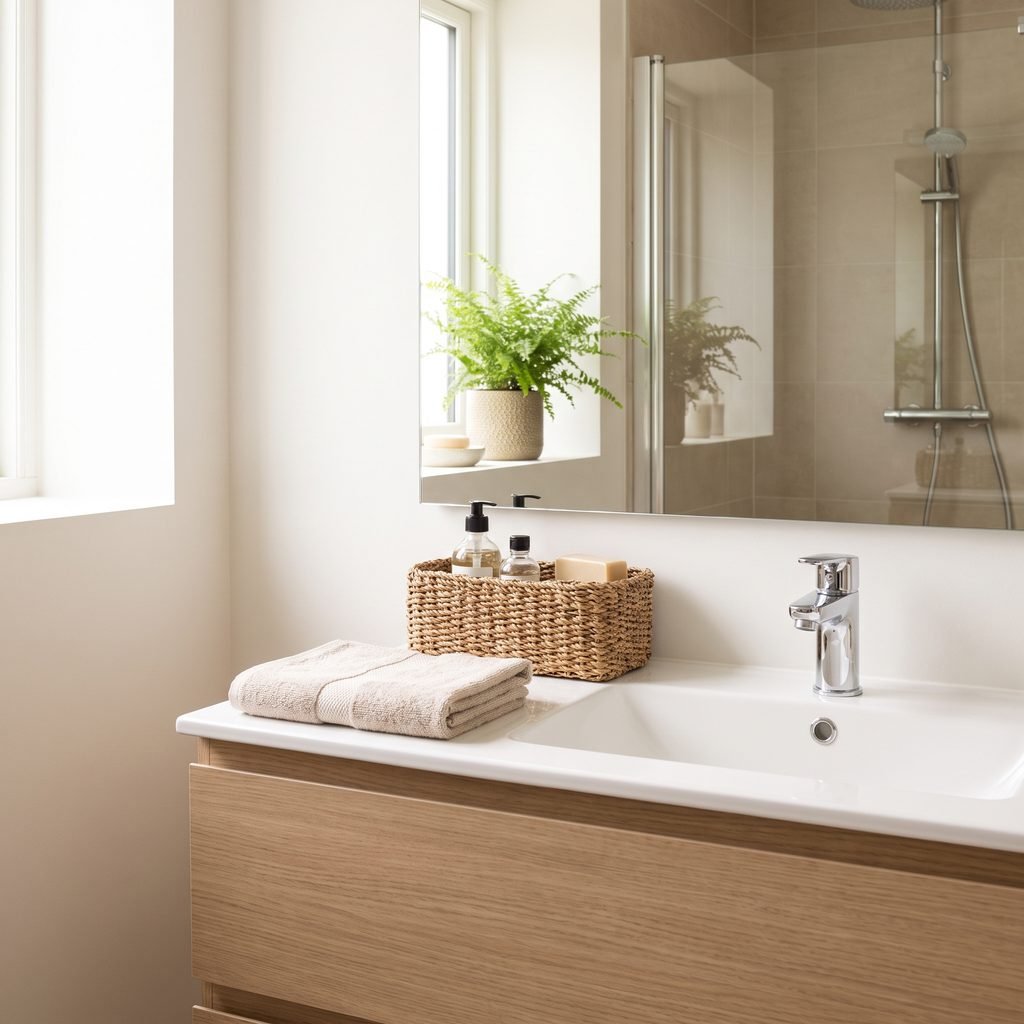
1. Start With Less Clutter
Cleaning becomes much harder when every surface is covered with things.
Before worrying about scrubbing floors or dusting shelves, look at what is creating visual clutter.
Common problem areas include:
- Kitchen counters
- Bathroom counters
- Dining tables
- Entryway surfaces
- Coffee tables
- Nightstands
- Floors
- Stairs
You do not need to become a minimalist.
The goal is simply to give everyday items a predictable place to go.
If your kitchen counter constantly collects mail, keys, chargers, and reusable bags, create specific homes for those things elsewhere.
The fewer items you have to move before cleaning, the faster cleaning becomes.
2. Make the Bed Every Morning
Making the bed will not technically clean the entire bedroom, but it immediately makes the room feel more organized.
It also encourages you to keep nearby areas tidy.
Once the bed is made, you may be more likely to put clothes away instead of dropping them on top.
Keep the process simple.
You do not need ten decorative pillows and a complicated arrangement.
Pull up the bedding, straighten the pillows, and move on.
A two-minute habit is much easier to maintain than a ten-minute styling routine.
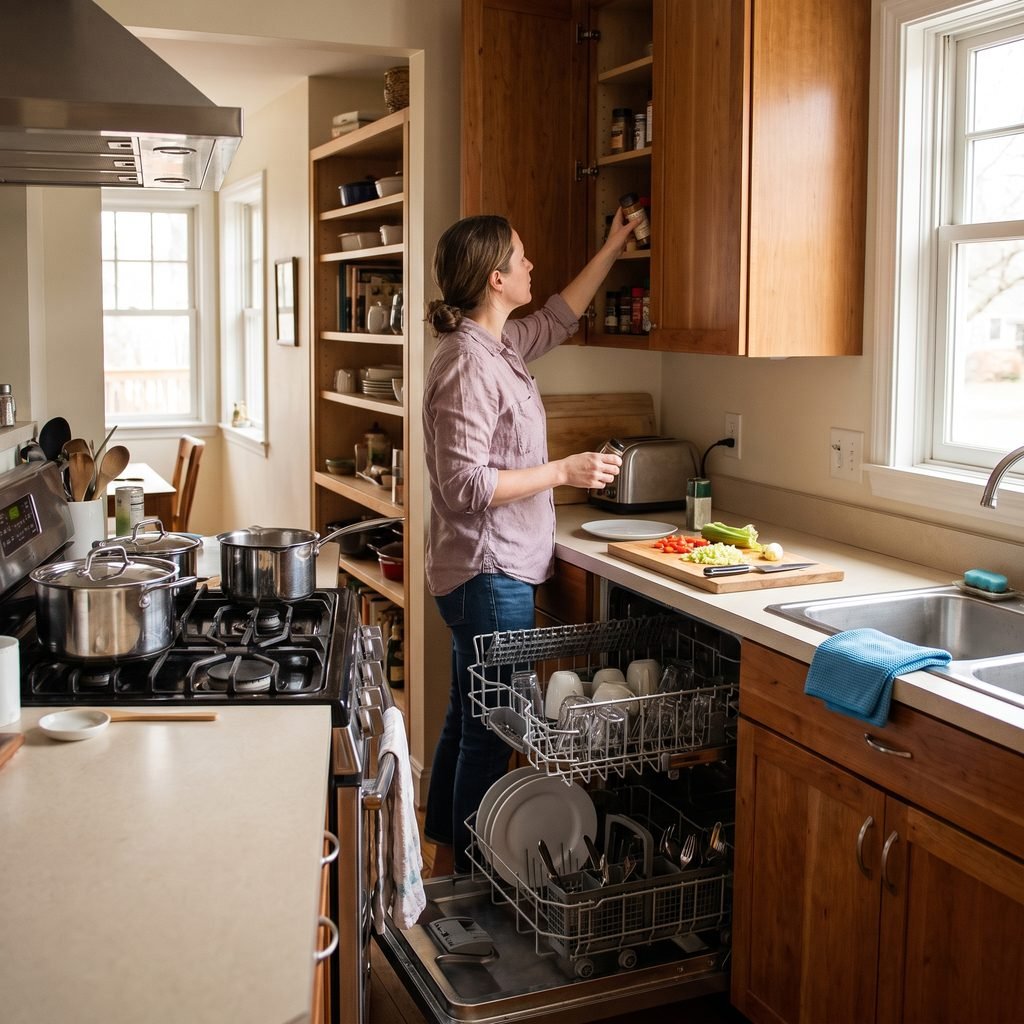
3. Clean the Kitchen as You Cook
One of the easiest ways to keep a kitchen clean is to avoid leaving the entire mess until after dinner.
While something is simmering or baking, use that time to:
- Put ingredients away
- Load the dishwasher
- Rinse utensils
- Wipe counters
- Throw away packaging
- Return spices to the cabinet
By the time the meal is ready, much of the cleanup may already be finished.
Keep one section of the counter clear as you work.
That gives you a usable space and prevents the kitchen from feeling chaotic.
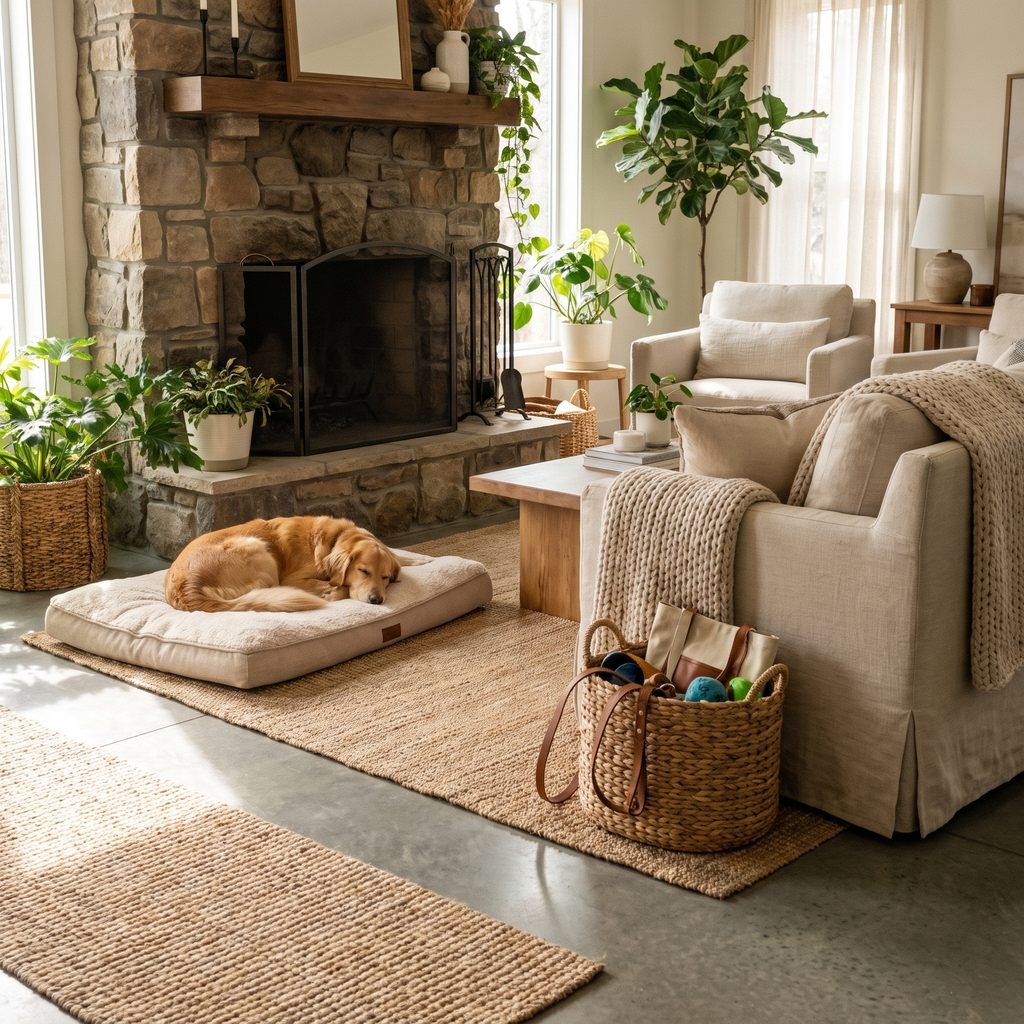
4. Do Not Let Dishes Sit Overnight
A sink full of dishes can make an otherwise clean kitchen look messy.
Try to end the day with:
- Dishwasher loaded
- Sink empty
- Counters wiped
- Food put away
You do not necessarily need to deep-clean the kitchen every night.
A quick reset is enough.
If you hand-wash dishes, wash the most difficult items first so they are not waiting for you the next morning.
Waking up to a clean kitchen can make the entire house feel more manageable.
5. Use the “One-Minute Rule”
If a task takes about a minute, do it when you notice it.
Examples include:
- Hanging up a coat
- Putting shoes away
- Wiping toothpaste from the sink
- Returning a cup to the kitchen
- Folding a blanket
- Throwing away junk mail
- Replacing an empty toilet paper roll
Tiny unfinished jobs create surprisingly large amounts of visual clutter.
Handling them immediately prevents them from becoming part of a larger cleanup session later.
6. Give Everything a Home
A house is difficult to keep tidy when you do not know where things belong.
Every frequently used item should have a reasonably convenient storage location.
Think about categories such as:
- Keys
- Shoes
- Toys
- Chargers
- Cleaning supplies
- School supplies
- Pet supplies
- Remote controls
Storage should match how you actually live.
If everyone drops shoes by the front door, storing them in a distant bedroom closet probably will not work.
Put a basket, rack, or cabinet near the place where the shoes naturally land.
Good organization reduces the number of decisions you have to make while cleaning.

7. Do a 10-Minute Evening Reset
A short evening reset is one of the most useful habits for keeping a house consistently clean.
Set aside about 10 minutes before bed to straighten the main living areas.
Focus on high-impact tasks:
- Put dishes away
- Clear the kitchen counter
- Fold blankets
- Return toys to baskets
- Put shoes away
- Throw away trash
- Wipe the dining table
Do not start reorganizing closets or cleaning baseboards.
The purpose is to reset the visible spaces so tomorrow starts with less mess.
If other household members are available, have everyone handle one area.
Ten minutes with several people can accomplish a lot.
8. Keep Cleaning Supplies Convenient
You are much more likely to wipe a bathroom sink if the supplies are nearby.
Consider storing basic cleaning products close to where they are used.
For example:
Bathroom
Keep appropriate supplies for:
- Sink
- Mirror
- Toilet
- Shower
Kitchen
Keep supplies for:
- Counters
- Sink
- Cooktop
- Floors
General Areas
Keep a duster, microfiber cloths, or vacuum easily accessible.
Store all cleaning products safely and according to their labels, especially in homes with children or pets.
Do not mix cleaning chemicals unless the product instructions specifically direct you to do so. Certain combinations can create dangerous fumes.
9. Wipe Bathroom Surfaces Regularly
Bathrooms become much harder to clean when soap residue, toothpaste, water spots, and hair accumulate for a week or more.
A quick wipe several times a week can reduce buildup.
Focus on:
- Sink
- Faucet
- Counter
- Mirror
- Toilet exterior
After showers, improving ventilation and allowing surfaces to dry can also help reduce persistent moisture.
Use the exhaust fan if you have one and follow appropriate maintenance guidance for it.
For stubborn mold, recurring moisture problems, or leaks, address the moisture source rather than simply cleaning the visible surface repeatedly.

10. Stay Ahead of Laundry
Laundry becomes overwhelming when it turns into several separate problems at once:
- Dirty clothes
- Wet clothes
- Dry clothes
- Unfolded clothes
- Folded clothes that never get put away
Try completing one load from beginning to end whenever possible.
That means:
- Wash
- Dry
- Fold
- Put away
Avoid creating a permanent clean-laundry chair or basket.
Depending on the size of your household, smaller loads several times a week may be easier than an entire weekend devoted to laundry.
11. Use Baskets for Fast Pickup
Baskets can make quick cleanup much easier, especially in family rooms and bedrooms.
Use them for items such as:
- Toys
- Blankets
- Books
- Pet accessories
- Small electronics
However, baskets should not become permanent hiding places for random clutter.
Give each basket a category.
A basket labeled mentally as “everything I do not know what to do with” will eventually become another problem to sort.
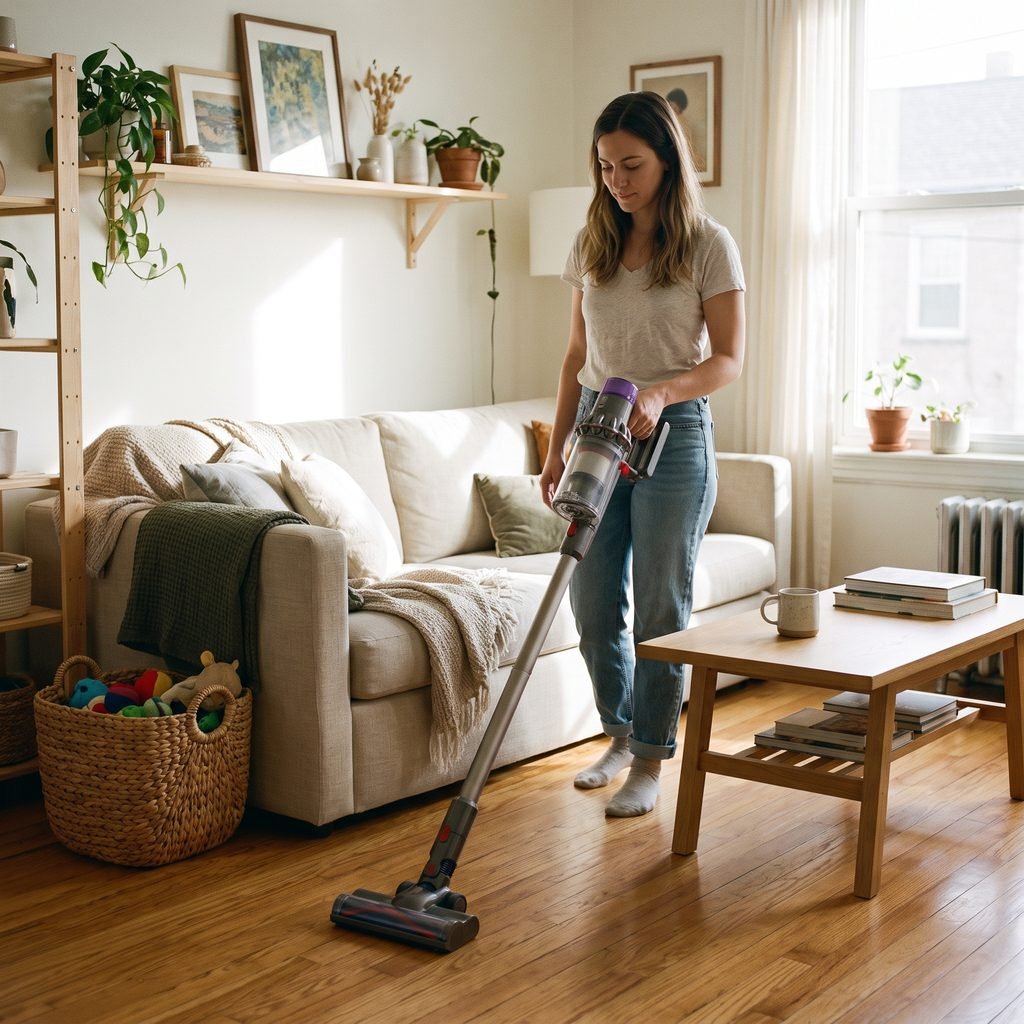
12. Clean High-Traffic Floors More Often
Not every floor in the house gets dirty at the same rate.
Focus your effort on areas such as:
- Kitchen
- Entryway
- Hallways
- Living room
- Areas near pet doors
A quick vacuum or sweep of these spaces can make the whole house look cleaner.
You may not need to vacuum every bedroom every day.
Match your cleaning frequency to how the space is actually used.
Homes with pets, children, or outdoor shoes may need more frequent floor cleaning.
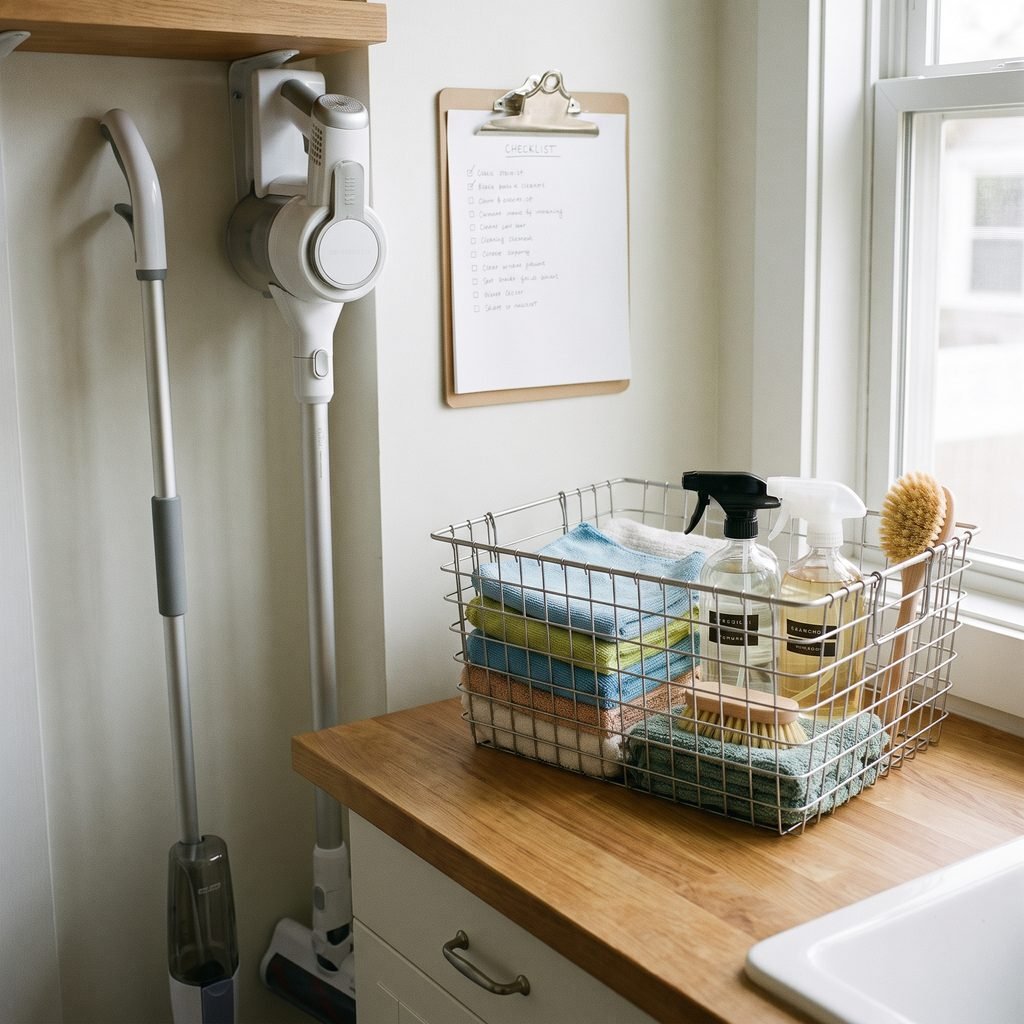
13. Handle Mail Immediately
Mail has a way of spreading across counters and tables.
When you bring it inside, sort it quickly.
Create three basic categories:
- Keep
- Action needed
- Recycle or discard
Avoid creating a large pile to deal with later.
Important documents should go to a designated file or inbox.
Bills or paperwork requiring action can go in one visible location so they are not forgotten.
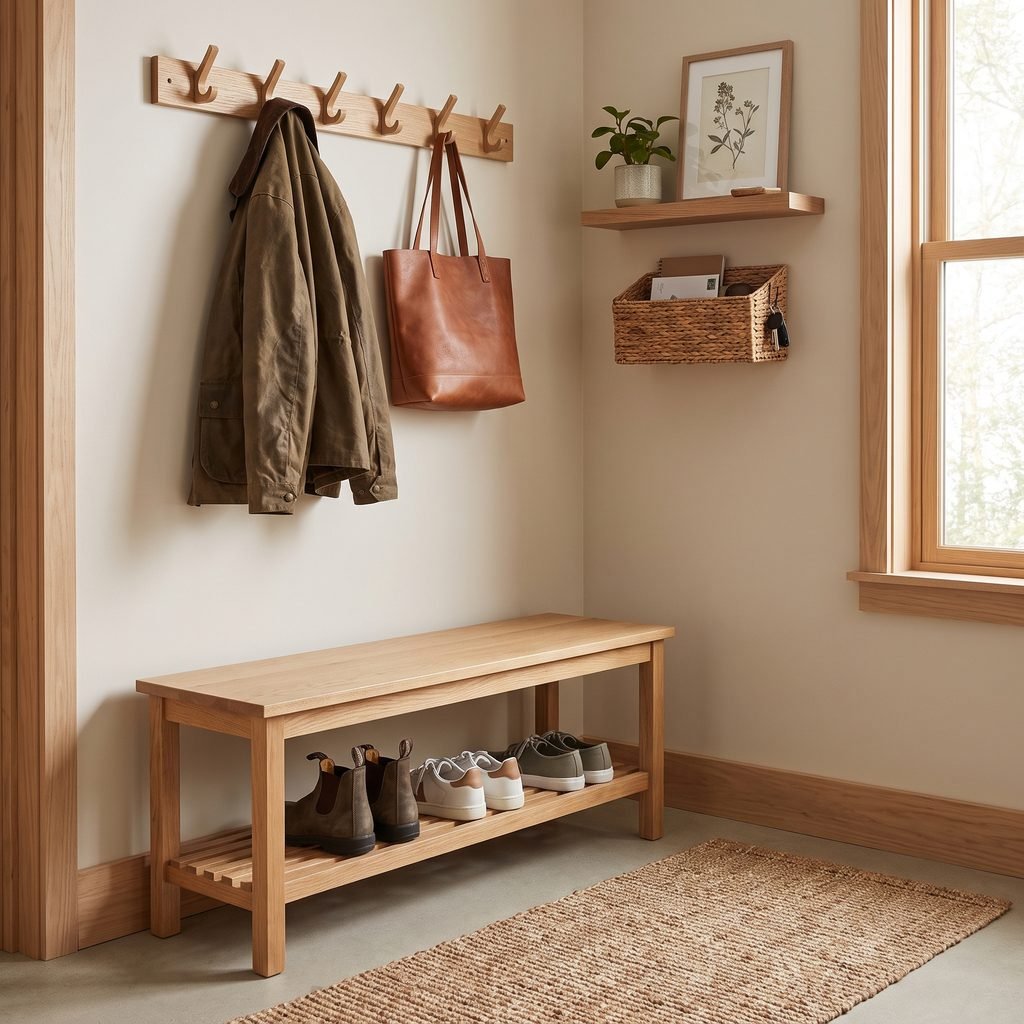
14. Create a Landing Zone Near the Door
Many messes begin when people enter the house.
A good landing zone can contain:
- Shoes
- Bags
- Jackets
- Keys
- Sunglasses
- Dog leash
Even a small entryway can work.
Try a few wall hooks, a shoe tray, a basket, and a small bowl or drawer.
The goal is to stop these items from traveling to the kitchen counter, dining table, and sofa.
15. Keep Kitchen Counters Mostly Clear
Clear counters make a kitchen look dramatically cleaner.
Keep out only appliances or tools you use frequently.
Everything else can go in a cabinet, drawer, pantry, or appliance garage if you have one.
This also makes wiping surfaces much faster.
Instead of moving ten items every time you clean, you may only need to move two or three.
If you love decorative accessories, choose one small grouping rather than spreading decor across every section of the counter.
16. Put Things Away When You Leave a Room
A simple habit called “never leave empty-handed” can help keep clutter moving in the right direction.
If you are walking from the living room to the kitchen, take an empty glass with you.
Going upstairs?
Carry the shoes or folded laundry that belong there.
You do not need to turn every trip through the house into a chore.
Just notice whether something nearby is already going in the same direction.
These small actions reduce the amount of dedicated pickup you have to do later.
17. Use a Weekly Cleaning Schedule
Daily habits keep mess under control, but some jobs still need a regular cleaning routine.
Instead of cleaning the entire house in one marathon session, divide tasks throughout the week.
A simple schedule could look like this:
Monday
Bathrooms
Tuesday
Dusting
Wednesday
Vacuuming
Thursday
Kitchen cleaning
Friday
Mopping and quick catch-up
Weekend
Laundry, bedding, or one deeper-cleaning task
This is only an example.
Adjust it around your schedule.
You might prefer doing everything on Saturday morning or completing one room each evening.
The best system is the one you can repeat.
A Simple Daily Cleaning Routine
You do not need a complicated checklist.
A practical daily routine might include:
Morning
- Make beds
- Put dirty clothes in hamper
- Clear breakfast dishes
- Wipe kitchen counter
During the Day
- Put things away after use
- Handle spills immediately
- Load dishes as they accumulate
- Complete one load of laundry if needed
Evening
- Finish dishes
- Wipe kitchen surfaces
- Pick up main living area
- Put shoes and bags away
- Do a quick bathroom check
- Take out trash if necessary
The entire routine does not need to happen at once.
It works because the small tasks are spread throughout the day.
A Simple Weekly Cleaning Routine
Daily cleaning maintains order.
Weekly cleaning handles dirt and buildup.
Depending on your household, your routine might include:
- Clean toilets
- Scrub bathroom sinks
- Clean showers or tubs
- Dust surfaces
- Vacuum rugs and floors
- Mop hard flooring
- Clean mirrors
- Change bedding
- Wipe kitchen appliance exteriors
- Empty trash bins
- Clean high-touch surfaces as needed
You may need to do some tasks more frequently and others less often.
There is no universal schedule that fits every household.
How to Keep Your House Clean With Kids
Keeping a family home clean requires realistic expectations.
Do not rely on one person to constantly clean up behind everyone else.
Give children age-appropriate responsibilities.
Younger children may be able to:
- Put toys in baskets
- Put dirty clothes in a hamper
- Carry dishes to the kitchen
- Put shoes away
Older children may be able to:
- Make beds
- Fold laundry
- Vacuum
- Load the dishwasher
- Clean their bathroom
Keep storage simple enough that children can actually use it.
A toy system with 25 tiny categories may look beautiful initially but can be difficult to maintain.
Large baskets and broad categories are often easier.
How to Keep Your House Clean With Pets
Pets add hair, dirt, food spills, and sometimes muddy paws.
Focus on the areas where mess enters the home.
Keep an absorbent mat or washable rug near frequently used doors.
Store pet towels nearby if necessary.
Vacuum high-traffic areas regularly and wash pet bedding according to its care instructions.
Keep feeding areas easy to wipe.
If pet hair is a major issue, a quick daily vacuum in the most affected rooms may be easier than waiting for a large weekly buildup.
How to Keep Your House Clean When You Are Busy
When time is limited, focus on what creates the biggest visual improvement.
Prioritize:
- Dishes
- Kitchen counters
- Visible clutter
- Floors
- Bathrooms
A house with an empty sink, relatively clear counters, picked-up floors, and a clean bathroom often feels much cleaner even if the closets are not perfectly organized.
Use short cleaning sessions.
Five or ten minutes is enough to reset one room.
You do not have to wait until you have several uninterrupted hours.
How to Clean Your House Faster
Cleaning is faster when you work in a logical order.
For a room, try this sequence:
- Remove trash
- Put away clutter
- Dust higher surfaces
- Wipe surfaces
- Vacuum or sweep
- Mop if needed
Working from higher areas toward the floor prevents you from cleaning the floor and then knocking dust onto it.
Carry supplies with you in a small caddy if that helps reduce trips back and forth.
Do not stop halfway through cleaning to reorganize a drawer unless that drawer is actually the task.
Stay focused on the room.
How to Keep Your House Smelling Fresh
A clean-smelling home usually begins with removing odor sources rather than covering them with fragrance.
Pay attention to:
- Trash
- Food spills
- Refrigerator leftovers
- Pet bedding
- Damp towels
- Laundry
- Sink drains
- Shoes
- Upholstery
Ventilate the house when weather and outdoor air conditions allow.
Wash fabrics regularly and keep damp areas dry.
Fragrance products can add scent, but use them according to their instructions and consider household sensitivities, pets, and ventilation.
A heavily fragranced home is not necessarily a clean home.
Common Mistakes That Make a House Harder to Keep Clean
Waiting Until the House Is Very Messy
A 10-minute daily reset is easier than several hours of cleanup.
Owning More Than You Can Store
If every drawer, shelf, and closet is overflowing, maintaining order becomes difficult.
Having Complicated Organization Systems
Simple storage usually lasts longer than systems requiring many steps.
Leaving Tasks Half-Finished
Try to finish laundry, dishes, and similar routines from beginning to end.
Cleaning Around Clutter
Remove clutter first.
Cleaning exposed surfaces becomes much faster.
Expecting Perfection
A home can be clean and still look lived in.
The goal is manageable, not showroom-perfect.
Cleaning Safety Tips
Use household cleaning products according to their labels.
Wear gloves or use ventilation when recommended.
Never mix cleaning products unless instructions specifically say they can be combined.
In particular, avoid mixing bleach with other cleaners because dangerous gases can be produced.
Keep chemicals, pods, sprays, and other cleaning products securely stored away from children and pets.
When cleaning high areas, use a stable step stool or ladder rather than standing on furniture.
Unplug appliances before cleaning them when manufacturer instructions require it.
If you discover mold caused by recurring leaks, electrical damage, sewage contamination, or another potentially hazardous problem, address the underlying issue and consider professional help when appropriate.
FAQ About Keeping Your House Clean
How do people keep their houses clean all the time?
Most consistently tidy homes are maintained through frequent small habits rather than constant deep cleaning. Dishes, clutter, laundry, and surfaces are handled regularly before they accumulate.
What should I clean every day?
Useful daily tasks include dishes, kitchen counters, obvious spills, clutter pickup, and high-use areas. Your exact routine will depend on your household.
How often should I deep clean my house?
There is no single schedule. Some tasks need weekly attention, while others such as windows, baseboards, appliances, or closets may only need occasional cleaning depending on use.
What is the easiest way to start cleaning a messy house?
Start with trash, dishes, and laundry. Then clear visible surfaces and floors. Work one room or category at a time rather than trying to organize everything simultaneously.
How can I keep my house clean without cleaning all day?
Use short routines. A few minutes after meals, a 10-minute evening reset, and a manageable weekly schedule can prevent long cleaning sessions.
What room should I clean first?
If you are overwhelmed, start with the kitchen or the room you use most. Clearing one high-impact area can make the entire home feel more manageable.
How do I get my family to help keep the house clean?
Give everyone clear, specific responsibilities rather than vague instructions to “clean up.” Make storage simple and choose tasks appropriate for each person’s age and ability.
Final Thoughts
Learning how to keep your house clean is less about finding the perfect cleaning schedule and more about preventing everyday mess from accumulating.
Start with the habits that have the biggest impact.
Make the bed, deal with dishes, keep counters relatively clear, put things back after using them, stay on top of laundry, and spend a few minutes resetting the main rooms each evening.
Then add a simple weekly routine for bathrooms, dusting, floors, bedding, and other regular cleaning.
Your home does not need to be spotless every minute of the day.
A realistic cleaning system should make life easier, not make you feel as though you are constantly working.
When clutter has a home and cleaning happens in small, repeatable steps, keeping the house tidy becomes much less overwhelming—and much easier to maintain.