

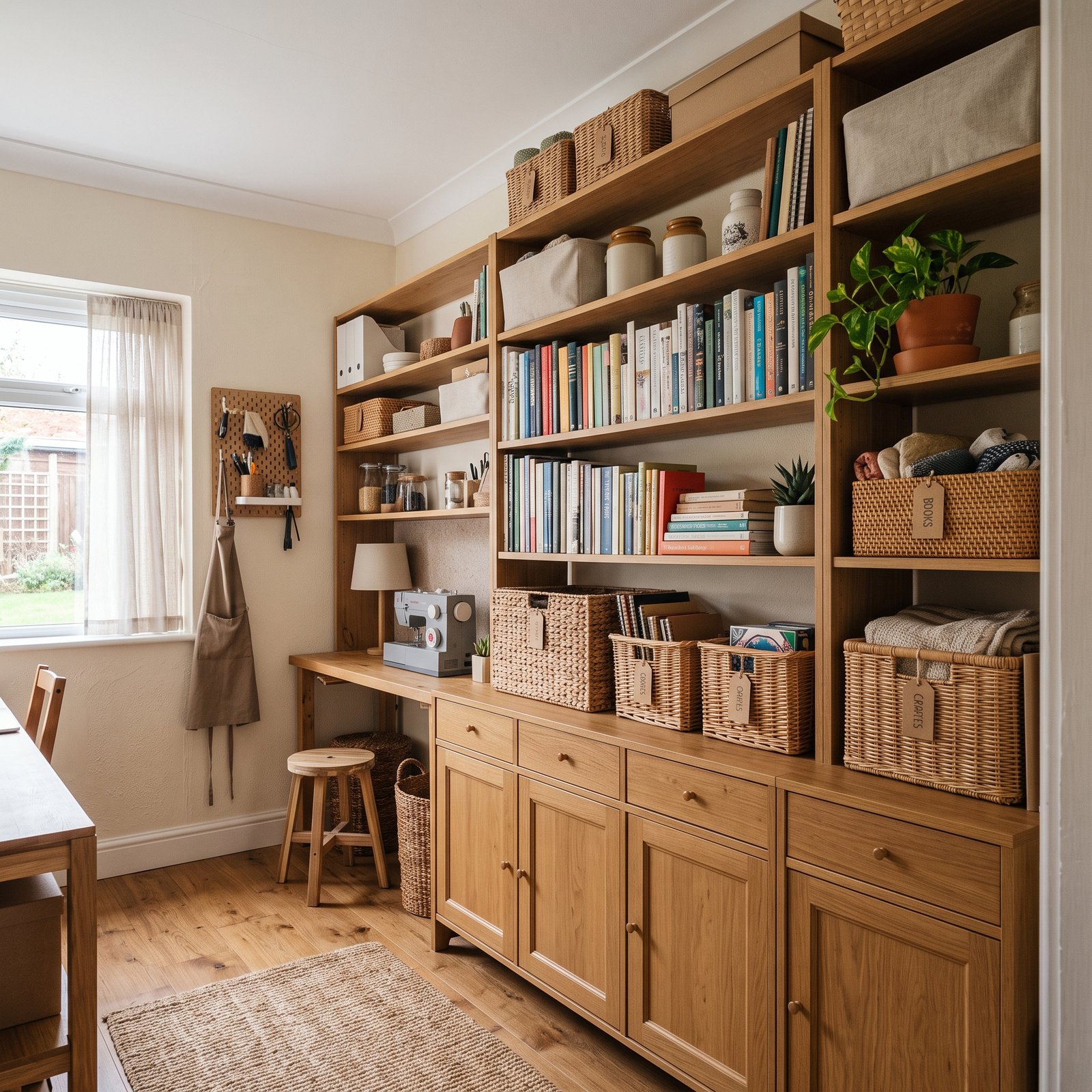
Organizing small spaces is less about fitting more into a room and more about making the space easier to use.
When storage is limited, clutter becomes noticeable quickly. A few shoes by the door, extra toiletries on a bathroom counter, or several kitchen appliances left out can make a small home feel crowded even when it is technically clean.
The solution is not to buy dozens of bins and organizers.
Instead, start by reducing what you do not need, then use storage that takes advantage of vertical space, hidden areas, walls, doors, and furniture with more than one purpose.
Whether you are organizing a small apartment, bedroom, kitchen, bathroom, entryway, or living room, the ideas below can help you create a home that feels calmer, more functional, and easier to maintain.
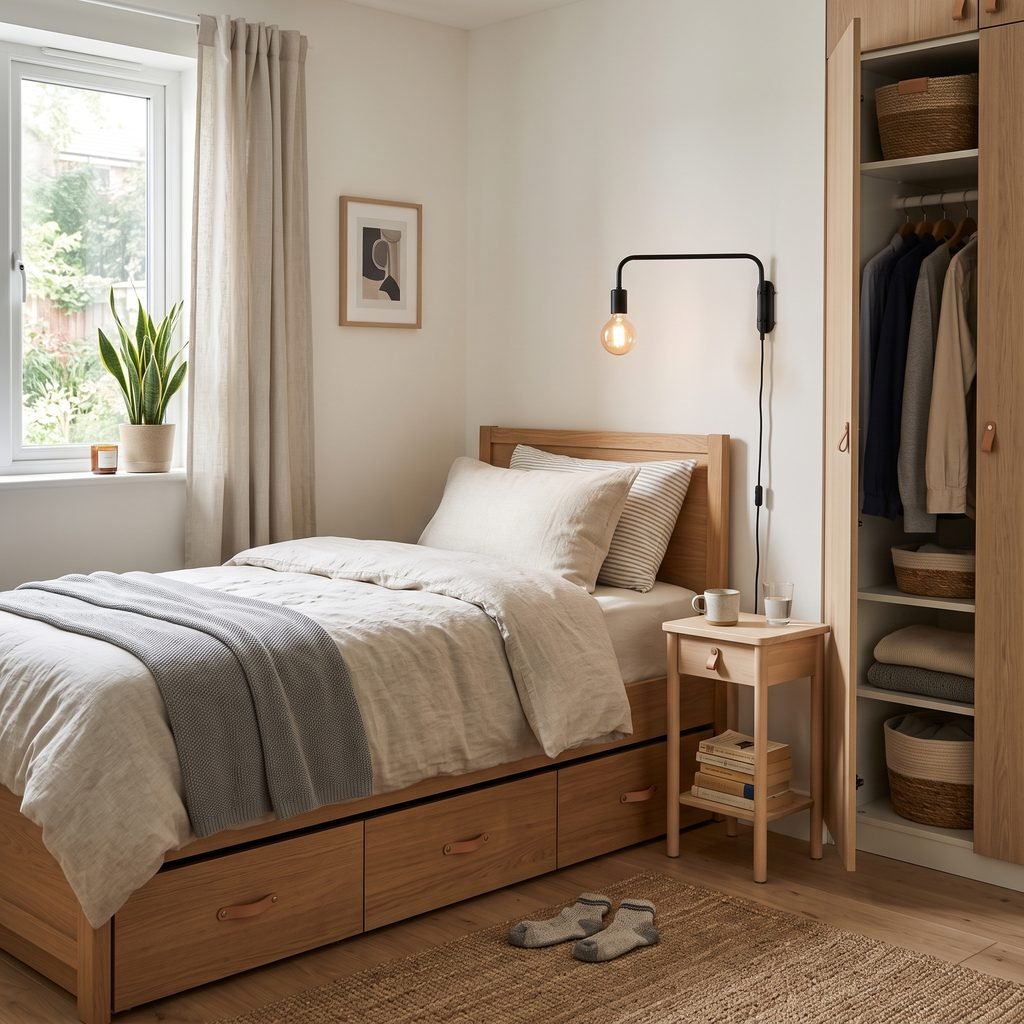
1. Declutter Before You Buy Organizers
The easiest way to make a small space feel bigger is to store fewer unnecessary things.
Before shopping for baskets, bins, shelves, or drawer inserts, go through the area and remove items you no longer use.
Ask yourself:
- Do I use this regularly?
- Does it belong in this room?
- Do I already own something similar?
- Is it worth the storage space it takes up?
This is especially useful for:
- Clothing
- Kitchen gadgets
- Toiletries
- Paperwork
- Decor
- Toys
- Cleaning products
Organizing items you do not actually need simply gives clutter a neater container.
Decluttering first lets you see how much storage you really need.
2. Use Vertical Space
When floor space is limited, look up.
Walls often provide some of the most underused storage in small homes.
Try:
- Floating shelves
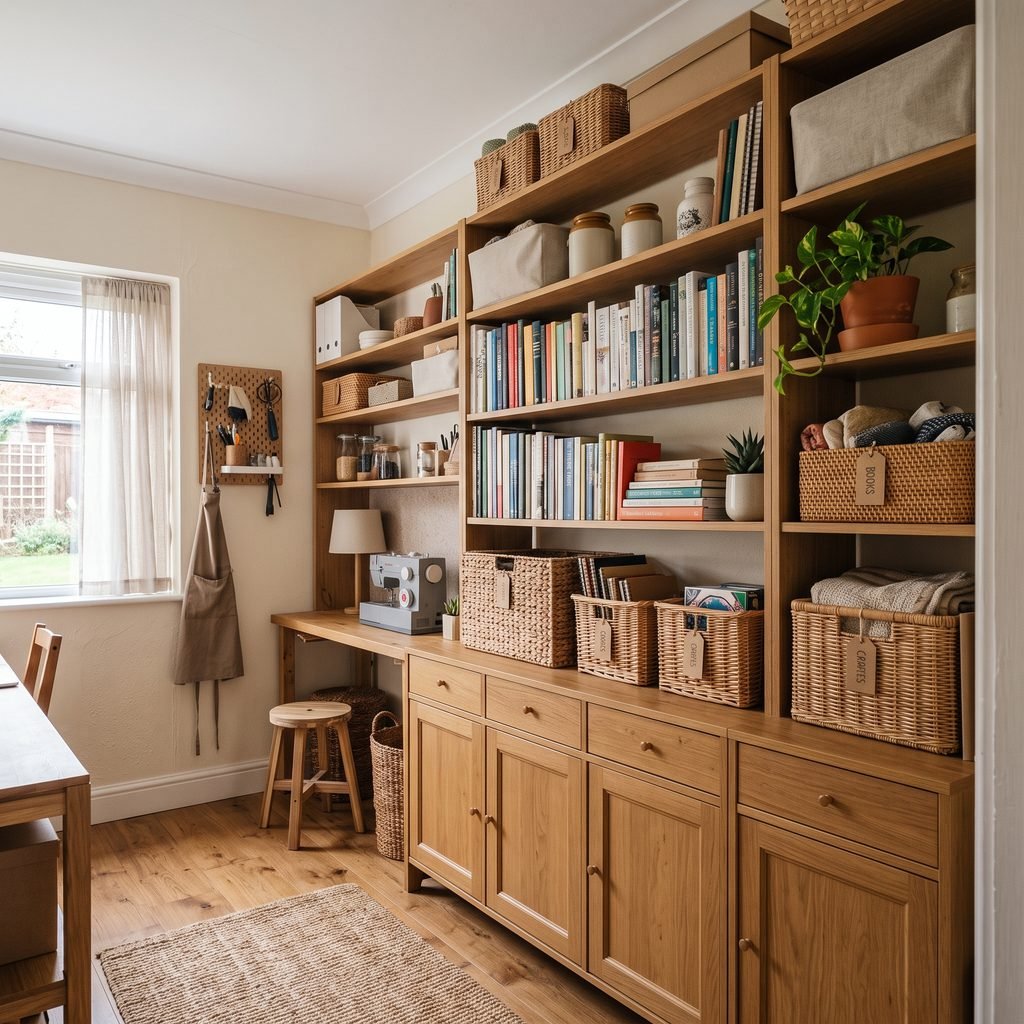
- Tall bookcases
- Wall-mounted cabinets
- Peg rails
- Hooks
- Overhead shelving
A tall narrow shelving unit can provide much more storage than a low wide cabinet while using less floor area.
In kitchens, shelves can hold dishes or frequently used pantry items.
In bedrooms, higher shelves can store seasonal items or decorative boxes.
In bathrooms, wall storage can free up valuable counter space.
Keep frequently used items within comfortable reach and reserve higher areas for things you use less often.
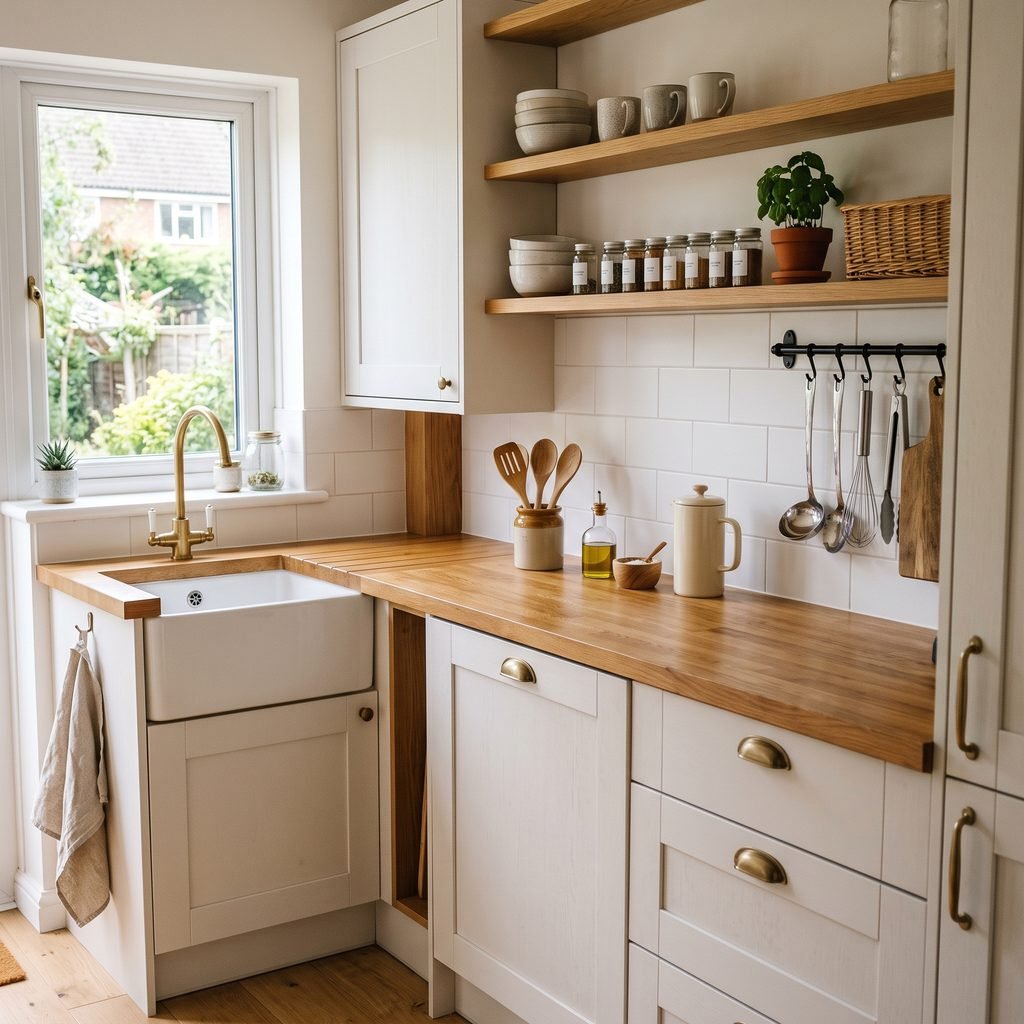
3. Choose Furniture With Hidden Storage
In a small home, furniture works harder when it serves more than one purpose.
Look for pieces such as:
- Storage ottomans
- Benches with compartments
- Beds with drawers
- Lift-top coffee tables
- Storage sofas
- Nightstands with drawers
- Entryway benches with shoe storage
A storage ottoman, for example, can function as:
- Extra seating
- Footrest
- Coffee table
- Blanket storage
The goal is not to fill every piece of furniture with things.
It is to make necessary furniture contribute to your storage plan rather than taking up space without helping.
4. Use the Back of Doors
Doors can provide useful storage without taking up additional floor space.
Depending on the room, you might use:
- Over-the-door shoe organizers
- Hooks
- Hanging baskets
- Towel storage
- Pantry organizers
A clear pocket organizer can work for much more than shoes.
Use one for:
- Cleaning supplies
- Craft materials
- Small toys
- Accessories
- Toiletries
Make sure the organizer does not interfere with the door closing properly.
Avoid loading doors with excessive weight, particularly hollow-core doors or hardware not designed to support heavy storage.
5. Add Storage Under the Bed
The area under a bed can provide significant storage, especially in a small bedroom.
Use it for:
- Seasonal clothing
- Extra bedding
- Shoes
- Luggage
- Holiday linens
Low-profile bins keep everything contained and reduce dust.
If you are choosing a new bed for a small bedroom, consider one designed with built-in drawers.
Keep items you use frequently toward the outer edges so you do not have to pull everything out to reach them.
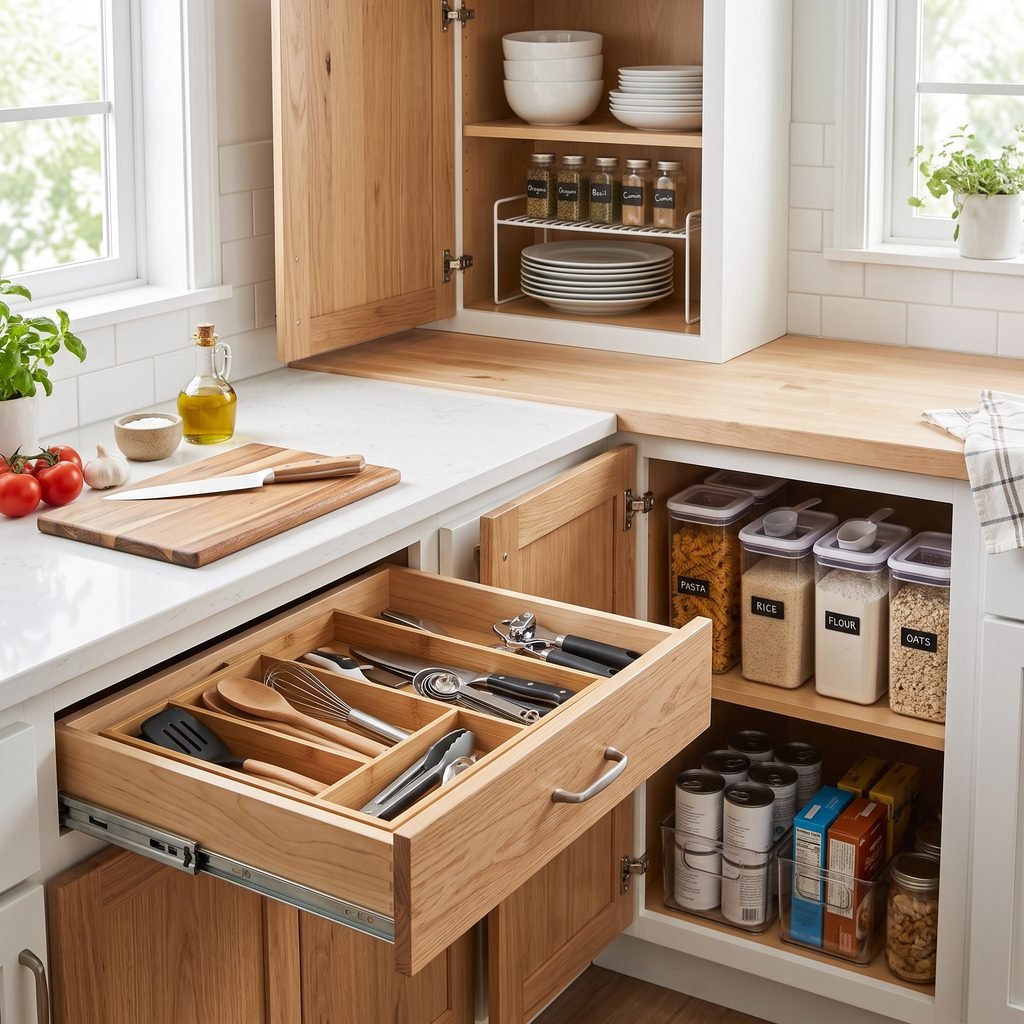
6. Create Zones in Drawers
A large drawer quickly becomes messy when everything is placed inside without separation.
Drawer dividers help create categories.
Use them for:
Kitchen Drawers
Utensils, measuring tools, wraps, and small gadgets.
Bathroom Drawers
Makeup, skincare, hair accessories, and grooming supplies.
Bedroom Drawers
Socks, underwear, accessories, and small clothing items.
Office Drawers
Pens, charging cables, notebooks, and supplies.
The goal is not perfect matching containers.
Simple divisions make it easier to see what you own and put items back where they belong.
7. Store Similar Items Together
Categories make small spaces easier to maintain.
Instead of storing similar things in several rooms, give each category a home.
For example:
- All batteries together
- All gift wrap together
- All cleaning cloths together
- All pet supplies together
- All extra toiletries together
This helps prevent duplicate purchases because you can actually see what you already have.
It also makes cleanup faster.
When an item has a clear category and location, you do not have to decide where to put it every time.
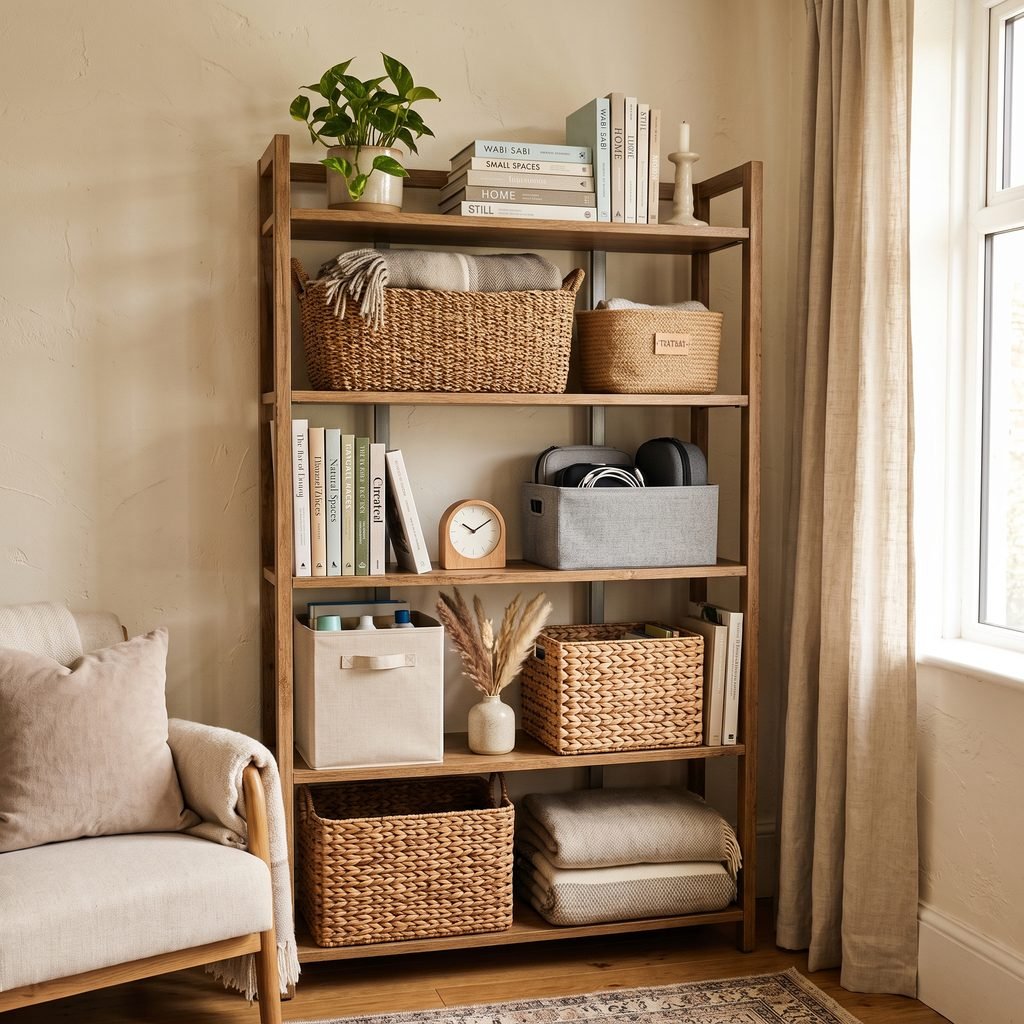
8. Use Baskets to Hide Visual Clutter
Open storage can be practical, but it can also make a small room feel busy.
Baskets can help reduce visual clutter while keeping frequently used items accessible.
Use them for:
- Blankets
- Toys
- Cords
- Pet supplies
- Toiletries
- Small electronics
On open shelves, several coordinating baskets can create a cleaner overall look.
Do not make every basket a miscellaneous container.
Assign each one a purpose.
9. Make Use of Corners
Corners often become wasted space.
Depending on the room, consider:
- Corner shelves
- Narrow cabinets
- Small desks
- Corner benches
- Plant stands with storage
- Floating corner shelves
In a small kitchen, a corner rack might hold frequently used appliances.
In a bedroom, a corner can become a compact vanity or reading area.
Even a few shelves can turn an awkward unused section into useful storage.
10. Add Hooks Wherever They Make Sense
Hooks are one of the easiest small-space organizing tools.
They are useful for:
- Coats
- Bags
- Towels
- Hats
- Dog leashes
- Jewelry
- Cleaning tools
Try them:
- Behind doors
- Inside closets
- Beside entryways
- On cabinet interiors
- On empty wall sections
Use mounting hardware appropriate for the wall and expected weight.
Adhesive hooks can work for lightweight items when used according to the manufacturer’s instructions, but heavier items may need more secure anchoring.
11. Keep Frequently Used Surfaces Clear
Small rooms feel cluttered quickly when every horizontal surface is full.
Pay special attention to:
- Kitchen counters
- Bathroom vanities
- Nightstands
- Dining tables
- Coffee tables
- Desks
Keep only what you regularly use.
For example, rather than displaying every kitchen appliance, leave out the ones you use most often and store the rest.
On a bathroom vanity, use one tray for daily essentials rather than spreading products across the entire counter.
Clear surfaces also make cleaning much faster.
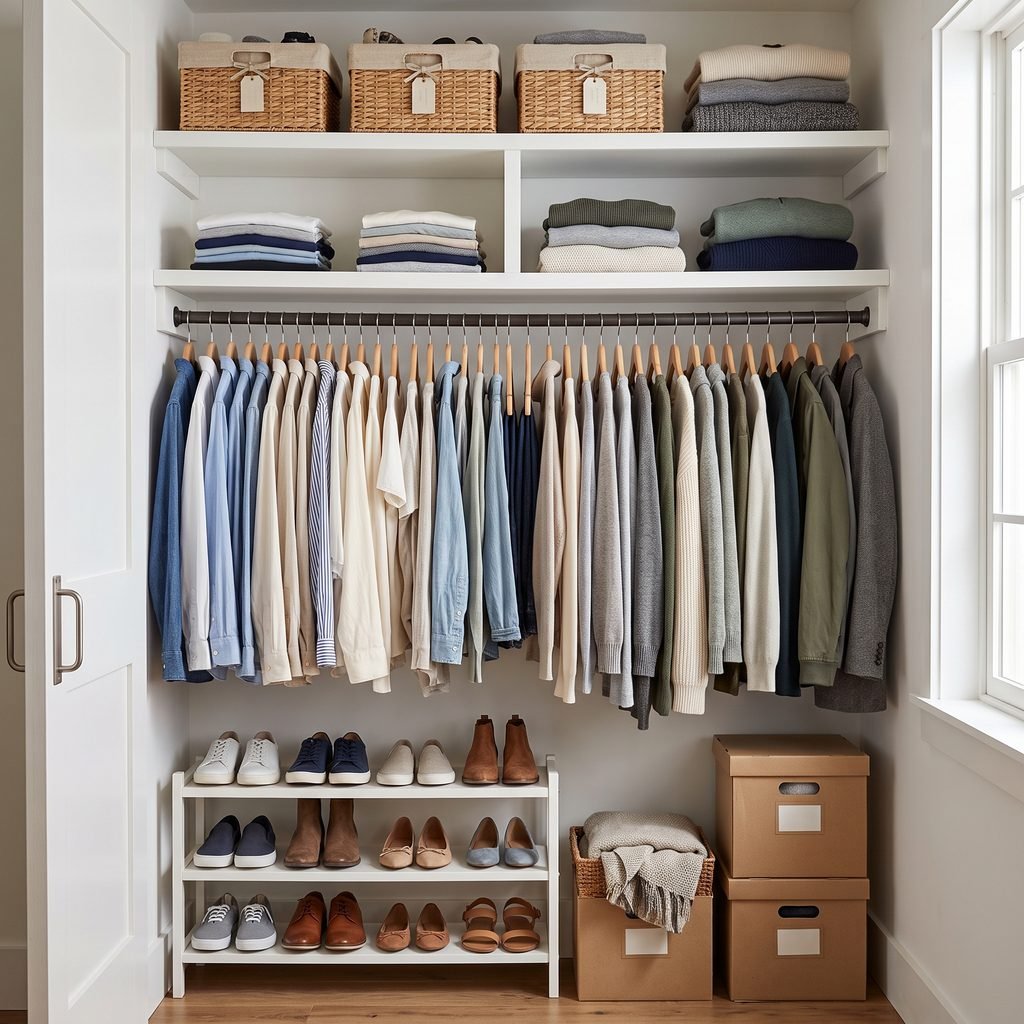
12. Use Clear Containers in Deep Storage
Deep cabinets can become black holes where items disappear.
Clear containers make it easier to see what is inside.
They are particularly useful in:
- Pantries
- Bathroom cabinets
- Laundry cupboards
- Craft storage
- Refrigerator storage
Pull-out bins are especially helpful because you can bring the entire category forward instead of reaching behind several other items.
Use labels when containers are opaque or when several categories look similar.
13. Think Narrow Instead of Wide
Small homes often have awkward narrow gaps that can still provide storage.
Look for slim solutions such as:
- Narrow rolling carts
- Skinny shelving
- Slim shoe cabinets
- Narrow console tables
- Vertical drawer units
A narrow rolling cart might fit:
- Between a refrigerator and cabinet
- Beside a washing machine
- Next to a desk
- Alongside a bathroom vanity
Measure carefully before buying.
In tight rooms, even an extra inch can determine whether a storage piece fits comfortably.
14. Organize the Entryway
A small entryway can become cluttered almost instantly because it collects everything coming into the home.
Create a simple landing zone with space for:
- Shoes
- Keys
- Bags
- Jackets
You might only need:
- A few hooks
- Slim shoe storage
- Small basket
- Wall shelf
If there is no formal entryway, create one using a small section of wall near the door.
The goal is to catch clutter before it spreads through the rest of the house.
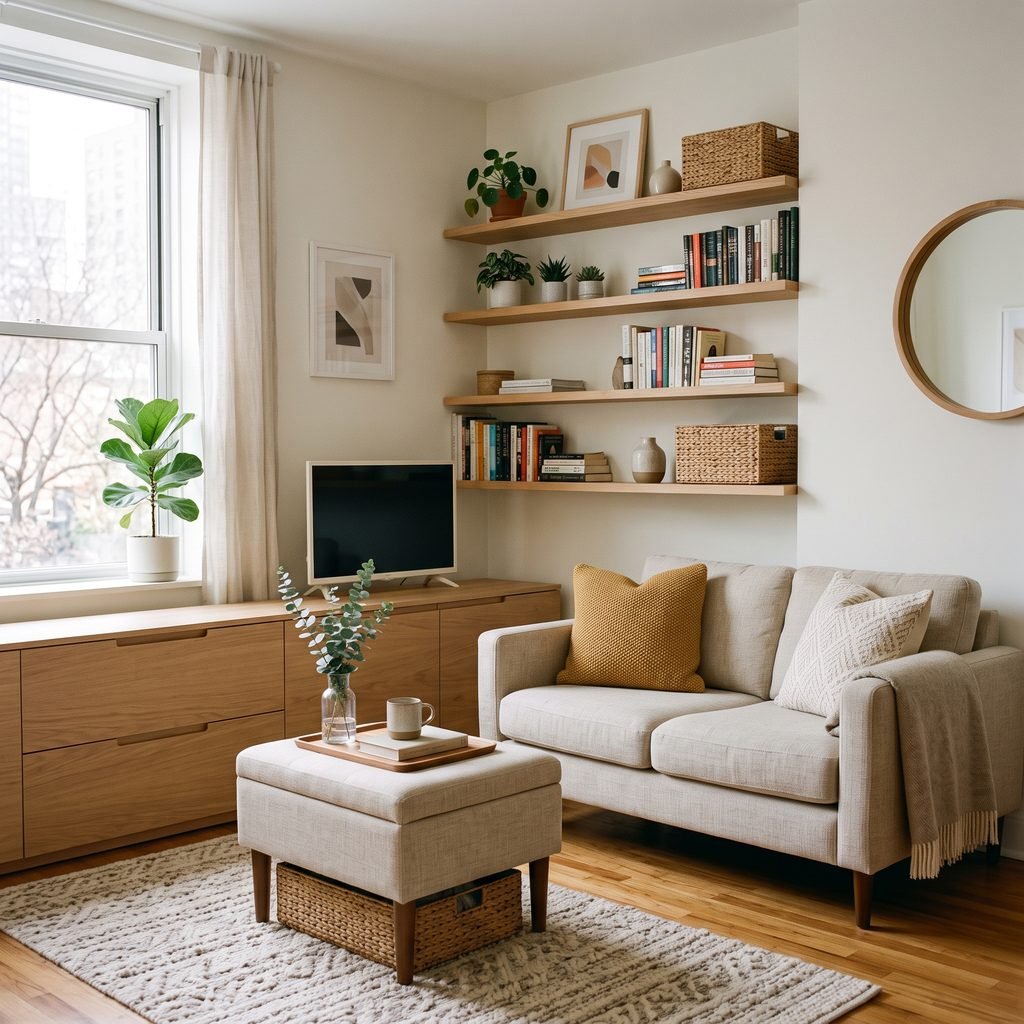
15. Use Wall-Mounted Lighting in Small Bedrooms
Nightstand lamps can take up valuable surface space.
Wall-mounted sconces or plug-in wall lights can free the nightstand for other essentials.
This works especially well beside:
- Beds
- Reading chairs
- Small desks
If you use hardwired lighting, electrical work should be completed safely and in accordance with local requirements.
Plug-in wall lights can sometimes offer a simpler alternative.
Route cords carefully so they do not create trip hazards or hang loosely where they can be damaged.
16. Rotate Seasonal Items
You do not need every seasonal item accessible all year.
Store off-season belongings separately.
Examples include:
- Winter coats
- Holiday decor
- Summer bedding
- Beach gear
- Seasonal shoes
Use higher closet shelves, under-bed containers, or other less-accessible storage for these items.
When the season changes, swap categories.
Rotating belongings reduces the amount of everyday storage competing for limited space.
17. Use the One-In, One-Out Rule
Small spaces become cluttered quickly when new items keep arriving but nothing leaves.
The one-in, one-out rule is simple:
When you bring home a new item, consider removing a similar item you no longer need.
For example:
- New sweater → donate an old sweater
- New mug → remove one you never use
- New toy → pass along an unused toy
You do not have to follow this rule rigidly.
Think of it as a way to prevent storage from slowly filling beyond capacity.
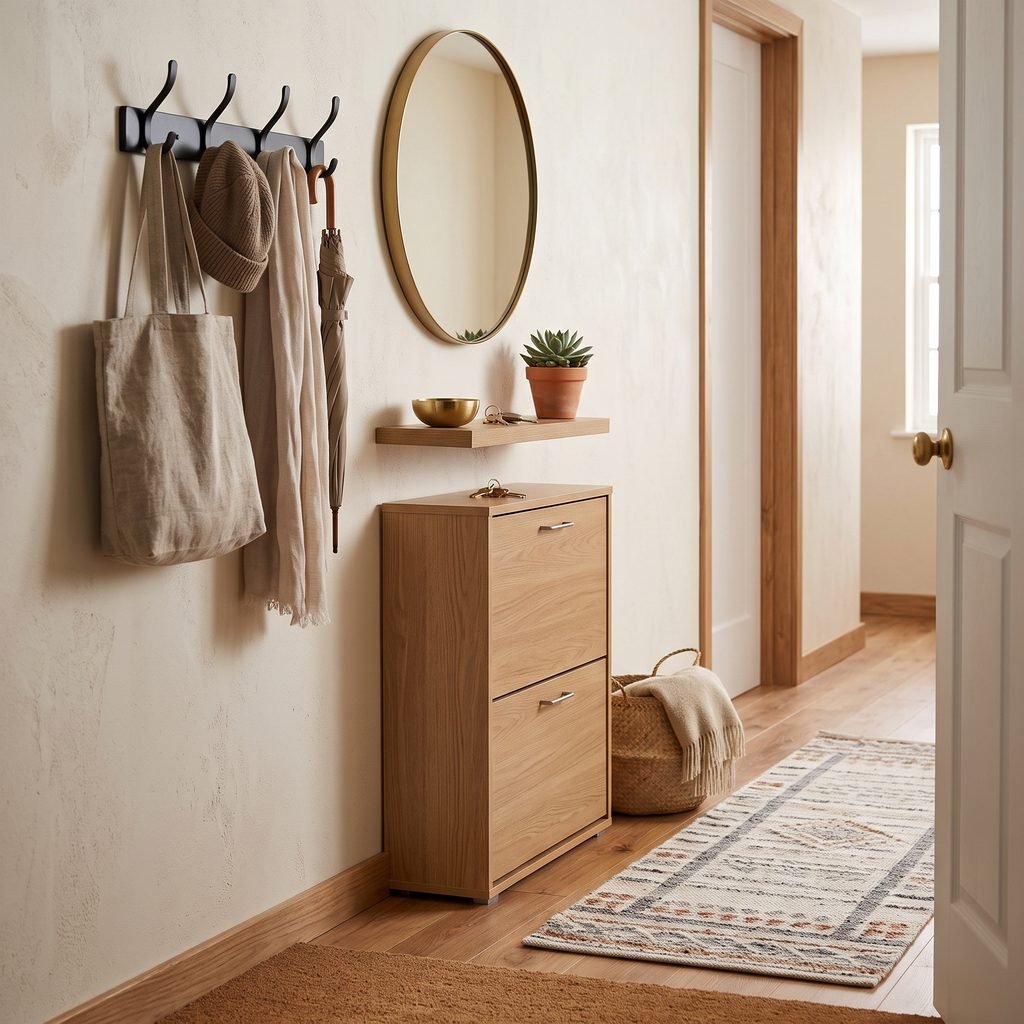
Organizing a Small Living Room
A small living room needs storage without feeling crowded.
Start by choosing furniture in proportion to the room.
Then add storage through:
- Media consoles with cabinets
- Storage ottomans
- Coffee tables with drawers
- Wall shelves
- Baskets
- Closed cabinets
Avoid placing small decorative items on every surface.
A few larger pieces often look calmer than many tiny objects.
Keep walking paths clear.
If furniture forces you to squeeze between pieces, the room may contain too much or the layout may need adjusting.
Organizing a Small Bedroom
Bedrooms need to store a lot in relatively little space.
Start with the closet and bed.
Use:
- Under-bed storage
- High closet shelves
- Drawer dividers
- Hooks
- Bedside wall shelves
- Storage beds
If your closet has one high shelf and one hanging rod, there may be unused vertical space.
Additional compatible shelving or a second hanging level can sometimes improve capacity.
Avoid filling the bedroom with too many standalone storage units.
That can make the room feel smaller even if the belongings are technically organized.
Organizing a Small Kitchen
Small kitchens work best when counters remain relatively clear.
Prioritize storage for frequently used items near the places where you use them.
For example:
Near the Stove
Cooking utensils, oils, spices.
Near the Prep Area
Knives, cutting boards, mixing bowls.
Near the Dishwasher
Everyday dishes and glasses.
Use vertical cabinet space with appropriate shelf risers where useful.
Hooks or wall storage can work for lightweight tools.
Avoid adding so many hanging items that the kitchen starts to look visually crowded.
Organizing a Small Bathroom
Bathrooms often feel crowded because many small products compete for limited space.
Start by throwing away expired or unused products where appropriate.
Then group remaining items into categories:
- Daily skincare
- Hair care
- Dental supplies
- Makeup
- Medication
- Backup toiletries
Store everyday items in the easiest-to-reach areas.
Backups can go higher or farther back.
Consider:
- Wall cabinet
- Over-toilet shelving
- Drawer dividers
- Under-sink bins
- Hooks
- Small trays
Medication should be stored according to its instructions and safely away from children.
Humidity can also make some bathroom locations unsuitable for certain products.
Organizing Small Closets
A small closet needs every section to have a purpose.
Think in zones:
Top
Seasonal or rarely used items.
Eye Level
Frequently worn clothes.
Lower Area
Shoes, baskets, or drawers.
Door
Lightweight accessories if appropriate.
Use matching slim hangers if bulky hangers are consuming too much rod space.
Fold bulky sweaters rather than hanging them if stretching is a concern.
Periodically review the closet instead of waiting until the rod and shelves are completely packed.
Organizing Small Spaces on a Budget
You do not need expensive organizing systems.
Before shopping, reuse what you already have.
Try:
- Shoe boxes as drawer dividers
- Small bowls for accessories
- Existing baskets
- Jars for small craft or office supplies
- Repurposed bins
- Hooks
- Simple shelves
The most effective organizing purchase is often the one that solves a specific problem.
Do not buy a container first and then search for something to put inside it.
Measure the space, identify the category, and then choose storage.
How to Make a Small Space Look Less Cluttered
Organization and visual simplicity work together.
A small room often feels calmer when you:
- Limit items on display
- Repeat storage containers
- Leave some empty shelf space
- Keep floors visible
- Reduce countertop clutter
- Use closed storage for unattractive items
- Group decor instead of scattering it
You do not have to hide everything.
Open shelving can look beautiful when it contains a mix of practical items and breathing room.
The goal is balance.
Common Small-Space Organizing Mistakes
Buying Organizers Before Decluttering
You may end up spending money to store things you do not want.
Filling Every Available Inch
Empty space is useful too.
Overfilled shelves and cabinets are harder to use.
Ignoring Vertical Space
Walls and tall cabinets can provide storage without consuming extra floor area.
Using Too Many Tiny Containers
Overly detailed categories can make a system difficult to maintain.
Hiding Things So Well You Forget About Them
Store frequently used items where they remain accessible.
Choosing Furniture That Is Too Large
Storage furniture is not helpful if it blocks walkways or overwhelms the room.
Creating a System That Is Hard to Put Away
If putting something away requires moving three boxes and opening two containers, it probably will not stay organized.
A Simple Small-Space Organizing Method
If you feel overwhelmed, work through one small area at a time.
Try this process:
- Empty the area.
- Remove trash and obvious donations.
- Group remaining items by category.
- Decide what actually belongs there.
- Measure the available storage.
- Choose containers only if needed.
- Put frequently used items in easy-to-reach locations.
- Leave some room for future use.
Do not empty the entire house at once.
One drawer, cabinet, closet section, or shelf is enough to start.
FAQ About Organizing Small Spaces
How do you organize a small space with too much stuff?
Start by decluttering. Storage solutions can improve access, but they cannot make unlimited belongings fit comfortably into a limited area.
What is the best way to maximize storage in a small room?
Use vertical space, hidden storage, multifunctional furniture, under-bed areas, hooks, doors, and narrow unused gaps.
How can I organize a small room without making it look cluttered?
Use a mix of closed storage and carefully edited open storage. Keep major surfaces relatively clear and avoid filling every shelf completely.
Are baskets good for small spaces?
Yes, particularly for hiding visually messy categories. Give each basket a specific purpose so it does not become a catch-all.
How can I create more storage without adding furniture?
Use wall shelves, hooks, doors, under-bed storage, closet interiors, and existing cabinet space more efficiently.
What should I organize first in a small home?
Start with the area causing the most daily frustration. Kitchens, entryways, closets, and bathrooms often provide the biggest improvement.
How do you keep a small space organized long-term?
Use simple storage systems, return items after use, declutter regularly, and avoid bringing in more belongings than the space can comfortably hold.
Final Thoughts
Successful organizing small spaces is not about squeezing the maximum number of belongings into every cabinet.
It is about making the things you actually need easy to find, use, and put away.
Start by decluttering, then look for unused opportunities such as walls, doors, corners, under-bed areas, and the inside of furniture.
Choose storage that suits your habits instead of forcing yourself to follow a complicated system.
Keep everyday items accessible, store seasonal belongings out of the way, and leave a little breathing room wherever possible.
A small home may always require more intentional storage than a large one, but it does not have to feel cramped.
When everything has a logical home and your storage works with the way you live, even a very small space can feel calm, comfortable, and surprisingly functional.