

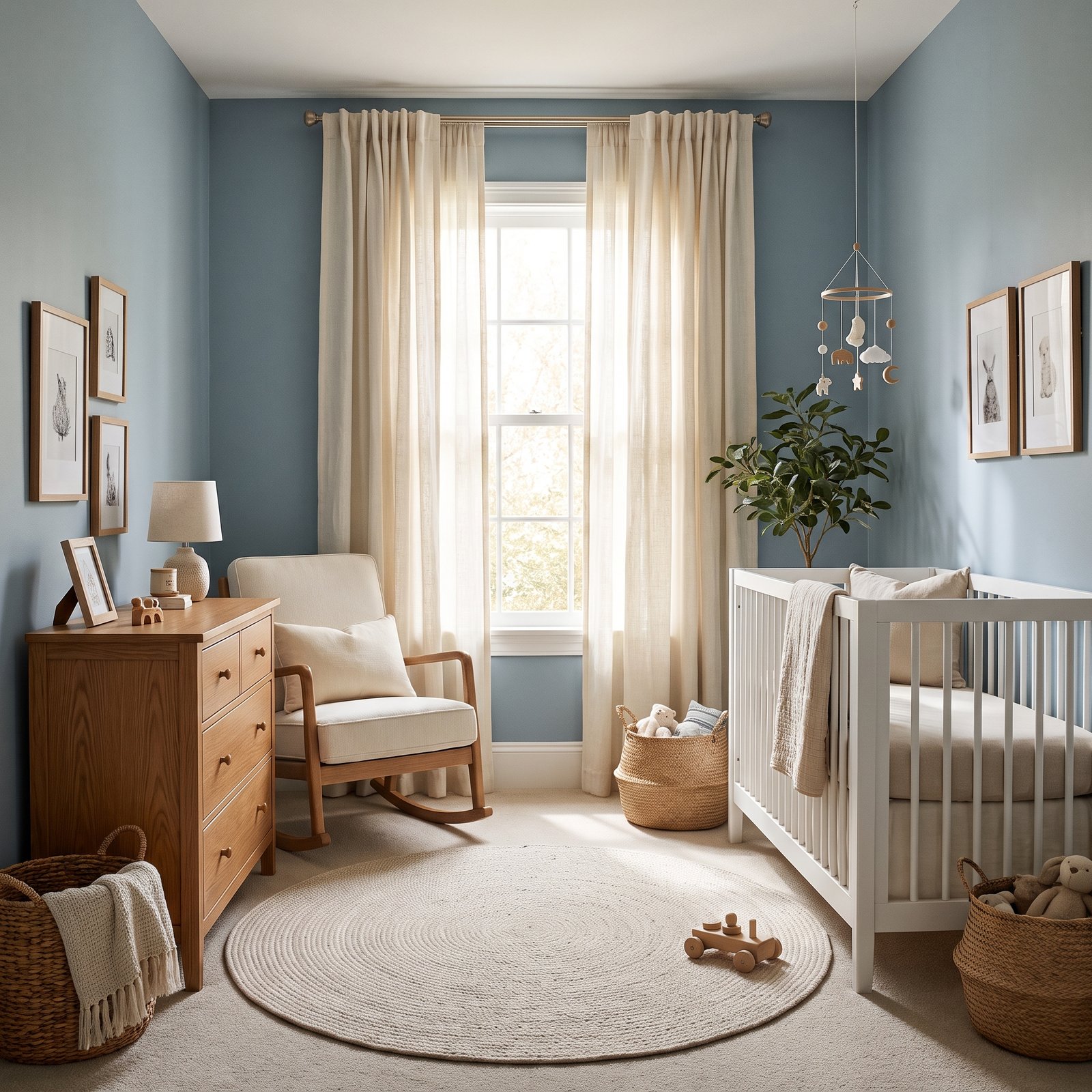
A blue and white nursery can feel fresh, peaceful, and timeless without looking overly themed. The combination works especially well because blue adds softness and personality while white keeps the room feeling bright and open.
This nursery reveal is all about creating a calm, layered space that feels sweet enough for a baby but polished enough to grow with the room over time.
Instead of filling the nursery with obvious motifs, the look comes together through color, texture, furniture, and thoughtful details. Soft blue walls or accents, crisp white furniture, natural wood, woven baskets, cozy fabrics, and a few carefully chosen decorative pieces can create a room that feels warm rather than stark.
Whether you are planning a nursery from scratch or simply looking for blue and white nursery ideas, this room offers plenty of inspiration for creating a space that is both beautiful and practical.
The Overall Blue and White Nursery Look
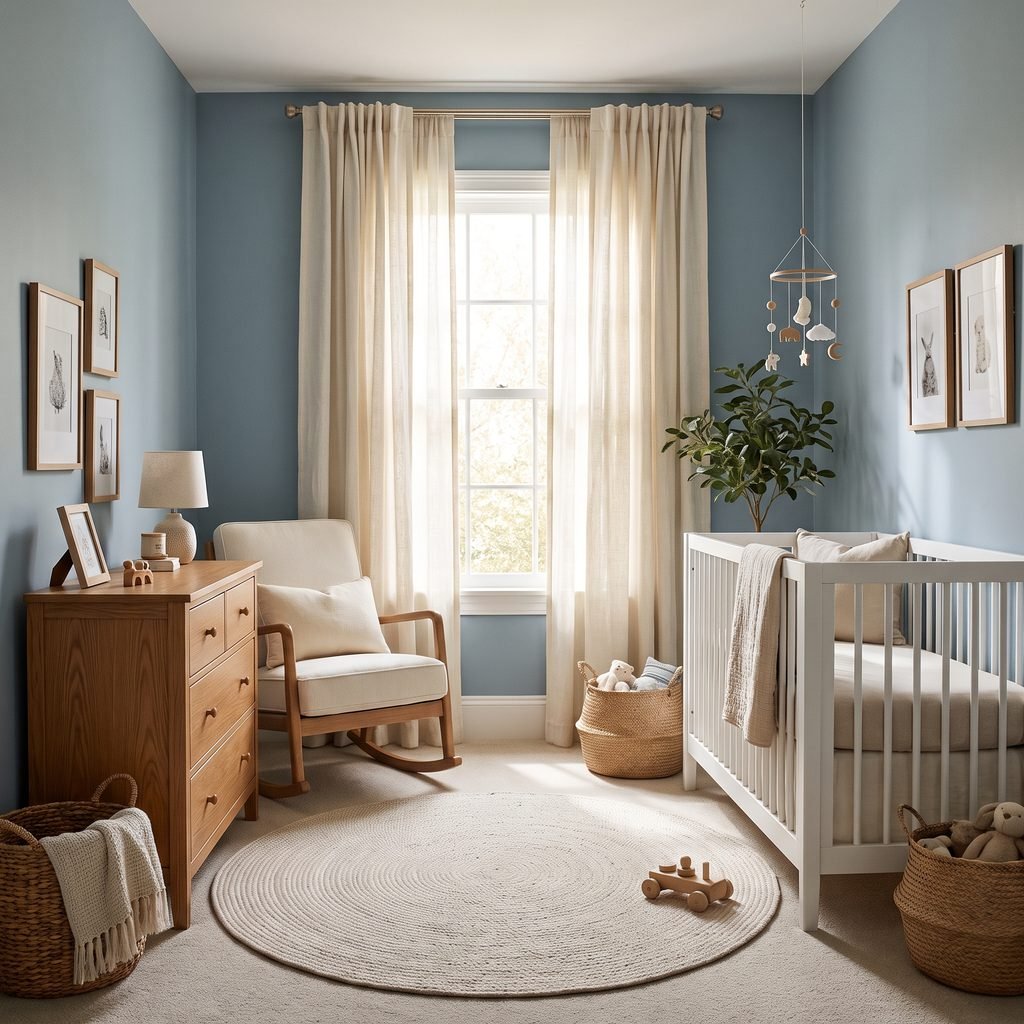
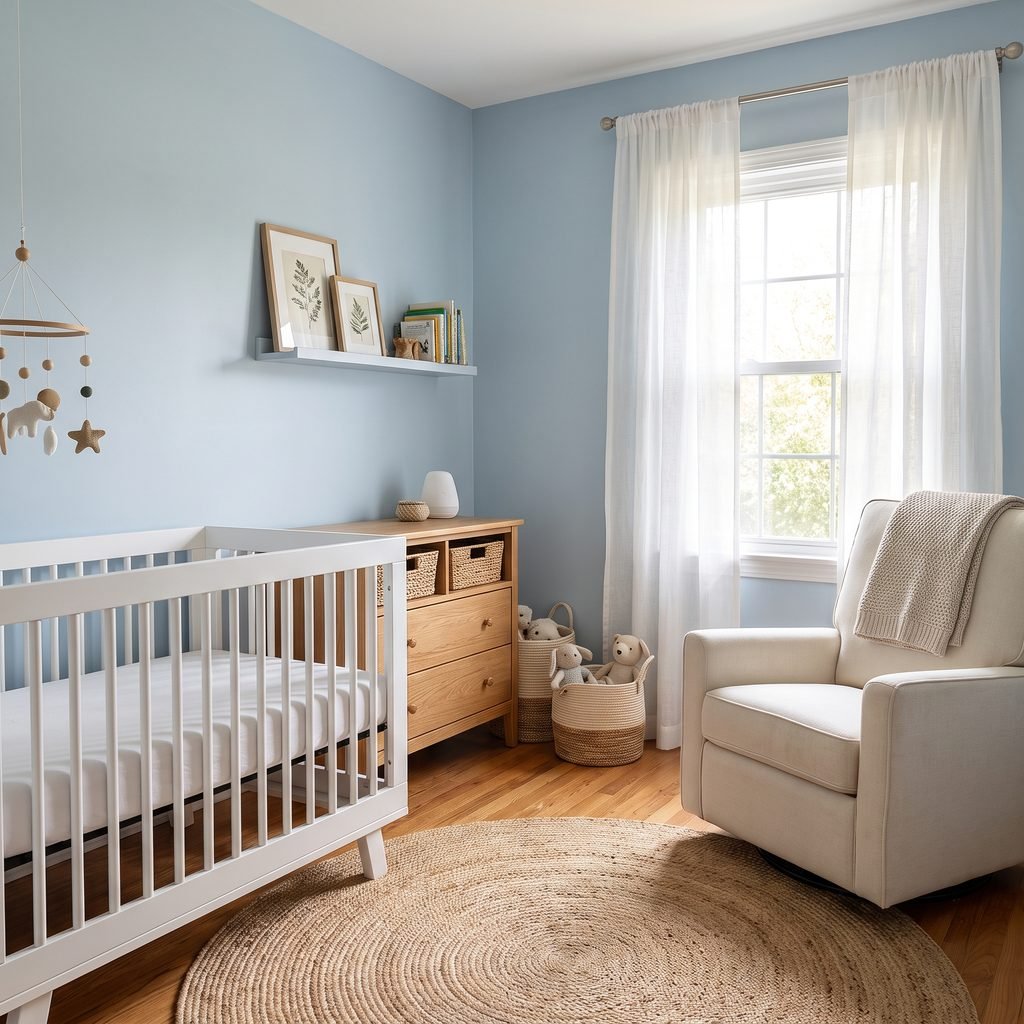
The goal for this nursery is a room that feels calm, light, and comfortable rather than overly decorated.
The color palette is simple:
- Soft blue
- White
- Warm cream
- Natural wood
- Small touches of tan or woven texture
Keeping the palette limited helps the room feel cohesive.
Blue provides enough color to keep the nursery interesting, while white furniture and trim prevent the room from feeling dark or heavy.
Natural materials soften the contrast between blue and white and make the overall space feel more inviting.
The result is a nursery that can work with traditional, coastal, transitional, cottage, or classic decorating styles.
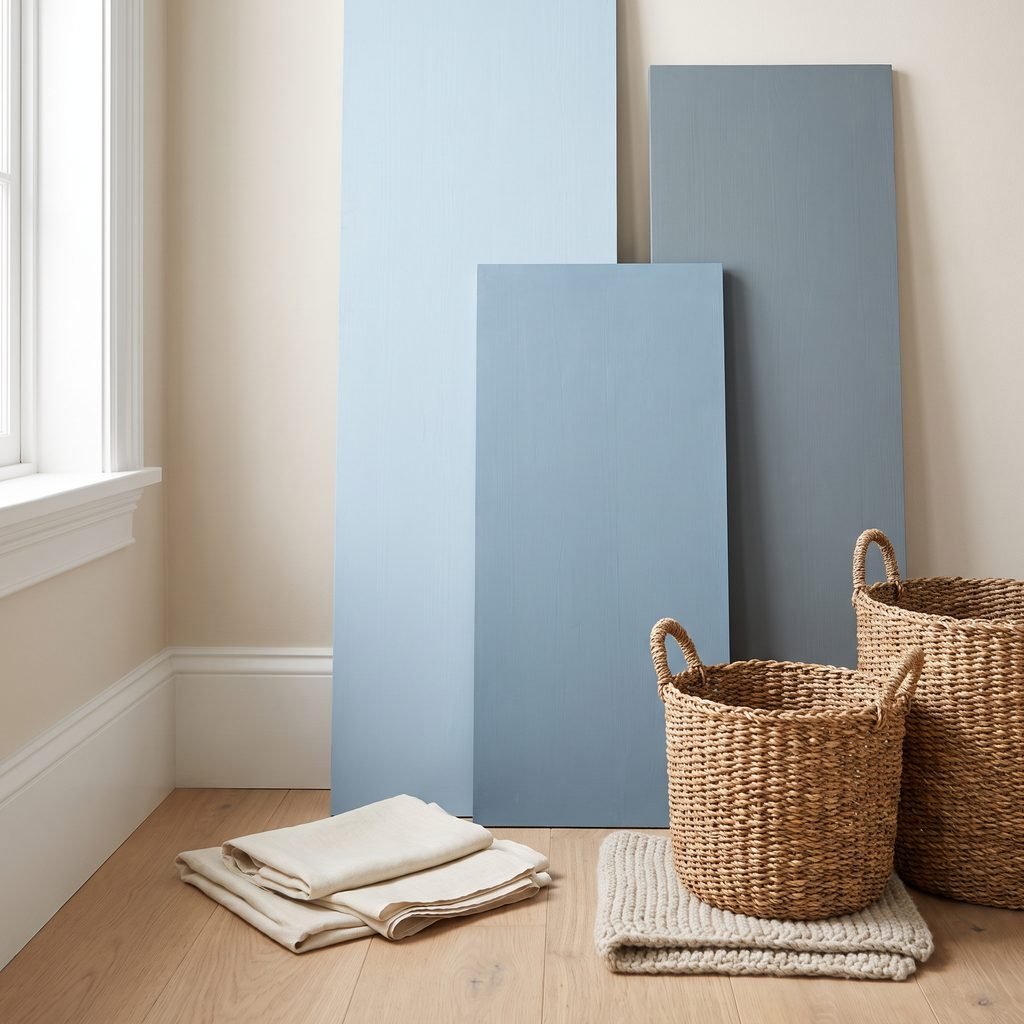
Choosing the Right Blue for a Nursery
Not every blue creates the same mood.
For a relaxing nursery, softer and slightly muted shades are often easier to decorate around than very bright blues.
Consider colors such as:
Pale Powder Blue
Light and airy, especially in rooms with plenty of daylight.
Dusty Blue
A slightly muted option that feels sophisticated and works beautifully with cream and natural wood.
Blue-Gray
A more neutral direction that can make the nursery feel calm and understated.
Medium Classic Blue
Useful for accent walls, curtains, rugs, or furniture when you want stronger contrast.
Before painting, always test the color in the actual nursery.
Natural and artificial lighting can make blue shift significantly throughout the day.
A shade that looks soft and muted in one room may appear brighter, grayer, or cooler in another.
White Furniture Keeps the Nursery Bright
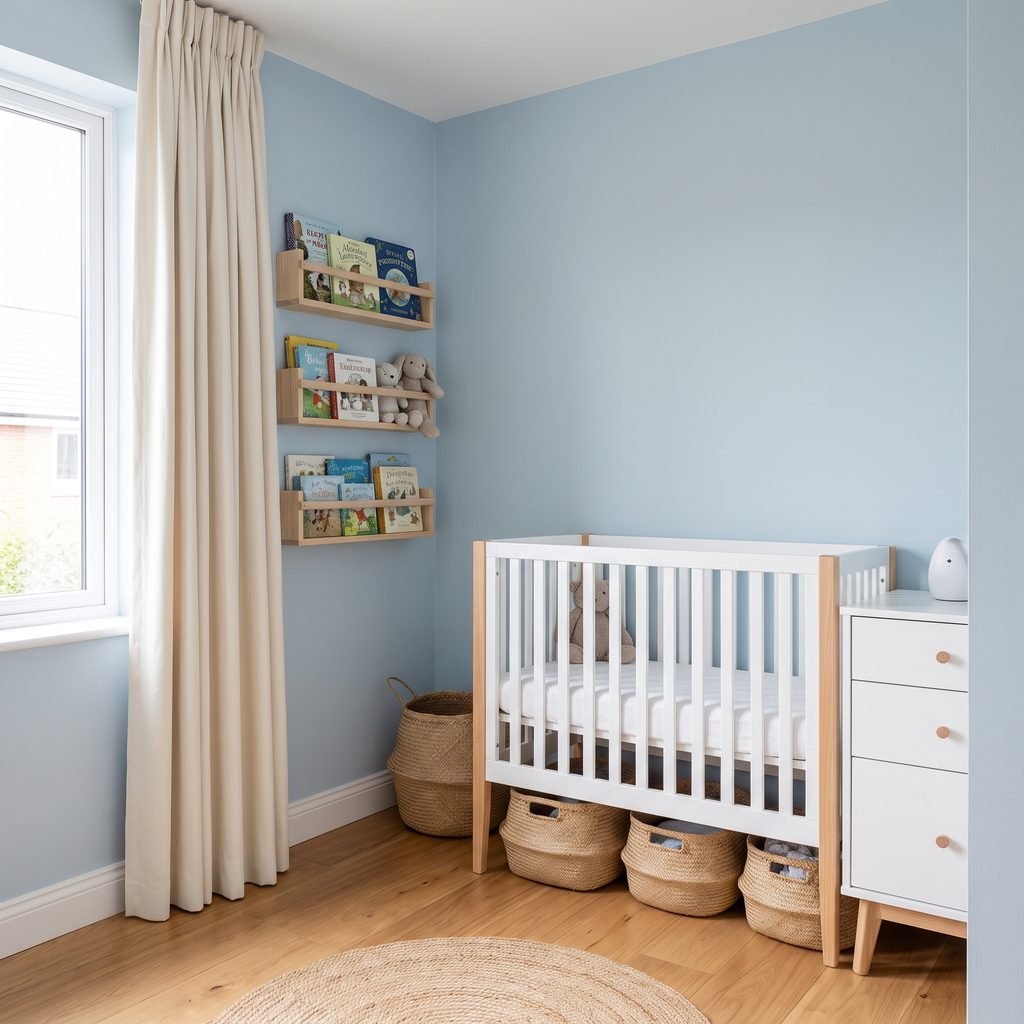
White furniture is a natural choice in a blue nursery because it creates clean contrast.
A white crib immediately stands out against a blue wall without making the room feel visually busy.
Other white pieces might include:
- Crib
- Dresser
- Bookcase
- Wall shelves
- Side table
You do not have to match every white finish perfectly.
Slightly different whites can still work together when the rest of the room is layered with textiles, wood, and warm neutral accents.
If you are choosing nursery furniture, prioritize safety and function over appearance.
Use a crib that meets current applicable safety standards, assemble it exactly according to the manufacturer’s instructions, and avoid adding decorative items inside the sleep space that are not recommended for infant sleep.
A Simple Crib Wall
The crib wall is often the main focal point in a nursery.
Keeping it simple helps the room feel peaceful.
A soft blue wall behind a white crib may be enough on its own.
You could add visual interest with:
- Subtle wall molding
- Wallpaper above paneling
- One carefully positioned piece of wall decor
- A painted accent wall
Any wall decor near a crib should be securely installed.
Avoid heavy, fragile, or loosely mounted items directly above the crib where they could fall.
As the baby grows, also reassess anything within reach.
Adding Warmth With Natural Wood
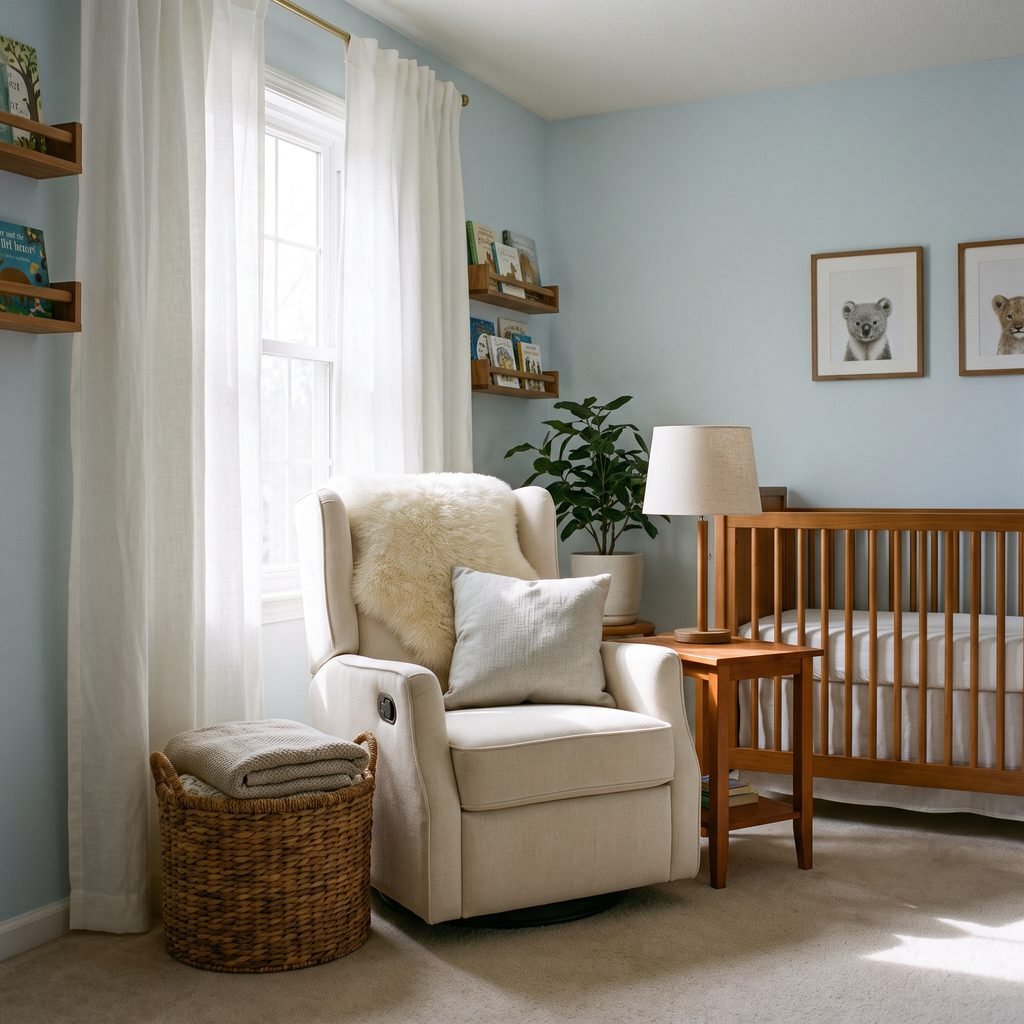
Blue and white can sometimes feel cool if every finish in the room is crisp.
Natural wood adds the warmth the palette needs.
You could incorporate wood through:
- Dresser
- Picture frames
- Side table
- Curtain rod
- Lamp base
- Toy storage
- Decorative objects
Light oak and medium warm woods work especially well with soft blue.
You do not need large amounts.
Even a few small wood accents can help balance the room.
Natural wood is also useful if you want the nursery to feel less formal and more relaxed.
The Nursery Glider or Reading Chair
A comfortable chair is one of the most useful pieces of nursery furniture.
Choose something supportive enough for feeding, rocking, reading, and settling the baby.
A cream, ivory, or warm white chair fits naturally into the blue and white palette.
Add softness with a simple throw or small lumbar pillow when the chair is being used by an adult, but keep loose textiles away from the baby’s sleep area.
Position the chair somewhere with:
- Comfortable lighting
- A small side table
- Easy access to frequently used items
A floor lamp or wall-mounted light can make the corner useful during nighttime routines.
Route cords safely and keep them away from the crib and areas a child could eventually reach.
Choosing Curtains for a Blue and White Nursery
Curtains add softness and can make the room feel finished.
For this palette, good options include:
- White linen-look curtains
- Cream curtains
- Blue-and-white patterned panels
- Pale blue curtains
If the walls are already blue, white or cream curtains can help break up the color.
If the walls are white, patterned blue curtains are an easy way to bring more color into the room.
For better sleep, you may also want light-blocking window treatments.
Make sure curtain rods and shades are securely installed.
Keep blind cords, curtain cords, and long fabric safely out of a child’s reach.
Layering Blue and White Bedding Carefully
In nursery decorating, the crib itself often looks sweetest when kept simple.
A fitted crib sheet can bring in color or pattern without clutter.
Try:
- Small blue floral
- Blue stripe
- Tiny gingham
- Soft blue solid
- White with subtle blue detail
Decorative blankets and pillows can be used elsewhere in the room for styling, such as on the glider or stored in a basket.
For infant sleep, follow current safe-sleep guidance and keep the crib free of loose blankets, pillows, stuffed animals, bumpers, and other soft items that are not recommended in the sleep space.
This is one place where simple really is better.
A Blue and White Nursery Rug
A rug can bring the entire room together.
It adds softness underfoot and gives the nursery another opportunity to repeat the color palette.
Consider:
- Blue vintage-style rug
- Blue and cream geometric rug
- Pale patterned rug
- Natural woven rug with subtle blue details
If the room already has several blue elements, a neutral rug may help balance the space.
If most of the room is white, a patterned rug can introduce more personality.
Choose a rug that is easy to clean and suitable for the flooring underneath.
Use an appropriate rug pad where needed to reduce slipping.
Bringing in Woven Texture
Woven baskets work particularly well in nurseries because they add both warmth and storage.
Use baskets for:
- Extra blankets
- Toys
- Laundry
- Books
- Diapering supplies
Natural woven texture prevents a blue and white room from feeling too polished or cold.
It also works beautifully with wood furniture and cream textiles.
For floor baskets that children may eventually access, avoid sharp edges and keep heavy or hazardous contents out of reach.
Styling the Nursery Dresser
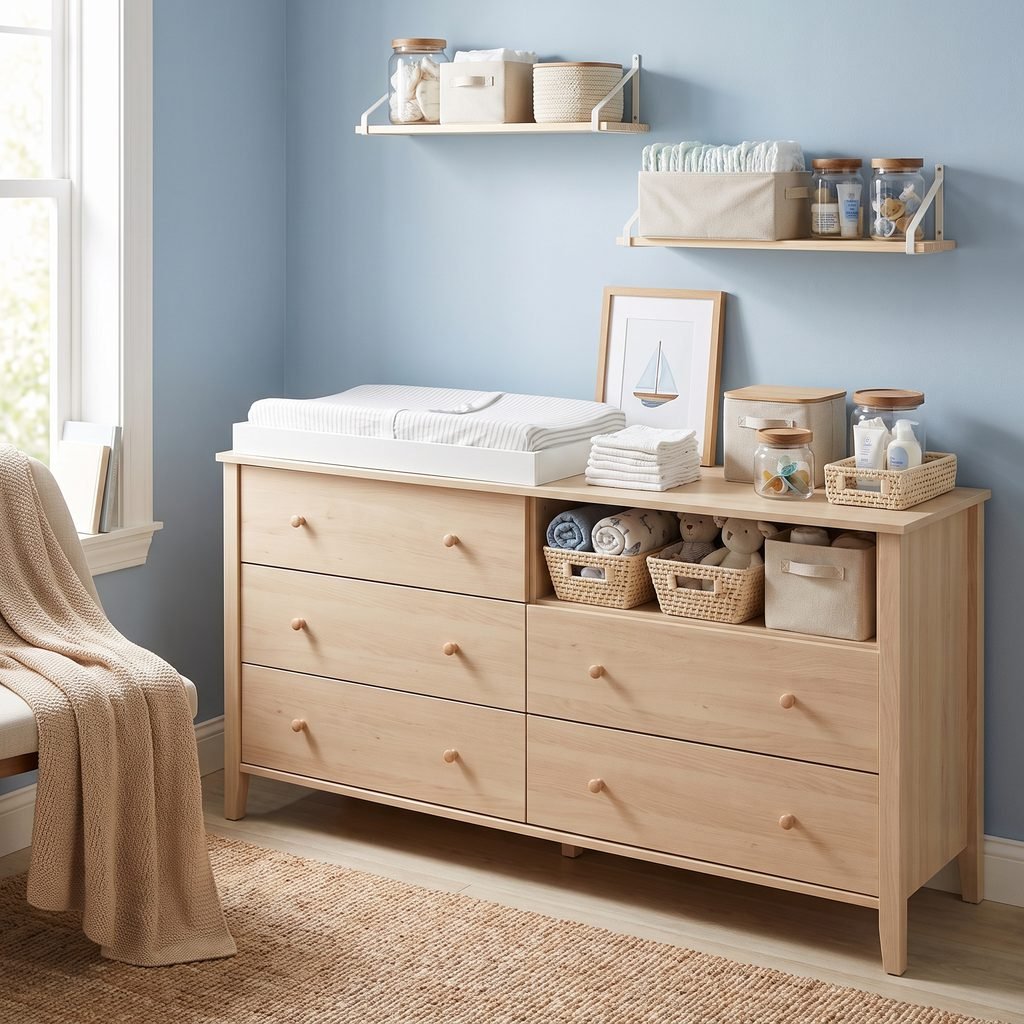
A nursery dresser can double as a changing station when the piece and setup are suitable for that use.
Keep the surface practical.
Useful items may include:
- Changing supplies
- Small lamp
- Basket or tray
- A few decorative accents
Avoid overcrowding the top.
Babies become mobile quickly, so items that look safely out of reach at first may not remain that way.
If using a changing pad, follow its manufacturer’s installation and safety instructions.
Anchoring tall or potentially tip-prone furniture according to manufacturer guidance is also important in spaces used by children.
Add a Small Nursery Library
Books are an easy way to add color without committing to more permanent decor.
Use:
- Low bookcase
- Front-facing book ledges
- Small basket of board books
Blue, white, cream, and muted colorful book covers can become part of the room’s decoration.
Place frequently used books where an adult can easily reach them during story time.
As your child grows, move books lower so they can choose their own.
If you install floating shelves or ledges, use suitable hardware and follow their load limits.
Keep the Nursery Decor Simple
It can be tempting to fill every empty wall and shelf.
A nursery usually feels calmer when there is some open space.
Instead of decorating every corner, choose a few meaningful elements:
- Framed prints
- Small lamp
- Books
- Woven basket
- Simple mobile positioned safely
- One decorative object on a high shelf
Avoid cluttering the crib area.
The best nursery decor supports the atmosphere of the room without interfering with safety or function.
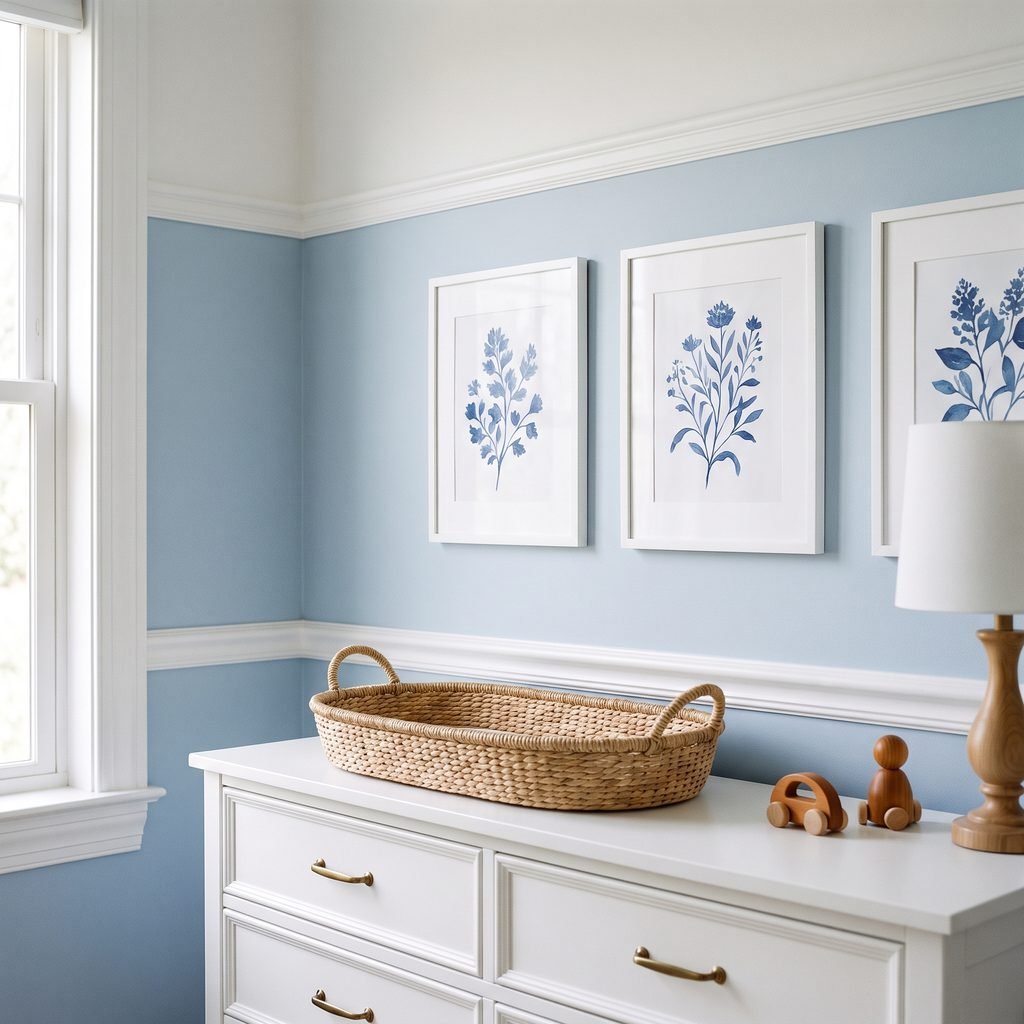
Blue and White Nursery Wall Decor Ideas
If the walls need more interest, consider decor that reinforces the palette without making the room feel themed.
Ideas include:
Botanical Prints
Soft blue botanical artwork can feel classic and peaceful.
Simple Abstract Art
Muted blue and cream artwork creates a more modern look.
Personalized Art
A name or initial can make the room feel special, provided the decor is securely installed.
Blue-and-White Patterned Wallpaper
Wallpaper can become the main decorative element so the rest of the room stays simple.
Wall Molding
Simple panel molding or board-and-batten can add dimension while keeping the palette quiet.
Creating a Blue and White Nursery Without a Theme
One of the easiest ways to make a nursery age well is to focus on color rather than a specific character or theme.
Instead of decorating around nautical, animal, or storybook motifs, let the palette do most of the work.
Use blue in:
- Walls
- Rug
- Curtains
- Art
- Crib sheet
Use white in:
- Furniture
- Trim
- Lighting
- Textiles
Then soften everything with wood and natural texture.
You can still add playful details, but they become accessories rather than the entire identity of the room.
That makes it much easier to update the space later.
Blue and White Nursery Ideas for a Small Room
A small nursery benefits from keeping the contrast light.
Consider:
- Pale blue walls
- White crib
- Light curtains
- One compact dresser
- Wall-mounted book storage
- Under-crib or closet organization where appropriate
Avoid squeezing too much furniture into the room.
A crib, dresser, and chair may be all you need.
Wall-mounted storage can reduce the need for additional floor furniture.
Mirrors can visually open a space, but they must be securely mounted and positioned carefully in a child’s room.
How to Make a Blue Nursery Feel Warm
If your blue nursery feels cold, the solution is usually not changing the blue.
Add warmer materials.
Try:
- Natural wood
- Cream
- Beige
- Woven baskets
- Warm lighting
- Linen
- Soft wool-like textures
- Tan leather-look accents in appropriate decor
Avoid pairing every blue element with stark bright white and cool gray.
A few warm neutrals can completely change the feel of the room.
How to Make the Nursery Feel More Expensive
A polished nursery does not necessarily require expensive furniture.
Focus on a few details.
Repeat Materials
Use the same wood tone in several places.
Limit the Palette
Two main colors plus warm neutrals can look more intentional than many competing shades.
Use Curtains With Enough Fullness
Properly scaled window treatments can make the room feel more finished.
Choose One Focal Point
Let the crib wall, wallpaper, or rug be the main feature.
Hide Visual Clutter
Use drawers, baskets, and closed storage.
Mix Textures
Combine smooth painted furniture with linen, woven fibers, wood, and a soft rug.
Practical Nursery Storage Ideas
A nursery needs storage for a surprisingly large number of small items.
Create simple categories for:
- Diapers
- Wipes
- Clothing
- Burp cloths
- Bedding
- Toys
- Books
- Toiletries
Drawer dividers can keep tiny clothing items organized.
Use baskets for larger categories.
Avoid creating a system with too many complicated steps.
If putting something away is easy, the nursery is much more likely to stay organized.
Common Blue and White Nursery Decorating Mistakes
Using Too Many Different Blues
Multiple shades can work, but they should relate to one another.
Choose one main blue and use lighter or darker versions as accents.
Making Everything White
Without warm materials, the room can feel flat.
Add wood, cream, and woven texture.
Overdecorating the Crib Wall
Keep the crib area calm and prioritize secure installation.
Buying Decor Before Choosing the Main Pieces
Furniture, flooring, paint, and curtains have a bigger visual impact than small accessories.
Choose those first.
Ignoring Lighting
Blue can shift dramatically throughout the day.
Test paint before committing.
Prioritizing Appearance Over Function
A beautiful nursery still needs comfortable seating, practical storage, easy movement, and safe furniture placement.
Nursery Safety Considerations
Nursery decorating should always work around safety.
Use a crib and sleep setup that meet current applicable guidance and manufacturer instructions.
Keep loose bedding, pillows, plush toys, and decorative items out of an infant’s sleep space when they are not recommended for safe sleep.
Secure dressers, shelving, mirrors, and other potentially unstable furniture as appropriate.
Keep cords, blind loops, lamps, and electrical cables away from the crib and eventually out of a growing child’s reach.
Use wall-mounting hardware suitable for the wall and the weight of the object.
Avoid placing heavy or breakable decor where it could fall into the crib.
As the baby becomes mobile, reassess the entire room. A nursery that is appropriate for a newborn may need changes once a child can roll, crawl, stand, and climb.
FAQ About a Blue and White Nursery
Is blue a good color for a nursery?
Yes. Soft blue can create a calm and comfortable atmosphere and pairs easily with white, cream, wood, beige, and many other neutrals.
What colors go with a blue and white nursery?
Natural wood, cream, beige, tan, muted green, and small touches of warm metal can complement blue and white beautifully.
How do you make a blue nursery feel cozy?
Add warm wood tones, layered textiles, woven baskets, soft lighting, cream fabrics, and a comfortable rug.
Can a blue and white nursery be gender-neutral?
Absolutely. Blue can be used as a versatile decorating color rather than a gender-specific theme, especially when combined with natural materials and simple furnishings.
What shade of blue is best for a nursery?
Soft powder blue, dusty blue, blue-gray, and muted medium blues are all worth considering. The best option depends on the room’s lighting and existing finishes.
Should nursery furniture be white?
It does not have to be, but white furniture creates clean contrast against blue walls. Natural wood furniture can also look beautiful in a blue and white palette.
How can I decorate a nursery on a budget?
Start with paint, basic furniture, a few baskets, affordable curtains, secondhand decor where appropriate, and simple wall art. A limited color palette can make inexpensive pieces look more cohesive.
Final Thoughts
A blue and white nursery reveal does not need elaborate decor to feel special.
The beauty of this color combination comes from its simplicity.
Soft blue creates a peaceful backdrop, white keeps the room bright, and natural wood and woven textures add enough warmth to prevent the nursery from feeling cold.
Start with the practical pieces—the crib, dresser, chair, lighting, and storage—then layer in the decorative details.
A patterned rug, simple curtains, a few books, subtle artwork, and baskets may be all the room needs.
By keeping the palette consistent and leaving plenty of breathing room, you can create a nursery that feels sweet and welcoming now while still being easy to update as your child grows.