

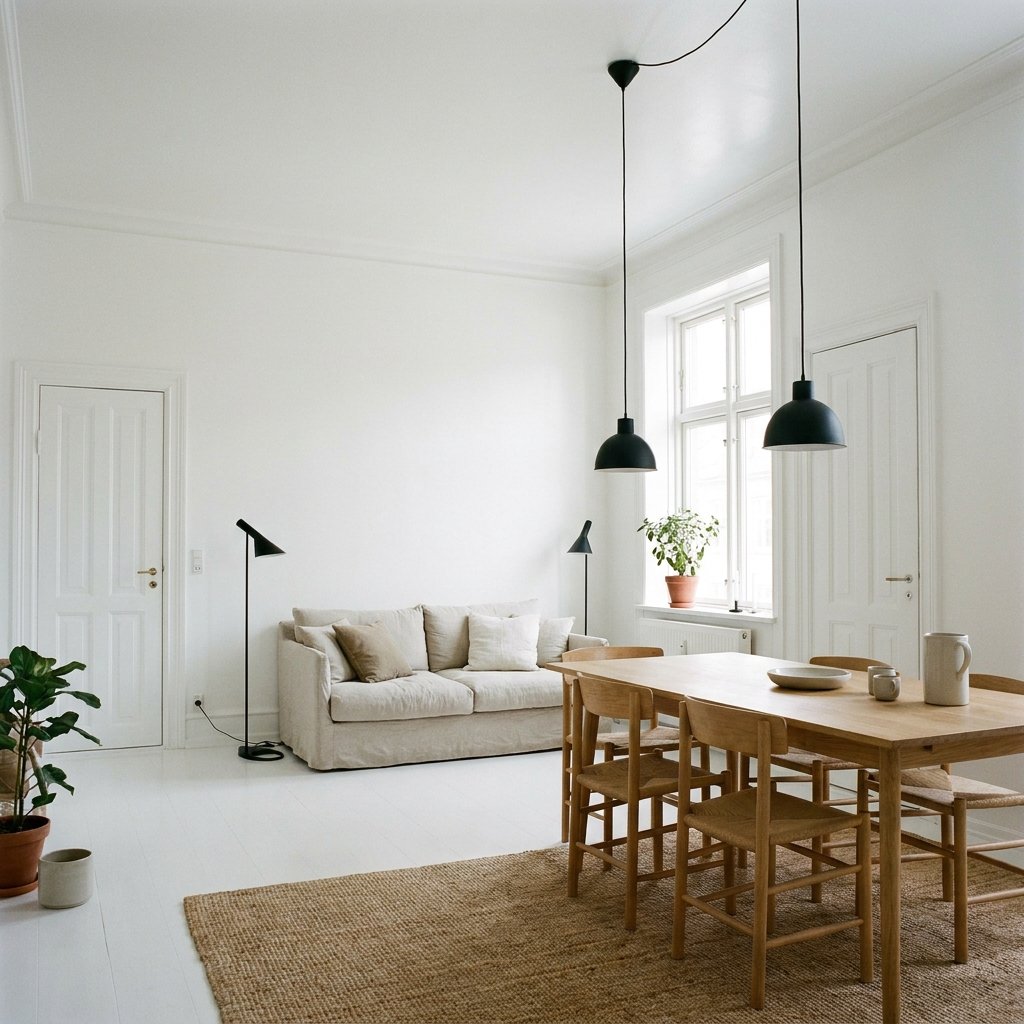
Finding the right white paint can be surprisingly difficult.
Some whites look creamy. Others turn gray, yellow, blue, or even slightly green once they’re on the wall. And a white that looks perfect in one home can feel completely different in another because of the lighting and surrounding materials.
If you’re looking for a bright, clean white, Benjamin Moore Chantilly Lace OC-65 is one color you’ll probably come across.
Benjamin Moore describes Chantilly Lace as a classic go-to white inspired by fresh cotton and pure silk. It has an official LRV of 90.04, making it a highly reflective white. Benjamin Moore also includes Chantilly Lace among its recommendations for bright, clean white trim.
But does that mean it’s the right white for every room?
Not necessarily.
Chantilly Lace’s clean appearance can be beautiful with the right materials, but it can also create more contrast than you want when paired with creamy stone, warm tile, beige furnishings, or other off-whites.
Here’s what to know about Chantilly Lace before you paint your walls, trim, cabinets, ceiling, or exterior.

What Color Is Benjamin Moore Chantilly Lace?
Chantilly Lace is OC-65 in Benjamin Moore’s Off White Collection.
It’s also known as 2121-70.
Benjamin Moore describes it as a classic go-to white, and unlike noticeably creamy whites, Chantilly Lace is generally appreciated for its clean, crisp appearance.
That makes it useful when you want the room to look genuinely white rather than beige or cream.
It can work particularly well with:
- Clean modern interiors
- Black accents
- Cool colors
- Natural wood
- Bright kitchens
- Crisp trim
- Colorful artwork
However, every white responds to its surroundings.
Don’t choose Chantilly Lace solely because you want a white without first comparing it to the permanent finishes in your home.
What Is the LRV of Chantilly Lace?
Benjamin Moore lists the LRV of Chantilly Lace as 90.04.
LRV stands for Light Reflectance Value.
The scale runs from 0 to 100, with lower numbers reflecting less light and higher numbers reflecting more.
At 90.04, Chantilly Lace reflects a significant amount of available light.
That’s one reason it can feel so bright and fresh.
However, high LRV doesn’t mean paint can create light where none exists.
A dark room painted Chantilly Lace can still feel dark.
The paint simply reflects the light that’s available.
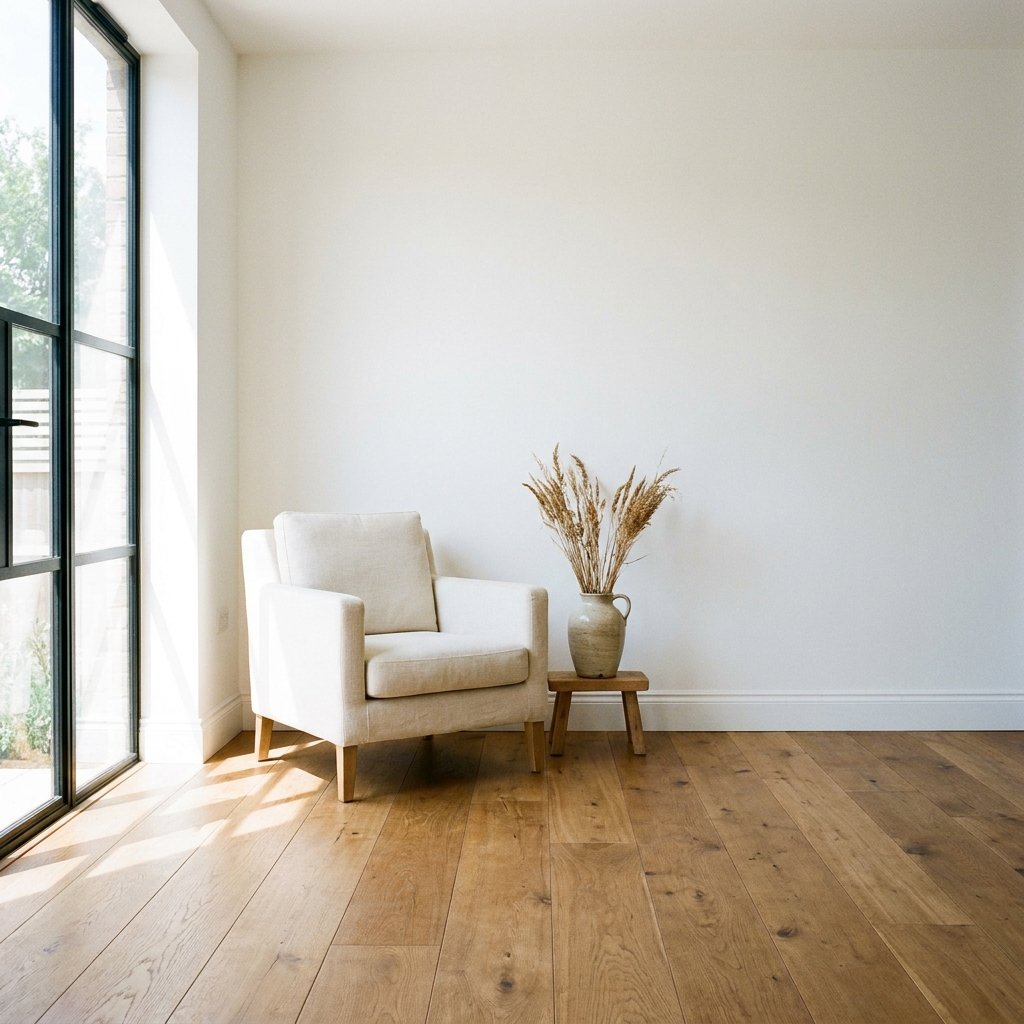
What Are the Undertones of Chantilly Lace?
Chantilly Lace is commonly chosen when someone wants a particularly clean white without an obvious creamy appearance.
That’s an important distinction.
Many popular whites have noticeable warmth.
Chantilly Lace generally appears more neutral and crisp by comparison.
But no paint color exists independently of its environment.
Surrounding colors can influence how you perceive even a clean white.
For example:
A strongly blue room may affect how the white appears.
Warm beige tile can make the white look noticeably cooler by comparison.
A creamy cabinet beside Chantilly Lace may suddenly look much more yellow.
The safest approach is to think of Chantilly Lace as a clean, bright white and then sample it with your actual materials.
Is Chantilly Lace Warm or Cool?
Chantilly Lace is generally considered a relatively neutral, clean white rather than an obviously warm cream.
It also isn’t usually chosen because someone wants an intentionally blue-gray white.
Where it lands visually in your room will depend on what surrounds it.
Compare it against a warm white and Chantilly Lace will probably look cleaner and crisper.
Compare it with another very bright white and the differences may become more subtle.
Does Chantilly Lace Look Stark?
It can.
That’s not necessarily a bad thing.
If your room has lots of warmth from:
- Wood floors
- Wood furniture
- Rugs
- Upholstery
- Natural textures
a clean white can provide beautiful balance.
But in a room dominated by cool hard surfaces and limited texture, the same white may feel more stark than you expected.
Before deciding that Chantilly Lace is “too white,” consider the entire palette.

Chantilly Lace in North-Facing Rooms
North-facing rooms often receive cooler indirect light.
That can make whites appear cooler or more subdued.
Chantilly Lace may still look clean and bright, but don’t assume the high LRV will completely counteract a low-light northern exposure.
Sample it on several walls.
Also compare it with a slightly softer white.
You may discover that you prefer the crispness—or that you want a little more warmth.
Chantilly Lace in South-Facing Rooms
A south-facing room generally receives warmer, stronger natural light.
That abundant light can make Chantilly Lace appear especially bright.
If the room already has plenty of natural warmth from wood and textiles, the clean white can provide a beautiful counterbalance.
In an extremely bright space, however, you may find that the white has very little visible depth.
Chantilly Lace in East-Facing Rooms
East-facing rooms receive stronger morning light and generally become less directly illuminated later in the day.
Check Chantilly Lace:
- Early morning
- Midday
- Late afternoon
- Night
A white can feel very different as the quality of light changes.
Chantilly Lace in West-Facing Rooms
West-facing rooms often become warmer in the afternoon.
That warmer light may soften the appearance of a clean white.
Don’t choose your paint after viewing it during only the brightest part of the day.
Look at it under your normal evening lighting too.
Chantilly Lace in a Dark Room
If your room has very little natural light, Chantilly Lace won’t magically make it sunny.
In fact, an extremely bright white can sometimes emphasize how little natural light a room receives.
Compare Chantilly Lace with a softer off-white or light neutral.
The best choice is the color that looks good in the room—not automatically the one with the highest LRV.

Benjamin Moore Chantilly Lace on Walls
Chantilly Lace can create beautifully clean white walls.
It’s particularly useful if you want:
- Minimal color
- Strong contrast with black
- Bright background for artwork
- Clean modern look
- White walls without obvious creaminess
But remember that white walls make other whites more noticeable.
Your:
- Trim
- Ceiling
- Cabinets
- Doors
may suddenly look warmer or grayer once the walls are painted a crisp white.
Compare all existing whites before committing.
Chantilly Lace on Trim
Trim is one of the most natural uses for Chantilly Lace.
Benjamin Moore specifically recommends Chantilly Lace OC-65, along with Super White OC-152, when you want bright, clean white trim.
A crisp trim white can create strong definition beside:
- Gray
- Greige
- Blue
- Green
- Beige
- Taupe
But strong contrast isn’t always the goal.
If your wall color is warm and creamy, Chantilly Lace may look cleaner and brighter than you want.
Always compare the pair directly.
Chantilly Lace on Doors
Using the same white on trim and interior doors creates consistency.
You can keep the color the same while choosing the paint product and sheen appropriate for each surface.
A clean white door can look especially striking with:
- Dark hardware
- Wood flooring
- Colored walls
If the doors are already another white, compare them with Chantilly Lace before painting only the trim.
Chantilly Lace on Ceilings
Chantilly Lace can also be used on ceilings.
Benjamin Moore features it as a ceiling color in its own room-color examples.
Using the same clean white on ceiling and trim can simplify the palette.
You can also use Chantilly Lace on:
Walls + trim + ceiling
for a monochromatic white room.
Different sheens and the way light hits each surface will naturally create subtle visual variation even when the paint color remains the same.
Chantilly Lace on Kitchen Cabinets
Chantilly Lace is also a strong candidate for white kitchen cabinets.
Benjamin Moore includes it among its popular cabinet colors and describes it as a classic go-to white.
A Chantilly Lace kitchen can feel:
- Bright
- Clean
- Crisp
- Classic
- Contemporary
The bigger challenge is coordinating the cabinets with the countertops and backsplash.
What Countertops Go With Chantilly Lace Cabinets?
A clean white cabinet color often works most naturally with countertops that don’t contain strong competing creamy or yellow undertones.
Possible directions include:
- Clean white quartz-style surfaces
- Marble or marble-look surfaces
- Soapstone-style dark counters
- Black countertops
- Some natural stones
But don’t select based on a general category.
Put a cabinet sample directly beside the actual countertop.
Stone and engineered surfaces can contain multiple colors that aren’t obvious until you compare them with paint.
Chantilly Lace With a White Backsplash
This is another place where whites can become surprisingly complicated.
If your cabinets are Chantilly Lace and the backsplash is a creamy white, the backsplash may suddenly look much warmer.
That may be beautiful—or it may look mismatched.
Compare samples before installation.
If you’re choosing a new backsplash, bring your cabinet-color sample when shopping.
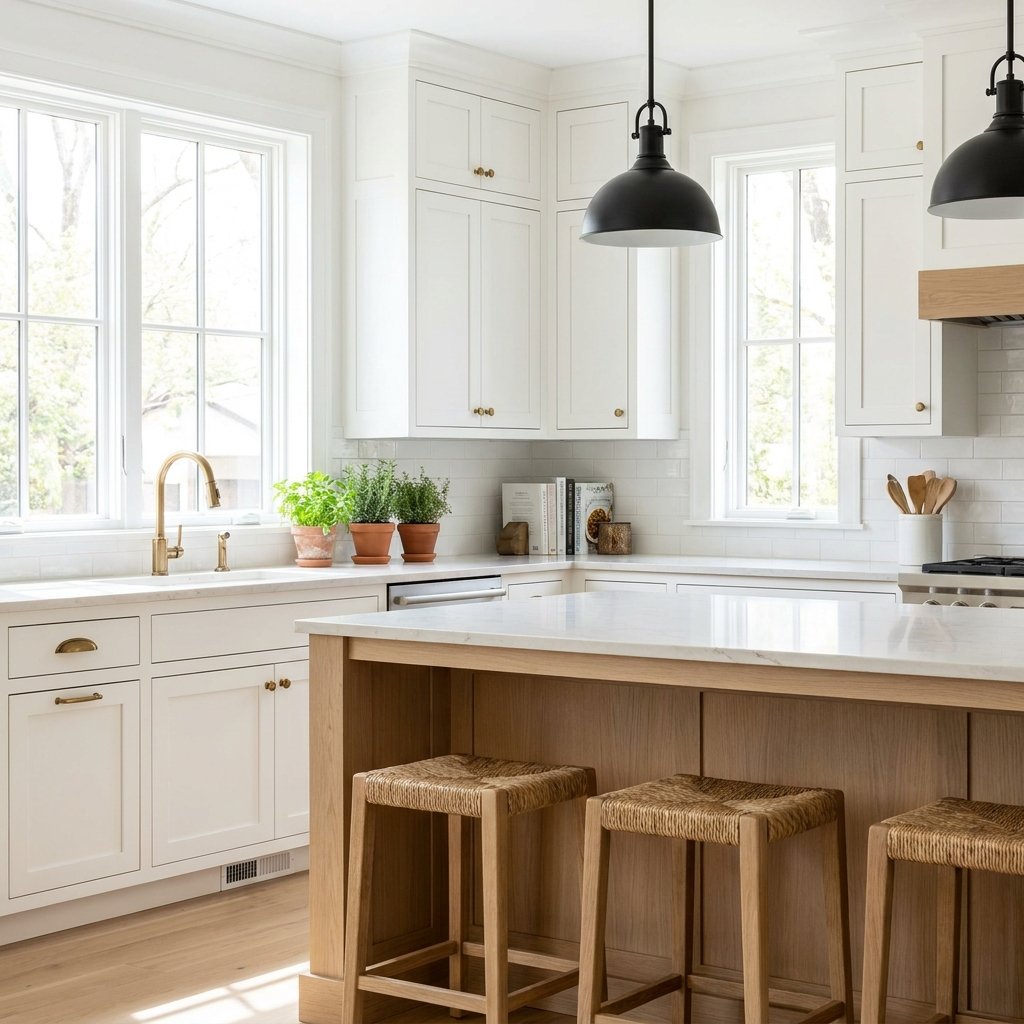
Chantilly Lace With Warm Wood
Warm wood is one of the easiest ways to keep Chantilly Lace from feeling too stark.
Try:
- White oak
- Medium oak
- Walnut
- Antique wood furniture
The white provides contrast while the wood brings warmth.
This combination works especially well in modern, transitional, Scandinavian-inspired, and organic interiors.
Chantilly Lace With Black
Black and Chantilly Lace create a strong graphic contrast.
Use black through:
- Window frames
- Lighting
- Hardware
- Furniture
- Picture frames
You don’t need much.
A few repeated black details can give an all-white room more structure.
Chantilly Lace With Gray
A clean white can work well beside many grays.
Benjamin Moore lists Horizon OC-53 among Chantilly Lace’s coordinating colors.
For a darker gray, sample the combination directly.
Chantilly Lace can make gray appear more saturated because of the contrast.
Chantilly Lace With Greige
Greige walls and Chantilly Lace trim can create a classic combination.
Benjamin Moore lists Edgecomb Gray HC-173 among its coordinating colors for Chantilly Lace.
A clean trim white can make a warm greige wall color look richer and more defined.
Chantilly Lace With Off-White
This combination needs more thought.
Benjamin Moore lists Seapearl OC-19 as one of its coordinating colors with Chantilly Lace, demonstrating that crisp and softer whites can coexist intentionally.
But accidental combinations are different.
If your house contains an existing creamy off-white that you’re trying to make look pure white, putting Chantilly Lace directly beside it may highlight the difference.
Use contrasting whites deliberately.
Chantilly Lace With Blue
Clean white and blue are a natural pairing.
Try it with:
- Navy
- Dusty blue
- Blue-gray
- Deep teal
Chantilly Lace provides a crisp edge that can make blue feel especially fresh.
Chantilly Lace With Green
Green can soften an all-white palette.
Consider:
- Sage
- Olive
- Forest green
- Muted gray-green
Add natural wood and the room can feel warmer and more layered.

Chantilly Lace vs. White Dove
White Dove OC-17 is another extremely popular Benjamin Moore white.
The easiest way to understand the difference isn’t by memorizing descriptions.
Put the samples side by side.
White Dove is known as a softer white with a subtle touch of warmth, while Chantilly Lace is one of Benjamin Moore’s choices when a brighter, cleaner white is desired.
If your materials are warm and creamy, you may prefer the softness of White Dove.
If you want crisper contrast, Chantilly Lace may make more sense.
Chantilly Lace vs. Simply White
Simply White OC-117 is another warm-leaning Benjamin Moore white often used throughout homes.
Compared side by side, Chantilly Lace typically provides a cleaner-looking alternative.
Which is better depends on your fixed finishes.
If you have warm stone, creamy tile, or lots of traditional warm finishes, test both carefully.
Chantilly Lace vs. Decorator’s White
Decorator’s White OC-149 is another white worth sampling when you’re trying to find the right crisp neutral.
Benjamin Moore specifically recommends Decorator’s White for trim beside cooler wall colors, while Chantilly Lace is included among its bright, clean white trim choices.
Rather than relying on names, compare large samples in the actual room.
Chantilly Lace vs. Super White
Benjamin Moore groups Chantilly Lace OC-65 and Super White OC-152 together among its recommendations for crisp white trim.
If you’re deciding between them, sample both against the wall color and fixed finishes.
Subtle differences between whites become much easier to see when the samples are directly beside each other.
Is Chantilly Lace Good for a Whole House?
It can be.
Benjamin Moore includes Chantilly Lace in its whole-house color guidance and notes that it’s one of its popular off-white choices for trim.
Using one white throughout can simplify decisions about:
- Walls
- Ceilings
- Trim
- Doors
But don’t paint an entire house based on one room’s sample.
Test it in:
- Bright rooms
- Dark rooms
- North-facing rooms
- South-facing rooms
- Hallways
- Kitchens
The same white can feel different throughout the house.
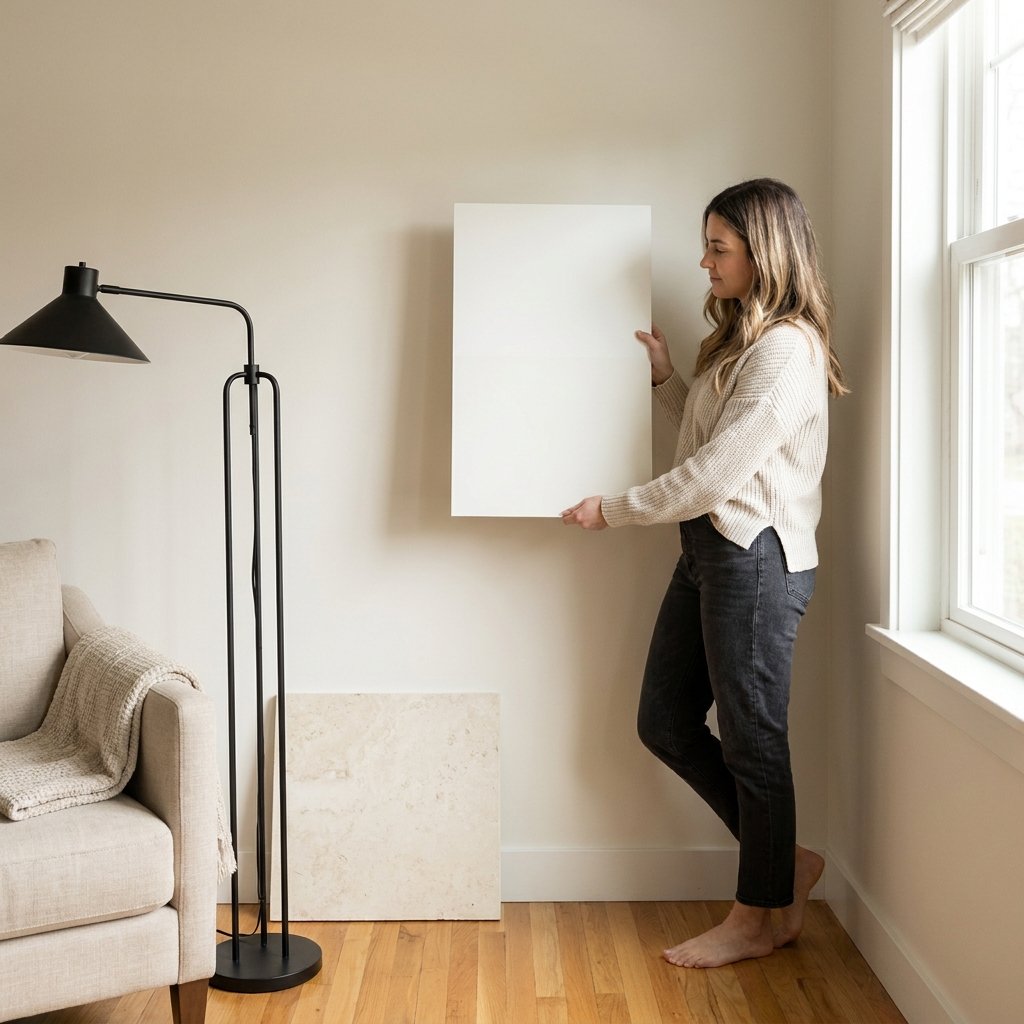
Can You Use Chantilly Lace on Walls and Trim?
Yes.
Using the same color on walls and trim can create a clean, cohesive room.
Instead of using different whites, choose appropriate paint products and sheens for the different surfaces.
This is particularly helpful if you’re worried about two whites fighting each other.
The color remains consistent while light and sheen create subtle contrast.
Is Chantilly Lace Good for Exterior Paint?
Benjamin Moore includes Chantilly Lace among its exterior paint color selections.
A clean white exterior can look beautiful with:
- Black
- Dark bronze
- Natural wood
- Stone
- Brick
Exterior daylight is dramatically stronger than indoor lighting, however.
Always test an exterior paint color outdoors on the actual house before making a final decision.
Also consider existing roof, masonry, stone, and window colors.
How to Sample Chantilly Lace
Never choose a white from a phone or computer screen.
Benjamin Moore itself cautions that on-screen and printed color representations can vary from actual paint.
Instead:
- Get a physical Chantilly Lace sample.
- Make a large sample.
- Keep it separate from other test colors when possible.
- View it vertically.
- Compare it with trim.
- Compare it with cabinets.
- Compare it with countertops.
- Compare it with flooring.
- Look at it throughout the day.
- Check it under your normal artificial lighting.
If you’re choosing a whole-house white, move the sample from room to room.
Common Mistakes With Chantilly Lace
Assuming Every White Is the Same
Tiny differences become obvious when whites sit next to each other.
Choosing It Because It’s Popular
Your materials matter more than popularity.
Expecting It to Brighten a Dark Room Automatically
Paint reflects available light.
Ignoring Existing Creamy Whites
A crisp white can make them look much warmer.
Choosing Cabinet Paint Without Checking the Countertop
Compare them directly.
Forgetting About the Backsplash
White tile can have strong undertones.
Testing Only a Tiny Paint Chip
Use a larger sample.
Judging the Color From Online Photos
Screens and photography aren’t reliable enough for final paint decisions.
Painting One White Beside Another Without Comparing Them First
The contrast may be stronger than expected.
Who Should Consider Chantilly Lace?
Chantilly Lace may be worth sampling if you want:
- Bright white walls
- Crisp white trim
- Clean white cabinets
- White ceilings
- High contrast with dark colors
- A white without obvious creaminess
- A versatile white backdrop for artwork and furniture
Who Might Prefer Another White?
Consider sampling alternatives if:
- Your house has lots of creamy finishes
- You want an obviously warm white
- Your room feels cold and you want paint to add softness
- You want very low contrast with beige or cream materials
A slightly warmer white may integrate more naturally with those elements.
A Simple Chantilly Lace Color Palette
Try:
Walls
Benjamin Moore Chantilly Lace OC-65.
Trim
Chantilly Lace in an appropriate trim paint and sheen.
Wood
Natural oak or walnut.
Main Upholstery
Cream, linen, or camel.
Contrast
Black or charcoal.
Accent
Deep green or navy.
This gives the clean white enough warmth and contrast to feel layered rather than sterile.
FAQ About Benjamin Moore Chantilly Lace
What color is Benjamin Moore Chantilly Lace?
Chantilly Lace OC-65 is a bright, clean white in Benjamin Moore’s Off White Collection. Benjamin Moore describes it as a classic go-to white inspired by fresh cotton and pure silk.
What is the LRV of Chantilly Lace?
Benjamin Moore lists Chantilly Lace with an LRV of 90.04.
Does Chantilly Lace have undertones?
Chantilly Lace is generally valued for looking particularly clean and neutral compared with many creamier whites. However, lighting and surrounding colors can influence how any white is perceived.
Is Chantilly Lace too stark?
It can feel crisp in some rooms, particularly when the space contains lots of cool hard finishes. Natural wood, warm textiles, and other organic materials can soften the overall palette.
Is Chantilly Lace good for trim?
Yes. Benjamin Moore specifically includes Chantilly Lace among its recommendations for bright, clean white trim.
Is Chantilly Lace good for kitchen cabinets?
Yes. Benjamin Moore includes Chantilly Lace among its popular cabinet colors. Always compare it with the countertop, backsplash, flooring, and appliances before committing.
Can Chantilly Lace be used on walls and trim?
Yes. Using the same white on walls and trim can create a cohesive look, with appropriate products and sheens providing subtle differentiation.
What colors coordinate with Chantilly Lace?
Benjamin Moore’s official color page currently lists White OC-151, Horizon OC-53, Seapearl OC-19, and Edgecomb Gray HC-173 in its expert-picked color combinations.
Is Chantilly Lace good for exteriors?
It can be. Benjamin Moore includes Chantilly Lace among its exterior color selections. Always test it outdoors against the home’s roof, masonry, windows, and other permanent materials.
Final Thoughts
Benjamin Moore Chantilly Lace OC-65 is a strong paint color to sample when you want a bright, clean white.
With an LRV of 90.04, it’s highly reflective, and Benjamin Moore specifically recommends it when a crisp white trim color is the goal.
But the fact that Chantilly Lace is clean and bright doesn’t mean it’s automatically the best white for every home.
The permanent finishes matter.
If you have warm oak, creamy stone, beige tile, off-white cabinets, or existing warm-white trim, compare those materials directly with Chantilly Lace.
You may love the contrast.
Or you may decide you need a softer white.
If your home contains black accents, natural wood, clean stone, colorful artwork, blues, greens, or other stronger colors, Chantilly Lace can provide a beautifully simple backdrop.
It can also simplify an all-white palette because you can use the same color on walls, trim, doors, and ceilings while changing the product or sheen where appropriate.
The most important step is sampling.
Put a large sample on the wall.
Look at it in the morning.
Look again in the afternoon.
Turn on the lights at night.
Then place the sample directly beside the materials that aren’t changing.
A white paint color shouldn’t be chosen because it’s popular.
It should be chosen because it makes everything else in your home look better.
And if Chantilly Lace does that in your space, its clean simplicity can create a bright, timeless foundation that works with an enormous range of decorating styles.