

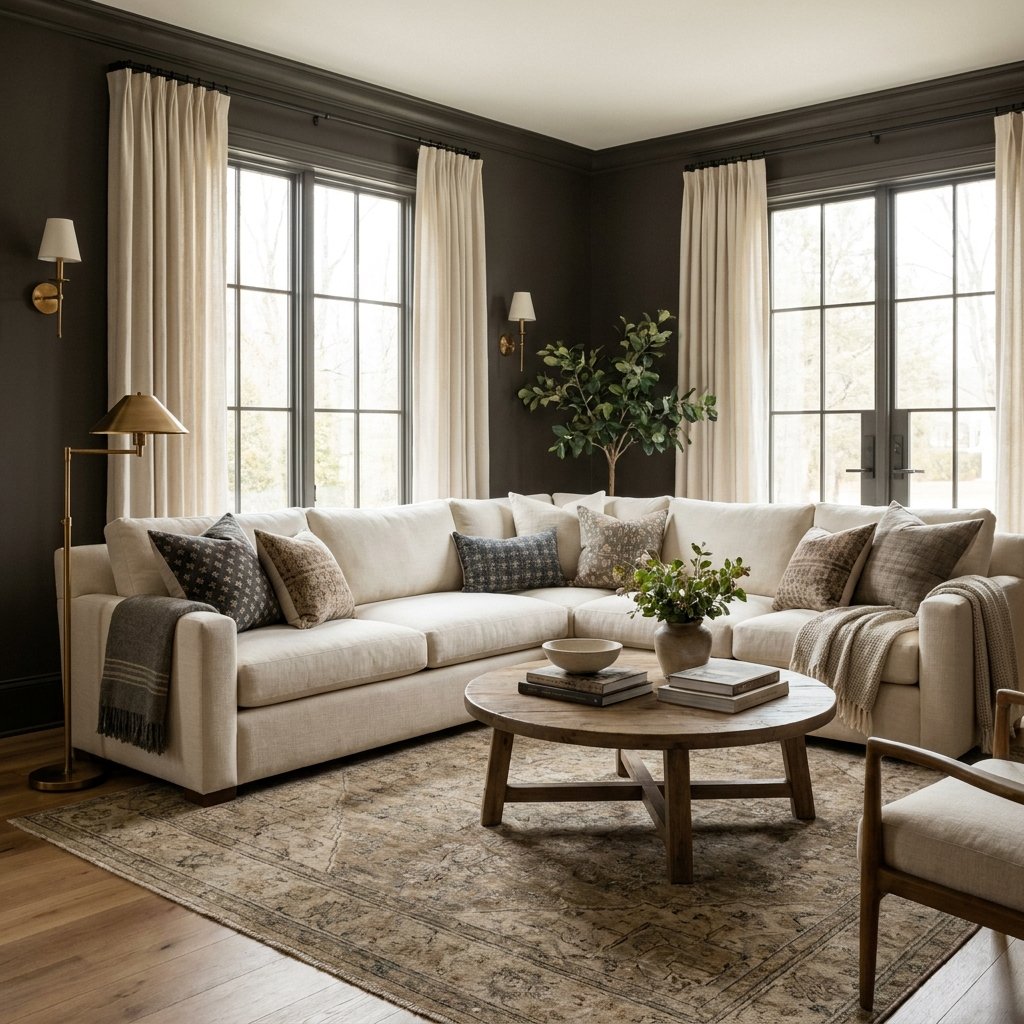
If you’re looking for a dark paint color that feels softer and warmer than black, Benjamin Moore Kendall Charcoal HC-166 deserves a spot on your sample list.
Kendall Charcoal is a deep neutral with enough richness to make a statement without necessarily feeling as severe as true black. Benjamin Moore describes it as a versatile neutral that works well with creamy whites, and its official LRV is 14.61.
That low LRV gives Kendall Charcoal plenty of depth.
It can create dramatic walls, beautiful cabinetry, sophisticated built-ins, painted furniture, bathroom vanities, interior doors, and striking exterior details.
But dark neutrals need careful sampling.
Kendall Charcoal can shift depending on the natural light, artificial lighting, wood tones, flooring, and neighboring colors. And because it has more complexity than a straightforward black, those surrounding materials matter.
Here’s what you should know about Kendall Charcoal before using it in your home.
What Color Is Benjamin Moore Kendall Charcoal?
Kendall Charcoal is HC-166 in Benjamin Moore’s Historical Collection.
It’s a deep charcoal neutral rather than a true black.
That distinction is important.
Black can create extremely crisp, graphic contrast.
Kendall Charcoal generally feels a little softer and more nuanced.
Depending on the room and lighting, it can read as:
- Dark charcoal
- Warm gray
- Deep gray-green
- Soft near-black
This complexity is part of what makes the color so versatile.
What Is the LRV of Kendall Charcoal?
Benjamin Moore lists Kendall Charcoal with an LRV of 14.61.
LRV stands for Light Reflectance Value.
The scale runs from 0 to 100.
Lower numbers reflect less light, while higher numbers reflect more.
At 14.61, Kendall Charcoal is firmly in dark-paint territory.
That doesn’t mean you can’t use it in a small or dark room.
It simply means you should expect it to absorb significantly more light than a pale neutral.
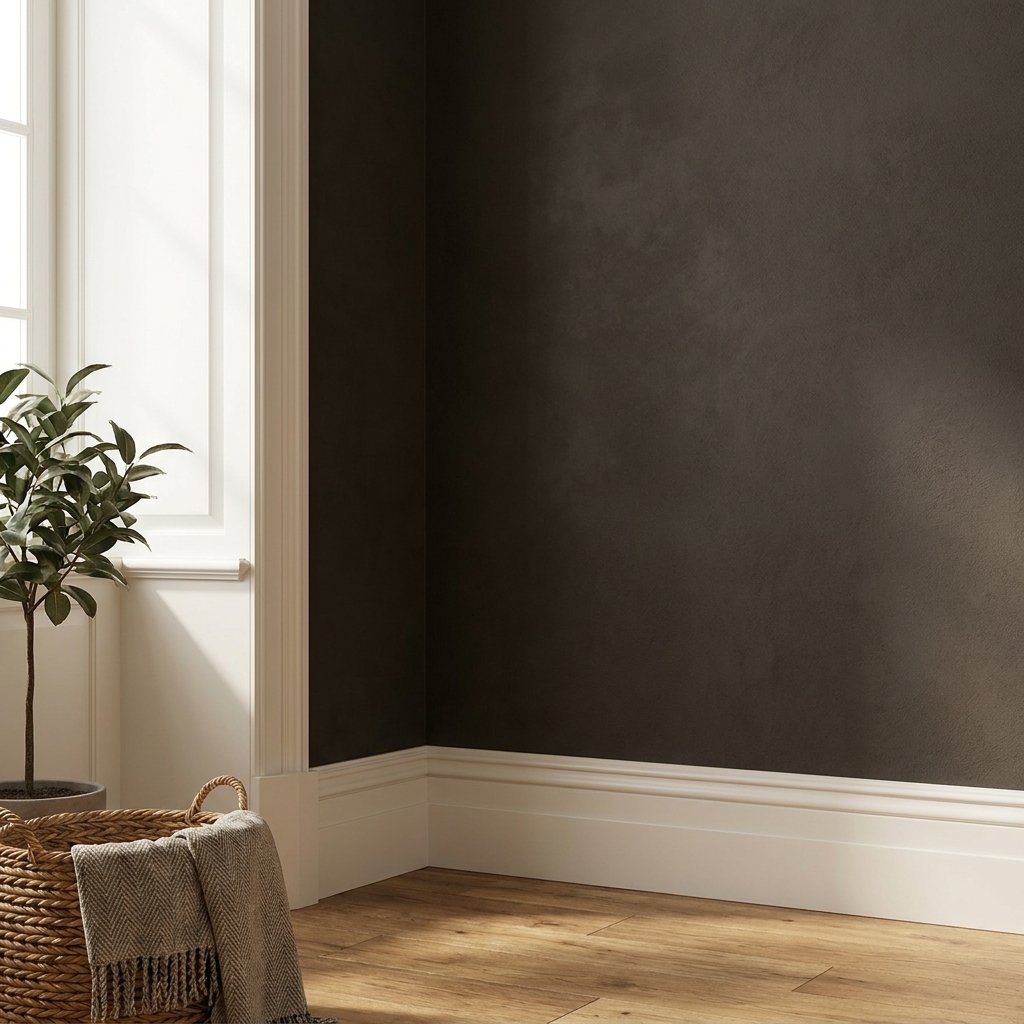
What Are the Undertones of Kendall Charcoal?
Kendall Charcoal isn’t simply a flat dark gray.
It has a warmer, earthier quality than many blue-based charcoal colors.
Depending on the lighting and surrounding materials, you may notice subtle green or earthy characteristics.
That’s why sampling is so important.
Place Kendall Charcoal beside:
- Blue-gray
- Warm greige
- Black
- Cream
- Wood
and you’ll understand its character much more quickly than you will by looking at the paint chip alone.
Is Kendall Charcoal Warm or Cool?
Kendall Charcoal generally reads as a warm charcoal.
That makes it particularly useful in rooms containing warm natural materials.
Think:
- Oak
- Walnut
- Leather
- Linen
- Cream
- Brass
- Natural stone
If you’re specifically looking for a cool blue-gray charcoal, Kendall Charcoal may not be the direction you want.
Sample it beside a cooler charcoal and the difference should become easier to see.
Does Kendall Charcoal Look Green?
It can reveal subtle green characteristics in certain environments.
That doesn’t mean your room will suddenly have obviously green walls.
With complex neutrals, undertones become more or less apparent depending on what’s around them.
Warm wood, outdoor greenery, artificial lighting, and neighboring paint colors can all affect how you perceive the color.
If you’re particularly sensitive to green undertones, sample Kendall Charcoal in several parts of the room before committing.
Is Kendall Charcoal Too Dark?
That depends on what you’re trying to achieve.
If you want an airy pale-gray room, yes.
If you want:
- Drama
- Contrast
- Coziness
- Architectural definition
- Moody atmosphere
the depth is exactly the point.
The better question is:
Where should you use the darkness?
You might paint:
- All four walls
- One accent wall
- Built-ins
- Cabinets
- Vanity
- Doors
The color doesn’t need to cover the entire room to make an impact.
Kendall Charcoal in North-Facing Rooms
North-facing rooms often receive cooler indirect light.
In this environment, Kendall Charcoal may appear deeper and more subdued.
Any gray or green characteristics may also become more noticeable depending on the surrounding finishes.
If the room already has limited daylight, decide whether you want to embrace that mood rather than trying to fight it.
Add:
- Warm lamps
- Cream textiles
- Wood
- Brass
- Layered lighting
A dark north-facing room can be beautiful when it’s intentionally designed to feel cozy.
Kendall Charcoal in South-Facing Rooms
South-facing rooms usually receive stronger, warmer natural light.
That extra light can make Kendall Charcoal’s complexity easier to see.
The color may feel somewhat softer during bright portions of the day and deeper at night.
A bright room is a great place to use a dark wall color when you want contrast without losing all sense of natural light.
Kendall Charcoal in East-Facing Rooms
East-facing rooms change throughout the day.
The color may receive stronger light in the morning and appear significantly deeper later.
Look at your sample:
- Morning
- Midday
- Afternoon
- Night
Dark paint colors can shift dramatically between daylight and artificial light.
Kendall Charcoal in West-Facing Rooms
West-facing rooms often receive warm, strong afternoon light.
That can emphasize the warmer side of Kendall Charcoal.
If the room is primarily used in the evening, pay special attention to how your artificial lighting affects the color.
Kendall Charcoal in a Living Room
Kendall Charcoal can create a sophisticated living room.
You don’t need to make everything else dark.
In fact, contrast is often what makes the color work.
Try pairing it with:
- Cream sofa
- Natural wood
- Warm white curtains
- Brass lighting
- Neutral rug
- Black accents
Keep enough lighter surfaces in the room to create balance.

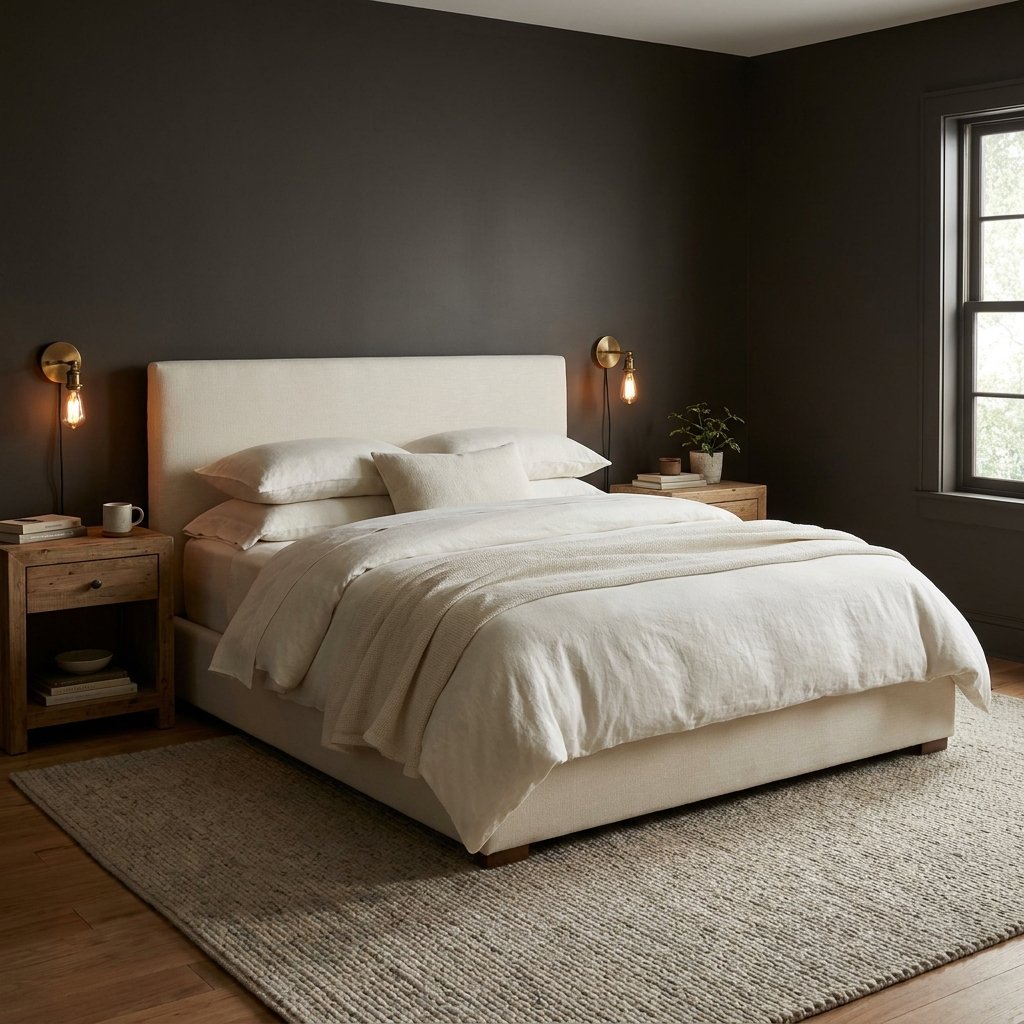
Kendall Charcoal in a Bedroom
Dark bedroom walls can create a cozy, enveloping feeling.
Kendall Charcoal works particularly well with:
- White or cream bedding
- Wood furniture
- Camel
- Taupe
- Olive
- Brass
- Black
If you don’t want all four walls dark, use Kendall Charcoal behind the bed.
The wall becomes a natural focal point.
Kendall Charcoal Accent Wall
An accent wall is one of the easiest ways to introduce Kendall Charcoal.
Good locations include:
- Behind a bed
- Fireplace wall
- Dining room feature wall
- Built-in wall
- Home office
Keep the reason for the accent wall architectural.
Don’t automatically paint a random wall dark simply because it’s empty.
Kendall Charcoal on a Fireplace
Kendall Charcoal can make a fireplace a strong focal point.
Depending on the existing material and construction, you might use it on:
- Painted mantel
- Surrounding wall
- Built-ins beside the fireplace
Use coatings appropriate for the specific surface and location.
Paint isn’t automatically suitable for areas exposed to significant heat. Follow fireplace, paint, and material manufacturer requirements, including required clearances and temperature limitations.

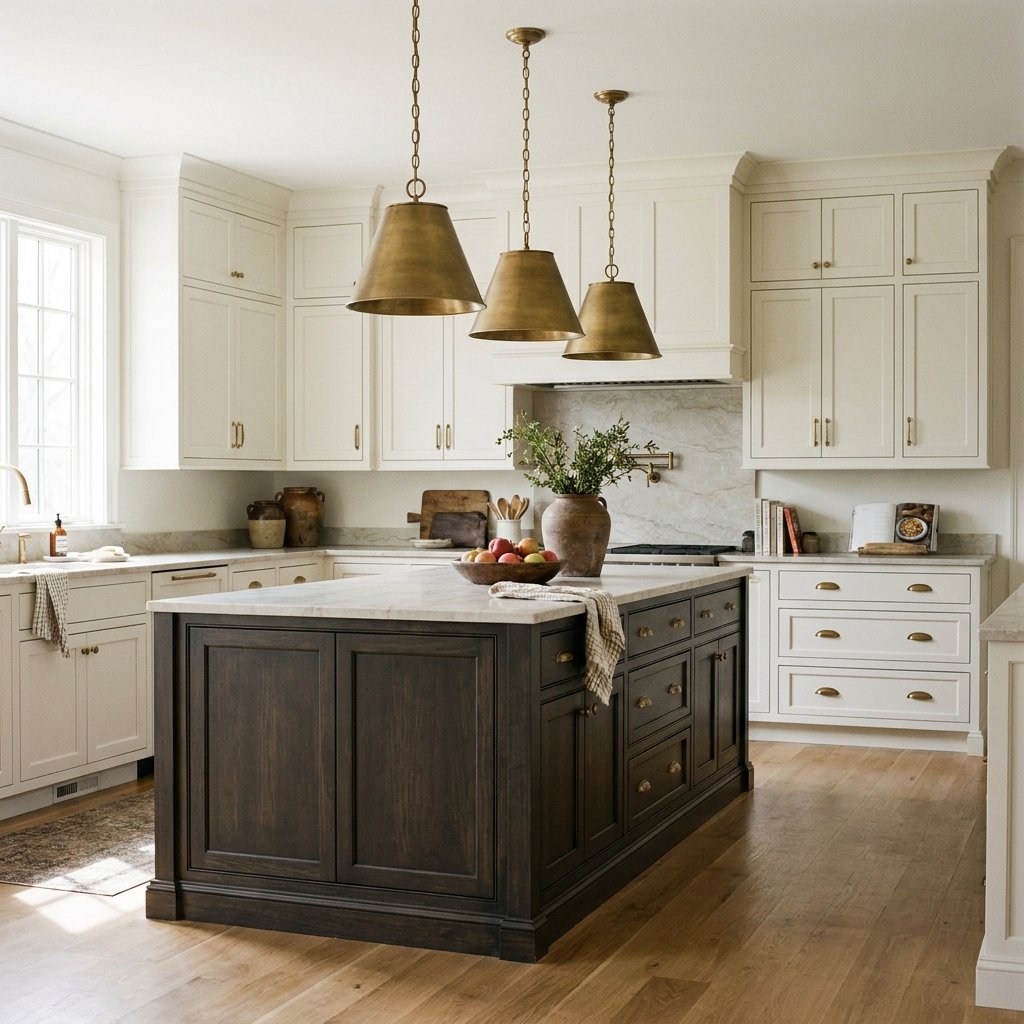
Kendall Charcoal Kitchen Cabinets
Kendall Charcoal can be a beautiful cabinet color when you want something deeper than greige but softer than black.
It can work on:
- All cabinetry
- Lower cabinets
- Kitchen island
- Butler’s pantry
- Bar cabinets
If you’re nervous about using it throughout the kitchen, start with the island.
A Kendall Charcoal island can create a strong focal point without making the entire kitchen dark.
Kendall Charcoal Cabinets With White Countertops
Light countertops create dramatic contrast.
The exact white matters.
A very cool countertop may emphasize Kendall Charcoal differently than a creamy stone.
Place your paint sample directly beside the countertop before committing.
Kendall Charcoal With Wood Cabinets
You don’t necessarily need to paint all the cabinetry.
Try combining Kendall Charcoal with:
- White oak
- Medium oak
- Walnut
For example:
Kendall Charcoal island + white oak perimeter cabinets
or:
Warm white perimeter cabinets + Kendall Charcoal island
can create a layered kitchen.
Kendall Charcoal With Brass Hardware
Brass can bring warmth to dark charcoal cabinetry.
The combination works especially well in transitional, traditional, and contemporary kitchens.
Use brass through:
- Cabinet pulls
- Knobs
- Faucet
- Lighting
Not every metal has to match exactly, but repeat finishes intentionally.
Kendall Charcoal Bathroom Vanity
A bathroom vanity is another great place to experiment with a deep color.
Kendall Charcoal can give an ordinary vanity much more presence.
Pair it with:
- White countertop
- Warm stone
- Brass
- Polished nickel
- Black
- Wood mirror
If you’re painting an existing vanity, proper surface preparation matters.
Use products appropriate for cabinetry and follow manufacturer directions for cleaning, sanding or deglossing where required, priming, application, ventilation, drying, and curing.
Kendall Charcoal on Built-Ins
Built-ins painted Kendall Charcoal can add architectural weight to a room.
Try the color on:
- Bookcases
- Office cabinetry
- Media built-ins
- Dining room storage
For a dramatic look, paint the back, shelves, trim, and cabinetry the same color.
For more contrast, keep the surrounding walls lighter.
Kendall Charcoal on Interior Doors
If painting an entire room dark feels intimidating, try the doors.
Dark doors can add contrast to a neutral home.
Kendall Charcoal works particularly well with:
- Warm white walls
- Greige walls
- Wood flooring
- Brass hardware
- Black hardware
You could paint one statement door or repeat the color throughout several rooms.
Kendall Charcoal in a Home Office
A home office can handle more drama than many people expect.
Dark walls can create a focused, library-like atmosphere.
Pair Kendall Charcoal with:
- Wood desk
- Leather chair
- Brass lamp
- Cream rug
- Warm artwork
If the room is used for video calls, check how the dark background interacts with your lighting.
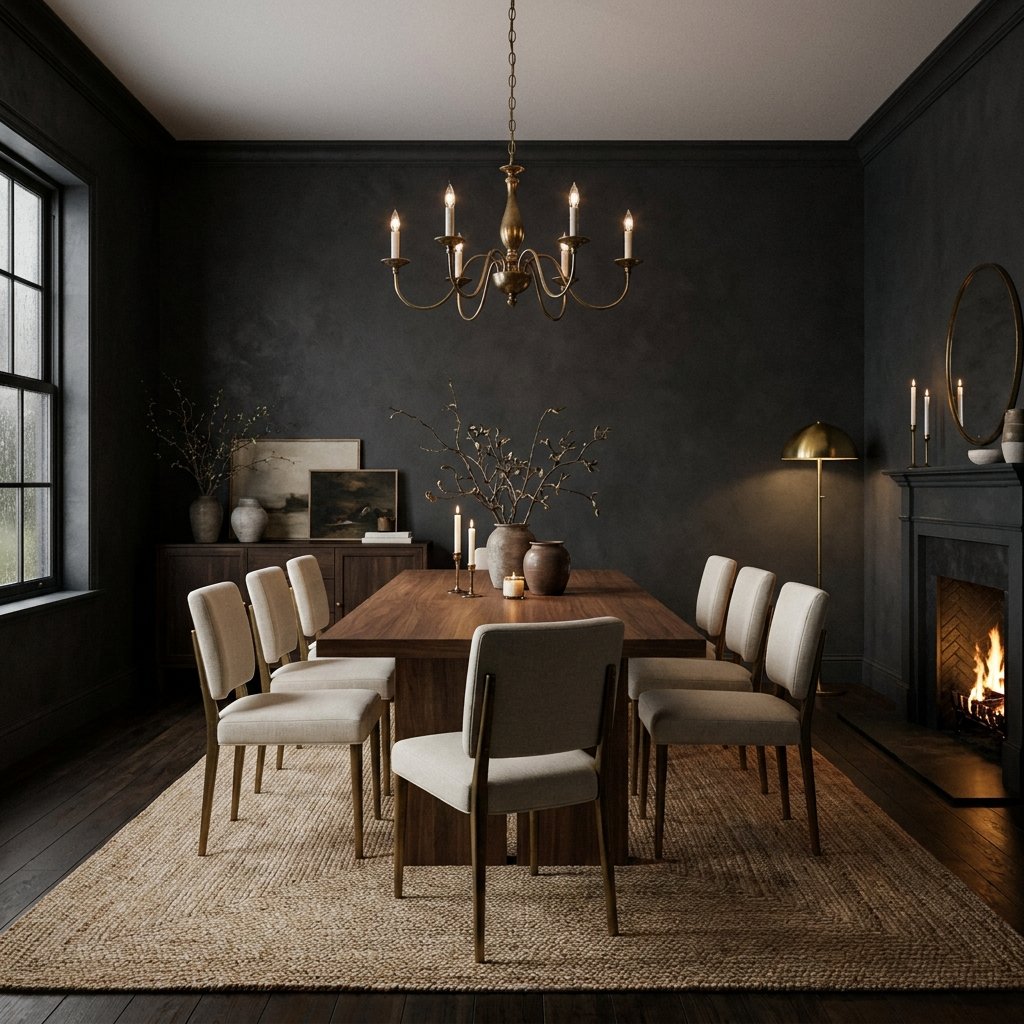
Kendall Charcoal in a Dining Room
Dining rooms are excellent candidates for dark paint because they’re often used in the evening.
Kendall Charcoal can create a rich backdrop for:
- Wood dining table
- Brass chandelier
- White curtains
- Artwork
- Warm candles
Layered lighting becomes especially important after sunset.
Kendall Charcoal With White
Benjamin Moore lists Simply White OC-117 among the coordinating colors for Kendall Charcoal.
The contrast between dark charcoal and white can make architectural details stand out beautifully.
Use white on:
- Trim
- Ceiling
- Doors
- Adjacent walls
But remember that different whites create different effects.
Sample your actual white beside Kendall Charcoal.
Kendall Charcoal With Cream
Cream softens charcoal.
This is one of the easiest ways to make a dark room feel warmer.
Try cream through:
- Upholstery
- Curtains
- Bedding
- Rugs
- Walls
If black and bright white feel too graphic, cream and Kendall Charcoal may be a better combination.
Kendall Charcoal With Wood
Wood and Kendall Charcoal are natural partners.
Light oak creates strong contrast.
Medium wood brings warmth.
Walnut creates a rich, moody look.
If your home already contains substantial wood flooring or furniture, put the Kendall Charcoal sample directly beside it.
Kendall Charcoal With Green
Because Kendall Charcoal can have an earthy quality, muted greens can work beautifully with it.
Try:
- Sage
- Olive
- Moss
Use the green as an accent rather than creating a room where every surface competes for attention.
Kendall Charcoal With Blue
Blue can also work, but sample carefully.
Deep navy and charcoal can be close in value, so the combination may need lighter elements between them.
Try:
Kendall Charcoal + cream + muted blue + warm wood
for a softer palette.
Kendall Charcoal With Greige
Greige walls can provide a natural transition to Kendall Charcoal cabinetry, doors, or built-ins.
The deeper charcoal creates contrast while the greige keeps the overall palette warm and neutral.

Kendall Charcoal vs. Black
If you’re deciding between Kendall Charcoal and black, think about the atmosphere you want.
Black generally creates stronger, sharper contrast.
Kendall Charcoal provides a softer dark neutral.
Choose black when you want graphic impact.
Consider Kendall Charcoal when you want depth with a little more complexity.
Kendall Charcoal vs. Chelsea Gray
Chelsea Gray HC-168 is another Benjamin Moore neutral worth comparing.
If Kendall Charcoal feels too dark, a medium-to-deep gray such as Chelsea Gray can help you determine whether you actually want less depth.
Always compare large samples in the same lighting.
Kendall Charcoal vs. Amherst Gray
Amherst Gray HC-167 is another neighboring color in Benjamin Moore’s Historical Collection.
Sampling Amherst Gray and Kendall Charcoal together can help you decide how dark you want to go.
Don’t rely on your phone screen for subtle neutral comparisons.
Kendall Charcoal vs. Wrought Iron
Wrought Iron 2124-10 is another popular Benjamin Moore dark neutral.
If you’re deciding between deep charcoal and near-black, sample both.
The surrounding white, flooring, natural light, and wood tones will make the differences easier to identify.
Kendall Charcoal Exterior
Kendall Charcoal isn’t limited to interiors.
A deep charcoal can work beautifully outside on:
- Siding
- Front doors
- Shutters
- Garage doors
- Trim details
Exterior daylight is much stronger than interior light, so dark colors can look different outdoors.
Always sample on the actual exterior and view it at different times of day.
Also consider:
- Roof
- Stone
- Brick
- Windows
- Hardscaping
These fixed materials need to coordinate with the paint.
Kendall Charcoal Front Door
A front door is an easy place to use a deep neutral.
Kendall Charcoal can provide more softness than pure black while still creating strong contrast with light siding.
Pair it with appropriate exterior hardware in:
- Brass
- Black
- Bronze
Use a paint system intended for the door material and exterior exposure.
How to Sample Kendall Charcoal Correctly
Dark colors deserve large samples.
Try this process:
- Get an authentic color sample.
- Create a large sample board.
- View it vertically.
- Move it around the room.
- Compare it with flooring.
- Compare it with trim.
- Compare it with countertops or cabinets where relevant.
- Check it in morning light.
- Check it in afternoon light.
- Look again after sunset with your normal lamps turned on.
Don’t judge Kendall Charcoal from a tiny chip.
And don’t choose it from an online photograph.
Screens and photography can significantly alter dark colors.
Common Mistakes With Kendall Charcoal
Assuming It’s Just Dark Gray
Its warmer, earthier characteristics matter.
Ignoring the LRV
At 14.61, this is a genuinely dark color.
Choosing It From a Photo
Sample it in your own room.
Forgetting About Artificial Lighting
Dark walls change dramatically at night.
Using Too Many Dark Finishes Together
Create contrast with cream, white, wood, or lighter stone.
Ignoring Existing Wood
Wood undertones can affect how the charcoal appears.
Choosing a White Without Comparing It
Warm and cool whites create different results.
Painting Cabinets Without Proper Preparation
Cabinet finishes need durability as well as good color.
Assuming Small Rooms Must Be Light
A small room can look beautiful in a dark color when the mood is intentional.
How to Make Kendall Charcoal Feel Warm and Inviting
If you’re worried that charcoal will make the room feel cold, focus on materials.
Add:
- Natural wood
- Linen
- Wool
- Woven texture
- Cream
- Camel
- Brass
- Warm lighting
A dark paint color doesn’t automatically create a cold room.
The entire palette determines the atmosphere.
A Simple Kendall Charcoal Color Palette
Try this combination:
Main Dark Color
Benjamin Moore Kendall Charcoal HC-166.
White
Soft warm white.
Wood
Natural oak or walnut.
Upholstery
Cream.
Metal
Aged brass.
Accent
Muted olive or warm camel.
This palette lets Kendall Charcoal feel sophisticated rather than severe.
FAQ About Benjamin Moore Kendall Charcoal
What color is Benjamin Moore Kendall Charcoal?
Kendall Charcoal HC-166 is a deep, versatile charcoal neutral from Benjamin Moore’s Historical Collection.
What is the LRV of Kendall Charcoal?
Benjamin Moore lists Kendall Charcoal with an LRV of 14.61, making it a dark paint color.
Is Kendall Charcoal warm or cool?
Kendall Charcoal generally reads warmer and earthier than many cool blue-gray charcoals.
Does Kendall Charcoal look green?
It can reveal subtle earthy or green characteristics depending on the lighting and surrounding materials, which is why sampling is important.
Is Kendall Charcoal too dark for a small room?
Not necessarily. Dark colors can create beautiful, cozy small rooms. Whether it works depends on the mood you want, lighting, furnishings, and amount of contrast.
Is Kendall Charcoal good for kitchen cabinets?
It can be an excellent deep neutral for cabinets or an island. Compare it directly with your countertop, backsplash, flooring, and hardware before committing.
What white goes with Kendall Charcoal?
Benjamin Moore lists Simply White OC-117 among its coordinating colors for Kendall Charcoal. Other whites can also work, but should be sampled beside it.
Does Kendall Charcoal work with wood?
Yes. It can pair beautifully with light oak, medium warm wood, and walnut. Compare samples because wood undertones vary.
Can Kendall Charcoal be used outside?
A deep charcoal can work well for exterior siding and accents when compatible with the home’s roof, masonry, windows, and other fixed materials. Test the color outdoors before committing.
Final Thoughts
Benjamin Moore Kendall Charcoal HC-166 is a beautiful option when you want the drama of a dark paint color without automatically going all the way to black.
With an LRV of 14.61, it has real depth.
That makes it ideal for creating contrast on walls, built-ins, cabinets, vanities, doors, and exterior details.
But its complexity is what makes it more interesting than a simple dark gray.
Depending on the lighting and surrounding finishes, Kendall Charcoal can feel warm, earthy, softly gray, or subtly green.
That’s why sampling matters.
Put it beside your actual wood floors.
Compare it with the white trim.
Look at it next to the countertop.
Turn on your lights at night.
If you’re nervous about using a dark color, start smaller.
Paint the kitchen island.
Try a bathroom vanity.
Use it on built-ins.
Paint an interior door.
Or create a single focal wall behind the bed.
If you love it there, you may discover you’re ready for an entire room.
And don’t forget that dark paint needs contrast.
Cream upholstery, warm white, natural wood, brass, linen, and layered lighting can keep Kendall Charcoal from feeling heavy.
Used thoughtfully, it can create exactly what a great charcoal should: depth, warmth, drama, and sophistication without the sharpness of true black.