

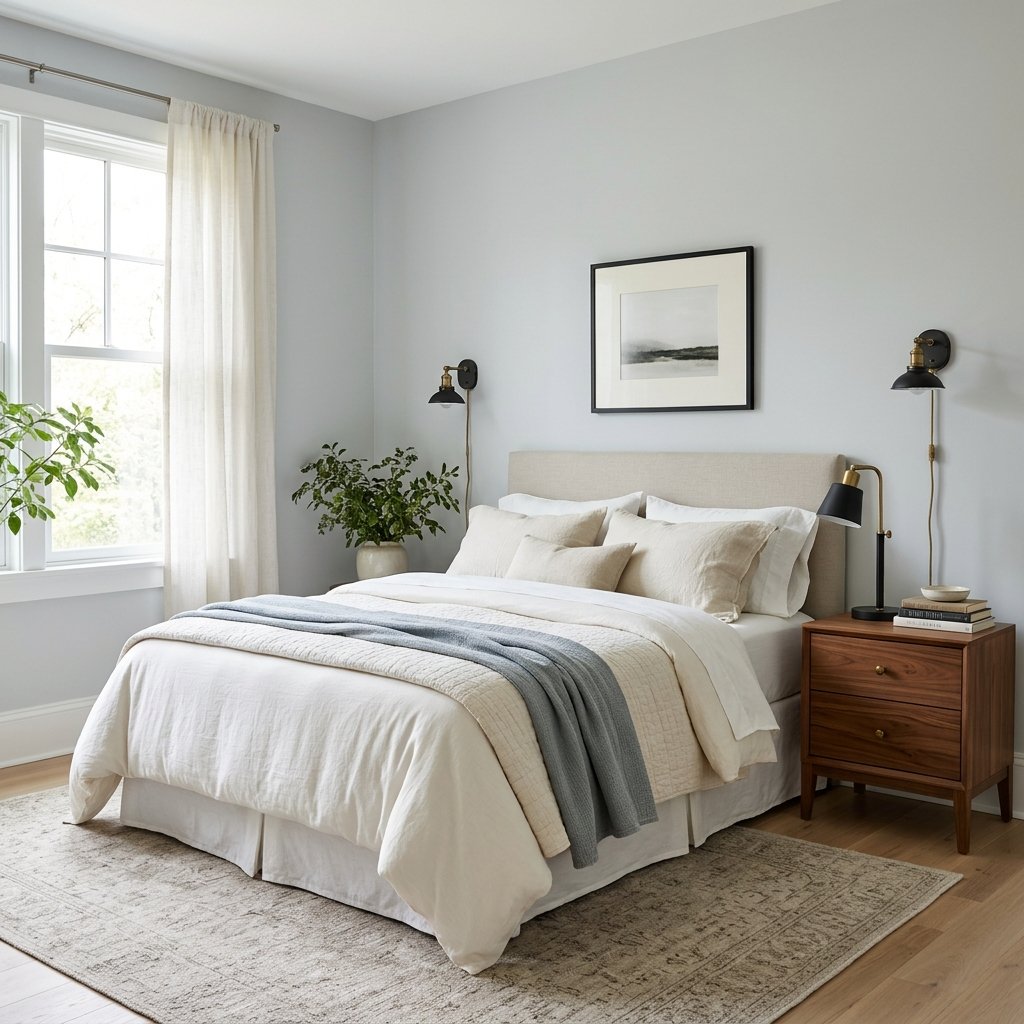
If you’re searching for a gray paint color that feels cleaner and cooler than the warm greiges that have dominated interiors for years, Benjamin Moore Stonington Gray HC-170 is a color worth sampling.
Stonington Gray is a light-to-medium gray that generally feels cooler and more distinctly gray than beige-heavy neutrals. It can create a crisp, sophisticated backdrop for white trim, dark furniture, cool stone, blue accents, and many contemporary or traditional interiors.
But Stonington Gray isn’t a completely neutral gray.
Like almost every gray paint color, it has undertones that can become more or less noticeable depending on the lighting and surrounding finishes. Stonington Gray is often associated with cool blue undertones, and some spaces can also reveal subtle blue-violet influence.
That means it can look beautiful in the right room—and surprisingly cool in the wrong one.
Before painting an entire living room, bedroom, kitchen, or bathroom, it’s important to understand how this color behaves.
Here’s a closer look at Benjamin Moore Stonington Gray, including its undertones, approximate light reflectance, lighting considerations, coordinating colors, room ideas, and how it compares with other popular grays.
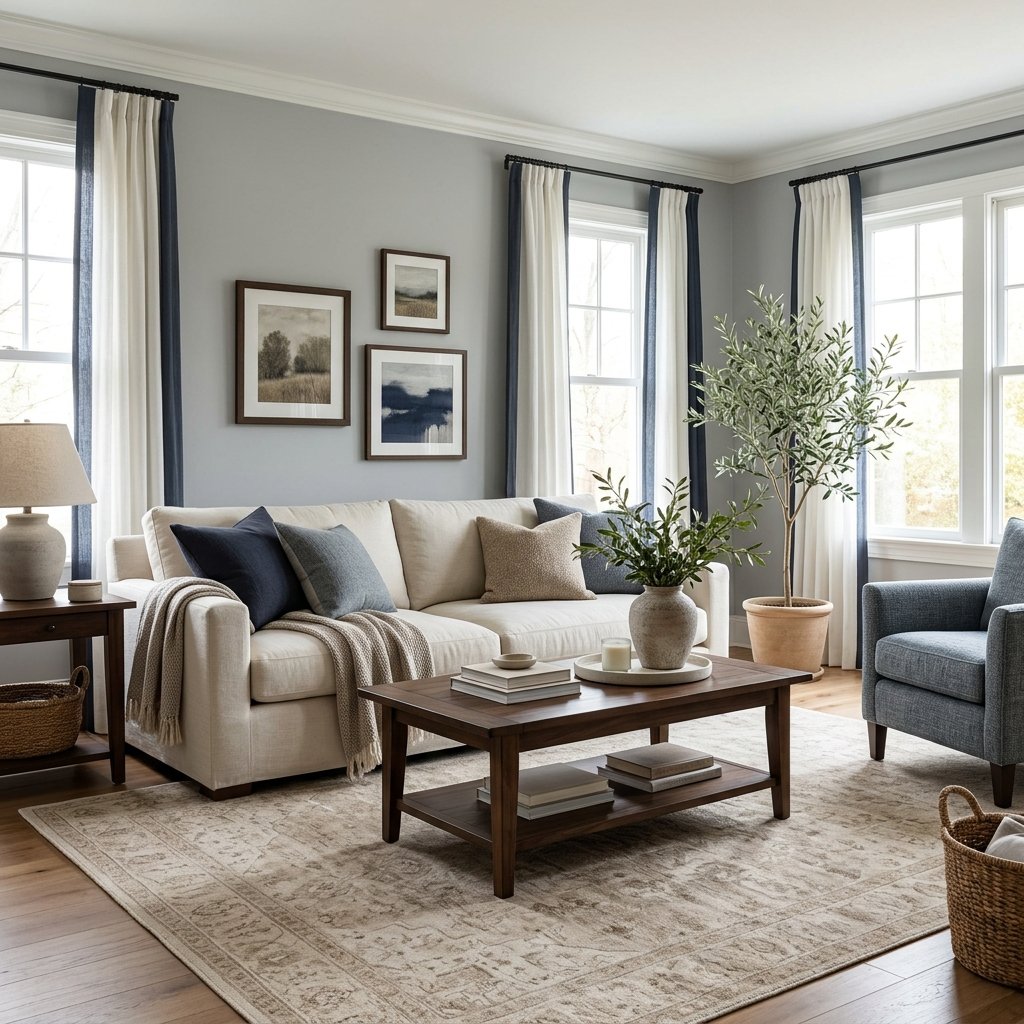
What Color Is Benjamin Moore Stonington Gray?
Stonington Gray HC-170 is a cool gray.
It has enough depth to look distinctly gray on the wall rather than reading as an off-white.
Compared with warm greiges, Stonington Gray generally has:
- Less beige
- Less obvious warmth
- More cool gray character
- Blue influence
This makes it useful when your home’s permanent finishes already lean cool.
For example, it may coordinate more naturally with cool marble or blue-gray tile than a yellow-beige neutral would.
What Is the LRV of Stonington Gray?
Stonington Gray has an LRV of approximately 59.
LRV, or Light Reflectance Value, describes how much visible light a paint color reflects on a scale where lower values are darker and higher values are lighter.
An LRV around this range means Stonington Gray has enough lightness to work comfortably in many rooms while still providing noticeable contrast against white trim.
It isn’t an extremely pale gray.
And it isn’t a dark, moody gray.
It falls into a useful middle-light range that allows the color to maintain some presence.
Remember that LRV doesn’t tell you how a color’s undertones will behave. Two paint colors with similar LRVs can look completely different because of hue and undertone.
What Are the Undertones of Stonington Gray?
Stonington Gray is generally considered a cool gray with blue undertones.
Depending on the room, you may also notice subtle blue-violet qualities.
This doesn’t mean your walls will automatically look blue.
Undertones become more obvious when the paint interacts with:
- Natural light
- Artificial lighting
- Flooring
- Furniture
- Countertops
- Trim
- Nearby colors
For example, place Stonington Gray next to a warm beige floor and its cooler character may become much more noticeable.
Place it beside cool white, charcoal, and blue-gray stone, and it may simply look like a balanced cool gray.

Is Stonington Gray Warm or Cool?
Stonington Gray is generally a cool gray.
If you want a warm gray or greige with noticeable beige influence, this probably isn’t the first color I’d sample.
Instead, Stonington Gray makes more sense when you’re intentionally looking for a cleaner gray.
That cooler quality can work especially well with:
- White
- Blue
- Navy
- Charcoal
- Black
- Cool stone
- Silver-toned metals
Warm wood can also look beautiful against it because the contrast between warm wood and cool walls creates balance.
Does Stonington Gray Look Blue?
It can.
In certain lighting conditions, its blue undertones can become more noticeable.
You’re more likely to notice cool undertones when:
- The room receives cool natural light
- The flooring is very warm
- The trim is a warm cream
- The room contains other warm beige finishes
- Cool artificial lighting is used
If you’re particularly sensitive to blue undertones, sample Stonington Gray generously before committing.
Don’t rely on a photograph or a tiny paint chip.
Does Stonington Gray Look Purple?
Some people may perceive a subtle blue-violet quality under particular conditions.
This is one reason complex grays need to be tested in the actual room.
If your flooring, stone, or fabrics contain undertones that conflict with violet, another gray may be easier to coordinate.
If the room already contains cool blue and violet-gray notes, however, the relationship may feel completely natural.
Stonington Gray in North-Facing Rooms
North-facing rooms typically receive cooler natural light.
That can make Stonington Gray appear:
- Cooler
- Slightly deeper
- More blue-gray
- More subdued
If you already have cool flooring and limited natural light, the room may feel quite cool.
That isn’t necessarily a problem.
A north-facing office or bedroom can look elegant in cool gray when balanced with warm wood, cream textiles, and layered lighting.
But if you’re trying to make a north-facing room feel warmer, Stonington Gray may not be your easiest option.
Stonington Gray in South-Facing Rooms
South-facing rooms generally receive warmer and more abundant light.
That warmth can soften Stonington Gray’s coolness.
It may look:
- Lighter
- Softer
- More balanced
- Less obviously blue
This can be one of the easier exposures for a cool gray because warm daylight naturally provides some balance.
Still, evaluate the paint during different times of day.
Stonington Gray in East-Facing Rooms
East-facing rooms receive stronger, warmer light in the morning.
Stonington Gray may appear softer during those hours.
Later in the day, as direct sunlight disappears, it may look:
- Cooler
- Grayer
- Slightly deeper
Check your samples in both morning and afternoon conditions.
Stonington Gray in West-Facing Rooms
West-facing rooms often have cooler light earlier and much warmer light later.
That means Stonington Gray may appear cooler in the morning and softer as warm afternoon sunlight enters the room.
If the room is primarily used in the evening, make sure you like the color under both sunset conditions and artificial lighting.
Benjamin Moore Stonington Gray in a Living Room
Stonington Gray can create a polished living room, particularly when the rest of the palette contains cool or neutral elements.
Try pairing it with:
- Cream or white sofa
- Dark wood coffee table
- Navy accents
- Black frames
- White trim
- Blue-gray textiles
Warm wood is useful because it keeps the room from becoming overly cool.
A walnut console or medium oak flooring can provide just enough warmth.
Stonington Gray in a Bedroom
A cool gray can create a calm bedroom.
Try:
Stonington Gray walls + white bedding + walnut nightstands + muted blue throw
or:
Stonington Gray walls + cream upholstered bed + charcoal accents + natural wood
If the bedroom receives cool northern light, introduce warm textures through bedding, wood, and lighting.
Stonington Gray in a Bathroom
Bathrooms are one of the most natural places to consider Stonington Gray.
It can coordinate well with cool materials such as:
- White tile
- Marble
- Gray stone
- Polished nickel
- Chrome
- Black
But examine your tile carefully.
Not all marble and gray tile has the same undertones.
A warm gray-beige tile may not relate to Stonington Gray the same way a cool blue-gray stone does.
Stonington Gray With Marble
Stonington Gray can be worth sampling when your marble contains cool gray veining.
Place a large paint sample directly beside the stone.
Look at the relationship rather than simply assuming “gray goes with marble.”
Natural and manufactured stone can contain mixtures of:
- Blue-gray
- Green-gray
- Violet-gray
- Beige
- Cream
Your specific slab or tile should determine the paint decision.

Stonington Gray in a Kitchen
Stonington Gray walls can work beautifully in a kitchen with cool finishes.
Try it with:
- White cabinets
- Marble or cool stone
- Black accents
- Polished nickel
- Stainless steel
If your kitchen contains lots of orange or yellow wood, Stonington Gray will create stronger contrast.
That may look great—or it may make both the warm wood and cool gray seem more intense.
Sampling will tell you which.
Stonington Gray Kitchen Cabinets
Stonington Gray can also be considered for cabinetry.
Light gray cabinets can create more definition than white while keeping the kitchen relatively bright.
Pair them with:
- White or compatible stone countertops
- Simple backsplash
- Polished nickel
- Chrome
- Black hardware
- Warm wood accents
Cabinet colors need to be evaluated against countertops and backsplash materials before painting.
Also use a coating specifically recommended for cabinetry and follow the manufacturer’s preparation, primer, application, drying, and curing requirements.
Stonington Gray Bathroom Vanity
If an entire gray kitchen feels like too much, try a smaller painted feature.
A Stonington Gray-inspired vanity can work with:
- White walls
- Marble
- White tile
- Polished nickel
- Black accents
This can add color without making the bathroom noticeably dark.
Stonington Gray With White Trim
White trim creates crisp contrast.
The exact white matters.
A cleaner or more neutral white may emphasize Stonington Gray’s fresh quality, while a very creamy white can make its cool undertones more noticeable.
The safest approach is to sample the gray directly against your existing trim.
Don’t evaluate the two colors separately.
Stonington Gray With Warm White
Can you pair Stonington Gray with warm white?
Possibly.
The combination depends on how warm the white is.
A subtly warm white can soften the room.
A strongly yellow or creamy white may make Stonington Gray look more blue by comparison.
Again, undertones are relational.
Stonington Gray With Wood Floors
Wood floors can provide beautiful contrast against cool gray walls.
Consider:
- Natural oak
- Medium oak
- Walnut
- Dark brown wood
Very orange or red floors may make the coolness of Stonington Gray more noticeable.
That doesn’t automatically make the pairing wrong.
It simply creates a stronger warm-versus-cool contrast.
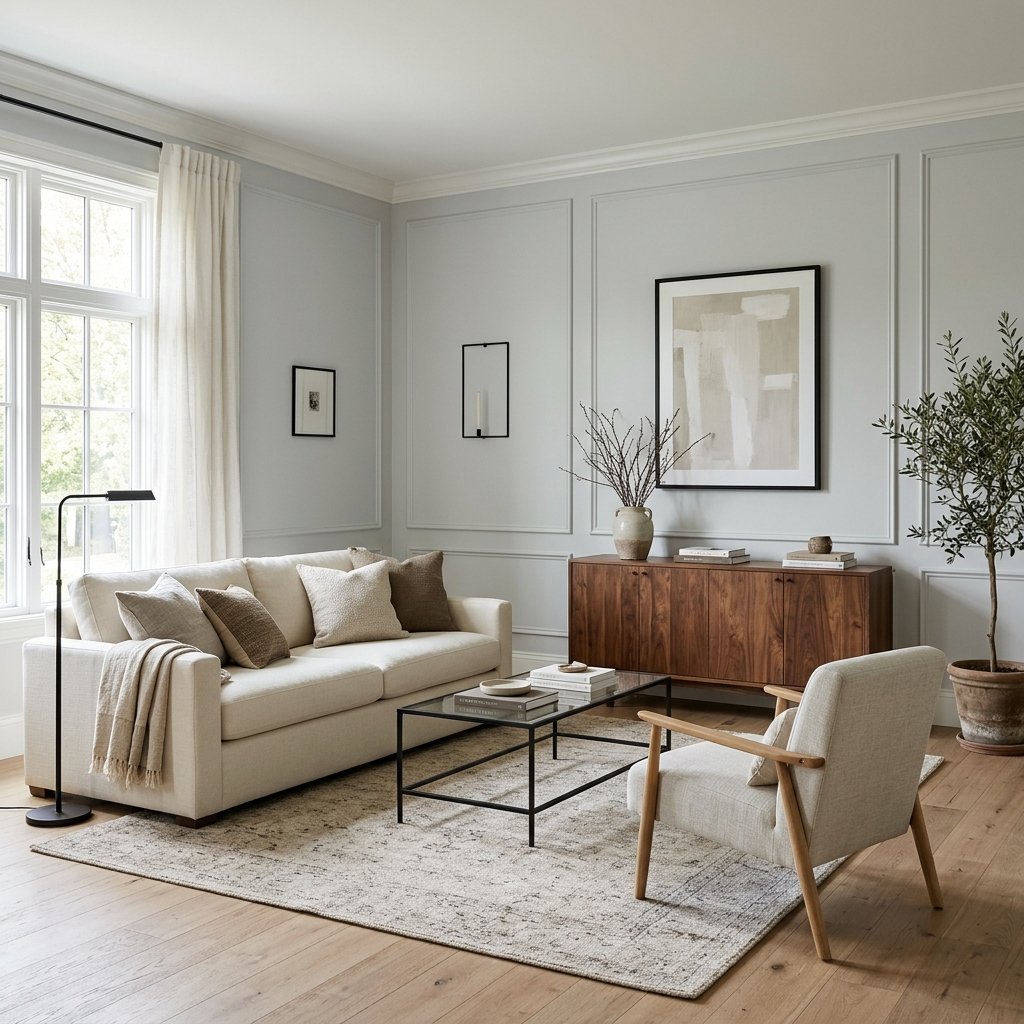
Stonington Gray With Navy Blue
Navy is one of the easiest accent colors to use with a cool gray.
Try navy through:
- Pillows
- Artwork
- Upholstery
- Built-ins
- Cabinetry
Keep some cream or warm wood in the room to prevent the palette from becoming too cold.
Stonington Gray With Black
Black adds definition.
Use small amounts through:
- Frames
- Curtain rods
- Lighting
- Hardware
- Furniture
Black can make Stonington Gray feel cleaner and more contemporary.
Stonington Gray With Green
Muted green can work, but choose carefully.
Blue-green or cool sage may relate more naturally to Stonington Gray than a strongly yellow olive.
Compare samples together before committing.
Stonington Gray With Beige
This pairing is trickier.
Because Stonington Gray is cooler, a strongly yellow beige can exaggerate the temperature difference.
If you want to combine gray and beige, look for textiles or materials that contain both warm and cool neutral tones.
A patterned rug can sometimes bridge the two.
What Furniture Colors Go With Stonington Gray?
You have plenty of options.
Try:
- Cream
- White
- Navy
- Charcoal
- Black
- Walnut
- Natural oak
- Cognac leather
Warm brown furniture can be particularly helpful because it prevents the room from feeling overly cool.
What Metal Finishes Go With Stonington Gray?
Cool metals are a natural fit.
Consider:
- Polished nickel
- Chrome
- Stainless steel
But you aren’t limited to them.
Aged brass can introduce warmth and contrast.
Black creates a more graphic look.
You also don’t need to make every metal finish in the room identical.
Stonington Gray vs. Revere Pewter
Benjamin Moore Revere Pewter HC-172 and Stonington Gray HC-170 are quite different despite both being popular neutrals.
In general:
Stonington Gray feels cooler and more clearly gray.
Revere Pewter feels warmer and more greige.
If your room contains beige, warm stone, and lots of brown, Revere Pewter may relate more naturally.
If your finishes are white, gray, blue, or cool stone, Stonington Gray may be the more logical direction.

Stonington Gray vs. Gray Owl
Benjamin Moore Gray Owl is another popular lighter gray worth comparing.
Both can show cool undertones, but they won’t behave identically.
Instead of choosing based on online descriptions, place large samples side by side.
One may look more blue, green, or neutral depending on your room.
Stonington Gray vs. Coventry Gray
Coventry Gray is a useful comparison if you want to move deeper.
If Stonington Gray feels too light, sampling a deeper gray can help you decide whether the room needs more contrast.
This can be particularly helpful for:
- Offices
- Dining rooms
- Cabinetry
- Built-ins
Stonington Gray vs. Classic Gray
Classic Gray is much lighter in overall appearance and often functions more like an off-white or very pale neutral.
If Stonington Gray feels too distinctly gray for your room, a much lighter neutral such as Classic Gray may be worth comparing.
Stonington Gray vs. Edgecomb Gray
Edgecomb Gray generally belongs to the warmer neutral/greige family.
Stonington Gray is the cooler choice.
This comparison is particularly useful when you’re deciding whether your room wants warm or cool undertones.
Place both beside the flooring.
Often the better direction becomes obvious.
Does Stonington Gray Work in an Open Floor Plan?
It can, but don’t choose a whole-house paint color based on one room.
A color that looks balanced in a bright south-facing living room may become significantly cooler in a north-facing hallway.
Test Stonington Gray throughout the connected spaces.
Pay particular attention to transitions where:
- Flooring changes
- Lighting changes
- Cabinetry changes
- Natural exposure changes
A whole-house neutral needs to work with all major permanent finishes.
Is Stonington Gray a Good Whole-House Color?
It can be if your home consistently supports cool gray.
It’s less likely to be an easy whole-house solution when the property contains a mixture of:
- Yellow-beige tile
- Orange wood
- Cream stone
- Warm granite
Those materials may work better with a warmer neutral.
Don’t force a cool gray into a warm house simply because you like the color in photographs.
Is Stonington Gray Still Popular?
A paint color doesn’t need to be the newest trend to be useful.
Stonington Gray has the advantage of being a recognizable, straightforward cool gray rather than an extreme trend color.
Whether it feels current in your home depends more on how you use it.
Pair it with:
- Warm wood
- Natural textiles
- Cream
- Black
- Muted blue
- Updated lighting
This can give cool gray a more layered, intentional appearance.
How to Make Stonington Gray Feel Warmer
If you love the wall color but the room feels cold, don’t immediately repaint.
Introduce warmth through materials.
Try:
- Walnut
- Natural oak
- Cognac leather
- Cream textiles
- Woven baskets
- Aged brass
- Warm rug colors
You can also reconsider your light bulbs if the artificial lighting is making the walls feel harsher. Use lighting appropriate for the fixture and choose a color temperature that supports the atmosphere you want.
How to Keep Stonington Gray From Looking Too Blue
First, determine what’s causing the blue to become prominent.
It may be:
- Northern exposure
- Cool artificial lighting
- Warm flooring
- Cream trim
- Adjacent beige walls
Changing the surrounding decor can sometimes help.
However, if your large sample already looks clearly blue-gray in the empty room and you don’t want that effect, choose another paint color.
Don’t expect furniture to completely change a fundamental undertone you dislike.
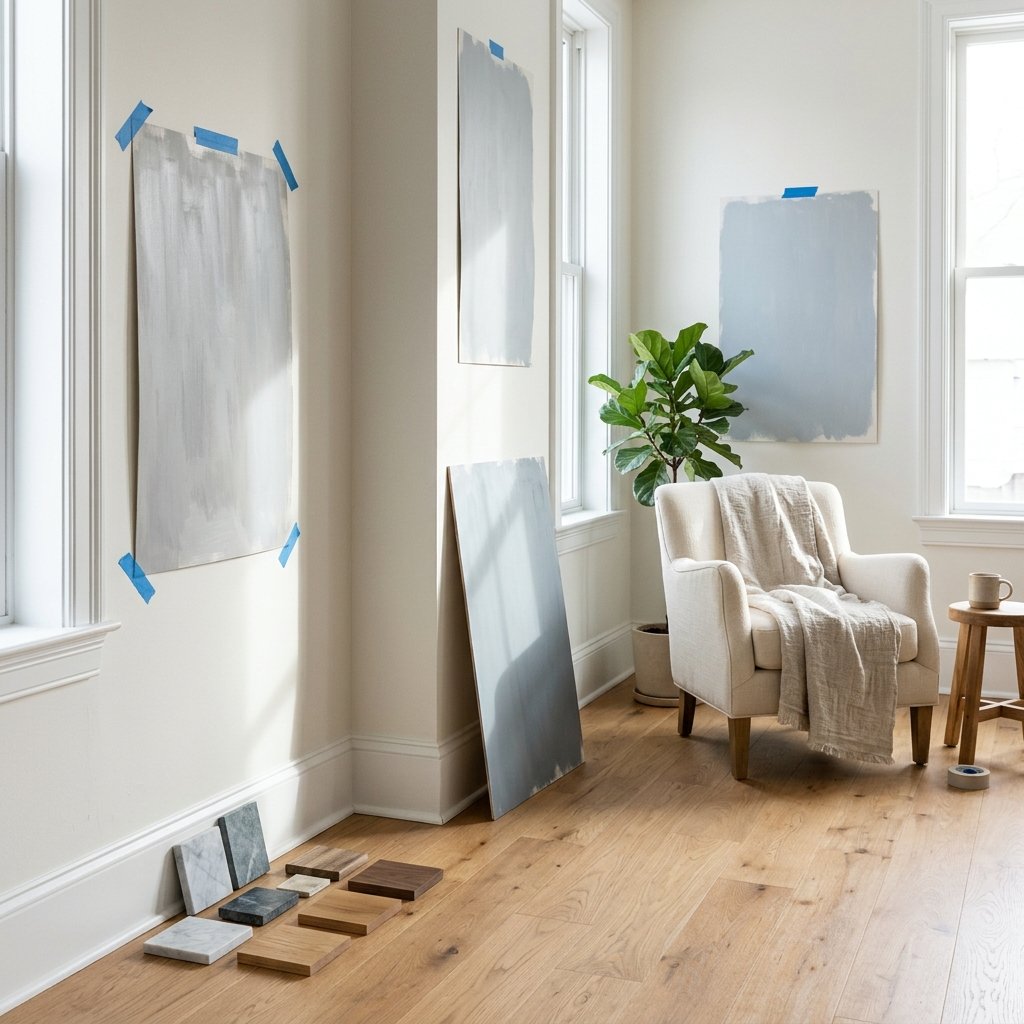
How to Sample Stonington Gray Correctly
Large samples are essential.
Place samples:
- Beside trim
- Near flooring
- Behind the sofa
- Beside cabinetry
- Near countertops
- On different walls
Then observe them:
- Morning
- Midday
- Afternoon
- Evening
- Under artificial lighting
A cool gray can change significantly throughout the day.
Common Mistakes With Stonington Gray
Assuming It’s a Neutral Gray With No Undertones
All complex grays are influenced by undertones.
Ignoring the Blue
If you dislike blue-gray, sample very carefully.
Pairing It With Strong Yellow Beige Without Testing
The contrast can make both colors more obvious.
Choosing Trim Separately
Wall and trim colors need to be evaluated together.
Looking Only at Online Photos
Photography, screens, exposure, and editing alter paint colors.
Using Tiny Paint Chips
A small chip doesn’t reveal how a color behaves across an entire wall.
Choosing It Because It’s Popular
The room’s fixed finishes matter more than popularity.
A Simple Stonington Gray Color Palette
If Stonington Gray works with your home’s undertones, try one of these combinations.
Classic
Stonington Gray + white + navy + dark wood
Warm and Balanced
Stonington Gray + cream + walnut + aged brass
Contemporary
Stonington Gray + crisp white + black + natural oak
Coastal
Stonington Gray + soft white + muted blue + natural texture
Bathroom
Stonington Gray + compatible white + marble + polished nickel
Keep the palette relatively simple and allow texture to create additional depth.

FAQ About Benjamin Moore Stonington Gray
What color is Benjamin Moore Stonington Gray?
Stonington Gray HC-170 is a light-to-medium cool gray with noticeable cool undertones.
What are the undertones of Stonington Gray?
Stonington Gray is generally associated with blue undertones, and some rooms may reveal subtle blue-violet influence.
What is the LRV of Stonington Gray?
Its LRV is approximately 59, placing it in a light-to-medium range with enough depth to look clearly gray against lighter trim.
Is Stonington Gray warm or cool?
Stonington Gray is a cool gray rather than a warm gray or beige-heavy greige.
Does Stonington Gray look blue?
It can, particularly in cool natural light or when surrounded by warm beige and yellow-toned materials.
Is Stonington Gray good for a living room?
Yes, especially when the room’s permanent finishes support cool gray. Warm wood, cream upholstery, navy, and black can create a balanced palette.
Can you use Stonington Gray on kitchen cabinets?
It can be worth sampling for light gray cabinetry. Compare it directly with countertops, backsplash, flooring, and wall colors before deciding.
What white goes with Stonington Gray?
Clean, soft, or neutral whites can work, but the best white depends on your other finishes. Very creamy whites may emphasize Stonington Gray’s cooler undertones.
Does Stonington Gray go with wood floors?
Yes. Natural oak, walnut, medium brown, and darker wood can provide beautiful warm contrast against cool gray walls.
Which is warmer, Stonington Gray or Revere Pewter?
Revere Pewter generally reads warmer and more greige, while Stonington Gray reads cooler and more distinctly gray.
Final Thoughts
Benjamin Moore Stonington Gray HC-170 is worth considering when you want a gray that actually looks gray.
Rather than leaning heavily beige or greige, Stonington Gray generally has a cooler character with blue—and sometimes subtle blue-violet—undertones.
That makes it particularly useful with white, marble, cool stone, navy, charcoal, black, and silver-toned metals.
But it doesn’t mean you need an entirely cool room.
In fact, some of the most attractive Stonington Gray spaces use warm wood, cream upholstery, natural texture, and aged brass to balance the walls.
The most important step is sampling.
Compare Stonington Gray with your flooring, trim, countertops, cabinetry, and furniture. Check it on several walls and under both natural and artificial light.
If its cool undertones complement those permanent elements, Stonington Gray can create a crisp, sophisticated backdrop that feels classic, calm, and beautifully intentional.