


If you love the drama of black paint but worry that a true black will feel too harsh, Benjamin Moore Wrought Iron 2124-10 is a color worth sampling.
Wrought Iron is a deep, sophisticated charcoal that sits just a little softer than a traditional black. It has enough depth to create serious contrast, but its muted character can make it easier to use on kitchen cabinets, interior doors, built-ins, fireplaces, accent walls, and exteriors.
Its LRV is 8.17, putting it firmly in dark-paint territory.
That means Wrought Iron absorbs far more light than it reflects. In lower light, it can look nearly black. In stronger natural light, its softer charcoal character becomes easier to see.
And that’s one of the most important things to understand about this color.
Wrought Iron isn’t simply “black.”
Depending on the light and surrounding finishes, it can reveal subtle blue-gray characteristics that distinguish it from a warmer black or a completely neutral jet black.
Here’s what to know before using Benjamin Moore Wrought Iron in your home.
What Color Is Benjamin Moore Wrought Iron?
Benjamin Moore Wrought Iron is 2124-10, a very dark charcoal paint color.
Think of it as a softened black.
It can appear:
- Deep charcoal
- Soft black
- Black-gray
- Slightly blue-charcoal
In some rooms, you’ll barely distinguish it from black.
In brighter conditions, its charcoal character becomes more obvious.
This makes Wrought Iron useful if you want strong contrast without using the darkest possible black.
What Is the LRV of Wrought Iron?
The LRV of Benjamin Moore Wrought Iron is 8.17.
LRV stands for Light Reflectance Value.
The scale runs from 0 to 100. Lower values reflect less light, while higher values reflect more.
At 8.17, Wrought Iron is extremely dark.
For comparison purposes, that means you should expect it to behave much more like a black than a medium charcoal.
This is important when you’re considering it for an entire room.
A dark paint color won’t reflect much available light, so lighting becomes an important part of the overall design.
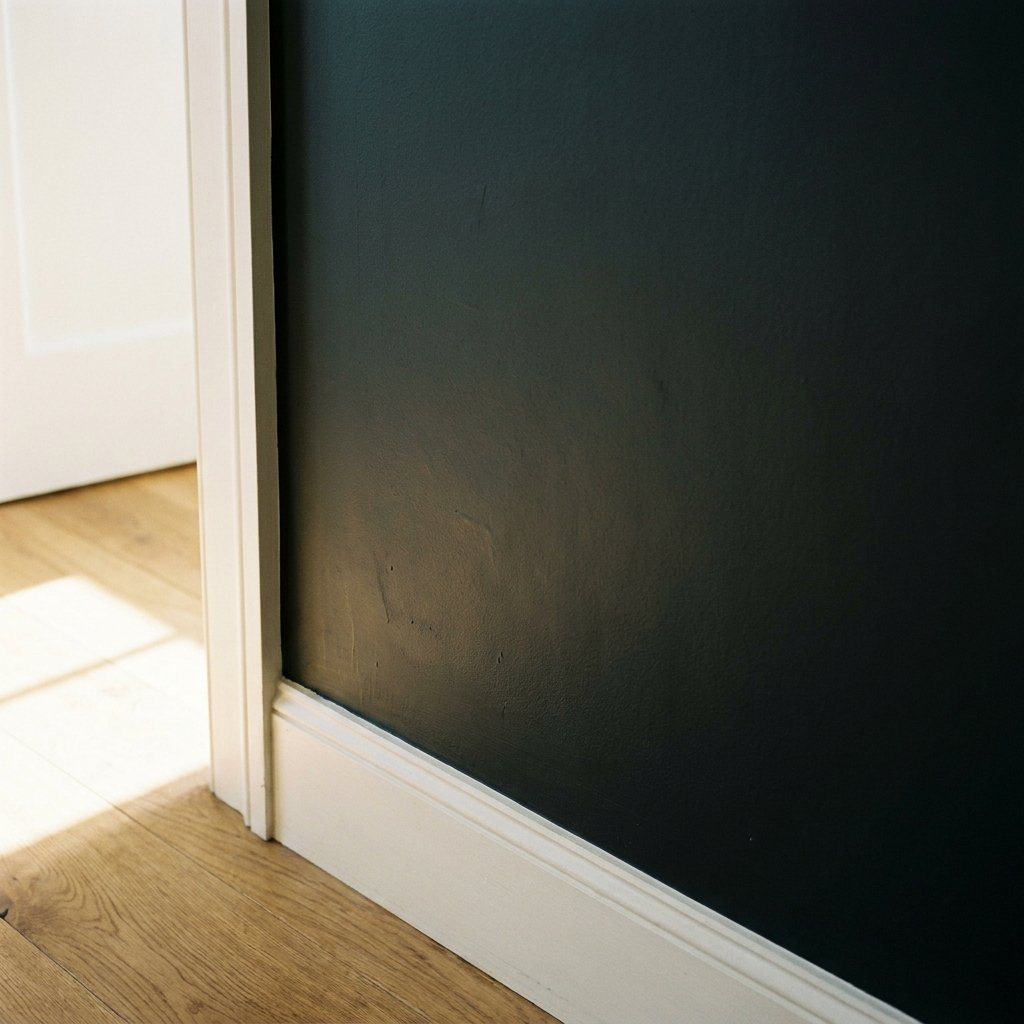
What Are the Undertones of Wrought Iron?
Wrought Iron has a deep charcoal base with subtle cool characteristics.
Depending on the lighting, you may notice a slightly blue-gray influence.
This doesn’t mean your cabinets or walls will suddenly look navy.
The blue is usually subtle.
But when Wrought Iron is compared directly with a warmer black, its cooler character can become much easier to see.
Its appearance can be influenced by:
- Natural light
- Artificial lighting
- Flooring
- Countertops
- Nearby whites
- Wood tones
- Other dark colors
Always sample Wrought Iron beside the actual materials in the room.
Does Wrought Iron Look Blue?
It can show a subtle blue-gray cast in certain lighting.
This is particularly noticeable when you compare Wrought Iron with a warmer or more neutral black.
If you’re sensitive to blue undertones, don’t judge the color from an isolated paint chip.
Compare it directly with:
- Black furniture
- Black windows
- Dark countertops
- Other black paint samples
That will help you determine whether its particular charcoal character works in your home.
Is Wrought Iron Black or Gray?
It’s somewhere between the two, but much closer to black in terms of depth.
In dim lighting, Wrought Iron can look almost black.
In stronger daylight, you may see more of the charcoal-gray character.
This makes it a good candidate when pure black feels too severe but medium charcoal isn’t dramatic enough.
Is Wrought Iron Warm or Cool?
Wrought Iron generally leans toward the cooler side of charcoal because of its subtle blue-gray character.
But don’t expect an obviously cool blue-black.
It’s dark enough that the undertones tend to remain restrained.
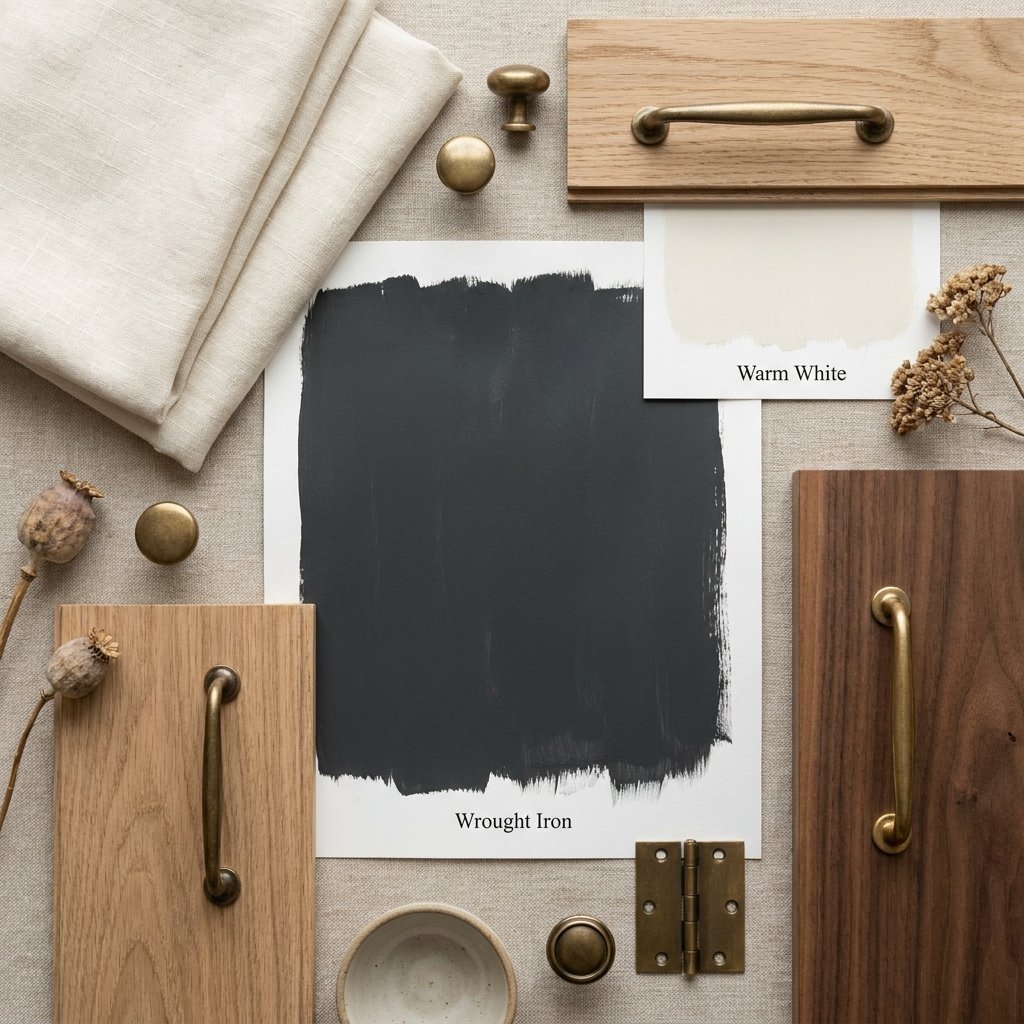
Warm materials can balance it beautifully.
Try:
- Natural oak
- Walnut
- Cream
- Warm white
- Aged brass
- Cognac leather
The contrast between the deep charcoal and warmer finishes creates a layered, sophisticated room.
Wrought Iron in North-Facing Rooms
North-facing rooms typically receive cooler indirect light.
That can emphasize Wrought Iron’s cooler charcoal character.
Because the color has an LRV of only 8.17, it will look extremely dark in a north-facing room without much natural light.
That doesn’t mean you should avoid it.
If you’re intentionally creating a moody room, it can be beautiful.
Just make sure you have enough lighting to support the design.
Wrought Iron in South-Facing Rooms
Strong south-facing light can reveal more of Wrought Iron’s charcoal character.
Instead of reading simply as black, you may notice more dimension.
A bright south-facing room is also a useful place to use a dark accent because the abundant daylight creates natural contrast.
Wrought Iron in East-Facing Rooms
East-facing rooms receive stronger direct light earlier in the day.
Wrought Iron may show more nuance in the morning and become considerably darker later.
Check the sample at different times.
Wrought Iron in West-Facing Rooms
West-facing rooms typically receive stronger warm light later in the day.
That warmth can soften the cooler characteristics of Wrought Iron.
If the room is mostly used at night, pay particular attention to your artificial lighting.
Wrought Iron in a Dark Room
Wrought Iron is already a very dark color.
Putting it in a low-light room will make it look even deeper.
You have two choices.
You can fight that effect—or embrace it.
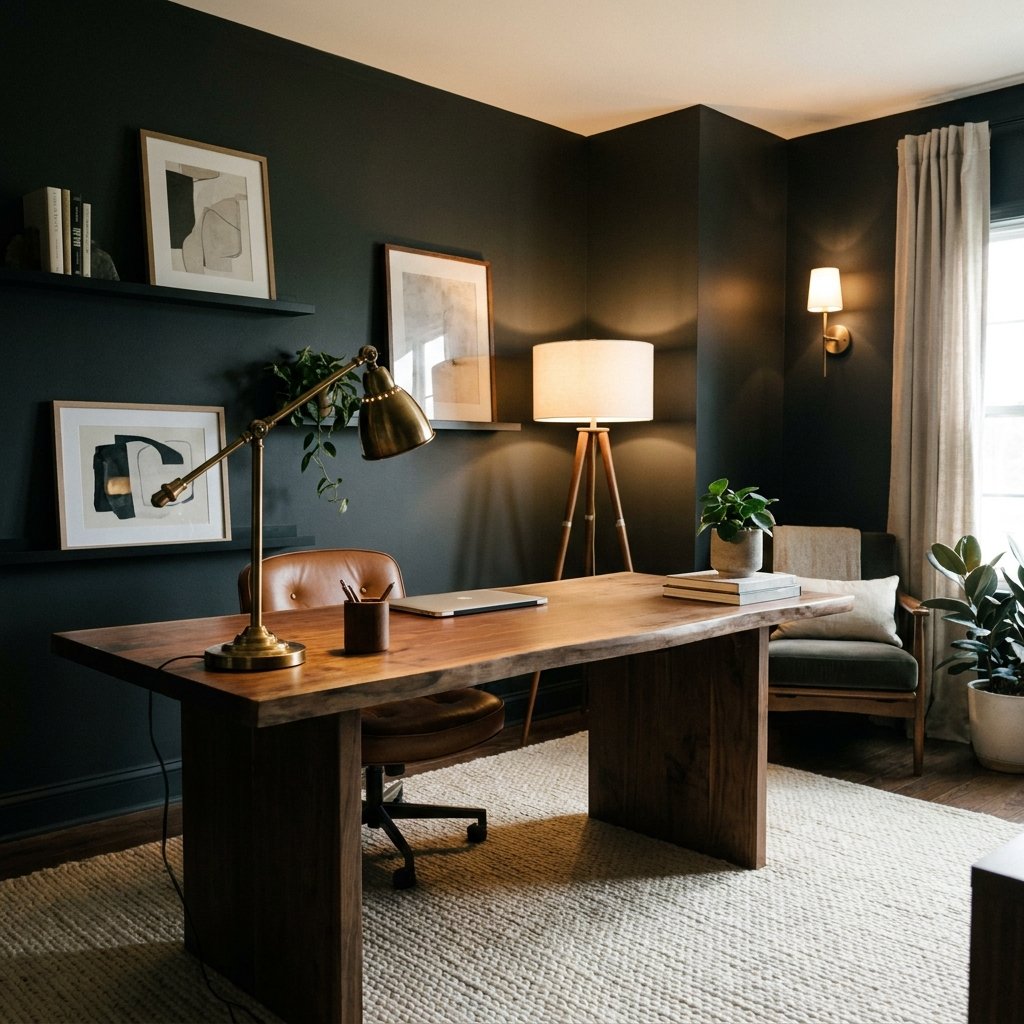
A dark home office, powder room, dining room, or bedroom can feel incredibly intentional when you layer Wrought Iron with:
- Warm lamps
- Cream textiles
- Wood
- Brass
- Mirrors
- Artwork
Don’t expect the paint itself to brighten the room.
Design around the darkness instead.
Wrought Iron in a Living Room
Wrought Iron can create beautiful contrast in a living room without requiring you to paint every wall dark.
Consider it for:
- Fireplace
- Built-ins
- Accent wall
- Interior doors
- Media cabinetry
Against warm white walls, Wrought Iron creates a strong focal point.
Add natural wood and cream upholstery to keep the room from feeling too cool.
Wrought Iron Accent Wall
A Wrought Iron accent wall can work particularly well behind:
- Bed
- Sofa
- Console
- Dining table
But make sure the wall deserves attention.
An accent wall should highlight architecture or create a deliberate focal point.
Don’t choose a random wall simply because you’re nervous about painting the whole room.
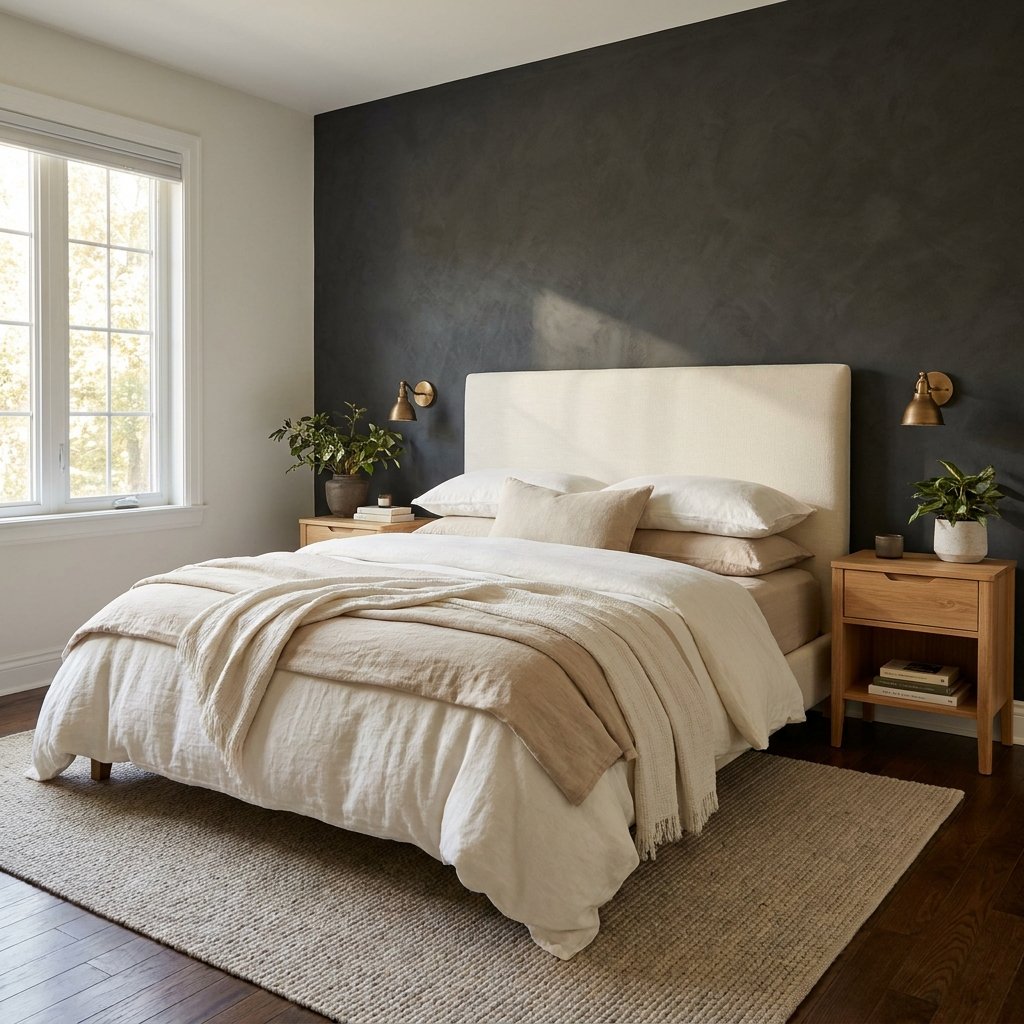
Wrought Iron Bedroom
A dark charcoal bedroom can feel surprisingly cozy.
You could use Wrought Iron:
- Behind the bed
- On all walls
- On doors
- On built-ins
For a balanced bedroom, pair it with:
- Cream bedding
- Warm white
- Natural oak
- Walnut
- Brass
- Soft neutral rug
If you paint all four walls, plan your lighting carefully.
Wrought Iron Fireplace
A fireplace is one of the easiest places to use Wrought Iron.
The dark color can turn an ordinary fireplace into a focal point.
It can work on suitable:
- Brick
- Mantel
- Surround
- Built-ins
If you’re painting masonry or surfaces close to a heat source, use coatings appropriate for the material and location. Follow manufacturer instructions, and never apply ordinary decorative paint where a heat-rated product is required.
For working fireplaces, maintain required clearances and follow local requirements and manufacturer guidance.
Wrought Iron Built-Ins
Built-ins painted Wrought Iron can add depth without making an entire room dark.
Try them against:
- Warm white walls
- Light greige walls
- Natural wood floors
- Cream upholstery
You can also carry the dark color across the fireplace and built-ins for a larger focal point.
Wrought Iron Interior Doors
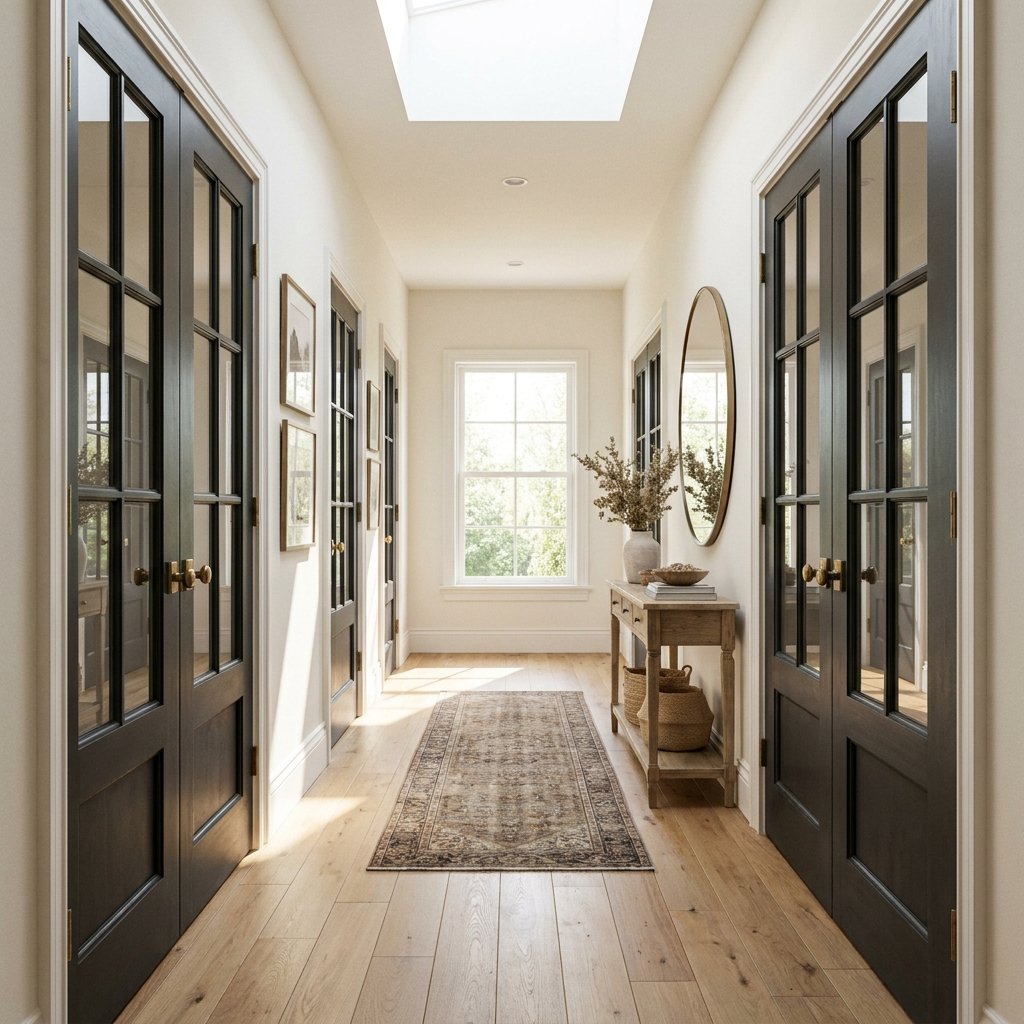
Interior doors are one of the best places to experiment with a dark color.
Wrought Iron doors can add architectural character to otherwise neutral rooms.
They work particularly well with:
- Warm white walls
- Greige walls
- Natural wood floors
- Brass hardware
- Black hardware
If you’re painting several doors, repeating the color throughout the home makes it feel intentional.
Wrought Iron With White Walls
Wrought Iron creates strong contrast with white.
The exact white affects the final look.
A warmer white can soften the contrast.
A cleaner white creates a crisper, more graphic appearance.
If your home already has white walls or trim, sample Wrought Iron directly beside them.
Wrought Iron Kitchen Cabinets
Wrought Iron is a strong candidate if you want dark kitchen cabinets without choosing a stark jet black.
It can work on:
- All cabinetry
- Lower cabinets
- Kitchen island
- Butler’s pantry
- Bar cabinetry
The softer charcoal character gives it dimension.
But dark cabinets show dust, fingerprints, and surface imperfections differently from light cabinetry, so preparation and finish quality matter.
If repainting cabinets, follow the coating manufacturer’s requirements for cleaning, preparation, sanding or deglossing, priming, application, ventilation, drying, and curing.
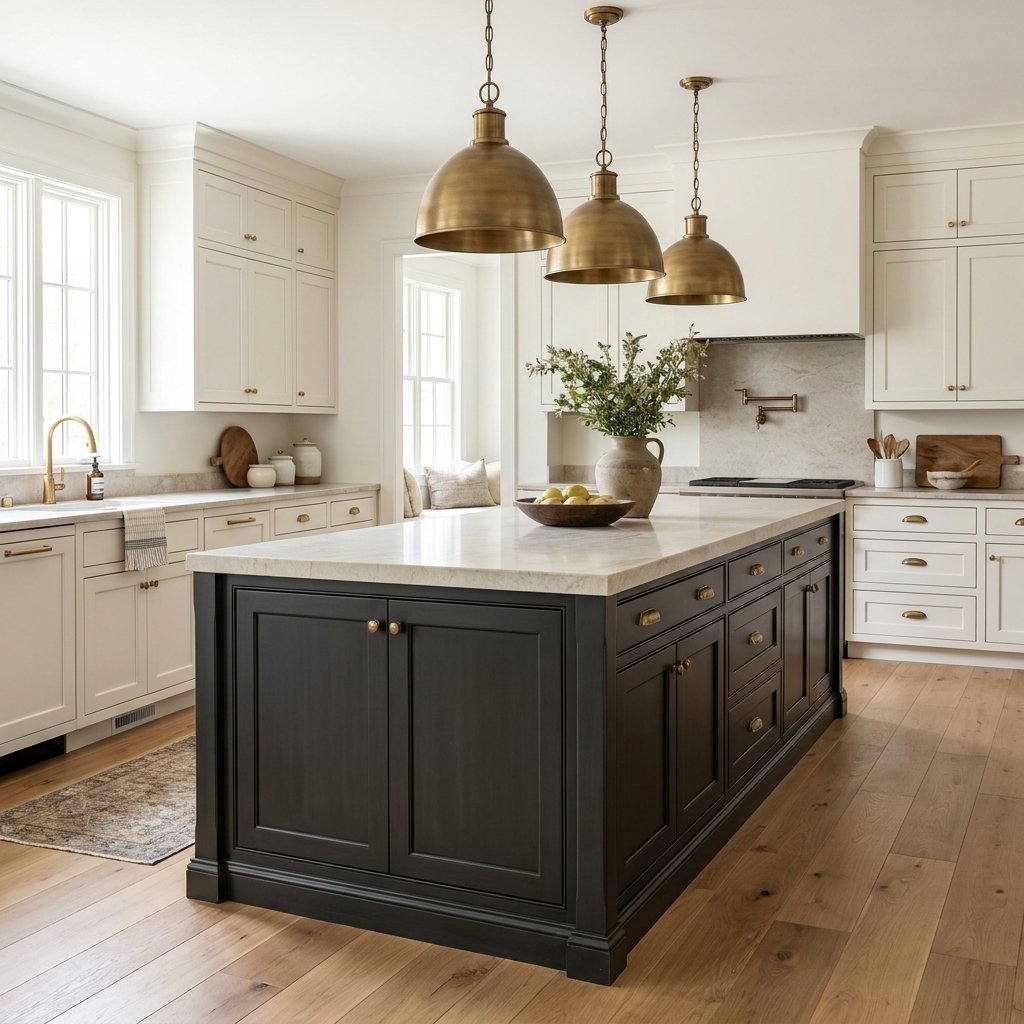
Wrought Iron Kitchen Island
A Wrought Iron island can create a dramatic focal point in an otherwise light kitchen.
Try:
Warm white cabinets + Wrought Iron island + pale stone countertops + natural oak flooring + brass hardware
This is a classic high-contrast palette that still feels warm because of the wood and metal.
Wrought Iron With White Kitchen Cabinets
Dark charcoal and white cabinets naturally create contrast.
The key is connecting the two sides of the palette.
Repeat the darker color through small details such as:
- Lighting
- Hardware
- Window frames
- Bar stools
You don’t need to match every black or charcoal exactly.
You simply want enough repetition for the dark island or cabinets to feel intentional.
Wrought Iron With Countertops
Always compare Wrought Iron with your actual countertop.
It can work beautifully with:
- White quartz
- Marble
- Soapstone-style surfaces
- Warm stone
- Light quartzite
But countertops can contain subtle blue, green, brown, gray, or cream undertones.
Those relationships matter.
Wrought Iron With Brass Hardware
Brass and deep charcoal make a beautiful combination.
The warm metal stands out against the dark background.
Consider:
- Aged brass
- Brushed brass
- Antique brass
for cabinet pulls, knobs, lighting, or faucets.
Polished nickel and black hardware can also work depending on the room.
Wrought Iron Bathroom Vanity
A bathroom vanity is another easy place to use Wrought Iron.
It creates contrast without requiring a large amount of dark paint.
Try:
Wrought Iron vanity + light countertop + warm white walls + brass mirror and hardware
or:
Wrought Iron vanity + marble + polished nickel + soft gray-white walls
If repainting an existing vanity, proper surface preparation and adequate curing time are essential for durability.
Wrought Iron Powder Room
A powder room is a great place to experiment with dark paint.
You could use Wrought Iron on:
- All walls
- Vanity
- Trim
- Door
- Ceiling
A small room doesn’t automatically need light paint.
Dark color can make a compact space feel dramatic and intentional.
Use good lighting and reflective materials to keep it functional.
Wrought Iron Home Office
Wrought Iron can create a sophisticated home office.
Try:
Wrought Iron walls + walnut desk + cream rug + brass lighting
This is especially effective if you want a room that feels separate from the lighter areas of the house.
Wrought Iron Dining Room
Dining rooms can handle dark paint particularly well.
Because they’re often used in the evening, a deeper color can create a cozy atmosphere.
Pair Wrought Iron with:
- Walnut table
- Cream chairs
- Brass chandelier
- Warm white curtains
- Large artwork
Layer several sources of light rather than relying on one overhead fixture.
Wrought Iron With Wood
Wood is one of the easiest ways to warm up Wrought Iron.
White Oak
Creates a contemporary organic contrast.
Medium Oak
Adds warmth and keeps the dark paint approachable.
Walnut
Creates a rich, sophisticated palette.
Cognac-Toned Wood or Leather
Adds noticeable warmth against the cooler charcoal.
Wrought Iron With Cream
Cream is softer against Wrought Iron than crisp white.
Use it through:
- Sofa
- Bedding
- Curtains
- Rugs
- Upholstery
This is particularly useful if you want a dark room to feel cozy rather than graphic.
Wrought Iron With Green
Deep greens can work beautifully with charcoal.
Try:
- Olive
- Sage
- Forest green
Use lighter neutral elements between the dark colors so they don’t blend into one heavy mass.
Wrought Iron With Blue
Muted blue and navy can work with Wrought Iron, but their similar depth can reduce contrast.
If you’re combining them, include:
- Cream
- White
- Natural wood
to separate the darker colors visually.
Wrought Iron vs. Black
Wrought Iron is softer than a true jet black.
If black feels too stark or severe, Wrought Iron may provide the depth you want while maintaining a slightly more forgiving charcoal quality.
Sample the two side by side.
The difference becomes easier to see than when each is viewed independently.
Wrought Iron vs. Kendall Charcoal
Kendall Charcoal HC-166 is noticeably lighter and more obviously gray than Wrought Iron.
Choose between them based on how much drama you want.
If you want:
Deep charcoal approaching black: consider Wrought Iron.
If you want:
A lighter charcoal with more visible gray: compare Kendall Charcoal.
Wrought Iron vs. Black Beauty
Black Beauty 2128-10 is another deep Benjamin Moore color worth comparing if you’re looking for a sophisticated black.
Place the samples together.
You’ll quickly see which undertone direction relates better to your fixed materials.
Wrought Iron vs. Black Panther
Black Panther 2125-10 is another dark Benjamin Moore option.
Again, the important question isn’t which color is universally better.
It’s which dark color works best with your:
- Stone
- Flooring
- Cabinets
- Roof
- Windows
- Furniture
Large physical samples will reveal those differences.
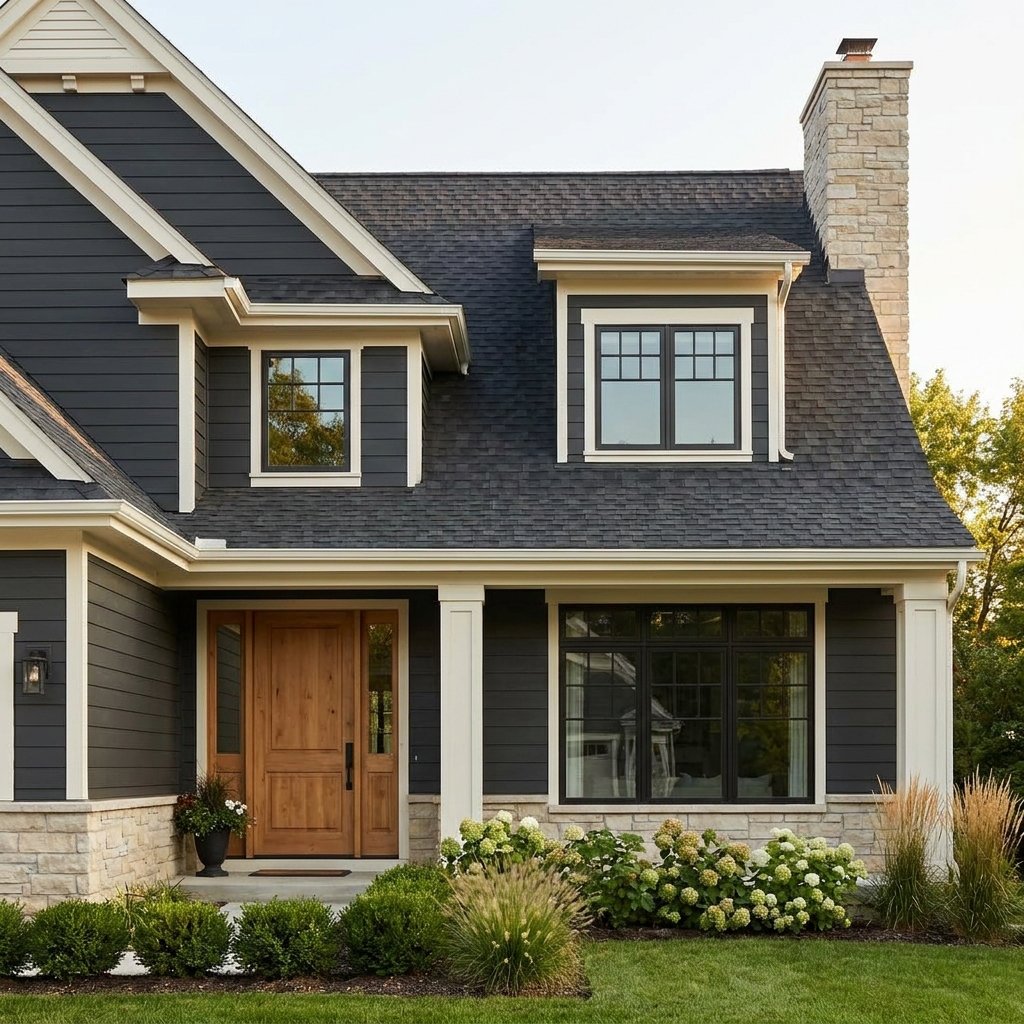
Wrought Iron Exterior
Wrought Iron can be especially striking outside.
Consider it for:
- Exterior siding
- Front door
- Shutters
- Garage door
- Trim
- Architectural accents
In strong outdoor light, Wrought Iron may reveal more of its charcoal character than it does indoors.
Pair it with:
- Warm white
- Natural stone
- Brick
- Wood
- Light gray
Always test a large sample directly on the exterior.
Wrought Iron Front Door
If an entire dark exterior feels like too much, use Wrought Iron on the front door.
It’s an easy way to create a strong focal point.
Try it against:
- Warm white siding
- Greige siding
- Brick
- Natural stone
Choose an exterior coating appropriate for your door material and exposure.
Wrought Iron Shutters
Wrought Iron shutters can create softer contrast than the darkest possible black.
This can be particularly attractive on:
- White homes
- Cream homes
- Light greige homes
- Brick homes
Compare the sample with the roof before committing.
Exterior colors need to work together as one palette.
Wrought Iron With Brick
Charcoal can work beautifully with many brick exteriors.
But brick contains complex undertones.
Some brick leans:
- Red
- Orange
- Brown
- Purple
- Pink
Put a large Wrought Iron sample directly against the brick rather than assuming all charcoal colors will work.
How to Sample Benjamin Moore Wrought Iron
Dark colors need sampling just as much as pale neutrals.
Try this:
- Get an authentic paint sample.
- Make a large movable sample board.
- View it vertically.
- Compare it with your white or neutral walls.
- Put it beside the flooring.
- Compare it with countertops or stone.
- Check it in morning light.
- Look again in the afternoon.
- Turn on your normal lights at night.
- Compare it with another black or charcoal.
Don’t choose Wrought Iron from a phone or computer screen.
Subtle differences between black, charcoal, blue-black, and warm black are difficult to judge digitally.
Common Mistakes With Wrought Iron
Assuming It’s a True Black
Wrought Iron is better understood as an extremely dark charcoal.
Ignoring Its Cool Character
Its subtle blue-gray quality may become more noticeable beside warmer blacks.
Using It in a Dark Room Without Planning Lighting
An LRV of 8.17 means it reflects very little light.
Forgetting About Countertops
This matters especially with kitchen cabinets.
Ignoring the Roof on an Exterior
The roof is a major part of the color palette.
Choosing It From an Online Photo
Dark colors are easily distorted by photography and screens.
Pairing It With Too Many Cool Finishes
Wood, cream, and warm metal can provide useful balance.
Skipping Proper Cabinet Preparation
Dark paint won’t hide poor surface preparation.
Expecting Every Black Finish to Match
Black windows, hardware, furniture, and paint may all have different undertones.
They don’t necessarily need to match, but they should look intentional together.
Who Should Consider Wrought Iron?
Wrought Iron may be worth sampling if you want:
- Soft black walls
- Deep charcoal cabinets
- Dark kitchen island
- Dramatic built-ins
- Painted fireplace
- Dark interior doors
- Moody bedroom
- Sophisticated exterior
- Alternative to jet black
Who Might Want Something Else?
Consider another color if you want:
- True neutral black
- Warm black
- Medium charcoal
- Light gray
- High-light-reflecting wall color
- Very subtle contrast
Wrought Iron is dramatic.
Even though it’s softer than a pure black, it’s still an extremely dark paint color.
A Simple Wrought Iron Color Palette
Try:
Main Dark Color
Benjamin Moore Wrought Iron 2124-10.
Walls or Trim
Warm white.
Wood
Natural oak or walnut.
Upholstery
Cream.
Metal
Aged brass.
Accent
Muted olive.
Additional Contrast
Soft greige or light stone.
This palette balances the deep charcoal with enough warmth to make the room feel inviting.
FAQ About Benjamin Moore Wrought Iron
What color is Benjamin Moore Wrought Iron?
Wrought Iron 2124-10 is a very dark charcoal that can appear almost black in lower light.
What is the LRV of Wrought Iron?
Benjamin Moore Wrought Iron has an LRV of 8.17, making it an extremely dark paint color.
Is Wrought Iron black or gray?
It sits between black and charcoal gray but is much closer to black in depth. Stronger natural light can reveal more of its charcoal character.
Does Wrought Iron have blue undertones?
Wrought Iron can reveal a subtle blue-gray character in certain lighting, particularly when compared with warmer black paint colors.
Is Wrought Iron warm or cool?
It generally leans slightly cooler because of its charcoal and subtle blue-gray character.
Is Wrought Iron good for kitchen cabinets?
It can be a beautiful option for dark cabinets or a kitchen island. Compare it directly with the countertop, backsplash, flooring, and other dark finishes before choosing it.
Does Wrought Iron work with white walls?
Yes. Warm white or off-white walls can create striking contrast with Wrought Iron while natural wood and warm metals help soften the palette.
Is Wrought Iron good for interior doors?
Yes. Dark Wrought Iron doors can add architectural character to neutral rooms without requiring you to paint the walls dark.
Is Wrought Iron good for exteriors?
It can be a dramatic exterior choice for siding, doors, shutters, garage doors, and architectural accents. Always test it outdoors with the roof, masonry, and other permanent materials.
Final Thoughts
Benjamin Moore Wrought Iron 2124-10 is a strong choice when you want the drama of black without necessarily using a stark, true black.
With an LRV of 8.17, there’s no question that it’s dark.
In low light, it can look nearly black.
Give it more natural light, and its softer charcoal personality becomes easier to see.
That’s what makes Wrought Iron so versatile.
Paint the kitchen island.
Use it on built-ins.
Transform interior doors.
Create a dramatic fireplace.
Wrap a home office in dark charcoal.
Or use it outside for a sophisticated exterior.
Just remember that dark paint doesn’t exist in isolation.
Wrought Iron will react to your white walls, countertops, flooring, wood tones, lighting, roof, brick, stone, and other black finishes.
Sample it next to all of them.
And if you’re deciding between Wrought Iron and true black, put the samples right beside each other.
You may discover that Wrought Iron gives you exactly what you wanted from black—contrast, depth, and drama—with just enough softness to make it easier to live with.

