

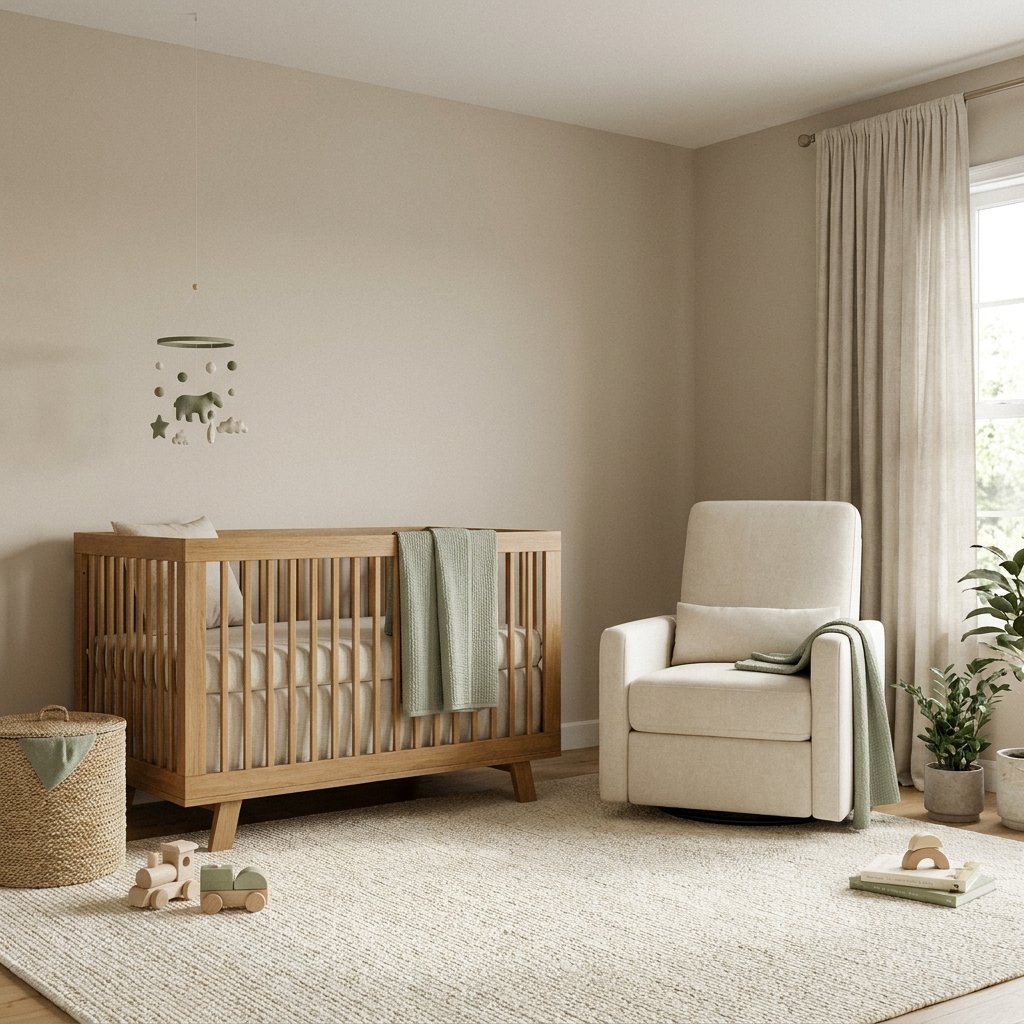
Choosing a nursery paint color sounds simple until you’re standing in front of hundreds of nearly identical paint chips.
Do you choose a warm white that can grow with your child? A calming sage green? A soft blue? A cozy beige? Or something deeper and moodier for a room with plenty of natural light?
The best nursery paint colors aren’t limited to traditional pink and blue. Some of the most versatile baby rooms use warm whites, soft greiges, muted greens, gentle blues, warm beige, and earthy neutrals that work just as beautifully with a crib as they will with a toddler bed a few years later.
The most important thing is to choose a color that works with the nursery’s lighting and permanent finishes.
Sherwin-Williams and Benjamin Moore both currently feature nursery palettes that extend well beyond traditional pastels, including whites, greens, blues, pinks, and warm neutrals. Sherwin-Williams also recommends considering lower-VOC and zero-VOC options when selecting paint for a nursery.
Here are 17 nursery paint colors and color families worth considering, plus practical tips for choosing a shade you’ll still love as the room changes.
What Makes a Good Nursery Paint Color?
A nursery color should work with the room rather than simply looking pretty on a paint chip.
Consider:
- Natural light
- Flooring
- Crib finish
- Rug
- Curtains
- Existing trim
- Furniture
- Overall decorating style
Also think beyond the baby stage.
If you’d rather not repaint in two years, choose a wall color that can transition easily from nursery to toddler or child’s bedroom.
That doesn’t mean the nursery has to be boring.
You can add more playful color through artwork, bedding, curtains, rugs, baskets, and accessories that are easier to change.
1. Benjamin Moore White Dove OC-17
A warm white can create a soft, bright nursery without making the room feel stark.
Benjamin Moore describes White Dove OC-17 as a clean, classic white with soft warmth and includes it among its nursery color ideas.
It can provide a flexible background for:
- Natural wood
- Sage green
- Dusty blue
- Blush
- Beige
- Burgundy accents
Warm white is also one of the easiest choices to carry into later childhood.
2. Sherwin-Williams Alabaster SW 7008
Alabaster is another warm white worth sampling for a nursery.
Sherwin-Williams describes Alabaster SW 7008 as a balanced white with understated warmth.
Use it when you want the room to feel light while still having a softer appearance than a crisp, cool white.
It pairs beautifully with warm wood furniture and natural woven textures.
3. Benjamin Moore Swiss Coffee OC-45
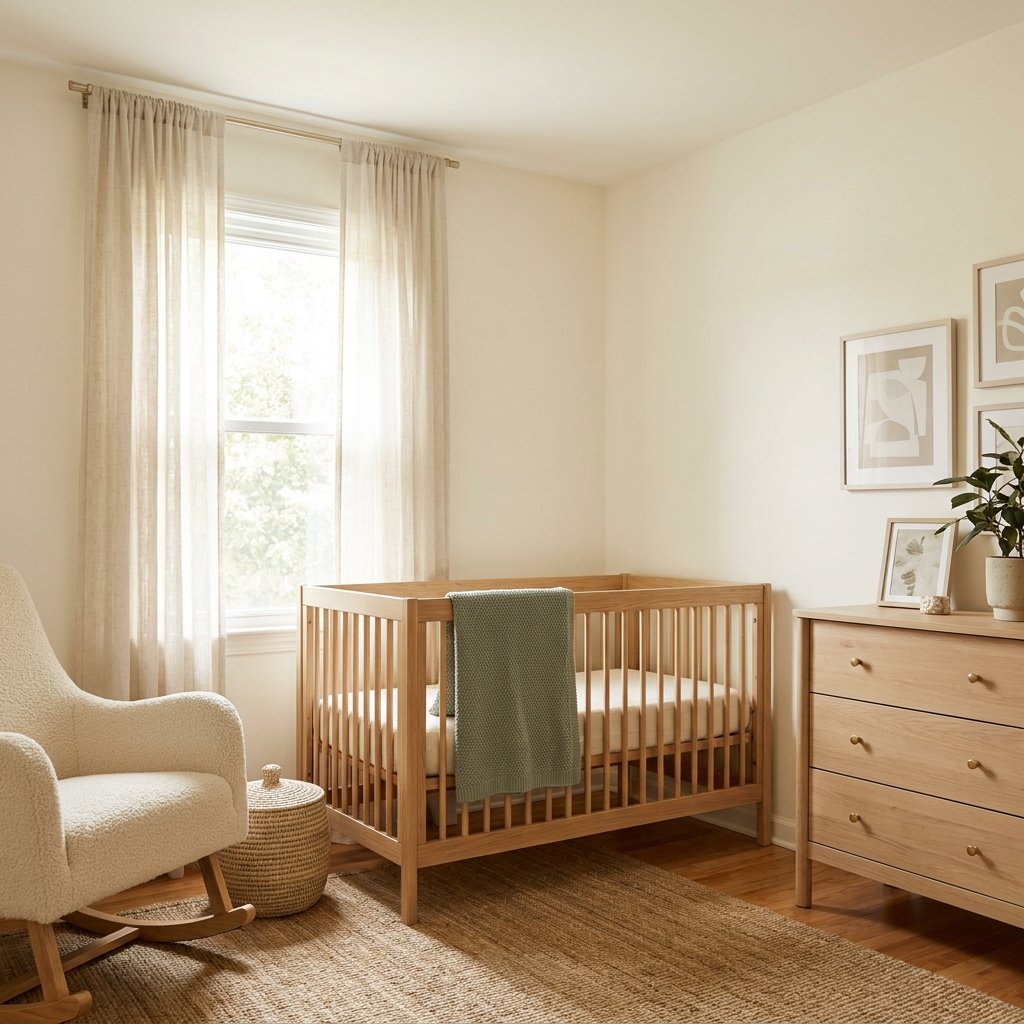
For a creamier neutral direction, consider Swiss Coffee.
Benjamin Moore describes Swiss Coffee OC-45 as an off-white with warm undertones and includes it among its popular white paint colors.
A creamy off-white can be especially helpful when the nursery contains warm finishes such as:
- Honey-toned wood
- Beige carpet
- Cream upholstery
- Warm wood flooring
Compare it directly with the trim before committing.
4. Sherwin-Williams Agreeable Gray SW 7029
If you want a neutral with more depth than white, Agreeable Gray is worth testing.
Sherwin-Williams describes Agreeable Gray SW 7029 as a gray with a beige undertone and subtle warmth.
This type of warm neutral can create a flexible nursery backdrop that works with both colorful and neutral decor.
Try pairing it with cream, natural wood, muted green, or dusty blue.
5. Benjamin Moore Edgecomb Gray HC-173
Edgecomb Gray is a warmer greige option.
Benjamin Moore describes it as an airy, elegant neutral with warm undertones and includes it among its popular greige colors.
It can be a good starting point when you want something warmer than a traditional gray but not as obviously beige.
6. Sherwin-Williams Sea Salt SW 6204
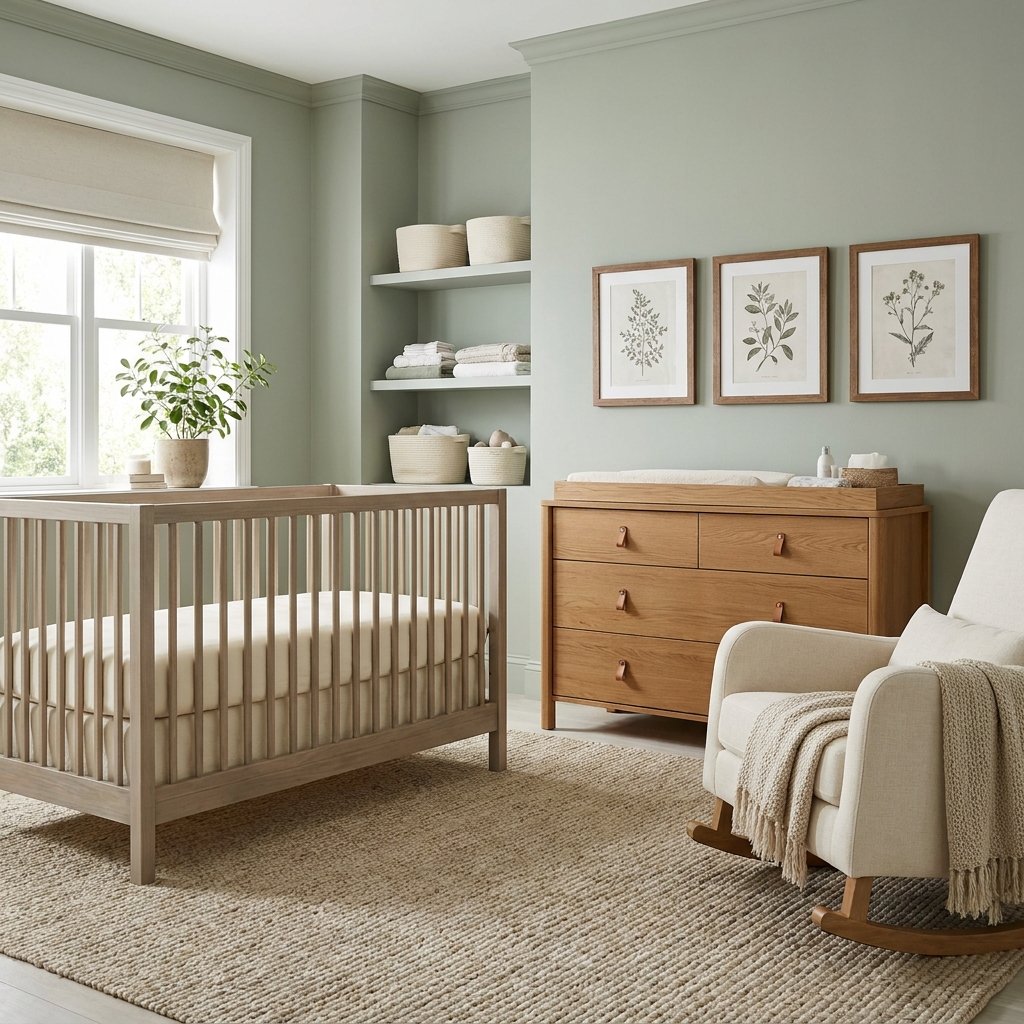
For a nursery with gentle color, Sea Salt is a popular option to sample.
Sherwin-Williams describes Sea Salt SW 6204 as a green with a cool blue undertone.
Because colors like this can shift between green and blue depending on lighting and surrounding finishes, large samples are especially important.
Pair it with:
- White
- Cream
- Light wood
- Natural woven accents
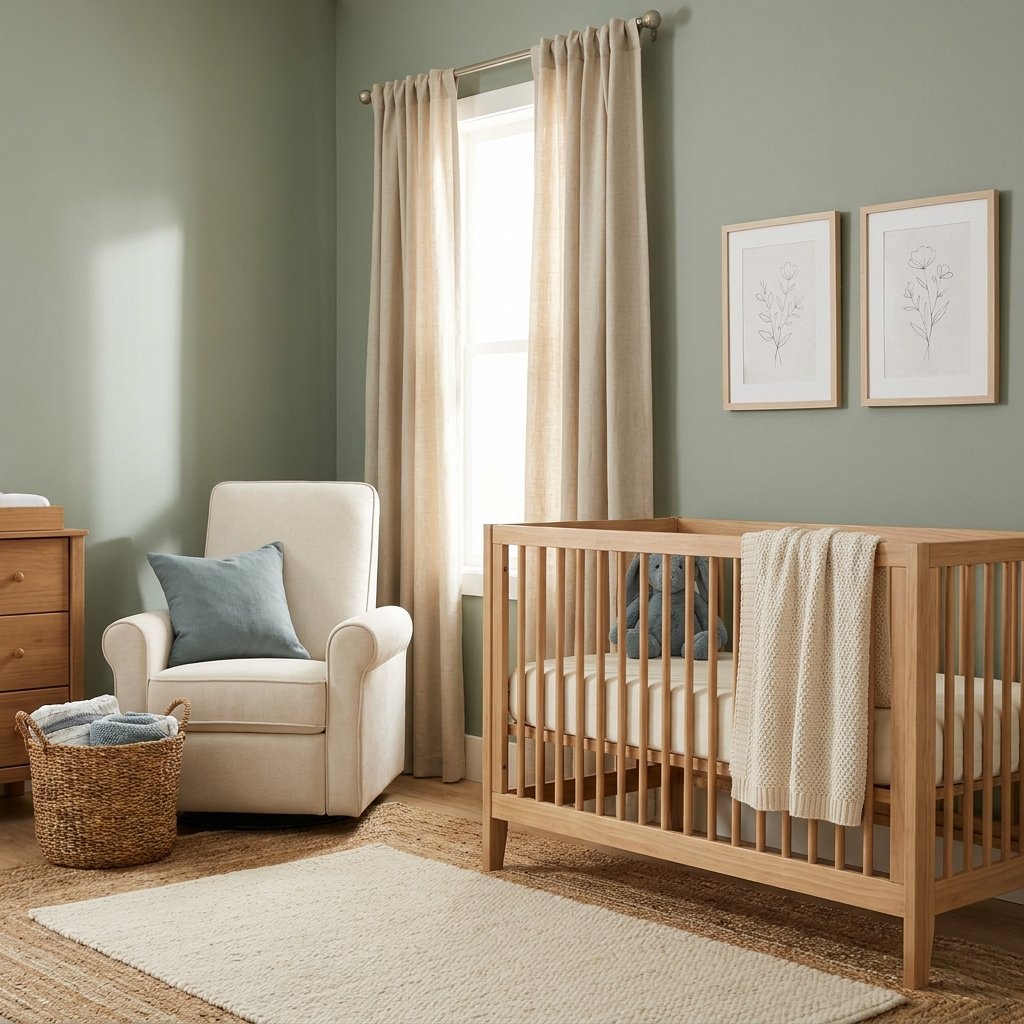
7. Benjamin Moore Saybrook Sage HC-114
Sage green can create a nursery that feels colorful without being overly bright.
Benjamin Moore describes Saybrook Sage HC-114 as a classic green with a touch of gray.
That muted quality can make sage easier to combine with natural materials.
Try it with:
- Cream
- Warm white
- Oak
- Walnut
- Tan
- Muted blue
Sage also transitions easily into an older child’s bedroom.
8. Sherwin-Williams Evergreen Fog SW 9130
For a deeper green nursery, consider Evergreen Fog.
Sherwin-Williams describes Evergreen Fog SW 9130 as a green with gray and blue influences.
Instead of using a deeper shade on every wall, you could test it on:
- One accent wall
- Board and batten
- Built-ins
- A painted dresser
Just remember that accent walls still need to coordinate with the main wall color.
9. Benjamin Moore Palladian Blue HC-144
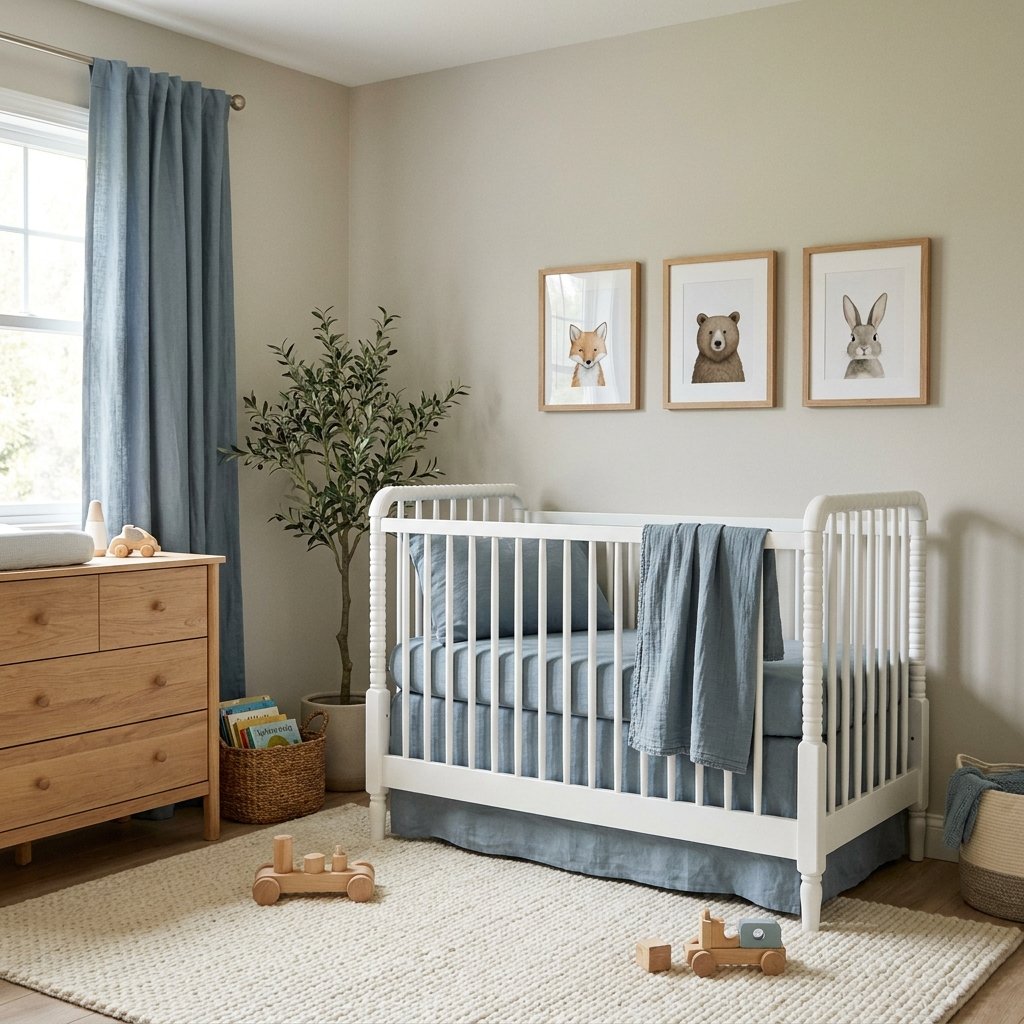
Soft blue can feel peaceful without making the nursery look heavily themed.
Benjamin Moore describes Palladian Blue HC-144 as a blue-green inspired by sea glass.
Pair it with warm neutrals to keep the room from feeling too cool.
Try:
Soft blue + cream + natural wood + woven tan
That combination can work for coastal, traditional, transitional, or simple gender-neutral nursery decor.
10. Sherwin-Williams Tradewind SW 6218
Tradewind is another blue worth testing when you want something muted.
Sherwin-Williams describes Tradewind SW 6218 as a light blue with a gray undertone.
A gray-influenced blue can create color without the intensity of a brighter baby blue.
It can pair beautifully with:
- White
- Cream
- Natural oak
- Navy accents
- Soft gray
11. Benjamin Moore First Light 2102-70
Blush can be beautiful in a nursery when you want warmth without a sugary pink effect.
Benjamin Moore describes First Light 2102-70 as a soft, airy pink.
Ground a pale pink nursery with neutral materials.
Try:
Blush + cream + warm wood + beige
or:
Blush + burgundy + cream
Natural wood furniture can make soft pink feel more sophisticated and less theme-specific.
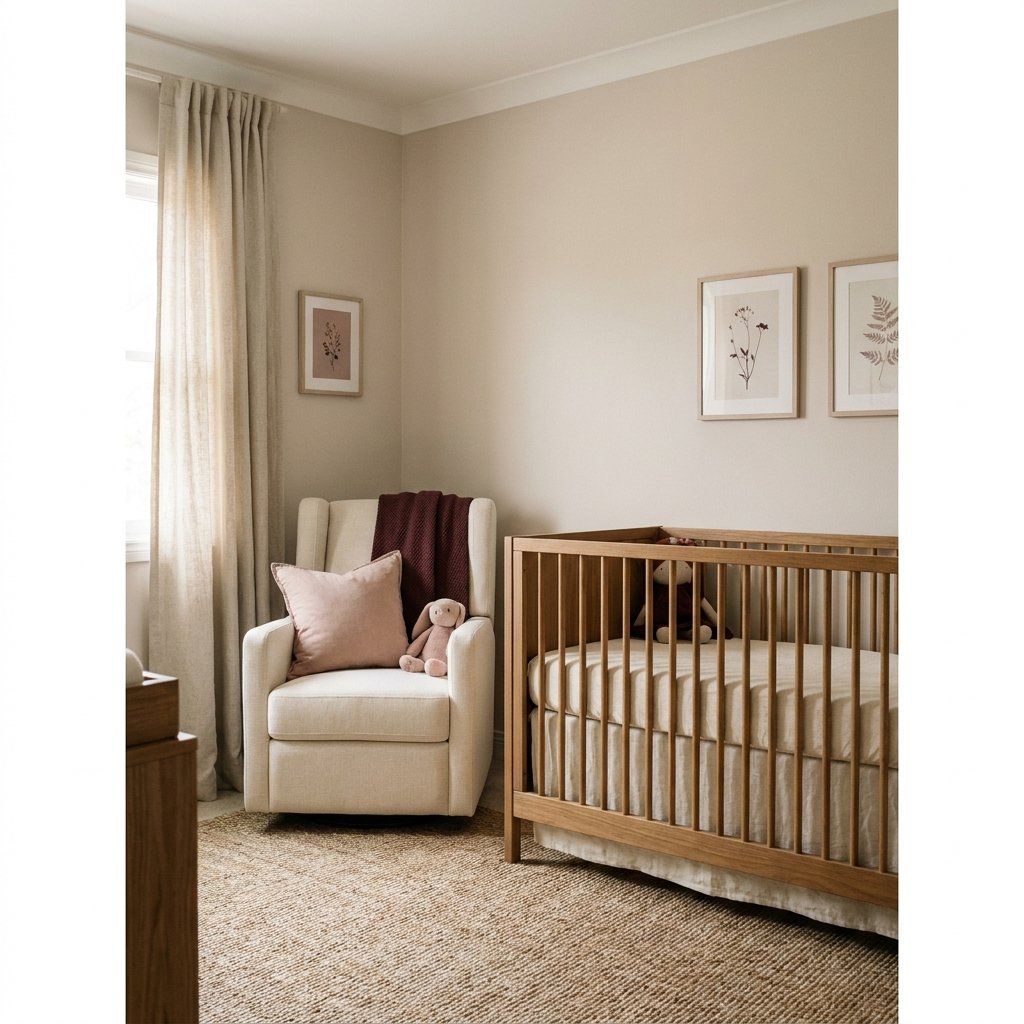
12. Benjamin Moore Pale Oak OC-20
Pale Oak is worth considering if you want a very soft neutral.
Benjamin Moore describes Pale Oak OC-20 as a versatile neutral with warm gray undertones.
It can work particularly well when white feels too plain but you still want a light, subtle room.
Use stronger color through the rug, artwork, curtains, or furniture.
13. Sherwin-Williams Accessible Beige SW 7036
For a warm nursery, don’t overlook beige.
Sherwin-Williams describes Accessible Beige SW 7036 as a warm neutral with gray undertones.
It can create a cozy backdrop for natural nursery materials such as:
- Wood
- Linen
- Woven baskets
- Cream textiles
Warm beige is particularly useful if cool grays tend to look cold or blue in your room.
14. Benjamin Moore October Mist 1495
October Mist offers another muted green direction.
Benjamin Moore describes October Mist 1495 as a gently shaded sage green.
It can create a soft nature-inspired nursery when paired with:
- Cream
- Warm white
- Light oak
- Brown
- Muted blue
For a subtle look, keep the rest of the palette restrained.
15. Sherwin-Williams Upward SW 6239
If you’re looking for a slightly clearer blue, consider sampling Upward.
Sherwin-Williams describes Upward SW 6239 as a breezy, blissful blue.
Blue doesn’t have to be reserved for a traditional boy nursery.
Combined with cream, wood, white, and woven texture, it can create a beautiful gender-neutral room.
16. Benjamin Moore Quiet Moments 1563
Quiet Moments is another blue-green option for a soft nursery palette.
Benjamin Moore describes Quiet Moments 1563 as a gentle mix of gray, green, and blue.
Colors with several undertones can change noticeably throughout the day, so compare a large sample in different parts of the room.
17. Sherwin-Williams Natural Linen SW 9109
For a nursery that feels warm and earthy, consider a beige-based neutral such as Natural Linen.
Sherwin-Williams describes Natural Linen SW 9109 as a warm neutral.
Pair it with:
- Cream
- Warm white
- Sage
- Brown
- Natural wood
This kind of palette works particularly well for an organic, nature-inspired nursery.
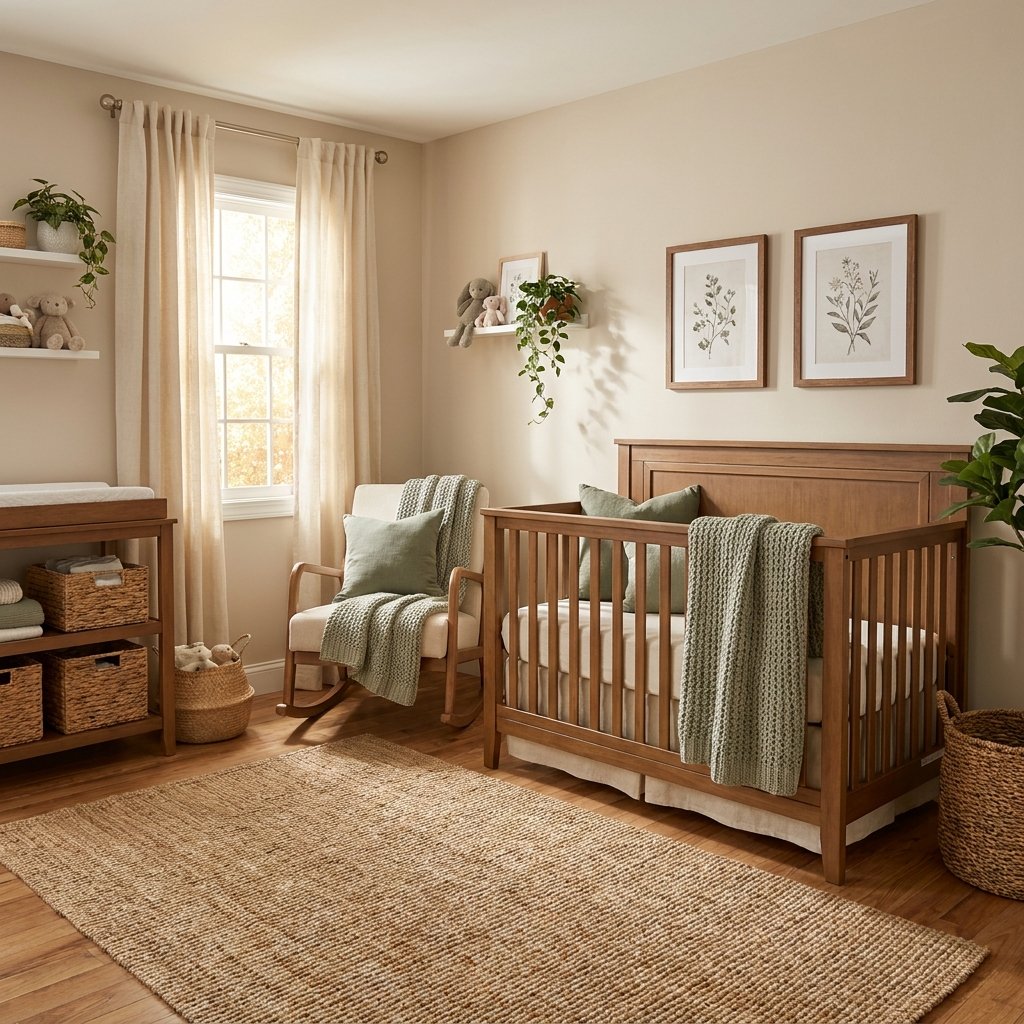
Best Gender-Neutral Nursery Paint Colors
You have plenty of options beyond white.
Consider:
- Warm white
- Greige
- Sage green
- Blue-green
- Warm beige
- Soft blue
The furniture and accessories can then shift the room in whatever direction you prefer.
For example, sage walls could be paired with natural wood and cream for a very neutral room.
Or add dusty blue, burgundy, or muted terracotta for more color.
Best Nursery Paint Colors for a Small Room
Don’t assume a small nursery has to be white.
Light colors can certainly create an airy appearance, but a small room can also look beautiful with a more saturated color.
If you want it light, consider:
- Warm white
- Pale greige
- Light blue-green
- Pale beige
If you want something cozier, try a muted sage or medium neutral.
The most important thing is creating a room you enjoy rather than following a rule that every small room must be painted as lightly as possible.
Best Nursery Colors for a Dark Room
A dark room won’t necessarily become sunny just because you paint it bright white.
In rooms with limited natural light, some whites can look dull or cool.
Try sampling:
- Warm white
- Cream
- Warm beige
- Greige
- Muted green
A slightly warmer color may feel more intentional in lower light.
Then add layered artificial lighting appropriate for the room.
Best Nursery Colors for a Bright Room
Rooms with abundant daylight give you more freedom to experiment with depth.
Consider:
- Sage
- Blue-green
- Greige
- Medium beige
- Dusty blue
Strong natural light can wash out very pale colors, so you may find that a slightly deeper shade creates more character.
Nursery Paint Colors That Grow With Your Child
If longevity is important, choose the wall color based on the room rather than the nursery theme.
Versatile choices include:
- Warm white
- Greige
- Beige
- Sage
- Muted blue
Then make the room feel like a nursery with changeable elements.
Use:
- Artwork
- Rug
- Curtains
- Mobile
- Baskets
- Decorative accessories
Later, those items can change while the wall color stays.
How to Choose Nursery Paint Based on the Crib
The crib is often one of the largest pieces of furniture in the room.
White Crib
Works with almost everything, including sage, blue, blush, beige, and greige.
Natural Wood Crib
Looks especially beautiful with warm whites, greens, soft blues, beige, and greige.
Dark Wood Crib
Can create strong contrast against warm white, light greige, or soft green.
Painted Crib
If the crib already has a distinct color, keep the wall color quieter unless you’ve tested the combination carefully.
Bring the paint sample close to the actual furniture before deciding.
Nursery Paint Colors With Light Wood Floors
Light wood flooring can work beautifully with:
- Warm white
- Greige
- Sage
- Soft blue
- Beige
Pay attention to whether the flooring reads yellow, orange, pink, gray, or neutral.
The wall color doesn’t need to match it, but the undertones should look comfortable together.
Nursery Paint Colors With Carpet
Carpet is a major color surface.
Don’t ignore it.
If the carpet is warm beige, compare it with warmer wall colors.
If the carpet is cool gray, look carefully at how warm beige paint reacts beside it.
A paint chip viewed at the store won’t tell you this.
Your room will.
How Directional Light Changes Nursery Paint
North-Facing Nursery
Cooler natural light may make some colors appear cooler or grayer.
Consider testing warmer whites, beige, greige, and muted greens.
South-Facing Nursery
Warm, abundant light can make warm paint colors look even warmer.
Test colors throughout the day.
East-Facing Nursery
The room may feel warmer and brighter in the morning and cooler later.
West-Facing Nursery
Expect stronger, warmer afternoon and evening light.
These are general tendencies rather than guarantees. Window size, landscaping, neighboring buildings, flooring, and artificial lighting can all affect how a paint color appears.
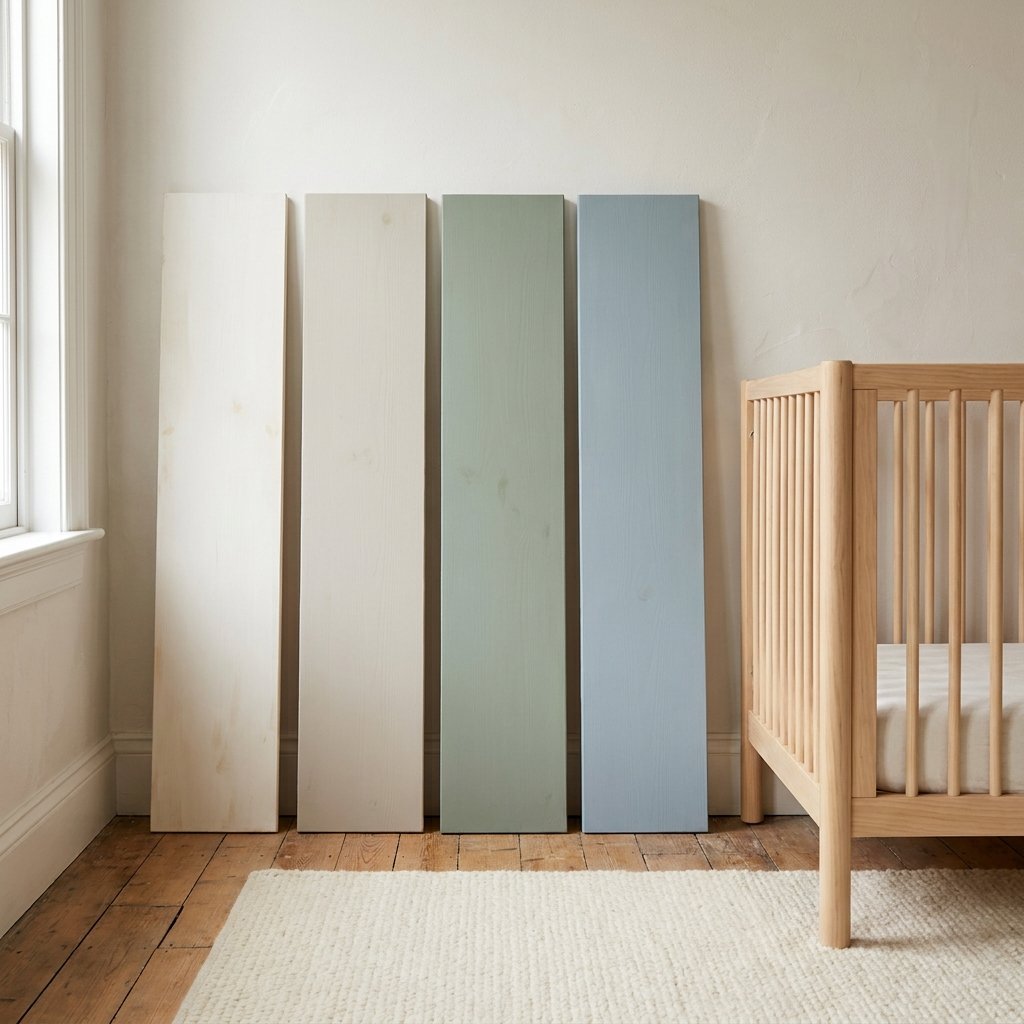
How to Test Nursery Paint Colors
Never choose the final color based only on a small paint chip or online photograph.
Narrow It Down
Choose three or four contenders.
Use Large Samples
Large samples make undertones easier to see.
Move Them Around
Look at the samples beside:
- Crib
- Floor
- Rug
- Curtains
- Trim
Check Morning and Evening
A color you love at noon may look completely different after sunset.
Turn On the Nursery Lights
Evaluate the room under the artificial lighting you’ll actually use.
Choose Last
Whenever possible, compare paint with the room’s important fixed finishes before buying enough for the whole room.
Nursery Paint and Safety Tips
Painting a nursery deserves a little extra planning.
Sherwin-Williams recommends looking for low- or zero-VOC paint options for nurseries and also advises allowing time for paint to dry and the room to air out before the baby uses the space.
For a safer, smoother project:
- Follow the paint manufacturer’s current application, ventilation, drying, and curing instructions.
- Ventilate the room appropriately during and after painting.
- Follow product directions for primers, cleaners, and other preparation products.
- Keep children away from the work area, wet paint, tools, and supplies.
- Store leftover paint and chemicals securely.
- If you’re disturbing old painted surfaces in an older home, don’t assume the existing coating is safe. Follow applicable guidance for potential lead-based paint and seek qualified help where appropriate.
- Don’t place furniture against freshly painted walls until the coating is ready according to the manufacturer’s instructions.
- Secure tall nursery furniture appropriately according to its manufacturer’s instructions.
- Follow current safe-sleep guidance when arranging the crib and items around it.
Paint is only one part of creating a nursery, so don’t let decorating choices interfere with safe furniture placement or everyday function.
Common Nursery Paint Color Mistakes
Choosing From a Phone Screen
Screens cannot reliably reproduce exact paint colors.
Choosing Paint Before Looking at the Flooring
Flooring can strongly influence how a neutral appears.
Assuming All Whites Are the Same
Some whites are warm, some are cool, and some can reveal unexpected undertones beside other materials.
Choosing a Color Because It’s Popular
A popular paint color can still look wrong in your room.
Testing Only One Wall
Lighting changes around the room.
Forgetting About Nighttime
You’ll spend plenty of time in the nursery when natural light is gone.
Making Everything Match the Nursery Theme
A versatile wall color usually gives you more decorating freedom.
Painting Before Testing
A large sample costs far less effort than repainting an entire room.
FAQ About the Best Nursery Paint Colors
What are the best nursery paint colors?
Warm whites, greiges, soft greens, muted blues, warm beige, and gentle pinks can all work beautifully. The best choice depends on your nursery’s lighting, flooring, furniture, and overall palette.
What is the best gender-neutral nursery color?
Sage green, warm white, greige, beige, and muted blue-green are versatile gender-neutral options.
What nursery paint colors are calming?
Soft, muted colors such as warm white, sage, blue-green, pale blue, greige, and beige can create a visually quiet palette. How a room feels also depends on lighting, contrast, furnishings, and clutter—not simply the wall color.
Is sage green good for a nursery?
Yes. Muted sage pairs beautifully with white, cream, natural wood, beige, and other earthy tones and can transition easily into an older child’s room.
Is beige good for a nursery?
Yes. Warm beige can create a cozy neutral backdrop, especially with natural wood, cream fabrics, and woven textures.
What paint color makes a small nursery look bigger?
Light warm whites, pale greiges, and subtle blue-greens can create an airy appearance, but you don’t have to avoid deeper colors in a small nursery if you prefer a cozier look.
Should the nursery be painted before buying furniture?
If possible, choose your major fixed pieces and compare paint samples with them before making the final paint decision. It’s much easier to coordinate paint with a crib, flooring, rug, or dresser when you can see the colors together.
Should nursery paint be low VOC?
When choosing paint for a nursery, consider lower-VOC or zero-VOC options and follow the manufacturer’s ventilation, drying, and curing instructions. Sherwin-Williams specifically recommends looking for low- or zero-VOC options in its nursery guidance.
Final Thoughts
The best nursery paint colors aren’t necessarily traditional baby colors.
They’re colors that make the room feel comfortable now while giving you enough flexibility to change the decor later.
For a bright, timeless nursery, start with warm whites such as White Dove or Alabaster.
If you want a little more warmth and depth, sample greige and beige options such as Agreeable Gray, Edgecomb Gray, Pale Oak, Accessible Beige, or Natural Linen.
For color, muted greens and blue-greens such as Saybrook Sage, October Mist, Sea Salt, and Quiet Moments can create a beautiful nature-inspired backdrop.
And if you love blue or blush, don’t be afraid to use them. The key is balancing them with natural wood, cream, white, and other quiet neutrals.
Whatever colors make your shortlist, test them in the actual nursery.
Look at them next to the crib.
Compare them with the floor.
Check them in morning sunlight and under the lights you’ll use at night.
A nursery paint color doesn’t need to win a popularity contest.
It needs to work beautifully in your room—and create a flexible backdrop for all the little changes that room will go through in the years ahead.