

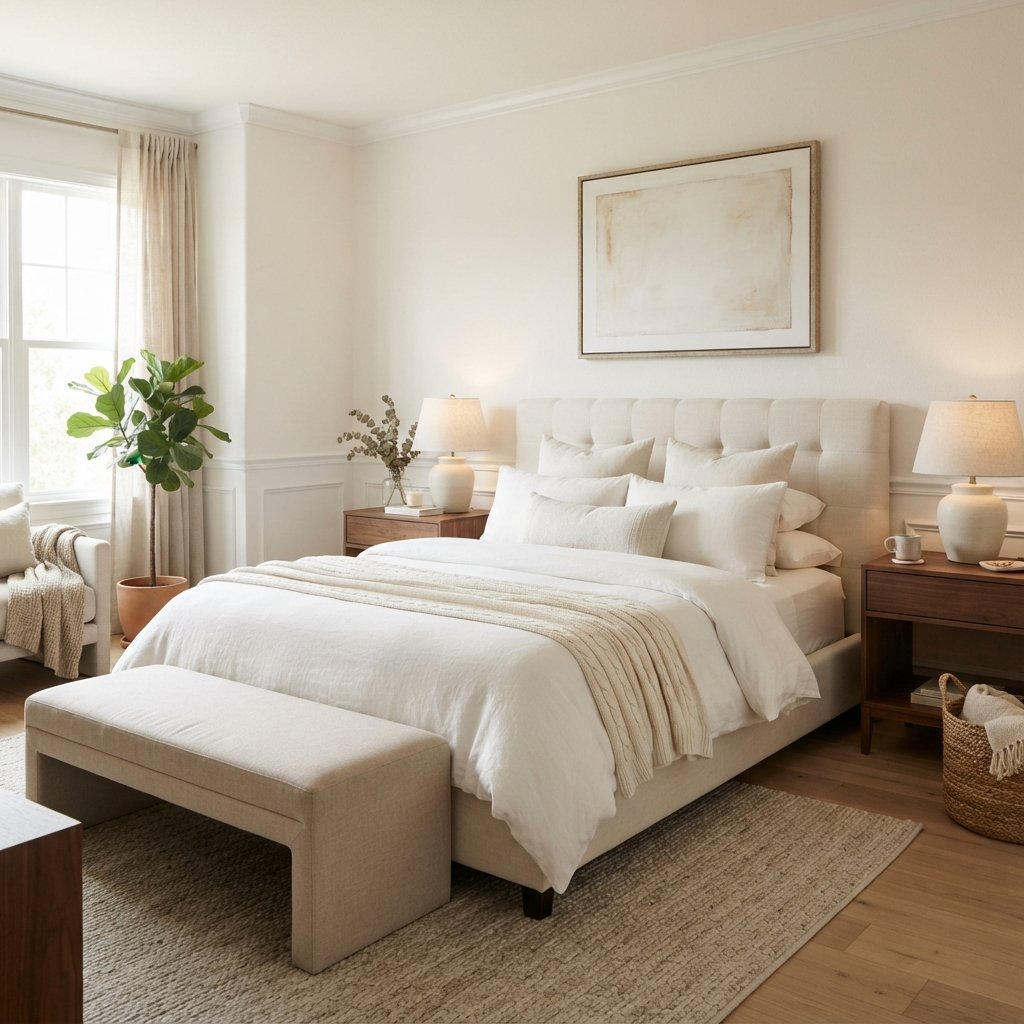
Choosing white paint sounds easy—until you bring home a handful of white paint samples and realize they all look completely different.
One white may look warm and creamy. Another can suddenly appear gray, blue, yellow, or even slightly pink once it’s on your walls.
That’s because white paint is heavily influenced by undertones, natural light, artificial lighting, flooring, furniture, countertops, and the other fixed finishes in your home.
The best white paint colors for walls aren’t necessarily the brightest whites. They’re the whites that coordinate with your home’s existing finishes and create the atmosphere you want.
A warm white can soften a room filled with wood and beige. A cleaner white may complement a more modern palette. A slightly muted white can provide a softer alternative when a crisp white feels too stark.
Below are 17 popular white and off-white paint colors from Sherwin-Williams and Benjamin Moore to consider, plus practical advice for choosing the right white for your lighting, trim, flooring, and room.
Why Is Choosing White Paint So Difficult?
White is especially sensitive to its surroundings.
A sample that looks perfectly neutral in a paint store can look completely different once it’s next to:
- Warm wood flooring
- Gray tile
- Cream cabinets
- White trim
- Colorful furniture
- Stone
- Carpet
Lighting makes an equally large difference.
A room with cool daylight may reveal undertones that weren’t obvious elsewhere, while warm artificial lighting can make the same white appear creamier.
That’s why you should never choose white paint solely from a small paper chip or an online image.
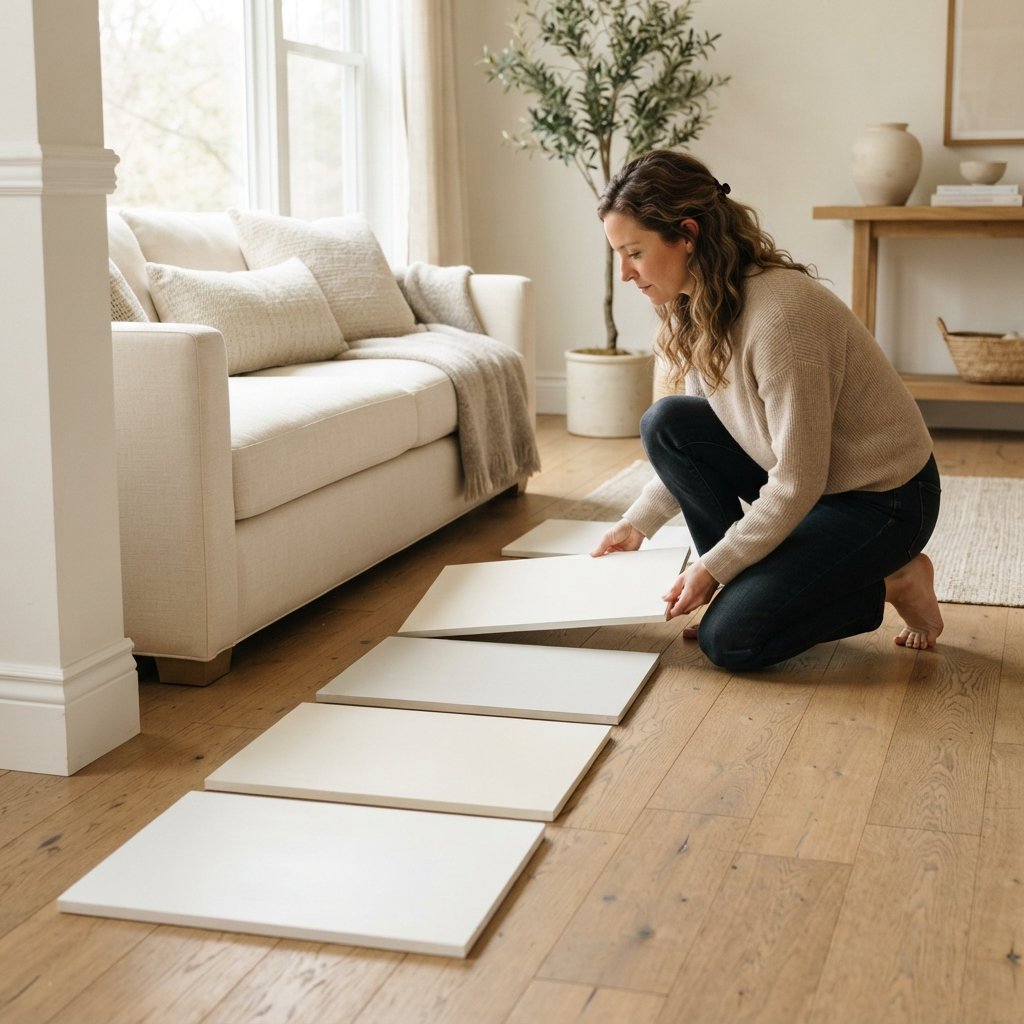
Use actual samples in the room.
Warm White vs. Cool White
Before comparing individual colors, it helps to decide whether your home needs a warmer or cooler direction.
Warm Whites
Warm whites may contain undertones that read creamy, beige, yellow, or subtly red depending on the paint and surroundings.
They often coordinate well with:
- Warm wood
- Cream
- Beige
- Brown
- Warm stone
- Brass
Cooler Whites
Cooler whites may lean more toward gray or blue.
They can work well with:
- Cool gray
- Blue
- Crisp black
- Cool stone
- Some modern finishes
Soft or Muted Whites
Some whites fall between these extremes.
They aren’t extremely creamy or icy.
These slightly softened whites are often easier to use across an entire home because they don’t feel as stark as a very bright white.
1. Benjamin Moore White Dove OC-17
White Dove is a popular soft white worth considering if you want something warmer and gentler than a stark white.
It can work beautifully with:
- Warm wood
- Beige
- Greige
- Soft green
- Natural materials
White Dove is particularly appealing in homes where an extremely crisp white might feel disconnected from warmer finishes.
Consider it for living rooms, bedrooms, dining rooms, and other spaces where you want a comfortable, classic backdrop.
2. Sherwin-Williams Alabaster SW 7008
Alabaster is another well-known warm white.
It creates a soft appearance that can work nicely in traditional, transitional, farmhouse, and warm modern interiors.
Try it alongside:
- Medium wood tones
- Cream
- Taupe
- Warm beige
- Muted green
If your room receives warm light or already contains creamy materials, test carefully to make sure the overall result doesn’t become warmer than you want.
3. Benjamin Moore Simply White OC-117
Simply White is useful when you want a relatively clean white that still has warmth.
It can create a brighter look than some of the softer, more muted off-whites on this list.
Consider it with:
- Light wood
- Medium wood
- Black accents
- Warm neutrals
- Colorful artwork
As with every white, sample it beside the room’s fixed finishes.
4. Sherwin-Williams Pure White SW 7005
Pure White is a versatile white to consider when you want something relatively clean without immediately jumping to an extremely stark white.
It can work in a range of decorating styles, including:
- Transitional
- Modern
- Contemporary
- Farmhouse
It’s also worth testing when you want white walls but need them to coordinate with both warm and cool elements.
5. Benjamin Moore Chantilly Lace OC-65
Chantilly Lace is often considered when a cleaner, brighter white is the goal.
It can create a crisp backdrop for:
- Black
- Saturated colors
- Modern furniture
- Clean-lined interiors
A bright white can be striking, but don’t assume it’s automatically right for a dark room.
A room’s available light and surrounding finishes still determine how the color feels.
6. Sherwin-Williams Greek Villa SW 7551
Greek Villa is a warm, welcoming off-white.
It’s worth sampling if you like the softness of creamier whites but don’t necessarily want your walls to read obviously beige.
It can pair nicely with:
- Warm wood
- Taupe
- Beige
- Olive
- Natural textiles
Greek Villa can be especially appealing in relaxed, traditional, organic, or warm modern interiors.
7. Benjamin Moore Swiss Coffee OC-45
Swiss Coffee is a soft, warm off-white.
It can provide more warmth than a crisp white, making it useful in rooms with earthy finishes.
Try it alongside:
- Wood floors
- Warm stone
- Cream textiles
- Brown
- Muted green
If your fixed finishes already contain strong yellow or creamy tones, sampling becomes particularly important.
8. Sherwin-Williams Snowbound SW 7004
Snowbound is a softer white that can show subtle complexity depending on its surroundings.
It may work well when you want something that doesn’t feel excessively creamy but also isn’t a stark, ultra-bright white.
Because subtle undertones can become more noticeable beside other whites and fixed materials, compare a large sample directly with your flooring, cabinetry, and trim.
9. Benjamin Moore Cloud White OC-130
Cloud White is another warmer white to consider for comfortable, traditional spaces.
It can complement:
- Warm wood
- Cream upholstery
- Beige
- Warm metals
- Natural stone
If you want your white walls to feel soft rather than crisp, add Cloud White to your sample list.
10. Sherwin-Williams Shoji White SW 7042
Shoji White moves farther into off-white territory.
It’s more muted than a clean white and can work beautifully when bright whites feel too stark.
Consider it in rooms featuring:
- Warm wood
- Natural linen
- Taupe
- Mushroom
- Earthy green
Shoji White can be a useful bridge between white and greige.
If you want walls that clearly look bright white, however, you may prefer another option.
11. Benjamin Moore Seapearl OC-19
Seapearl is a soft off-white that can create a subtle, sophisticated backdrop.
It’s worth exploring if you prefer muted neutrals over brighter whites.
Pair it with materials such as:
- Natural wood
- Warm gray
- Greige
- Soft black
- Muted green
Its understated quality can work especially well in layered neutral interiors.
12. Sherwin-Williams White Duck SW 7010
White Duck is another muted off-white.
It can be useful when your home’s finishes make crisp whites look disconnected or overly bright.
Try it with:
- Wood
- Beige
- Taupe
- Warm stone
- Earthy colors
White Duck can create the light appearance people often want from white walls while providing more depth than a very bright white.
13. Benjamin Moore Decorator’s White CC-20
Decorator’s White is worth testing if you’re looking for a cleaner white direction that doesn’t have the same creamy quality as warmer off-whites.
It can suit spaces with:
- Gray
- Black
- Blue
- Cooler stone
- Modern furnishings
But cooler isn’t automatically better for modern rooms.
Always compare the paint with your actual flooring, furniture, countertops, and lighting.
14. Sherwin-Williams Extra White SW 7006
Extra White is another option to explore when you’re considering a cleaner white.
It can work with crisp contemporary palettes, but it should be sampled carefully in rooms dominated by warm beige, cream, or yellow-toned finishes.
A white that looks beautifully clean in one house can feel too cool in another.
15. Benjamin Moore Pale Oak OC-20
Pale Oak isn’t a traditional bright white.
It’s a light, soft neutral that moves toward greige.
So why include it?
Because sometimes the solution to finding the perfect white wall color is realizing that you don’t actually want white.
If every white sample feels stark, Pale Oak is an example of the type of light neutral worth exploring.
It can provide contrast with white trim while still keeping a room feeling light.
16. Sherwin-Williams Drift of Mist SW 9166
Drift of Mist is another light neutral rather than a true white.
It’s worth considering when you want a soft wall color with more depth than an off-white.
It can work particularly well when white trim needs to remain visibly distinct from the walls.
Try it with:
- White trim
- Natural wood
- Greige
- Black
- Muted green
17. Benjamin Moore Classic Gray OC-23
Despite its name, Classic Gray is another very light neutral that may appeal to homeowners searching for white walls.
It provides more visible depth than a bright white and can create a soft backdrop in rooms where stark white feels unfinished.
Like Pale Oak and Drift of Mist, it’s useful as a comparison color.
Sometimes putting a very light neutral beside your white samples makes it immediately obvious which direction you actually prefer.
Best Warm White Paint Colors for Walls
If you want warmth, start by sampling colors such as:
- Benjamin Moore White Dove
- Sherwin-Williams Alabaster
- Sherwin-Williams Greek Villa
- Benjamin Moore Swiss Coffee
- Benjamin Moore Cloud White
These can be particularly attractive with natural wood and warm neutral interiors.
But remember that “warm” doesn’t mean identical.
Each paint interacts differently with its surroundings.
Best Clean White Paint Colors for Walls
For a cleaner direction, consider sampling:
- Benjamin Moore Chantilly Lace
- Benjamin Moore Simply White
- Sherwin-Williams Pure White
- Sherwin-Williams Extra White
- Benjamin Moore Decorator’s White
Place these beside your permanent finishes before choosing.
A clean white that works with cool stone might look too sharp beside creamy tile.
Best Off-White Paint Colors for Walls
If bright white feels too stark, explore:
- Sherwin-Williams Shoji White
- Sherwin-Williams White Duck
- Benjamin Moore Seapearl
- Sherwin-Williams Greek Villa
Off-whites can provide a softer transition between white and deeper neutral finishes.
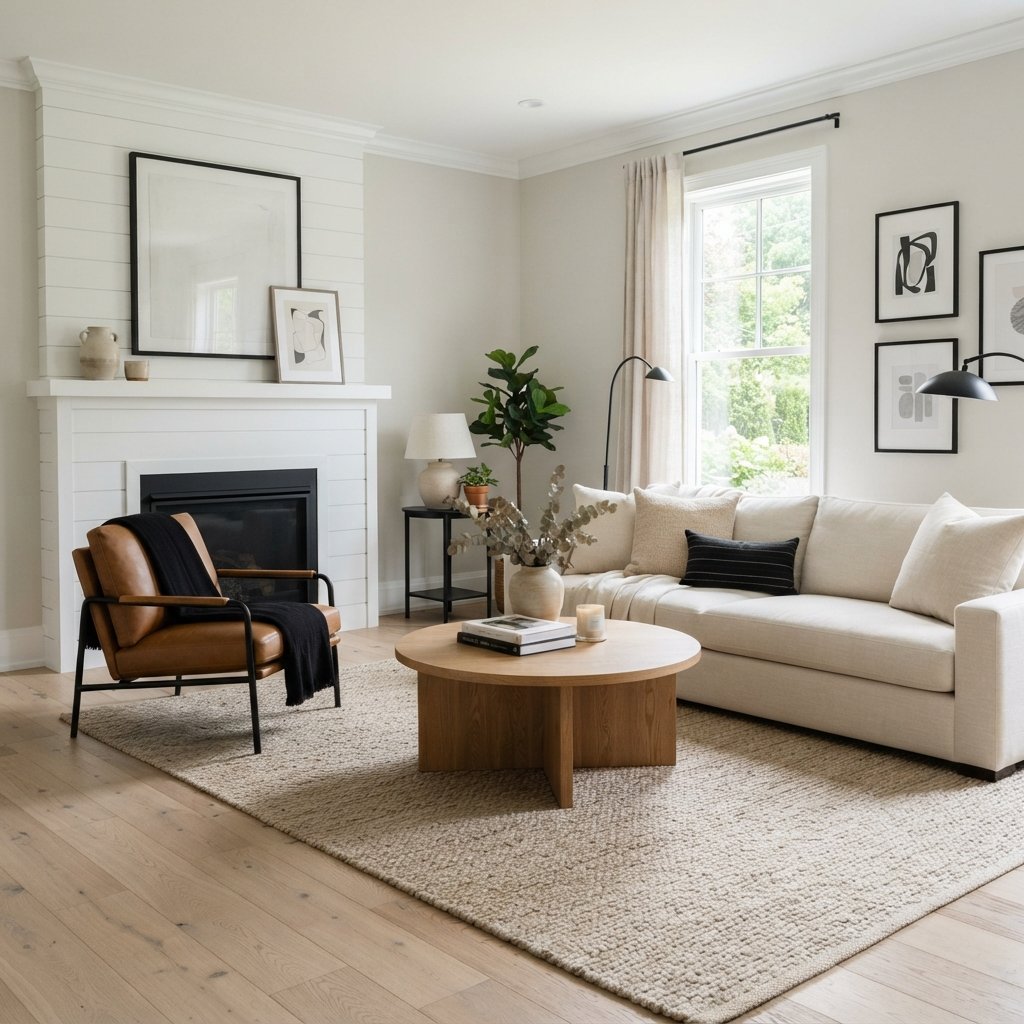
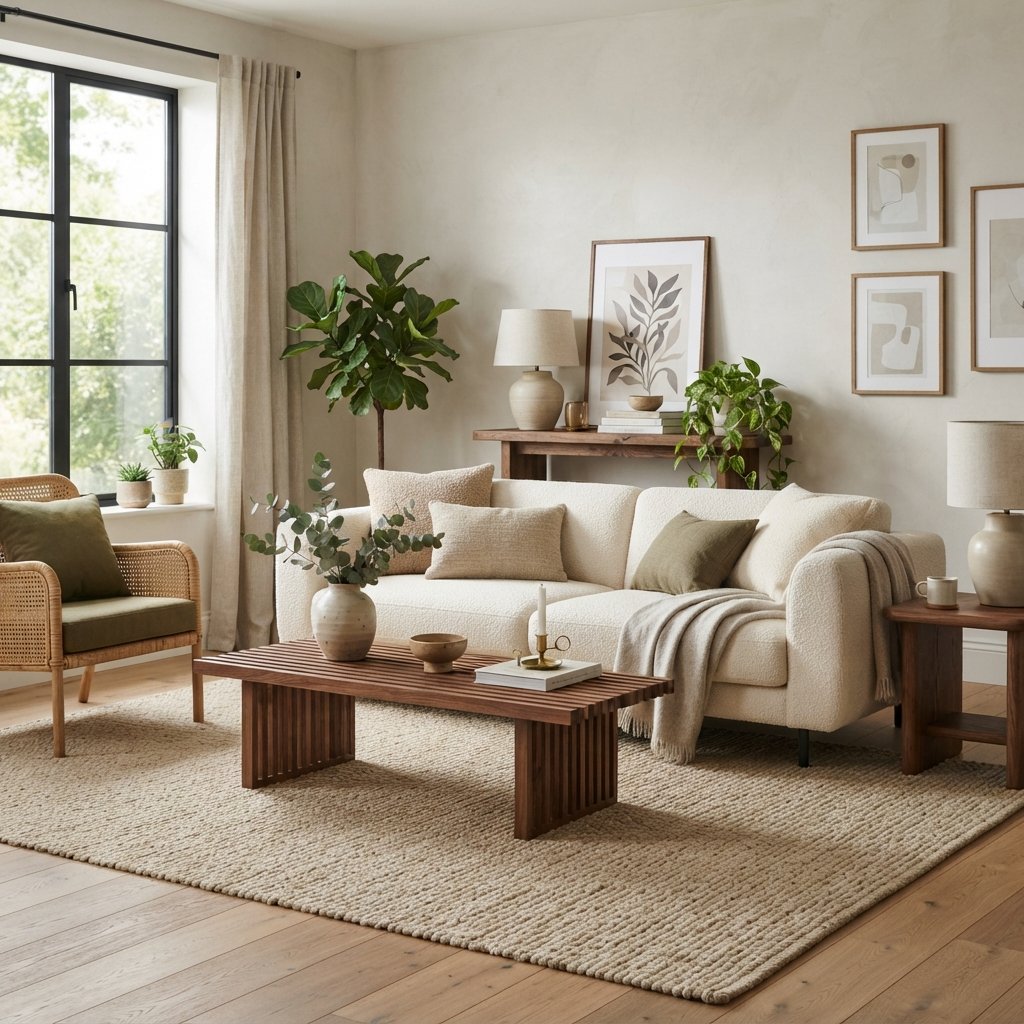
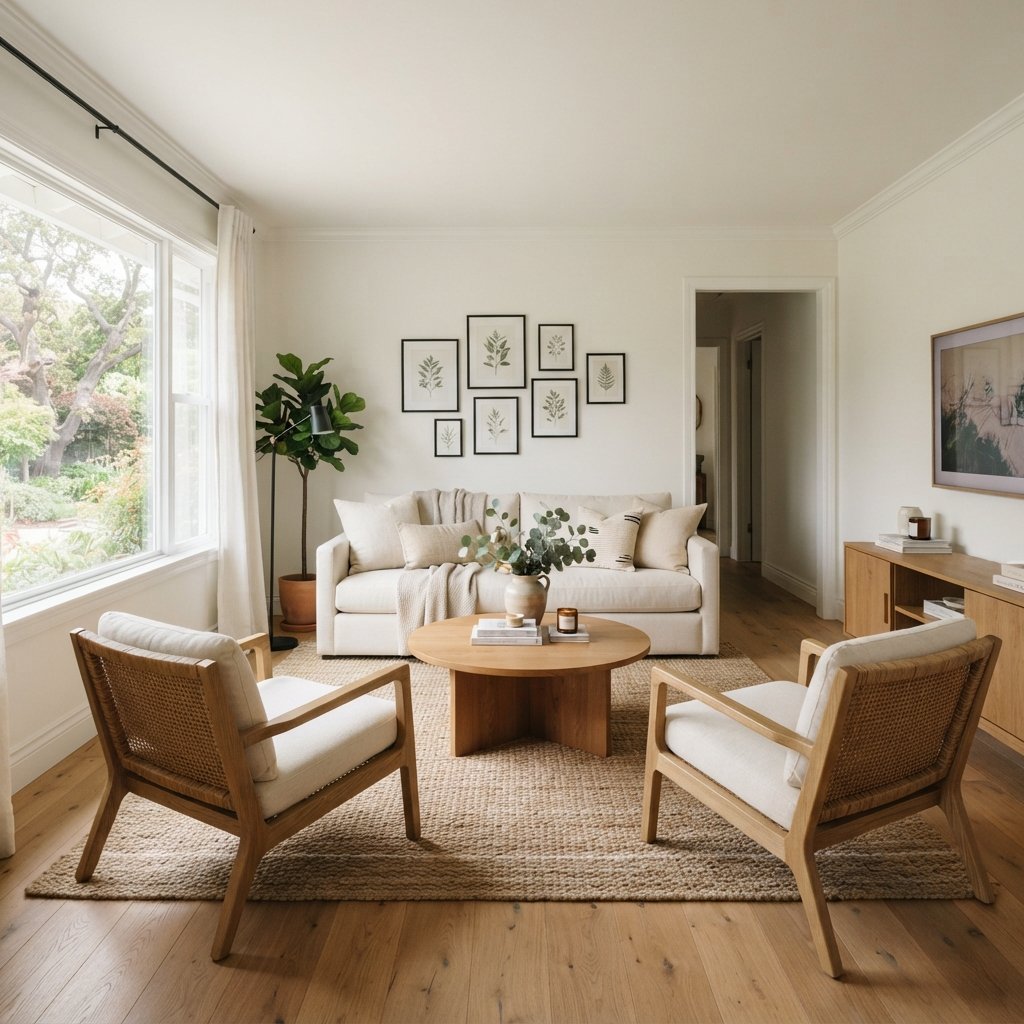
Best White Paint Colors for a Living Room
Living rooms often contain a large variety of materials.
Look at:
- Sofa
- Rug
- Flooring
- Fireplace
- Curtains
- Adjacent rooms
If these elements are predominantly warm, begin with warm or softened whites.
If your living room has cooler finishes and strong contrast, a cleaner white may be worth testing.
Don’t choose the paint before considering the room’s largest fixed surfaces.
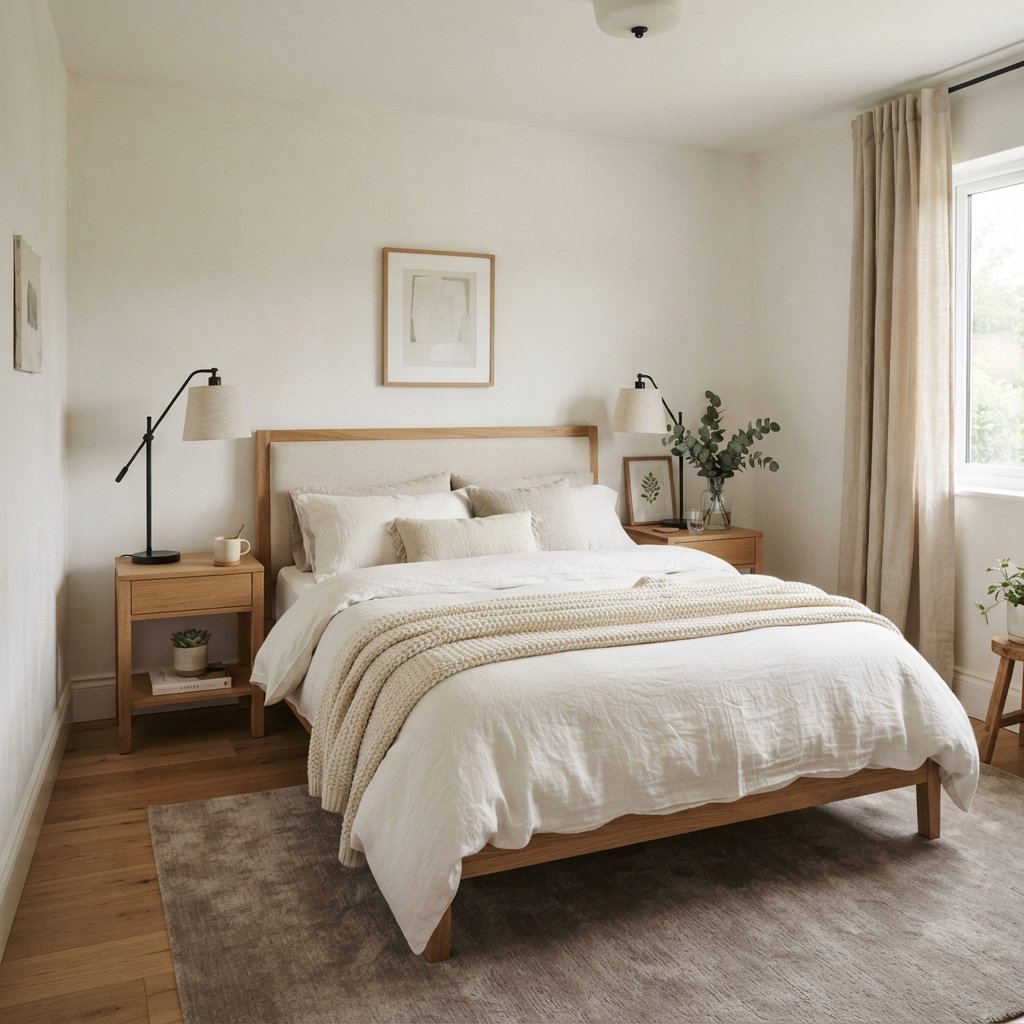
Best White Paint Colors for a Bedroom
Bedrooms often benefit from softer whites.
Consider the relationship between the walls and:
- Bedding
- Headboard
- Carpet
- Wood furniture
- Curtains
White Dove, Alabaster, Greek Villa, Cloud White, and similar warm or softened whites are useful starting points if you want a cozy atmosphere.
For a cleaner, more modern bedroom, compare options such as Pure White or Chantilly Lace.
Best White Paint Colors for a Kitchen
Kitchen whites require extra care because so many permanent finishes sit directly beside the walls.
Compare your paint samples with:
- Cabinets
- Countertops
- Backsplash
- Flooring
- Appliances
If you have white cabinets, don’t assume any white wall paint will match.
Two whites with different undertones can make each other look surprisingly yellow, gray, blue, or dingy.
If matching isn’t realistic, intentional contrast may look better.
Best White Paint Colors With White Cabinets
First identify the cabinet white if possible.
If you’re painting both walls and cabinets, using the same white in different appropriate finishes can create a cohesive look.
If the cabinets are already installed, bring wall samples directly beside them.
Don’t compare from across the room.
Look at them together under both daylight and your normal artificial lighting.
Best White Paint Colors With Wood Floors
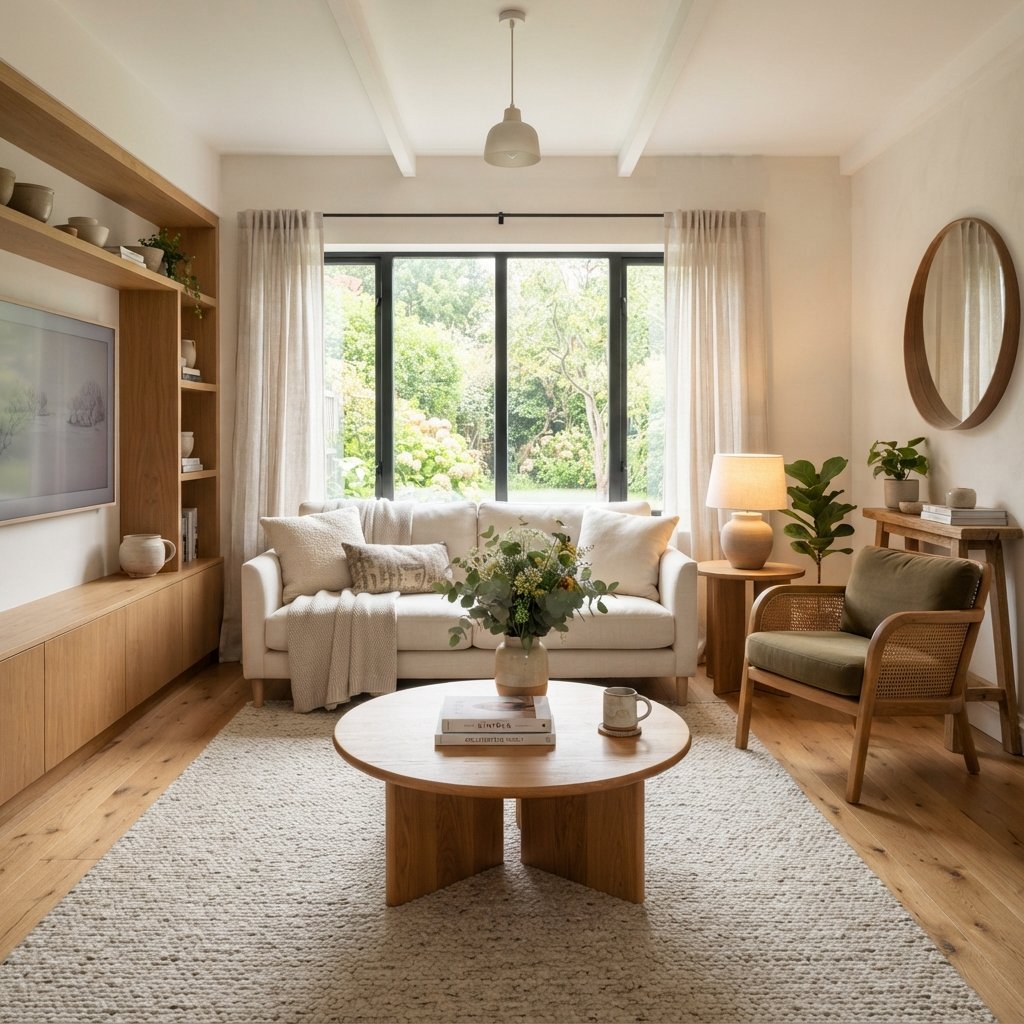
Wood floors usually bring warmth into a room.
Warm and softened whites often complement them beautifully.
But the wood species and finish matter.
Orange-toned wood, pale white oak, dark walnut, and red-toned wood don’t interact with white in the same way.
Instead of trying to “cancel out” your flooring’s undertone, look for a white that works harmoniously with it.
Best White Paint Colors for North-Facing Rooms
North-facing rooms often receive cooler, more indirect natural light in the Northern Hemisphere.
Some whites can therefore appear cooler or grayer than expected.
A warmer or softer white may help create balance.
But don’t automatically choose the creamiest white available.
Flooring, furnishings, location, window exposure, and artificial lighting all affect the final result.
Sample first.
Best White Paint Colors for South-Facing Rooms
South-facing rooms in the Northern Hemisphere often receive warmer and stronger daylight for significant portions of the day.
Warm whites may become noticeably warmer in that light.
Cleaner or slightly more neutral whites may provide balance if you don’t want a creamy appearance.
Again, actual light exposure varies by location, season, windows, and obstructions.
Best White Paint Colors for East-Facing Rooms
East-facing rooms tend to receive stronger morning light and change character later in the day.
A white may look warmer early and more subdued later.
Check samples at several times.
Don’t choose based only on how the room looks at breakfast.
Best White Paint Colors for West-Facing Rooms
West-facing rooms often become much warmer as afternoon and evening sunlight enters.
A creamy white may look significantly warmer during that period.
If that isn’t the look you want, compare it with a cleaner or more muted alternative.
Should White Walls and Trim Be the Same Color?
They can be.
Using the same white on the walls and trim can simplify undertone coordination.
Create subtle contrast with appropriate sheen differences.
For example, depending on the products and surfaces, you might use:
Lower-sheen white walls + more durable trim coating in the same color
Alternatively, use a softer off-white on the walls with cleaner white trim to create visible definition.
Both approaches can work.
What Paint Finish Is Best for White Walls?
The best finish depends on the room, surface, and specific paint product.
Common wall options include:
- Matte
- Eggshell
- Satin
Matte creates a softer appearance.
Eggshell introduces subtle sheen.
Satin generally reflects more light.
Don’t assume sheen alone determines durability. Modern paint performance varies considerably by product.
For kitchens, bathrooms, hallways, and other demanding spaces, check the manufacturer’s washability and intended-use recommendations.
Why Does My White Paint Look Yellow?
Possible causes include:
- Warm undertones
- Warm artificial lighting
- Warm sunlight
- Wood reflections
- Beige surroundings
- Comparison with a cooler white
Before rejecting the color, evaluate what’s influencing it.
Why Does My White Paint Look Blue?
A white can look cooler because of:
- Its undertones
- Cool natural light
- Blue outdoor reflections
- Cool LED lighting
- Gray or blue nearby finishes
This is particularly noticeable when a cooler white is placed beside cream or beige.
Why Does My White Paint Look Gray?
White may appear gray when:
- The room receives limited light.
- The paint is a muted white.
- Nearby finishes are brighter.
- The natural light is cool.
- The room contains lots of gray.
Remember: white paint doesn’t create light.
If a room is naturally dark, painting it bright white won’t automatically make it sunny.
Should You Paint a Dark Room White?
You can, but white isn’t the only answer.
A dark room may make a white paint look dull or shadowy because there isn’t enough light available to reflect.
Sometimes a soft off-white or light neutral creates a more intentional look.
In other situations, embracing a deeper color may work beautifully.
Choose based on the atmosphere you want rather than assuming white will fix poor natural light.
How to Test White Paint Colors Correctly
White paint should always be sampled before you commit.
Step 1: Narrow Your Choices
Choose several whites with different undertones.
For example:
- One warm white
- One softer neutral white
- One cleaner white
- One light neutral
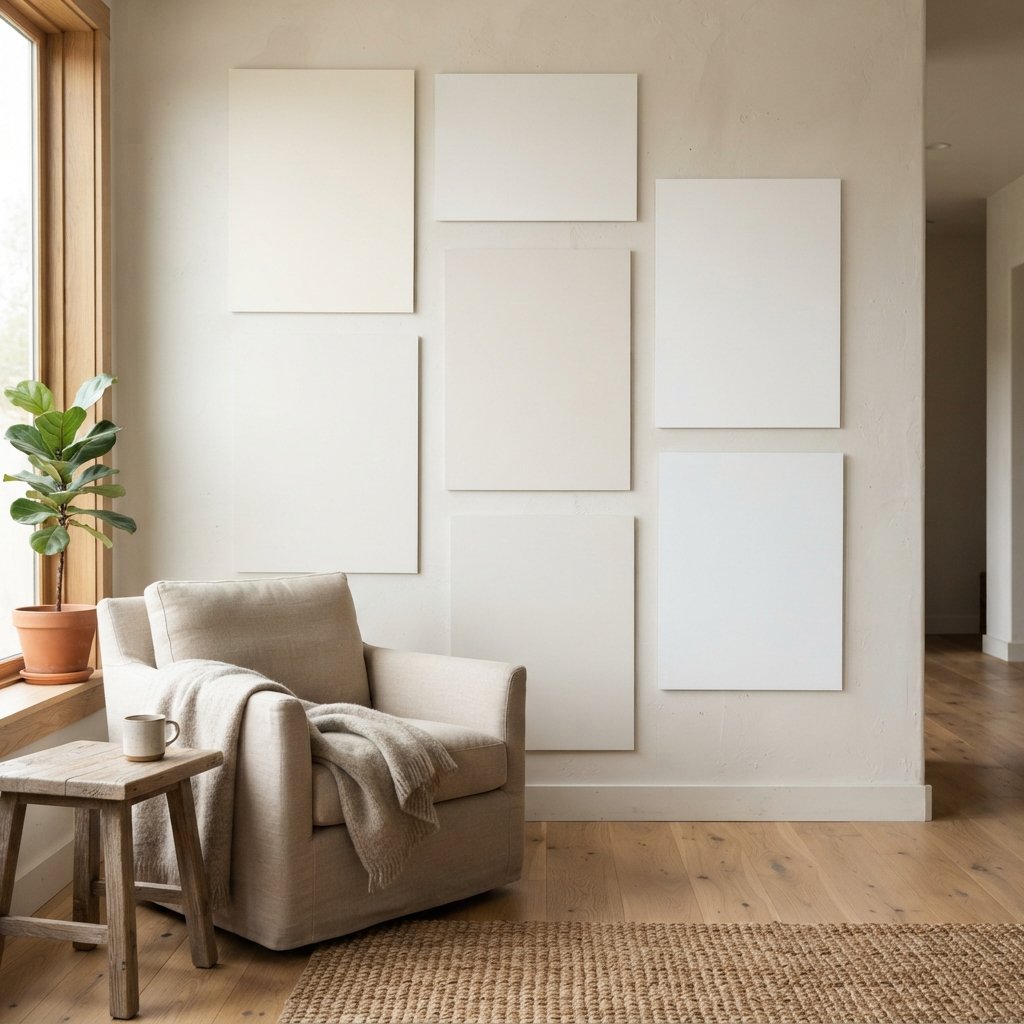
Step 2: Use Large Samples
Tiny chips make subtle undertones difficult to judge.
Use large painted sample boards or another manufacturer-approved sampling method.
Step 3: Keep the Samples Separate
Don’t place ten white samples directly touching one another if you’re trying to imagine the final room.
Comparing whites side by side can exaggerate their undertones.
Evaluate each against the room’s actual finishes too.
Step 4: Check Fixed Materials
Move the samples beside:
- Flooring
- Cabinets
- Countertops
- Tile
- Fireplace
- Upholstery
Step 5: Check Throughout the Day
Look in:
- Morning
- Midday
- Afternoon
- Evening
Step 6: Turn on Your Lights
Artificial lighting can change white dramatically.
Evaluate the samples under the bulbs you actually use.
Common Mistakes When Choosing White Paint
Choosing From a Tiny Paint Chip
Small samples don’t provide enough context.
Picking the Brightest White Automatically
Brighter isn’t always better.
Ignoring Fixed Finishes
Flooring and countertops can dramatically affect white.
Matching Whites by Name
Two paints described as “white” may look completely different together.
Forgetting Artificial Lighting
You’ll see your walls at night too.
Copying a White From Someone Else’s House
Different lighting and finishes can change it dramatically.
Using Online Photos as Exact Color References
Screens, photography, editing, and lighting can alter paint appearance.
Testing Only One White
Comparison helps you recognize undertones.
Assuming White Will Brighten Every Dark Room
Paint can only reflect the light that’s available.
A Simple Way to Narrow Down White Paint Colors
If you’re overwhelmed, start with your fixed finishes.
Warm Wood + Beige + Cream
Explore warm or softened whites.
Black + Cool Gray + Crisp Stone
Explore cleaner whites.
Mixed Warm and Cool Finishes
Begin with versatile, softened whites and compare them carefully.
White Cabinets
Use the cabinet color as your starting point.
Nothing Looks Right
Try a very light neutral instead of white.
Sometimes the best “white” for your room isn’t actually white.
FAQ About the Best White Paint Colors for Walls
What is the best white paint color for walls?
There isn’t one white that works in every home. White Dove, Alabaster, Pure White, Simply White, Chantilly Lace, and Greek Villa are useful colors to sample, but the best choice depends on your lighting and fixed finishes.
What is a good warm white paint color?
Benjamin Moore White Dove, Sherwin-Williams Alabaster, Sherwin-Williams Greek Villa, Benjamin Moore Swiss Coffee, and Benjamin Moore Cloud White are popular warmer options worth sampling.
What white paint doesn’t look yellow?
A cleaner or more neutral white may show less obvious warmth than a creamy off-white, but every white is affected by lighting and surrounding materials. Test samples in your room rather than relying on the color name.
What white paint works with wood floors?
Warm and softened whites often pair naturally with wood, but the wood’s undertone matters. Compare samples directly against the flooring.
Should walls and trim be the same white?
They can be. Using the same white with appropriate finishes can create subtle contrast and simplify undertone coordination.
What white paint works with white kitchen cabinets?
Ideally, identify the cabinet color and compare wall samples directly beside it. Matching the same white can work, but intentional contrast with a compatible off-white or light neutral can also look beautiful.
Is warm white or cool white better?
Neither is universally better. Warm whites often suit wood, cream, beige, and earthy palettes, while cleaner or cooler whites may work with cooler stone, gray, black, and modern finishes.
What white paint is best for a dark room?
Don’t choose solely by brightness. Test warm, soft, and clean whites in the actual room. Limited natural light can make some whites look dull or gray, so a light neutral may sometimes be a better option.
What is the best white paint finish for walls?
Matte, eggshell, and satin are all possibilities. The best choice depends on the room, desired sheen, cleaning needs, and the specific paint product’s performance.
Final Thoughts
Finding the best white paint colors for walls is less about identifying one universally perfect white and more about understanding what your home needs.
Start with your fixed finishes.
Look at the flooring.
Compare the countertops.
Consider the cabinets, fireplace, furniture, and trim.
Then decide whether the room needs a warm white, a cleaner white, a muted off-white, or perhaps a very light neutral instead.
Colors such as White Dove, Alabaster, Pure White, Simply White, Chantilly Lace, Greek Villa, Swiss Coffee, and other popular whites can give you useful starting points—but sampling is what ultimately matters.
Test large samples in the actual room.
Look at them throughout the day.
Turn on your lights at night.
And pay attention to how each white interacts with everything around it.
When you stop looking for the “perfect white” in isolation and start choosing the white that works with your home’s lighting and materials, the decision becomes much easier.