

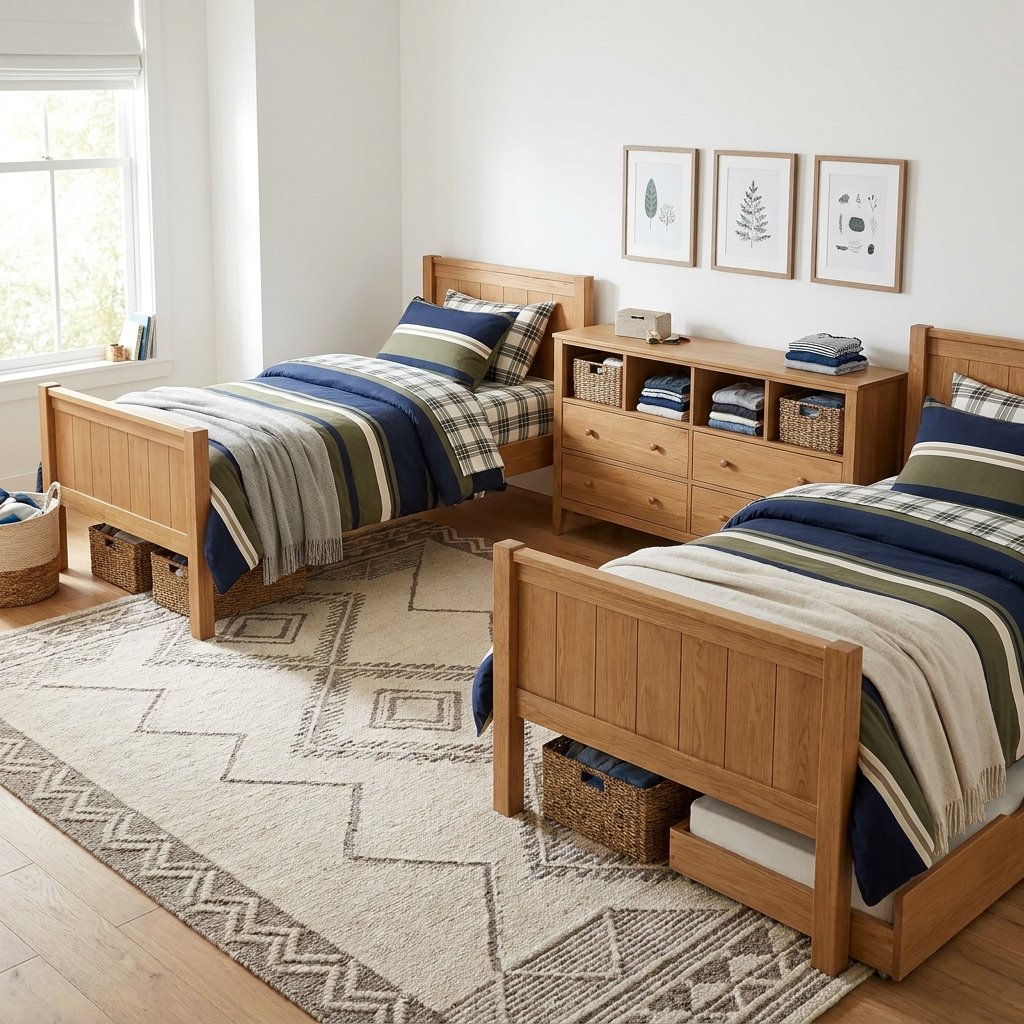
A big boy shared bedroom makeover is all about creating a room that feels more grown-up without making it feel too serious, too themed, or too hard to maintain.
When two boys share a room, the space has to do a lot at once.
It needs to provide:
- Comfortable sleeping space
- Personal storage
- Room for books and toys
- A place for clothes
- Enough floor space to move around
- A look that feels coordinated without being overly matched
The best shared bedroom designs also leave room for change.
Instead of decorating around one narrow theme, it usually works better to start with a flexible color palette, practical furniture, and storage that can evolve as the boys get older.
Here are 17 ideas to help create a shared boys’ bedroom that feels organized, comfortable, and intentionally designed.
1. Start With a Simple Color Palette
A shared room usually feels more cohesive when the palette is limited.
Try combining:
- Warm white
- Navy
- Denim blue
- Olive green
- Charcoal
- Natural wood
- Camel or tan
You do not need to use all of these.
Choose one or two main colors, then add a few supporting neutrals.
This gives the room personality without making it difficult to update later.
2. Use Matching Beds for Visual Order
Matching beds can immediately make a shared bedroom feel more organized.
They do not have to be elaborate.
Simple twin bed frames in:
- Natural wood
- White
- Black
- Warm gray
can create a strong foundation for the room.
Matching furniture also makes it easier to vary the bedding or personal details without the space looking chaotic.
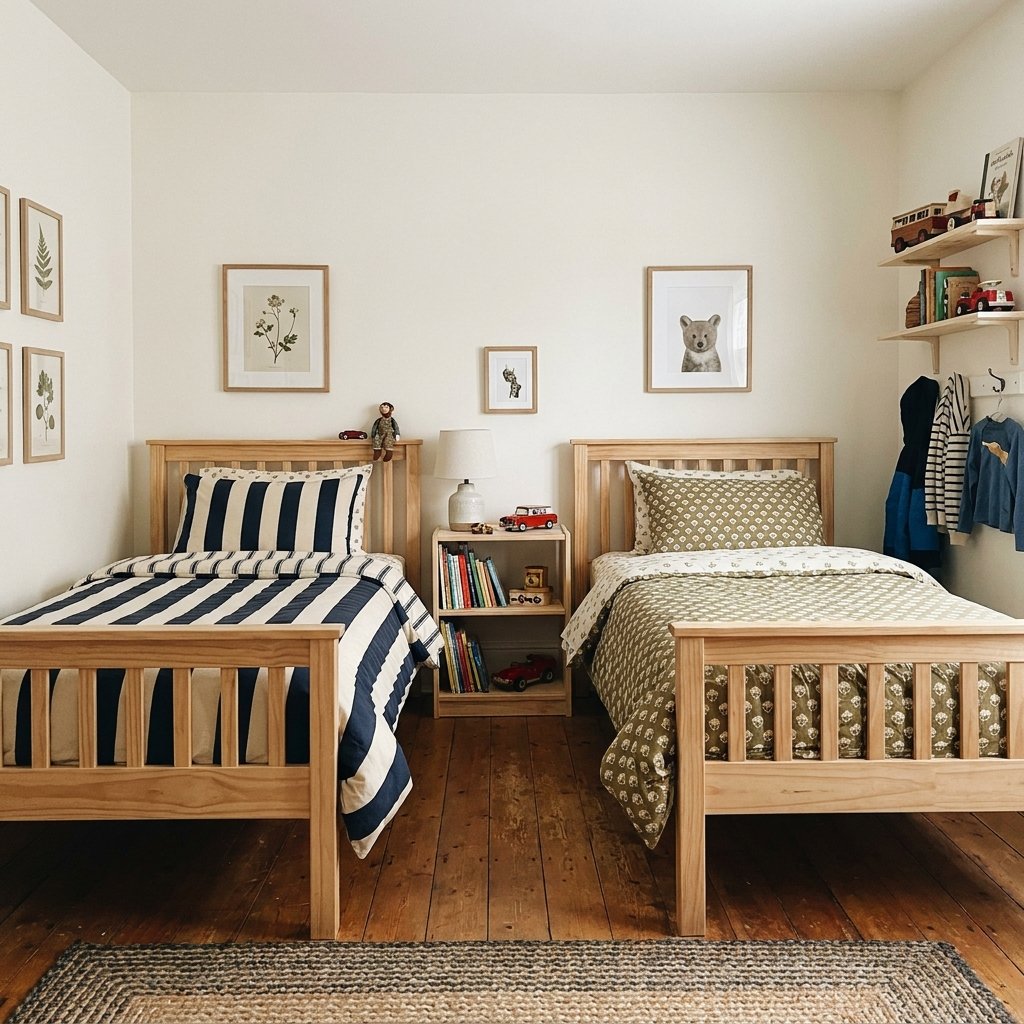
3. Let the Bedding Coordinate Without Matching Exactly
Identical bedding is not required.
In fact, slightly different bedding can help each child feel that his side of the room is his own.
Use a common thread such as:
- Same color family
- Matching sheets
- Similar stripe pattern
- Same quilt style
- Coordinating throw pillows
For example, one bed could use navy and cream while the other uses olive and cream.
The room still feels connected, but each side has a little individuality.
4. Give Each Child a Personal Zone
Even in a shared room, each child should have a small area that feels personal.
This could be:
- Bedside shelf
- Nightstand
- Wall art
- Book ledge
- Basket
- Small display area
You do not need to divide the room physically.
A few individual details can create a sense of ownership.
5. Use One Large Rug to Connect the Room
A large area rug can visually tie both beds together.
Choose a rug that is large enough to connect the main furniture rather than placing two tiny rugs beside each bed.
Good options include:
- Stripes
- Plaid-inspired patterns
- Vintage-style patterns
- Low-key geometric designs
- Neutral textured rugs
A rug also adds softness and helps make the room feel finished.
Use a rug pad where appropriate to reduce slipping and bunching.
6. Add a Shared Nightstand Between the Beds
If the beds are positioned side by side, one nightstand between them can save space.
Use it for:
- Lamp
- Books
- Clock
- Small basket
This creates symmetry and reduces the need for duplicate furniture.
If both boys need more personal storage, small wall shelves on each side can supplement the shared table.
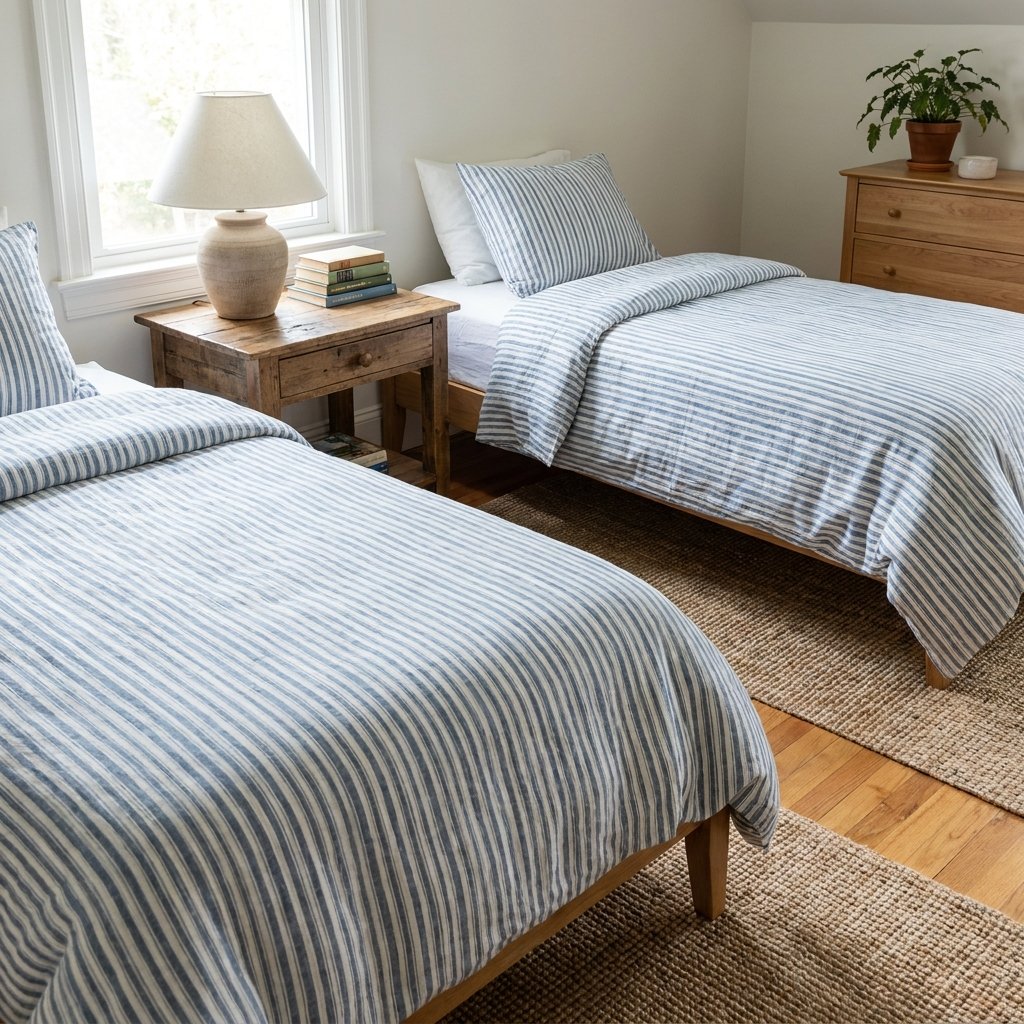
7. Add Individual Reading Lights
Individual lights make a shared bedroom more functional.
Options include:
- Wall-mounted reading lights
- Clip lights
- Small bedside lamps
This allows one child to read without lighting the entire room.
If using wall-mounted electrical fixtures, follow appropriate installation requirements or use a qualified professional when needed.
Keep cords secured and out of walking areas.
8. Use Vertical Storage
Shared bedrooms can run out of storage quickly.
Make better use of the walls.
Try:
- Tall bookcases
- Wall shelves
- Hooks
- Peg rails
- Book ledges
Vertical storage keeps more of the floor open.
Secure tall furniture and shelving appropriately to reduce tipping hazards.
9. Create a Better Closet System
A shared closet works best when both children can clearly see where their belongings go.
Divide the closet into zones.
For example:
- Left side for one child
- Right side for the other
- Shared upper shelf
- Individual baskets
- Separate drawers
Labels can help younger children maintain the system.
A simple closet organization plan is often more useful than adding lots of decorative storage throughout the room.
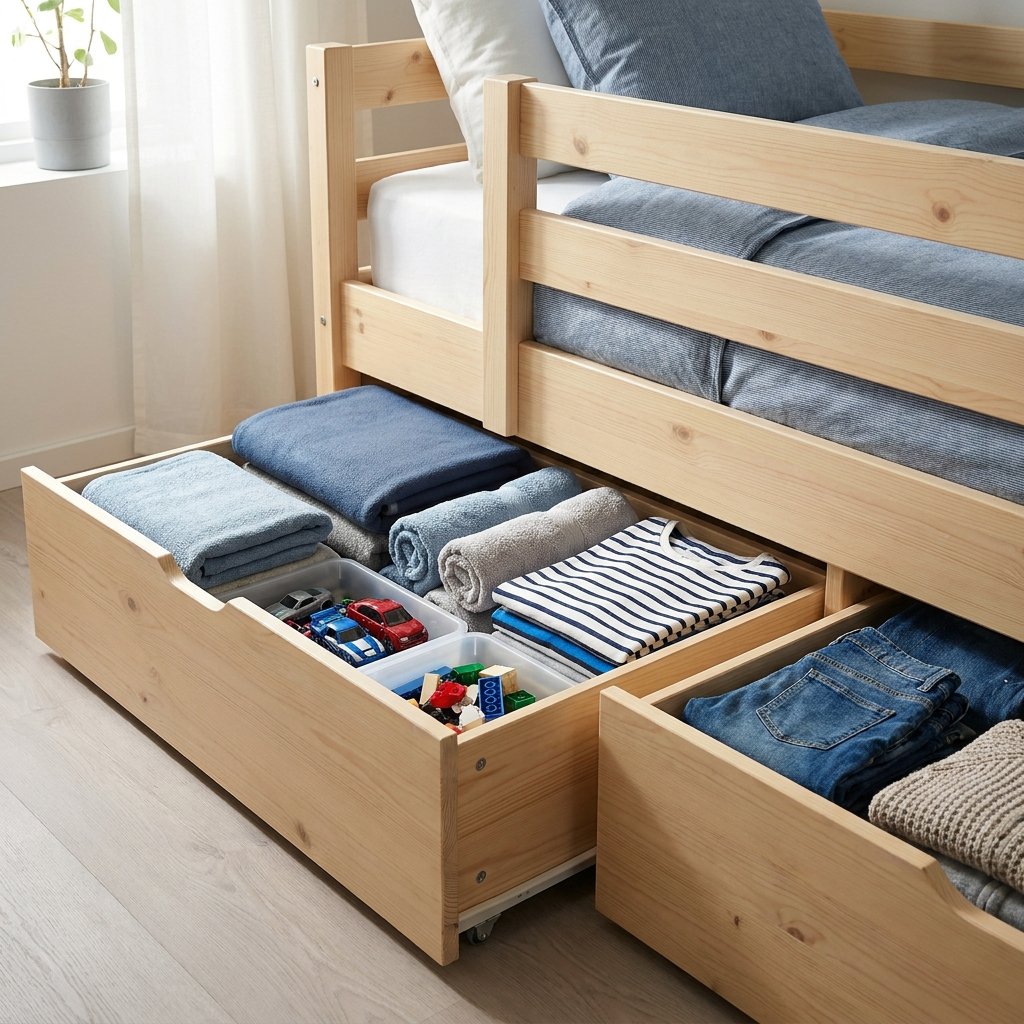
10. Use Under-Bed Storage
The area under the beds is valuable.
Use it for:
- Off-season clothing
- Extra bedding
- Shoes
- Toys
- Sports gear
Low rolling bins or fitted drawers can keep everything accessible.
Avoid overstuffing the space.
A few clearly categorized bins are easier to maintain than many small containers.
11. Add a Dresser the Boys Can Share
One larger dresser may work better than two smaller ones.
Divide the drawers by child or clothing type.
For example:
- Top drawers for socks and underwear
- Middle drawers assigned individually
- Bottom drawers for shared items
Keep the top relatively clear so it does not become a clutter drop zone.
Secure dressers appropriately to reduce tipping risk.
12. Create a Homework or Drawing Area
If there is room, add a small desk or work surface.
A shared desk can work well if it is wide enough for two chairs.
Another option is to create a single workstation that the boys use at different times.
Keep the setup simple:
- Desk
- Lamp
- Pencil cup
- Drawer or basket
- Small wall organizer
This gives schoolwork and art supplies a designated place instead of spreading them around the room.
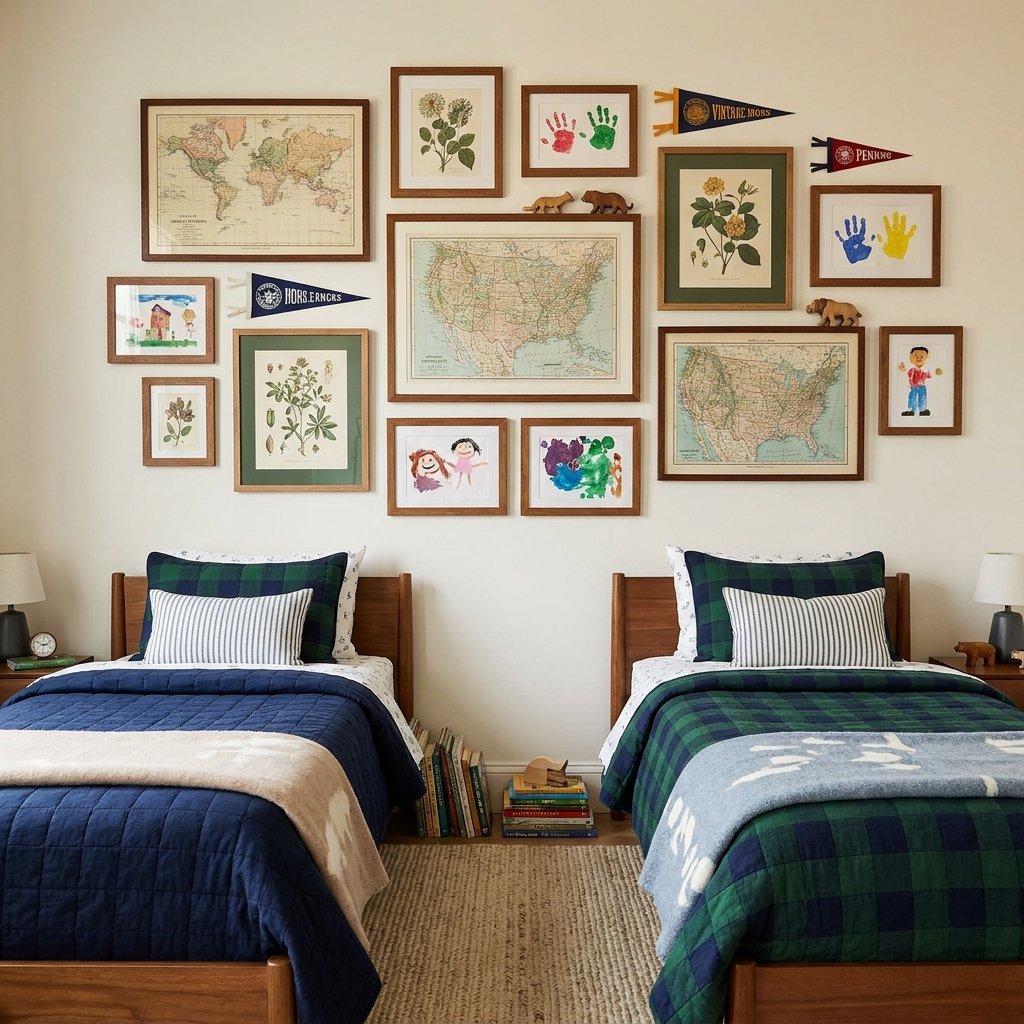
13. Use Wall Art That Can Grow With Them
Avoid decor that will feel too young in a year or two.
Instead, choose flexible art such as:
- Maps
- Nature prints
- Sports photography
- Abstract shapes
- Vintage-style posters
- Simple typography
You can also frame each child’s artwork.
This creates personality without committing the whole room to a specific character or theme.
14. Add a Book Storage Zone
Books can quickly make a shared bedroom feel cluttered.
Create one clear book area.
Try:
- Low bookcase
- Wall ledges
- Basket near the beds
- Built-in shelving
Keep favorite books within reach.
Store rarely used books higher or elsewhere.
A low shelf can also provide a useful surface for a few decorative objects.
15. Create a Drop Zone for Everyday Items
Kids often need somewhere to put:
- Backpacks
- Hats
- Sweatshirts
- Sports bags
Without a designated spot, these items tend to land on the floor.
Use:
- Wall hooks
- Peg rail
- Large basket
- Bench with storage
Keep the system easy enough that it can actually be used every day.
16. Keep the Floor as Open as Possible
A shared bedroom can feel smaller once two beds and storage pieces are added.
Protect some open floor space.
Avoid filling every wall with furniture.
Use fewer, more functional pieces rather than several small cabinets and tables.
An open center makes the room feel easier to use and easier to clean.
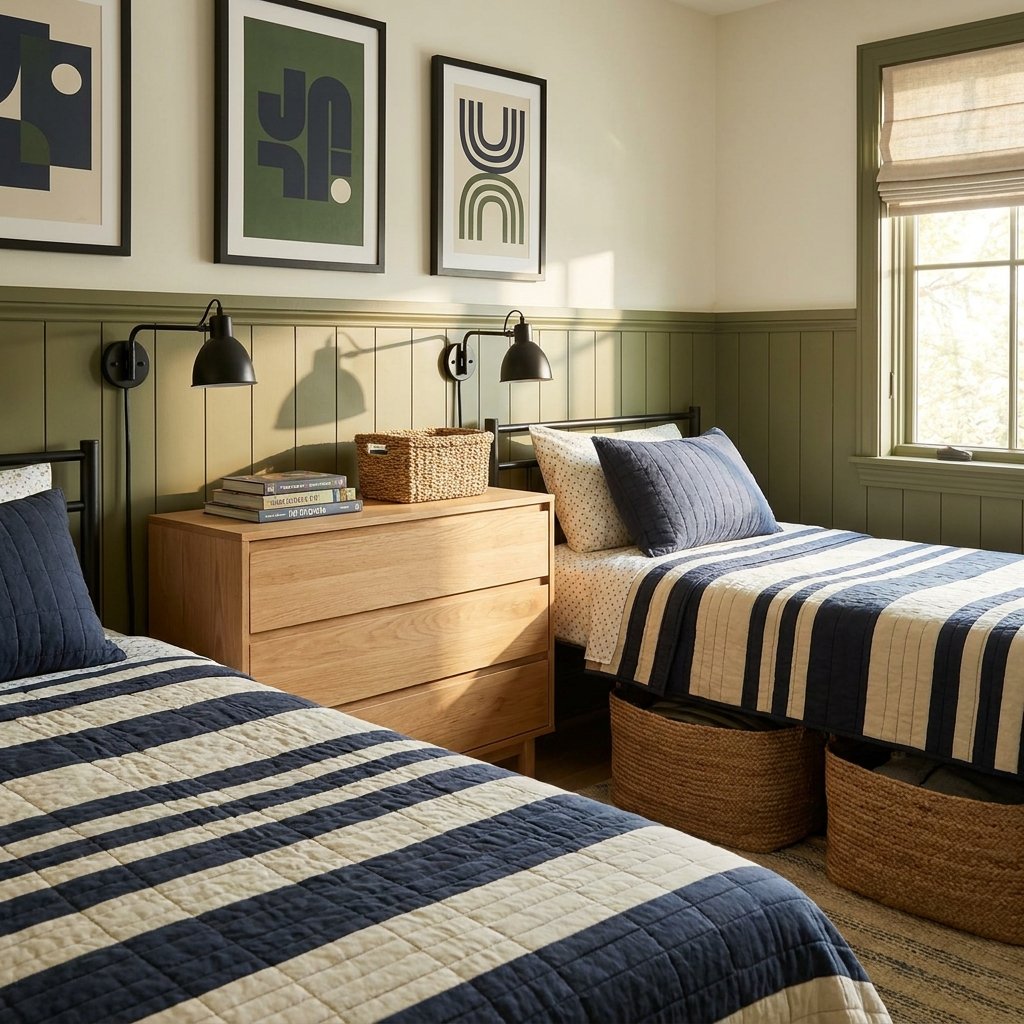
17. Add a Few Older-Kid Details
A big boy bedroom should feel a little more grown-up.
Small changes can help.
Try:
- Striped bedding
- Darker accent colors
- Leather-look details
- Wood furniture
- Black metal accents
- Graphic art
- More substantial lighting
You do not need to remove every playful item.
The goal is balance.
Keep sentimental toys, books, and favorite collections while updating the overall room around them.
Shared Boys Bedroom Layout Ideas
The right layout depends on the size and shape of the room.
Beds Side by Side
This is a classic arrangement.
Place a nightstand between them for symmetry.
It works best in wider rooms.
Beds on Opposite Walls
This creates more separation and can give each child a distinct side.
It also leaves a central walkway.
Beds in an L-Shape
This layout works well in square rooms.
It can free up another wall for:
- Dresser
- Desk
- Bookcase
Bunk Beds
Bunk beds can save floor space, but they require careful attention to age appropriateness, guardrails, mattress thickness requirements, ceiling clearance, ladder access, and manufacturer instructions.
Use only bunk beds designed and assembled for their intended use.
Big Boy Shared Bedroom Color Ideas
A shared bedroom does not need a traditional bright-blue palette.
Navy + Cream + Wood
Classic and easy to update.
Olive + Tan + White
Warm and outdoorsy without feeling themed.
Denim Blue + Gray + Black
Works well for a more modern room.
Green + Navy + Cream
Colorful but still calm.
Charcoal + Warm White + Natural Wood
Simple and mature.
Rust + Navy + Cream
Adds warmth and works well with wood tones.
Shared Bedroom Ideas for Different Personalities
The boys do not have to like exactly the same things.
Keep the large elements coordinated, then personalize smaller details.
For example:
Both beds could have the same quilts.
One child might add:
- Green pillow
- Nature print
- Dinosaur book collection
The other might use:
- Navy pillow
- Sports print
- Model cars
The room remains cohesive while still reflecting individual interests.
Small Shared Boys Bedroom Ideas
In a small room, prioritize function.
Consider:
- Beds with storage underneath
- One shared nightstand
- Wall-mounted lighting
- Tall dresser
- Vertical book storage
- Minimal decor
Do not try to fit every possible activity into the room.
Homework, toy storage, or play areas may work better elsewhere in the home if space is tight.
How to Make a Shared Boys Bedroom Look Bigger
Use visual consistency.
Try:
- Matching bed frames
- One large rug
- Similar bedding
- Light or mid-tone wall color
- Clear walking paths
- Fewer furniture pieces
Keeping clutter contained makes a major difference.
Low furniture can also help the room feel more open.
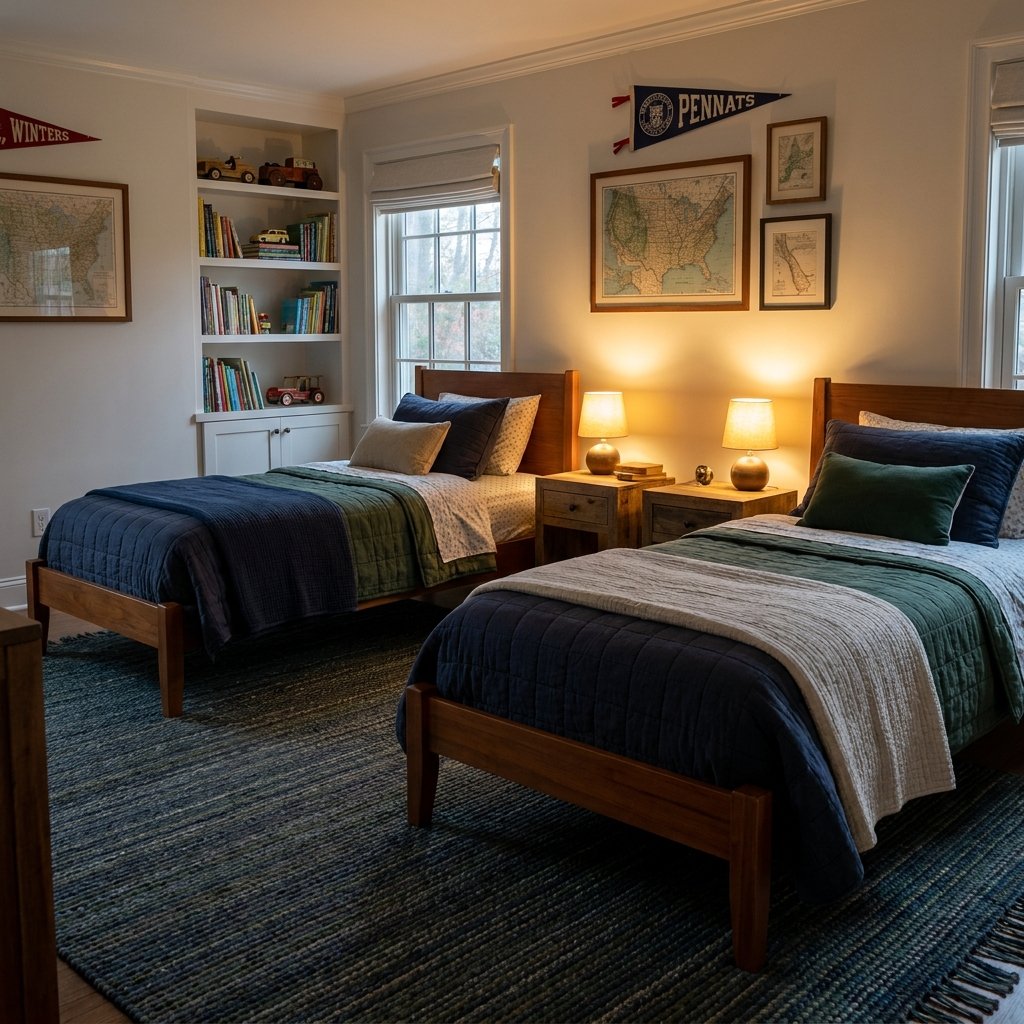
How to Make a Shared Boys Bedroom Feel Cozy
A practical room can still feel comfortable.
Layer in:
- Soft bedding
- Area rug
- Curtains
- Warm lighting
- Wood tones
- A few pillows
Avoid using only hard surfaces and bright overhead light.
Budget-Friendly Big Boy Bedroom Makeover Ideas
You do not need to replace everything.
Start with the items that create the biggest visual change.
Change the Bedding
New quilts or duvet covers can shift the whole palette.
Paint the Walls
A simple paint update can make the room feel more grown-up.
Rearrange the Furniture
The room may function better without buying anything.
Add Matching Lamps
Matching lights can make mismatched furniture feel more coordinated.
Replace Small Decor
Swap very young artwork for something more flexible.
Add Baskets
Use baskets to control everyday clutter.
Repurpose Existing Furniture
A dresser or nightstand may only need new hardware or paint if appropriate.
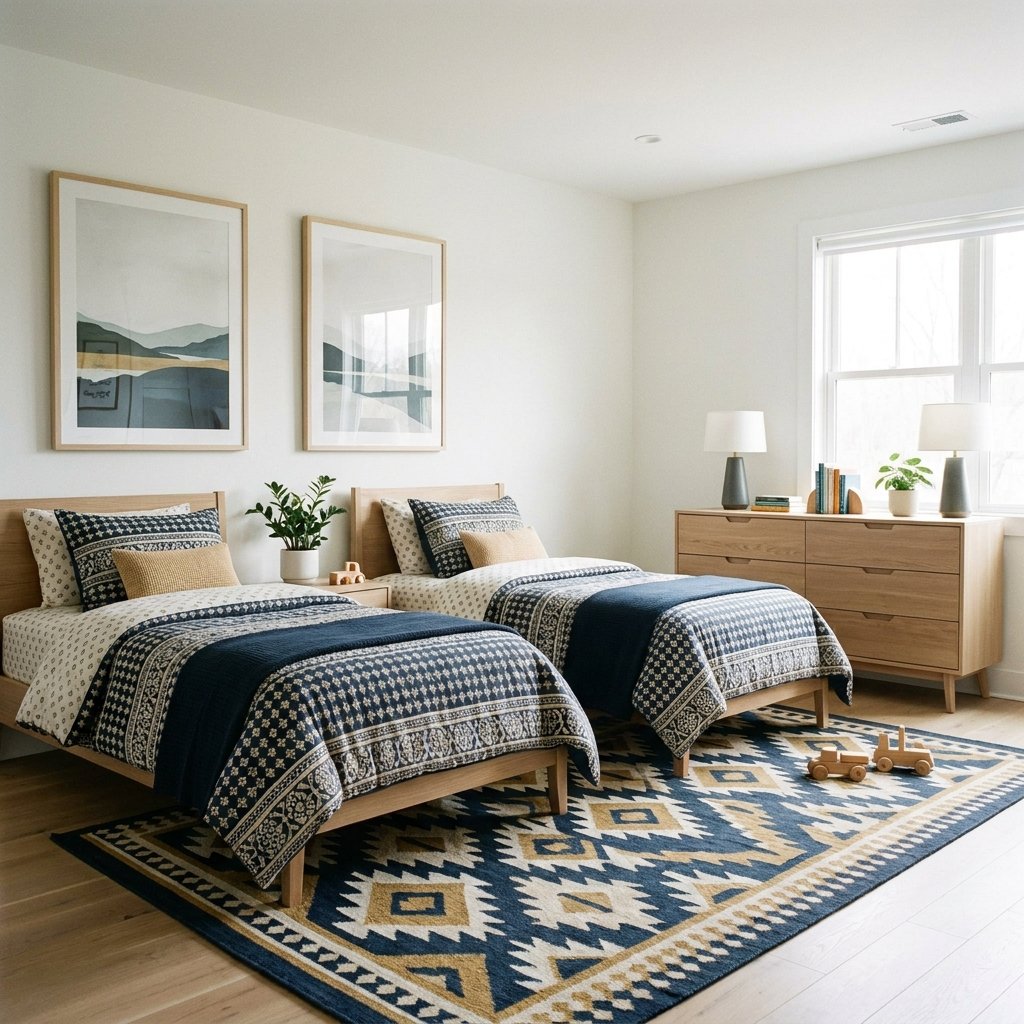
How to Make the Room Look More Expensive
A shared bedroom can look polished without luxury furniture.
Repeat Materials
Use the same wood tone or metal finish in several places.
Limit the Color Palette
Too many unrelated colors can make the room feel busy.
Use Larger Art
One or two larger pieces often look cleaner than many tiny decorations.
Use Matching Beds
Symmetry creates immediate order.
Keep Surfaces Simple
Do not overcrowd nightstands and dressers.
Hide Visual Clutter
Use drawers, baskets, and closed storage for small items.
Common Shared Boys Bedroom Makeover Mistakes
Making the Room Too Themed
Interests change quickly.
Use favorite themes through removable art and accessories instead.
Giving One Child More Storage
Try to create clear, fair storage zones.
Buying Too Much Small Furniture
Several tiny storage pieces can make the room feel crowded.
Forgetting Personal Space
Even a shared room should give each child something that feels like his own.
Ignoring Lighting
One overhead light is rarely enough.
Filling Every Wall
Leave visual breathing room.
Using Storage That Is Too Complicated
If a child has to open three boxes to put away one toy, the system may not last.
Shared Boys Bedroom Safety Tips
Safety is especially important in children’s bedrooms.
Keep these points in mind:
- Secure dressers, bookcases, and other tall furniture appropriately.
- Follow manufacturer instructions for beds and bunk beds.
- Keep heavy objects off high shelves above sleeping areas.
- Secure wall art and shelving properly.
- Keep cords organized and away from beds and walking paths.
- Use age-appropriate furniture and storage.
- Avoid placing climbable furniture where it creates access to unsafe windows.
- Keep small items away from younger children where relevant.
- Make sure rugs lie flat and do not create trip hazards.
- Keep pathways to the door clear.
- Do not overload wall shelves or hooks beyond their intended capacity.
FAQ About a Big Boy Shared Bedroom Makeover
How do you make a shared boys bedroom feel fair?
Give each child a personal zone, comparable storage, and some ability to choose small decor details.
Should shared beds match?
They do not have to, but matching or coordinating beds can make the room look more organized.
Should the bedding match?
Not exactly. Coordinating colors or patterns can create unity while allowing each child to have a different look.
What colors work well in a shared boys bedroom?
Navy, green, gray, cream, warm white, charcoal, tan, and natural wood are flexible choices.
How do you organize a small shared bedroom?
Use vertical storage, under-bed bins, one shared nightstand, and fewer furniture pieces.
How can I make a shared room feel more grown-up?
Use a restrained color palette, more mature artwork, simple bedding, better lighting, and fewer themed accessories.
How do you give kids privacy in a shared bedroom?
Separate personal belongings, give each child his own storage and bedside area, and use furniture placement to create distinct zones where possible.
Final Thoughts
A big boy shared bedroom makeover does not need to rely on an elaborate theme or a completely new set of furniture.
The biggest improvements usually come from better organization, a more mature color palette, and a layout that gives both boys room to sleep, store their things, and enjoy the space.
Start with the major pieces.
Choose a practical bed layout, add a large rug, improve storage, and create clear personal zones for each child.
Then layer in color and personality through bedding, artwork, books, and a few favorite objects.
The goal is not to make both sides identical.
It is to create a room that feels cohesive while still allowing each child to have his own space.
With flexible furniture, simple storage, and a color palette that can grow with them, a shared bedroom can feel comfortable now and still work well as the boys get older.