

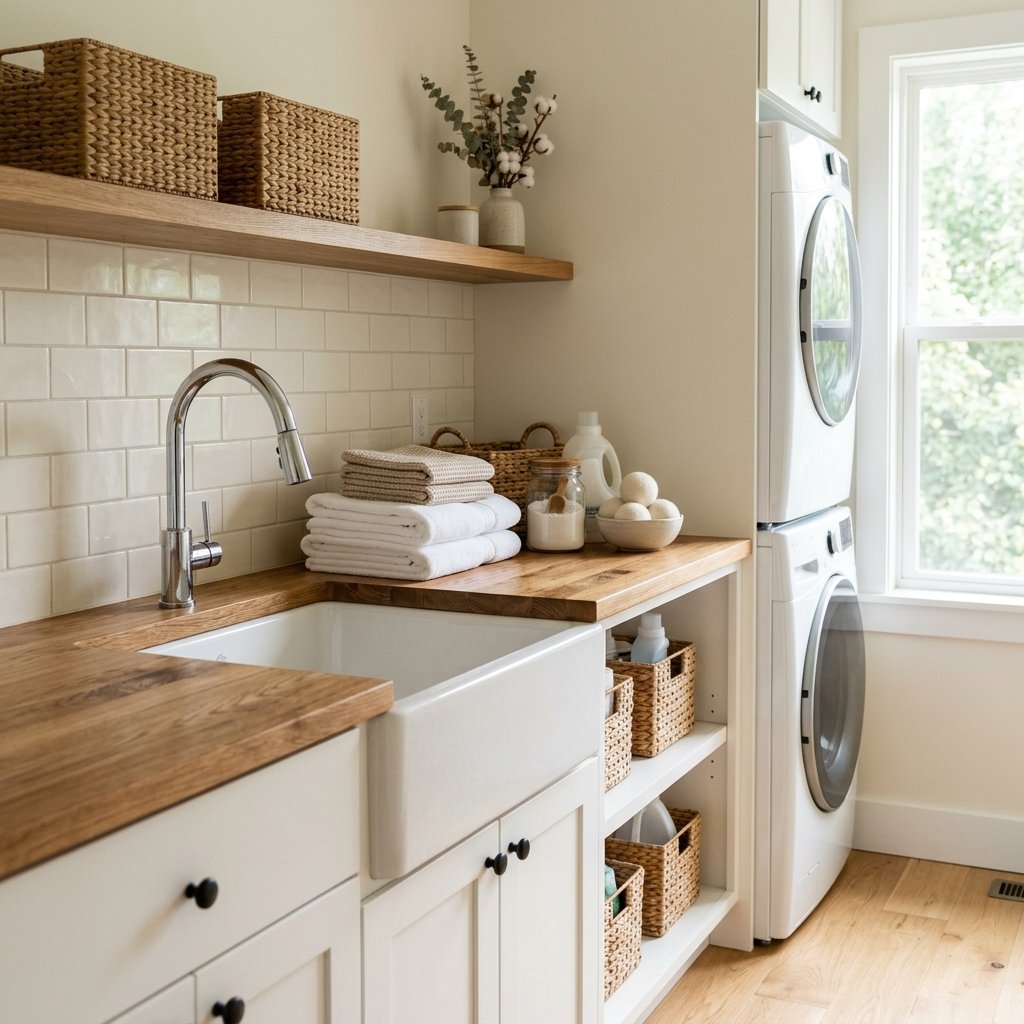
Replacing countertops can completely change a kitchen, bathroom, laundry room, or work area—but it can also become one of the more expensive parts of a renovation.
Fortunately, replacement isn’t always the only option.
Depending on the condition of your existing counters, your budget, and how the surface will be used, there are several DIY countertop ideas that can give tired counters a completely different look.
Some involve refinishing what you already have with a countertop-specific coating. Others use materials such as wood, tile, laminate, or concrete to create a new surface. And a few are better suited to lower-use spaces, such as laundry rooms or utility counters, than hardworking kitchen prep areas.
The key is choosing a DIY countertop method based on function first and appearance second.
Kitchen counters deal with water, food, hot cookware, cleaning products, stains, and daily wear. Bathroom counters face frequent moisture. Laundry counters may need to tolerate detergents and wet clothing.
So before falling in love with an inexpensive countertop makeover you see online, make sure the materials and finish are actually intended for your space.
Here are 15 DIY countertop ideas to consider, along with practical tips for deciding which approach makes the most sense for your home.
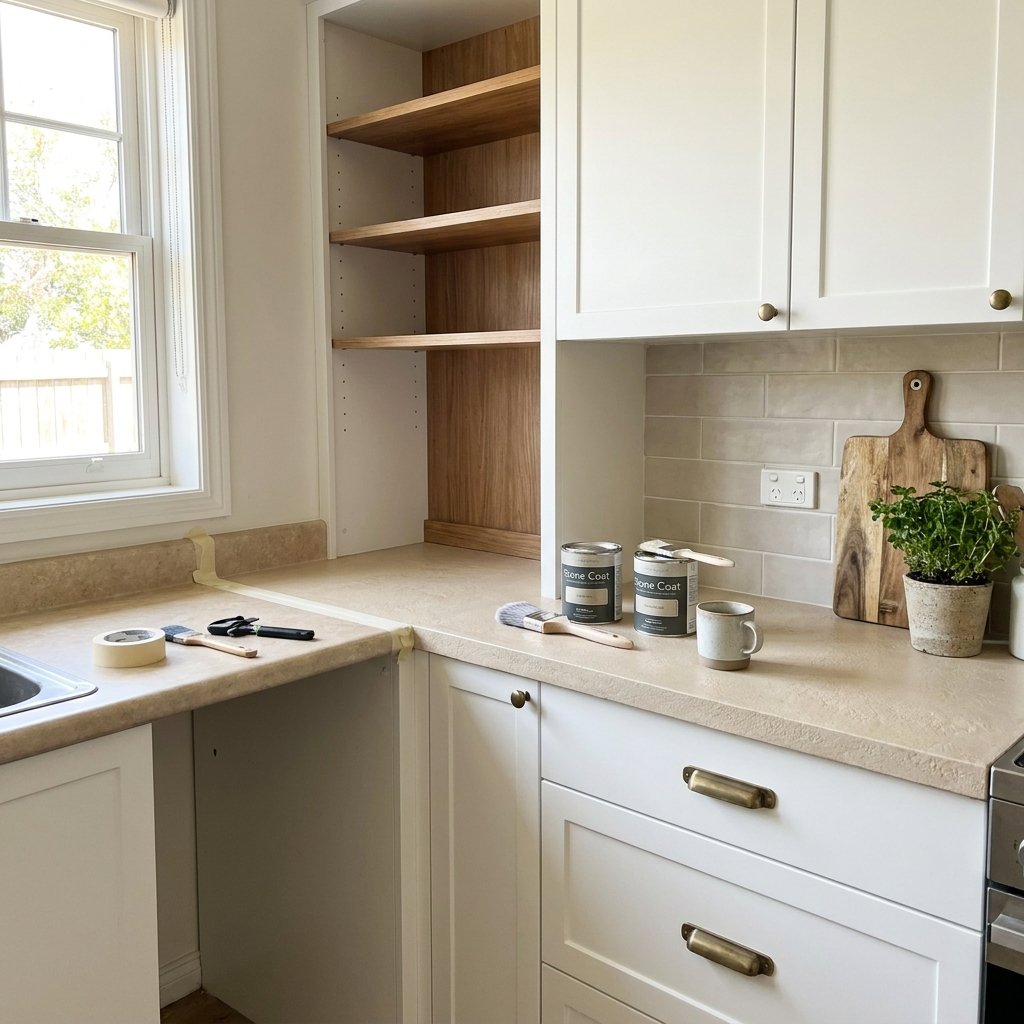
Before You DIY Your Countertops
Start by evaluating what you already have.
Ask:
- What is the existing countertop made from?
- Is it structurally sound?
- Are there loose areas?
- Is there water damage?
- Is the substrate swollen?
- Are seams failing?
- Is the counter level?
- How much daily wear does this surface receive?
- Will food regularly be prepared directly on it?
- How much heat and moisture will it encounter?
Cosmetic countertop treatments work best over a stable surface.
A coating cannot fix a badly swollen particleboard substrate, serious water damage, movement, or structural deterioration.
Repair the underlying problem first.
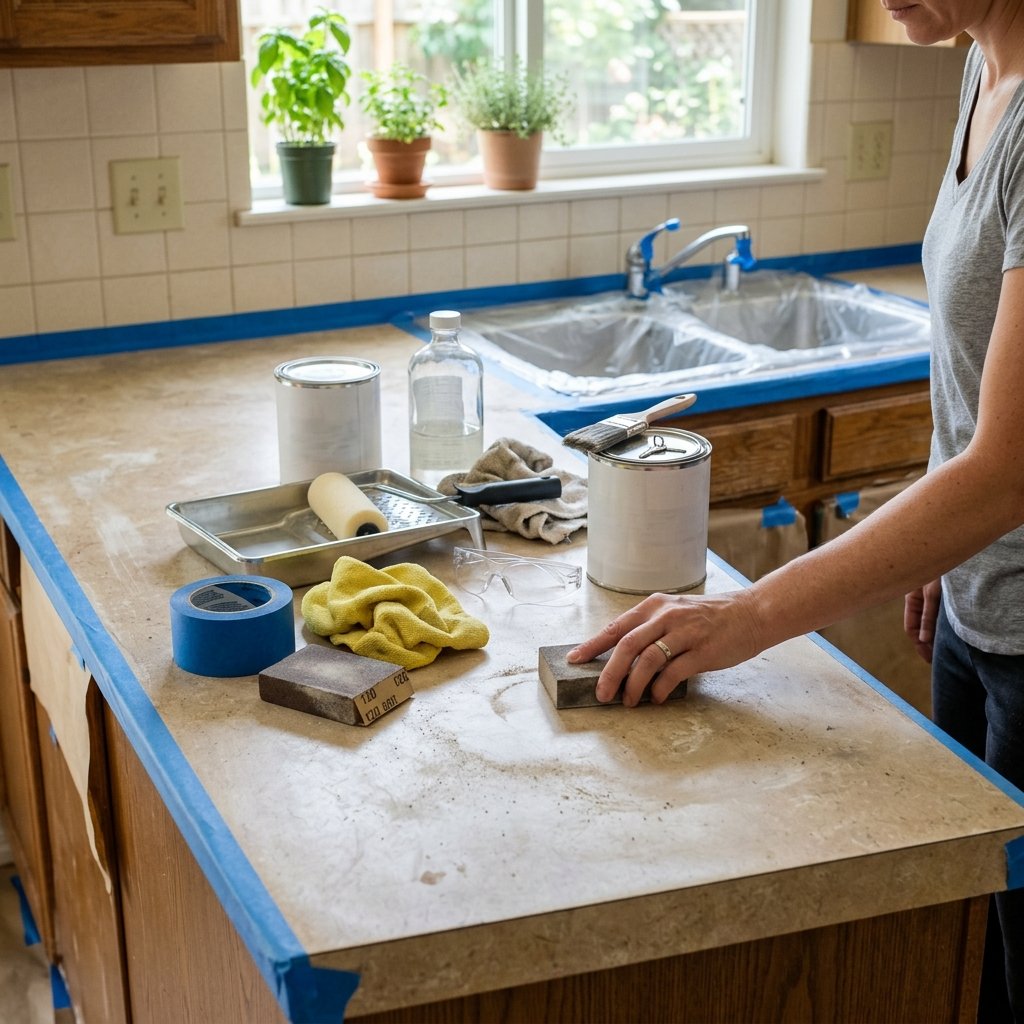
1. Paint Laminate Countertops
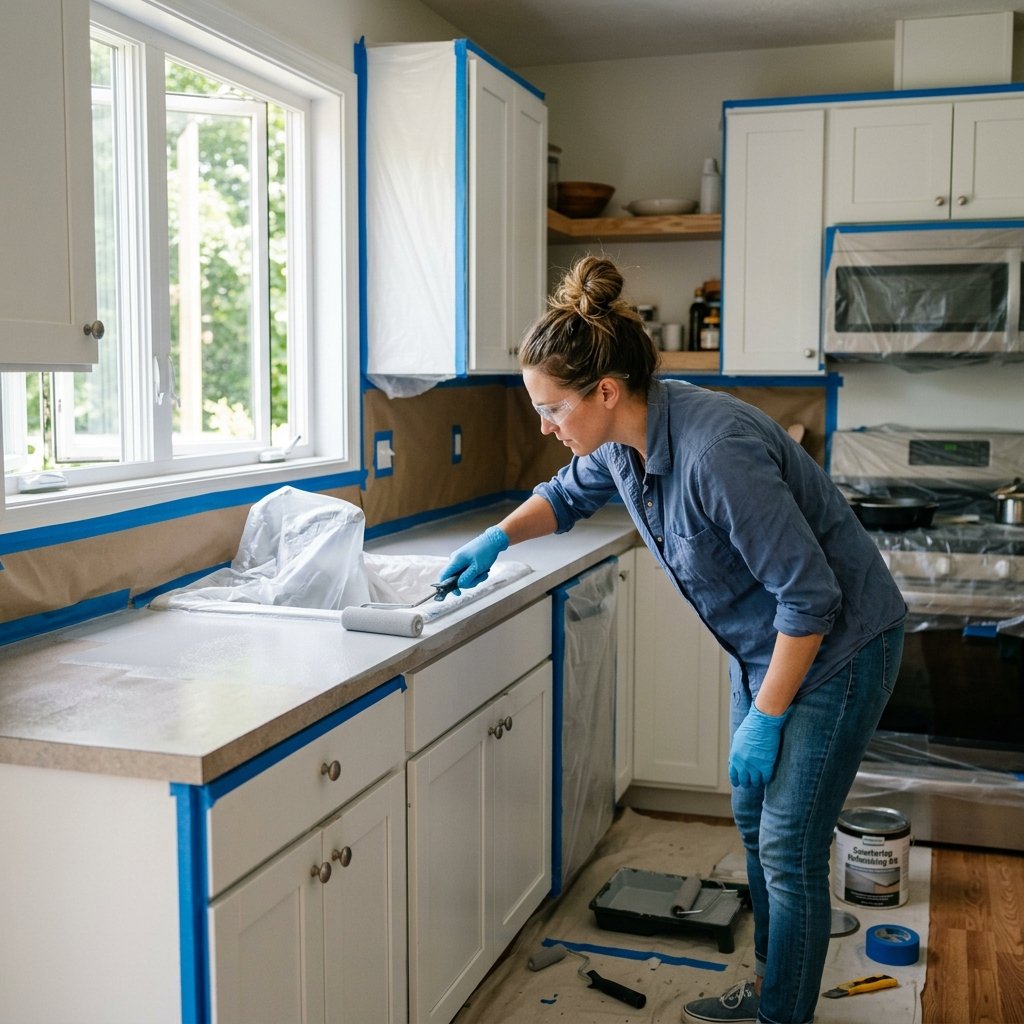
Painting old laminate is one of the most affordable ways to dramatically change its appearance.
But don’t simply grab leftover wall paint.
Countertops receive much more wear than walls, so use a coating system specifically intended or approved for countertop applications and compatible with the existing surface.
Preparation is usually the most important part.
Depending on the product, the process may involve:
- Thoroughly cleaning and degreasing the counter.
- Repairing chips or damage.
- Removing or dulling the existing glossy finish as directed.
- Applying the recommended primer if required.
- Applying the countertop coating.
- Adding any specified protective topcoat.
- Allowing the system to cure completely.
Follow the manufacturer’s instructions exactly.
Pay particular attention to cure time. A countertop may feel dry well before it’s ready for normal use.
2. Create a Faux Marble Countertop
A faux marble finish can make an old countertop look dramatically different.
The basic idea is to create a light base and add subtle veins before protecting the decorative finish with a compatible clear system.
The trick is restraint.
Real marble usually has variation, soft movement, and plenty of quieter areas. If every inch is covered in bold gray veins, the finish can look obviously painted.
For a convincing effect:
- Study real stone first.
- Vary vein thickness.
- Keep some veins faint.
- Avoid evenly spaced lines.
- Allow some areas to remain relatively quiet.
Most importantly, use a complete countertop refinishing system whose layers are designed to work together rather than combining random paint and clear-coat products.
3. Try a Faux Granite Countertop Finish
If marble doesn’t fit your home, consider a stone-look finish inspired by granite.
These finishes usually rely on layered color rather than long veins.
A combination of several closely related shades can create depth.
Keep the pattern irregular.
Before working on the countertop, practice the technique on a sample board. This helps you determine how much texture and contrast you actually want.
4. Use a Countertop Refinishing Kit
A complete refinishing kit can simplify a DIY countertop makeover because the components are designed as a system.
Depending on the product, a kit may include:
- Base coating
- Decorative components
- Applicators
- Protective finish
Read the instructions before starting—not halfway through the project.
Some systems have specific working windows between steps, and you don’t want to discover that while the coating is already curing.
Check compatibility with your existing countertop material and intended use.
5. DIY Wood Countertops
Wood can bring warmth to a kitchen, laundry room, pantry, or utility space.
You might use an appropriate wood countertop product or construct a top if you have the tools and woodworking skills.
Wood countertops require careful consideration around:
- Sinks
- Faucets
- Seams
- Appliances
- Moisture
- Finish selection
Wood naturally expands and contracts as environmental conditions change, so installation needs to account for movement.
The finish also needs to be appropriate for how the counter will be used.
If the surface will come into contact with food, verify the suitability and cure requirements of the finishing system.
6. Install Butcher-Block-Style Countertops
Butcher-block-style counters are a popular way to get a warm wood look without building the entire top from individual boards.
Prefabricated wood countertop slabs may be cut to fit the room.
This can be a manageable DIY for someone comfortable with:
- Accurate measuring
- Cutting large material
- Creating sink openings
- Joining sections
- Sanding
- Finishing
- Properly securing the top
Measure multiple times before making a sink cutout.
The sink manufacturer’s template and installation instructions should determine the opening—not guesswork.
Pay particular attention to sealing or finishing cut edges around sinks according to the countertop manufacturer’s recommendations.
7. Make a Plywood Countertop
Plywood can create an affordable counter for certain lower-risk spaces.
It can work especially well in:
- Laundry rooms
- Craft rooms
- Workspaces
- Mudrooms
- Utility areas
The exposed layered edge can even become part of the design.
However, plywood isn’t automatically a durable wet-area countertop simply because it’s wood.
Choose the correct material and finish for the intended environment, and protect edges from moisture as required.
For a hardworking kitchen, consider whether a more purpose-designed countertop material would provide better long-term performance.
8. DIY Concrete Countertops
Concrete counters can create a substantial, modern or industrial look.
There are two broad DIY approaches:
- Creating new concrete countertops
- Applying a cementitious resurfacing system over a suitable existing substrate
These are not interchangeable.
True concrete countertops require proper forms, reinforcement or other construction considerations as appropriate, mixing, placement, finishing, curing, and sealing.
Concrete is heavy.
Before adding significant weight to existing cabinetry, make sure the cabinets and supporting structure are appropriate for the planned installation.
Cement-based products also generate alkaline wet material and potentially hazardous dust when mixed or ground. Follow manufacturer safety instructions, control dust, and use appropriate protective equipment.
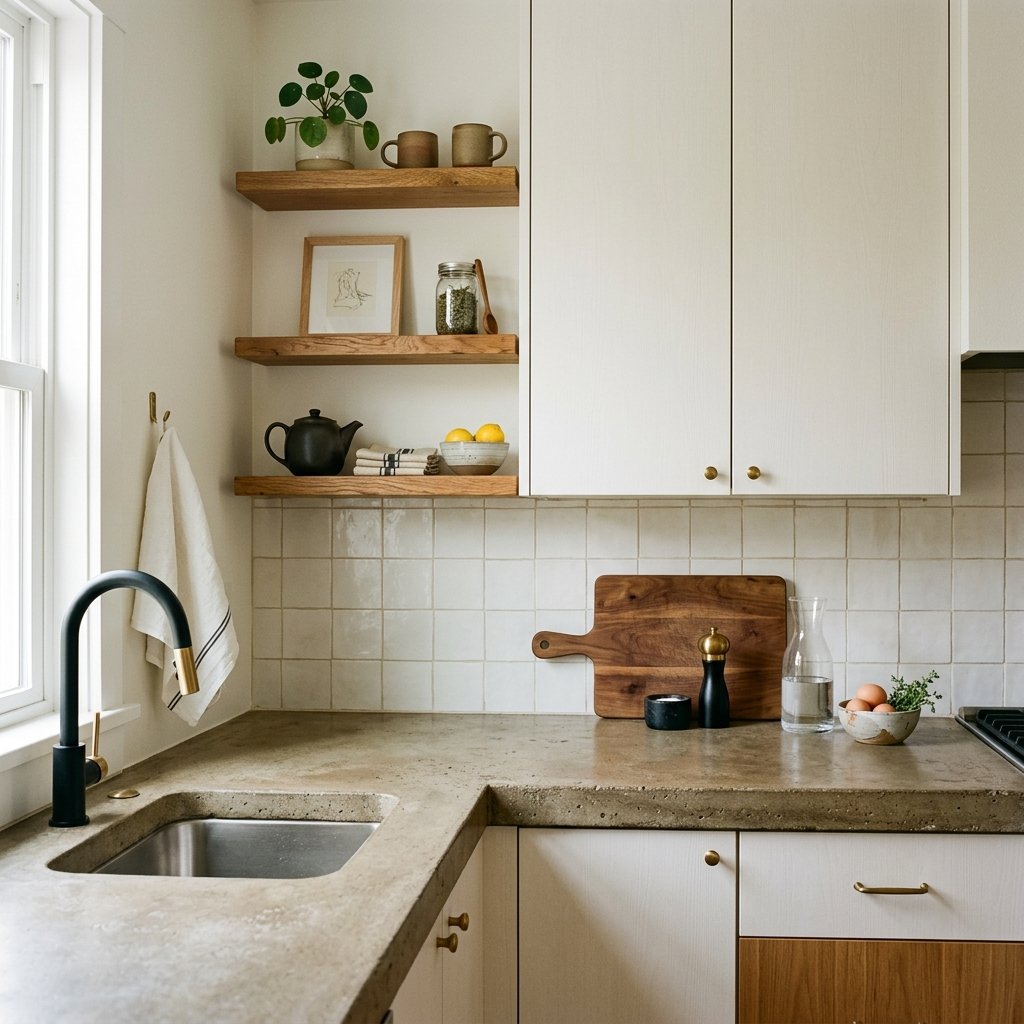
9. Resurface Counters With a Concrete-Look Finish
If you like concrete but don’t want to cast a full slab, a purpose-designed resurfacing system may be an alternative.
These products can create a cement-like finish over compatible substrates.
Success depends heavily on:
- Surface preparation
- Product compatibility
- Layer thickness
- Drying and curing
- Final protection
Do not assume ordinary patching cement can be spread over a countertop and perform like a countertop resurfacing system.
Use products intended for the application.
10. Tile a Countertop
Tile can create a durable, decorative countertop when installed using an appropriate countertop assembly.
It can be especially attractive in:
- Cottage kitchens
- Laundry rooms
- Vintage-inspired spaces
- Bars
- Utility areas
Potential materials include ceramic or porcelain tile where suitable.
However, tiled countertops introduce grout joints.
Those joints affect both maintenance and food-prep practicality.
The substrate, adhesive or mortar, grout, waterproofing where required, movement joints, and edge details all need to be appropriate for the installation.
Don’t simply tile over a failing countertop.
11. Use Large-Format Tile for Fewer Grout Lines
If you like tile but don’t want lots of small grout joints, larger tiles may reduce the number of seams.
The counter dimensions and tile layout matter.
Plan the pattern before installation so you don’t end up with awkward narrow cuts along visible edges.
You also need a clean strategy for:
- Front edge
- Sink
- Backsplash
- Corners
Dry-lay the tile before permanently installing anything.
12. Replace Old Counters With Laminate
Laminate isn’t only something to paint over.
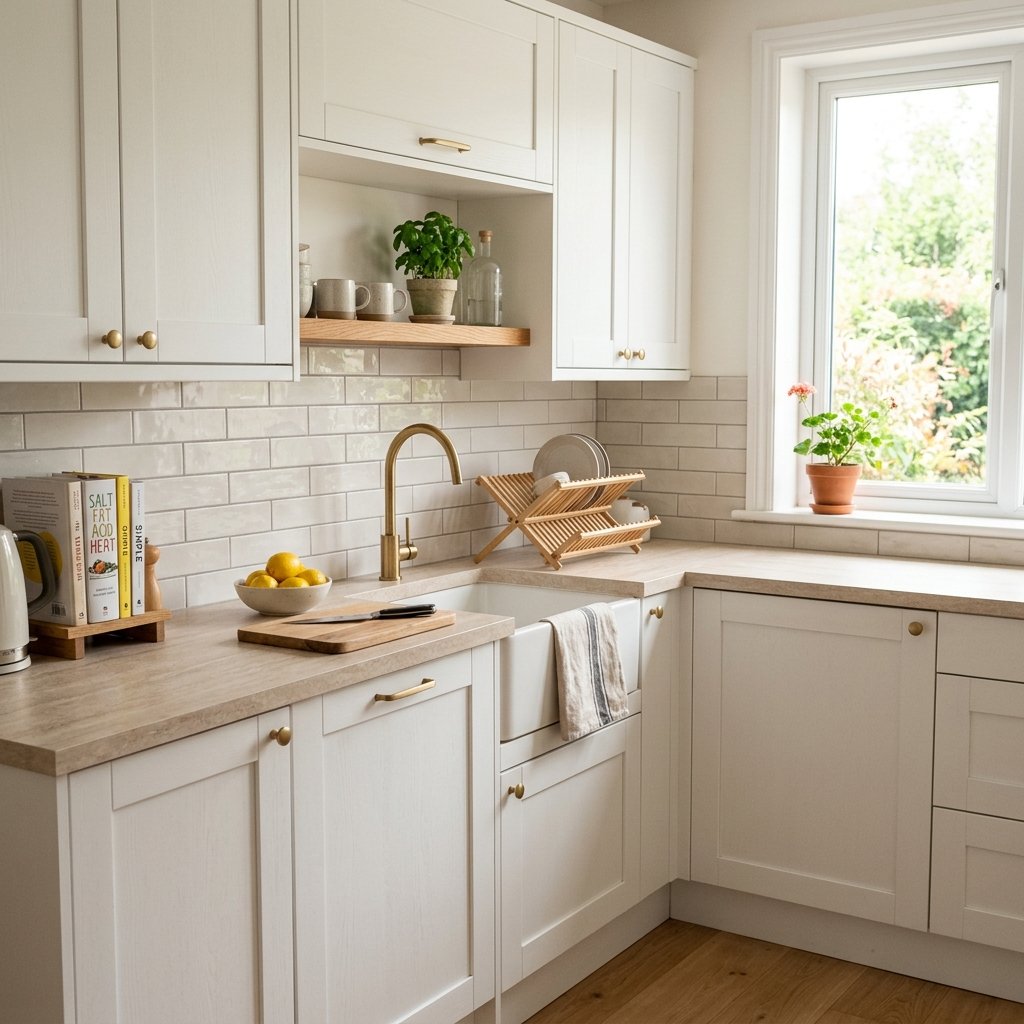
New laminate can be an affordable countertop material in its own right.
Depending on your skills and the product, you might:
- Install a prefabricated laminate countertop
- Laminate a properly prepared substrate
Modern laminate is available in many stone, solid, and wood-inspired designs.
A prefabricated top can simplify the process significantly.
Pay attention to seams and exposed substrate around sinks because moisture intrusion can damage some countertop cores.
13. Use Contact Paper for a Temporary Countertop Makeover
Peel-and-stick films are popular because they’re inexpensive and create an immediate visual change.
However, expectations matter.
A decorative film is not equivalent to stone, laminate, tile, or another permanent countertop surface.
It may make sense for:
- Temporary makeover
- Very low-wear counter
- Short-term cosmetic update
- Certain rental situations where modifications are permitted
Check the product’s limitations regarding:
- Heat
- Water
- Cleaning
- Food contact
- Removal
- Surface compatibility
Never place hot cookware directly on decorative film unless the manufacturer specifically permits it.
Pay extra attention around sinks and seams where water can work beneath an edge.
14. Add a Countertop Overlay
Some countertop systems are designed to install over an existing counter.
These may create the appearance of stone or another material without fully demolishing the existing surface.
This isn’t always a beginner DIY, however.
Added thickness can affect:
- Sink fit
- Faucet installation
- Backsplash height
- Appliance clearances
- Counter edge
- Electrical outlets above the counter
Before choosing an overlay, consider the entire countertop assembly rather than only the visible top.
15. Build a DIY Laundry Room Countertop
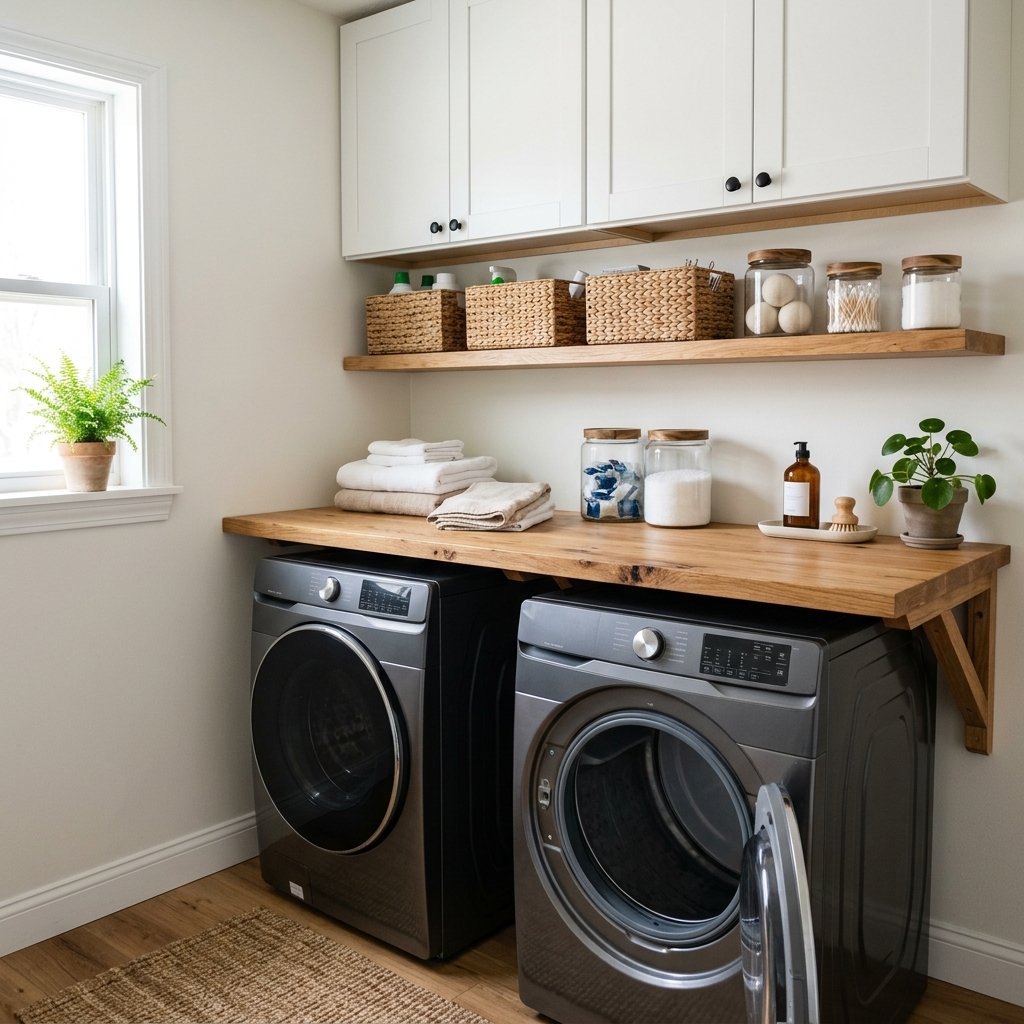
A laundry room is one of the best places to experiment with a DIY countertop.
The counter may be used primarily for:
- Folding clothes
- Holding baskets
- Sorting laundry
- Storing supplies
Depending on the layout, wood or plywood may provide an affordable option.
If you’re building a counter over a washer and dryer, check appliance requirements for:
- Clearance
- Ventilation
- Access
- Vibration
- Serviceability
Do not trap appliances beneath a permanent countertop if they require clearances or access that the installation would prevent.
DIY Bathroom Countertop Ideas
Bathroom counters are smaller than kitchen counters, making them tempting DIY projects.
Possible options include:
- Countertop refinishing system
- Faux stone finish
- Wood where appropriate
- New laminate
- Suitable tile
But bathroom counters receive frequent water exposure.
Pay particular attention to:
- Sink cutout
- Faucet penetrations
- Backsplash
- Wall joint
- Counter edges
Use materials and sealants appropriate for bathroom conditions.
DIY Kitchen Countertop Ideas
Kitchen countertops require the most realistic expectations.
They may encounter:
- Raw food
- Water
- Grease
- Hot cookware
- Sharp utensils
- Small appliances
- Strong cleaners
A surface that looks beautiful in a photo may not be appropriate for daily kitchen use.
Before choosing a DIY finish, check the manufacturer’s instructions regarding:
- Food-contact suitability
- Heat resistance
- Stain resistance
- Cleaning
- Cure time
- Maintenance
Use cutting boards and trivets rather than expecting a decorative finish to withstand direct cutting or hot pans.
DIY Countertop Ideas for a Rental
Before making changes to a rental, get permission where required.
Temporary films may be an option when the property owner permits them, but even removable products can sometimes:
- Leave adhesive
- Damage an existing finish
- Pull up loose laminate
- Discolor surfaces
Test a hidden area and follow removal instructions.
A large cutting board or freestanding work surface may be a safer alternative when permanent changes aren’t allowed.
How to Paint Countertops Successfully
If you’re refinishing rather than replacing your countertop, preparation will usually determine whether the project looks good.
Clean Thoroughly
Remove grease, soap, silicone residue, and dirt using methods compatible with the surface and coating system.
Repair Damage
Fill chips and defects with products recommended for the substrate and coating.
Prepare the Surface
Some systems require sanding or deglossing.
Others specify a particular primer.
Follow the instructions.
Control Dust
Vacuum and remove dust before coating.
Apply Thin, Even Layers
Thick coats don’t necessarily create a stronger finish.
Respect Recoat Times
Applying the next layer too early or too late can affect adhesion.
Let It Cure
This may be the hardest step.
Don’t immediately reinstall heavy appliances or start scrubbing the new surface.
How to Make DIY Countertops Look More Professional
Don’t Skip Edge Details
The front edge is highly visible.
Plan how your chosen material transitions around it.
Finish Around the Sink Carefully
Sloppy sink edges can ruin an otherwise beautiful project.
Keep Patterns Subtle
Especially with faux marble or stone.
Remove Old Caulk Properly
Don’t paint over failing silicone or sealant.
Protect Cabinets
Mask and cover surrounding surfaces.
Keep Seams Intentional
Plan joints before cutting material.
Take Your Time
Countertops are visually prominent. Small mistakes are easy to notice.
Choosing the Right Countertop Idea for Your Space
The cheapest solution isn’t always the most economical long-term choice.
Think about how hard the surface needs to work.
High-Use Kitchen
Prioritize durability, cleanability, moisture resistance, and heat considerations.
Bathroom
Prioritize water resistance and detailing around plumbing.
Laundry Room
Prioritize moisture resistance and a large practical work surface.
Craft Room
Prioritize scratch resistance and easy cleanup.
Temporary Makeover
Prioritize affordability and reversibility.
The same DIY method doesn’t need to be used everywhere in the house.
How Much Does a DIY Countertop Cost?
Costs vary too much by material, countertop size, region, tools, and finishing products to give one meaningful universal figure.
Instead, compare the complete project cost.
Include:
- Countertop material
- Primer
- Coating
- Sealer
- Adhesive
- Sandpaper
- Saw blades
- Caulk
- Trim
- Sink modifications
- Tools you don’t own
- Waste allowance
A seemingly inexpensive project can become much more expensive once all the supporting materials are included.
Should You Refinish or Replace a Countertop?
Refinishing makes the most sense when:
- Existing counter is structurally sound.
- Layout works.
- You mainly dislike the appearance.
- You’re comfortable with the maintenance requirements.
- The coating system is suitable for the space.
Replacement may make more sense when:
- Counter is swollen or severely water damaged.
- Substrate is deteriorating.
- Layout needs to change.
- Seams are failing badly.
- You want a substantially different sink configuration.
- Long-term durability is more important than minimum upfront cost.
Countertop Ideas by Decorating Style
Traditional
Try:
- Warm wood
- Marble-look finishes
- Classic tile
- Warm stone-look laminate
Modern
Consider:
- Concrete-look surfaces
- Simple light stone appearance
- Dark laminate
- Minimal wood
Cottage
Try:
- Wood
- Butcher-block-style counters
- Tile
- Soft marble-inspired finishes
Organic Modern
Mix:
- Warm wood
- Soft concrete tones
- Cream stone-inspired finishes
Budget Transitional
A subtle stone-look laminate or refinished counter can work beautifully with painted cabinets and simple hardware.
Countertop Colors That Are Easy to Decorate Around
If you’re unsure what color to choose, look at the permanent finishes in the room.
Consider:
- Cabinet color
- Flooring
- Backsplash
- Wall color
- Appliances
- Wood tones
Versatile countertop colors include:
- Warm white
- Cream
- Soft greige
- Warm gray
- Medium wood
- Charcoal
Avoid choosing a countertop color in isolation.
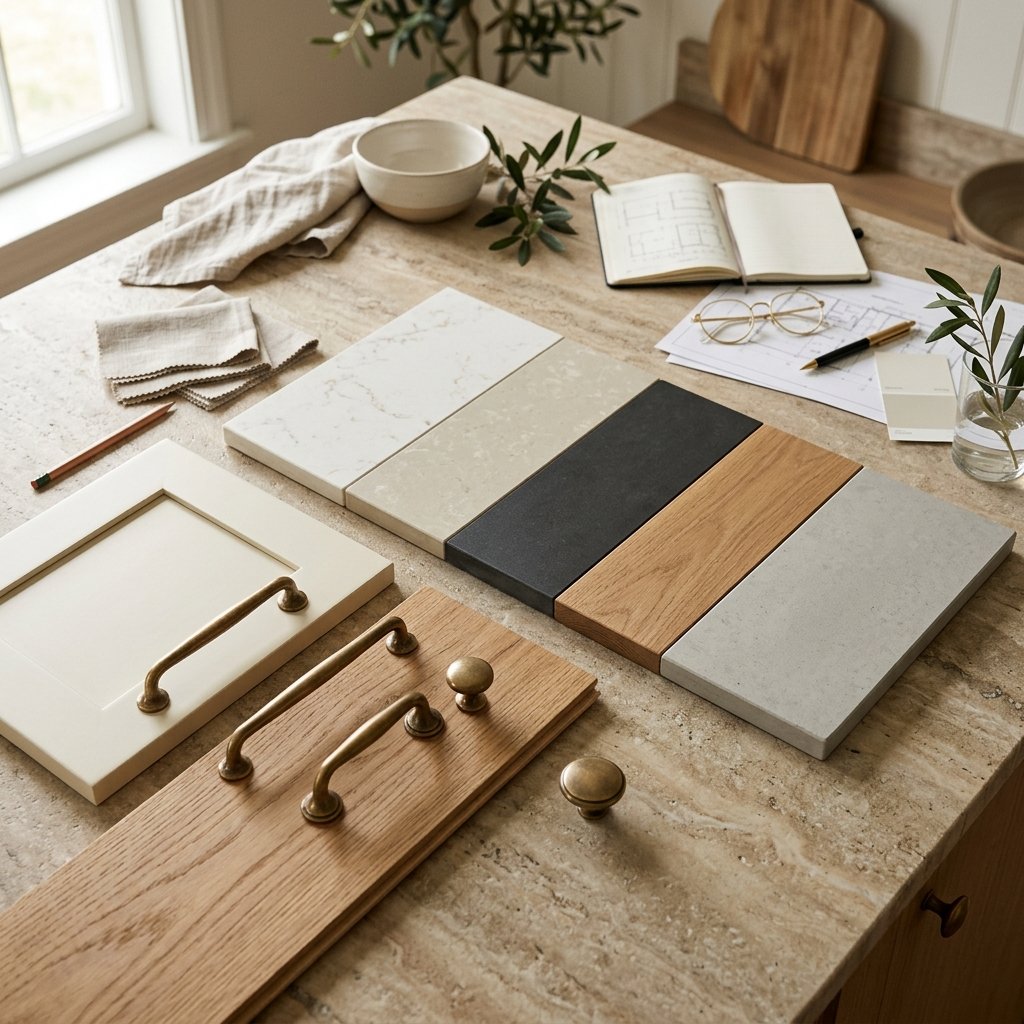
Bring samples into the room and view them throughout the day.
Common DIY Countertop Mistakes
Choosing Appearance Over Function
The surface still has to work for the room.
Painting Over Damage
Fix the substrate first.
Skipping Degreasing
Coatings need a properly prepared surface.
Using Ordinary Wall Paint
Choose a system intended for the application.
Combining Incompatible Products
Primer, coating, decorative layers, and topcoat should work together.
Ignoring Cure Time
Dry isn’t necessarily cured.
Forgetting the Sink Area
Water exposure makes detailing especially important.
Making Faux Marble Too Busy
Use fewer, softer veins.
Ignoring Added Thickness
Tile and overlays can affect sinks, appliances, and backsplashes.
Putting Hot Pans Directly on DIY Finishes
Use trivets unless the manufacturer specifically states otherwise.
DIY Countertop Safety
Countertop projects may involve power tools, coatings, adhesives, silica-containing materials, heavy slabs, and plumbing.
Keep these basics in mind:
- Wear eye and hearing protection when cutting.
- Use appropriate respiratory protection and dust control when sanding or cutting materials that generate hazardous dust.
- Never dry-cut or grind silica-containing materials without appropriate controls and procedures.
- Provide ventilation when using coatings, adhesives, and sealants.
- Follow all manufacturer safety instructions.
- Turn off and safely disconnect plumbing where necessary.
- Get professional help for plumbing or electrical modifications outside your skill level.
- Support heavy countertop materials properly.
- Don’t attempt to lift oversized slabs alone.
- Keep flammable coatings away from ignition sources.
- Follow product drying and curing times.
If a project requires structural modifications, complicated stone fabrication, significant plumbing changes, or materials you aren’t equipped to cut safely, hiring a professional for that portion may be the better choice.
FAQ About DIY Countertop Ideas
What is the easiest DIY countertop makeover?
For a structurally sound existing countertop, a purpose-designed countertop refinishing system can be one of the more approachable options because it avoids full removal and replacement. Difficulty still depends on the product and existing surface.
Can you paint laminate countertops?
Yes, when you use a compatible countertop coating system and prepare the laminate according to the manufacturer’s instructions.
Can you paint countertops to look like marble?
Yes. Faux marble finishes can create a decorative stone-inspired look. Use compatible countertop products and a protective system intended for the surface.
Can you put new laminate over old countertops?
In some situations, laminate can be applied to a properly prepared compatible substrate, but suitability depends on the existing countertop and installation system. Follow the laminate manufacturer’s requirements.
Are peel-and-stick countertops durable?
Decorative films are generally better considered a temporary or lower-wear cosmetic solution than a direct replacement for purpose-built countertop materials. Performance varies by product.
Are wood countertops good for kitchens?
Wood can be used successfully in kitchens when appropriately constructed, installed, finished, and maintained. Pay particular attention to water exposure around sinks and the suitability of the finish for the intended use.
Can I make a countertop from plywood?
Plywood can work in certain utility, laundry, craft, and lower-risk applications when properly constructed and finished. Whether it is suitable depends on moisture exposure and expected wear.
Can you put concrete over an existing countertop?
Some purpose-designed cementitious resurfacing products can be applied over compatible existing surfaces. This is different from simply spreading ordinary concrete over a countertop.
Is it cheaper to paint or replace countertops?
Painting or refinishing can have a lower upfront material cost when the existing counter is sound, but the best value depends on durability expectations, counter size, tools, and the condition of the substrate.
How long should DIY countertop paint cure?
Cure times vary significantly by product. Follow the manufacturer’s instructions rather than relying on a universal timeframe. Avoid heavy use until the coating has reached the required cure.
Final Thoughts
There are plenty of DIY countertop ideas that can make an old kitchen, bathroom, laundry room, or utility space feel completely different without immediately jumping to expensive stone replacement.
The right project depends on what you already have.
If your laminate countertop is structurally sound but dated, a purpose-designed refinishing system may be enough.
If you want warmth, wood or a butcher-block-style countertop might fit the room.
For a laundry or craft space, plywood can provide an affordable work surface when appropriately constructed and finished.
Tile, laminate, concrete-look finishes, and temporary films provide still more possibilities.
But don’t choose a method based solely on the prettiest before-and-after photo.
Think about water, heat, cleaning, food preparation, durability, and maintenance.
Then follow the manufacturer’s preparation, installation, ventilation, drying, and curing instructions carefully.
A successful DIY countertop makeover isn’t simply one that looks good the day you finish it.
It’s one that makes sense for the way you actually use the room.