

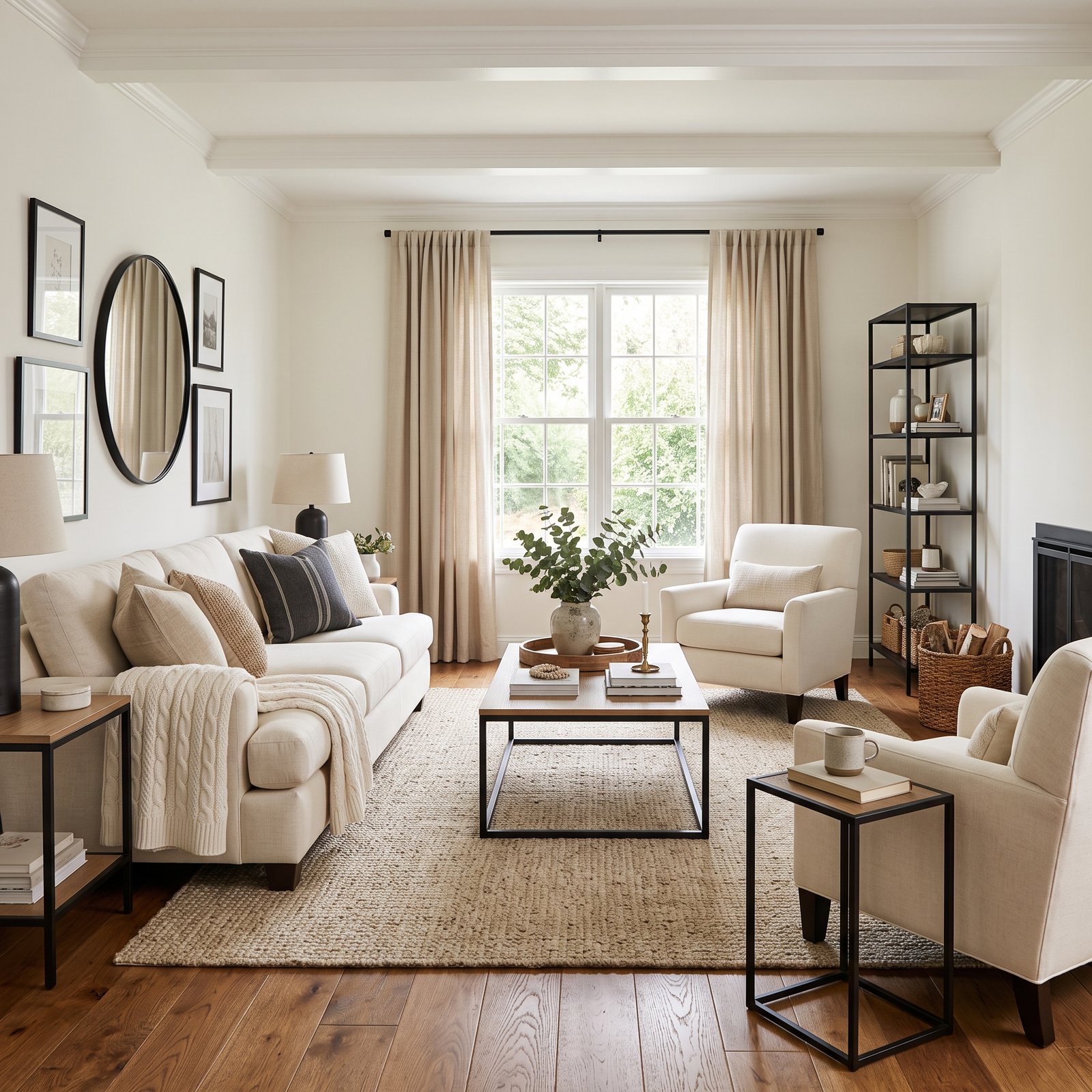
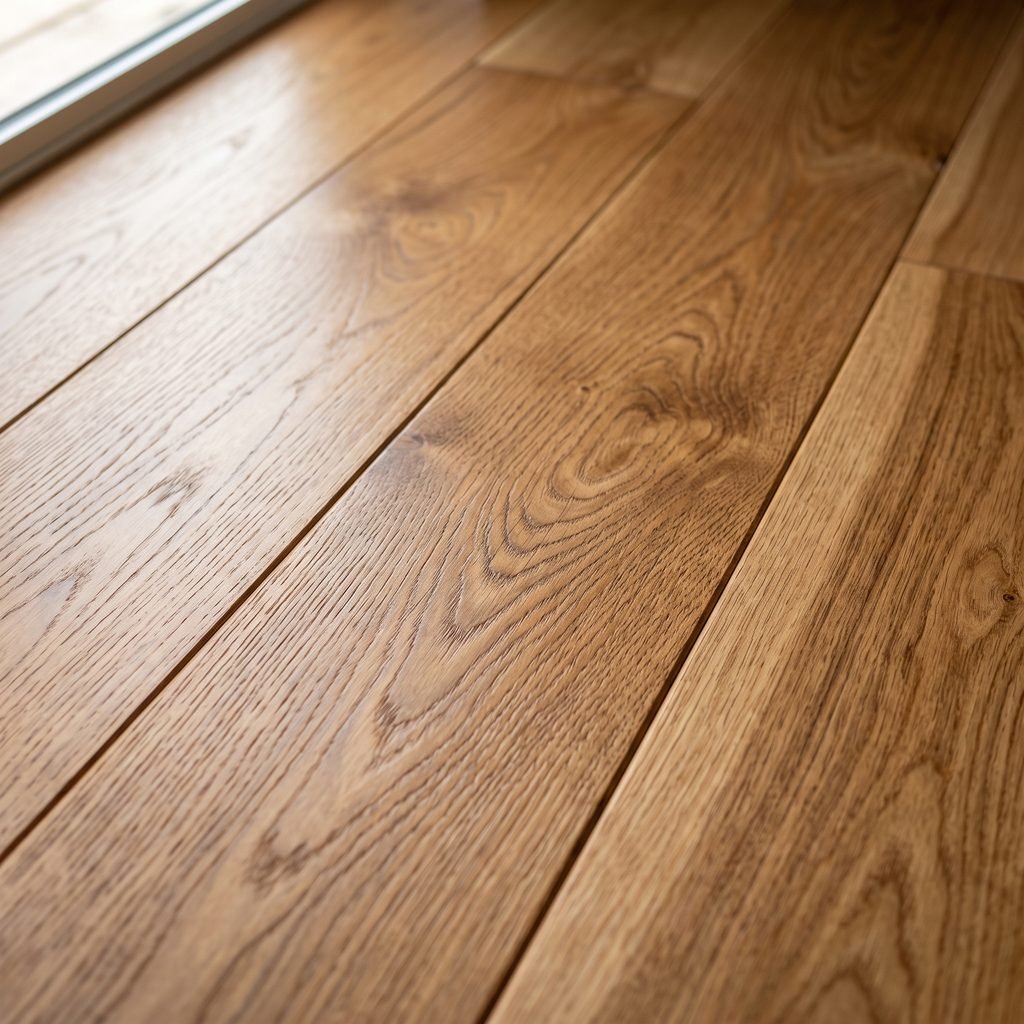
Few home updates make as much visual impact as freshly refinished stained floors.
Refinishing hardwood can completely change the feel of a room without replacing the flooring itself. A dated orange or overly dark finish can become lighter, warmer, richer, or more modern depending on the stain and topcoat you choose.
But the best-looking result does not come from picking a stain color from a small sample and hoping for the best.
Wood species, sanding, existing color variation, natural light, stain application, and the final protective coating can all affect how the finished floor looks.
If you are planning to refinish hardwood floors—or you have just completed the project—these ideas can help you choose a stain that works with your home, understand what to expect from freshly refinished floors, and protect the finish so it continues to look beautiful.
Why Refinish Hardwood Floors Instead of Replacing Them?
If the existing hardwood is structurally sound and suitable for refinishing, restoring it can preserve the character of the home while giving the room a completely different look.
Refinishing may help address:
- Worn finish
- Surface scratches
- Faded color
- Uneven appearance
- Outdated stain tones
- Minor surface discoloration
It can also give you the opportunity to coordinate the flooring more closely with current furniture, cabinetry, wall colors, and trim.
However, not every wood floor can be sanded repeatedly.
The ability to refinish depends on the flooring construction, remaining wear layer, previous sanding, damage, and condition.
If you are unsure whether the floor is suitable for another sanding, have it evaluated before starting.
1. Decide Whether You Want Light, Medium, or Dark Floors
Before comparing individual stain colors, decide how much contrast you want.
Light Floors
Lighter floors can make rooms feel open and relaxed.
They often work well with:
- Scandinavian interiors
- Coastal homes
- Modern organic spaces
- Casual traditional rooms
They can also show less contrast with some dust and minor surface wear than very dark floors.
Medium-Tone Floors
Medium stains are especially versatile.
They can provide warmth without making the room feel heavy and often work with both light and dark furniture.
Dark Floors
Dark stains create drama and contrast.
They can look especially striking with pale walls and substantial trim, but they may show dust, pet hair, scratches, and footprints more noticeably.
The right depth depends on the room, household, and amount of maintenance you are comfortable with.
2. Pay Attention to the Wood Species
The same stain can look completely different on different hardwoods.
Wood species vary in:
- Natural color
- Grain
- Density
- Porosity
- Tannin content
For example, a stain that looks neutral on one floor might appear much warmer or redder on another.
Some woods also absorb stain less evenly than others.
That is why testing directly on the actual floor is much more reliable than choosing from a printed or digital sample.
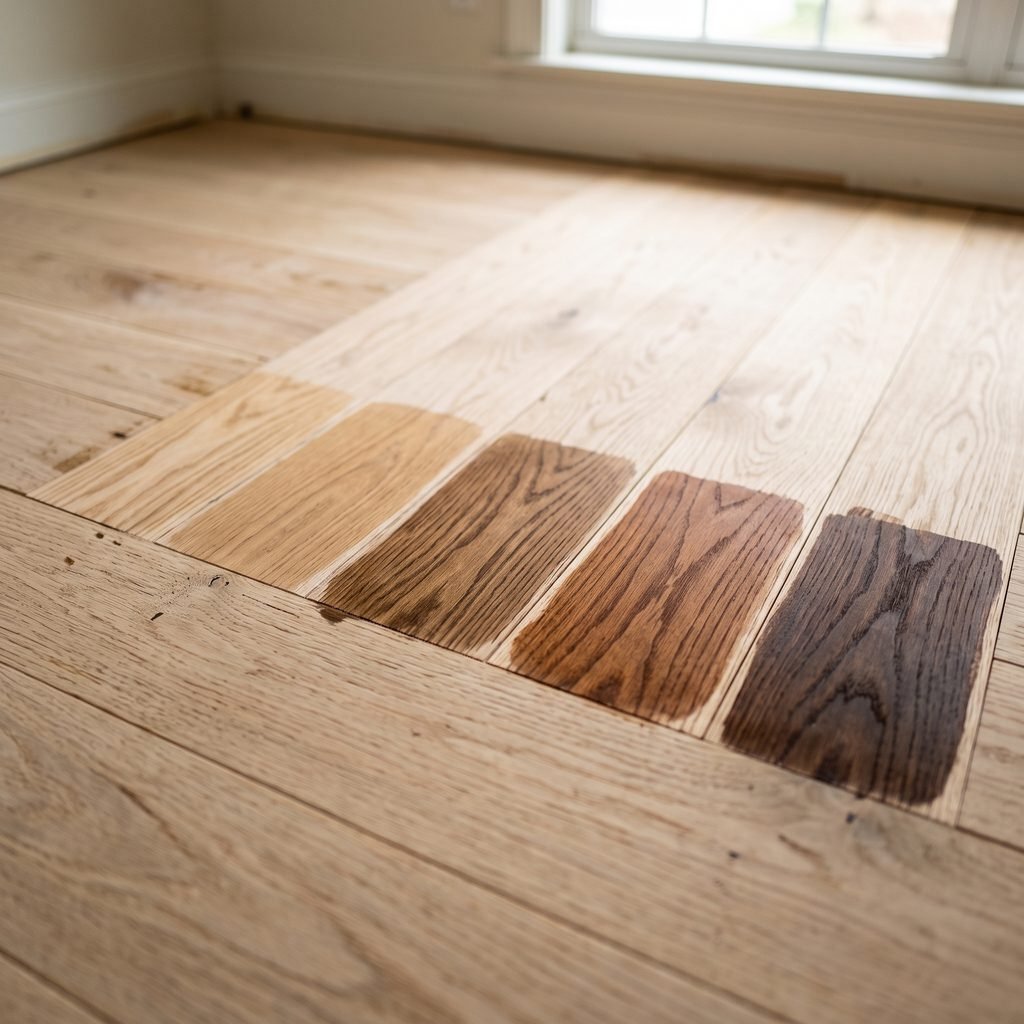
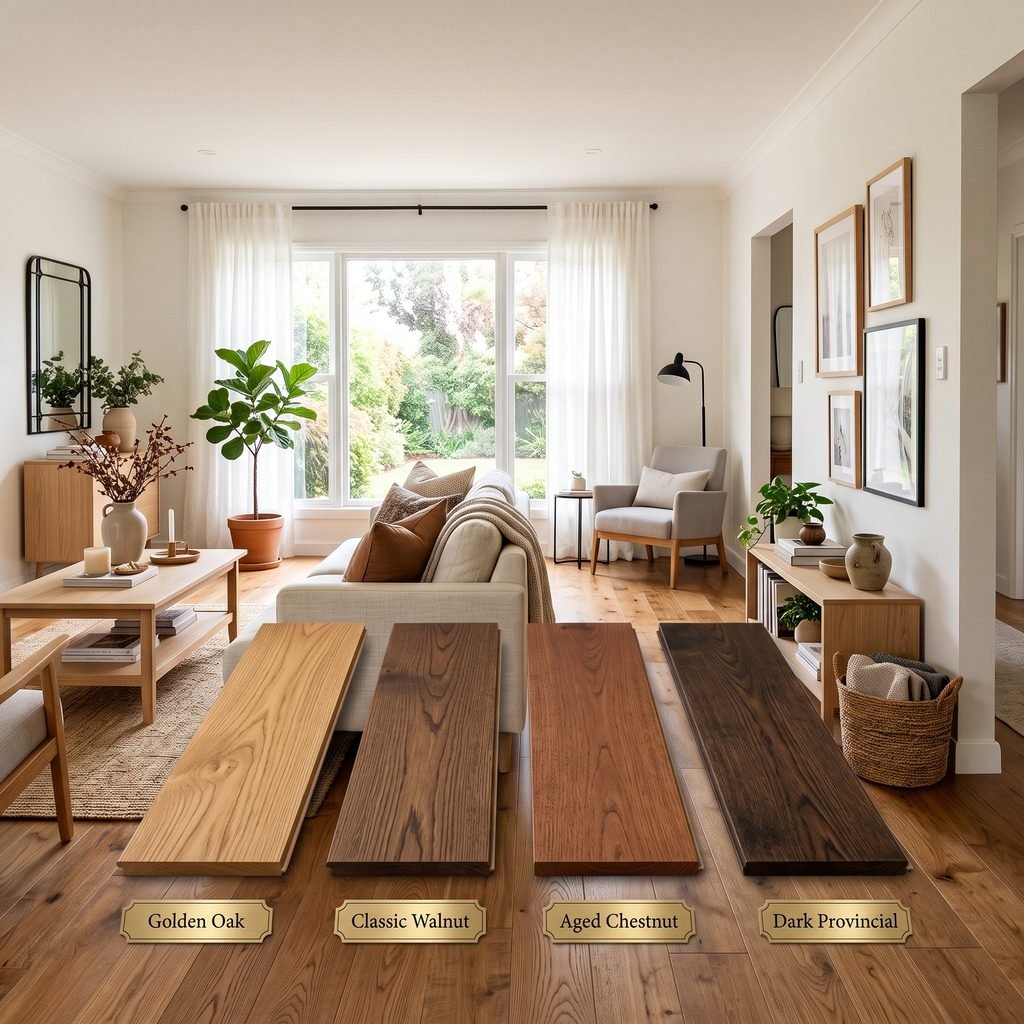
3. Test Several Stain Colors on the Floor
Whenever possible, make sample areas after sanding and before staining the full room.
Test a few options next to each other.
Try:
- Natural finish
- Light brown
- Medium neutral brown
- Warm brown
- Slightly cooler brown
- Dark brown
Look at the samples during different times of day.
Morning light, afternoon sun, and artificial evening lighting can all change how a stain appears.
Do not rush this step.
The finished floor becomes one of the largest color surfaces in the home.
4. Consider a Natural or Nearly Natural Finish
You do not always need a dramatic stain.
Sometimes the best choice is allowing the wood itself to remain the focus.
A clear or very lightly toned finish can highlight:
- Grain
- Natural variation
- Character marks
- Warmth
This approach works especially well when you want a fresh, lighter interior.
However, remember that many clear finishes still alter the wood’s color somewhat.
Some can deepen amber tones, while others are designed to preserve a lighter look.
Always test the complete stain-and-finish system rather than evaluating stain alone.
5. Medium Brown Is a Versatile Choice
A medium brown stain can be a strong option when you want warmth without the heaviness of a very dark floor.
It pairs easily with:
- White walls
- Cream upholstery
- Black accents
- Natural wood furniture
- Soft greige
- Muted green
- Navy
Medium floors also tend to bridge traditional and modern decorating styles well.
If you are unsure where to start, test several medium-brown options with different undertones.
6. Avoid Going Too Orange Unless You Intend To
Many older hardwood floors developed strong orange or amber tones over time.
If your goal is to update that look, be careful with stains and topcoats that emphasize yellow, red, or orange.
A more neutral brown may help modernize the floor while still keeping it warm.
That does not mean cool or gray flooring is always the answer.
Extremely gray stains can also feel dated in the wrong setting.
A balanced brown often has more staying power.
7. Be Careful With Very Gray Stains
Gray-stained floors became extremely popular, but they can be difficult to coordinate long term.
On some wood species, gray stain can bring out unexpected:
- Pink
- Purple
- Blue
- Green
It can also make a room feel colder if the rest of the home uses warm finishes.
If you like a cooler look, consider testing a neutral brown with subtle coolness rather than jumping straight to a strong gray.
The goal is usually to complement the wood, not completely disguise it.
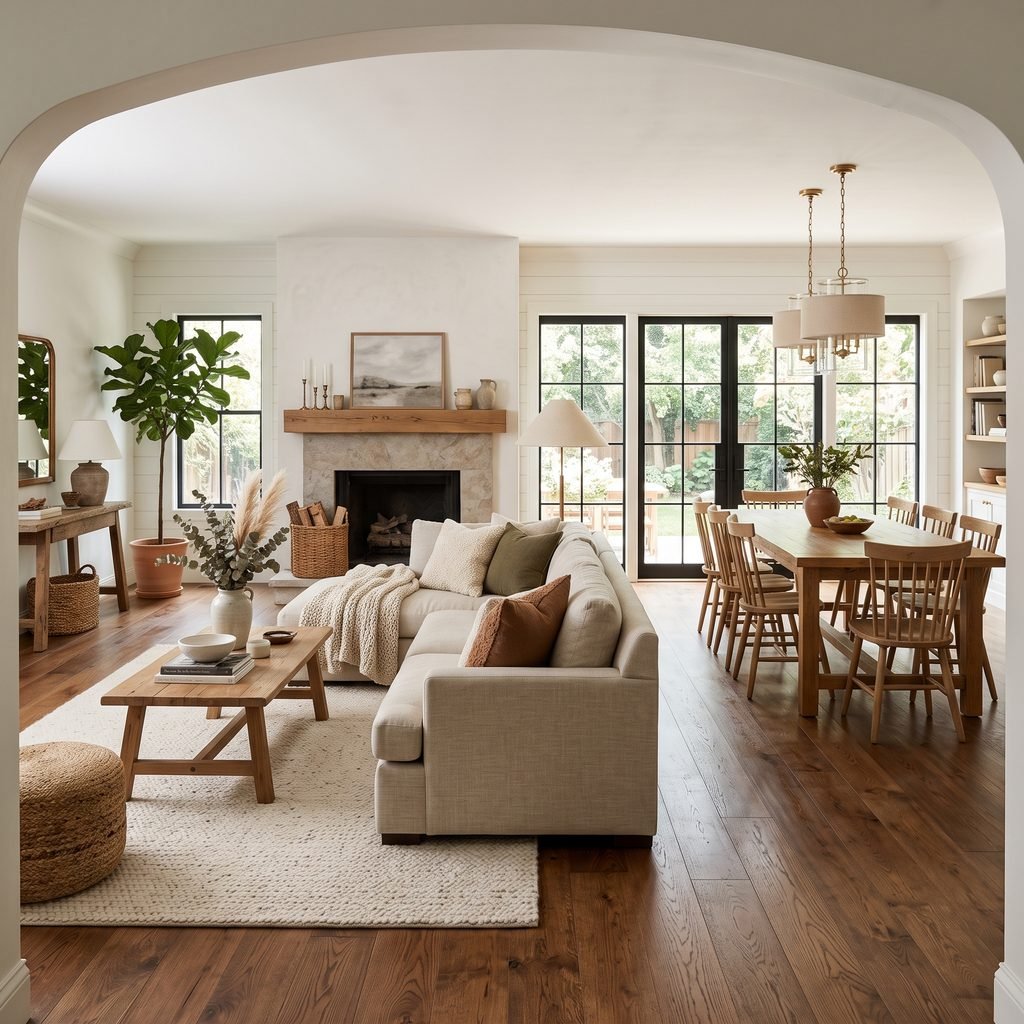
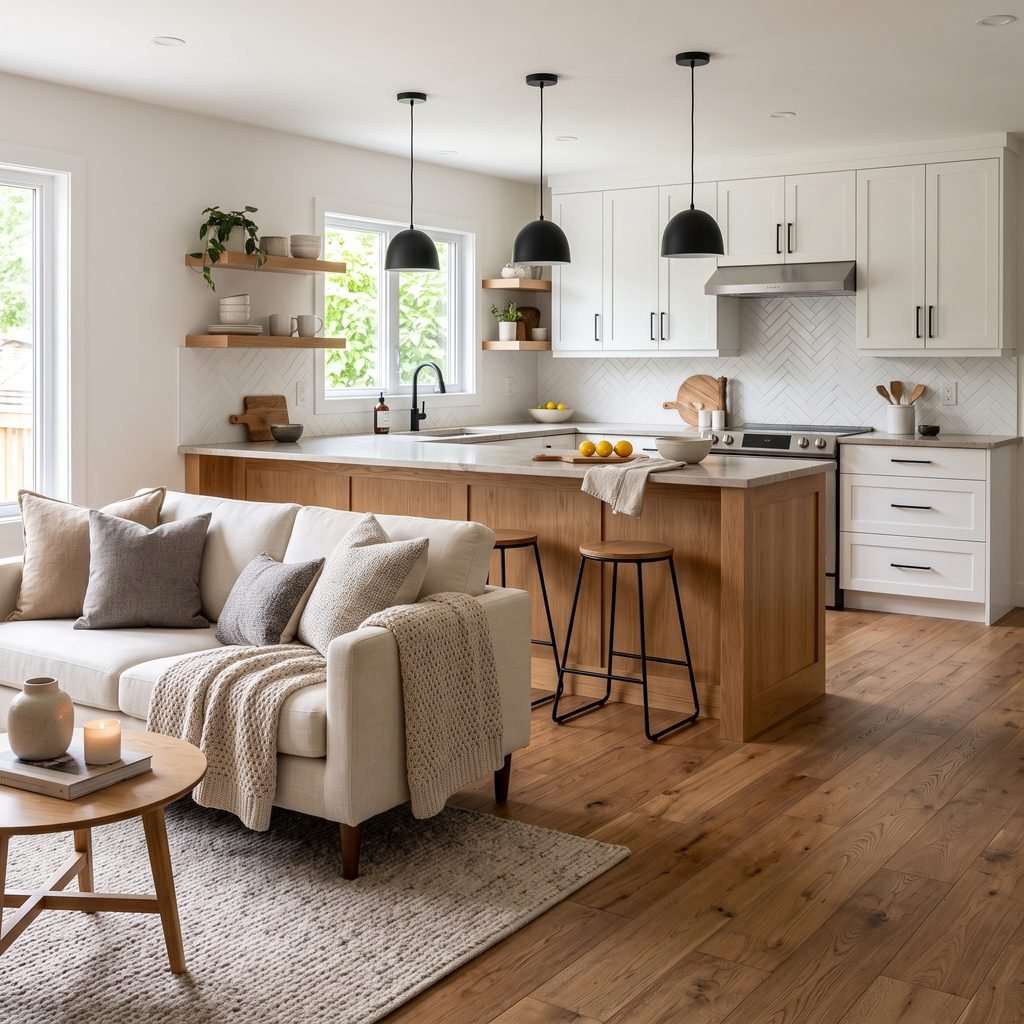
8. Choose the Undertone With the Rest of the House in Mind
Hardwood floors should connect visually with nearby rooms.
Pay attention to major fixed finishes such as:
- Kitchen cabinets
- Stone countertops
- Fireplace materials
- Stair railings
- Interior doors
- Existing wood trim
You do not need every wood tone to match exactly.
In fact, rooms often look better with some variation.
But the undertones should feel intentional rather than accidental.
A very red floor beside strongly yellow cabinetry, for example, may create more warmth than you want.
9. Think About How the Floor Connects to Stairs
If the refinished flooring meets a staircase, decide whether the stair treads will match.
You may choose to:
- Match stair treads closely
- Use a slightly darker stain
- Keep risers painted
- Repeat the floor tone on the handrail
Perfect matching can be difficult because stair wood may differ from the flooring.
Test the stain on both surfaces.
A coordinated result matters more than identical color.
10. Understand That Sanding Changes the Final Look
Stain color is only part of the equation.
How the floor is sanded can affect how evenly it accepts stain.
Uneven sanding may create:
- Dark patches
- Visible scratches
- Swirl marks
- Uneven absorption
Refinishing requires careful progression through appropriate abrasives and consistent technique.
Poor sanding is difficult to hide with stain.
For large floor areas, especially if you have limited experience with floor sanding equipment, professional refinishing may be worth considering.
11. Keep the Grain Visible
One of the main advantages of hardwood is natural variation.
A stain should usually enhance the grain rather than make the floor look like a solid painted surface.
Some boards may naturally appear:
- Lighter
- Darker
- More figured
- More rustic
That variation is normal and can add depth.
Do not expect every plank to become an identical shade after staining.
12. Choose the Finish Sheen Carefully
After staining, the protective finish affects both durability and appearance.
Common sheen categories include:
- Matte
- Satin
- Semi-gloss
- Gloss
A lower sheen can create a more relaxed look and may make small imperfections less noticeable.
Higher gloss reflects more light and can emphasize scratches, dust, and surface variation.
The exact sheen options depend on the finish product.
Test your chosen topcoat on a sample if possible.
13. Consider How Natural Light Hits the Floor
Natural light can dramatically change stained hardwood.
Direct sun can make warm tones appear stronger.
Low light can make dark floors look even deeper.
Before making your final choice, look at stain samples in:
- Bright windows
- Shaded corners
- Hallways
- Evening lighting
If the same flooring runs through several rooms, evaluate the color in all of them.
A stain that looks perfect in a sunny living room may appear much darker in a hallway.
14. Coordinate the Floor With Wall Color
Once floors are refinished, existing wall paint can suddenly look different.
Warm wood floors often pair well with:
- Warm white
- Soft cream
- Greige
- Muted beige
- Pale blue
- Soft green
Cooler flooring may work better with cleaner whites and cooler neutrals.
If you are repainting too, choose the flooring first whenever practical.
It is generally easier to adjust wall paint than change an entire stained hardwood floor.
15. Mix Wood Furniture Without Matching Everything
Your furniture does not need to match your floors exactly.
In fact, too much matching wood can make the room feel flat.
Instead, create contrast.
If the floor is medium brown, try:
- Lighter oak table
- Dark walnut accent
- Painted furniture
- Black metal
- Upholstery
Repeat wood tones in small amounts so the room feels connected.
The goal is coordination, not perfect matching.
16. Give Freshly Refinished Floors Time to Cure
One of the most important things you can do after refinishing is follow the finish manufacturer’s drying and curing instructions.
Dry-to-touch and fully cured are not necessarily the same thing.
The timetable for:
- Walking on the floor
- Wearing shoes
- Replacing furniture
- Adding rugs
- Cleaning
- Allowing pets
can vary significantly by coating system, temperature, humidity, ventilation, and application.
Do not guess.
Follow the specific product or contractor instructions used on your floor.
Placing rugs or heavy furniture too early can damage a finish that appears dry but has not fully hardened.
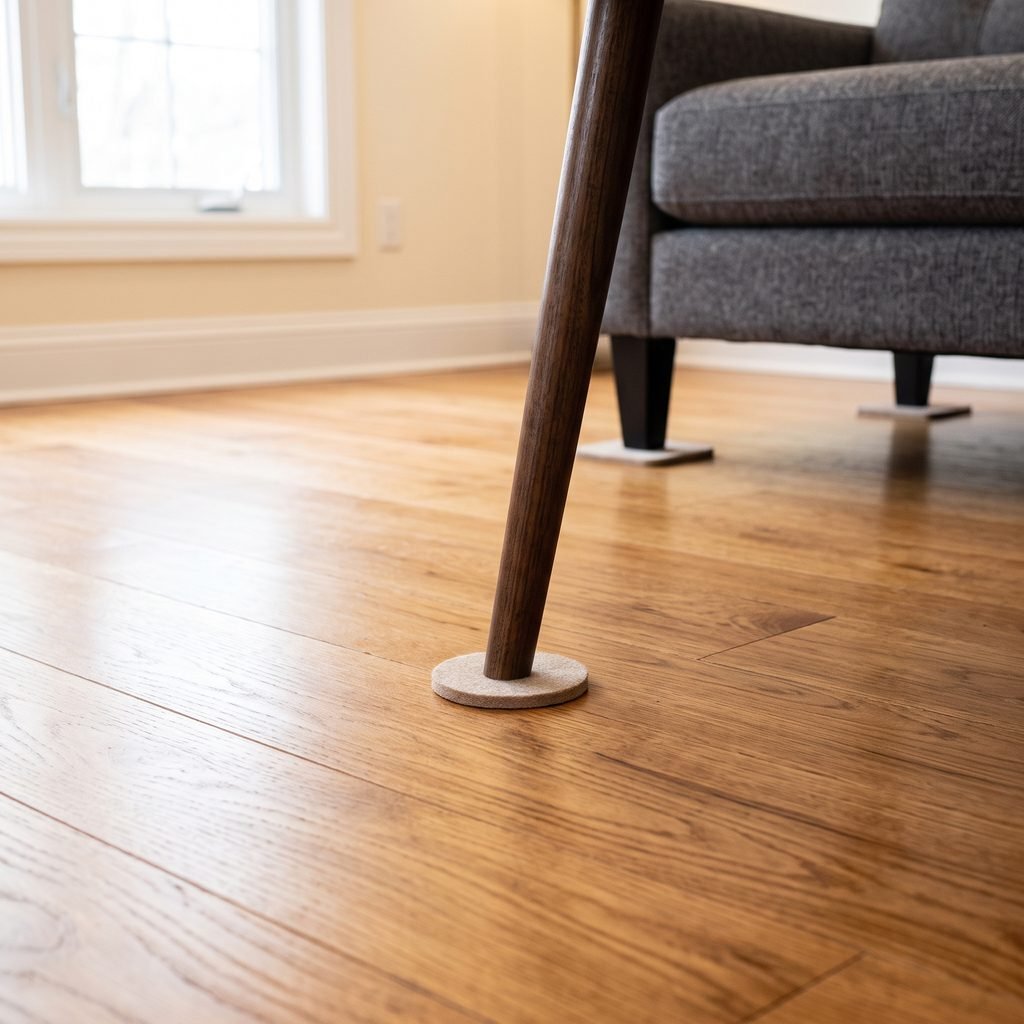
17. Protect the New Finish From Furniture
Before moving furniture back, inspect everything that touches the floor.
Add clean, appropriate furniture protectors beneath:
- Chair legs
- Sofas
- Tables
- Consoles
- Beds
Make sure protective pads are suitable for the flooring finish.
Avoid dragging furniture.
Lift and place pieces whenever possible.
Check pads periodically because grit can collect underneath them and scratch the floor.
How to Decorate With Freshly Refinished Stained Floors
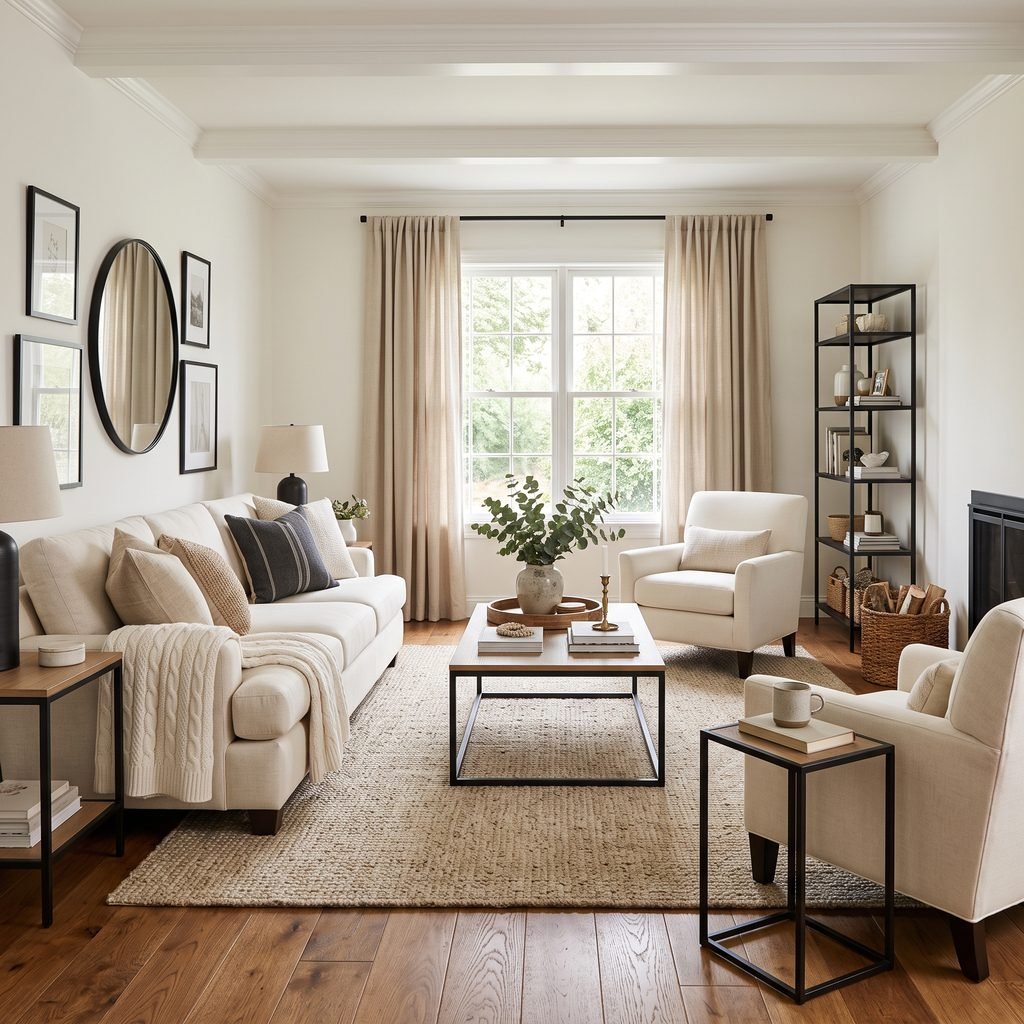
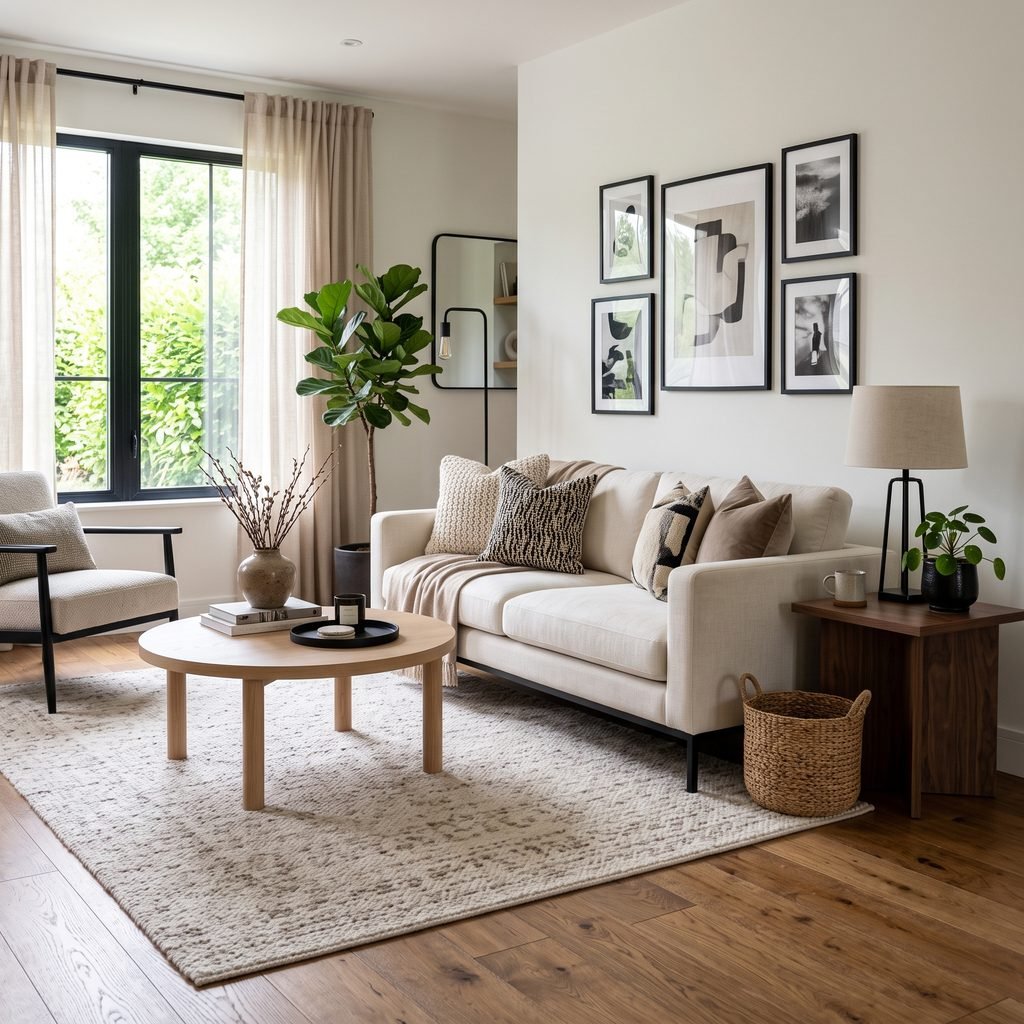
Once the floors are finished, let them become part of the room’s color palette.
A warm medium floor can act almost like a neutral.
Build around it with:
- Cream upholstery
- Warm white walls
- Black accents
- Natural linen
- Woven materials
- Muted colors
If the floor has a lot of grain and movement, keep some other surfaces simpler.
A quieter rug and restrained furniture palette can allow the wood to stand out.
Should You Use an Area Rug on Newly Refinished Floors?
Eventually, area rugs can add softness and help define rooms.
However, do not place rugs on a newly refinished floor until the specific coating system has cured enough for them.
Follow the floor finish manufacturer’s or refinisher’s instructions.
Once rugs are appropriate, choose pads designed for use with your particular floor and finish.
Some backing materials may react with or mark certain finishes.
Avoid assuming that every non-slip pad is hardwood-safe.
How to Clean Freshly Refinished Hardwood Floors
After the curing period, use a cleaning method approved for the floor finish.
In general, avoid:
- Excess water
- Steam cleaning unless specifically approved
- Abrasive scrubbers
- Harsh household chemicals
- Wax products unless compatible with the finish
Sweep, vacuum with a hardwood-appropriate attachment, or use an approved cleaning method.
Clean grit quickly because tiny abrasive particles can scratch the finish underfoot.
Always follow the care instructions for the actual coating on the floor.
How to Keep Refinished Floors Looking New
Small habits make a difference.
Use Entry Mats
Reduce grit before it reaches the hardwood.
Remove Dirty Footwear
Especially when shoes carry sand, stones, or moisture.
Use Furniture Pads
Check them periodically.
Wipe Spills Promptly
Do not let moisture sit on the floor.
Trim Pet Nails
This can reduce surface scratching.
Avoid Dragging Furniture
Lift whenever possible.
Protect High-Traffic Areas
Use suitable rugs once the finish has fully cured and the finish manufacturer allows them.
Light vs. Dark Stained Hardwood Floors
Both can look beautiful.
Light Floors
Light stains or natural finishes tend to create:
- Airy appearance
- Casual feel
- Lower visual contrast
- Scandinavian or coastal influence
Dark Floors
Dark stains provide:
- Strong contrast
- Traditional richness
- Dramatic appearance
- Formal feel
Medium Floors
Medium stains offer a useful middle ground.
They bring warmth without dominating the entire room.
For many homes, a medium neutral-brown floor can be one of the easiest choices to decorate around.
How to Choose a Timeless Hardwood Floor Stain
Trends change, but natural-looking wood tends to have lasting appeal.
For a more timeless result:
- Let some natural grain remain visible
- Avoid excessively artificial color
- Consider the home’s architecture
- Coordinate with fixed finishes
- Test before committing
Instead of asking which stain is currently popular, ask which one looks natural on your specific flooring and works with the rest of the house.
That usually leads to a better long-term choice.
Common Hardwood Refinishing Mistakes
Choosing Stain From a Tiny Sample
Test it on the actual floor whenever possible.
Going Too Dark Without Considering Maintenance
Very dark floors can show dust and scratches more visibly.
Ignoring Existing Wood Tones
Consider stairs, cabinets, doors, and trim.
Rushing the Sanding
Stain can emphasize sanding problems rather than hide them.
Expecting Every Board to Match
Natural variation is part of hardwood.
Moving Furniture Back Too Early
Follow cure-time guidance for the exact finish.
Putting Rugs Down Immediately
Wait until permitted by the coating manufacturer or refinisher.
Using the Wrong Cleaner
Use products and methods compatible with the floor’s protective finish.
Hardwood Floor Refinishing Safety Tips
Floor refinishing can involve aggressive sanding equipment, dust, solvents, coatings, and electrical tools.
Keep these considerations in mind:
- Wear appropriate eye, hearing, and respiratory protection.
- Follow sander and tool manufacturer instructions.
- Use dust collection where appropriate.
- Maintain ventilation according to finishing product directions.
- Keep ignition sources away from flammable products where applicable.
- Follow all stain, sealer, and finish safety instructions.
- Dispose of oily or solvent-soaked rags exactly as the product manufacturer directs because some can create a fire hazard if handled improperly.
- Keep children and pets away from active work areas and uncured finishes.
- Be cautious when working with old floors or coatings that may contain hazardous materials.
- Consider professional help for extensive damage, uncertain floor thickness, difficult sanding, or large projects.
FAQ About Freshly Refinished Stained Floors
How long should you wait before walking on refinished hardwood floors?
It depends on the exact finishing product and environmental conditions. Follow the manufacturer’s or flooring professional’s instructions rather than using a universal timeline.
When can you put furniture back on refinished floors?
Only after the finish system has dried and cured enough for furniture according to its instructions. Heavy furniture may require more time than light foot traffic.
When can you put rugs on freshly refinished floors?
Wait until the coating manufacturer or refinisher says the finish is sufficiently cured. Rugs can interfere with curing if installed too early.
What stain color is most timeless for hardwood floors?
Natural-looking finishes and balanced brown stains tend to work across many decorating styles, but the best choice depends on the wood species and home.
Do dark stained floors show more dirt?
Very dark floors can make light-colored dust, pet hair, scratches, and footprints more noticeable.
Can you change dark hardwood floors to a lighter stain?
Sometimes, if the floor can be adequately sanded back and the existing color can be removed sufficiently. The result depends on the wood species, previous treatments, and floor condition.
Should hardwood floors match the furniture?
No. Coordinated contrast usually looks more natural than matching every wood tone exactly.
Should I refinish hardwood floors myself?
Some experienced DIYers do, but floor sanding is less forgiving than many cosmetic projects. Mistakes can create permanent unevenness or damage. Consider professional refinishing if you are uncertain about the equipment, flooring thickness, or condition.
Final Thoughts
Freshly refinished stained floors can change the entire personality of a home.
The right stain can remove outdated orange tones, bring warmth to a pale room, complement existing cabinetry, and make old hardwood feel refreshed without losing its natural character.
Start by understanding the wood itself.
Then test several stain colors directly on the sanded floor, consider the lighting and fixed finishes throughout the home, and choose a tone that works with your decorating style rather than following a trend automatically.
Once the floor is finished, patience matters.
Respect the product’s drying and curing instructions, move furniture carefully, choose floor-safe protectors and rugs, and clean the surface according to the coating manufacturer’s recommendations.
With thoughtful color selection and proper care, freshly refinished hardwood floors can become one of the most beautiful and enduring features in the home.