

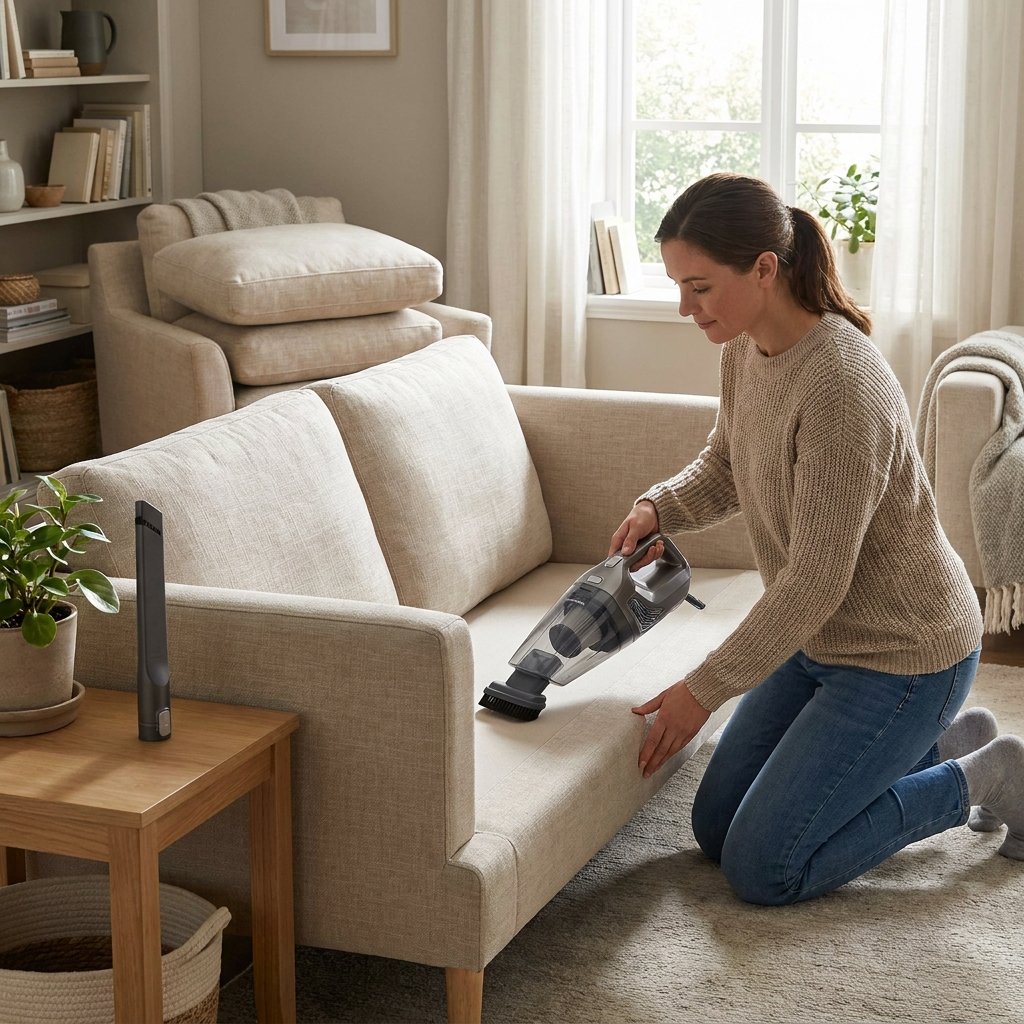
A fabric couch can collect an impressive amount of everyday dirt without looking obviously dirty.
Dust settles between the cushions. Crumbs disappear into the seams. Pet hair clings to upholstery. And spills can leave rings or stains long after the original mess has been cleaned up.
Fortunately, routine couch cleaning doesn’t have to be complicated.
The most important thing to know about how to clean a fabric couch is that there isn’t one cleaning solution that’s safe for every upholstery fabric.
Before using water, soap, a commercial upholstery cleaner, or a cleaning machine, you need to identify the manufacturer’s care instructions and understand what the fabric can tolerate.
Once you’ve done that, cleaning usually involves vacuuming thoroughly, treating appropriate stains carefully, cleaning only with an approved method, avoiding oversaturation, and allowing the couch to dry completely.
Here’s how to approach the job without accidentally turning a small stain into a much bigger problem.

Before You Clean Your Fabric Couch
Don’t start by mixing a homemade cleaning solution.
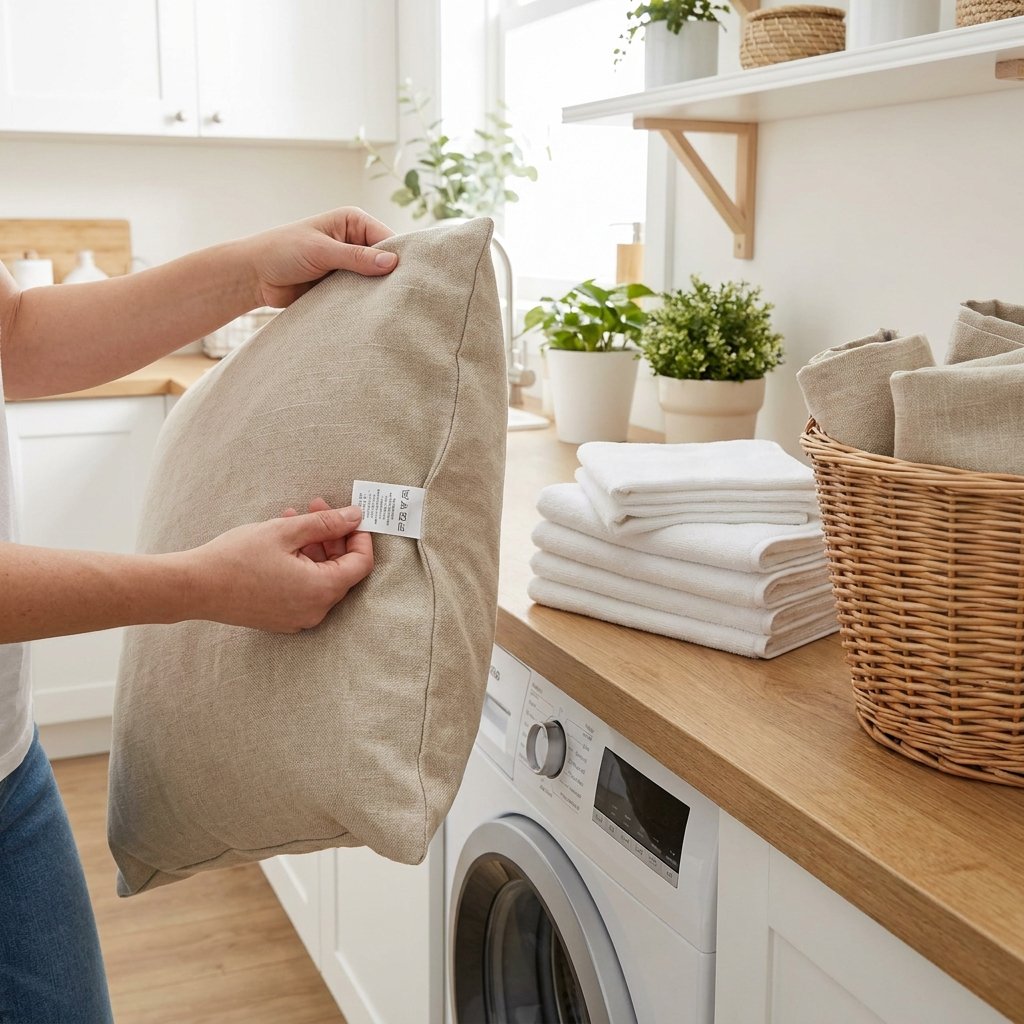
Start by finding the care information for your sofa.
Look:
- Under the cushions
- Beneath the sofa
- On an upholstery tag
- In the manufacturer’s care instructions
- In the paperwork that came with the furniture
If you can identify the sofa model, you may also be able to find its current care instructions from the manufacturer.
Those instructions should take priority over general cleaning advice.
Understand the Upholstery Cleaning Code
Many upholstered pieces have a cleaning code that helps indicate the type of cleaning method that may be appropriate.
Common codes include:
W
Generally indicates that water-based cleaning methods may be used according to the manufacturer’s instructions.
S
Generally indicates that a water-free solvent cleaning method is required.
W-S or S-W
Generally indicates that either water-based or solvent-based methods may be permitted, depending on the product and manufacturer guidance.
X
Generally means routine cleaning should be limited to methods such as vacuuming or brushing rather than applying water- or solvent-based cleaning products.
The tag isn’t permission to use every cleaner within a category.
You still need to follow the furniture manufacturer’s directions and the cleaning product’s instructions.
If you can’t determine the upholstery material or cleaning requirements, use a professional upholstery cleaner rather than experimenting with aggressive products.

What You’ll Need to Clean a Fabric Couch
Your exact supplies depend on the upholstery and approved cleaning method.
For routine cleaning, you may need:
- Vacuum with upholstery attachment
- Crevice attachment
- Clean white microfiber cloths
- Soft upholstery brush if appropriate
- Manufacturer-approved upholstery cleaner if needed
- Protective gloves if required by the cleaning product
- Fan for additional air circulation
White cloths are useful for spot cleaning because they make it easier to see whether color is transferring from the upholstery.
Avoid assembling a collection of strong household chemicals and assuming more products will produce a cleaner couch.
Simple and compatible is better.
Step 1: Remove Loose Items
Take everything off the couch.
Remove:
- Throw pillows
- Blankets
- Toys
- Pet items
- Loose debris
If seat and back cushions are removable, take them off as well.
Check underneath before vacuuming.
You may be surprised by what’s hiding there.
Step 2: Check for Damage
Before cleaning, inspect the upholstery.
Look for:
- Loose seams
- Tears
- Fraying
- Damaged zippers
- Weak fabric
- Fading
- Existing water marks
- Color variation
Aggressive cleaning can make damaged upholstery worse.
If the fabric is antique, delicate, badly damaged, or valuable, professional cleaning may be the safer choice.
Step 3: Vacuum the Entire Couch
Vacuuming should come before wet or solvent cleaning.
Use the upholstery attachment to remove:
- Dust
- Crumbs
- Pet hair
- Surface dirt
Work slowly across the fabric.
Then use the crevice attachment around:
- Seams
- Cushion edges
- Arms
- Back
- Under cushions
- Along the frame
Vacuum both sides of removable cushions when appropriate.
Removing dry dirt first helps prevent you from turning loose grime into muddy residue during later cleaning.
Step 4: Deal With Pet Hair
A vacuum may remove most pet hair, but some upholstery holds onto it stubbornly.
Use an upholstery-safe method appropriate for the fabric.
A clean upholstery brush or other manufacturer-approved tool may help loosen hair before another pass with the vacuum.
Avoid aggressive scraping that can snag or fuzz the fabric.
Regular vacuuming is much easier than removing months of accumulated pet hair at once.
Step 5: Check the Couch for Stains
Once the couch has been vacuumed, inspect it in good light.
Look for:
- Food spots
- Drink stains
- Greasy marks
- Mud
- Water rings
- Pet accidents
- Unknown discoloration
Different stains may require different treatments.
Don’t assume one universal DIY mixture will safely remove everything.
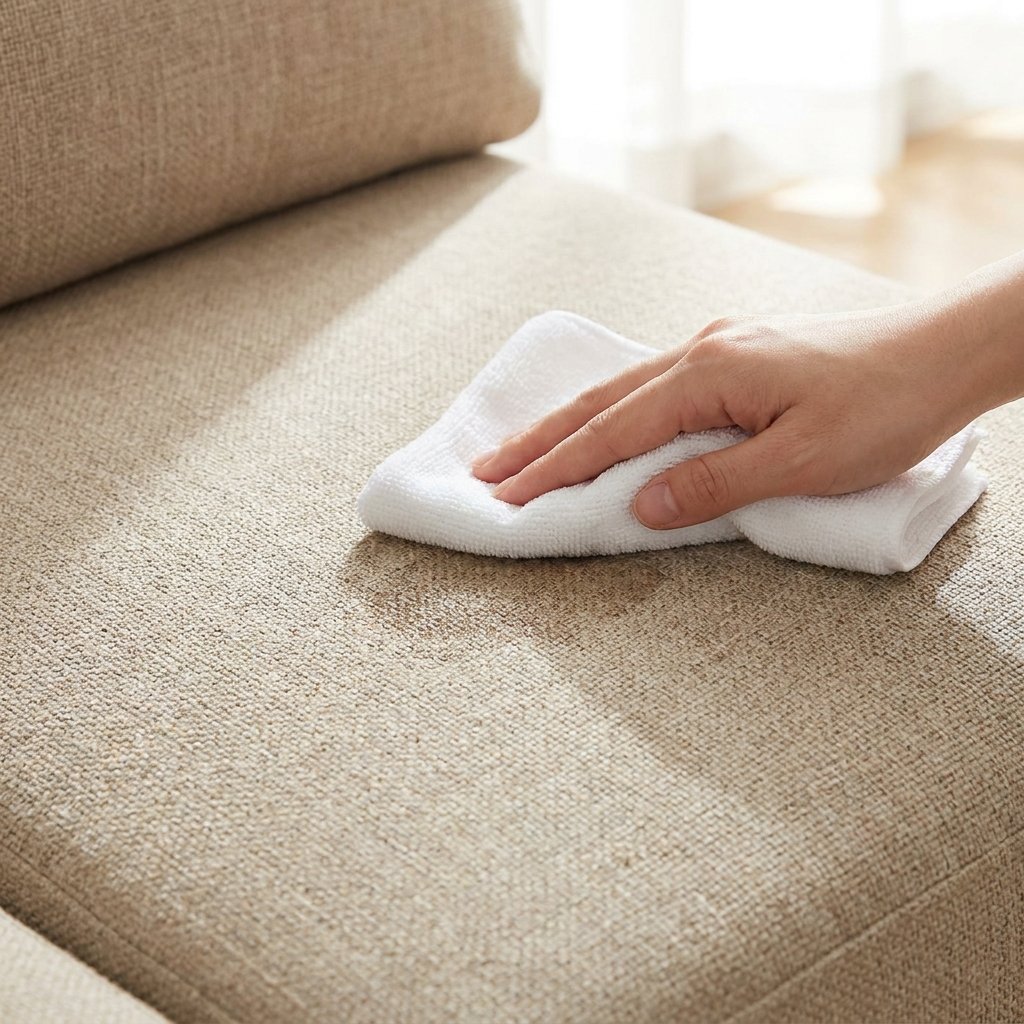
Step 6: Blot Fresh Spills Quickly
If something has just spilled, act promptly.
Use a clean, absorbent white cloth to blot the liquid.
Don’t aggressively rub.
Rubbing can spread the spill and work it further into the upholstery.
Blot from the outside of the affected area toward the center when practical.
Then follow the furniture manufacturer’s instructions for treating that type of upholstery.
Step 7: Test Any Cleaner First
Even when a product appears compatible with your couch’s cleaning code, test it in an inconspicuous location first.
For example:
- Behind a cushion
- Near the back
- On a hidden lower area
Follow the cleaner’s directions and allow the test area to dry completely before judging the result.
Check for:
- Color change
- Fading
- Texture change
- Rings
- Dye transfer
Don’t evaluate the fabric only while it’s wet.
Step 8: Spot Clean Stains Appropriately
If the upholstery permits the cleaning method you’re using, treat the stained area according to the furniture and cleaning-product instructions.
In general, use as little product as necessary.
Avoid saturating the cushion.
Work gently rather than scrubbing hard.
Overworking fabric can:
- Distort the texture
- Spread the stain
- Create a larger wet area
- Damage fibers
- Leave visible rings
Some stains are better handled professionally, particularly on delicate fabrics or when the stain composition is unknown.
Step 9: Clean Beyond the Exact Spot When Appropriate
One reason upholstery develops obvious rings is that a small section is cleaned much more heavily than everything surrounding it.
Depending on the upholstery and approved cleaning method, it may be better to work consistently across a logical section—such as a cushion panel—rather than soaking one tiny circle.
However, don’t interpret this as a reason to wet the entire sofa unnecessarily.
Follow the cleaning method appropriate to the upholstery.
Step 10: Avoid Oversaturating the Fabric
More water doesn’t mean more cleaning power.
Too much moisture can penetrate beyond the upholstery into:
- Cushion filling
- Foam
- Batting
- Internal materials
That can make drying much slower and potentially create other problems.
Use controlled moisture when the upholstery permits water-based cleaning.
Your goal is to clean the fabric—not soak the couch.
Step 11: Allow the Couch to Dry Thoroughly
Drying is part of the cleaning process.
Improve airflow by:
- Opening windows when weather permits
- Running a fan
- Keeping cushions separated where appropriate
Don’t put blankets or protective covers over damp upholstery.
And don’t sit on the couch until it’s adequately dry.
Drying time varies with the cleaning method, upholstery, cushion construction, room temperature, humidity, airflow, and amount of moisture used.

How to Deep Clean a Fabric Couch
Sometimes vacuuming and spot cleaning aren’t enough.
Perhaps the entire couch looks dingy, or you’re dealing with widespread everyday grime.
Before deep cleaning, check:
- Upholstery cleaning code.
- Manufacturer’s care instructions.
- Whether the covers are actually removable and washable.
- Whether an extraction or upholstery-cleaning machine is approved.
- Whether professional cleaning is recommended.
Don’t assume a carpet-cleaning machine can safely be used on your sofa just because it has a small attachment.
The upholstery, internal construction, cleaning solution, and equipment all need to be compatible.
Can You Use an Upholstery Cleaning Machine?
Sometimes—but only when appropriate for the couch.
Check both:
- Furniture instructions
- Machine instructions
Use only compatible cleaning solutions and follow the equipment manufacturer’s requirements.
Avoid repeatedly passing over the same area simply because more water appears to be coming out.
Oversaturation is one of the biggest concerns when cleaning upholstered furniture.
Can You Steam Clean a Fabric Couch?
Don’t automatically use steam.
High temperature and moisture aren’t appropriate for every upholstery material or construction.
Only use a steam method if the furniture manufacturer permits it and the equipment is intended for that upholstery.
When you’re unsure, choose a more conservative method or professional cleaning.
Can You Wash Couch Cushion Covers?
A zipper doesn’t automatically mean the cover is machine washable.
Some upholstery covers are designed to be removable for construction or servicing rather than laundering.
Machine washing an unsuitable cover could potentially cause:
- Shrinking
- Color change
- Distortion
- Difficulty reinstalling it
Check the manufacturer’s instructions before putting any sofa cover in a washing machine or dryer.
How to Clean a Fabric Couch Naturally
“Natural” doesn’t automatically mean safe for upholstery.
Common household ingredients can still:
- Affect dyes
- Leave residue
- Change texture
- Create rings
- Interact with previous cleaning products
If you prefer a simple cleaning approach, the safest starting point is often:
- Vacuum thoroughly.
- Treat spills promptly.
- Use only an approved cleaning method.
- Avoid unnecessary fragrance and residue.
Don’t sacrifice fabric compatibility just to create a homemade cleaner.
Can You Clean a Couch With Vinegar?
Don’t assume vinegar is safe for every couch.
Acidic cleaners may not be appropriate for certain fibers, dyes, finishes, or manufacturer warranties.
If the sofa manufacturer specifically permits a particular vinegar-based method, follow those instructions.
Otherwise, use an approved upholstery cleaner.
Can You Use Dish Soap on a Fabric Couch?
Again, it depends.
Dish soap is formulated for dishes, not necessarily upholstery.
Using too much can leave residue that’s difficult to remove without additional water.
Residue may attract more dirt or change the fabric’s feel.
Don’t use dish soap simply because it’s available in the kitchen.
Follow the upholstery manufacturer’s recommendations.
Can You Use Baking Soda on a Couch?
Baking soda is often suggested online for deodorizing upholstery, but it isn’t automatically appropriate for every fabric or couch construction.
Fine powder can also settle into seams and fibers and may be difficult to remove completely.
Check the furniture manufacturer’s guidance before applying powders or other household products.
How to Get Smells Out of a Fabric Couch
Start by figuring out what’s causing the smell.
Covering an odor with fragrance isn’t the same as removing the source.
Begin with:
- Thorough vacuuming
- Cleaning approved washable accessories
- Treating known stains appropriately
- Increasing room ventilation
If an odor comes from liquid that has penetrated deeply into the cushion filling, surface cleaning may not solve the problem.
Pet urine, significant spills, smoke, mold-related odors, and other persistent problems may require professional treatment or replacement of affected internal materials.

How to Clean Pet Stains From a Couch
Pet stains can be difficult because the problem may extend below the visible upholstery.
Blot fresh liquid promptly.
Then use a treatment specifically compatible with the couch material and the type of stain, following the product and furniture manufacturer’s directions.
Avoid mixing multiple cleaners.
Some chemical combinations can be dangerous, while others can damage upholstery or set stains.
If urine has soaked deeply into foam or internal padding, professional cleaning may be necessary.
How to Clean Food and Drink Stains
Start by removing solid material carefully without spreading it.
Blot liquids.
Then identify the stain if possible.
Coffee, juice, greasy food, and dairy products aren’t necessarily treated the same way.
Use an upholstery-compatible stain treatment recommended for your couch.
Avoid aggressive scrubbing.
How to Remove Grease From a Fabric Couch
Grease can be especially stubborn because adding water isn’t always the answer.
The appropriate treatment depends on the upholstery code and fabric.
Don’t experiment with strong solvents on a water-cleanable sofa—or water on solvent-only upholstery—without confirming compatibility.
For difficult oily stains, professional upholstery cleaning may be worthwhile.
How to Clean a White or Light-Colored Fabric Couch
Light upholstery shows dirt quickly, but that doesn’t mean you should clean it more aggressively.
Instead, clean it more consistently.
Focus on:
- Frequent vacuuming
- Fast spill response
- Clean hands
- Washable throws where appropriate
- Manufacturer-approved spot cleaning
Be careful with colored cleaning cloths because dye transfer may be more obvious on light upholstery.
White cloths are usually easier to monitor.
How to Clean Couch Arms
Arms can become dirty faster than other areas because they’re touched frequently.
Vacuum first.
Then clean using the method approved for the upholstery.
Avoid soaking only the dirtiest patch.
A heavily saturated spot beside dry fabric may create a noticeable boundary once it dries.
How to Clean Couch Cushions
Vacuum all accessible sides.
If the cushions are reversible and the manufacturer permits it, rotating them periodically can encourage more even wear.
For spot cleaning, use the approved method and avoid soaking the filling.
If cushion covers are removable, don’t assume they’re washable until you’ve checked the care instructions.
How Often Should You Clean a Fabric Couch?
There’s no single schedule for every household.
A practical routine might include:
Weekly or Regularly
Remove crumbs and visible debris.
Every Few Weeks
Vacuum the upholstery more thoroughly.
Immediately
Blot spills.
As Needed
Treat stains using an approved method.
Periodically
Deep clean when the couch genuinely needs it and the upholstery permits it.
Homes with children or pets may need more frequent maintenance.
How to Keep a Fabric Couch Clean Longer
The easiest couch to clean is one that doesn’t become heavily soiled in the first place.
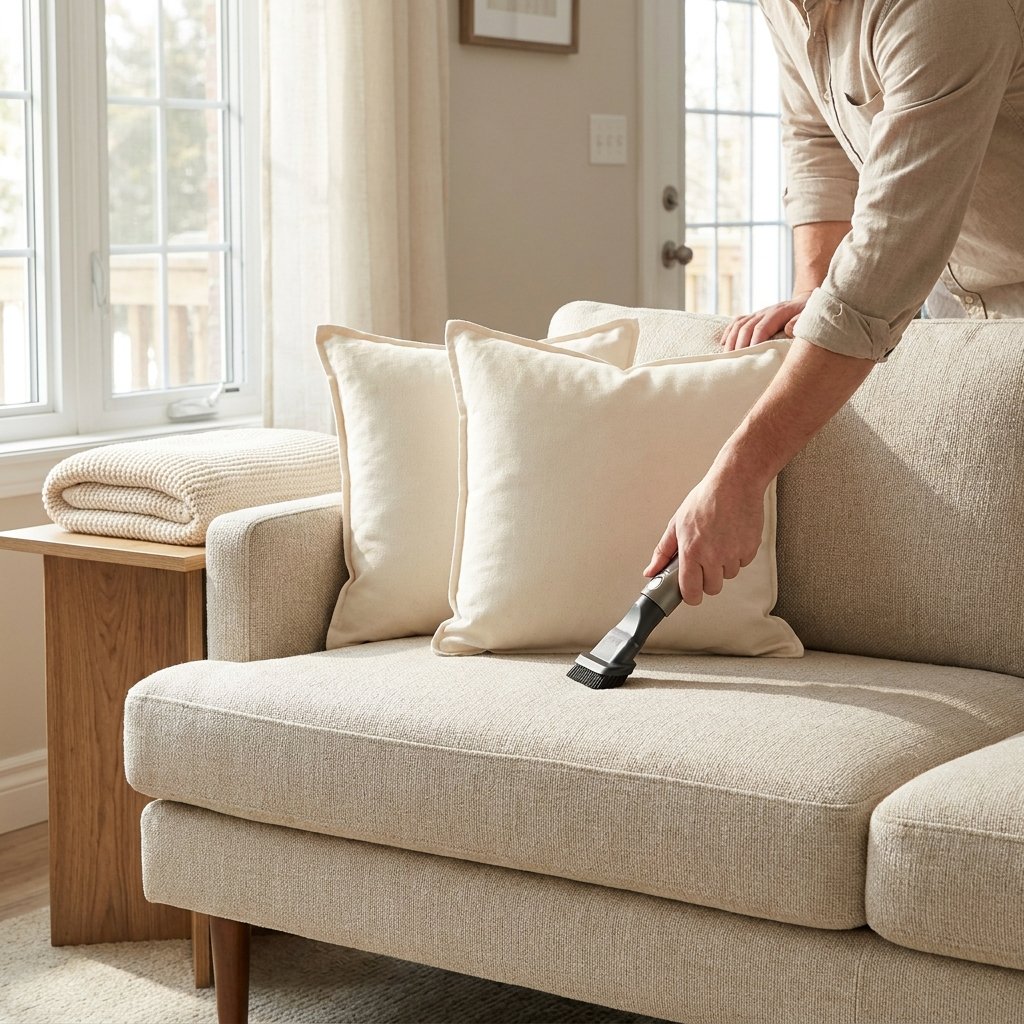
Vacuum Regularly
Don’t let crumbs and grit accumulate.
Deal With Spills Quickly
Fresh spills are usually easier to address than old stains.
Rotate Cushions
Where the manufacturer permits it, rotating cushions can help distribute wear.
Wash Throws Separately
Washable throws can protect high-use areas without requiring frequent upholstery cleaning.
Keep Pets Groomed
Regular grooming can reduce loose hair.
Be Careful With New Clothing
Dark denim and other heavily dyed textiles may transfer color to light upholstery in some circumstances.
Keep Food Contained
If possible, avoid turning the entire sofa into the dining table.
Common Fabric Couch Cleaning Mistakes
Cleaning Before Reading the Care Instructions
Always start with the upholstery requirements.
Assuming Every Fabric Can Get Wet
Some upholstery requires solvent-based or vacuum-only care.
Scrubbing Stains Aggressively
This can spread stains or damage fibers.
Using Too Much Water
Oversaturation makes drying difficult.
Mixing Cleaning Chemicals
Never create your own chemical combinations.
Using Colored Rags on Light Upholstery
Dye may transfer.
Applying Cleaner Without Testing It
Always test in a hidden location when appropriate.
Machine Washing Covers Because They Have Zippers
Removable doesn’t necessarily mean washable.
Using Steam Without Checking
Heat and moisture aren’t safe for every upholstery.
Sitting on the Couch Before It’s Dry
Give the upholstery enough time and airflow.
Masking Odors Instead of Cleaning the Source
Fragrance doesn’t remove contamination.
Assuming DIY Is Always Better
Some fabrics and stains deserve professional treatment.
When to Call a Professional Upholstery Cleaner
Consider professional help when:
- The manufacturer recommends it
- The upholstery is delicate
- The fabric is antique or valuable
- You’re unsure of the material
- Stains are extensive
- Dye is transferring
- Pet urine has penetrated deeply
- The couch has widespread water marks
- Strong odors persist
- Previous DIY cleaning made the problem worse
Sometimes the least expensive solution is avoiding a costly cleaning mistake.
A Simple Fabric Couch Cleaning Routine
If your sofa isn’t heavily stained, routine care can be straightforward.
- Remove pillows and throws.
- Vacuum the cushions.
- Vacuum seams and crevices.
- Vacuum beneath cushions.
- Inspect for stains.
- Treat only with an approved method.
- Allow cleaned areas to dry thoroughly.
- Replace cushions and accessories.
That simple routine can prevent dirt from becoming deeply embedded.
FAQ About Cleaning a Fabric Couch
What is the best way to clean a fabric couch?
Start by checking the manufacturer’s care instructions and upholstery cleaning code. Vacuum thoroughly, treat stains using an approved method, avoid oversaturating the fabric, and allow the couch to dry completely.
How can I clean my fabric sofa at home?
For routine cleaning, vacuum the entire sofa carefully and address stains according to the upholstery’s care requirements. More intensive cleaning should only be done with methods and products compatible with the couch.
Can I clean a fabric couch with soap and water?
Only if the upholstery manufacturer permits water-based cleaning and the cleaning product is appropriate. Don’t assume ordinary soap and water are safe for every fabric.
How do you clean a couch without a machine?
Regular vacuuming and appropriate spot cleaning can handle much everyday maintenance. A cleaning machine isn’t necessary for every sofa.
Can I use a carpet cleaner on my couch?
Only if both the furniture and equipment manufacturers approve the method and the cleaning solution is compatible with the upholstery.
How do I get old stains out of a fabric couch?
Identify the upholstery requirements and, if possible, the type of stain. Use an appropriate upholstery stain treatment rather than aggressively scrubbing or experimenting with multiple household chemicals.
How do you deodorize a fabric sofa?
Start by vacuuming thoroughly and addressing the source of the odor. Persistent odors from deep spills, pet accidents, smoke, or moisture may require professional treatment.
How long does a couch take to dry after cleaning?
It varies considerably based on the upholstery, cushion construction, cleaning method, humidity, temperature, airflow, and amount of moisture used. Allow the couch to dry completely before normal use.
Final Thoughts
Learning how to clean a fabric couch starts with one simple rule:
Don’t clean first and check the care instructions later.
Fabric sofas vary tremendously.
A cleaning method that works beautifully on one couch could leave rings, fading, texture changes, or other damage on another.
Find the manufacturer’s care information first.
Then vacuum thoroughly.
Remove dry dirt before introducing any cleaning product.
When stains happen, blot rather than aggressively rubbing them, and use only a cleaning method appropriate for the upholstery.
Test products in a hidden area when appropriate.
And resist the temptation to use more water because the couch looks particularly dirty.
When it comes to upholstery, controlled cleaning is usually better than soaking.
Finally, let the couch dry thoroughly before putting it back into everyday use.
For routine maintenance, you may find that regular vacuuming and quick attention to spills dramatically reduce how often your sofa needs a major cleaning.
And if you’re dealing with valuable upholstery, an unknown fabric, significant pet contamination, widespread stains, or a couch that’s already been damaged by previous cleaning attempts, calling a professional can be much safer than trying one more DIY solution.
A fabric couch doesn’t need to look brand-new every day.
But with consistent vacuuming, sensible stain treatment, and the right cleaning method for the material, you can keep it looking fresh, comfortable, and inviting for much longer.