

Outdoor cushions can make a patio, deck, or balcony feel much more comfortable and inviting. But because they’re constantly exposed to dust, pollen, food spills, rain, and outdoor grime, they can quickly start looking worn and dirty.
The good news is that you don’t necessarily need to replace your cushions when they become stained or dingy.
Learning how to clean patio cushions properly can help refresh their appearance and extend their useful life. With a few basic cleaning supplies and the right technique, you can tackle everyday dirt, stubborn stains, and even mildew without making the process unnecessarily complicated.
The most important thing is to check the care instructions for your specific cushions before cleaning them. Outdoor fabrics and cushion fillings can vary, and some materials require gentler treatment than others.
In this guide, you’ll learn a simple step-by-step method for cleaning patio cushions, plus tips for dealing with stains, mildew, odors, and everyday outdoor buildup.
Before You Start: Check the Care Label
Before applying any cleaning solution, look for a manufacturer’s care label.
The label may indicate whether the cushion cover can be:
- Machine washed
- Hand washed
- Spot cleaned
- Dry cleaned
- Cleaned with a specific product
If the cover is removable and machine washable, follow the manufacturer’s instructions rather than automatically using the cleaning method below.
For cushions without clear instructions, test any cleaning solution on a small, inconspicuous area first.
This is especially important for brightly colored or delicate outdoor fabrics.

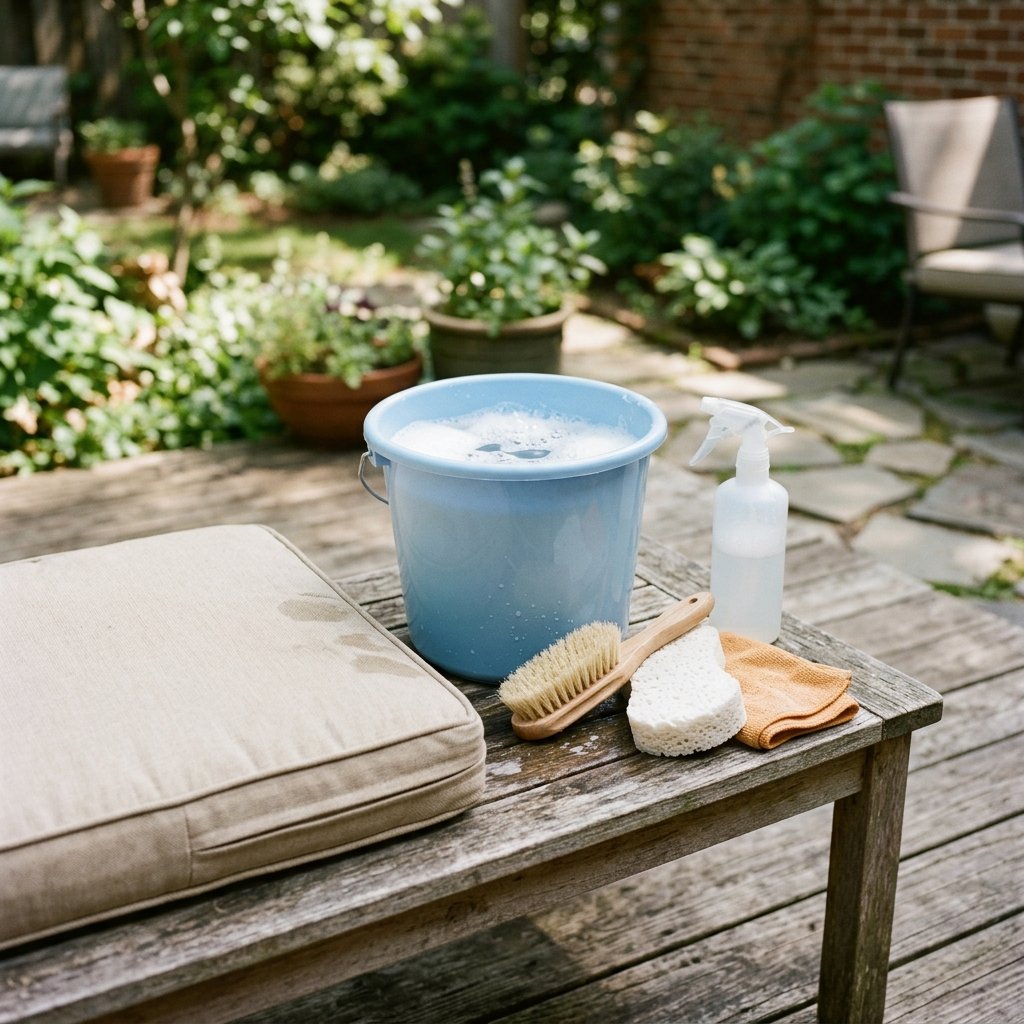
What You’ll Need
You probably already have most of what you need around the house.
Basic cleaning supplies
- A soft-bristle brush
- Bucket
- Mild dish soap or gentle detergent
- Warm water
- Garden hose or clean water
- Clean sponge or microfiber cloth
- Clean towels
- Soft toothbrush for small areas
- Spray bottle, optional
For more stubborn problems, you may also need a fabric-appropriate stain remover or mildew treatment.
Avoid automatically reaching for strong bleach or harsh chemicals. They can damage some fabrics, fade colors, or affect the cushion’s backing and stitching.
Step 1: Remove the Cushions
Take all the cushions off your patio furniture.
It’s much easier to clean them when they’re lying on a clean surface rather than trying to scrub them while they’re attached to a chair.
Move them to a suitable outdoor area such as a patio, driveway, or clean deck.
Avoid placing them directly on muddy or dirty ground.
If possible, choose a day with good weather so the cushions can dry thoroughly afterward.
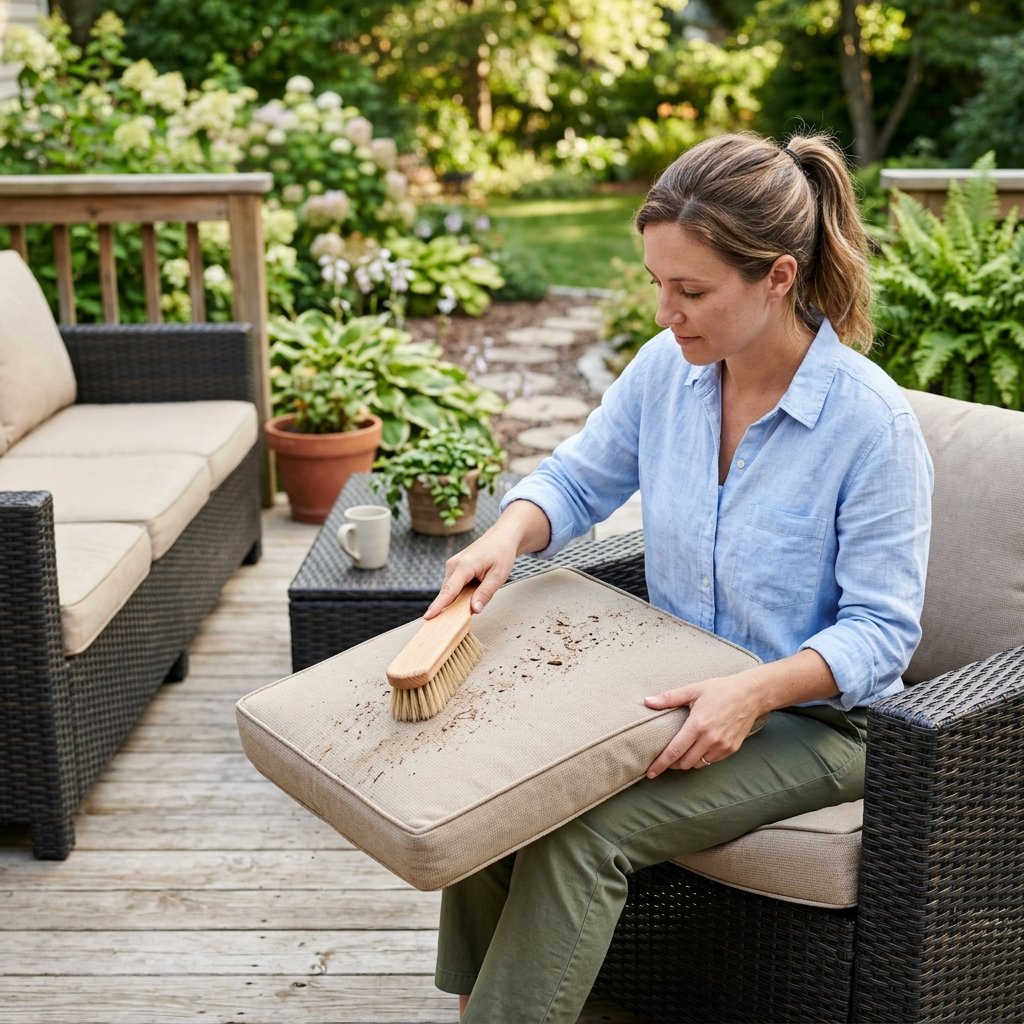
Step 2: Shake Off Loose Dirt
Before adding water, remove as much dry debris as possible.
Shake the cushions gently or tap them against a clean surface.
Then use a soft-bristle brush to remove:
- Dirt
- Dust
- Leaves
- Pollen
- Grass
- Loose debris
Pay attention to seams and corners, where dirt tends to accumulate.
Doing this first prevents you from turning loose dirt into a muddy layer once the cushions become wet.
Step 3: Vacuum the Cushions
If you have a vacuum cleaner with an upholstery attachment, use it after brushing.
Slowly vacuum both sides of the cushion.
Pay particular attention to:
- Seams
- Piping
- Corners
- Crevices
- Areas around buttons or decorative details
This step is optional, but it can remove a surprising amount of fine dust and pollen before you begin washing.
Step 4: Prepare a Gentle Cleaning Solution
For ordinary dirt and grime, start with a simple mild solution.
Add a small amount of mild dish soap or gentle detergent to a bucket of warm water.
You don’t need a highly concentrated solution.
In many cases, a gentle mixture is enough to loosen everyday dirt without unnecessarily stressing the fabric.
Stir the solution until it becomes lightly soapy.
If you’re using a commercial outdoor-fabric cleaner, follow its instructions instead.
Step 5: Wet the Cushion
Lightly wet the cushion with clean water.
If you’re using a garden hose, use a moderate stream rather than an unnecessarily powerful spray.
The goal is to dampen the fabric so the cleaning solution can work effectively.
Avoid aggressively soaking the cushion unless the manufacturer’s instructions indicate that this is appropriate.
Cushion interiors can retain moisture for a long time, and trapped moisture can contribute to mildew or unpleasant odors.
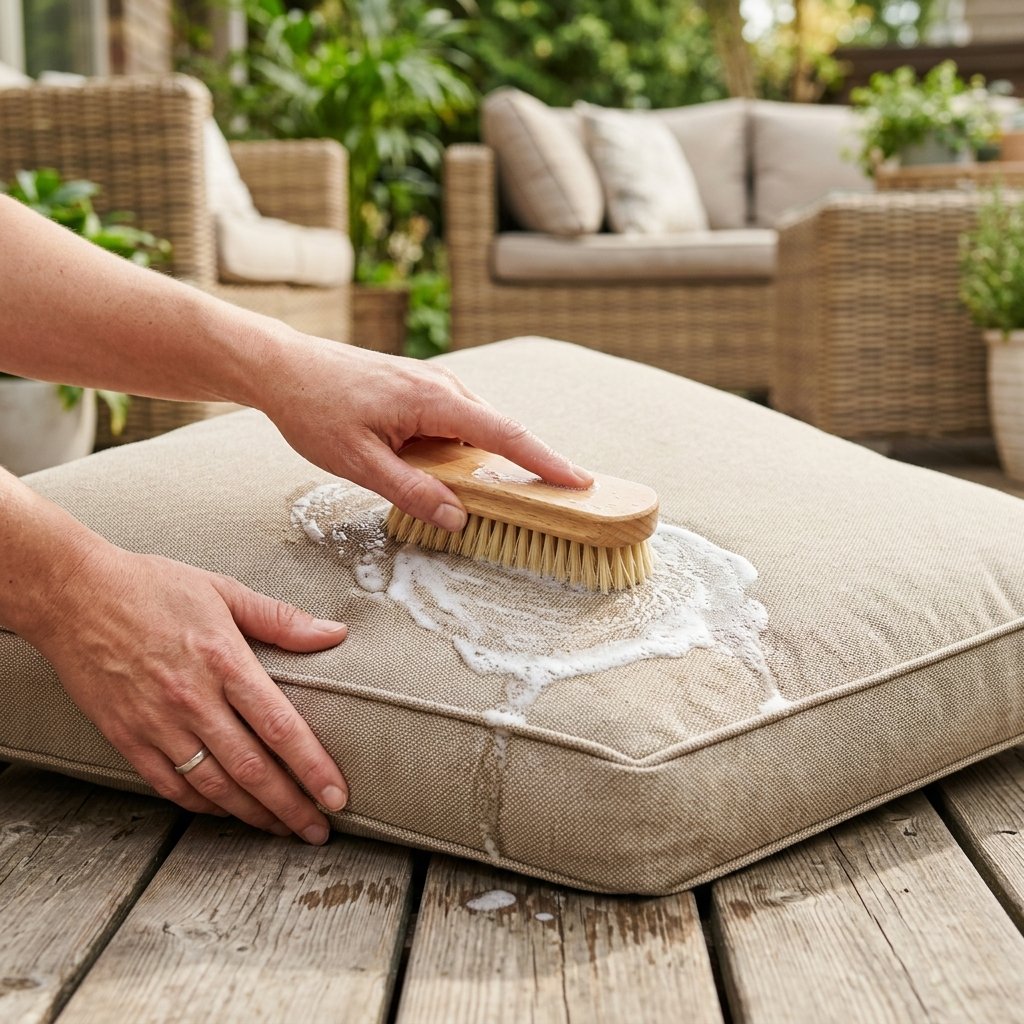
Step 6: Apply the Cleaning Solution
Dip your soft brush or sponge into the soapy water.
Work the solution into the fabric using gentle circular motions.
Start with the least dirty areas and gradually work toward more heavily soiled sections.
Don’t scrub aggressively.
Outdoor fabrics can be durable, but excessive force can damage fibers or affect the appearance of the fabric.
Pay extra attention to areas that receive frequent contact, such as the front edge of seat cushions and the center of chair cushions.
Step 7: Treat Stubborn Stains Separately
Some stains may need additional attention.
Common patio cushion stains include:
- Food
- Coffee
- Dirt
- Bird droppings
- Grass
- Sunscreen
- Grease
- Tree sap
Don’t immediately scrub harder.
Instead, identify the stain and use an appropriate fabric-safe treatment.
Apply the product according to its instructions and test it first on an inconspicuous area.
For organic stains, removing as much of the residue as possible before applying a cleaning solution can make the process easier.
If you aren’t sure whether a particular product is safe for your cushion fabric, don’t use it until you’ve confirmed compatibility.
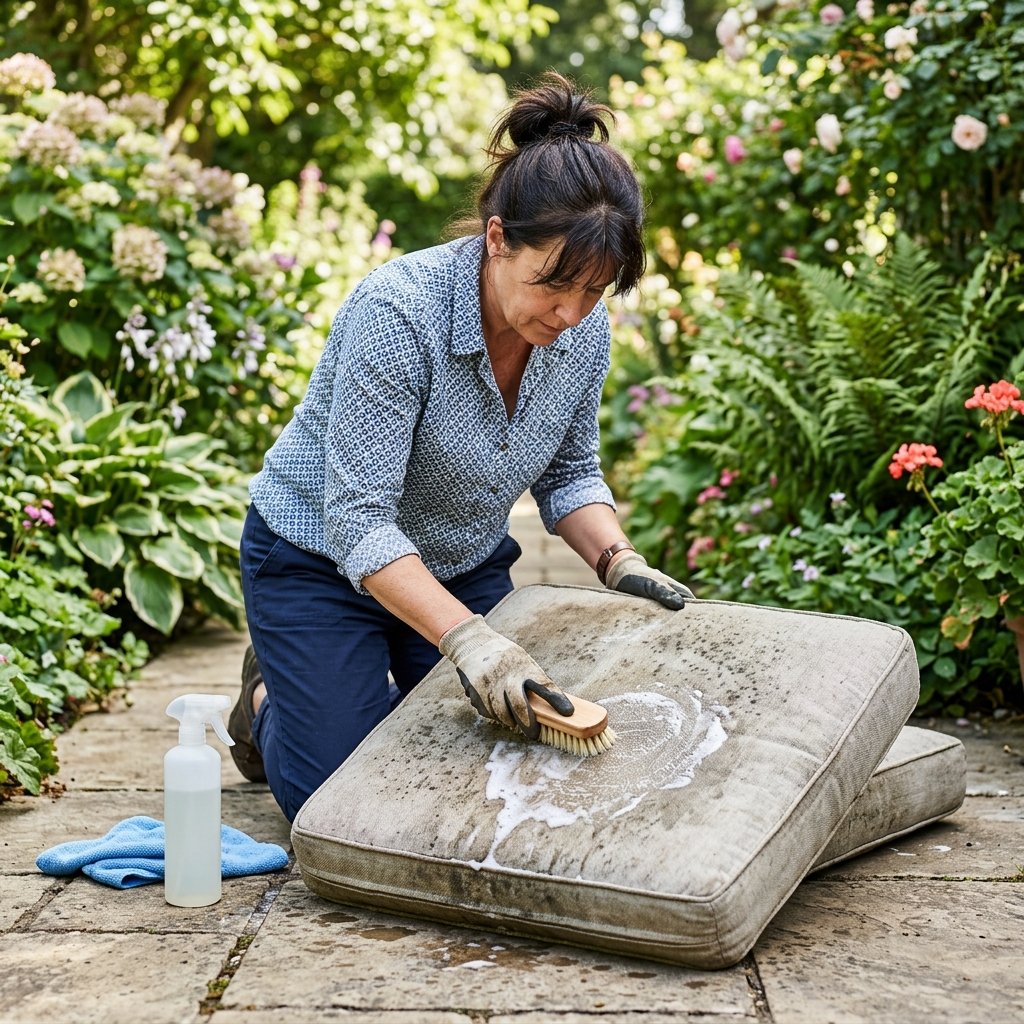
Step 8: Deal With Mildew Carefully
Mildew is one of the most common problems with outdoor cushions, especially when they remain damp for extended periods.
First, take the cushion outdoors and allow it to dry if it is wet.
Brush away loose surface growth carefully.
Then use a cleaning solution specifically appropriate for the fabric.
Some outdoor fabrics may tolerate stronger treatments, while others can be damaged or discolored.
Always follow the fabric manufacturer’s recommendations.
Most importantly, address the cause.
If cushions repeatedly become damp and stay damp, cleaning them over and over won’t solve the underlying issue.
Improve ventilation, store cushions during prolonged wet weather, and allow them to dry completely after rain.
Step 9: Rinse Thoroughly
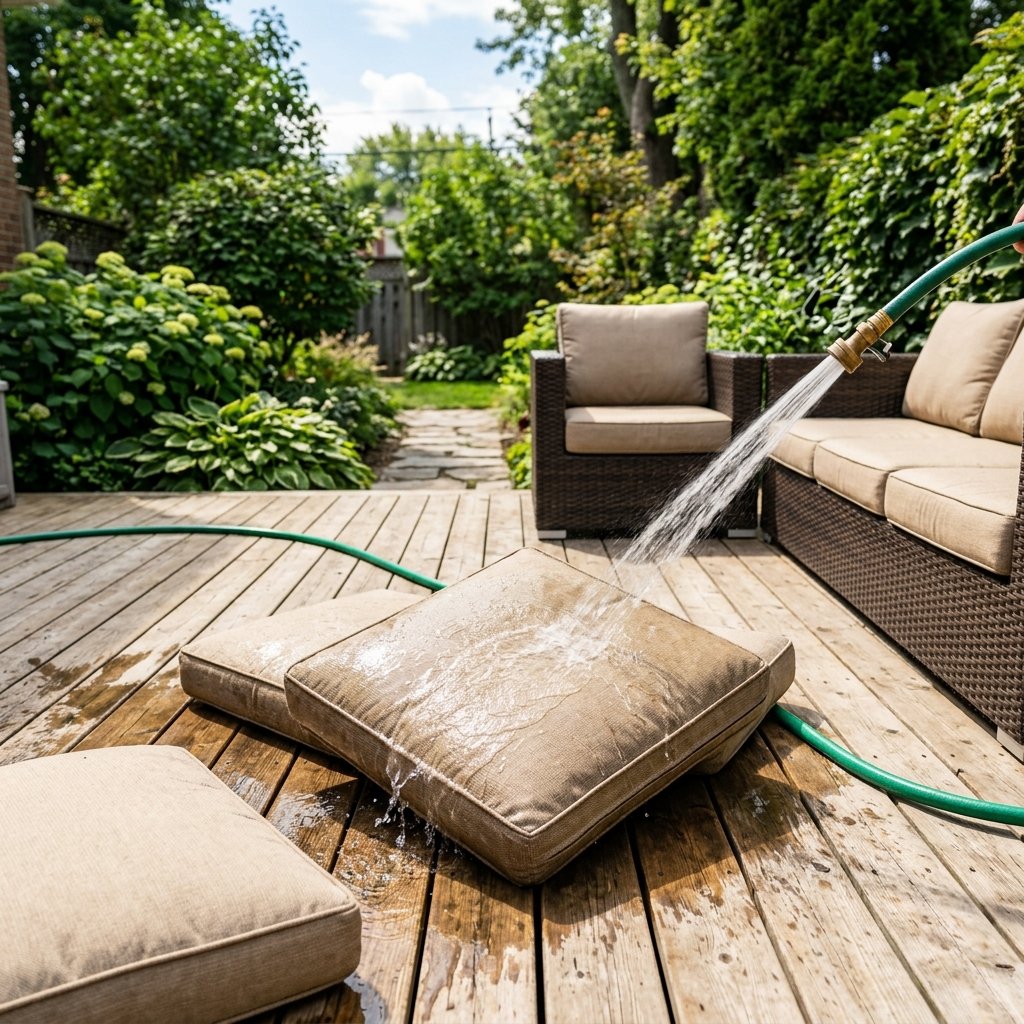
Once you’ve finished cleaning, rinse the cushion thoroughly with clean water.
This step is important because leftover detergent can attract dirt or leave a residue on the fabric.
Use enough clean water to remove the soap without unnecessarily flooding the cushion.
Continue rinsing until the water runs clear and you can no longer feel a soapy residue.
Step 10: Remove Excess Water
Don’t immediately put freshly washed cushions back onto your patio furniture.
First, remove as much excess water as possible.
You can gently press clean towels against the surface to absorb moisture.
Avoid twisting or aggressively wringing cushions, as this can distort their shape or damage internal materials.
If the covers are removable, follow the manufacturer’s washing instructions for the covers separately.
Step 11: Let the Cushions Dry Completely
Proper drying is one of the most important parts of cleaning patio cushions.
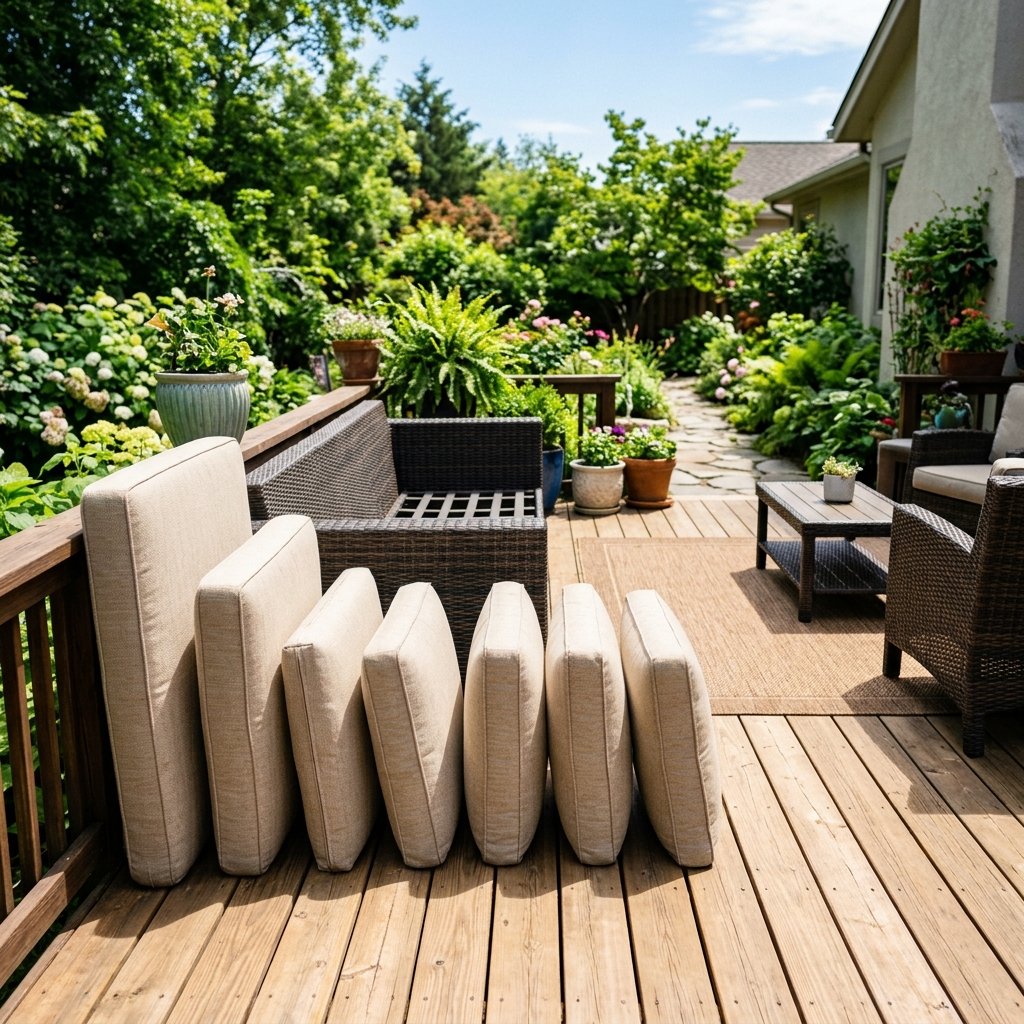
Place the cushions somewhere with good airflow and indirect or appropriate sunlight, depending on the fabric manufacturer’s recommendations.
Position them so air can circulate around all sides.
You may need to turn them periodically.
Don’t stack wet cushions together.
Don’t put them back on outdoor furniture while the interior is still damp.
A cushion can feel dry on the surface while retaining moisture deeper inside.
Give it plenty of time.
How to Remove Odors From Patio Cushions
If your cushions smell musty after being outdoors for a long time, cleaning alone may not immediately solve the problem.
The most important step is thorough drying.
Moisture trapped inside the cushion is often responsible for musty odors.
Once the cushion is completely dry, assess whether the odor remains.
If it does, use a fabric-safe odor treatment according to the manufacturer’s recommendations.
Avoid heavily saturating the cushion with fragrance sprays. Masking an odor doesn’t address the underlying cause.
How Often Should You Clean Patio Cushions?
There’s no single schedule that works for every outdoor space.
Cleaning frequency depends on:
- Local weather
- Amount of outdoor use
- Trees and pollen
- Pets
- Food and drinks
- Humidity
- Whether cushions are stored
A light cleaning every few weeks during heavy-use seasons can help prevent dirt from building up.
A deeper cleaning at the beginning or end of the outdoor season can also be useful.
The easiest approach is to clean small amounts of dirt before they become stubborn stains.
How to Keep Patio Cushions Cleaner for Longer
Once your cushions are clean, a few habits can make future maintenance easier.
Brush off debris regularly
Remove leaves, pollen, and dirt before they become embedded in the fabric.
Clean spills quickly
Blot spills as soon as possible rather than allowing them to dry.
Don’t leave cushions wet
After rain, give cushions enough time and airflow to dry completely.
Store them during bad weather
If severe weather is expected, move cushions to a dry storage area whenever practical.
Use outdoor cushion covers
Protective covers can reduce exposure to dirt and weather between uses.
What Not to Do When Cleaning Patio Cushions
Avoid these common mistakes:
Don’t use harsh chemicals without checking compatibility
Some fabrics can fade or become damaged.
Don’t aggressively scrub
Excessive friction can damage the fabric.
Don’t leave cushions damp
Moisture can contribute to mildew and unpleasant odors.
Don’t ignore the care label
The manufacturer’s instructions should take priority.
Don’t assume every stain requires the strongest cleaner
Start with the gentlest appropriate method and increase treatment only when necessary.
Final Thoughts
Learning how to clean patio cushions doesn’t have to involve complicated products or an entire day of hard work.
For ordinary dirt, start by removing loose debris, vacuuming if possible, and gently washing the fabric with a mild cleaning solution. Treat stubborn stains separately, rinse thoroughly, and give the cushions plenty of time to dry completely.
The most important habit is prevention.
Regularly brushing off dirt, cleaning spills quickly, protecting cushions from prolonged moisture, and storing them appropriately can help keep them looking fresh for much longer.
With a little routine maintenance, your patio cushions can stay comfortable, clean, and inviting throughout the outdoor season—giving your patio the fresh, welcoming look you’ve been trying to create.