

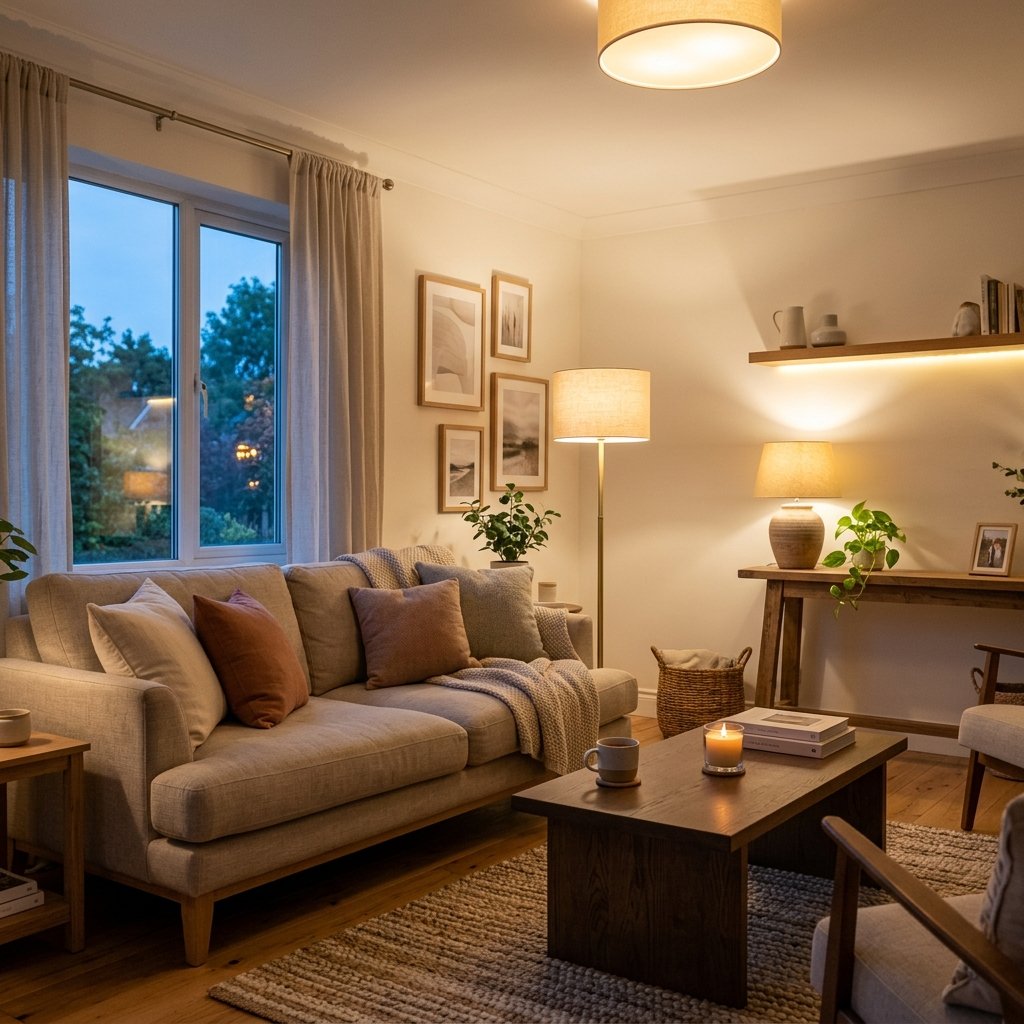
Learning how to decorate a living room can feel overwhelming because so many pieces need to work together.
You have the sofa, rug, coffee table, lighting, curtains, pillows, artwork, storage, and all the smaller decorative details. If you choose everything separately, the room can quickly start to feel mismatched or cluttered.
A better approach is to decorate in layers.
Start with the room’s function and largest pieces. Then build the color palette, rug, lighting, textiles, artwork, and accessories around them.
The goal is not to make your living room look like a showroom. It should feel comfortable, functional, and personal while still looking intentional.
These 17 practical steps will help you decorate a living room from the ground up, whether you are starting with an empty space or trying to improve a room that already feels unfinished.
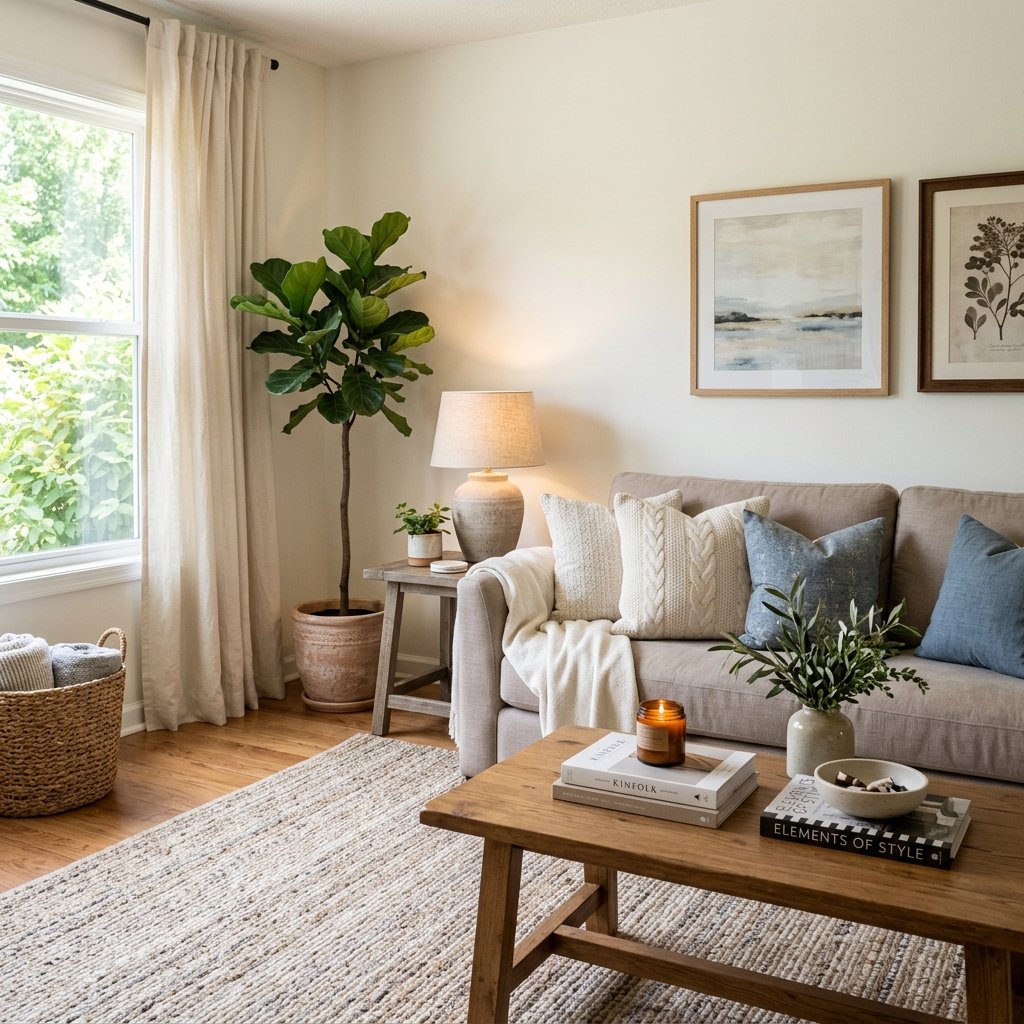
1. Decide How You Actually Use the Room
Before buying anything, think about what happens in the living room every day.
Is it mainly for:
- Watching television
- Entertaining
- Reading
- Relaxing
- Kids playing
- Family gatherings
- Working from home
The answer should influence the layout.
A television-focused room may need seating arranged toward the screen, while a conversation-focused living room may work better with chairs facing the sofa.
If the room serves several purposes, create zones instead of trying to make every piece do everything.
2. Choose a Focal Point
Most living rooms benefit from one clear focal point.
That might be:
- Fireplace
- Television
- Large window
- Built-in shelves
- Statement artwork
Arrange the main furniture so it supports that feature.
Avoid creating several equally strong focal points on different walls unless the room is large enough to handle them.
A clear focal point helps the space feel more organized.
3. Start With the Largest Furniture
Decorate around the biggest pieces first.
Usually that means:
- Sofa
- Sectional
- Large chairs
- Media console
If you already own a sofa, use its color and scale as the starting point for the rest of the room.
If you are buying new furniture, measure carefully before ordering.
A sofa that is too large can dominate the room, while one that is too small may make the layout feel scattered.
Use painter’s tape on the floor to visualize furniture dimensions before committing.
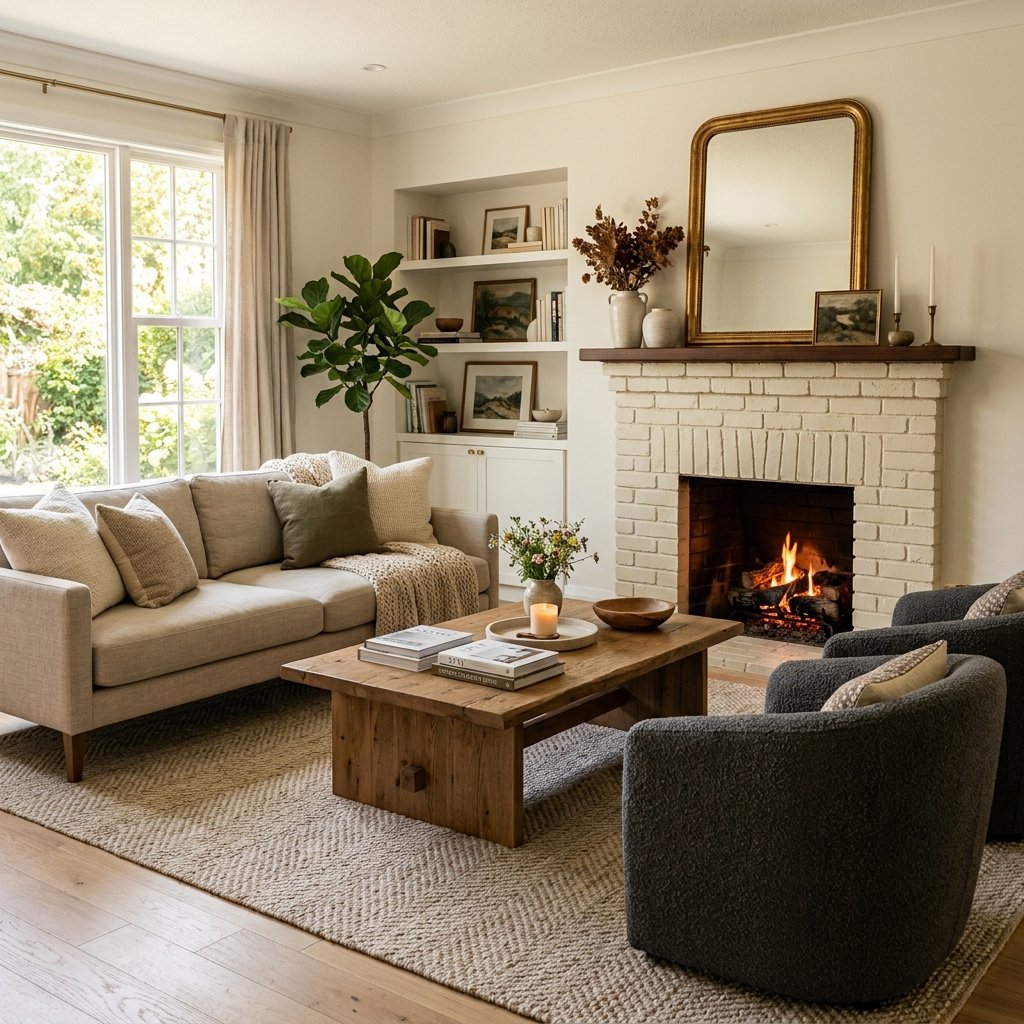
4. Pick a Simple Color Palette
You do not need many colors to create an interesting living room.
Start with:
- One main neutral
- One secondary color
- One or two accent colors
For example:
Warm white + beige + olive + black
or
Cream + blue + warm wood + brass
Keeping the palette limited makes it easier to coordinate furniture, rugs, curtains, and accessories.
Color can always be added later through smaller pieces.
5. Choose the Right Area Rug
The rug helps connect the seating arrangement.
A common mistake is choosing one that is too small.
Ideally, the rug should visually relate to the sofa and chairs rather than floating by itself under the coffee table.
Depending on room size, you might place:
- All furniture legs on the rug
- Front legs of the sofa and chairs on the rug
The exact setup depends on the room, but consistency is important.
Choose a rug color and pattern that works with your flooring, upholstery, and wall color.
Use a compatible rug pad where appropriate to help keep the rug secure.
6. Arrange Furniture for Conversation
Do not automatically push every piece against a wall.
When space allows, pull furniture inward and create a defined conversation area.
A sofa and chairs should feel connected rather than positioned around the edges of the room.
In larger living rooms, you may even create separate zones for:
- Conversation
- Reading
- Television
- Games
Leave comfortable walking paths between furniture.
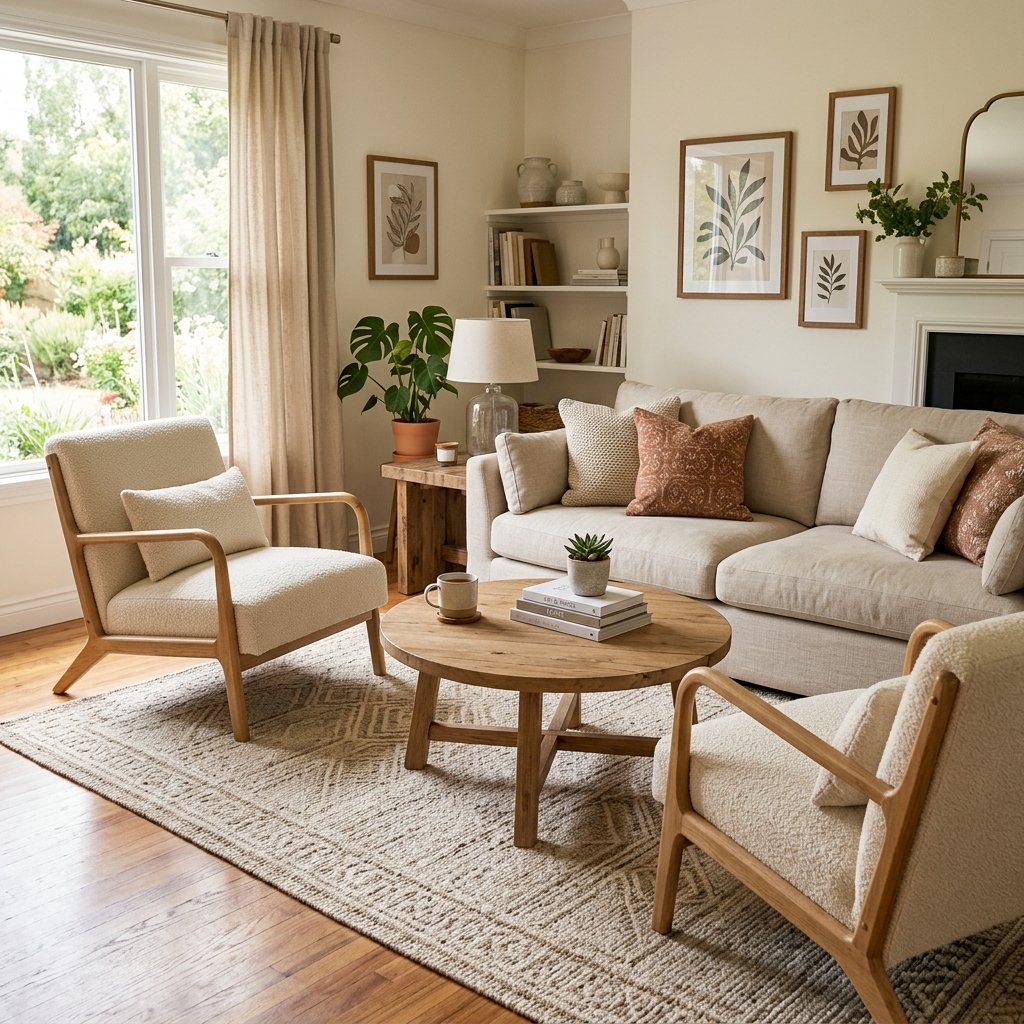
7. Add a Coffee Table That Fits the Scale
The coffee table should feel proportional to the sofa and seating area.
A tiny table can look lost in front of a large sectional.
An oversized table can interfere with circulation.
Consider:
- Rectangular
- Round
- Oval
- Square
Round and oval tables can be especially useful in tighter spaces because they eliminate sharp corners.
If you need more flexibility, use two smaller tables or a large upholstered ottoman instead.
8. Layer Your Lighting
One ceiling fixture rarely provides enough warmth or flexibility.
Try combining several types of lighting.
Ambient Lighting
This is the general room light, such as ceiling fixtures.
Task Lighting
Floor and table lamps provide focused light for reading or other activities.
Accent Lighting
Picture lights, sconces, or small lamps can highlight artwork or architectural details.
Multiple light sources make a living room feel much more comfortable in the evening.
9. Hang Curtains Higher
Curtains can dramatically change how finished a room feels.
When practical, mount the curtain rod above the window frame and extend it beyond the sides of the window.
This allows more glass to remain visible when the curtains are open and can make the windows feel larger.
Choose full-length panels that relate to the room’s color palette.
Good living room curtain colors include:
- Warm white
- Cream
- Beige
- Soft gray
- Muted blue
- Subtle pattern
Make sure window coverings are installed securely and keep accessible cords away from children and pets.
10. Add Throw Pillows in Layers
Pillows are one of the easiest ways to introduce color and pattern.
Instead of buying a matching set, mix:
- Solid colors
- Subtle patterns
- Different textures
For example, a neutral sofa might include:
- One muted blue pillow
- One small patterned pillow
- One textured cream pillow
Repeat colors already present in the rug, curtains, or artwork.
You do not need so many pillows that sitting on the sofa becomes inconvenient.
11. Add a Throw Blanket
A throw adds softness and another layer of texture.
Try:
- Lightweight woven throw
- Chunky knit
- Linen blend
- Soft cotton
Drape it casually over the sofa arm, back, or a nearby chair.
Choose a color that connects with the rest of the room.
In a neutral space, this is an easy place to introduce blue, green, rust, or another accent shade.
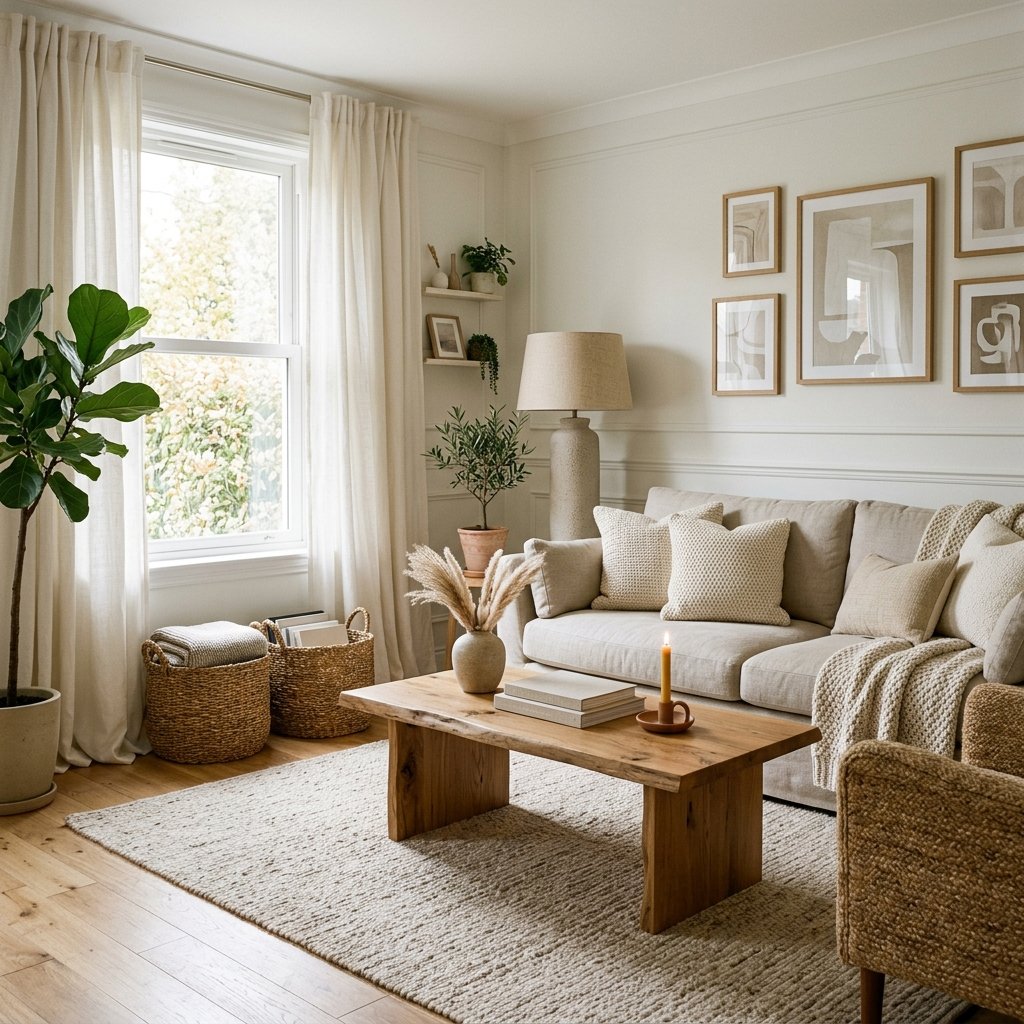
12. Bring in Natural Materials
Rooms often feel warmer and more inviting when they include natural texture.
Try adding:
- Wood
- Woven baskets
- Rattan
- Linen
- Cotton
- Stone
- Ceramic
These materials keep neutral spaces from feeling flat.
A room with white walls and a beige sofa, for example, becomes much more interesting when you add a wood coffee table, woven basket, textured rug, and linen curtains.
13. Hang Artwork at the Right Scale
Artwork should relate to the furniture below it.
A very small picture above a large sofa may look disconnected.
Instead, consider:
- One large piece
- Pair of coordinated prints
- Small gallery wall
Keep the grouping visually connected to the sofa or console.
You do not have to fill every wall.
Leaving some empty wall space helps the room feel calmer.
Secure artwork appropriately, especially heavier pieces.
14. Style the Coffee Table Simply
Coffee tables do not need many accessories.
Start with a few different heights and textures.
Try:
- Small tray
- Stack of books
- Decorative bowl
- Vase
- Candle
Leave enough open surface for everyday use.
If you have young children, avoid sharp, fragile, hot, or small decorative items within reach.
15. Add Greenery
Plants can make a room feel more lively and finished.
You could use:
- Tall floor plant
- Small potted plant
- Branches in a vase
- Faux greenery
Choose plants appropriate for the room’s available light.
If you have children or pets, check whether live plant varieties are suitable for your household and place them safely.
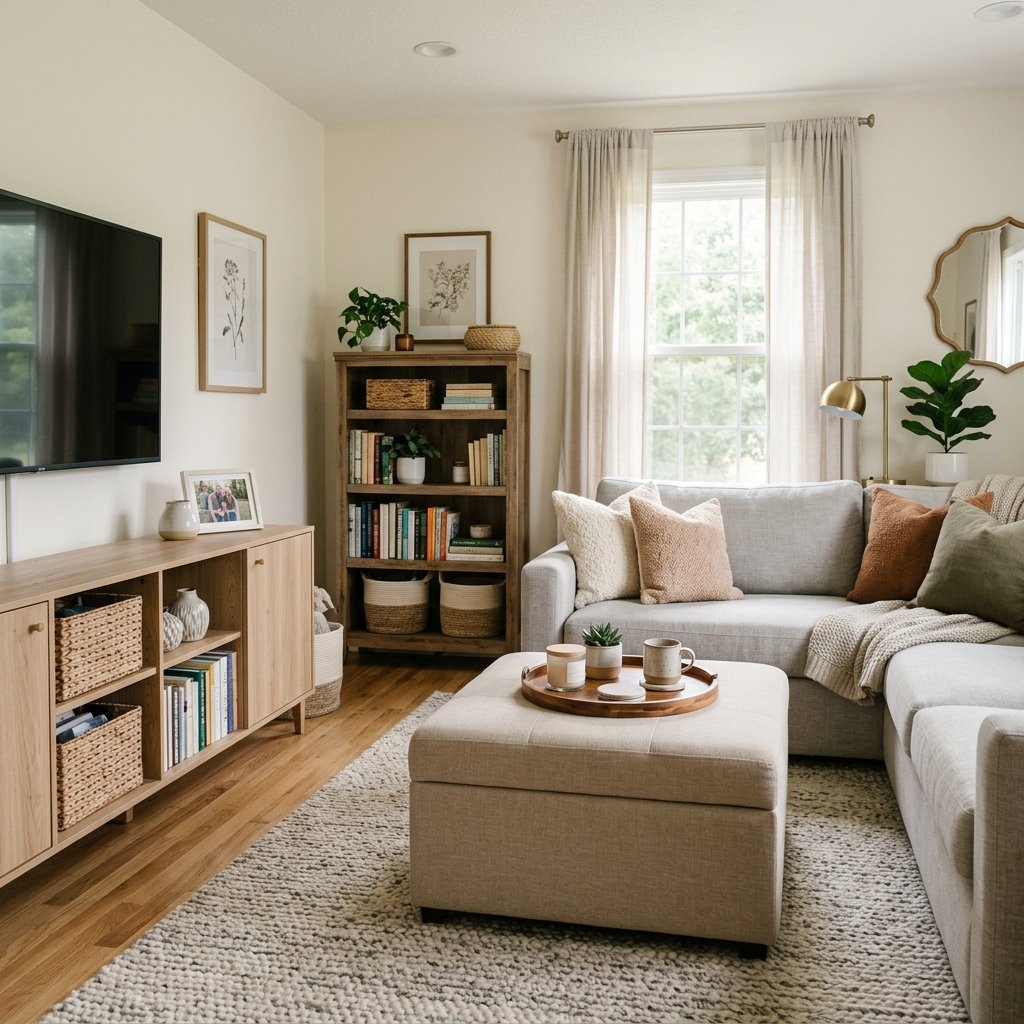
16. Create Storage for Everyday Clutter
A beautiful living room still needs to work in real life.
Add storage for:
- Toys
- Blankets
- Games
- Remotes
- Books
- Electronics
Useful options include:
- Baskets
- Storage ottomans
- Media cabinets
- Sideboards
- Built-ins
- Lidded boxes
Closed storage is especially helpful for items you do not want displayed all the time.
17. Finish With Personal Details
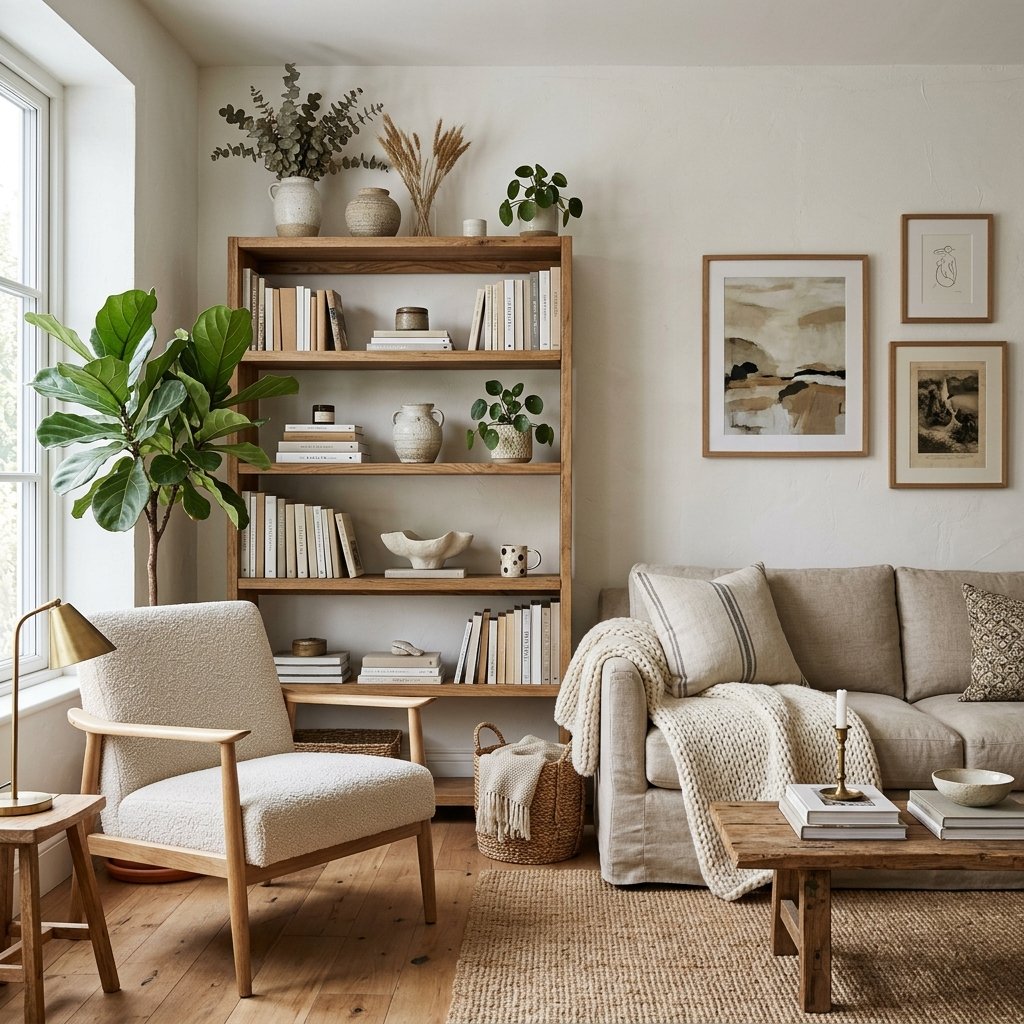
The final layer should make the room feel like your home.
Add a few meaningful pieces such as:
- Family photos
- Favorite books
- Travel finds
- Handmade pottery
- Collected artwork
- Vintage pieces
You do not need to display everything at once.
A smaller collection usually has more impact than shelves packed with unrelated objects.
How to Decorate a Living Room From Scratch
If you are starting with an empty room, work in this order:
- Decide how the room will function.
- Measure the space.
- Choose the sofa or main seating.
- Establish the color palette.
- Choose the rug.
- Add additional seating.
- Select coffee and side tables.
- Add lighting.
- Install curtains.
- Add artwork and textiles.
- Finish with accessories.
This order helps prevent impulse purchases that do not work together.
Do not feel pressured to finish everything immediately.
A room often turns out better when it develops gradually.
How to Decorate a Small Living Room
Small living rooms benefit from careful scale.
Look for:
- Compact sofa
- Leggy furniture
- Round coffee table
- Wall-mounted lighting
- Multifunctional storage
- Large rug
- Fewer accessories
Avoid filling every corner with furniture.
Leaving visible floor and wall space can make the room feel less crowded.
One generously sized artwork piece may work better than many small decorations.
How to Decorate a Large Living Room
A large living room can feel empty if all the furniture is pushed against the perimeter.
Instead, create zones.
A large room might include:
- Main conversation area
- Reading chair near a window
- Game table
- Small desk
- Additional seating near a fireplace
Rugs can help visually separate these zones.
Repeat colors and materials throughout so the different areas still feel connected.
How to Decorate a Living Room With a Sectional
Start with the sectional because it will dominate the layout.
Balance its visual weight with:
- Large rug
- Substantial coffee table
- Oversized artwork
- Floor lamp
- One additional chair if space allows
Avoid filling the room with too many small furniture pieces.
A sectional generally looks better with fewer, larger supporting items.
How to Decorate a Living Room With a Fireplace
Treat the fireplace as the focal point if it is visually prominent.
Arrange furniture so the fireplace feels connected to the seating area.
You might place:
- Sofa facing fireplace
- Sofa perpendicular to fireplace
- Two chairs facing the sofa
Keep mantel decor proportional.
A few larger pieces often look cleaner than many small accessories.
If you use the fireplace, keep combustible decor and furnishings at safe distances according to the fireplace manufacturer’s instructions and applicable requirements.
How to Decorate a Living Room With a TV
A television can be part of the room without becoming the only design feature.
Consider:
- Media console
- Built-ins
- Art around the television
- Darker wall behind the screen
- Simple surrounding decor
Keep the viewing angle practical and avoid placing seating only for appearance if it makes watching uncomfortable.
Follow manufacturer guidance for secure television mounting and use appropriate wall hardware.
Anchor media furniture where necessary.
How to Decorate a Living Room With Neutral Colors
Neutral rooms need variation.
Use several shades instead of one beige repeated everywhere.
Layer:
- Cream
- Oatmeal
- Taupe
- Brown
- Warm gray
- Natural wood
Then add contrast with black, charcoal, olive, or muted blue.
Texture becomes especially important in a neutral living room.
Use linen, wool-look textiles, wood grain, woven materials, ceramics, and soft upholstery.
How to Decorate a Living Room With Color
If you love color, choose a few shades and repeat them.
For example:
Blue + green + cream
or
Rust + olive + warm beige
Use the strongest color in smaller amounts through:
- Pillows
- Art
- Chairs
- Rug details
- Decorative objects
This usually creates a more balanced result than using several unrelated bright colors.
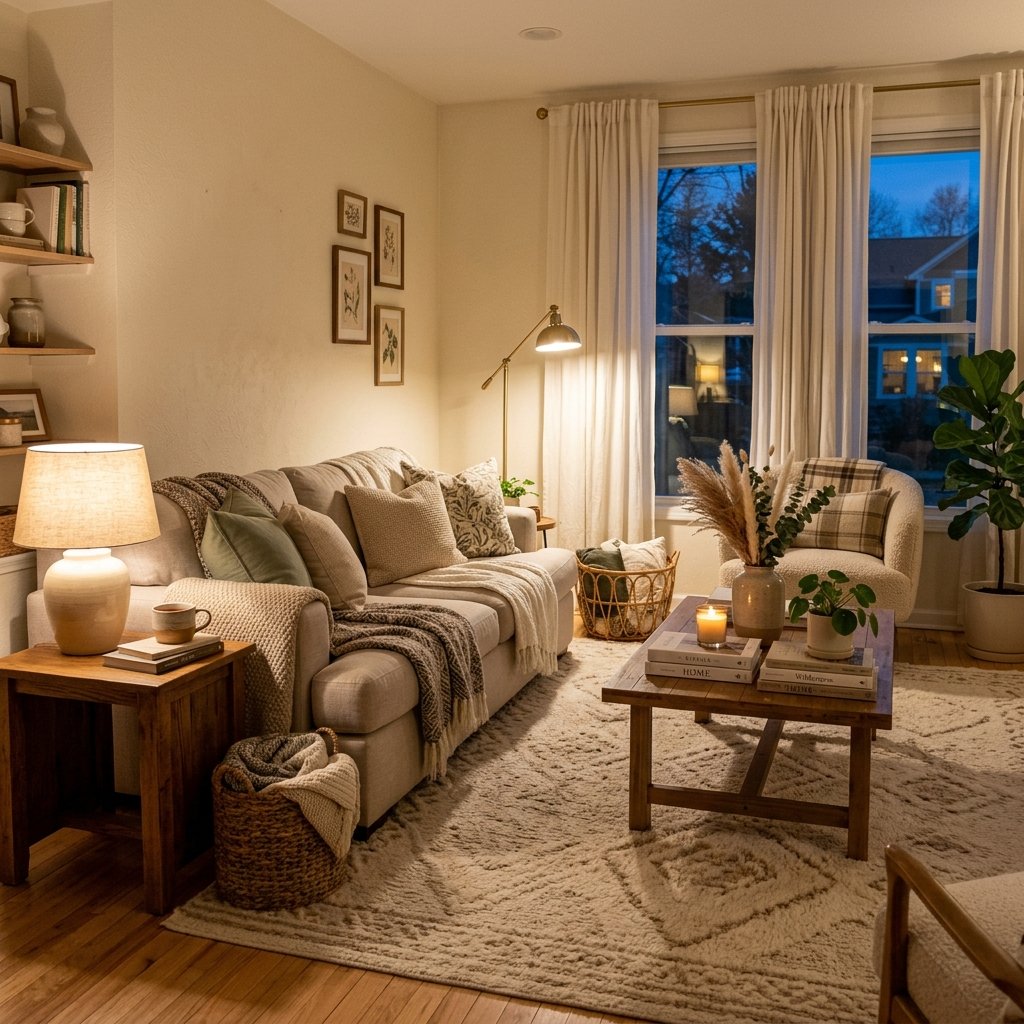
How to Make a Living Room Cozy
A cozy room is not simply a room with lots of stuff.
Focus on layers.
Add:
- Area rug
- Curtains
- Warm lighting
- Throw pillows
- Blanket
- Wood
- Natural texture
Then bring the seating closer together when the layout allows.
Warm light and appropriately scaled furniture often make a bigger difference than adding more accessories.
How to Make a Living Room Look More Expensive
You do not necessarily need more expensive furniture.
A few design choices can create a more polished result.
Choose the Correct Rug Size
A generously scaled rug helps connect the furniture.
Hang Full-Length Curtains
Short curtains can visually break up the wall.
Use Fewer, Larger Accessories
Small clutter can make the room feel busy.
Add Multiple Light Sources
Layered lighting adds depth.
Repeat Materials
Use the same wood tone, metal finish, or accent color in several places.
Mix Textures
Even a simple neutral palette looks richer when materials vary.
Leave Some Empty Space
Not every tabletop, shelf, and wall needs decor.
Budget-Friendly Living Room Decorating Ideas
If you are working with a smaller budget, focus on high-impact changes.
Try:
- Rearranging furniture
- Changing pillow covers
- Adding curtains
- Painting the walls
- Moving artwork
- Shopping your own home
- Adding thrifted side tables
- Using baskets for storage
- Replacing lampshades
- Adding a large secondhand mirror
You do not need to replace every piece.
Often the biggest improvement comes from correcting the layout and removing clutter first.
Living Room Decorating Mistakes to Avoid
Buying Everything at Once
Rooms often look more natural when they are layered over time.
Choosing a Rug That Is Too Small
It can make the furniture arrangement feel disconnected.
Pushing Everything Against the Walls
This may make conversation areas feel awkward.
Using Only Overhead Lighting
One light source tends to make a room feel flat.
Hanging Artwork Too High
Artwork should visually connect with the furniture beneath it.
Using Too Many Small Accessories
Small pieces can quickly create visual clutter.
Matching Every Piece
Furniture does not need to come from one collection.
Ignoring Scale
A large sofa needs appropriately scaled tables, rugs, lighting, and artwork.
Living Room Safety and Practical Considerations
Decor should never interfere with how the room functions.
Keep these points in mind:
- Maintain clear walking paths.
- Secure tall or top-heavy furniture where appropriate.
- Use television mounts and hardware rated for the installation.
- Manage electrical cords to reduce trip hazards.
- Keep rugs flat and use a compatible non-slip pad where needed.
- Keep candles and heat sources away from fabrics and children.
- Secure heavy mirrors and artwork properly.
- Check window-covering cords for child and pet safety.
- Follow manufacturer instructions for furniture assembly and wall mounting.
- Keep fireplace areas clear according to appliance guidance.
FAQ About Decorating a Living Room
Where should I start when decorating a living room?
Start with how you use the space, then choose the furniture layout and largest pieces before adding rugs, curtains, lighting, and accessories.
What makes a living room look finished?
A properly sized rug, window treatments, layered lighting, artwork, textiles, and a few coordinated accessories usually make the biggest difference.
How many colors should be in a living room?
There is no strict number, but one main neutral plus a few supporting colors is an easy way to create a cohesive palette.
Should living room furniture match?
No. Coordinated furniture usually looks more natural than a complete matching set. Connect different pieces through color, material, shape, or style.
Should a sofa go against the wall?
Not necessarily. If the room has enough space, pulling the sofa away from the wall can create a more intimate seating area.
How do I make my living room cozy but not cluttered?
Use warm lighting, rugs, curtains, textiles, wood, and texture while limiting the number of small accessories.
What should I decorate first: walls or furniture?
Choose the largest furniture and overall color direction first. It is usually easier to select wall decor around major pieces than the other way around.
Final Thoughts
Learning how to decorate a living room is much easier when you work in layers instead of trying to choose every detail at once.
Start with the room’s purpose and furniture layout.
Then build around the large pieces with a rug, color palette, lighting, curtains, artwork, and textiles.
Once those elements are in place, finish with greenery, storage, and a small number of meaningful accessories.
Pay attention to scale more than trends.
A correctly sized rug, substantial artwork, well-proportioned furniture, and full-length curtains can make a bigger difference than filling the room with decorative objects.
Most importantly, create a living room that works for the way you actually live.
When the layout is functional and the colors, materials, and textures relate to one another, the room will naturally feel more comfortable, balanced, and pulled together.