

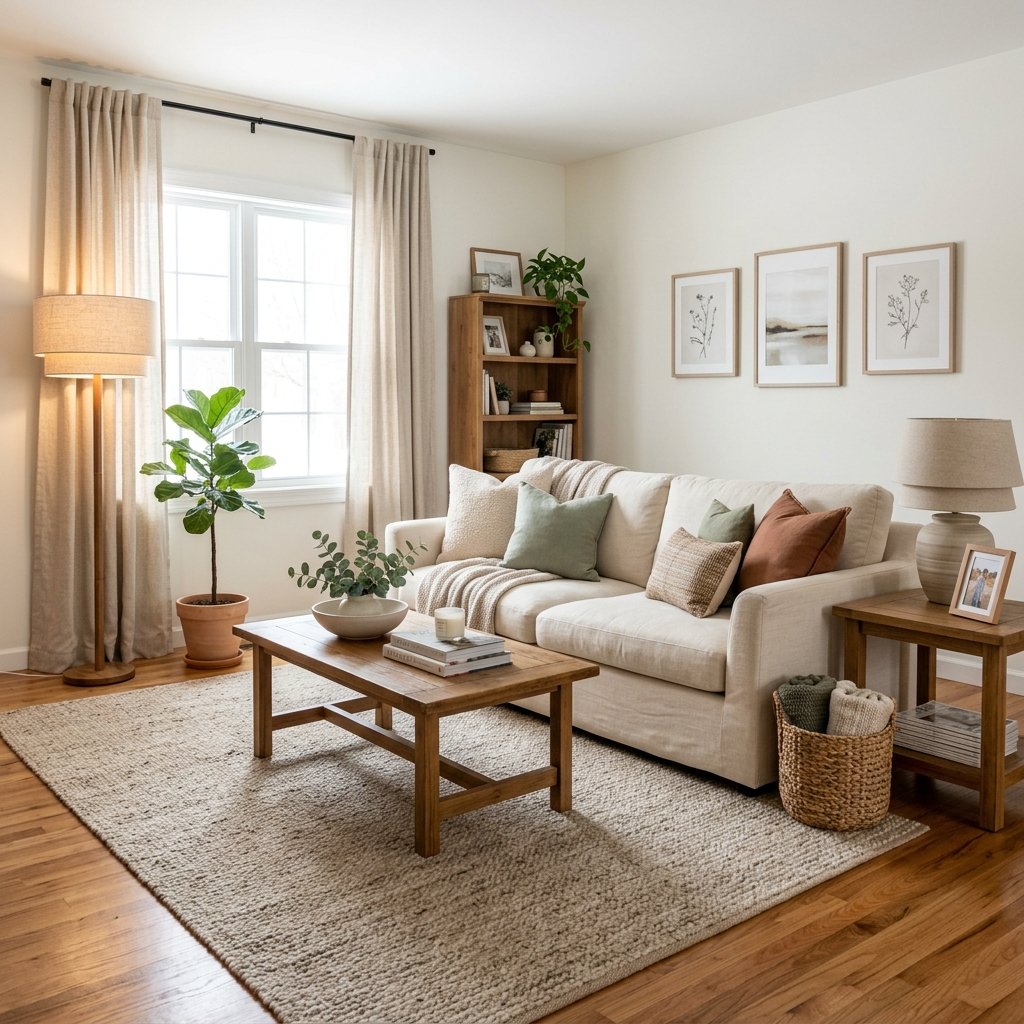
Decorating a new home from scratch is exciting, but an empty house can also make it difficult to know where to begin.
There are furniture decisions, paint colors, rugs, lighting, window treatments, storage, art, and dozens of smaller details competing for attention. It is tempting to start buying everything immediately simply because the rooms feel empty.
A better approach is to decorate gradually and in the right order.
Instead of trying to finish the entire house at once, focus first on how you want your home to function. Then establish a simple decorating direction, prioritize the rooms you use most, and add furniture and decor in layers.
This makes it easier to create a home that feels connected without buying matching furniture sets or making expensive decisions you later regret.
If you are wondering how to decorate a new home from scratch, these 17 steps will help you create a comfortable, practical, and cohesive home one room at a time.
1. Live in the House Before Buying Everything
You do not need to finish every room during the first week.
Spend some time learning how the house works.
Notice:
- Where you naturally walk
- Which rooms get the most sunlight
- Where you need storage
- Which doors affect furniture placement
- Where you spend the most time
- Which rooms feel too dark or too bright
A furniture layout that seemed obvious before moving in may not make sense once you start living there.
Give yourself permission to leave some areas unfinished while you figure out what you actually need.
2. Decide How You Want Your Home to Feel
Before choosing individual products, think about the overall feeling you want.
Maybe you want your home to feel:
- Warm
- Airy
- Cozy
- Traditional
- Relaxed
- Modern
- Collected
- Coastal
- Organic
Choose a few words that describe the atmosphere you want throughout the house.
These words become a filter for future decisions.
If you want a warm, relaxed home, for example, you might naturally gravitate toward wood, soft fabrics, warm neutrals, woven textures, and comfortable furniture.
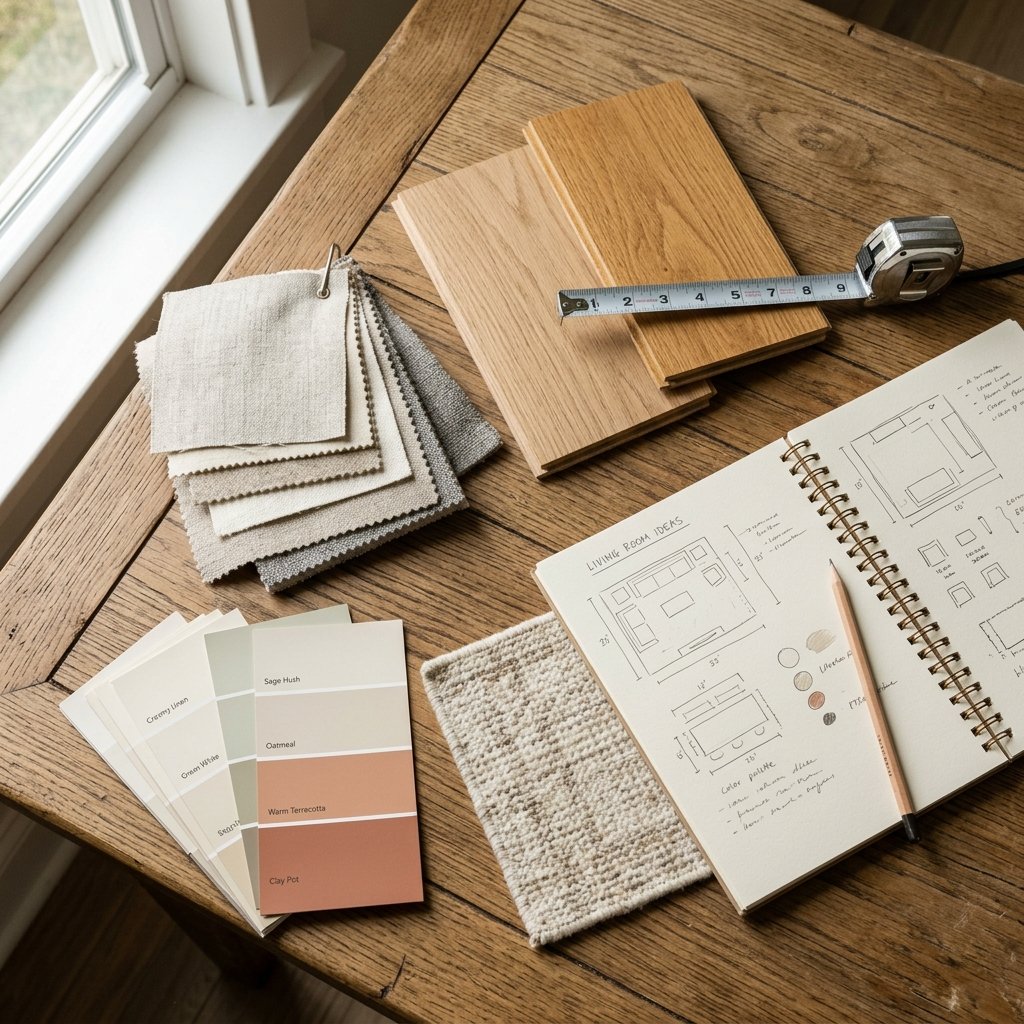
3. Create a Whole-House Color Palette
Your rooms do not need to be identical, but repeating a few colors helps the entire house feel connected.
Start with a simple foundation.
You might choose:
- One main neutral
- One or two secondary neutrals
- Two or three accent colors
- Consistent wood and metal tones
For example, a palette might include warm white walls, cream upholstery, medium wood, muted blue, olive green, and small black accents.
The living room could use more blue while the bedroom uses more green, but the shared neutrals and wood tones connect them.
Do not choose paint solely from a tiny swatch. Test colors in the actual rooms and observe them throughout the day before committing.
4. Measure Every Room
Before buying furniture, measure.
Record:
- Wall lengths
- Ceiling height
- Windows
- Doorways
- Door swings
- Fireplace dimensions
- Built-ins
- Floor vents
- Electrical outlets
Also measure the entrances and pathways furniture will need to pass through.
A beautiful sofa is not useful if it cannot get through the door.
Keep the measurements on your phone so you have them when shopping.
5. Make a Floor Plan Before Buying Furniture
You do not need professional design software.
A basic sketch can help you understand how much furniture will realistically fit.
Start with the largest pieces:
- Sofa
- Bed
- Dining table
- Desk
- Storage furniture
Then consider smaller pieces.
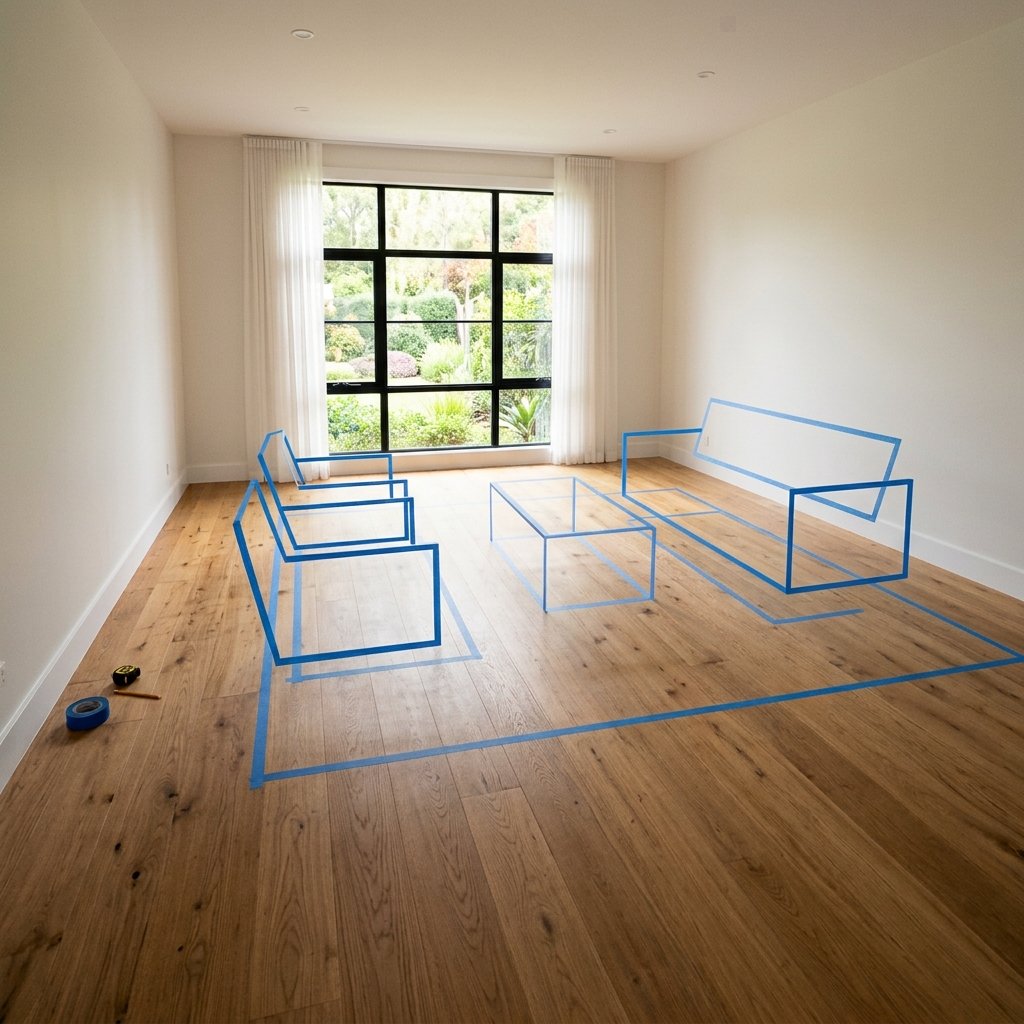
Use painter’s tape on the floor to outline furniture dimensions before ordering.
This is particularly useful for sofas, rugs, dining tables, beds, and large cabinets.
6. Prioritize the Rooms You Use Most
Trying to decorate an entire house simultaneously can spread your budget too thin.
Instead, choose the spaces that affect daily life the most.
For many households, that might be:
- Bedroom
- Living room
- Kitchen or dining area
- Entryway
- Other bedrooms
- Less frequently used spaces
Your priorities may be different.
The important thing is to finish enough of one area that the home starts feeling comfortable rather than buying random pieces for every room.
7. Buy the Largest Furniture First
Once you have measurements and a layout, begin with the major furniture.
In the living room, that might be the sofa.
In the bedroom, it is usually the bed.
In the dining room, start with the table.
Large furniture establishes the scale and direction of the room.
It is much easier to choose pillows and lamps around a sofa than to design a whole room around a small decorative object you bought first.
8. Choose Rugs Early
Area rugs have a major influence on a room.
They affect:
- Color
- Pattern
- Texture
- Furniture placement
- Overall scale
A rug that is too small can make furniture feel disconnected.
Choose a rug large enough to visually connect the main furniture grouping while preserving comfortable circulation.
Measure the room and furniture arrangement before ordering.
If you are unsure, mark the proposed rug dimensions on the floor with painter’s tape.
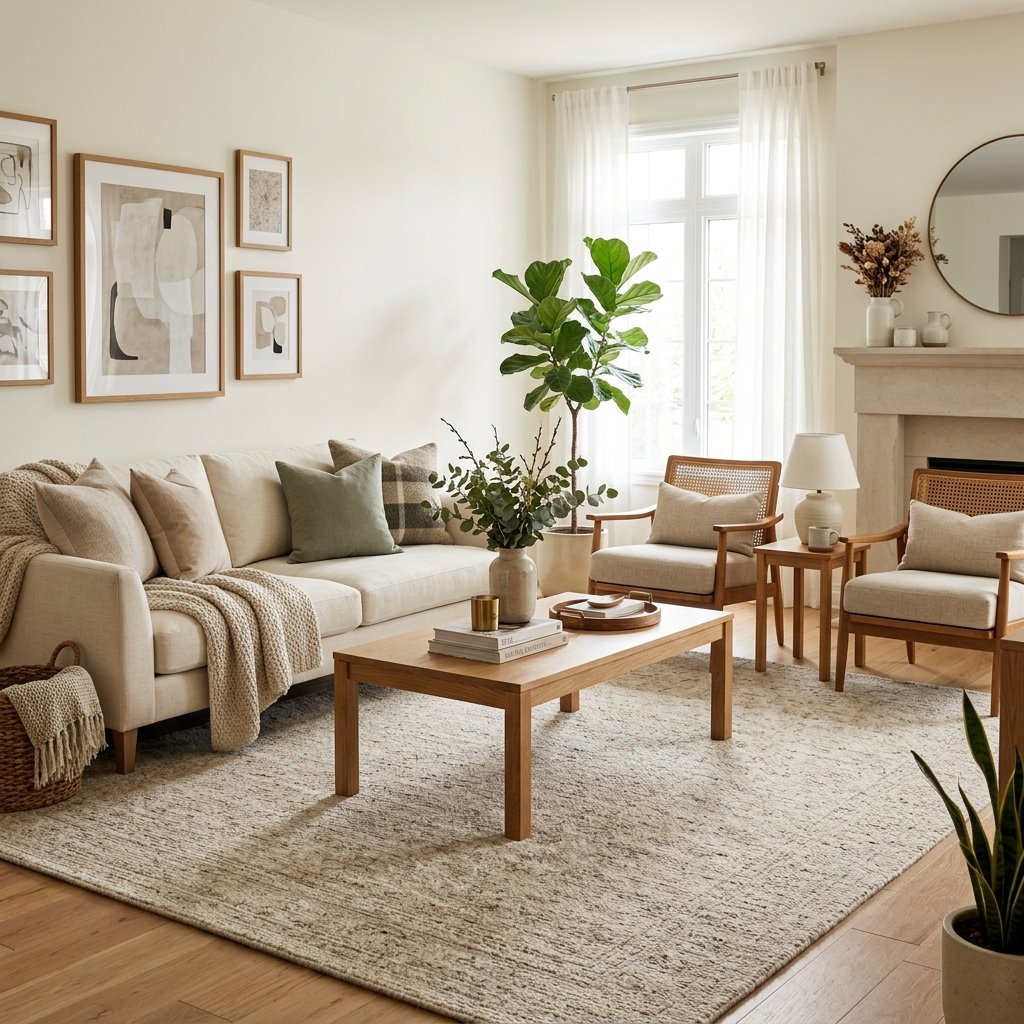
9. Add Window Treatments
Curtains can dramatically change an unfinished room.
They add:
- Softness
- Height
- Privacy
- Light control
- Texture
Choose window treatments based on function first.
A bedroom may need better light control, while a living room might benefit from softer filtering.
Mounting curtains higher can visually emphasize ceiling height, but always consider the proportions of the actual window and room.
Make sure panels are appropriately sized rather than appearing short or skimpy.
If you need functional blinds or shades as well, plan the layers together.
10. Create a Lighting Plan
One overhead fixture rarely provides enough atmosphere by itself.
Layer several types of lighting.
General Lighting
Provides overall illumination.
Task Lighting
Helps with activities such as reading, cooking, or working.
Accent Lighting
Creates warmth and highlights particular areas.
A living room might combine a ceiling fixture with:
- Floor lamp
- Table lamp
- Picture light
A bedroom could combine overhead lighting with bedside lamps or appropriately installed wall sconces.
Use lighting where it improves both function and atmosphere.
For hardwired fixtures, follow electrical requirements and use a qualified professional where appropriate.
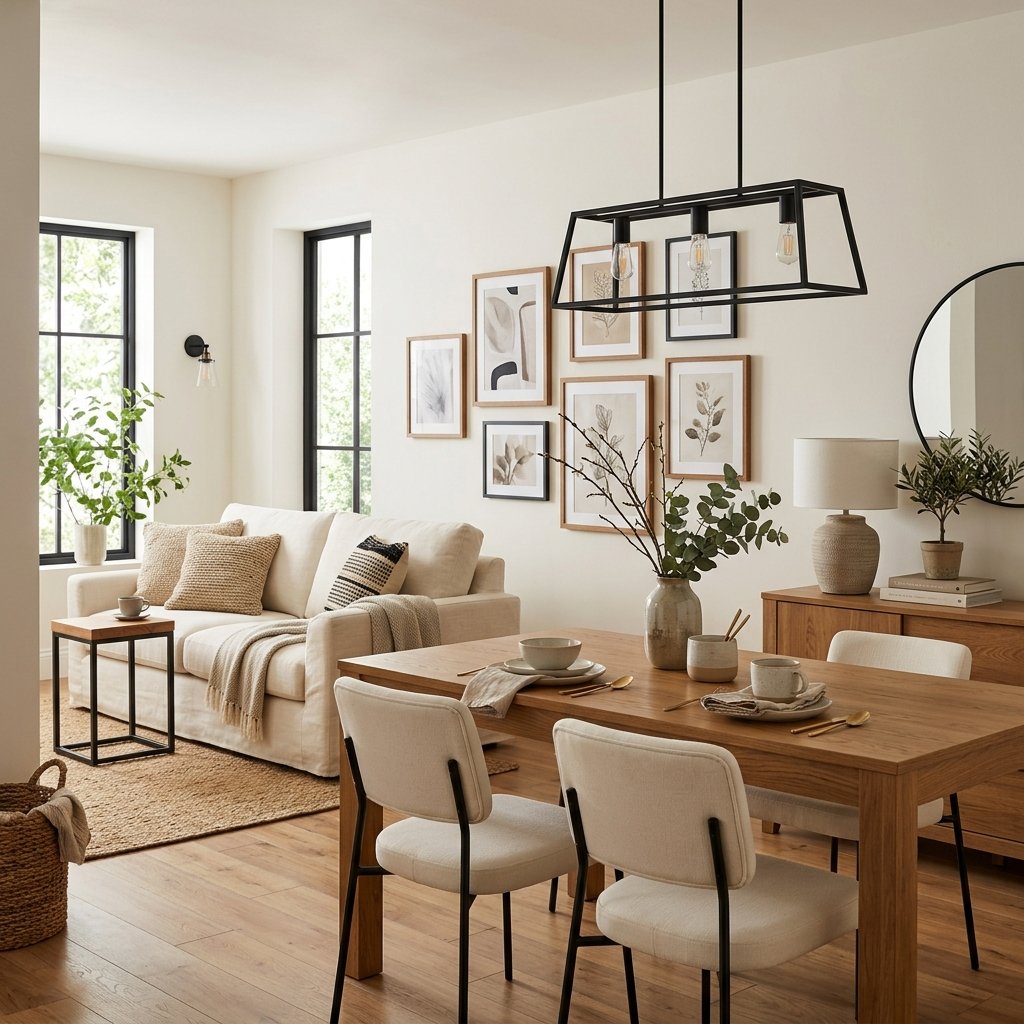
11. Repeat Materials Throughout the House
Repeating a few materials can make separate rooms feel connected.
For example, you might repeat:
- Medium wood
- Black metal
- Brass
- Linen
- Woven baskets
- Ceramic
You do not need every finish to match.
In fact, a home often feels more natural when materials are mixed.
The goal is repetition, not duplication.
If warm wood appears in the living room, repeat a similar warmth through a bedroom bench, kitchen stools, or entryway console.
12. Mix Old and New Furniture
A home furnished entirely from one store can sometimes feel like a showroom.
Mixing pieces from different sources creates more character.
Combine newer furniture with:
- Vintage side table
- Antique mirror
- Secondhand dresser
- Old wood stool
- Collected art
You do not need expensive antiques.
Even one older piece can add texture and history to a room.
Inspect secondhand furniture carefully for structural condition, pests, odors, and damage before bringing it indoors.
13. Add Storage Before Adding Lots of Decor
Clutter can quickly make a newly decorated home feel unfinished.
Before buying many decorative accessories, solve everyday storage problems.
Consider where you will keep:
- Shoes
- Toys
- Blankets
- Electronics
- Cleaning supplies
- Bathroom products
Use practical furniture such as:
- Closed cabinets
- Dressers
- Baskets
- Storage ottomans
- Bookshelves
A room that functions well is much easier to decorate beautifully.
14. Decorate the Walls Gradually
You do not need to fill every empty wall.
Start with the most visually important areas, such as:
- Above the sofa
- Above a console
- Over a bed
- Dining room focal wall
- Entryway
Then live with the room before filling additional spaces.
Possible wall decor includes:
- Large art
- Framed prints
- Mirrors
- Gallery walls
- Wall molding
- Textiles
Scale matters.
One appropriately sized piece often has more impact than several tiny objects scattered across a large wall.
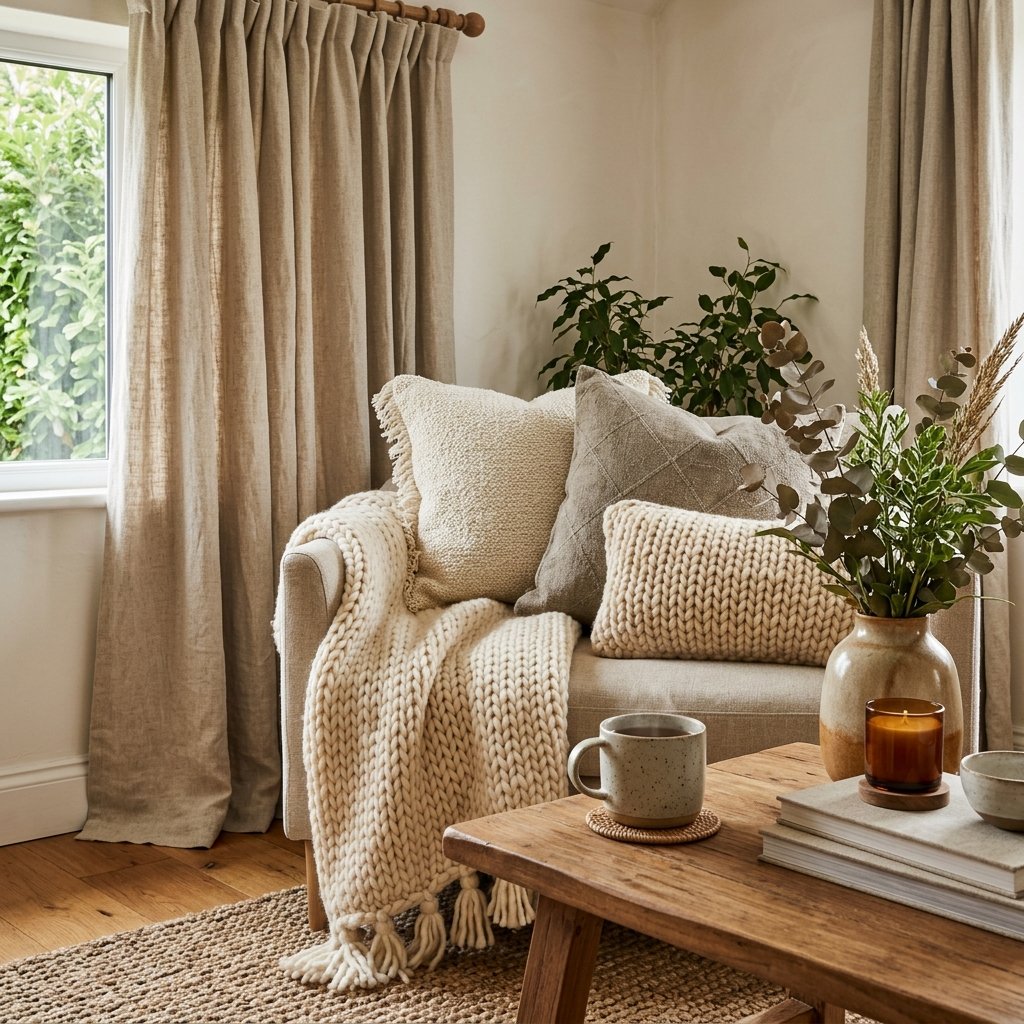
15. Add Texture With Soft Furnishings
Once the major furniture is in place, soften the rooms.
Add:
- Pillows
- Throws
- Curtains
- Rugs
- Bedding
Mix textures rather than using everything in the same material.
For example, a neutral living room could combine:
- Linen-look curtains
- Woven rug
- Soft throw
- Cotton pillows
- Wood furniture
Texture makes a simple color palette feel layered rather than flat.
16. Bring in Greenery
Plants and greenery can make a room feel more alive.
Use them to soften:
- Empty corners
- Shelves
- Console tables
- Coffee tables
Choose plants based on the actual light and care conditions in the room.
If maintaining live plants is impractical, good-quality faux greenery can provide a similar visual effect without the maintenance.
Avoid filling every surface with plants.
One larger plant can often have more impact than many tiny pots.
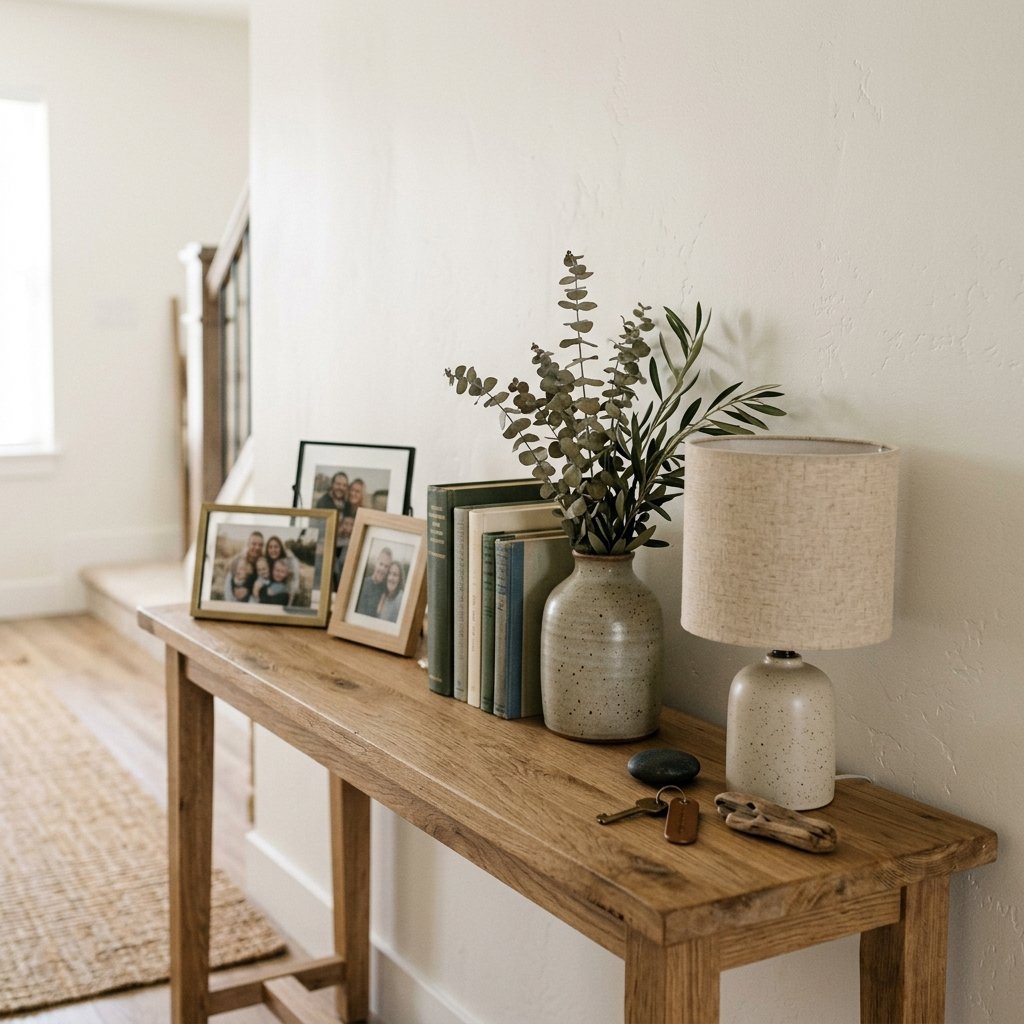
17. Add Personal Details Last
The final layer should make the home feel like yours.
Add meaningful items such as:
- Family photos
- Books
- Collected objects
- Travel finds
- Handmade pieces
- Favorite artwork
These details keep a beautifully decorated house from feeling generic.
Do not rush this stage.
A home naturally becomes more personal over time.
What Should You Buy First When Decorating a New Home?
Prioritize function.
A sensible order might be:
- Essential beds and seating
- Dining or eating furniture
- Functional lighting
- Rugs
- Window treatments
- Storage
- Accent furniture
- Art
- Decorative accessories
You do not need to follow this exact order in every room.
For example, privacy window treatments may need to move to the top of the list immediately after moving in.
The point is to buy what makes the house functional before spending heavily on decorative extras.
How to Decorate a New Home on a Budget
Starting from scratch does not mean everything needs to be new.
Use What You Already Own
Move existing furniture into the new space before deciding what needs replacing.
Something that looked wrong in your previous house may work beautifully in a different room.
Shop Secondhand
Look for durable pieces such as:
- Wood tables
- Dressers
- Mirrors
- Lamps
- Frames
Decorate Slowly
A slower approach gives you time to find better pieces and avoid impulse purchases.
Paint Before Replacing
Paint can completely change walls, furniture, and some appropriate surfaces.
Spend More on High-Use Pieces
If your budget allows, prioritize items you use every day.
Save on smaller decorative pieces that can easily be changed later.
How to Make a New Home Feel Cohesive
A cohesive home does not require matching rooms.
Instead, repeat a few elements.
For example:
Color
Repeat the same warm neutral throughout several spaces.
Wood Tone
Use similar wood warmth in multiple rooms.
Metal
Repeat black or brass details.
Texture
Use woven materials throughout the house.
Style
Maintain a similar level of formality.
Each room can still have its own personality.
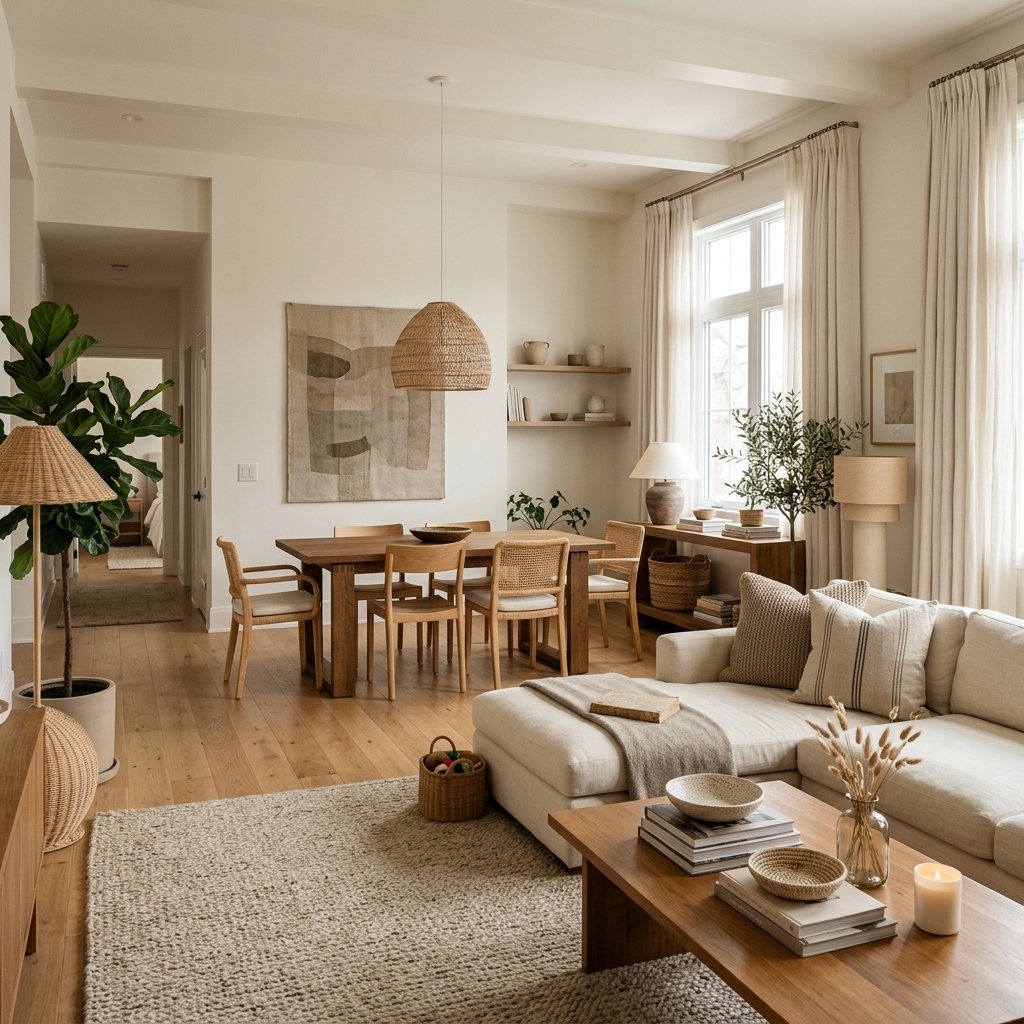
How to Decorate an Open-Concept Home
Open floor plans need visual connection.
Use color and materials to tie the different zones together.
For example, a living room and dining area might share:
- Similar wood tones
- Same curtain color
- Repeated black accents
- Related rugs
You do not need identical furniture.
In fact, subtle differences can help define each zone while the repeated materials keep the overall space connected.
How to Decorate a New-Build Home
New-build homes often start with clean but fairly neutral architecture.
Add character through layers rather than trying to change everything at once.
Consider:
- Curtains
- Larger rugs
- Interesting lighting
- Art
- Warm wood
- Vintage furniture
- Wall molding
- Wallpaper
- Painted doors
- Updated hardware
Start with reversible decorating changes before committing to larger renovations.
How to Add Character to a New Home
Character comes from contrast and detail.
Try mixing:
- Old + new
- Smooth + textured
- Light + dark
- Modern + traditional
- Simple + decorative
Avoid buying everything from the same furniture collection.
Rooms often feel more interesting when they look assembled gradually.
How to Decorate a New Home Without Buying Everything at Once
Create three categories.
Need Now
Items required for daily life.
Need Soon
Items that improve comfort and function.
Later
Decorative or optional purchases.
This helps you avoid turning every empty wall or corner into an urgent shopping problem.
An unfinished room is not a decorating failure.
It is simply a room that still has space for the right piece.
How to Choose Furniture That Works Together
Furniture does not need to match exactly.
Instead, look for relationships.
For example, pieces can share:
- Similar wood warmth
- Repeated curves
- Related upholstery colors
- Consistent scale
If you have a large sofa, pair it with furniture substantial enough to hold its own visually.
If your room contains many heavy pieces, introduce something lighter, such as a slim side table or open-base coffee table.
Balance matters more than matching.
How to Mix Wood Tones in a New Home
You can use more than one wood finish.
Start with a dominant wood tone.
Then add one or two complementary tones.
Repeat each wood tone at least a few times where practical so it looks intentional.
Pay attention to whether the woods lean:
- Warm
- Cool
- Neutral
They do not have to be identical to coordinate.
How to Choose Decor for Empty Corners
Not every corner needs something.
If a corner genuinely feels unfinished, consider:
- Floor lamp
- Tall plant
- Accent chair
- Small table
- Basket
Choose something useful before adding decoration simply to occupy space.
Empty space gives a room visual breathing room.
How to Make a New Home Feel Cozy
Coziness comes from layers rather than clutter.
Add:
- Warm lighting
- Curtains
- Area rugs
- Pillows
- Throws
- Wood
- Books
- Personal objects
- Greenery
Avoid relying entirely on overhead lighting.
Multiple small pools of light can make rooms feel much warmer in the evening.
How to Make a New Home Look More Expensive
You do not necessarily need expensive furniture.
Focus on proportion and restraint.
Try:
- Properly scaled rugs
- Full-length curtains
- Larger art
- Coordinated lighting
- Fewer small accessories
- Consistent finishes
- Simple color palette
Remove unnecessary clutter before adding more decor.
A room with fewer well-scaled pieces often feels more polished than one packed with small accessories.
Common Mistakes When Decorating a New Home From Scratch
Buying Everything Immediately
You may not understand the house well enough yet.
Buying Furniture Without Measuring
Scale problems can be expensive to fix.
Choosing Paint Before Considering Fixed Finishes
Flooring, countertops, tile, and cabinetry affect how paint colors appear.
Buying Matching Furniture Sets
Too much matching can make rooms feel flat.
Using Rugs That Are Too Small
Rugs should help connect the furniture arrangement.
Forgetting Lighting
A beautifully furnished room can still feel uncomfortable with poor lighting.
Filling Every Empty Space
Not every wall, corner, and tabletop needs decoration.
Following Trends Too Closely
Use trends in smaller, replaceable pieces if you are unsure about long-term commitment.
Ignoring Function
A room can look beautiful in a photograph and still be frustrating to live in.
New Home Decorating Safety Tips
As you furnish and decorate, keep practical safety in mind.
- Secure tall or potentially unstable furniture appropriately, particularly where children may be present.
- Use mounting hardware suited to the wall material and weight of mirrors, shelves, and artwork.
- Keep walkways and exits clear.
- Do not overload electrical outlets or extension cords.
- Follow manufacturer instructions for lighting and furniture assembly.
- Use a qualified professional for electrical work when appropriate.
- Check secondhand furniture carefully before bringing it indoors.
- Consider door swings, vents, heating equipment, and other required clearances when positioning furniture.
- Keep cords controlled around windows and walking areas.
- Use stable ladders or step stools rather than furniture when hanging curtains or artwork.
FAQ About Decorating a New Home From Scratch
Where should I start when decorating a new home?
Start with function, measurements, and a simple whole-house design direction. Then prioritize the rooms you use most and purchase the largest furniture pieces first.
Should I decorate the whole house in the same style?
Not necessarily. Rooms can have different personalities while repeating colors, wood tones, materials, and finishes for continuity.
Should I paint before buying furniture?
It depends. Existing flooring, cabinetry, countertops, and major furnishings can influence paint choices. Test paint in the actual room before committing.
How can I decorate an entire house on a budget?
Decorate gradually, reuse what you already own, shop secondhand, prioritize high-use furniture, and avoid buying decorative items simply to fill empty spaces.
How long should it take to decorate a new home?
There is no ideal timeline. Taking longer can actually help because you learn how the rooms function and have more opportunities to find pieces you genuinely like.
Does all the furniture in a house need to match?
No. Coordinating scale, color, wood tones, and overall style usually creates a more natural look than buying matching furniture sets.
What should I spend money on first?
Prioritize pieces that affect daily comfort and function, such as beds, seating, dining furniture, lighting, window coverings, and storage.
How do I make a newly decorated house feel like home?
Add personal items gradually. Family photos, books, collected objects, meaningful artwork, comfortable textiles, and familiar belongings can make a new space feel much more personal.
Final Thoughts
Learning how to decorate a new home from scratch becomes much easier when you stop treating the entire house as one enormous decorating project.
Start with how you want the home to feel.
Measure each room, develop a simple color palette, make furniture plans, and prioritize the spaces you use most. Buy the largest functional pieces first and add rugs, curtains, lighting, storage, art, and accessories gradually.
Most importantly, do not rush to fill every empty space.
Some of the best homes feel collected because they actually were collected over time.
Give yourself room to discover what the house needs, invest thoughtfully in the pieces you use most, and add personal details as you go.
The result will feel far more cohesive—and far more like home—than trying to complete every room on moving day.