

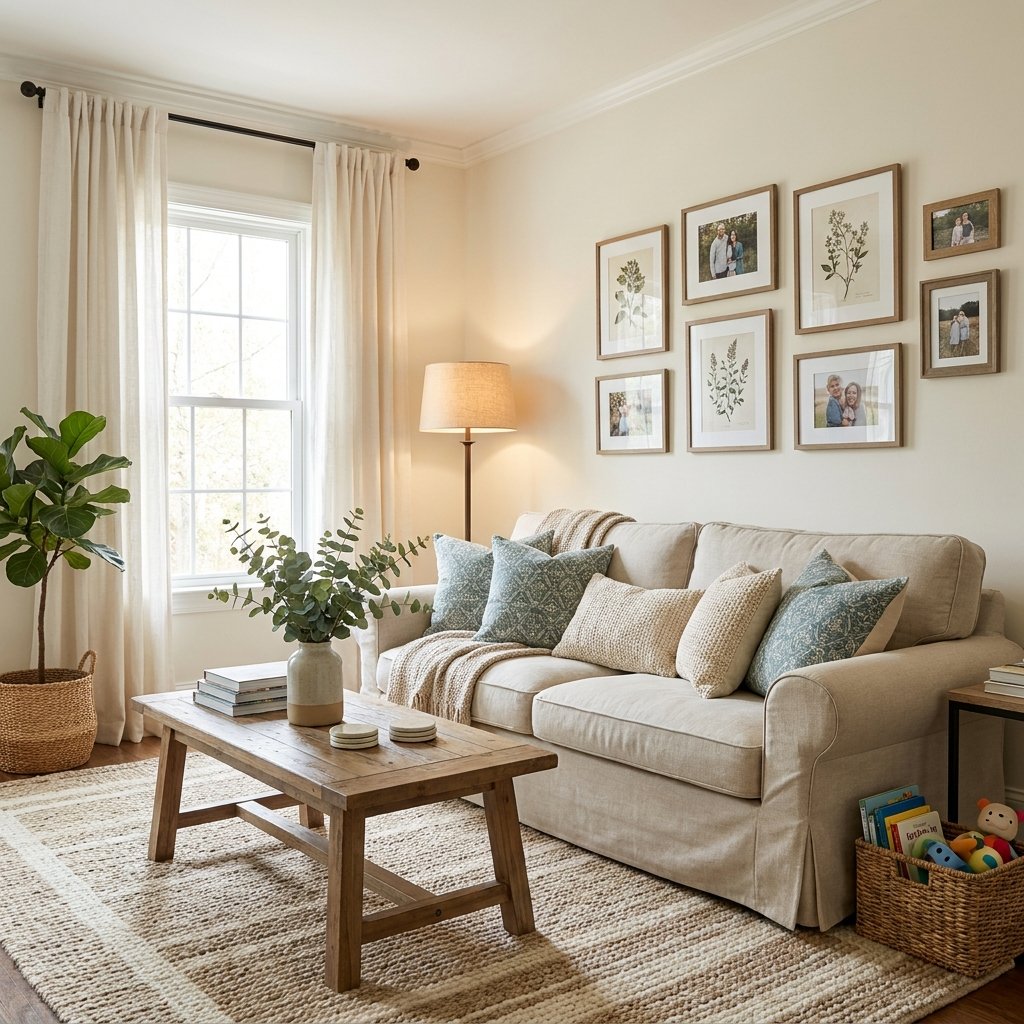
Decorating a home can feel surprisingly overwhelming.
You may know what rooms you like when you see them, but translating those ideas into your own home is another story. What should you buy first? How do you choose colors? Should the rug match the sofa? How much furniture does a room need? And how do you make everything feel connected without buying a matching set?
Learning how to decorate your home becomes much easier when you stop thinking about individual accessories and start with the bigger picture.
Begin with how the room needs to function. Then choose the largest pieces, establish a color palette, get the scale right, and slowly layer in lighting, textiles, artwork, and accessories.
You don’t need to decorate your entire house at once, either.
A thoughtfully decorated home usually develops over time. Taking a slower approach gives you a chance to understand what each room actually needs—and can help prevent expensive impulse purchases.
Here’s a practical step-by-step guide for creating a home that feels comfortable, cohesive, and personal.
1. Decide How Each Room Needs to Function
Before choosing paint colors or shopping for furniture, ask what the room actually needs to do.
A living room might need to support:
- Watching television
- Conversation
- Reading
- Entertaining
- Children’s activities
A dining room might double as:
- Homework space
- Home office
- Craft area
Your decorating decisions should support those activities.
A beautiful room that doesn’t function well will quickly become frustrating.
Think about:
- Who uses the room?
- What do they do there?
- What needs to be stored?
- How many seats are needed?
- Where are the natural walking paths?
Function comes first.
2. Choose Your Decorating Style—But Don’t Box Yourself In
You don’t need to give your style one perfect name.
Most beautiful homes mix influences.
You might love:
- Traditional furniture
- Modern lighting
- Coastal colors
- Vintage accessories
- Farmhouse textures
That’s completely fine.
Instead of forcing yourself into one decorating category, identify the qualities you consistently like.
Maybe you’re drawn to rooms that feel:
Warm + relaxed + traditional
or:
Light + natural + casual
or:
Moody + classic + layered
Those descriptions can guide your choices more effectively than trying to make every object fit one style label.
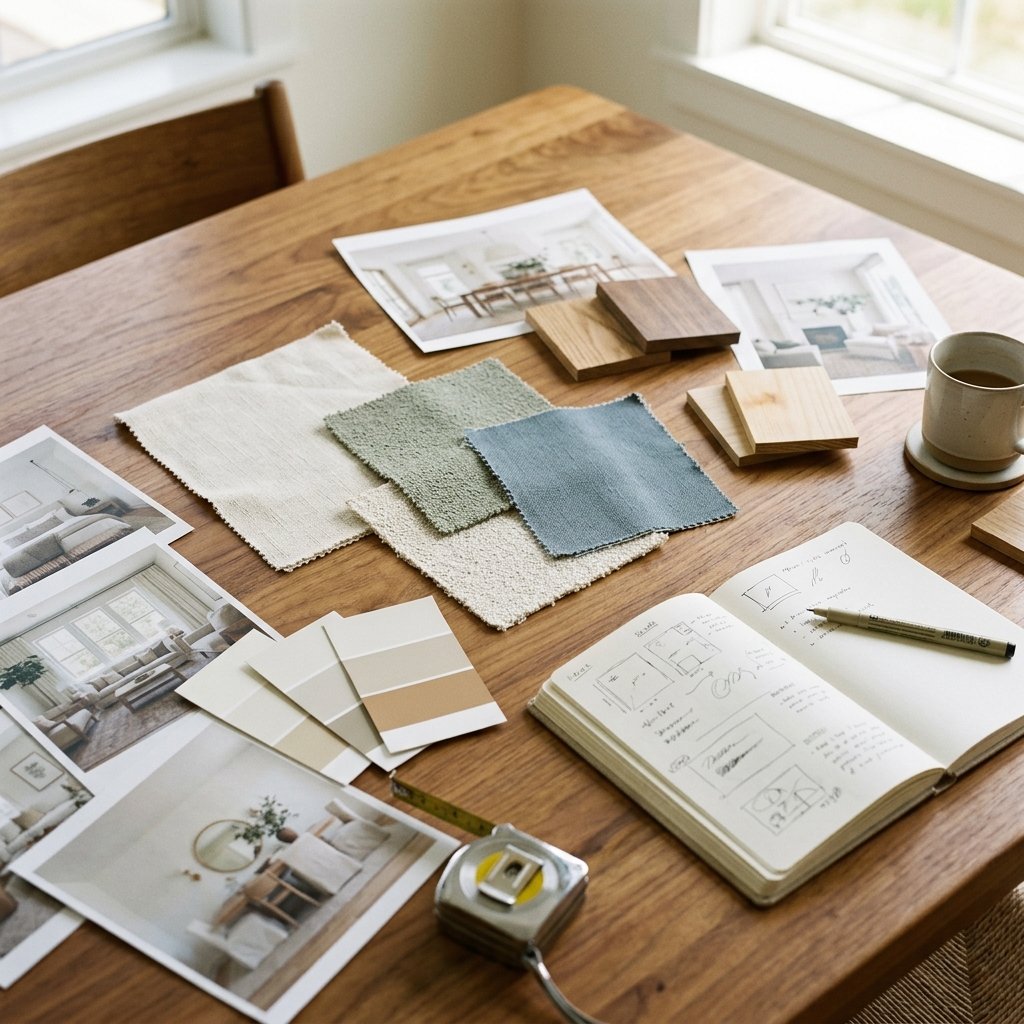
3. Gather Inspiration Before Shopping
Save images of rooms you genuinely love.
Pinterest is particularly useful for this.
After you’ve collected several, look for patterns.
Do you repeatedly save:
- Warm wood?
- Cream walls?
- Blue accents?
- Vintage rugs?
- Brass-toned lighting?
- Linen curtains?
- Dark green?
- Natural textures?
Those repeated elements tell you more about your decorating preferences than any design quiz.
Don’t try to copy one room exactly.
Instead, identify what several favorite rooms have in common.
4. Take Inventory of What You Already Own
Before buying anything, walk through your home.
Make three mental categories:
Keep
Pieces you like and want to design around.
Move
Items that might work better in another room.
Replace Eventually
Pieces that don’t work but don’t necessarily need to be replaced immediately.
You may be surprised by how much you can accomplish by simply rearranging what you already own.
A side table from the bedroom might work better in the living room.
A dining room vase could become an entryway centerpiece.
A bedroom chair might fill an awkward corner elsewhere.
Shop your home before shopping the store.
5. Measure the Room
This step can prevent some of the most expensive decorating mistakes.
Measure:
- Room dimensions
- Windows
- Doorways
- Wall lengths
- Ceiling height where relevant
- Existing furniture
Then note important architectural features such as:
- Fireplace
- Built-ins
- Radiators
- Floor vents
- Electrical outlets
- Doors and their swing paths
Keep the measurements on your phone so you have them when shopping.
Never assume a piece will fit because it “looks about right.”
6. Plan the Furniture Layout
Before worrying about accessories, decide where the large furniture belongs.
In a living room, start with:
- Sofa
- Chairs
- Media furniture
- Coffee table
Arrange furniture around the room’s primary purpose or focal point.
That might be:
- Fireplace
- View
- Television
- Conversation area
Avoid automatically pushing every piece of furniture against a wall.
Pulling seating slightly inward can create a more comfortable conversation area when space allows.
Maintain clear walking paths.
7. Choose a Whole-Home Color Direction
Your rooms don’t have to be the same color, but having some connection between them helps the house feel cohesive.
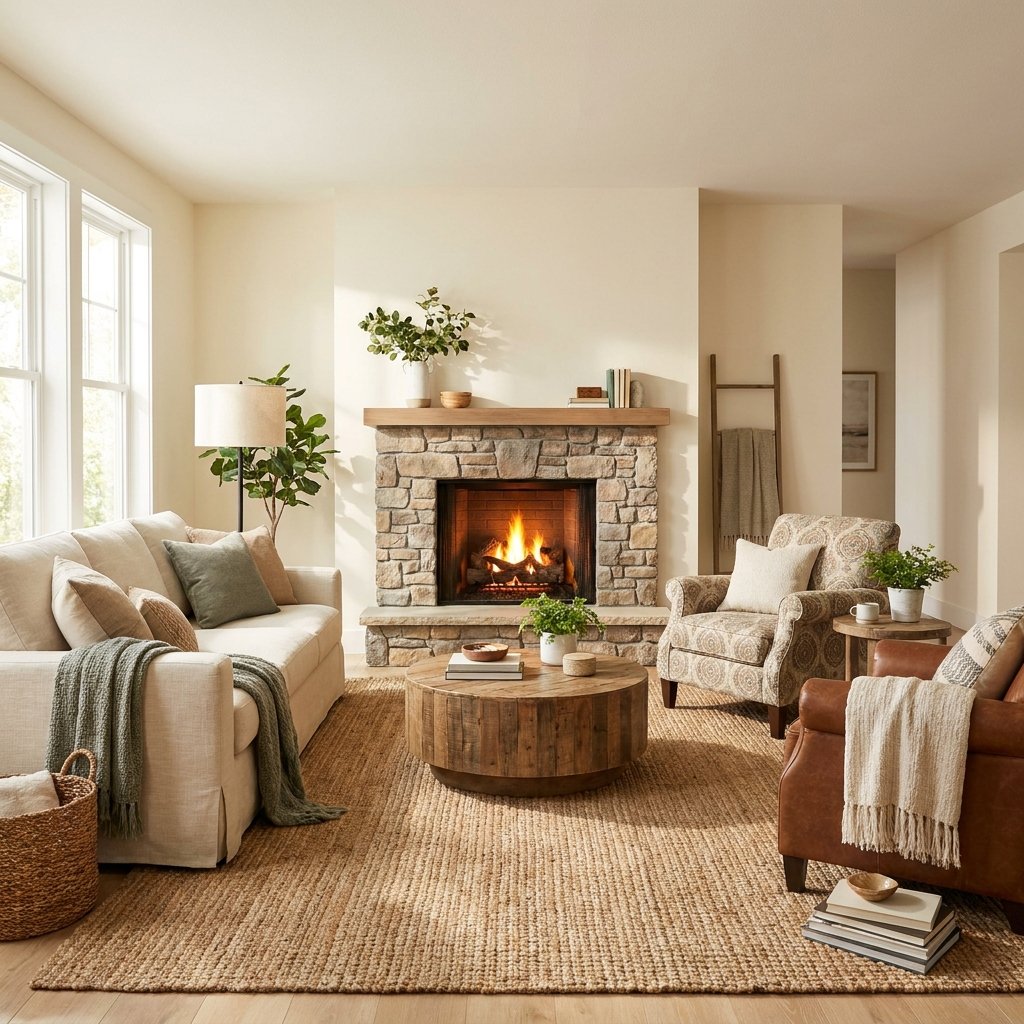
Choose a general palette.
For example:
Warm Neutral
Cream + beige + brown + muted green
Coastal
White + blue + green + warm wood
Earthy
Cream + olive + rust + brown
Classic
Warm white + navy + green + burgundy
Soft Neutral
Greige + cream + warm wood + muted blue
You can emphasize different colors in different rooms while repeating a few throughout the house.
8. Choose Paint Colors After Considering the Fixed Finishes
Paint is relatively easy to change.
Flooring, tile, countertops, and large furniture usually aren’t.
Look at your fixed finishes first.
Then choose wall colors that coordinate with them.
Pay attention to undertones.
A beige floor may lean:
- Yellow
- Pink
- Orange
- Gray
Wood can also have yellow, orange, red, or cooler undertones.
Always test paint in the actual room before committing.
Look at samples in morning, afternoon, and evening light.
9. Start With the Largest Furniture Pieces
If you’re furnishing a room from scratch, don’t begin with throw pillows.
Start with the pieces that have the biggest visual and financial impact.
For a living room:
- Sofa
- Rug
- Chairs
- Coffee table
- Lighting
- Curtains
- Artwork
- Accessories
For a bedroom:
- Bed
- Rug
- Nightstands
- Dresser
- Lighting
- Curtains
- Bedding
- Artwork
Smaller decorating choices are much easier once the major pieces are established.
10. Get the Rug Size Right
A rug that’s too small can make an otherwise beautiful room feel disconnected.
In a living room, the rug should visually connect the seating group rather than floating like a small island beneath the coffee table.
Depending on the room and layout, that often means at least the front portions of the primary seating pieces rest comfortably on the rug.
In a bedroom, choose a rug large enough to extend visibly beyond the bed where you want softness underfoot.
Always measure before ordering.
Painter’s tape can help you visualize the footprint.
11. Mix Furniture Instead of Buying a Matching Set
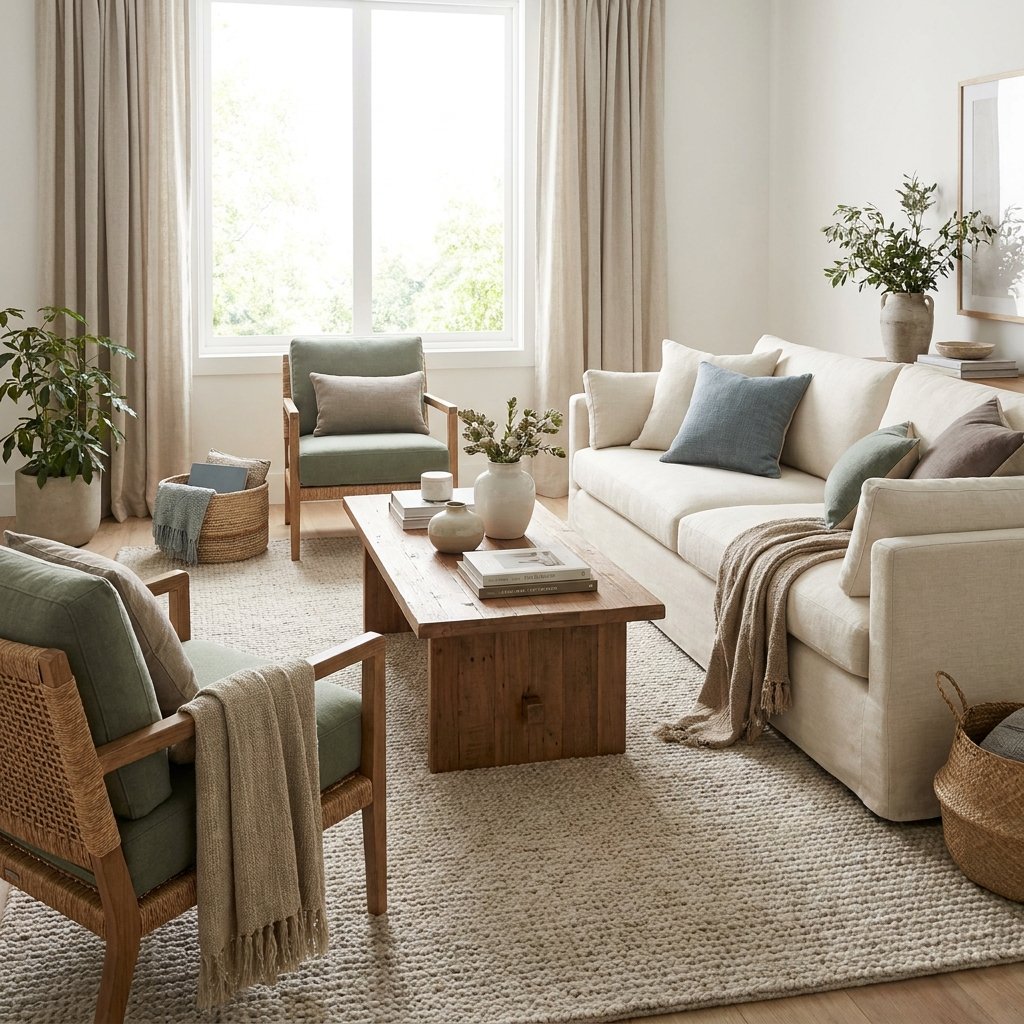
Rooms often look more collected when furniture coordinates without matching exactly.
For example, pair:
- Upholstered sofa
- Wood coffee table
- Painted side table
- Woven accent chair
Or mix different wood tones intentionally.
You don’t need every piece to come from the same furniture collection.
Repeat a few characteristics—such as color, shape, or material—to create connection.
12. Mix Wood Tones
You can absolutely use more than one wood tone in a room.
In fact, mixing woods can make a home feel more natural and collected.
Choose one dominant wood tone, then introduce one or two secondary tones.
Use repetition to make the mix look intentional.
For example, if you introduce darker wood through a coffee table, repeat something similar through a frame, stool, or small piece of furniture.
Avoid trying to match every wood perfectly.
13. Add Contrast
A room filled entirely with pale neutral colors can sometimes feel flat.
Contrast adds definition.
Try introducing:
- Black
- Dark brown
- Navy
- Deep green
- Burgundy
You don’t need much.
A black frame, dark wood table, green pillow, or burgundy throw may provide enough visual weight.
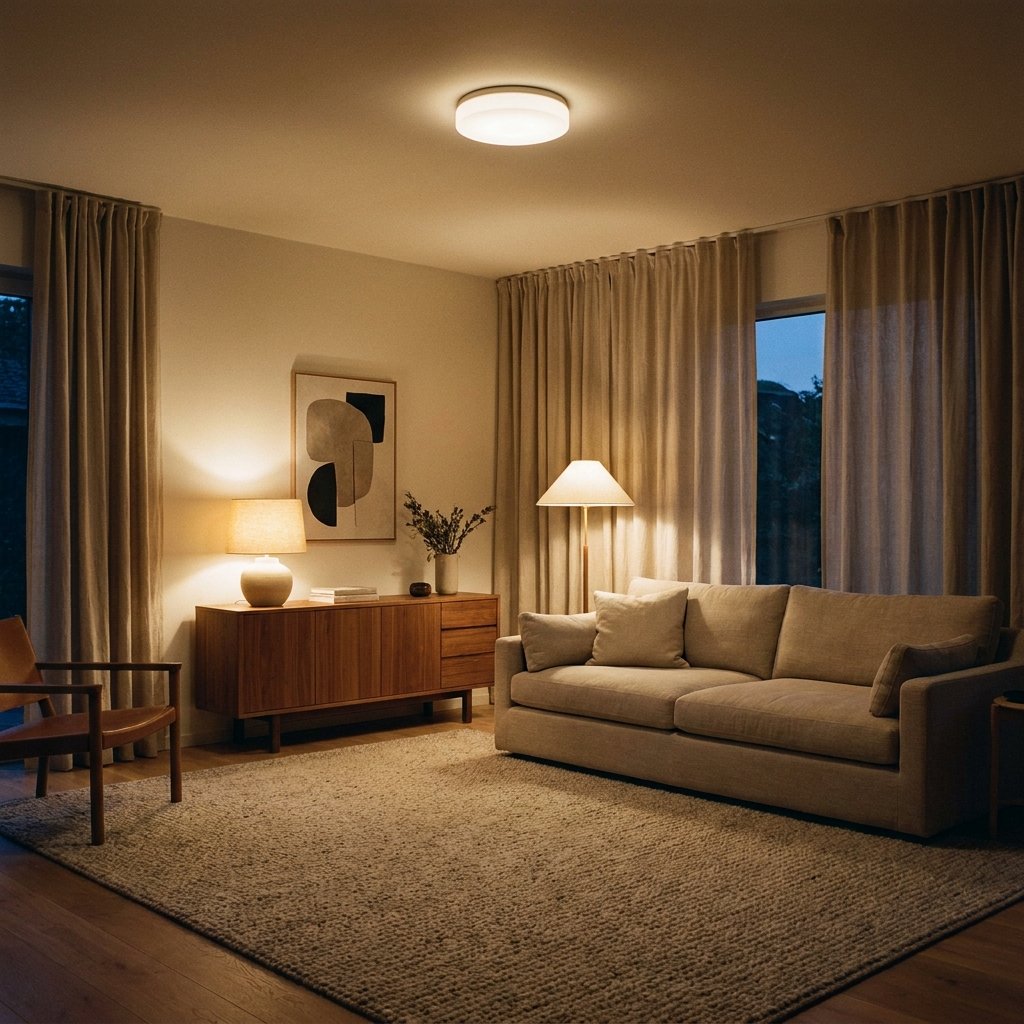
14. Layer Your Lighting
One ceiling light usually isn’t enough.
Aim for several types of lighting.
Ambient Lighting
General room lighting.
Task Lighting
Lighting for reading, cooking, working, or other activities.
Accent Lighting
Lamps or fixtures that create atmosphere or highlight specific areas.
In a living room, you might have:
Ceiling fixture + floor lamp + table lamp
Multiple light sources make a room more comfortable and flexible.
Use fixtures and bulbs appropriate for their intended use, and follow manufacturer requirements for installation and bulb specifications.
Electrical work beyond simple user-serviceable tasks should be handled appropriately for your location and circumstances.
15. Hang Curtains With Intention
Curtains can dramatically change how finished a room feels.
Where the architecture allows, hanging curtain rods above the window and extending them beyond the window frame can visually emphasize the window and allow more glass to remain uncovered when the curtains are open.
Measure carefully before purchasing panels.
Consider:
- Rod height
- Rod width
- Panel length
- Panel fullness
- Furniture placement
- Heat sources
Use mounting hardware suitable for the wall construction and weight of the window treatments.
16. Use Throw Pillows to Repeat Color
Pillows are one of the easiest ways to tie a room together.
Instead of buying a matching pillow set, mix:
- Solid colors
- Small patterns
- Larger patterns
- Different textures
Repeat colors already present in the room.
For example, if your rug contains muted blue and green, use those colors in the pillows.
This creates connection without everything matching.
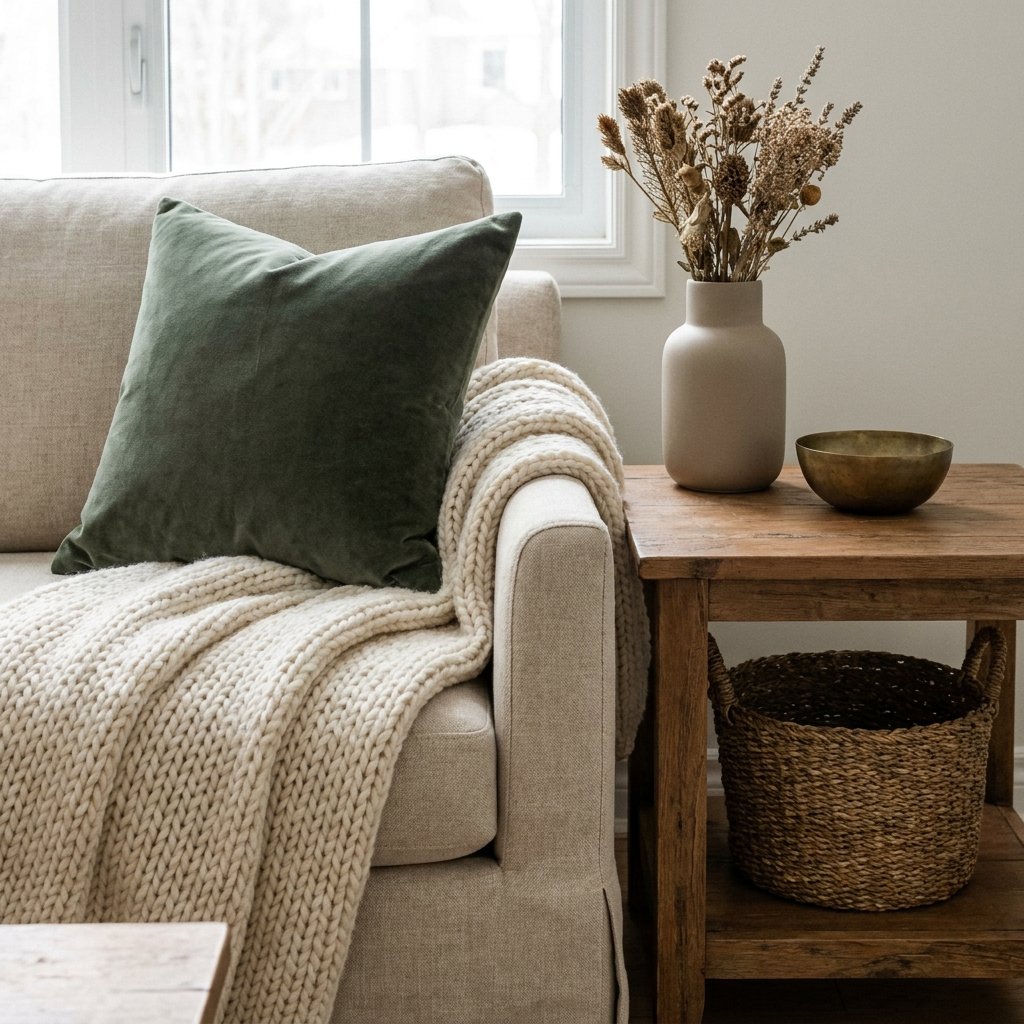
17. Add Texture to Neutral Rooms
If you love neutral decorating, texture is essential.
Mix materials such as:
- Linen
- Velvet
- Wool
- Wood
- Woven fibers
- Ceramic
- Metal
A room can be almost entirely cream and brown and still feel interesting if the textures vary.
18. Choose Artwork That Fits the Wall
Artwork is often hung too small.
A tiny picture floating over a large sofa can make the entire wall feel unfinished.
Use artwork with enough visual scale for the furniture or wall beneath it.
You might choose:
- One large piece
- Two coordinating pieces
- A carefully planned gallery wall
Before making multiple holes, use paper templates or painter’s tape to test the arrangement.
Use hanging hardware appropriate for the artwork’s weight and your wall construction.
19. Decorate the Coffee Table Simply
You don’t need ten accessories.
Start with:
- Books
- Tray
- Decorative object
- Small plant or flowers
Use different heights and shapes.
Then leave some empty surface.
The coffee table should still have room for everyday use.
20. Style Shelves With Breathing Room
Open shelving can quickly become cluttered.
Mix:
- Books
- Art
- Ceramic pieces
- Baskets
- Personal objects
Vary the height and orientation.
Most importantly, leave some open space.
You don’t need to fill every inch.
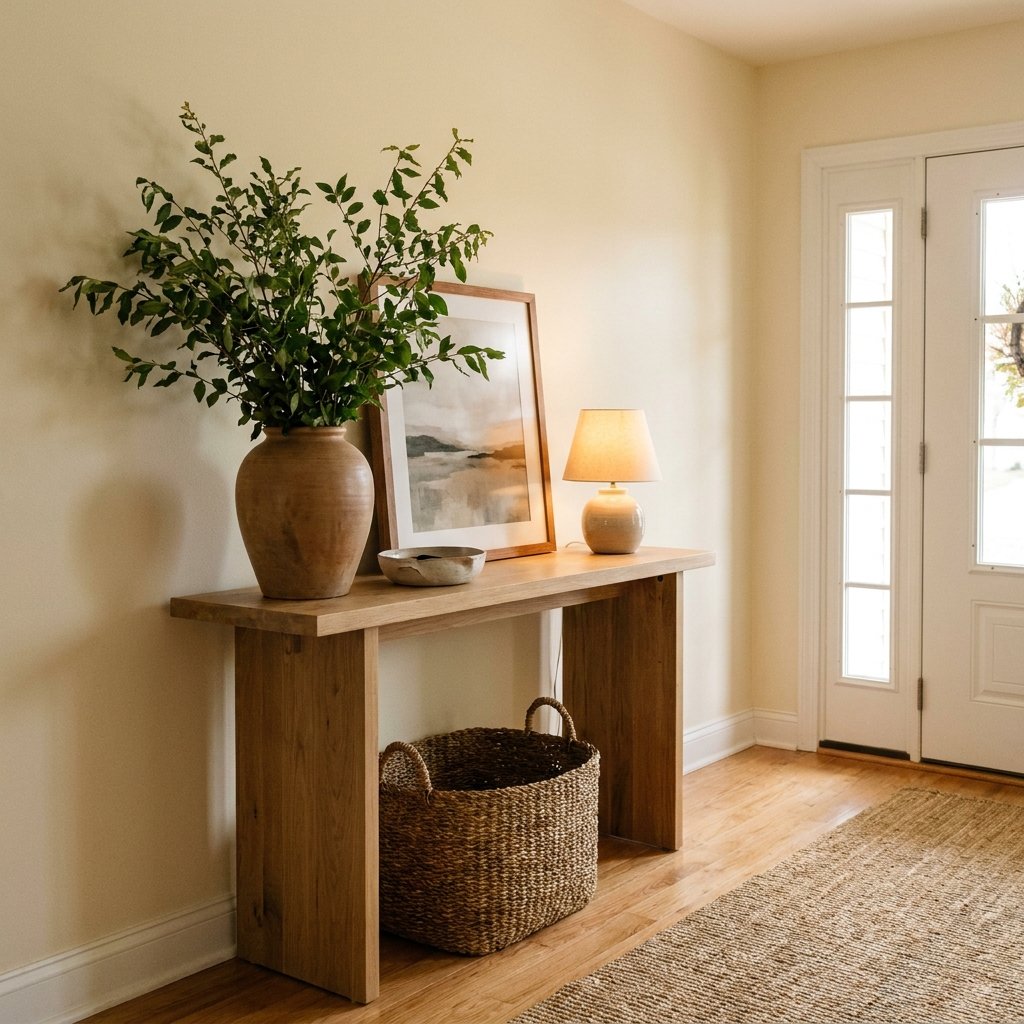
21. Add Greenery
Plants, appropriate fresh branches, or realistic faux greenery can make a room feel more alive.
Try:
- Large plant in an empty corner
- Small plant on a side table
- Branches in a vase
- Greenery on shelving
Choose live plants appropriate for the room’s conditions, and consider pet or child safety where relevant.
22. Decorate in Layers
Don’t expect a room to look finished immediately.
Think of decorating in layers.
Layer 1
Furniture
Layer 2
Rug
Layer 3
Lighting
Layer 4
Window treatments
Layer 5
Artwork
Layer 6
Textiles
Layer 7
Accessories and personal pieces
Complete the important layers first.
Then live with the room for a little while before deciding what it still needs.
23. Repeat Colors and Materials
Repetition is one of the easiest ways to make a room feel cohesive.
If you use warm wood in one area, repeat it elsewhere.
If you add green to the rug, repeat green in a pillow or artwork.
If you use black hardware, repeat a small amount of black through lighting or frames.
The repetition doesn’t need to be obvious.
It simply gives the eye a connection to follow.
24. Mix Old and New Pieces
A home filled entirely with brand-new furniture can sometimes feel impersonal.
Mix in pieces that have history or character.
That could be:
- Vintage mirror
- Old wood table
- Family artwork
- Antique-style lamp
- Secondhand dresser
- Meaningful accessories
You don’t need an entire room of antiques.
One or two older pieces can add character.
25. Leave Some Empty Space
Not every wall needs artwork.
Not every corner needs furniture.
Not every tabletop needs accessories.
Empty space is part of decorating.
It helps important pieces stand out and makes rooms easier to live in.
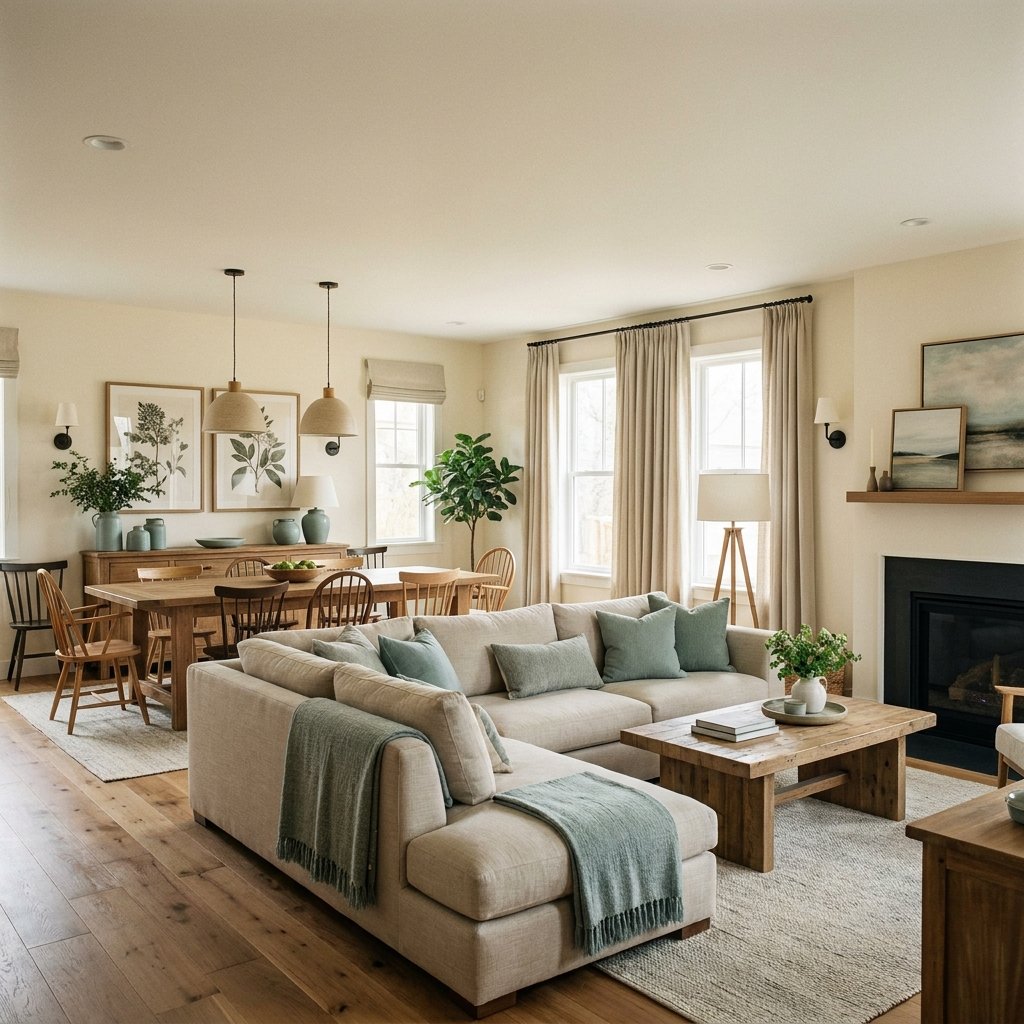
How to Decorate Your Home From Scratch
If you’re starting with an empty house, resist the urge to buy everything immediately.
Use this order:
- Measure each room.
- Determine its function.
- Create a furniture plan.
- Choose a general color direction.
- Buy the essential large furniture.
- Choose appropriately scaled rugs.
- Select lighting.
- Add curtains or other window treatments.
- Add artwork.
- Layer in pillows, throws, and accessories.
Focus on the rooms you use most.
It’s better to have one comfortable, functional living room than six partially decorated rooms filled with impulse purchases.
How to Decorate Your Home on a Budget
Good decorating isn’t dependent on an unlimited budget.
Rearrange Furniture
Try a different layout before buying anything.
Shop Your Home
Move artwork, lamps, tables, and accessories between rooms.
Paint
A carefully chosen wall or furniture color can dramatically change a room.
Buy Secondhand
Look for quality wood furniture, mirrors, frames, lamps, and decorative pieces.
Replace Textiles
New pillow covers or curtains can change a color palette without replacing furniture.
DIY Simple Projects
Paint furniture, create simple artwork, or update appropriate hardware where practical.
Wait for the Right Piece
An empty corner is better than filling it with something you don’t actually like.
How to Make Your Home Look More Expensive
You don’t need luxury furniture in every room.
Focus on details.
Use Larger Rugs
Correct scale makes rooms feel more intentional.
Hang Curtains Thoughtfully
Window treatments can visually change room proportions.
Choose Fewer, Larger Accessories
A few substantial objects often look more polished than many tiny ones.
Mix Materials
Combine wood, linen, metal, glass, ceramic, and woven textures.
Add Lighting
Lamps make rooms feel layered.
Edit
Removing clutter costs nothing.
Repeat Finishes
Repetition creates visual cohesion.
How to Make Your Home Feel Cozy
Cozy isn’t the same as cluttered.
Use:
- Warm lighting
- Area rugs
- Curtains
- Throw blankets
- Pillows
- Wood
- Woven texture
- Books
- Personal objects
Then balance those softer elements with clear surfaces and enough breathing room.
How to Make Your Home Look Cohesive
Your rooms don’t need to match.
Instead, repeat a few elements throughout the house.
For example:
Cream walls + warm wood + blue-green accents + black details
The living room might use mostly cream and green.
The bedroom might use cream and blue.
The kitchen might emphasize wood and black.
Because the basic palette repeats, the rooms still feel connected.
Common Home Decorating Mistakes
Buying Furniture Before Measuring
Always know your dimensions.
Using Rugs That Are Too Small
Rugs should relate to the furniture arrangement.
Buying Everything From One Collection
Mixing pieces usually creates more character.
Choosing Paint Without Testing It
Lighting and undertones matter.
Hanging Artwork Too Small
Consider the scale of the furniture and wall.
Using Only One Light Source
Layer lighting where possible.
Buying Accessories Too Early
Large pieces should come first.
Following Trends You Don’t Actually Like
Your home has to work for you after the trend disappears.
Filling Every Empty Space
Not every wall, table, or corner needs something.
Home Decorating Safety and Practical Considerations
A beautiful home should also function safely.
- Keep walkways and exits clear.
- Don’t block doors, vents, or required access points.
- Anchor furniture where appropriate, particularly in homes with children.
- Follow manufacturer instructions for furniture assembly and wall anchoring.
- Use wall-mounting hardware appropriate for the wall type and item weight.
- Follow electrical and lighting manufacturer instructions.
- Keep combustible materials appropriately separated from fireplaces, heaters, and other heat sources.
- Don’t run cords where they create tripping hazards.
- Consider children and pets when selecting plants, breakable accessories, furniture, and window treatments.
- Use appropriate professional help for structural, electrical, plumbing, or other work beyond your skills or local requirements.
FAQ About How to Decorate Your Home
Where do I start when decorating my home?
Start with function, measurements, and furniture layout. Then choose a general color palette and focus on the largest furniture pieces before buying accessories.
What should I buy first when decorating a room?
Usually start with the most important large furniture piece, such as a sofa or bed. Rugs and other major pieces should follow before small decorative accessories.
How do I figure out my decorating style?
Save images of rooms you love and look for repeated colors, materials, furniture shapes, and moods. Focus on what those rooms have in common rather than forcing yourself into one style label.
How many colors should I use in a room?
There isn’t a required number, but choosing a limited palette with a few dominant and supporting colors can make decorating easier. You can add variation through texture and smaller accents.
Does all the furniture in my house need to match?
No. Coordinating rather than matching usually creates a more collected look. Repeat certain colors, wood tones, shapes, or finishes to connect different pieces.
How can I decorate my home cheaply?
Rearrange existing furniture, shop your home, buy secondhand, paint where appropriate, update textiles, and wait for pieces you genuinely like rather than filling the room quickly.
How do I make my home look professionally decorated?
Focus on scale, furniture layout, layered lighting, properly sized rugs, thoughtful window treatments, repeated colors and materials, and intentional editing.
How do I make different rooms flow together?
Repeat a few colors, materials, or finishes throughout the house while allowing each room to have its own emphasis.
Final Thoughts
Learning how to decorate your home isn’t about memorizing a long list of design rules.
It’s about making decisions in the right order.
Start with function.
Measure the room.
Plan the furniture layout.
Choose a general color direction.
Invest your attention in the large pieces first.
Then layer in rugs, lighting, curtains, artwork, textiles, greenery, and personal accessories.
Most importantly, don’t rush.
A home often feels more interesting when it develops gradually rather than being purchased as one complete matching package.
Move things around.
Try artwork in a different room.
Mix wood tones.
Bring in color through pillows.
Leave an empty corner until you find the right piece.
And don’t be afraid to remove something when a room starts feeling crowded.
The goal isn’t to make your home look exactly like someone else’s.
It’s to create rooms that function well, feel connected, and make you happy to come home.