

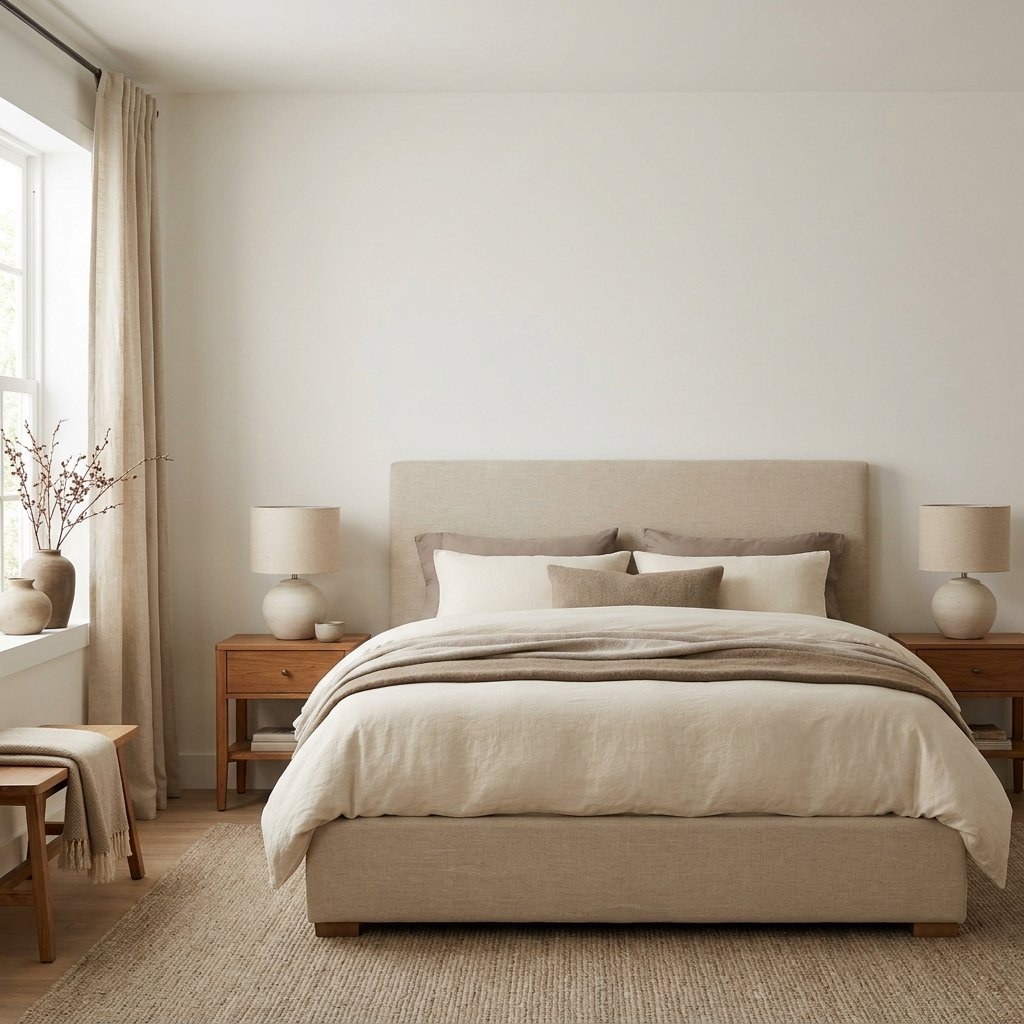
Your bedroom should feel like a place where you can settle in at the end of the day—not another room filled with visual noise, unfinished projects, and furniture squeezed wherever it happens to fit.
That’s one reason people turn to feng shui when arranging and decorating a bedroom.
Feng shui is a traditional Chinese practice concerned with how people interact with and arrange their environments. There are different schools and interpretations of feng shui, so you’ll find variations in the specific recommendations practitioners make.
For everyday decorating, however, many popular feng shui bedroom ideas overlap with practical design principles: create a clear path through the room, give the bed a strong visual position, reduce clutter, use balanced furniture arrangements, soften harsh elements, and create an atmosphere associated with rest.
If you’re wondering how to feng shui your bedroom, you don’t necessarily need to redecorate the entire room or buy special objects.
Start with the bed.
Then work outward, considering furniture placement, symmetry, color, lighting, storage, electronics, and the overall feeling of the space.
Here are 17 approachable ideas for creating a bedroom that feels calmer, more intentional, and visually balanced.
What Does Feng Shui Mean in a Bedroom?
Feng shui is often translated in terms of “wind” and “water” and encompasses ideas about arranging environments to encourage beneficial flow and harmony.
In bedroom discussions, you’ll often encounter the concept of qi, sometimes written as chi, referring to vital energy within traditional Chinese thought.
You don’t need to treat feng shui as a scientifically established system to find useful decorating ideas within it.
Many contemporary bedroom recommendations associated with feng shui encourage:
- Clear pathways
- Less clutter
- A visually secure bed position
- Balanced furniture
- Comfortable lighting
- Calming colors
- Fewer distractions
Those ideas can be useful simply because they may make a bedroom feel more restful and thoughtfully arranged.
1. Start With the Position of Your Bed
The bed is the visual and functional center of most bedrooms, so begin there.
In commonly discussed feng shui principles, the bed is ideally placed in what is often called the commanding position.
Generally, this means you can see the bedroom door while lying in bed without positioning the bed directly in line with the doorway.
The idea is to create a feeling of awareness and security.
From a decorating perspective, this placement can also make the bed feel intentionally anchored within the room.
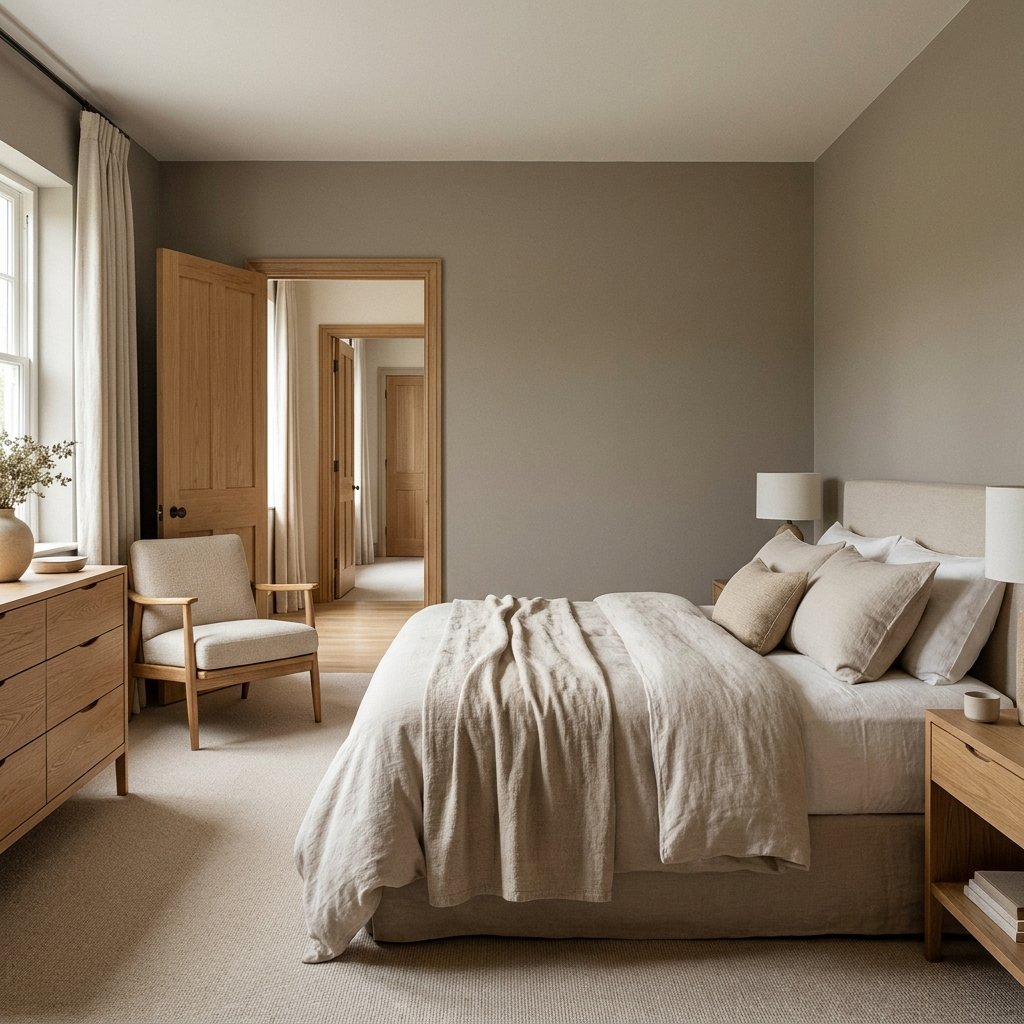
2. Avoid Putting the Bed Directly in Line With the Door When Possible
Many feng shui traditions discourage positioning the bed so your feet point directly through the doorway.
If your room gives you another practical arrangement, consider it.
But real bedrooms aren’t always cooperative.
Doors, closets, windows, radiators, and room dimensions may leave you with only one sensible place for the bed.
If that’s your situation, don’t panic.
Prioritize safe circulation and a functional room rather than forcing an awkward furniture layout solely to follow a guideline.
3. Give the Bed a Solid Wall Behind It
When possible, position the head of the bed against a solid wall.
Visually, this gives the bed a sense of permanence.
It also creates a natural focal point.
A strong bed wall can be emphasized with:
- Headboard
- Paint
- Artwork
- Wall molding
- Subtle wallpaper
Try to avoid making the wall so visually busy that the bedroom no longer feels restful.
4. Use a Substantial Headboard
A headboard can help visually anchor the bed.
Common feng shui-inspired bedroom advice often favors headboards that feel solid and supportive.
From a design perspective, an upholstered or wood headboard can provide structure while also adding:
- Texture
- Warmth
- Height
- Contrast
Choose something appropriately scaled to the bed and room.
You don’t need an enormous statement headboard to achieve the effect.
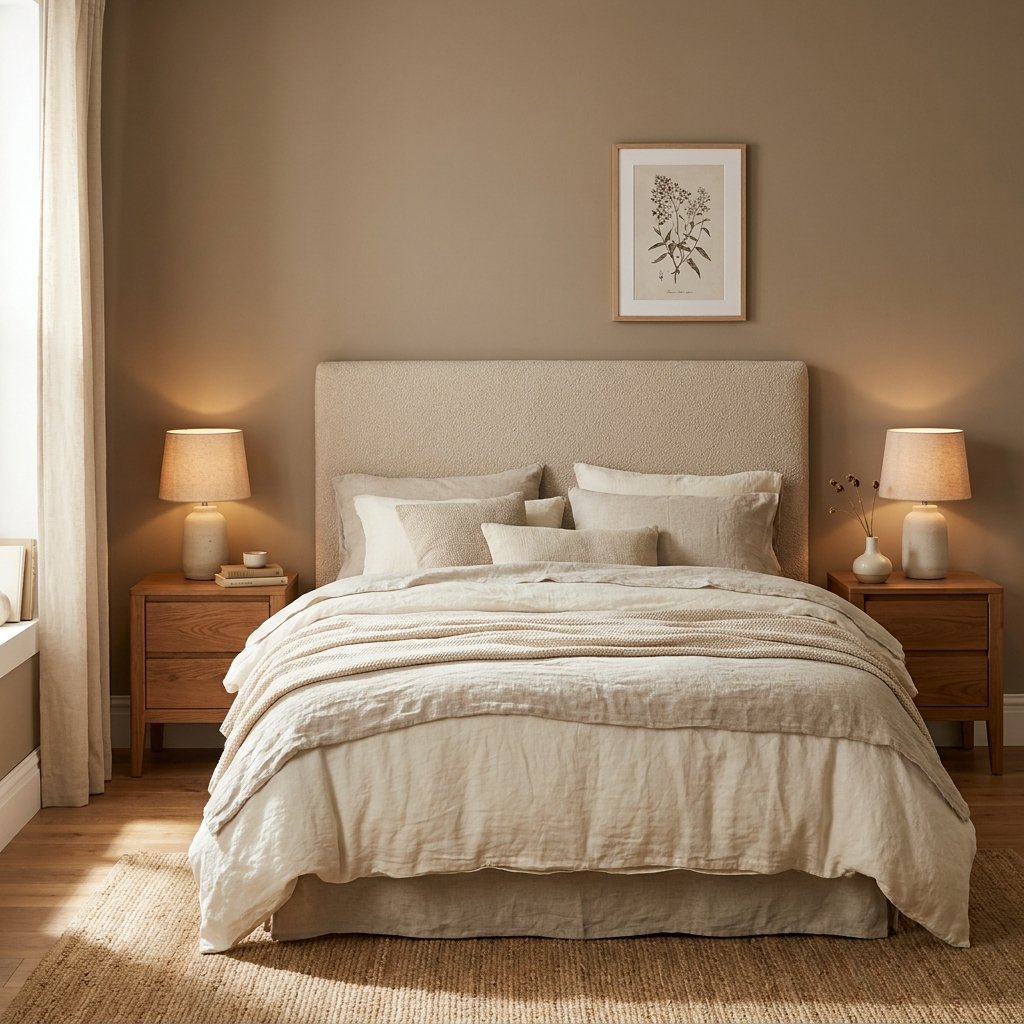
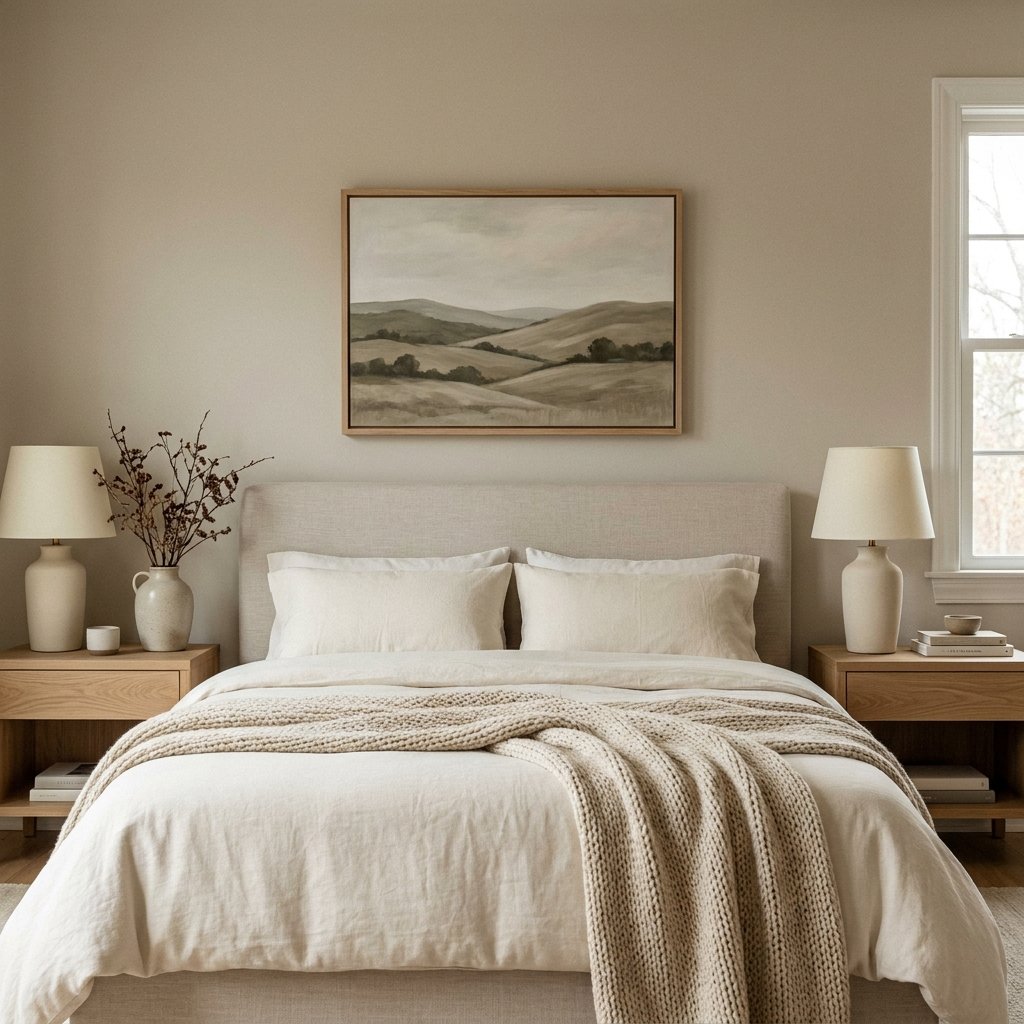
5. Create Balance on Both Sides of the Bed
Symmetry is one of the easiest ways to make a bedroom feel visually calm.
If space permits, place something on both sides of the bed.
That might mean:
- Two nightstands
- Two lamps
- Two sconces
They don’t necessarily need to be identical.
For a more collected look, the nightstands can be different as long as their scale and visual weight feel balanced.
This is especially useful in a shared bedroom because both people have a functional bedside surface.
6. Leave Space on Both Sides of the Bed When Possible
A bed pushed tightly against a wall may be necessary in a small bedroom, but if you have enough room, allowing access on both sides can create a more balanced arrangement.
It also makes:
- Getting in and out easier
- Making the bed easier
- Sharing the room more practical
If your bedroom is too narrow, don’t sacrifice safe circulation just to achieve perfect symmetry.
Work with the room you have.
7. Clear Clutter Around the Bed
Regardless of whether you follow feng shui, clutter can create visual stimulation.
Start with the areas you see immediately from bed.
Clear:
- Nightstands
- Dresser tops
- Floor
- Chair
- Window ledges
You don’t need completely empty surfaces.
Instead, choose a few useful or meaningful objects and give everything else a home.
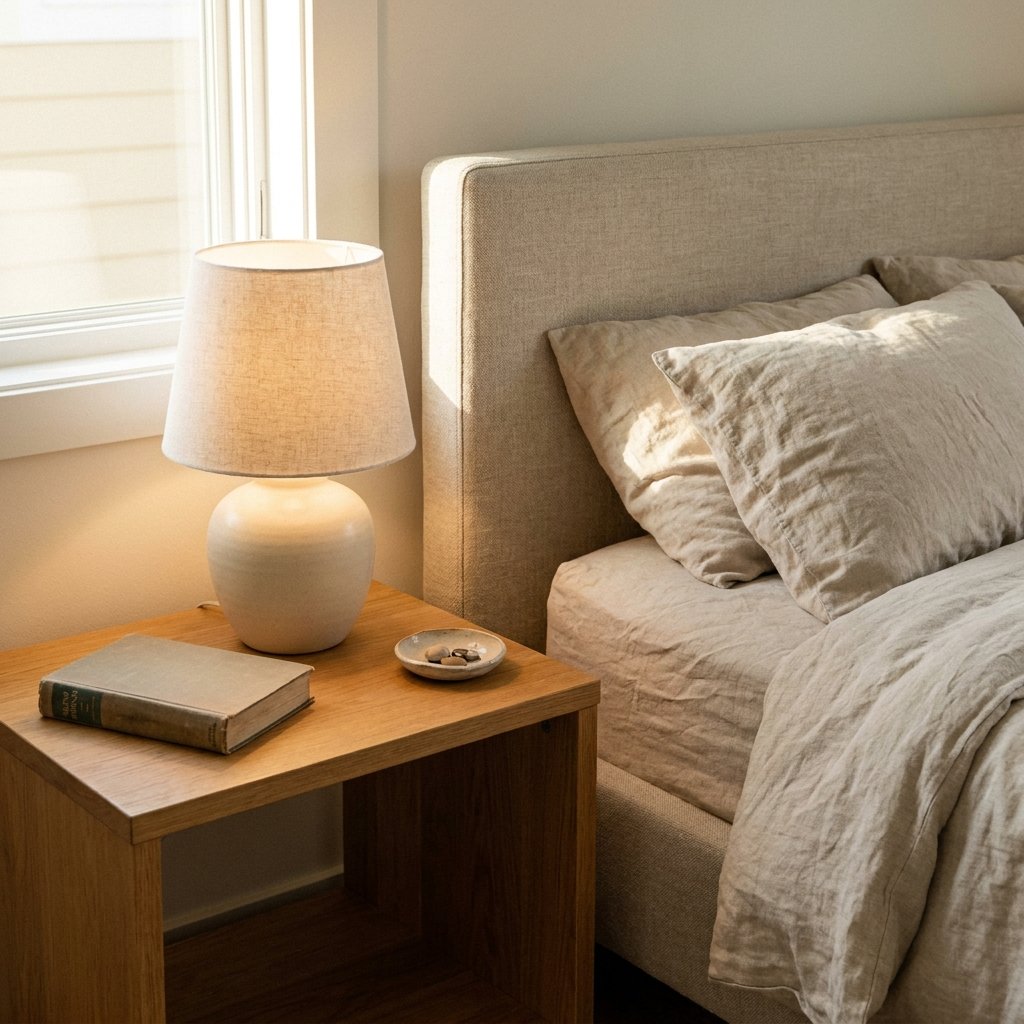
A nightstand might contain:
- Lamp
- Book
- Small dish
- Glass of water
That’s often enough.
8. Be Thoughtful About Storage Under the Bed
In many feng shui approaches, keeping the area under the bed relatively clear is preferred.
From a practical standpoint, however, under-bed storage can be valuable in a small home.
If you need it, use it intentionally.
Good candidates might include:
- Extra bedding
- Seasonal linens
- Out-of-season clothing
Use containers that keep items clean and organized.
Avoid turning the space into an inaccessible collection of things you no longer use.
The goal is to reduce clutter—not relocate it.
9. Reduce Electronics Near the Bed
Many feng shui bedroom guides recommend limiting electronics.
There are also practical reasons to reduce technological distractions around your sleeping space.
Consider whether you really need:
- Television
- Laptop
- Tablet
- Multiple chargers
- Work monitor
in the bedroom.
If you use your phone as an alarm, give it a designated charging location rather than letting cords and devices take over the nightstand.
You don’t need to create a completely technology-free bedroom unless that suits your lifestyle.
Aim for fewer visual distractions.
10. Keep Work Out of the Bedroom When Possible
A bedroom that doubles as an office can make it harder to create a clear visual separation between work and rest.
If you have another location for your desk, consider using it.
If your bedroom must contain a workspace, visually separate the two zones.
Try:
- Small screen
- Curtain
- Bookcase
- Different wall
- Closed desk
- Cabinet that hides work materials
At the end of the workday, put laptops, papers, and office supplies away.
Even a small boundary can help the room feel less like an office.
11. Choose Calm Bedroom Colors
There’s no single required feng shui bedroom color.
Different feng shui traditions may associate colors with different elements or areas, and individual recommendations vary.
For a generally restful decorating palette, consider softer, muted colors.
Options include:
- Warm white
- Cream
- Beige
- Taupe
- Mushroom
- Soft brown
- Muted sage
- Dusty blue
- Soft blush
Choose colors you personally find relaxing.
A theoretically “calming” beige won’t help if you dislike beige.
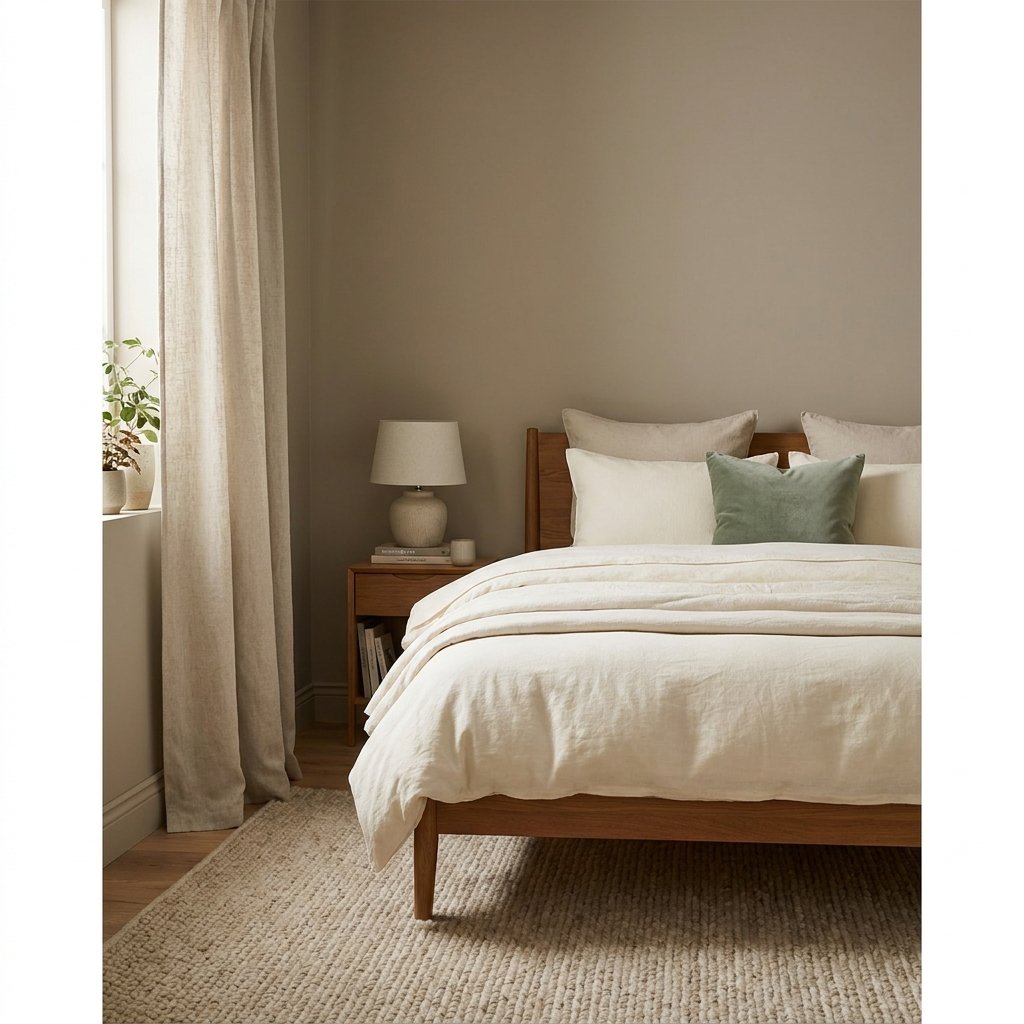
12. Use Natural, Earthy Materials
Natural textures can make a bedroom feel warmer and more grounded.
Consider incorporating:
- Wood
- Linen
- Cotton
- Wool
- Woven materials
- Stone
- Ceramic
You don’t need to make everything natural.
The idea is to create tactile variation and reduce the cold, hard feeling that can come from too many glossy surfaces.
For example:
Wood nightstand + linen curtains + cotton bedding + wool rug
creates plenty of texture without excessive decoration.
13. Layer Soft Lighting
Bedroom lighting should support several different activities.
Instead of relying solely on a bright overhead fixture, layer the light.
Try:
- Ceiling fixture
- Bedside lamps
- Sconces
- Small accent light
At night, softer lamps can create a calmer atmosphere than one intense ceiling light.
Make sure reading lights are bright enough for their intended purpose.
Any hardwired lighting should be installed safely and according to applicable electrical requirements. Use a qualified professional where appropriate.
14. Consider Matching Bedside Lamps
Matching lamps are an easy way to introduce symmetry.
They can visually frame the bed and help both sides feel equally important.
If you don’t have matching lamps, choose different ones with similar:
- Height
- Scale
- Shade color
- Visual weight
The goal is balance, not perfect duplication.
15. Be Intentional With Mirrors
Mirror placement is one of the feng shui topics where you’ll find particularly strong and varied opinions.
Some traditions discourage mirrors directly facing the bed, while other interpretations may be less restrictive.
If you’re following a particular feng shui school, use its guidance.
From a practical decorating perspective, pay attention to what the mirror reflects.
A mirror that reflects:
- Clutter
- Bright hallway light
- Television
- Busy doorway
may create more visual activity.
A mirror reflecting a calm part of the room can feel very different.
If seeing your reflection from bed bothers you, simply relocate the mirror.
16. Choose Peaceful Artwork
Artwork sets the emotional tone of a bedroom.
Instead of choosing something solely because it fills an empty wall, think about how the image makes you feel.
Possible choices include:
- Landscapes
- Abstract art
- Botanical imagery
- Quiet photography
- Softly colored prints
If you’re hanging artwork over the bed, secure it properly using hardware suitable for the wall construction and artwork weight.
Avoid placing heavy objects overhead without appropriate installation.
17. Keep the Bedroom Focused on Rest
This may be the most useful principle of all.
Ask yourself:
What is this room primarily for?
For most people, the answer is rest.
That doesn’t mean the bedroom has to be empty or boring.
It means everything in it should support the atmosphere you want.
If the bedroom currently contains:
- Exercise equipment
- Unfinished DIY supplies
- Work papers
- Laundry piles
- Shipping boxes
- Random storage
look for another home for those items when possible.
The fewer competing functions the bedroom has, the easier it becomes to create a cohesive space.
Feng Shui Bed Placement Ideas
Bed placement is one of the most searched aspects of bedroom feng shui.
A useful starting point is:
Solid wall behind bed + view of door + room to move around bed
But every bedroom is different.
What If the Bed Has to Go Under a Window?
Sometimes a window wall is the only reasonable location.
If that’s the case, make the arrangement feel intentional.
Consider:
- Substantial headboard
- Secure window treatments
- Balanced nightstands
- Curtains framing the bed
Don’t block required exits or create unsafe access around windows.
What If the Bed Faces the Door?
Being able to see the door is often considered desirable in feng shui.
The concern in many interpretations is specifically being directly aligned with it.
If your bed faces the doorway from an offset position, that may already provide the visual awareness associated with the commanding position.
What If My Bedroom Is Very Small?
Prioritize function.
You may not have room for:
- Two nightstands
- Two lamps
- Space on both sides
- Separate dresser
That’s okay.
Instead, create visual balance in other ways.
For example, a bed against one wall might still have:
- Centered artwork
- Balanced pillows
- Wall-mounted light
- Uncluttered surroundings
A functional small bedroom is preferable to an impractical one arranged around rigid rules.
Feng Shui Bedroom Layout With Two Nightstands
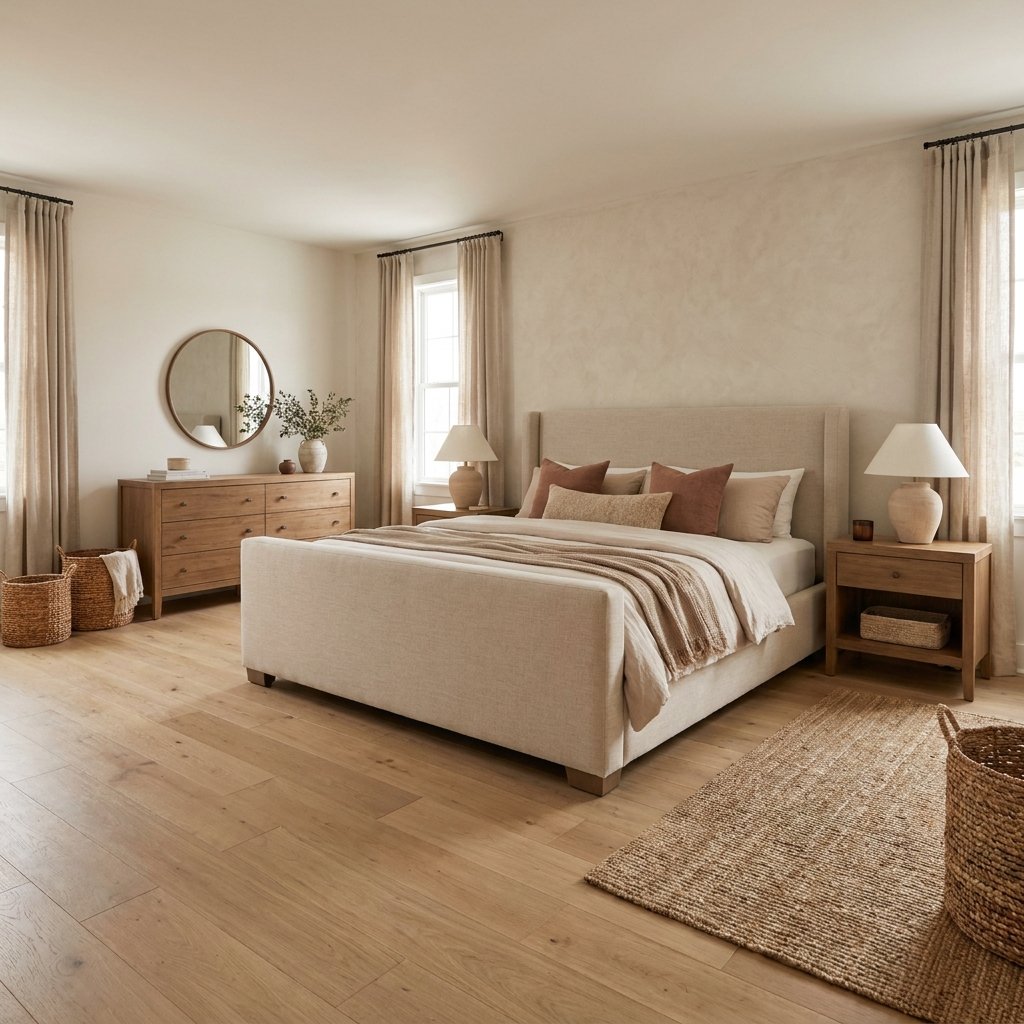
For a larger bedroom, a simple balanced layout is:
Nightstand → Bed → Nightstand
Then place the dresser on an opposing or adjacent wall where it doesn’t obstruct circulation.
Keep walking paths open.
If you have a bench at the end of the bed, make sure there’s still comfortable clearance around it.
Where Should a Dresser Go?
The best dresser location depends on the room.
Look for a wall where:
- Drawers can open fully
- It doesn’t block a doorway
- It doesn’t interfere with the bed
- You can comfortably walk past it
Don’t force the dresser directly opposite the bed solely for symmetry.
Function comes first.
Should You Put a TV in a Feng Shui Bedroom?
Many feng shui recommendations discourage televisions in bedrooms because they introduce another active element into a room intended for rest.
Whether you remove yours is a personal decision.
If you want a television but don’t want it to dominate the room, consider ways to visually minimize it when it’s not being used.
The same principle applies to computers and work equipment.
Are Plants Good Feng Shui in a Bedroom?
Opinions about bedroom plants vary among feng shui traditions.
From a decorating standpoint, a small amount of greenery can add softness and natural texture.
If you want plants, choose species appropriate for the room’s actual light conditions and your household.
Be especially mindful of plant toxicity if you have children or pets.
You don’t need to fill the bedroom with plants to create a natural feeling.
Should You Have a Mirror Facing the Bed?
You’ll frequently see advice to avoid a mirror directly facing the bed.
Interpretations and reasoning vary.
If you’re using feng shui as a decorating framework rather than following a specific traditional school, the simplest question is:
Does the reflection bother or distract you?
If it does, move or angle the mirror.
What Should Be Above the Bed?
Keep the area visually calm.
Ideas include:
- One piece of artwork
- Lightweight decorative element
- Wall molding
- Paint feature
Whatever you install above a bed should be securely mounted.
Avoid poorly secured heavy objects that could fall.
What Should You Remove From a Bedroom?
You don’t have to strip the room bare.
Start with obvious distractions:
- Clutter
- Trash
- Broken items
- Excess paperwork
- Unused exercise equipment
- Unfinished projects
- Clothing piles
Then evaluate decorative clutter.
If every wall and surface is full, removing a few things may help the room feel calmer.
How to Feng Shui a Bedroom on a Budget
You can make meaningful changes without buying anything.
Move the Bed
Try a stronger position if the room allows it.
Clear the Nightstands
Remove everything you don’t regularly use.
Declutter Under the Bed
Keep only organized, useful items.
Remove Work Supplies
Relocate them or hide them after work.
Rearrange Artwork
Create a calmer focal point.
Use Lamps You Already Own
Balance the bed with lighting on both sides where possible.
Rearrange Furniture
Open up walking paths.
These changes cost nothing.
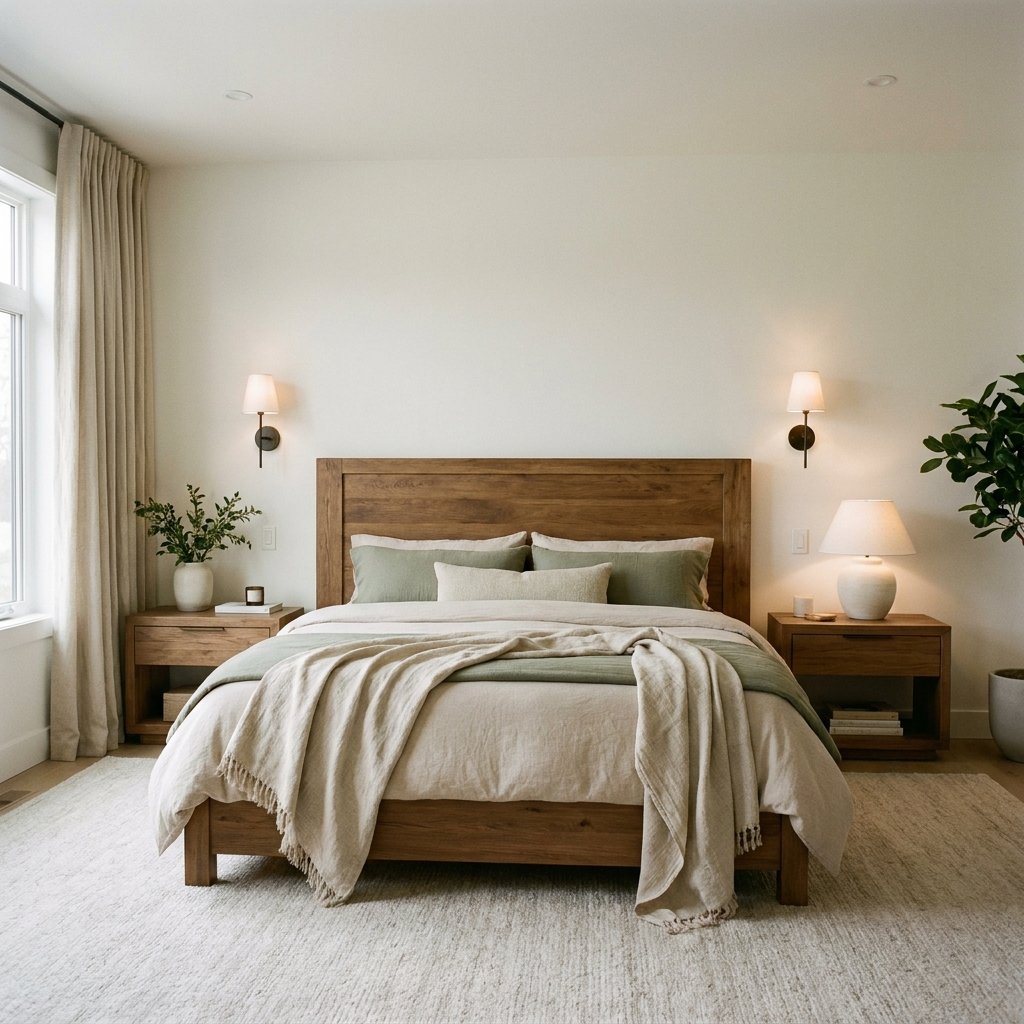
A Simple Feng Shui Bedroom Color Palette
If you’re starting from scratch, try this easy decorating formula:
Warm neutral walls + cream bedding + medium wood + muted green + small dark accents
For example:
- Mushroom walls
- Ivory duvet
- Walnut nightstands
- Sage pillows
- Dark bronze lamps
This creates enough contrast to keep the room interesting while maintaining a restful overall feeling.
Feng Shui Bedroom Ideas for Couples
In a shared bedroom, visual balance can be particularly useful.
When space allows, give both people:
- Bedside access
- Nightstand
- Light
- Storage
The pieces don’t have to match perfectly.
The idea is to avoid designing the room so one side appears complete while the other feels squeezed into a corner.
Common Feng Shui Bedroom Mistakes
Treating Feng Shui as One Universal Rulebook
There are different schools and interpretations. Recommendations can vary.
Sacrificing Function to Follow a Rule
A bedroom still needs safe, comfortable circulation.
Overcrowding the Room
More furniture doesn’t necessarily create more comfort.
Letting Clutter Accumulate
Visual clutter can make the room feel busier.
Filling the Bedroom With Work
Create separation between work and rest when possible.
Ignoring Lighting
A calm bedroom still needs useful illumination.
Hanging Heavy Objects Unsafely
Anything above or around the bed should be securely installed.
Buying “Feng Shui” Decor You Don’t Actually Like
You don’t need special objects to create a balanced bedroom.
A Simple Feng Shui Bedroom Checklist
Before buying anything, walk through your room and ask:
- Can I see the door comfortably from bed?
- Is the bed visually anchored?
- Can I move safely around the room?
- Are the nightstands cluttered?
- Is there unnecessary clutter under the bed?
- Does work dominate the room?
- Are electronics visually distracting?
- Is the lighting comfortable?
- Does the room feel balanced?
- Do the colors feel restful to me?
You don’t need a perfect score.
Choose the two or three changes that would make the biggest difference.
FAQ About How to Feng Shui Your Bedroom
What is the best position for a bed according to feng shui?
A commonly recommended arrangement is the commanding position, where you can see the bedroom door from bed without being directly aligned with it. A solid wall behind the head of the bed is also frequently recommended.
Should your bed face the door?
Many feng shui approaches recommend being able to see the door while avoiding direct alignment between the bed and doorway when possible.
Can your bed go under a window?
A solid wall is commonly preferred behind the bed, but real room layouts may make a window wall the most practical option. A substantial headboard and intentional window treatment can help visually anchor the bed.
Should you have two nightstands?
Two nightstands can create visual balance and are practical in a shared bedroom, but they’re not mandatory. Small bedrooms may need a different solution.
Is it bad feng shui to have a TV in the bedroom?
Many feng shui approaches recommend reducing electronics in bedrooms. If you want to keep your TV, consider making it less visually dominant when it’s not being used.
What colors are good for a feng shui bedroom?
Recommendations vary among feng shui schools. For a generally calm decorating palette, warm neutrals, earthy colors, muted greens, soft blues, and gentle blush tones can work well if you find them relaxing.
Is a mirror facing the bed bad feng shui?
Many popular feng shui recommendations discourage mirrors directly facing the bed, although interpretations vary. If the reflection feels distracting, repositioning the mirror is an easy solution.
Should you store things under the bed?
Many feng shui approaches prefer keeping the area clear. If you need under-bed storage, keep it organized and use it for practical items such as extra linens or seasonal clothing.
How can I feng shui my bedroom without spending money?
Start by rearranging the bed, clearing clutter, organizing under-bed storage, moving work materials, simplifying nightstands, and improving furniture placement using pieces you already own.
Final Thoughts
Learning how to feng shui your bedroom doesn’t have to mean following a complicated collection of decorating rules.
Start with the basics.
Give the bed a strong, comfortable position.
Create clear walking paths.
Reduce clutter.
Balance both sides of the bed where your room allows.
Choose colors, materials, artwork, and lighting that make the room feel restful to you.
And don’t let an ideal feng shui layout make your actual bedroom less functional.
Not every room allows the bed to sit perfectly against a solid wall with two identical nightstands and a diagonal view of the doorway.
Work with your architecture rather than fighting it.
The most useful takeaway is to become more intentional about what you keep in the bedroom and how you arrange it.
A calmer bedroom may come from something as simple as moving the bed, clearing the nightstand, hiding the work laptop, and switching on a soft bedside lamp at night.
You don’t need to buy a collection of special feng shui objects.
Create space, balance, comfort, and a clear purpose for the room—and you’ll already be well on your way to a bedroom that feels more peaceful and thoughtfully designed.