


Curtains can completely change the way a room looks.
Hung well, they can make windows appear larger, ceilings feel taller, and an entire room look more polished. Hung too low, too narrow, or with panels that are too short, they can unintentionally make the same window feel smaller.
Fortunately, learning how to hang curtains isn’t difficult once you understand three things: height, width, and length.
The general idea is simple. Instead of positioning the curtain rod tightly around the window frame, you can often hang it higher and extend it wider so the curtains frame the window rather than cover too much of the glass.
But there isn’t one measurement that works for every room.
Window size, ceiling height, wall space, curtain style, panel dimensions, rod hardware, and the location of wall framing all matter.
This guide walks through how to measure, choose the right curtain length and fullness, position the rod, install the hardware securely, and avoid the common mistakes that can make otherwise beautiful curtains look awkward.
Before You Buy Curtains, Measure the Window
One of the biggest curtain mistakes happens before the rod ever goes up.
Buying curtains first and figuring out the measurements later can leave you trying to make the wrong panel length or width work.
Start by measuring:
- Window width
- Window height
- Distance from window to ceiling
- Wall space on both sides of the window
- Distance from your intended rod position to the floor
Also note anything that might interfere with the curtains, including:
- Radiators
- HVAC vents
- Furniture
- Built-ins
- Wall switches
- Window cranks
- Deep trim
- Baseboard heaters
You need to know both the size of the window and the space surrounding it.
What You’ll Need to Hang Curtains
Depending on your curtain and wall type, you may need:
- Curtain rod
- Rod brackets
- Curtain panels
- Appropriate screws
- Appropriate wall anchors if needed
- Tape measure
- Pencil
- Level
- Stud finder
- Drill or screwdriver
- Drill bits appropriate for the wall and fasteners
- Step ladder
- Safety glasses
Use the installation hardware and instructions supplied or recommended by the curtain-rod manufacturer whenever possible.
Heavy rods and curtains need more substantial support than lightweight decorative panels.

Step 1: Decide How High to Hang the Curtain Rod
Curtain rods often look better when they aren’t installed immediately above the window trim.
Raising the rod can visually elongate the window and emphasize ceiling height.
The exact position depends on:
- Ceiling height
- Window height
- Crown molding
- Available wall space
- Curtain length
- Overall proportions
Rather than relying on one universal number, visually divide the wall space between the top of the window and ceiling.
In many rooms, placing the rod somewhere above the trim creates a more intentional look than attaching it directly to the frame.
For windows with relatively little wall space above them, the rod may naturally sit closer to the ceiling.
Should Curtains Go All the Way to the Ceiling?
Not necessarily.
Hanging curtains high can make a room feel taller, but placing a standard curtain rod almost against the ceiling isn’t always the best choice.
Consider:
- Crown molding
- Curtain heading
- Finials
- Rod diameter
- Bracket dimensions
- Ceiling height
Leave enough space for the hardware and curtain to look comfortable.
If you want a true ceiling-to-floor look, a ceiling-mounted curtain track may be another option.
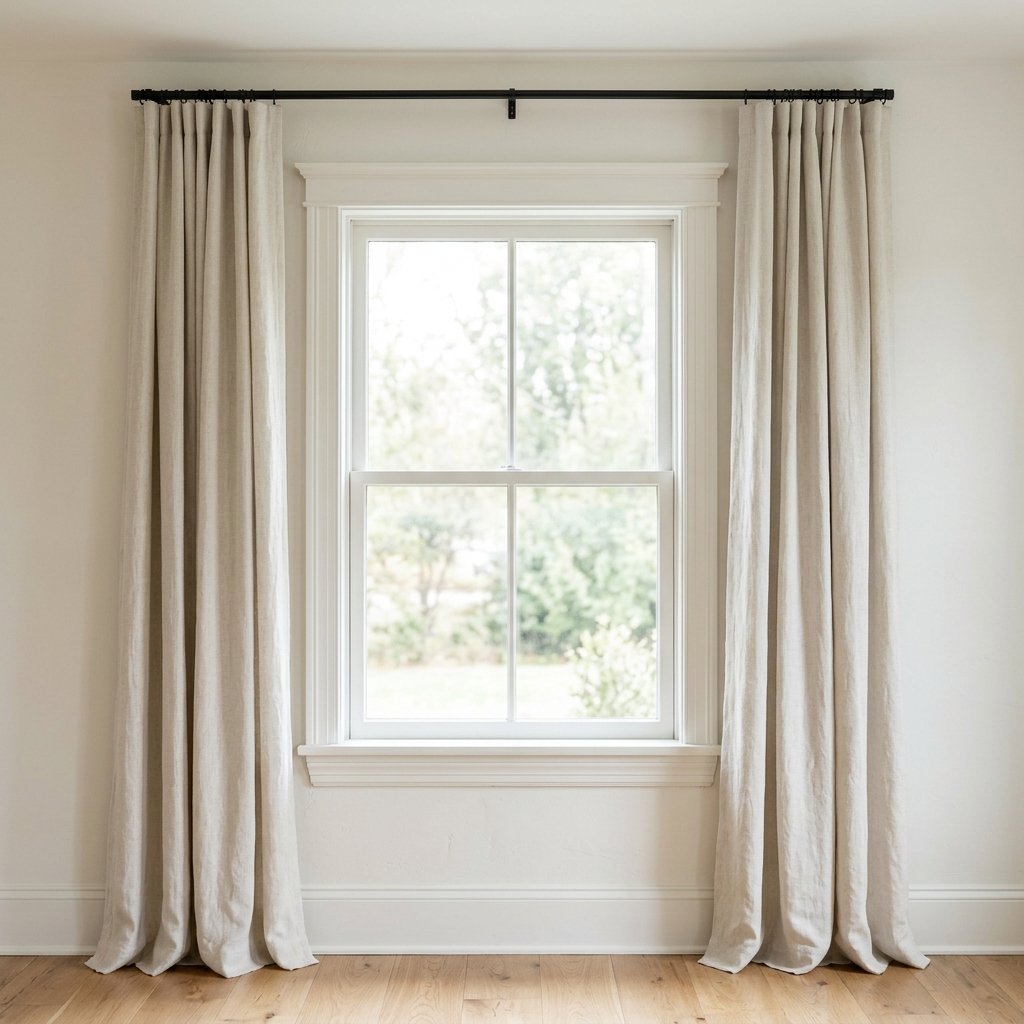
Step 2: Extend the Curtain Rod Beyond the Window
Curtain rod width matters almost as much as height.
If the rod ends right at the edges of the window, open curtain panels will still cover part of the glass.
Extending the rod farther onto the wall gives the panels somewhere to sit when open.
This can:
- Expose more glass
- Maximize available daylight
- Make the window look wider
- Give curtains a fuller appearance
How far you can extend the rod depends on the available wall space, panel width, hardware, and nearby obstacles.
Step 3: Choose the Right Curtain Length
Curtain length has a major impact on the finished result.
For many living rooms, bedrooms, and dining rooms, floor-length curtains create a polished appearance.
The bottom of the panel can:
- Float slightly above the floor
- Just touch the floor
- Break gently at the floor
- Puddle intentionally
Each creates a different look.
Curtains That Just Touch the Floor
This is one of the most versatile options.
The panels appear tailored without collecting much fabric on the floor.
Measure carefully because even a small difference can be noticeable.
Curtains That Float Above the Floor
A slight gap can be practical where floors are uneven or curtains need to move frequently.
Keep the gap intentional.
Curtains that stop noticeably short of the floor can look like they were simply purchased in the wrong length.
Curtains That Break at the Floor
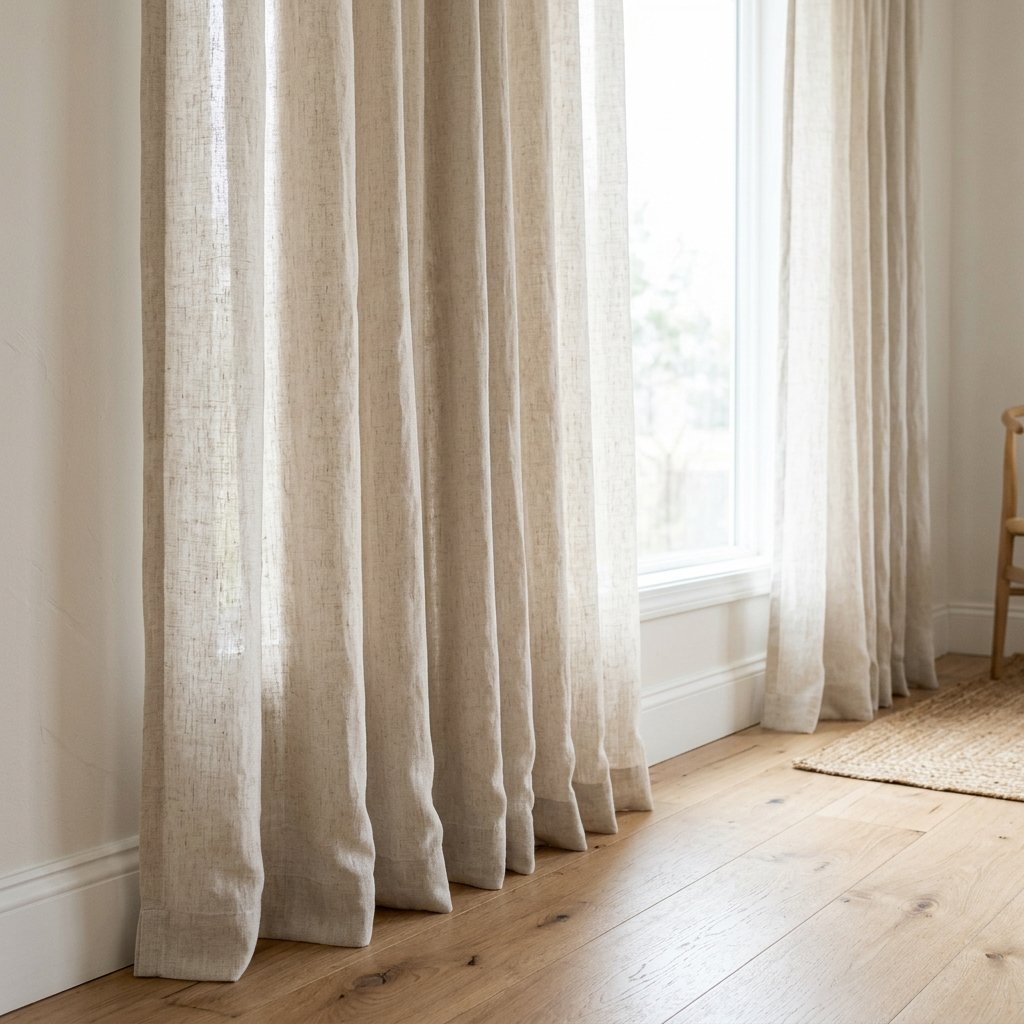
Allowing a small amount of extra fabric to rest on the floor creates a softer, more relaxed look.
This can work beautifully with linen and similar fabrics.
Puddled Curtains
Longer curtains can pool dramatically on the floor.
This is a more romantic or formal look, but it requires additional maintenance and isn’t ideal for every household.
Puddled fabric can collect dust and may be less practical around children, pets, high-traffic areas, or robotic vacuums.
Step 4: Measure From the Rod Position, Not Just the Window
Once you know approximately where the rod will sit, measure from the appropriate point on the rod or hanging hardware down to your desired curtain endpoint.
The exact measurement method depends on how the curtains attach.
Curtains may use:
- Rings
- Clip rings
- Rod pockets
- Tabs
- Grommets
- Pinch pleats
- Other heading styles
Different headings position the fabric differently relative to the rod.
Always account for the actual hanging method.

Step 5: Choose Enough Curtain Fullness
One panel technically covering half the window doesn’t necessarily mean it will look full enough.
Curtains need extra fabric to create folds.
If the total fabric width barely equals the window width, closed curtains can look flat and stretched.
The ideal fullness depends on:
- Fabric
- Heading style
- Curtain design
- Desired look
Check the curtain or drapery manufacturer’s recommendations when available.
Sheer or lightweight curtains may need more fullness to look substantial, while structured pleated draperies are calculated differently.
How Many Curtain Panels Do You Need?
For a typical window, two panels—one on each side—are common.
But a particularly wide window may need:
- Wider panels
- Multiple panels on each side
- Custom drapery
Don’t automatically add narrow panels without considering how the seams and headings will look.
Measure the full rod width and compare it with the total finished width of your curtain panels.
Step 6: Decide Where the Brackets Will Go
Once you’ve established rod height and width, determine the bracket locations.
Before drilling:
- Hold the hardware in position.
- Check the manufacturer’s installation instructions.
- Mark the mounting holes.
- Confirm the marks are level.
- Determine what type of wall you’re fastening into.
Don’t assume the fasteners supplied with every rod are appropriate for every wall.
Drywall, plaster, masonry, wood framing, and other wall systems can require different fasteners.
Step 7: Check for Studs and Hidden Utilities
A stud can provide strong support when it aligns with the appropriate bracket location.
Use a suitable stud finder or other appropriate method to understand the wall construction.
Also remember that walls can contain:
- Electrical wiring
- Plumbing
- Low-voltage cables
- Other utilities
Be particularly cautious around outlets, switches, plumbing fixtures, and other locations where concealed services may be present.
Don’t drill deeply into an unknown wall simply because your pencil mark happens to be there.
If you’re unsure what’s behind the wall, investigate before drilling.
Step 8: Install the First Curtain-Rod Bracket
Follow the rod manufacturer’s instructions for bracket orientation and fasteners.
If you’re attaching to appropriate framing, use the recommended fasteners.
If you’re attaching to hollow drywall, use anchors suitable for:
- Wall material
- Curtain weight
- Rod weight
- Bracket design
The manufacturer’s rated capacities and installation requirements matter.
Don’t choose a wall anchor simply because it fits through the bracket hole.

Step 9: Level the Second Bracket
Don’t measure from the ceiling alone.
Ceilings, trim, and floors aren’t always perfectly level.
After establishing your first bracket position, use a level to help place the second bracket so the rod itself looks correct.
For a very long rod, a laser level can be convenient, though it isn’t essential.
Check your marks before drilling.
A few extra seconds here can save you from repairing unnecessary holes later.
Step 10: Add a Center Support When Required
Long curtain rods can sag in the middle.
A center support bracket may be required depending on:
- Rod length
- Rod diameter
- Curtain weight
- Manufacturer specifications
Follow the rod manufacturer’s requirements.
Don’t omit a necessary support simply because you prefer the look of a completely uninterrupted rod.
If a center bracket is used, consider how it affects the movement of curtain rings or panels.
Step 11: Hang the Curtain Panels
Once the brackets are secure, add the curtains to the rod using the intended heading system.
Then set the rod into the brackets.
Don’t immediately tighten every adjustment.
First check:
- Overall height
- Panel length
- Fullness
- Position of the finials
- How the curtains stack when open
Make small adjustments if your hardware allows.
Step 12: Train the Curtain Folds
Brand-new curtains don’t always fall beautifully right out of the package.
The fabric may have packaging creases or irregular folds.
Follow the fabric care instructions for removing wrinkles.
Depending on the textile, this might involve an approved steaming or pressing method.
Then arrange the folds consistently.
You can loosely guide the panels into neat folds while they settle, taking care not to damage or permanently crease the fabric.
How Wide Should Curtains Be?
Instead of thinking only about the window, think about the entire curtain rod.
The curtain panels need enough combined width to look full across that span.
The amount of fullness depends on the style.
A casual linen panel may have a different fullness requirement from formal pinch-pleated drapery.
Check the product’s measurements and recommendations rather than assuming every panel labeled for a certain window size will create the look you want.
How Long Should Curtains Be?
For most full-length decorative curtains, the finished length should relate to the floor rather than stopping somewhere between the window and floor.
Common approaches include:
- Slightly above floor
- Touching floor
- Gentle break
- Intentional puddle
Shorter curtains may make sense in specific situations, including certain kitchens or windows where full-length fabric would interfere with cabinetry, furniture, heat sources, or moisture.
How to Hang Curtains to Make Windows Look Bigger
This is one of the best reasons to reconsider standard curtain placement.
To visually enlarge a window:
- Mount the rod above the window trim where proportions allow.
- Extend the rod beyond the window.
- Use sufficiently full panels.
- Choose floor-length curtains where appropriate.
- Let open curtains rest primarily over the wall rather than the glass.
This creates the impression of a taller and wider window.
How to Hang Curtains to Make a Room Look Taller
Emphasize vertical lines.
Use:
- Higher rod placement
- Floor-length panels
- Simple vertical folds
Avoid creating an unnecessary horizontal break with curtains that end awkwardly above the floor.
Long curtains naturally draw the eye upward and downward.
How to Hang Curtains in a Small Room
Small rooms don’t necessarily need small curtains.
Floor-length curtains can make a compact room feel more finished.
Consider:
- Light to medium-weight fabric
- Simple pattern or solid color
- Higher rod placement
- Wider rod where wall space permits
Keeping more window glass exposed can also maximize natural light.
How to Hang Curtains in a Living Room
Living rooms are a good place for full-length curtains.
Choose fabric based on what the room needs.
If you want softness without blocking much daylight, consider lighter fabric.
If you need:
- Privacy
- Glare reduction
- Light control
you may need lined curtains, shades, or layered window treatments.
A combination of functional shades and decorative curtain panels can provide flexibility.

How to Hang Curtains in a Bedroom
Bedrooms often require more light control and privacy.
You might use:
- Lined curtain panels
- Blackout curtains
- Shades plus decorative panels
If room-darkening is important, consider how light may enter around the sides, top, or center of the treatment.
The installation method matters just as much as the fabric.
Keep curtain materials and furniture arrangements safely clear of heaters or other heat sources as required.
How to Hang Curtains Over Blinds or Shades
You can layer curtains over existing blinds or shades.
This often works very well.
The blind or shade provides:
- Privacy
- Light control
The curtains provide:
- Softness
- Color
- Texture
- Visual height
Mount the curtain rod far enough forward that the curtains can hang and move without interfering with the underlying treatment.
How to Hang Curtains on a Wide Window
Wide windows require careful planning.
A standard rod may not be suitable for a large span.
Check:
- Rod maximum span
- Center-support requirements
- Curtain weight
- Number of brackets
For very wide openings, a heavier-duty rod, track system, or custom solution may be more appropriate.
How to Hang Curtains on Multiple Windows
When several windows sit close together, decide whether they should read as:
- Individual windows
- One larger architectural feature
A long rod or track across the group can create a more unified look in some rooms.
But make sure the system is appropriately supported across the full span.
What If There Isn’t Much Wall Space Beside the Window?
Not every window allows dramatic wide placement.
A window may sit close to:
- Corner
- Built-in
- Cabinet
- Fireplace
Work with the architecture you have.
Extend the rod where possible, but don’t force perfect symmetry if the room doesn’t support it.
A thoughtfully asymmetrical solution is often better than hardware that interferes with another architectural element.
What If There Isn’t Much Space Above the Window?
If the window is already close to the ceiling, you have fewer options.
You might:
- Position the rod within the available wall space.
- Consider a ceiling-mounted track.
- Choose hardware with compact brackets.
The right solution depends on the room and curtain style.
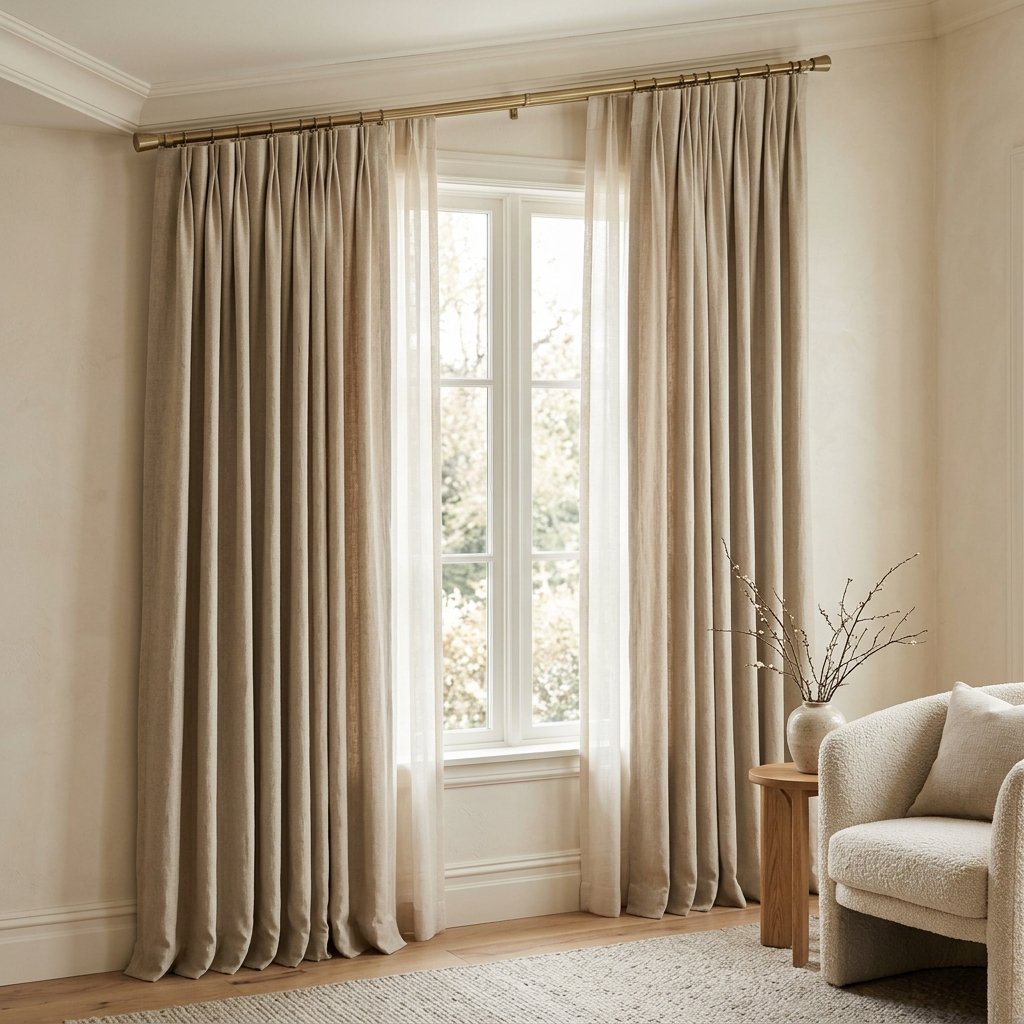
Should Curtain Rods Match the Room Hardware?
They can, but they don’t have to.
Common finishes include:
- Black
- Brass
- Nickel
- Bronze
- Wood
Repeating another finish in the room can help create cohesion.
For example, a black curtain rod may relate to:
- Black picture frames
- Lighting
- Furniture details
But you don’t need every metal finish to match exactly.
Should Curtains Match the Wall Color?
They can.
Curtains close to the wall color create a quiet, seamless look.
For example:
Warm white wall + warm white linen curtain
can make a room feel soft and airy.
Alternatively, curtains can add subtle contrast through:
- Taupe
- Olive
- Blue
- Pattern
The right choice depends on how much visual attention you want the window treatment to receive.
Should Curtains Match the Sofa?
Not necessarily.
Instead of matching the sofa exactly, coordinate the overall palette.
A cream sofa could work with:
- Warm white curtains
- Taupe curtains
- Muted green curtains
- Subtle patterned curtains
Repeating the curtain color somewhere else in the room can help tie everything together.
How to Make Affordable Curtains Look More Expensive
You don’t necessarily need custom drapery to create a polished look.
Focus on:
Correct Length
Avoid obviously short panels where floor-length curtains are intended.
Adequate Fullness
Flat curtains can look skimpy.
Good Rod Placement
Higher and wider placement can dramatically improve proportions.
Simple Fabric
A convincing linen-look or other simple textile can be easier to style than an overly elaborate inexpensive pattern.
Consistent Folds
Train the panels so they hang neatly.
Appropriate Hardware
Use a rod that’s substantial enough for the size of the window and the weight of the curtains.
Curtain Hanging Safety
Curtains may seem like a simple decorating project, but installation still requires care.
- Use a stable ladder rather than standing on furniture.
- Follow the curtain rod manufacturer’s installation instructions.
- Use fasteners appropriate for the wall material and load.
- Consider hidden wiring or plumbing before drilling.
- Add center supports when required.
- Make sure rods and brackets are secure, particularly around children.
- Keep cords from blinds or shades managed according to current child-safety guidance.
- Keep curtains safely away from open flames, heaters, radiators, and other heat sources as required.
- Don’t overload lightweight tension rods or decorative hardware beyond their intended use.
Heavy drapery or unusually large installations may require more substantial fastening or professional installation.
Common Curtain Hanging Mistakes
Hanging the Rod Too Low
This can visually shorten the window.
Using a Rod That’s Too Narrow
Open curtains may cover too much glass.
Buying Curtains That Are Too Short
Floor-length curtains generally look more intentional when they actually relate to the floor.
Not Buying Enough Fabric Width
Curtains need fullness to create folds.
Measuring Only the Window
Measure the surrounding wall and intended rod position too.
Forgetting About the Curtain Heading
Rings, grommets, pleats, and rod pockets affect final length.
Ignoring Wall Construction
The correct fastener depends on what you’re attaching to.
Skipping a Center Bracket
A long rod can sag if inadequately supported.
Hanging Curtains Before Removing Wrinkles
Packaging creases can make otherwise beautiful panels look unfinished.
Covering Too Much Window Glass
When possible, allow open panels to stack over the wall.
An Easy Formula for Hanging Curtains
If you’re overwhelmed by all the decisions, use this order:
Step 1
Measure the window and surrounding wall.
Step 2
Decide where the curtain rod will sit.
Step 3
Measure from the rod position to the desired curtain endpoint.
Step 4
Choose curtains with enough length and fullness.
Step 5
Determine the bracket positions.
Step 6
Check the wall construction and for potential hidden utilities.
Step 7
Install one bracket securely.
Step 8
Level and install the second bracket.
Step 9
Add center support if required.
Step 10
Hang the curtains.
Step 11
Adjust the rod and panels.
Step 12
Remove wrinkles and arrange the folds.
FAQ About Hanging Curtains
How high should you hang curtains?
The ideal height depends on the space between the window and ceiling, curtain length, hardware, and room proportions. Mounting the rod above the window trim often helps the window look taller.
How far should a curtain rod extend past the window?
Extend it far enough that the open curtain panels can rest substantially over the wall rather than covering unnecessary glass, while considering available wall space and the rod manufacturer’s limitations.
Should curtains touch the floor?
They can touch the floor, float slightly above it, break gently, or puddle intentionally. For many rooms, curtains that just meet the floor create a clean, tailored look.
How do I make my windows look bigger with curtains?
Mount the rod higher than the window trim where appropriate, extend it beyond the window, use adequate curtain fullness, and choose floor-length panels.
How wide should curtains be?
The combined curtain width should exceed the rod span enough to create the desired fullness rather than looking stretched flat. Exact fullness varies by fabric and heading style.
Do curtains need to reach the floor?
Not always, but floor-length curtains are a versatile choice for living rooms, bedrooms, and dining rooms. Shorter curtains may be appropriate where furniture, moisture, heat sources, or cabinetry make full-length panels impractical.
Should curtains be wider than the window?
The rod often extends wider than the window so the curtains can frame the glass when open.
Can I hang curtains without finding a stud?
Depending on the wall and curtain load, appropriately rated wall anchors may be an option. Follow the rod and fastener manufacturers’ requirements rather than assuming any drywall anchor will be adequate.
Do long curtain rods need a middle bracket?
Many do. It depends on the rod’s span, diameter, curtain weight, and manufacturer requirements.
Should I hang curtains before buying furniture?
You can, but consider furniture placement before finalizing the curtain width and length. Sofas, radiators, consoles, and other objects can affect how curtains hang and operate.
Final Thoughts
Learning how to hang curtains comes down to getting the proportions right before you start drilling holes.
Measure the window.
Then measure the wall around it.
Think about where you want the rod to sit, how far the panels should extend beyond the window, and exactly where you want the fabric to end.
In many rooms, hanging curtains somewhat higher and wider than the window frame creates a more polished look while allowing the open panels to expose more glass.
But don’t follow a decorating rule blindly.
The architecture of the room, curtain style, wall construction, available space, and hardware all matter.
Once you’ve found the right placement, install the brackets securely, check the rod with a level, add any required center support, and take time to arrange the fabric.
Beautiful curtains aren’t only about the fabric you buy.
Where and how you hang them can make just as much difference.

