

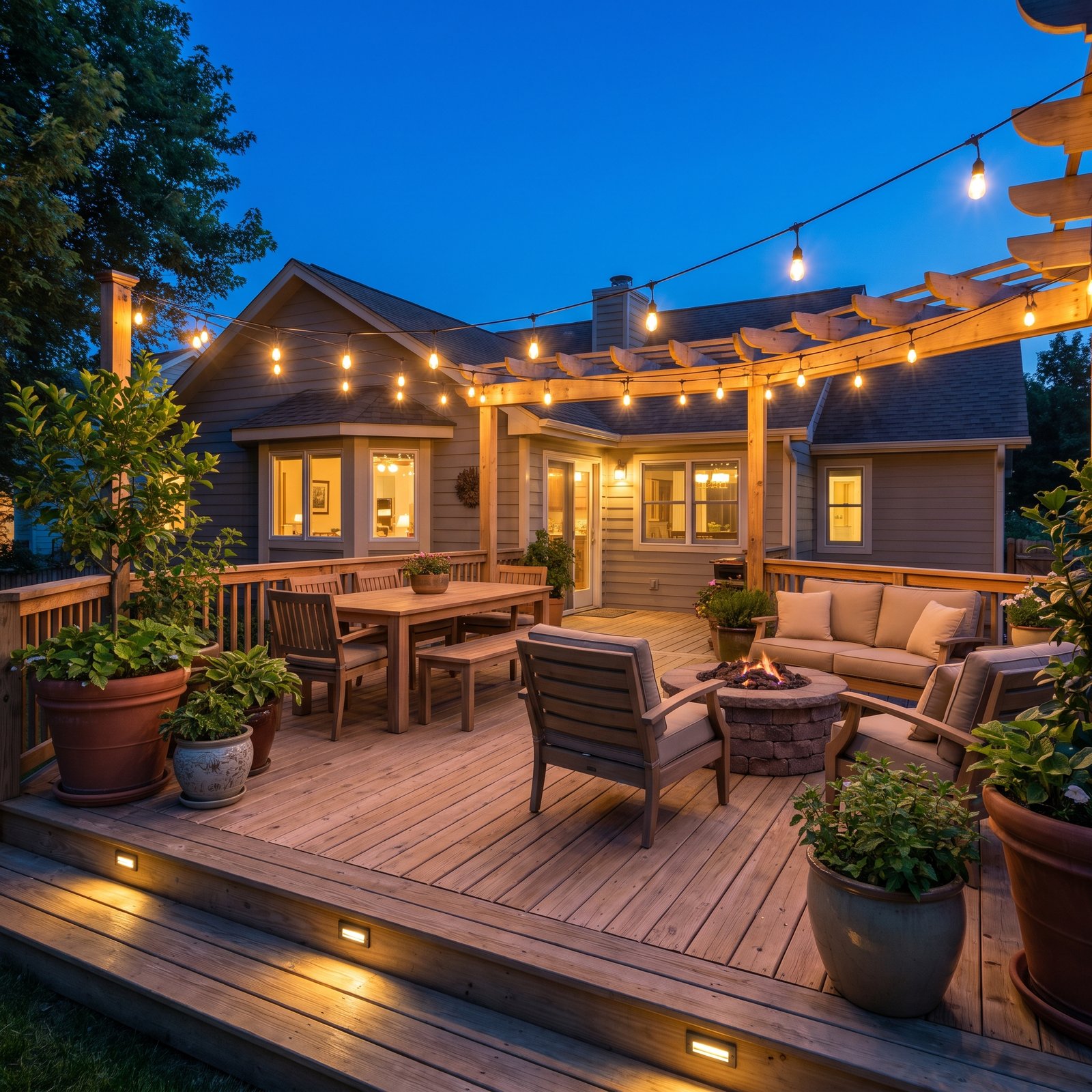
Learning how to hang string lights on a deck is one of the simplest ways to make an outdoor space feel warmer, more inviting, and more usable after dark. A few strands of lights can soften a basic deck, define a seating area, and create the kind of cozy atmosphere that makes you want to stay outside longer.
The setup can be very simple if your deck already has a roof, pergola, railing posts, or nearby walls. If it does not, you can still hang lights using freestanding poles, added posts, or other supports designed for outdoor use.
The most important things are choosing outdoor-rated lights, supporting the strands properly, keeping electrical connections protected, and making sure posts or attachment points can handle the tension and weather exposure.
Below are several practical ways to hang deck string lights, plus planning tips, safety considerations, and ideas for making the finished setup look polished rather than temporary.
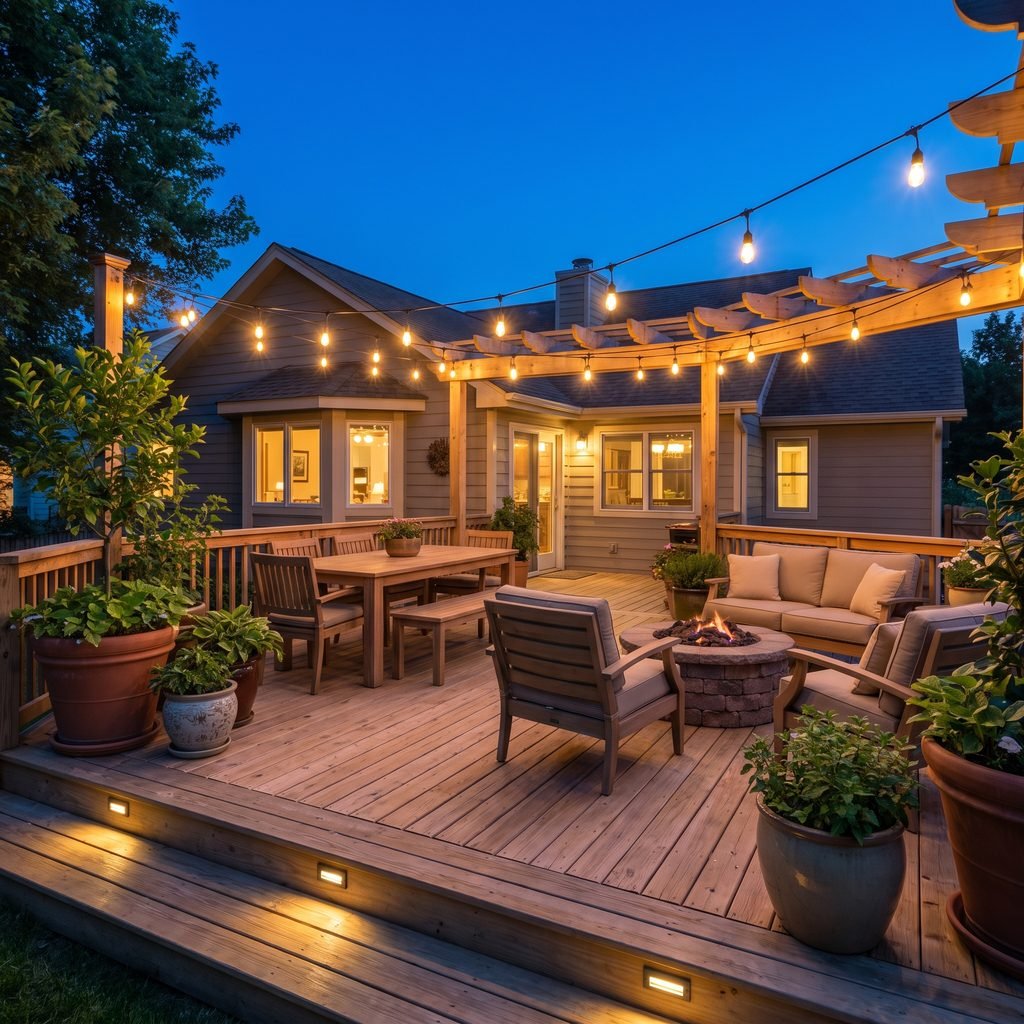
Before You Start: Plan the Layout
Before installing hooks or buying poles, decide how you want the lights to cross the deck.
Common layouts include:
- Straight parallel rows
- Zigzag pattern
- Large X pattern
- Perimeter lighting
- Fan pattern from one central point
- Lights strung between posts
The right pattern depends on the size and shape of the deck.
For a narrow rectangular deck, parallel rows can look clean and balanced.
For a larger square deck, a zigzag or X pattern can spread light more evenly.
If your deck connects to the house, you may be able to anchor one side of the lights to the exterior wall and support the opposite side with posts.
Measure the area before buying lights. Include enough extra length for gentle draping rather than pulling the strands completely tight.
Choose Outdoor-Rated String Lights
Use string lights specifically labeled for outdoor use.
Outdoor lights are designed to handle environmental exposure better than indoor-only decorative strands.
Check the product information for:
- Outdoor-use rating
- Maximum number of connected strands
- Power requirements
- Cord and plug instructions
- Recommended mounting method
- Replacement bulb guidance
If the deck is exposed to rain or snow, do not assume a decorative light strand is suitable simply because it looks like patio lighting.
Also check whether the bulbs are shatter-resistant if breakage is a concern.
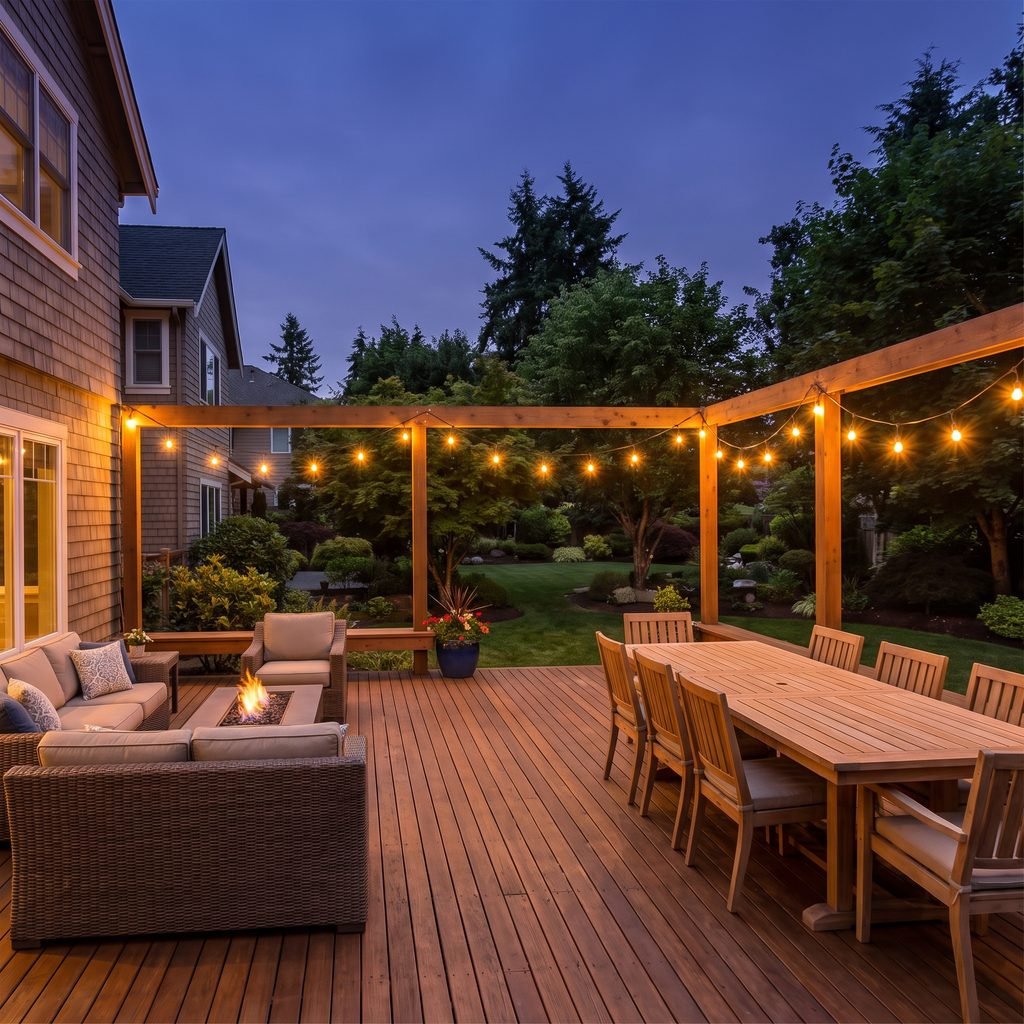
1. Hang String Lights From Existing Deck Posts
If your deck already has tall posts, the installation may be very simple.
Install appropriate outdoor-rated hooks or attachment hardware near the top of the posts, then run the lights between them.
Avoid driving hardware into a post without considering what it is supporting.
Structural deck posts should not be excessively drilled or notched just for decorative lighting.
Small fasteners may be appropriate in many situations, but placement and post condition matter.
Keep attachment points high enough that the lights do not hang into walking areas.
This method works especially well when the deck already has:
- Pergola posts
- Privacy-screen posts
- Roof supports
- Tall railing extensions
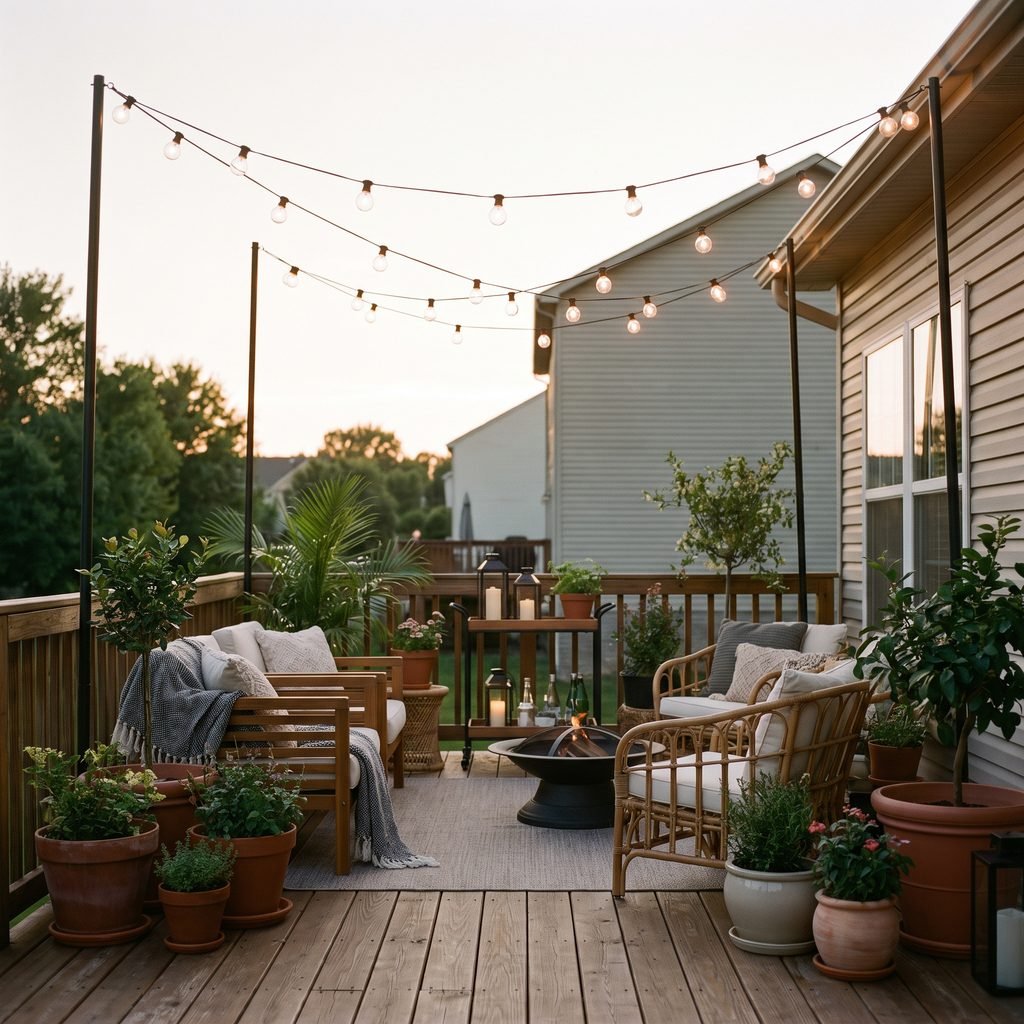
2. Add String Light Poles to the Deck
If the deck has no overhead structure, dedicated poles are one of the most flexible options.
Poles can be mounted to the railing, secured to appropriate framing, or installed using another system designed to remain stable outdoors.
Metal poles often create a cleaner, slimmer look.
Wood posts can blend more naturally with an existing wood deck.
The most important issue is stability.
String lights create sideways tension, especially when several strands meet at one post. Wind adds more force.
Do not attach a tall pole to a weak railing board and assume it will stay upright.
The pole and mounting system should be securely supported by the deck structure and appropriate for the load.
3. Hang Lights From a Pergola
A pergola makes string-light installation especially easy.
You can run the lights:
- Under the beams
- Across the rafters
- Around the perimeter
- In a zigzag pattern between sides
Use outdoor-compatible hooks or clips rather than wrapping cords tightly around rough wood where repeated movement could cause wear.
A pergola also helps keep the strands high enough over the seating area.
For a clean appearance, align hooks or clips evenly and keep the spacing consistent.
4. Attach String Lights Between the House and Deck Posts
If your deck sits directly against the house, the exterior wall can provide one set of anchor points.
The opposite side can use:
- Existing deck posts
- Added poles
- Pergola supports
Be careful when fastening into exterior walls.
The correct mounting method depends on the siding or wall material.
Vinyl siding, brick, stucco, fiber-cement siding, and wood siding all require different approaches.
Avoid making unnecessary holes that could allow water behind siding.
If you are not sure how to attach hardware without compromising the exterior envelope, use an appropriate siding-specific system or get professional advice.
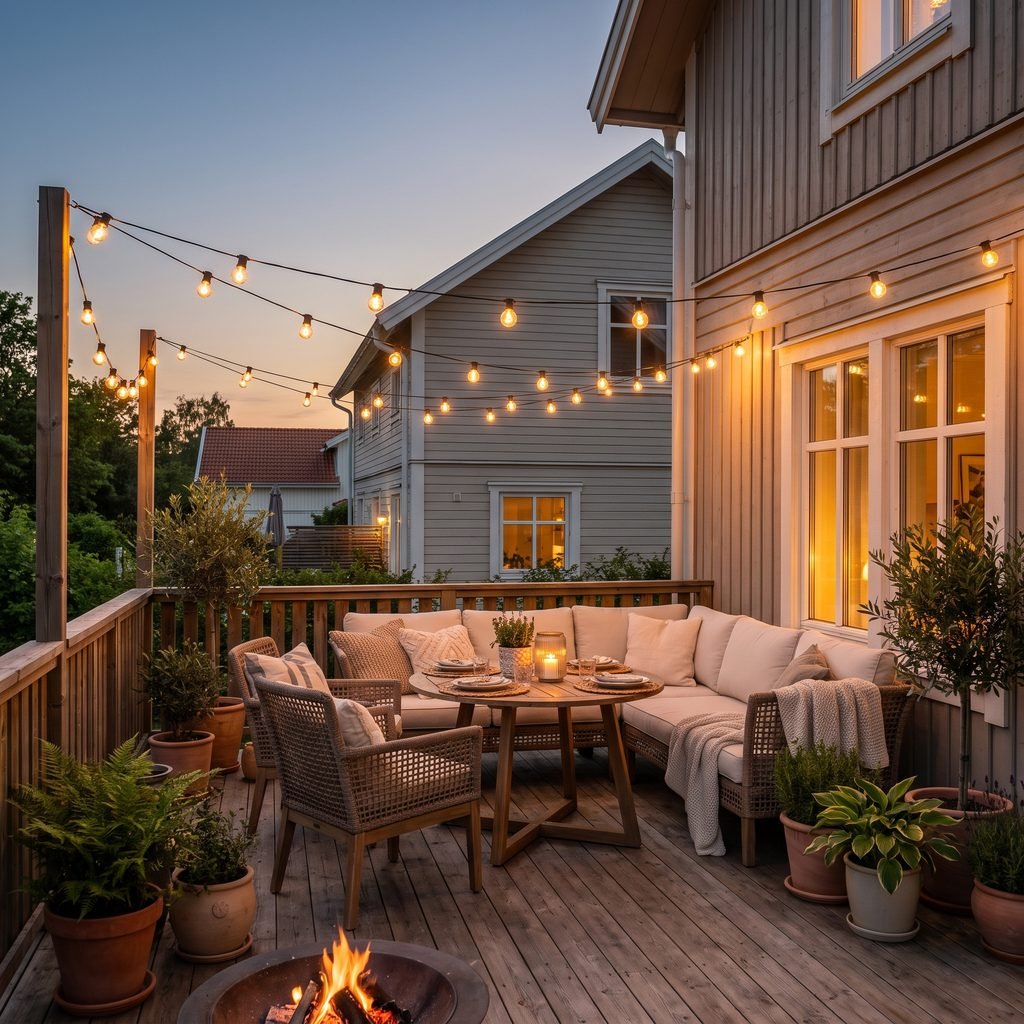
5. Use a Guide Wire for Longer Spans
For long runs, supporting the lights with a separate guide wire or cable can reduce strain on the light cord itself.
The cable carries the tension while the string lights are clipped to it.
This can be particularly helpful when:
- The span is long
- The bulbs are relatively heavy
- The deck is exposed to wind
- You want a straighter installation
The cable, connectors, anchors, and posts all need to be appropriate for exterior use and securely installed.
Do not over-tension the cable.
High cable tension can put significant force on posts and attachment points.
If the layout involves long spans or substantial tension, make sure the supports are strong enough rather than treating the system as purely decorative.
6. Hang String Lights Around the Deck Perimeter
You do not always need an overhead canopy.
Running lights around the perimeter can create a softer glow and highlight the shape of the deck.
Possible attachment locations include:
- Pergola edges
- Privacy screens
- Tall railing posts
- Fence sections adjacent to the deck
Avoid placing exposed bulbs where people can easily bump them.
This option works particularly well on smaller decks where overhead strands might make the space feel visually crowded.
7. Create a Zigzag String Light Pattern
A zigzag layout is popular because it spreads the lighting across a large portion of the deck.
Install several anchor points along opposite sides of the space.
Then run the strand back and forth.
Before installing, sketch the route and measure the approximate distance.
Remember that the lights will usually have some sag between anchors.
A perfectly tight strand tends to look harsh and puts unnecessary strain on the cord and attachment hardware.
Gentle draping usually creates a softer, more relaxed effect.
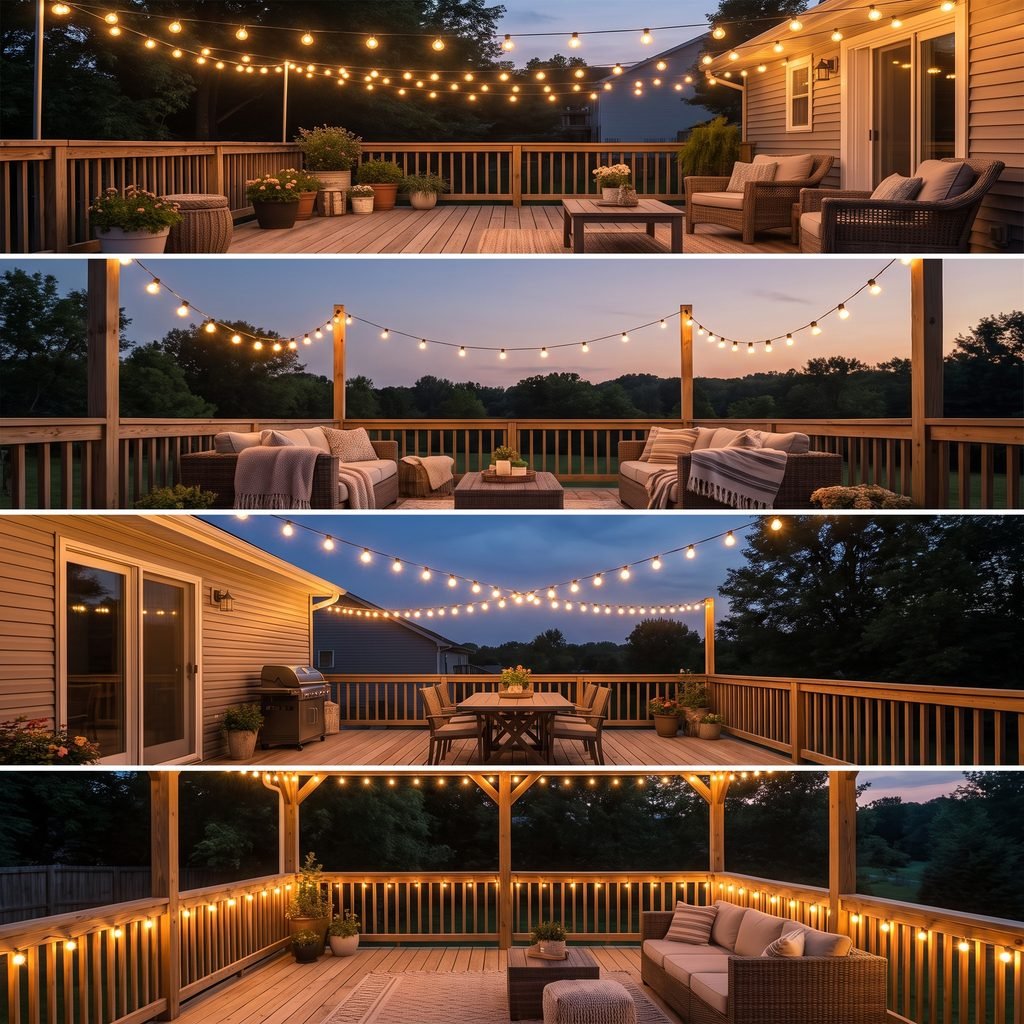
8. Use an X Pattern for a Small Deck
For a compact square deck, two diagonal runs can be enough.
Run lights from:
- One corner to the opposite corner
- Then across the other two corners
The two strands create a large X overhead.
You can hang a central decorative element where the lines visually meet, but do not attach extra weight to the electrical strands themselves.
The X pattern provides good visual coverage without requiring many anchor points.
How High Should String Lights Be Over a Deck?
The lights should be high enough that people can comfortably walk beneath them without reaching the bulbs.
There is no single universal height for every deck because the appropriate height depends on:
- Deck layout
- User height
- Light strand sag
- Furniture
- Local requirements
- Overhead structures
As a practical design goal, keep the lowest portion comfortably above normal head height.
Do not forget that a strand that looks high enough when pulled tight will sag once installed.
Plan for that drop.
If lights cross stairs or primary walking routes, additional clearance may be necessary.
How Much Should String Lights Sag?
A slight sag usually looks best.
It creates the classic relaxed patio-light appearance and avoids excessive tension.
The exact amount depends on the distance between supports and the style you want.
Shorter spans can use a subtle curve.
Long runs may naturally sag more.
Do not use the string-light electrical cord as though it were structural cable.
If you want long, controlled spans, use a separate support cable where appropriate.
How to Hang String Lights Without a Pergola
No pergola is required.
The simplest solution is usually to create your own elevated attachment points.
You can use securely installed poles at the outer corners or sides of the deck and connect them to the house or to one another.
For example, a rectangular deck could use four tall poles—one near each corner—with string lights running between them.
Another option is to use two poles on the outside edge and attach the opposite ends to appropriate points on the house.
The poles must be securely supported.
Tall, narrow poles act like levers when the lights pull on them, so attachment only to thin trim or decorative railing components may not be sufficient.
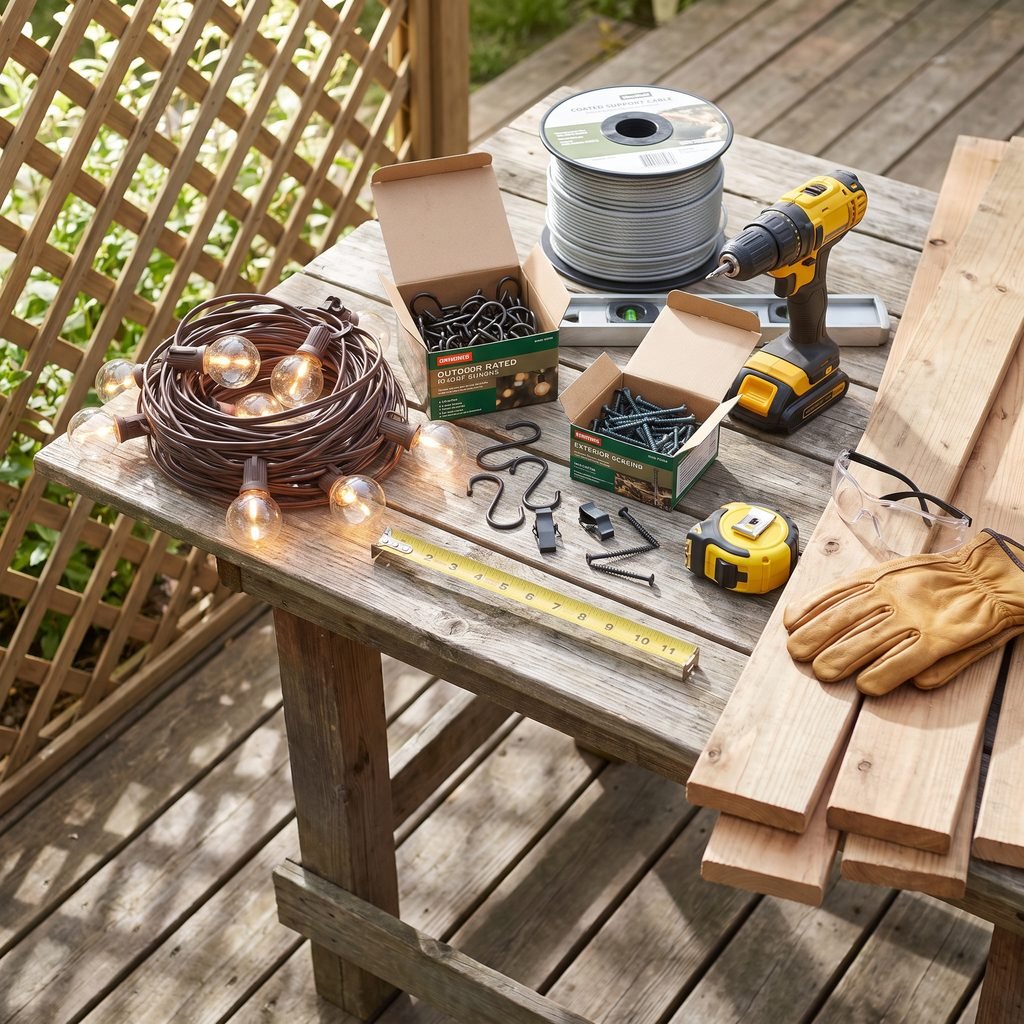
How to Hang String Lights on a Deck Railing
Deck railings can sometimes support lighting accessories, but do not assume every railing is strong enough for tall poles.
If the lights simply run along the railing, clips or other suitable attachments may be all you need.
If you plan to mount poles to the railing, the structural requirements are different.
A tall pole creates leverage.
For greater stability, mounting may need to connect to stronger framing rather than only to a thin baluster or decorative top rail.
Check that the railing itself remains secure and code-compliant after any modification.
Do not create protruding hardware or cords that become handrail or walking hazards.
How to Hang String Lights on a Covered Deck
A covered deck usually offers many convenient attachment points.
Depending on the structure, lights can run between:
- Beams
- Rafters
- Posts
- Ceiling attachment points
Do not drive fasteners blindly into areas that may contain electrical wiring.
Use hooks, clips, or mounting hardware suitable for the ceiling or beam material.
If the ceiling is finished, confirm what is behind it before installing screws.
You can create:
- Parallel rows
- A perimeter outline
- A centered zigzag
- Several short runs over a dining area
Because a covered deck already feels enclosed, less lighting may be necessary than on a completely open deck.
Best String Light Layout for a Deck
The most attractive layout usually relates to the deck shape.
Long Narrow Deck
Try parallel strands running across the short dimension.
This breaks up the long shape and creates repeated bands of light.
Square Deck
An X or zigzag pattern works well.
Large Open Deck
Use several support poles and create a canopy covering the main seating and dining zones.
Small Deck
Keep the design simple.
One or two strands may provide enough atmosphere without making the space feel cluttered.
Deck With Pergola
Follow the geometry of the pergola.
Straight rows along the beams often look cleaner than an overly complicated pattern.
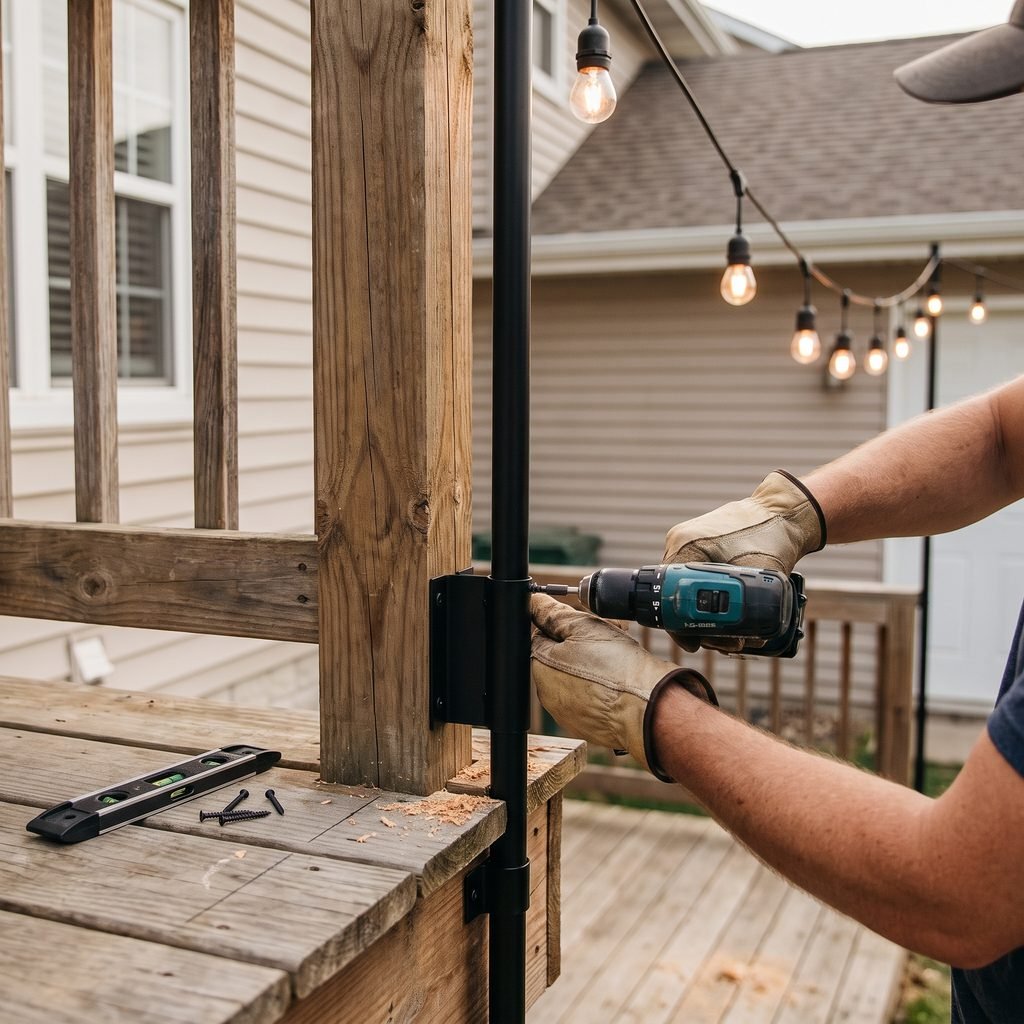
How to Hide String Light Cords
A clean installation depends partly on managing the power cord.
Route cords along:
- House edges
- Posts
- Beam lines
- Other protected structural paths
Use outdoor-appropriate cord clips where necessary.
Avoid laying cords loose across deck walking surfaces.
If a cord must cross a traffic area, reconsider the outlet or lighting layout rather than creating a trip hazard.
Do not run extension cords through doors or windows where they can be pinched.
Do not conceal electrical connections in a way that traps water or prevents inspection.
Outdoor Electrical Safety
This is the most important technical part of the project.
Use string lights, extension cords, timers, and accessories rated for outdoor use where exterior exposure is expected.
Outdoor receptacles should have appropriate protection for their location, including ground-fault protection where required.
Keep plug connections away from standing water.
Follow manufacturer guidance for:
- Maximum connected strands
- Extension cords
- Timers
- Weather exposure
- Replacement bulbs
- Installation orientation
Do not connect more light strands end-to-end than the manufacturer allows.
Avoid overloaded receptacles and improvised electrical connections.
If an outdoor outlet is damaged, improperly protected, or missing where you need power, have a qualified electrician address the electrical installation rather than creating a workaround.
Wind and Weather Considerations
A string-light installation that seems secure on a calm evening may behave very differently during a storm.
Wind can cause strands to swing and repeatedly pull on anchors.
Use secure attachment points and inspect the installation periodically.
Replace:
- Cracked cords
- Damaged sockets
- Broken clips
- Loose hooks
- Corroded hardware
In areas that experience severe storms, snow, ice, or high winds, seasonal removal may be appropriate depending on the lighting product and installation.
Follow the manufacturer’s weather and storage instructions.
How to Make Deck String Lights Look More Polished
String lights look best when they appear intentional.
Keep Anchor Heights Consistent
Uneven support heights can make the layout look accidental.
Use a level or careful measurement when installing poles and hooks.
Repeat the Pattern
A regular zigzag or parallel layout usually looks cleaner than random crossings.
Use Gentle Sag
Avoid both excessive drooping and overly tight strands.
Keep the Bulb Style Consistent
Mixing several unrelated bulb sizes and color temperatures can make a small deck look busy.
Light the Main Activity Area
Focus your canopy over the dining table, conversation seating, or lounge zone rather than trying to cover every corner.
Combine With Other Low-Level Lighting
String lights provide atmosphere, but they may not provide enough functional illumination for stairs or changes in level.
Use appropriate deck, stair, or pathway lighting where needed.
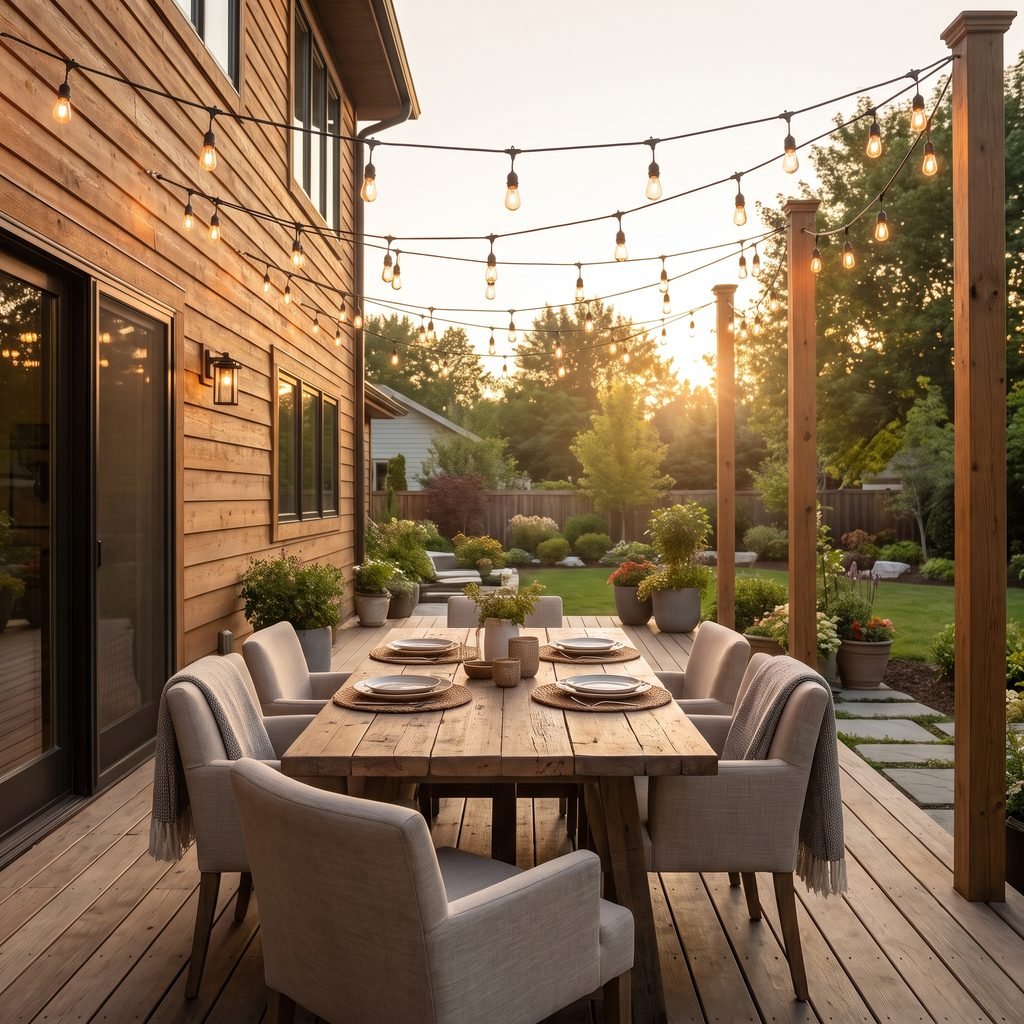
Common Mistakes When Hanging String Lights on a Deck
Pulling the Lights Too Tight
String lights are not structural cables.
Leave some slack or use a separate support wire for long spans.
Using Indoor Lights Outdoors
Check the rating.
Outdoor conditions require suitable products.
Mounting Poles to Weak Railing Components
A tall pole can place significant leverage on its mounting point.
Secure it appropriately.
Hanging Lights Too Low
Plan for sag and keep the lowest points above normal walking areas.
Ignoring the Power Source
Decide how the lights will safely reach power before installing the overhead portion.
Running Extension Cords Across Walkways
This creates a trip hazard and can expose cords to damage.
Overloading Light Strands
Follow the manufacturer’s maximum connection instructions.
Drilling Into the House Without Checking the Surface
Exterior siding and waterproofing can be damaged by poorly placed fasteners.
Use a method appropriate for the wall material.
FAQ About Hanging String Lights on a Deck
What is the easiest way to hang string lights on a deck?
If you already have a pergola, roof posts, or tall deck posts, attaching outdoor-rated hooks or clips to those existing supports is often the simplest method.
How do you hang string lights when there is nothing above the deck?
Install securely supported poles around the deck and run the lights between them or between the poles and the house.
Can you attach string lights to deck railing?
Lights can often be clipped along railings, but using a railing to support tall string-light poles requires more consideration. The railing and mounting point need to handle the added leverage safely.
Do outdoor string lights need a support wire?
Not always. Shorter spans may be installed according to the light manufacturer’s instructions. For long or heavy spans, a separate exterior-rated support cable may help carry the load and reduce tension on the electrical cord.
Should deck string lights be tight?
No. A slight sag usually looks better and reduces strain. Do not pull the electrical cord excessively tight.
Can you leave patio string lights outside all year?
That depends on the specific product and your climate. Check the manufacturer’s outdoor-use and weather-exposure instructions.
Can I plug outdoor string lights into an extension cord?
If the manufacturer permits it, use an extension cord rated for the outdoor conditions and electrical load. Keep connections properly protected and follow applicable electrical safety requirements.
What pattern looks best for deck string lights?
Parallel lines work well on narrow decks, zigzags suit larger rectangles, an X pattern works for compact square spaces, and perimeter lighting can be a good option where overhead strands are not practical.
Final Thoughts
Once you know how to hang string lights on a deck, the project is mostly about creating secure attachment points and choosing a layout that fits the space.
If you already have a pergola, tall posts, or a covered deck, you may only need outdoor-rated hooks or clips.
For an open deck, securely installed string-light poles can create the supports you need for an overhead canopy.
Whichever method you choose, avoid putting excessive tension on the electrical strands, keep lights comfortably above walking areas, and use exterior-rated electrical products according to manufacturer instructions.
Then focus on the visual details.
Keep support heights consistent, use a simple repeated pattern, allow a gentle sag between attachment points, and concentrate the lighting above the areas where you actually sit and gather.
With a thoughtful setup, a few strands of warm lights can turn a basic deck into a cozy outdoor room that feels inviting long after sunset.