

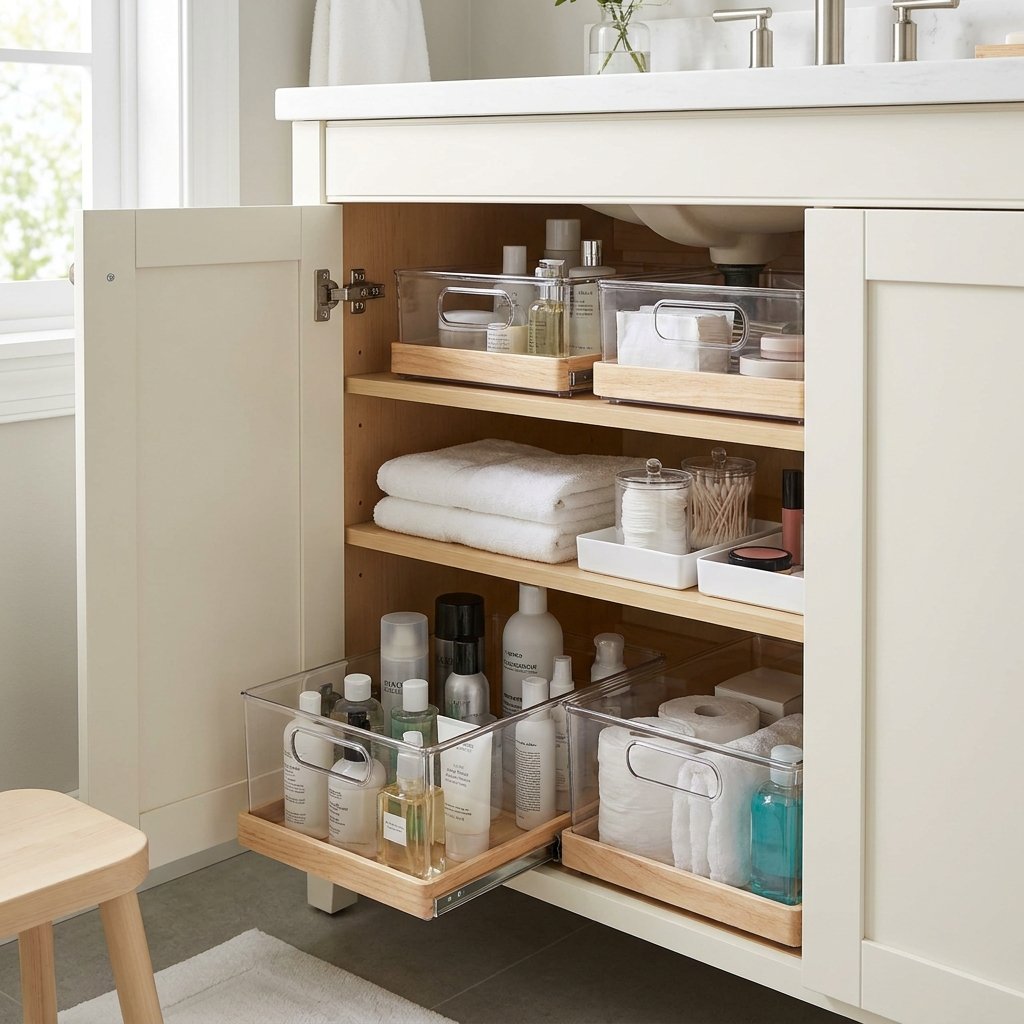
Bathroom cabinets have a way of becoming cluttered surprisingly quickly.
A few extra toiletries, backup bottles, hair tools, cleaning products, towels, and half-used skincare products can turn a perfectly good cabinet into a space where you cannot find anything.
The good news is that learning how to organize bathroom cabinets does not require an expensive custom storage system.
The biggest improvements usually come from removing what you no longer need, grouping similar items together, assigning every category a specific location, and choosing organizers that fit the cabinet rather than trying to force the cabinet around the organizers.
Whether you have a small vanity, deep bathroom cabinets, awkward plumbing under the sink, or a larger linen cabinet, these 17 practical ideas can help you create storage that is tidy, functional, and much easier to maintain.
1. Empty the Cabinets Before Organizing
Start by taking everything out.
Yes, everything.
It is much easier to organize an empty cabinet than to shuffle bottles around inside a crowded one.
As you remove items, place them into broad categories such as:
- Hair care
- Skincare
- Dental care
- First aid
- Toiletries
- Towels
- Cleaning supplies
- Backup products
Seeing everything together also reveals how much you actually own.
You may discover five partially used bottles of the same product or a surprising collection of hotel toiletries you have been saving for years.
Do not buy organizers yet.
First figure out what needs to go back.
2. Get Rid of Products You Do Not Use
Before organizing, declutter.
Look for products that are:
- Empty
- No longer used
- Damaged
- Duplicated unnecessarily
- Past applicable expiration or recommended-use periods
Pay particular attention to products for which expiration and storage conditions matter, including medications, sunscreen, cosmetics, and certain skincare products.
Follow product labels and appropriate local disposal guidance rather than automatically putting medications or potentially hazardous products in household trash or drains.
Once unnecessary products are gone, you may need far fewer storage containers than you expected.
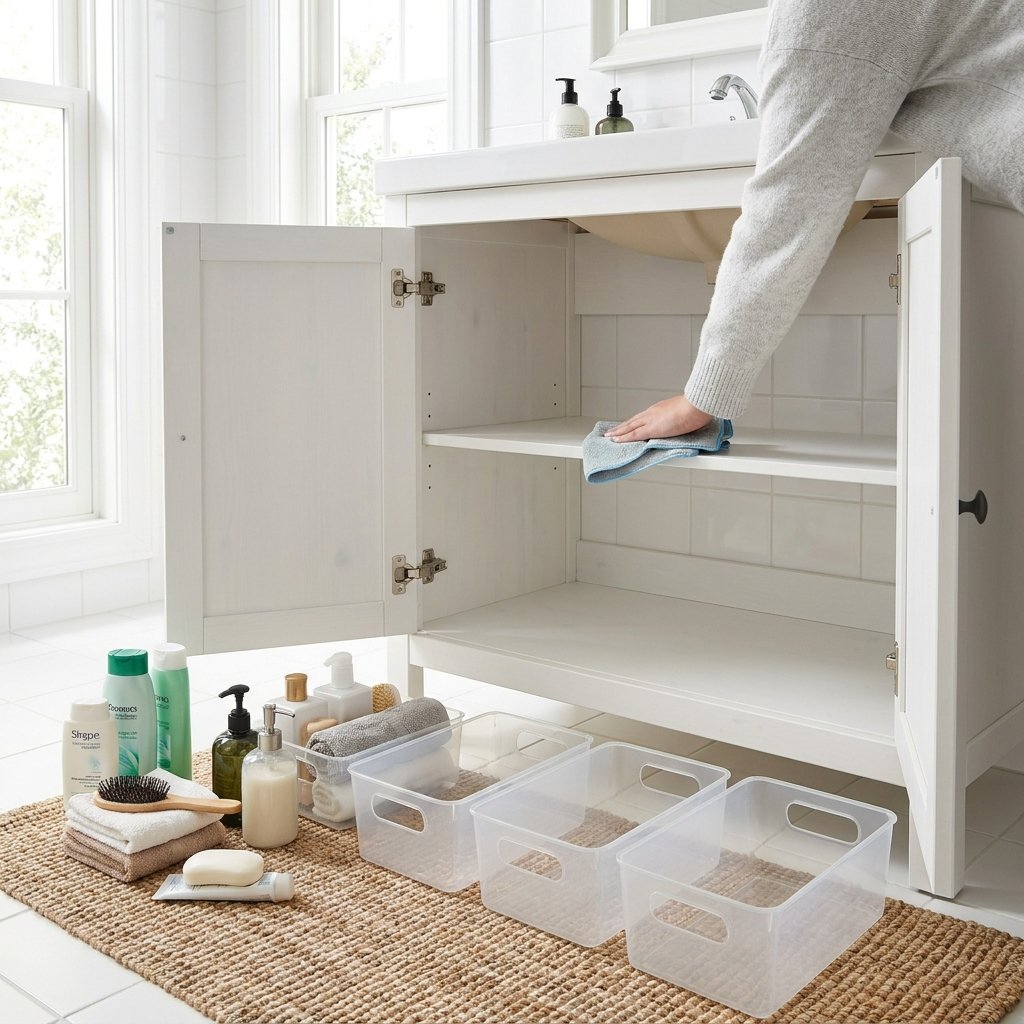
3. Clean the Empty Cabinets
Take advantage of the empty space.
Wipe down:
- Shelves
- Drawers
- Cabinet doors
- Corners
- Handles
Check under-sink cabinets for signs of moisture or leaks.
If you notice active leaking, persistent dampness, damaged cabinetry, or possible mold, address the underlying problem before covering the area with bins.
Let the cabinet dry completely before putting everything back.
4. Measure Before Buying Organizers
One of the most common organization mistakes is buying attractive containers before measuring the cabinet.
Measure:
- Width
- Height
- Depth
Also note:
- Plumbing
- Hinges
- Door clearance
- Drawer slides
- Fixed shelves
Under-sink cabinets can be particularly awkward because pipes divide the available space.
Measure each usable section individually.
Keep these dimensions on your phone when shopping.
A simple organizer that fits properly is more useful than an elaborate one that wastes half the cabinet.
5. Group Bathroom Products by Category
Instead of storing products wherever they happen to fit, create categories.
For example:
Everyday Skincare
Keep cleansers, moisturizers, and frequently used products together.
Hair Care
Group brushes, styling products, and accessories.
Dental Care
Store toothpaste, floss, and related supplies together.
Backups
Keep unopened replacement products in a separate area.
Guest Supplies
Group extra toothbrushes, soap, and other guest essentials.
When every category has a home, putting things away becomes much easier.
6. Keep Everyday Items Easy to Reach
Prime cabinet space should be reserved for products you use frequently.
Put daily items:
- At eye level
- Near the front
- In easy-to-open drawers
- In accessible bins
Less frequently used products can go higher, lower, or farther toward the back.
This simple change prevents you from digging through backup shampoo every morning just to find your moisturizer.
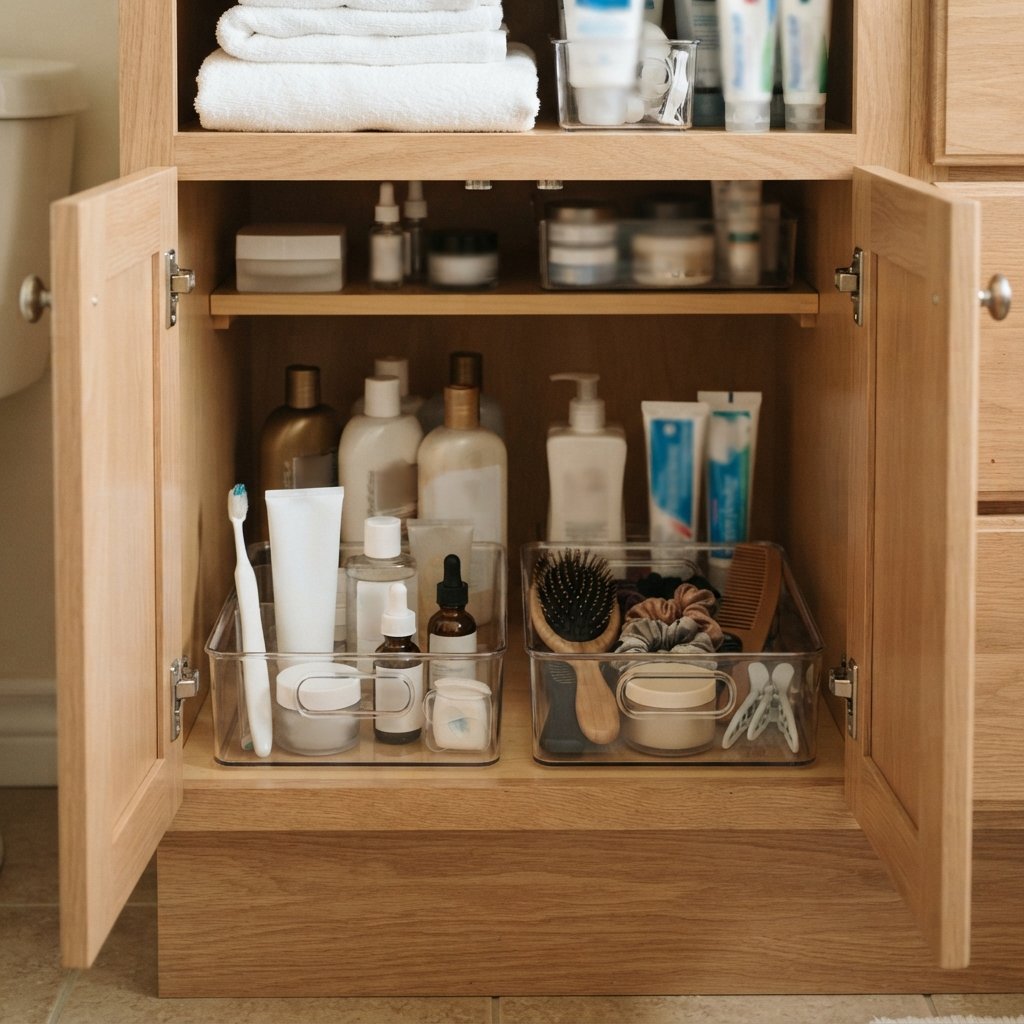
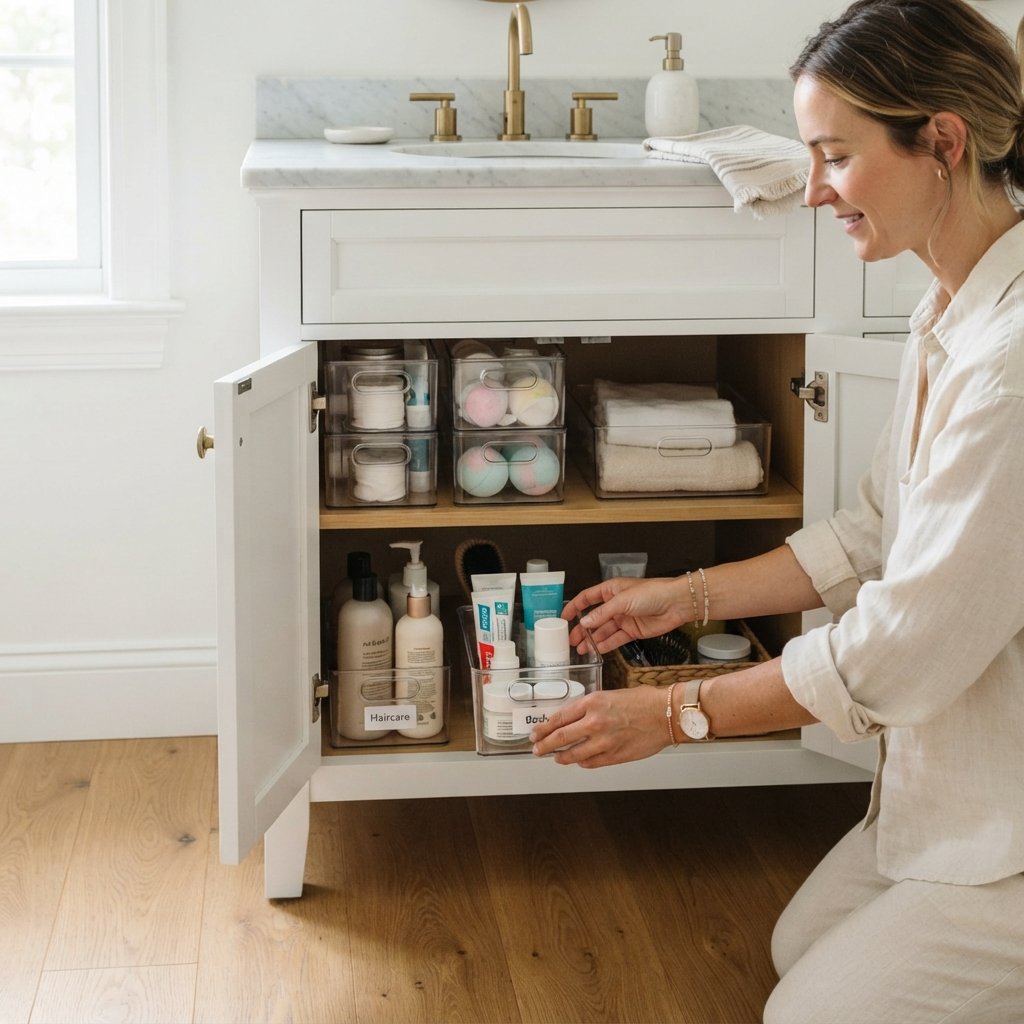
7. Use Clear Bins for Small Categories
Clear bins work especially well for bathroom cabinets because you can see what is inside.
Use them for categories such as:
- Hair products
- Extra soap
- Travel toiletries
- Skincare
- Nail care
Choose containers that can be removed easily.
Instead of reaching through a crowded cabinet, you can pull out the entire category.
Avoid creating dozens of tiny categories.
The system should simplify your routine, not make putting away one bottle feel like filing paperwork.
8. Use Pull-Out Bins in Deep Cabinets
Deep bathroom cabinets often waste space because products disappear at the back.
Pull-out bins can solve this problem.
Store one category in each bin and slide the entire container forward when you need something.
This works especially well for:
- Extra toiletries
- Hair products
- Cleaning supplies
- Toilet paper
- Guest supplies
If you use sliding hardware or installed pull-outs, follow the manufacturer’s installation and weight instructions.
For renters, simple freestanding bins can provide similar functionality without permanent installation.
9. Add Stackable Drawers Where Appropriate
Tall cabinet openings often contain a lot of unused vertical space.
Stackable drawers can turn one tall opening into several usable levels.
They work well for:
- Cotton products
- Hair accessories
- Small skincare items
- Personal-care supplies
Before stacking, confirm that the organizer is designed to be stacked and remains stable.
Do not create a tall, unstable tower simply to use every inch of space.
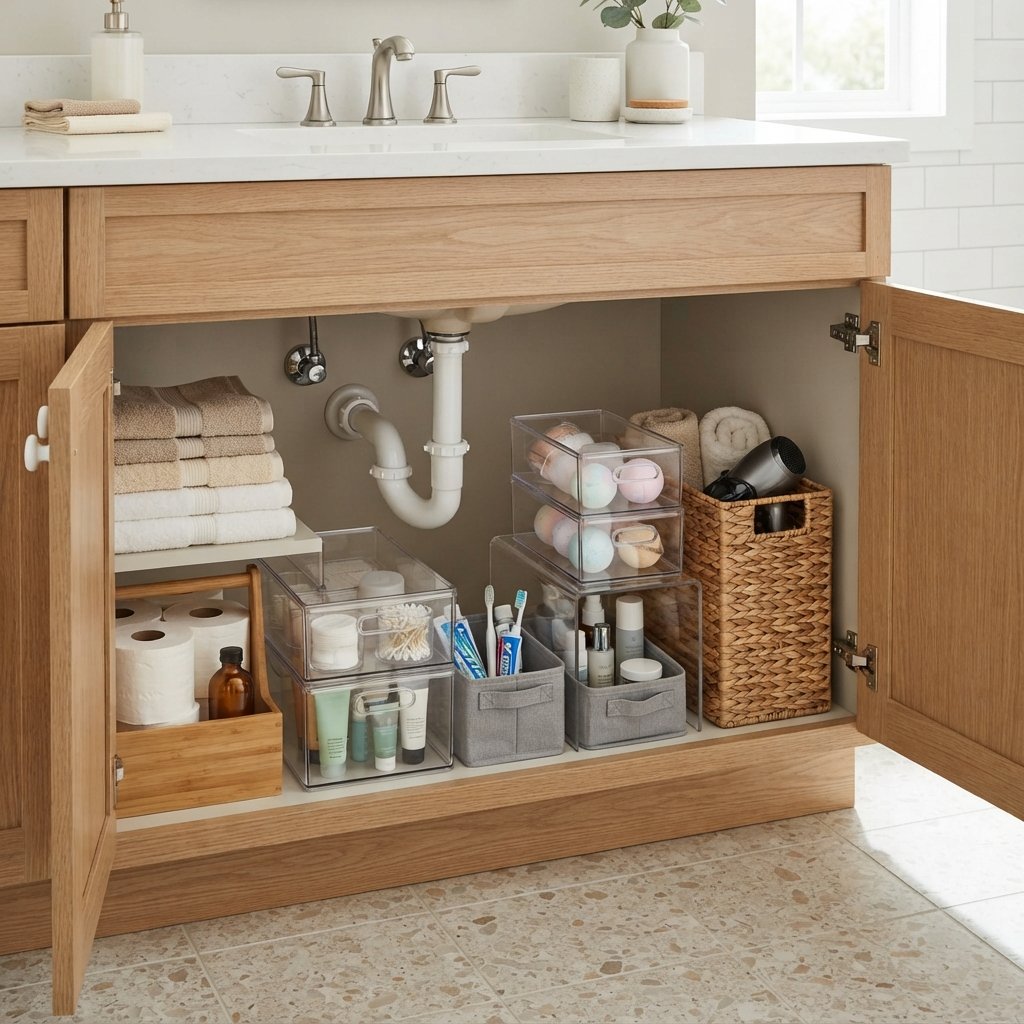
10. Organize Under the Bathroom Sink Around Plumbing
Under-sink storage is challenging because plumbing occupies the middle of the cabinet.
Do not fight it.
Organize around it.
Use:
- Narrow bins
- Short drawers
- Small baskets
- Containers with handles
Keep frequently used products toward the front.
Place taller bottles where pipes do not interfere.
Avoid packing products tightly around plumbing connections. You want to be able to see the area and notice leaks rather than hiding everything behind overflowing storage.
11. Use the Cabinet Doors Carefully
The inside of a vanity door can provide useful shallow storage.
Depending on the cabinet, you might add:
- Lightweight organizer
- Small hooks
- Shallow basket
Use the space for light items rather than heavy bottles.
Before installing anything, check that it will not hit shelves, plumbing, or products when the door closes.
If adhesive products are used, make sure they are suitable for the cabinet surface and expected bathroom conditions.
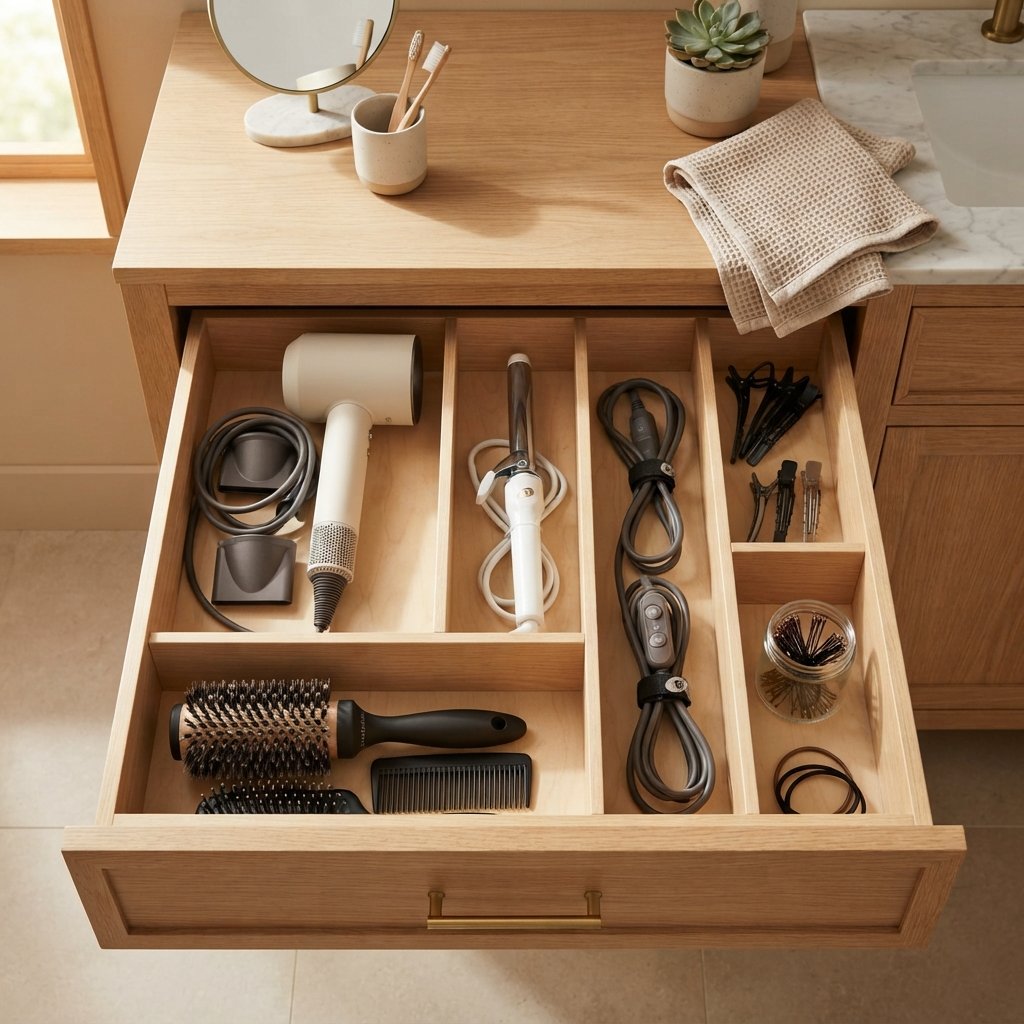
12. Give Hair Tools Their Own Space
Hair dryers, curling tools, straighteners, and cords can quickly create a tangled mess.
Give them a dedicated location.
Options include:
- Deep drawer
- Heat-appropriate organizer
- Divided cabinet bin
- Purpose-designed holder
Never put a hot styling tool into an organizer that is not intended to handle heat.
Allow tools to cool as directed by their manufacturer before storing them, and keep cords arranged so they do not become damaged or tangled.
Keep electrical devices away from water and follow their safety instructions.
13. Separate Backup Products From Open Products
Keeping backups mixed with everyday toiletries creates clutter.
Create one specific area for unopened extras.
For example, use a bin for:
- Extra shampoo
- Soap
- Toothpaste
- Deodorant
- Other frequently replaced toiletries
Before buying another product, check the backup bin.
This makes it easier to see what you already have and can help prevent accidental overbuying.
14. Use Turntables for Bottles
A turntable can be useful in deeper cabinets where bottles are otherwise difficult to reach.
Consider one for:
- Hair products
- Lotions
- Toiletries
Make sure the turntable fits the shelf and rotates without hitting plumbing or the cabinet door.
Do not overload it with tall, unstable containers.
The point is to make products easier to access, not to squeeze every bottle onto one spinning tray.
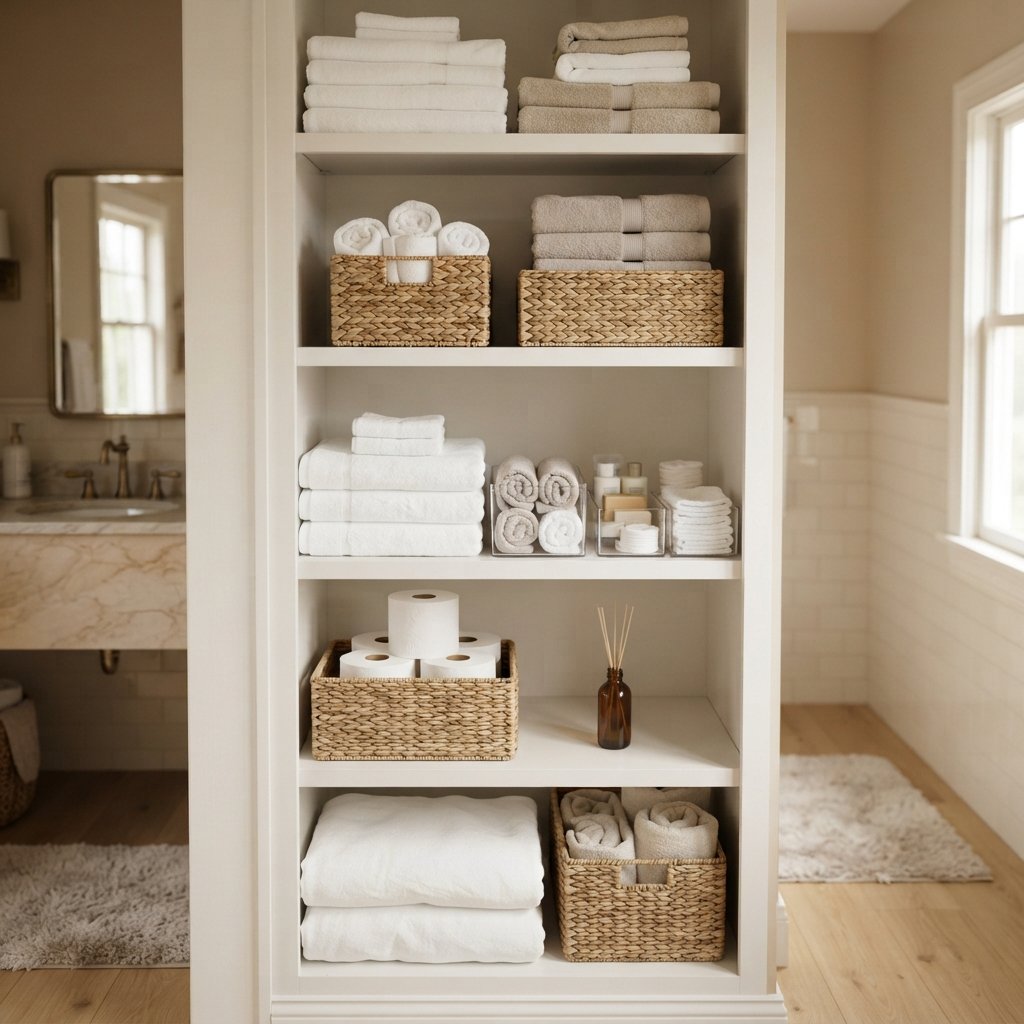
15. Fold Towels to Fit the Cabinet
If towels share cabinet space with toiletries, fold them according to the dimensions of the shelf.
Rather than using one folding method everywhere, choose a fold that fits the actual space.
Stack towels by type:
- Bath towels
- Hand towels
- Washcloths
If shelves are shallow, narrower folds may work better.
If you have deep shelves, baskets can keep smaller towels from becoming messy.
16. Create a First-Aid Zone—But Consider the Environment
A designated first-aid area can prevent supplies from becoming scattered.
However, bathrooms are often warm and humid.
Some medications and medical products require particular storage conditions, so do not automatically assume a bathroom cabinet is appropriate.
Follow the storage instructions on each product.
If a medication needs a cool, dry environment, another location in the home may be more suitable.
Where appropriate, group first-aid supplies in a portable container that can be moved easily when needed.
Keep medications and potentially harmful products secured from children and pets.
17. Create a Simple Restocking Routine
An organized cabinet will not stay organized forever without a little maintenance.
Fortunately, it does not need much.
Once every so often:
- Remove empty containers.
- Return misplaced products.
- Check backups.
- Wipe shelves.
- Review products you no longer use.
Try not to reorganize the entire cabinet every time it gets messy.
If one category constantly becomes cluttered, change that part of the system.
Good organization should adapt to your habits.
How to Organize Bathroom Cabinets Under the Sink
The cabinet beneath a bathroom sink often becomes the hardest storage area to manage.
The trick is to stop treating it like one large rectangular box.
Instead, divide it into smaller zones around the plumbing.
You might place:
- Tall products on one side
- Pull-out toiletries on the other
- Short bins beneath lower pipes
- Frequently used supplies at the front
Keep the immediate area around plumbing visible enough to notice moisture.
A waterproof or easily washable liner may help protect the cabinet surface, but it should not be used to hide an ongoing leak.
How to Organize Deep Bathroom Cabinets
Deep cabinets need storage that moves.
If you simply line bottles from front to back, the products behind the first row will eventually disappear.
Use:
- Pull-out bins
- Handled baskets
- Turntables
- Removable trays
Assign each container one broad category.
For example, rather than creating five separate skincare bins, one accessible skincare bin may be enough.
How to Organize Small Bathroom Cabinets
In a small bathroom, every inch matters—but that does not mean every inch needs to be filled.
Start by limiting what stays in the bathroom.
Move bulk extras or rarely used supplies elsewhere if another storage area is available.
Inside the cabinet, prioritize:
- Everyday toiletries
- Toilet paper
- Essential cleaning products
- Towels, if necessary
Use vertical space carefully with stable stackable organizers.
Keeping fewer products is usually more effective than adding increasingly complicated storage systems.
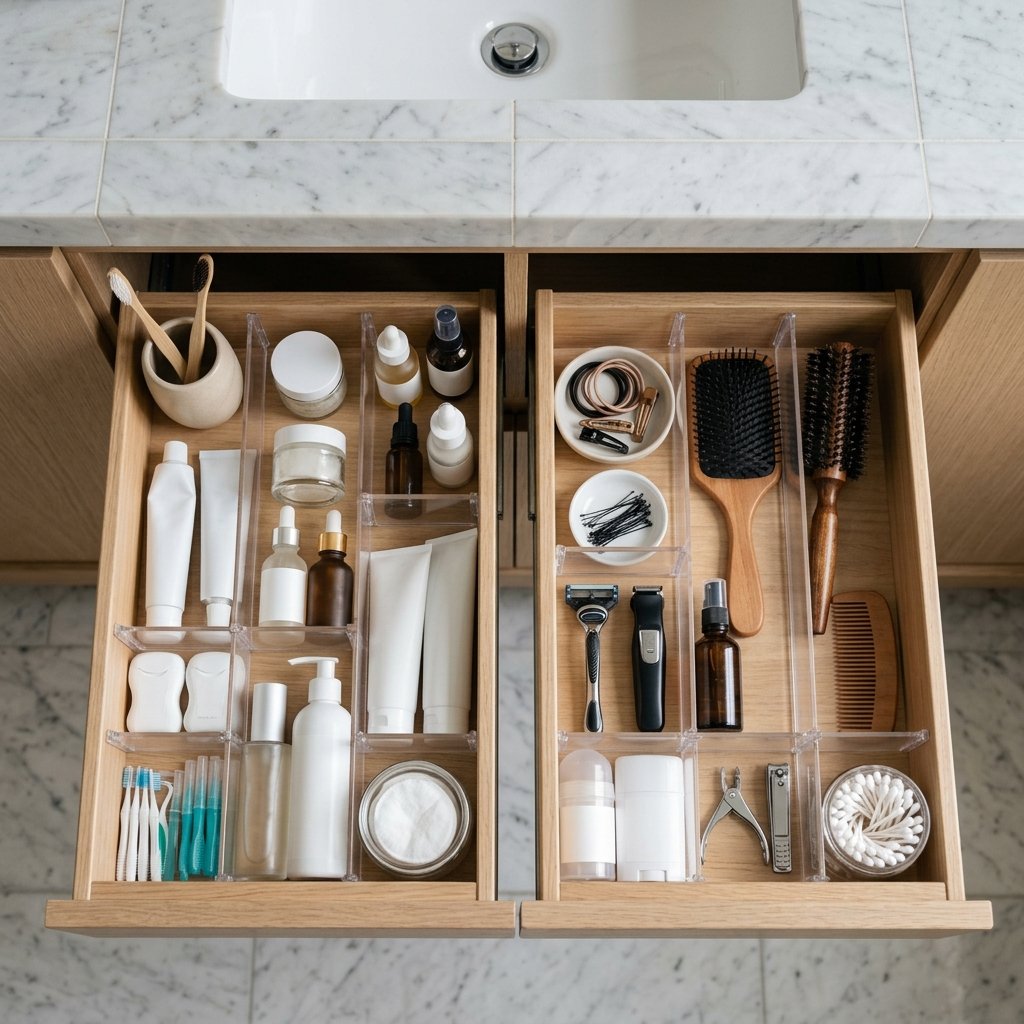
How to Organize Bathroom Drawers
Drawers are perfect for small items because everything can remain visible from above.
Use dividers for categories such as:
- Makeup
- Hair accessories
- Dental products
- Grooming supplies
Avoid dividing the drawer into compartments that are too small for the actual products.
Adjustable dividers can provide more flexibility as your routine changes.
Keep daily products toward the front.
How to Organize Bathroom Cabinets Without Buying Anything
You may already have everything you need.
Repurpose suitable containers from around the house.
Possible options include:
- Small boxes
- Trays
- Baskets
- Jars for appropriate dry items
- Existing drawer dividers
Start by decluttering and categorizing.
You may find that the cabinet becomes dramatically easier to use without purchasing a single organizer.
How to Organize Bathroom Cabinets on a Budget
If you do need organizers, buy them slowly.
Start with the biggest problem.
If bottles disappear in a deep cabinet, buy one pull-out bin.
If small products roll around a drawer, add a divider.
If the cabinet wastes vertical space, consider a stable shelf riser or stackable drawer.
Solving one specific problem at a time is usually cheaper than buying a complete matching organization collection.
How to Organize a Bathroom Linen Cabinet
A bathroom linen cabinet needs a slightly different approach.
Create zones for:
Towels
Keep bath towels, hand towels, and washcloths together.
Toiletries
Use bins for extra personal-care products.
Guest Supplies
Keep a small basket ready for visitors.
Backstock
Store unopened household toiletries together.
Cleaning Supplies
If appropriate for your household, keep them contained separately from personal-care products and secured where children or pets cannot access them.
Place everyday items on the easiest-to-reach shelves.
Store infrequently used items higher.
What Should Go in Bathroom Cabinets?
Your bathroom cabinet should primarily contain items that are useful in the bathroom and suitable for that environment.
Depending on your space, that might include:
- Toiletries
- Towels
- Toilet paper
- Hair care
- Skincare
- Dental supplies
- Grooming products
- Appropriate cleaning supplies
Do not use valuable cabinet space simply because an object fits.
Ask whether you actually use it in that room.
What Should Not Be Stored in a Bathroom Cabinet?
Bathrooms can experience humidity and temperature changes.
Products with specific storage requirements should be stored according to their labels rather than automatically placed in the bathroom.
Be particularly thoughtful about:
- Medications
- Heat-sensitive products
- Moisture-sensitive supplies
- Electronics
Also avoid keeping unnecessary quantities of hazardous household products in easily accessible cabinets, especially around children or pets.
How to Make Bathroom Cabinets Look Organized
You do not need every container to match perfectly.
A simple visual system works well.
Choose two or three storage types, such as:
- Clear bins
- White trays
- Woven baskets
Repeat them.
Keep product categories together and avoid filling every container to the top.
A little empty space makes the cabinet easier to use and gives you room for future necessities.
How to Organize Bathroom Cabinets for Two People
Shared bathrooms become easier when each person has a defined zone.
You might assign:
- One drawer per person
- Separate bins
- Separate cabinet shelves
Then create shared categories for:
- Dental supplies
- Towels
- Toilet paper
- Cleaning products
The exact split does not need to be equal.
Allocate space according to what each person actually stores.
How to Organize a Family Bathroom
Family bathrooms need simple systems.
Avoid organization that requires everyone to open several containers just to put something away.
Try broad categories such as:
- Hair
- Dental
- Bath
- Extras
For children’s items, use accessible storage only for products that are safe for them to reach.
Medications, razors, cleaning products, and other potentially harmful items should be stored securely.
Bathroom Cabinet Organization for Renters
You can organize effectively without permanent modifications.
Use:
- Freestanding bins
- Drawer dividers
- Removable trays
- Baskets
- Turntables
- Stable stackable organizers
If you use adhesive organizers, check both the product instructions and the cabinet surface before installation because removal can damage some finishes.
How to Keep Bathroom Cabinets Organized
The easiest organization system is one you can maintain when you are busy.
Follow three simple habits:
Put Products Back in Their Category
You do not need perfect placement.
Just return them to the correct bin or drawer.
Finish Open Products First
Avoid having multiple half-used bottles when possible.
Check Before Shopping
Look at your backup supply before buying more.
These habits prevent most cabinet clutter before it starts.
Common Bathroom Cabinet Organization Mistakes
Buying Organizers Before Decluttering
You may end up organizing things you should have removed.
Not Measuring
Even beautiful containers are useless if the cabinet cannot close.
Creating Too Many Categories
Keep the system simple enough to maintain.
Ignoring Plumbing
Organize around pipes rather than blocking them.
Hiding Everything at the Back
Deep storage needs pull-out or rotating solutions.
Overfilling Containers
Leave enough room to remove and return items easily.
Storing Hot Hair Tools Immediately
Let styling tools cool according to their instructions before storage.
Ignoring Humidity
Not every product belongs in a bathroom environment.
Keeping Too Many Backups
Excess inventory creates unnecessary clutter.
Bathroom Cabinet Organization Safety Tips
Organization should make the bathroom safer as well as tidier.
- Keep medications stored according to their labels and secured from children and pets.
- Store cleaning products according to manufacturer instructions and away from children and pets.
- Do not mix cleaning chemicals.
- Keep electrical hair tools away from water.
- Unplug styling tools after use and follow manufacturer cooling and storage directions.
- Do not block plumbing connections or hide active leaks behind organizers.
- Keep heavy objects on lower shelves when practical.
- Secure installed organizers according to their manufacturer’s directions.
- Avoid unstable stacks of bins or drawers.
- Dispose of medications and potentially hazardous products according to appropriate local guidance.
- Keep razors and sharp grooming tools securely stored.
- Address persistent moisture, leaks, or possible mold rather than simply organizing around the problem.
FAQ About How to Organize Bathroom Cabinets
What is the best way to organize bathroom cabinets?
Start by emptying and decluttering the cabinet. Group the remaining products by category, keep frequently used items accessible, and use appropriately sized bins, drawers, or turntables where they solve a specific storage problem.
How do I organize under my bathroom sink?
Measure around the plumbing and use narrow bins, short drawers, or pull-out containers on either side. Keep enough visibility around plumbing to notice leaks.
How do I organize a bathroom cabinet with deep shelves?
Use containers that can be pulled forward, such as handled bins, baskets, trays, or turntables. Avoid storing loose products in several rows.
Should bathroom organizers be clear?
They do not have to be, but clear organizers make it easy to see products and inventory. Opaque baskets can be useful when you prefer to hide visual clutter.
Where should I keep extra toiletries?
Create one dedicated backstock bin or shelf. Check it before purchasing replacements.
Should medicine be kept in a bathroom cabinet?
Not automatically. Bathrooms can be humid and warm, and storage requirements vary. Follow each medication’s storage instructions and keep medicines secured from children and pets.
How can I organize bathroom cabinets cheaply?
Declutter first, reuse suitable containers you already own, and purchase organizers only for specific problems such as deep shelves or messy drawers.
How do I stop bathroom cabinets from getting messy again?
Use broad categories, keep daily items accessible, separate backups, avoid overbuying, and do a quick periodic reset.
Final Thoughts
Learning how to organize bathroom cabinets is less about finding perfect matching containers and more about creating a system that makes everyday routines easier.
Start by emptying the cabinets, removing products you no longer need, and cleaning the space.
Then measure before buying anything.
Group products into practical categories, keep daily essentials within easy reach, separate backups, and use pull-out bins, drawers, turntables, or baskets only where they solve a real storage problem.
Pay special attention to under-sink plumbing, bathroom humidity, medications, cleaning products, and electrical hair tools.
Most importantly, keep the system simple.
If putting something away takes too much effort, it probably will not stay organized for long.
A few well-planned zones and a quick periodic reset can turn even a small bathroom cabinet into storage that feels calm, uncluttered, and genuinely useful.