

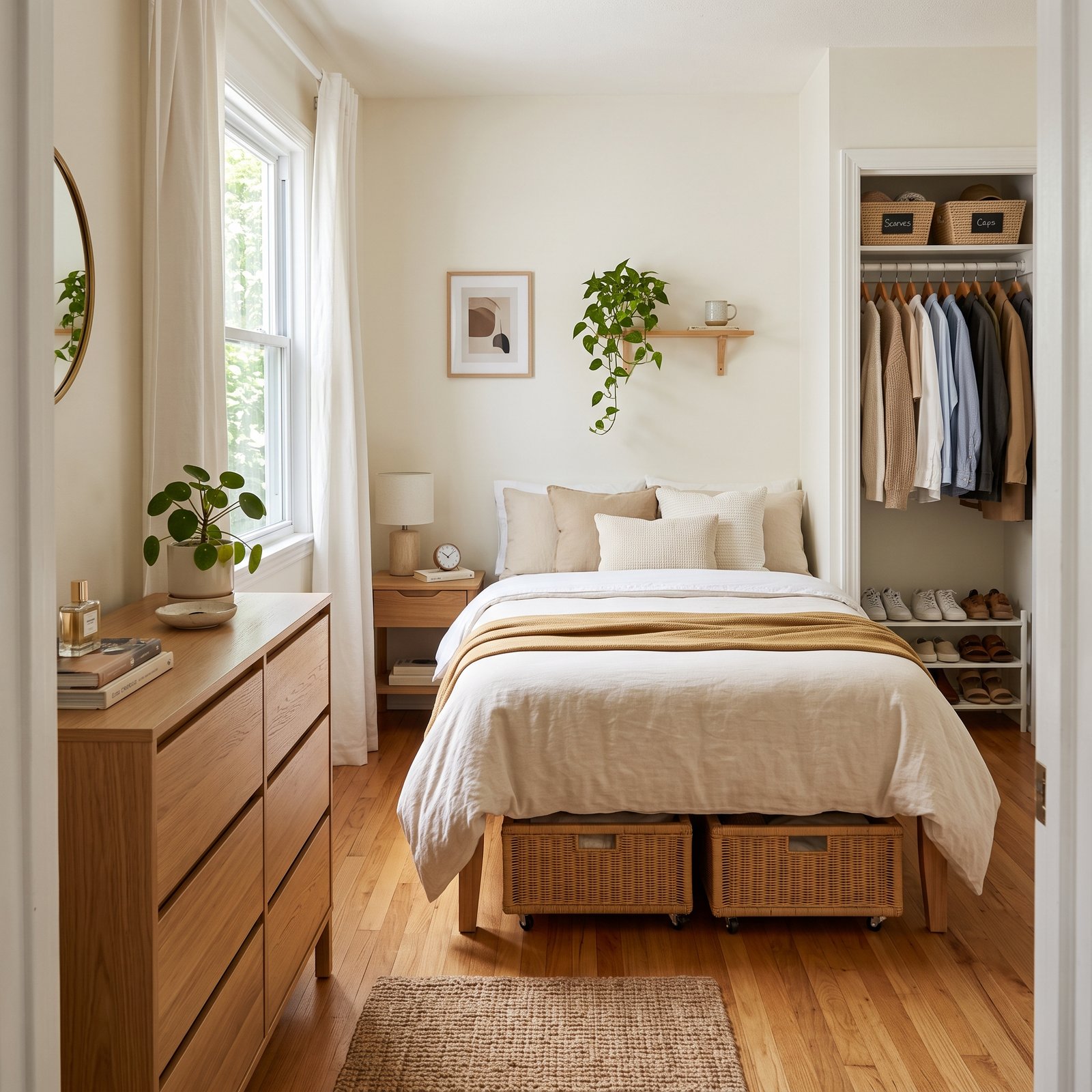
Learning how to organize your small bedroom on a budget does not require custom closets, expensive furniture, or a complete room makeover.
In a small bedroom, clutter becomes visible quickly because there is simply less room for extra stuff. Clothes pile up, nightstands get crowded, shoes collect on the floor, and every surface starts doing too many jobs at once.
The good news is that a small room can actually become easier to manage once you create a simple system.
The best approach is to declutter first, use the space you already have more efficiently, choose a few inexpensive storage solutions, and make sure everyday items have a clear home.
Whether you are organizing a tiny apartment bedroom, guest room, dorm-style space, or small primary bedroom, these budget-friendly ideas can help you create a calmer room without spending a lot.
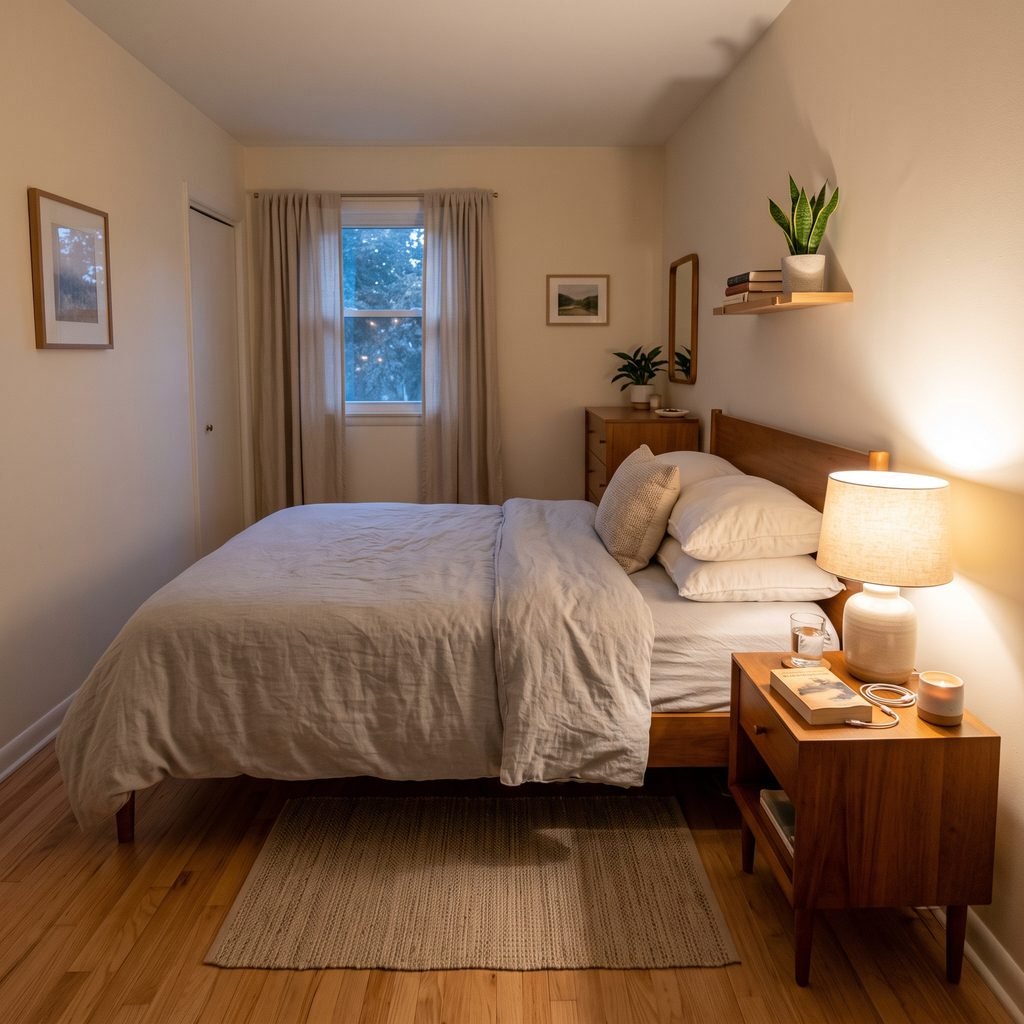
1. Declutter Before You Buy Any Storage
The cheapest organizer is the one you do not need.
Before buying baskets, shelves, or drawer inserts, go through the room and decide what actually needs to stay.
Start with obvious categories:
- Clothes
- Shoes
- Books
- Paper
- Beauty products
- Accessories
- Decor
- Miscellaneous items
Remove things that are:
- Broken
- Unused
- Duplicates
- Outgrown
- No longer your style
Do not organize clutter you do not want.
Once you reduce what is in the room, you may discover that your existing furniture provides enough storage.
2. Clear the Floor First
A visible floor instantly makes a small bedroom feel more organized.
Pick up:
- Shoes
- Laundry
- Bags
- Boxes
- Books
- Random storage containers
Then give those items permanent homes.
Try to keep as much storage as possible against walls, under furniture, or inside closets rather than spreading it across the floor.
If the room feels crowded, reducing the number of freestanding storage pieces can make a bigger difference than adding more.
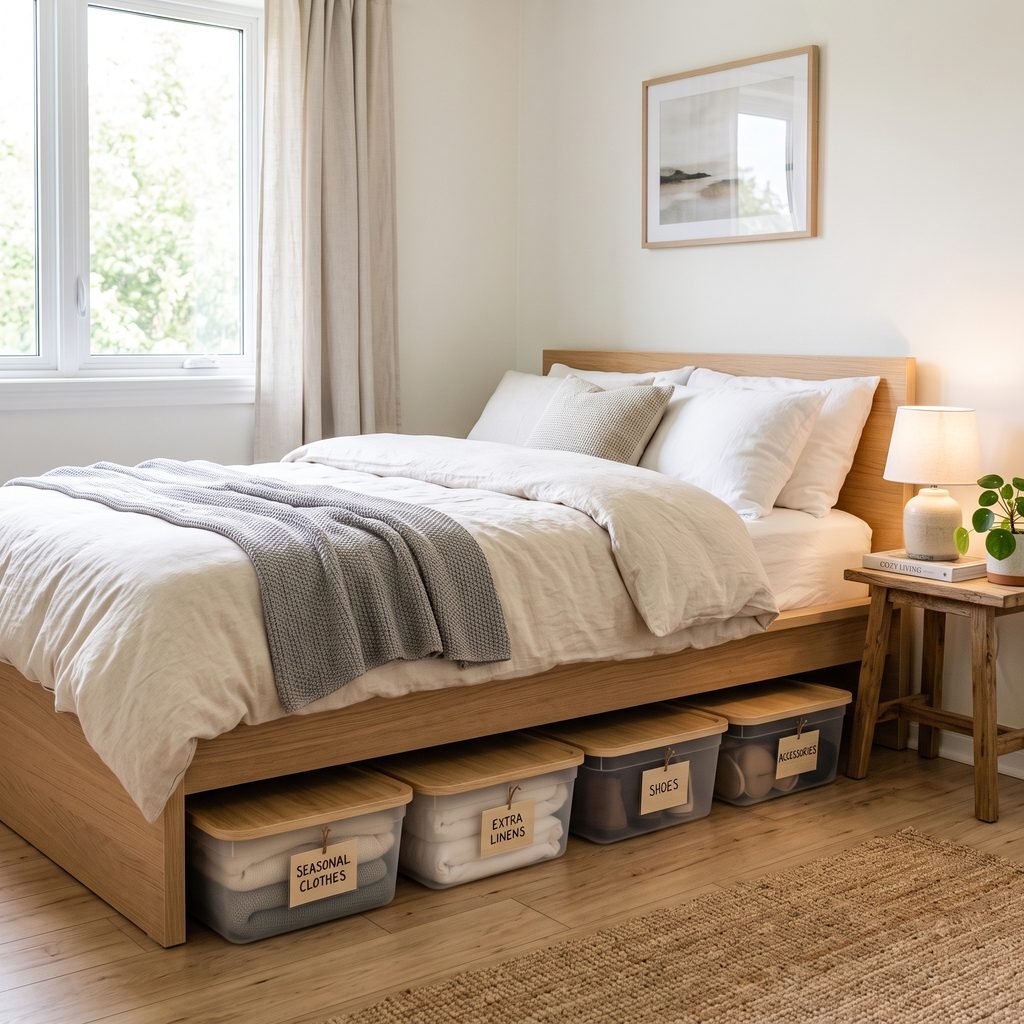
3. Use the Space Under the Bed
Under-bed storage is one of the most useful options in a small bedroom.
Use it for items you do not need every day, such as:
- Seasonal clothes
- Extra bedding
- Shoes
- Bags
- Keepsakes
You do not need expensive containers.
Low-profile plastic boxes, fabric storage bags, or sturdy bins may work.
Measure the available clearance before buying anything.
If your bed is very low, bed risers may create more storage, but only use products designed for your bed type and follow weight and stability instructions.
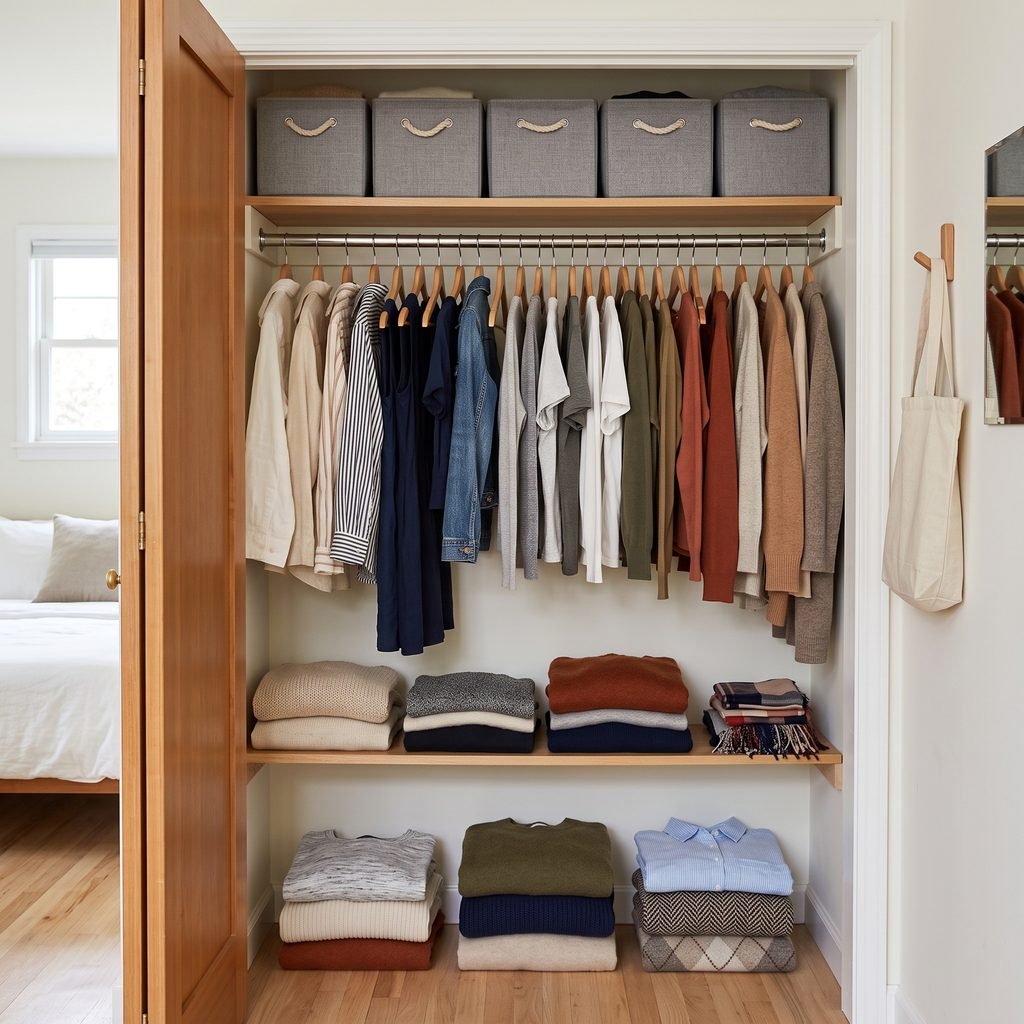
4. Give Every Nightstand Item a Purpose
Small nightstands can become clutter magnets.
Keep only what you actually use beside the bed.
That might include:
- Lamp
- Phone charger
- Book
- Water
- Small tray
Move everything else elsewhere.
If your nightstand has drawers, divide them into simple categories.
If you do not have a nightstand, consider using:
- Small stool
- Narrow table
- Wall-mounted shelf
- Compact drawer unit
A smaller surface can actually help prevent clutter because there is less room to pile things up.
5. Use Wall Hooks Instead of More Furniture
Hooks are inexpensive and useful in tight rooms.
Use them for:
- Handbags
- Robes
- Hats
- Lightweight jackets
- Tomorrow’s outfit
Install hooks where they are easy to reach but do not interfere with doors or walkways.
Use mounting hardware appropriate for the wall and item weight.
Avoid overloading adhesive hooks or attaching heavy objects to walls without suitable anchors.
6. Organize Clothes by What You Actually Wear
A small bedroom often feels crowded because of clothing rather than furniture.
Go through your wardrobe and separate clothes into:
- Frequently worn
- Seasonal
- Special occasion
- Donate or sell
Keep everyday clothes in the easiest-to-access locations.
Move off-season items under the bed, onto a high shelf, or into another appropriate storage area if available.
The goal is not to fit as many clothes as possible into the room.
It is to make your most-used clothing easier to reach.
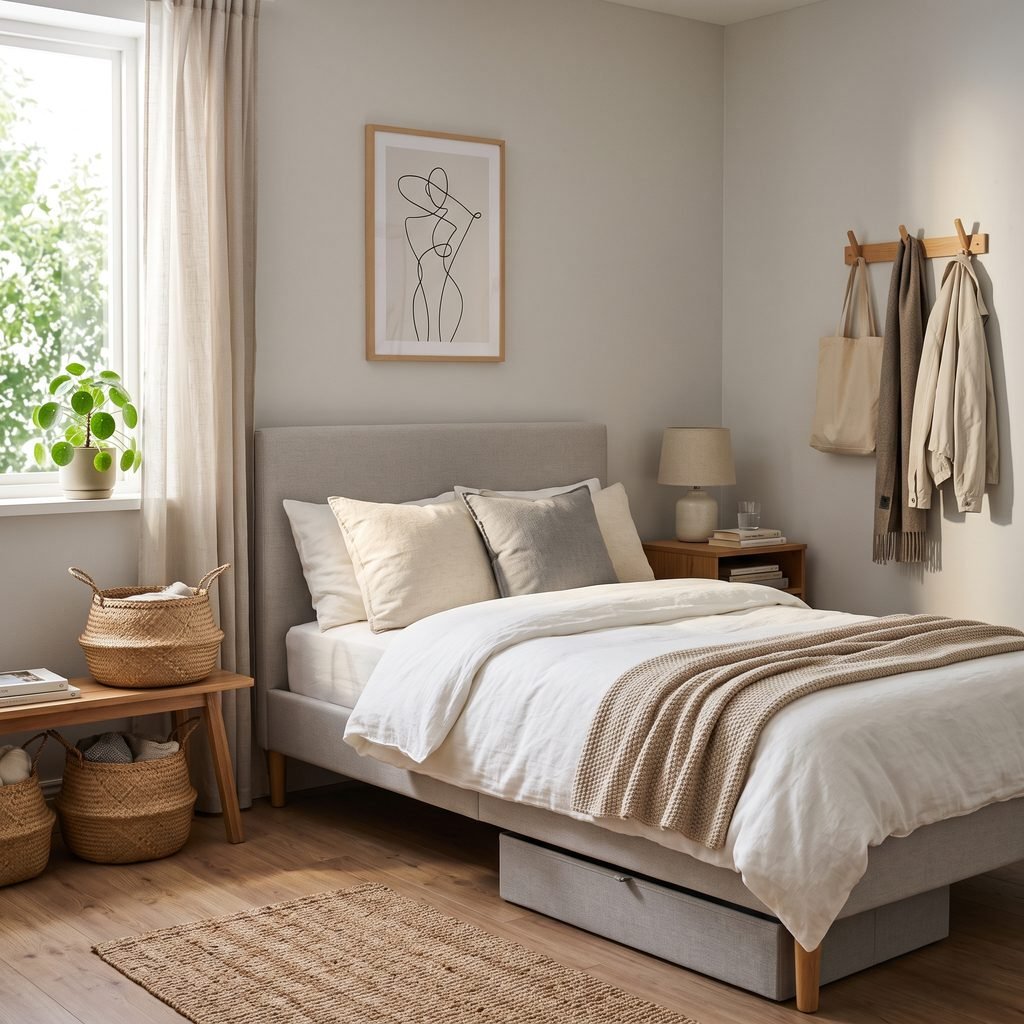
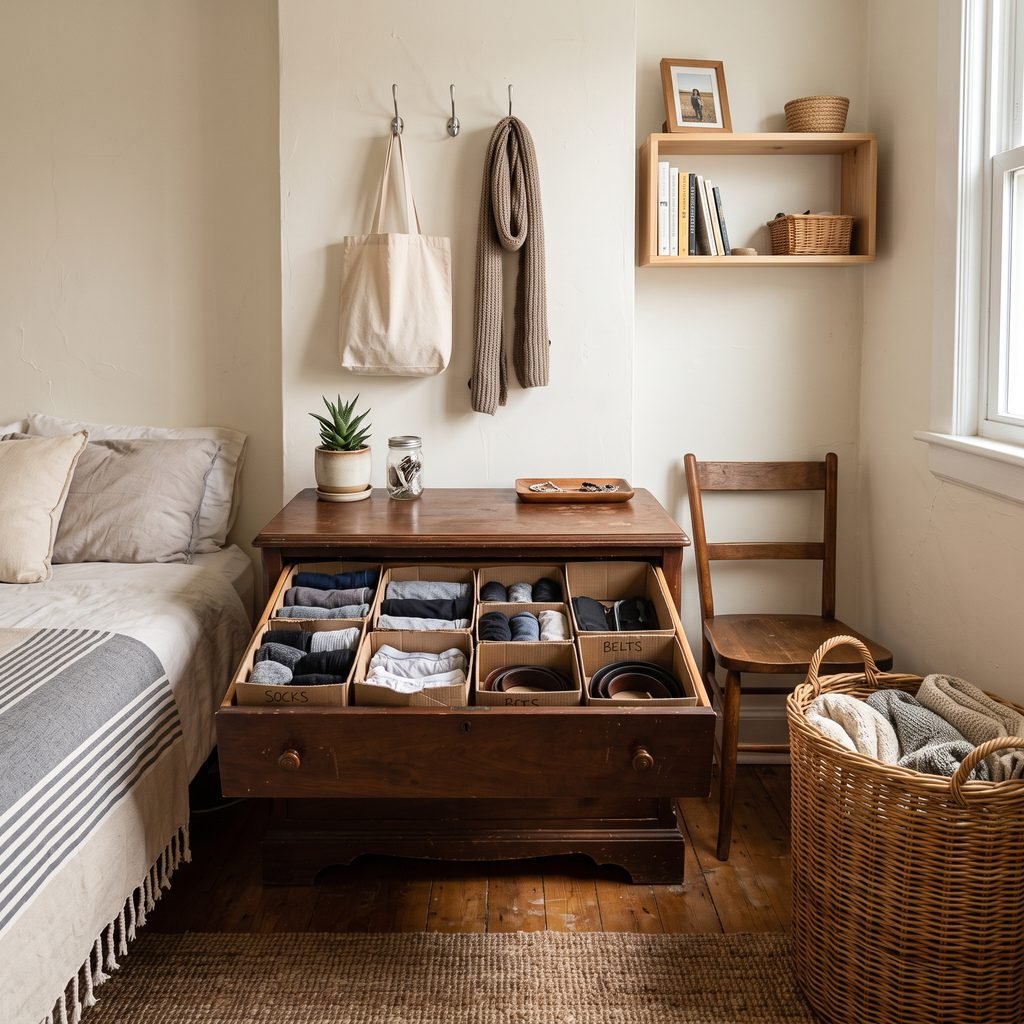
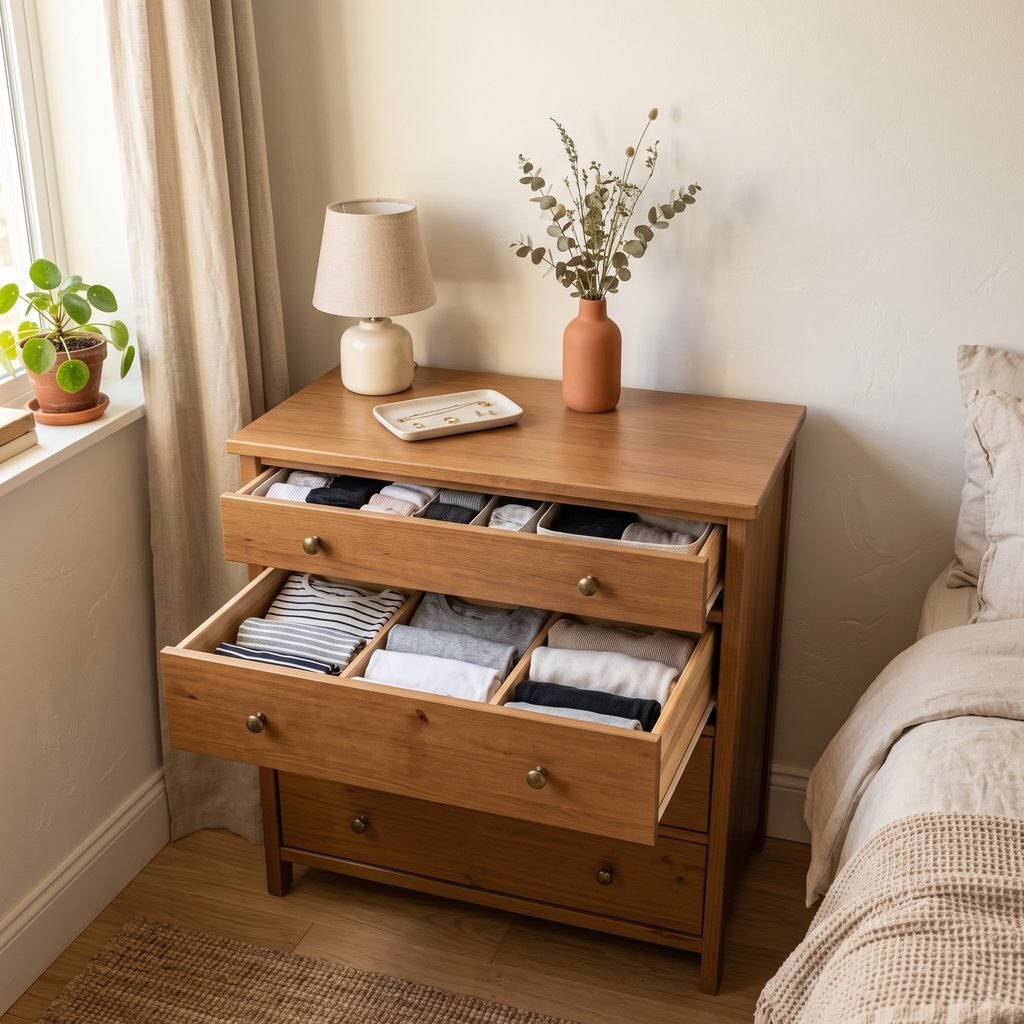
7. Fold Drawers Vertically
If drawers are crowded, changing how you fold clothes may create more usable space.
Vertical folding works especially well for:
- T-shirts
- Leggings
- Pajamas
- Workout clothes
Instead of stacking clothes on top of each other, arrange them so you can see multiple items at once.
This reduces digging and prevents entire stacks from becoming messy.
You can use inexpensive drawer dividers, small boxes, or even repurposed sturdy containers to separate categories.
8. Use the Top of the Closet Wisely
High closet shelves are ideal for less frequently used items.
Store things such as:
- Seasonal clothes
- Extra blankets
- Special occasion accessories
- Travel bags
Use lightweight bins so they are easier to handle.
Avoid placing very heavy items overhead.
Label containers so you do not have to pull everything down just to find one thing.
Use a stable step stool when needed instead of climbing on chairs or furniture.
9. Create a Simple Laundry System
A laundry pile can make even an organized bedroom look messy.
Choose one dedicated place for dirty clothes.
This might be:
- Laundry hamper
- Basket
- Slim hamper behind a door
- Divided laundry bag
If possible, avoid using a chair as temporary clothes storage.
Create a separate spot for clothes that are clean enough to wear again, such as one hook or small basket.
This prevents the classic pile of “not dirty, not clean” clothes.
10. Store Shoes Vertically or in One Zone
Shoes spread quickly in small bedrooms.
Keep them in one place.
Depending on your room, try:
- Low shoe rack
- Closet floor
- Hanging shoe organizer
- Under-bed storage
- Small vertical shelf
Avoid storing every pair in the bedroom if you have another practical place for seasonal or rarely worn shoes.
Keeping only current-season footwear nearby can free a surprising amount of space.
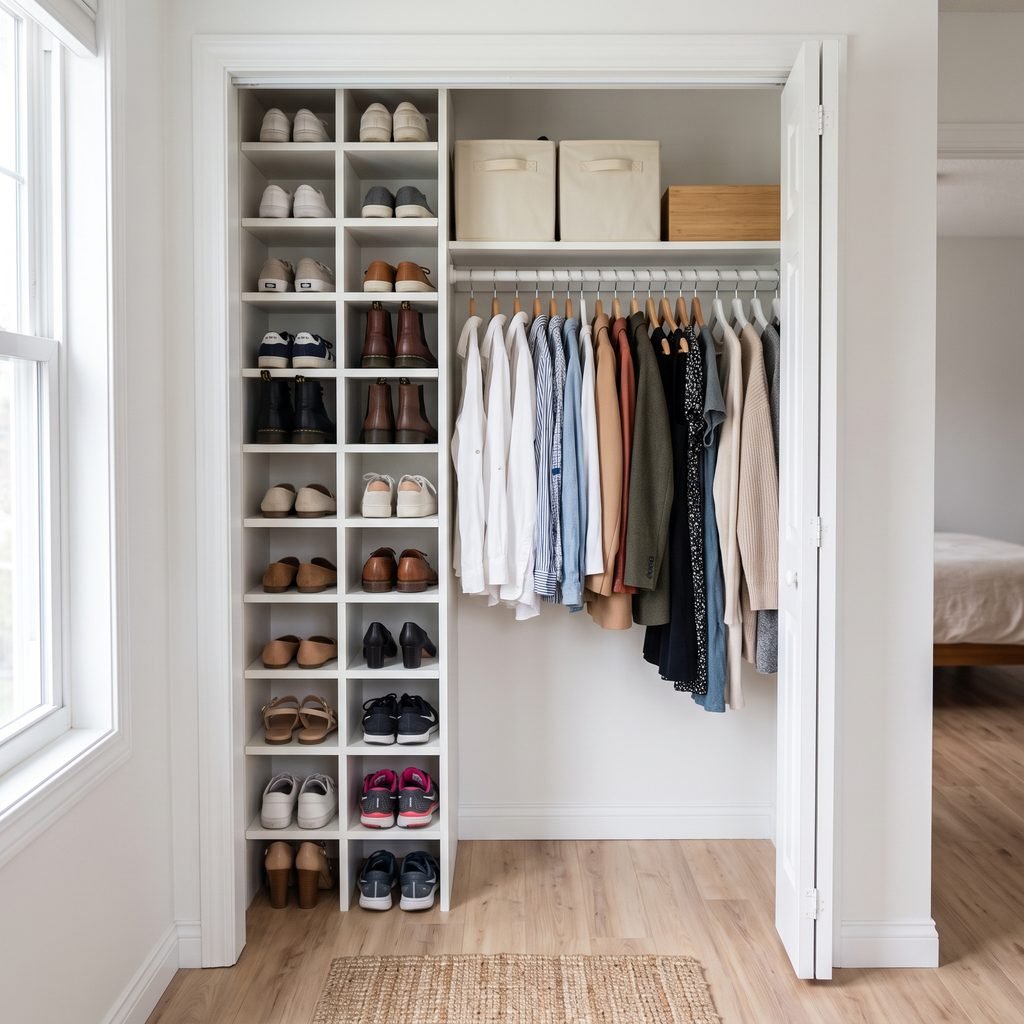
11. Use Baskets for Categories, Not Random Clutter
Baskets are helpful only when they have a purpose.
Instead of creating a miscellaneous basket for everything, assign each one a category.
For example:
- Hair tools
- Electronics
- Books
- Accessories
- Extra linens
Choose baskets that fit existing shelves rather than buying a large matching collection first.
A few useful baskets usually work better than covering every surface with storage containers.
12. Create a Small Drop Zone
Small bedrooms often become messy because there is nowhere to put everyday items.
Create one compact drop zone for:
- Keys
- Wallet
- Watch
- Jewelry
- Earbuds
A shallow tray on a dresser can be enough.
Keeping these small items together reduces visual clutter and makes them easier to find the next morning.
13. Use the Back of the Door
The back of a bedroom or closet door can add storage without using floor space.
Use it for lightweight items such as:
- Shoes
- Scarves
- Bags
- Accessories
Choose an organizer that allows the door to open and close safely.
Do not overload the door, interfere with hinges, or create pinch points.
If you are renting, check what mounting methods are allowed before drilling.
14. Reduce Dresser-Top Clutter
Treat your dresser as a useful surface rather than extra storage.
Keep only a few things visible.
For example:
- Lamp
- Small tray
- Jewelry box
- One decorative item
Move makeup, hair products, paperwork, and loose accessories into drawers or designated containers.
A mostly clear dresser top can make the entire room feel calmer.
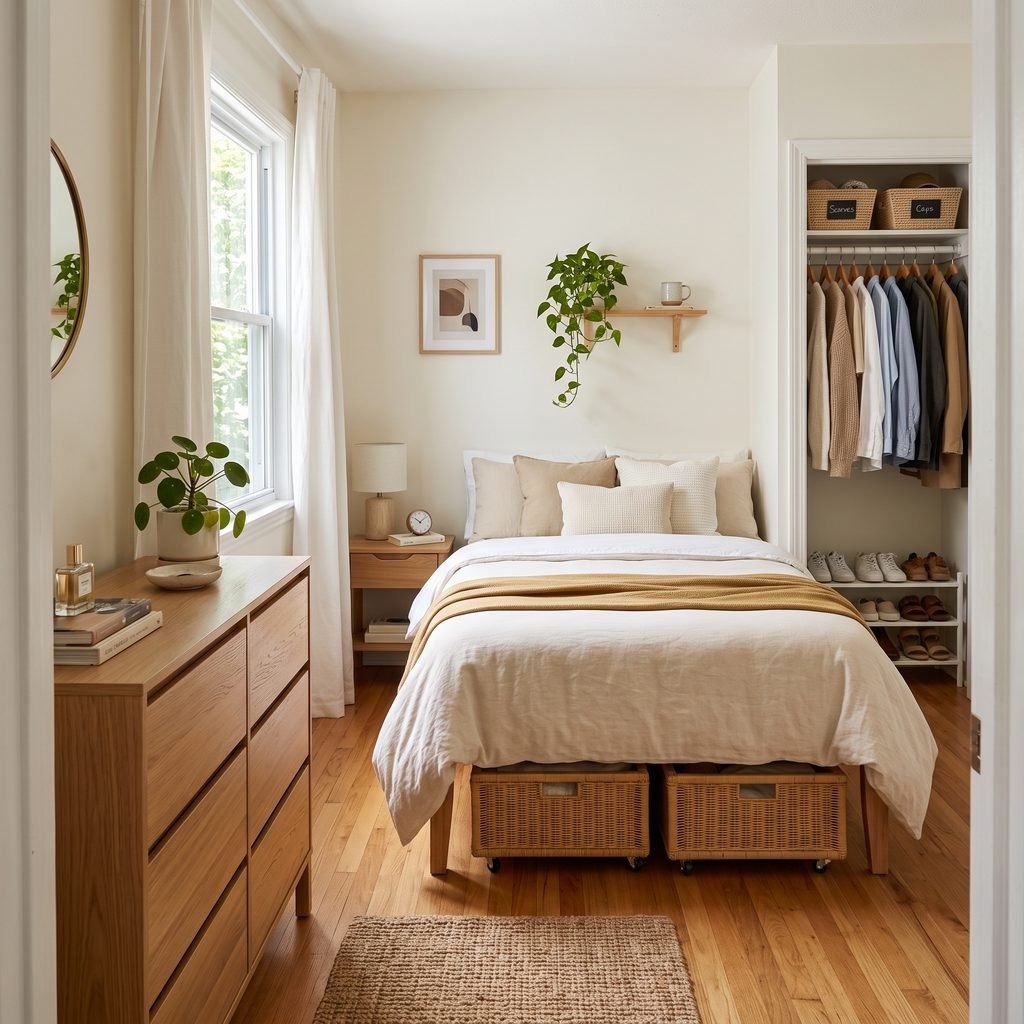
15. Use Vertical Space Carefully
When floor space is limited, walls can help.
Possible options include:
- Floating shelves
- Wall-mounted book storage
- Hooks
- Narrow shelving
But do not fill every wall.
Too much vertical storage can make a tiny room feel visually crowded.
Use higher shelves for lightweight decor or occasional storage rather than heavy objects.
Secure wall-mounted pieces properly and avoid placing heavy items above the bed.
16. Repurpose Things You Already Own
Before shopping, look around the house.
You may already have useful organizing pieces.
Examples include:
- Shoeboxes for drawer dividers
- Small bowls for jewelry
- Baskets from another room
- Extra hooks
- Old containers
- Small bookcases
A simple container does not need to be sold as a bedroom organizer to be useful.
Repurposing what you already have keeps the makeover inexpensive and reduces unnecessary purchases.
17. Do a Five-Minute Reset Every Night
An organized small bedroom can become messy again quickly.
A short nightly routine keeps things under control.
Spend five minutes doing tasks such as:
- Put clothes away.
- Put dirty laundry in the hamper.
- Return shoes.
- Clear the nightstand.
- Put small items back in their tray.
- Throw away trash.
Small rooms respond especially well to frequent resets because a few misplaced items make a noticeable difference.
How to Organize a Small Bedroom With No Closet
A bedroom without a closet needs a more intentional clothing system.
Consider using:
- Compact wardrobe
- Clothing rail
- Dresser
- Under-bed storage
- Wall hooks
Keep the visible clothing collection edited.
A clothing rack can look neat if it contains a limited selection, but it can quickly become visually cluttered if overloaded.
Use matching or similar hangers to create a cleaner appearance.
Store off-season clothes somewhere less visible.
How to Organize a Small Bedroom With Too Much Stuff
When a room has too much stuff, storage alone usually does not solve the problem.
Start by reducing quantity.
Ask:
- Do I use this?
- Would I buy it again today?
- Is there another one serving the same purpose?
- Does this need to stay in the bedroom?
Remove easy decisions first.
Even clearing one drawer, one shelf, and the floor can create momentum.
Then organize what remains.
How to Make a Small Bedroom Look Less Cluttered
Visual organization matters as much as storage.
Try these simple changes:
Keep the Bed Simple
A neatly made bed becomes the largest calm surface in the room.
Limit Decorative Pillows
Too many pillows require extra storage at night.
Use Similar Storage Containers
Repeating shapes creates visual consistency.
Keep Some Surfaces Empty
Not every shelf needs decor.
Choose a Simple Color Palette
A quieter background makes everyday belongings look less overwhelming.
Keep Curtains Light
Simple window treatments can make the room feel more open.
Cheap Storage Ideas for a Small Bedroom
You do not need expensive storage systems.
Affordable solutions can include:
- Basic plastic bins
- Fabric baskets
- Shoe boxes
- Drawer dividers
- Hooks
- Simple shelves
- Secondhand furniture
Measure before buying anything.
Budget storage stops being affordable if the pieces do not fit and need to be replaced.
Also check secondhand storage carefully for stability, damage, odors, pests, and safe construction before bringing it into a bedroom.
Small Bedroom Organization Ideas for Renters
Renters can focus on changes that are easy to reverse.
Try:
- Freestanding shelving
- Under-bed bins
- Over-door organizers
- Lightweight removable hooks where suitable
- Drawer organizers
- Baskets
Before using adhesive products, confirm they are compatible with the wall finish.
Even removable hooks can sometimes damage paint or drywall.
Avoid heavy wall-mounted storage if you cannot install it safely or the lease does not permit it.
How to Organize a Small Bedroom Without Buying Anything
You can make a significant improvement without spending money.
Start with:
- Remove trash.
- Make the bed.
- Clear the floor.
- Declutter clothes.
- Empty one drawer.
- Move off-season items.
- Repurpose boxes as organizers.
- Create a laundry spot.
- Clear the nightstand.
- Group similar items together.
Often the room needs fewer belongings more than it needs new storage.
How to Organize a Small Bedroom Closet on a Budget
Closets often have more usable space than it seems.
Start by grouping clothing.
Then:
- Keep everyday clothes at eye level.
- Use the upper shelf for seasonal items.
- Store shoes together.
- Add inexpensive bins for small accessories.
- Use slim hangers if you already need replacements.
- Avoid overcrowding the rod.
If the closet contains a large amount of clothing you never wear, no organizer will make it feel spacious.
Decluttering remains the most effective first step.
How to Organize a Small Bedroom With a Desk
A desk can easily become another clutter surface.
Keep it functional by limiting what stays on top.
Use drawers or small containers for:
- Pens
- Chargers
- Papers
- Office supplies
If the desk doubles as a vanity, keep makeup and hair products contained in one drawer or basket rather than spread across the surface.
At the end of the day, clear enough space that the desk is ready to use again.
How to Make a Small Bedroom Feel Bigger
Organization can visually increase the sense of space.
Try:
- Keeping furniture proportional to the room
- Leaving some wall space empty
- Clearing the floor
- Reducing visual clutter
- Using mirrors thoughtfully
- Keeping window areas open
- Choosing lighter bedding or wall colors
Do not feel obligated to use only tiny furniture.
One appropriately sized dresser may be more useful and visually calmer than several small storage units.
Common Small Bedroom Organization Mistakes
Buying Too Many Organizers
Storage products create clutter too if you do not need them.
Keeping Things Just Because There Is Space
Empty space is useful.
Using the Floor as Storage
This makes the room feel smaller immediately.
Ignoring Vertical Space
Walls can help when used thoughtfully.
Filling Every Wall With Shelves
Too much storage can make the room feel crowded.
Keeping Too Many Clothes
Closet organization becomes easier when the wardrobe fits comfortably.
Creating a Complicated System
Simple categories are much easier to maintain.
Small Bedroom Organization Safety Tips
Keep organization practical and safe.
- Anchor tall furniture where appropriate.
- Follow shelving and furniture weight limits.
- Store heavy objects lower.
- Avoid placing heavy decor above the bed.
- Use suitable anchors for wall-mounted storage.
- Check for hidden wiring or plumbing before drilling.
- Keep walkways and exits clear.
- Do not block vents, radiators, or electrical access.
- Use stable step stools for high shelves.
- Avoid overloading door-mounted organizers.
- Keep cords organized and away from areas where they may create trip or entanglement hazards.
A Simple Budget Bedroom Organization Plan
If you want to organize the room in one weekend, use this order:
- Remove trash and obvious clutter.
- Declutter clothes and shoes.
- Clear the floor.
- Organize under the bed.
- Reset drawers.
- Organize the closet.
- Create a laundry station.
- Clear dresser and nightstand surfaces.
- Add hooks or baskets only where needed.
- Create a five-minute nightly reset.
Do not buy storage until you understand exactly what still needs a home.
FAQ About How to Organize Your Small Bedroom on a Budget
How do I organize a small bedroom cheaply?
Declutter first, use under-bed space, repurpose containers, add inexpensive hooks and baskets, and organize drawers before buying additional furniture.
How can I organize a small bedroom with too much stuff?
Reduce the amount you own before adding storage. Keep frequently used items accessible and move seasonal or rarely used belongings elsewhere.
What is the best way to organize clothes in a small bedroom?
Edit your wardrobe, use vertical drawer folding, store off-season clothing separately, and keep everyday clothes in the easiest-to-access areas.
How can I organize a small bedroom without a closet?
Use a compact wardrobe, dresser, clothing rail, under-bed storage, and hooks while keeping the visible clothing collection limited.
How can I make my bedroom look organized without spending money?
Make the bed, clear the floor, declutter surfaces, group similar items, repurpose containers, and create designated places for laundry, shoes, and everyday accessories.
Are storage beds worth it for small bedrooms?
They can be useful if you already need a new bed, but buying new furniture is not necessary just for organization. Under-bed bins may offer a much cheaper solution.
How do I keep a tiny bedroom organized?
Use simple storage categories and do a short daily reset. Small rooms become cluttered quickly, but they also clean up quickly when every item has a clear home.
Final Thoughts
Learning how to organize your small bedroom on a budget is less about finding clever storage products and more about using your existing space intentionally.
Start by decluttering.
Then clear the floor, simplify your clothes, use under-bed space, organize drawers, create one laundry zone, and keep frequently used items easy to reach.
Only buy organizers when they solve a specific problem.
A few inexpensive hooks, baskets, or bins can help, but the biggest transformation often comes from simply owning less and giving the remaining items clear homes.
Once the room is organized, a short nightly reset can keep it from sliding back into clutter.
You do not need a large bedroom or a large budget to create a space that feels calm, functional, and comfortable.