

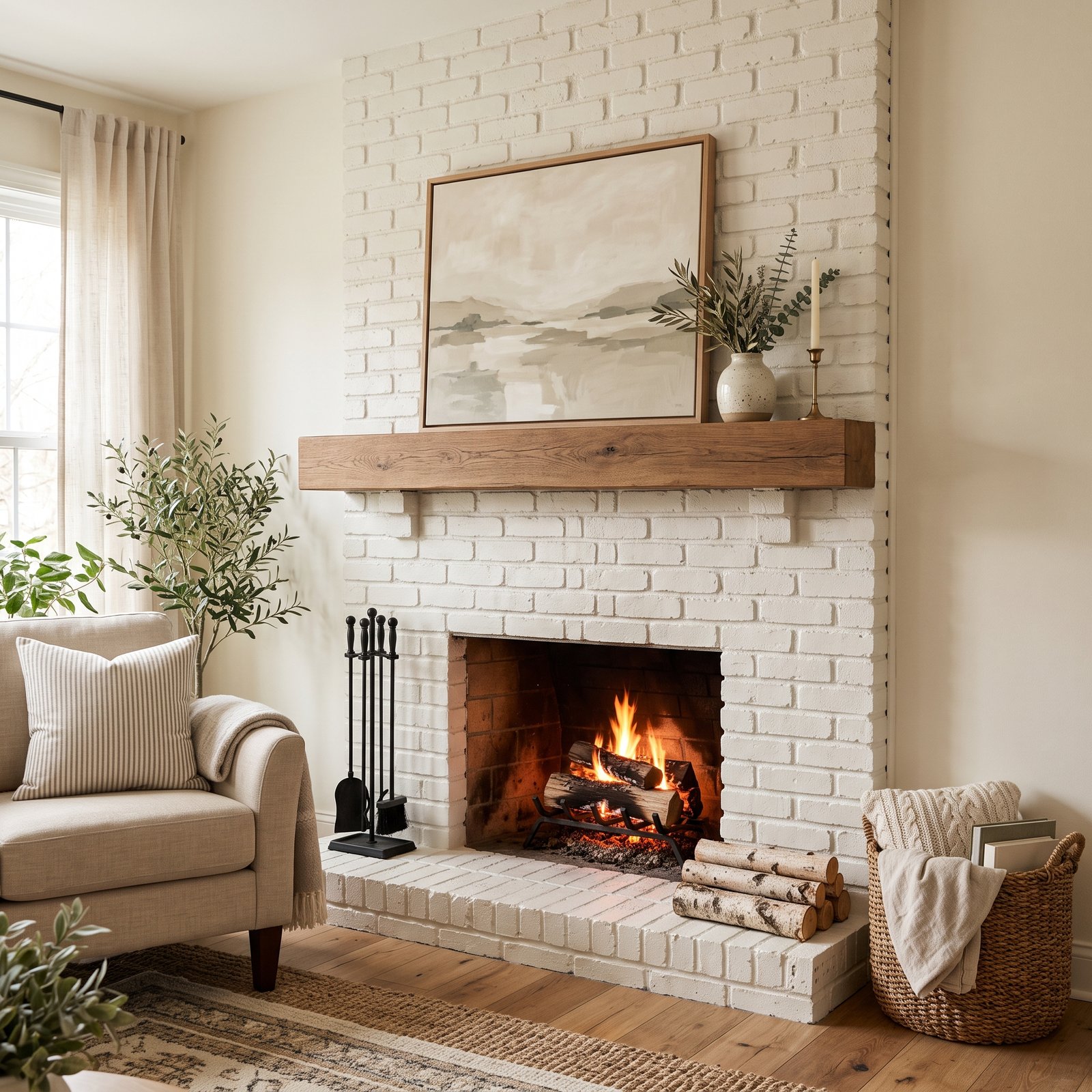
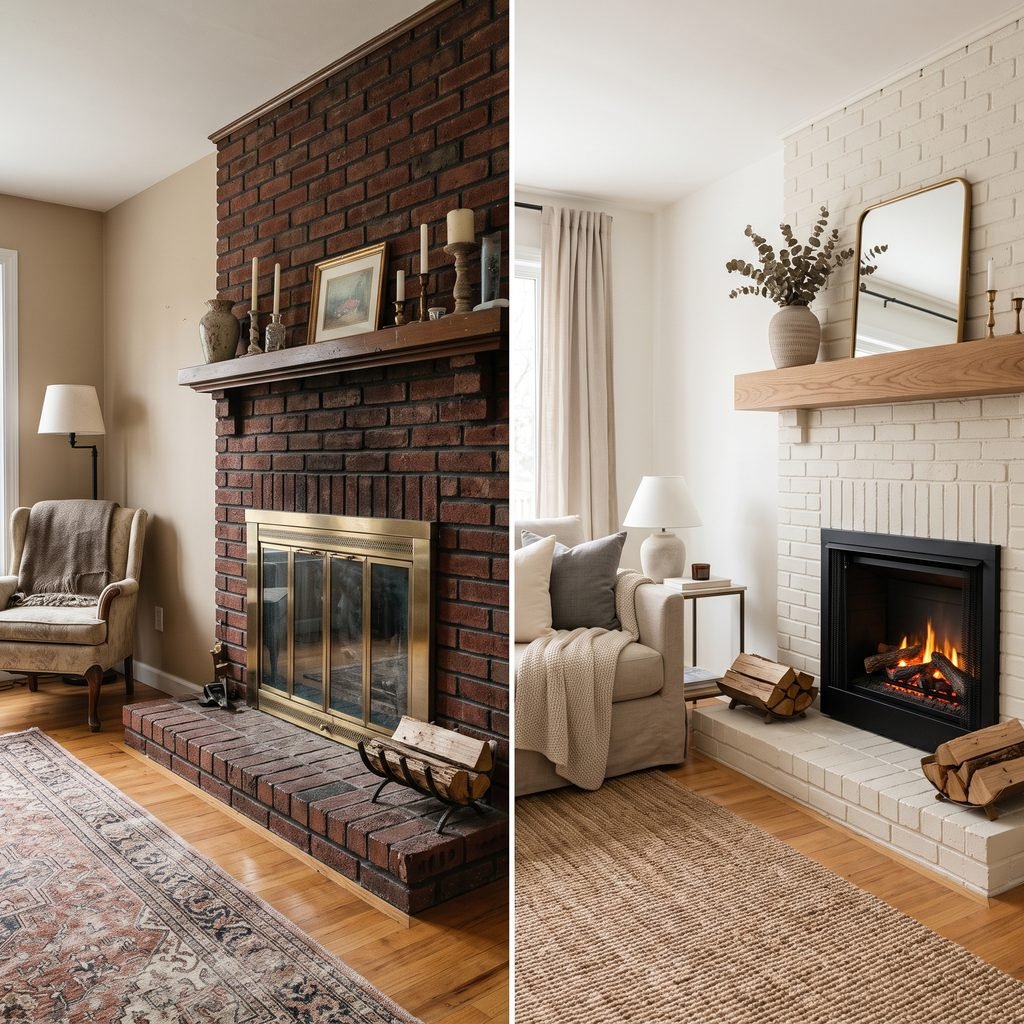
Learning how to paint a brick fireplace can completely change the look of a room without replacing the brick or rebuilding the surround.
A dark red, orange, brown, or heavily dated brick fireplace can visually dominate a living room. Paint can soften that look, brighten the space, or turn the fireplace into a more modern focal point.
But brick is different from drywall or wood. It is porous, textured, and often coated with years of soot, dust, or residue. Good preparation matters, and fireplace projects also require extra attention to heat exposure, combustible materials, ventilation, and the specific type of fireplace you have.
The process itself is manageable for many DIYers: clean the brick thoroughly, repair damaged areas, prime when required, and apply a coating suited to masonry and the location.
Before painting, however, identify exactly what parts of the fireplace you are working on. Decorative brick surrounding the opening is not the same as the firebox interior, and the products suitable for one area may not be appropriate for another.
Here is how to approach the project safely and get a clean, durable finish.
Before You Paint: Identify the Fireplace Area
The first step is understanding what you are actually painting.
A fireplace can include several different materials and zones:
- Exterior brick surround
- Hearth
- Mantel
- Firebox interior
- Metal fireplace components
- Doors or screens
These areas may be exposed to very different temperatures.
This guide primarily focuses on painting the exterior masonry surround of a fireplace.
Do not assume ordinary interior wall paint is appropriate inside the firebox or on metal components that become hot.
For a gas or factory-built fireplace, check the appliance manufacturer’s instructions before applying any coating near the opening, vents, louvers, trim, or face.
Never cover ventilation openings, controls, safety labels, or service-access areas.
Should You Paint Your Brick Fireplace?
Painting brick is a fairly permanent design decision.
Removing paint from porous masonry later can be difficult and messy, so consider whether you really dislike the brick itself or simply dislike the overall styling around it.
Painting may make sense when:
- The brick color clashes with the room
- Previous repairs have left mismatched brick
- The fireplace feels visually heavy
- You want a cleaner or more contemporary look
- The brick has already been painted
You may want to leave the brick natural if you appreciate its age, texture, or original character.
Another option is limewash or a more translucent masonry finish, which can soften the color while allowing more variation to remain visible.
What You Need to Paint a Brick Fireplace
Your exact materials will depend on the brick condition and coating system, but a basic project may require:
- Drop cloths
- Painter’s tape
- Protective gloves
- Eye protection
- Stiff nylon-bristle brush
- Vacuum with brush attachment
- Mild cleaning solution suitable for masonry
- Sponges or cloths
- Bucket
- Masonry repair material if needed
- Paintable caulk where appropriate
- Masonry-compatible primer if required
- Appropriate paint for the exterior masonry surface
- Angled paintbrush
- Thick-nap roller suitable for textured masonry
- Roller tray or bucket
- Extension pole
Always read the primer and paint manufacturer’s instructions before starting.
Some coating systems require a separate primer, while others may be self-priming on properly prepared masonry.
Do not improvise product compatibility.
Step 1: Protect the Surrounding Area
Fireplace painting can get messy because textured brick tends to create splatter.
Remove nearby decor and furniture where possible.
Protect:
- Flooring
- Hearth surfaces you are not painting
- Mantel
- Walls
- Fireplace doors
- Metal trim
Use painter’s tape carefully around edges.
Cover the floor generously because cleaning and painting brick can produce both dirty water and paint droplets.
If the fireplace contains ashes or debris, make sure everything is fully cold before beginning.
Never work around an active or recently used fireplace.
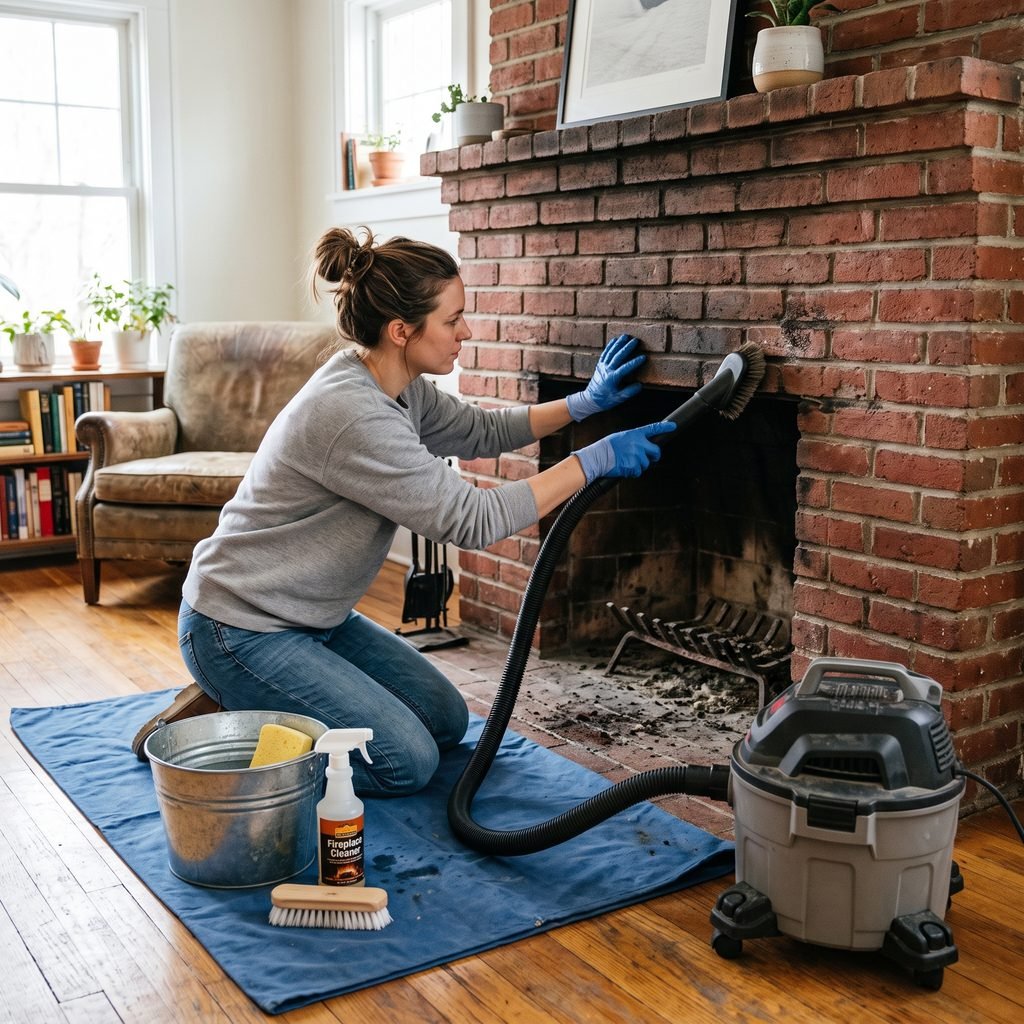
Step 2: Vacuum the Brick
Start with dry cleaning.
Use a vacuum with a brush attachment to remove:
- Dust
- Cobwebs
- Loose soot
- Mortar crumbs
- Pet hair
Pay special attention to mortar joints because debris tends to collect in the recessed lines.
Starting dry prevents you from turning loose dust into muddy residue during washing.
Step 3: Clean the Brick Thoroughly
Paint will not adhere well to soot, grease, dust, or residue.
Use a cleaner suitable for masonry and the type of contamination you are removing.
A mild solution may be enough for relatively clean brick.
For heavier soot, you may need a masonry-safe cleaning product.
Test any cleaner in an inconspicuous area first.
Use a stiff nylon brush to work the cleaner into textured areas and mortar joints.
Avoid aggressive wire brushing unless it is specifically appropriate for the masonry, because it can damage softer brick or mortar.
Rinse or wipe the surface as required by the cleaner instructions.
Allow the brick to dry completely before continuing.
Because masonry is porous, drying can take longer than a smooth painted wall.
Step 4: Check for Moisture Problems
Do not paint over damp masonry.
If you notice:
- Persistent damp patches
- White powdery deposits
- Water staining
- Crumbling mortar
- Peeling previous paint
investigate the cause first.
White crystalline deposits can indicate moisture moving through masonry and leaving mineral salts behind.
Painting over an unresolved moisture problem can lead to coating failure and may hide a condition that needs repair.
If you suspect a chimney leak, flashing problem, or significant masonry deterioration, address that before painting.
Step 5: Repair Loose Mortar or Damaged Brick
Inspect the surface carefully.
Small cosmetic imperfections may be part of the brick’s character, but loose mortar, large cracks, or deteriorated masonry should not simply be covered with paint.
Use repair materials compatible with the existing masonry.
For significant cracks, movement, damaged firebox masonry, or structural concerns, consult a qualified masonry or fireplace professional.
Allow repairs to cure according to the product instructions before priming or painting.
Step 6: Decide What You Are Not Painting
Before applying primer, confirm the boundaries of the project.
Typically, you should avoid painting:
- Fireplace glass
- Doors
- Vents
- Louvers
- Controls
- Gas components
- Safety labels
- Moving parts
Do not apply ordinary decorative paint inside a working firebox.
If you want to refinish the firebox or metal surround, use only products specifically rated and recommended for that application, and follow the fireplace manufacturer’s guidance.
Different fireplace types have different temperature zones and clearance requirements.
Step 7: Apply Primer if Required
Brick is porous, and soot staining can sometimes bleed through paint.
A suitable masonry primer can help:
- Improve adhesion
- Reduce uneven absorption
- Create a more uniform surface
- Block certain stains when using an appropriate stain-blocking formulation
Whether primer is required depends on the brick, existing finish, and paint product you choose.
Follow the coating manufacturer’s directions.
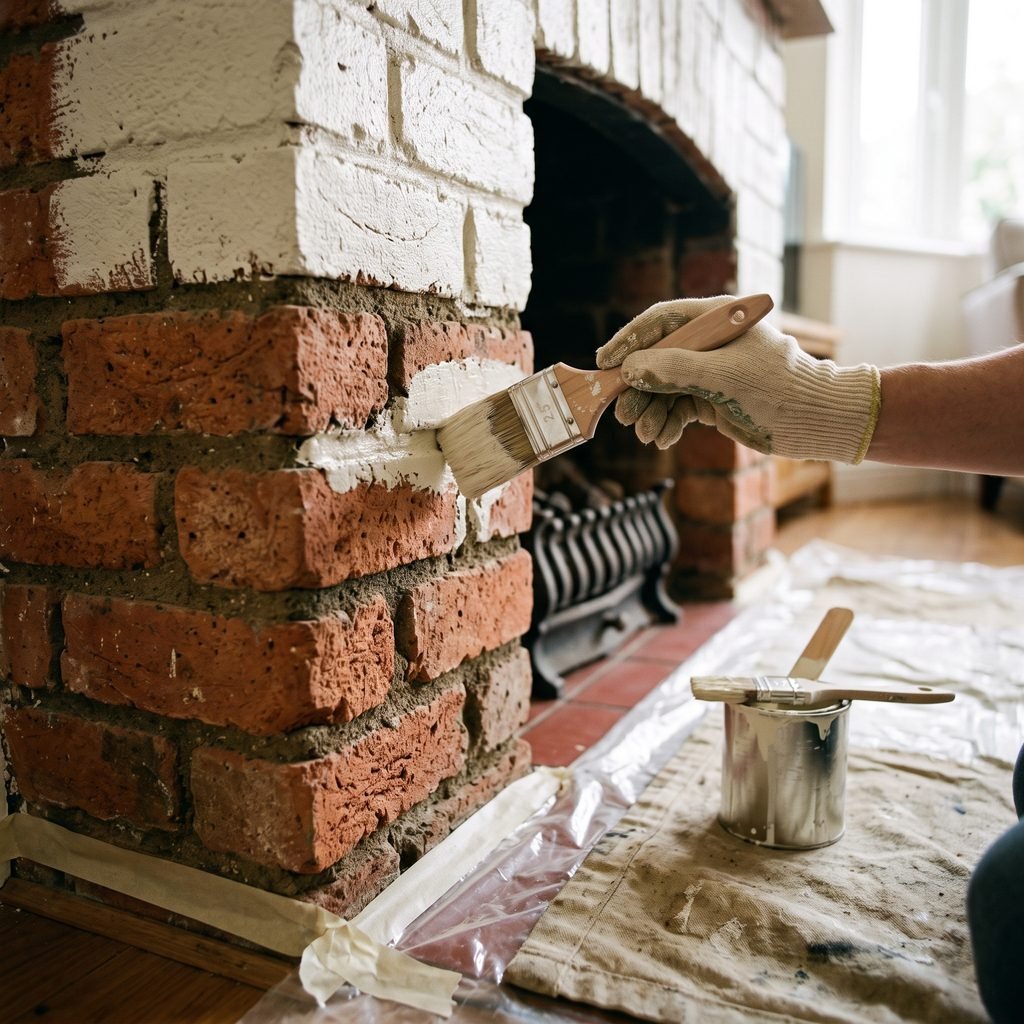
Apply primer to mortar joints first with a brush.
Then work across the brick faces using a roller suited to rough masonry.
Push the coating into the texture rather than applying only to the highest points.
Inspect the surface from several angles to find missed spots.
Step 8: Let the Primer Dry Properly
Do not rush this step.
The primer needs to dry for the amount of time specified by the manufacturer before you apply paint.
Temperature, humidity, and ventilation can affect drying time.
Keep the room ventilated according to the product instructions.
Do not light the fireplace during the painting process or before the coating has fully dried or cured as required.
Step 9: Paint the Mortar Joints First
Brick texture is much easier to paint when you combine brushing and rolling.
Start with a brush.
Work paint into:
- Mortar joints
- Deep texture
- Corners
- Edges
This is essentially the cutting-in stage.
You do not have to make every brushstroke perfect because the roller will blend the larger surfaces afterward.
Work in manageable sections so the edges do not dry too far ahead of the roller.
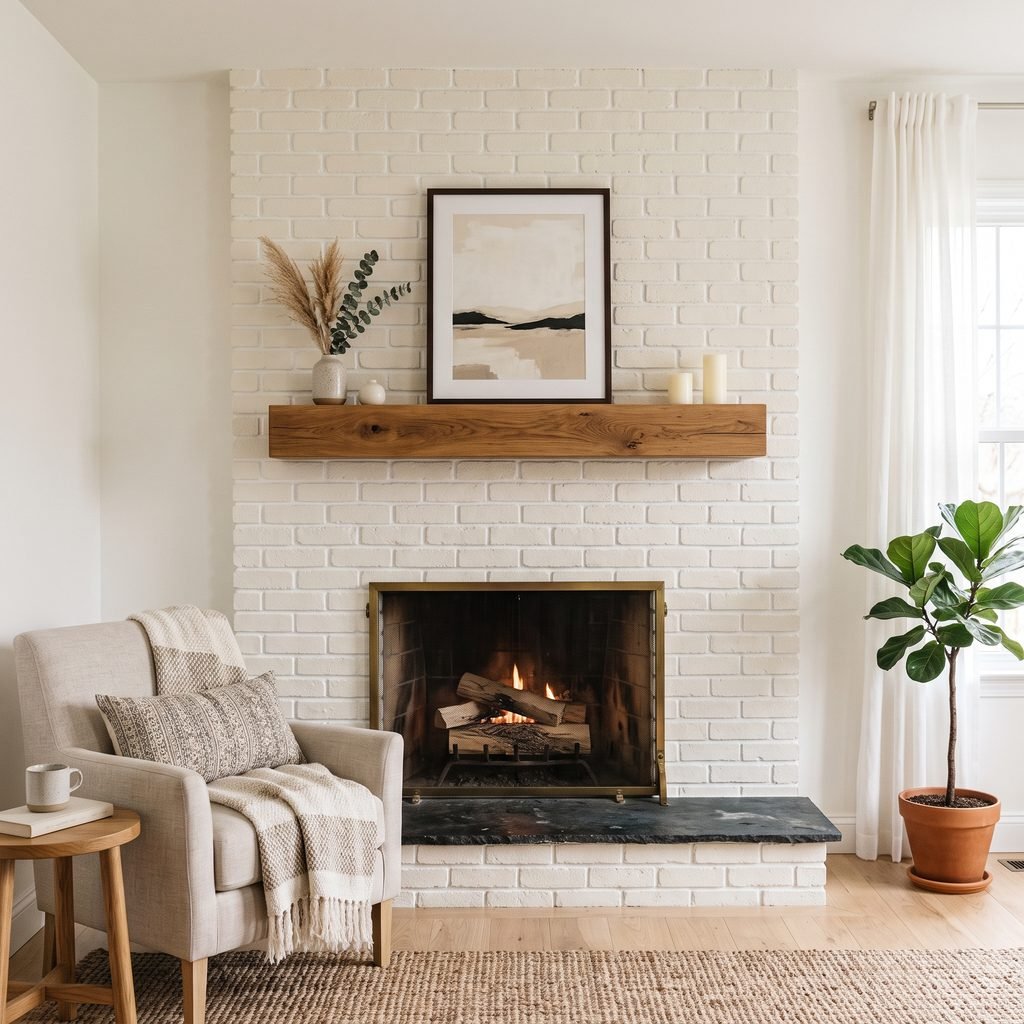
Step 10: Roll the Brick Faces
Once the joints are coated, roll over the brick faces.
A roller with enough nap to reach textured surfaces is usually easier than a smooth-wall roller.
Apply even pressure.
Do not overload the roller, because heavily textured brick can cause paint to splatter.
Roll in several directions where needed to reach uneven areas.
After rolling a section, inspect it closely.
Tiny unpainted pockets can remain inside rough brick.
Touch those areas up with the brush.
Step 11: Apply a Second Coat if Needed
Many brick surfaces need more than one coat for an even finish.
Allow the first coat to dry according to the paint manufacturer’s instructions.
Then inspect the fireplace in good lighting.
Look for:
- Thin areas
- Visible red or brown brick
- Uneven mortar coverage
- Missed recesses
Apply another coat as needed.
Do not apply overly thick layers simply to finish faster. Several properly applied coats generally create a cleaner finish than one excessively heavy coat.
Step 12: Allow the Paint to Cure
Dry paint and fully cured paint are not always the same thing.
Follow the coating manufacturer’s instructions for return-to-service or cure time.
This is particularly important around a fireplace because heat exposure too soon could affect the finish.
Do not use the fireplace again until the products used are ready for the conditions they will encounter.
What Kind of Paint Should You Use on a Brick Fireplace?
The correct product depends on which part of the fireplace is being painted.
For the exterior decorative brick surround, look for a coating specifically suitable for masonry and the conditions around your fireplace.
Important considerations include:
- Surface compatibility
- Adhesion
- Heat exposure
- Existing coatings
- Indoor use
- Manufacturer instructions
The interior firebox is a separate situation.
Do not use standard interior wall paint in an active firebox.
If you plan to paint that area, use a product specifically intended for the temperatures and substrate involved, and verify that the fireplace manufacturer permits it.
Do You Need to Prime Brick Before Painting?
Sometimes.
Bare porous brick, soot staining, repairs, and certain existing finishes may benefit from or require primer.
Some paint systems are designed to go directly over correctly prepared masonry, while others specify a dedicated primer.
That is why the safest approach is to choose the finish product first and follow the complete manufacturer-recommended system.
Do not assume a general drywall primer is automatically appropriate for masonry.
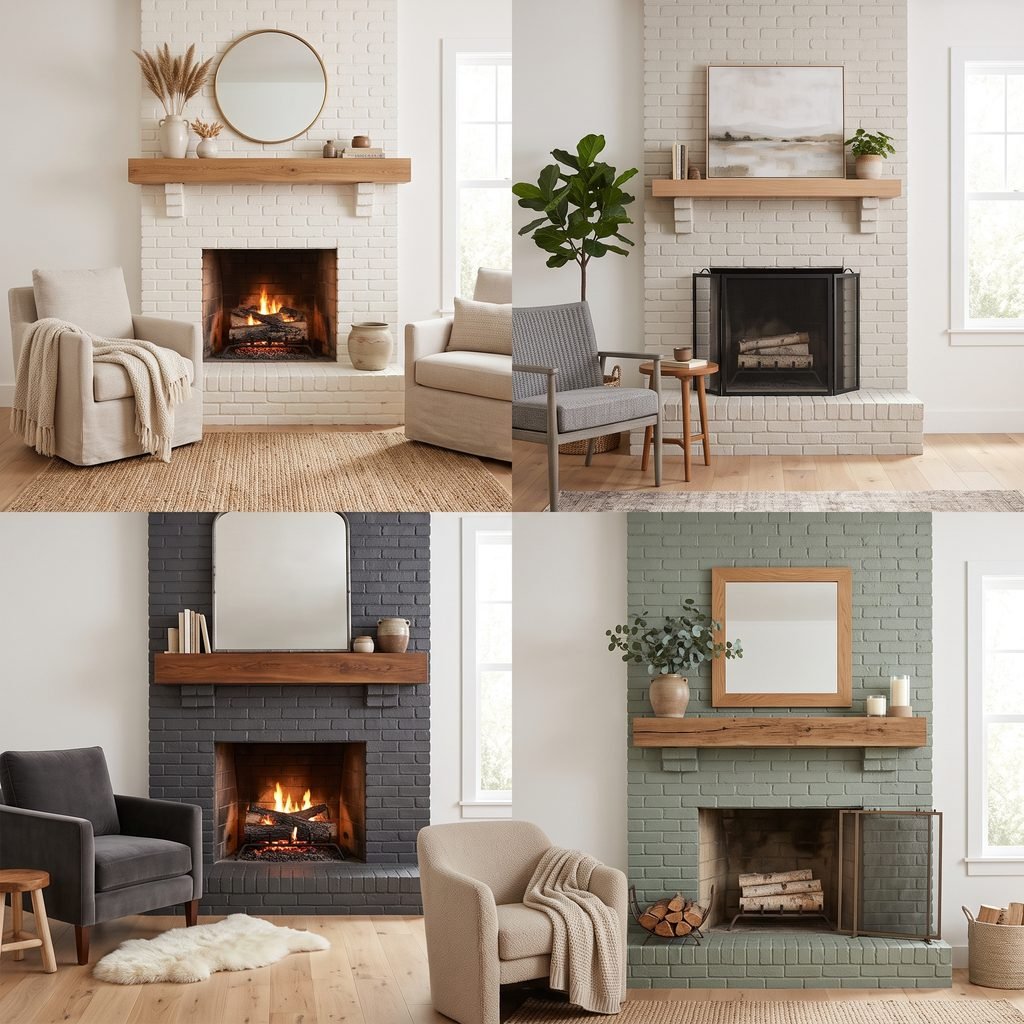
Best Colors for a Painted Brick Fireplace
The paint color can completely change the character of the room.
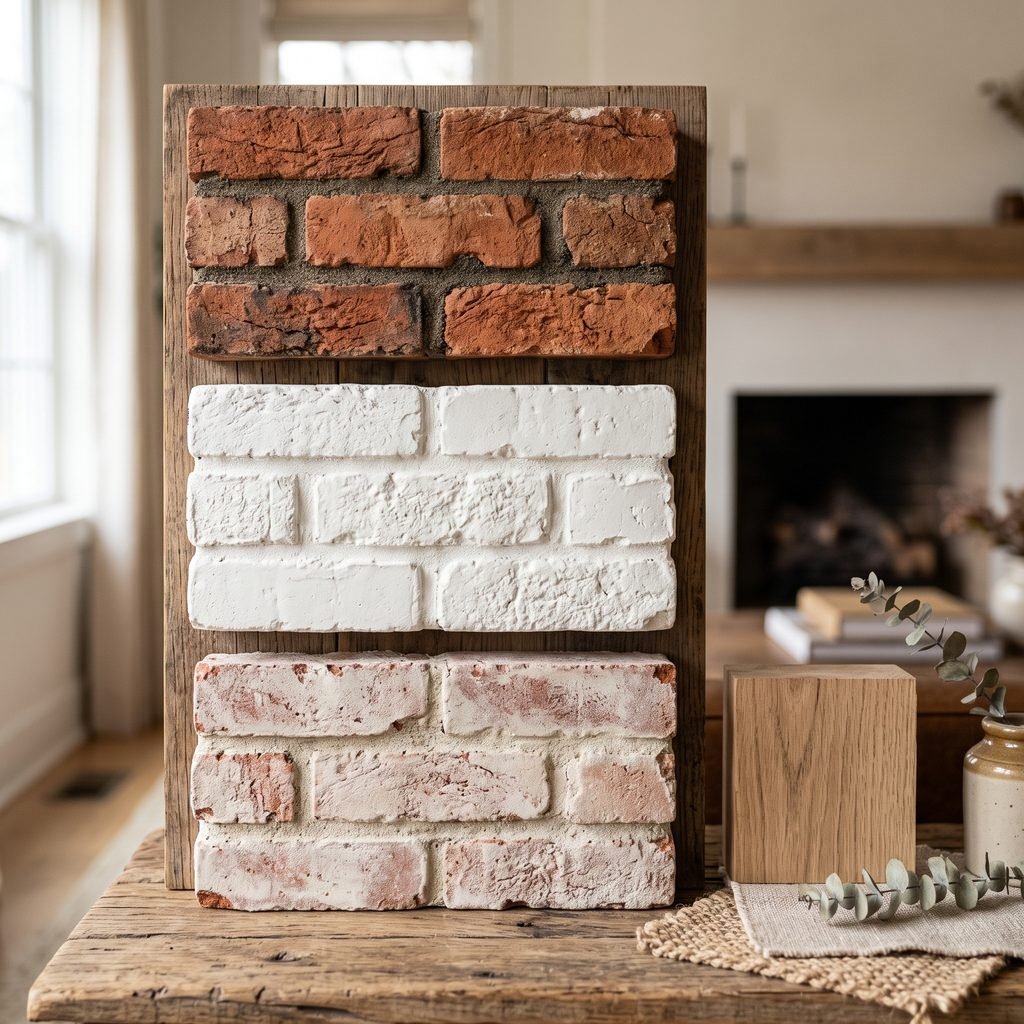
Warm White
Warm white is one of the most versatile choices.
It brightens dark brick without feeling overly stark.
It pairs especially well with:
- Oak
- Walnut
- Beige
- Greige
- Cream
- Natural stone
Soft Greige
Greige creates a quieter transformation.
It works well if you want to reduce red brick tones without making the fireplace bright white.
Charcoal
A charcoal fireplace can create a dramatic focal point.
It works especially well in rooms with:
- Light walls
- Warm wood
- Black accents
- Modern furnishings
Black
Black can make a fireplace feel modern and architectural.
Use it carefully in smaller or darker rooms, where a large black surface may feel visually heavy.
Muted Green or Blue
A subdued color can work beautifully when the fireplace is intended to become a design feature rather than blend into the room.
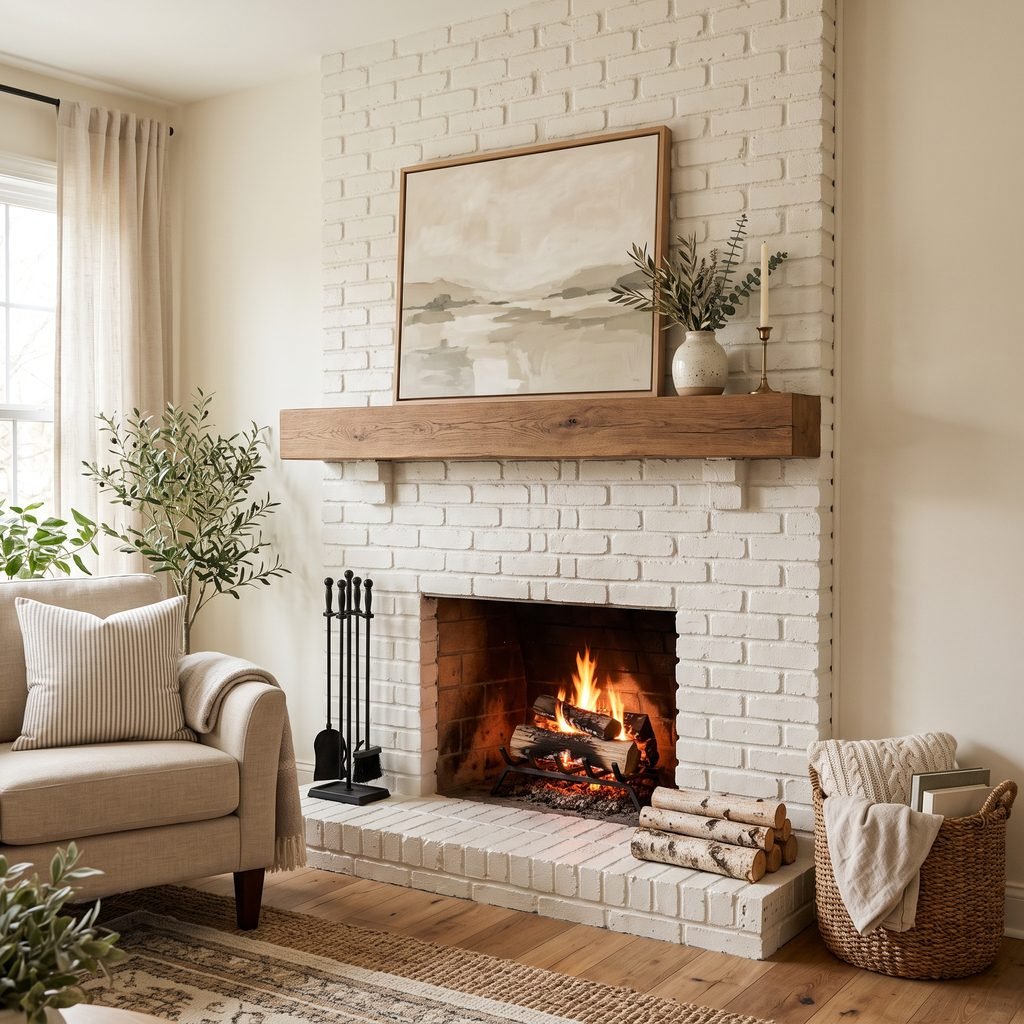
How to Paint a Red Brick Fireplace White
Red brick often takes more preparation than homeowners expect.
The biggest concerns are:
- Soot
- Deep texture
- Strong underlying color
- Uneven absorption
Clean the fireplace thoroughly.
Prime if required by your coating system, especially if staining is a concern.
Then brush the mortar and roll the brick.
Do not panic if the first coat looks uneven.
Textured masonry often becomes much more consistent after an additional coat.
Warm white tends to be more forgiving than an extremely stark white because it works naturally with wood floors, beige furnishings, and other warm materials commonly found around older brick fireplaces.
How to Paint a Brick Fireplace Black
Black creates a completely different effect.
Rather than disguising the fireplace, it can make it a stronger architectural feature.
Before committing, consider:
- Room size
- Natural light
- Wall color
- Flooring
- Mantel material
Black brick looks particularly effective with a wood mantel because the natural material adds warmth.
Preparation remains just as important as with white paint.
Dark colors do not eliminate the need to clean soot and debris.
They can also highlight surface texture, so decide whether you like the roughness of your particular brick before painting.
Painting a Brick Fireplace With a Wood Mantel
A natural wood mantel can create beautiful contrast against painted brick.
Popular combinations include:
- Warm white brick + medium oak
- Greige brick + walnut
- Charcoal brick + warm reclaimed-looking wood
- Black brick + light oak
If the existing mantel is being refinished, complete messy sanding or stripping before the final fireplace paint coats when practical.
Keep combustible-material clearance requirements in mind if installing or changing a mantel.
Do not assume that because an existing mantel is present, any replacement size or projection is automatically safe.
Fireplace clearances vary by fireplace type and manufacturer.
Should You Paint the Hearth Too?
Maybe.
The answer depends on:
- Hearth material
- Heat exposure
- Foot traffic
- Fireplace type
- Coating product
A decorative masonry hearth may sometimes be coated with an appropriate product, but not every wall paint will tolerate the wear or temperature.
If the hearth gets hot during fireplace use, verify product suitability carefully.
Sometimes keeping the hearth natural creates useful contrast with painted brick.
For example, white brick paired with a dark slate hearth can look polished and intentional.
Painted Brick Fireplace With White Walls
If the room already has white walls, you have two main approaches.
Blend the Fireplace In
Paint the brick a similar white.
This creates a softer, less dominant fireplace.
Add Contrast
Choose greige, charcoal, or another deeper neutral.
This turns the fireplace into a focal point.
If both walls and fireplace are white, variation in texture can still provide enough visual interest.
The raised mortar and rough brick will catch light differently than smooth drywall.
How to Make a Painted Brick Fireplace Look More Expensive
Painting is only part of the makeover.
A few additional details can make the finished fireplace feel more intentional.
Add a Properly Scaled Mantel
A mantel that feels proportional to the fireplace can visually anchor it.
Keep the Styling Simple
Instead of many small objects, try:
- One larger mirror
- Framed artwork
- Candlesticks
- Small vase
- Greenery
Repeat the Fireplace Color
Connect the fireplace to the room with small accents in similar tones.
Add Texture
Wood, ceramic, woven baskets, and natural textiles keep painted brick from feeling flat.
Improve the Lighting
Lamps or sconces nearby can highlight the brick texture in the evening.
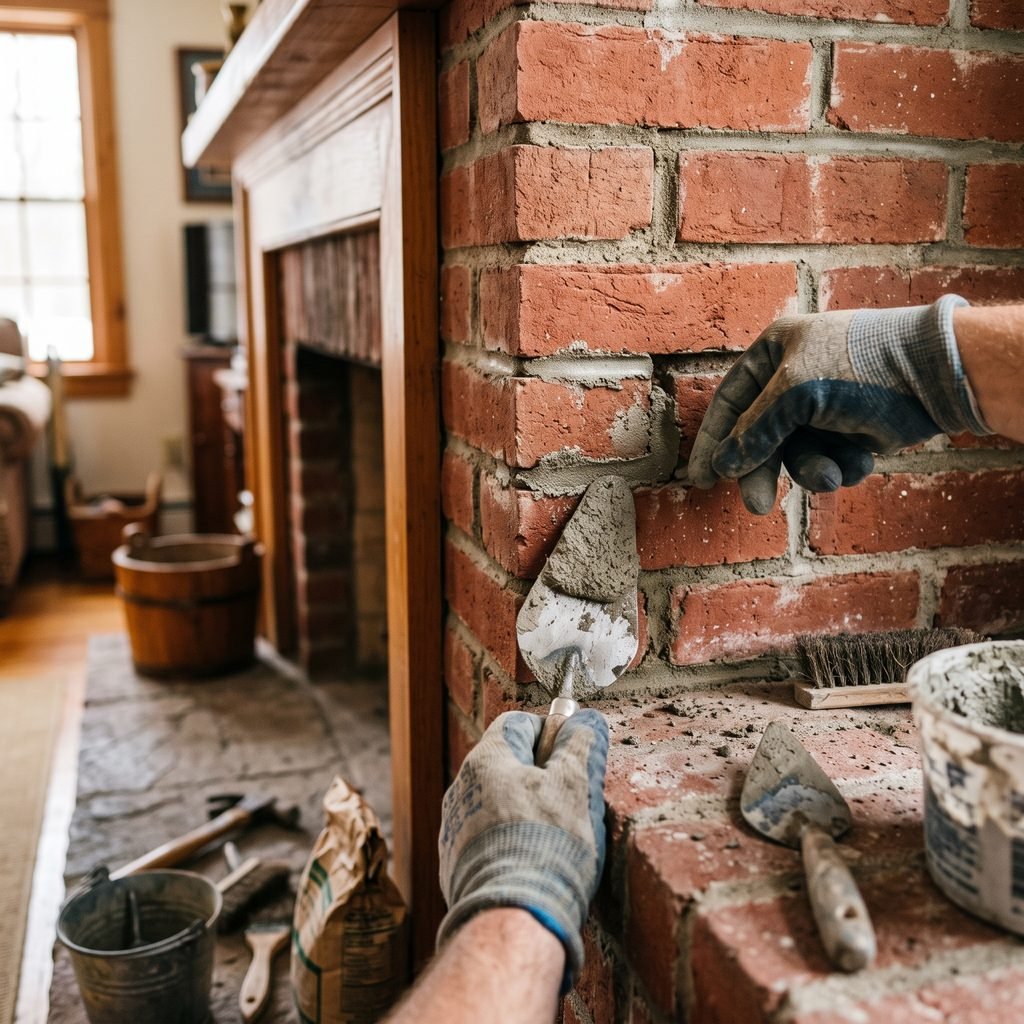
Common Mistakes When Painting a Brick Fireplace
Skipping Cleaning
Soot and dust can interfere with adhesion.
Always clean first.
Painting Damp Brick
Allow masonry to dry thoroughly before coating.
Ignoring Moisture Problems
Do not cover water stains or persistent moisture without finding the cause.
Using the Wrong Paint in the Firebox
Ordinary interior wall paint is not intended for active firebox conditions.
Painting Vents or Controls
Never cover fireplace components that need airflow, movement, identification, or service access.
Using the Fireplace Too Soon
Follow product drying and curing instructions before exposing the finish to heat.
Forgetting That Paint Is Difficult to Remove
Paint penetrates porous masonry.
Treat the decision as relatively permanent.
Brick Fireplace Painting Safety Tips
A fireplace is different from an ordinary accent wall, so take a few extra precautions.
- Make sure the fireplace is completely cool before working.
- Protect your eyes when brushing, scraping, or cleaning masonry.
- Use gloves when working with cleaners and coatings.
- Provide ventilation according to product instructions.
- Never mix household cleaning chemicals.
- Keep flammable materials away from ignition sources.
- Do not paint vents, louvers, safety labels, controls, or moving components.
- Follow the fireplace manufacturer’s instructions.
- Do not alter combustible-material clearances.
- Use appropriate coatings for any heat-exposed surface.
- Address major cracks, moisture problems, chimney problems, or deteriorating masonry before painting.
If you are unsure whether a specific area becomes too hot for the coating you intend to use, consult the fireplace manufacturer or a qualified fireplace professional before proceeding.
FAQ About How to Paint a Brick Fireplace
Can you paint a brick fireplace yourself?
Yes, painting the exterior decorative brick surround can be a manageable DIY project when the masonry is sound and the work does not involve fireplace mechanical systems, gas components, structural repairs, or unsuitable heat-exposed surfaces.
Do you have to clean brick before painting?
Yes. Dust, soot, grease, and residue can reduce paint adhesion, so thorough cleaning is an important part of preparation.
Do you need special paint for a brick fireplace?
You need a coating appropriate for the masonry and the location where it will be used. The exterior surround and firebox interior have very different requirements.
Can you use regular interior paint on fireplace brick?
Some coatings used on interior masonry surrounds may resemble ordinary wall paint, but product compatibility and heat exposure matter. Follow the coating and fireplace manufacturers’ instructions rather than assuming any interior paint is suitable.
Can you paint the inside of a fireplace?
Only with a product specifically intended for that substrate and temperature range, and only when permitted for the fireplace type. Standard decorative paint should not be used in an active firebox.
What color should I paint a brick fireplace?
Warm white, greige, charcoal, and black are versatile choices. The right color depends on the room’s lighting, flooring, wall color, furniture, and how much you want the fireplace to stand out.
How many coats of paint does brick need?
It varies with brick porosity, original color, primer, paint, and application method. Apply the number of coats needed for even coverage while following manufacturer instructions.
Is painted brick hard to maintain?
Usually it can be dusted or gently cleaned as needed, but always use cleaning methods compatible with the coating. Touch-ups may eventually be needed, especially on high-contact or soot-prone areas.
Final Thoughts
Learning how to paint a brick fireplace is mostly about preparation.
The actual painting is straightforward, but a durable result starts with clean, dry, sound masonry.
Vacuum the brick, remove soot and residue, repair appropriate minor damage, use the primer or coating system recommended for the surface, and work paint carefully into the mortar and texture.
Just as importantly, know where the DIY project stops.
Painting the decorative brick surround is different from coating the firebox, modifying a mantel, or working around gas components and factory-built fireplace systems.
Respect heat zones, manufacturer instructions, and required clearances.
Once those practical details are handled, paint can be one of the most dramatic and budget-friendly fireplace updates you can make.
Whether you choose warm white for a brighter room, greige for a subtle change, or charcoal for stronger contrast, a thoughtfully painted brick fireplace can make the entire space feel cleaner, more cohesive, and much more current.