

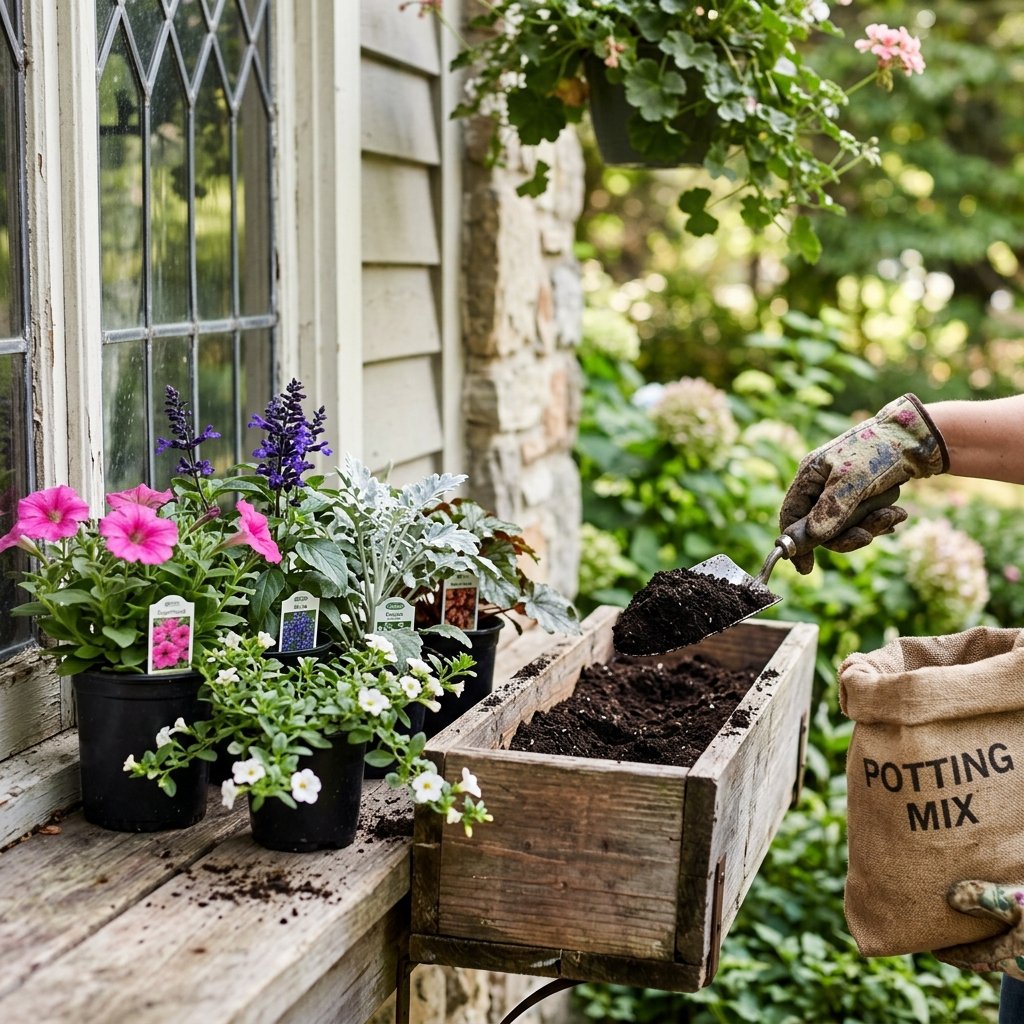
A well-planted window box can add instant color and charm to the outside of a home.
Whether you want overflowing flowers, simple greenery, herbs, or a more natural cottage-style arrangement, the basic process is the same: choose the right box, create good drainage, use appropriate potting mix, and select plants that suit the amount of sun the window receives.
The biggest mistake is treating a window box like a decorative container first and a growing environment second.
Plants have limited soil, limited moisture, and limited root space in a window box, so they depend heavily on good preparation and regular care.
This guide explains how to plant window boxes step by step, along with plant-placement ideas, watering tips, common mistakes, and practical ways to keep them looking full throughout the season.
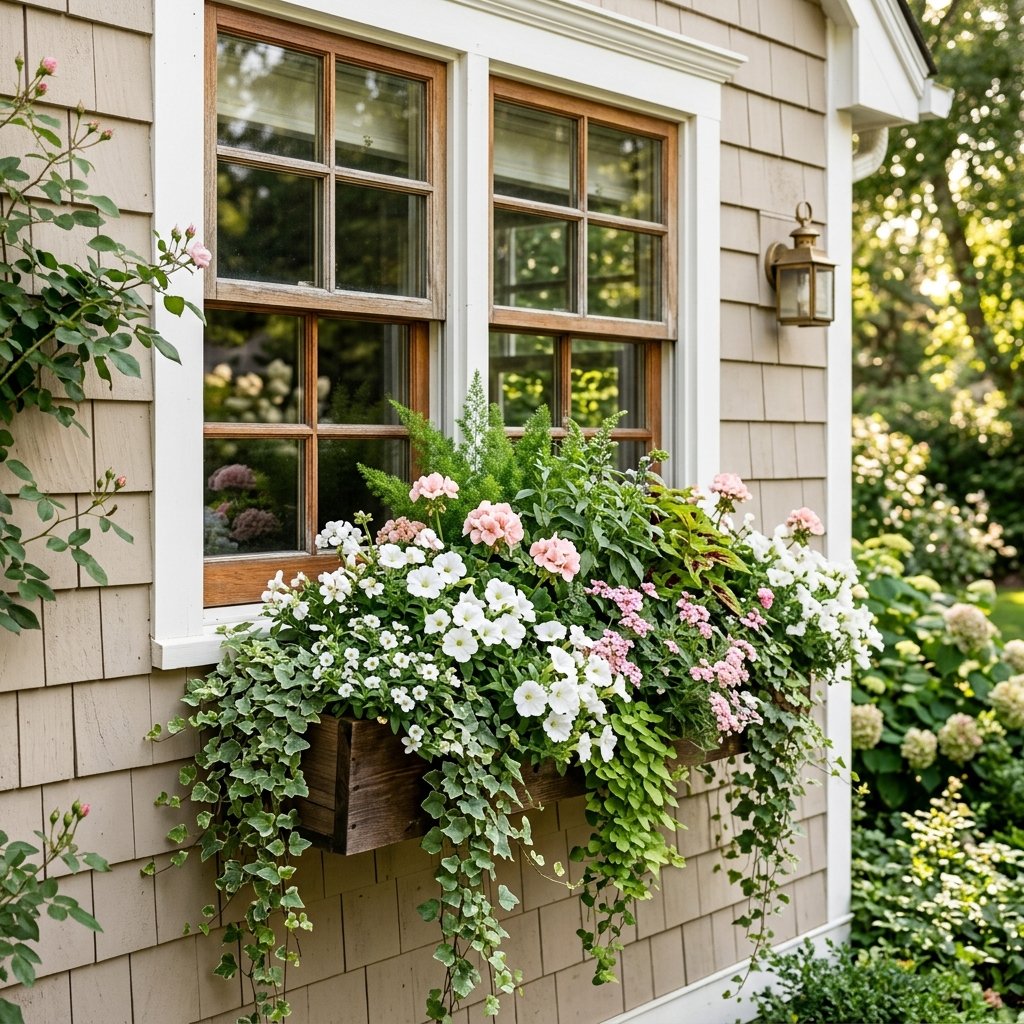
1. Choose the Right Window Box
Start with a window box that fits the scale of the window and has enough depth for the plants you want to grow.
Window boxes are available in materials such as:
- Wood
- Metal
- Fiberglass
- Plastic
- Composite materials
Each has advantages.
Wood can look classic and natural, while lightweight synthetic boxes are often easier to mount and move.
Whatever material you choose, make sure the box is intended for outdoor use and strong enough to hold wet potting mix and mature plants.
A planted container can become surprisingly heavy after watering.
2. Make Sure the Box Has Drainage
Drainage is essential.
Roots need moisture, but they also need oxygen. Water trapped around the roots can lead to unhealthy plants and root problems.
Look for drainage openings in the bottom of the box.
If the manufacturer allows additional drainage holes, follow its instructions rather than drilling randomly.
Do not rely on a layer of rocks or gravel at the bottom to solve poor drainage.
The container itself needs a way for excess water to leave.
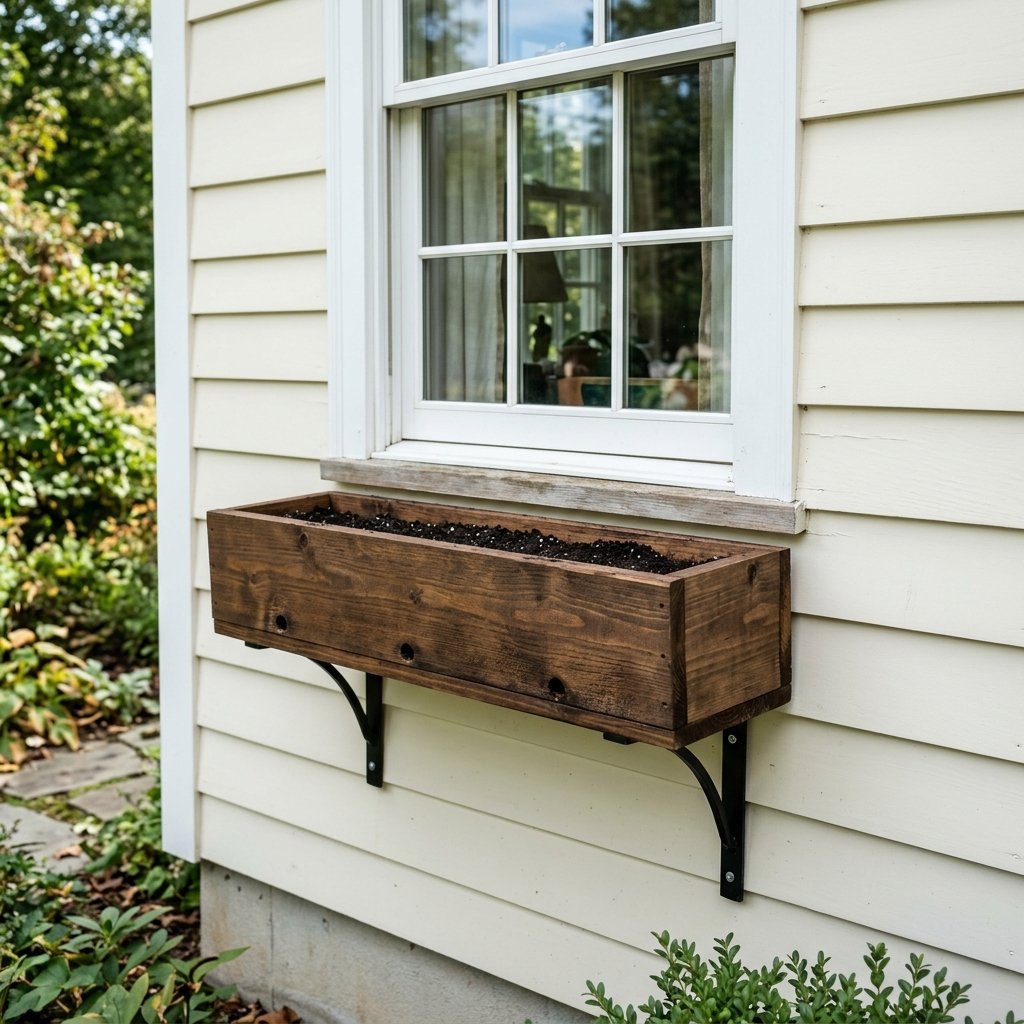
3. Secure the Window Box Properly
Before filling the box, check the mounting system.
Remember that the final load includes:
- Box
- Wet soil
- Plants
- Water
- Decorative material
That can create substantial weight.
Use brackets and fasteners appropriate for the wall material and the intended load.
Mounting into wood siding is different from attaching to brick, masonry, or other exterior materials.
Follow the window-box manufacturer’s instructions and use appropriate hardware.
If you are unsure whether the wall can safely support the load, get professional advice before mounting the box.
4. Check How Much Sun the Window Gets
Do not choose plants simply because they look good together.
First determine the light conditions.
Watch the area through the day and estimate whether it receives:
- Full sun
- Partial sun
- Partial shade
- Mostly shade
Plants labeled for full sun generally need more direct light than shade-loving plants.
A box on one side of a home can perform very differently from an identical box on another side.
Buildings, roof overhangs, trees, and nearby structures also affect available light.
5. Choose Plants With Similar Needs
All plants in one window box share the same soil and watering schedule.
That means they should have reasonably compatible needs.
Avoid combining one plant that wants constantly moist soil with another that prefers to dry considerably between waterings.
Check plant labels for:
- Light requirements
- Mature size
- Water needs
- Growth habit
Choosing compatible plants makes long-term care much easier.
6. Use Quality Container Potting Mix
Fill the box with a potting mix intended for containers.
Avoid using ordinary garden soil by itself.
Garden soil can become too dense in containers and may drain poorly.
A good container mix is generally designed to:
- Hold some moisture
- Allow excess water to drain
- Provide air around roots
Fill the box while leaving enough room at the top so water does not immediately overflow when you irrigate.
7. Arrange the Plants Before Planting
Before removing anything from its nursery pot, place the plants inside or directly in front of the box.
This lets you experiment with the layout.
Look at the arrangement from several feet away.
Window boxes are usually viewed from a distance, so the overall shape matters more than tiny details.
A common approach is to combine:
- Upright plants
- Mounding plants
- Trailing plants
This creates height, fullness, and movement.
8. Use the Thriller, Filler, Spiller Idea
One easy planting formula is often called thriller, filler, spiller.
You do not have to follow it exactly, but it is useful for creating balanced containers.
Thriller
A taller or more upright plant provides height.
Filler
Mounding plants fill the middle of the arrangement.
Spiller
Trailing plants soften the edges and cascade over the front.
For a window box, you may use several smaller upright plants rather than one tall centerpiece because the arrangement is long and horizontal.
9. Put Taller Plants Toward the Back
When the box is viewed mainly from the front, place taller plants toward the rear.
This helps keep shorter flowers visible.
Examples might include upright foliage or taller flowering plants appropriate for the light conditions.
Keep mature height in mind.
A small nursery plant can become much larger later in the season.
Do not place plants so close to the window that mature growth will obstruct it or trap excessive moisture against the building.
10. Place Full, Mounding Plants Through the Middle
Use fuller plants to create the main body of the window box.
These fill gaps between upright plants and trailing plants.
Instead of planting in a perfectly rigid row, slightly stagger the placement where space allows.
This can create a more natural, layered look.
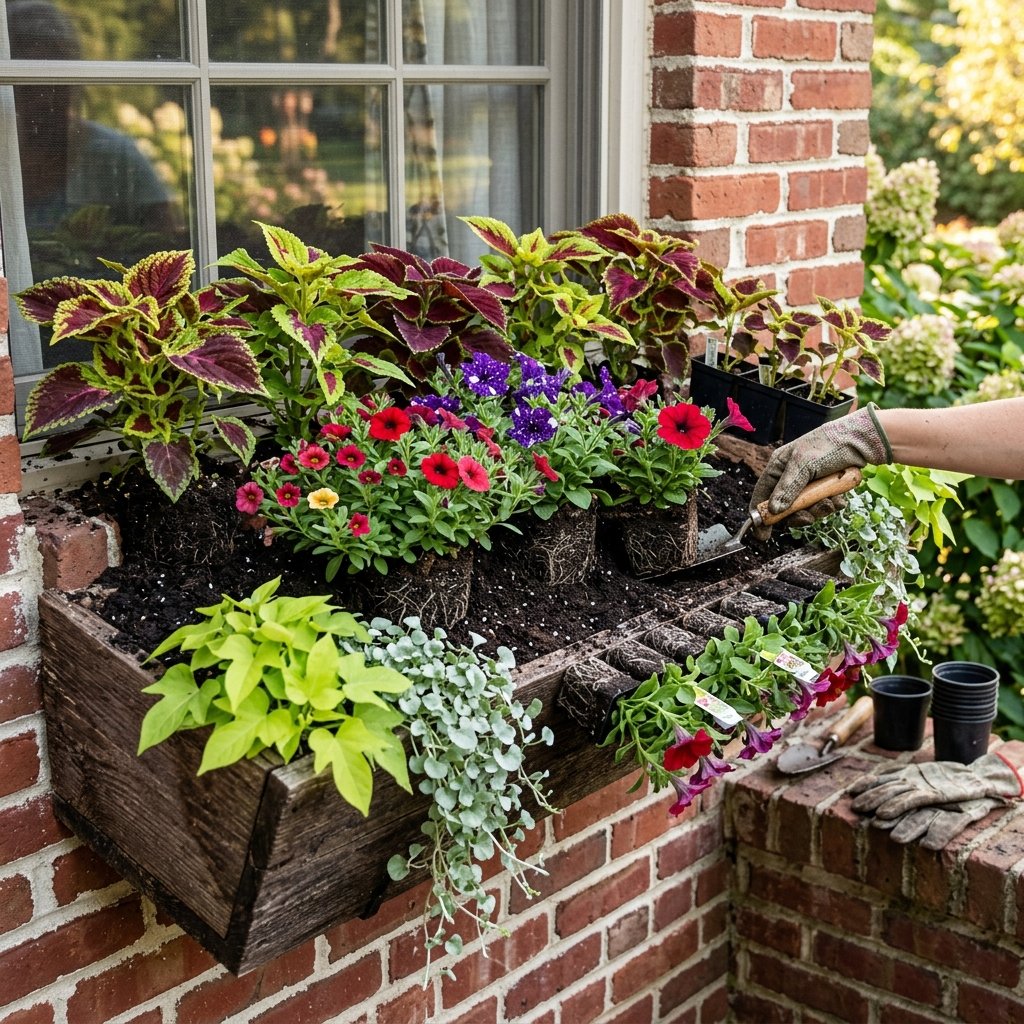
11. Add Trailing Plants Along the Front and Sides
Trailing plants help window boxes look lush.
Position them:
- Along the front edge
- Near corners
- At the ends of the box
As they grow, they will spill downward and soften the container.
Do not plant every inch with trailing varieties.
A few well-placed plants can create plenty of movement once they mature.
12. Remove Plants Carefully From Nursery Pots
When you are happy with the arrangement, plant one at a time.
Gently remove each plant from its container.
Avoid pulling hard on the stems.
If roots are tightly circling the outside of the root ball, gently loosen them as appropriate for the plant.
Follow nursery or grower guidance if the plant has special handling needs.
13. Plant at the Appropriate Depth
Set plants at approximately the same soil level they were growing at in their nursery containers unless the plant instructions specify otherwise.
Planting too deeply can stress many plants.
Fill around the root ball with potting mix and press lightly to remove large air pockets.
Do not compact the mix heavily.
Roots need air as well as moisture.
14. Leave Room for Plants to Grow
A newly planted window box may look slightly sparse.
That is normal.
Plants usually expand significantly during the growing season.
Follow spacing guidance on the plant labels rather than forcing too many plants into the container.
Overcrowding can lead to:
- Poor airflow
- Faster drying
- Competition for nutrients
- More difficult watering
- Increased disease pressure
A little patience often produces a healthier, fuller box later.
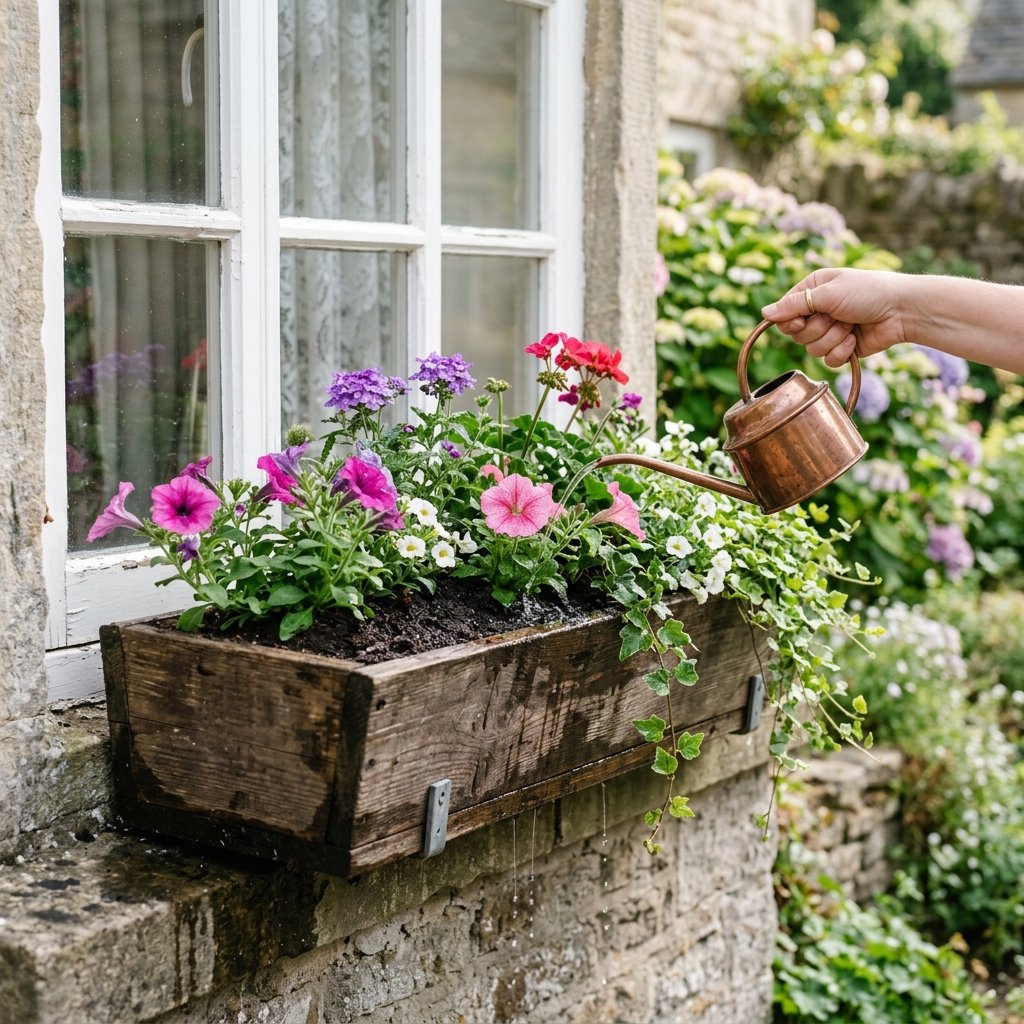
15. Water Thoroughly After Planting
Once everything is planted, water the entire box thoroughly.
Apply water slowly across the whole surface rather than pouring it all in one spot.
Continue until the root zone is evenly moistened and excess water begins draining appropriately from the box.
This initial watering helps settle the potting mix around the roots.
Add a little more mix if settling creates large low spots.
How to Arrange Flowers in a Window Box
There are several easy arrangements depending on the look you want.
Symmetrical Window Box
Repeat the same sequence of plants from one side to the other.
For example:
- Trailer
- Flower
- Upright plant
- Flower
- Upright plant
- Flower
- Trailer
This creates a neat, traditional appearance.
Cottage-Style Window Box
Mix compatible flowers and foliage more loosely.
Vary:
- Height
- Texture
- Flower size
- Trailing growth
Keep the color palette consistent enough that it still feels intentional.
Simple Modern Window Box
Use fewer varieties.
For example:
- One foliage plant
- One flowering plant
- One trailing plant
Repeating those throughout the box can create a cleaner, more contemporary look.
Window Box Ideas for Full Sun
For sunny locations, choose plants specifically labeled for the amount of direct light your window receives.
Possible categories include:
- Sun-loving annual flowers
- Heat-tolerant foliage
- Trailing flowering plants
- Certain herbs
The exact varieties that perform well depend on your climate and season.
Window boxes in strong sun can dry rapidly, so moisture management is especially important.
Window Box Ideas for Shade
Shady locations can still have beautiful window boxes.
Look for plants labeled for:
- Partial shade
- Shade
- Indirect light
Focus on foliage as well as flowers.
Different shades of green, silver, burgundy, and variegated leaves can create interest even when blooms are limited.
How Many Plants Should Go in a Window Box?
There is no universal number.
It depends on:
- Box length
- Box depth
- Plant size
- Mature spread
- Growth rate
Use plant spacing instructions as a guide.
A long window box with compact annuals will require a different number of plants than the same box planted with vigorous trailing varieties.
Do not judge spacing only by the tiny size of plants at the garden center.
Think about mature size.
How to Plant a Window Box So It Looks Full
A full-looking window box is usually created through good plant selection rather than extreme crowding.
Use:
- Several growth habits
- Repeated plants
- Trailing edges
- Contrasting foliage
- Compatible flowering varieties
You can create visual fullness immediately by choosing slightly more mature nursery plants, but you should still maintain appropriate spacing.
Best Color Combinations for Window Boxes
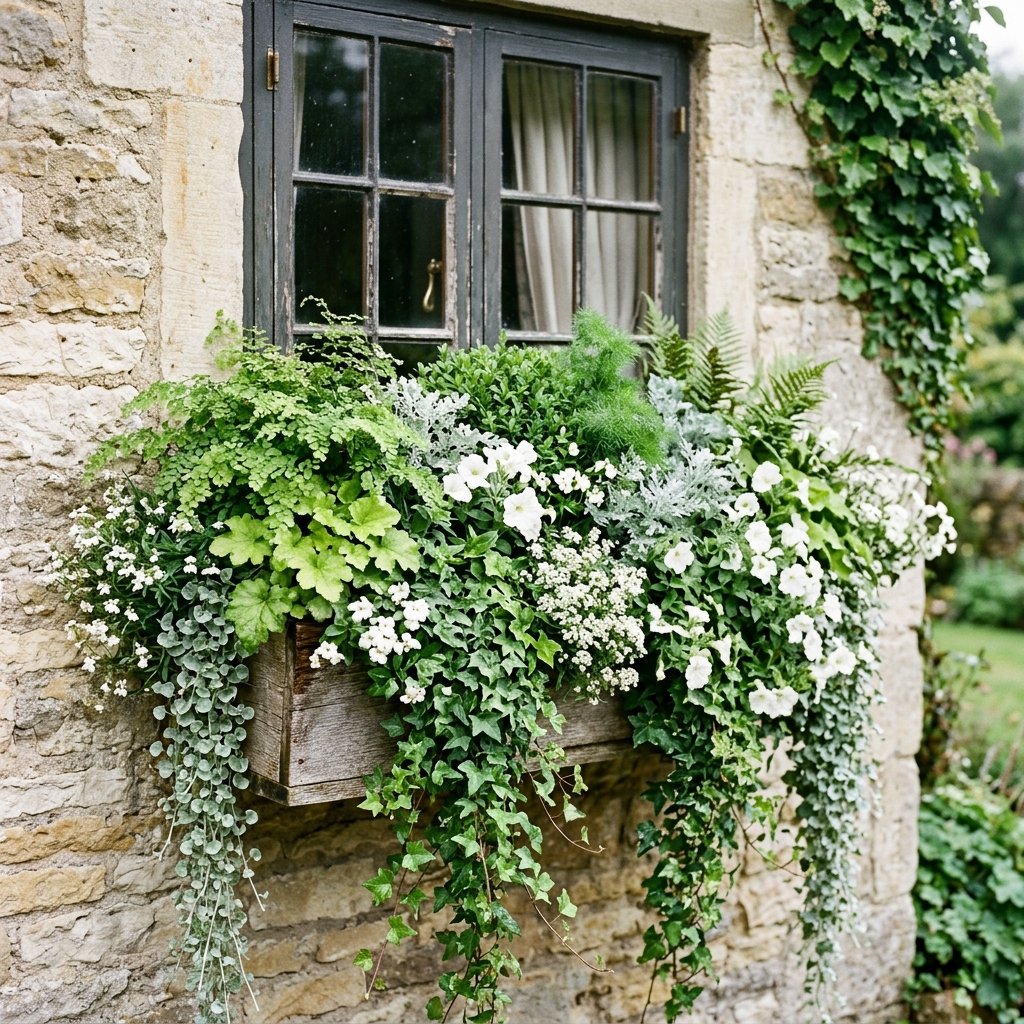
White + Green
Simple and classic.
Use white flowers with several leaf textures.
Pink + White + Green
Soft and cottage-inspired.
Purple + Silver + Green
Elegant and slightly dramatic.
Red + White + Green
Traditional and bold.
Blue + White + Green
Fresh and relaxed where suitable blue-flowering plants are available.
Mixed Warm Colors
Peach, coral, yellow, and warm pink can create a cheerful summer look.
Limit the number of dominant colors if you want the box to feel coordinated.
How to Coordinate Window Boxes With Your House
Think of the window box as part of the exterior color scheme.
Look at:
- Siding
- Brick
- Shutters
- Front door
- Trim
- Roof
For a colorful exterior, a simpler plant palette may look best.
For a neutral home, window boxes can provide stronger color.
Repeating the same flower or foliage color in several boxes also creates consistency across the exterior.
How to Water Window Boxes
Window boxes often dry faster than garden beds because they contain a relatively small amount of potting mix.
Check them regularly.
Insert a finger into the upper layer of soil to see whether it feels dry rather than watering automatically on a rigid schedule.
Water needs vary based on:
- Temperature
- Wind
- Plant size
- Sun exposure
- Container material
- Rainfall
During hot or windy periods, containers may require more frequent attention.
Water deeply enough to moisten the root zone rather than only wetting the surface.
Should You Fertilize Window Boxes?
Container plants may eventually need supplemental nutrients because regular watering can wash nutrients from the mix.
Use a fertilizer intended for the plants and container situation, following the product label carefully.
More fertilizer is not necessarily better.
Excessive fertilizer can damage plants or encourage weak growth.
If your potting mix already contains fertilizer, account for that before adding more.
How to Keep Window Boxes Looking Good All Season
Remove Spent Flowers
For plants that benefit from deadheading, remove faded blooms to keep the display tidy and encourage continued flowering where appropriate.
Trim Trailing Plants
If trailers become excessively long or uneven, light pruning can help maintain shape.
Replace Failing Plants
If one plant declines significantly, replacing it can prevent the whole box from looking tired.
Turn Attention to Foliage
Healthy leaves matter as much as flowers.
Check regularly for:
- Yellowing
- Wilting
- Pests
- Leaf damage
Keep Watering Consistent
Repeated severe drying can stress container plants.
Window Box Ideas With Greenery Only
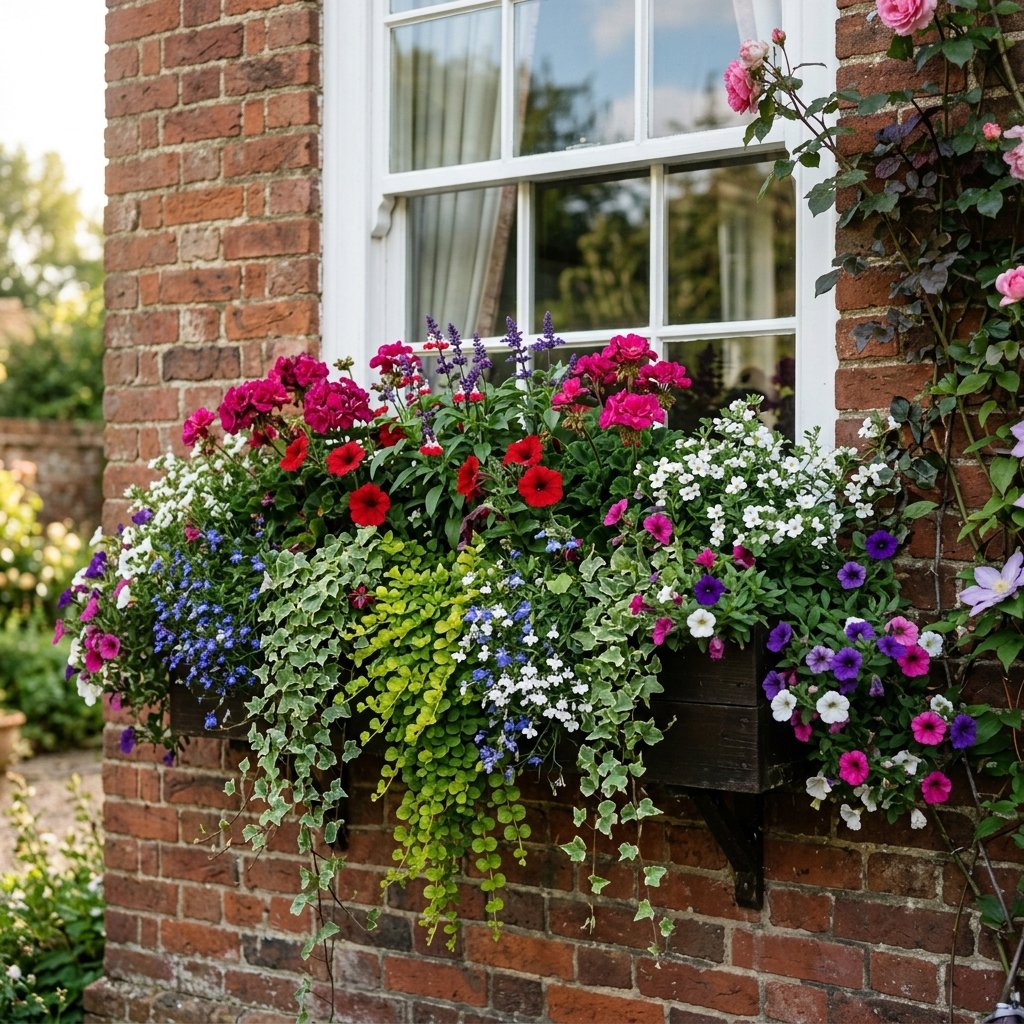
Flowers are not required.
A foliage-based window box can look sophisticated and may be easier to coordinate with a home’s exterior.
Mix different:
- Leaf sizes
- Green tones
- Growth habits
- Textures
Try combining upright foliage with softer mounding plants and one trailing variety.
This works especially well on modern and neutral-colored homes.
Window Boxes With Herbs
A sunny window box can sometimes be used for herbs if the growing conditions suit them.
Choose compatible herbs that have similar moisture and light requirements.
Make sure:
- The container is made from materials appropriate for edible plants.
- The potting mix is suitable for food crops.
- Any fertilizer or pest treatment used is labeled for edible plants when applicable.
Keep culinary herbs away from potential contamination from unsuitable coatings or materials.
Window Boxes for Seasonal Decorating
Window boxes do not have to remain the same all year.
They can transition with the seasons.
Spring
Use cool-season flowers and fresh foliage appropriate for your climate.
Summer
Choose plants suited to warmer conditions.
Fall
Add foliage and seasonal plants that tolerate autumn temperatures.
Winter
In climates where live planting is impractical, consider cut evergreen branches or other decorative arrangements, provided they are secured and suitable for the local conditions.
Always account for wind and weather when using loose seasonal material.
Common Window Box Planting Mistakes
Choosing Plants for the Wrong Light
Sun-loving plants struggle in deep shade, and shade plants may scorch in intense sun.
Poor Drainage
Roots should not sit in trapped water.
Using Garden Soil
Dense soil can perform poorly in containers.
Overcrowding
Plants need room for roots, foliage, and airflow.
Underestimating Weight
Wet window boxes can be heavy.
Letting the Box Dry Completely
Small containers can dry quickly.
Mixing Plants With Very Different Needs
Shared containers are easier when the plants prefer similar conditions.
Ignoring Mature Size
Small starter plants can expand dramatically.
Window Box Safety Tips
Window boxes are decorative, but safe installation matters.
- Use mounting hardware designed for the loaded weight of the box.
- Attach brackets securely to appropriate structural material.
- Do not rely on decorative trim alone to support a heavy planter.
- Follow manufacturer instructions for boxes and brackets.
- Avoid blocking window operation or required emergency access.
- Make sure drainage water will not damage siding, masonry, or areas below.
- Keep heavy boxes securely mounted above walkways.
- Use stable access equipment when planting or maintaining elevated boxes.
- Keep soil, fertilizer, and garden products away from children and pets as directed on their labels.
- Wear gloves when handling soil and fertilizers where appropriate.
- Check brackets periodically for movement, corrosion, or deterioration.
If a window box is mounted high above the ground or over a frequently used walkway, secure installation is especially important.
FAQ About How to Plant Window Boxes
What do you put in the bottom of a window box?
Use a container with adequate drainage and fill it with quality container potting mix. A thick layer of gravel is not a substitute for drainage holes.
How deep should a window box be?
The appropriate depth depends on the plants you plan to grow. Choose a container that provides enough root space for their mature needs.
How close should plants be in a window box?
Follow the mature spacing guidance for the specific plants rather than packing them tightly based on their nursery size.
Do window boxes need drainage holes?
Yes, good drainage is important for healthy container plants.
Can you use regular garden soil in window boxes?
Container potting mix is generally a better choice because garden soil may become too dense and poorly aerated in a box.
How often should window boxes be watered?
There is no fixed schedule. Check the soil regularly and adjust for sun, heat, wind, rainfall, plant size, and container material.
What is the easiest way to arrange a window box?
Combine upright plants toward the back, fuller plants through the center, and trailing plants along the front and sides.
How do I keep window boxes blooming?
Provide appropriate light, consistent water, suitable nutrition, and routine plant care. Deadhead flowering varieties when recommended.
Final Thoughts
Learning how to plant window boxes is mostly about creating healthy growing conditions first and beautiful combinations second.
Start with a securely mounted container that drains well.
Use quality potting mix, then choose plants that suit the amount of light the window receives and have similar watering needs.
Arrange taller plants toward the back, add mounding plants through the center, and use trailing varieties around the front and sides for a full, layered look.
Then give the box time to grow.
A freshly planted window box does not have to look completely packed on day one. Proper spacing, regular watering, and routine maintenance will usually create a healthier and more attractive display as the season progresses.
With a little planning, window boxes can become one of the easiest ways to add color, texture, and curb appeal to the exterior of your home.