

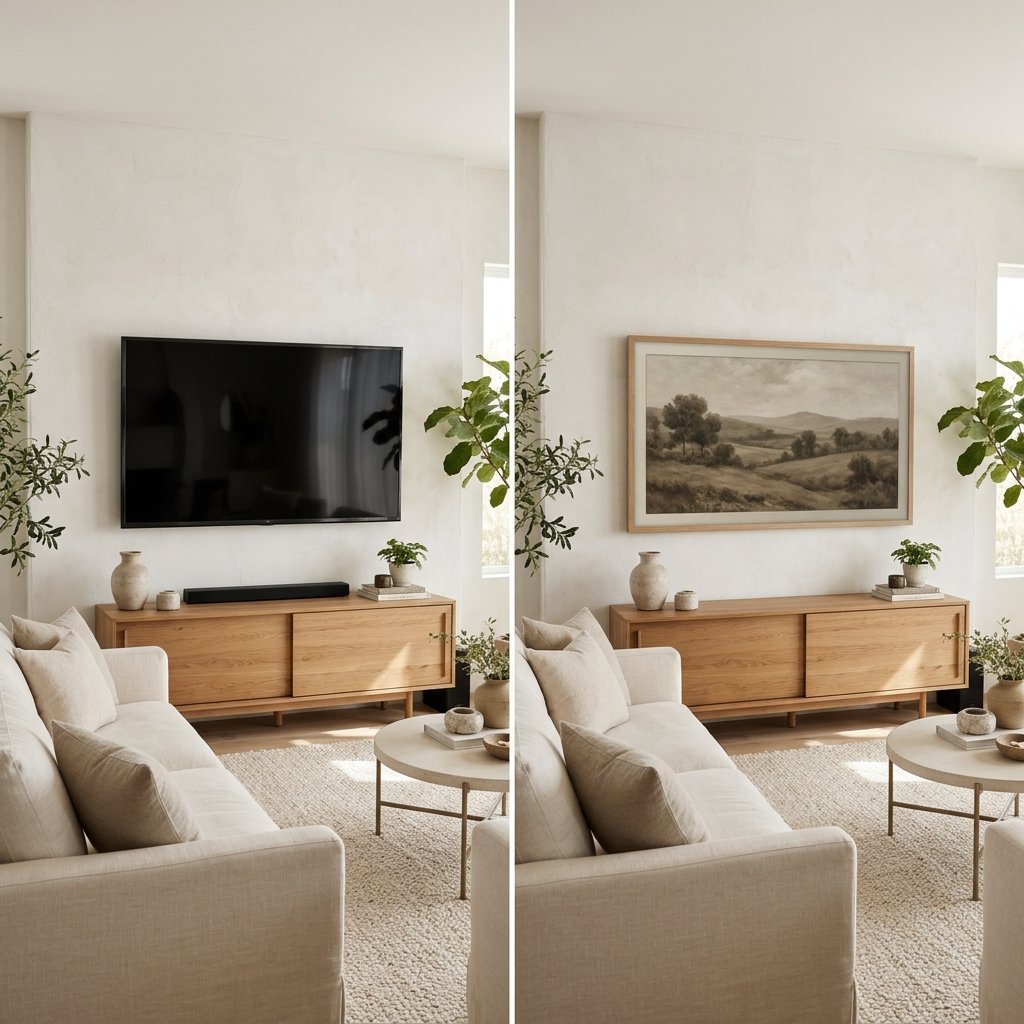
If you’ve ever decorated a beautiful living room only to feel like the giant black television is ruining the entire wall, you’ve probably come across Samsung’s The Frame.
The concept is clever: instead of looking like a conventional TV when you’re not watching it, The Frame displays artwork and is designed to resemble a framed picture on the wall.
But is the Frame TV worth it?
For the right person, yes—but you’re paying a premium for design and the art-display experience, not simply for the best possible picture quality for your money.
Samsung’s current 2026 lineup includes both The Frame and The Frame Pro. The regular 2026 Frame uses a QLED 4K display, while the Frame Pro steps up to Neo QLED technology and a Wireless One Connect system. Both include Art Mode and Samsung’s frame-inspired design.
Independent testing makes the tradeoff fairly clear. RTINGS found the 2026 Frame particularly well suited to daytime use because its matte screen handles direct reflections extremely well, but it also found limited HDR performance, no local dimming on the regular model, narrow viewing angles, and picture quality that doesn’t compete with some conventional TVs around its price.
So the real question isn’t whether The Frame is a good TV.
It’s whether its decor-friendly design is valuable enough to you to justify the compromises and premium.
Here’s what I’d consider before buying one.
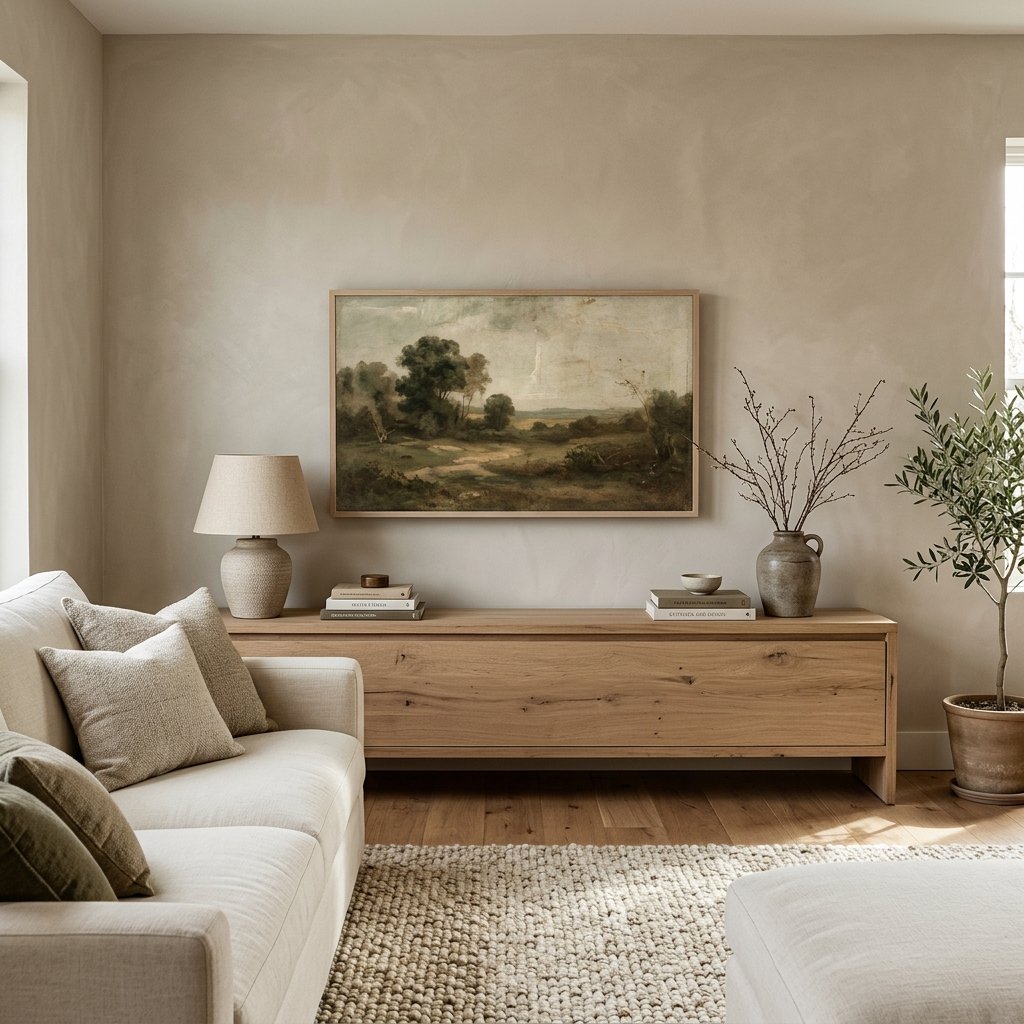
What Is the Frame TV?
Samsung The Frame is a lifestyle television designed to blend into your home more naturally than a conventional TV.
Its signature feature is Art Mode.
Instead of leaving a large black rectangle on your wall when you’re finished watching television, you can display artwork or your own images.
Samsung’s 2026 Frame models also use a matte, anti-reflective screen treatment that helps the displayed art look less like a shiny conventional television. Samsung offers access to a much larger collection of artwork through its Art Store ecosystem.
The television is designed to sit close to the wall, and the overall proportions intentionally resemble a picture frame.
That’s the feature you’re really buying.
So, Is the Frame TV Worth It?
Here’s the simplest answer:
The Frame is worth considering if interior design matters almost as much to you as television performance.
It’s especially compelling when:
- Your TV is on a prominent living room wall
- You dislike looking at a black screen
- You want artwork displayed when the TV isn’t being watched
- You value a very clean wall-mounted installation
- You have a bright room where reflection handling matters
- You’re willing to pay more for aesthetics
It makes less sense if:
- Picture quality is your top priority
- You want the strongest HDR performance for your budget
- You watch lots of movies in a dark room
- Your seating extends far off to the sides
- You don’t care what the TV looks like when it’s off
- You’re buying primarily on performance-per-dollar
That’s an important distinction.
The Frame isn’t trying to win solely by being the highest-performing TV.
Its strongest argument is that it solves a decorating problem.
The Biggest Reason to Buy It: It Looks Better in a Room
This is where The Frame makes the strongest case for itself.
A conventional television is essentially a large black rectangle.
If it’s positioned:
- Over a fireplace
- Between built-ins
- Above a beautiful console
- In a traditional living room
- On a gallery wall
it can easily become the dominant visual feature.
The Frame gives you another option.
When you’re not watching TV, displaying artwork helps the screen participate in the room rather than visually interrupt it.
For design-conscious homeowners, that can be a meaningful improvement.
Art Mode Is the Feature That Changes Everything
Art Mode is what separates The Frame from a normal TV.
Samsung says its Art Store ecosystem provides access to thousands of professionally curated works, and the 2026 Frame lineup supports Art Mode and Art Store Streams.
RTINGS also notes that the 2026 Frame can display custom photos, includes automatic brightness adjustment for artwork, and can use motion detection so Art Mode doesn’t necessarily remain active when nobody is in the room.
That last part matters.
The goal isn’t simply to put a photograph on a television.
It’s to make the display behave more like an intentional part of the room.
Does the Frame TV Actually Look Like Art?
From across a room, it can be quite convincing—especially when the installation and artwork are chosen carefully.
The matte screen is a big reason why.
A normal glossy television reflects:
- Windows
- Lamps
- Ceiling lights
- Furniture
- People moving around the room
Those reflections immediately remind you that you’re looking at a screen.
The Frame’s matte finish significantly reduces direct reflections. RTINGS found the 2026 model’s direct reflection handling excellent, which also benefits daytime TV viewing.
But don’t expect magic.
It’s still an electronic display.
Your results depend on:
- Room lighting
- Viewing angle
- Artwork
- Brightness settings
- Installation
- Bezel choice
The better those elements work together, the more convincing the effect.
The Matte Screen Is One of Its Best Features
Even if you don’t care much about displaying art, the matte screen can be useful in a bright living room.
RTINGS found that the 2026 Frame does an excellent job reducing direct reflections and performs decently for daytime television viewing.
That’s particularly useful in rooms with:
- Large windows
- Patio doors
- Open-plan layouts
- Strong daytime light
However, a matte coating has tradeoffs.
The Frame is designed partly around reducing glare and creating an art-like appearance rather than delivering the glossy, high-contrast presentation some premium TVs emphasize.
The Picture Quality Question
This is where the decision gets more complicated.
If you’re buying purely based on TV performance, The Frame becomes harder to recommend.
RTINGS’ testing of the 2026 Frame found low HDR peak brightness, no local dimming, limited dark-room performance, and narrow viewing angles. It concluded that similarly priced conventional televisions can provide substantially better picture quality.
That doesn’t mean movies and television look terrible.
For everyday use—streaming shows, news, casual movies, and general family viewing—it may be completely adequate.
But someone passionate about home theater performance may notice the limitations much more.
Is the Frame Good for Watching Movies?
It depends on what you expect.
For casual movie watching in a normal living room, it can work well enough.
For a dedicated movie room, it wouldn’t be my first choice.
RTINGS rated the 2026 Frame as a mediocre home-theater option because of its contrast limitations, raised blacks, lack of local dimming, and limited HDR impact. It also notes that the model does not support Dolby Vision or DTS audio formats.
If Friday movie night picture quality matters more to you than Monday-through-Thursday room aesthetics, compare it with performance-focused TVs before buying.
What About The Frame Pro?
This is an important distinction with the current lineup.
Samsung now offers The Frame Pro alongside the regular Frame.
The 2026 Frame Pro uses Neo QLED 4K technology and Samsung’s Wireless One Connect system, while the standard Frame uses QLED 4K and built-in connections.
RTINGS found the 2026 Frame Pro considerably brighter than the standard Frame and noted that it adds local dimming and the Wireless One Connect box. However, its testing also found that the local-dimming implementation doesn’t dramatically transform dark-room performance.
So think of the Pro as the more premium version of the concept—not necessarily a replacement for a dedicated high-end home-theater TV.
One Connect Can Make Installation Cleaner
Cable management is another reason The Frame has become popular in design-focused rooms.
The exact connection setup depends on the model and year.
Samsung’s current lineup distinguishes between models with built-in connections and models using One Connect or Wireless One Connect. The 2026 Frame Pro uses Wireless One Connect, while the regular 2026 Frame uses built-in connections.
That’s worth checking carefully when shopping.
Don’t assume an installation tutorial for an older Frame applies to the model you’re buying today.
A Clean Installation Still Requires Planning
The Frame looks best when you can’t see a mess of wires.
Before purchasing, think about:
- Power location
- Cable routing
- Streaming devices
- Soundbar
- Gaming consoles
- Connection equipment
- Wall construction
- Outlet placement
Never run ordinary power cords or cables through walls unless they’re specifically approved for that use and the installation complies with applicable electrical requirements.
If new power, recessed outlets, or in-wall wiring is required, professional electrical help may be appropriate.
The Frame Above a Fireplace
The Frame is particularly tempting above a fireplace because it solves two decorating challenges at once:
Where do I put the TV?
and:
How do I keep the TV from dominating the fireplace?
Art Mode can make the television look much more intentional above a mantel.
But don’t let aesthetics override safety.
Before mounting any TV over a fireplace, verify:
- Fireplace manufacturer clearances
- Heat exposure
- Vent locations
- Mantel requirements
- TV operating-temperature guidance
- Wall construction
- Mounting requirements
A Frame TV isn’t immune to heat just because it looks like artwork.
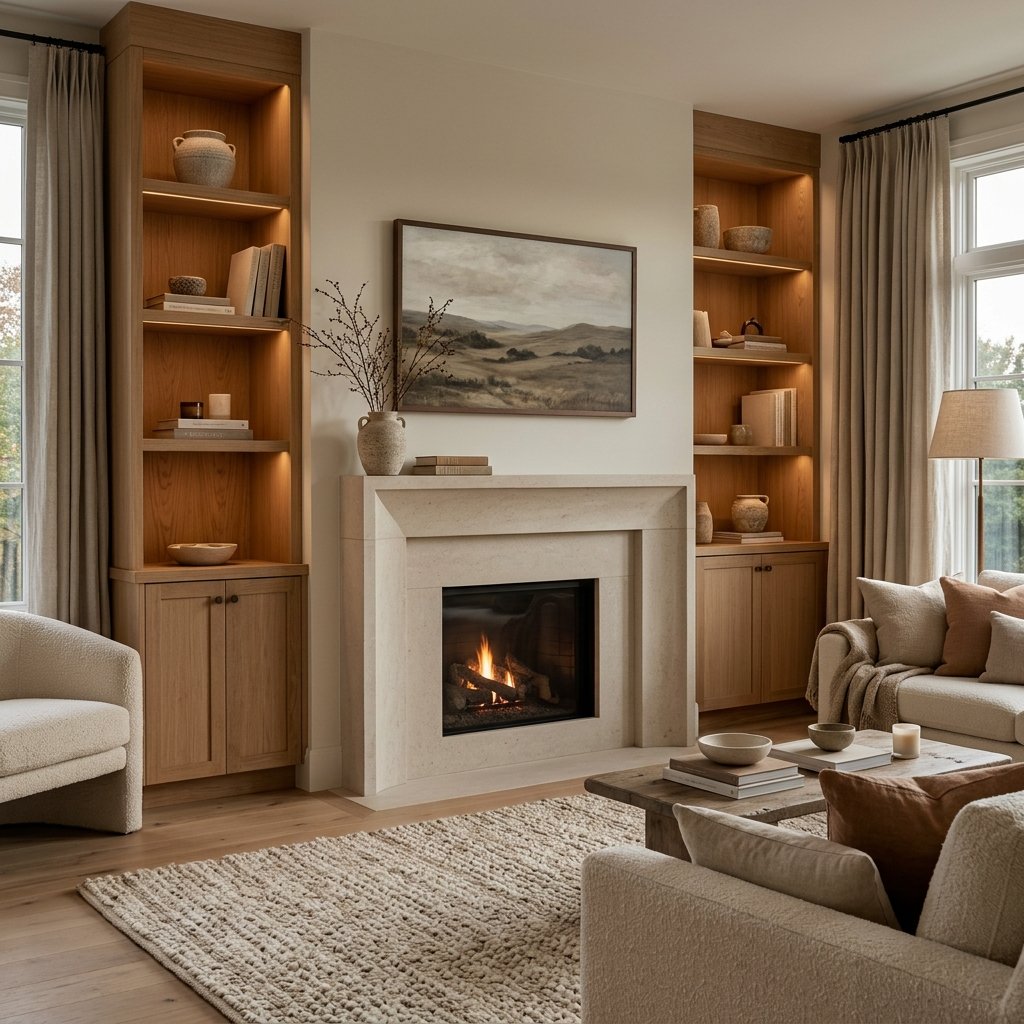
The Frame Between Built-Ins
This may be one of the best applications for it.
A black television centered between beautiful built-ins can dominate the entire composition.
When The Frame displays artwork, the wall can feel more like:
Fireplace + art + bookshelves
rather than:
Fireplace + giant television + bookshelves
Choose artwork that relates to the colors already in the room.
You don’t have to match perfectly.
Just repeat a few colors from:
- Upholstery
- Rug
- Wood
- Pillows
- Wall color
This makes the screen feel integrated.
Choosing Artwork for The Frame
The artwork makes an enormous difference.
For a sophisticated look, try:
- Landscapes
- Abstract paintings
- Vintage-inspired art
- Botanical art
- Still lifes
- Minimalist compositions
- Photography
Pay attention to color.
If your room contains warm cream, brown, olive, and wood, a painting with similar tones will blend more naturally than a highly saturated electric-blue image.
Choose Art Based on the Room, Not the Screen
Think of the TV as though it were a real framed print.
Ask:
Would I hang this artwork here if there weren’t a television behind it?
If the answer is no, choose something else.
This simple rule makes Art Mode look much more intentional.
Does The Frame Need a Decorative Bezel?
Not necessarily.
But a compatible decorative bezel can strengthen the picture-frame effect.
Depending on your room, a bezel might coordinate with:
- Wood furniture
- Black window frames
- Brass accents
- White millwork
Check compatibility with your exact TV size and model before purchasing accessories, because options can change between model generations.
Should the Frame Match Other Frames in the Room?
It doesn’t have to match exactly.
A room often looks more natural when frame finishes are mixed.
For example:
Wood Frame TV bezel + aged brass art frames + black picture frames
can look more collected than making every frame identical.
Repeat each finish somewhere else so the mix feels intentional.
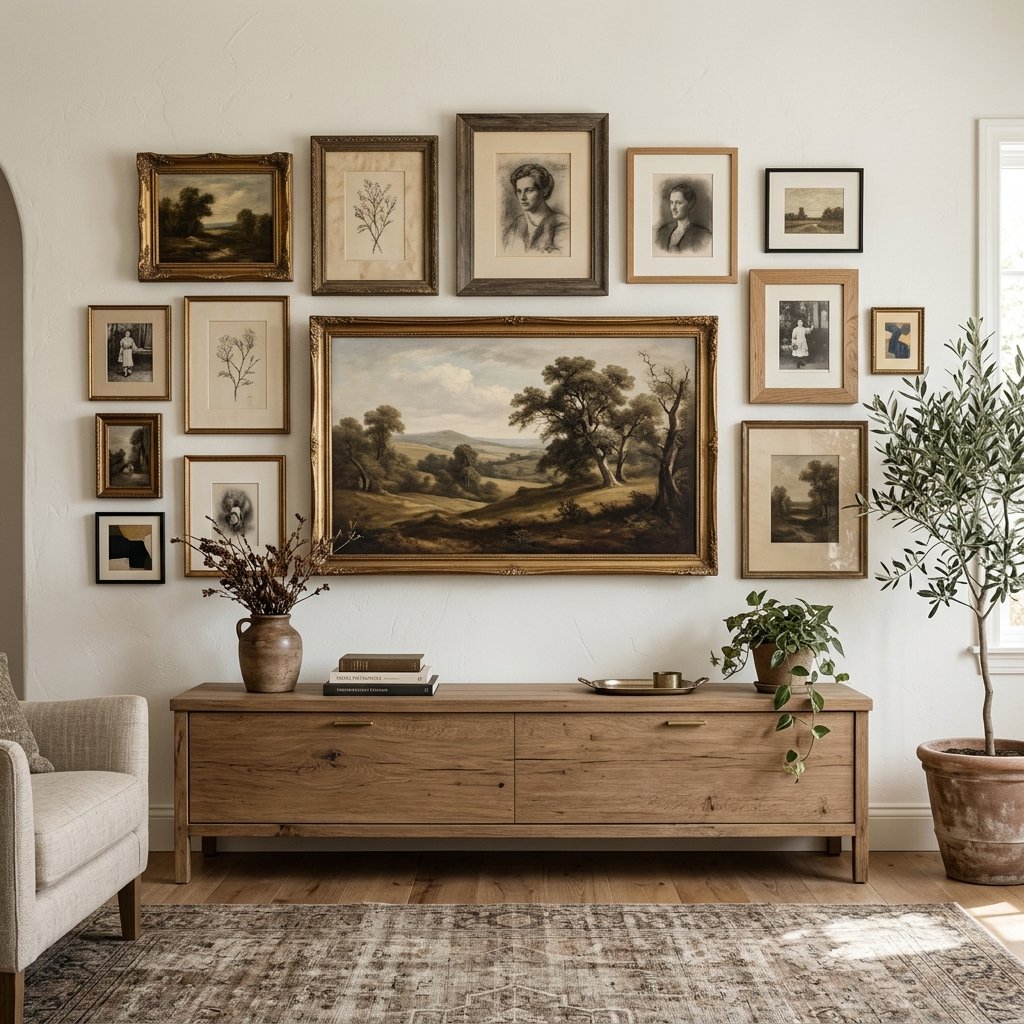
Can You Put The Frame on a Gallery Wall?
Yes, and visually this can be one of its strongest uses.
Surround the TV with:
- Smaller artwork
- Photography
- Sketches
- Vintage pieces
But be careful with scale.
A large TV surrounded by dozens of tiny frames can make the television look even larger.
Mix several artwork sizes.
And leave enough breathing room.
Use appropriate wall anchors and hanging hardware for the weight of every piece, and verify wall conditions before drilling.
Is the Frame TV Good in a Bright Room?
This is one area where it has a clear advantage.
The matte display is particularly effective at reducing direct reflections.
RTINGS found excellent direct reflection handling on the 2026 Frame and described it as decently suited to bright-room television viewing.
If your living room has a large window directly opposite the television, this feature could matter considerably.
What About Viewing From the Side?
This is a weakness to consider.
RTINGS found that the 2026 Frame has a mediocre viewing angle and that the image noticeably degrades when viewed from the side.
That’s worth considering if you have:
- Large sectional
- Wide open-plan room
- Multiple seating zones
- Kitchen overlooking the TV
A television can look excellent from the main sofa but significantly different from a seat far to one side.
Is the Frame Good for Gaming?
The regular 2026 Frame offers useful gaming features, including low input lag, variable refresh rate support, and HDMI 2.1 bandwidth, according to RTINGS. However, its overall picture quality and motion performance keep it from being the obvious choice for someone buying primarily for gaming.
So for occasional console gaming?
It can make sense.
For someone building a gaming setup where performance is the main priority?
Compare alternatives carefully.
Does Art Mode Use Electricity?
Yes.
Displaying artwork requires the screen to be operating, so Art Mode isn’t equivalent to switching the television completely off.
The current Frame includes features intended to manage the experience more intelligently. RTINGS notes that Art Mode can work with motion detection and automatic brightness adjustment.
Actual energy use will depend on model, size, settings, brightness, Art Mode use, and local conditions.
Check the current model’s official energy information if electricity consumption is an important purchasing factor.
Do You Have to Pay for the Art?
You don’t necessarily need a paid art subscription simply to use the television’s art-display functionality.
Samsung provides some art options, offers a larger Art Store ecosystem, and the 2026 Frame can also display personal images. RTINGS notes that the model includes a rotating selection of curated works and supports custom photo uploads.
However, access to the broader Art Store collection may involve a subscription.
Check Samsung’s current terms in your region before buying, since availability and subscription details can change.
The Frame TV Pros and Cons
Pros
It Looks Much Better When You’re Not Watching TV
This is its biggest advantage.
Art Mode Is Genuinely Useful for Decorating
The screen becomes part of the room.
Matte Screen Reduces Direct Reflections
Particularly useful in bright living rooms.
The Wall-Mounted Look Is Excellent
The design is specifically intended to resemble framed artwork.
It Works Well in Design-Focused Rooms
Especially above fireplaces, consoles, and between built-ins.
You Can Change the Artwork
One screen can visually change with the seasons or your decorating palette.
Cons
You’re Paying a Design Premium
Comparable money can buy stronger conventional TV picture performance.
The Regular Frame Isn’t a Home-Theater Champion
HDR and dark-room performance are notable compromises.
Viewing Angles Are Limited
Wide seating arrangements deserve consideration.
The Full Art Experience Can Add Ongoing Cost
The larger Art Store offering may require a subscription.
Installation Still Needs Planning
The illusion works best when cables and equipment are carefully handled.
Who Should Buy the Frame TV?
The Frame makes the most sense for someone who says:
“I want a TV, but I don’t want my room to look like it’s designed around a TV.”
It’s particularly appealing for:
- Interior design lovers
- Formal living rooms
- Multipurpose family rooms
- Fireplace walls
- Rooms with built-ins
- Bright rooms
- Homes where wall art matters
You’re effectively paying for two functions:
Television + digital art display
If you value both, the premium becomes easier to justify.
Who Should Skip It?
I’d look elsewhere if your priorities are primarily:
- Maximum picture quality
- Best HDR
- Serious home theater
- Deep dark-room blacks
- Wide-angle viewing
- Maximum performance per dollar
In those cases, the design advantages may not outweigh the picture-quality compromises.
The Frame vs. a Regular TV
The decision becomes easier if you ask one question:
What annoys you more—a visible black TV or giving up some picture performance?
If you hate the black rectangle, The Frame solves a genuine problem.
If you barely notice your television when it’s off, spend your budget on picture quality instead.
Is The Frame Pro Worth the Upgrade?
The Frame Pro is worth considering when you love the Frame concept but want to move closer to premium television performance.
The 2026 Pro uses Neo QLED technology, gets significantly brighter than the standard model in RTINGS’ testing, and adds Wireless One Connect.
But it also comes with the same fundamental purchasing question:
Are you willing to pay extra for the art-TV experience?
If yes, the Pro may be the more compelling version.
If no, a conventional performance-focused television still deserves comparison.
How to Make The Frame Look More Like Real Art
The TV itself is only half the equation.
For the most convincing result:
- Mount it appropriately and cleanly.
- Hide visible cable clutter safely.
- Choose a bezel that suits the room if desired.
- Use artwork that fits your decorating palette.
- Avoid overly bright screen settings for displayed art.
- Keep the surrounding wall styling intentional.
- Choose appropriate scale.
- Use nearby lamps and room lighting naturally.
Don’t make the television the brightest object in the room when it’s supposed to look like a painting.
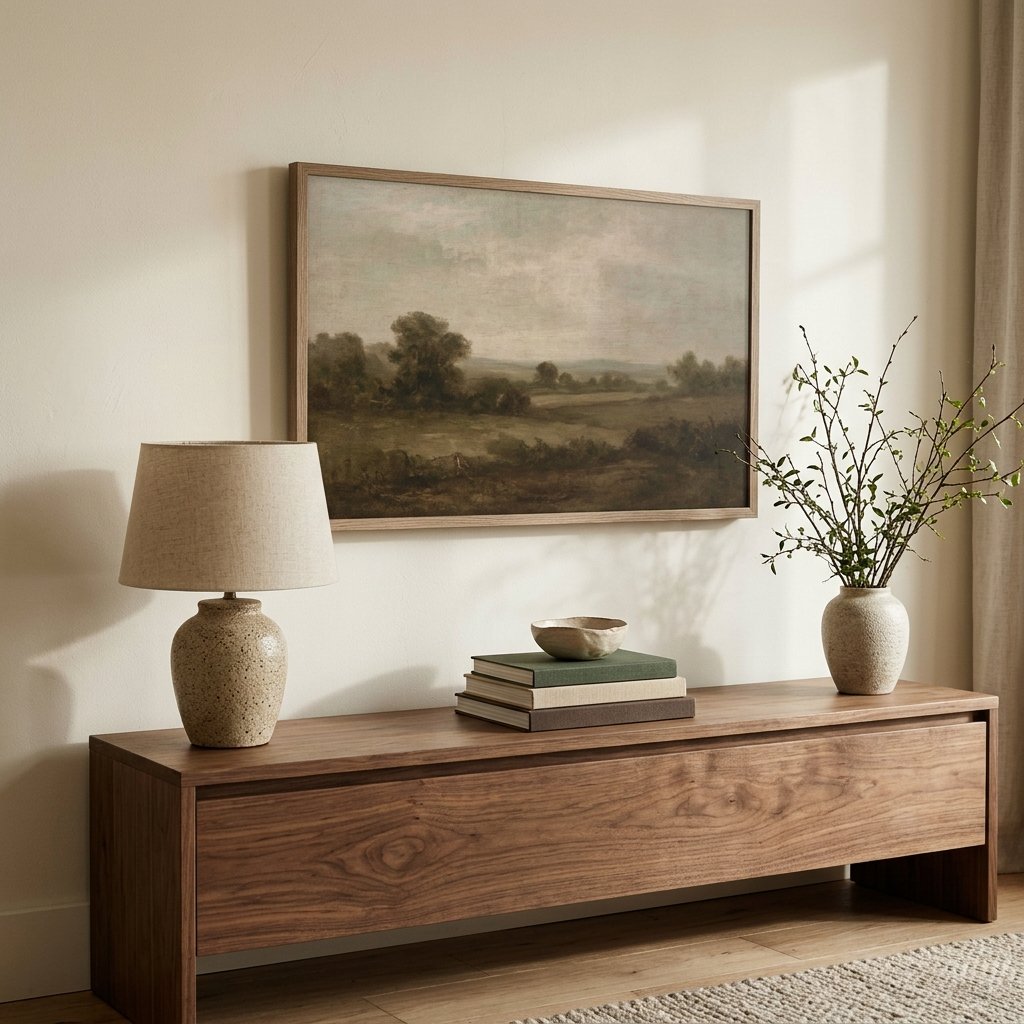
How to Style a Console Under The Frame
Keep the console styling fairly low.
Try:
Lamp + books + ceramic bowl
or:
Small plant + stack of books + sculptural object
Avoid placing several tall objects directly in front of the displayed artwork.
The console should visually support the screen, not compete with it.
How High Should You Mount The Frame?
Treat it as a television first.
Viewing comfort should matter more than making it line up perfectly with nearby artwork.
Your ideal height depends on:
- TV size
- Seating height
- Viewing distance
- Room layout
- Fireplace clearances if applicable
Test the location before drilling.
Use the mounting hardware and installation instructions specified for your exact model and wall construction.
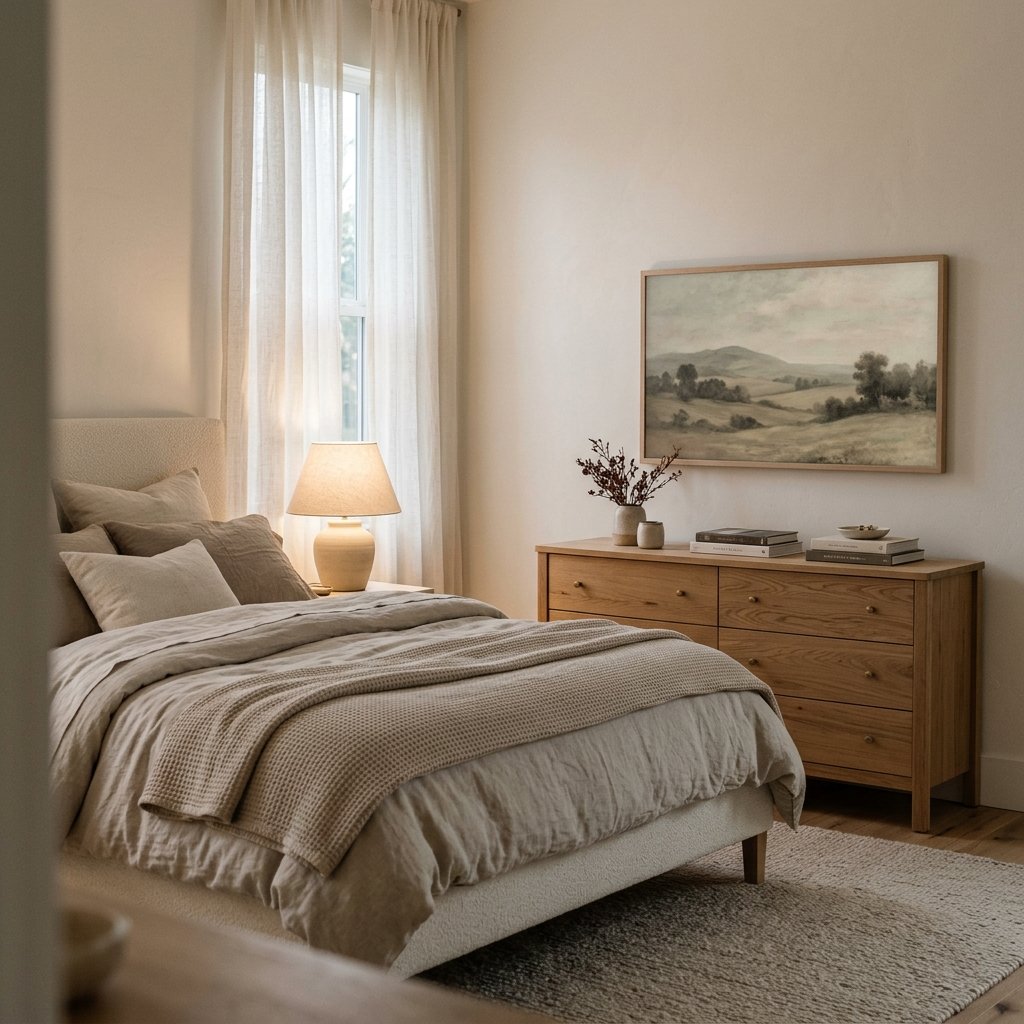
The Frame TV in a Bedroom
The Frame can make a lot of sense in a bedroom because televisions can be particularly visually intrusive there.
Art Mode helps the screen blend into a calmer room.
It works especially well:
- Above a dresser
- Opposite the bed
- Between cabinetry
Choose quiet artwork that complements the bedding rather than highly saturated images.
Is the Frame TV Worth It for Interior Design?
This is where my answer becomes much more favorable.
From a pure television-performance perspective, The Frame has clear compromises.
From an interior-design perspective, it’s one of the rare electronics designed specifically to solve the problem of integrating a large television into a thoughtfully decorated room.
And that has real value.
Furniture, lighting, artwork, built-ins, and wall treatments can all be carefully selected—only for a giant glossy black rectangle to become the focal point.
The Frame gives you more control over that visual impact.
My Verdict: Is the Frame TV Worth It?
Yes, if you’re buying it for what makes it different.
Don’t buy The Frame because you assume its premium price automatically means premium picture quality.
Independent testing shows that the regular 2026 Frame has meaningful picture-quality compromises compared with performance-focused televisions at similar prices.
Buy it because you want:
- Art Mode
- Matte screen
- Frame-like appearance
- Cleaner integration with your decor
- A television that doesn’t become a black rectangle whenever you’re not watching it
For a design-focused living room, those benefits can absolutely make it worth paying more.
For a dedicated home theater?
I’d prioritize picture quality instead.
For someone who wants the concept with stronger brightness and upgraded hardware?
I’d compare the current Frame Pro.
Ultimately, The Frame is less about buying the best TV and more about buying the TV that best behaves like part of your home.
And if you’re someone who cares just as much about what your living room looks like when the television is off as when it’s on, that’s a meaningful difference.
FAQ About Samsung The Frame
Is the Frame TV worth the extra money?
It can be if you strongly value Art Mode, the matte screen, and the picture-frame appearance. If picture quality per dollar is your priority, conventional TVs can offer better performance for similar money.
Does the Frame TV really look like art?
Its matte display, frame-inspired design, and Art Mode make it considerably more art-like than a conventional glossy television, particularly when wall-mounted and viewed in normal room lighting.
Is the Frame TV good in bright rooms?
Yes, this is one of its strengths. Independent testing found excellent handling of direct reflections from the matte screen.
Is the Frame TV good for movies?
It’s fine for casual movie watching, but the regular 2026 Frame isn’t an ideal choice for serious dark-room home theater because of limitations in contrast and HDR performance.
Does the Frame TV need an art subscription?
You can use art and personal images without necessarily subscribing to the entire Art Store catalog, but access to Samsung’s broader premium art collection may require a subscription. Check current regional terms before purchasing.
What’s the difference between The Frame and The Frame Pro?
For 2026, Samsung lists the regular Frame as QLED 4K and the Frame Pro as Neo QLED 4K. The Pro also uses Wireless One Connect and offers upgraded picture-related features.
Can you put The Frame above a fireplace?
Potentially, but only when the fireplace and television installation requirements can both be met. Verify fireplace clearances, heat exposure, ventilation, wall construction, and TV manufacturer guidance before installation.
Is The Frame good for a gallery wall?
Yes. Its artwork display can help it blend into a gallery wall much more naturally than a conventional black television.
Can I display my own photos on The Frame?
Yes. The current 2026 model supports displaying custom photos.
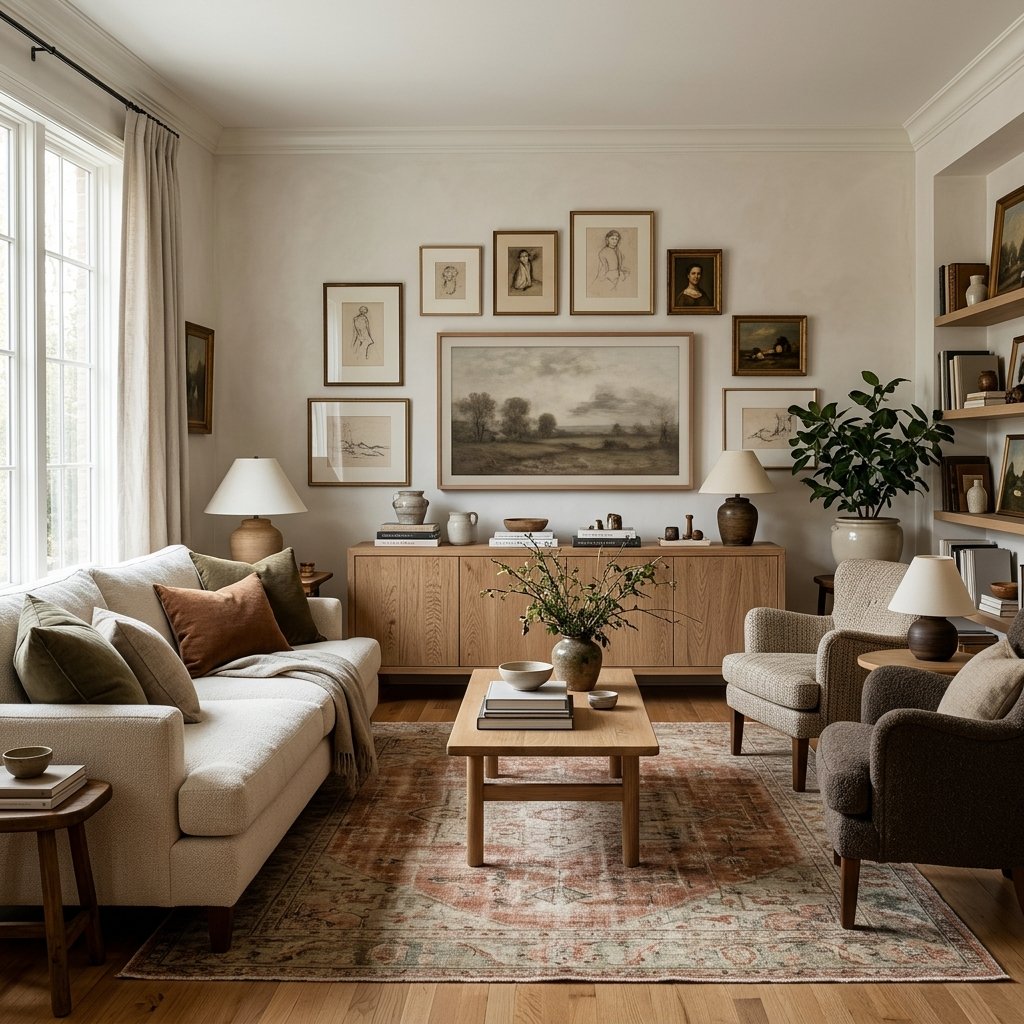
Is The Frame a good choice for a design-focused living room?
That’s arguably where it makes the most sense. Its primary advantage over a conventional TV is its ability to integrate more naturally with artwork, furniture, fireplaces, built-ins, and other decor.