

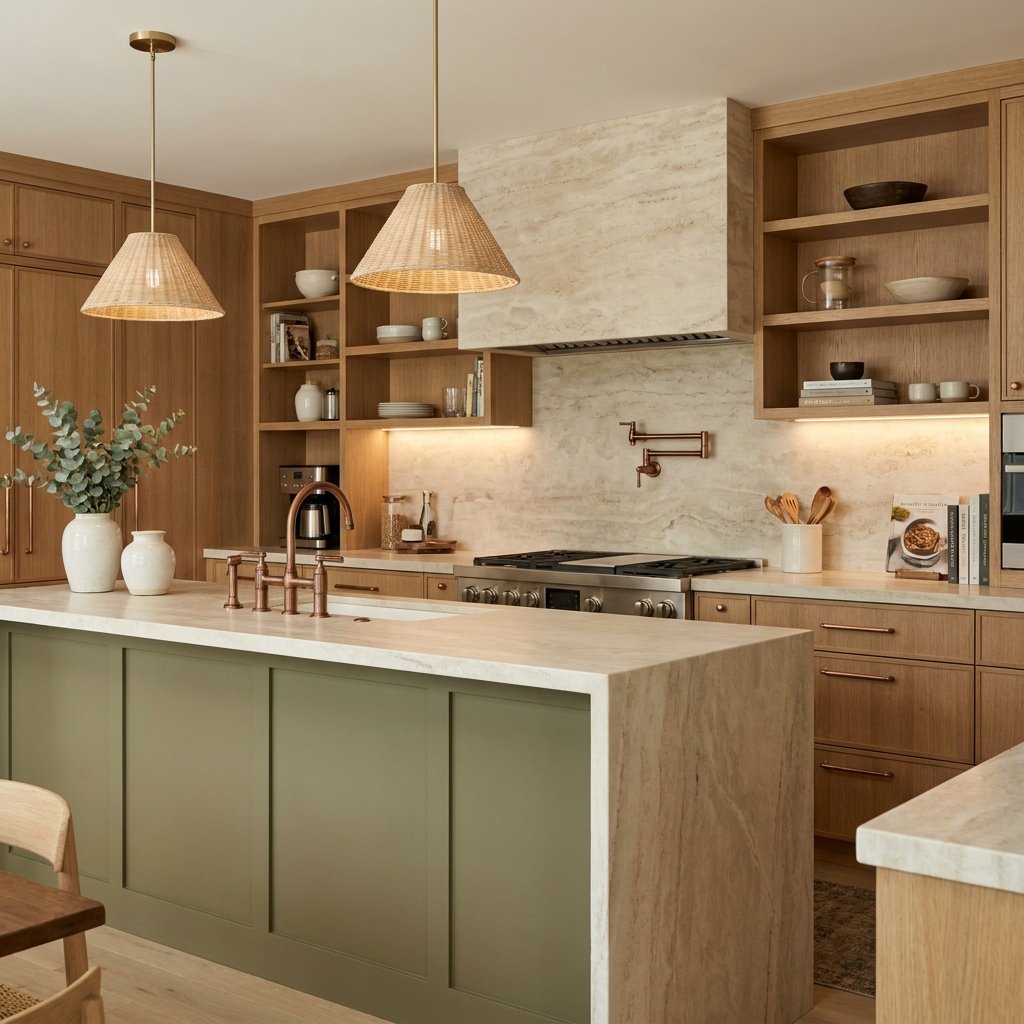
Kitchen trends are changing—and one of the biggest shifts isn’t a particular cabinet color or countertop material.
It’s the move toward kitchens that feel warmer, more personal, and more useful.
Current research supports that direction. In the 2026 U.S. Houzz Kitchen Trends Study, wood cabinetry moved slightly ahead of white among renovating homeowners, while pantry cabinets became the most popular built-in kitchen feature. Meanwhile, the National Kitchen & Bath Association’s 2026 research points toward natural materials, smarter storage, layered lighting, personalized layouts, and earthy palettes.
That doesn’t mean you need to remodel your kitchen every time a trend changes.
The most useful kitchen design trends are the ones that solve a problem, work with your home’s architecture, and make everyday life easier.
If you’re planning a kitchen remodel or simply looking for inspiration, here are 17 trends influencing kitchens in 2026—and ideas for incorporating them without creating a space that immediately feels dated.
1. Natural Wood Cabinets
One of the clearest shifts in kitchen design is the renewed interest in wood cabinetry.
According to Houzz’s 2026 study, wood became the most popular cabinet choice among renovating homeowners at 29%, narrowly ahead of white at 28%. Medium wood accounted for the largest portion of the wood category.
NKBA’s industry research points in a similar direction, with wood grain identified as growing in popularity and white oak leading among wood species in its survey.
Why does wood work so well?
It adds:
- Warmth
- Texture
- Natural variation
- Contrast against stone
- Character
Instead of the heavily stained cabinets associated with some older kitchens, current wood kitchens often emphasize visible grain and more natural-looking finishes.
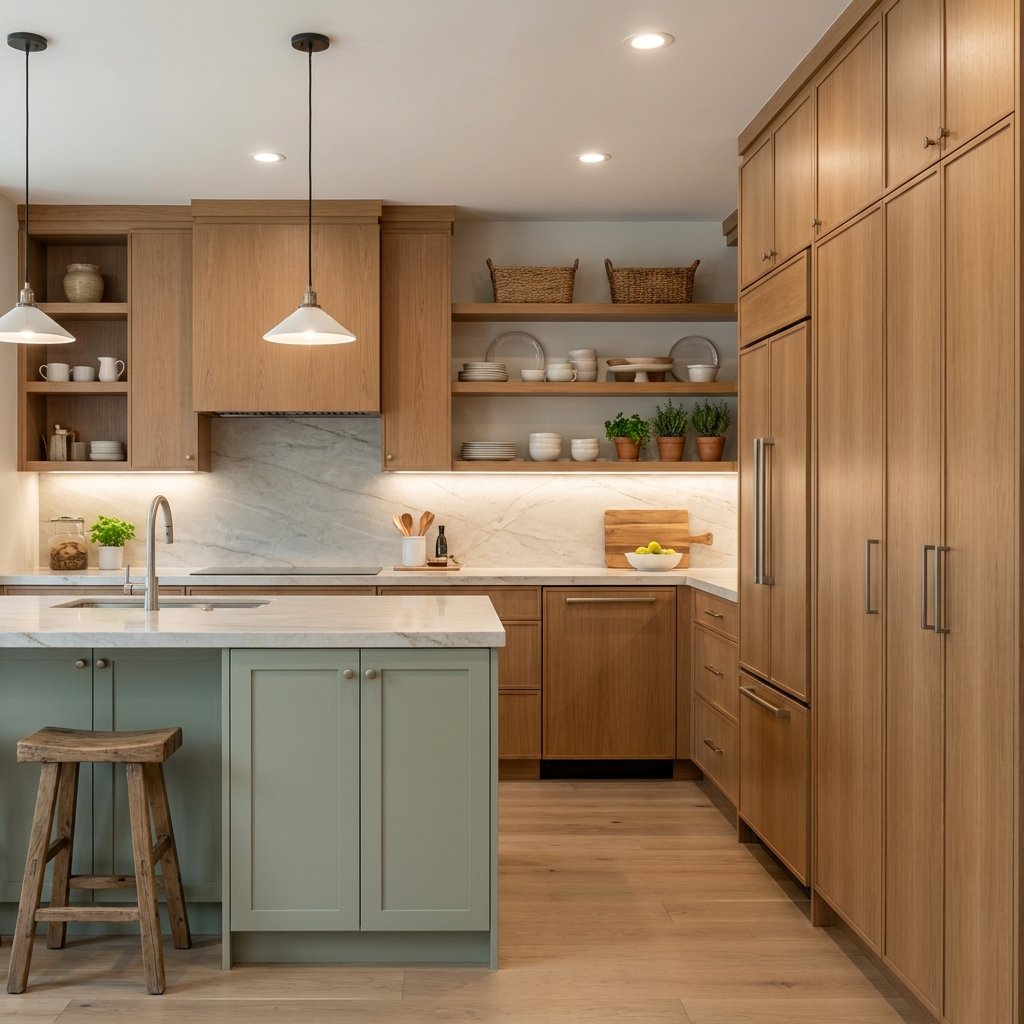
2. Mixing Wood and Painted Cabinets
You don’t have to choose between wood and color.
Mixing the two can create a more layered kitchen.
Try:
Wood perimeter + painted island
or:
Painted perimeter + wood island
or:
Painted lower cabinets + wood pantry cabinetry
A repeated countertop, backsplash, or hardware finish can connect the different cabinet treatments.
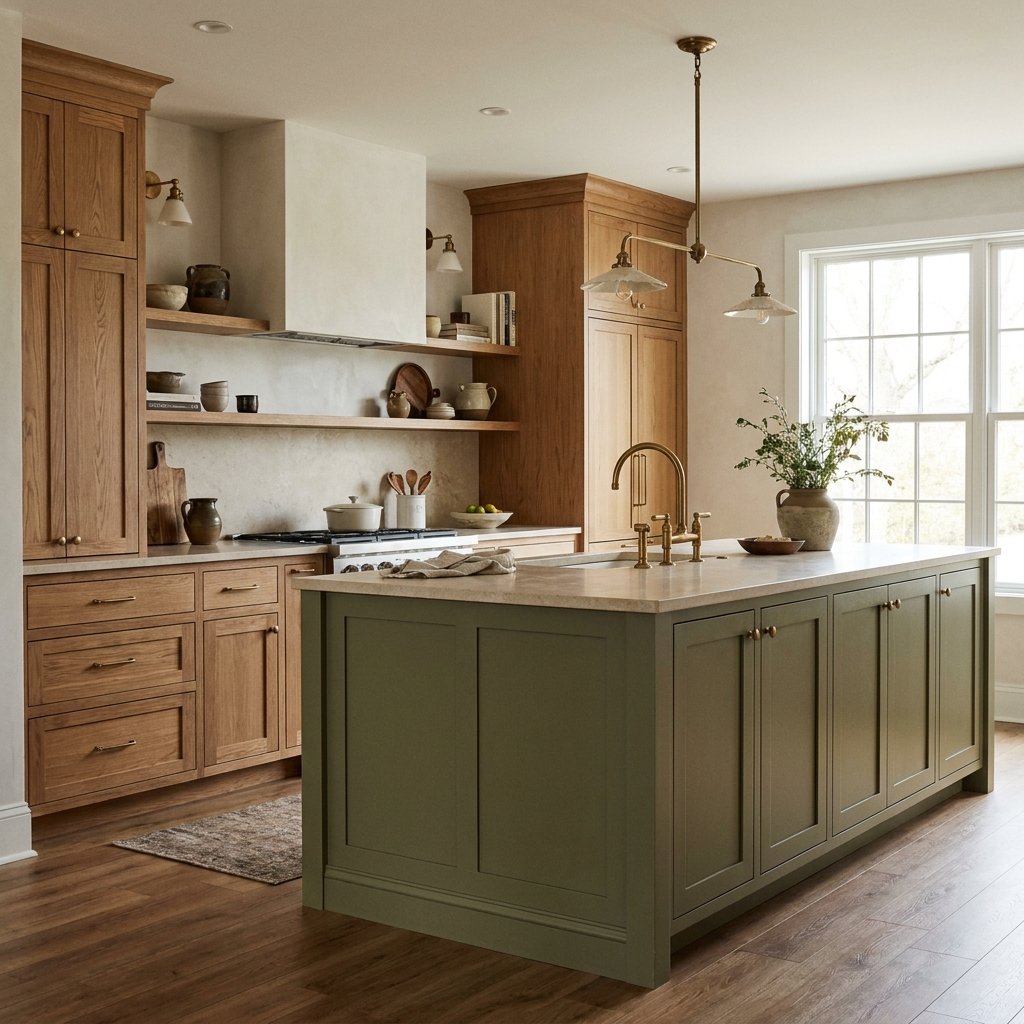
3. Green Kitchen Cabinets
Green continues to have a strong presence in kitchens.
NKBA’s 2026 report found neutrals leading its color outlook, followed closely by greens and blues.
The nice thing about green is its range.
Consider:
- Pale sage
- Muted olive
- Gray-green
- Moss
- Forest green
Sage can create a soft, almost neutral appearance.
Olive brings more warmth.
Forest green can create drama.
Pair green with wood, cream, warm stone, brass, bronze, or black depending on the style you’re trying to achieve.
4. Warmer Neutral Kitchens
Neutral kitchens aren’t disappearing.
They’re simply getting warmer.
Instead of building everything around cool gray and stark white, consider:
- Cream
- Mushroom
- Taupe
- Beige
- Warm greige
- Soft brown
NKBA’s 2026 findings still put neutrals firmly at the top of the color spectrum, while organic and natural design also ranked prominently.
Warm neutrals can provide the versatility people like about white while introducing more depth.
5. Kitchens With More Color
Color is increasingly appearing in strategic locations rather than necessarily covering the entire kitchen.
NKBA’s industry respondents pointed to backsplashes, wallpaper, islands, and decorative accessories as important places for statement color.
This is good news if you’re hesitant about colorful cabinetry.
You can add personality through:
- Island
- Backsplash
- Counter stools
- Lighting
- Walls
- Runner
- Artwork
That gives you plenty of options without committing every cabinet to one strong color.
6. Slab Backsplashes
Instead of dozens of individual tiles and visible grout lines, some kitchens are using large sections of countertop-like material on the backsplash.
NKBA’s 2026 research identified slab and solid-surface backsplashes as a growing direction, while Houzz also reported increased interest in slab backsplashes among remodeling homeowners.
This can create a streamlined appearance.
It works particularly well when you want the stone itself to become a feature.
However, dramatic stone doesn’t need to be paired with dramatic cabinetry, dramatic lighting, dramatic hardware, and a dramatic island.
Let one or two elements lead.
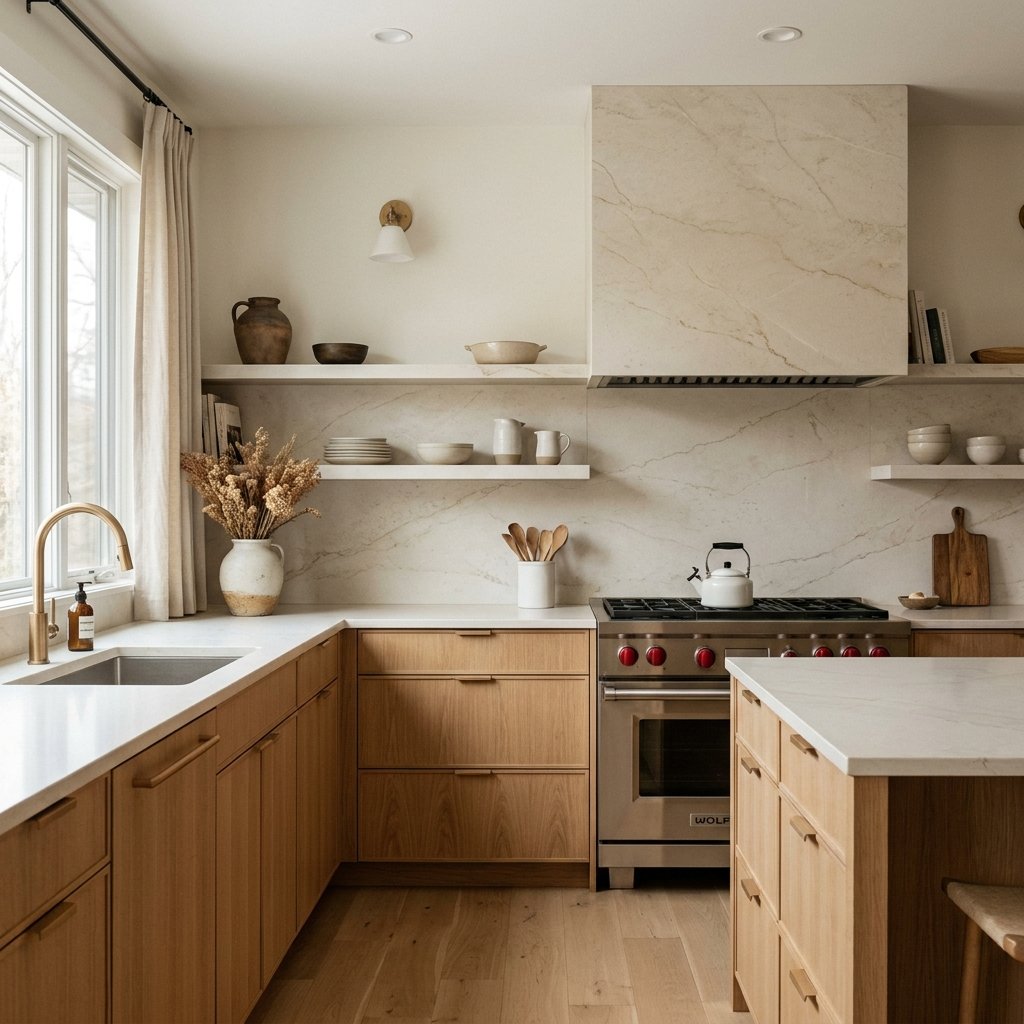
7. Natural Stone and Stone-Look Surfaces
Stone remains an important part of kitchen design.
NKBA’s 2026 industry survey found natural quartzite close behind quartz in countertop popularity expectations.
The recently released NKBA 2027 Kitchen Trends Report also suggests natural materials will continue influencing upcoming kitchens, with the report drawing on responses from 830 North American industry professionals.
When choosing a countertop, however, don’t select it because it’s trending.
Consider:
- Maintenance
- Durability
- Staining
- Etching where applicable
- Heat considerations
- Cost
- Fabrication
- How you actually use your kitchen
Different natural and engineered materials have different properties, so review the specific manufacturer’s or supplier’s care guidance before purchasing.
8. Fewer Tiny Decorative Details
Many newer kitchens are moving toward cleaner cabinetry and simpler architectural details.
NKBA’s 2026 research identified flat slab cabinet doors among the styles gaining popularity and also highlighted minimalism as a significant direction.
That doesn’t mean traditional kitchens are out.
Houzz found transitional style remained the most popular style among homeowners changing their kitchen’s look.
The takeaway is less about eliminating traditional details and more about editing them.
A Shaker-style cabinet, traditional molding, or warm metal hardware can still feel current when the overall room isn’t overloaded with competing decorative elements.
9. Hidden Appliances
Kitchens are increasingly designed to feel like part of the surrounding living space.
One way to accomplish that is by visually reducing the appliances.
NKBA identified panel-faced refrigerators and dishwashers as growing design directions.
Panel-ready appliances can create a beautifully integrated look, but they can also add considerable cost.
You don’t need them to create a cohesive kitchen.
A standard appliance can still look intentional when the cabinetry, hardware, and layout are thoughtfully planned.
10. Better Pantry Storage
Storage is becoming less about adding more cabinets and more about making them work harder.
In Houzz’s 2026 study, 76% of renovating homeowners incorporated built-in features, and pantry cabinets were the most common at 47%.
That’s an incredibly practical trend.
A well-planned pantry can provide storage for:
- Dry food
- Small appliances
- Baking supplies
- Serving pieces
- Snacks
- Bulk purchases
Before designing one, inventory what you actually own.
There’s no point creating dozens of narrow shelves if you need space for tall appliances.
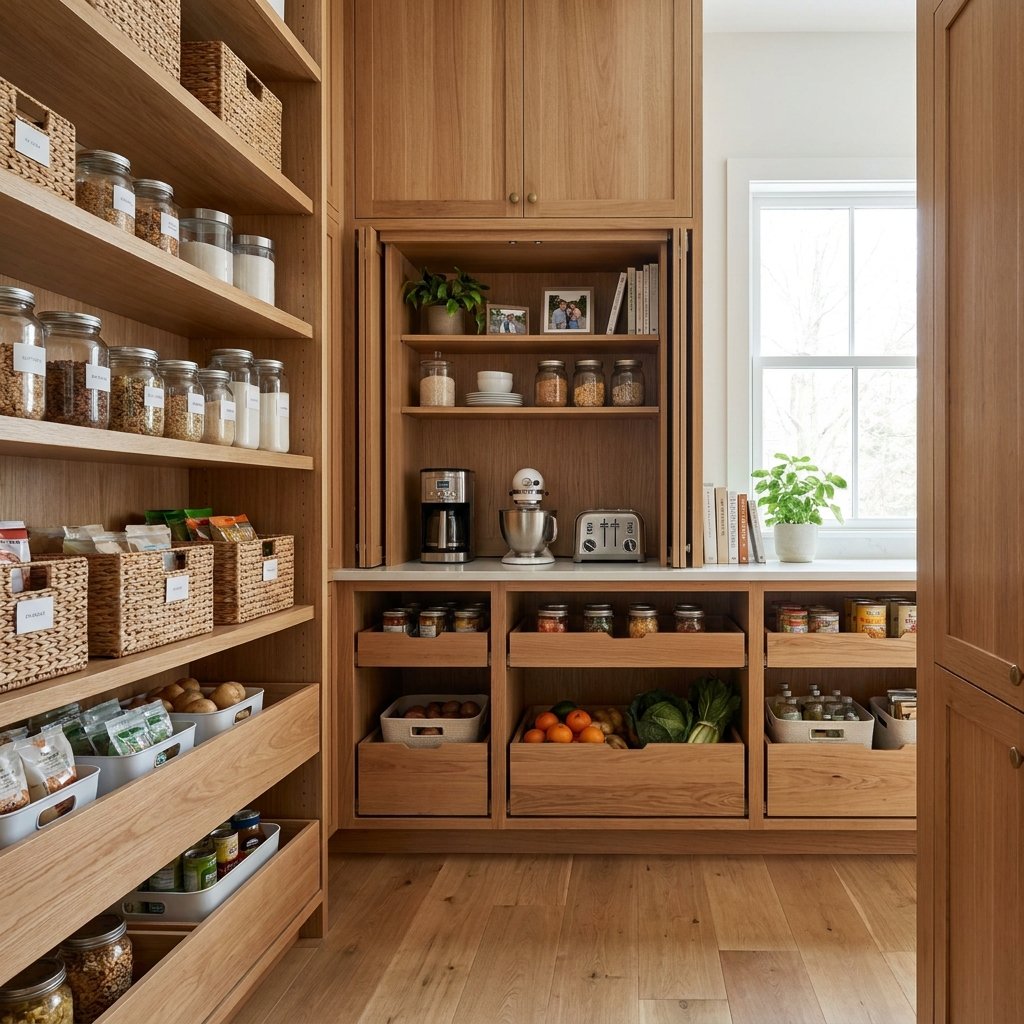
11. Appliance Garages and Hidden Countertop Storage
Small appliances are convenient.
Seeing ten of them on the counter isn’t always convenient.
An appliance garage can provide a home for:
- Toaster
- Blender
- Coffee maker
- Mixer
- Air fryer
Depending on the design, appliances may remain accessible while being hidden when not in use.
Plan electrical needs early.
Outlets, appliance clearances, ventilation, heat, and manufacturer requirements should all be considered before enclosing appliances inside cabinetry.
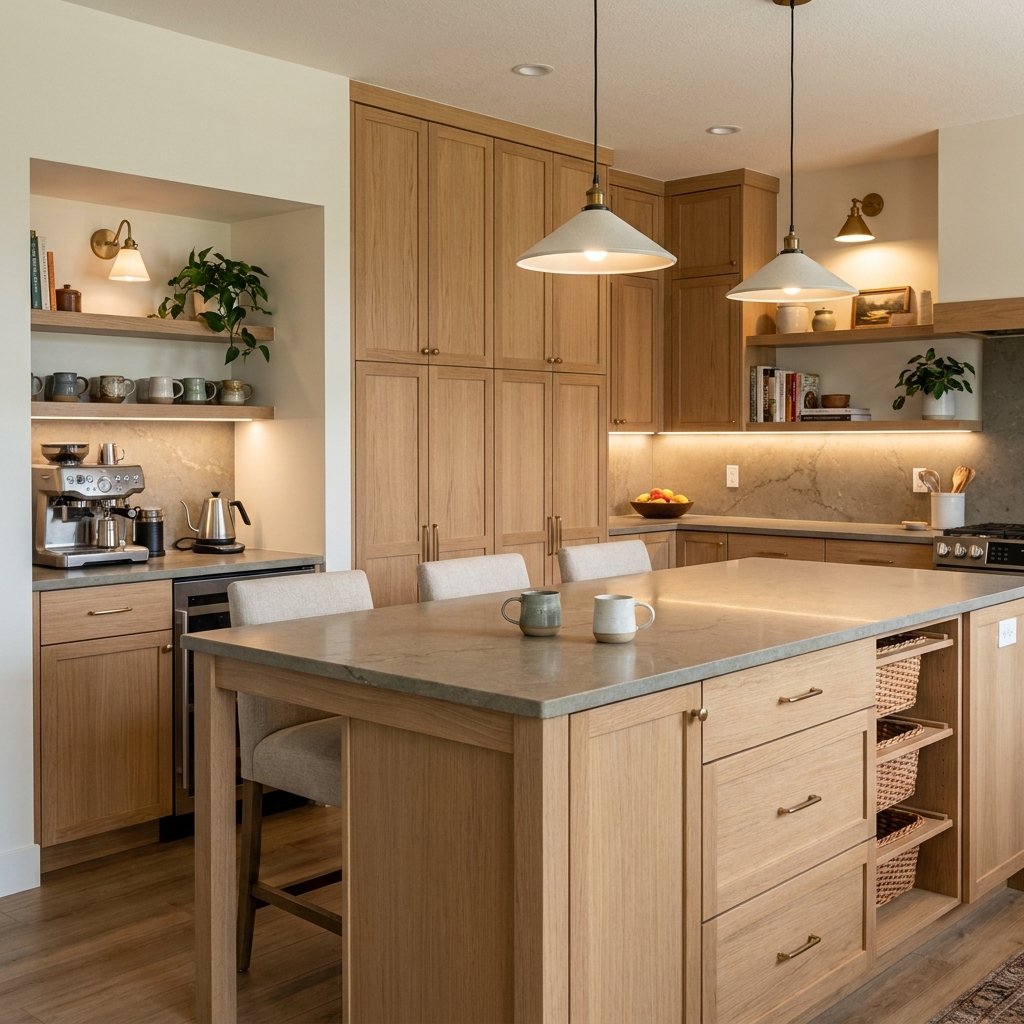
12. Beverage Stations
Coffee and beverage areas are moving beyond a coffee maker sitting beside the toaster.
Houzz found beverage stations were the second-most-popular built-in feature in its 2026 renovation study, selected by 24% of homeowners incorporating built-ins.
NKBA’s professional survey also highlighted dedicated beverage areas as a significant lifestyle feature.
A beverage station might contain:
- Coffee maker
- Electric kettle
- Mugs
- Glassware
- Beverage refrigerator
- Coffee supplies
It can be elaborate or extremely simple.
Even one cabinet dedicated to coffee supplies can make mornings easier.
13. Butler’s Pantries and Back Kitchens
Larger renovations are increasingly using secondary spaces to keep the main kitchen visually calm.
Houzz found storage was the leading priority in newly added or upgraded butler’s pantries, followed by prep counters and enclosed cabinetry.
A back kitchen can provide room for:
- Food prep
- Small appliances
- Pantry storage
- Dishes
- Entertaining supplies
Of course, not every house has space for one.
Don’t sacrifice a useful room simply because a back kitchen is fashionable.
A thoughtfully designed pantry cabinet can accomplish some of the same goals in a much smaller footprint.
14. Islands Packed With Storage
The giant empty island is giving way to more purposeful design.
NKBA’s research highlights storage-rich islands as part of the move toward smarter kitchen organization.
Possible island storage includes:
- Deep drawers
- Trash and recycling
- Tray dividers
- Pots and pans
- Serving pieces
- Cookbooks
Design storage around how you use the island.
If it’s primarily a prep zone, utensils, bowls, and trash may belong nearby.
If it’s mainly for entertaining, serving pieces and glassware may make more sense.
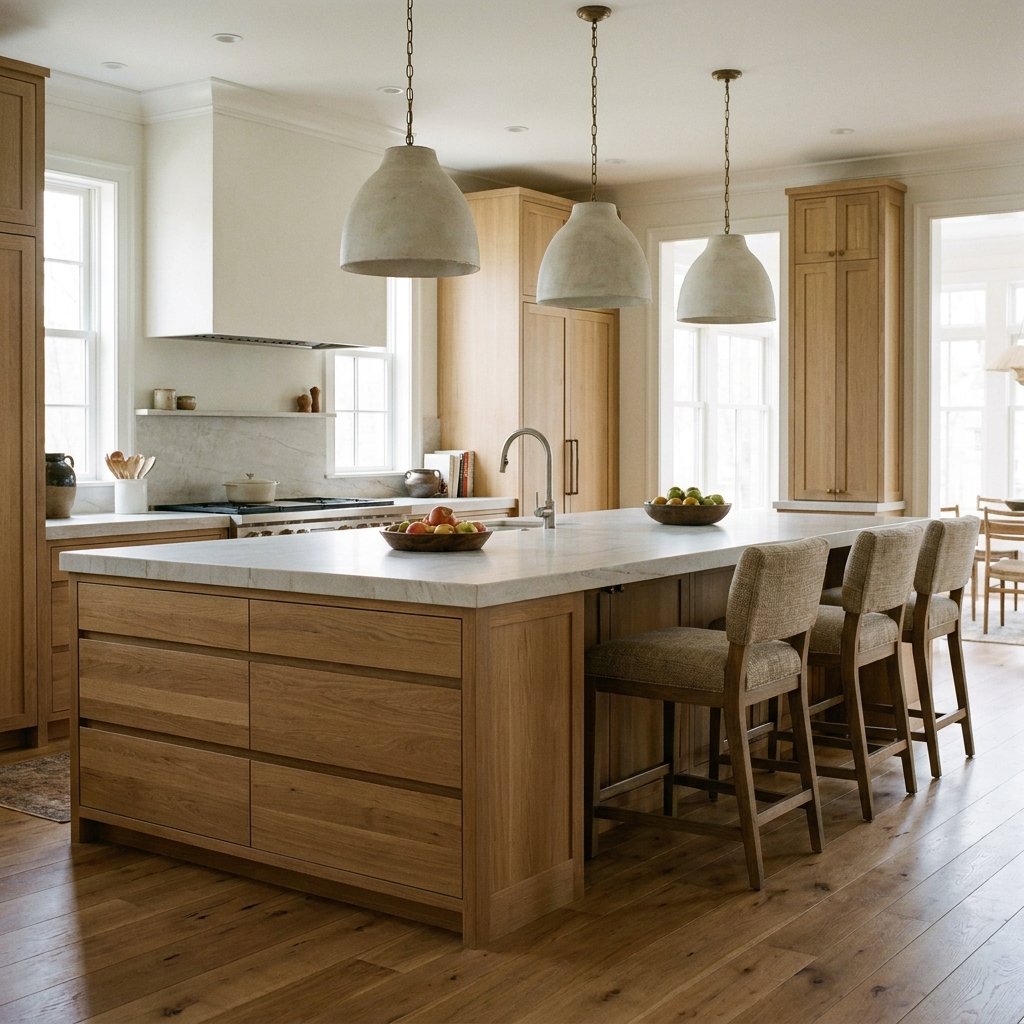
15. Better Layered Kitchen Lighting
Lighting is becoming a design feature and a functional priority.
In NKBA’s 2026 survey, natural lighting, quality lighting, and task lighting all ranked highly among kitchen considerations. Under-cabinet, interior-cabinet, and pendant lighting were also identified as important directions.
A well-lit kitchen usually benefits from layers.
Think:
Ambient Lighting
General illumination for the room.
Task Lighting
Light where you chop, cook, wash, and prepare food.
Decorative Lighting
Pendants or fixtures that contribute to the room’s style.
Accent Lighting
Interior cabinets, shelves, or other architectural features.
Don’t rely on pendant lights alone.
The countertop beneath upper cabinets often needs dedicated task lighting.
Electrical work should comply with applicable requirements and manufacturer instructions. Use a qualified professional where appropriate.
16. Statement Lighting With Simpler Surroundings
As cabinetry becomes simpler, lighting has more opportunity to become decorative.
NKBA reported that 87% of its respondents saw kitchens as spaces for showcasing decorative statement lighting.
Statement doesn’t necessarily mean enormous.
It can mean:
- Interesting shape
- Warm material
- Beautiful glass
- Sculptural silhouette
- Unexpected finish
Scale the fixture to the island, ceiling height, and room rather than choosing solely from an inspiration photograph.
17. Kitchens Designed Around Real Life
Perhaps the biggest kitchen trend isn’t visual at all.
It’s personalization.
NKBA’s 2026 report highlights multi-purpose kitchens, lifestyle enhancements, storage maximization, wellness, smart technology, and whole-home continuity as major themes.
Houzz’s homeowner research tells a similar story: functionality is becoming an increasingly important reason to remodel, approaching dissatisfaction with outdated style as a renovation trigger.
That means the kitchen should be designed around the people living there.
A family with three children may need:
- Snack storage
- Large pantry
- Durable surfaces
- Homework spot
Someone who loves baking may prefer:
- Mixer storage
- Baking station
- Deep drawers
- Extra prep surface
Someone who entertains frequently may value:
- Beverage station
- Large island
- Serving storage
- Extra refrigeration
Function should determine the design—not the other way around.
Are White Kitchens Going Out of Style?
No.
White kitchens aren’t suddenly outdated.
But they’re no longer the only dominant direction.
Houzz’s 2026 renovation data found wood cabinets at 29% and white close behind at 28%.
So rather than declaring white “out,” it’s more accurate to say homeowners have more options.
If you love white cabinetry, keep it.
You can make it feel warmer with:
- Wood island
- Warm hardware
- Natural stone
- Cream backsplash
- Wood flooring
- Colorful accessories
Are Open Shelves Still Popular?
Open shelving can still work beautifully, particularly when used selectively.
But practical storage is receiving significant attention.
If you dislike dusting dishes or don’t want everyday kitchen clutter visible, don’t remove useful upper cabinets just because open shelving looks pretty in photographs.
A combination can work well:
Closed cabinets + one small display shelf
You get storage and a place for personality.
Are Open-Concept Kitchens Still Popular?
The answer is becoming more nuanced.
Kitchens remain social spaces, but designers and homeowners are increasingly thinking about zones, prep spaces, storage, and ways to control visual clutter.
NKBA’s 2026 research emphasized connection and whole-home continuity, while its just-released 2027 research describes a broader “rebalancing of space” and more purpose-built kitchens.
You don’t necessarily need to knock down every wall.
Sometimes a wider doorway or better connection between rooms provides openness while preserving useful wall space.
Kitchen Colors Trending Beyond White
If you’re considering color, start with shades that work with your home’s permanent materials.
Current directions include:
- Sage
- Olive
- Blue
- Navy
- Mushroom
- Taupe
- Warm beige
- Brown
- Natural wood
NKBA’s 2026 professional survey strongly favored neutrals, greens, and blues over brighter colors such as orange and red.
That doesn’t mean you can’t have a red kitchen.
It simply means softer and earthier palettes are currently receiving more attention.
What Kitchen Trends Have Staying Power?
No one can guarantee that a design choice will remain popular forever.
But some current trends are rooted in function rather than novelty.
Those include:
- Better storage
- Natural materials
- Quality lighting
- Functional islands
- Pantry storage
- Comfortable layouts
- Durable countertops
- Personalized work zones
Those are less likely to become annoying simply because a trend cycle changes.
Kitchen Trends to Approach Carefully
Some ideas require more thought because they’re expensive or difficult to reverse.
Oversized Islands
An island should improve circulation, not consume the kitchen.
Removing Too Many Upper Cabinets
Make sure you’ll still have enough practical storage.
Highly Dramatic Stone Everywhere
Beautiful stone can become visually overwhelming when repeated on every surface.
Too Many Trendy Features at Once
You don’t need wood cabinets, green stone, a fluted island, statement pendants, slab backsplash, open shelves, and mixed metals all in one kitchen.
Sacrificing Function for Appearance
A gorgeous kitchen that frustrates you every morning isn’t successful design.
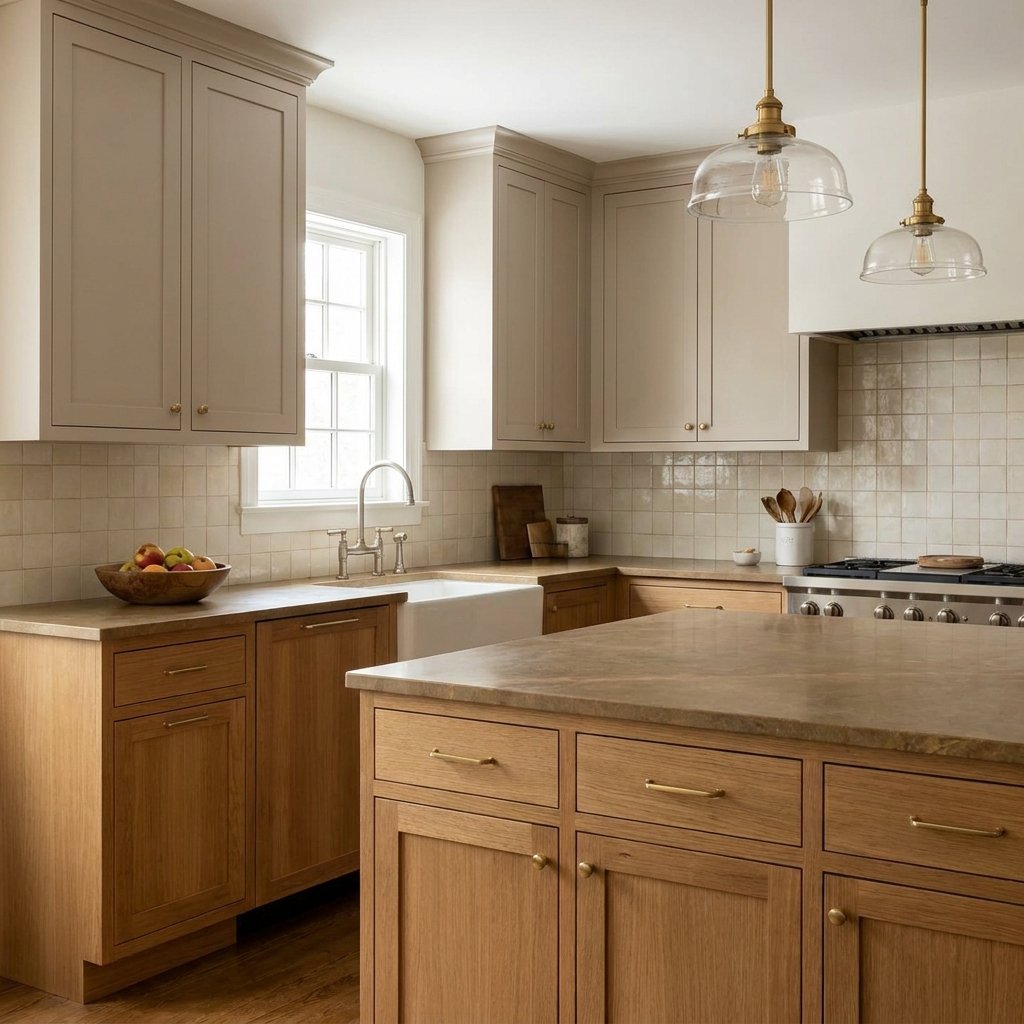
How to Use Kitchen Trends Without Dating Your Home
Use trends selectively.
Start with your home’s architecture.
Then identify the current ideas that actually improve the room.
A useful formula is:
Timeless foundation + personal details + a few current elements
For example:
Natural wood cabinetry + light stone + simple hardware + statement pendants
or:
Mushroom cabinets + warm backsplash + wood floors + brass lighting
or:
White cabinets + wood island + slab backsplash + colorful runner
The kitchen feels current without depending entirely on trends.
How to Update Your Kitchen Without Remodeling
You don’t need a $50,000 renovation to introduce some of these ideas.
Try:
- Paint the walls.
- Replace cabinet hardware.
- Add a runner.
- Update pendant lights.
- Add under-cabinet lighting.
- Organize pantry cabinets.
- Create a coffee station.
- Add wood accessories.
- Replace counter stools.
- Reduce countertop clutter.
Small changes can shift the entire feeling of the room.
How to Choose Which Kitchen Trends Are Right for You
Before adding a trend, ask:
Does this solve a problem?
If yes, keep considering it.
Then ask:
Would I still like this if it stopped appearing on Pinterest tomorrow?
That’s an especially useful question for expensive choices.
Finally:
Does it work with my house?
A kitchen doesn’t exist in isolation.
Its flooring, architecture, trim, adjoining rooms, and natural light should influence your decisions.
Common Kitchen Design Mistakes
Designing From Inspiration Photos Alone
Your room has different dimensions and lighting.
Choosing Cabinets Without Countertop Samples
View major materials together.
Forgetting Storage
Plan what goes inside cabinets before ordering them.
Installing an Island That’s Too Large
Maintain appropriate circulation based on your specific layout and applicable requirements.
Ignoring Task Lighting
Decorative lighting alone may not adequately illuminate work surfaces.
Following Every Trend
Choose what improves your kitchen.
Forgetting Appliance Requirements
Confirm clearances, electrical, plumbing, ventilation, and manufacturer specifications before finalizing cabinetry.
Choosing Beauty Over Function
The best kitchen should provide both.
FAQ About Kitchen Design Trends
What are the biggest kitchen design trends in 2026?
Natural wood cabinetry, warmer neutral colors, green and blue accents, slab backsplashes, improved pantry storage, beverage stations, integrated appliances, functional islands, layered lighting, and personalized layouts are among the major directions reflected in current industry and homeowner research.
Are white kitchens out of style?
No. White remains a major cabinet choice, although Houzz’s 2026 renovation data shows wood narrowly overtaking white among surveyed renovating homeowners.
What kitchen cabinet colors are trending?
Natural wood, neutrals, greens, and blues are prominent current directions. NKBA’s 2026 research particularly emphasizes neutral, green, and blue palettes.
Are wood kitchen cabinets coming back?
Yes, although it’s arguably more accurate to say they never completely disappeared. Houzz’s 2026 study found wood was the most popular cabinet choice among surveyed renovating homeowners, at 29%.
What kitchen trends are most practical?
Pantry storage, deep drawers, task lighting, appliance storage, functional islands, and purpose-built work zones can improve everyday kitchen function rather than simply changing its appearance.
Are slab backsplashes trending?
Yes. Both NKBA and Houzz research point toward growing interest in slab or large-format backsplash treatments.
Are kitchen islands still popular?
Yes, but size should be dictated by the room. An island should provide useful prep, seating, or storage without compromising comfortable circulation.
What kitchen trends are likely to age well?
Natural materials, practical storage, quality lighting, functional layouts, and thoughtfully selected colors have advantages beyond their current popularity, which can make them easier to live with over time.
Final Thoughts
The most interesting kitchen design trends right now aren’t about making kitchens more complicated.
They’re about making them warmer, smarter, and more personal.
Wood cabinetry is competing strongly with white. Natural materials are becoming more prominent. Greens and warm neutrals are bringing color back into kitchens. Storage is getting more thoughtful, lighting is becoming more layered, and appliances are increasingly integrated into the surrounding cabinetry.
But the most important trend may be the emphasis on function.
Houzz’s 2026 homeowner research shows kitchen dysfunction is increasingly becoming a renovation trigger, while NKBA’s research emphasizes storage, lifestyle customization, multipurpose spaces, and whole-home continuity.
That’s a useful direction whether you’re planning a complete remodel or updating a kitchen you already have.
Don’t choose something simply because it’s trending.
Choose the trends that make your particular kitchen work better.
A natural wood cabinet, beverage station, deeper drawer, better pantry, or well-positioned task light may not sound as exciting as the latest statement stone—but those are the details you may appreciate every single day.
And that’s ultimately what good kitchen design should accomplish.