

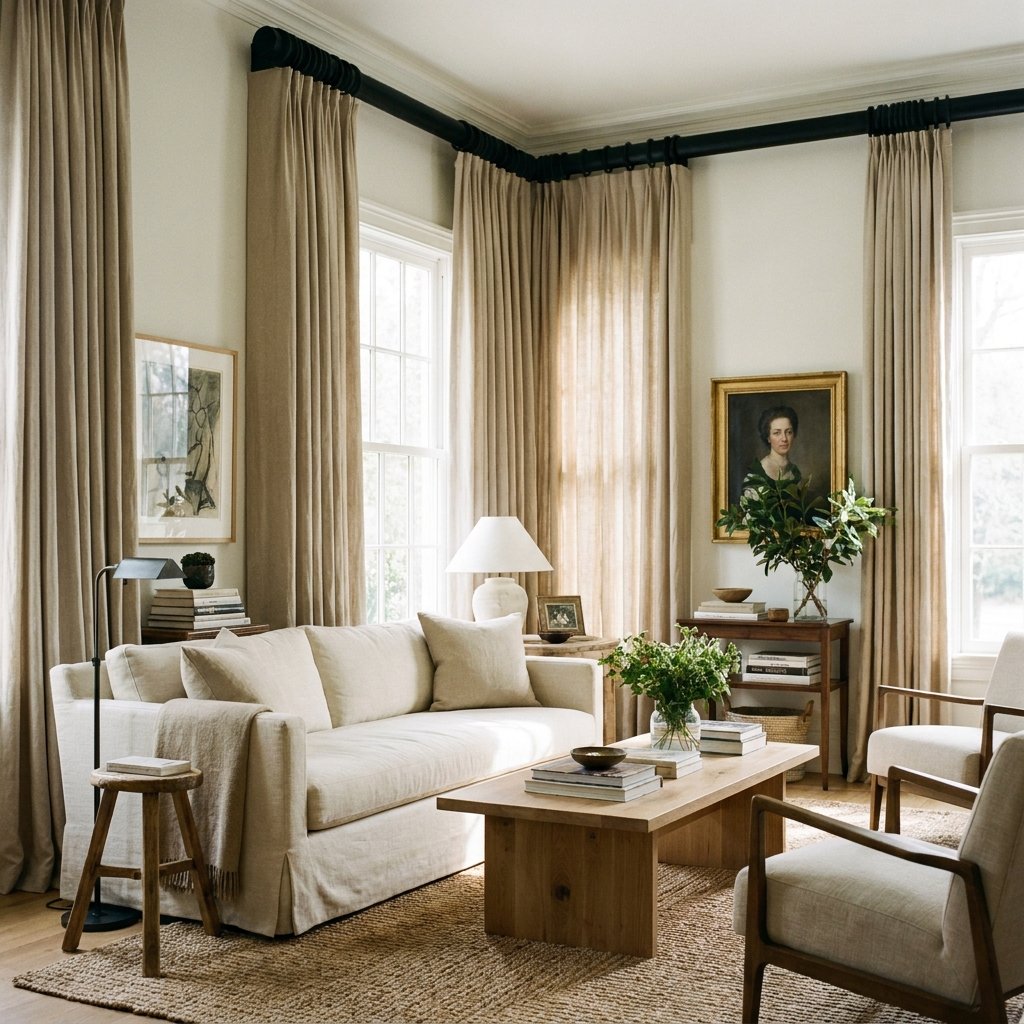
Beautiful curtains can completely change a room.
They can make windows look larger, ceilings feel taller, soften hard architectural lines, add texture, and give an otherwise simple space a much more finished appearance.
The problem? True custom window treatments can get expensive quickly.
Fortunately, you don’t necessarily need custom-made drapery to create a similar polished look.
The secret to look for less custom curtains is paying attention to the details that make designer curtains look custom in the first place: generous length, enough fabric width, good placement, attractive pleats, quality-looking material, and hardware that’s properly scaled for the window.
Instead of focusing only on finding an inexpensive curtain panel, think about the entire window treatment.
An affordable curtain hung too low, too short, or without enough fullness will still look inexpensive. A reasonably priced ready-made panel that fits the window beautifully can look surprisingly high-end.
Here’s how to create the look of custom curtains without paying for fully custom window treatments.
What Makes Custom Curtains Look Expensive?
Custom curtains aren’t simply more expensive versions of regular curtains.
Several design details contribute to their appearance.
These commonly include:
- Properly measured length
- Generous fabric width
- Intentional pleats
- Substantial fabric
- Appropriate lining
- Well-scaled hardware
- Thoughtful placement
- Consistent hems
- Panels that suit the window
Those are exactly the details you can focus on when trying to recreate the look for less.
1. Hang Curtains Higher
One of the simplest ways to improve inexpensive curtains is to reconsider where the rod is installed.
Curtains mounted immediately above the window frame can visually emphasize the size of the window.
Moving the rod higher can draw the eye upward and make the entire window treatment feel more substantial.
In many rooms, positioning the rod closer to the ceiling or crown molding creates a more dramatic floor-to-ceiling effect.
But don’t blindly follow a fixed measurement.
The ideal rod position depends on:
- Ceiling height
- Window height
- Crown molding
- Curtain length
- Room proportions
Plan the complete curtain height before drilling.
2. Hang the Curtain Rod Wider Than the Window
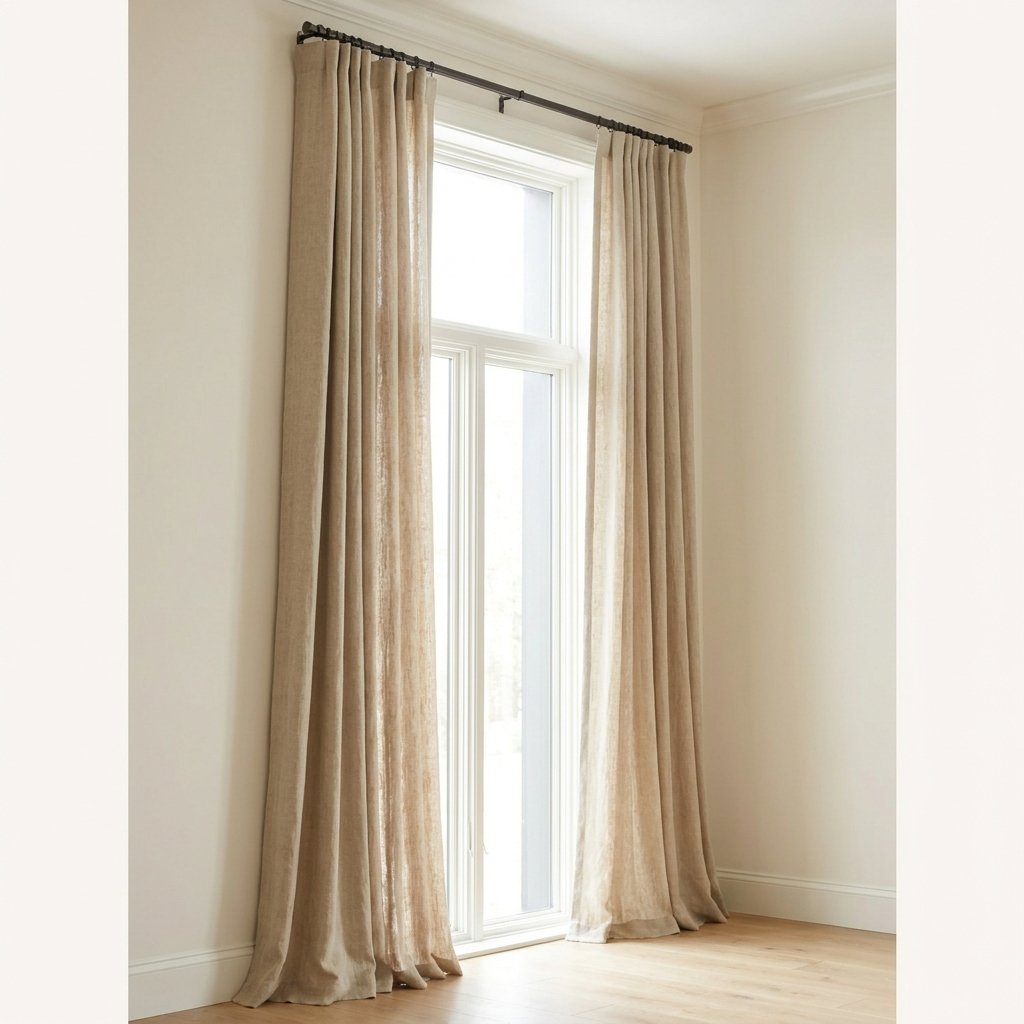
Curtains don’t have to stop at the outer edge of the window frame.
Extending the rod beyond the window allows the panels to sit partially or mostly beside the glass when they’re open.
This can make the window appear larger and allows more daylight into the room.
The amount of extension depends on available wall space, curtain fullness, furniture, and the overall window width.
The goal is to give the panels enough room to frame the window rather than covering a large portion of it.
3. Use More Curtain Fabric
One of the biggest differences between an inexpensive-looking curtain and a custom-looking one is fullness.
If a wide window has only two narrow panels pulled across it, the fabric may look stretched and sparse.
Custom drapery generally looks fuller.
To recreate that effect with ready-made curtains, you may need:
- Wider panels
- Multiple panels per side
- Extra fabric width
The exact amount depends on the curtain style and whether the panels need to close completely.
Don’t buy based only on the number of windows.
Measure the total width you need to cover and consider how full you want the curtains to look when closed.
4. Choose Curtains Long Enough to Reach the Floor
Curtain length makes a huge visual difference.
Panels that stop several inches above the floor can make the entire treatment feel undersized unless that shorter length is an intentional design choice.
For a custom-style look, full-length curtains generally work beautifully.
Common approaches include:
Just Above the Floor
Creates a clean, practical appearance.
Barely Touching the Floor
Creates a tailored look.
Slight Break
Allows a little fabric to rest at the bottom.
Puddled
Uses extra length to create a more romantic, traditional effect.
For most everyday homes, a clean floor-length treatment is easy to maintain and versatile.
5. Skip Curtains That Are Obviously Too Short
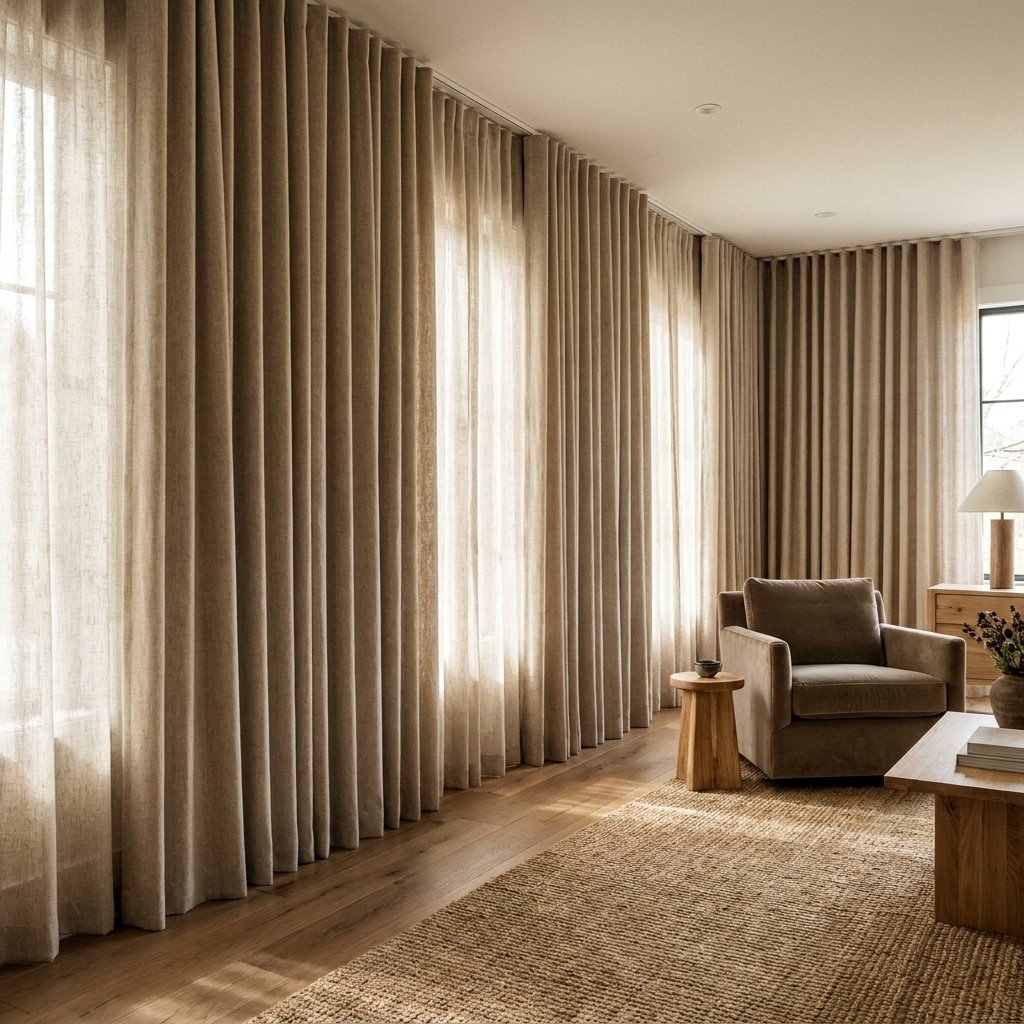
If standard curtain lengths don’t work with your ceiling and window dimensions, don’t automatically settle for the closest size.
Look for retailers offering longer ready-made panels.
Another option is to buy longer panels and have them hemmed.
Even paying for simple alterations may cost far less than fully custom curtains while creating a more tailored result.
6. Choose a Linen-Look Fabric
Linen has a relaxed, sophisticated texture that works beautifully in many decorating styles.
True linen can be expensive, but there are ready-made curtains designed to create a similar textured appearance using linen blends or other fibers.
Look for fabric with:
- Visible woven texture
- Soft drape
- Matte appearance
- Natural-looking variation
Avoid judging fabric only from online photos.
If possible, look closely at material composition, customer images, opacity, and return policies before buying.
7. Consider a Linen Blend
A linen blend can be a practical compromise.
Depending on the product, blending linen with other fibers can change:
- Wrinkling
- Drape
- Price
- Durability
- Care requirements
There’s nothing inherently wrong with a blend.
The goal is to choose a fabric that hangs attractively and gives you the texture you want.
8. Choose a Soft Neutral Color
If you want an expensive-looking, versatile curtain, neutral colors are an easy place to start.
Consider:
- Warm white
- Ivory
- Flax
- Oatmeal
- Natural linen
- Light beige
- Soft taupe
These colors can add softness without competing with the rest of the room.
Warm neutrals work particularly well in rooms with wood furniture and natural materials.
9. Don’t Automatically Choose Bright White
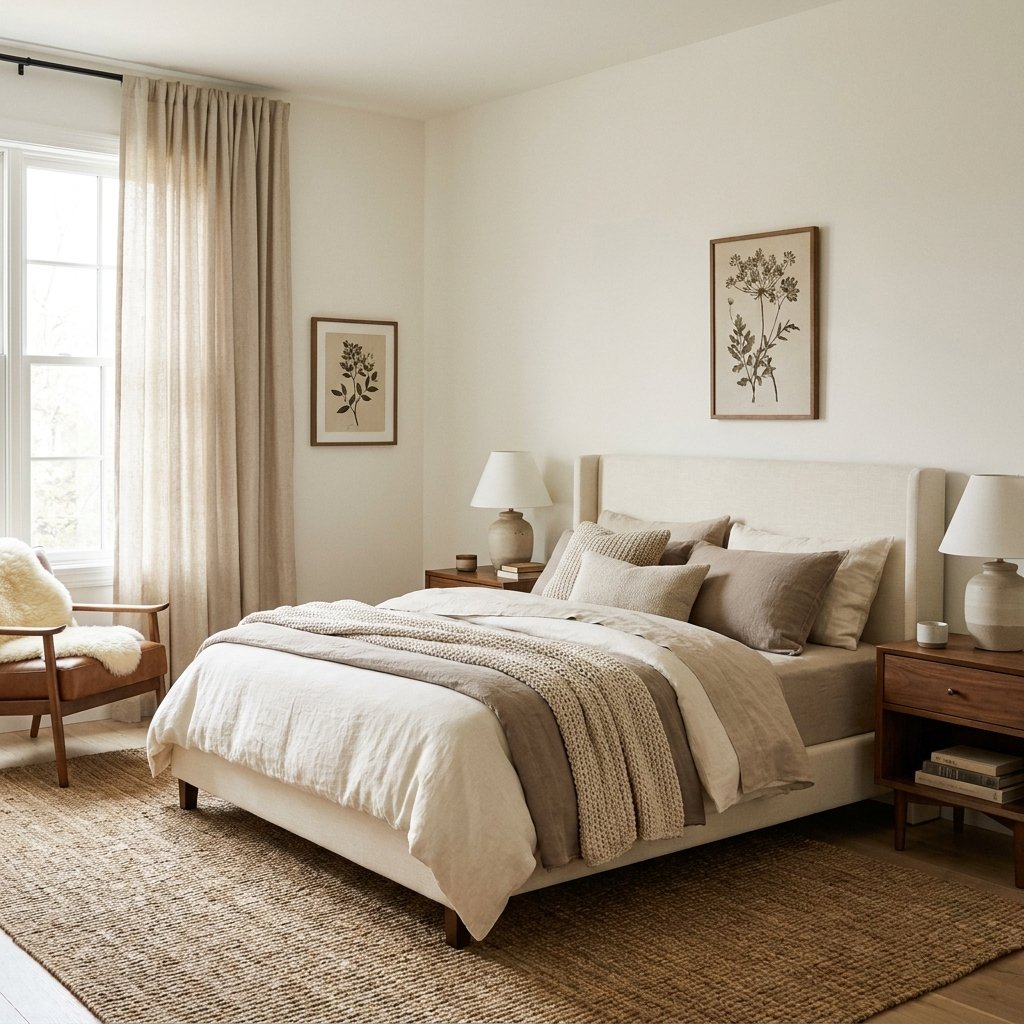
Bright white curtains can be beautiful, but they aren’t always the best match.
If your walls, trim, upholstery, and flooring are warm, an icy white curtain may stand out more than intended.
Try comparing:
- White
- Ivory
- Cream
- Natural
- Oatmeal
The slightly deeper option may actually look more expensive because it relates better to the room’s existing palette.
10. Use Pinch-Pleat Curtains
Pleating can immediately make curtains feel more tailored.
Pinch pleats create structured folds across the top of the curtain.
They work especially well in:
- Traditional rooms
- Transitional interiors
- Modern classic spaces
- Formal living rooms
- Bedrooms
You can buy ready-made pinch-pleat curtains, or some curtain panels can be adapted with compatible heading systems and hooks.
Follow the curtain and hardware manufacturer’s instructions.
11. Try a Euro-Pleat Look
Euro pleats create another tailored appearance.
They’re related to pinch pleats but can feel slightly more relaxed or contemporary depending on the curtain design.
A pleated heading can transform the visual impression of otherwise simple fabric.
When shopping for affordable curtains, pay as much attention to the heading as the fabric.
12. Use Curtain Rings
Curtain rings can make ready-made panels look more intentional and allow them to move more easily along an appropriate rod.
Depending on the curtain heading, you might use:
- Rings with hooks
- Rings with clips
- Other compatible hardware
For the most polished appearance, concealed or discreet attachment methods can help keep attention on the pleats rather than the hardware.
Always use hooks, rings, and curtain headings as intended by their manufacturers.
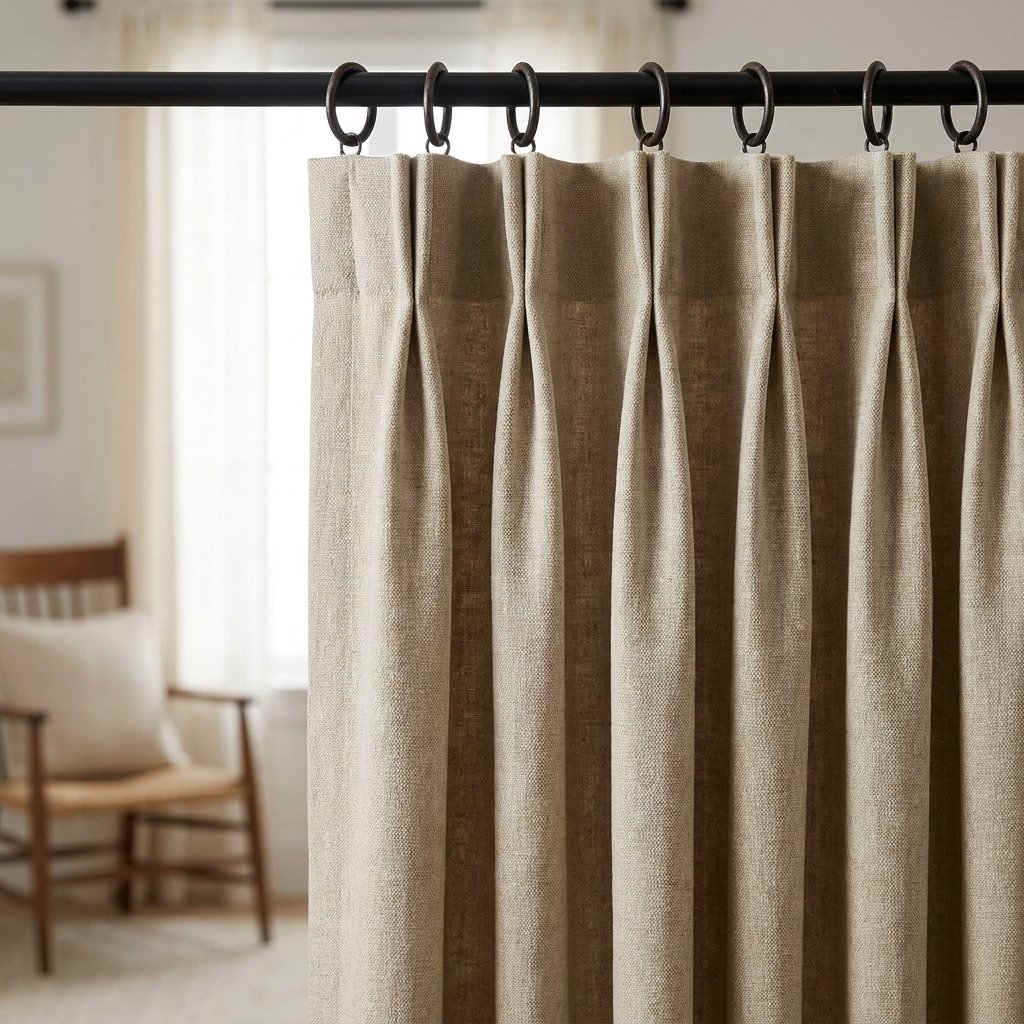
13. Consider Curtain Hooks Instead of Clips
Clip rings are convenient, but visible clips can create a more casual appearance.
For a tailored look, curtain hooks paired with compatible rings and heading tape can create cleaner folds.
This doesn’t work with every curtain.
Check the construction of the panel before inserting hooks.
Avoid puncturing or modifying fabric in ways the product isn’t designed to handle.
14. Add Pleater Tape to DIY Curtains
If you’re comfortable sewing, pleater tape can help transform basic fabric or suitable panels into a more structured window treatment.
This is a useful DIY approach if you:
- Need unusual dimensions
- Found affordable fabric you love
- Want specific pleat spacing
- Can’t find ready-made curtains in the right style
Follow the pleater tape manufacturer’s instructions and make sure your fabric width accounts for the fullness required by your chosen pleat style.
15. Line Your Curtains
Lining can give curtains more body.
Depending on the lining and curtain, it can also affect:
- Light control
- Privacy
- Drape
- Insulation
- Appearance from outside
Some ready-made curtains come lined.
Others may have optional liners or can potentially be professionally altered.
If you’re trying to create a substantial custom look, compare lined and unlined options before buying.
16. Use Blackout Curtains Carefully
Blackout curtains can be useful in bedrooms, nurseries, media rooms, and other spaces where controlling light matters.
But not every blackout curtain has the same appearance.
Some inexpensive options can look stiff or synthetic.
Look for blackout curtains with an attractive face fabric and enough weight to hang smoothly.
If you love the look of a lighter decorative curtain, another possibility is combining it with a separate appropriate light-control treatment.
17. Choose a Substantial Curtain Rod
Beautiful curtains on an undersized rod can look unbalanced.
Choose hardware appropriate for:
- Window width
- Curtain weight
- Number of panels
- Wall construction
The rod needs to support the actual load.
For wider windows, appropriate center supports may be necessary.
Always follow the hardware manufacturer’s installation instructions and use suitable fasteners for the wall type.
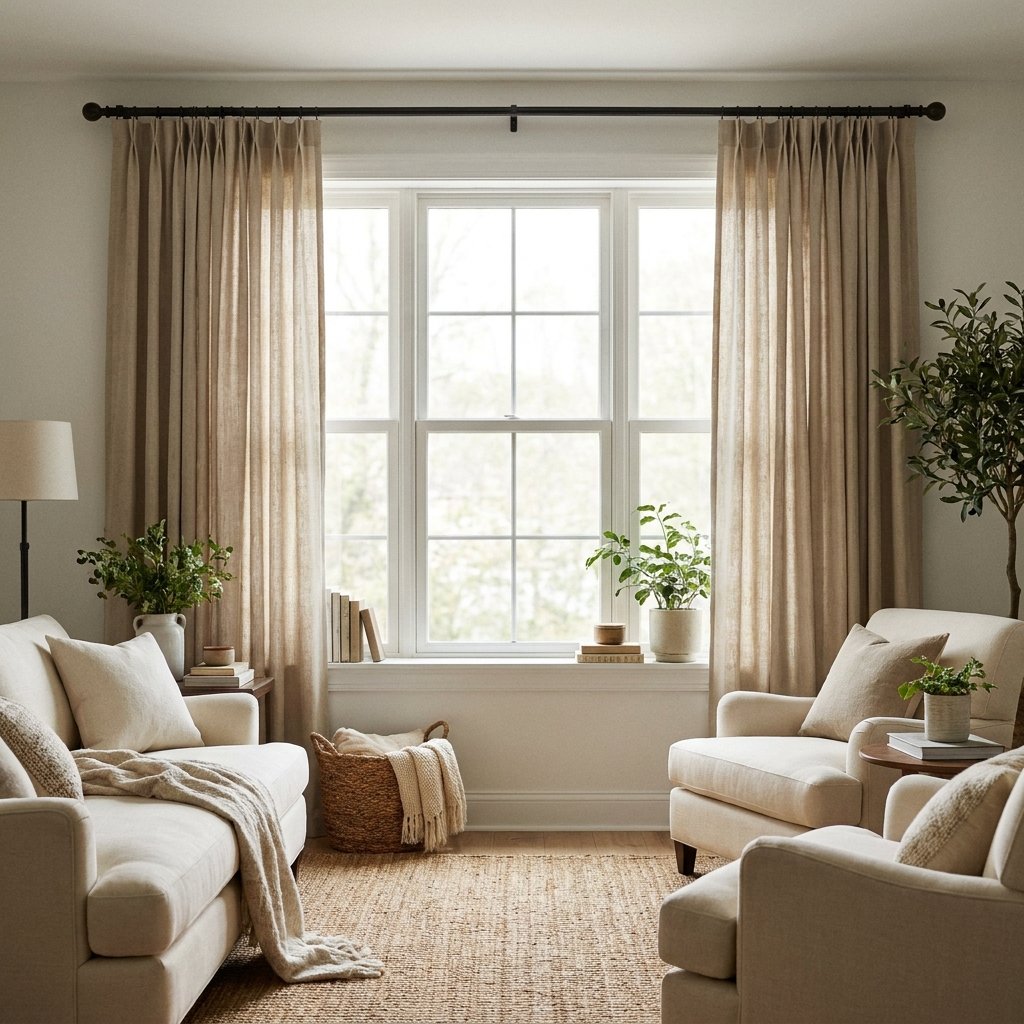
18. Keep Curtain Hardware Simple
You don’t need elaborate hardware to make curtains look expensive.
Simple finishes often work beautifully:
- Black
- Dark bronze
- Brass
- Brushed metal
- Wood
Choose a finish that connects with something else in the room.
For example, black curtain hardware might repeat:
- Black lamps
- Picture frames
- Furniture hardware
That repetition helps the rod feel intentional.
19. Steam or Press the Curtains
Few things make new curtains look less polished than deep packaging creases.
Before judging the final result, allow the panels to relax and use an appropriate method to remove wrinkles.
Check the fabric care label before using heat or steam.
Different fibers tolerate different temperatures.
Once the wrinkles are gone and the folds are trained, the curtains can look significantly more finished.
20. Train the Curtain Folds
Curtains don’t always fall into perfect folds immediately after installation.
Arrange the panels into consistent folds and allow them time to settle.
Depending on the fabric, this can help create the orderly vertical lines associated with custom drapery.
Avoid using ties, heat, or other methods that could damage the fabric.
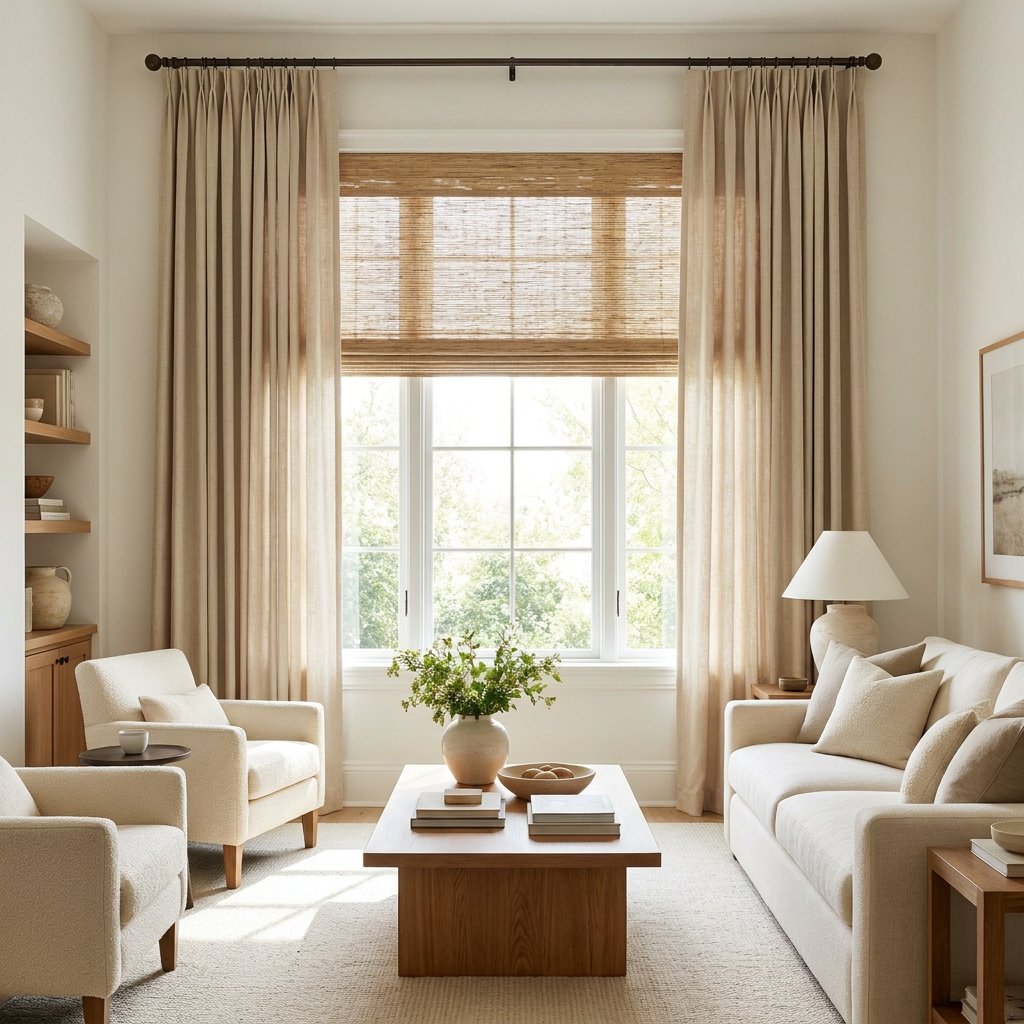
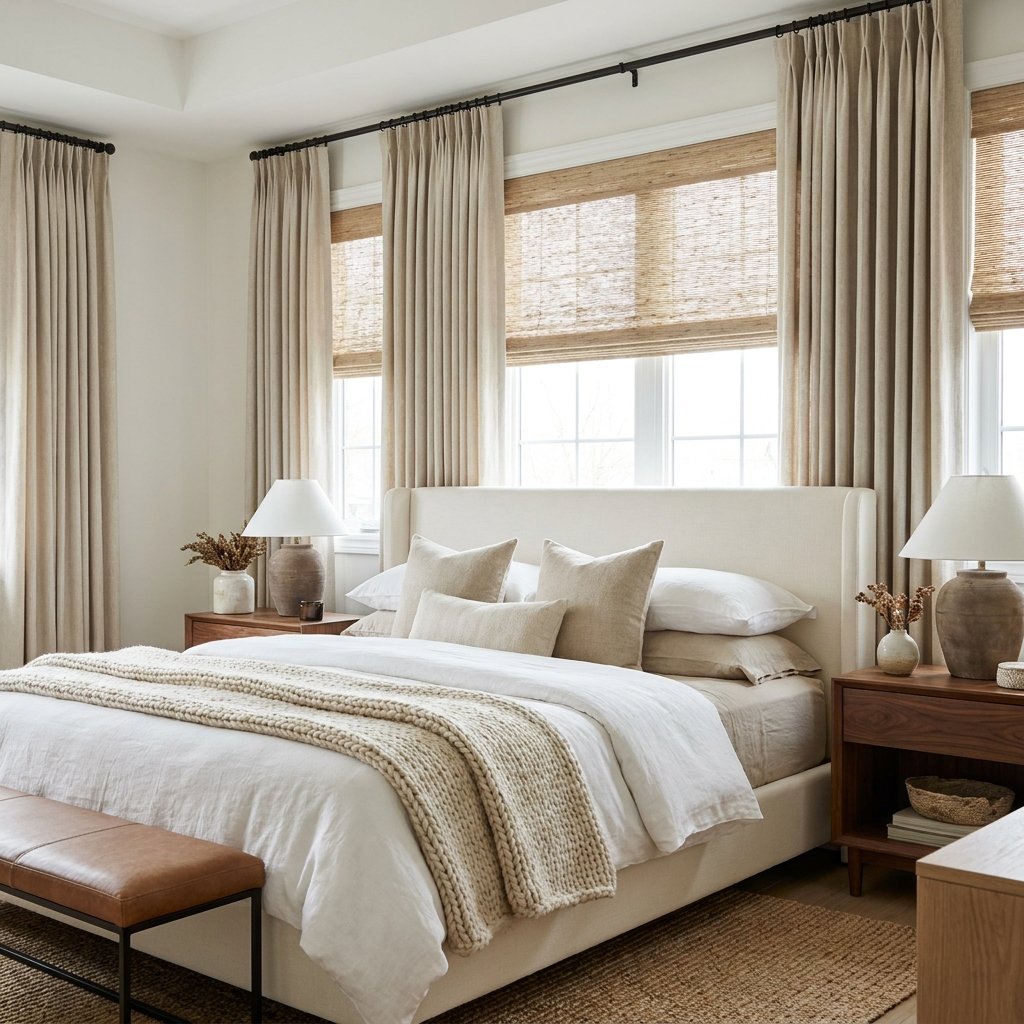
21. Combine Curtains With a Shade
Layering window treatments can create an especially finished look.
Try pairing full-length curtains with:
- Woven shade
- Roman shade
- Roller shade
- Other appropriate inside treatment
The shade can provide functional light or privacy control while the curtains add softness and scale.
This can create the appearance of a much more customized window treatment.
Ready-Made Curtains vs. Custom Curtains
Custom curtains have real advantages.
They can be made for:
- Exact window dimensions
- Specific fabric
- Particular lining
- Custom pleats
- Unusual architecture
Ready-made curtains won’t provide that level of customization.
But if your windows work with standard or readily available dimensions, ready-made panels can create a remarkably polished result.
The key is treating them like custom curtains during installation.
Where to Spend and Where to Save
If you’re working with a limited budget, don’t distribute it evenly.
Save On:
- Simple neutral fabric
- Decorative accessories
- Trend-driven colors
Consider Spending More On:
- Correct curtain length
- Enough fabric width
- Reliable hardware
- Alterations when necessary
- Appropriate lining where function matters
An inexpensive panel that’s too short isn’t much of a bargain.
How to Measure for Custom-Looking Curtains
Measure before shopping.
You’ll need to consider:
- Desired rod height
- Desired rod width
- Distance from rod to floor
- Total window width
- Space beside window
- Number of panels
- Desired fullness
Don’t buy curtains first and then decide where the rod can go.
Plan the final appearance before ordering.
Measure Curtain Length From the Rod Position
Decide where you want the curtain to begin.
Then measure down toward the floor based on the specific ring, hook, or heading system you’ll be using.
Different hardware changes the point from which the fabric hangs.
That means simply measuring ceiling-to-floor height may not give you the correct panel length.
How Wide Should Curtains Be?
The panels should generally contain enough fabric to create visible folds when the curtains are closed rather than stretching flat across the window.
The amount of fabric required varies according to:
- Pleat style
- Fabric
- Desired fullness
- Window width
- Whether curtains close
Use the curtain or heading manufacturer’s recommendations where provided.
What If Ready-Made Curtains Are Too Long?
That’s usually easier to solve than curtains that are too short.
Depending on the curtain construction, longer panels may be:
- Professionally hemmed
- Sewn at home
- Altered using another appropriate method
Check fabric and lining construction before altering.
If the curtains have a decorative border or pattern placement, shortening them may change the design.
What If Standard Curtains Aren’t Wide Enough?
Consider combining multiple identical panels.
For a large window, two panels on each side may create a much fuller look than one narrow panel.
If you’re sewing and comfortable altering curtains, compatible panels may potentially be joined.
Be aware that dye lots and fabric appearance can vary between production runs.
How to Make IKEA-Style or Budget Curtains Look Custom
The same principles apply to almost any inexpensive ready-made curtain.
Focus on:
- Proper length
- Generous width
- High rod placement
- Wider rod placement
- Pleated heading
- Quality-looking hardware
- Neat folds
- Wrinkle removal
The brand matters less than the final proportions and styling.
Custom-Looking Curtains for a Living Room
In a living room, curtains often work best when they visually connect the windows with the architecture.
Full-length neutral panels can soften the room without dominating it.
For a designer look, consider:
Warm neutral curtain + dark rod + woven shade
or:
Soft white curtain + brass rod + warm wood furniture
Choose enough fullness that the panels still look substantial when they’re open.
Custom-Looking Curtains for a Bedroom
Bedrooms have additional functional considerations.
You may need:
- Privacy
- Light control
- Blackout
- Insulation
One solution is layering.
Use the decorative curtain for appearance and another appropriate treatment for privacy or darkness.
This lets you choose curtains based partly on aesthetics rather than asking one panel to perform every job.
Custom-Looking Curtains in a Dining Room
Dining rooms are a great place for more tailored drapery.
Try:
- Pinch pleats
- Richer fabric
- Slightly deeper neutral
- Pattern
- Dark or brass hardware
If the dining room has a large window, generous fabric width can make a particularly noticeable difference.
Can Patterned Curtains Look Custom?
Absolutely.
Pattern can create a beautiful designer look.
The key is choosing a pattern that relates to the room.
Consider:
- Scale
- Color palette
- Furniture patterns
- Rug
- Wallpaper
- Artwork
If the room already contains a patterned rug and busy upholstery, simple curtains may provide needed visual rest.
If everything else is neutral, curtains can be the place to introduce pattern.
Common Mistakes That Make Curtains Look Cheap
Hanging the Rod Too Low
Higher placement can improve the proportions.
Using Panels That Are Too Short
Incorrect length is difficult to disguise.
Not Using Enough Fabric
Sparse curtains rarely create a luxurious look.
Choosing a Rod That’s Too Small
Hardware should be appropriate for the curtain weight and window scale.
Ignoring Fabric Texture
Texture can make a simple neutral curtain much more interesting.
Leaving Packaging Wrinkles
Properly prepare the curtains before evaluating them.
Covering Too Much Glass
Extending the rod can allow curtains to frame rather than block the window.
Choosing Curtains Without Measuring
Measure first, shop second.
Forgetting Function
Privacy and light control matter too.
Copying Exact Measurements From Another House
Windows, ceilings, rods, and curtains differ.
Measure your own space.
A Simple Formula for Custom-Looking Curtains
If you want an easy starting point, try:
Neutral linen-look fabric + generous fullness + floor-length panels + pleated heading + simple substantial rod + high and wide placement
Then add a woven or Roman shade if you want another layer.
The formula works because no single element is trying too hard.
The proportions create the expensive look.
Safety Tips for Hanging Curtains
Curtain hardware needs to be securely installed.
Before drilling:
- Check for hidden wiring or plumbing.
- Use suitable anchors or fasteners for your wall construction.
- Follow the rod manufacturer’s weight and installation requirements.
- Add recommended center supports on wider spans.
- Use a stable ladder or appropriate access equipment.
Very heavy curtains and oversized rods may require stronger mounting methods.
If you’re unsure about wall construction or hidden utilities, seek appropriate professional help.
FAQ About Look for Less Custom Curtains
How do you make cheap curtains look expensive?
Focus on length, fullness, rod placement, fabric texture, pleats, and hardware. Long, full curtains hung high and wide generally look more polished than undersized panels.
How do you make ready-made curtains look custom?
Use enough fabric, choose the correct length, create a tailored heading when appropriate, use compatible curtain rings or hooks, remove wrinkles, and install properly scaled hardware.
Should curtains touch the floor?
Floor-length curtains often create a more custom appearance. They may sit just above the floor, barely touch it, break slightly, or puddle depending on the desired style.
How high should curtains be hung?
The ideal height depends on ceiling height, window proportions, molding, curtain length, and hardware. Hanging above the window and often closer to the ceiling can visually increase height, but measure your room rather than relying on one universal number.
Should curtains be wider than the window?
Extending the rod beyond the window frame can allow the panels to sit beside the glass and make the window appear larger.
What fabric makes curtains look expensive?
Linen, linen blends, velvet, and substantial textured fabrics can create a luxurious appearance. Affordable linen-look fabrics can also work beautifully.
Do pinch-pleat curtains look more expensive?
Pleated headings can create a tailored, structured appearance associated with custom drapery, but the overall result also depends on fabric, fullness, length, and installation.
Can you use multiple curtain panels on one side?
Yes. Using more than one panel can add needed fullness to a large window. Make sure the rod and supports are rated for the combined weight.
Are custom curtains worth it?
They can be worthwhile for unusual windows, specific fabrics, exact dimensions, or specialized treatments. But standard windows can often achieve a polished look with carefully selected and installed ready-made curtains.
Final Thoughts
Creating a look for less custom curtains effect isn’t really about finding the cheapest curtain panels.
It’s about getting the details right.
Start by measuring the window and planning where the rod will go.
Hang the treatment high enough to complement the room’s proportions and wide enough to frame the glass.
Choose curtains with enough length to reach the floor and enough fabric to create generous folds.
Then pay attention to the details.
A textured linen-look fabric, pleated heading, simple rings, substantial rod, and neatly arranged folds can make ready-made curtains look far more expensive than their price tag suggests.
And if standard panels are almost—but not quite—right, consider simple alterations.
Hemming an extra-long panel or adding compatible pleating may still cost considerably less than ordering fully custom drapery.
You don’t need a huge window-treatment budget to create a beautifully finished room.
Spend your attention on scale, fullness, length, fabric, and installation, and even affordable curtains can give you much of the polished designer look you’re after.