

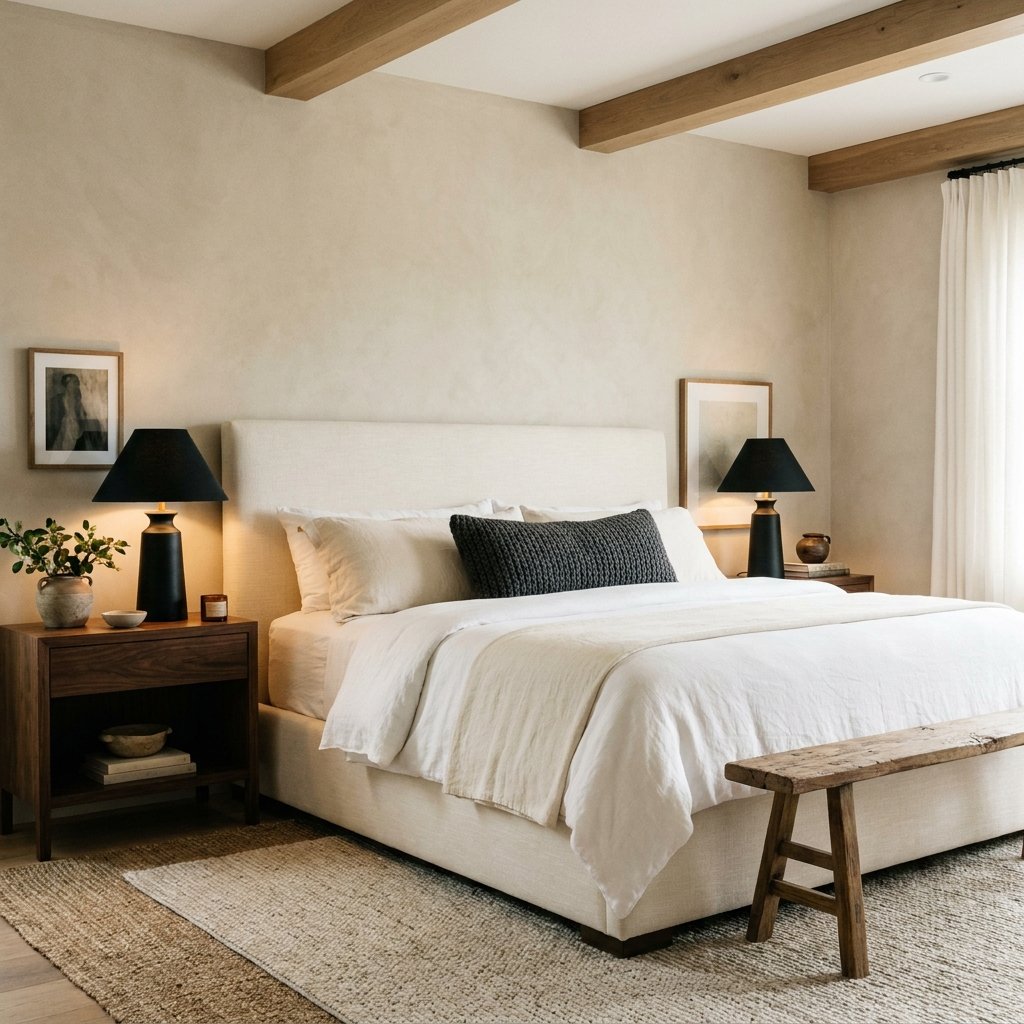
If your bedroom has all the right pieces but still feels a little flat, it may not need a complete makeover. It may simply need more contrast.
A master bedroom filled with similar light neutrals can feel calm and relaxing, but when the walls, bedding, rug, curtains, furniture, and accessories are all close in color and value, everything can start to blend together.
Adding contrast gives the eye somewhere to land.
And you don’t have to paint the room black or replace all your furniture to get it.
A few darker accents, warmer wood tones, patterned textiles, richer colors, or contrasting finishes can give a neutral bedroom more dimension while keeping it comfortable and peaceful.
If you’re planning a master bedroom update and want to add contrast, these 17 ideas will help you figure out where the room needs definition—and how to add it without making your bedroom feel dark or overly busy.
What Does Contrast Mean in a Bedroom?
Contrast is simply the difference between elements.
That difference can come from:
- Light and dark
- Warm and cool
- Smooth and textured
- Solid and patterned
- Old and new
- Soft and hard
- Neutral and colorful
- Matte and reflective
The most obvious example is black against white, but contrast doesn’t have to be that dramatic.
A cream bed against a medium taupe wall creates contrast.
So does a dark walnut nightstand against a pale rug.
Even a chunky woven throw over smooth white bedding creates textural contrast.
The goal isn’t to make everything different.
It’s to introduce enough variation that individual elements are easy to see.
Why a Neutral Bedroom Can Feel Flat
Neutral bedrooms can be beautiful.
The problem occurs when everything has roughly the same visual weight.
Imagine a room with:
Light beige walls + cream upholstered bed + ivory bedding + pale rug + white curtains + light furniture
Every individual piece may be lovely.
Together, however, they may blend into one large pale surface.
You don’t necessarily need more color.
You need variation.
Adding a few medium and dark elements gives the lighter pieces definition.
1. Add Dark Nightstands
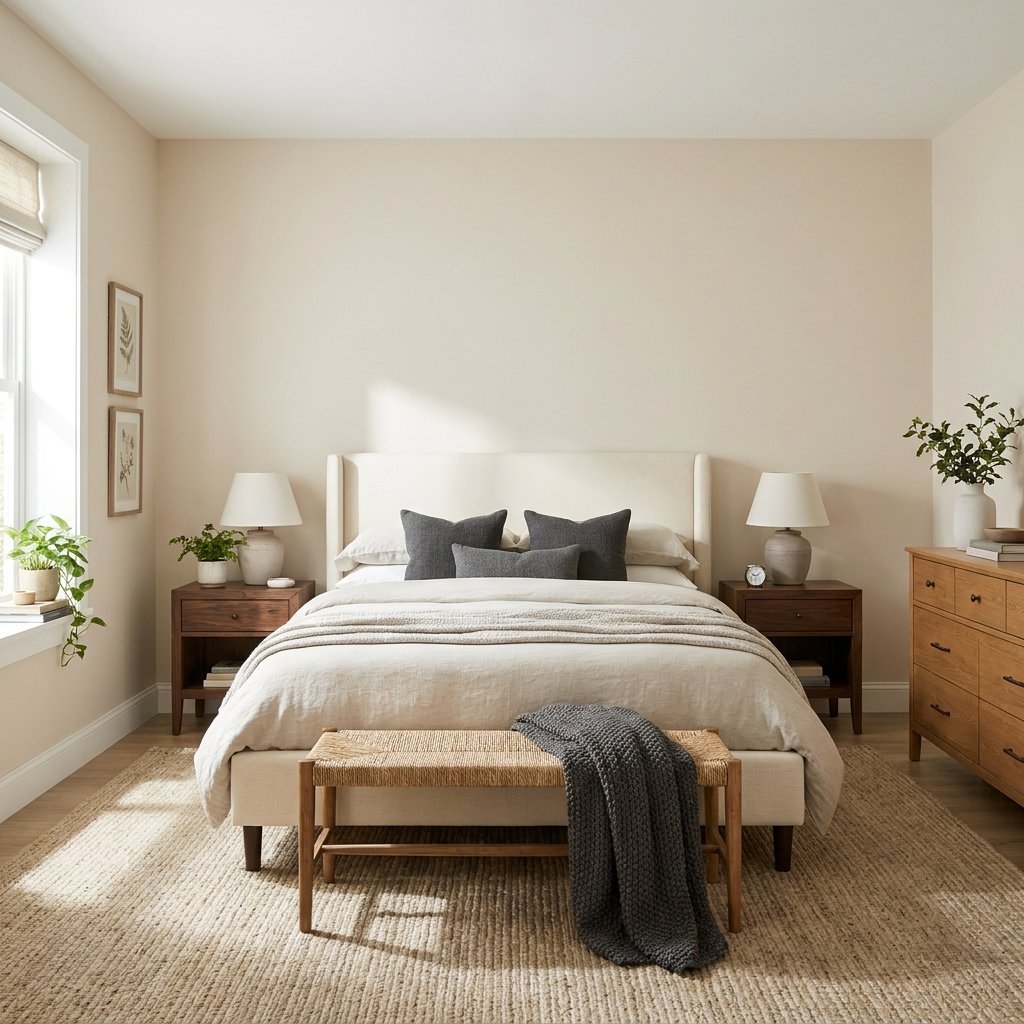
Nightstands are one of the easiest places to introduce contrast.
If your bed, bedding, walls, and rug are light, darker bedside tables can visually anchor the bed.
Consider:
- Walnut
- Espresso brown
- Charcoal
- Black
- Dark stained wood
You don’t necessarily need pure black.
Medium-to-dark wood can provide plenty of contrast while adding warmth.
This works especially well with an upholstered cream or beige bed.
2. Use Black or Dark Lamps
If replacing furniture isn’t in the budget, change the lamps.
Dark lamps can create definition against light walls.
Try:
- Black metal
- Dark bronze
- Charcoal ceramic
- Deep brown
The lamp doesn’t have to be completely dark.
A dark base with a light fabric shade often provides a nice balance.
Repeat the darker finish elsewhere once or twice so it doesn’t feel random.
3. Add Contrast With Bedding
Your bed is usually the largest visual element in the room, which makes bedding an obvious place to introduce contrast.
If you have white or cream bedding, layer in:
- Charcoal
- Brown
- Taupe
- Deep green
- Navy
- Burgundy
You don’t need to replace the duvet.
A darker lumbar pillow or folded throw at the foot of the bed may be enough.
Start small.
4. Use a Darker Throw at the End of the Bed
A folded throw creates a horizontal band of color across light bedding.
That’s a simple but effective way to break up a large expanse of white.
For a warm neutral bedroom, consider:
- Chocolate brown
- Camel
- Taupe
- Olive
- Deep rust
For a cooler room, try:
- Charcoal
- Navy
- Slate blue
Choose a color that connects with something else in the room.
5. Add a Dark Lumbar Pillow
You don’t need ten decorative pillows to style a bed.
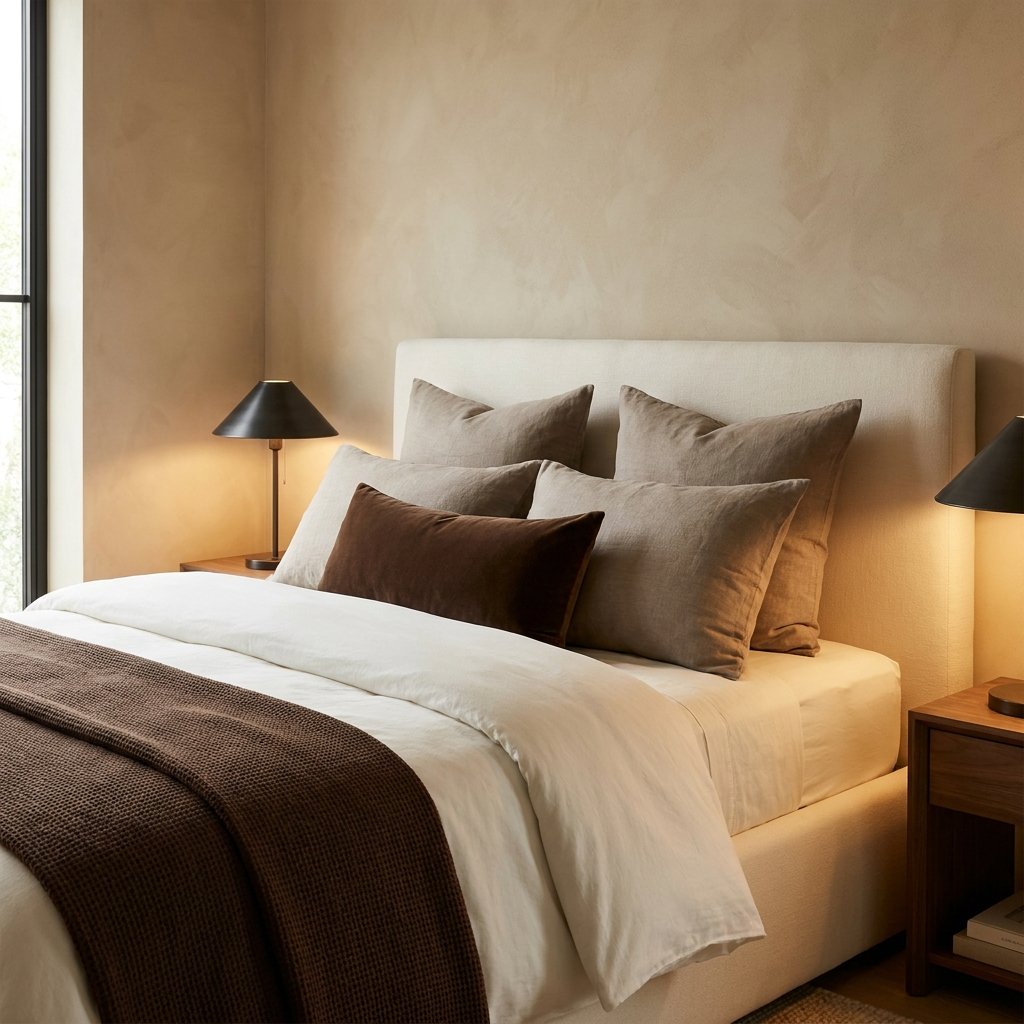
One long lumbar pillow can create a strong focal point.
Against pale bedding, try:
- Charcoal
- Black
- Brown
- Deep olive
- Navy
If a solid color feels too heavy, choose a subtle stripe or small-scale pattern.
A single statement pillow often looks cleaner than a large collection of unrelated cushions.
6. Bring in Warm Wood
Contrast isn’t limited to black.
Natural wood is one of the best ways to add warmth and depth to a light bedroom.
Use it through:
- Nightstands
- Dresser
- Bench
- Picture frames
- Accent chair
- Decorative objects
Medium and darker wood tones can create particularly beautiful contrast with white, cream, beige, and greige.
Don’t worry about matching every wood finish perfectly.
Related wood tones can make a room feel more natural and collected.
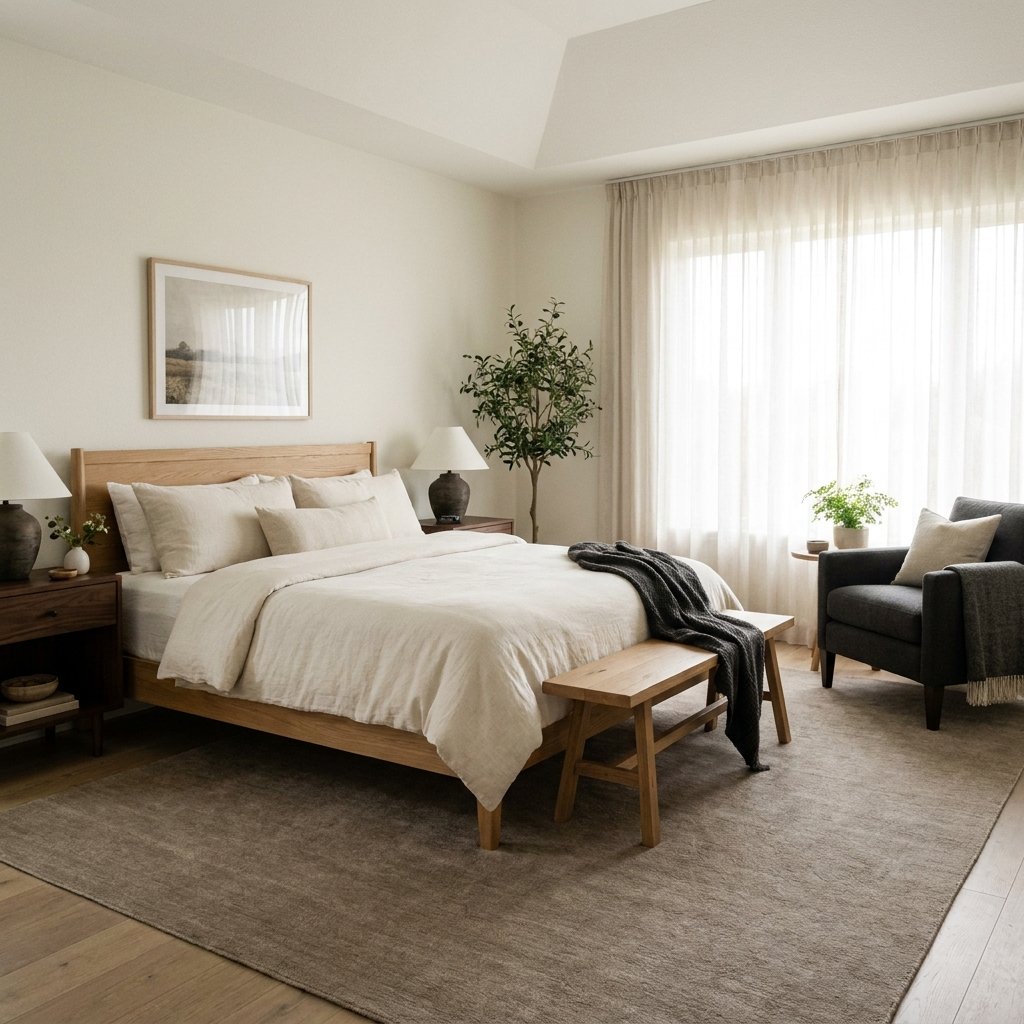
7. Add a Contrasting Bench
A bench at the foot of the bed gives you another opportunity to introduce color or texture.
If the bed is light, try:
- Dark wood
- Brown leather
- Olive upholstery
- Charcoal fabric
- Woven natural material
A bench also adds a horizontal layer that can make the bed area feel more complete.
Before buying, make sure its size works comfortably with the bed and circulation space.
8. Use Artwork With Darker Values
Artwork can completely change the visual balance of a room.
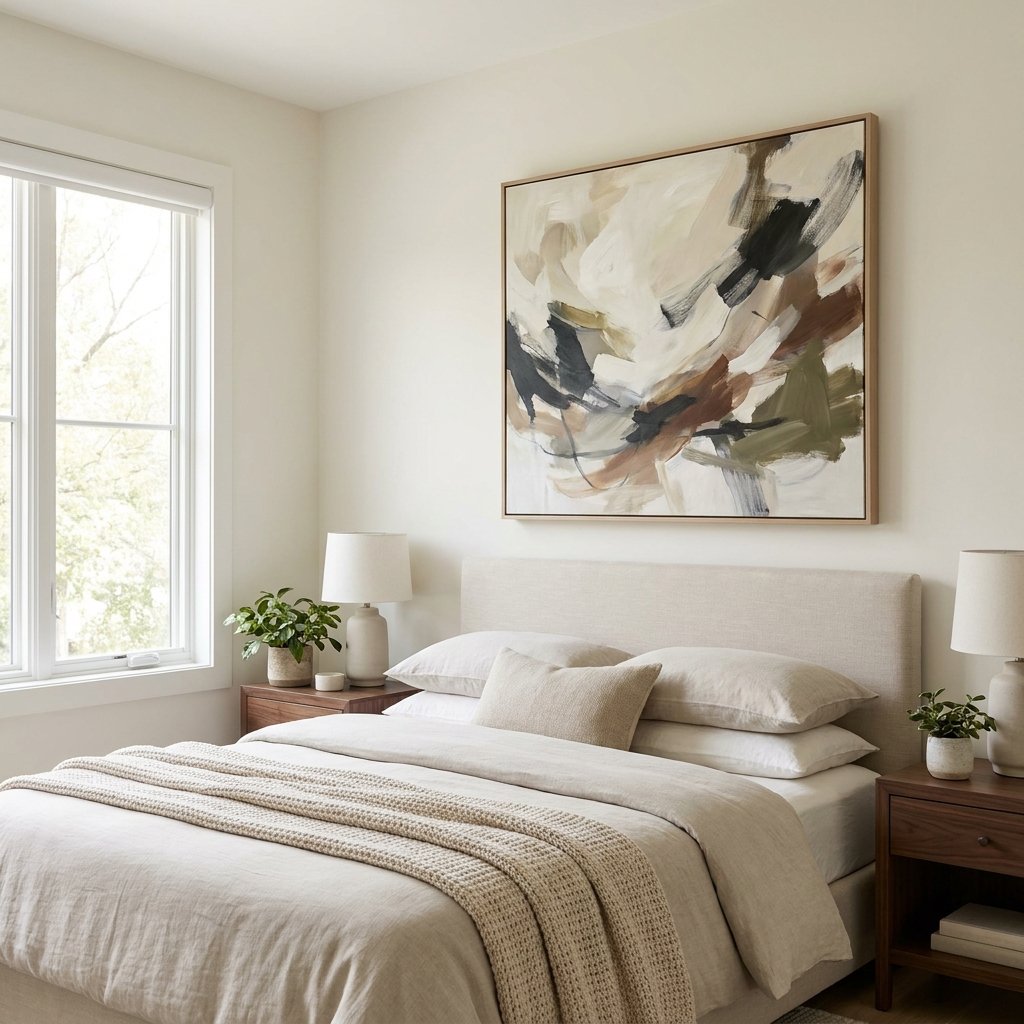
If your bedroom feels washed out, look for artwork that contains at least some medium or dark values.
That doesn’t mean the artwork itself has to be moody.
A mostly neutral piece with black, charcoal, brown, green, or navy can provide enough contrast.
Choose art based on the scale of the wall and furniture rather than trying to fill an awkward space with several tiny pieces.
9. Add Dark Picture Frames
Already have artwork you love?
Try changing the frames.
Black or dark wood frames can create crisp edges against light walls.
This is especially effective for:
- Gallery walls
- Family photographs
- Botanical prints
- Abstract art
- Landscapes
If black feels too harsh, medium walnut can provide softer contrast.
10. Create Contrast With Curtains
Curtains take up a large amount of vertical space, so they can influence the room dramatically.
You don’t necessarily need dark curtains.
Even moving from white to a slightly deeper neutral can create separation.
Consider:
- Oatmeal
- Taupe
- Warm gray
- Muted green
- Dusty blue
If the bedroom already has several dark pieces, lighter curtains may actually provide the contrast you need.
Contrast works in both directions.
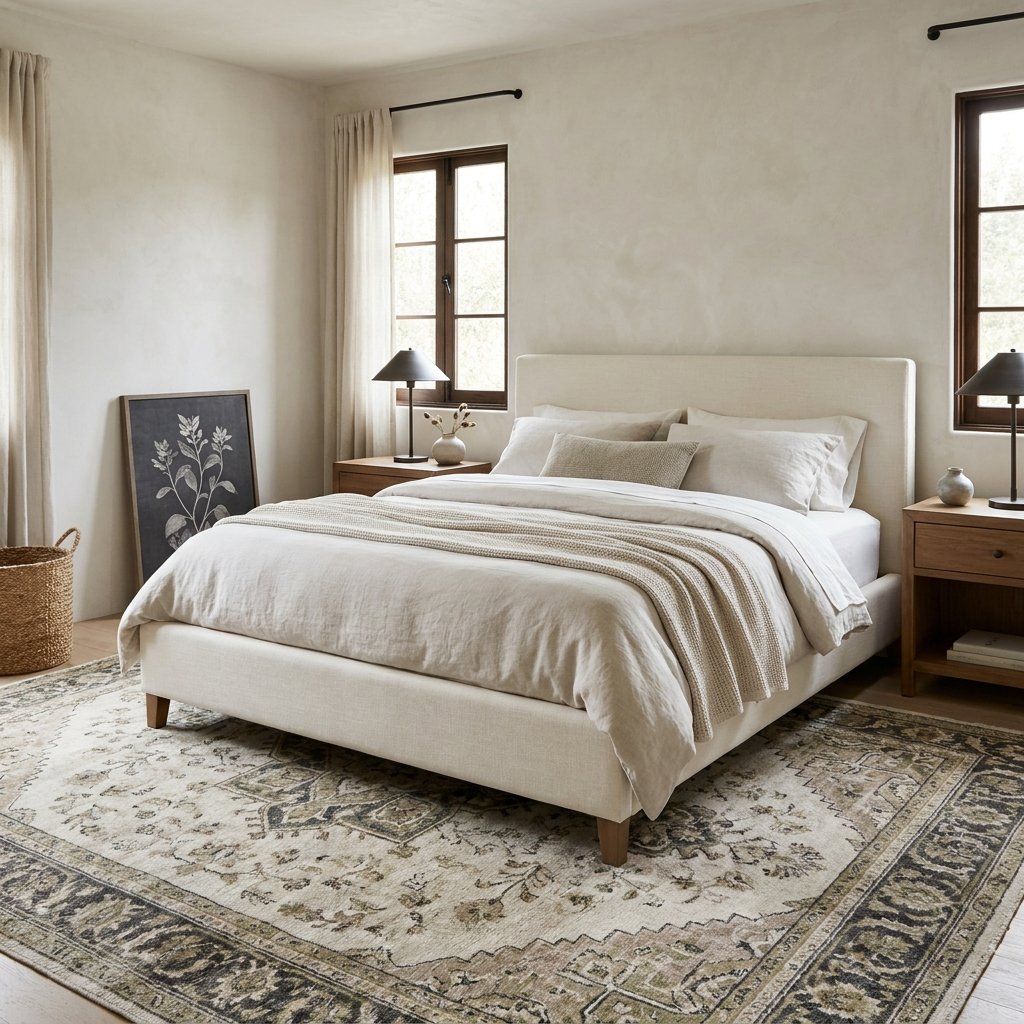
11. Add a Patterned Rug
A rug can connect the room’s light, medium, and dark colors.
This is particularly useful if the furniture feels disconnected.
Look for a rug that repeats several existing tones.
For example:
Cream + taupe + charcoal + muted blue
or:
Ivory + brown + olive + black
A subtle vintage-style pattern can add visual interest without making the bedroom feel busy.
Choose a rug large enough to relate properly to the bed rather than floating like a small mat underneath it.
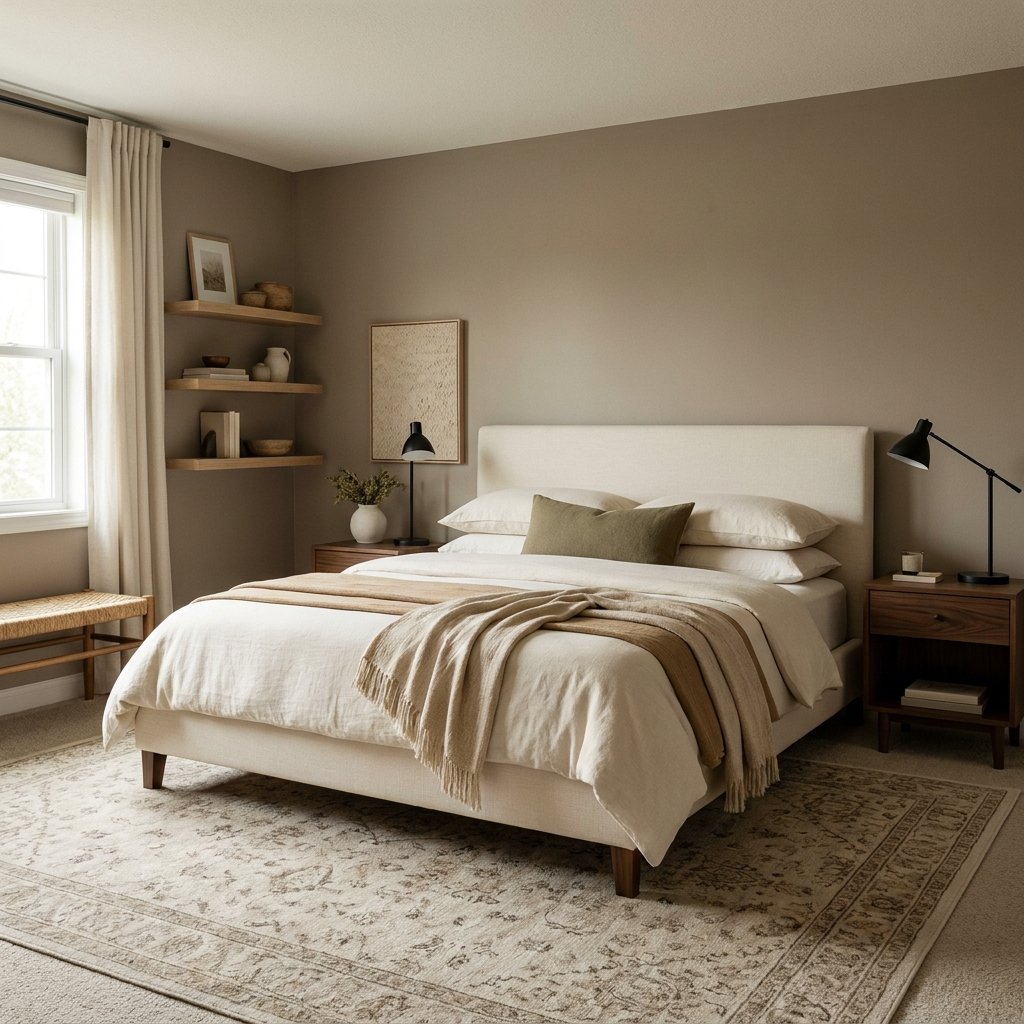
12. Paint the Walls a Deeper Neutral
If everything in your bedroom is light, changing the walls can create a dramatic difference.
Instead of white or pale gray, consider:
- Warm taupe
- Mushroom
- Medium greige
- Muted green-gray
- Soft brown
You don’t necessarily need a dark room.
Even moving a few steps deeper can make white bedding and light furniture stand out.
Always sample paint beside your flooring, furniture, bedding, and trim.
Check it throughout the day and under artificial lighting.
13. Create a Dark Accent Wall
If you want stronger contrast without painting the entire room, an accent wall may be an option.
The wall behind the bed is usually the most logical location because it reinforces the room’s focal point.
Potential colors include:
- Charcoal
- Deep green
- Navy
- Chocolate brown
- Deep taupe
But an accent wall shouldn’t be added automatically.
If the room already has strong architectural features or several competing focal points, painting one wall darker may make the space feel less cohesive.
Consider the whole room first.
14. Add Contrast With Wall Molding
Architectural detail can introduce contrast through both texture and shadow.
Ideas include:
- Picture-frame molding
- Board and batten
- Simple wall paneling
You can paint the molding the same color as the wall for subtle dimensional contrast.
Or use a different color for a more graphic look.
Before adding wall treatments, locate electrical wiring, plumbing, and other hidden utilities before nailing or drilling. Use appropriate fasteners and installation methods for the wall construction.
15. Add a Dark Dresser
A large dark dresser can ground a bedroom filled with light furniture.
Walnut, deep brown, charcoal, or black can all work.
If your dresser is structurally sound but the color doesn’t suit the room, refinishing or painting may be an option depending on its material and existing finish.
Proper surface preparation matters.
Follow the coating manufacturer’s instructions, provide ventilation, and use appropriate protective equipment.
For older furniture with an unknown finish, take appropriate precautions before sanding or disturbing existing coatings.
16. Use Darker Hardware
Small details can help repeat contrast around the room.
Consider darker hardware on:
- Dresser
- Nightstands
- Closet doors
- Built-ins
Black, dark bronze, or other deep finishes can connect with lamps, frames, or furniture.
You don’t have to replace every metal finish in the room.
Mixed metals can work when they’re repeated intentionally.
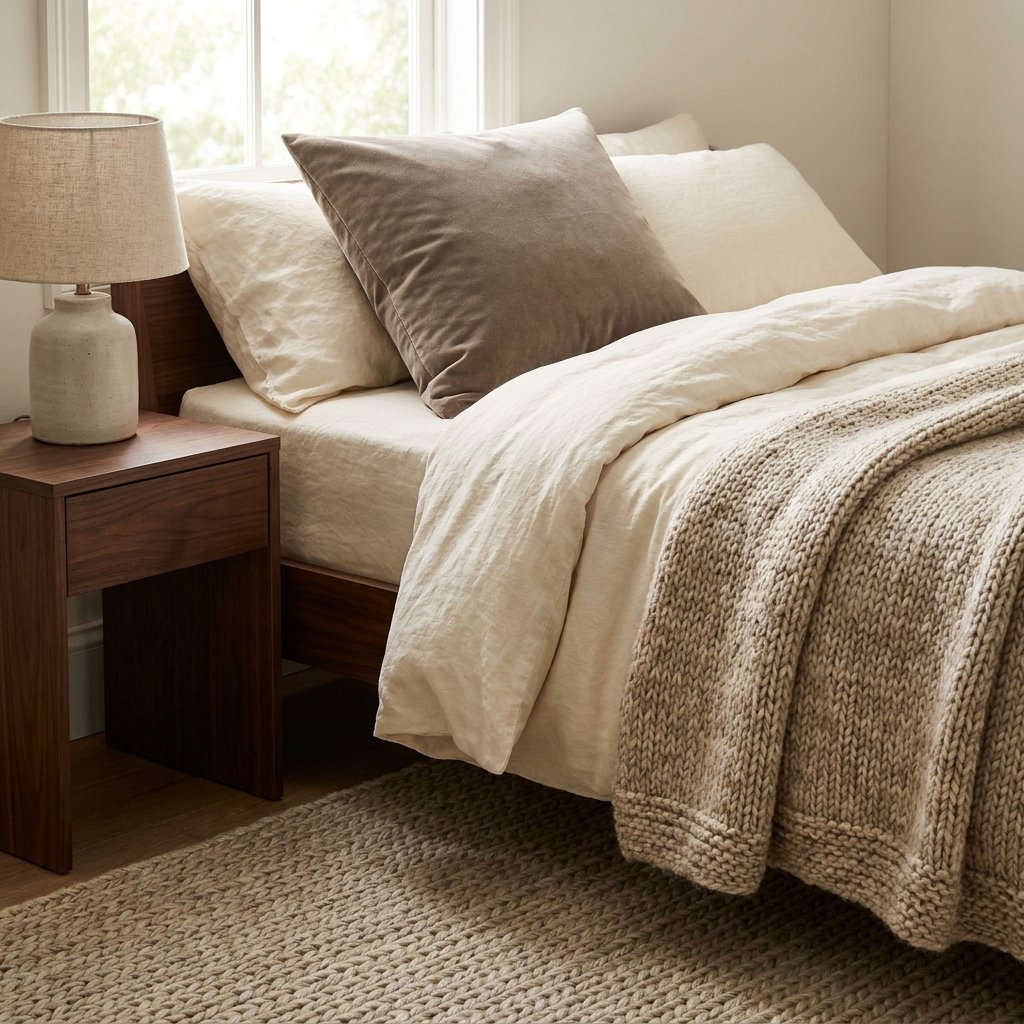
17. Add Contrast Through Texture
If you love a monochromatic bedroom and don’t want much color contrast, use texture instead.
Combine:
- Linen
- Velvet
- Chunky knit
- Woven wool
- Smooth wood
- Bouclé
- Leather
- Ceramic
For example:
Cream linen bedding + taupe velvet pillow + dark wood nightstand + woven wool rug
The colors can remain quiet while the different materials create depth.
How to Add Contrast Without Using Black
Black is useful, but it’s definitely not your only option.
Try dark versions of colors already in your palette.
Instead of black, use:
- Chocolate brown
- Walnut
- Deep olive
- Navy
- Burgundy
- Charcoal
- Dark taupe
These colors can provide strong definition while feeling softer than pure black.
Chocolate brown is particularly effective in warm neutral bedrooms because it provides depth without making the palette feel cold.
Adding Contrast to a Beige Bedroom
Beige bedrooms benefit from darker warm tones.
Try:
Beige + cream + walnut + chocolate brown
Then introduce a small accent color such as olive or dusty blue.
This maintains the warmth of beige while giving the room stronger definition.
Adding Contrast to a White Bedroom
A mostly white bedroom provides plenty of freedom.
Try:
White + oak + black
for a crisp modern look.
Or:
White + walnut + brown
for something warmer.
For color:
White + dark green + natural wood
can create a fresh but grounded palette.
Adding Contrast to a Gray Bedroom
Gray rooms can sometimes feel flat when every surface is another variation of gray.
Instead of simply adding darker gray, introduce warmth.
Try:
- Cognac
- Walnut
- Cream
- Warm beige
- Olive
- Burgundy
A combination of warm and cool elements often creates more interest than adding another gray accessory.
Add Contrast With Color
Color itself can provide contrast.
A neutral bedroom might need just one stronger accent.
Consider:
- Olive green
- Forest green
- Navy
- Burgundy
- Rust
- Dusty blue
Repeat the accent color in two or three locations.
For example:
Olive lumbar pillow + olive detail in artwork + olive throw
The colors don’t need to match exactly.
Use the Light-Medium-Dark Approach
A simple way to evaluate your bedroom is to divide the main elements into three groups.
Light
Examples:
- White bedding
- Cream headboard
- Pale walls
Medium
Examples:
- Taupe rug
- Oak furniture
- Greige curtains
Dark
Examples:
- Walnut nightstands
- Black lamps
- Charcoal pillow
If almost everything falls into the light category, the room may feel washed out.
If everything is dark, the room may feel visually heavy.
Using a combination of light, medium, and dark values creates more dimension.
Where Should You Add the Darkest Color?
You don’t need dark accents everywhere.
Choose a few places that help anchor the room.
Good candidates include:
- Nightstands
- Lamps
- Artwork
- Bed pillow
- Bench
- Dresser
Try distributing darker elements around the room rather than concentrating everything in one corner.
This helps the eye move through the space.
How Much Contrast Does a Bedroom Need?
There’s no formula that works for every bedroom.
Start with the largest surfaces:
- Walls
- Floor
- Bed
- Rug
- Curtains
Then evaluate what’s missing.
If those surfaces are mostly light, add several medium elements and a few dark ones.
If the walls are already dark, you may need lighter bedding, curtains, and artwork instead.
Contrast is about balance—not making the room darker.
How to Update a Master Bedroom on a Budget
You don’t need to replace all the furniture.
Start with changes that have the biggest visual impact for the lowest cost.
Consider:
- Rearranging existing furniture.
- Removing unnecessary accessories.
- Changing pillow covers.
- Adding a darker throw.
- Updating lamps.
- Changing artwork or frames.
- Bringing in wood accessories.
- Painting the walls.
- Replacing hardware.
Shop your home before buying anything.
A dark lamp from the living room or artwork from a hallway might be exactly what the bedroom needs.
A Simple High-Contrast Bedroom Formula
If you’re unsure where to begin, try:
Warm neutral walls + cream bed + white bedding + walnut nightstands + black lamps + taupe rug + charcoal pillow
For something warmer:
Beige walls + cream bedding + dark brown wood + olive accents + warm metal
For a little color:
Soft white walls + cream bed + navy textiles + medium wood + black accents
The exact colors can change.
The important part is the combination of light, medium, and dark.
Don’t Forget the Lighting
A room’s contrast changes throughout the day.
Strong daylight can make differences between colors appear clearer.
At night, inadequate lighting can make darker furniture and walls blend together.
Layer bedroom lighting with appropriate fixtures such as:
- Bedside lamps
- Ceiling fixture
- Wall sconces
- Floor lamp
Choose bulbs and fixtures appropriate for the room and desired atmosphere.
For hardwired electrical changes, follow applicable electrical requirements and use a qualified professional where appropriate.
How to Keep a High-Contrast Bedroom Cozy
Contrast doesn’t have to make a bedroom feel harsh.
Balance darker elements with softness.
Use:
- Linen
- Upholstery
- Rugs
- Curtains
- Warm wood
- Soft lighting
Instead of combining stark white with large amounts of glossy black, you might choose warm white, dark walnut, and charcoal.
You’ll still get contrast, but the result can feel softer.
Common Mistakes When Adding Contrast
Adding Black Everywhere
A few dark accents may be enough.
Ignoring Medium Tones
Going directly from white to black can feel harsh. Medium wood, taupe, or greige can bridge the gap.
Buying Too Many Accessories
Contrast should come from meaningful elements, not clutter.
Matching Every Dark Element
Black lamps don’t require a black dresser, black bench, black frames, and black rug.
Forgetting Texture
A monochromatic palette can still have beautiful contrast through materials.
Ignoring the Flooring
Flooring is a major part of the room’s palette.
Choosing Paint Without Sampling
Always evaluate paint beside the fixed finishes.
Replacing Furniture Too Quickly
Try changing textiles, lamps, artwork, and styling first.
FAQ About Adding Contrast to a Master Bedroom
How do you add contrast to a neutral bedroom?
Use a combination of darker furniture, lamps, artwork, textiles, wood tones, patterned rugs, and different textures. You don’t need to introduce bright color.
How do I make a beige bedroom less boring?
Add deeper warm tones such as walnut, chocolate brown, olive, charcoal, or black. Pattern and texture can also keep a beige room from feeling flat.
How do I add contrast without making my bedroom dark?
Keep large surfaces such as bedding or walls light, then introduce darker colors through smaller elements like nightstands, lamps, pillows, artwork, and frames.
Does a bedroom need black accents?
No. Walnut, chocolate brown, charcoal, navy, burgundy, or deep green can provide contrast without using black.
What colors add contrast to a cream bedroom?
Dark brown, walnut, black, charcoal, olive, forest green, navy, and burgundy can all provide attractive contrast depending on the room’s undertones.
How can I update my master bedroom cheaply?
Start with pillow covers, throws, artwork, frames, lamps, hardware, and paint. Rearranging existing furniture and removing unnecessary accessories can also make a significant difference.
Should bedroom nightstands match the bed?
No. Contrasting nightstands can actually help define a light upholstered bed and make the room more visually interesting.
Can you mix light and dark furniture in a bedroom?
Yes. Mixing light and dark furniture can create depth. Repeat related colors or materials elsewhere so the combination feels intentional.
How do I make a neutral bedroom look more expensive?
Focus on scale, restraint, texture, and contrast rather than adding more accessories. Large artwork, properly scaled lighting, layered textiles, natural materials, and a balanced range of light and dark values can create a more finished appearance.
Final Thoughts
A master bedroom update that adds contrast doesn’t have to become a full renovation.
If the room feels flat, start by looking at its light, medium, and dark values.
Are the walls pale?
Is the bed cream?
Is the rug light?
Are the curtains white?
If almost everything falls into the same range, adding just a few deeper elements can make an enormous difference.
Try dark nightstands.
Add black or bronze lamps.
Layer a chocolate, olive, navy, or charcoal pillow over light bedding.
Bring in medium or dark wood.
Choose artwork with deeper colors.
Or use a patterned rug to connect the entire palette.
And remember that contrast isn’t only about color.
Texture, pattern, wood grain, fabric, and finish can all add depth.
The goal isn’t to make a calm bedroom busier. It’s to give the pieces you already love enough definition to stand out.
A thoughtful mix of light, medium, and dark elements can turn a simple neutral bedroom into a space that feels layered, cozy, and much more finished.