

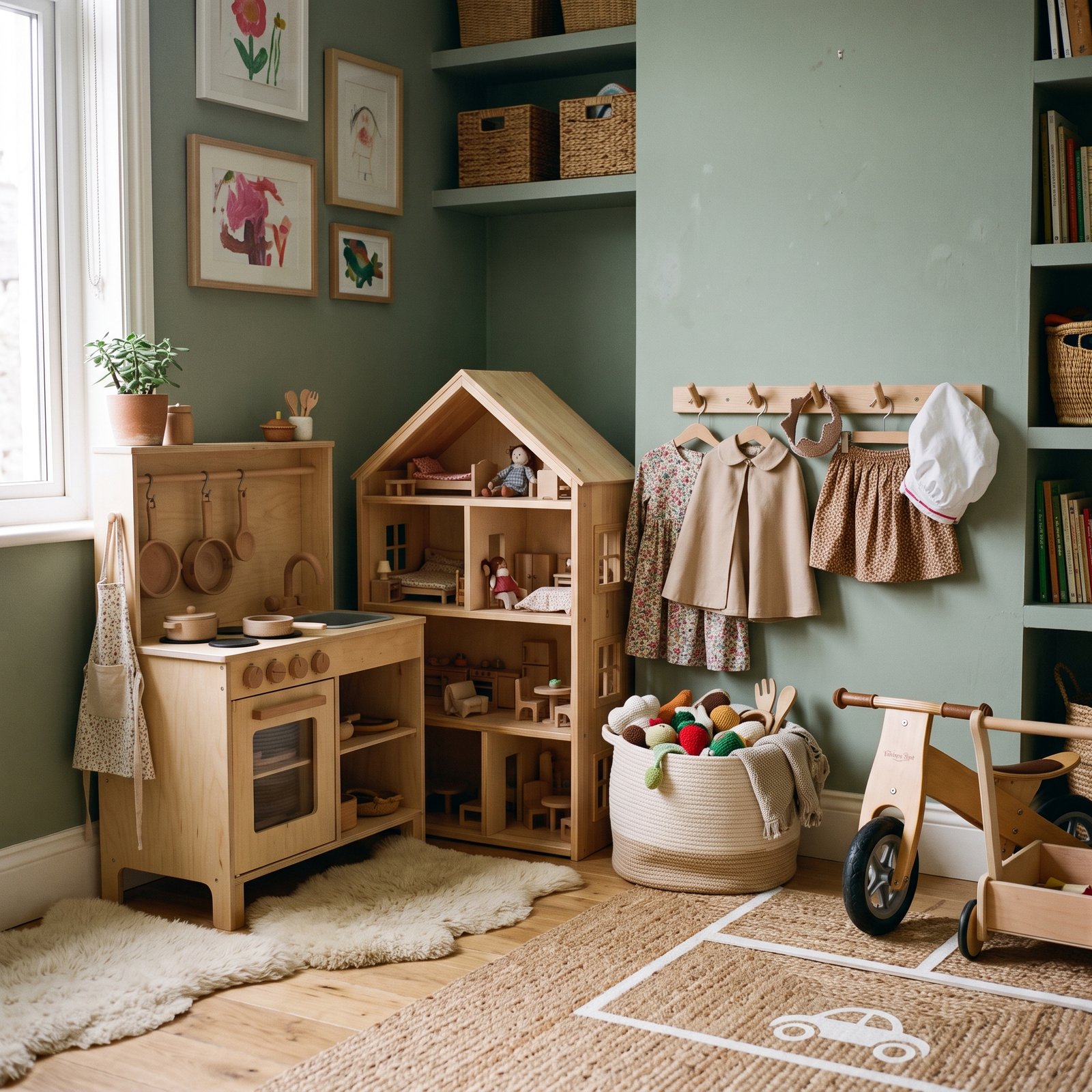
Good playroom organization should make the room easier for kids to use, not just prettier to look at.
A playroom can become messy fast. Toys get scattered across the floor, art supplies migrate from one table to another, puzzles lose pieces, and baskets slowly turn into catchalls for anything without a clear home.
The most effective solution is usually simple: reduce the number of toys, group similar items together, create easy-to-understand storage zones, and make cleanup simple enough that children can participate.
You do not need a custom built-in system or dozens of matching bins. In fact, overly complicated storage can make a playroom harder to maintain.
Whether you are organizing a dedicated playroom, part of a family room, or a small corner of a bedroom, these ideas can help you create a space that feels calmer, functions better, and still leaves plenty of room for play.
1. Start by Removing Everything That Does Not Belong
Before rearranging shelves, take a quick pass through the room.
Remove:
- Trash
- Broken toys
- Outgrown toys
- Empty boxes
- Clothes
- Household items
- Supplies that belong elsewhere
This immediately makes the space easier to evaluate.
You may also find toys that are damaged or missing important parts.
Check broken toys for sharp edges, loose batteries, small magnets, or other potential hazards before deciding whether to repair or discard them.
2. Sort Toys Into Broad Categories
Once the obvious clutter is gone, group similar toys.
Keep the categories simple.
For example:
- Blocks
- Cars
- Dolls
- Animals
- Dress-up
- Puzzles
- Art supplies
- Books
Avoid creating too many tiny categories.
Children are more likely to maintain a system when the answer to “Where does this go?” is obvious.
A single bin for toy cars may work much better than separate bins for race cars, trucks, construction vehicles, and emergency vehicles.
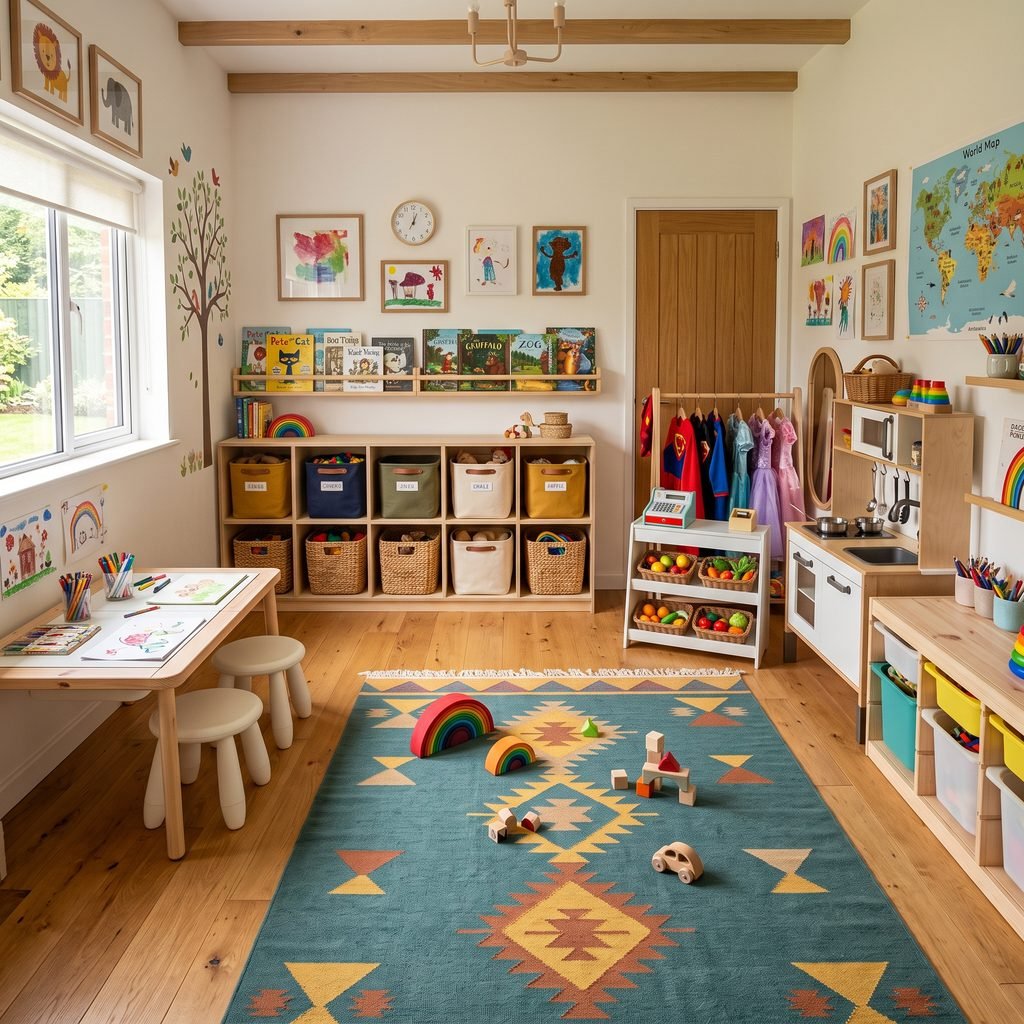
3. Create Clear Activity Zones
Think about how children actually use the room.
Then create simple zones around those activities.
You might have:
Reading Zone
Books, a small chair, floor cushion, or rug.
Building Zone
Blocks, construction toys, and open floor space.
Art Zone
Table, paper, crayons, and washable supplies.
Pretend-Play Zone
Play kitchen, dolls, costumes, or toy food.
Game Zone
Puzzles and board games.
The zones do not need walls or signs.
Sometimes placing related storage near the activity is enough.
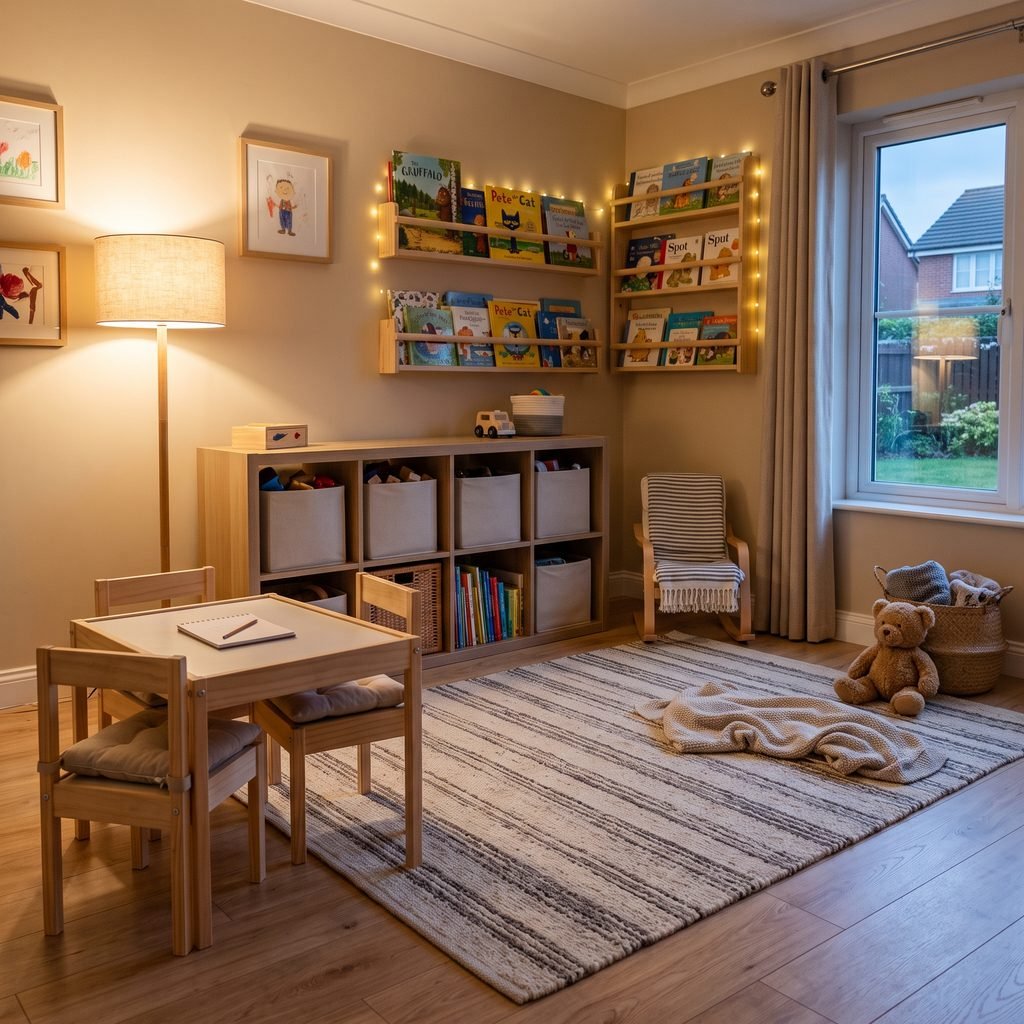
4. Use Low Shelves for Everyday Toys
If kids are expected to help clean up, they need to be able to reach the storage.
Low shelving works well for:
- Toy bins
- Books
- Puzzles
- Large toys
- Building sets
Place frequently used, age-appropriate toys at child level.
Supplies requiring supervision should be kept separately and securely.
Tall freestanding furniture should be properly secured where appropriate, and storage units should be used according to their installation and weight instructions.
5. Choose Open Bins for Frequently Used Toys
Open bins are practical because children do not have to remove lids before putting toys away.
They work especially well for:
- Blocks
- Toy animals
- Cars
- Train pieces
- Dolls
Choose a size that suits the toy category.
Very deep bins can be frustrating because children may dump everything onto the floor to find one small item.
Several medium bins are often easier to manage than one enormous toy box.
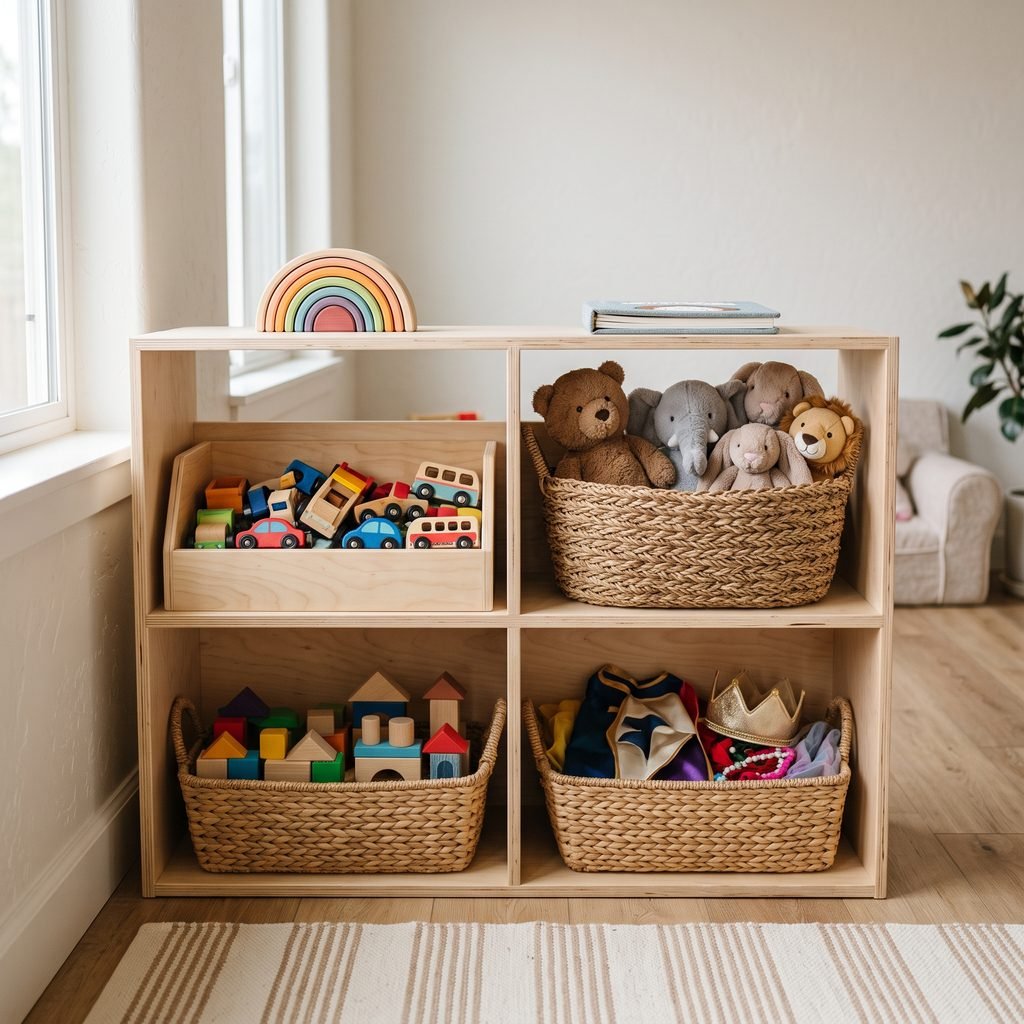
6. Use Baskets to Reduce Visual Clutter
Baskets can make a colorful playroom feel calmer.
They are useful for:
- Stuffed animals
- Dress-up accessories
- Larger toys
- Doll accessories
A few similar baskets can visually unify open shelving.
Make sure baskets are stable, lightweight enough for the intended user, and free of sharp or broken pieces.
Avoid putting heavy containers where children may pull them down from above.
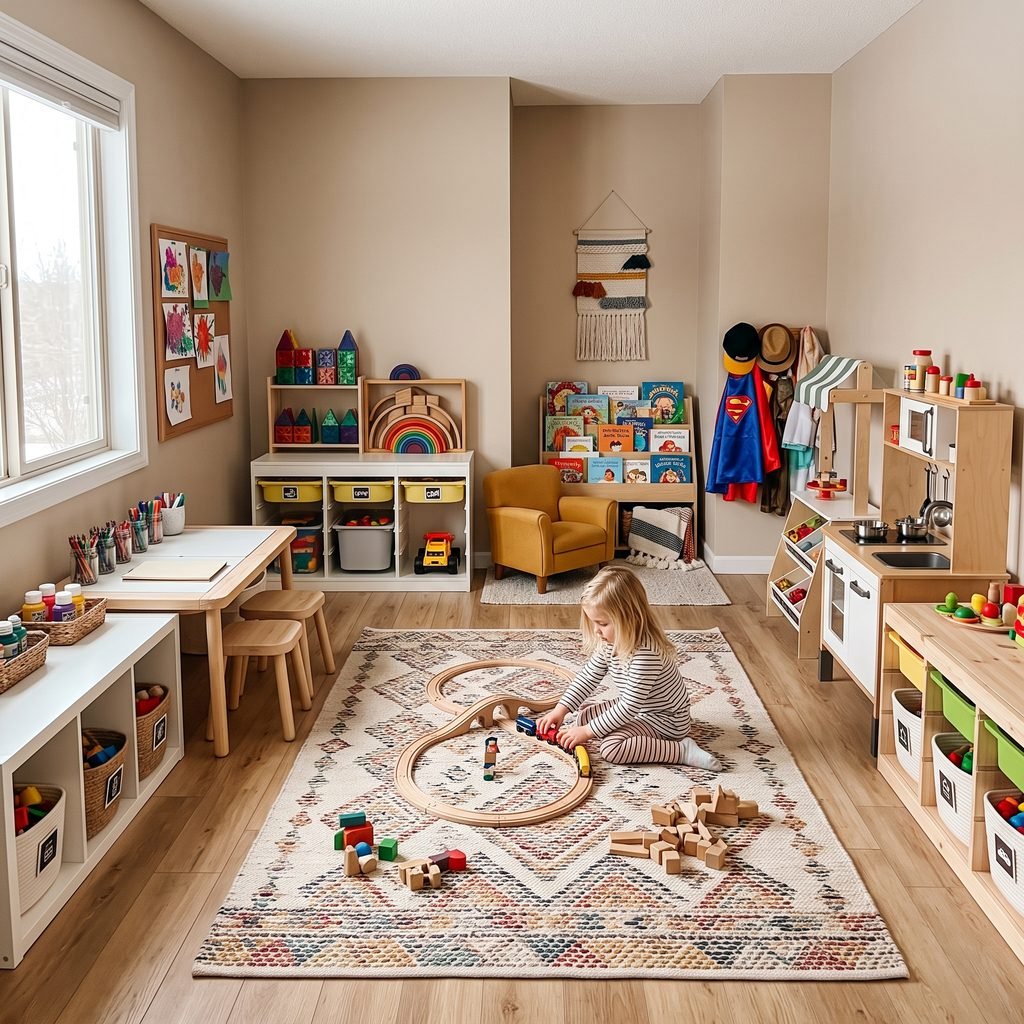
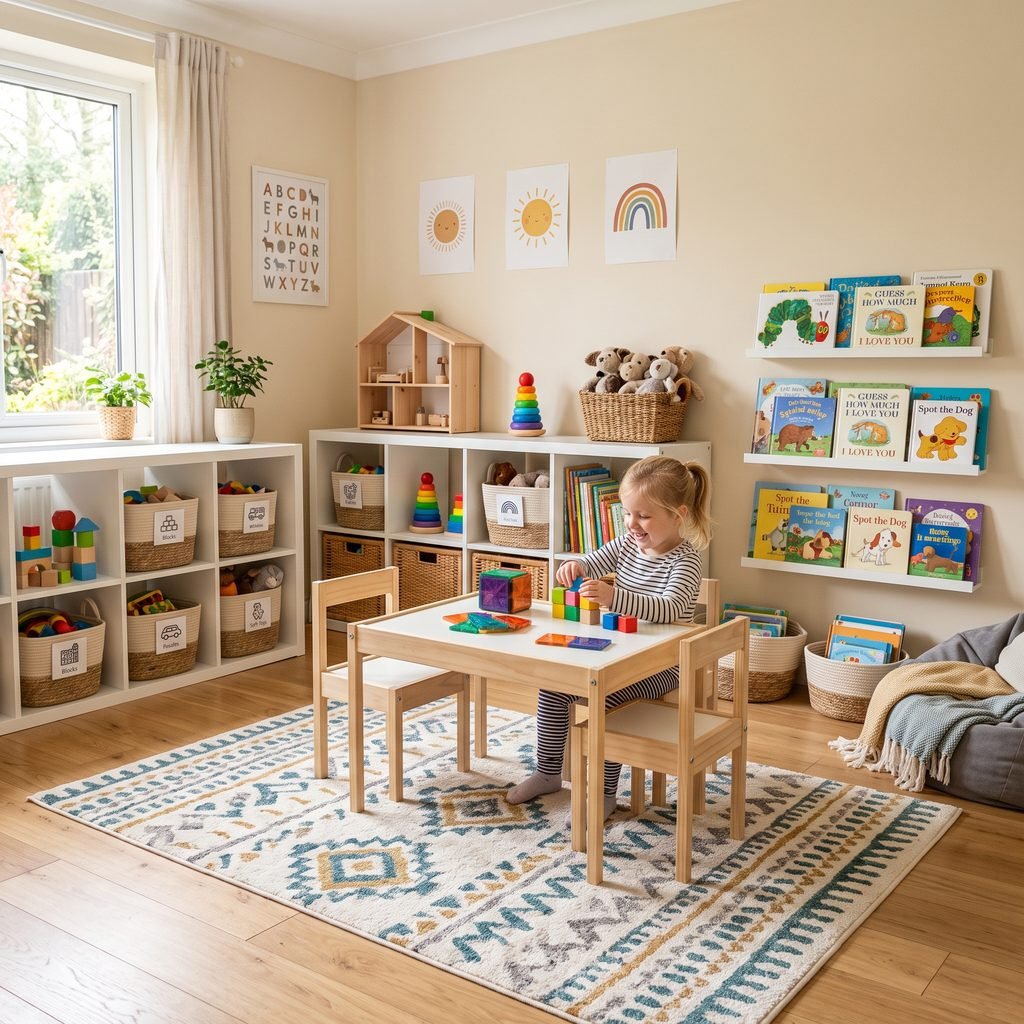
7. Add Picture Labels
Picture labels are especially helpful for younger children.
Use a simple image showing what belongs in each bin.
For example:
- Car image for vehicle storage
- Block image for building toys
- Doll image for dolls
- Book image for reading materials
Older children can use word labels.
You can also combine the two.
The labels are not meant to make the room look overly organized. They are there to remove guesswork during cleanup.
8. Organize Books Face-Out When Possible
Younger children often choose books by their covers rather than their spines.
Front-facing book storage can make books more appealing and easier to find.
Try:
- Book ledges
- Low display shelves
- Shallow bookcase
- Book basket
Do not overcrowd the display.
Rotate books if you own more than can fit comfortably.
Secure wall-mounted book storage carefully and avoid placing heavy objects above reading spots.
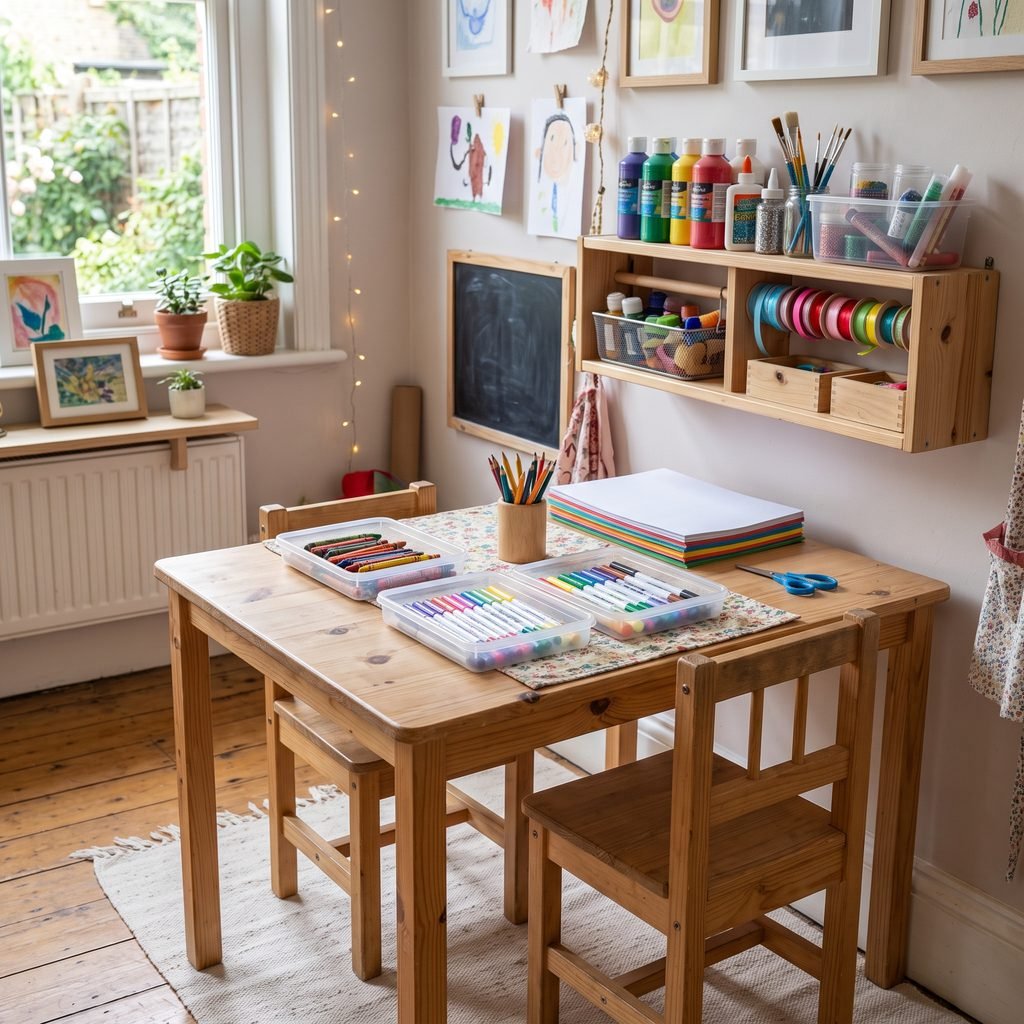
9. Make Art Supplies Easy to Use but Easy to Control
Art supplies need a system because small pieces can spread quickly.
For everyday supplies, use shallow containers for items such as:
- Crayons
- Washable markers
- Colored pencils
- Paper
- Coloring books
Keep supplies that require closer supervision securely stored according to the child’s age and the product instructions.
That may include certain scissors, paints, glues, small craft pieces, or specialty materials.
A small drawer unit or stable cart can work well if it fits safely in the room.
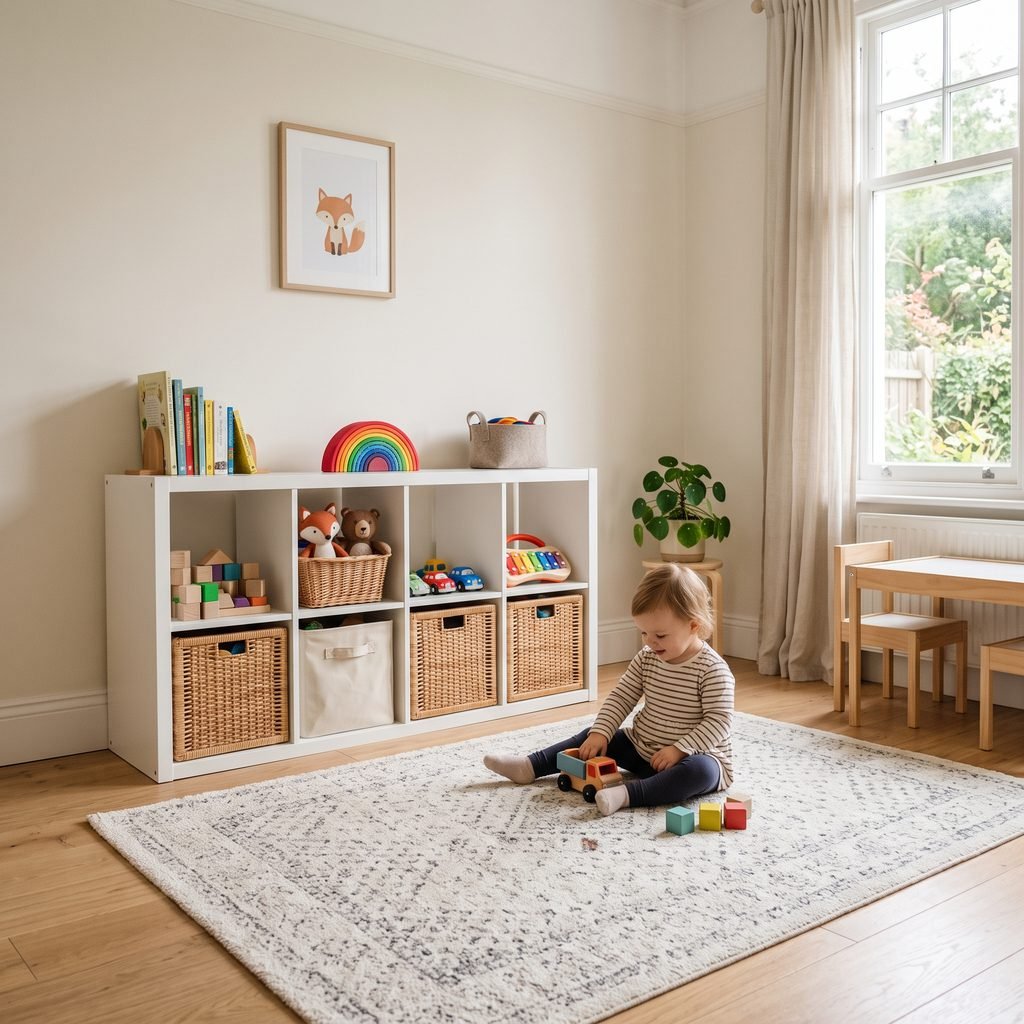
10. Give Stuffed Animals One Designated Home
Stuffed animals can quickly take over beds, sofas, and floors.
Choose one storage location.
Possible options include:
- Large soft basket
- Low bin
- Open cubby
When the designated container is full, use that as a cue to reduce the collection.
Avoid storage methods involving long cords, unstable wall systems, or anything that may create climbing or entanglement hazards.
11. Store Board Games Where Kids Can Pull Them Out Easily
Board game boxes are difficult to manage when stacked too high.
Store them:
- Vertically
- On low shelves
- In shallow stacks
If boxes tend to open, secure pieces in smaller bags or containers inside.
Place heavier games lower.
Games with small pieces should be stored according to the ages of all children who use the space.
12. Create a Simple Dress-Up Area
Pretend play deserves a home too.
A dress-up area can be very simple.
Try:
- Low hooks
- Small rail
- Basket for accessories
- Secure mirror
Do not overcrowd it.
A smaller selection of costumes is easier to see, wear, and put away.
For younger children, avoid long cords, necklaces, or accessories that could pose entanglement risks.
Mount mirrors securely and choose child-appropriate materials.
13. Use the Back of a Door Carefully
Door storage can add useful space in a small playroom.
Depending on the door, you might use it for lightweight items such as:
- Art smocks
- Small fabric bags
- Lightweight dress-up pieces
Avoid adding too much weight.
Make sure the organizer does not affect safe door operation or create pinch points.
Also consider whether the contents are appropriate for children to access independently.
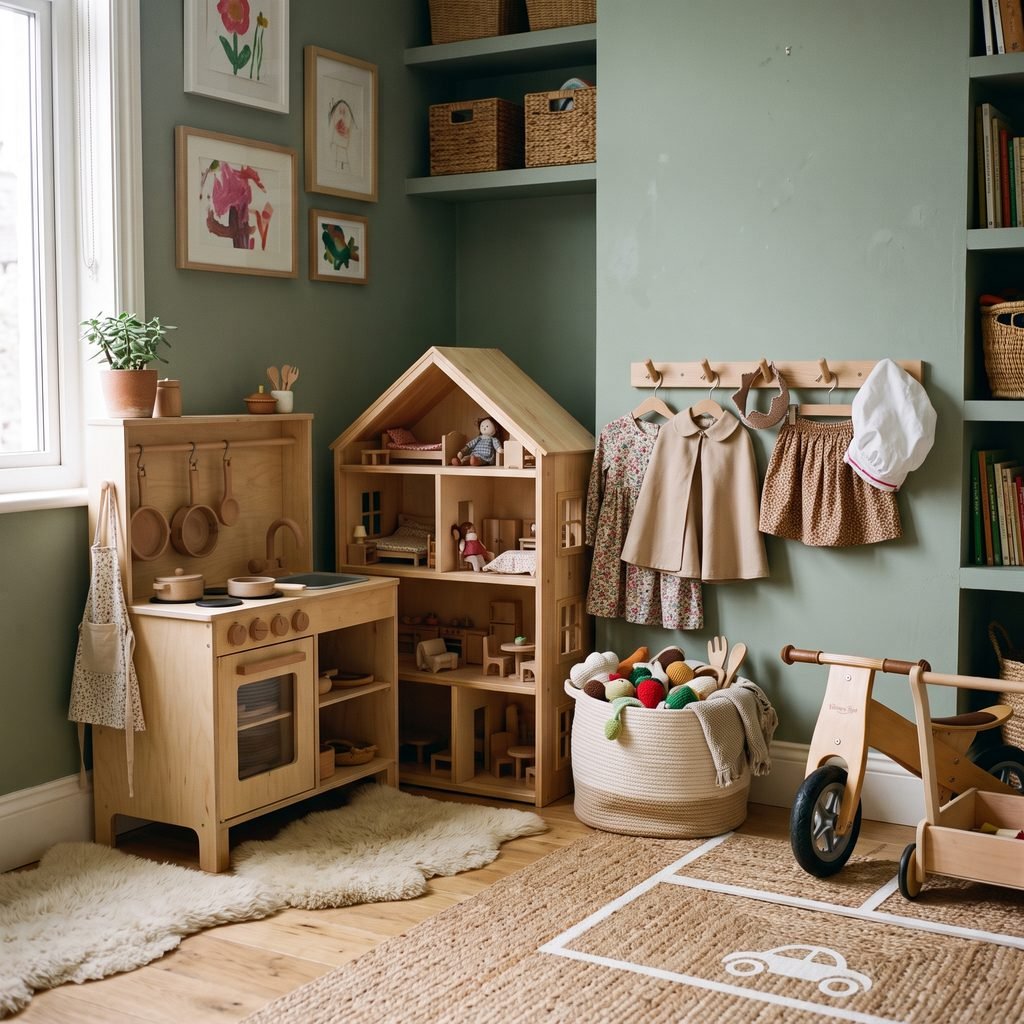
14. Give Large Toys a Parking Spot
Toy kitchens, dollhouses, ride-on toys, and large trucks often do not fit into bins.
Instead of trying to hide them, designate a permanent location.
For example:
- Dollhouse against one wall
- Toy kitchen beside pretend-play storage
- Large trucks lined beneath a shelf
- Ride-on toys parked in one corner
Large toys look far less cluttered when they have a defined place.
15. Rotate Toys to Reduce Overwhelm
You do not need to keep every toy available all the time.
Toy rotation can help when the room feels crowded.
Keep some toys accessible and store others securely elsewhere.
Then swap them periodically.
This can make the room:
- Easier to clean
- Less visually busy
- More interesting
- Easier for children to navigate
There is no need for a strict rotation schedule.
Simply change the selection when interest drops or clutter starts increasing.
16. Leave Plenty of Empty Floor Space
Storage is important, but playrooms are for playing.
Do not fill every wall and corner with furniture.
Keep a generous open area for:
- Building
- Pretend play
- Trains
- Puzzles
- Movement
Placing most storage around the perimeter helps preserve the center of the room.
A visible floor also makes the space feel much more organized.
17. Keep One Quick-Cleanup Basket
A catchall basket can be useful during a fast reset.
Use it temporarily for items that belong in other rooms.
At the end of the cleanup, carry the basket through the house and return everything.
This prevents multiple trips while tidying.
The important part is emptying it afterward.
Otherwise, the cleanup basket quickly becomes another clutter basket.
18. Create a Simple End-of-Day Reset
The room will get messy again.
That does not mean the organization system failed.
Create a short routine children can follow.
For example:
- Books back on the shelf.
- Blocks into the block bin.
- Dolls into their basket.
- Art supplies back to the art station.
- Large toys back to their parking spots.
The easier the categories are, the faster the reset becomes.
Playroom Organization for Small Spaces
A small play area benefits from limiting how many toys are visible.
Use:
- Compact low shelving
- Baskets
- Wall-mounted book storage
- Toy rotation
- Multifunctional furniture
Avoid squeezing storage into every available inch.
Too much furniture can make a small room harder to use.
If toys are stored in a living room or bedroom, choose a smaller active collection and rotate additional toys.
Playroom Organization With Cube Storage
Cube storage is popular because it is flexible.
Use some cubes as open shelves for:
- Books
- Large toys
- Puzzles
Use bins for categories containing lots of smaller pieces.
You do not have to fill every cube with a basket.
Leaving some compartments open often makes the unit easier to use and less visually heavy.
Follow furniture installation instructions and secure units appropriately.
Playroom Organization Without Built-Ins
Built-ins are convenient, but they are not necessary.
A practical playroom can use:
- Freestanding low shelves
- Baskets
- Book ledges
- Small cabinets
- Existing furniture
Focus on layout first.
Even inexpensive shelving can work well if the categories are simple and the furniture is safe and sturdy.
Playroom Organization Without a Closet
No closet simply means the room needs a little more intentional storage.
Use one wall for most of the organization.
Combine:
- Low toy shelving
- Closed cabinet
- Book ledges
- Baskets
Keep supervised supplies inside closed or secure storage.
Avoid covering every wall with open shelving, which can make the room feel busy.
Budget Playroom Organization Ideas
You can organize a playroom without buying a matching storage collection.
Start with items you already own.
Reuse:
- Baskets
- Plastic bins
- Sturdy containers
- Bookshelves
- Small dressers
Secondhand furniture can also work well when it is sturdy, in good condition, and used safely.
Wait until after decluttering to buy new storage.
Often, reducing the toy collection eliminates the need for several extra organizers.
How to Organize a Shared Playroom
If siblings share the room, create both shared and individual storage.
Shared categories might include:
- Books
- Blocks
- Art supplies
- Pretend play
Then give each child a small basket or drawer for personal items.
In mixed-age spaces, safety matters.
Small building pieces, craft items, and toys intended for older children should be stored so younger siblings cannot access them unsupervised.
How to Organize LEGO and Small Building Pieces
The easiest system depends on the size of the collection and the child’s play style.
A small collection may only need one broad bin.
A larger collection may benefit from separate containers for:
- General pieces
- Mini figures
- Wheels
- Specialty parts
Clear containers can make small pieces easier to find.
Do not create a highly detailed sorting system unless the child enjoys maintaining it.
Most importantly, keep small pieces away from younger children for whom they may pose a choking hazard.
Playroom Storage Ideas That Hide Clutter
If you prefer a calmer appearance, mix open and closed storage.
Open storage works well for attractive or frequently used items.
Closed storage can contain:
- Art supplies
- Mixed small toys
- Games
- Extra toys
A cabinet with doors can visually simplify a busy room.
However, accessibility should match the contents.
Items children should not use independently should remain secured.
How to Make a Playroom Look Less Messy
Sometimes the problem is visual rather than purely organizational.
Try these strategies:
Reduce the Number of Visible Toys
Rotate part of the collection.
Repeat Storage Styles
A few similar baskets can make open shelves feel calmer.
Leave Some Shelves Empty
You do not need to fill every surface.
Limit Wall Decor
Children’s spaces already contain plenty of visual color.
Keep the Center Clear
Open floor space makes a dramatic difference.
Use a Simple Background Palette
Neutral walls and furniture can allow colorful toys to provide the personality.
Common Playroom Organization Mistakes
Using Too Many Tiny Bins
Too many categories make cleanup complicated.
Keeping Every Toy Available
A crowded room can make it harder for children to choose what to play with.
Buying Storage Before Decluttering
You may spend money storing things you no longer need.
Using Deep Toy Boxes for Everything
Small toys become difficult to find.
Putting Everyday Storage Too High
Children cannot help clean up if they cannot reach it.
Filling Every Wall
Leave space for movement and imagination.
Forgetting Mixed-Age Safety
What is appropriate for one child may not be safe for a younger sibling.
Playroom Organization Safety Tips
Safety should guide the storage plan.
Keep these basics in mind:
- Secure furniture where recommended or appropriate.
- Store heavy items on lower shelves.
- Follow storage-unit and shelving weight limits.
- Keep small objects away from children for whom they are choking hazards.
- Store button or coin batteries securely.
- Keep loose or accessible powerful magnets away from young children.
- Avoid long cords and loops that may create entanglement risks.
- Store household cleaners, medications, tools, and hazardous products outside accessible play storage.
- Secure mirrors, ledges, and wall decor properly.
- Do not place heavy objects above areas where children regularly sit or play.
- Inspect toys regularly for broken pieces, sharp edges, or battery damage.
- Follow manufacturer age recommendations.
A Simple Playroom Organization Plan
If the room feels completely out of control, use this order:
- Remove trash and broken items.
- Sort toys into broad categories.
- Declutter unused toys.
- Create activity zones.
- Decide what stays accessible.
- Assign a basket, bin, shelf, or parking spot to each category.
- Add simple labels.
- Move supervised items out of reach.
- Secure furniture and storage where needed.
- Create a quick daily reset.
Do not worry about making it perfect.
Test the system for a few weeks.
The best setup is the one your family can actually maintain.
FAQ About Playroom Organization
How do you organize a playroom effectively?
Declutter first, group toys into broad categories, create activity zones, and make everyday storage easy for children to reach and understand.
What is the best storage for playroom toys?
Low shelves, open bins, baskets, and simple cabinets all work well. The best option depends on the toy size, the child’s age, and how often the toy is used.
How do I organize a playroom with too many toys?
Reduce the number of toys available at one time and use toy rotation for the rest.
How do I organize a playroom cheaply?
Use baskets and bins you already own, repurpose existing furniture, declutter before shopping, and focus on broad categories rather than specialized organizers.
How do you organize toys in a small playroom?
Use perimeter storage, low shelving, wall-mounted book storage, and toy rotation while preserving as much open floor space as possible.
How can kids help keep a playroom organized?
Make storage accessible, use clear categories or picture labels, and create a short cleanup routine they can follow.
Should playroom storage be open or closed?
A combination usually works well. Open storage makes everyday toys accessible, while closed cabinets can reduce visual clutter and safely contain supplies that should not always be accessible.
Final Thoughts
Successful playroom organization is not about keeping every toy hidden or making the room look untouched.
It is about creating a system that works during real play.
Start by decluttering, then divide toys into broad categories. Use accessible storage for age-appropriate everyday items, create simple activity zones, and leave enough floor space for children to actually enjoy the room.
Most importantly, keep the system easy.
If putting away a toy requires several steps, children are less likely to do it. If the toy simply goes into a clearly labeled bin, cleanup becomes much more realistic.
A well-organized playroom can still be colorful, creative, and lived-in.
It just gives everything a place to return when playtime is over.