


A primary bedroom reveal is about more than showing a pretty finished room. The most useful bedroom makeovers also reveal why the space works—the furniture placement, color palette, lighting, textiles, and small decorating decisions that make the room feel comfortable and complete.
And a beautiful primary bedroom doesn’t need to be overly formal or filled with expensive furniture.
In fact, some of the most inviting bedrooms are relatively simple.
A comfortable bed provides the focal point. Nightstands add function and symmetry. Curtains soften the windows. A rug grounds the furniture. Warm lighting changes the mood at night. Then a few carefully chosen accessories give the room personality without creating clutter.
If you’re planning your own primary bedroom makeover, use this reveal as inspiration for creating a space that feels warm, layered, restful, and collected over time.

The Goal: A Bedroom That Feels Calm but Not Empty
There’s a fine line between calm and unfinished.
A bedroom with very little furniture or decor may technically be minimal, but it can also feel cold.
On the other hand, too many decorative objects, pillows, patterns, and small pieces of furniture can make a bedroom feel visually busy.
The goal is balance.
For a relaxed primary bedroom, start with a simple foundation:
- Warm wall color
- Substantial bed
- Comfortable bedding
- Functional nightstands
- Layered lighting
- Large rug
- Window treatments
- A few meaningful accessories
Then add texture rather than filling the room with more things.
Start With a Warm Neutral Color Palette
A bedroom is one of the easiest rooms to decorate with a restrained color palette.
Warm neutrals create a flexible foundation.
Consider:
- Warm white
- Cream
- Beige
- Tan
- Taupe
- Soft brown
- Muted greige
Then add one or two deeper accent colors.
Olive, charcoal, dusty blue, rust, chocolate brown, and muted burgundy can all provide contrast without overwhelming the room.
A simple palette might look like:
Warm white + cream + walnut + olive + aged brass
Or:
Cream + beige + oak + dark brown + black
Limiting the palette makes it easier to mix different furniture styles and textiles without the room feeling disconnected.
Let the Bed Be the Focal Point
The bed is usually the largest piece of furniture in a primary bedroom, so it should visually anchor the room.
That doesn’t mean you need an elaborate bed frame.
A simple upholstered bed can provide enough softness and scale.
Other options include:
- Wood bed
- Four-poster bed
- Iron bed
- Upholstered headboard
- Simple platform bed
Choose something substantial enough for the size of the room.
A very low or visually lightweight bed can disappear in a large bedroom, particularly when ceilings are high.
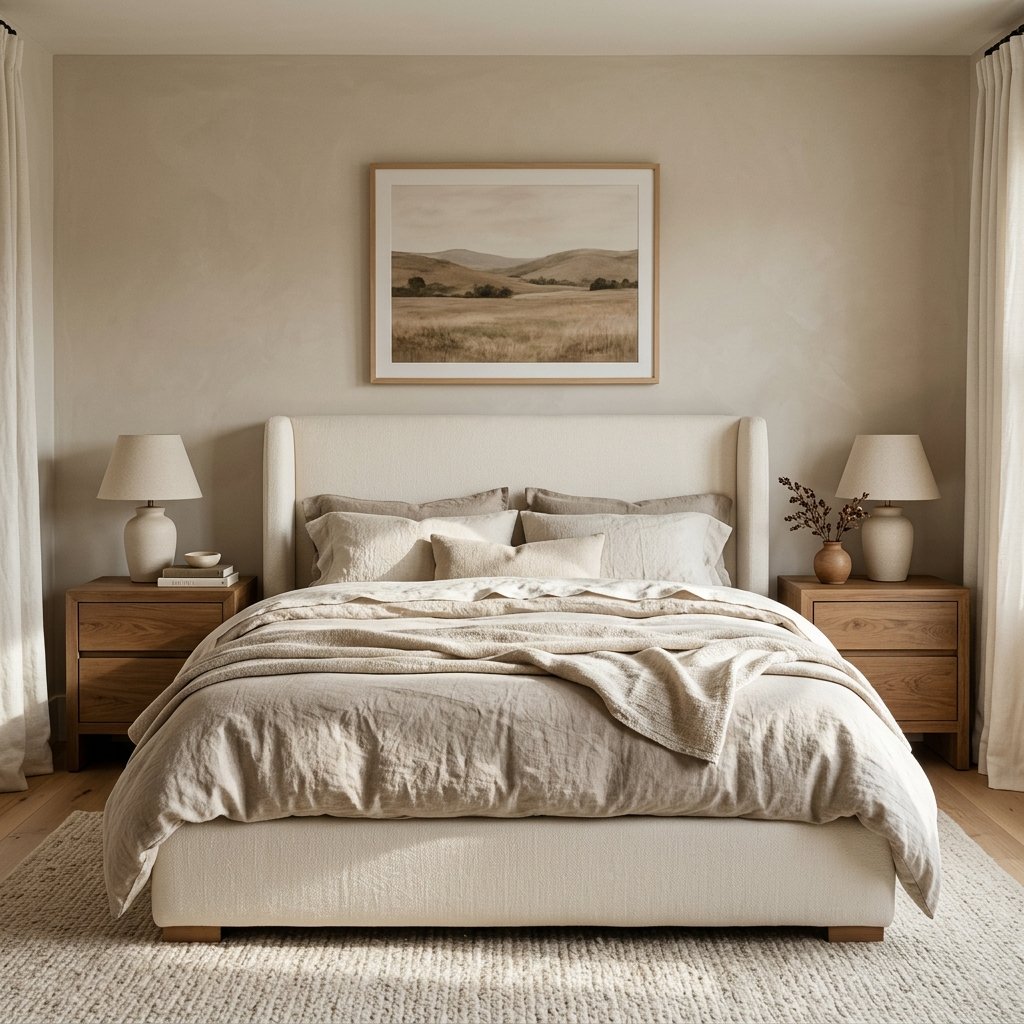
Layer the Bedding Without Using Too Many Pillows
Beautiful bedding doesn’t need twenty pillows.
Start with practical layers.
You might use:
- Sheets
- Coverlet or quilt
- Duvet or comforter
- Sleeping pillows
- Two or three decorative pillows
- Throw blanket
The exact combination depends on your climate and preferences.
The important part is mixing texture.
Combine materials that visually contrast, such as:
- Smooth cotton
- Linen
- Quilted fabric
- Chunky woven throw
- Velvet accent pillow
Even an entirely neutral bed can feel interesting when the textures vary.
Try Tonal Bedding
One of the easiest ways to create a calm primary bedroom is to keep the bedding tonal.
Instead of introducing lots of different colors, layer several shades of the same neutral family.
For example:
- White sheets
- Cream quilt
- Beige duvet
- Taupe lumbar pillow
- Brown throw
The subtle differences create depth.
If everything is exactly the same shade of white, the bed may look flat.
Add Contrast With a Dark Throw or Pillow
A room filled with warm whites and pale wood can benefit from one darker element.
Try:
- Chocolate brown throw
- Charcoal lumbar pillow
- Olive blanket
- Dark patterned pillow
You don’t need much.
A small amount of contrast helps define the lighter layers.
Choose Substantial Nightstands
Tiny nightstands can make a large bed look even larger.
For a primary bedroom, choose nightstands that feel appropriately scaled to the bed and wall.
You need enough surface for everyday essentials such as:
- Lamp
- Book
- Water
- Phone
Drawers are particularly useful because they keep visual clutter hidden.
Before buying, compare the nightstand dimensions with the height and width of your bed.
The ideal proportions depend on the actual furniture rather than a single universal measurement.
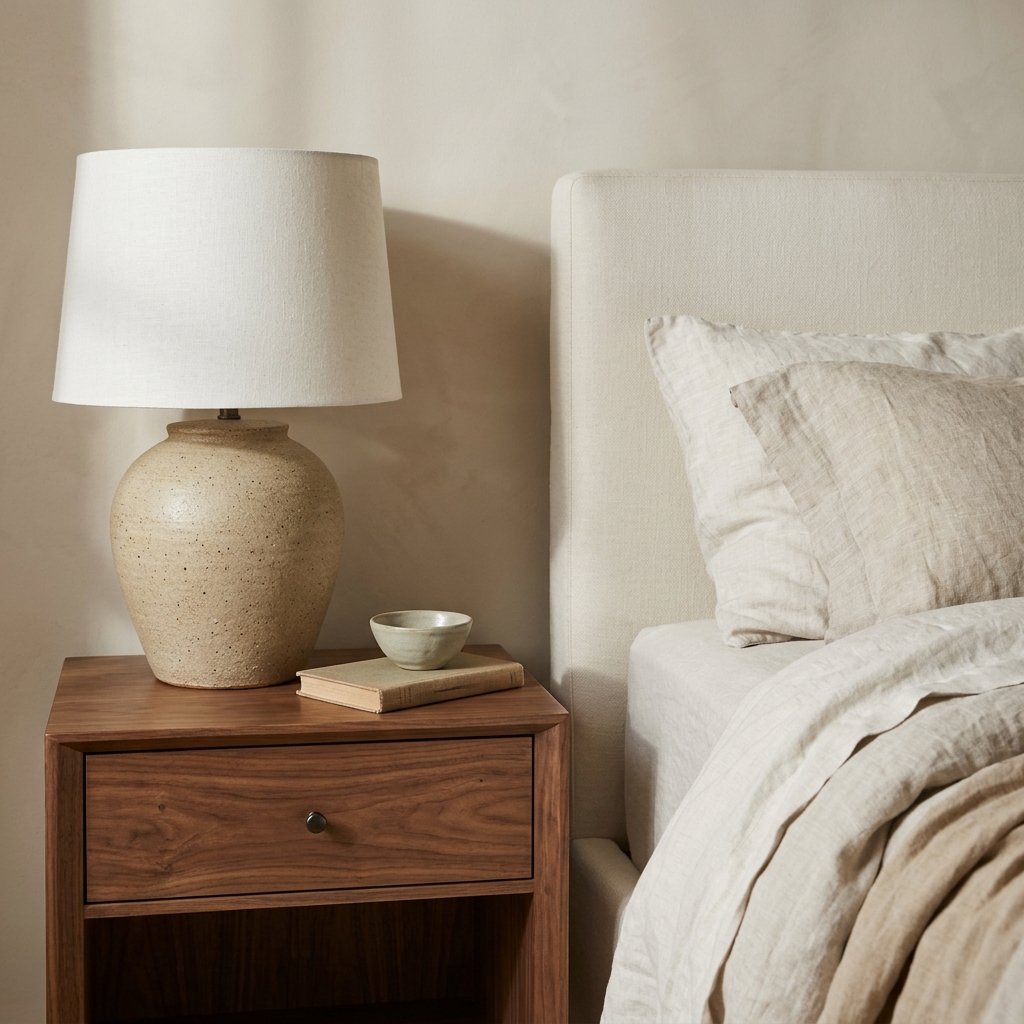
Matching Nightstands or Mismatched?
Both can work.
Matching nightstands create symmetry and make a bedroom feel calm and intentional.
Mismatched nightstands create a more collected look.
If you use different pieces, connect them through:
- Similar height
- Similar visual weight
- Matching lamps
- Related wood tones
- Repeated hardware finish
They don’t need to be identical.
They simply need to look like they belong in the same room.
Add Bedroom Lamps for Warm Evening Light
Overhead lighting alone rarely creates a relaxing bedroom.
Add lamps beside the bed.
Table lamps provide:
- Reading light
- Evening ambience
- Visual height
- Symmetry
Choose lamps that feel substantial enough for the nightstands.
Tiny lamps can look out of proportion beside a large bed.
Wall-mounted sconces can also work, particularly when nightstand space is limited.
For hardwired lighting or electrical changes, follow applicable electrical requirements and hire a qualified professional where appropriate.
Always follow fixture and bulb manufacturer specifications.
Use Curtains to Soften the Room
Curtains can completely change how finished a bedroom feels.
Even if you have blinds or shades for privacy, adding curtain panels can provide:
- Softness
- Texture
- Height
- Color
Hang them in a way that visually relates to the architecture rather than making the window appear unnecessarily small.
Before installing curtain rods, confirm the appropriate mounting method for your wall type and avoid hidden electrical wiring or plumbing.
For bedrooms where light control matters, consider blackout or room-darkening options suitable for your needs.
Choose Linen-Look Curtains for a Relaxed Style
Soft neutral curtains work especially well in a calm bedroom.
Consider:
- Warm white
- Cream
- Oatmeal
- Beige
- Taupe
A subtle woven texture can add interest without introducing a strong pattern.
If the walls are warm white, choose curtains that intentionally relate to them rather than accidentally looking like a slightly dirty version of the wall color.
Always compare samples.

Ground the Bedroom With a Large Rug
A rug helps visually connect the bed and nightstands.
It also adds softness underfoot.
For a large bedroom, an undersized rug can make the furniture feel disconnected.
Instead of choosing based on a standard size alone, measure the actual bed and room.
Use painter’s tape to mark potential rug dimensions.
Think about where your feet land when you get out of bed.
A larger rug can make the whole sleeping area feel more substantial and intentional.
What Rug Color Works in a Neutral Bedroom?
You don’t necessarily need a solid beige rug.
Try:
- Muted vintage-inspired pattern
- Warm gray
- Cream and brown
- Taupe
- Faded blue
- Subtle olive
A quiet pattern can hide everyday wear while adding depth to a neutral room.
Use an appropriate rug pad to reduce movement where needed and follow the rug manufacturer’s care recommendations.
Add a Bench at the Foot of the Bed
A bench can make a large bedroom feel more complete.
It also provides a practical place to:
- Sit
- Put on shoes
- Place a throw temporarily
Choose something narrower than the bed so it doesn’t visually overwhelm it.
Possible styles include:
- Upholstered bench
- Wood bench
- Woven bench
- Small settee
If the bedroom is tight, skip the bench.
Empty walking space is more useful than squeezing in another piece of furniture.
Use a Dresser as a Second Anchor
In addition to the bed, a dresser can anchor another wall.
Instead of covering the dresser with small accessories, keep the styling simple.
Try:
Lamp + artwork + bowl
or:
Large mirror + vase + books
or:
Leaning artwork + lamp
A dresser should still function as furniture.
Leave enough empty surface to make it practical.
Hang a Large Mirror Above the Dresser
A mirror can reflect natural light and make a bedroom feel brighter.
Choose something substantial enough to relate to the dresser.
Possible shapes include:
- Round
- Arched
- Rectangular
- Organic
Secure heavy mirrors using hardware appropriate for their weight and your wall construction.
Don’t simply lean a large heavy mirror in a location where it could tip.
Use Artwork Above the Bed
The wall above the bed is an obvious place for artwork, but you don’t have to fill it.
Options include:
- One large landscape
- Pair of framed prints
- Triptych
- Small curated group
- Nothing
If your headboard is tall or architectural, leaving the wall blank can actually look more sophisticated.
If you do hang artwork over the bed, use secure mounting appropriate for the item’s weight and wall type. Consider additional precautions where seismic activity is a concern.

Add Character With Vintage-Inspired Art
New furniture can sometimes make a bedroom feel a little too perfect.
Vintage or vintage-inspired artwork can introduce character.
Look for subjects such as:
- Landscapes
- Botanical studies
- Sketches
- Still life
- Abstracts
Thrift stores and antique shops can be excellent places to find inexpensive frames and artwork.
You don’t need an entire gallery wall.
One interesting piece can be enough.
Mix Wood Tones
Your bed, dresser, nightstands, and bench don’t need to come from one matching furniture collection.
In fact, mixing wood tones can make a bedroom feel more natural and collected.
Try combining:
- Natural oak
- Medium walnut
- Dark brown wood
The trick is repetition.
If you use walnut nightstands, repeat a similar depth through a frame, bench, or decorative object elsewhere.
Don’t Buy a Matching Bedroom Set Automatically
Matching sets are convenient, but they can sometimes make a room feel more like a furniture showroom than a home.
Consider mixing:
- Upholstered bed
- Wood nightstands
- Different dresser
- Upholstered or wood bench
Keep the pieces connected through color, scale, and style.
This creates more visual depth while maintaining cohesion.
Add an Accent Chair if You Have Room
A large primary bedroom may have enough space for a reading chair.
Create a small corner with:
- Comfortable chair
- Floor lamp
- Small side table
But don’t add a chair simply because there is an empty corner.
Ask whether you’ll actually use it.
A bedroom can feel luxurious because it has breathing room.
Add Plants or Simple Greenery
A little greenery can bring life into a neutral bedroom.
Try:
- Small plant on dresser
- Simple branches in vase
- Indoor tree in a bright corner
Choose plants appropriate for the available light and your household.
If you have pets or young children, check whether a plant is suitable for your home before bringing it into the space.
Faux greenery can also work if you prefer low maintenance.
Keep Nightstand Styling Simple
Nightstands collect clutter quickly.
Limit the visible accessories.
A practical arrangement might include:
- Lamp
- Small bowl
- Book
That’s enough.
If you need chargers, medications, tissues, or other everyday items, drawers can keep them accessible without leaving everything on display.
Style the Dresser Without Clutter
The same principle applies to the dresser.
Instead of using ten tiny decorative objects, try three larger elements.
For example:
Large mirror + lamp + vase
This creates different heights while leaving plenty of empty surface.
Use Black Accents for Definition
A neutral bedroom often needs something dark.
Black can provide contrast through:
- Picture frames
- Curtain rods
- Lighting
- Hardware
- Small furniture details
You don’t need a lot.
Repeating black two or three times can help the room feel intentional.
Use Brass for Warmth
Aged or antique-style brass can add warmth without making the room feel overly glamorous.
Use it sparingly through:
- Lamps
- Sconces
- Curtain hardware
- Dresser hardware
- Frames
Mixing brass with dark wood and cream can create a warm, layered palette.
Add Texture Instead of More Color
If your bedroom feels boring, don’t immediately add another color.
Try adding another texture.
Consider:
- Linen
- Wool
- Bouclé
- Woven basket
- Wood
- Ceramic
- Velvet
- Natural fiber rug
Texture creates visual interest while preserving a calm palette.
Create Contrast With Dark Wood
Dark wood can be particularly effective in a light bedroom.
Try dark walnut through:
- Nightstands
- Dresser
- Bench
- Picture frames
Against warm white walls and cream bedding, darker wood helps anchor the room.
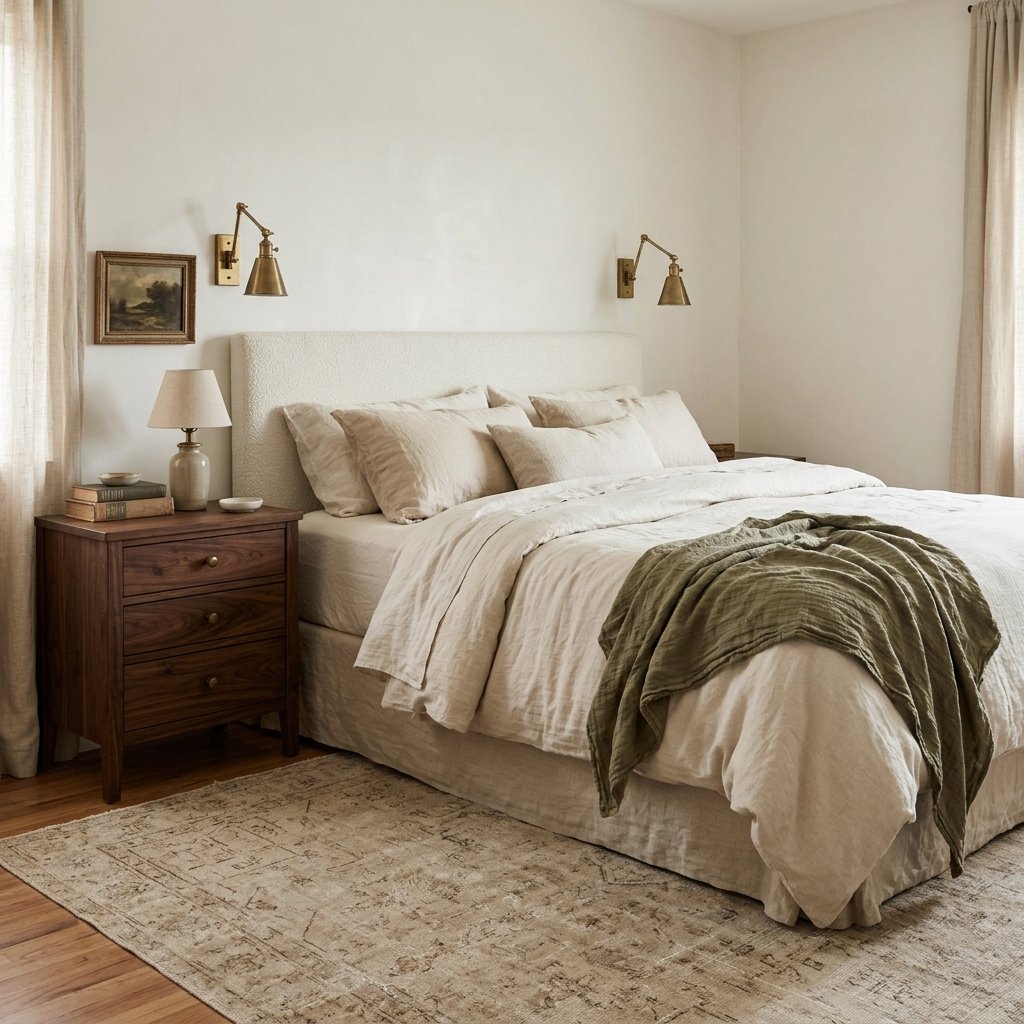
How to Make a Primary Bedroom Feel Cozy
Coziness doesn’t require filling the room.
Focus on:
- Soft bedding
- Warm lighting
- Curtains
- Rug
- Wood
- Texture
Then reduce unnecessary visual clutter.
A room can feel warmer simply because the lighting is softer and the textiles are layered.
How to Make a Primary Bedroom Look Expensive
A sophisticated bedroom is often more about restraint than price.
Use Larger Pieces
A substantial lamp usually looks more intentional than several tiny accessories.
Choose Properly Scaled Curtains
Window treatments have a huge visual impact.
Layer the Bed
A quilt, duvet, and throw can create depth.
Mix Furniture
Avoid making every piece look like it came from the same collection.
Use a Large Rug
An appropriately scaled rug can make the entire furniture arrangement feel more substantial.
Leave Empty Space
Luxury interiors aren’t necessarily full interiors.
Give furniture and artwork room to breathe.
Primary Bedroom Ideas on a Budget
You don’t need to replace everything.
Start with what makes the biggest visual difference.
Consider:
- Rearranging the furniture
- Painting the walls
- Changing bedding
- Adding curtain panels
- Replacing pillow covers
- Updating lampshades
- Adding thrifted artwork
- Replacing small accessories
Paint and textiles can completely change a room while allowing you to keep the expensive furniture.
If repainting, follow product instructions for surface preparation, ventilation, application, drying, and curing.
How to Update an Existing Bedroom Without Buying New Furniture
If your bedroom furniture is still functional, work around it.
For dark furniture, try:
- Lighter walls
- Cream bedding
- Pale rug
- Linen curtains
For light furniture, add contrast through:
- Darker rug
- Black accents
- Olive
- Brown
- Deeper artwork
You can also change hardware when compatible with the furniture.
Small changes become more effective when they’re part of an overall palette.
How to Make a Large Primary Bedroom Feel Finished
Large bedrooms often feel empty because the furniture is concentrated around the bed.
Create separate visual zones.
You might have:
Sleeping Zone
Bed + nightstands + rug.
Dresser Zone
Dresser + mirror or artwork.
Reading Zone
Chair + lamp + side table.
Don’t fill the room simply because you have space.
Each zone should serve a purpose.
How to Make a Small Primary Bedroom Feel Finished
For a smaller bedroom, eliminate anything that doesn’t earn its space.
Prioritize:
- Bed
- Nightstands
- Lighting
- Window treatments
Then add only what comfortably fits.
Wall-mounted sconces can free nightstand space.
A dresser may double as a television console if needed.
A bench is optional.
The room doesn’t need every piece of furniture shown in a large-bedroom makeover.
Common Primary Bedroom Decorating Mistakes
Buying a Rug That’s Too Small
Measure the entire furniture arrangement before choosing.
Using Tiny Nightstands
Make sure they visually relate to the bed.
Relying Only on Overhead Lighting
Add lamps or sconces for softer evening light.
Using Too Many Decorative Pillows
Keep the bed comfortable and practical.
Hanging Curtains Without Considering Scale
Window treatments should relate to the room and architecture.
Matching Every Piece of Furniture
A little variation creates character.
Filling Every Empty Corner
Negative space can make a bedroom feel calmer.
Ignoring Function
A beautiful bedroom should still be comfortable to live in.
A Simple Primary Bedroom Decorating Formula
If you’re overwhelmed, start here:
Step 1: Choose a Warm Wall Color
Warm white, cream, greige, beige, or another calm neutral.
Step 2: Anchor the Bed
Choose a substantial bed or headboard.
Step 3: Add Nightstands
Prioritize useful storage and appropriate scale.
Step 4: Layer Bedding
Mix tones and textures.
Step 5: Ground It With a Rug
Choose a size that relates to the bed and room.
Step 6: Soften the Windows
Add curtains or shades as appropriate.
Step 7: Layer Lighting
Use bedside lighting in addition to overhead light.
Step 8: Add Character
Bring in artwork, wood, greenery, or one vintage piece.
Step 9: Edit
Remove anything that doesn’t improve the room.

FAQ About a Primary Bedroom Reveal
What should be included in a primary bedroom?
At minimum, prioritize a comfortable bed, appropriate bedside surfaces, useful lighting, and any storage your household needs. Rugs, curtains, artwork, benches, and chairs are optional layers.
How can I make my primary bedroom look luxurious?
Focus on scale, layered textiles, warm lighting, substantial curtains, an appropriately sized rug, and fewer but larger accessories.
What colors are good for a primary bedroom?
Warm whites, creams, beige, taupe, soft brown, muted green, dusty blue, and other calm colors can all work well. Choose colors that coordinate with your flooring and furniture.
Should bedroom nightstands match?
No. Matching nightstands create symmetry, but different nightstands can work if their heights, visual weight, or finishes relate to each other.
Should the dresser match the nightstands?
It doesn’t have to. Mixing furniture can make a bedroom feel more collected. Repeat wood tones or other finishes elsewhere to create cohesion.
How many decorative pillows should be on a bed?
There is no required number. Use enough to make the bed feel styled without creating a pile you have to remove every night. For many rooms, a few decorative pillows are plenty.
Do I need a bench at the foot of the bed?
No. A bench can be useful in a large bedroom, but leaving the area open is better when space is limited.
How can I update my primary bedroom on a budget?
Start with paint, bedding, pillow covers, curtains, lampshades, thrifted artwork, and rearranging furniture. These changes can significantly alter the room without replacing all the furniture.
How do I make a neutral bedroom less boring?
Introduce contrast and texture. Mix wood, linen, woven materials, ceramic, metal, and subtle patterns rather than adding lots of unrelated colors.
Final Thoughts
A successful primary bedroom reveal doesn’t require an enormous decorating budget or a room filled with new furniture.
The biggest improvements often come from getting the foundation right.
Start with the bed.
Give it appropriately scaled nightstands and lighting.
Ground the room with a rug.
Soften the windows with curtains.
Layer the bedding with several textures rather than dozens of decorative pillows.
Then add contrast through wood, artwork, greenery, black accents, or warm metals.
Most importantly, edit.
Not every wall needs artwork.
Not every corner needs a chair.
Not every surface needs accessories.
A primary bedroom should feel like a place where the visual noise of the rest of the house becomes quieter.
When the furniture is properly scaled, the lighting feels warm, the textiles are comfortable, and the decor has enough breathing room, even a relatively simple bedroom can feel beautifully finished.

