

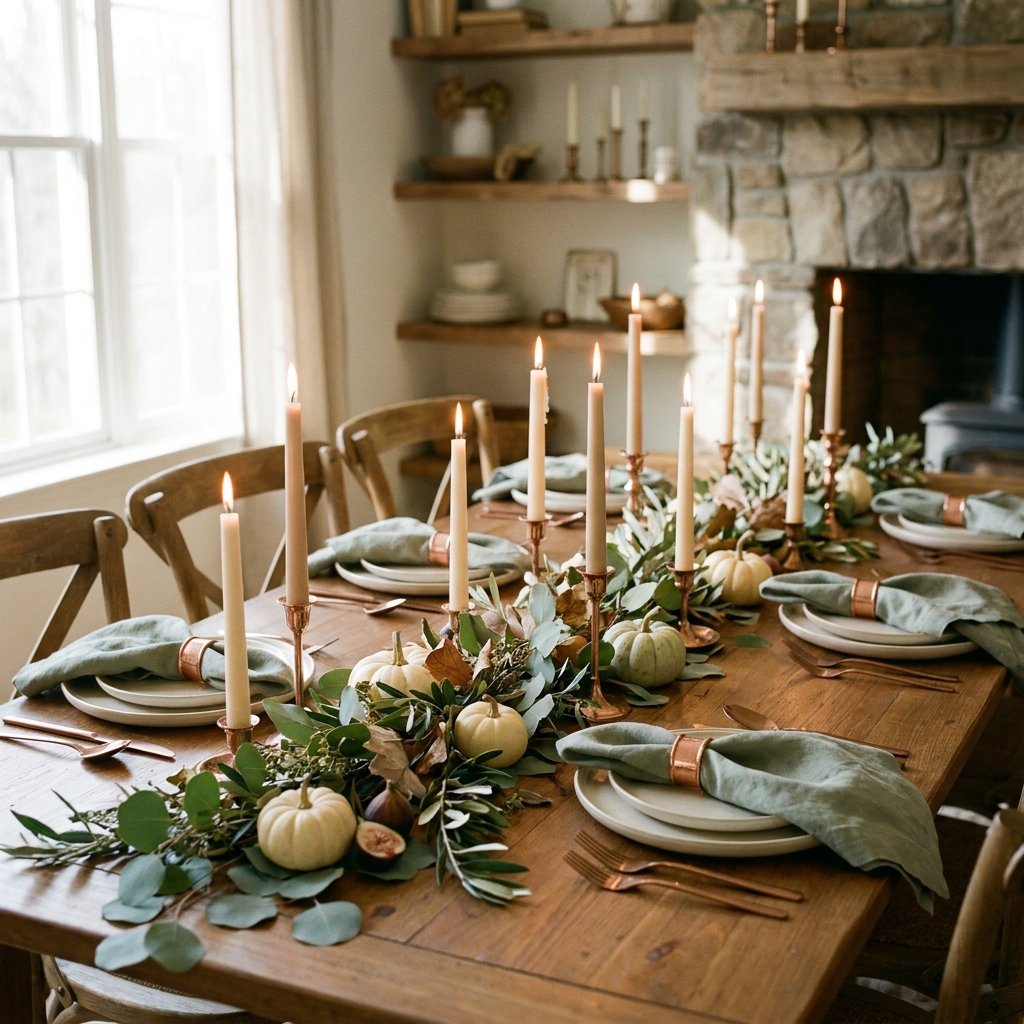
Fall decorating doesn’t have to mean covering the dining room in bright orange pumpkins.
If you prefer a softer, more sophisticated seasonal palette, a sage green and copper fall table setting is a beautiful alternative.
Sage brings a muted, earthy color to the table, while copper adds the warmth we naturally associate with autumn. Add creamy neutrals, natural wood, linen, greenery, candles, and a few understated fall details, and you have a tablescape that feels seasonal without becoming overly themed.
This combination can work for an everyday fall dinner, a casual gathering with friends, or a Thanksgiving table. Better yet, you can create the look with pieces you may already own and add only a few inexpensive seasonal accents.
Here’s how to put together an elegant sage green and copper fall tablescape, including ideas for the centerpiece, place settings, linens, pumpkins, candles, and finishing details.
Why Sage Green and Copper Work So Well for Fall
Sage and copper are both connected to colors found in nature, but they bring different qualities to a room.
Sage green feels:
- Soft
- Muted
- Organic
- Calm
- Earthy
Copper brings:
- Warmth
- Contrast
- Reflectivity
- Rich autumn color
Put them together and the cool softness of sage balances the warmth of copper.
You can make the combination even more cohesive by adding a warm neutral base.
Think:
Sage + copper + cream + natural wood
That’s enough to create an entire fall table.
Start With a Simple Fall Color Palette
Before decorating, decide on a limited palette.
This prevents the table from becoming cluttered as you add pumpkins, candles, dishes, and accessories.
For this tablescape, try:
Main Color
Sage green
Warm Accent
Copper
Light Neutral
Cream or warm white
Natural Element
Wood, greenery, or both
You can also introduce small amounts of brown, beige, brass, or muted rust.
The colors don’t need to match perfectly.
In fact, slight variation can make the table look more natural.
Use Sage Green as the Main Accent
You don’t need sage dishes, sage table linens, sage candles, and sage pumpkins all at once.
Choose one or two places for the color to appear prominently.
Easy options include:
- Napkins
- Table runner
- Placemats
- Candles
- Greenery
- Small decorative pumpkins
Sage linen napkins are particularly easy because they add both color and texture without dominating the table.
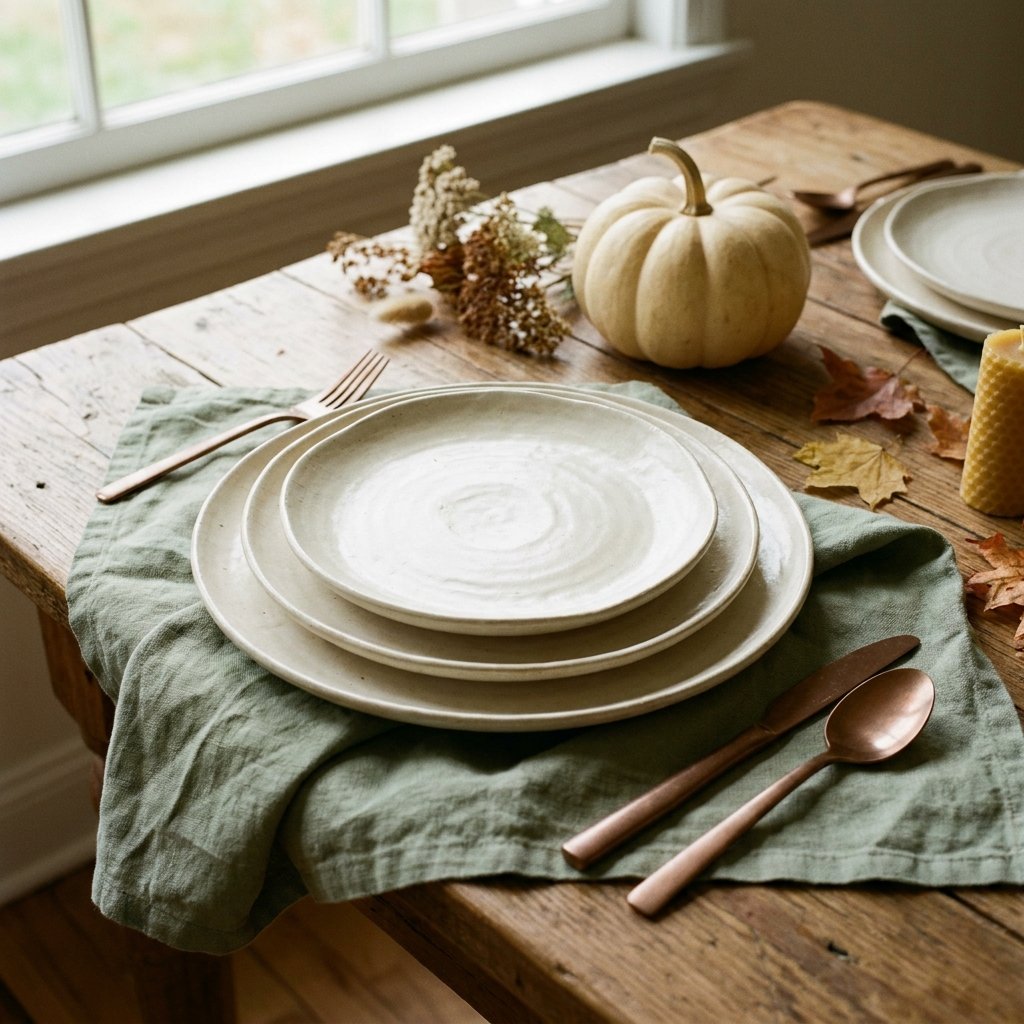
Add Copper in Small Amounts
Copper is beautiful, but because it’s reflective and warm, a little can go a long way.
Instead of making every metallic detail copper, use it strategically.
Consider:
- Copper flatware
- Copper mugs
- Copper candleholders
- Small copper bowl
- Copper-colored napkin rings
- Copper vase
Choose two or three repeated copper details rather than adding a different metallic object everywhere.
Repetition makes the finish feel intentional.
Don’t Worry About Perfectly Matching Metals
Your copper accents don’t have to prevent you from using other warm metals.
Copper can work alongside:
- Aged brass
- Antique brass
- Bronze
The trick is repetition.
If you’re mixing finishes, repeat each one enough that it looks deliberate.
For a simple tablescape, though, keeping one dominant warm metal is the easiest approach.
Choose a Warm Neutral Tablecloth
If your dining table is dark or doesn’t coordinate with the palette, start with a warm neutral tablecloth.
Try:
- Ivory
- Cream
- Natural linen
- Oatmeal
- Light beige
A neutral tablecloth creates a soft backdrop for sage and copper.
Linen or linen-look fabric also adds texture without requiring a pattern.
Or Let a Wood Table Show
If you have a beautiful wood dining table, don’t feel obligated to cover it.
Wood naturally complements both sage and copper.
A bare table can make the tablescape feel more relaxed and organic.
Instead of a full tablecloth, add:
- Linen runner
- Placemats
- Individual napkins
This lets the wood become another color in the palette.
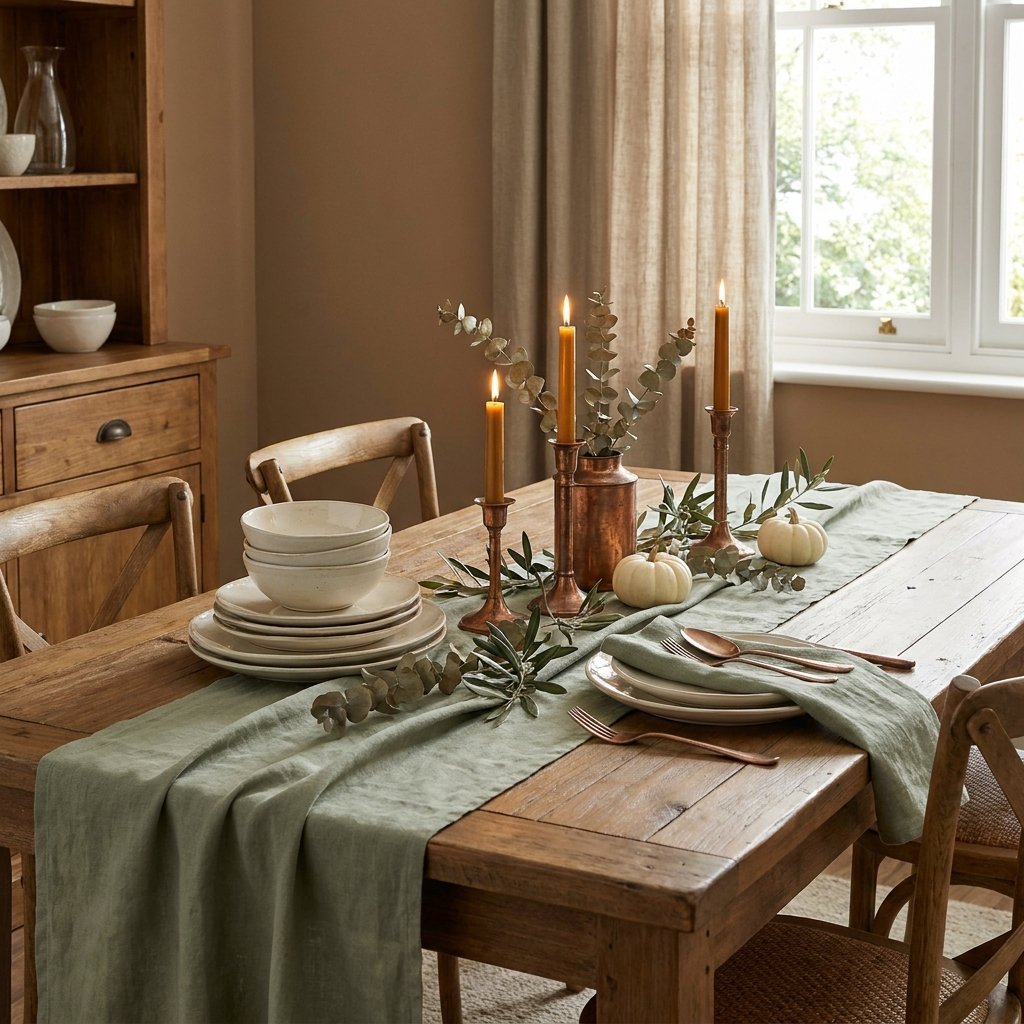
Add a Sage Green Table Runner
A sage runner is one of the easiest ways to establish the color palette.
For a relaxed table, choose fabric with a natural texture rather than something stiff and overly formal.
Let it run conventionally down the center or loosely gather it for a softer appearance.
If you’re using plenty of greenery, however, you may not need a green runner at all.
An oatmeal runner with sage napkins may provide better contrast.
Layer Neutral Dinnerware
You don’t need special fall dishes.
Simple cream or white dinnerware provides the perfect foundation.
Start with:
- Charger or placemat, if desired
- Dinner plate
- Salad plate or shallow bowl
- Napkin
Keep the dishes relatively simple so the seasonal elements remain the focus.
Warm white or cream dishes can be especially beautiful with copper because the contrast isn’t as sharp as it might be with an extremely cool white.
Add Texture With Chargers
Chargers are optional, but they can add another layer.
Consider:
- Woven
- Rattan
- Wood
- Natural fiber
- Hammered metal
For a sage and copper table, woven or wood chargers create an especially nice transition between the organic green and metallic copper.
Don’t add them just to add another object, though.
If the table already feels layered enough, skip them.
Fold Sage Napkins Simply
You don’t need an elaborate napkin fold.
In fact, a relaxed fold often looks better with an organic fall table.
Try:
- Loose rectangle
- Simple knot
- Napkin beneath the plate
- Napkin draped over the plate
Add a small piece of greenery if you want a decorative touch.
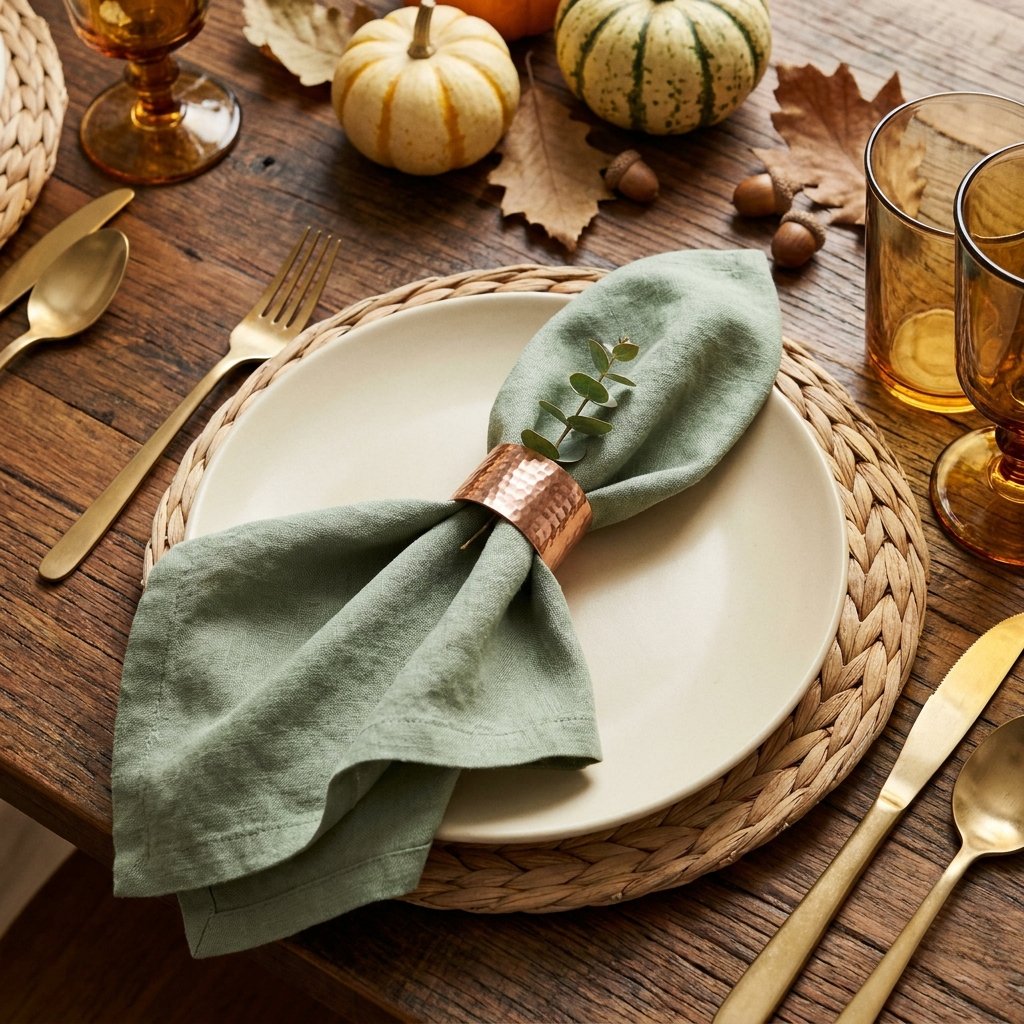
Use Greenery Instead of Traditional Fall Leaves
One of the easiest ways to keep this table from becoming overly orange is to use green foliage.
Consider seasonal or readily available greenery appropriate for your area.
The exact foliage isn’t important.
Look for muted greens rather than bright spring-like colors.
A loose arrangement down the center of the table can provide enough decoration without requiring a large floral centerpiece.
If using fresh plant material, protect the tabletop from moisture.
Also verify that plants and berries are appropriate around children and pets where relevant.
Add Muted Pumpkins
Pumpkins immediately make a table feel like fall, but they don’t need to be bright orange.
Try:
- Cream
- White
- Pale green
- Muted sage
- Soft tan
Mix a few shapes and sizes.
Place them casually among the greenery rather than creating a perfectly symmetrical row.
For an everyday table, three or five small pumpkins may be plenty.
Paint Inexpensive Pumpkins Sage Green
If you can’t find pumpkins in the right color, inexpensive faux pumpkins can be updated with paint.
Choose a coating appropriate for the pumpkin material and follow its preparation and drying instructions.
For a more natural appearance, use several slightly different sage tones rather than making every pumpkin identical.
Keep painted decorative pieces away from food unless the coating is specifically intended for that use.
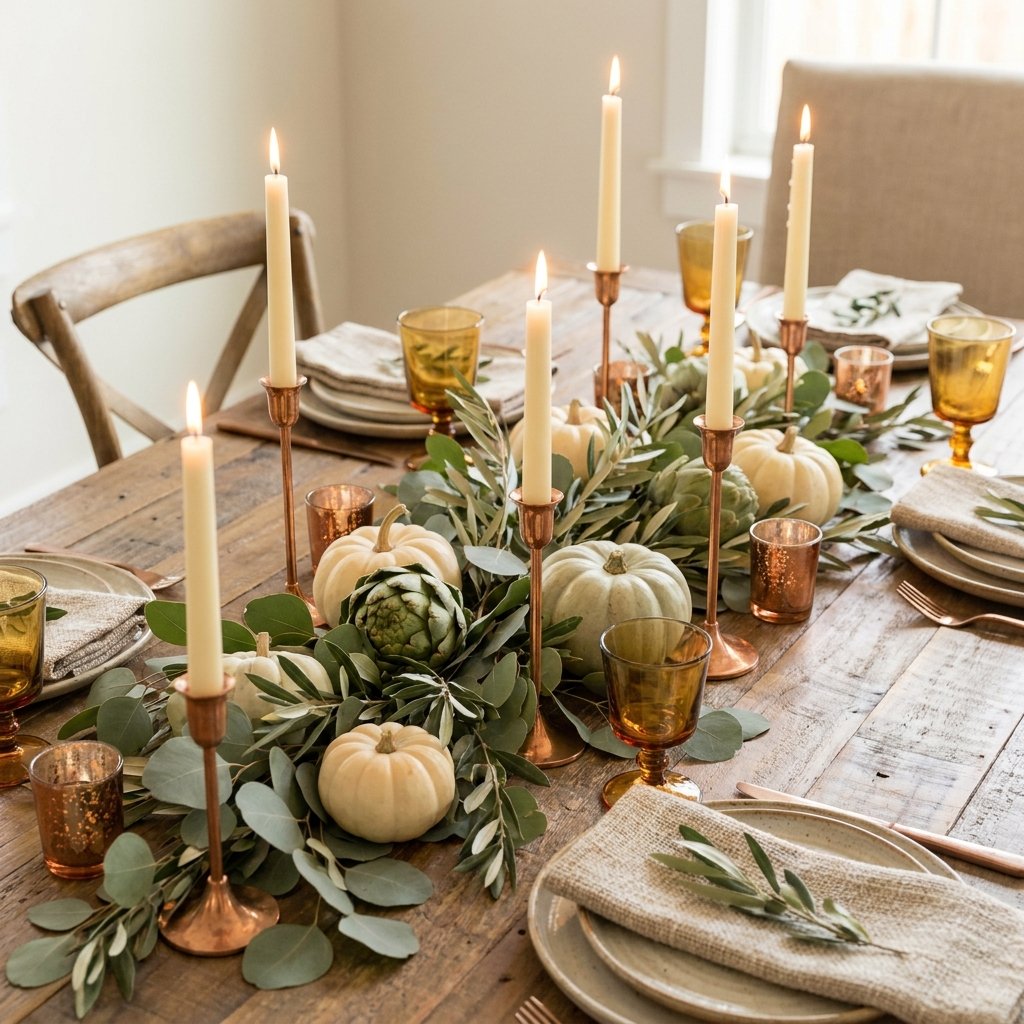
Add Copper Candleholders
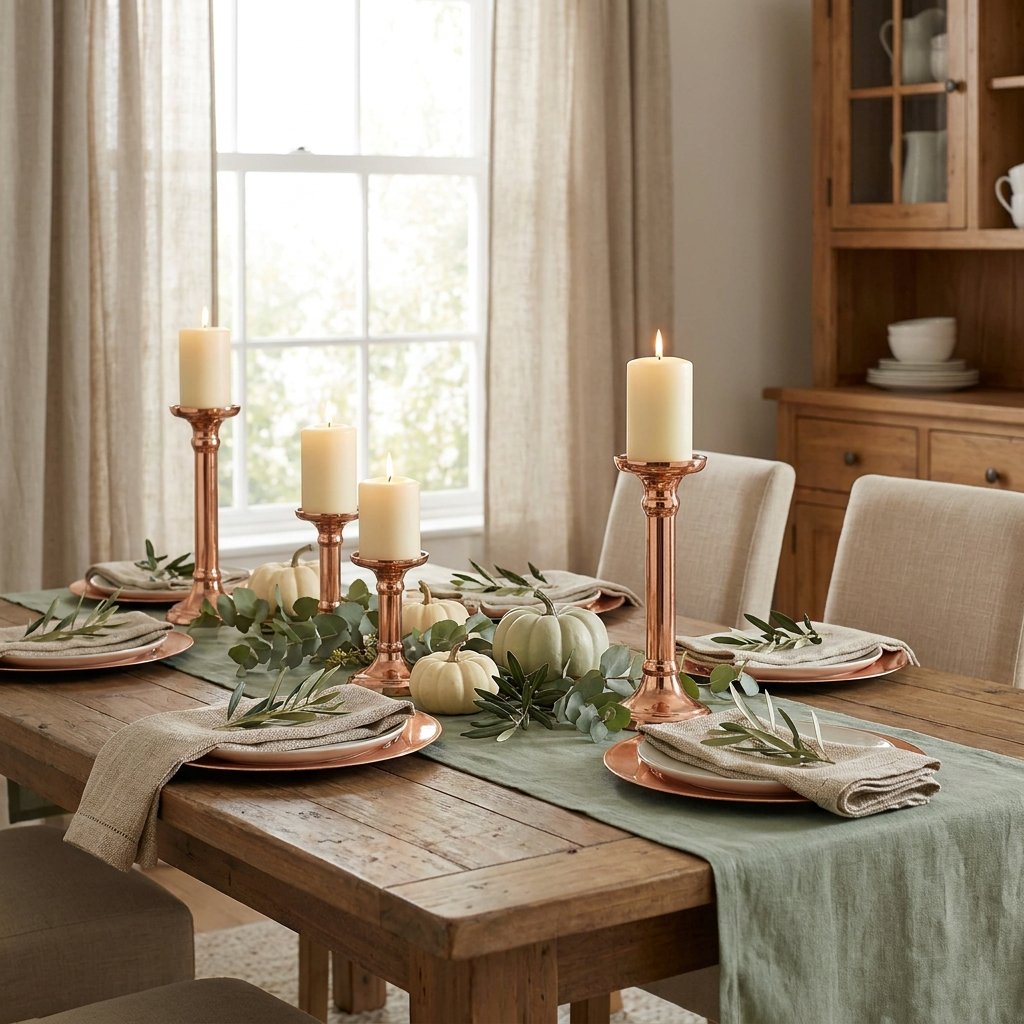
Copper or copper-toned candleholders are a beautiful way to bring metallic warmth to the center of the table.
Use different heights to create movement.
For example:
- One taller candlestick
- One medium
- One shorter
Repeat the arrangement if you have a long table.
Keep flames a safe distance from greenery, fabric, dried materials, and other decorations.
Never leave burning candles unattended.
Choose Candles That Support the Palette
You don’t have to use orange candles to make the table feel seasonal.
Try:
- Ivory
- Cream
- Taupe
- Sage
- Warm beige
Cream taper candles are particularly versatile because they allow the copper candleholders to stand out.
For a moodier table, try deeper olive or brown candles.
Keep the Centerpiece Low
A beautiful centerpiece isn’t useful if guests can’t see each other.
Keep most of the arrangement low enough for comfortable conversation.
Use taller elements sparingly.
Candlesticks work well because their narrow shape generally creates less visual obstruction than a huge flower arrangement.
If something blocks sightlines, move it before guests sit down.
Create a Greenery Garland Down the Table
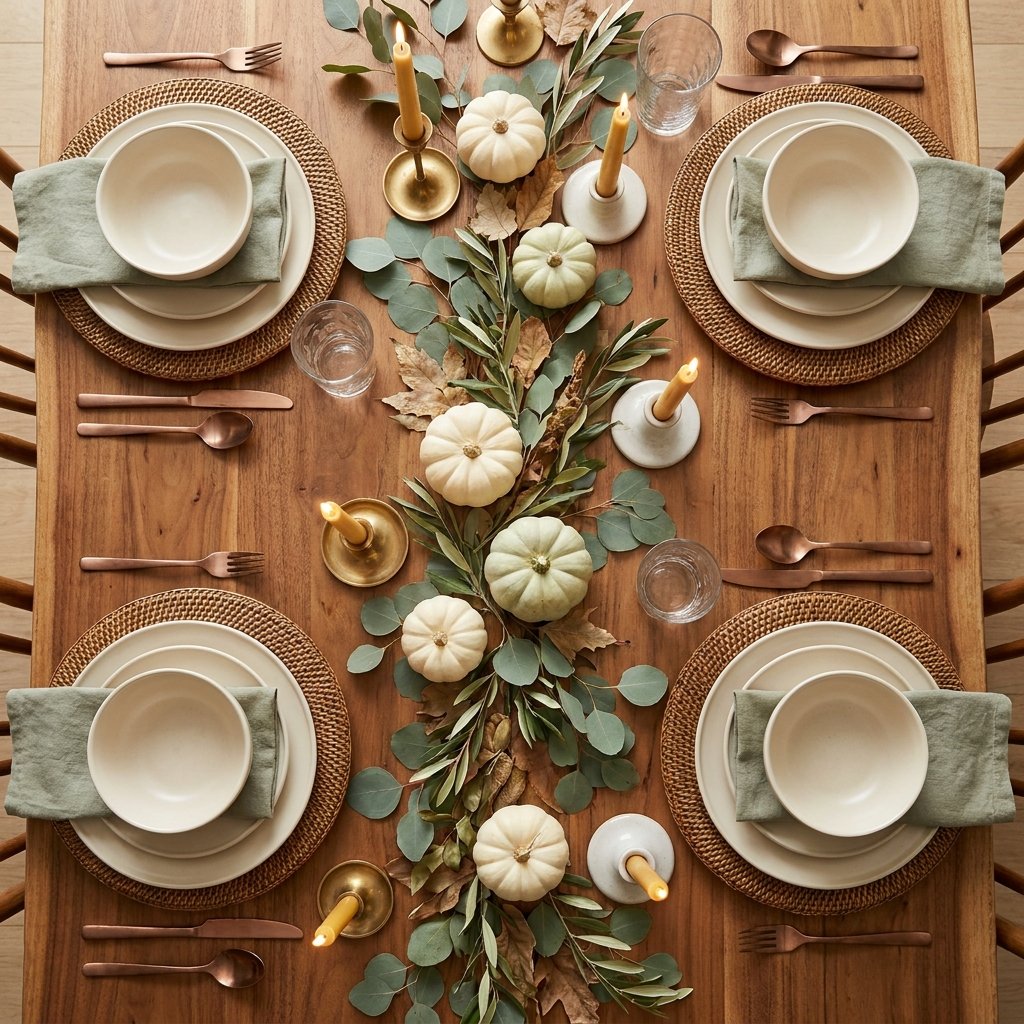
For a long rectangular table, create a loose garland effect instead of one large centerpiece.
Start with greenery down the center.
Then tuck in:
- Small pumpkins
- Copper candleholders
- Pinecones
- Acorns
- Natural wood details
Don’t feel like every inch needs decoration.
Leaving some negative space can make the arrangement look more sophisticated.
Use a Copper Vase for the Centerpiece
If you prefer one central arrangement, try a copper vessel.
Fill it with:
- Greenery
- Branches
- Muted seasonal foliage
- Dried grasses
Keep the arrangement loose rather than perfectly round.
If the vessel isn’t designed to hold water, use a watertight insert to protect both the container and table.
Add Dried Elements Carefully
Dried foliage can add beautiful fall texture.
Try small amounts of:
- Wheat
- Dried grasses
- Dried leaves
- Seed heads
Mix them with fresh-looking greenery to prevent the centerpiece from becoming entirely brown.
And remember that dried plant material is combustible.
Keep it well away from candle flames.
Bring in Natural Wood
Natural wood helps connect the sage and copper.
You might add:
- Wood serving board
- Wood bowl
- Wood chargers
- Small cutting board
- Wood candleholders
You don’t need all of them.
One or two wood elements are enough.
Add Warm Fall Fruit
Fruit is an underrated fall centerpiece material.
Depending on what’s available, consider adding a few:
- Pears
- Apples
- Figs
- Pomegranates
Choose colors that support the palette.
Muted green pears can be particularly pretty with sage.
Deep red fruit can add a tiny amount of richer autumn color without turning the entire table orange.
Add a Hint of Rust
If sage and cream feel a little too quiet, introduce a small amount of rust.
You could add it through:
- One throw pillow in the dining room
- A few leaves
- Small floral accents
- Napkin detail
- Artwork nearby
Keep rust secondary.
Sage and copper should remain the main story.
Add Black for Contrast
A tiny amount of black can help define a soft color palette.
Consider:
- Black chair frames
- Black candleholders mixed with copper
- Black-framed artwork
- Dark serving pieces
Black isn’t necessary, but it can make a very pale room feel more grounded.
Use Warm Lighting
Fall tablescapes look best when the lighting feels inviting.
Use layers of light rather than relying only on a bright overhead fixture.
Consider:
- Chandelier
- Wall sconces
- Lamps in the adjoining room
- Candles
If your chandelier is dimmable, lowering the intensity can create a softer dinner atmosphere.
Use lighting equipment according to manufacturer instructions.
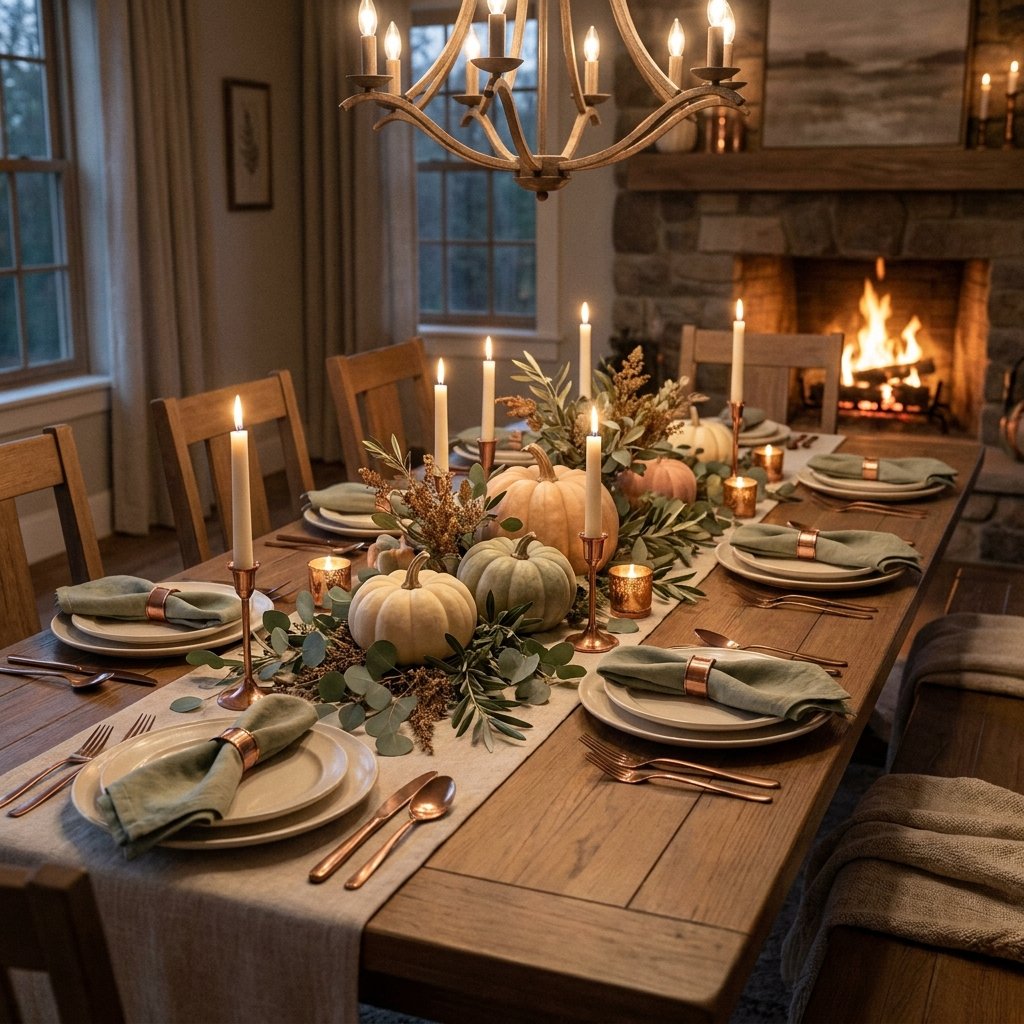
Create a Sage and Copper Thanksgiving Table
This color palette transitions easily into Thanksgiving.
You don’t need to start over.
Add:
- Place cards
- More substantial centerpiece
- Serving dishes
- Extra candles
- Thanksgiving-specific details if desired
The palette still feels autumnal without requiring turkey-themed decorations.
Easy Place Card Ideas
Place cards can make even a casual table feel special.
Keep them simple.
You could attach a small card to:
- Mini pumpkin
- Pear
- Napkin ring
- Small piece of greenery
Or place a simple folded card above each plate.
If you create printed place cards, use a clean, understated design so they complement rather than compete with the table.
Budget Sage Green and Copper Fall Table Ideas
You don’t need to buy an entirely new tablescape.
Start with what you own.
Use Everyday White Dishes
They work with almost any seasonal palette.
Buy Only the Napkins
Sage napkins may be enough to establish the color.
Shop Your House for Copper
Look for bowls, mugs, vases, or candleholders.
Use Greenery
A simple greenery centerpiece can replace expensive flowers.
Use Grocery-Store Produce
Pears and apples can become part of the centerpiece and then be eaten.
Choose Faux Pumpkins You Can Reuse
Neutral pumpkins can work with different fall palettes year after year.
A Simple Sage and Copper Table Formula
If you want the easiest version possible, use:
Wood table + cream dishes + sage napkins + copper flatware or candleholders + greenery + cream pumpkins
That’s it.
You don’t need chargers, elaborate florals, multiple layers of linens, or dozens of accessories.
A More Formal Version
For Thanksgiving or a dinner party, add:
- Linen tablecloth
- Chargers
- Layered plates
- Stemware
- Place cards
- Multiple candleholders
- More substantial centerpiece
Keep the same color palette.
The extra layers make it feel more formal without requiring additional colors.
A Casual Everyday Fall Table
For everyday decorating, simplify.
Try:
- Bare wood table
- Small greenery arrangement
- Three muted pumpkins
- Two copper candleholders
Then keep your normal dishes nearby.
A fall table doesn’t need to stay fully set for six weeks to look seasonal.
Sage Green and Copper Table Setting for a Round Table
Round tables benefit from a more compact centerpiece.
Instead of a long garland, create one central grouping.
Try:
Low greenery bowl + three small pumpkins + two or three candleholders
Keep enough room around the arrangement for place settings and serving pieces.
Sage Green and Copper Table Setting for a Long Table
Long tables give you more room for repetition.
Create a visual rhythm:
Greenery → pumpkin → candle → greenery → pumpkin → candle
Don’t make the spacing perfectly mechanical.
Slight variation keeps it looking organic.
How to Style the Rest of the Dining Room
The dining table doesn’t exist in isolation.
Repeat a few colors elsewhere in the room.
Try:
- Sage throw pillow
- Greenery on a sideboard
- Copper bowl
- Warm landscape art
- Cream vase
- Wood accessories
You don’t need to decorate every surface for fall.
Repeating two or three elements is enough to connect the room.
Common Fall Table Decorating Mistakes
Using Too Many Colors
A limited palette usually feels more cohesive.
Making the Centerpiece Too Tall
Guests should be able to talk comfortably across the table.
Adding Too Many Pumpkins
Leave room for dishes and food.
Using Too Much Copper
Metallic finishes are most effective as accents.
Making Everything Match Exactly
Variation creates a more collected appearance.
Forgetting Texture
Linen, wood, greenery, woven materials, and metal make a neutral palette more interesting.
Blocking Place Settings
Every guest needs comfortable space.
Putting Candles Too Close to Greenery
Keep open flames away from foliage, dried materials, linens, and other combustible decor.
Buying an Entirely New Table Setting
Use your everyday dishes and add seasonal accents first.
FAQ About a Sage Green and Copper Fall Table Setting
Does sage green work for fall decor?
Yes. Sage is an earthy muted green that pairs beautifully with warm autumn colors, natural wood, cream, copper, brown, and muted rust.
Does copper go with sage green?
Yes. Copper’s warmth provides attractive contrast against soft sage green, making the combination especially effective for fall decorating.
What colors go with sage green for a fall table?
Cream, warm white, beige, brown, copper, brass, muted rust, olive, and natural wood all work well with sage.
What dishes should I use with a sage and copper tablescape?
Simple cream or white dishes are versatile and allow the sage and copper details to stand out.
Can I use brass instead of copper?
Yes. Brass creates a slightly different look but provides similar warmth. You can also mix warm metals in small amounts when they’re repeated intentionally.
What color candles go with sage green?
Cream, ivory, warm beige, taupe, olive, and sage candles can all work. Cream is one of the easiest options when using copper candleholders.
How do I make a fall table look elegant?
Use a limited color palette, layer textures, keep the centerpiece relatively simple, repeat finishes intentionally, and leave enough negative space that the table doesn’t feel crowded.
Can I use this color palette for Thanksgiving?
Absolutely. Sage green, copper, cream, and wood create an elegant Thanksgiving palette. Add place cards, extra candles, and serving pieces for a more formal holiday table.
Final Thoughts
A sage green and copper fall table setting is proof that autumn decorating doesn’t have to revolve around bright orange.
Sage provides a soft, natural foundation.
Copper brings the warmth.
Cream keeps everything light, while wood, linen, greenery, and a few muted pumpkins add the texture that makes a fall table feel layered and inviting.
You can make the look as simple or elaborate as you want.
For an everyday table, sage napkins, cream dishes, a little greenery, and two copper candleholders may be all you need.
For Thanksgiving, add chargers, place cards, more candles, layered dishes, and a fuller centerpiece.
The important thing is restraint.
You don’t need every fall color, every pumpkin, or every seasonal decoration on the table at once.
Choose a limited palette, repeat sage and copper a few times, add natural texture, and leave enough breathing room for the individual details to stand out.
The result is an elegant fall table that feels warm, seasonal, and easy enough to recreate at home.