

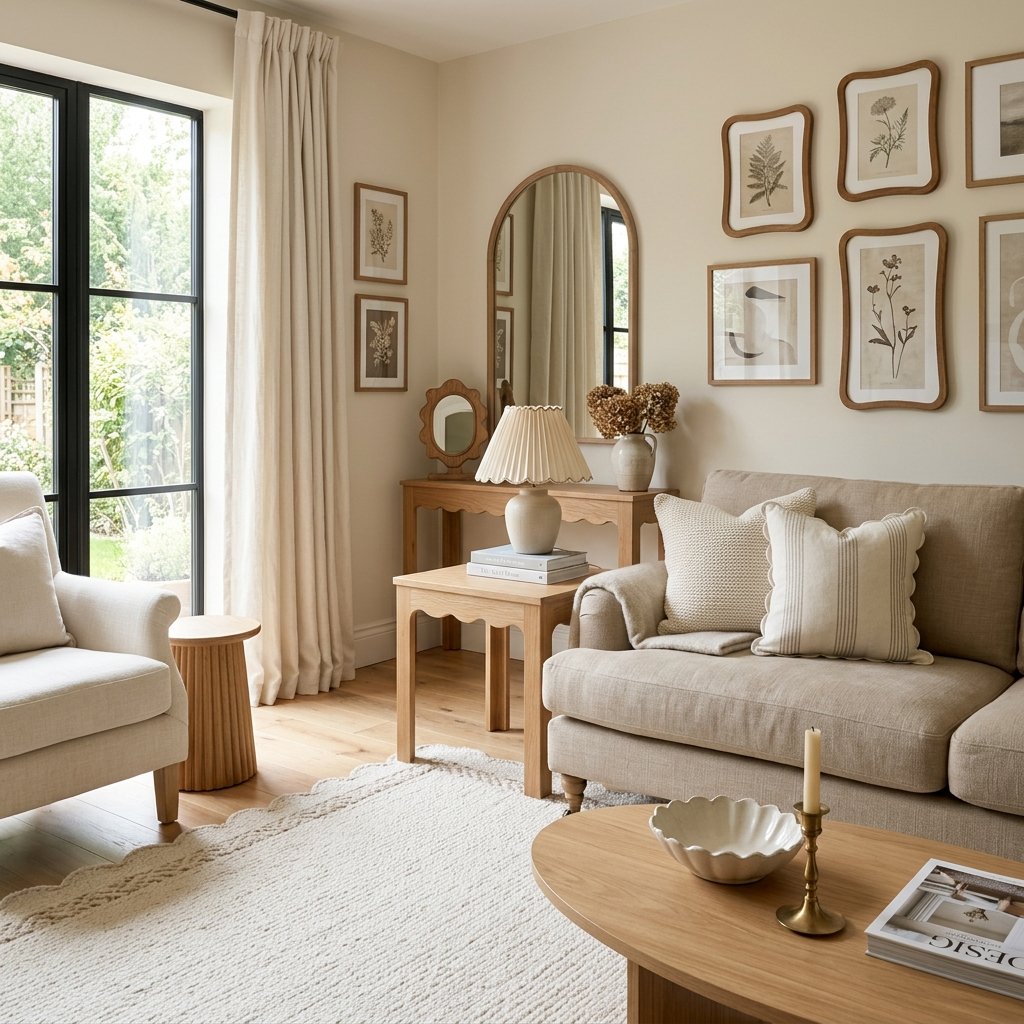
Some decorating details can completely change the personality of a room without requiring a major makeover. Scalloped edges are a perfect example.
From wavy-edged mirrors and scalloped lampshades to furniture, baskets, rugs, and painted wall details, scalloped home decor introduces curves into spaces that might otherwise feel dominated by straight lines.
The result can be playful, traditional, feminine, coastal, cottage-inspired, or surprisingly modern depending on how you use it.
And you don’t need to fill a room with scallops to make an impact.
In fact, scalloped details often work best in small doses. One scalloped mirror above a bathroom vanity, a wavy lampshade beside a bed, or a scalloped edge painted around a doorway can add just enough personality without making the room feel themed.
If you love decorating details that feel charming but still livable, here are 21 ways to use scalloped decor throughout your home—plus tips for choosing colors, mixing scallops with other patterns, and keeping the look timeless.
What Is Scalloped Home Decor?
A scallop is essentially a repeating series of rounded curves along an edge.
Think of overlapping half circles or soft waves.
You might see scalloped details on:
- Furniture
- Mirrors
- Lampshades
- Rugs
- Shelves
- Baskets
- Bedding
- Curtains
- Trays
- Tile
- Painted walls
- Cabinetry
- Decorative trim
Some scallops are small and delicate.
Others are large and exaggerated.
That scale has a major influence on how the detail feels. Tiny scallops can look traditional or sweet, while oversized curves often feel more contemporary and graphic.
Why Scalloped Decor Works So Well
Look around almost any room and you’ll notice a lot of straight lines.
Walls are straight.
Doors are rectangular.
Cabinets are boxy.
Tables, countertops, windows, tile, and picture frames frequently add even more hard edges.
Scallops introduce contrast.
The curves soften those straight architectural lines and give the eye something different to follow.
This is why even one scalloped piece can make a relatively simple room feel more interesting.
1. Start With a Scalloped Mirror
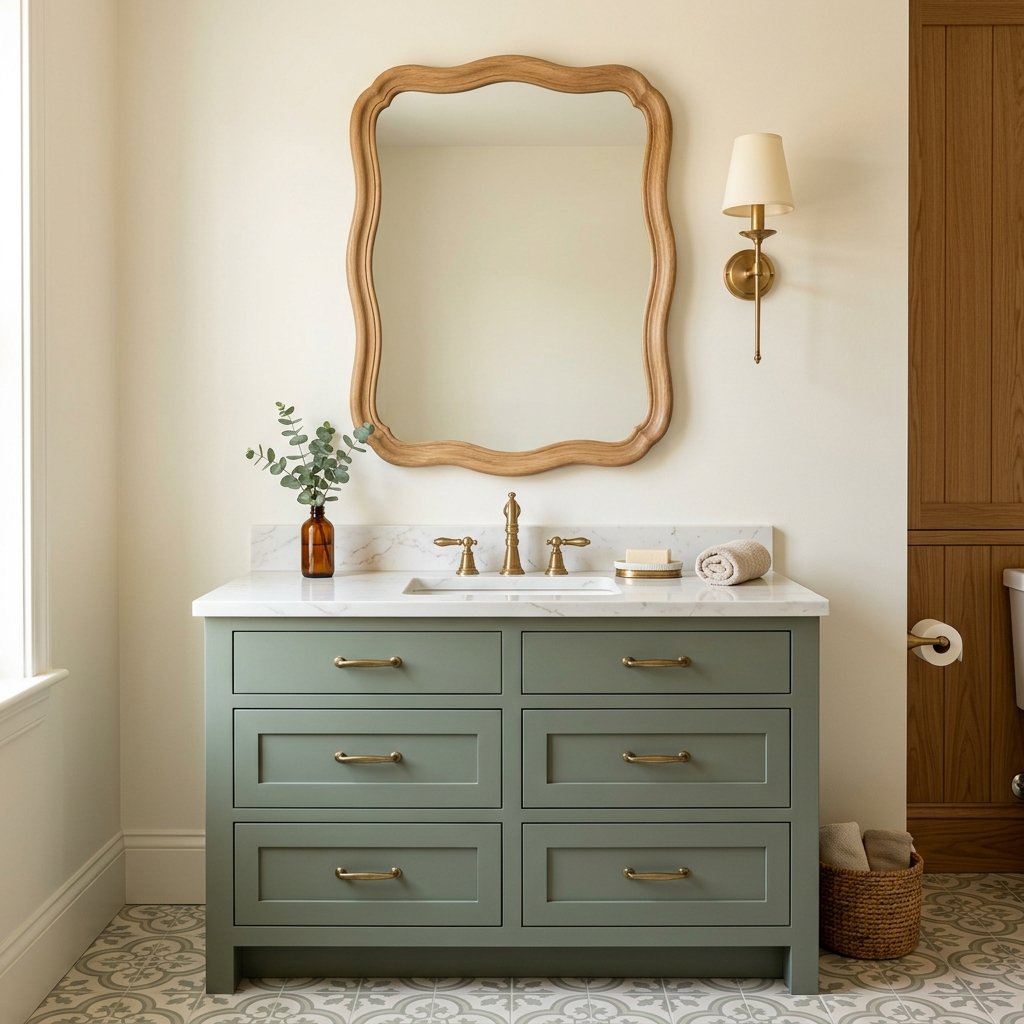
A mirror is one of the easiest places to experiment with scalloped home decor.
Try a scalloped mirror:
- Above a bathroom vanity
- Over an entryway console
- Above a bedroom dresser
- In a powder room
The shape provides decoration without requiring additional artwork.
For a subtle look, choose a mirror with a thin wood, brass-toned, black, or neutral frame.
For something playful, try a painted frame.
2. Add a Scalloped Lampshade
A lampshade is another low-commitment way to bring curves into a room.
A scalloped lower edge can transform a simple lamp into a decorative feature.
This works especially well in:
- Bedrooms
- Nurseries
- Living rooms
- Reading corners
- Home offices
If the scalloped shape is already decorative, keep the fabric fairly simple.
A cream shade with contrast piping or a subtle pattern can add plenty of personality.
3. Try Scalloped Bedding
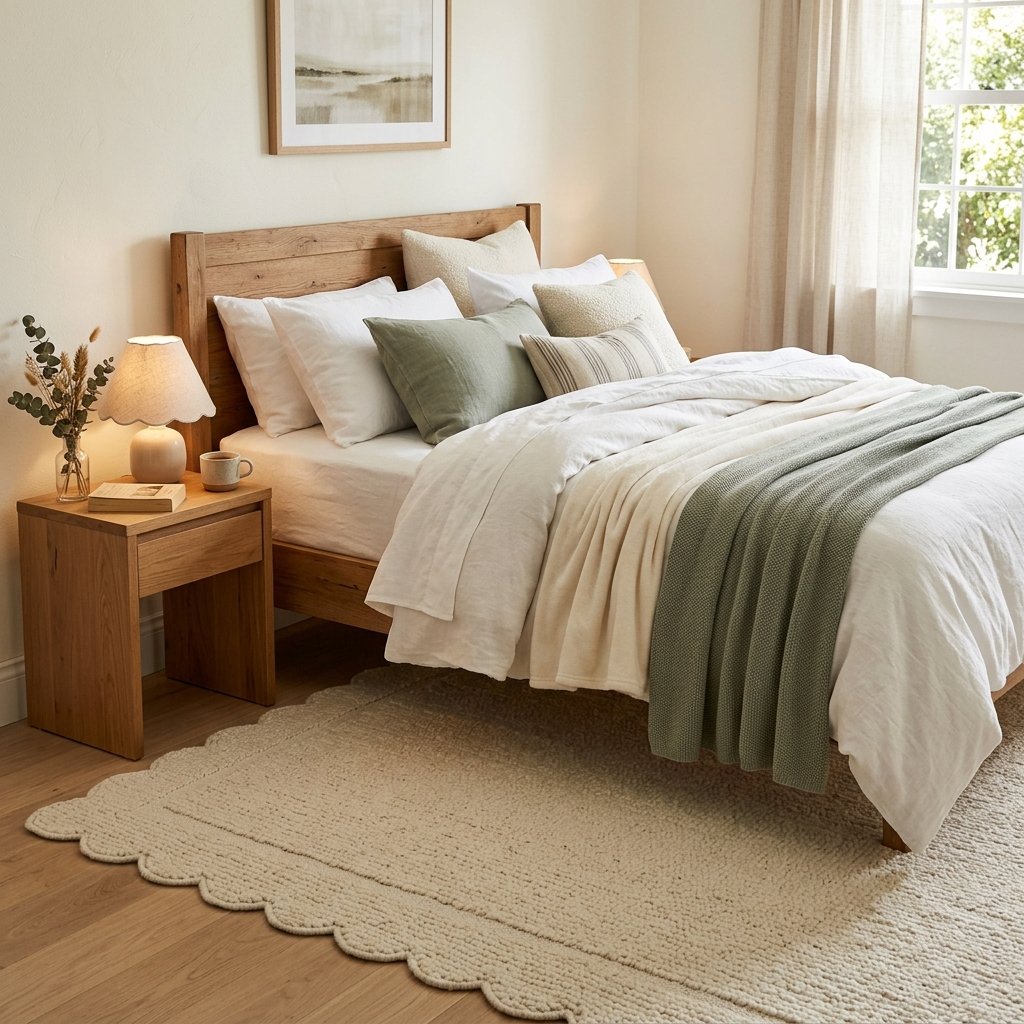
Scalloped bedding can soften a bedroom without making it feel overly decorated.
Look for scalloped details on:
- Pillowcases
- Shams
- Duvet covers
- Quilts
- Coverlets
- Bed skirts
A simple white or cream bed with a colored scalloped border is an easy way to use the detail.
Try sage, blue, dusty rose, brown, or burgundy piping depending on your room’s palette.
4. Use Scalloped Throw Pillows
If you’re not ready for scalloped furniture or architectural details, start with a pillow.
A scalloped throw pillow can work on:
- Sofa
- Accent chair
- Bed
- Window seat
- Bench
Mix it with simpler square and lumbar pillows.
The different outline adds visual variety even if every pillow uses a similar color palette.
5. Choose a Scalloped Rug
Scalloped rugs can be surprisingly versatile.
Instead of a perfectly straight rectangular edge, the curves create a softer boundary between the rug and flooring.
This can work especially well in:
- Nurseries
- Bedrooms
- Entryways
- Bathrooms
- Children’s rooms
In a larger living room, choose a subtle scalloped border rather than an extremely decorative shape if you want the rug to feel more grown-up.
6. Add Scalloped Shelves
A small wall shelf with a scalloped edge can add character without taking over the room.
Use one in a:
- Kitchen
- Bathroom
- Nursery
- Bedroom
- Laundry room
A wood shelf with scalloped trim can lean traditional or cottage-inspired.
A painted shelf in the same color as the wall creates a more subtle architectural effect.
7. Try a Scalloped Side Table
A side table is a good place for a more noticeable scalloped detail.
The scallop might appear around:
- The tabletop
- An apron
- A lower shelf
- The base
Pair a decorative table with a relatively simple lamp and accessories.
You don’t need every object on top to have another unusual shape.
Let the furniture be the feature.
8. Look for Scalloped Coffee Tables
For a larger statement, consider a coffee table with curved or scalloped detailing.
This is particularly useful in a living room with a lot of straight-lined furniture.
A scalloped or wavy table can soften:
- Rectangular sofa
- Straight fireplace
- Built-in cabinetry
- Boxy armchairs
Wood creates a warmer, more organic look, while lacquered or painted furniture can feel more playful.
9. Use a Scalloped Tray
A tray is probably one of the easiest ways to try the trend.
Place a scalloped tray on:
- Coffee table
- Ottoman
- Kitchen island
- Dresser
- Bathroom vanity
Use it to corral a few practical or decorative items.
Because trays are small and easy to move, this is a great option if you like scallops but aren’t sure you want to commit to furniture.
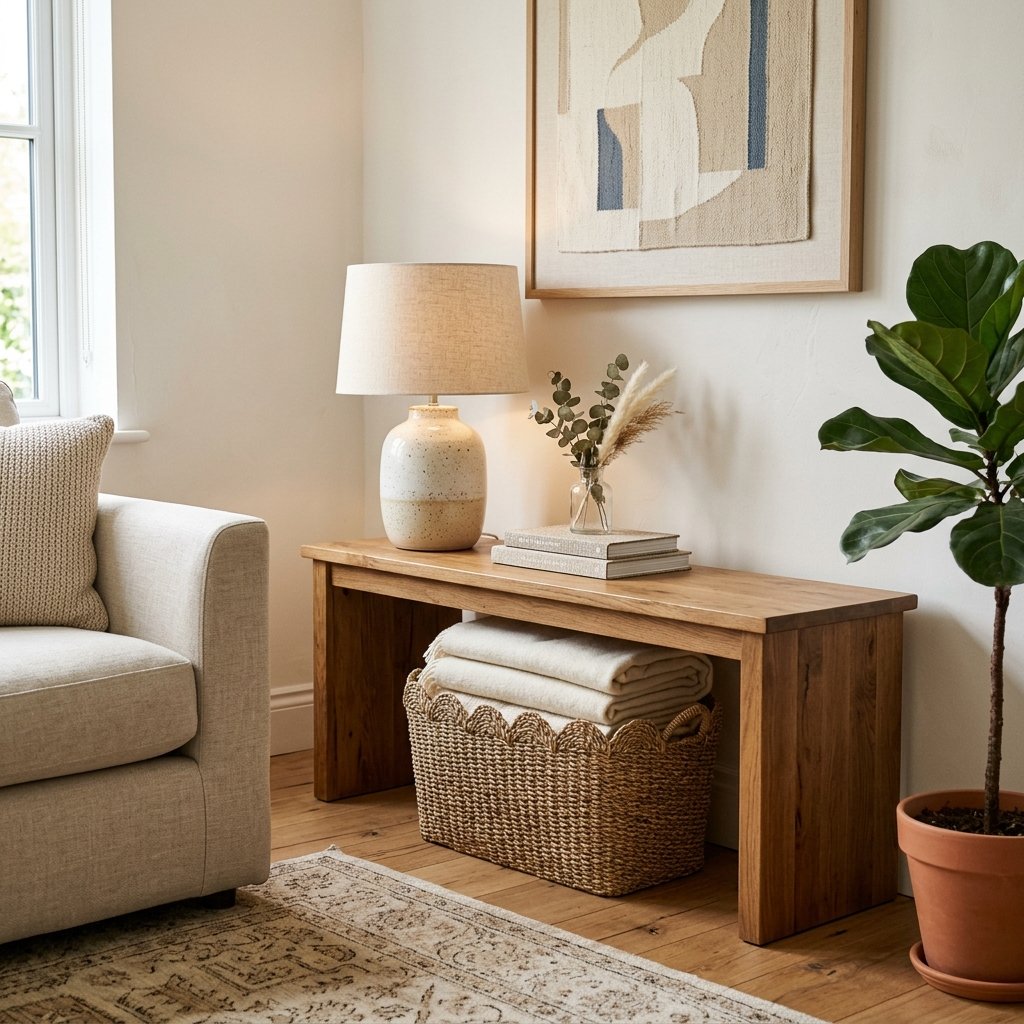
10. Add Scalloped Baskets
Baskets don’t have to be purely practical.
A woven basket with a curved top edge adds both texture and shape.
Use one for:
- Blankets
- Toys
- Laundry
- Pillows
- Bathroom storage
Natural woven materials also help prevent scalloped details from feeling too sweet.
11. Decorate With Scalloped Picture Frames
Small scalloped frames are an easy addition to bookshelves and side tables.
Mix them with standard rectangular frames rather than using scallops everywhere.
This creates a collected look.
Try:
- Wood
- Brass-toned metal
- Cream
- Tortoiseshell-inspired finish
- Painted frames
A small decorative frame is also a fun way to introduce a stronger accent color.
12. Use Scalloped Window Treatments
Curtains with scalloped trim can add a custom feel.
Keep the scallop detail relatively simple if the curtain fabric is patterned.
If the curtains are plain, you can be a little more playful with the edge.
Another option is a scalloped Roman-shade-style valance or decorative lower edge.
Because window treatments involve measurements, mounting hardware, and sometimes operating cords, follow the manufacturer’s installation and child-safety instructions.
13. Add Scalloped Cafe Curtains
Cafe curtains are especially charming with a scalloped edge.
They work beautifully in:
- Kitchens
- Breakfast nooks
- Laundry rooms
- Bathrooms
A small-scale scallop adds detail while the short curtain keeps the room casual.
Pair white or cream fabric with a colored edge for a simple look.
14. Use Scalloped Table Linens
You can bring the look into a dining room without changing any furniture.
Try:
- Scalloped placemats
- Napkins
- Tablecloth
- Table runner
This is especially useful for seasonal decorating.
You can use scalloped linens for spring or summer and put them away when you want a simpler table.
15. Try Scalloped Dinnerware
Scalloped dishes can add a soft decorative edge to open shelves or a table setting.
Instead of buying an entire new dinnerware set, introduce a few pieces.
Consider:
- Dessert plates
- Serving platter
- Bowls
- Cake stand
Mixing them with simple existing dishes can make the collection feel intentional rather than overly matched.
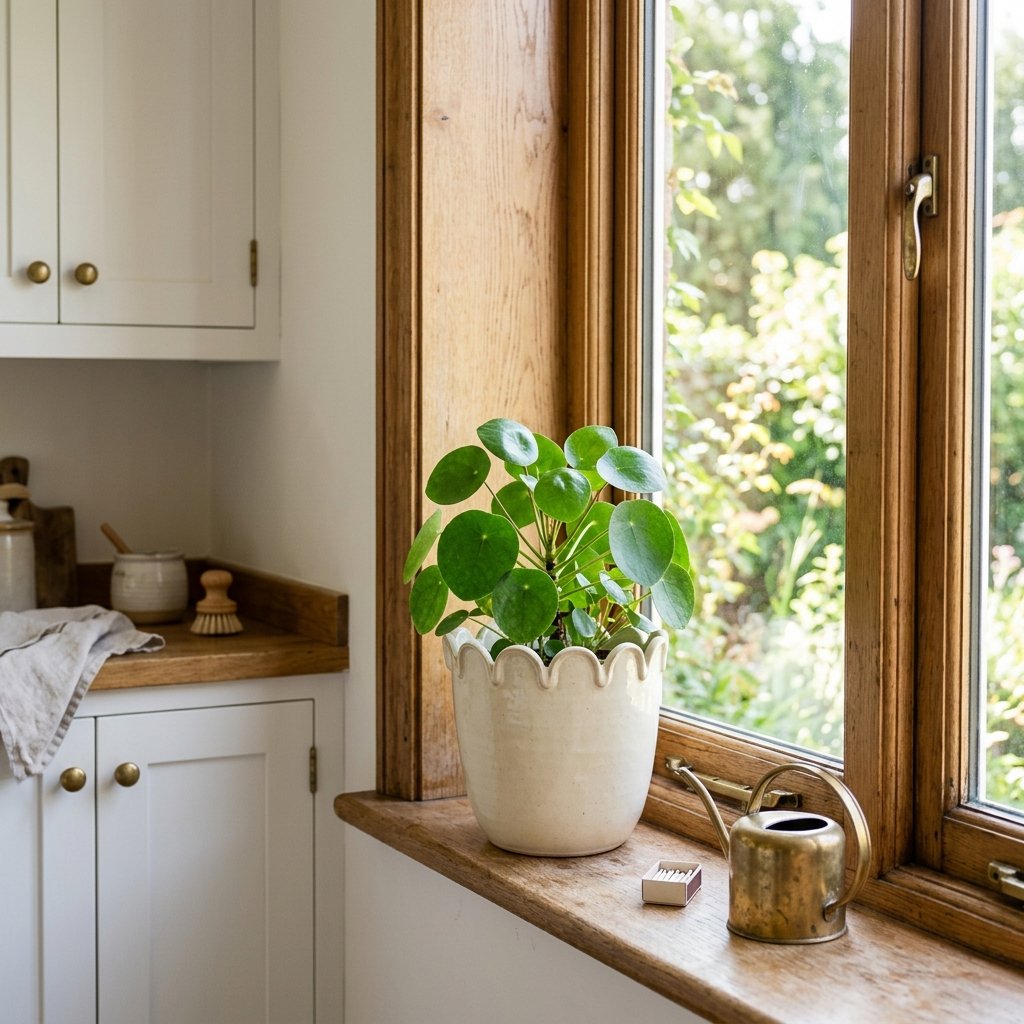
16. Add Scalloped Planters
A planter with a scalloped rim is a subtle way to use the shape.
It works indoors or outdoors depending on the planter material and manufacturer’s intended use.
Try one on:
- Console table
- Kitchen counter
- Patio table
- Bookshelf
Choose a plant with a simpler silhouette so the decorative container remains visible.
17. Paint a Scalloped Wall Border
You don’t necessarily need to buy anything.
Paint can create a scalloped detail directly on a wall.
This works especially well in:
- Children’s rooms
- Nurseries
- Playrooms
- Small bathrooms
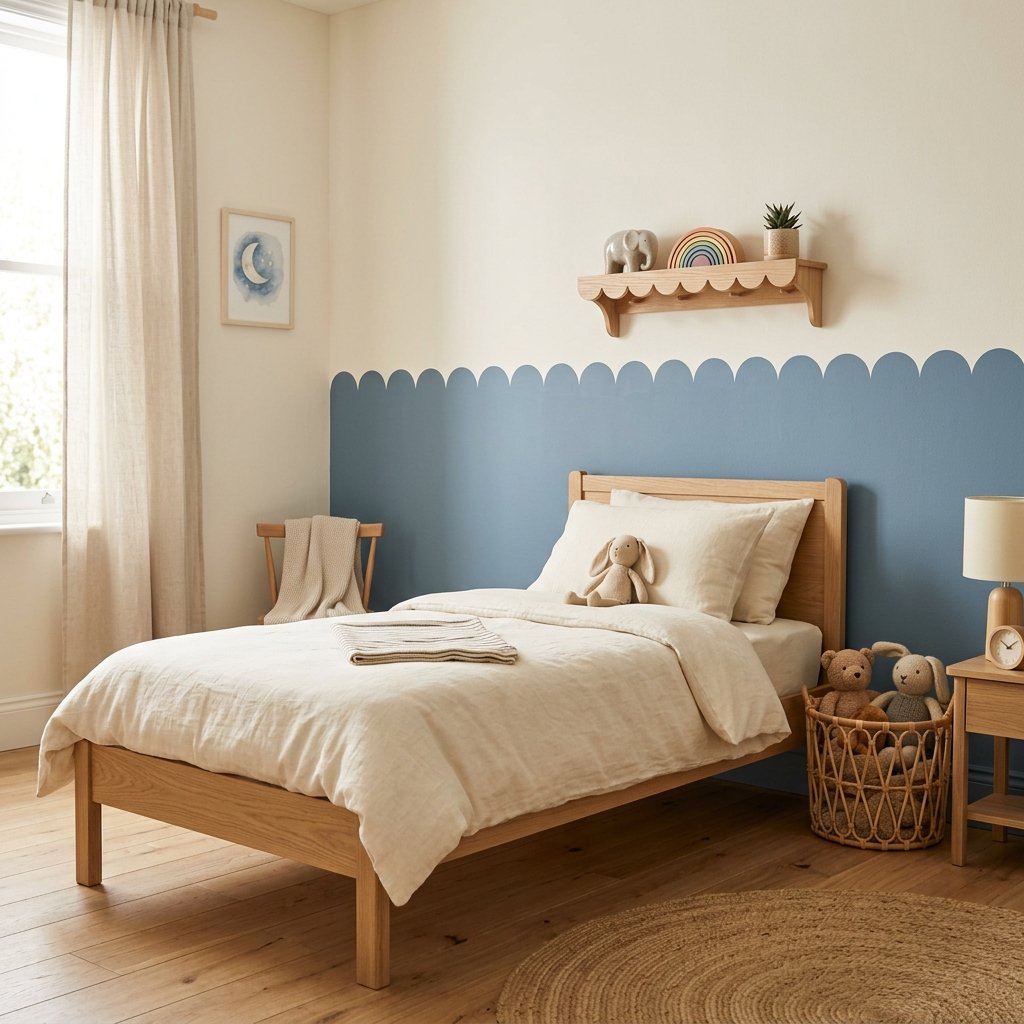
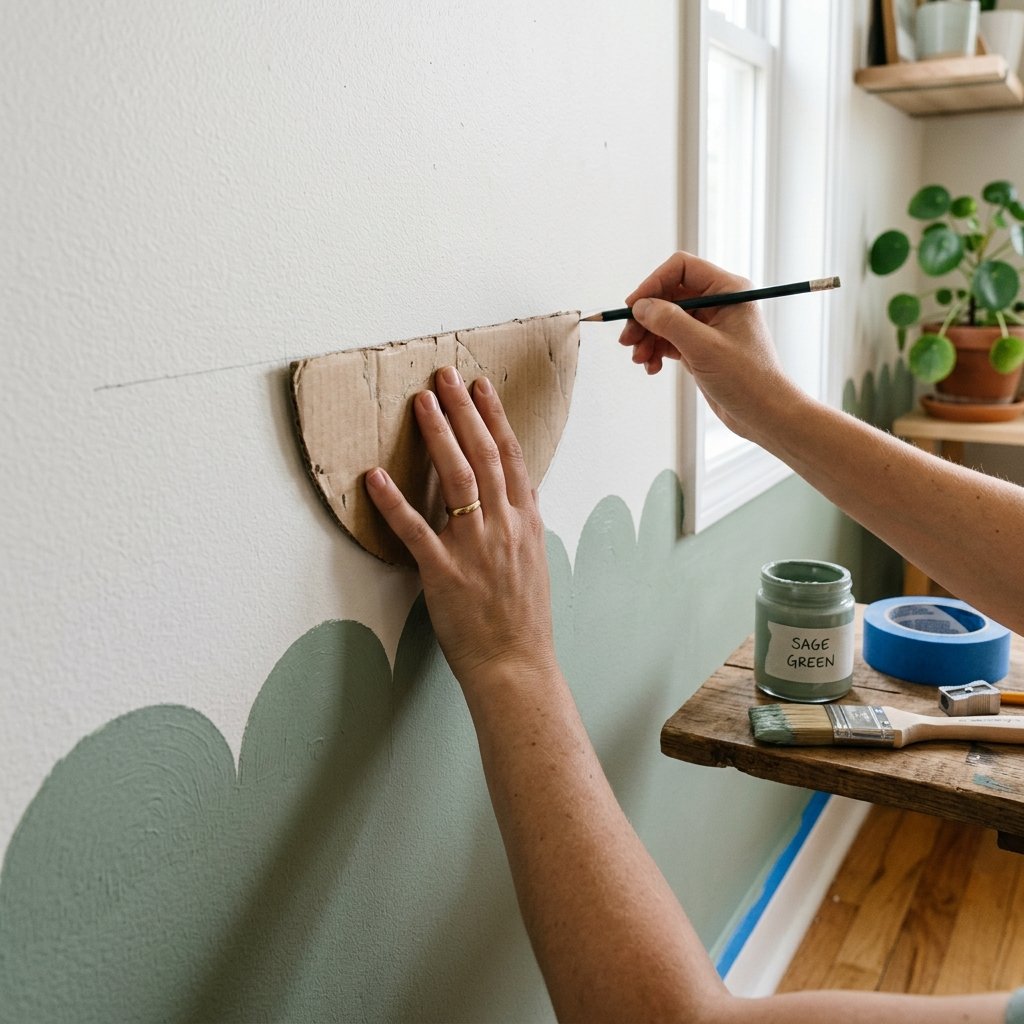
You can paint the lower portion of the wall one color and create a scalloped transition at the top.
The key is consistency.
Make a template rather than drawing every curve freehand.
Mark a level guideline and repeat the same shape around the wall.
18. Paint a Scalloped Doorway Detail
For an even smaller DIY project, add scallops around a doorway or opening.
You could create a painted scalloped border that frames the opening.
Keep the color close to the wall color for a subtle effect or use a contrasting shade for something playful.
Before painting, test your pattern with removable paper templates or painter’s tape so you can judge the scale.
19. Add DIY Scalloped Trim to Furniture
A basic cabinet, shelf, or table can sometimes be customized with decorative scalloped trim.
This could be a fun way to update:
- Plain bookshelf
- Children’s nightstand
- Wall shelf
- Console
- Small cabinet
However, consider how the furniture is constructed before altering it.
Don’t cut into structural components or modify a piece in a way that reduces its stability.
For freestanding furniture, follow appropriate anti-tip guidance where applicable.
20. Try Scalloped Cabinet Details
Scallops can also become part of cabinetry.
Ideas include:
- Scalloped open-shelf trim
- Decorative valance
- Scalloped toe-kick detail
- Curved cabinet apron
These details can work particularly well in a cottage kitchen, bathroom vanity, laundry room, or built-in.
Because cabinetry needs to remain functional, make sure decorative trim doesn’t interfere with doors, drawers, ventilation, appliances, or floor cleaning.
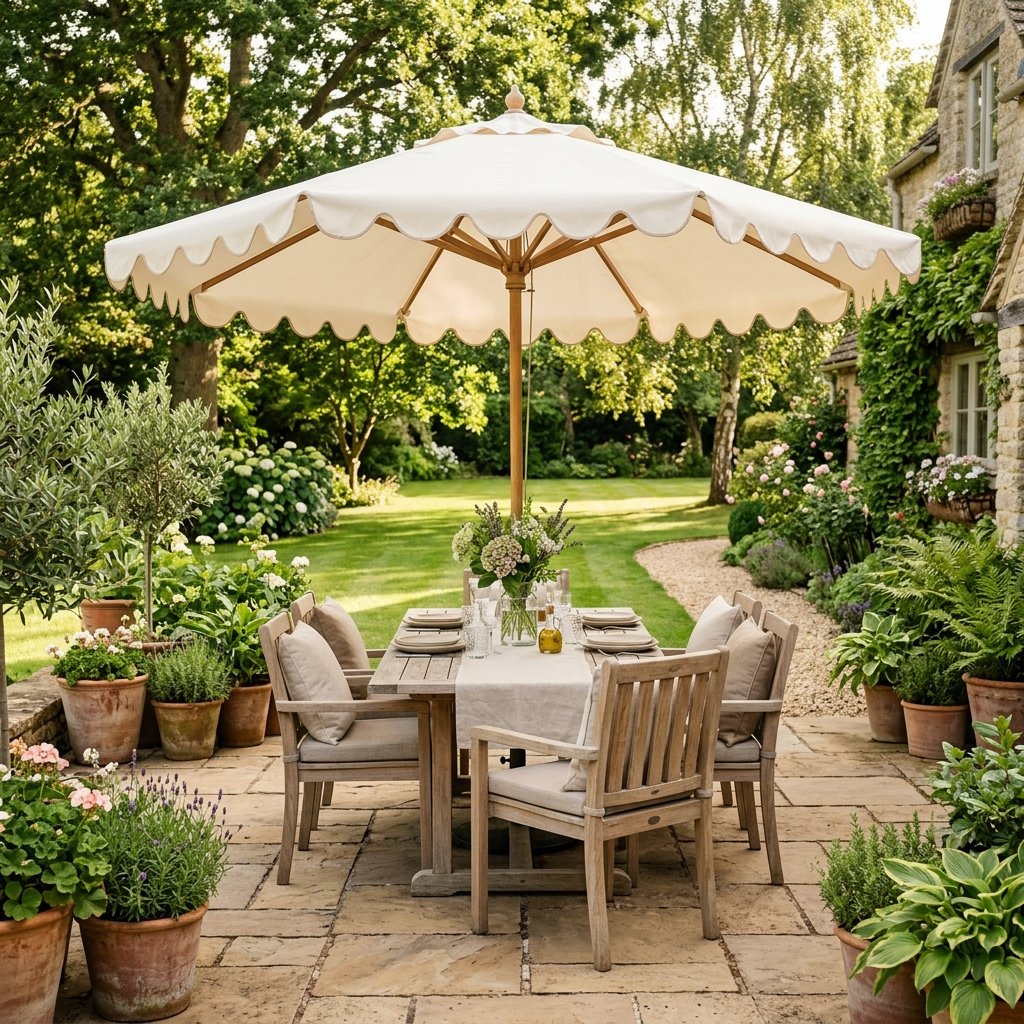
21. Add Scalloped Details Outdoors
The trend isn’t limited to interiors.
Try scalloped edges on:
- Outdoor planters
- Patio umbrellas
- Cushions
- Table linens
- Decorative garden edging
Choose products specifically intended for outdoor exposure.
A scalloped patio umbrella or planter can introduce a playful shape without making the entire outdoor space feel overly themed.
How to Decorate With Scallops Without Overdoing It
Scallops are memorable.
That means you don’t need many.
A useful rule is to choose one main scalloped element in a visual area and let other curved shapes support it more subtly.
For example:
Bathroom
Scalloped mirror + simple vanity + straight tile
Bedroom
Scalloped rug + simple bedding + one curved lamp
Living Room
Scalloped side table + rectangular sofa + round bowl
Kitchen
Scalloped shelf + straightforward cabinetry + simple backsplash
The room still has personality, but the scallop isn’t repeated on every object.
Mix Scallops With Straight Lines
Curves stand out because they’re surrounded by straighter architecture.
Don’t eliminate that contrast.
A scalloped mirror can look beautiful over a rectangular vanity.
A scalloped rug can soften a straight bed frame.
A curved lampshade can balance a boxy nightstand.
Think in terms of contrast rather than matching.
Mix Scallops With Other Curved Shapes
Not every curve in the room needs to be scalloped.
Combine scallops with:
- Round mirrors
- Arched doorways
- Rounded furniture
- Globe lights
- Oval trays
This creates a common visual language without repeating the exact same motif.
Scalloped Decor in a Neutral Room
Neutral interiors are a perfect setting for scalloped shapes.
When the palette is quiet, shape becomes more noticeable.
Try:
- Cream scalloped rug
- Natural wood scalloped table
- White scalloped shade
- Woven scalloped basket
The room can remain beige, cream, brown, and white while still feeling interesting.
Colorful Scalloped Home Decor
Scallops can also be a great place to introduce color.
Try:
- Sage green
- Dusty blue
- Burgundy
- Soft pink
- Butter yellow
- Terracotta
Use the stronger color on one relatively small scalloped item.
For example, a blue scalloped tray can add personality to a neutral coffee table without requiring blue furniture.
Scalloped Decor for a Traditional Home
Scallops aren’t only for whimsical interiors.
For a more traditional look, choose:
- Dark wood
- Brass
- Cream linen
- Muted colors
- Small-scale scallops
Pair them with classic furniture and restrained patterns.
The scalloped edge should feel like a decorative furniture detail rather than the theme of the room.
Scalloped Decor for a Coastal Home
Scallops naturally complement coastal decorating because their curves can subtly suggest waves and shells.
But avoid making the connection too literal.
Instead of combining scallops with seashells, anchors, and nautical signs, use:
- Woven textures
- Blue and white
- Natural wood
- Linen
- Soft curves
This creates a coastal feeling without becoming themed.
Scalloped Decor for a Cottage-Style Home
Scallops feel especially natural in cottage interiors.
Combine them with:
- Floral patterns
- Painted furniture
- Warm whites
- Vintage-style lighting
- Wood
- Small checks or stripes
Again, moderation matters.
A scalloped shelf paired with floral wallpaper can be charming.
Adding a scalloped rug, scalloped mirror, scalloped lamp, and scalloped curtains to the same room may be too much.
Scalloped Decor in a Kids’ Room
Children’s rooms are a great place to be more playful.
Try:
- Scalloped painted walls
- Scalloped shelves
- Colorful rugs
- Scalloped bedding
- Wavy mirrors
Choose colors that can grow with the room.
Muted green, blue, terracotta, or warm pink may have more longevity than extremely bright colors.
Secure furniture and wall-mounted decor appropriately, and keep breakable or heavy items away from locations where children could pull them down.
Scalloped Decor in a Bathroom
A bathroom is an easy place to experiment because the room is relatively small.
Try a scalloped:
- Mirror
- Vanity detail
- Bath mat
- Shelf
- Basket
- Towel edge
If you’re already using patterned floor tile or wallpaper, keep the scallop subtle.
Too many decorative elements can make a small bathroom feel busy.
Scalloped Decor in a Kitchen
Kitchens contain lots of rectangles, so scallops can provide welcome contrast.
Try:
- Scalloped shelf trim
- Pendant shade
- Cafe curtain
- Planter
- Serving tray
Keep decorative trim away from heat sources and make sure it doesn’t interfere with appliances or cabinet operation.
Scalloped Decor in a Living Room
In a living room, larger scalloped pieces can work because there’s more space around them.
Consider:
- Rug
- Coffee table
- Side table
- Lampshade
- Decorative tray
Choose one as the focal scalloped feature.
Then repeat curves elsewhere with round or arched objects instead of more scallops.
Scalloped Decor in a Bedroom
Bedrooms naturally suit softer lines.
Try a scalloped:
- Headboard
- Rug
- Bedside table
- Lampshade
- Pillow
- Quilt edge
If the headboard has a dramatic scalloped silhouette, keep the bedding relatively quiet so the shape remains visible.
How to Mix Scallops With Patterns
You can absolutely use scalloped decor in a patterned room.
The trick is scale.
If the scallop is large and bold, choose a smaller-scale pattern nearby.
If the scallop is tiny and delicate, a larger floral or stripe can provide contrast.
Scallops pair particularly well with:
- Stripes
- Checks
- Florals
- Small geometrics
Avoid making every pattern equally busy.
How to Make Scalloped Decor Feel Timeless
Trends become dated fastest when they’re repeated everywhere.
If you want scallops to last, focus on pieces that would still look attractive even if the trend became less popular.
Good candidates include:
- Wood furniture
- Classic mirror
- Simple lampshade
- Neutral rug
- Small shelf
Choose colors you already love rather than buying a scalloped piece solely because it’s trendy.
Budget-Friendly Scalloped Home Decor Ideas
You don’t need designer furniture to get the look.
Try:
- Painting a scalloped wall border
- Adding decorative trim to a simple shelf
- Sewing or buying a scalloped pillow cover
- Using a small tray
- Choosing inexpensive table linens
- Updating a lampshade
Smaller pieces are also easier to change later.
Common Scalloped Decorating Mistakes
Using Scallops Everywhere
One or two details usually have more impact.
Making Every Curve the Same Size
Vary scale through other rounded objects.
Mixing Too Many Playful Patterns
Give the scallop room to stand out.
Ignoring the Room’s Style
Choose materials and colors that connect to your existing decor.
Buying a Trend Instead of a Useful Piece
Start with something you actually need.
Choosing an Awkward Scale
Large scallops make a statement; tiny scallops feel more delicate.
Forgetting Function
Decorative edges shouldn’t interfere with furniture, cabinetry, or everyday use.
FAQ About Scalloped Home Decor
What is scalloped home decor?
Scalloped home decor features a repeating curved or half-circle edge. It can appear on furniture, mirrors, rugs, lampshades, shelves, textiles, cabinetry, and painted wall treatments.
Is scalloped decor trendy?
Scalloped edges can feel current, but curved decorative details have appeared in furniture, textiles, and architecture for generations. Using the shape selectively can help it feel more enduring.
How do you decorate with scallops without making a room look childish?
Choose restrained colors, natural materials, and only one or two scalloped elements. Pair them with simple furniture and straight architectural lines.
What styles work with scalloped decor?
Scallops can work with traditional, cottage, coastal, transitional, eclectic, children’s, and some contemporary interiors depending on their scale, color, and material.
Can you mix scalloped decor with patterns?
Yes. Scallops work particularly well with florals, stripes, and checks. Vary the pattern scale so the room doesn’t become visually busy.
What colors look good with scalloped decor?
Scallops can work in almost any color. Cream, natural wood, sage, dusty blue, soft pink, burgundy, brown, and black are easy options depending on the room.
How can I add scalloped decor on a budget?
Start with small pieces such as a tray, pillow cover, lampshade, planter, or DIY painted wall border rather than investing in large furniture.
Can I DIY scalloped decor?
Yes. A painted scalloped wall border is one of the easiest DIY options. You can also add decorative trim to suitable shelves or furniture if you have the tools and understand the piece’s construction.
Final Thoughts
Scalloped home decor is an easy way to bring softness and personality into a room filled with straight lines.
And you don’t need much of it.
A scalloped mirror can completely change a bathroom.
A curved lampshade can make a basic nightstand feel more interesting.
A scalloped rug can soften a bedroom.
And a simple painted border can turn a plain wall into a playful feature without requiring expensive materials.
The key is restraint.
Rather than repeating scallops on every piece, choose one element you love and let it stand out. Pair it with straight lines, simple furniture, and a few other rounded shapes to create balance.
If you’re nervous about committing to the trend, start small with a tray, planter, pillow, or lampshade.
If you already know you love scallops, consider a more permanent statement such as a mirror, rug, furniture piece, shelf, or painted wall detail.
Used thoughtfully, scallops don’t have to feel overly sweet or trendy.
They’re simply another way to introduce something every room can benefit from: shape, movement, and a little unexpected character.