

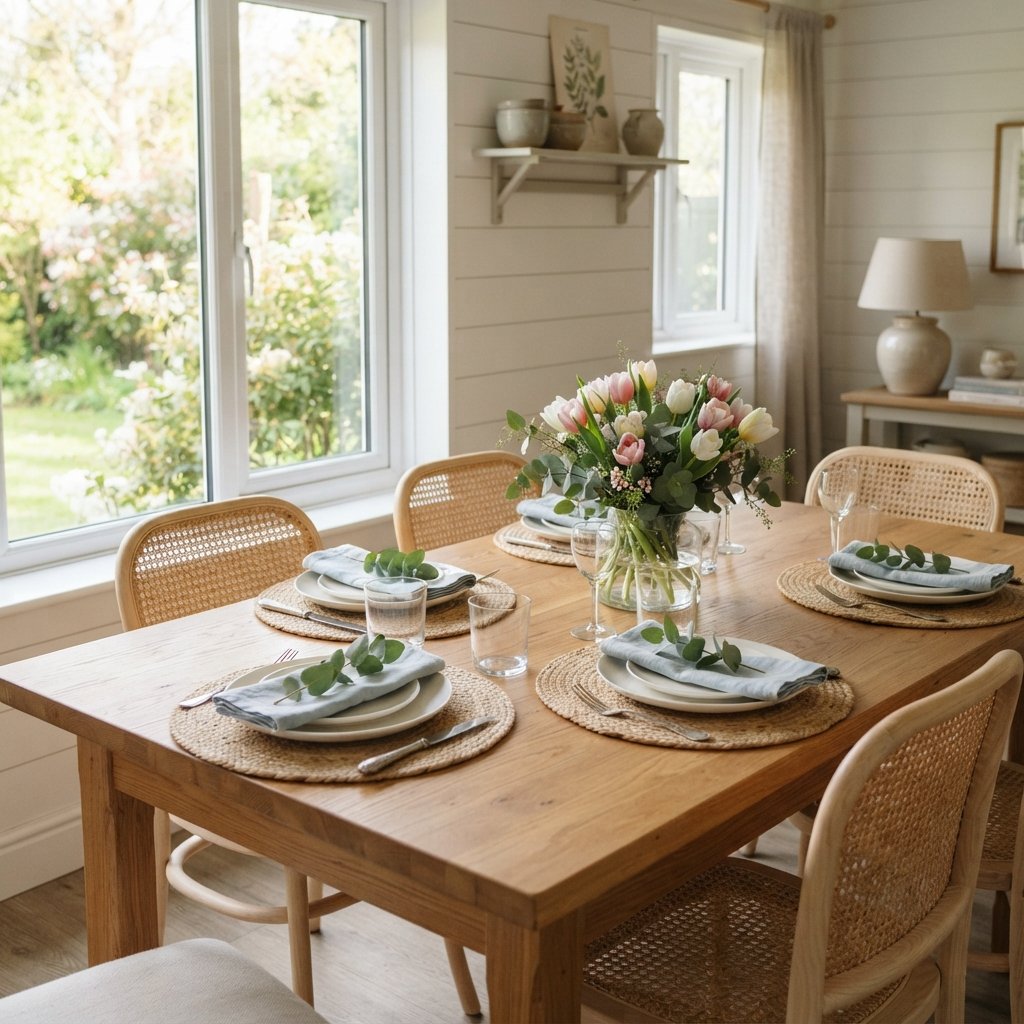
A beautiful spring table doesn’t need an elaborate centerpiece, expensive seasonal dishes, or an overflowing collection of decorations.
In fact, some of the prettiest spring tables are the simplest.
Start with dishes you already own, add cloth napkins, bring in a few flowers or fresh-looking branches, and layer in natural textures such as linen, wood, and woven materials. A couple of easy DIY details can make the whole table feel special without turning decorating into an all-day project.
This simple DIY spring table setting works for Easter, Mother’s Day, spring brunch, a casual dinner with friends, or simply making your dining room feel fresh for the season.
The goal isn’t to create a table that looks beautiful but is impossible to use.
Keep centerpieces low, leave enough room for serving food, and choose DIY decorations that are easy to move when it’s time to eat.
Here are 17 simple ideas you can mix and match to create your own spring table.
Choose a Simple Spring Color Palette
Before you decorate, choose two or three main colors.
This immediately makes a collection of everyday dishes and inexpensive decorations feel more intentional.
Try:
Fresh and Classic
White + green + pale blue
Warm and Natural
Cream + green + warm wood
Soft Spring
Blush + cream + green
Cheerful Spring
White + soft yellow + green
Coastal Spring
Blue + white + natural tan
Earthy Spring
Sage + cream + brown
You don’t need everything on the table to match perfectly.
Simply repeat your main colors in the napkins, flowers, dishes, or small decorative details.
1. Start With Your Everyday Dishes
Before buying spring-specific dinnerware, look at what you already have.
Simple white or cream dishes make an ideal foundation because you can change their appearance with textiles and seasonal accents.
For spring, pair white dishes with:
- Blue napkins
- Sage napkins
- Blush napkins
- Greenery
- Flowers
- Woven placemats
Using everyday dishes also makes the table feel approachable rather than overly formal.
2. Add Woven Placemats
Woven placemats bring warmth and texture to a spring table.
They’re particularly pretty against a wood dining table.
Layer:
Woven placemat + white dinner plate + cloth napkin
That’s already a complete place setting.
Natural texture also prevents pastel colors from making the table feel overly sweet.
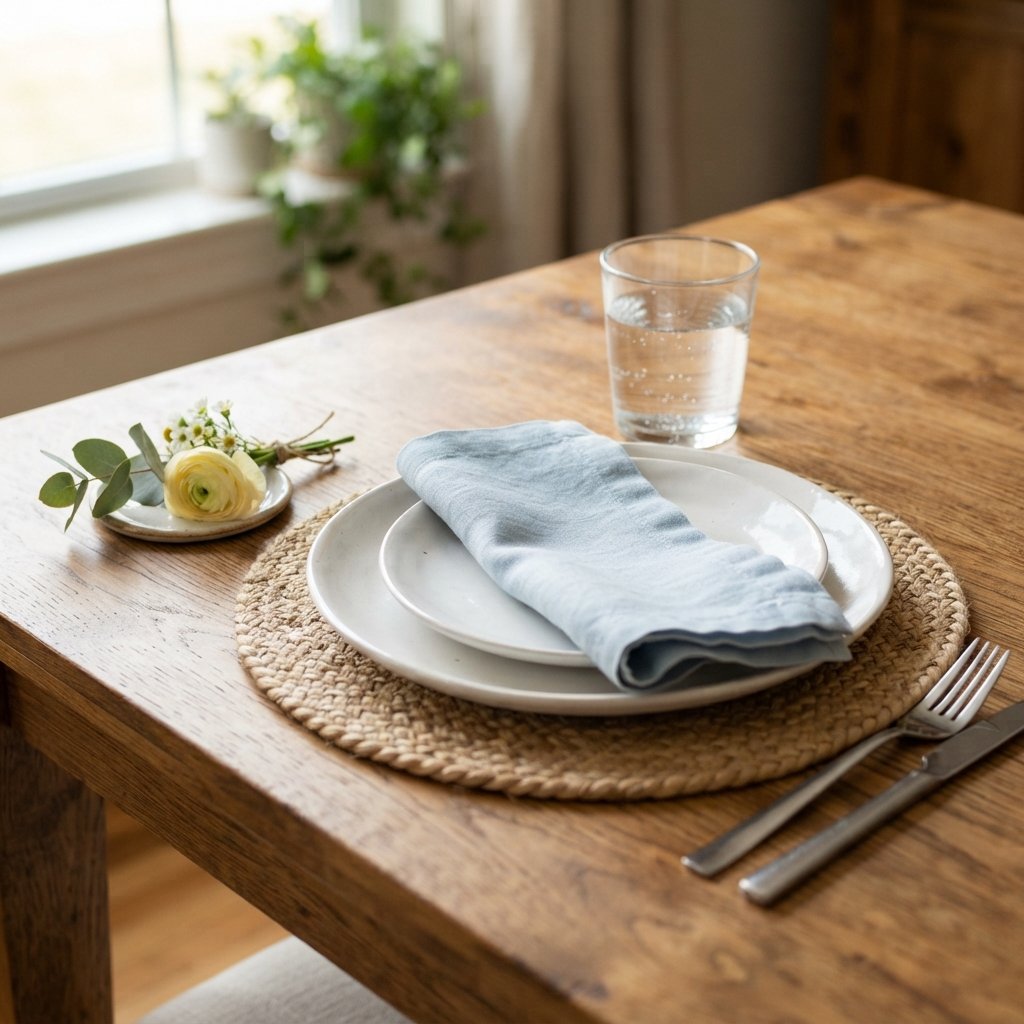
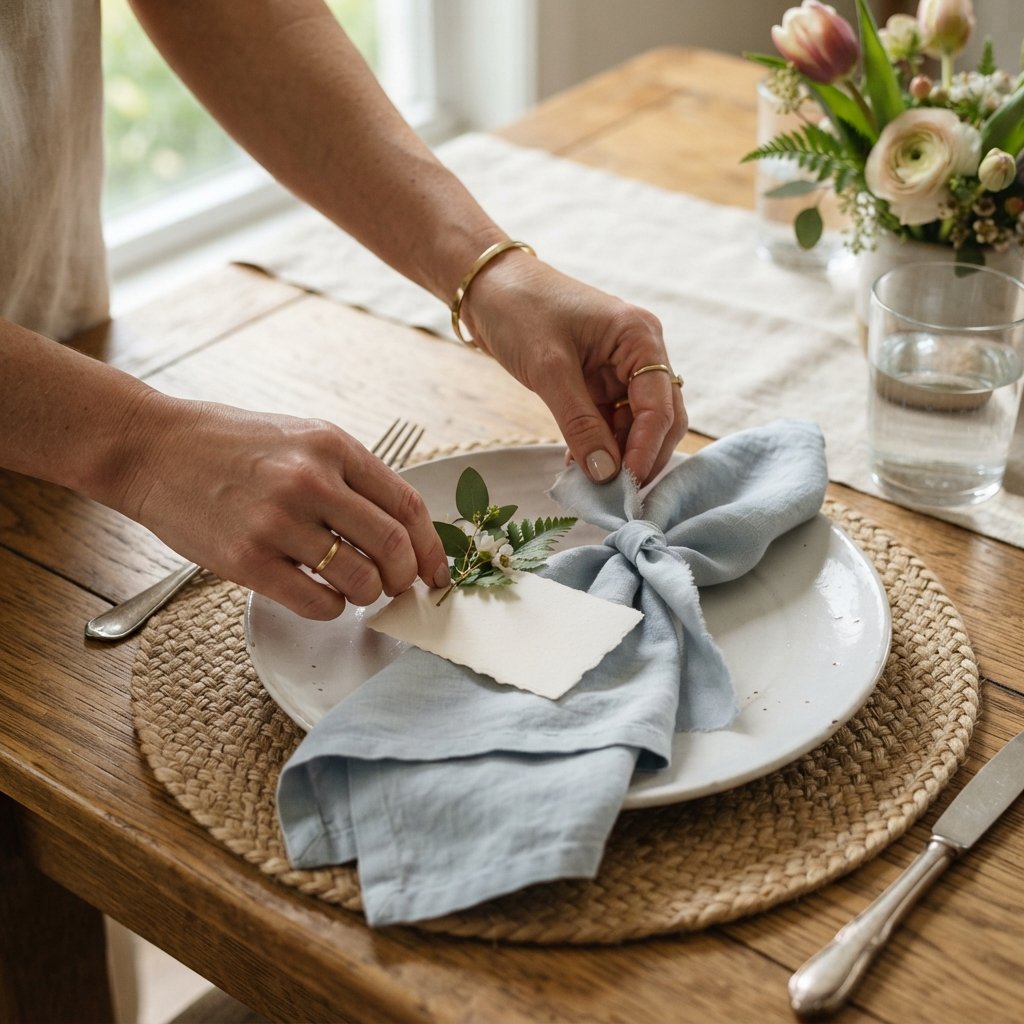
3. Make Easy DIY Ribbon Napkins
You don’t need special napkin rings.
Fold a cloth napkin and loosely tie a piece of ribbon around the center.
Try:
- Pale blue
- Sage green
- Blush
- Cream
- Soft yellow
Tuck a small sprig of greenery or an appropriate flower beneath the ribbon.
Keep decorative plant material separate from food unless it is known to be food-safe.
4. Create DIY Spring Place Cards
Place cards are an easy project that can make a casual table feel thoughtful.
Cut small pieces of cardstock and write each guest’s name by hand.
You can place them:
- On top of the plate
- Beside the glass
- Against a small appropriate holder
Keep the design simple.
Cream or white cardstock works with almost any spring palette.
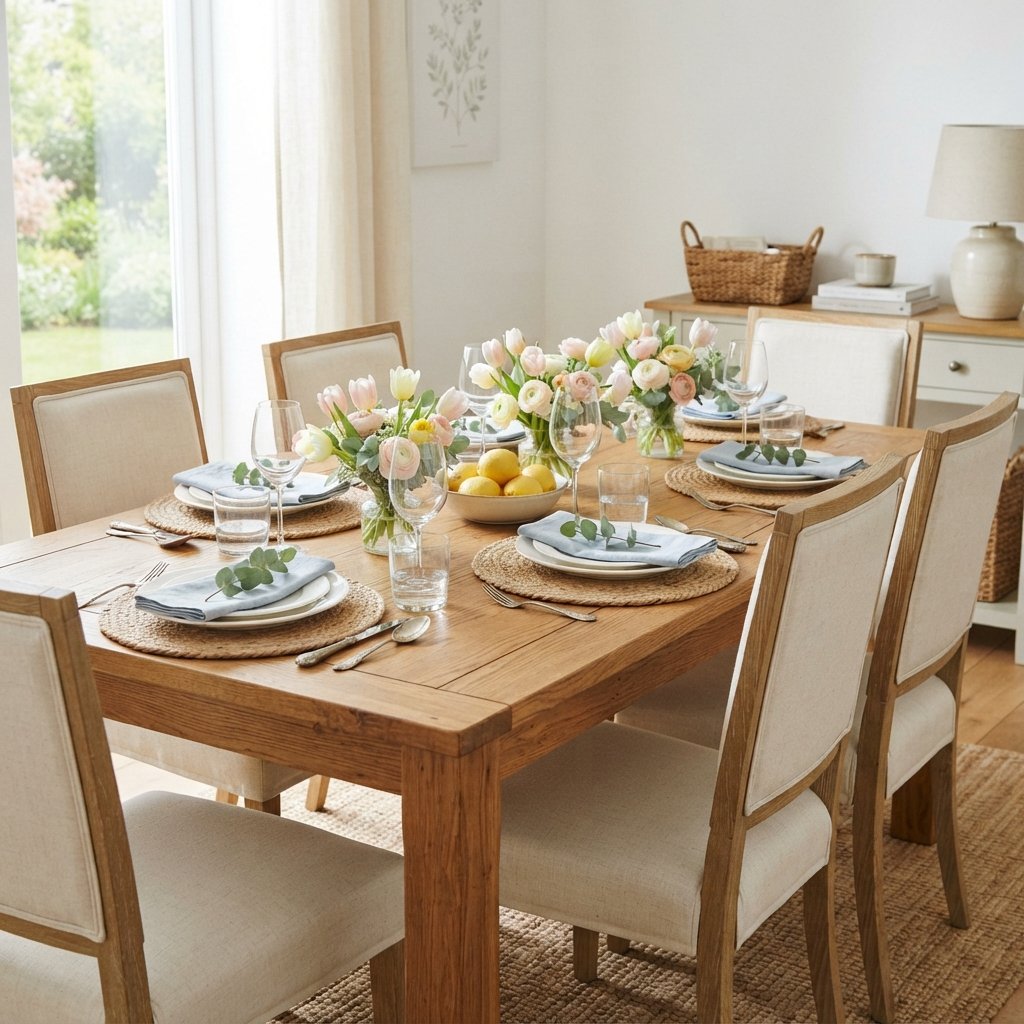
5. Use Tulips for a Simple Centerpiece
Tulips are perfect for an unfussy spring table.
Rather than creating a complicated floral arrangement, place a loose bunch in a simple vase.
Trim and arrange flowers using appropriate flower-care practices, and protect the tabletop from water.
Keep the arrangement low enough for guests to see across the table.
If your vase is tall, consider moving it to a sideboard once everyone sits down.
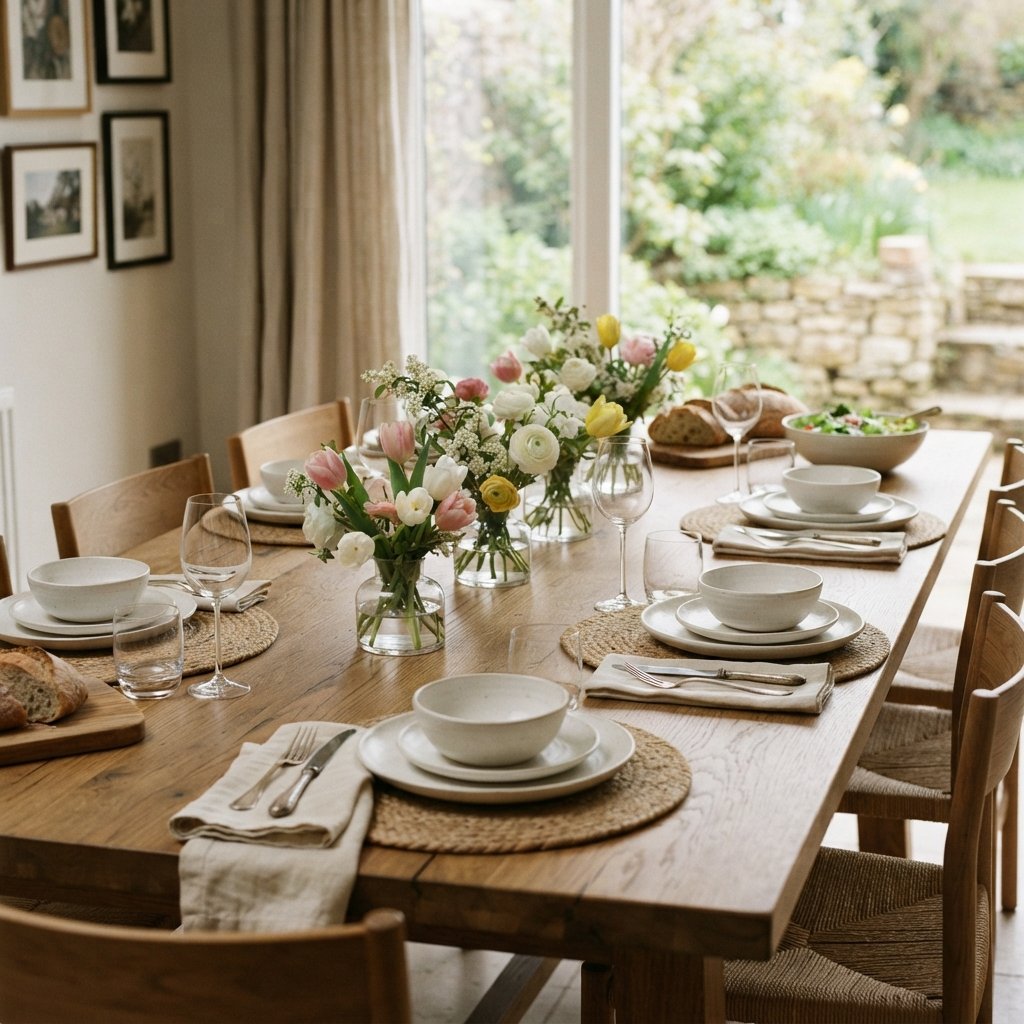
6. Divide Flowers Into Small Vases
Instead of one large centerpiece, divide flowers among several small vases.
Place three or five down a long table.
Small arrangements are easier to see over and can be moved individually when you need space for food.
You can use matching vases or a simple collection of compatible glass containers.
7. Make a Centerpiece With Spring Branches
Spring branches can create plenty of visual impact without requiring a large floral arrangement.
Place a few branches in a sturdy vase.
This works especially well on:
- Dining table
- Kitchen table
- Sideboard
- Buffet
If the branches are tall, use them as decor before the meal and move them elsewhere while dining so guests can see one another comfortably.
8. Add Greenery Instead of Flowers
You don’t need colorful flowers to create a spring table.
Greenery can look just as fresh.
Use a vase of leafy branches or a few small green arrangements.
Pair them with:
- White dishes
- Cream napkins
- Warm wood
- Woven placemats
This creates a simple natural spring look that’s easy to adapt for everyday dining.
9. Create a DIY Bowl Centerpiece
One of the easiest DIY centerpieces starts with a bowl you already own.
Place an appropriate smaller vessel inside if needed to hold fresh flowers or greenery securely.
Keep the arrangement loose and low.
You could also use a decorative bowl with seasonal fruit for an edible centerpiece.
Try:
- Lemons
- Pears
- Apples
Keep non-food-safe decorative materials separate from fruit you intend to eat.
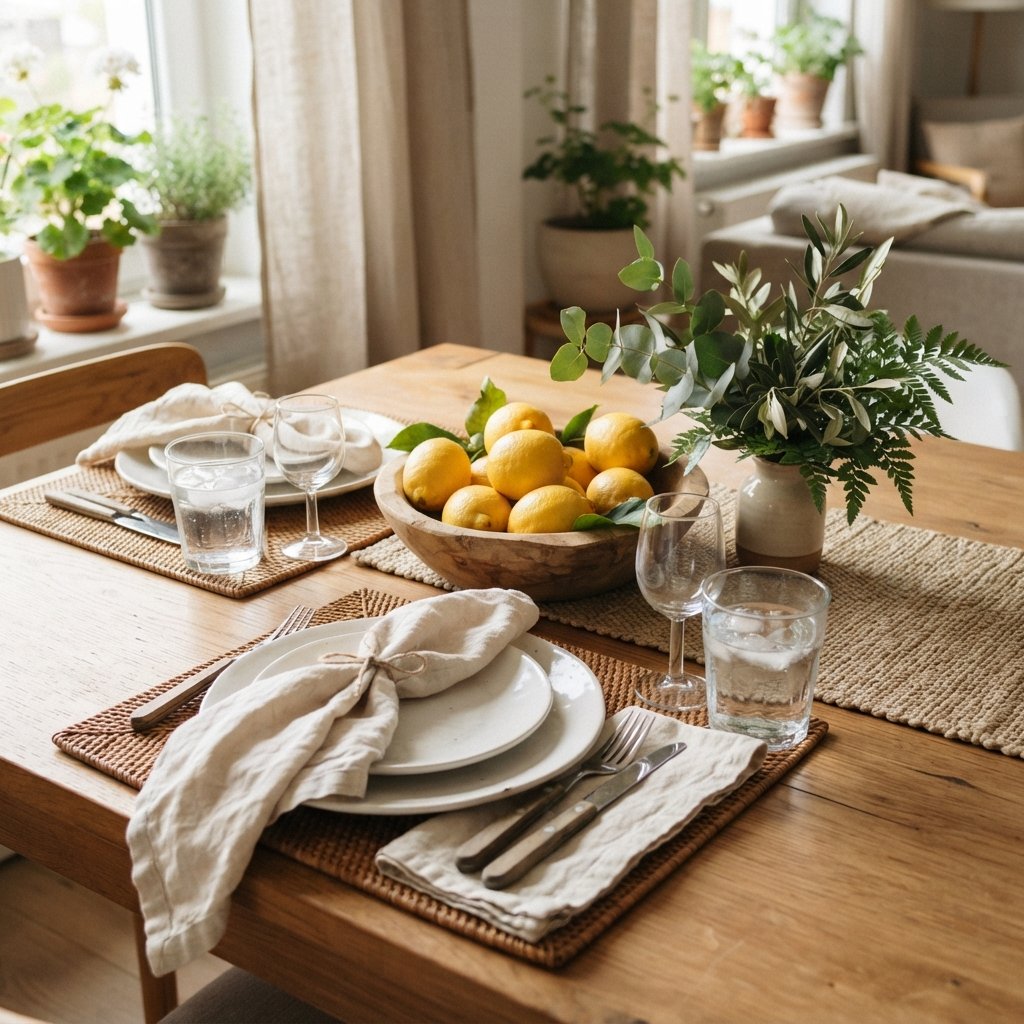
10. Use Lemons for a Fresh Spring Table
Yellow and green instantly feel cheerful.
A bowl of lemons paired with greenery creates an easy centerpiece without relying on traditional spring pastels.
Pair it with:
- White dishes
- Green or cream napkins
- Clear glassware
- Warm wood
This works especially well for a kitchen table or spring brunch.
11. Make DIY Floral Napkin Accents
A tiny floral accent can make each place setting feel special.
Tie a cloth napkin loosely with ribbon and add a small flower or greenery sprig.
Choose plant material carefully if it will be close to food.
Some plants and flowers are toxic, irritating, or treated with products not intended for food contact.
When you’re unsure, use faux stems or keep decorative botanicals away from plates and food.
12. Use Small Potted Herbs
Small pots of herbs can make a beautiful natural spring centerpiece.
Arrange several down the middle of the table.
Depending on what you’re growing, try herbs such as:
- Rosemary
- Mint
- Basil
- Thyme
Use clean containers and saucers to protect the table.
If the herbs will be eaten, make sure they’re grown and handled appropriately for culinary use.
13. Add Spring Color With Napkins
If your home is mostly neutral, you don’t need to buy colorful spring decor.
Use napkins instead.
A stack of pale blue, sage, yellow, or blush napkins can completely change the table.
The best part?
They’re easy to store and reuse.
For an especially simple look:
White dishes + woven placemats + colored napkins + flowers
That’s enough.
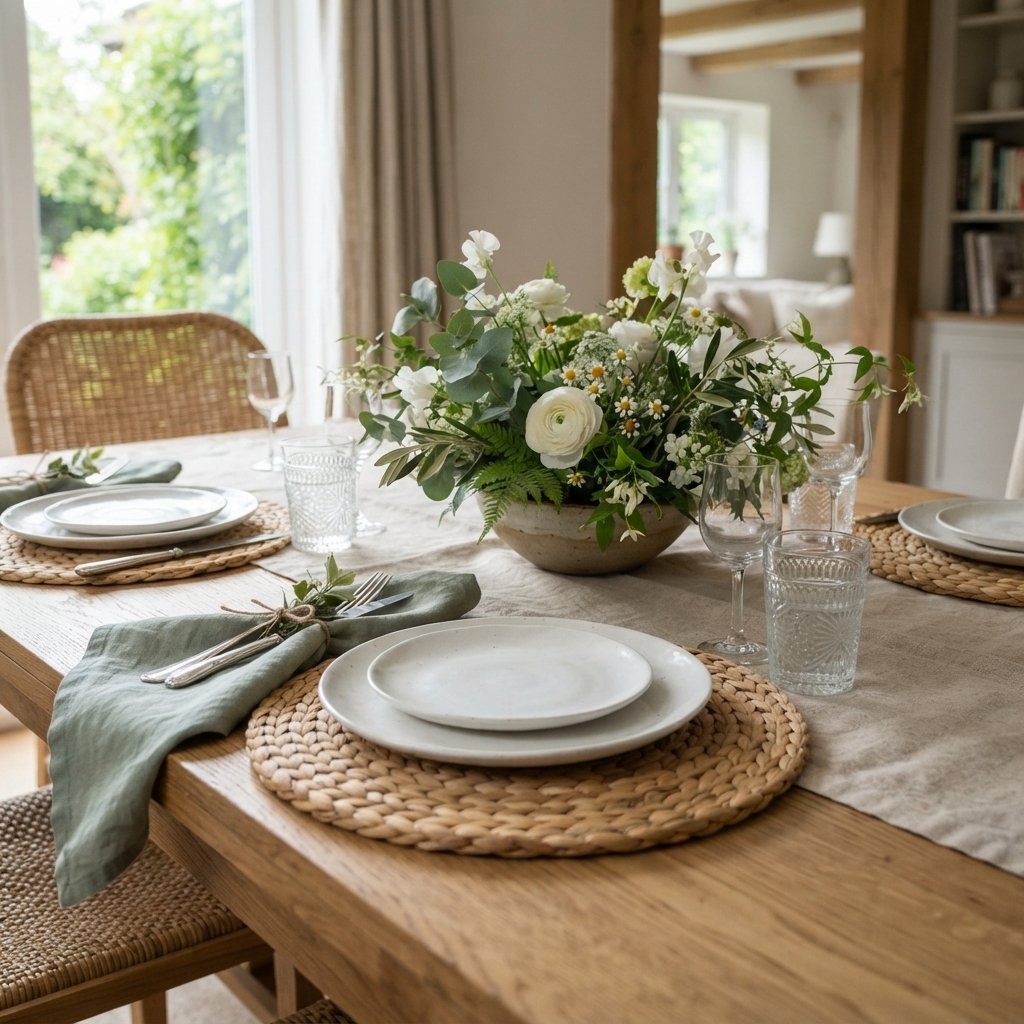
14. Use a Linen Table Runner
A table runner softens the center of the table without covering beautiful wood.
Try:
- Cream
- Natural linen
- Pale blue
- Sage
Let the fabric look relaxed rather than overly formal.
Then place flowers or greenery along the center.
15. Make a DIY Spring Centerpiece on a Tray
If you serve food family-style, this is particularly useful.
Build the centerpiece on a tray.
Add:
- Small vase of flowers
- Small potted plant
- Decorative object appropriate for the table
When dinner is ready, pick up the tray and move the entire centerpiece.
It’s one of the easiest ways to balance decorating with function.
16. Add Simple Spring Candles
Candles can make even a daytime spring table feel special.
For a light seasonal look, choose simple neutral candleholders.
Flameless candles are particularly practical around flowers, greenery, fabric, children, and busy dining tables.
If you use real candles, place them in stable holders and keep flames well away from flowers, foliage, fabric, paper, and other combustible materials. Never leave them unattended.
17. Decorate With What You Already Have
Before shopping, walk around your home.
Look for:
- Vases
- Bowls
- Trays
- Candlesticks
- Cloth napkins
- Baskets
- Pitchers
- Small pots
An everyday pitcher can become a flower vase.
A fruit bowl can become a centerpiece.
A tray can hold an entire spring arrangement.
A few ordinary pieces grouped thoughtfully often look better than a collection of decorations purchased just because they’re labeled “spring.”
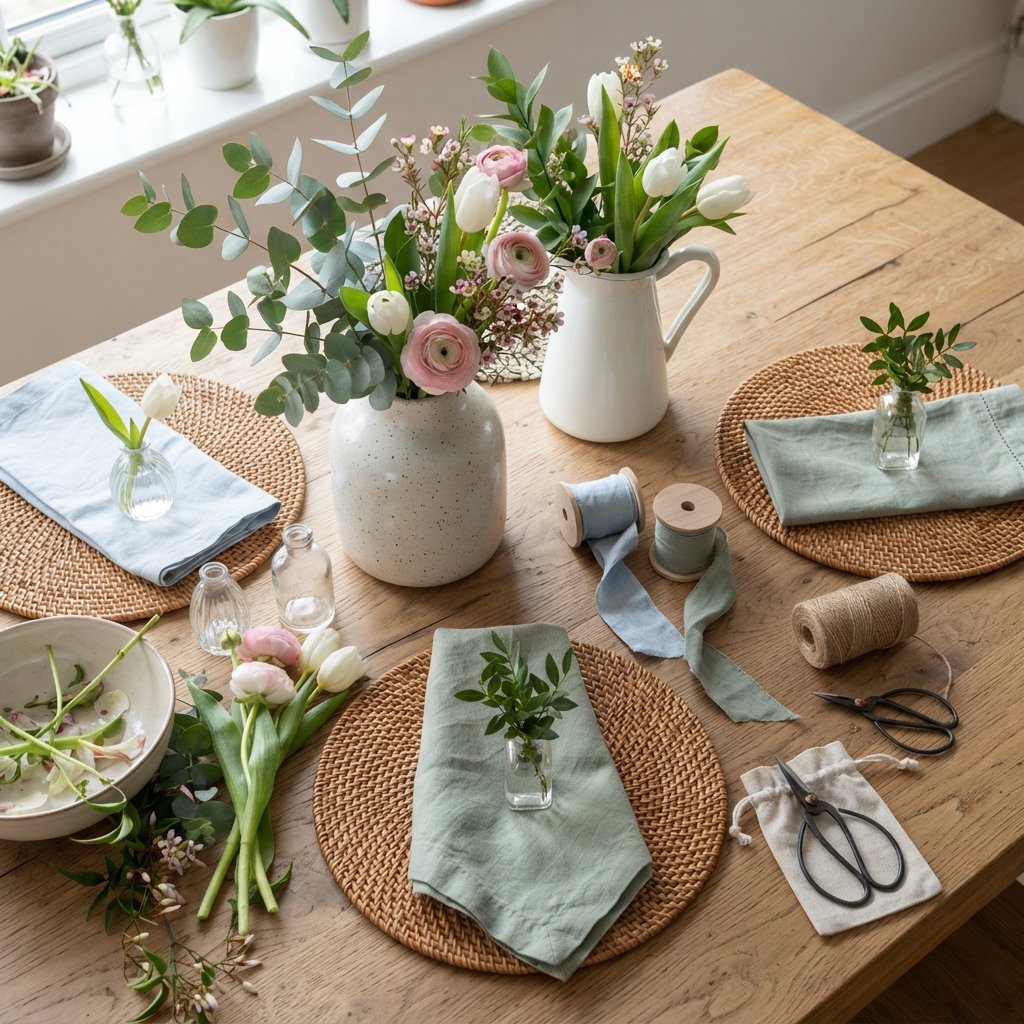
A Simple DIY Spring Table Setting Formula
If you want to recreate the look without overthinking it, use this combination:
Woven placemat + white dishes + cloth napkin + low flowers + clear glassware
Then choose one DIY detail:
- Ribbon napkin tie
- Handmade place card
- Small greenery sprig
- Tray centerpiece
That’s it.
You don’t need all four.
How to Create a Simple Spring Table Step by Step
Step 1: Clear the Table
Remove everyday clutter and wipe the table using a cleaning method appropriate for its finish.
Step 2: Decide How Food Will Be Served
If serving dishes will sit on the table, reserve space now.
Step 3: Choose Two or Three Colors
Use your existing dinnerware as the starting point.
Step 4: Add Placemats or a Runner
You don’t necessarily need both.
Step 5: Set Out Your Dishes
Keep the place setting appropriate for what you’re actually serving.
Step 6: Add Cloth Napkins
Introduce spring color here.
Step 7: Make One DIY Detail
Try a ribbon napkin tie or simple place card.
Step 8: Create the Centerpiece
Keep it low, simple, and easy to move.
Step 9: Add Glassware
Clear glasses work with almost every decorating style.
Step 10: Sit Down at the Table
Check the sight lines.
Can you see the person across from you?
Can you reach your glass comfortably?
Is there enough room for food?
If not, remove something.
Simple Spring Table Setting for Easter
You don’t need to cover the table with bunnies and eggs to make it work for Easter.
Start with your basic spring table:
- White dishes
- Cloth napkins
- Flowers
- Woven texture
Then add one Easter detail.
For example:
- A small decorative egg at each place
- One simple bunny accent on the sideboard
- Pastel ribbon around the napkins
One themed element can be enough.
Simple Spring Table for Mother’s Day
For Mother’s Day, let flowers become the focus.
Use a soft palette such as:
Blush + cream + green
or:
Pale blue + white + green
Divide flowers among several small vases so guests can talk easily across the table.
Handwritten place cards can add an especially thoughtful touch.
Simple Spring Brunch Table
A brunch table should feel light and casual.
Try:
- White dishes
- Pale blue napkins
- Woven placemats
- Tulips
- Clear glassware
Keep the centerpiece small so there’s plenty of space for serving dishes, coffee, and pitchers.
Simple Spring Dinner Table
For dinner, add a little more warmth.
Try:
Cream + sage + warm wood
Use a linen runner, simple greenery, and flameless candles.
The result still feels like spring without relying on pastels.
Blue and White Spring Table Setting
Blue and white is a timeless spring combination.
Start with white dishes and add:
- Blue linen napkins
- Blue-and-white serving pieces if you own them
- Greenery
- White flowers
Warm wood and woven placemats prevent the palette from becoming too cool.
Green and White Spring Table
For a fresh, natural table, keep the palette extremely simple:
White + green + warm wood
Use:
- White plates
- Cream napkins
- Green branches
- Woven placemats
This combination works from early spring well into summer.
Neutral Spring Table Setting
If you prefer neutral decor, don’t feel pressured to use pastels.
Try:
- Cream
- Beige
- Green
- Wood
Use flowers or leafy branches to introduce seasonal freshness.
Texture will keep the neutral palette interesting.
Spring Table Setting on a Budget
Start with what you already have.
You probably don’t need new:
- Plates
- Glasses
- Flatware
- Serving bowls
Instead, focus your budget on one or two inexpensive changes.
Perhaps that’s:
- Cloth napkins
- Ribbon
- Flowers
You can also use greenery or appropriate branches from your own garden where suitable and permitted.
A table doesn’t need a dozen new accessories to look different.
How to Make a Simple Spring Table Look Expensive
Limit the Color Palette
Two or three colors look more intentional than many unrelated ones.
Use Cloth Napkins
They instantly elevate everyday dishes.
Add Natural Texture
Woven placemats, linen, wood, and greenery add depth.
Keep the Centerpiece Low
Low arrangements feel relaxed and support conversation.
Repeat One Detail
Use the same ribbon or flower color in several places.
Avoid Too Many Tiny Decorations
One larger bowl or floral arrangement often looks better than a dozen little objects.
Leave Open Space
Empty table space is useful and visually calming.
Common Spring Table Decorating Mistakes
Buying Everything New
Start with everyday dishes and glassware.
Making the Centerpiece Too Tall
Guests shouldn’t have to lean sideways to have a conversation.
Adding Too Many Colors
Choose a small palette and repeat it.
Forgetting About the Food
Plan where serving dishes will go before decorating.
Using Too Many Themed Decorations
A few spring details usually create a more timeless result.
Using Every Spring Idea at Once
Flowers, herbs, lemons, candles, bunnies, eggs, ribbon, and greenery don’t all need to appear on the same table.
Choose a few.
Ignoring Function
A place setting should still leave enough room for guests to eat comfortably.
Spring Table Decorating Safety
Even a simple table needs practical consideration.
- Keep flowers and greenery away from open flames.
- Use stable vases that won’t tip easily.
- Protect wood surfaces from water and moisture.
- Keep non-food-safe plant material and decorative items away from food.
- Remember that some plants and flowers may be toxic or irritating.
- Use flameless candles when appropriate, especially around children, fabric, greenery, or crowded tables.
- Never leave burning candles unattended.
- Keep small decorations away from young children where needed.
- Use appropriate trivets or heat-resistant surfaces under hot serving dishes.
- Keep pathways around the dining table clear.
FAQ About Simple DIY Spring Table Settings
How do I make a simple spring table setting?
Start with everyday dishes, add cloth napkins and natural texture, then create a low centerpiece with flowers or greenery. Finish with one simple DIY detail such as ribbon napkin ties or handmade place cards.
What colors are good for a spring table?
White, cream, green, pale blue, blush, sage, and soft yellow all work beautifully. Warm wood and natural woven materials can balance pastel colors.
What can I use for a spring centerpiece?
Tulips, leafy branches, small flower arrangements, culinary herbs, seasonal fruit, or a removable tray arrangement can all create an easy centerpiece.
How do I decorate a spring table cheaply?
Use your everyday dishes and glasses. Repurpose existing vases, bowls, pitchers, and trays, then add inexpensive flowers, greenery, ribbon, or cloth napkins.
How can I decorate a spring table without flowers?
Use leafy branches, culinary herbs, seasonal fruit, greenery, linen, woven textures, and simple candles instead.
What is an easy DIY spring table decoration?
Tie a cloth napkin with ribbon and add a small appropriate greenery accent, or create handwritten place cards from simple cardstock.
How do I keep a spring table from looking too busy?
Limit the color palette, keep the centerpiece low, avoid too many tiny decorations, and leave enough empty space around each place setting.
Can I use my regular white dishes for a spring tablescape?
Absolutely. White dishes are one of the easiest foundations because you can change the seasonal look with napkins, flowers, greenery, placemats, and centerpieces.
Final Thoughts
A simple DIY spring table setting doesn’t need complicated crafts or an entirely new set of dishes.
Start with what you already have.
Use your everyday dinnerware.
Add woven texture or a linen runner.
Bring in a spring color with cloth napkins.
Then create a simple centerpiece with tulips, greenery, herbs, branches, or seasonal fruit.
If you want a DIY element, keep it easy.
Tie ribbon around the napkins.
Make handwritten place cards.
Arrange a few small vases.
Or create a centerpiece on a tray that can be moved when dinner is served.
For a classic spring table, try pale blue, white, and green.
For something natural, combine cream, greenery, and warm wood.
For a cheerful table, add soft yellow through lemons, flowers, or napkins.
The prettiest spring table isn’t necessarily the one with the most decorations.
It’s the one that feels fresh, welcoming, and easy enough that you can actually sit down and enjoy it.