

Creating a home office is easy when you have an entire spare room. The challenge is figuring out where to work when your “office” needs to fit into a bedroom corner, living room, closet, hallway, or another small area.
Fortunately, you don’t need a huge room to create a workspace that feels comfortable and organized.
Some of the best small home office ideas focus less on square footage and more on choosing the right location, furniture, lighting, and storage. A compact desk, comfortable chair, a few shelves, and thoughtful organization may be all you need.
The key is making every inch work without filling every inch.
Whether you’re creating a dedicated office in a tiny room or squeezing a desk into another living space, these 21 ideas can help you create a workspace that feels intentional instead of temporary.
1. Start With What You Actually Need
Before buying a desk, decide how you’ll use the office.
Do you primarily work on a laptop?
Do you need:
- One monitor or several?
- Printer?
- Paper files?
- Books?
- Video-call background?
- Space for drawing or writing?
- Storage for office supplies?
Someone who works almost entirely on a laptop needs far less desk space than someone using multiple monitors and paperwork.
Design around your actual work rather than a picture-perfect office.
2. Choose the Best Location
Look around your home for underused space.
Possibilities include:
- Bedroom corner
- Living room corner
- Guest room
- Dining room
- Landing
- Wide hallway
- Closet
- Under-stair area
- Alcove
Before deciding, consider noise, privacy, electrical access, lighting, ventilation, circulation, and how the space is used by everyone else in the home.
A desk that technically fits isn’t useful if you’re sitting in the middle of a busy walkway.
3. Use a Small Desk
Bigger isn’t always better.
A compact desk can provide enough space for:
- Laptop
- Monitor
- Notebook
- Lamp
- A few essentials
Measure your equipment before buying.
You need enough surface area to work comfortably, but an oversized desk can make a small office feel cramped.
Choose furniture that leaves clear space for the chair and normal movement.
4. Consider a Floating Desk
A wall-mounted desk can be useful where floor space is limited.
It can visually lighten the room because there aren’t bulky desk legs or drawers underneath.
Floating desks work particularly well in:
- Alcoves
- Bedrooms
- Small office nooks
- Hallway niches
Installation matters.
A wall-mounted work surface needs appropriate structural support and fasteners for the wall type and intended load. Follow the manufacturer’s requirements, and don’t guess at weight capacity.
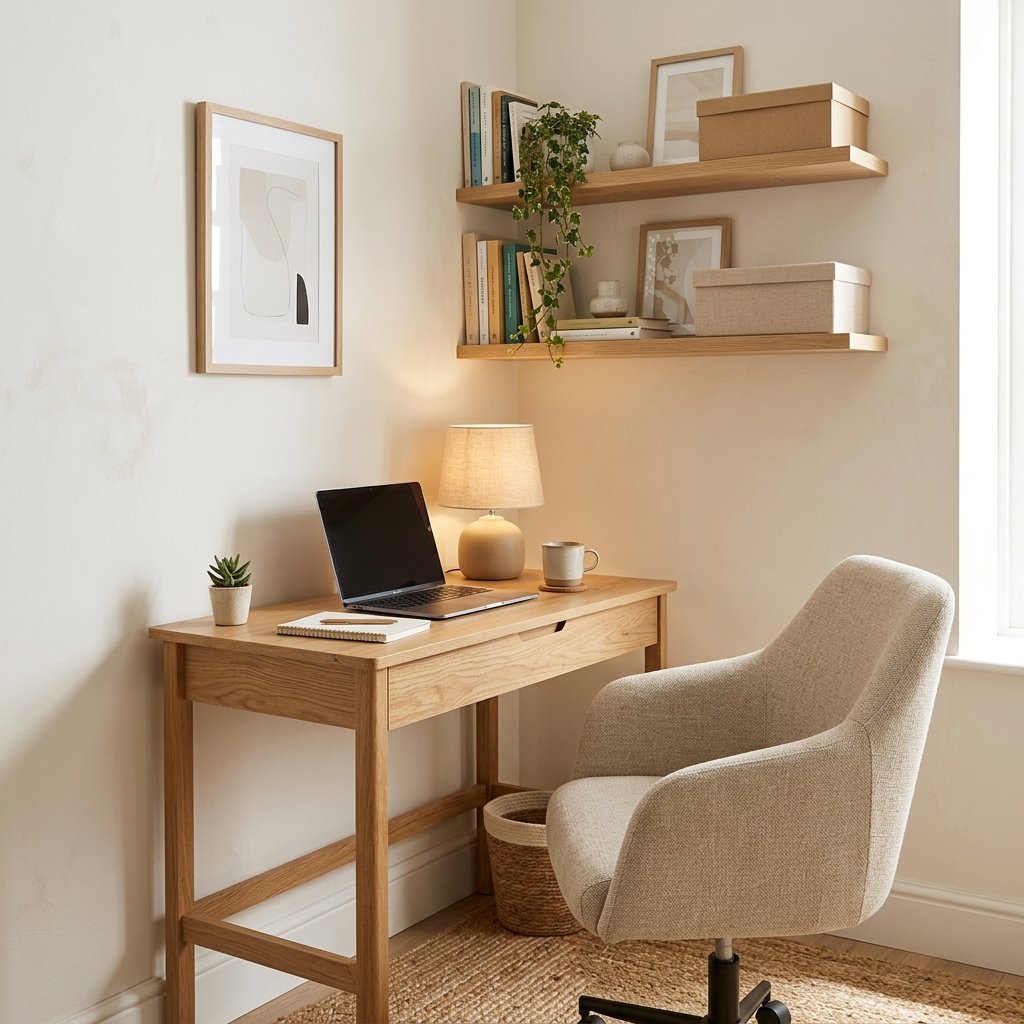
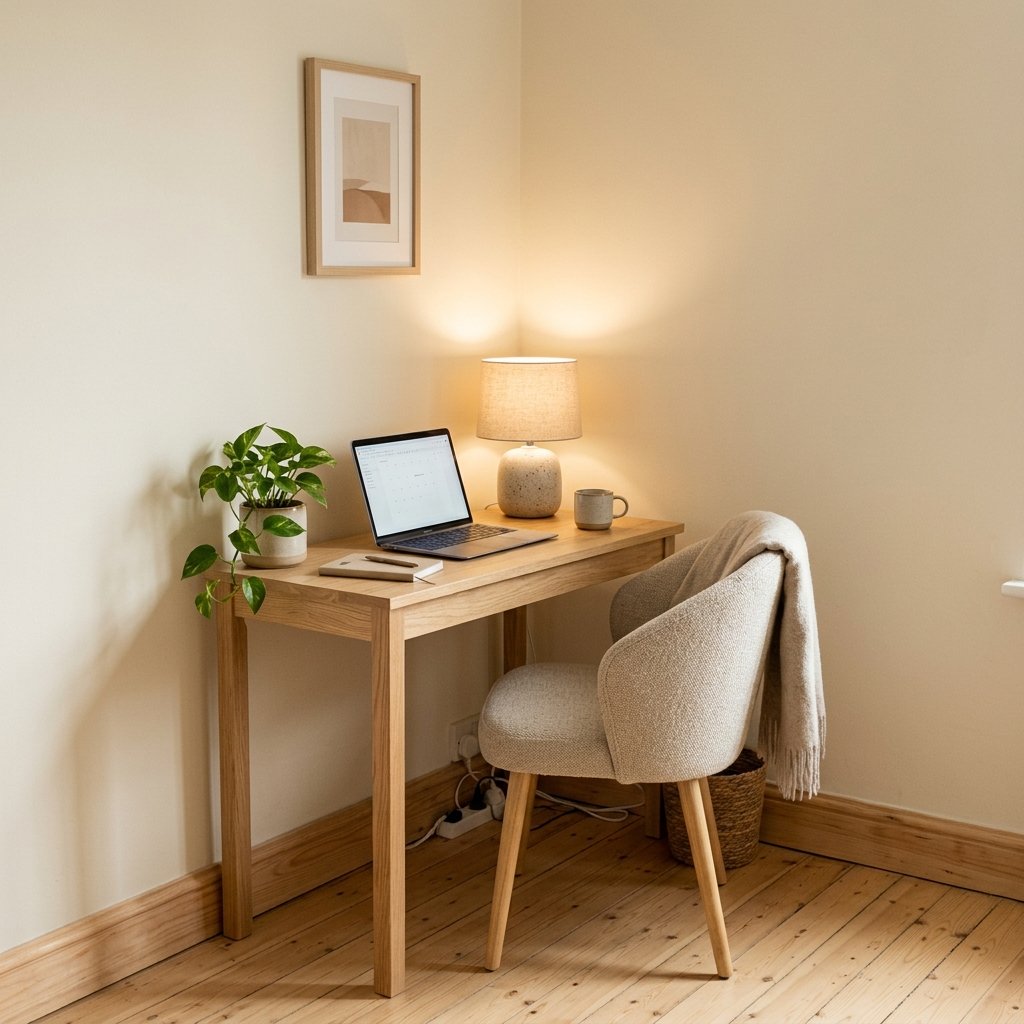
5. Use a Corner
An empty corner can become a surprisingly functional workspace.
Try:
- Small writing desk
- Corner desk
- Floating work surface
- Compact desk with shelves above
Using a corner can help separate the office visually from the rest of a bedroom or living room.
Add a lamp and a piece of artwork to make the area feel intentional.
6. Turn a Closet Into an Office
A closet office—or “cloffice”—can be an excellent solution when you don’t have a dedicated room.
Depending on the closet, you might add:
- Work surface
- Shelves
- Task lighting
- Storage bins
- Small chair
Before making changes, consider ventilation, electrical safety, lighting, door clearance, and whether the space is appropriate for prolonged use.
Don’t overload closet shelving or make unsafe electrical modifications.
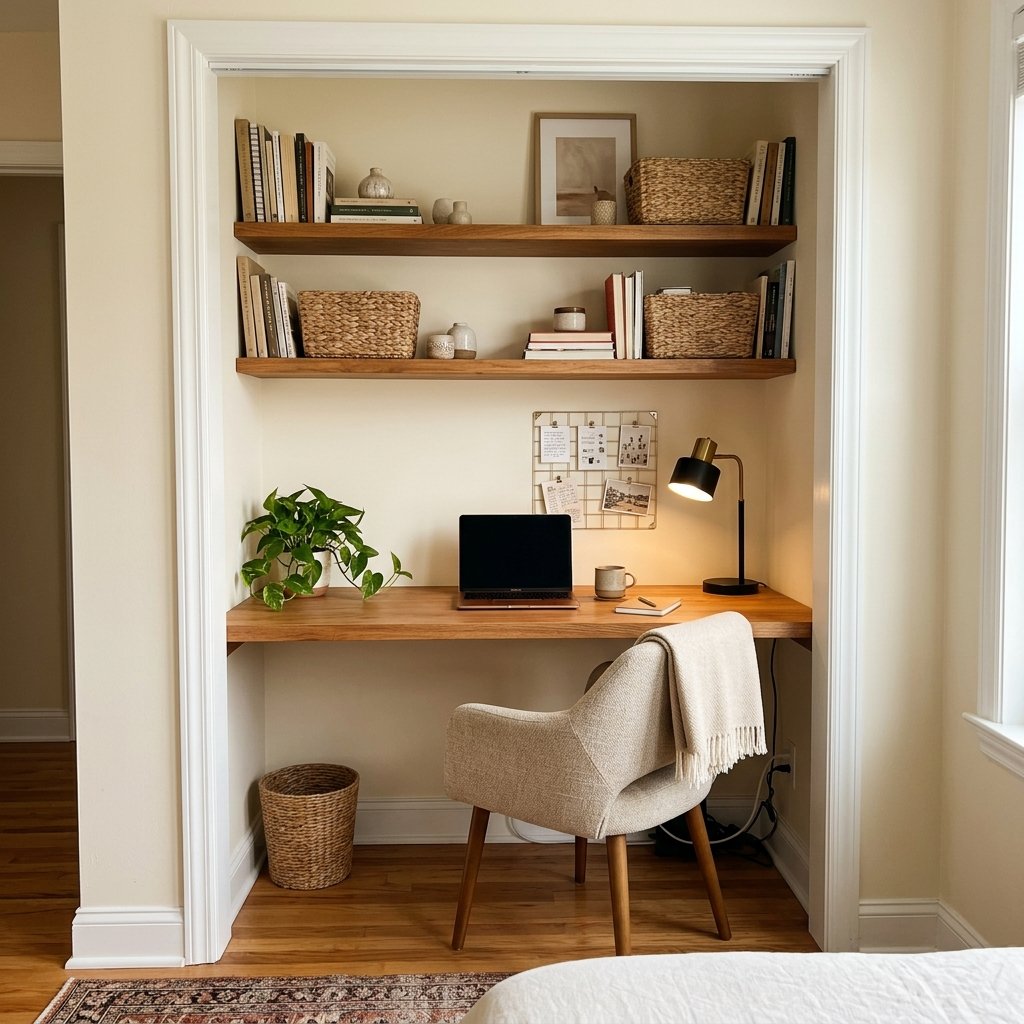
7. Build Into an Alcove
Awkward alcoves can be ideal for compact offices.
A fitted desk can make use of wall-to-wall space that might otherwise be wasted.
Add shelving above for:
- Books
- Documents
- Office supplies
- A few decorative objects
Keep the desktop relatively clear so the narrow space doesn’t feel cluttered.
8. Use Vertical Storage
When floor space is limited, look up.
Wall storage can be much more useful than another piece of furniture.
Consider:
- Floating shelves
- Wall cabinets
- Pegboard
- Wall pockets
- Appropriate file organizers
Keep frequently used items within comfortable reach.
Store less-used supplies higher.
Wall-mounted storage should always be installed with hardware suitable for the wall construction and expected load.
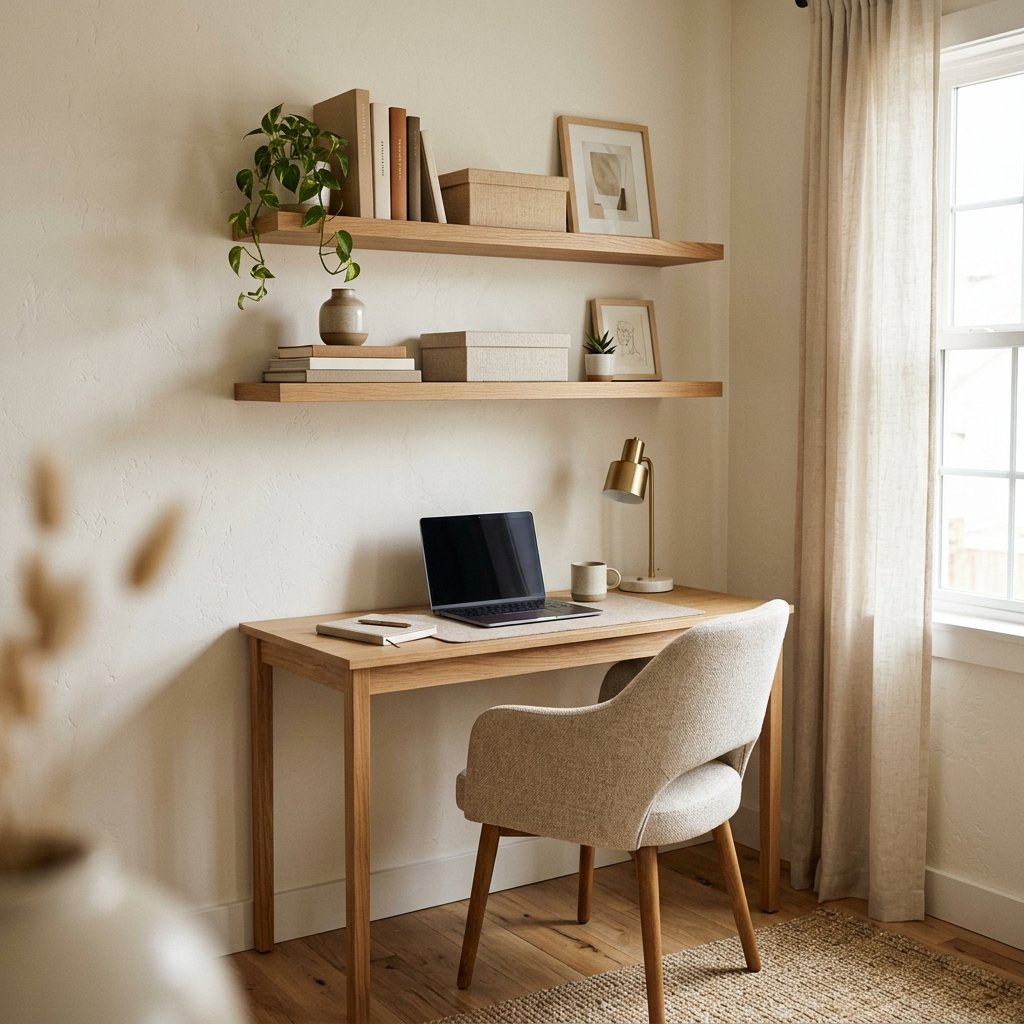
9. Add Shelves Above the Desk
The wall directly above your desk is valuable storage space.
One or two shelves may be enough.
Use them for:
- Reference books
- Small storage boxes
- Files
- Printer supplies
- A few decorative items
Don’t overcrowd them.
Leave some negative space so the office feels calm.
10. Use Closed Storage to Hide Clutter
Open shelves look beautiful when they’re organized.
Real offices, however, contain:
- Cables
- Chargers
- Paper
- Printer supplies
- Notebooks
- Electronics
Closed storage helps hide visual clutter.
Try:
- Desk drawers
- Small filing cabinet
- Cabinet with doors
- Lidded boxes
A mixture of open and closed storage usually works better than trying to display everything.
11. Choose Furniture With Multiple Functions
Small spaces benefit from furniture that does more than one job.
Consider:
- Desk with drawers
- Bookcase with integrated desk
- Storage cabinet that supports office organization
- Appropriately designed fold-down desk
Avoid adding separate furniture for every storage need.
One well-designed piece can often replace several smaller pieces.
12. Make the Chair Comfortable
Don’t sacrifice comfort just because the office is small.
If you spend hours working there, the chair matters.
Look for a chair that appropriately supports you and allows a comfortable working posture.
Make sure it:
- Fits under or near the desk appropriately
- Provides suitable support
- Allows comfortable positioning
- Doesn’t block the main walkway
Ergonomic needs vary by person, so prioritize adjustability and comfort over appearance alone.
13. Pay Attention to Desk Height and Monitor Position
A beautiful office isn’t helpful if it causes discomfort.
Set up the workstation so you can work in a neutral, comfortable posture.
Your specific desk, chair, keyboard, and screen positions depend on your body, equipment, and work habits.
Adjust the chair and equipment rather than forcing yourself to work around furniture chosen only for its appearance.
If you experience persistent discomfort, consider seeking appropriate ergonomic or medical guidance.
14. Add Good Task Lighting
Lighting is especially important in a small office.
Use natural light when available, but don’t rely on it exclusively.
A useful lighting plan might include:
- General room lighting
- Desk lamp
- Natural window light
Position screens to reduce distracting glare when possible.
Follow manufacturer instructions for lamps, bulbs, and electrical equipment, and avoid overloading outlets or unsafe extension-cord arrangements.
15. Use Light Colors to Keep the Space Airy
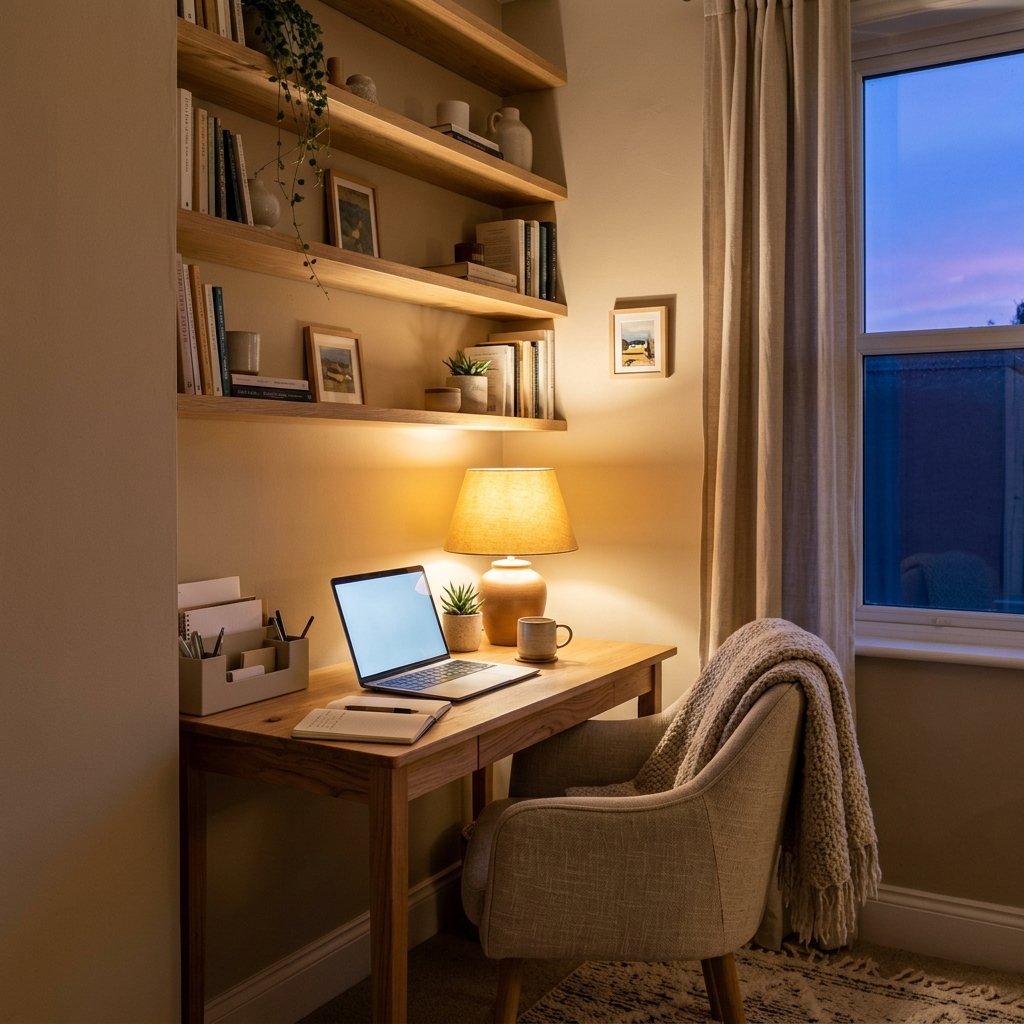
White isn’t required, but lighter colors can create a calm backdrop in a compact workspace.
Try:
- Warm white
- Cream
- Light greige
- Soft beige
- Pale blue
- Muted sage
Then introduce contrast through:
- Desk
- Chair
- Artwork
- Lighting
- Accessories
A small office can also handle dark colors if you want a moodier look, particularly when there’s adequate lighting.
16. Create an Accent Wall
If your office nook feels like an afterthought, color can visually define it.
Paint the wall behind the desk:
- Deep green
- Navy
- Muted blue
- Charcoal
- Warm brown
This works particularly well when your desk is part of a bedroom or living room.
The color creates a visual “zone” without adding another wall.
17. Try Wallpaper Behind the Desk
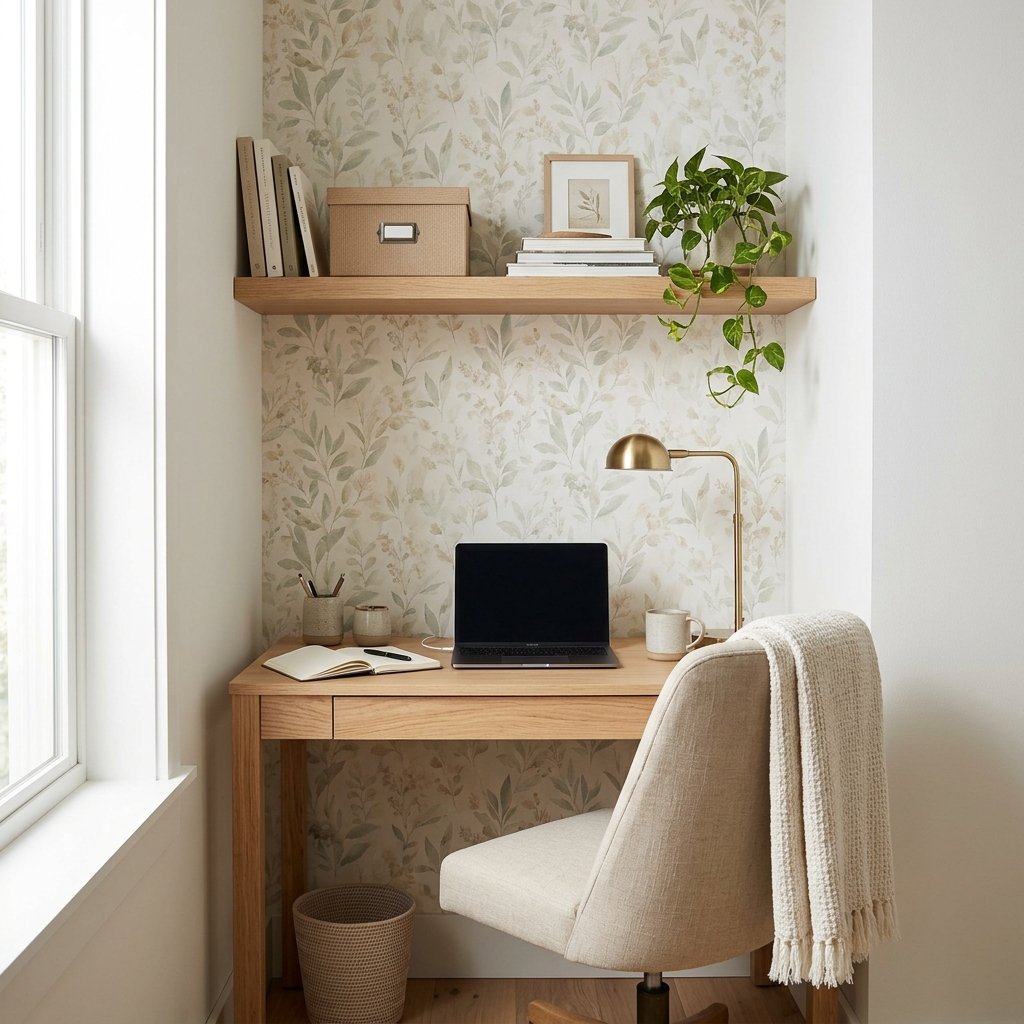
Wallpaper can give a tiny office personality without requiring much material.
Consider:
- Small geometric pattern
- Botanical print
- Subtle stripe
- Textured-look design
If the rest of the room already contains strong patterns, keep the office wall quieter.
For renters or anyone who likes to change decor frequently, an appropriate removable product may be worth considering; always follow the manufacturer’s installation and removal guidance.
18. Hide Cords
Cables can make even a beautifully decorated office look messy.
Start by removing unused cords.
Then group the remaining cables using appropriate cable-management products.
Depending on your setup, you may be able to route cables:
- Behind the desk
- Along a desk leg
- Through a purpose-designed cable tray
Keep power supplies ventilated as required, don’t pinch cords, and don’t use cable-management methods that damage electrical cords.
Never overload outlets or power strips.
19. Keep the Desktop Mostly Clear
A small desktop fills quickly.
Try to keep only daily essentials on it.
That might include:
- Computer
- Lamp
- Notebook
- Pen cup
Everything else can go into drawers, cabinets, or shelves.
Leave enough open surface to actually work.
20. Add Personal Decor Carefully
A small home office shouldn’t feel sterile.
Add a few things you enjoy:
- Framed photo
- Small artwork
- Plant
- Favorite books
- Decorative box
- Meaningful object
The key word is few.
Too many accessories reduce valuable work and storage space.
21. Create an End-of-Day Reset
The best organization system won’t help if everything stays on the desk.
Take a few minutes at the end of the workday to:
- Put paperwork away.
- Return supplies.
- Throw away rubbish.
- Close notebooks.
- Clear the desktop.
This is particularly useful when the office is part of a bedroom or living area.
It helps the room transition back into home mode.
Small Home Office Ideas for a Bedroom
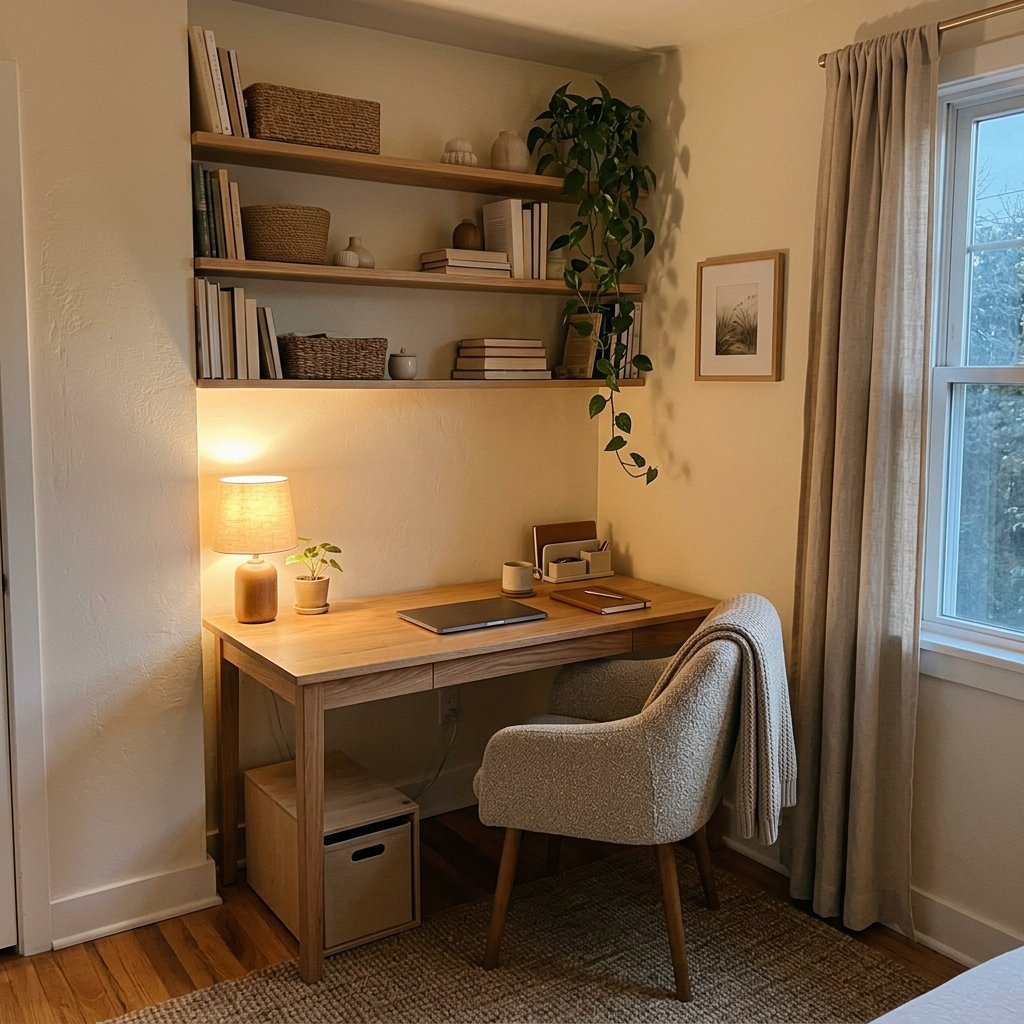
A bedroom office needs to feel visually separate from the sleeping area.
Place the desk:
- In an unused corner
- Beside a window where practical
- In an alcove
- Along an available wall
Try coordinating the desk with the bedroom’s existing palette.
Then use artwork or wall color to define the office zone.
At the end of the day, clear the desk so work doesn’t visually dominate the bedroom.
Small Home Office Ideas for a Living Room
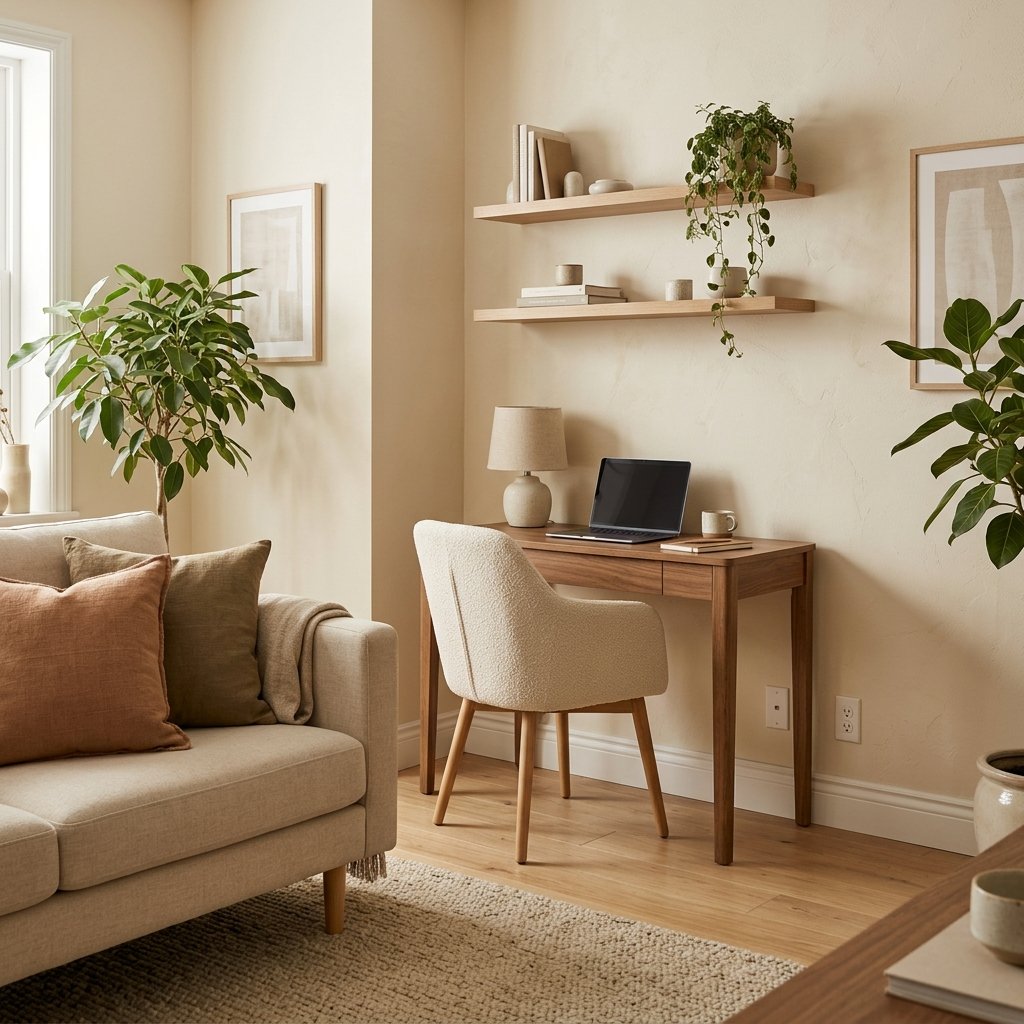
A living room office should blend with the rest of the furniture.
Instead of choosing something that looks overtly commercial, consider a desk that coordinates with your existing furniture.
For example:
Warm wood console-style desk + upholstered chair + table lamp
can feel more integrated than a bulky office workstation.
Closed storage is particularly helpful in shared living spaces.
Small Home Office Ideas for a Guest Room
A guest room and office can work beautifully together.
Keep the office concentrated on one wall.
Use:
- Compact desk
- Comfortable chair
- Shelves
- Closed storage
Avoid spreading office supplies throughout the entire room.
This makes it easier to transition the space when guests arrive.
Small Home Office Ideas Under the Stairs
An under-stair area can sometimes become a compact workstation.
However, check:
- Headroom
- Lighting
- Ventilation
- Electrical access
- Stair construction
- Walking clearance
Don’t cut into or alter structural stair components without appropriate professional guidance.
Small Home Office Ideas With No Extra Room
If every room already has a purpose, look for unused walls rather than unused rooms.
A workspace might fit:
Beside a dresser
Behind a sofa
Inside a suitable closet
At the end of a hallway
In a dining room corner
A small desk can often occupy less floor space than you expect.
How to Make a Small Home Office Look Bigger
You can’t increase the square footage with decorating, but you can make the space feel less crowded.
Use Appropriately Scaled Furniture
Oversized furniture quickly overwhelms a small office.
Keep the Floor Visible
Leggy or wall-mounted furniture can create a lighter visual effect.
Reduce Clutter
Clear surfaces make a noticeable difference.
Use Vertical Storage
Move storage upward instead of filling the floor.
Limit Your Color Palette
Repeating a few colors creates visual calm.
Use Mirrors Carefully
A strategically placed mirror can reflect light, although positioning matters if you’re frequently on video calls.
How to Organize a Small Home Office
Organization starts with reducing what needs to be stored.
Sort office supplies into categories:
- Daily essentials
- Paperwork
- Technology
- Reference materials
- Occasional supplies
Keep everyday items closest to your workspace.
Move rarely used supplies farther away or higher up.
Use drawers or closed boxes for small objects.
And don’t let storage containers become a substitute for decluttering.
Small Home Office Storage Ideas
When every inch matters, prioritize storage with a small footprint.
Useful possibilities include:
- Floating shelves
- Desk drawers
- Wall cabinets
- Rolling file storage where practical
- Lidded boxes
- Pegboard
- Vertical file holders
- Bookcase
Choose storage after determining what you actually need to store.
Otherwise, it’s easy to fill a small office with organizers that consume more space than the items themselves.
How to Decorate a Small Home Office
Start with function.
Then add personality.
A simple decorating formula is:
Desk + chair + lamp + storage + artwork + one personal element
You don’t need much more.
Choose a limited color palette and repeat it.
For example:
Warm white + natural wood + muted green + black accents
or:
Cream + medium wood + dusty blue + brass-toned details
This makes even a tiny office feel intentional.
Small Home Office Ideas on a Budget
You don’t need custom cabinetry.
Start with what you already have.
Repurpose a Table
A small table may work perfectly as a desk.
Shop Your Home
Move a lamp, chair, artwork, or storage basket from another room.
Paint the Wall
A small amount of paint can visually define the workspace.
Buy Secondhand
Desks, filing cabinets, shelves, and chairs are often worth searching for secondhand.
Add Storage Gradually
Work in the office before buying every organizer.
You’ll quickly discover what you actually need.
Small Home Office Mistakes to Avoid
Buying a Desk That’s Too Large
Measure first.
Sacrificing Comfort for Style
Your chair and workstation need to function.
Ignoring Lighting
A dark corner isn’t automatically a good office corner.
Putting the Desk in a Walkway
Maintain comfortable circulation.
Filling Every Wall With Shelves
Storage can become visual clutter.
Keeping Too Much on the Desk
Protect your work surface.
Ignoring Cable Management
Plan where power and charging cords will go.
Buying Storage Before Decluttering
Organize what you need—not everything you’ve accumulated.
Forgetting the Rest of the Room
When an office shares another room, coordinate the two areas.
Small Home Office Safety Tips
Compact offices often place furniture, electronics, and storage close together, so pay attention to safety.
- Don’t overload outlets, extension cords, or power strips.
- Use electrical products according to manufacturer instructions.
- Replace damaged electrical cords or equipment appropriately.
- Don’t pinch cords behind furniture.
- Keep electrical equipment appropriately ventilated.
- Secure tall or potentially unstable storage furniture where appropriate.
- Use wall anchors or structural attachment appropriate for shelving and wall-mounted desks.
- Follow stated weight limits.
- Keep walkways and exits clear.
- Don’t position unstable furniture where it can tip into circulation areas.
- Use a stable step stool rather than furniture when reaching high shelves.
- Avoid drilling or cutting into walls without considering hidden electrical wiring, plumbing, or other services.
- Use professional help for electrical modifications or structural changes outside your skills or local requirements.
FAQ About Small Home Office Ideas
How do you create an office in a small space?
Look for an unused wall, corner, alcove, or suitable closet. Start with a compact desk and comfortable chair, then add only the lighting and storage you actually need.
Where should I put a home office if I don’t have a spare room?
A bedroom, living room, guest room, closet, alcove, wide hallway, or underused corner may work. Choose a location that doesn’t interfere with normal circulation.
How can I make a small office look nice?
Use a limited color palette, appropriately scaled furniture, good lighting, organized storage, and a few personal accessories.
How can I make a small home office feel bigger?
Choose compact furniture, keep the desktop clear, use vertical storage, limit clutter, and leave some visible floor and wall space.
What color is best for a small home office?
Warm white, cream, light greige, soft beige, pale blue, and muted green can create a calm backdrop. Darker colors can also work when the room has adequate lighting and you prefer a moodier atmosphere.
How do you organize a tiny home office?
Keep daily essentials within reach, move occasional items to shelves or closed storage, manage cables, reduce paperwork, and regularly clear the desktop.
Can I put a home office in my bedroom?
Yes. Try to keep the office visually contained in one area and reset the workspace at the end of the day so it doesn’t dominate the bedroom.
How can I create a home office cheaply?
Repurpose existing furniture, shop secondhand, use paint to define the workspace, add inexpensive wall storage where appropriate, and buy organizers only after determining what you genuinely need.
Final Thoughts
The best small home office ideas aren’t about squeezing as much furniture and storage as possible into a tiny space.
They’re about deciding what you actually need to work comfortably—and eliminating everything else.
Start with the location.
Choose a desk that fits.
Prioritize a comfortable chair.
Add good task lighting.
Then use vertical storage, drawers, or closed cabinets to keep clutter off the work surface.
Once the practical pieces are in place, make the office feel like part of your home with paint, artwork, a plant, or a few meaningful accessories.
Whether you’re working with an entire tiny room, a bedroom corner, an alcove, or a closet, a thoughtfully planned small office can be every bit as functional and inviting as a much larger workspace.