

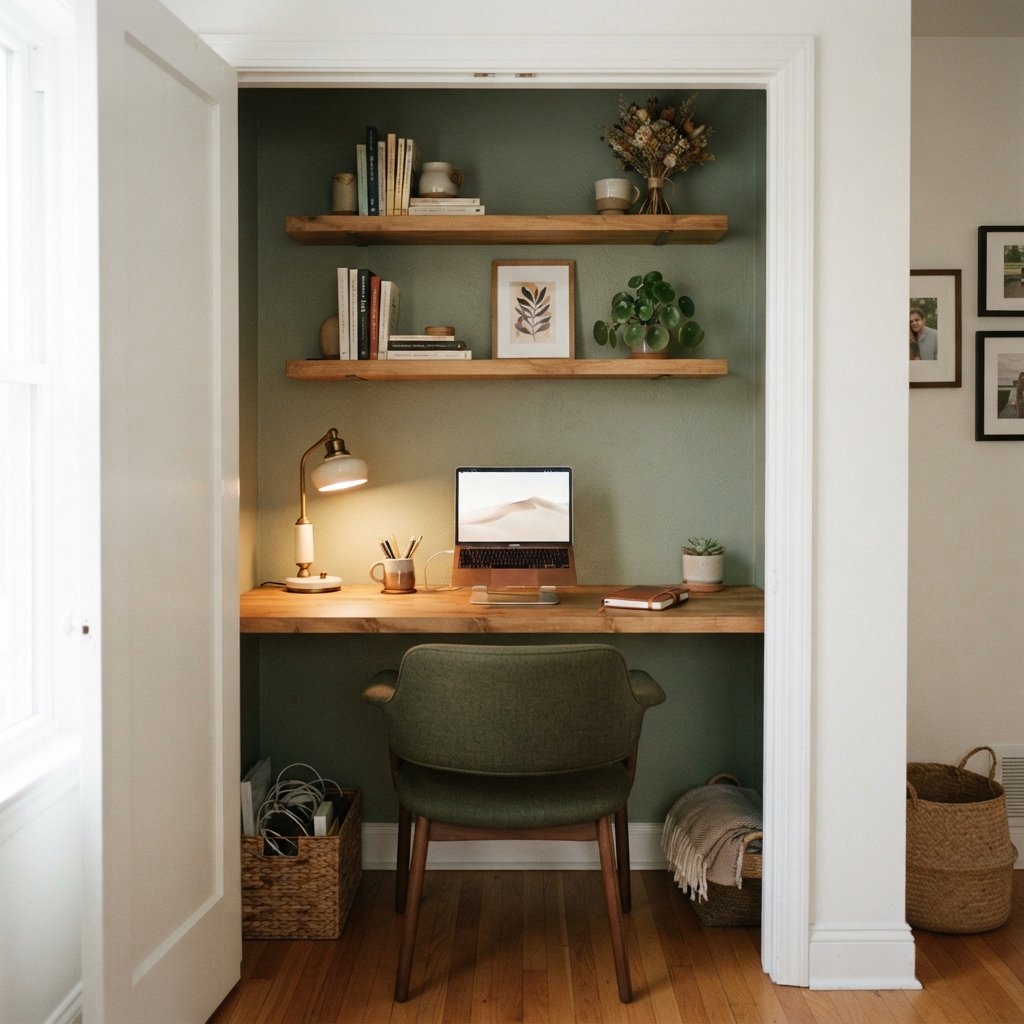
You don’t need an entire spare room to create a home office that actually works.
A corner of a bedroom, an unused wall in the living room, a small closet, or even the space at the end of a hallway can become a practical small home office with the right furniture and storage.
The challenge is making a tiny workspace functional without letting it take over the rest of the room.
That usually means being selective.
Instead of squeezing a huge executive desk, bulky filing cabinet, bookcase, printer stand, and office chair into a small area, think about what you genuinely need to work comfortably.
For many people, that’s simply a desk surface, supportive chair, task lighting, power access, and enough storage to keep everyday supplies under control.
From there, you can make the office feel intentional with paint, shelves, artwork, and a few decorative details.
Whether you’re working with a dedicated room or carving an office out of another space, these small home office ideas can help you use every inch more effectively.
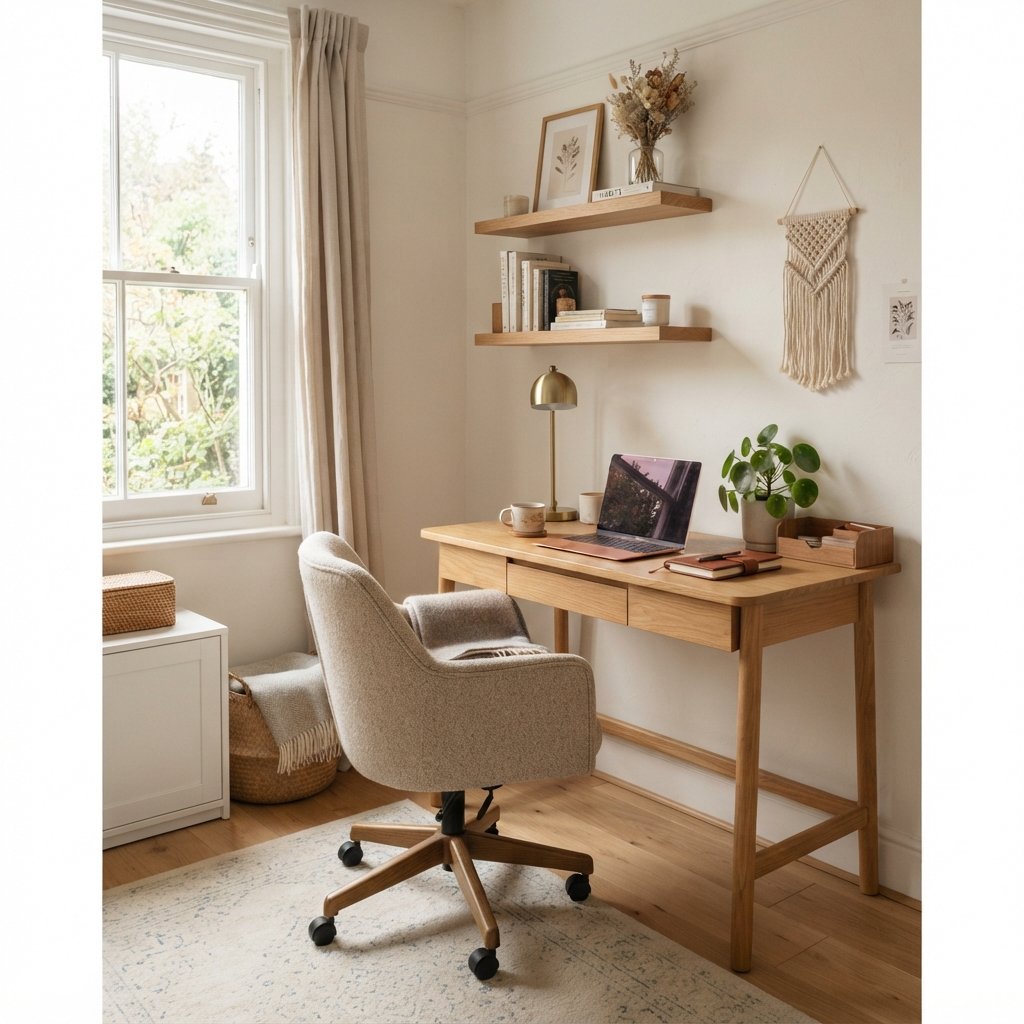
1. Start With How You’ll Actually Use the Office
Before buying furniture, think about your work.
Do you primarily use a laptop?
Do you need two monitors?
Are you constantly referencing paper files?
Do you take video calls?
Do you need space for drawing, crafting, or paperwork?
Your answers determine what deserves space.
A laptop-only workspace can be much smaller than an office with two large monitors, a printer, files, and reference books.
Make a short list of necessities before you start shopping.
2. Choose a Desk That Fits the Space
The biggest desk you can squeeze into a room isn’t necessarily the best desk.
Measure the available wall and leave enough room to move comfortably around the chair.
A compact desk can provide plenty of workspace if you don’t need large amounts of equipment.
Look for a desk with:
- Useful work surface
- Appropriate height for you
- Enough legroom
- Drawers if needed
- Cable access
- Proportions that fit the room
Always compare the actual furniture dimensions with your available space before ordering.
3. Use a Wall-Mounted Desk
When floor space is extremely limited, a wall-mounted desk can be a smart option.
It eliminates bulky desk legs and can create a lighter visual appearance.
Some wall desks even fold away when they’re not in use.
However, mounting requirements vary considerably.
The desk and supporting hardware must be appropriate for the wall construction and intended load. Follow manufacturer instructions and use suitable anchors or structural attachment points.
When in doubt about the wall or weight requirements, get professional help.

4. Turn an Empty Corner Into an Office
Corners often go unused.
A compact desk can transform one into a functional workstation.
This works well in:
- Bedrooms
- Guest rooms
- Living rooms
- Dining rooms
- Landings
Choose furniture that relates to the rest of the room so the office doesn’t feel randomly added.
For example, repeat the room’s wood tone or metal finish in the desk.
5. Create a Bedroom Office
Sometimes the bedroom is the only available location.
Keep the office visually quiet so it doesn’t make the entire bedroom feel like a workplace.
Try:
- Small desk
- Closed storage
- Simple lamp
- Minimal accessories
- Comfortable chair
If possible, position the desk where you aren’t staring directly at work from bed.
And when the workday is over, put papers and the laptop away.
6. Make a Closet Office
A closet can become a surprisingly useful “cloffice.”
Remove the hanging rod and add:
- Desk surface
- Shelves
- Task light
- Storage
If the closet still has doors, you may even be able to close the workspace when you’re finished.
Before adding built-in surfaces or shelves, check the wall construction and use appropriately rated supports.
Don’t overcrowd electrical outlets or run unsafe extension-cord arrangements into enclosed spaces.
7. Use Vertical Space
When you can’t expand outward, go up.
The wall above a desk can hold:
- Shelves
- Cabinets
- Pegboard
- Bulletin board
- Small organizers
Keep frequently used items within comfortable reach.
Store lighter, less frequently used items higher.
Avoid placing heavy objects overhead without secure mounting.
8. Add Floating Shelves
Floating shelves provide storage without taking up floor space.
Use them for:
- Books
- Small storage boxes
- Office supplies
- Decor
Don’t turn every shelf into a display.
A small office already contains plenty of visual information.
Leaving some open space helps the room feel calmer.
9. Install Cabinets Above the Desk
If you need substantial storage, cabinets may be more practical than open shelving.
Closed doors hide:
- Paper
- Chargers
- Files
- Technology
- Office supplies
They can also make an office incorporated into a living room or bedroom feel much tidier.
Again, cabinetry must be securely mounted according to its weight and the wall construction.
10. Use Drawers Instead of Desktop Organizers
Desktop organizers are useful until they consume half the desk.
If possible, keep routine supplies in drawers.
Organize them with small dividers for:
- Pens
- Sticky notes
- Charging cables
- Scissors
- Paper clips
A clear work surface can make a tiny office feel considerably larger.
11. Choose a Comfortable Office Chair
A tiny room isn’t a reason to use an uncomfortable dining chair every day.
If you’ll be working for extended periods, prioritize a chair that supports your body and can be adjusted appropriately where possible.
Look for:
- Appropriate seat height
- Back support
- Comfortable seat
- Suitable arm placement
- Enough clearance beneath the desk
A chair doesn’t have to look like a giant corporate office chair.
There are compact options that can blend more easily with residential decor.
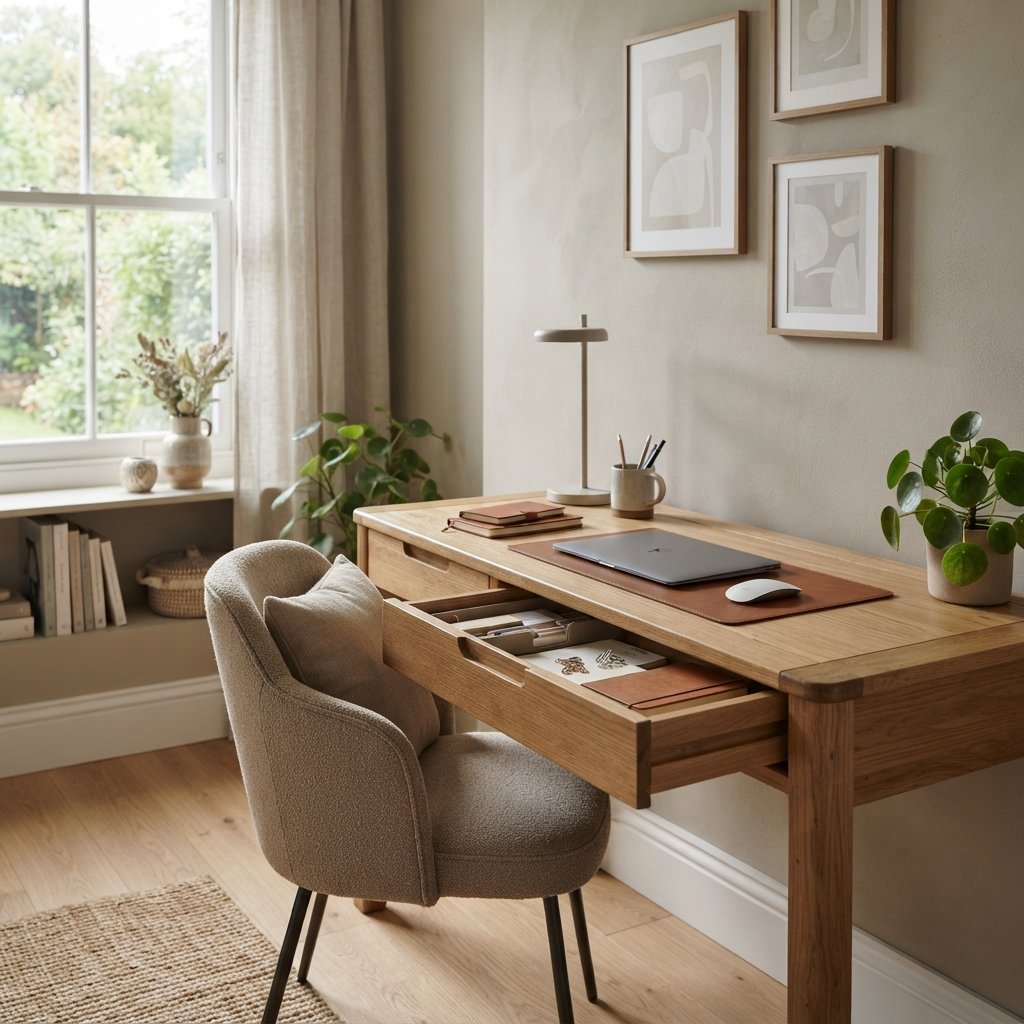
12. Pay Attention to Desk Ergonomics
A beautiful office isn’t successful if it’s uncomfortable to use.
Your exact setup depends on your body, equipment, and work habits, but generally you want to avoid prolonged positions that cause you to hunch, twist, or look sharply downward.
For laptop-heavy work, an external keyboard, mouse, or raised screen setup may help create a more comfortable arrangement.
Adjust your workspace to your needs, take regular movement breaks, and seek appropriate professional guidance if you’re dealing with persistent discomfort.
13. Put the Desk Near Natural Light
If possible, take advantage of a window.
Natural light can make a small office feel much more pleasant.
But think about screen glare.
Positioning the monitor perpendicular to a window may work better than facing it directly toward or away from intense sunlight.
Use shades or curtains when necessary.
14. Add Proper Task Lighting
Natural light isn’t enough for every hour of the day.
Add a desk lamp, wall-mounted light, or other task lighting.
In a tiny workspace, a wall-mounted sconce can free desk space.
If you’re adding or relocating hardwired lighting or outlets, electrical work should comply with applicable requirements and be completed by a qualified professional where appropriate.
15. Hide the Cords
A small workspace can quickly look messy when several cords are hanging beneath the desk.
Organize:
- Computer cords
- Monitor cables
- Chargers
- Lamp cord
Use appropriate cable-management products and keep cords away from locations where they could become a tripping hazard.
Never overload outlets, power strips, or extension cords.

16. Paint the Office a Different Color
If your office is part of another room, paint can visually define it.
Try painting:
- Desk wall
- Closet interior
- Small office nook
- Entire dedicated office
Good small-office colors might include:
- Warm white
- Mushroom
- Sage
- Dusty blue
- Olive
- Charcoal
- Deep green
Dark paint can work beautifully in a small office.
Small doesn’t automatically mean the room must be white.
17. Try Color Drenching
If you have a tiny dedicated office, consider using one color across several surfaces.
Walls, trim, and even built-in cabinetry can share the same or closely related color.
This can reduce visual fragmentation and make the room feel intentional.
For a cozy office, consider:
- Deep olive
- Moody blue
- Warm taupe
- Soft charcoal
Test samples first because small rooms can change how strongly a color reads.
18. Add Wallpaper Behind the Desk
Wallpaper can turn a basic office nook into a feature.
Keep the rest of the area relatively simple so the pattern doesn’t compete with:
- Monitor
- Shelves
- Paperwork
- Artwork
For a renter-friendly approach, you might consider removable products suitable for your wall surface, following the manufacturer’s installation and removal guidance.
19. Add a Small Rug
A rug can visually define a workspace within a larger room.
Choose a size that allows the chair to function comfortably.
If the chair constantly catches the edge of a tiny rug, the setup will become frustrating.
Low-pile surfaces may be easier for rolling chairs than very thick rugs, depending on the chair.
20. Make the Background Video-Call Friendly
If you regularly attend video meetings, look at what’s behind you.
You don’t need a professionally styled bookshelf.
A simple background can include:
- One piece of art
- Small shelf
- Plant
- Closed cabinet
Remove distracting clutter and personal information you don’t want visible on calls.
21. Keep the Decor Simple
A small home office still deserves personality.
Add a few things you enjoy:
- Artwork
- Framed photo
- Small plant
- Decorative box
- Favorite book
But remember that the desk itself will naturally accumulate work items.
Leaving some breathing room prevents the office from feeling overloaded.

Small Home Office Ideas for a Bedroom
A bedroom office needs to perform two very different jobs.
The best approach is to visually contain the work zone.
Consider placing the desk:
- In a corner
- Beside a window
- Inside a closet
- Along an unused wall
Choose furniture that resembles the bedroom furniture rather than commercial office equipment where practical.
A wood writing desk can feel more natural in a bedroom than a large metal workstation.
Small Home Office Ideas for a Living Room
In a living room, the office should feel connected to the surrounding decor.
Try a desk that could almost double as a console.
Then use attractive closed storage for work supplies.
Keep cables hidden and avoid leaving paperwork spread across the desk after work.
The more visible the office is, the more important visual organization becomes.
Small Home Office Under the Stairs
The area beneath a staircase can sometimes become a compact workstation.
Before adding built-ins, determine what’s behind the walls and whether modifications could affect:
- Structure
- Electrical systems
- Plumbing
- HVAC
- Required clearances
Don’t remove framing or alter structural elements without appropriate professional guidance.
If the space is suitable, a simple desk and shelves may be all you need.
Small Home Office in a Hallway
A wider hallway or landing may accommodate a shallow desk.
The most important issue is circulation.
The desk and chair should not block required passage or create a tripping hazard.
A wall-mounted desk or narrow console-style desk may work better than standard office furniture.
Small Home Office With Two Desks
If two people need to work in one small room, try using a long wall rather than two separate bulky desks.
A continuous work surface can provide two stations.
Add individual:
- Chairs
- Task lights
- Drawers
- Storage zones
Make sure both people have sufficient space for their equipment.

Small Home Office Storage Ideas
Storage should be based on what you actually use.
Paper
Use a small file box or drawer if you genuinely need paper records.
Office Supplies
Keep small items in divided drawers.
Printer
If you rarely use it, consider storing it in a cabinet or on a pull-out shelf designed for the equipment and ventilation needs.
Books
Use vertical shelves.
Cables
Keep them labeled and contained.
Documents
Secure sensitive documents appropriately rather than leaving them exposed on open shelves.
How to Make a Small Office Look Bigger
You don’t necessarily need white walls.
Instead, reduce visual clutter.
Try:
- Furniture with appropriate scale
- Clear desktop
- Coordinated storage
- Simple color palette
- Vertical shelving
- Good lighting
- Fewer decorative objects
A tiny room with ten small storage pieces often feels more crowded than one with a single well-planned cabinet.
How to Make a Small Home Office Look Expensive
Focus on a few high-impact details.
Try:
Simple desk + beautiful wall color + substantial light + framed artwork + organized storage
You can also upgrade inexpensive furniture with attractive hardware.
Avoid filling the room with lots of small decorative accessories.
Larger, intentional elements often create a more polished look.
Small Home Office Color Ideas
Your office doesn’t have to look corporate.
For something light:
- Warm white
- Cream
- Pale greige
For something earthy:
- Sage
- Mushroom
- Taupe
- Olive
For something dramatic:
- Deep green
- Navy
- Charcoal
The best color is one that works with your light, flooring, furniture, and surrounding rooms.
Budget Small Home Office Ideas
A functional office doesn’t require custom built-ins.
Start with what you already own.
You might:
- Repurpose a small table as a desk.
- Move a lamp from another room.
- Add inexpensive drawer dividers.
- Paint the desk wall.
- Hang one shelf.
- Use baskets you already own.
- Reorganize an existing closet.
Spend first on the items that affect everyday comfort and function.
Common Small Home Office Mistakes
Buying the Desk Before Measuring
Always check the room and furniture dimensions.
Using an Uncomfortable Chair
Appearance shouldn’t be the only consideration.
Adding Too Much Furniture
Small rooms need breathing space.
Ignoring Vertical Storage
Walls can provide valuable storage.
Covering Every Wall With Shelves
Vertical storage still creates visual weight.
Poor Lighting
Add appropriate task lighting.
Letting Cords Take Over
Create a safe cable-management plan.
Overloading Electrical Outlets
Follow product ratings and electrical safety guidance.
Ignoring Video-Call Backgrounds
Check what’s visible behind you.
Turning the Desk Into Permanent Storage
Keep the primary work surface usable.
Installing Heavy Shelves Incorrectly
Use hardware and mounting methods suitable for the wall construction and load.

FAQ About Small Home Offices
How small can a home office be?
There’s no single minimum size for every situation. A useful workspace can fit into a small nook if there’s enough room for your work surface, chair, equipment, and safe circulation.
Where can I put a home office if I don’t have a spare room?
Consider a bedroom corner, living room wall, closet, landing, hallway niche, dining area, or other underused space that can safely accommodate a desk.
What type of desk is best for a small home office?
A compact writing desk, shallow desk, wall-mounted desk, or custom work surface can work well. Choose based on your equipment and available dimensions.
How do I organize a tiny home office?
Keep the desktop clear, use drawers for small supplies, take advantage of vertical storage, organize cables, and eliminate office items you don’t actually use.
Can I put a home office in my bedroom?
Yes. Keep the workstation compact and organized, and try to visually separate work from the sleeping area where possible.
What colors are best for a small home office?
Warm white, greige, mushroom, sage, blue, olive, navy, and charcoal can all work. Small rooms don’t automatically require light colors.
How can I hide a home office?
A closet office with doors is one option. You can also use closed cabinetry, a folding desk, a decorative screen where practical, or furniture that blends into the surrounding room.
How do I make a small office cozy?
Use warm lighting, natural wood, comfortable seating, a soft rug where practical, artwork, and a restrained color palette.
Final Thoughts
A small home office doesn’t need to feel like a compromise.
In fact, having limited space can make it easier to focus on what you genuinely need.
Start with the essentials:
A properly sized desk, a comfortable chair, useful lighting, safe power access, and enough storage for your everyday work.
Then use the walls.
Add shelves or closed cabinets if you need them, organize cords, and keep the desktop as clear as possible.
If your office shares space with a bedroom or living room, choose furniture and colors that connect with the rest of the room so the workspace feels intentional rather than temporary.
And don’t assume a small office has to be completely white.
A tiny sage office, mushroom-colored work nook, or deep green cloffice can have much more character than a large room filled with generic office furniture.
The goal isn’t to fit as much as possible into the space.
It’s to fit the right things into it.
When the desk fits properly, the chair is comfortable, supplies have a home, lighting works, and clutter stays under control, even a very small corner can become a home office you actually enjoy using.

