

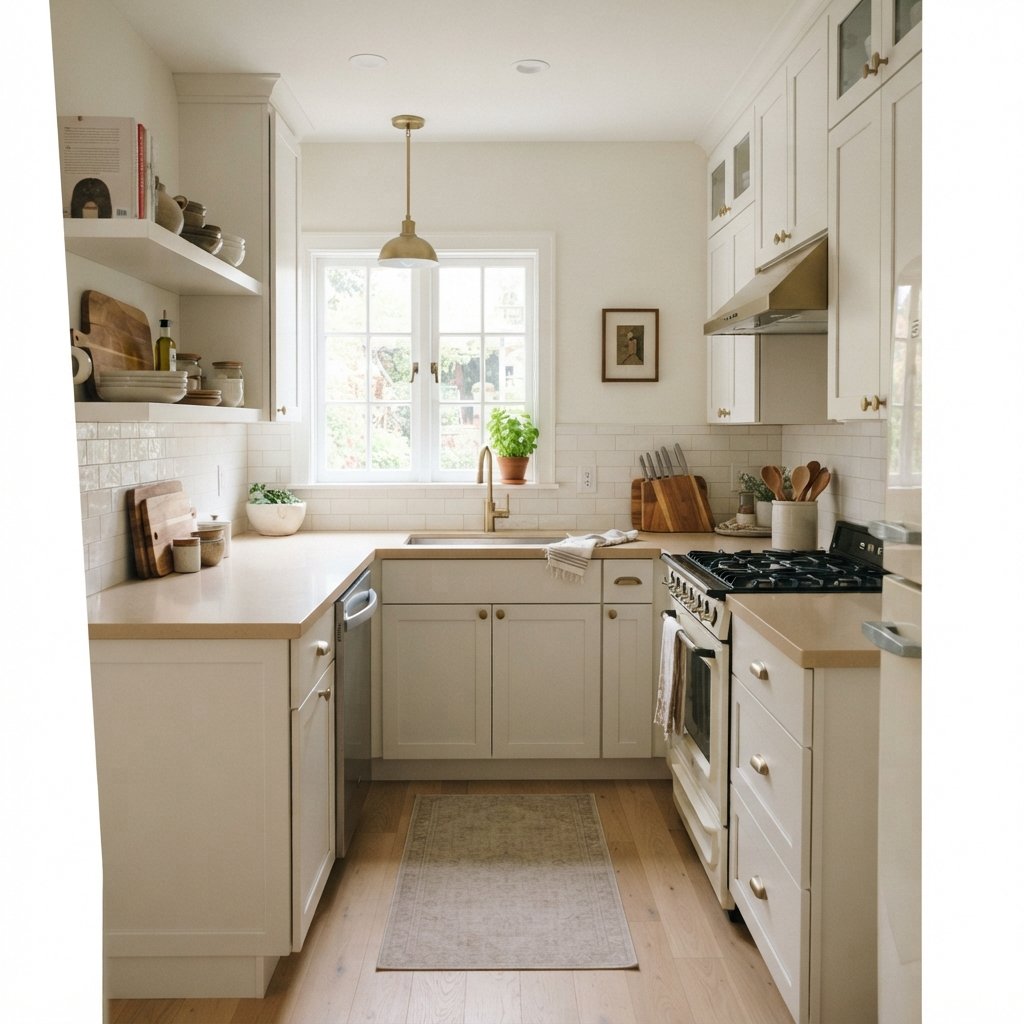
Choosing paint for a small kitchen can feel surprisingly complicated.
You may want the room to feel brighter and more open, but plain white isn’t your only option. Warm creams, soft greiges, pale greens, muted blues, and even deeper colors can work beautifully in a compact kitchen.
The best small kitchen paint colors depend on much more than square footage. Cabinet color, countertops, backsplash, flooring, natural light, and the colors in adjoining rooms all affect how a wall color looks.
A tiny kitchen with white cabinets and a large sunny window needs a different approach than a small kitchen with dark wood cabinets and limited natural light.
Instead of searching for one magical color that makes every kitchen look bigger, focus on creating a cohesive palette with enough contrast to keep the room interesting.
Here are 17 beautiful color ideas for small kitchens, along with practical tips for coordinating paint with cabinets, countertops, lighting, and other finishes.
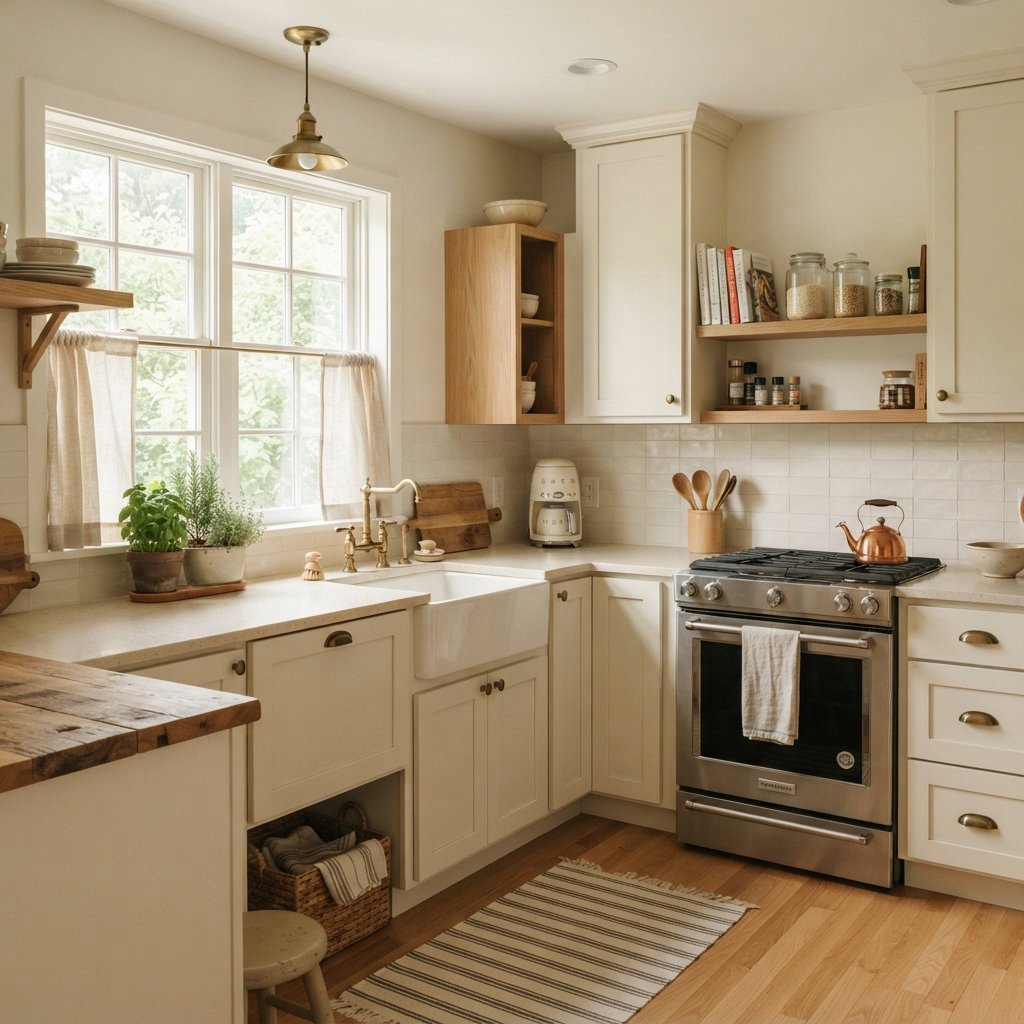
How to Choose Paint for a Small Kitchen
Before looking at paint colors, identify the fixed finishes.
Look at your:
- Cabinets
- Countertops
- Backsplash
- Flooring
- Appliances
- Adjacent rooms
These surfaces usually matter more than the size of the kitchen.
For example, if you have warm cream cabinets, choosing an icy blue-white wall color may make the cabinets look more yellow.
If you have cool gray countertops, a very yellow cream may create an unwanted contrast.
Start with what isn’t changing.
Then choose the paint.
1. Warm White
Warm white is one of the most versatile colors for a small kitchen.
It can create a bright backdrop without the stark appearance some crisp whites can have.
Warm white pairs especially well with:
- Natural wood
- Creamy stone
- Brass-toned hardware
- Beige
- Warm gray
- Earthy colors
If your kitchen has lots of warm materials, a slightly warm white can help everything feel connected.
Just remember that white paint has undertones too.
Always sample it next to the cabinets.
2. Soft Off-White
If pure white feels too bright, try off-white.
Off-white can create subtle contrast with white cabinets while maintaining an airy overall palette.
For example:
White cabinets + soft off-white walls + oak floors
can feel warmer and more layered than white everywhere.
Look carefully at undertones so the cabinet and wall whites don’t clash.
3. Light Cream
Cream can be an excellent small kitchen paint color when the fixed finishes are warm.
It works especially well with:
- Warm wood cabinets
- Beige countertops
- Cream backsplash tile
- Terracotta
- Warm metallic finishes
Keep the cream soft rather than intensely yellow if you’re trying to maintain a light appearance.
Cream can make a small kitchen feel cozy without necessarily making it feel dark.
4. Pale Greige
Greige blends gray and beige.
It’s useful in kitchens where the finishes aren’t clearly warm or cool.
A pale greige can bridge combinations such as:
White cabinets + warm wood floor + gray countertop
It can also provide a little more depth than white without introducing an obvious color.
Some greiges lean beige, while others appear much grayer.
Test several undertones before deciding.
5. Light Beige
Beige can create a beautiful warm kitchen, particularly when paired with natural materials.
Try it with:
- Cream or white cabinets
- Natural oak
- Warm stone
- Black accents
- Woven textures
A light beige can give a compact kitchen personality while remaining neutral.
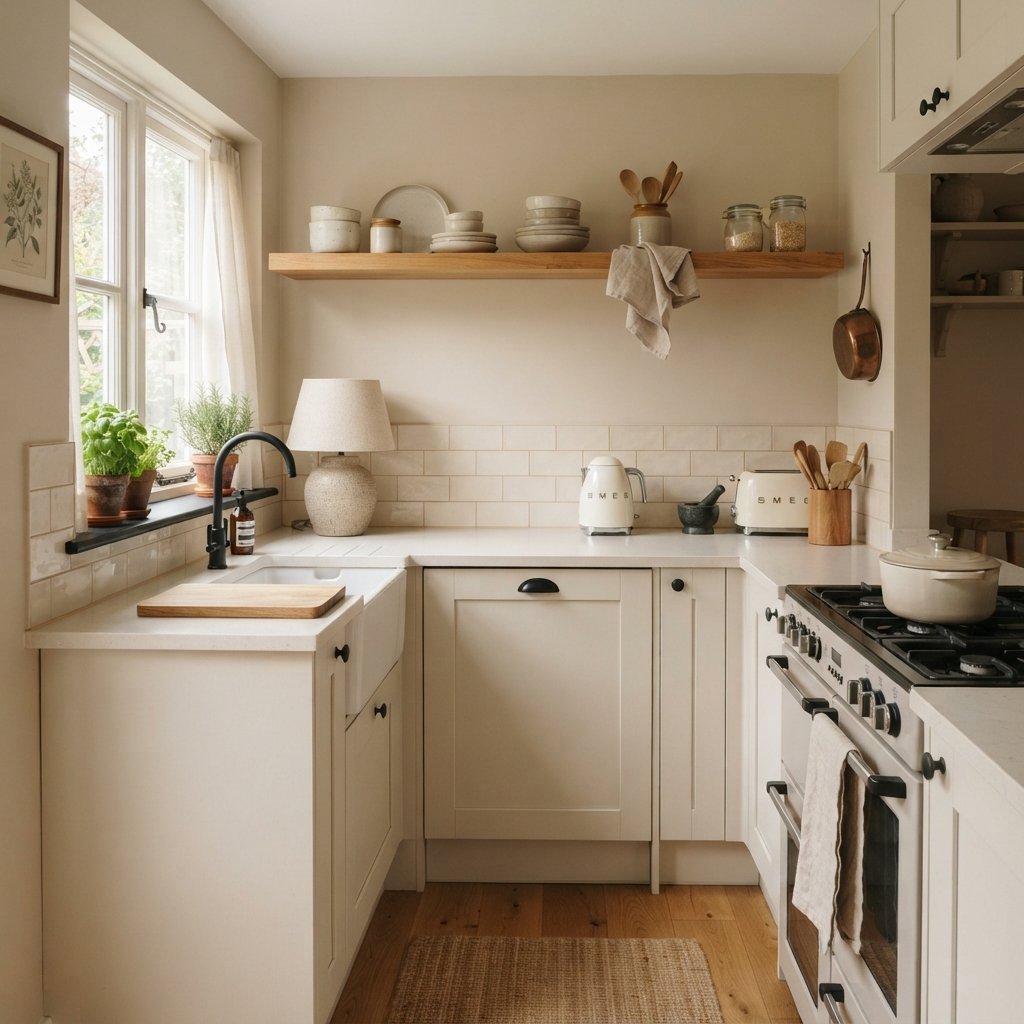
6. Soft Taupe
Taupe can be a sophisticated alternative to basic beige or gray.
Depending on the shade, taupe may have brown, gray, violet, or other undertones.
A pale taupe can work particularly well with:
- Cream cabinetry
- Medium wood
- Warm stone
- Black fixtures
Because taupe is more complex than it initially appears, compare it directly with countertops and backsplash tile.
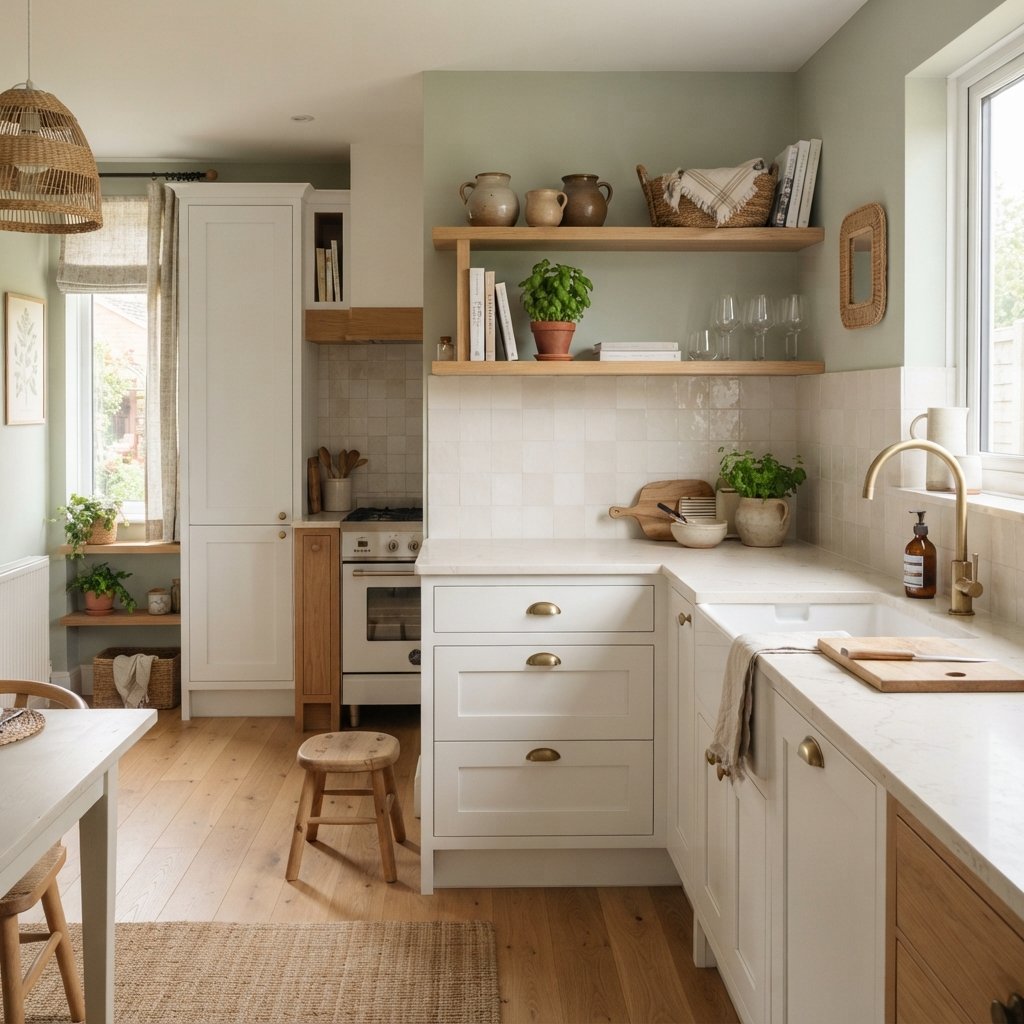
7. Pale Sage Green
If you want color without overwhelming a small kitchen, sage green is an excellent direction to explore.
Its muted character allows it to behave almost like a neutral.
Sage can pair beautifully with:
- White
- Cream
- Natural oak
- Walnut
- Warm brass-toned finishes
- Black
It can also connect a kitchen visually with greenery outside a nearby window.
8. Muted Olive Green
For something earthier than sage, consider muted olive.
Olive creates warmth and depth.
Use it with:
- Cream cabinets
- Natural wood
- Warm white
- Brown
- Black accents
If your kitchen receives very little natural light, test the color carefully because deeper olive shades can feel much darker on the wall than they do on a paint chip.
9. Soft Blue
Blue can make a compact kitchen feel calm and fresh.
Choose a muted shade rather than a bright primary blue if you want a more timeless look.
Soft blue works particularly well with:
- White cabinetry
- Light wood
- Neutral stone
- Blue-and-white decor
Warm wood accents can help keep the room from feeling cold.
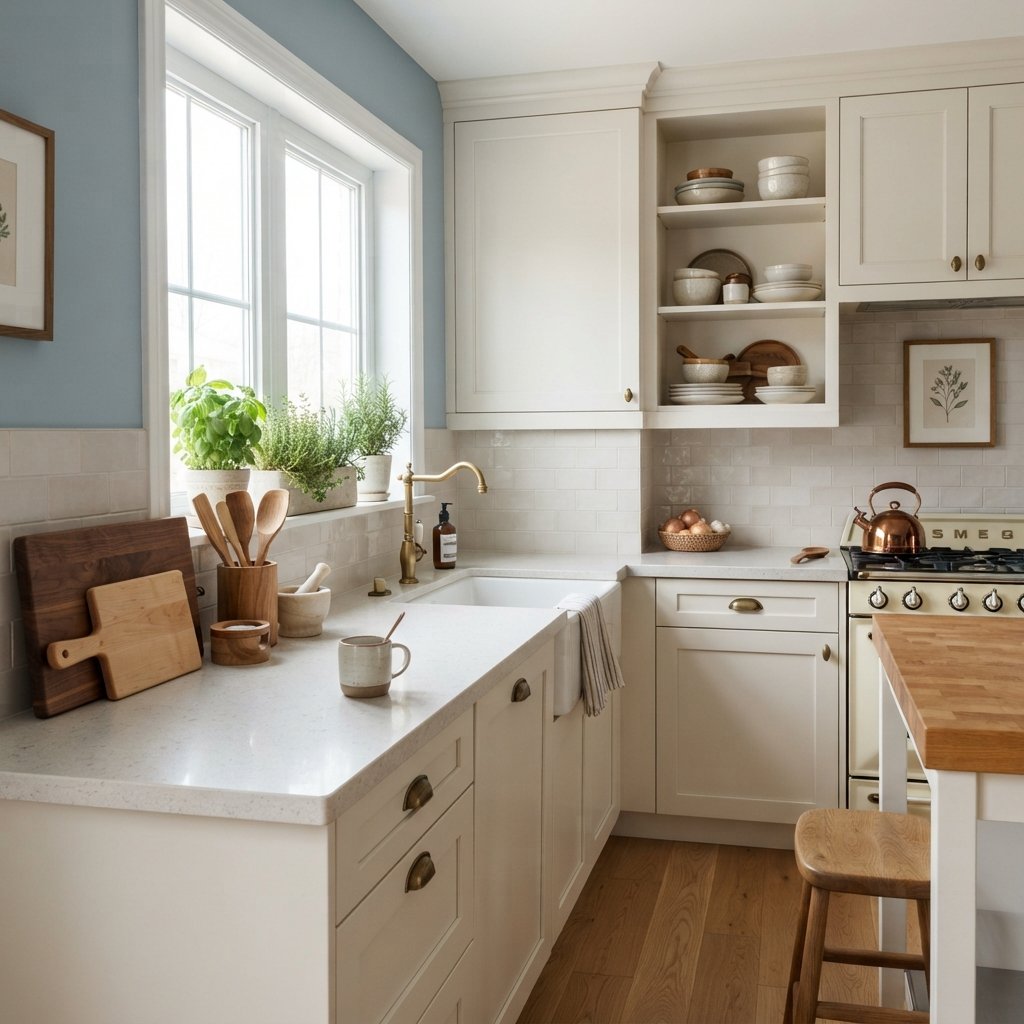
10. Blue-Gray
Blue-gray offers subtle color with a slightly more neutral appearance.
It can work beautifully in kitchens with:
- White cabinets
- Cool gray countertops
- Marble-look surfaces
- Black hardware
- Medium wood
Lighting matters significantly.
In cooler or darker rooms, blue-gray can appear much more blue than expected.
11. Dusty Green-Gray
A muted green-gray can add just enough color to distinguish the walls from white cabinetry.
It works well when you want something:
- Earthy
- Quiet
- Neutral
- Relaxed
Pair it with warm wood and cream accents if you want to soften its cooler side.
12. Pale Mushroom
Mushroom colors combine elements of beige, taupe, gray, and brown.
A pale mushroom shade can create a sophisticated small kitchen, especially when paired with warm cabinetry or natural wood.
It’s a useful alternative if conventional gray feels too cool and beige feels too obvious.
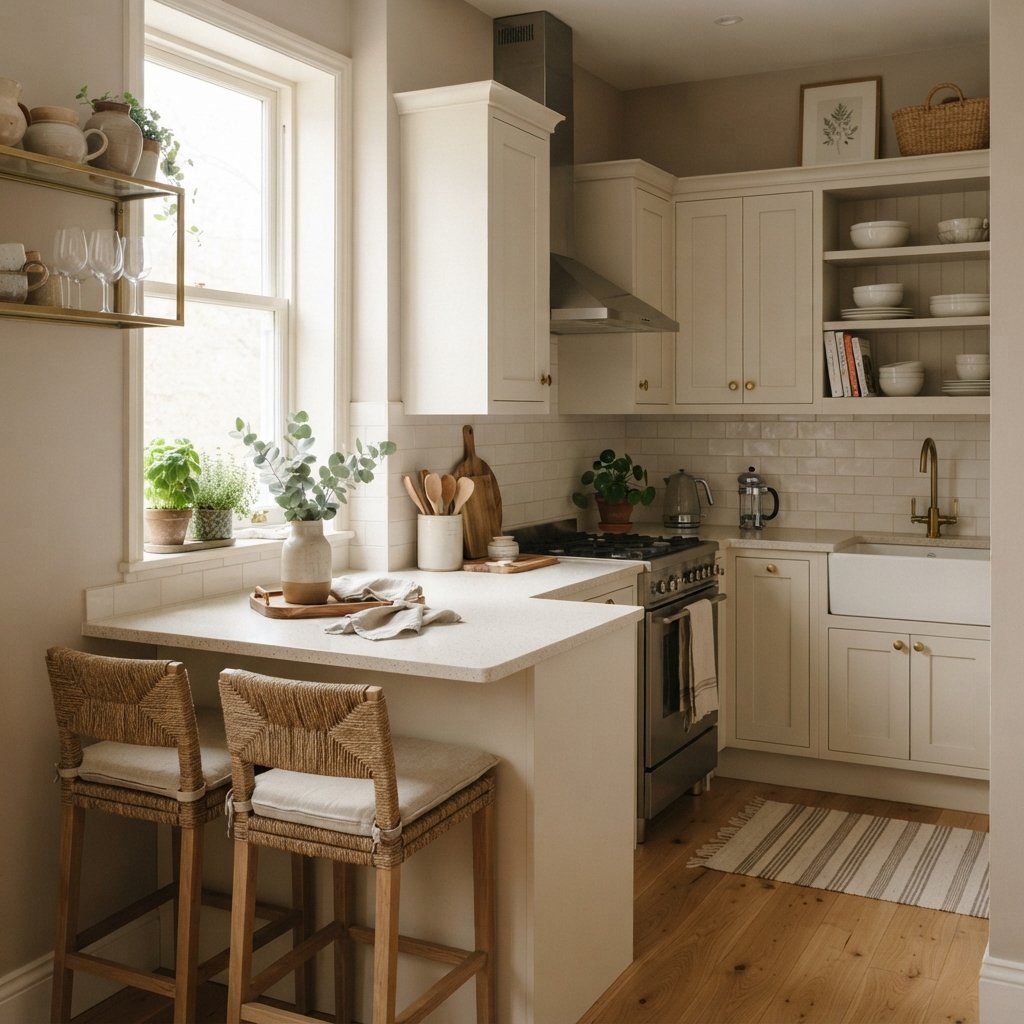
13. Muted Clay
Small kitchens don’t have to be colorless.
A soft clay color can bring warmth without becoming as intense as orange or terracotta.
Try it with:
- Cream
- Warm white
- Natural wood
- Olive
- Black accents
Clay can be especially effective in kitchens with Mediterranean, traditional, rustic, or organic influences.
14. Pale Dusty Pink
A subtle pink-beige or dusty blush can function surprisingly well as a warm neutral.
Rather than a sugary pink, look for something muted and earthy.
Pair it with:
- Cream
- Brown
- Walnut
- Warm white
- Deep green
It’s an unexpected choice that can make a small kitchen feel warm and distinctive.
15. Charcoal
Can you paint a small kitchen dark?
Yes.
A compact room doesn’t automatically require pale walls.
Charcoal can create a dramatic, sophisticated kitchen, particularly when balanced with:
- Light counters
- Light cabinetry
- Warm wood
- Good lighting
The goal isn’t always to make a small room appear as large as possible.
Sometimes creating a cozy, intentional room is more effective.
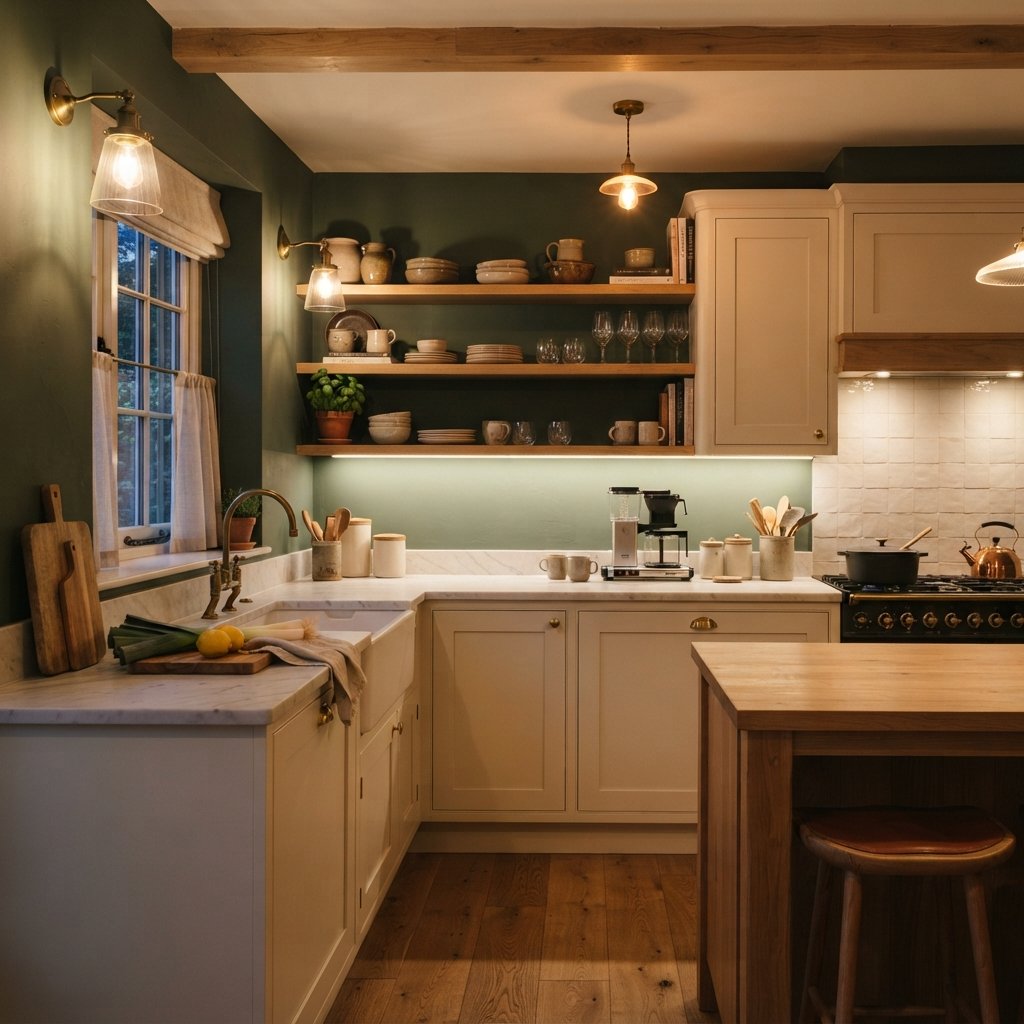
16. Deep Green
Deep green can look beautiful in a compact kitchen.
Consider using it on:
- Walls
- One focal wall
- A pantry area
Pair it with cream, natural wood, or light stone for contrast.
If the kitchen has limited lighting, make sure you have adequate task and general illumination.
17. Navy Blue
Navy can bring structure and contrast to a small kitchen.
It works especially well with:
- White
- Cream
- Light wood
- Medium wood
- Warm metal accents
You don’t need to use it everywhere.
A navy wall in an eat-in nook or another defined area can add depth without dominating the entire kitchen.
What Paint Colors Make a Small Kitchen Look Bigger?
No paint color can actually increase square footage.
But certain choices can create a lighter, more open visual effect.
Consider:
- Warm white
- Off-white
- Light cream
- Pale greige
- Light beige
- Very pale blue
- Pale sage
Keeping contrast relatively gentle can also create visual continuity.
For example:
Warm white cabinets + slightly warmer off-white walls
may feel more seamless than:
Bright white cabinets + very dark walls
That doesn’t mean high contrast is wrong. It simply creates a different effect.
Best Small Kitchen Paint Colors With White Cabinets
White cabinets give you many options.
For a neutral kitchen, try:
- Warm white
- Greige
- Light beige
- Pale taupe
For subtle color:
- Sage
- Green-gray
- Soft blue
- Blue-gray
For drama:
- Deep green
- Charcoal
- Navy
The most important consideration is the undertone of the cabinetry.
A creamy white cabinet can clash with a wall color designed around a crisp blue-white.
Best Small Kitchen Paint Colors With Dark Cabinets
Dark cabinetry already carries significant visual weight.
If you want contrast, consider:
- Warm white
- Cream
- Light beige
- Pale greige
- Soft sage
If you prefer a moodier kitchen, use a deeper wall color with intentional lighting.
For example:
Dark brown cabinets + muted olive walls
or:
Navy cabinets + deeper blue-gray walls
can create a rich tonal effect.
Best Small Kitchen Paint Colors With Wood Cabinets
Wood cabinets have strong undertones that need to guide your wall color.
Honey or Golden Wood
Try warm white, cream, muted green, or an appropriate warm neutral.
Very cool gray may emphasize orange tones.
Light Oak
Warm white, greige, sage, mushroom, and muted blue can all be worth testing.
Dark Wood
Create contrast with warm white, cream, pale beige, or soft green.
Red-Toned Wood
Be careful with green because complementary undertones can intensify one another. A neutral wall may be easier if you don’t want the wood to appear more red.
Best Small Kitchen Paint Colors With Black Cabinets
Black cabinets can create beautiful contrast with:
- Warm white
- Cream
- Light greige
- Pale beige
- Muted green
If you want a dark, enveloping kitchen, try charcoal or another deep neutral.
Use lighter countertops or backsplash materials where appropriate to create visual relief.
Small Kitchen Paint Colors With White Appliances
White appliances often work best when they’re treated as part of the overall palette rather than ignored.
Try:
- Warm white
- Off-white
- Pale greige
- Sage
- Soft blue
Compare wall samples directly beside the appliance.
If the paint makes the appliance suddenly look yellow, gray, or blue, try a different undertone.
Small Kitchen Paint Colors With Stainless Steel Appliances
Stainless steel is relatively flexible.
It can work with:
- White
- Greige
- Beige
- Green
- Blue
- Charcoal
- Navy
Don’t assume stainless steel means you need cool gray walls.
Look at the cabinets and countertops first.
Small Kitchen Paint Colors for Low Natural Light
If the kitchen doesn’t receive much daylight, you can take two approaches.
Keep It Light
Try:
- Warm white
- Cream
- Pale beige
- Light greige
These can keep the room from feeling visually heavy.
Embrace the Darkness
Try:
- Deep olive
- Charcoal
- Navy
- Deep green
Then use layered artificial lighting to make the kitchen functional and inviting.
A pale paint color won’t magically create natural sunlight, so choose the mood you actually want.
Small Kitchen Paint Colors for North-Facing Rooms
North-facing light often appears cooler.
Very cool colors may look even cooler.
Consider testing:
- Warm white
- Cream
- Warm greige
- Beige
- Muted warm green
That doesn’t mean blue and gray are forbidden.
It simply means you should sample them carefully.
Small Kitchen Paint Colors for South-Facing Rooms
South-facing rooms can receive strong warm light.
Colors may appear warmer and brighter during parts of the day.
This can allow you to explore:
- Soft gray
- Blue-gray
- Sage
- Greige
- White
- Beige
Check samples at different times because the color can shift substantially.
Wall Color vs. Cabinet Color in a Small Kitchen
You have two basic options.
Low Contrast
Use related colors.
Example:
Cream cabinets + warm off-white walls
This can create a calm, continuous look.
High Contrast
Use noticeably different colors.
Example:
White cabinets + deep green walls
This creates more definition and drama.
Neither strategy is inherently better for a small kitchen.
Choose based on your decorating style and the atmosphere you want.
Should You Paint a Small Kitchen All One Color?
Using one color—or closely related colors—can create a cohesive look.
You might use:
Warm beige walls + lighter beige trim
or even a tonal approach across several architectural surfaces.
However, walls, trim, doors, and cabinetry may require different paint products or sheens.
Follow the paint manufacturer’s recommendations for each surface.
Should a Small Kitchen Be White?
No.
White is popular because it can create a clean, bright backdrop, but it isn’t your only option.
A small kitchen can be beautiful in:
- Sage
- Blue
- Olive
- Clay
- Charcoal
- Navy
Choose based on the room rather than a decorating rule.
A small, dark kitchen painted white is still a small kitchen.
A thoughtfully designed dark kitchen can feel intentional, cozy, and sophisticated.
How to Coordinate Kitchen Paint With Countertops
Countertops often contain several colors.
Look closely.
You may see:
- Cream
- Gray
- Beige
- Brown
- Black
- Blue-gray
- Gold
Choose a wall color that relates to the countertop’s dominant undertone.
If the countertop is visually busy, a quieter wall color usually gives the room some breathing space.
How to Coordinate Paint With the Backsplash
The backsplash and wall paint often sit directly next to one another, so undertones matter.
Hold the paint sample against the tile.
Don’t rely on memory.
A creamy subway tile can make a cool white wall look surprisingly blue.
A cool gray backsplash can make yellow-beige paint look more intense.
Physical comparison is the easiest way to spot these conflicts.
How to Test Small Kitchen Paint Colors
Kitchens contain many reflective surfaces, so paint can change dramatically throughout the room.
Test carefully.
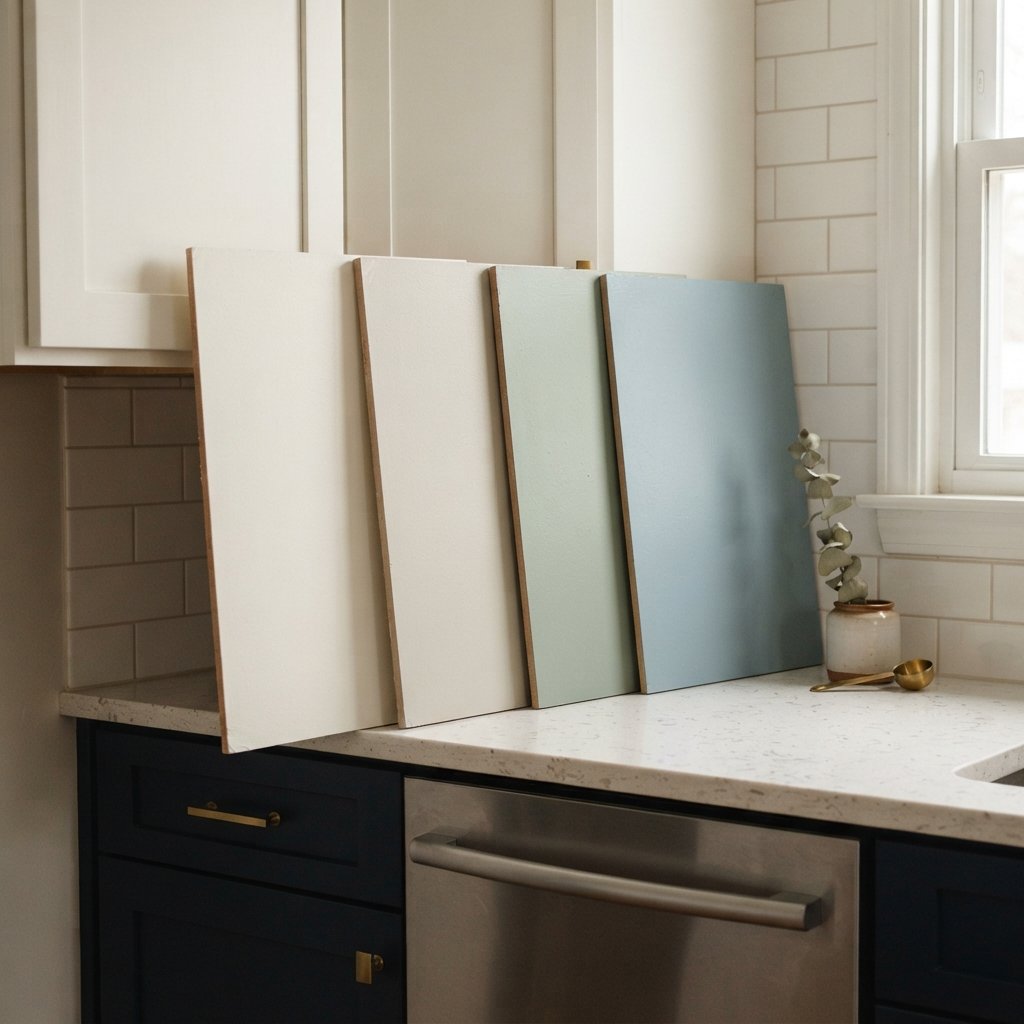
- Narrow your choices to several colors.
- Create or obtain large physical samples.
- View them vertically.
- Move them to different walls.
- Compare them with cabinets.
- Hold them beside the backsplash.
- Check them against the countertop.
- Look at them next to flooring.
- View them morning, afternoon, and evening.
- Turn on the kitchen lights.
If you’re painting actual test areas, allow the paint to dry according to the manufacturer’s instructions before judging the color.
How Paint Finish Affects a Small Kitchen
Color isn’t the only decision.
Paint sheen affects appearance, durability, and cleanability.
Kitchens are exposed to:
- Grease
- Food splatters
- Moisture
- Frequent cleaning
Choose a paint product and finish appropriate for kitchen walls and the specific surface.
Different manufacturers may recommend different products or finishes, so follow their guidance rather than assuming one sheen is always correct.
Common Small Kitchen Paint Color Mistakes
Choosing Color Before Looking at the Cabinets
Cabinets are a major visual surface.
Ignoring Countertop Undertones
Countertops can dramatically influence wall color.
Assuming White Is Automatically Safe
The wrong white can clash too.
Choosing Cool Gray for Every Kitchen
Warm finishes may need a warmer neutral.
Trying to Make the Kitchen Look Bigger at All Costs
Small rooms can be cozy and beautiful.
Copying a Paint Color From a Photo
Lighting and screens distort color.
Using Only a Tiny Paint Chip
Large samples make undertones easier to see.
Forgetting Artificial Lighting
Kitchen lighting can dramatically change paint at night.
Testing Only One Wall
Different walls receive different light.
Tips for Painting a Small Kitchen
Small kitchens may have less wall area, but preparation still matters.
Depending on the surface and existing finish:
- Remove or protect appropriate hardware and fixtures.
- Clean walls to remove kitchen residue.
- Repair holes or imperfections.
- Prepare existing coatings as required.
- Protect counters, cabinets, flooring, and appliances.
- Prime where necessary.
- Apply the selected paint according to manufacturer directions.
- Observe recommended drying and recoating times.
Provide appropriate ventilation.
Use protective equipment recommended for the products you’re using.
Be especially cautious around electrical outlets and switches, and shut off power where appropriate before removing electrical cover plates.
In older homes, don’t sand or disturb questionable existing coatings until you’ve determined whether hazardous materials such as lead may be present and what safe procedures apply.
FAQ About Small Kitchen Paint Colors
What is the best color to paint a small kitchen?
There isn’t one universal best color. Warm white, cream, pale greige, beige, sage, and muted blue are versatile choices, while deep green, charcoal, and navy can create a more dramatic small kitchen.
What paint color makes a small kitchen look bigger?
Light colors such as warm white, cream, pale beige, and light greige can create an airy visual effect. Keeping the overall palette cohesive can also make the room feel less visually fragmented.
Should a small kitchen be light or dark?
Either can work. Light colors create an airy look, while dark colors can make a compact kitchen feel cozy and intentional.
What colors are good for a small kitchen with white cabinets?
Try warm white, off-white, greige, beige, sage, blue-gray, soft blue, deep green, or navy depending on the cabinet undertone and surrounding finishes.
What colors work with dark kitchen cabinets?
Warm white, cream, light beige, pale greige, and muted green can provide contrast. Darker wall colors can also work if you prefer a moody tonal palette.
Is gray good for a small kitchen?
It can be, but choose the undertone carefully. A warm greige may coordinate better with warm wood and beige finishes, while cooler gray may work with cool stone and crisp white cabinetry.
Can I paint a small kitchen green?
Yes. Pale sage, green-gray, olive, and deep green can all work beautifully. The right depth depends on your cabinets, counters, lighting, and desired mood.
Should kitchen walls match the cabinets?
They can, but they don’t have to. Closely related colors create a tonal look, while contrasting walls provide more definition.
Final Thoughts
The best small kitchen paint colors aren’t limited to white.
Warm white and cream are excellent choices when you want a light, flexible backdrop.
Pale greige, beige, taupe, and mushroom can add warmth and dimension while remaining neutral.
Sage, green-gray, and soft blue introduce subtle color without overwhelming the room.
And if you’d rather embrace your kitchen’s compact size, deep green, charcoal, and navy can create a dramatic space with plenty of personality.
Start with your fixed finishes.
Look at the cabinets, countertop, backsplash, flooring, and appliances before choosing wall paint.
Then test large samples throughout the kitchen and view them in both natural and artificial light.
A small kitchen doesn’t need to look bigger to look better.
Choose a color that connects the finishes you already have, supports the mood you want, and makes your kitchen feel intentionally designed.