

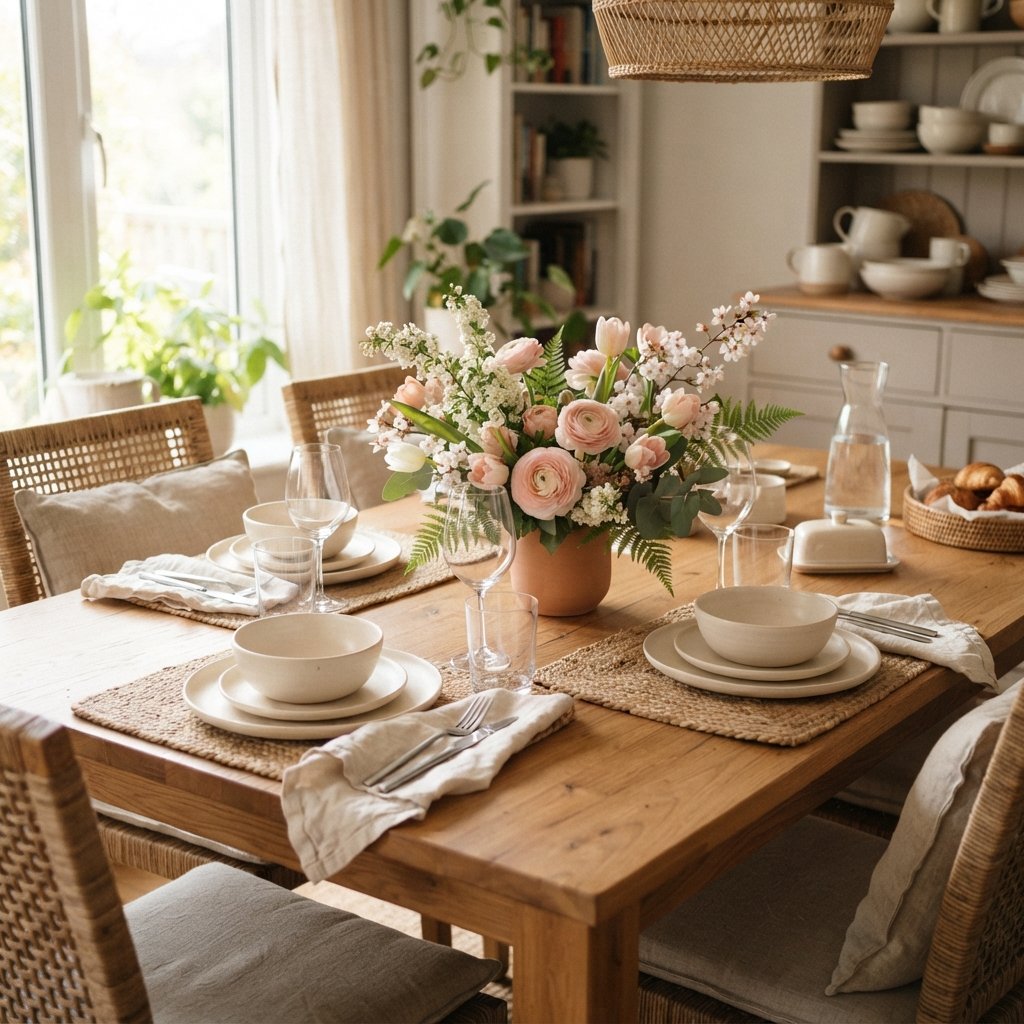
Spring is one of the easiest seasons to bring to the table. A few flowers, lighter linens, simple dishes, and a little fresh color can completely change the feel of your dining room without requiring an entirely new collection of seasonal decor.
The prettiest spring tablescapes often aren’t the most elaborate ones.
Instead of filling every inch of the table, start with what you already have. Everyday white dishes can work beautifully. Clear glassware goes with almost anything. A pitcher can become a vase, a simple table runner can soften the table, and flowers or flowering branches can provide most of the seasonal color you need.
Whether you’re setting the table for Easter, Mother’s Day, a spring brunch, dinner with friends, or simply because you’re ready for something brighter after winter, these spring table decorating ideas are easy to adapt to your own home.
The goal isn’t to create a table that looks too perfect to use. It’s to make the room feel fresh, welcoming, and ready for the season.
Start With a Simple Spring Color Palette
Choosing your colors first makes the rest of the table much easier.
Spring doesn’t automatically mean covering the table in pastels.
You could use:
Soft and Romantic
Blush + cream + soft green
Fresh and Natural
Green + white + warm wood
Blue and White
Soft blue + white + natural textures
Cheerful Spring
Yellow + green + white
Earthy Spring
Sage + terracotta + cream
Colorful Garden
Pink + yellow + lavender + green
If you’re using colorful flowers, keep the dinnerware and linens relatively simple.
If the centerpiece is neutral, you can bring more color into the napkins or dishes.
1. Start With Everyday White Dishes
You don’t need special spring plates to create a seasonal table.
White dinnerware provides a clean background for:
- Flowers
- Colored napkins
- Patterned linens
- Natural textures
- Seasonal details
It also means you can change your color palette from one occasion to another without buying new dishes.
Layer a salad plate over the dinner plate if you need both for the meal. Otherwise, don’t add dishes simply for decoration.
2. Use Fresh Flowers as the Main Decoration
Flowers can do most of the work in a spring tablescape.
Depending on what’s available, try:
- Tulips
- Daffodils
- Ranunculus
- Roses
- Hydrangea
- Lilac
- Flowering branches
- Mixed garden-style flowers
You don’t need an enormous arrangement.
A loose bouquet in a simple vase or pitcher can be enough.
If you’re using flowers from your yard, make sure they’re appropriate to bring indoors and avoid placing potentially toxic or irritating plants where they could contact food.
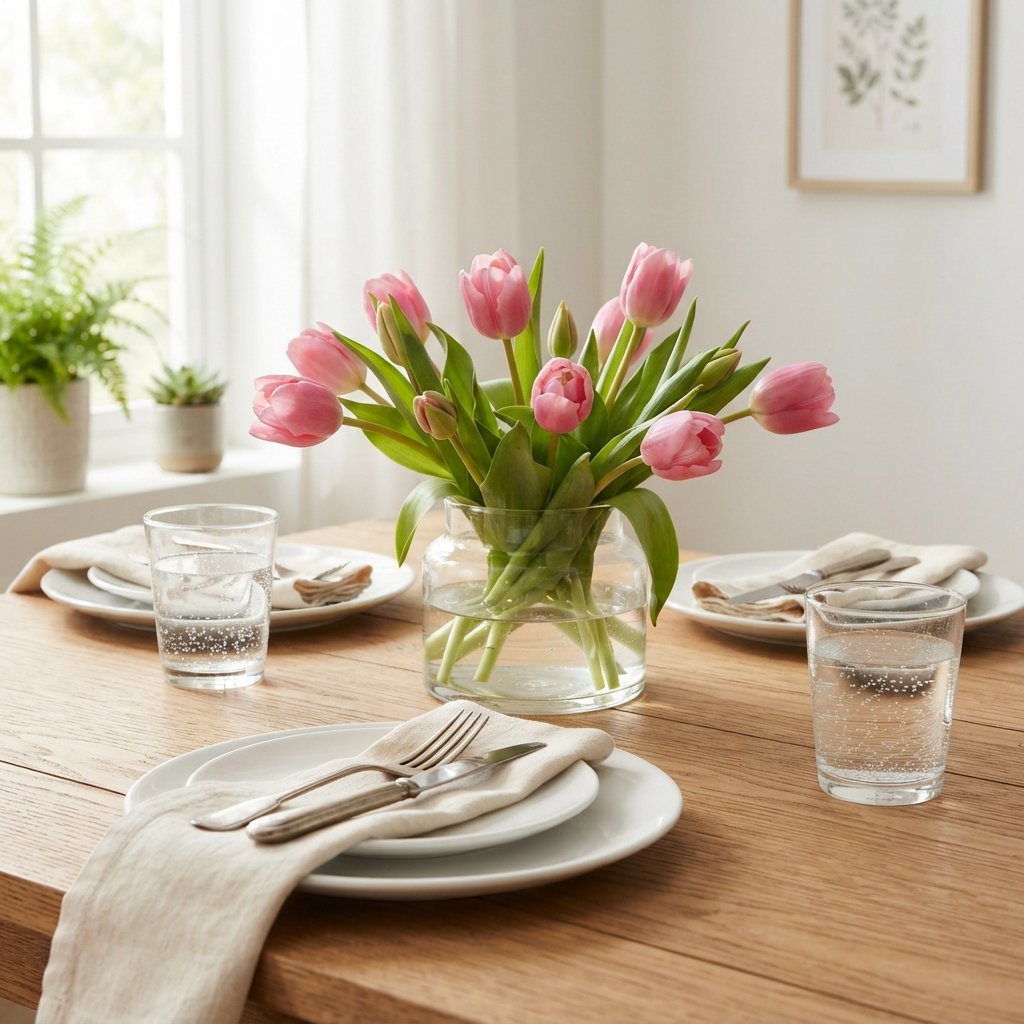
3. Use Several Small Flower Arrangements
One large centerpiece can block conversation.
Instead, divide one bouquet among three or five small containers.
Use:
- Bud vases
- Small jars
- Mini pitchers
- Small ceramic vessels
Space them loosely down the table.
This creates the look of a fuller floral display without requiring more flowers.
It also makes it easier for guests to see one another.
4. Use Flowering Branches
Branches create height without needing dozens of flowers.
Try a few seasonal flowering branches in a sturdy vase.
Place the arrangement where it won’t interfere with conversation, or move it to a buffet or console once everyone sits down.
Make sure the vase is stable enough for the height and weight of the branches.
5. Try a Green and White Spring Tablescape
Green and white is one of the easiest spring combinations.
Use:
- White plates
- Cream or white napkins
- Green foliage
- White flowers
- Natural wood
The result feels fresh without relying heavily on traditional pastel colors.
You can also use this palette well beyond Easter.
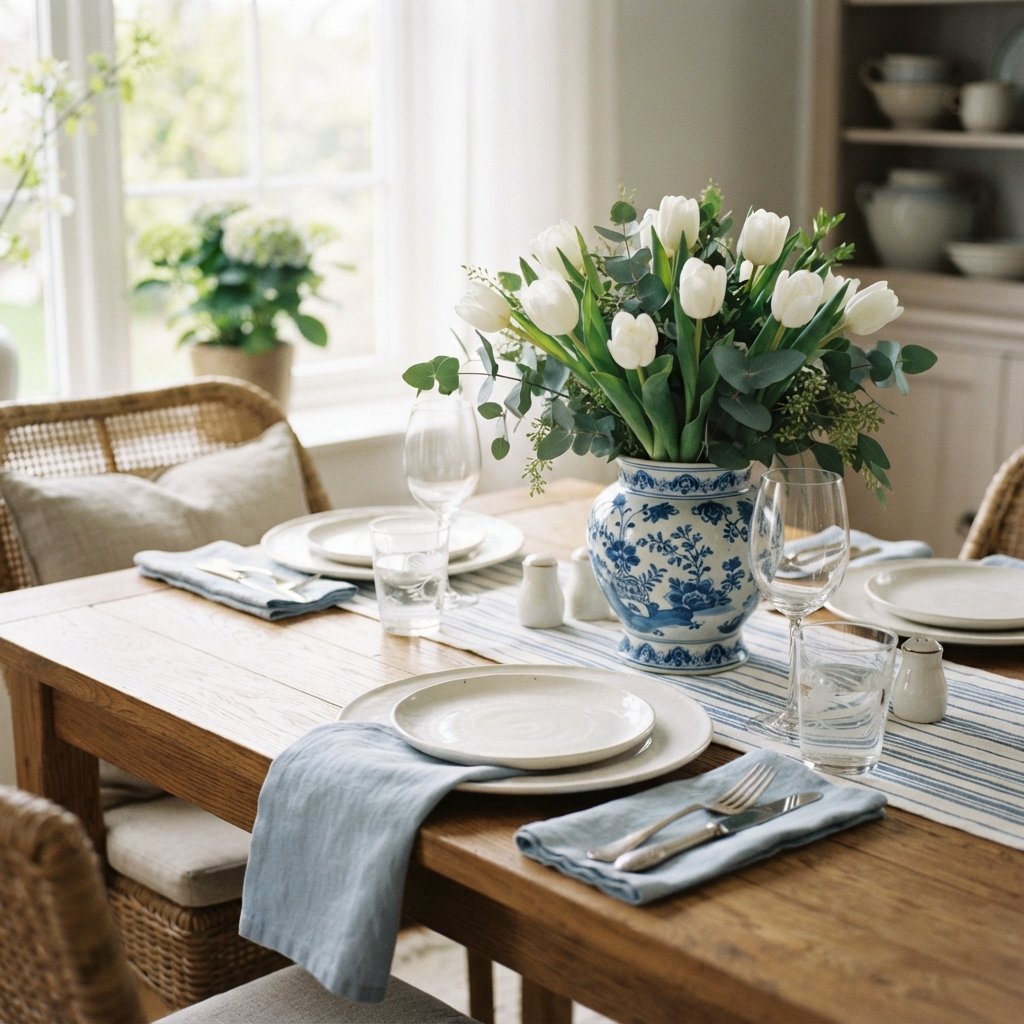
6. Create a Blue and White Spring Table
Blue and white feels crisp and classic.
Start with white dishes.
Then add:
- Blue napkins
- Blue-and-white vase
- Soft green foliage
- White flowers
If your dishes already have a pattern, keep the other patterns limited so the table doesn’t feel busy.
7. Decorate With Tulips
Tulips are practically a shortcut to spring decorating.
Place a loose bunch in:
- Glass vase
- Ceramic pitcher
- Simple crock
- Small individual vases
Don’t worry if the stems curve and lean.
That natural movement is part of their charm.
A single tulip at each place setting can also be pretty, but keep cut flowers away from food if you’re uncertain about how they’ve been grown or treated.
8. Create a Yellow Spring Table
Yellow can make a dining room feel instantly cheerful.
You don’t need much.
Try:
- Yellow flowers
- Cream dishes
- Green foliage
- Neutral linens
Let the flowers provide the yellow rather than buying yellow versions of every table accessory.
9. Add Spring Color With Napkins
Changing napkins is an inexpensive way to introduce seasonal color.
Try:
- Sage green
- Blush
- Soft blue
- Lavender
- Pale yellow
- Small floral print
Fold them simply.
A relaxed knot or rectangular fold is enough.
There’s no need for an elaborate napkin-folding tutorial unless you genuinely enjoy doing it.
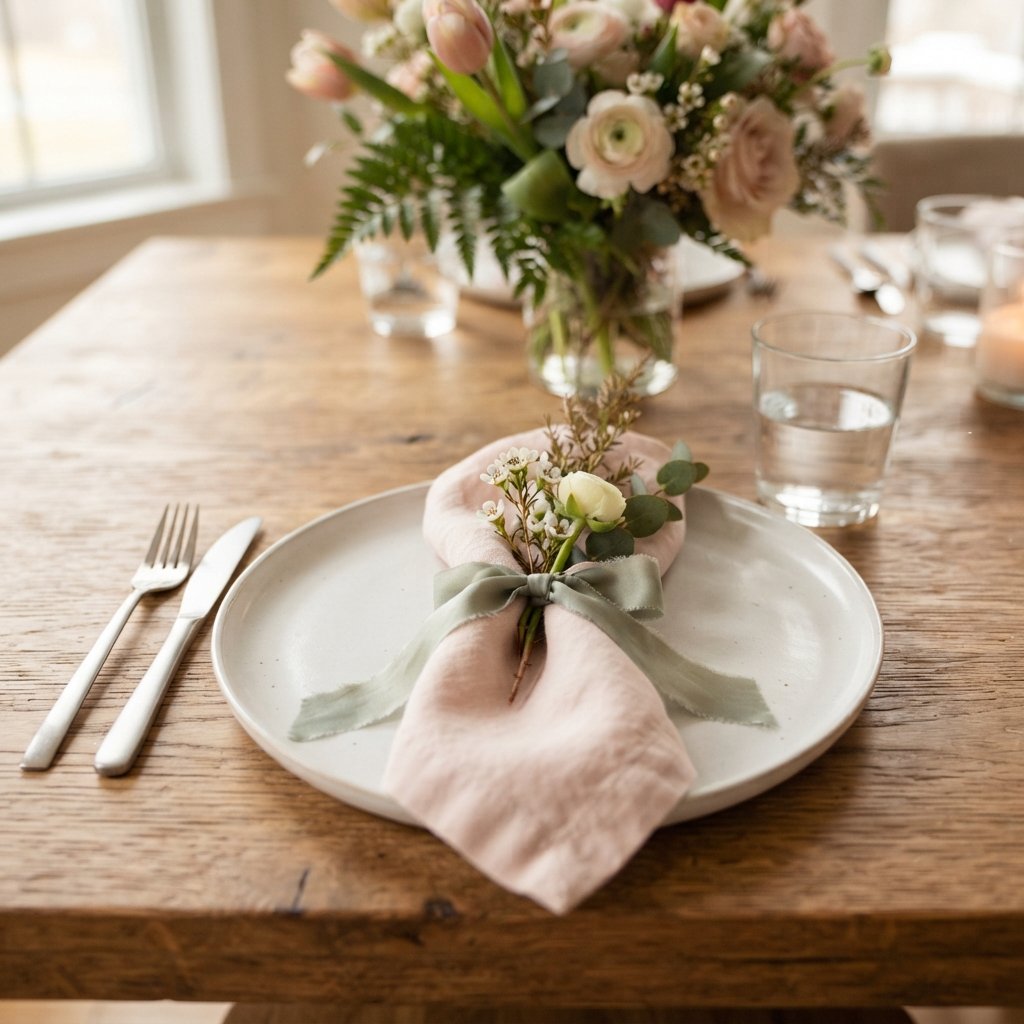
10. Tie Napkins With Ribbon
Instead of buying new napkin rings, use ribbon.
Choose:
- Soft velvet
- Gingham
- Linen-style ribbon
- Simple cotton ribbon
Tie a loose knot around each napkin.
Repeat one of the centerpiece colors in the ribbon to make the whole table feel connected.
11. Use Small Pots of Herbs
Herbs can bring greenery to the table while keeping the look casual.
Small pots of:
- Rosemary
- Basil
- Mint
- Thyme
can work as part of a centerpiece.
Use clean containers and protect the table from moisture.
If the herbs will eventually be eaten, treat them as food plants and avoid decorating them with materials that aren’t appropriate for edible plants.
12. Use Potted Spring Flowers
Small flowering plants can be an alternative to cut flowers.
Group several pots together in the center.
Depending on your climate and what’s available, you might use seasonal flowering plants appropriate for indoor display.
Place pots in waterproof cachepots or on protective saucers so moisture doesn’t damage the table.
13. Add Natural Woven Texture
Spring tables often benefit from a little warmth.
Use:
- Woven placemats
- Rattan-style chargers
- Woven tray
- Natural-fiber runner
You don’t need all of them.
One woven element can provide enough texture.
This is especially helpful when your color palette is mostly white and green.
14. Skip the Tablecloth
A beautiful wood table can be part of the tablescape.
Leave it uncovered and add:
- Linen napkins
- Flowers
- White dishes
- Woven placemats
This creates a relaxed, natural spring table.
If the table needs protection, use placemats or an appropriate runner.
15. Use a Simple Linen Table Runner
A runner gives the centerpiece a visual foundation without covering the entire table.
Try:
- Cream
- White
- Sage
- Soft blue
- Subtle stripe
Let the fabric fall naturally rather than worrying about perfectly pressed edges if you’re going for a relaxed look.
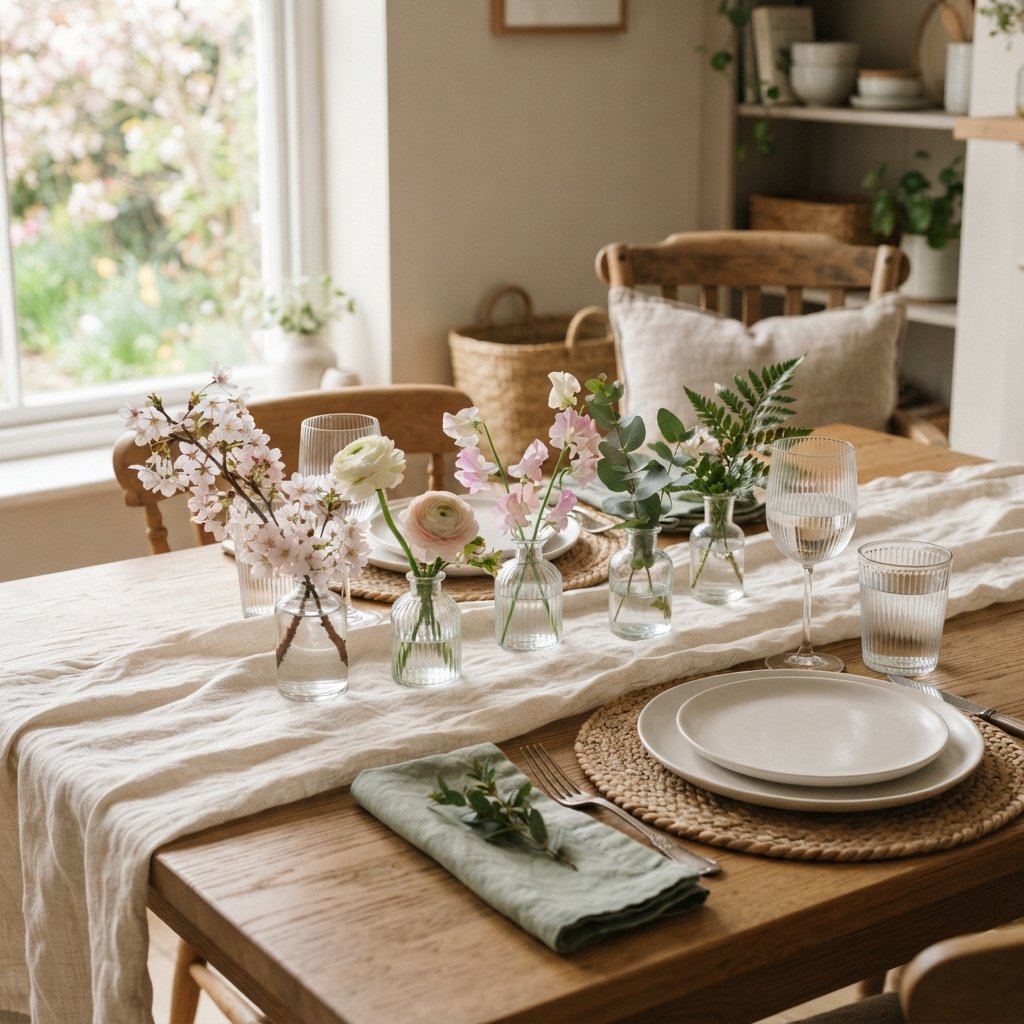
16. Create an Easter Spring Tablescape
For Easter, add a few subtle seasonal details.
Try:
- Decorative eggs
- Small nests
- Spring flowers
- Pastel napkins
- Small bunny accent
You don’t need all of these at once.
A bowl of decorative eggs among fresh-looking flowers can establish the Easter theme without turning the entire table into a collection of themed decorations.
If small children are present, avoid small decorative items that could become choking hazards.
17. Create a Mother’s Day Tablescape
For Mother’s Day, let flowers be the focal point.
Try:
- Blush flowers
- White dishes
- Cream linens
- Clear glassware
- Small handwritten place cards
Keep the table pretty but practical.
The centerpiece shouldn’t be so large that everyone has to move it before eating.
18. Create a Spring Brunch Tablescape
Brunch can be more casual than dinner.
Use:
- Simple dishes
- Small flower arrangements
- Linen napkins
- Pitcher of water or juice
- Serving boards
- Baskets
Leave plenty of space for the food.
Pastries, fruit, and serving dishes will add their own color and texture once they’re on the table.
19. Create an Everyday Spring Tablescape
You don’t need a special occasion to set a pretty table.
For something you can leave out for several days, keep it very simple.
Try:
- One vase
- Flowers or branches
- Bowl
- Neutral runner
Then add place settings only when you need them.
This is much easier to live with than a fully decorated dining table that has to be dismantled every evening.
Spring Tablescape With Things You Already Own
Before shopping, look around your home.
Gather:
- White dishes
- Clear glasses
- Pitcher
- Vase
- Candlesticks
- Cloth napkins
- Basket
- Serving boards
Then decide what is actually missing.
Often, the only thing you need to buy is a bouquet of flowers.
You can also move decorative objects temporarily from other rooms.
A ceramic pitcher from the kitchen can become a vase. A woven tray from the coffee table can become the foundation for a centerpiece.
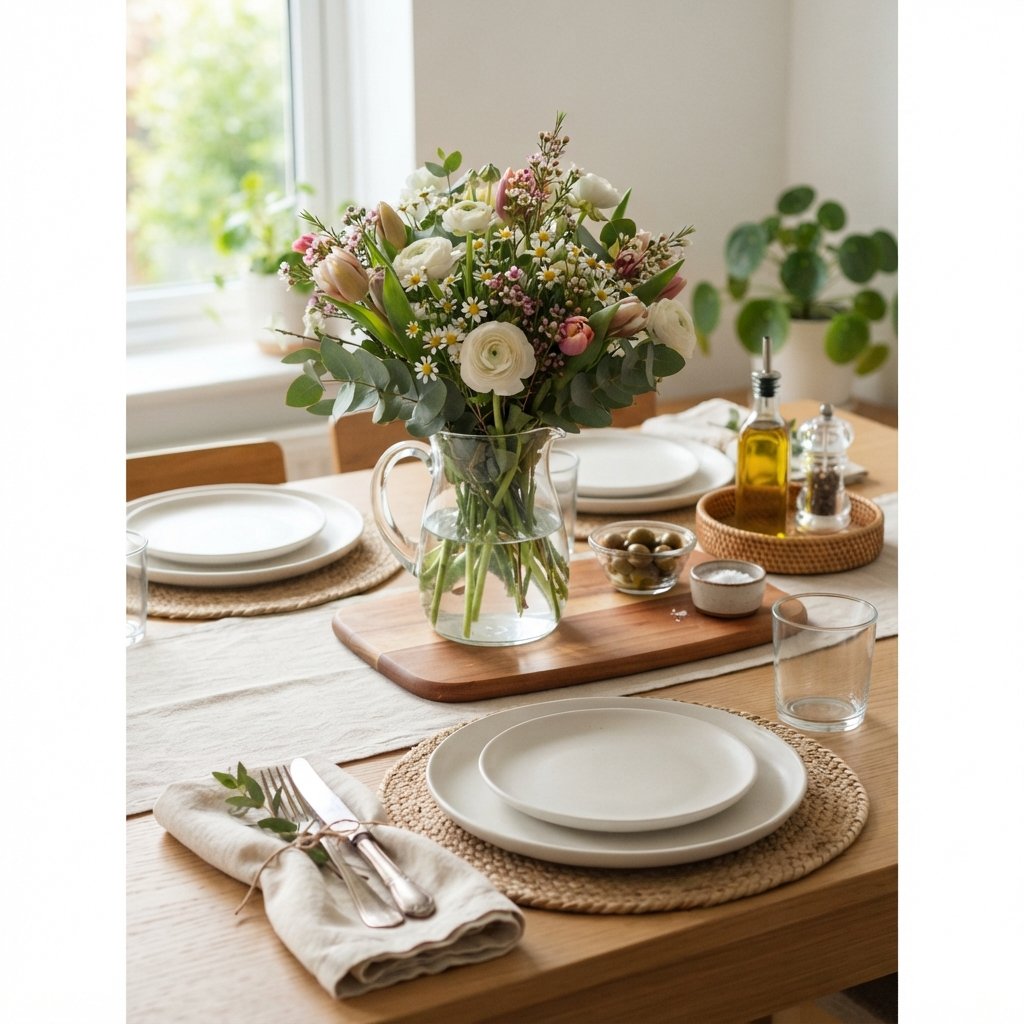
Budget-Friendly Spring Tablescape Ideas
A beautiful table doesn’t require a new collection every season.
Save money by:
- Reusing everyday dishes
- Using inexpensive seasonal flowers
- Dividing one bouquet among several vases
- Using ribbon instead of napkin rings
- Bringing in safe garden greenery
- Reusing woven placemats
- Shopping your home
- Keeping seasonal decor minimal
Instead of buying ten inexpensive decorative items, consider spending the same amount on flowers or one reusable table textile.
How to Create a Spring Centerpiece
If you aren’t sure how to build the middle of the table, use this formula.
Step 1: Choose the Main Element
This might be:
- Flowers
- Branches
- Potted plants
Step 2: Add Smaller Repeated Elements
Use several small vases, candles, or little pots.
Step 3: Introduce Texture
Add linen, wood, glass, or woven material.
Step 4: Repeat a Color
Pull one flower color into the napkins or ribbon.
Step 5: Remove Something
If the table feels crowded, take one decorative element away.
Simple usually works better.
Spring Tablescape With Candles
Candles aren’t just for fall and Christmas.
They can add warmth to spring tables too.
Try slim candlesticks with:
- White tapers
- Cream tapers
- Soft pastel tapers
Flameless candles are particularly convenient if your centerpiece includes foliage, paper decorations, ribbon, or other combustible materials.
If using real candles, follow the manufacturer’s safety guidance, keep flames well away from flowers, greenery, fabric, and paper, and never leave them unattended.
How to Set a Spring Table for a Small Dining Space
Small tables need fewer decorations.
Try:
- One small vase
- Two or three bud vases
- Simple napkins
- Everyday dishes
Skip chargers and extra decorative plates if they make the table crowded.
Every guest needs comfortable room for:
- Plate
- Glass
- Flatware
- Arms
The table should function before it decorates.
Spring Tablescape for a Round Table
Round tables usually work well with a centered arrangement.
Try a low round vase with flowers.
Or group:
- One small plant
- Two bud vases
- Several flameless candles
Keep everything fairly compact so the place settings don’t become crowded.
Spring Tablescape for a Long Table
For a rectangular table, repeat small arrangements down the center.
For example:
Bud vase + candle + bud vase + candle + bud vase
This creates rhythm without needing one huge centerpiece.
It also makes the table easier to adjust for serving dishes.
How to Make a Spring Table Look Expensive
It’s less about expensive dishes and more about restraint.
Use Realistic or Fresh-Looking Flowers
Flowers naturally draw attention.
Use Cloth Napkins
They add softness and texture.
Repeat Colors
Choose one or two accent colors and use them several times.
Mix Heights Carefully
Varying height creates interest without blocking conversation.
Keep the Table Uncluttered
Negative space makes each element more noticeable.
Use Materials With Texture
Linen, wood, woven fibers, ceramics, and glass work beautifully together.
Don’t Overdo the Theme
A spring table doesn’t need signs announcing that it’s spring.
Flowers and fresh color are often enough.
Easy Spring Tablescape in 10 Minutes
Need to set the table quickly?
Try this:
- Set out your everyday plates.
- Add glasses and flatware.
- Fold a cloth napkin on each plate.
- Divide one bouquet among three small vases.
- Place the vases down the center.
- Add two or three flameless candles.
- Step back.
- Remove anything that feels crowded.
Done.
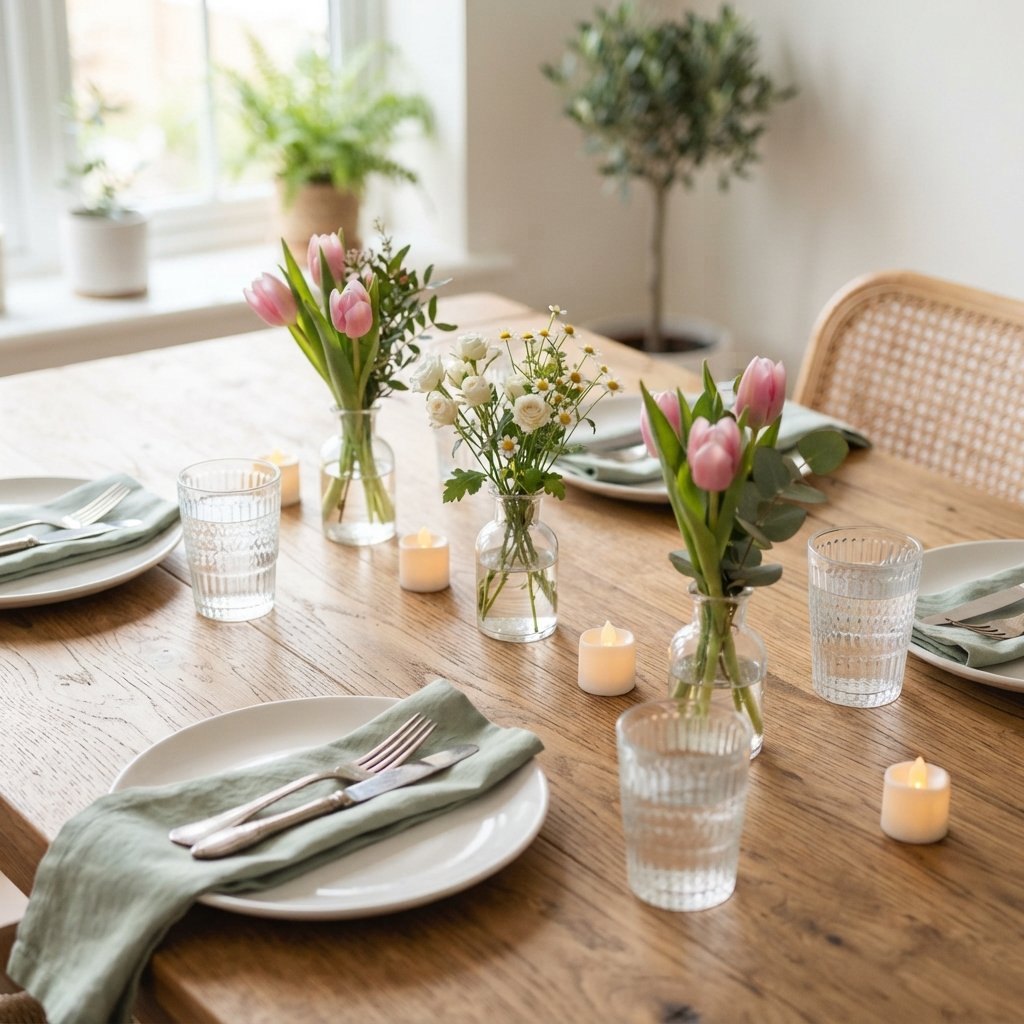
Spring Tablescape Safety and Practical Tips
A dining table needs to work for actual dining.
Keep these things in mind:
- Keep centerpieces low enough for conversation.
- Use stable vases that won’t tip easily.
- Protect wood surfaces from water beneath flower arrangements.
- Keep flowers and decorative plants away from food if you’re unsure whether they’re safe or chemically treated.
- Be aware that some plants and flowers can be toxic to pets or people if ingested.
- Keep open flames away from flowers, foliage, ribbons, napkins, paper, and other combustible materials.
- Consider flameless candles for crowded tables.
- Never leave burning candles unattended.
- Avoid small decorations around young children.
- Keep serving space open.
- Don’t use tall, unstable arrangements where they can easily be knocked over.
- Clean natural materials before bringing them onto a dining table.
Common Spring Tablescape Mistakes
Buying Special Dishes for Every Season
Everyday dishes are usually more versatile.
Making the Centerpiece Too Tall
Guests should be able to see one another.
Using Every Pastel Color at Once
Choose a focused palette.
Adding Too Many Tiny Decorations
Let flowers do more of the work.
Forgetting About the Food
Leave room for serving dishes.
Overusing Easter Decor
Spring tables can feel seasonal without rabbits and eggs.
Mixing Too Many Patterns
If your plates are patterned, simplify the textiles.
Making Every Element Match Exactly
A little variation creates a more collected look.
FAQ About Spring Tablescapes
How do you decorate a table for spring?
Start with everyday dinnerware, add lighter linens, introduce flowers or greenery, and use one or two fresh accent colors. Keep the centerpiece low and practical.
What colors are good for a spring tablescape?
White, cream, sage, blush, soft blue, lavender, pale yellow, terracotta, and fresh green all work well for spring.
How do I make an inexpensive spring tablescape?
Use dishes and glasses you already own, divide one bouquet among several small vases, and add cloth napkins or ribbon for inexpensive seasonal color.
What flowers are good for a spring table?
Tulips, daffodils, ranunculus, roses, hydrangea, lilac, and flowering branches can all work, depending on what’s available and appropriate in your area.
How do you decorate a spring table without flowers?
Use potted herbs, safe greenery, branches, fruit, candles, woven textures, or pretty serving pieces.
What should I put in the center of a spring table?
Try a low vase of flowers, several bud vases, flowering branches, small potted plants, or a combination of low greenery and flameless candles.
How can I make my spring table look elegant?
Keep the color palette limited, use cloth napkins, choose one strong centerpiece, repeat a few materials, and leave enough open space that the table doesn’t feel crowded.
Does a spring tablescape have to use pastel colors?
No. Green and white, blue and white, terracotta and cream, or even brighter garden colors can all create a beautiful spring table.
Final Thoughts
Beautiful spring tablescapes don’t require special seasonal dishes or a cabinet full of decorations.
Start with the basics you already use.
White plates.
Clear glasses.
Simple flatware.
A favorite vase.
Then bring in the season with flowers, greenery, lighter linens, and one or two fresh colors.
For a casual table, that might mean tulips in a glass pitcher and sage napkins.
For Easter, you might add a few decorative eggs.
For Mother’s Day, let blush flowers become the focal point.
And for an everyday spring table, one simple arrangement may be all you need.
The table should still be comfortable enough to eat at and relaxed enough that you’re not worried about someone moving a glass.
Keep the centerpiece low, leave room for the food, and resist the urge to fill every empty spot.
Spring decorating is at its best when it feels light and fresh.
A few flowers, a little color, and a table ready to gather around are more than enough.