

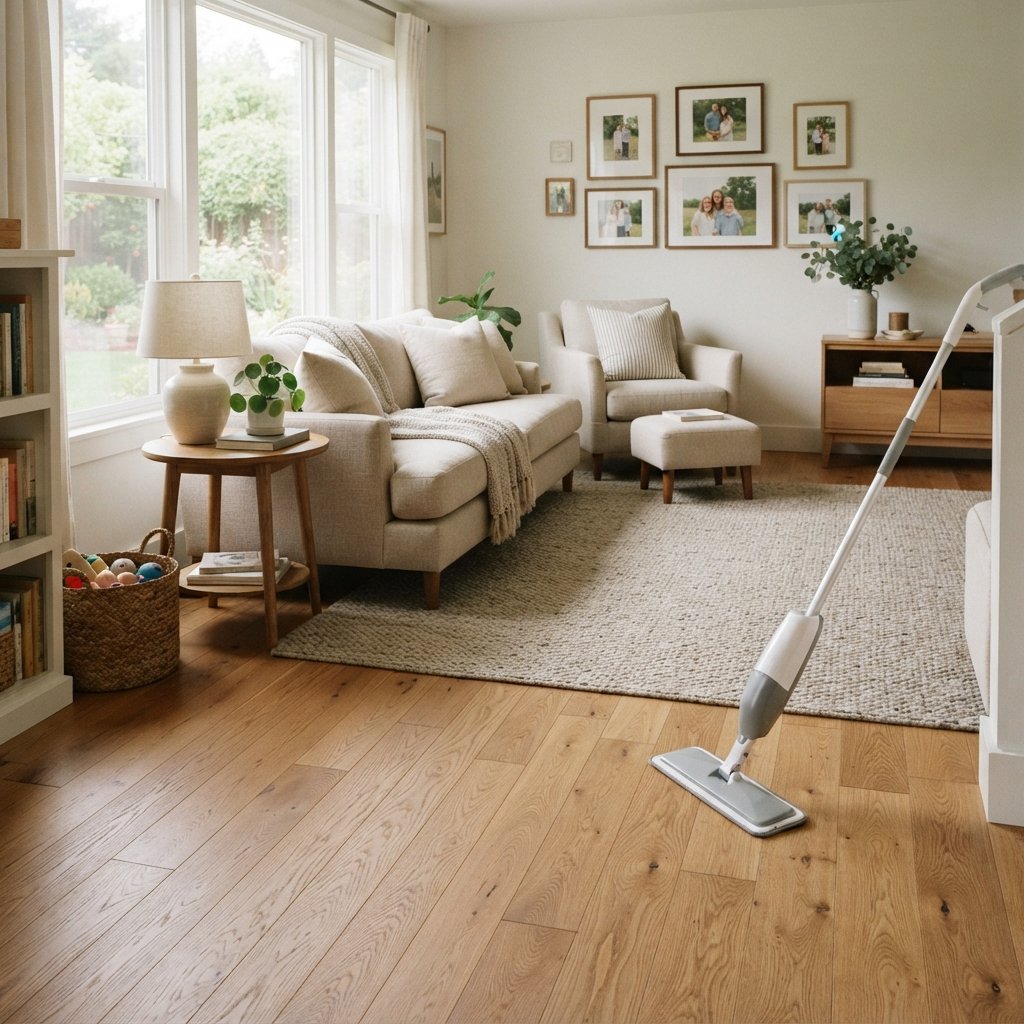
Hardwood floors can last for decades, but the way you clean them matters.
Too much water, abrasive tools, harsh cleaners, steam, or products that leave behind a heavy residue can make beautiful wood floors look dull—and some cleaning methods can potentially damage the floor or its finish.
So what is the best way to clean hardwood floors?
For most finished hardwood floors, the safest general approach is surprisingly simple: remove loose dirt frequently, clean spills promptly, and damp-clean only when necessary using a cleaner and method approved for your particular flooring and finish.
The important phrase is your particular flooring.
Hardwood floors can have different species, finishes, installation methods, ages, and manufacturer care requirements. A cleaning method that’s acceptable for one floor may not be recommended for another.
If you know your flooring manufacturer, its care instructions should take priority over general cleaning advice.
If you don’t know what kind of finish you have—especially with older floors—start conservatively and consider getting guidance from a flooring professional before trying strong cleaners, refinishing products, waxes, or aggressive stain-removal techniques.
Here’s a practical routine for keeping hardwood floors clean while minimizing unnecessary moisture and wear.
What You’ll Need to Clean Hardwood Floors
You don’t need a cabinet full of cleaning products.
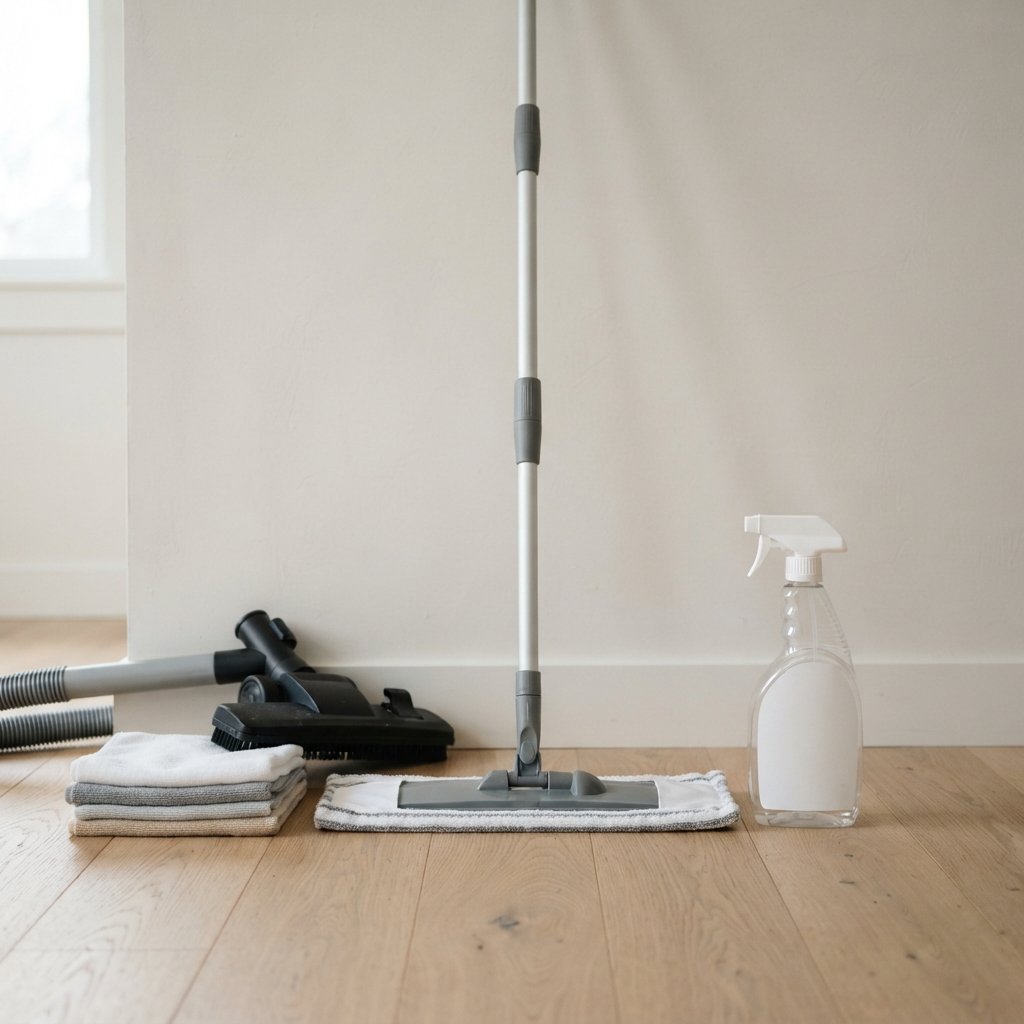
For routine care, you may need:
- Soft-bristle broom
- Vacuum suitable for hard flooring
- Clean microfiber dust mop
- Microfiber cleaning pad or mop
- Manufacturer-approved hardwood floor cleaner
- Soft absorbent cloths
- Clean water if required by your flooring or cleaner instructions
Before using a new cleaning product, read both the floor manufacturer’s instructions and the cleaner label.
Never assume that a product labeled “natural,” “multipurpose,” or “wood cleaner” is appropriate for every hardwood floor.
Step 1: Remove Loose Dirt and Grit
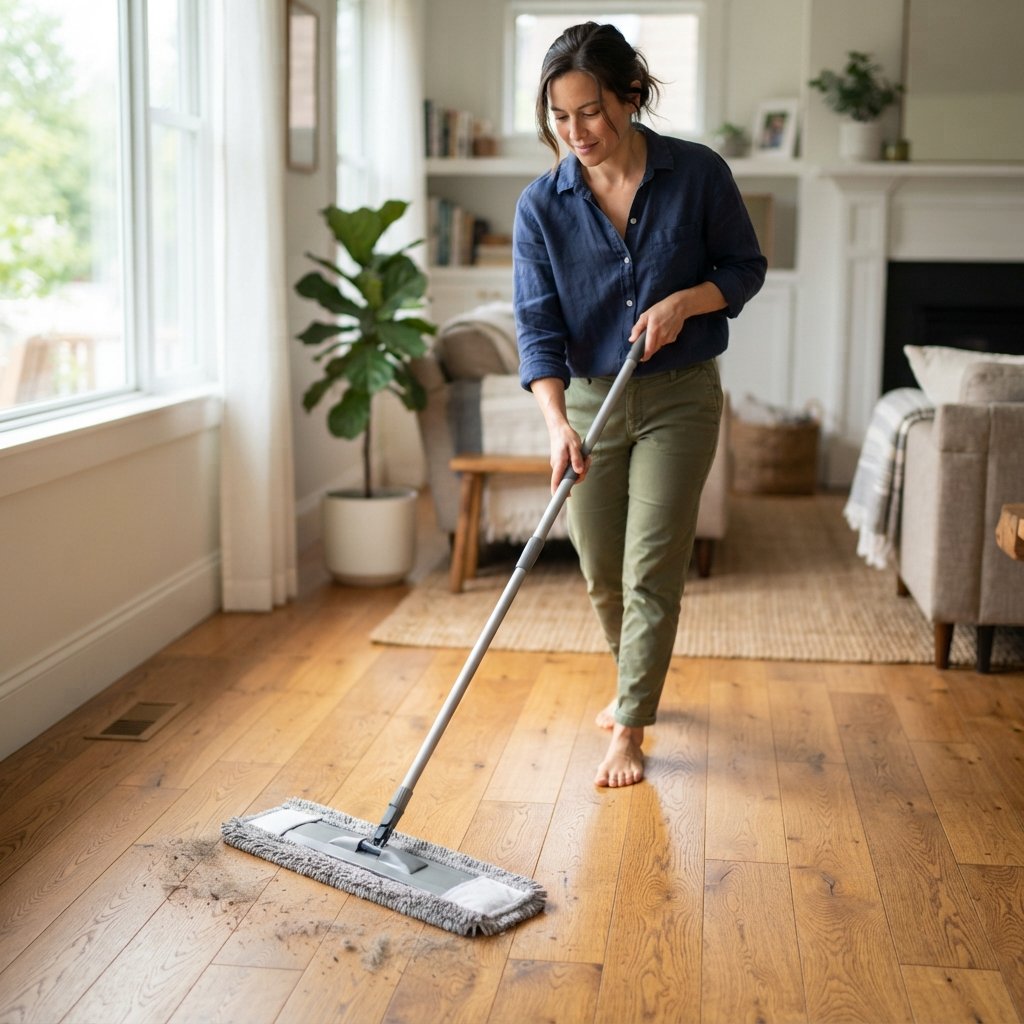
The first step is dry cleaning.
Dust, sand, crumbs, and small pieces of grit can act like abrasives when they’re repeatedly walked across the floor.
Use:
- Soft broom
- Microfiber dust mop
- Suitable vacuum
Pay particular attention to:
- Entryways
- Kitchen areas
- Under dining tables
- Hallways
- High-traffic paths
Removing this loose debris before damp cleaning also prevents you from turning dust into muddy streaks.
Step 2: Vacuum Carefully
Vacuuming can be an efficient way to clean hardwood floors, particularly along edges and beneath furniture.
Use a vacuum or setting intended for hard floors.
Avoid anything that may scratch the surface.
Depending on your vacuum, that may mean turning off a rotating brush or beater mechanism when recommended by the vacuum or flooring manufacturer.
Check wheels and attachments for trapped grit before using them.
A grain of sand caught under a dirty vacuum wheel can potentially create more trouble than the dust you’re trying to remove.
Step 3: Clean Spills Promptly
Wood and excess moisture are not a good combination.
If you spill something, don’t leave it sitting on the floor.
Blot or wipe it promptly with a soft absorbent cloth using the method recommended for your finish.
Pay particular attention to liquids near:
- Board seams
- Doorways
- Sinks
- Dishwashers
- Refrigerators
- Pet bowls
Don’t assume the floor is waterproof simply because it has a protective finish.
Step 4: Use a Cleaner Appropriate for Your Floor
When dry cleaning isn’t enough, use a cleaning product recommended for your specific hardwood floor or finish.
More cleaner does not mean cleaner floors.
Using excessive product can sometimes leave residue.
Follow the cleaner manufacturer’s instructions for:
- Amount
- Application
- Dilution, if applicable
- Mop type
- Drying
- Whether rinsing is recommended
Never mix household cleaning chemicals unless the product instructions specifically direct you to do so.
Step 5: Use as Little Moisture as Necessary
Hardwood floors generally shouldn’t be flooded with water.
If your approved cleaning method involves a damp mop, the mop should not be dripping wet.
Work with controlled moisture and don’t allow liquid to pool on the floor.
Avoid leaving standing water in:
- Seams
- Low spots
- Along baseboards
- Beneath furniture
If you accidentally use too much liquid, remove the excess promptly.
Step 6: Work in Manageable Sections
Instead of wetting the entire floor at once, work in smaller areas.
This helps you:
- Control moisture
- See where you’ve cleaned
- Catch spills or excess liquid
- Avoid walking over freshly cleaned flooring
Start at the far side of the room and work toward an exit.
Step 7: Let the Floor Dry
Keep foot traffic to a minimum until the floor is dry.
Don’t immediately replace rugs or other items over a damp floor.
If the floor remains unusually wet after cleaning, you may be using too much liquid.
How Often Should You Clean Hardwood Floors?
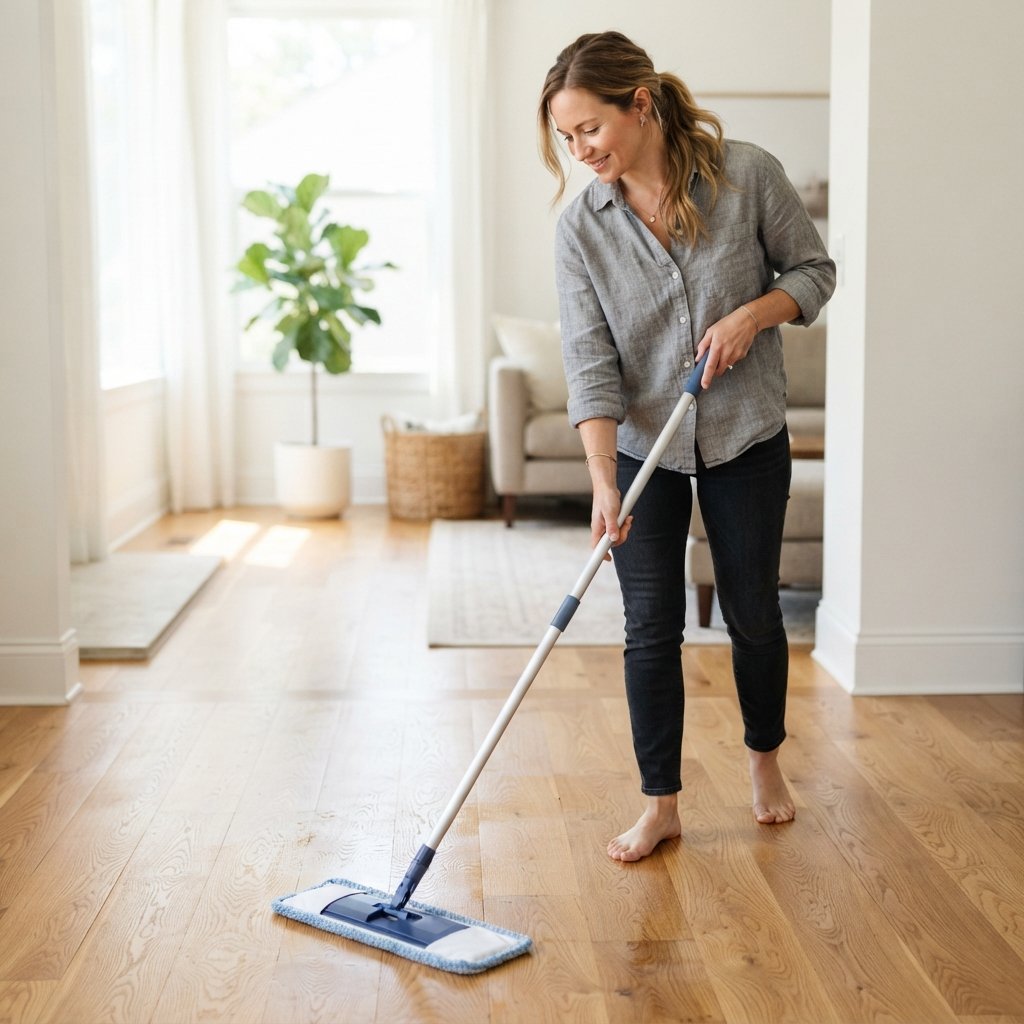
There isn’t one schedule that works for every household.
A home with children, pets, shoes indoors, and heavy foot traffic will need more frequent cleaning than a quiet household.
A practical routine might look like this:
Frequently
Remove visible grit, crumbs, hair, and dirt.
As Needed
Clean spills immediately.
Regularly
Dust mop or vacuum high-traffic areas.
Periodically
Damp-clean according to your flooring manufacturer’s care instructions.
Don’t wet-clean the floor simply because the calendar says it’s time.
If dry cleaning is enough, stop there.
The Best Way to Clean Hardwood Floors With Pets
Pets can add:
- Hair
- Dirt
- Mud
- Water
- Food spills
Frequent dry cleaning is your friend.
Use a vacuum or microfiber mop to remove hair and grit before it accumulates.
Place suitable mats near exterior doors to catch dirt before it reaches the hardwood.
Keep an absorbent mat beneath water bowls where appropriate, and clean spills promptly.
Regular pet nail care can also help reduce scratching, although your flooring’s susceptibility will depend on its wood species, finish, and condition.
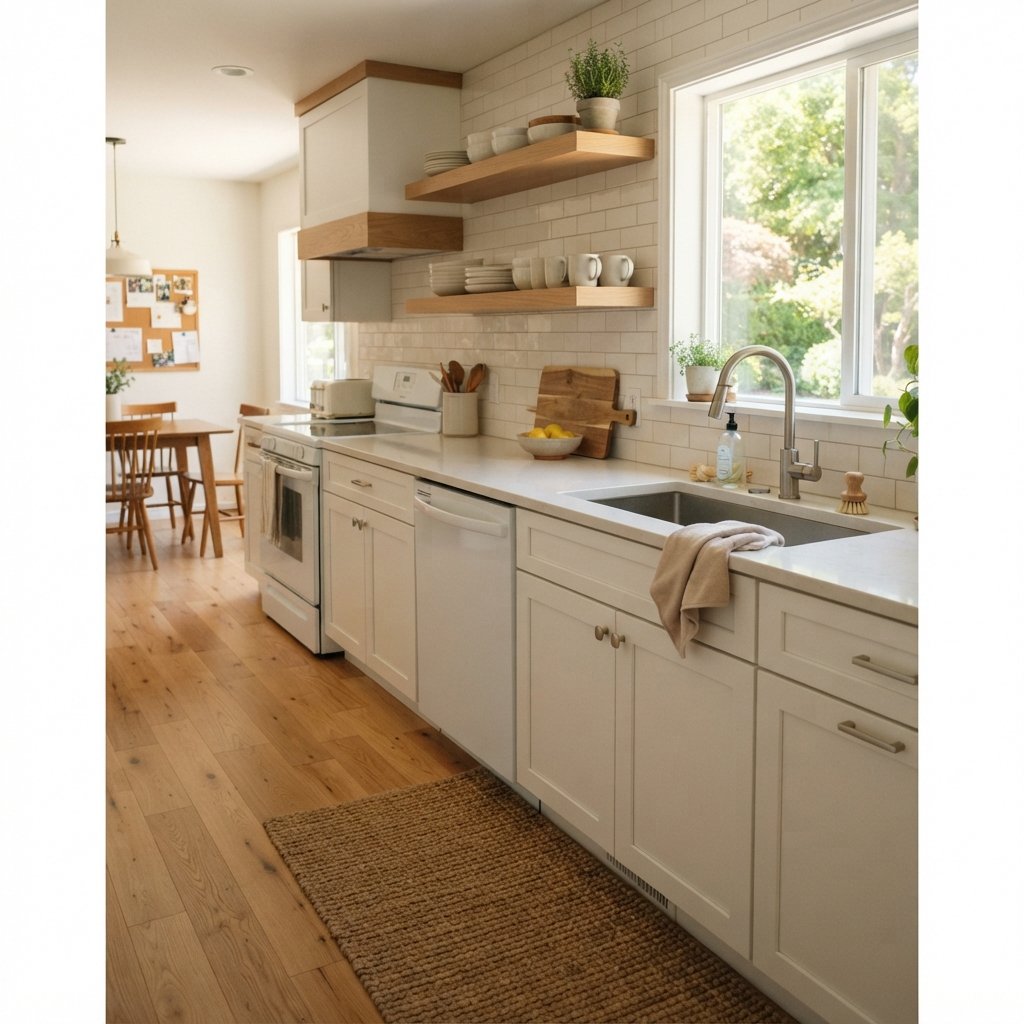
How to Clean Hardwood Floors in the Kitchen
Kitchen hardwood can experience more spills than flooring in other rooms.
Pay attention around:
- Sink
- Dishwasher
- Refrigerator
- Food-preparation areas
Wipe up water and food spills promptly.
If you use mats, make sure they’re appropriate for your floor and don’t trap moisture against the wood.
Check underneath them periodically.
Can You Mop Hardwood Floors?
Yes, many finished hardwood floors can be cleaned with an appropriate damp-cleaning method.
But “mopping” shouldn’t automatically mean a bucket of water and a soaking-wet mop.
Use the method recommended for your particular floor.
The goal is usually controlled moisture, not saturation.
Can You Use a Steam Mop on Hardwood Floors?
Don’t assume a steam mop is safe simply because your floor is sealed.
Steam introduces heat and moisture, and flooring manufacturers may specifically restrict or prohibit its use.
Check your flooring manufacturer’s care instructions before using steam.
If you don’t know the manufacturer or finish, a conservative non-steam cleaning method is the safer starting point.
Can You Clean Hardwood Floors With Vinegar?
Vinegar is commonly suggested as a DIY floor cleaner, but that doesn’t make it universally appropriate.
Floor finishes and manufacturer recommendations vary.
Some flooring manufacturers advise against acidic or homemade cleaning solutions.
Rather than relying on a universal vinegar-and-water recipe, use the cleaning method approved for your particular floor.
This is especially important if the flooring is under warranty.
Can You Use Dish Soap on Hardwood Floors?
Again, check the manufacturer’s guidance.
A household soap that works well on dishes isn’t automatically suitable for a floor finish.
Incorrect concentration or product choice may leave residue or require more water to remove.
For routine cleaning, an approved hardwood floor cleaner is a simpler choice.
Can You Use Bleach on Hardwood Floors?
Don’t use bleach as a routine hardwood floor cleaner unless your flooring or finish manufacturer specifically permits a particular product and method.
Strong chemicals may affect the finish or wood, and improper chemical use can create safety hazards.
Never mix bleach with other household cleaning products.
What About Ammonia?
The same principle applies.
Don’t experiment with strong household chemicals on finished hardwood.
Follow the floor manufacturer’s approved cleaning guidance.
Should You Use Furniture Polish on Hardwood Floors?
Furniture polish isn’t automatically floor cleaner.
Products formulated for furniture may leave a film or create a slippery surface.
Use only products intended and approved for your floor.
How to Clean Sticky Hardwood Floors
If your floor feels sticky after cleaning, don’t immediately add more cleaner.
The problem could be residue.
First, check the cleaning product instructions.
You may have:
- Used too much product
- Used the wrong dilution
- Applied an incompatible product
- Failed to follow a required finishing step
Use the flooring and cleaning-product manufacturers’ instructions to correct the issue.
If you’re unsure what’s already on the floor, avoid layering additional products over it.
How to Clean Cloudy or Dull Hardwood Floors
Dullness isn’t always dirt.
Possible causes can include:
- Cleaner residue
- Wear
- Scratches
- Finish deterioration
- Previous coatings or products
That means repeatedly scrubbing harder may make the situation worse.
Start with gentle cleaning according to the floor’s care instructions.
If the cloudy appearance remains, determine whether you’re dealing with residue or a finish issue before trying stronger products.
A flooring professional can be helpful when the finish is unknown.
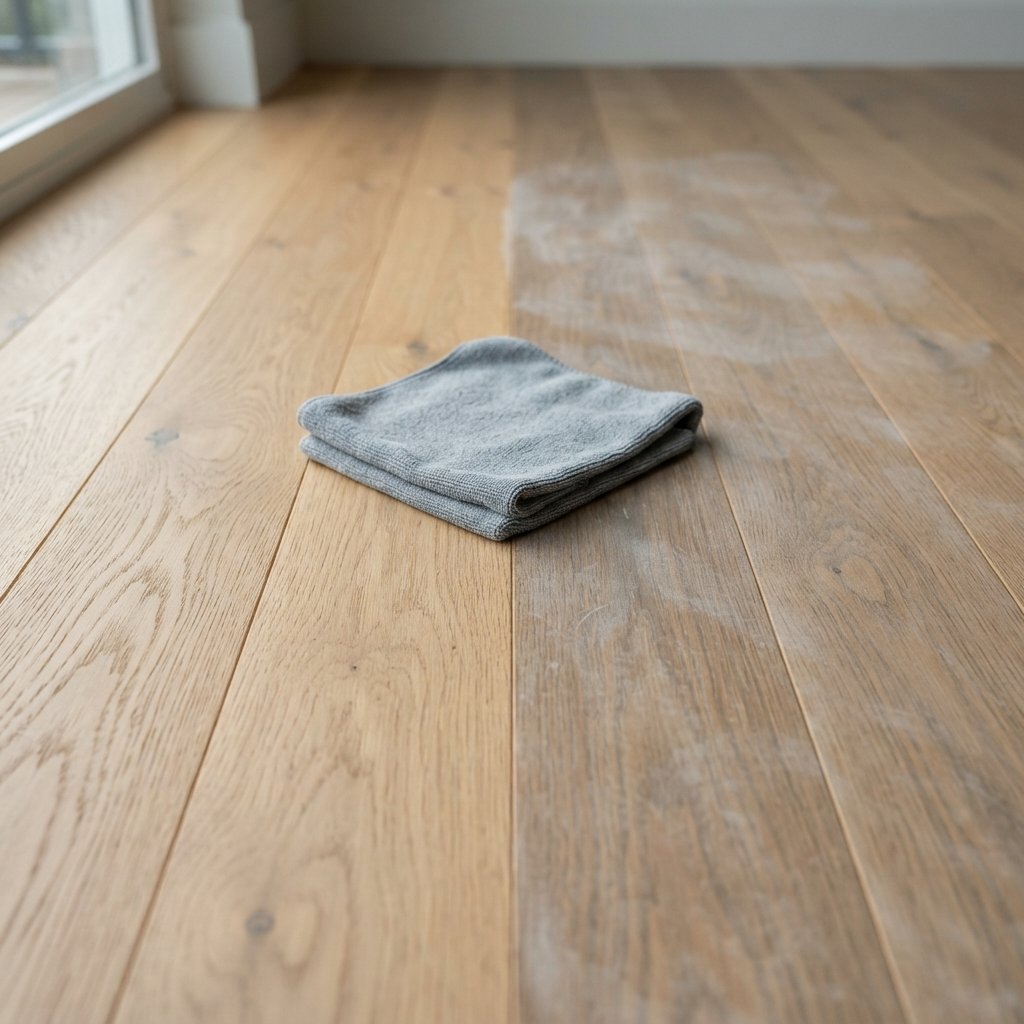
How to Remove Scuff Marks From Hardwood Floors
Start with the gentlest method recommended for your floor.
Avoid aggressive scrubbing pads and abrasive cleaners.
Before trying any spot treatment, test it in a discreet location if the manufacturer recommends doing so.
If a mark has penetrated or damaged the finish, cleaning may not remove it.
How to Clean Between Hardwood Floorboards
Start with dry methods.
A suitable vacuum attachment can help remove dust from edges and accessible gaps.
Avoid deliberately pushing water into seams.
Large or changing gaps may be related to the flooring itself rather than cleanliness, particularly as indoor humidity changes.
How to Clean Old Hardwood Floors
Older hardwood deserves extra caution.
Before damp cleaning, determine the condition of the floor.
Look for:
- Worn finish
- Bare wood
- Open seams
- Loose boards
- Water damage
- Previous wax or coatings
If water can readily reach unfinished wood, aggressive wet cleaning isn’t appropriate.
And if you don’t know whether the floor is waxed, oiled, surface-finished, or something else, don’t experiment with strong cleaners or restoration products.
Have the finish identified if necessary.
How to Clean Unfinished Hardwood Floors
Unfinished wood is very different from a modern surface-finished floor.
Because there isn’t the same protective barrier, moisture and cleaners can interact directly with the wood.
Avoid applying generic finished-hardwood cleaning advice to unfinished flooring.
Use care instructions appropriate to the wood and finish condition, or consult a flooring professional.
How to Keep Hardwood Floors Cleaner Longer
The easiest floor to clean is the one that doesn’t get very dirty.
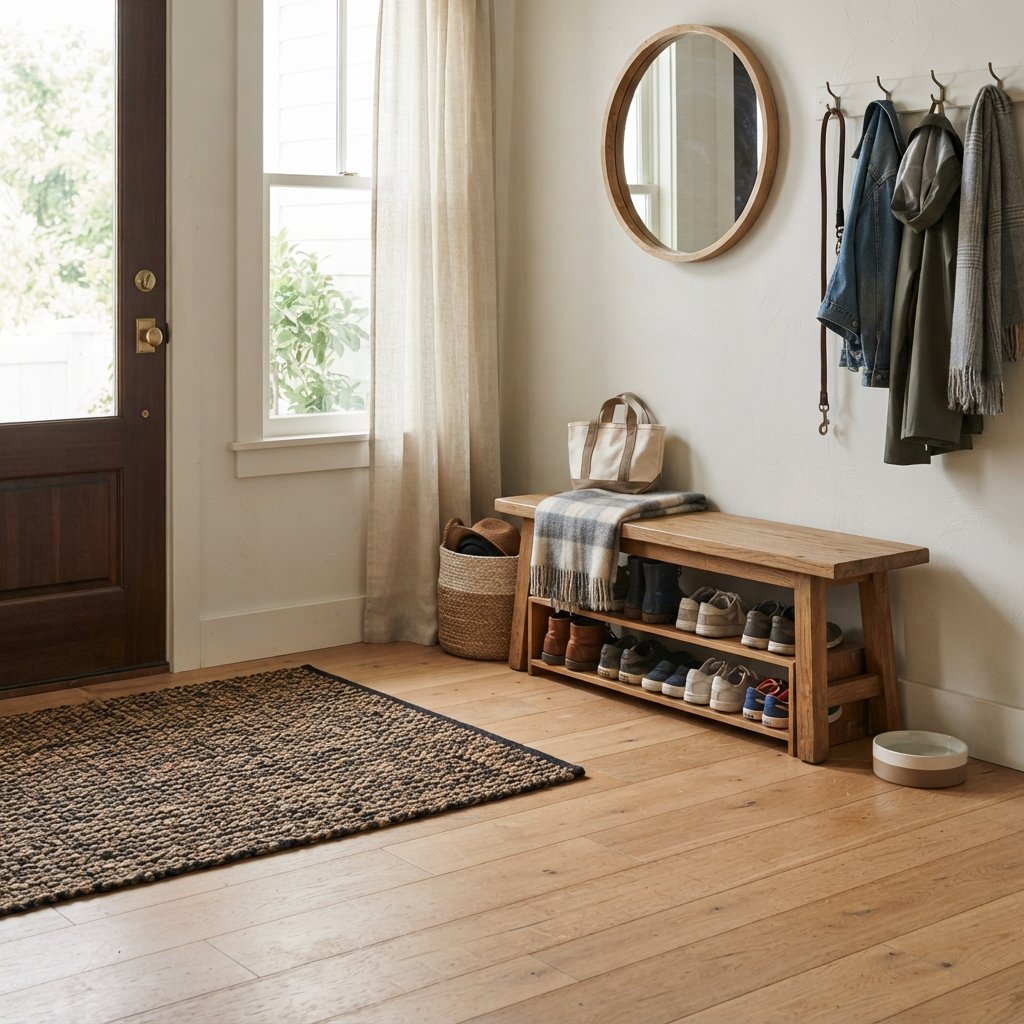
Use Entry Mats
Catch grit and moisture near exterior doors.
Use mats suitable for the flooring and check that they don’t trap moisture or react with the finish.
Consider a Shoes-Off Routine
Shoes can track in sand, grit, moisture, and outdoor debris.
Add Protective Pads to Furniture
Appropriate felt or other manufacturer-recommended protectors can help reduce scratches when furniture moves.
Inspect them periodically because grit can become trapped underneath.
Lift Furniture Instead of Dragging It
Dragging heavy furniture can scratch or gouge flooring.
Get help with heavy pieces and use appropriate moving techniques.
Clean Spills Quickly
The less time liquid sits on the floor, the better.
Maintain Suitable Indoor Conditions
Wood responds to changes in its environment.
Follow the flooring manufacturer’s recommendations for indoor temperature and humidity, particularly if you notice seasonal movement.
What Not to Do When Cleaning Hardwood Floors
Avoid assuming that stronger cleaning means better cleaning.
Depending on your floor manufacturer’s instructions, things to avoid may include:
- Flooding the floor with water
- Allowing puddles to remain
- Using abrasive scrubbers
- Using unapproved harsh chemicals
- Applying furniture polish
- Mixing cleaning chemicals
- Using steam without confirming it’s permitted
- Applying wax or restoration coatings without knowing the existing finish
- Scrubbing aggressively at stains
When in doubt, use the least aggressive method first.
A Simple Hardwood Floor Cleaning Routine
If you want to keep things straightforward, use this basic framework:
1. Dry Clean
Vacuum, sweep, or microfiber mop to remove grit.
2. Spot Clean
Address spills and isolated dirt promptly using an approved method.
3. Damp Clean When Needed
Use an appropriate cleaner and minimal moisture according to the floor manufacturer’s directions.
4. Allow the Floor to Dry
Keep excess moisture off the wood.
5. Prevent New Dirt
Use mats and regular dry cleaning to reduce how often deeper cleaning is necessary.
That’s it.
You don’t need to constantly apply additional products to keep a hardwood floor looking cared for.
Common Hardwood Floor Cleaning Mistakes
Using Too Much Water
More water doesn’t mean a deeper clean.
Using Too Much Cleaner
Excess product may contribute to residue.
Trying Every DIY Cleaning Recipe
Not every finish responds the same way.
Scrubbing With Abrasive Materials
You may damage the finish you’re trying to clean.
Assuming Steam Is Safe for Sealed Wood
Check the manufacturer’s instructions.
Ignoring Spills
Remove liquid promptly.
Using Dirty Mop Pads
You’re moving old dirt back across the floor.
Forgetting to Vacuum First
Loose grit should be removed before damp cleaning.
Dragging Furniture While Cleaning
Lift or appropriately protect furniture instead.
Trying to Clean Away Finish Damage
Scratches, wear, and finish failure aren’t necessarily cleaning problems.
FAQ About Cleaning Hardwood Floors
What is the best thing to use to clean hardwood floors?
For routine care, start with a soft broom, suitable vacuum, or microfiber dust mop. When damp cleaning is necessary, use a method and cleaner approved for your specific flooring and finish.
What is the best way to clean hardwood floors without streaks?
Remove loose dirt first, use the correct amount of approved cleaner, avoid oversaturating the floor, and use a clean microfiber pad. Follow the cleaner’s application instructions because formulations differ.
How often should hardwood floors be mopped?
Clean based on actual need and your flooring manufacturer’s recommendations. Frequent dry cleaning can reduce how often damp cleaning is necessary.
Is vinegar safe for hardwood floors?
Don’t assume it is safe for every hardwood floor. Manufacturer guidance varies, and acidic homemade solutions may not be recommended for some finishes.
Can you use a steam mop on hardwood floors?
Only if the flooring manufacturer specifically allows it and you follow the applicable instructions. Steam may not be suitable for many wood flooring products or conditions.
Can I use just water on hardwood floors?
That depends on the flooring and finish. Even plain water can cause problems if too much is used or it remains on the floor. Follow the manufacturer’s cleaning guidance.
Why are my hardwood floors sticky after mopping?
Sticky floors may be caused by cleaning-product residue, incorrect dilution, excessive product, or an incompatible cleaner. Check the cleaner and flooring instructions before applying anything else.
Why do my hardwood floors look cloudy?
Cloudiness can result from residue, wear, previous products, or problems with the finish. Don’t assume aggressive cleaning will solve it.
How do I make hardwood floors shine?
First determine what type of finish you have. A clean floor with an intact finish may already have the sheen intended for that product. Don’t apply waxes, polishes, or “restorer” products unless they’re compatible with the flooring and existing finish.
How do I clean very old hardwood floors?
Identify the condition and, if possible, the type of finish first. Floors with worn or missing finish need different care from modern surface-finished flooring.
Final Thoughts
The best way to clean hardwood floors is usually the simplest method that safely removes the dirt.
Start dry.
Vacuum, sweep, or use a microfiber dust mop to remove grit before it gets ground into the finish.
Clean spills promptly.
When the floor actually needs damp cleaning, use a product and method approved for your specific hardwood flooring and keep moisture under control.
Most importantly, resist the urge to experiment with every homemade cleaner or viral floor-cleaning trick you come across.
Vinegar, dish soap, steam, polish, wax, strong chemicals, and other popular solutions aren’t universally appropriate for every hardwood floor.
If you know your flooring manufacturer, follow its care instructions.
If you have an older floor and don’t know whether it’s waxed, oiled, polyurethane-finished, or partially worn through to bare wood, identify the finish before attempting aggressive cleaning or restoration.
And remember that prevention makes hardwood maintenance much easier.
Catch dirt at the door.
Remove grit regularly.
Protect furniture contact points.
Wipe up spills.
Use as little moisture as necessary.
A consistent, gentle routine won’t just make your hardwood floors easier to clean—it can help you avoid unnecessary wear while preserving the natural beauty that made you want wood floors in the first place.

