

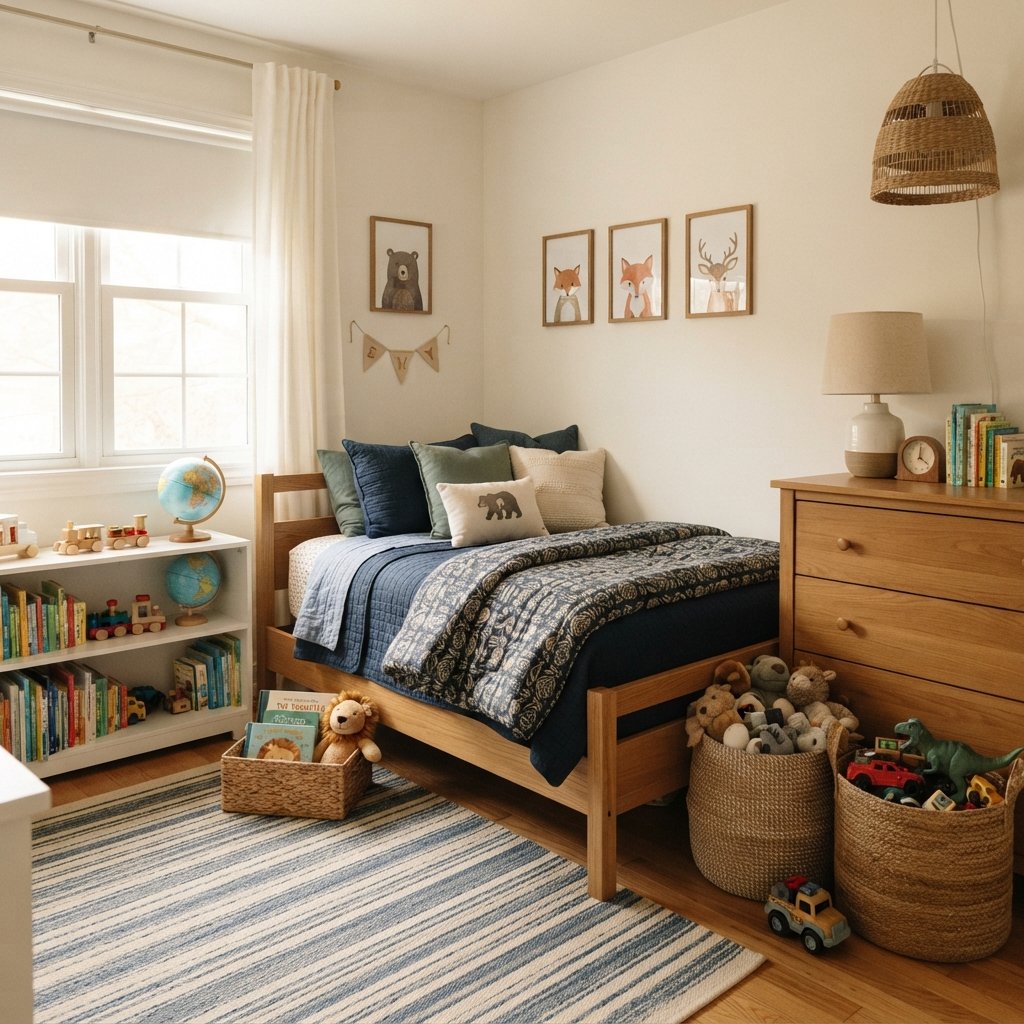
Moving from a nursery to a big boy bedroom can feel like a major decorating milestone.
The crib disappears. Toys become more important. Books multiply. Clothing gets bigger. And suddenly, the sweet nursery you carefully put together needs to function for a child who wants more independence and has plenty of opinions of his own.
But transitioning from a nursery to a big boy bedroom does not mean you have to replace everything.
In many cases, the easiest approach is to keep the parts of the nursery that still work—such as the dresser, curtains, rug, baskets, or wall color—and gradually replace the baby-specific pieces.
The result can feel older without looking too grown-up.
The goal is to create a comfortable bedroom that works now but can also adapt over the next several years. Choosing flexible furniture, practical storage, simple colors, and easy-to-change decor can help you avoid another complete makeover a year later.
Here are 17 ideas for turning a nursery into a big boy room while keeping the process practical, organized, and budget-friendly.
1. Decide What Can Stay From the Nursery
Before shopping, take inventory.
Not everything associated with the nursery needs to leave.
You may be able to reuse:
- Dresser
- Rug
- Curtains
- Bookshelves
- Baskets
- Lamp
- Wall color
- Artwork
- Storage furniture
A simple dresser that worked beside a crib can often work just as well beside a child’s bed.
Neutral curtains do not suddenly become inappropriate because the crib is gone.
Keeping these pieces saves money and helps the new room feel familiar rather than completely different overnight.
2. Make the Bed the Main Change
The bed is usually the biggest visual signal that the room is no longer a nursery.
Choose a bed based on the child’s needs, room size, and how long you want the furniture to last.
Possible options include:
- Toddler bed
- Twin bed
- Full-size bed
- Convertible crib transitioned according to manufacturer instructions
A twin bed can be practical in smaller rooms, while a larger bed may make sense if space allows and you want furniture that can remain for years.
Follow current safe-sleep guidance appropriate for your child’s age and the bed manufacturer’s instructions. Do not rush a sleep transition simply because you are redecorating.
3. Choose a Color Palette That Can Grow With Him
A room does not need a complicated theme to feel fun.
Start with two or three colors.
For example:
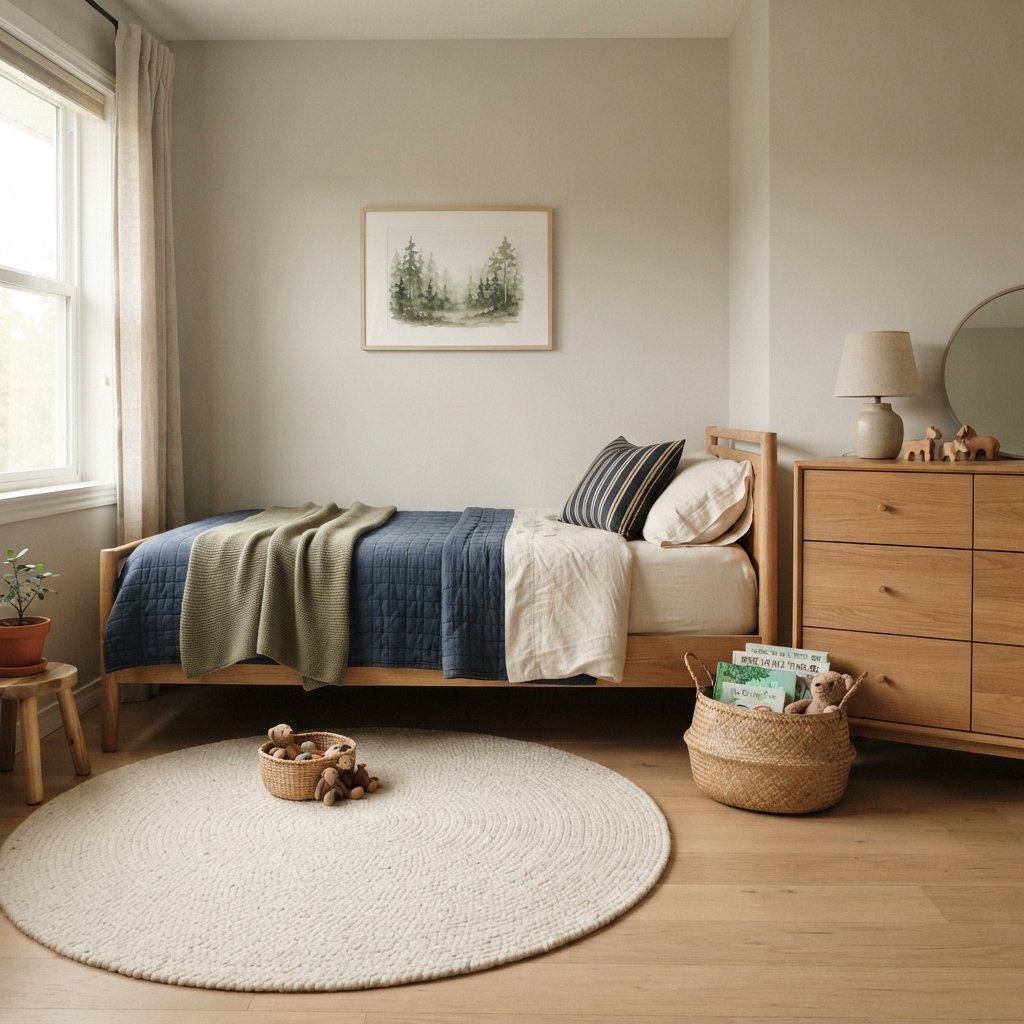
- Navy + green + cream
- Blue + tan + warm white
- Olive + rust + cream
- Charcoal + blue + wood
- Soft blue + navy + white
Use the quieter colors on larger surfaces and bring stronger colors into bedding, artwork, and accessories.
That way, changing the room later becomes much easier.
4. Keep the Wall Color If It Still Works
One of the cheapest makeover decisions may be not painting at all.
If the nursery already has warm white, beige, light blue, muted green, or another versatile wall color, consider keeping it.
Instead, change the room through:
- Bedding
- Artwork
- Furniture
- Rug
- Lighting
- Accessories
Paint only when the existing color truly limits the new direction.
5. Replace Baby-Themed Artwork
Wall decor is an easy place to make the room feel older.
Swap nursery prints for something connected to your child’s interests.
Ideas include:
- Animals
- Cars
- Trucks
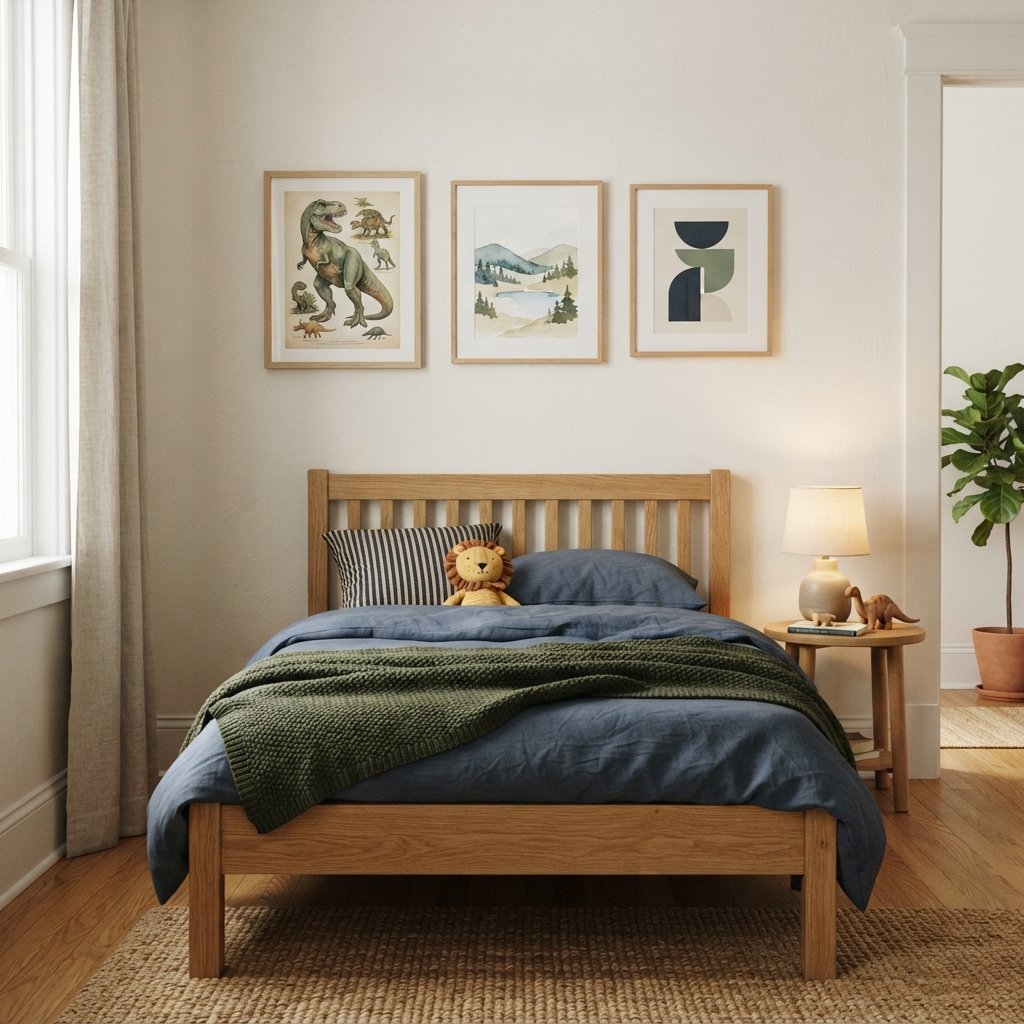
- Dinosaurs
- Space
- Sports
- Nature
- Maps
- Boats
- Simple abstract art
Avoid feeling like every item needs to follow the same theme.
A few pieces are usually enough.
6. Let His Interests Influence the Room
A big boy room is a great opportunity to let your child have some input.
That does not mean the entire room has to become a floor-to-ceiling dinosaur exhibit because dinosaurs are today’s favorite thing.
Instead, introduce interests through elements that are easy to change.
Try:
- Pillowcase
- Blanket
- Framed print
- Small shelf display
- Toy basket
- Books
- Bedding accent
Keep the expensive pieces versatile.
A simple wood bed can work with dinosaurs now, sports later, and a completely different style several years from now.
7. Update the Bedding
Bedding can instantly make a nursery feel like a child’s bedroom.
Start with a practical base.
You might choose:
- Solid quilt
- Simple stripe
- Small check
- Subtle pattern
- Neutral duvet or comforter
Then add personality with a throw or decorative pillow where age-appropriate.
Avoid buying every item from a heavily themed matching set unless that is truly the look you want.
Layering a few coordinated pieces generally makes the room easier to update.
8. Add a Rug That Can Handle Play
A bedroom rug does more than decorate.
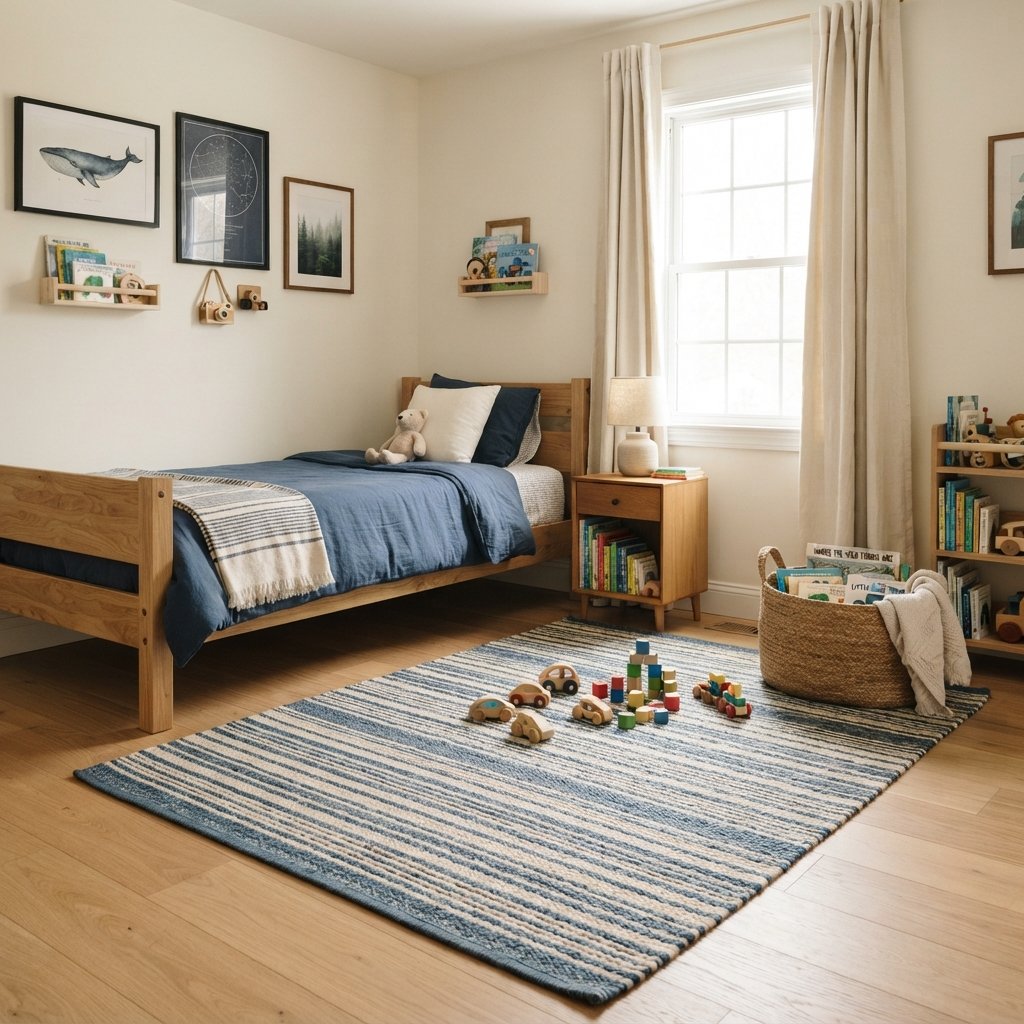
It can create a softer place for building blocks, cars, puzzles, and reading.
Choose a rug appropriate for the room and your household.
A pattern can be particularly practical because it tends to visually disguise everyday wear better than a very pale solid rug.
Use an appropriate rug pad or non-slip solution where needed and keep edges flat to reduce tripping hazards.
9. Create Easy-to-Reach Toy Storage
Nursery storage is often designed around adults.
A big boy bedroom should gradually allow a child to manage more of his own belongings.
Use accessible storage for appropriate toys.
Options include:
- Low baskets
- Open bins
- Cube storage
- Low shelves
- Under-bed bins
Keep categories simple.
Instead of creating fifteen tiny toy categories, broad groups such as cars, blocks, animals, and puzzles may be easier to maintain.
Secure furniture that could tip according to manufacturer instructions and applicable safety guidance.
10. Create a Kid-Friendly Book Area
Books deserve an accessible home.
You do not need a large reading nook.
A small basket beside the bed may be enough.
Other possibilities include:
- Low bookcase
- Face-out book ledges
- Wall-mounted book storage
- Small reading corner
Keep frequently read books where your child can reach them.
Store special or less-used books elsewhere if space is limited.
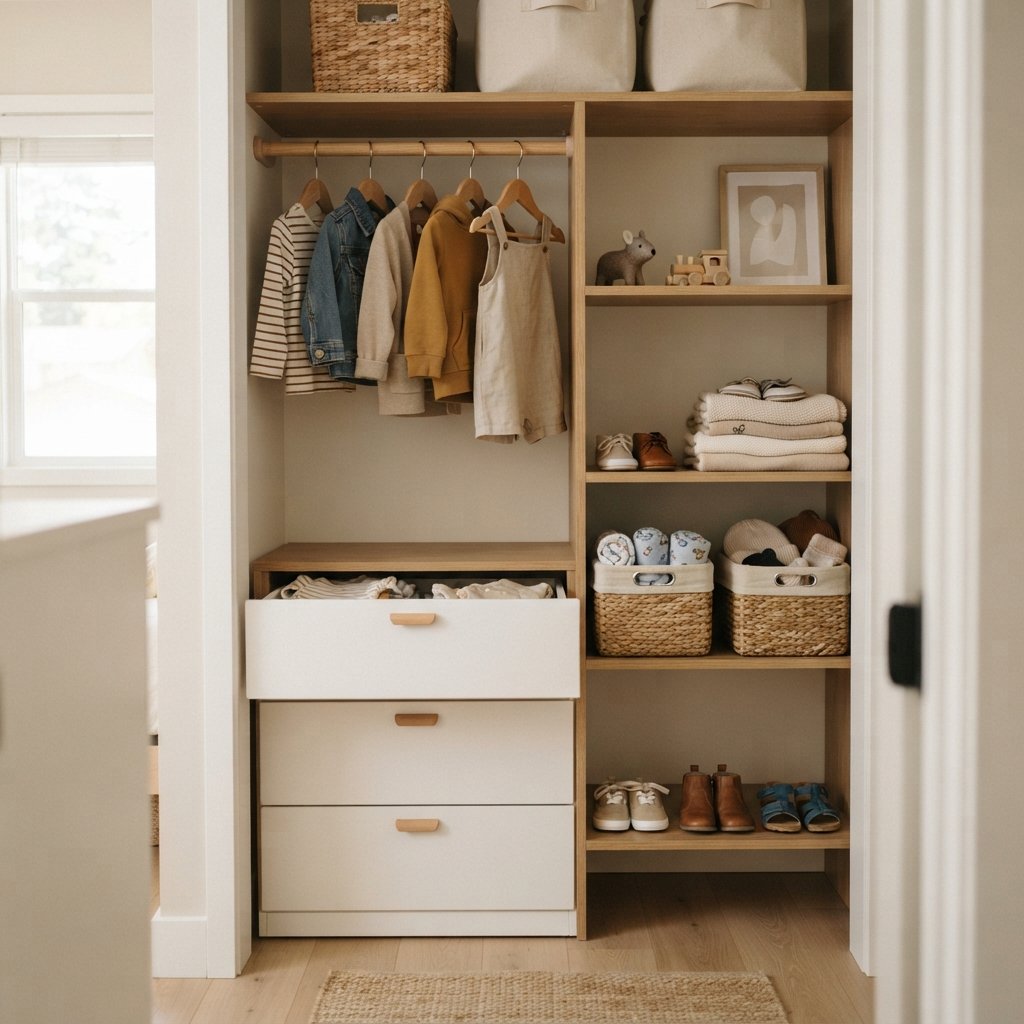
11. Update the Closet for Bigger Clothes
The closet setup that worked for baby clothes may not work as clothing gets larger.
Reassess:
- Hanging space
- Drawer storage
- Shoes
- Seasonal clothing
- Pajamas
- Accessories
Give everyday items the easiest-to-reach locations.
Less frequently used or outgrown clothing can go higher or into clearly labeled storage.
As children become more independent, accessible clothing storage can also make getting dressed easier.
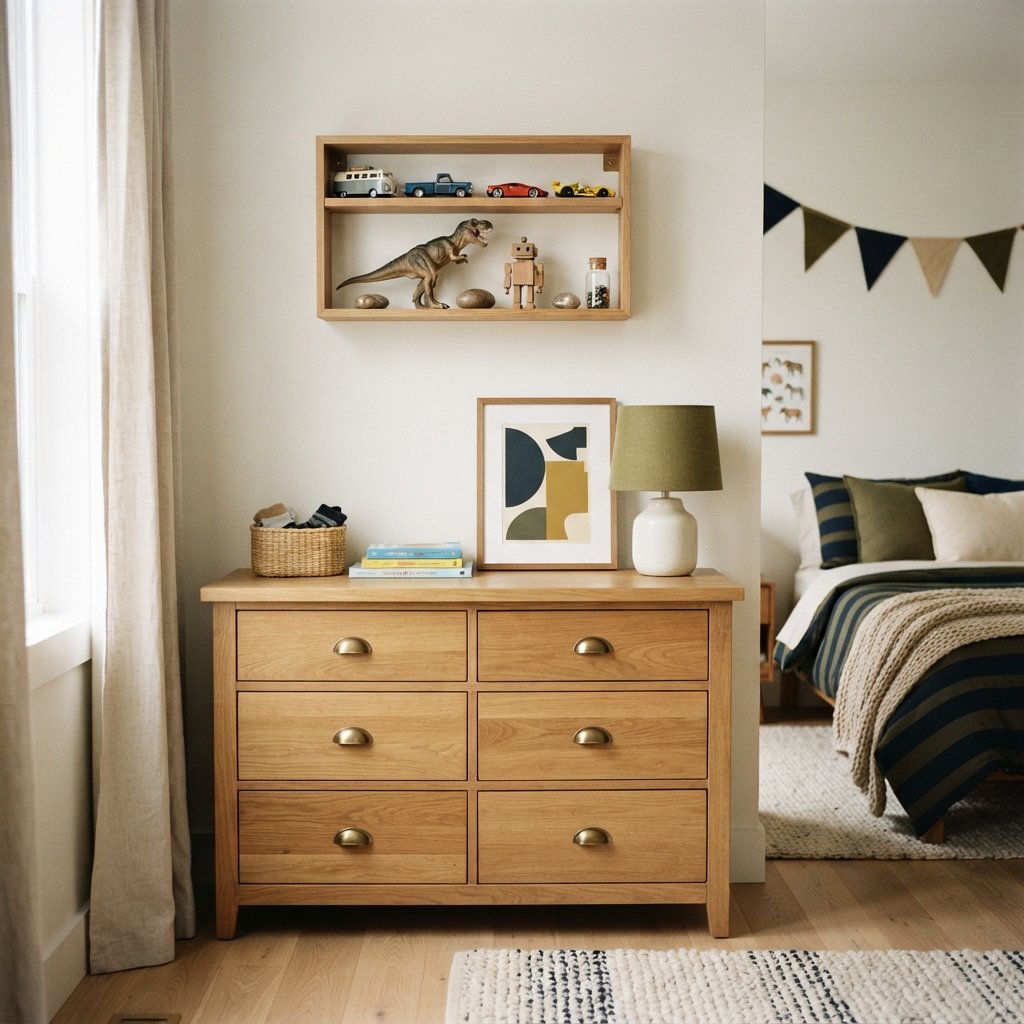
12. Turn the Changing Table Into a Regular Dresser
If your changing station is a dresser with a removable changing setup, the transition may be easy.
Remove the changing components when they are no longer needed and when it is appropriate to do so.
Then style the dresser like normal bedroom furniture.
You might add:
- Lamp
- Small basket
- Books
- Framed artwork
Keep the top relatively uncluttered.
If the dresser is tall or could tip, secure it appropriately according to manufacturer instructions and current furniture-safety guidance.
13. Add a Bedside Table
A small bedside surface helps the room function differently from a nursery.
It can hold age-appropriate items such as:
- Lamp
- Book
- Water where appropriate
- Small basket
You do not necessarily need to buy a traditional nightstand.
A sturdy small table or appropriately sized storage piece may work.
Choose something stable that does not create sharp or unsafe obstacles beside the bed.
14. Upgrade the Lighting
Nurseries often rely on very soft lighting.
A big boy bedroom may need more functional light for reading, dressing, and play.
Think in layers:
- Main ceiling light
- Bedside or reading light
- Natural daylight
Use lighting and bulbs suitable for the fixture and room.
Keep cords appropriately managed and away from unsafe locations.
If new hardwired fixtures are needed, electrical work should be completed safely and according to applicable requirements.
15. Add a Small Display Area
Children often collect things.
Rocks, toy cars, LEGO creations, trophies, drawings, and little treasures eventually need somewhere to go.
A small display area can keep those items from spreading across every surface.
Try:
- Secure wall shelf
- Dresser display
- Small bookcase
- Pegboard system appropriate for the space
Keep heavy or breakable items out of unsafe locations and make sure wall-mounted storage is securely installed.
16. Leave Open Floor Space for Play
One of the easiest bedroom-design mistakes is filling every wall.
Children benefit from usable open space.
Instead of adding another chair, table, shelf, or toy organizer simply because it fits, consider leaving the area open.
A clear section of rug can become:
- Car track
- Block-building area
- Puzzle space
- Reading area
- Imaginative play zone
A less crowded room can also be easier to clean.
17. Make the Room Easy to Update Again
Your child’s interests will change.
Plan for that from the beginning.
Keep the expensive elements relatively flexible:
- Bed
- Dresser
- Rug
- Curtains
- Major storage
Let personality come through easier-to-change pieces:
- Bedding
- Artwork
- Books
- Pillows
- Small accessories
Then the next room update might require only a new quilt and artwork rather than another complete makeover.
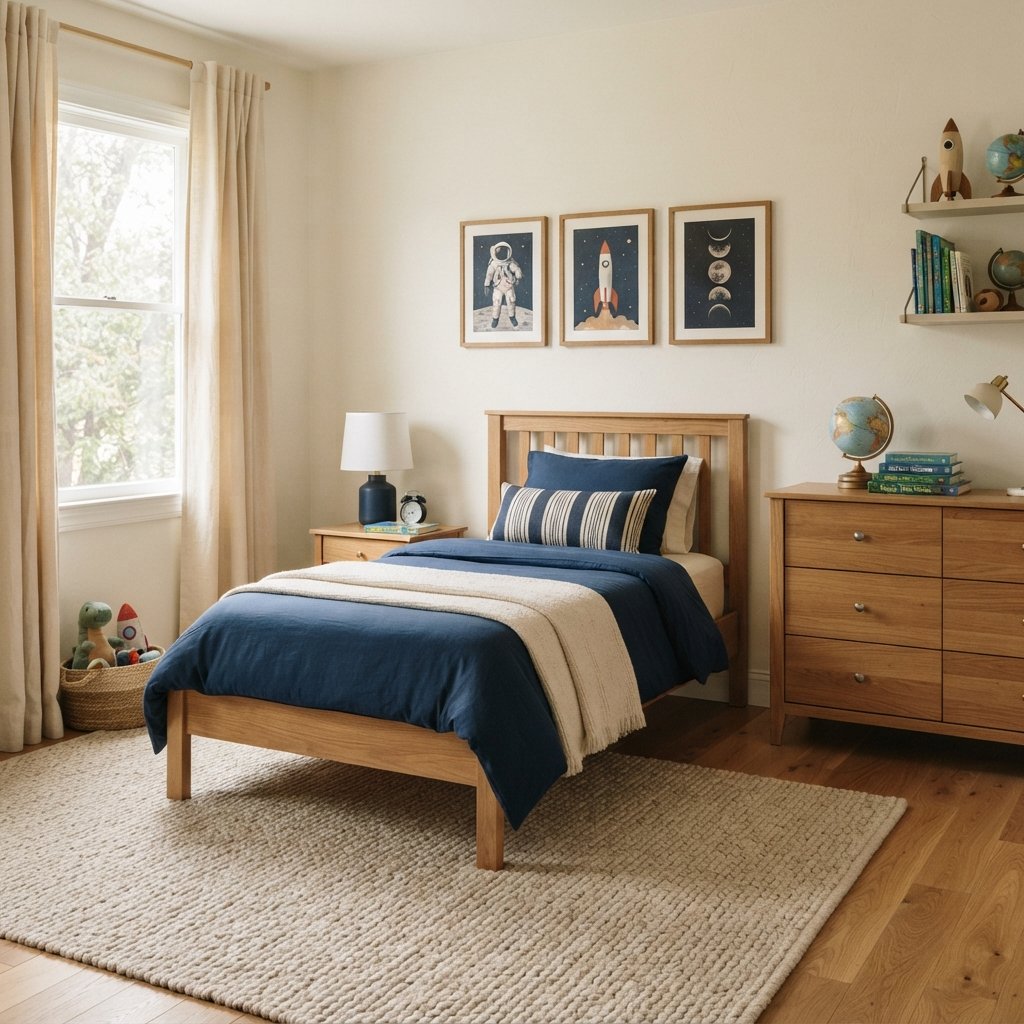
How to Transition From a Nursery to a Big Boy Room on a Budget
You do not need to replace every piece of furniture.
Start by identifying what can remain.
Keep the dresser.
Keep neutral curtains.
Keep storage baskets.
Keep the rug if it still works.
Then spend your budget on the pieces that make the biggest difference.
Often that means:
- Bed
- Bedding
- A few pieces of artwork
- Storage adjustments
If you already have a suitable bed, the transformation can be even more affordable.
What Should You Keep From the Nursery?
Keep anything that is still functional and does not feel obviously baby-specific.
A simple dresser is useful at almost every age.
A neutral rug can work for years.
Woven baskets are equally useful for stuffed animals, cars, books, or sports equipment.
Even nursery artwork may work if it features simple animals, landscapes, or abstract designs rather than strongly baby-themed imagery.
Reusing pieces also helps the new room feel familiar during a period of change.
What Should You Remove From the Nursery?
As your child outgrows items, gradually remove things that no longer serve a purpose.
This might include:
- Changing supplies
- Baby-specific storage
- Outgrown toys
- Baby clothing
- Nursery-only decor
- Equipment no longer appropriate for the child’s age
Do not keep everything simply because there is room.
Removing outgrown items creates space for the next stage.
Toddler Room vs. Big Boy Bedroom
There is no universal moment when a toddler room becomes a “big boy room.”
Think about function rather than the label.
A room for a younger child may still need:
- Low storage
- Familiar comfort items
- Simple furniture
- Plenty of open play space
As the child grows, the same room might gradually add:
- Larger bed
- More books
- Desk
- Hobby storage
- Different artwork
A gradual transition can be easier and more economical than trying to design a room for every future stage at once.
Small Big Boy Bedroom Ideas
In a small room, prioritize the essentials.
Start with:
- Bed
- Dresser
- Clothing storage
- Toy or book storage
Then stop and assess the remaining space.
Use vertical storage carefully where appropriate, but avoid surrounding the room with bulky furniture.
Under-bed storage can be particularly helpful.
A lighter wall color and simple bedding can also keep a compact room visually calm.
Big Boy Bedroom Without a Theme
You absolutely do not need a theme.
Instead, build the room around a color palette.
For example:
Navy + olive + cream + natural wood
Then add a mixture of:
- Stripes
- Landscapes
- Books
- Cars
- Simple artwork
The room can still reflect the child’s personality without being tied to one specific interest.
Blue Big Boy Bedroom
Blue is versatile because it can work from early childhood well into the teenage years.
Instead of using one shade everywhere, layer several tones.
Try:
- Navy
- Denim
- Dusty blue
- Cream
- Warm wood
Green, camel, gray, and rust can all make useful accent colors.
Green Big Boy Bedroom
Green is another flexible option.
Muted olive or forest green works particularly well with:
- Cream
- Tan
- Navy
- Brown
- Natural wood
Use green through bedding or artwork if you do not want to paint the walls.
Neutral Big Boy Bedroom
A neutral bedroom does not have to feel boring.
Use:
- Warm white
- Beige
- Camel
- Brown
- Natural wood
Then introduce interest through:
- Stripes
- Checks
- Woven texture
- Artwork
- Books
A neutral foundation also makes changing accent colors later much easier.
Big Boy Bedroom With a Twin Bed
A twin bed can be a practical choice when floor space matters.
It leaves more room for:
- Play
- Storage
- Desk
- Bookcase
Place it where it does not unnecessarily block doors, closets, or circulation.
If possible, leave a comfortable path around the room.
Big Boy Bedroom With a Full Bed
A full-size bed takes up more floor space but may offer longer-term flexibility.
Before choosing one, map the footprint in the room.
Make sure there will still be enough room to:
- Open drawers
- Access the closet
- Walk comfortably
- Use other furniture
Do not choose the larger bed simply because it fits on paper.
The room should still function.
How to Make a Big Boy Room Feel Cozy
Cozy does not require lots of decor.
Try layering:
- Comfortable bedding
- Rug
- Curtains
- Warm wood
- Books
- Soft lighting
A few darker colors can also make the room feel grounded.
For example, a warm white bedroom with a wood bed, navy quilt, olive throw, and striped rug can feel both cozy and uncluttered.
How to Make a Big Boy Bedroom Look More Grown-Up
Remove some of the baby-specific elements rather than making the room overly mature.
Try:
- Larger bed
- Simple bedding
- More sophisticated color palette
- Framed artwork
- Organized books
- Regular dresser
- Simple bedside table
You can still include favorite toys and playful details.
The goal is not to create an adult bedroom.
It is simply to give the room room to grow.
How to Include Your Child in the Makeover
Give choices with boundaries.
Instead of asking, “What do you want your whole room to look like?” offer a few manageable decisions.
For example:
“Do you like the blue quilt or the green one?”
“Would you rather have dinosaur art or space art?”
“Should the book basket go here or beside the bed?”
This gives your child ownership without requiring every permanent decorating decision to revolve around a temporary favorite.
A Simple Nursery-to-Big-Boy-Room Plan
If you want the makeover to feel manageable, work in this order:
- Remove outgrown nursery items.
- Decide what furniture stays.
- Choose the bed.
- Pick a simple color palette.
- Update the bedding.
- Rework clothing and toy storage.
- Replace baby-specific artwork.
- Add functional lighting.
- Create open play space.
- Add a few personal details.
Then live with the room for a while.
You may discover you need less additional furniture than you expected.
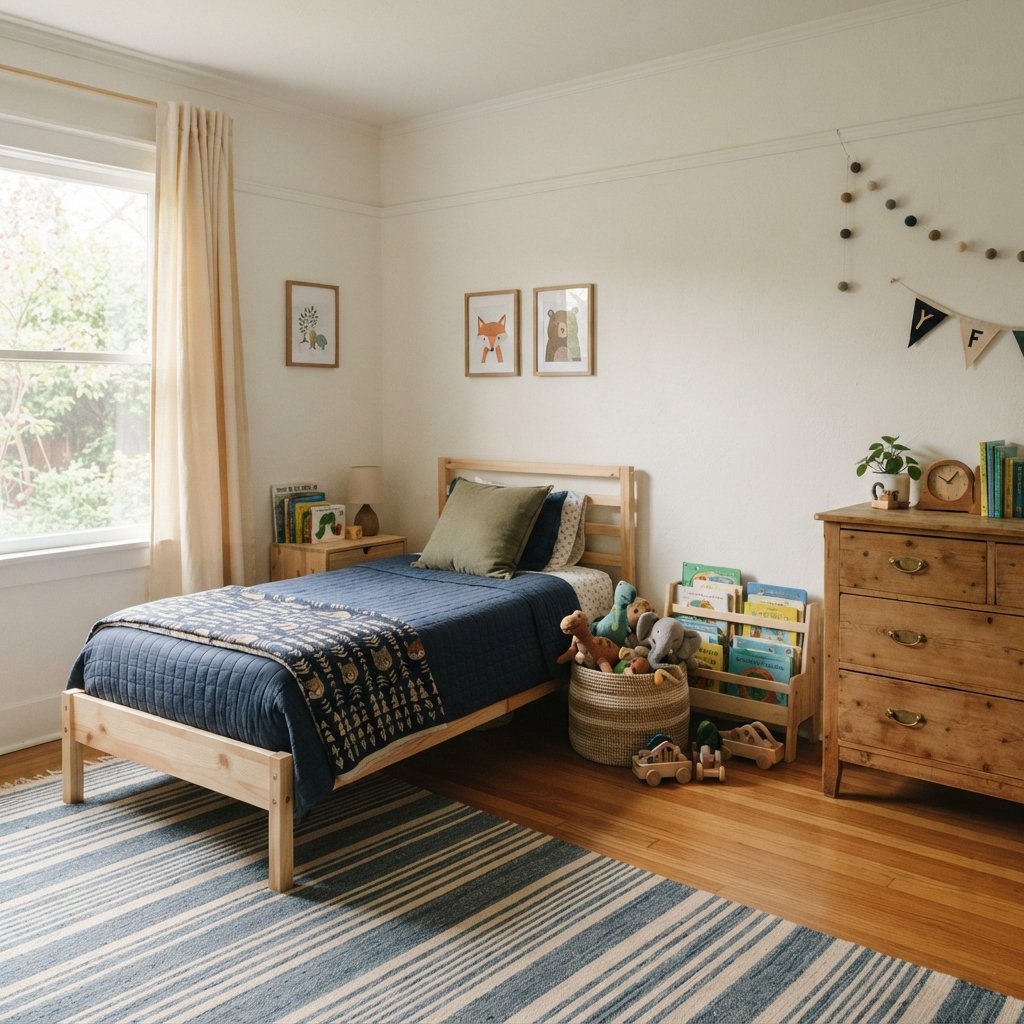
Common Nursery-to-Big-Boy-Bedroom Mistakes
Replacing Everything at Once
Reuse pieces that still work.
Choosing an Extremely Specific Theme
Use temporary decor for short-lived interests.
Buying Furniture That Is Too Large
Measure the room and preserve usable floor space.
Adding Too Much Storage Furniture
Declutter before buying more organizers.
Designing Only for the Future
The room should work for your child now.
Designing Only for Today
Keep expensive furniture flexible enough to adapt.
Filling Every Empty Wall
Open space has value.
Forgetting Child Independence
Keep appropriate books, clothing, and toys accessible.
Ignoring Safety
Furniture placement and secure installation matter as much as appearance.
Big Boy Bedroom Safety Tips
As a child’s abilities change, reassess the room rather than assuming a setup that worked in the nursery is still appropriate.
Secure dressers, bookcases, and other furniture that could tip according to manufacturer instructions and current safety guidance.
Install wall shelves, artwork, mirrors, and other heavy items securely and avoid placing heavy or breakable objects where they could fall onto the bed or play area.
Keep blind and curtain cords appropriately secured and inaccessible.
Manage electrical cords and outlets appropriately for the child’s age and room setup.
Use an appropriate rug pad or non-slip solution where needed and keep pathways clear.
Follow the bed manufacturer’s instructions for assembly, guardrails, mattress compatibility, weight limits, and other requirements.
If considering a bunk or loft bed later, follow manufacturer age restrictions, guardrail requirements, mattress specifications, and ceiling-clearance instructions rather than treating it like a standard bed.
Window safety is especially important as children become more mobile. Avoid placing climbable furniture where it creates unsafe access to windows, and use appropriate window-safety measures for your home.
FAQ About Transitioning From a Nursery to a Big Boy Bedroom
When should you transition a nursery to a big boy room?
There is no decorating deadline. Make changes based on your child’s developmental needs, sleep setup, outgrown equipment, and how the room needs to function rather than a specific birthday.
Do I need to replace all the nursery furniture?
No. Dressers, bookcases, curtains, rugs, baskets, and other versatile pieces can often remain.
Should I use a twin or full bed?
Either can work. A twin preserves more floor space, while a full requires more room. Choose based on the child’s needs, room dimensions, and the bed manufacturer’s guidance.
How do I make a boy’s bedroom grow with him?
Keep the major furniture and larger finishes versatile. Use bedding, artwork, and accessories for interests that may change.
What colors work well for a big boy bedroom?
Blue, green, cream, tan, warm white, gray, rust, and natural wood can all work. A limited palette of two or three main colors is usually easier to update.
Does a big boy room need a theme?
No. A color palette can provide enough direction. Add your child’s interests through smaller, replaceable pieces.
How can I update a nursery on a small budget?
Reuse the dresser, rug, curtains, and storage. Focus spending on the bed if needed, bedding, and a few pieces of updated wall decor.
How can I make the transition feel familiar?
Keep some recognizable furniture, books, favorite toys, colors, or textiles from the nursery rather than changing every element simultaneously.
Final Thoughts
Transitioning from a nursery to a big boy bedroom does not require starting over.
In fact, some of the best children’s rooms are built gradually.
Keep the dresser that still works. Reuse the rug. Leave the wall color alone if you still like it. Turn familiar baskets into toy storage and give favorite books a place where your child can reach them.
Then make a few changes that clearly move the room into its next stage.
Introduce an appropriate bed, update the bedding, replace baby-specific artwork, reorganize the closet, and create space for play.
Most importantly, keep the expensive choices flexible.
A simple wood bed, practical dresser, neutral rug, and classic curtains can stay for years while dinosaurs, trucks, space, sports, or whatever comes next can rotate through artwork and bedding.
The room does not need to look grown-up.
It simply needs to grow up a little—with him.