


Choosing one kitchen cabinet color can be difficult enough. Choosing two might sound even harder—but when it’s done thoughtfully, a two-tone kitchen can actually make the entire room feel more balanced.
Using two cabinet colors gives you an opportunity to add contrast, bring natural wood into a painted kitchen, make an island stand out, or keep upper cabinets light while adding deeper color below.
And a two-tone kitchen doesn’t have to look trendy or overly busy.
Some of the most timeless combinations are surprisingly simple: warm white and natural wood, cream and taupe, white and navy, or pale cabinetry paired with a darker island.
The key is making the two finishes feel connected to the rest of the room.
Your countertops, backsplash, flooring, hardware, lighting, and wall color all affect how those cabinet colors look together.
If you’re considering a mixed-cabinet kitchen, these two tone kitchen cabinet ideas will help you find a combination that feels intentional rather than mismatched.
What Are Two-Tone Kitchen Cabinets?
A two-tone kitchen uses two distinct cabinet colors or finishes in the same space.
You might combine:
- Two paint colors
- Paint and natural wood
- Two wood tones
- Light and dark cabinetry
The colors can be divided in several ways.
For example:
Light upper cabinets + dark lower cabinets
or:
One color on the perimeter + another on the island
or:
Painted cabinets + natural wood feature cabinetry
The best approach depends on the room and the effect you’re trying to create.
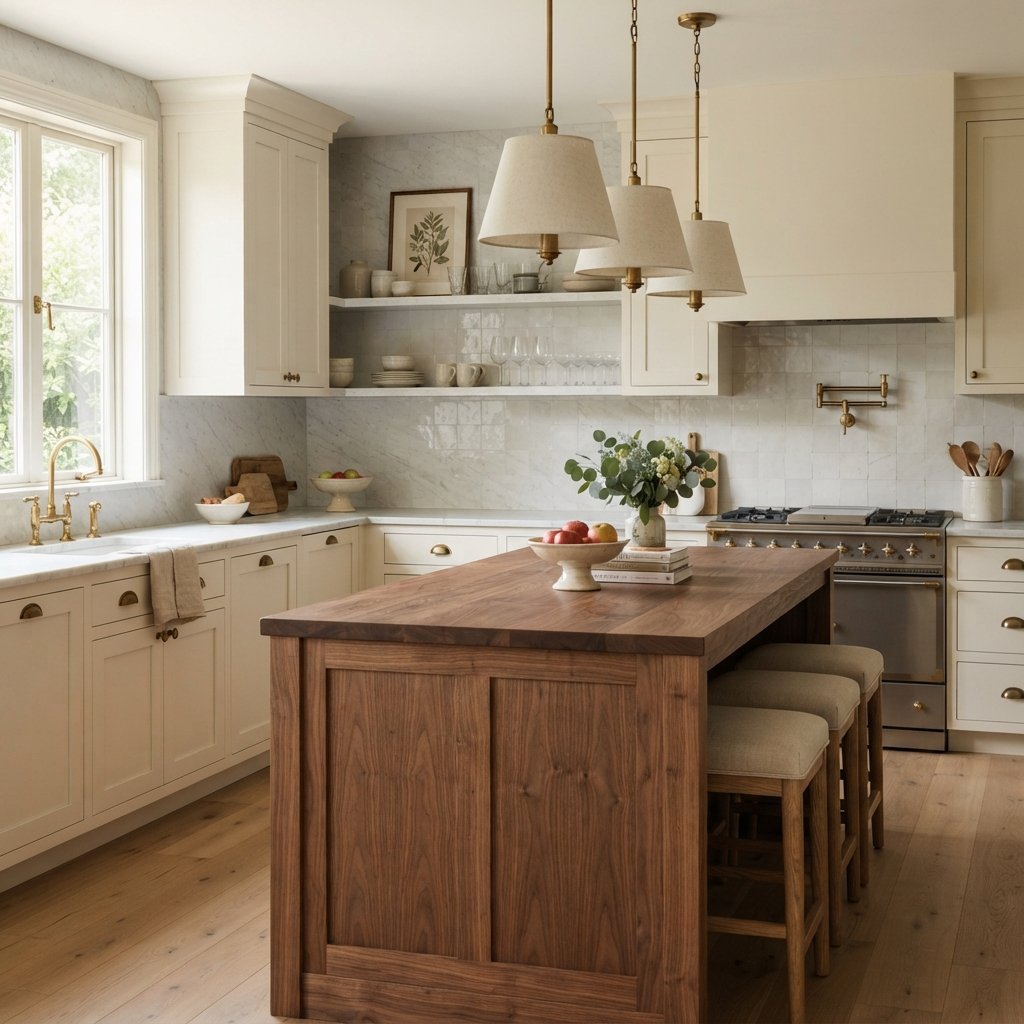
1. White Cabinets With a Wood Island
This is one of the easiest ways to create a two-tone kitchen.
Use painted white or warm white cabinets around the perimeter, then bring in natural wood on the island.
The wood warms up the room while the painted cabinetry keeps it bright.
Depending on your style, consider:
- White oak
- Walnut
- Other suitable cabinet woods and finishes
Don’t choose the wood in isolation.
Compare it directly with your flooring, countertop, and cabinet paint.
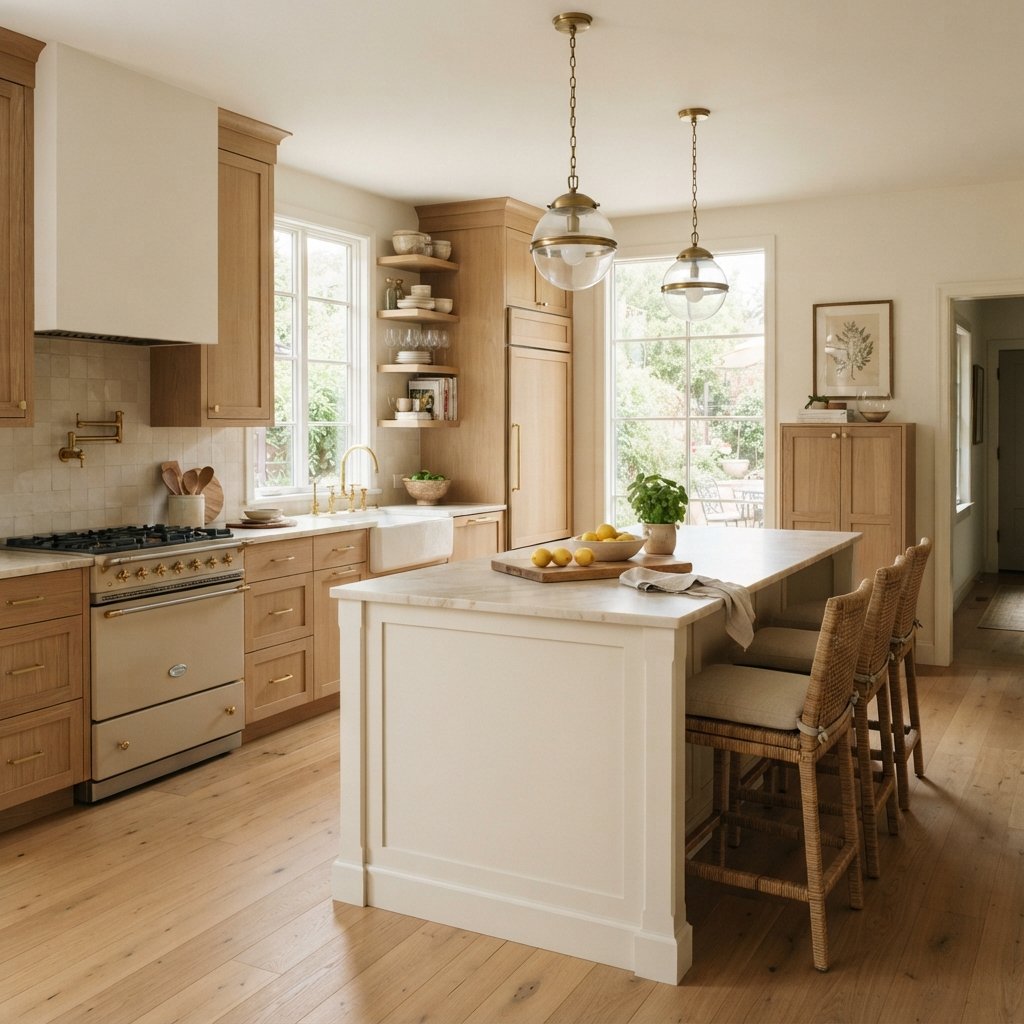
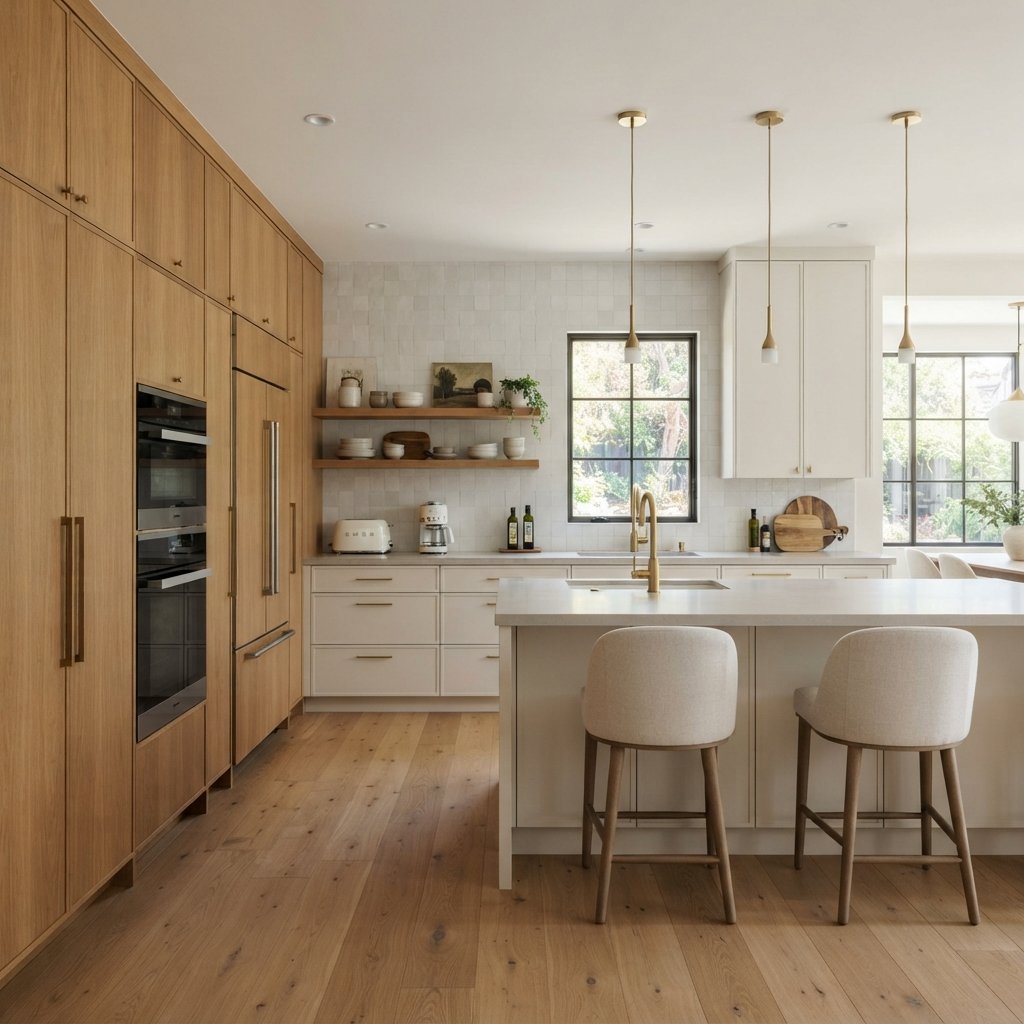
2. Wood Cabinets With a White Island
Reverse the previous combination.
Natural wood perimeter cabinetry can create a warm, enveloping kitchen, while a lighter island provides contrast in the center.
This approach can be especially effective when the island is large and you don’t want a massive block of wood dominating the room.
3. White Upper Cabinets With Dark Lower Cabinets
Putting the darker color below can help keep the room visually open.
Try:
Warm white + charcoal
or:
Cream + navy
or:
White + deep green
The light upper cabinetry blends more easily into pale walls while the base cabinets provide contrast.
This can work particularly well in a smaller kitchen where you want color without surrounding the room in it.
4. White Cabinets With a Navy Island
Navy can give a white kitchen a classic focal point.
Keep the rest of the palette relatively simple.
Try:
- Warm white perimeter cabinets
- Navy island
- White or softly veined countertops
- Warm metal hardware
- Natural wood accents
Because navy colors can vary from very blue to almost black, always test a sample in the actual kitchen.
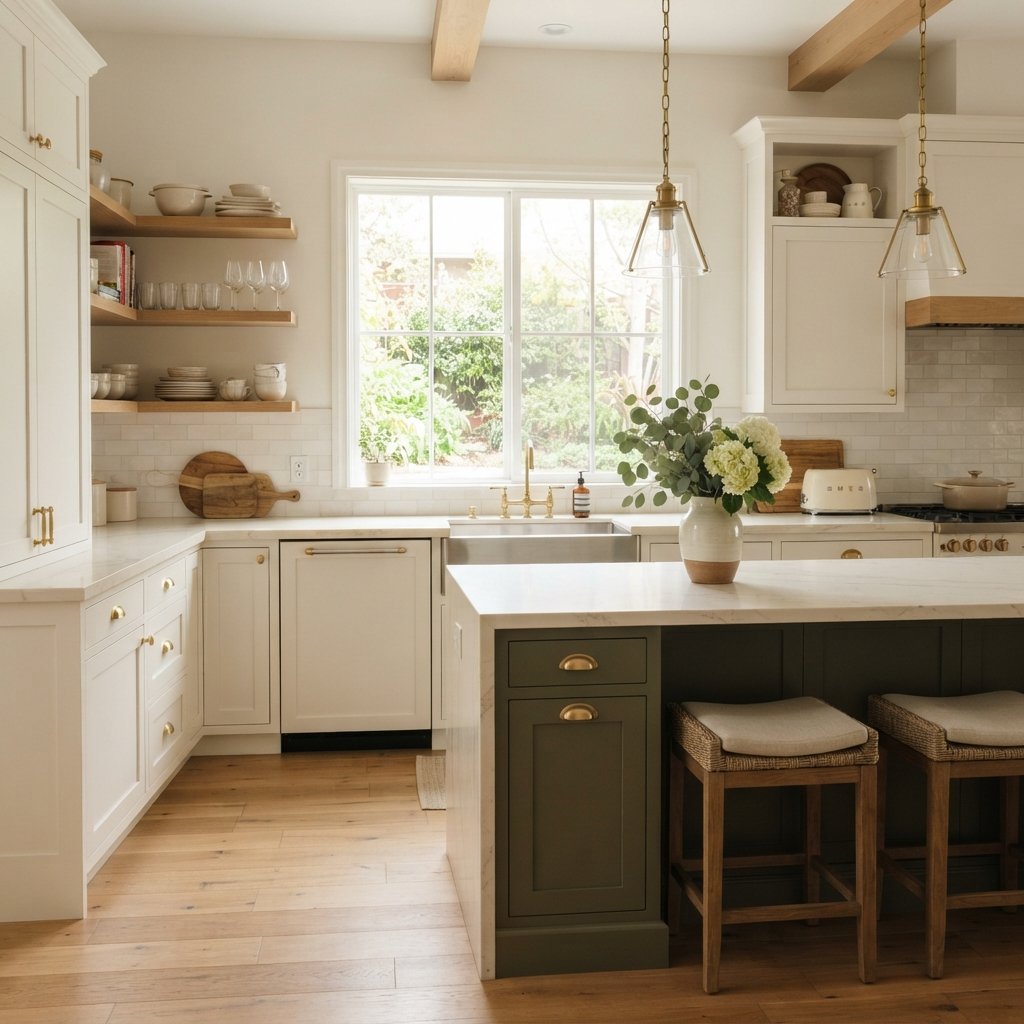
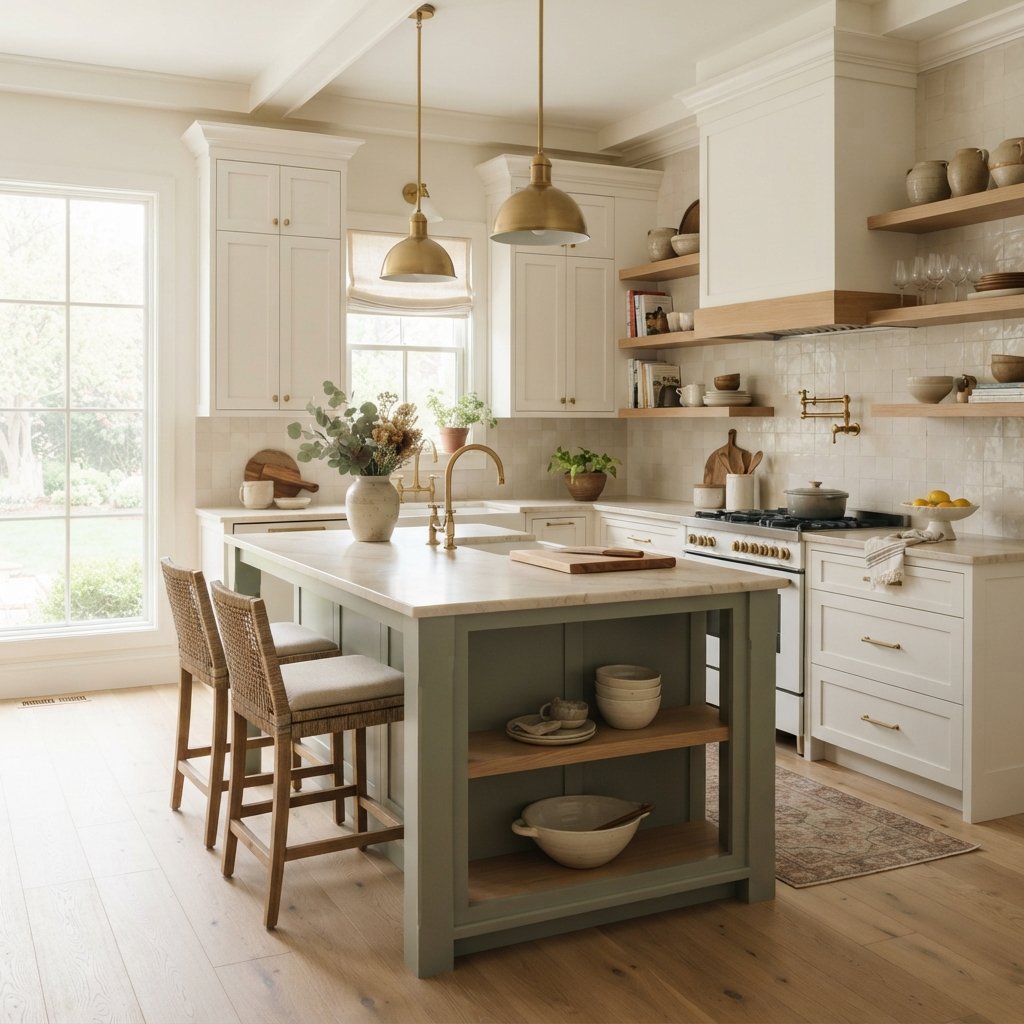
5. White Cabinets With a Green Island
Green brings color into the kitchen while still feeling connected to natural materials.
Depending on your style, consider:
- Sage
- Olive
- Forest green
- Deep muted green
A softer sage can create a relaxed kitchen, while a darker green island adds more drama.
Repeat a small amount of green elsewhere through art, textiles, or decor if you want the palette to feel connected.
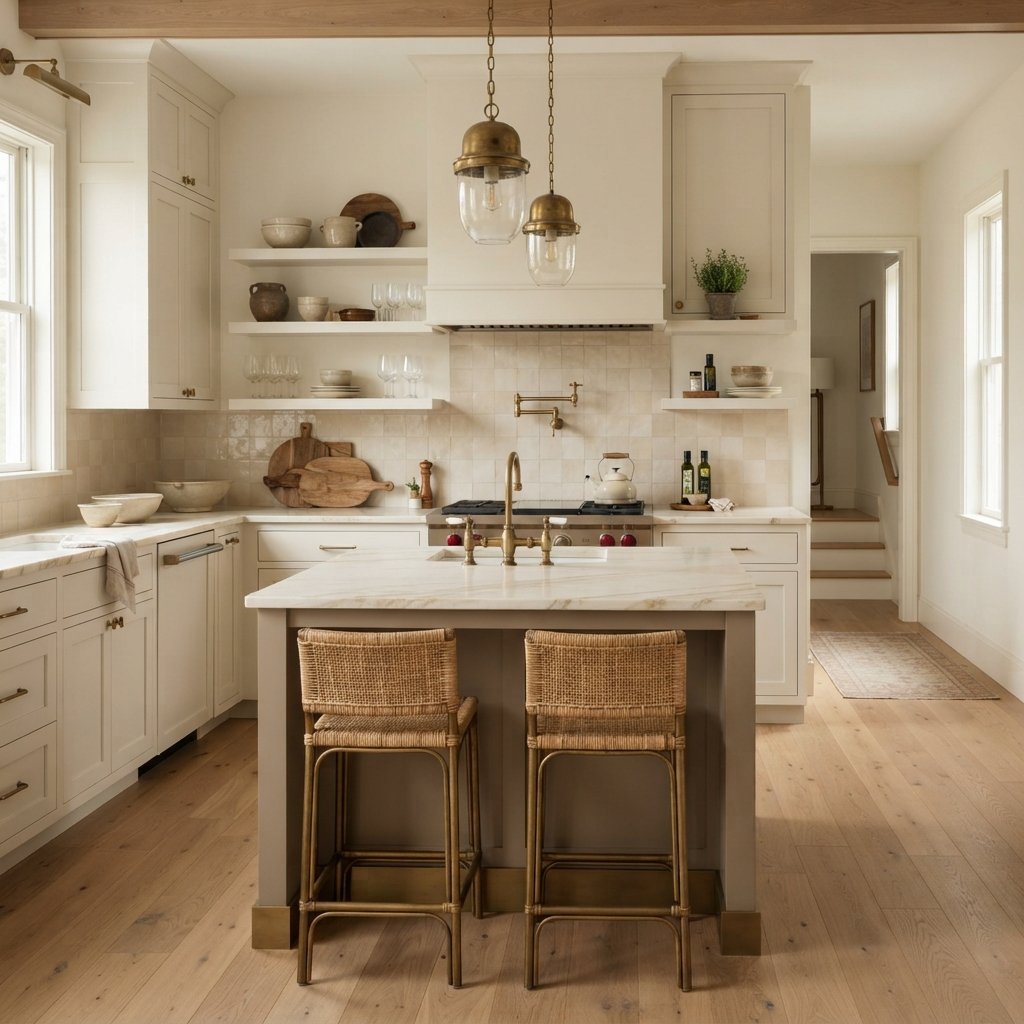
6. Cream Cabinets With a Taupe Island
If high contrast isn’t your style, use two related neutrals.
Cream and taupe can create a subtle two-tone kitchen that feels warm and sophisticated.
The difference doesn’t have to be dramatic.
In fact, neighboring colors can work beautifully when the kitchen already has interesting stone, flooring, or architectural details.
7. Warm White With Mushroom Cabinets
Mushroom sits somewhere between beige, gray, and brown, depending on the specific color.
It can provide enough contrast against warm white without feeling dark.
Try mushroom on:
- Lower cabinets
- Island
- Pantry wall
- Tall cabinetry
This is a good option if you like neutral kitchens but want more depth than an all-white room.
8. White Cabinets With Black Lower Cabinets
For a stronger contrast, combine white and black.
Keeping black on the bottom can ground the room.
Use the combination thoughtfully.
If the kitchen has limited natural light, a large amount of black cabinetry may make the space feel heavier.
Warm wood, textured stone, and softer lighting can help balance the contrast.
9. White Cabinets With a Black Island
A black island can create a striking focal point without committing to dark cabinetry throughout the kitchen.
This combination works with many styles, from traditional to contemporary.
If pure black feels too harsh, consider a softer near-black or charcoal.
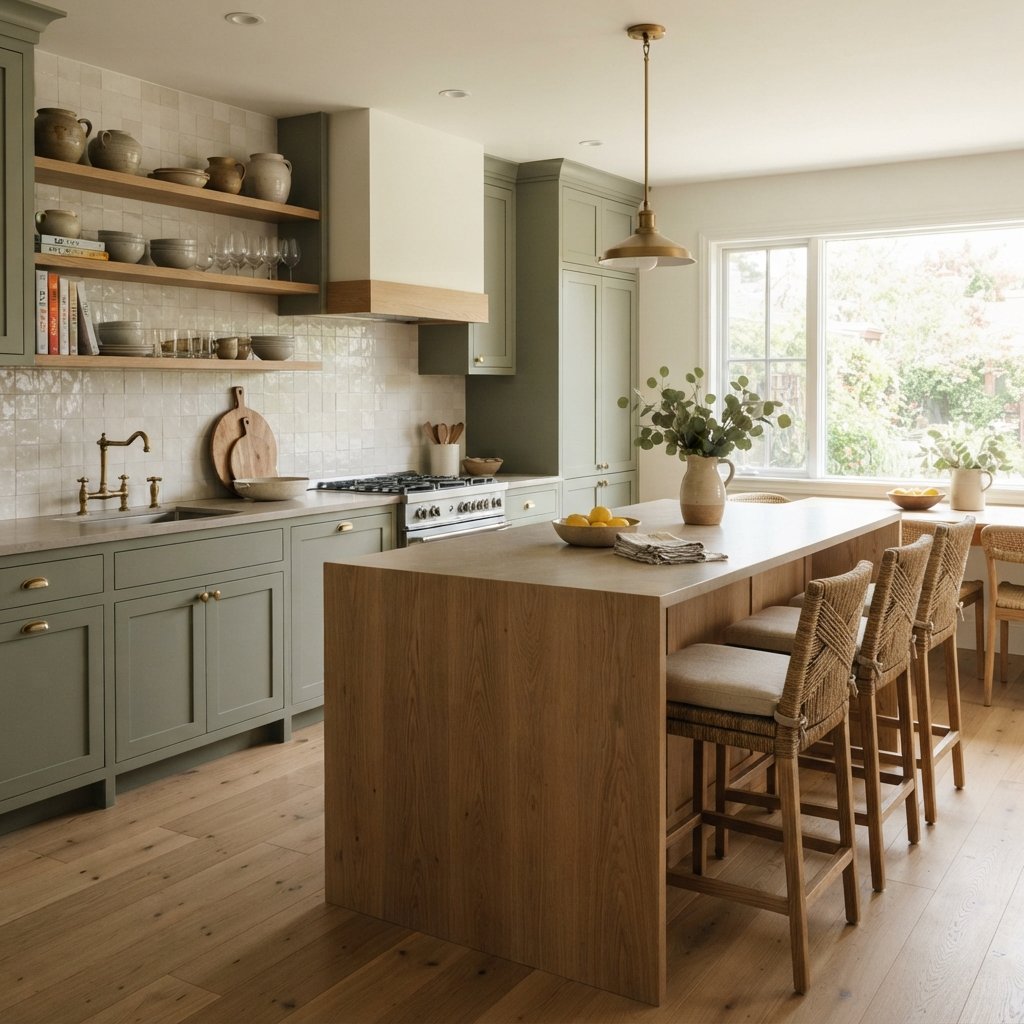
10. Sage Green and Natural Wood Cabinets
Paint and wood make an especially beautiful two-tone combination.
Muted green works naturally with wood because both bring an earthy quality to the kitchen.
Try:
Sage perimeter cabinets + wood island
or:
Wood lower cabinets + sage uppers
or:
Sage kitchen + natural wood pantry cabinetry
Keep countertop and backsplash selections relatively quiet if both cabinet finishes already provide plenty of interest.
11. Blue-Gray and White Cabinets
Blue-gray can add color without becoming the dominant feature.
Use it on lower cabinets with white uppers for a lighter effect.
Or place blue-gray on the island.
The exact appearance will depend heavily on lighting, so test samples at different times of day.
12. Navy and Natural Wood
Navy creates a dramatic contrast with warm wood.
You could use:
- Navy island + wood perimeter
- Navy perimeter + wood island
- Wood tall cabinets + navy base cabinets
Keep the backsplash simple to prevent the room from becoming visually busy.
13. Black and Natural Wood
Black and wood can create a modern, architectural look.
Natural grain softens the black, while black gives the wood definition.
This works particularly well with:
- Flat-panel cabinets
- Simple stone
- Minimal hardware
- Streamlined lighting
If you’re concerned about the room feeling dark, use black selectively.
14. Charcoal and White Oak
Charcoal provides a softer alternative to black.
Pair it with pale white oak for a warm modern kitchen.
For example:
White oak island + charcoal perimeter cabinets
The contrast feels substantial without being as stark as black and white.
15. Cream and Walnut
For a richer palette, combine creamy painted cabinets with darker walnut-toned cabinetry.
The wood becomes a focal point.
Use it on:
- Island
- Tall pantry cabinets
- Beverage station
- Built-in hutch
Repeating a small amount of the wood elsewhere can make the combination feel intentional.
16. Use a Different Color on the Island Only
If you’re nervous about mixing cabinet colors, the island is the easiest place to start.
It naturally reads as a separate piece.
Choose a color that connects with something else in the room, such as:
- Backsplash
- Stone veining
- Flooring
- Nearby furniture
- Wall color
This creates a relationship between the island and the rest of the kitchen.
17. Use a Different Color on Lower Cabinets
Another classic approach is one color above and another below.
Usually, the lighter color goes on top.
Why?
Light upper cabinets can visually recede, while deeper lower cabinets anchor the kitchen.
But it’s not a requirement.
The architecture and amount of natural light should guide the decision.
18. Use a Second Finish on Tall Cabinets
You don’t have to divide the kitchen horizontally.
Instead, treat one wall of tall cabinets as a separate feature.
For example:
Warm white kitchen + natural oak pantry wall
or:
Cream kitchen + deep green refrigerator wall
This can create a built-in furniture effect.
19. Highlight a Beverage or Coffee Bar
A small beverage station is a great place to introduce your second cabinet color.
Try:
- Wood coffee bar in a painted kitchen
- Dark green bar in a cream kitchen
- Navy cabinetry in a white kitchen
The smaller area allows you to experiment without changing the entire room.
20. Use Two Wood Tones
Two-tone kitchens don’t require paint.
You can combine two wood finishes.
The easiest approach is to create intentional contrast.
For example:
Pale oak + deeper walnut
may look more purposeful than two similar woods that almost match.
Compare large samples because undertones can become more obvious when different woods are placed side by side.
21. Match the Cabinet Colors to the Architecture
Sometimes the best division is already built into the room.
Use a change in architecture to determine where the second cabinet color begins.
That might be:
- Island
- Pantry wall
- Alcove
- Butler’s pantry
- Hutch
- Separate bank of tall cabinets
This makes the color change feel intentional instead of arbitrary.
How to Choose Two Kitchen Cabinet Colors
Start with the fixed materials that aren’t changing.
Look at:
- Flooring
- Countertop
- Backsplash
- Existing stone
- Nearby rooms
Then decide which cabinet color will be dominant.
The second color should have a clear role.
Ask yourself:
Why am I using this second color here?
If the answer is simply “because I want a two-tone kitchen,” the design may need more thought.
A stronger reason might be:
- To make the island a focal point
- To lighten the upper cabinetry
- To introduce natural wood
- To visually separate a pantry
- To ground the lower cabinets
Purpose makes the combination feel intentional.
How to Coordinate Undertones
Undertones matter just as much as the basic color names.
Two colors can both be labeled “white” and “taupe” yet look completely wrong together.
Compare physical samples.
Place cabinet colors beside the actual or proposed:
- Countertop
- Backsplash
- Flooring
- Wall paint
Then look at them under the kitchen’s natural and artificial lighting.
Don’t rely solely on digital images.
Screens, photography, lighting, and editing can all change how colors appear.
Should Upper or Lower Cabinets Be Darker?
Either can work, but darker lower cabinets are a popular approach because they visually ground the room.
Light uppers can also blend into light-colored walls, making the upper portion of the kitchen feel less heavy.
However, darker upper cabinetry can be beautiful in the right room.
Consider:
- Ceiling height
- Kitchen size
- Natural light
- Cabinet quantity
- Desired mood
There’s no universal rule.
How to Make Two-Tone Cabinets Look Cohesive
The easiest trick is repetition.
Repeat something between both cabinet colors.
That might be:
- Same hardware
- Same countertop
- Same backsplash
- Repeated wood tone
- Consistent door style
You don’t need every detail to match.
You simply need enough visual connections that the kitchen feels like one room.
Do Two-Tone Kitchen Cabinets Need Matching Hardware?
No.
Using one hardware finish throughout is an easy way to create cohesion, but mixing metals can also work.
For example:
- Brass cabinet hardware
- Stainless appliances
- Black pendant lights
The goal is to make the combination look intentional.
If you’re already using two cabinet colors, a simpler hardware plan can help prevent the room from becoming overly complicated.
What Countertops Work With Two-Tone Cabinets?
A countertop that works with both cabinet colors can act as the bridge between them.
This is especially useful on an island-and-perimeter combination.
A warm white or softly veined stone-look surface can often connect wood and painted cabinetry.
More dramatic stone can also work, particularly if its colors relate to both finishes.
Always compare actual samples together.
What Backsplash Works With Two-Tone Cabinets?
If the cabinetry already provides plenty of contrast, consider simplifying the backsplash.
Possible options include:
- Warm white tile
- Cream tile
- Neutral handmade-look tile
- Stone
- Countertop material continued vertically
You can absolutely use a colorful backsplash, but be intentional about how many competing focal points you’re creating.
Two-Tone Cabinets in a Small Kitchen
Two colors can work in a small kitchen.
A particularly useful strategy is:
Light upper cabinets + darker lower cabinets
This keeps the color lower in the room.
Another option is to keep most cabinetry light and use the second color on a small island.
Avoid chopping a tiny kitchen into too many separate color blocks.
Two-Tone Cabinets in an Open-Concept Kitchen
In an open floor plan, consider the colors in the adjoining spaces.
The second cabinet color can help connect the kitchen to the living or dining room.
For example, a wood island might relate to:
- Dining table
- Living room furniture
- Flooring
Or a green island might echo an accent color used elsewhere.
The spaces don’t need to match, but they should feel related.
How to Mix Wood and Painted Kitchen Cabinets
Wood and paint are one of the most versatile two-tone combinations.
Choose the wood first if its finish options are more limited.
Then select a paint color that complements it.
Compare them under the same lighting.
Pay attention to whether the wood appears:
- Golden
- Red
- Brown
- Gray
- Neutral
The paint should work with that undertone rather than fight it.
How to Make Two-Tone Cabinets Feel Timeless
Avoid choosing two colors solely because they’re currently popular.
Instead, consider:
- Your home’s architecture
- Flooring
- Natural light
- Permanent materials
- Colors you consistently like
A kitchen renovation is a significant investment.
Cabinet colors should work with the house even after today’s decorating trends change.
You can always introduce more trend-driven colors through paint, rugs, stools, art, and accessories.
Common Two-Tone Kitchen Cabinet Mistakes
Using Two Colors Without a Clear Reason
Give each finish a specific role.
Choosing Colors Separately
Compare them side by side.
Ignoring the Countertop
It needs to coordinate with both cabinet finishes.
Forgetting the Flooring
The floor is a major part of the palette.
Using Too Many Focal Points
Two cabinet colors plus dramatic stone plus bold tile can become overwhelming.
Almost Matching Two Woods
Intentional contrast is often easier to pull off.
Ignoring Natural Light
Color changes dramatically throughout the day.
Making a Small Kitchen Too Choppy
Use larger blocks of color rather than alternating cabinets.
Forgetting Nearby Rooms
Open kitchens should relate to adjoining spaces.
Choosing Color Before Finalizing the Layout
First determine where the logical cabinet zones are.
FAQ About Two-Tone Kitchen Cabinets
Are two-tone kitchen cabinets still a good idea?
They can be an effective design choice when the two finishes suit the home and have a clear relationship to the other kitchen materials. You don’t need to follow a trend for the approach to work.
What are good two-tone kitchen cabinet combinations?
Warm white and natural wood, cream and taupe, white and navy, sage and wood, charcoal and white oak, cream and walnut, and warm white with a muted green island are all useful starting points.
Should the darker cabinets be on top or bottom?
Either can work, although using darker cabinets below and lighter cabinets above can help visually ground the room while keeping the upper portion lighter.
Can you mix wood and painted kitchen cabinets?
Yes. Natural wood and painted cabinets can create warmth, contrast, and texture. Compare samples to make sure their undertones work together.
Should a kitchen island be a different color from the cabinets?
It doesn’t have to be, but an island is a natural place to introduce a second cabinet color because it already reads as a separate element.
Should two-tone cabinets have the same hardware?
They can, and using one hardware finish is an easy way to create cohesion. However, thoughtfully mixed hardware and metal finishes can work too.
Can two-tone cabinets work in a small kitchen?
Yes. Consider light upper cabinets with darker lowers or keep most cabinetry light and use the second color in one defined area.
How many colors should a kitchen have?
There’s no required number. With two cabinet finishes, however, keeping the remaining permanent materials relatively cohesive can prevent the kitchen from feeling overly busy.
Final Thoughts
The best two tone kitchen cabinet ideas aren’t simply about finding two pretty colors.
They’re about deciding where and why those colors belong in the room.
Maybe the island deserves to become a focal point.
Maybe natural wood can warm up a mostly painted kitchen.
Maybe lighter upper cabinets will keep a small room feeling open while deeper lower cabinets add color.
Or perhaps a wall of oak pantry cabinets can break up a large kitchen filled with warm white cabinetry.
Start with the architecture and layout.
Then look at the permanent materials you’re already working with—especially flooring, countertops, and backsplash.
Choose one dominant cabinet finish.
Give the second finish a specific purpose.
And compare everything together before committing.
Warm white and wood is an easy classic.
Cream and taupe creates softer contrast.
White and navy feels crisp.
Sage and natural wood can create an earthy kitchen.
And black or charcoal paired with pale oak can feel modern and dramatic.
There isn’t one perfect combination.
The goal is to create enough contrast that the two finishes look intentional while repeating enough colors and materials to make the entire kitchen feel connected.
Do that, and two-tone cabinetry can give your kitchen more warmth, depth, and personality without making the room feel busy.

