

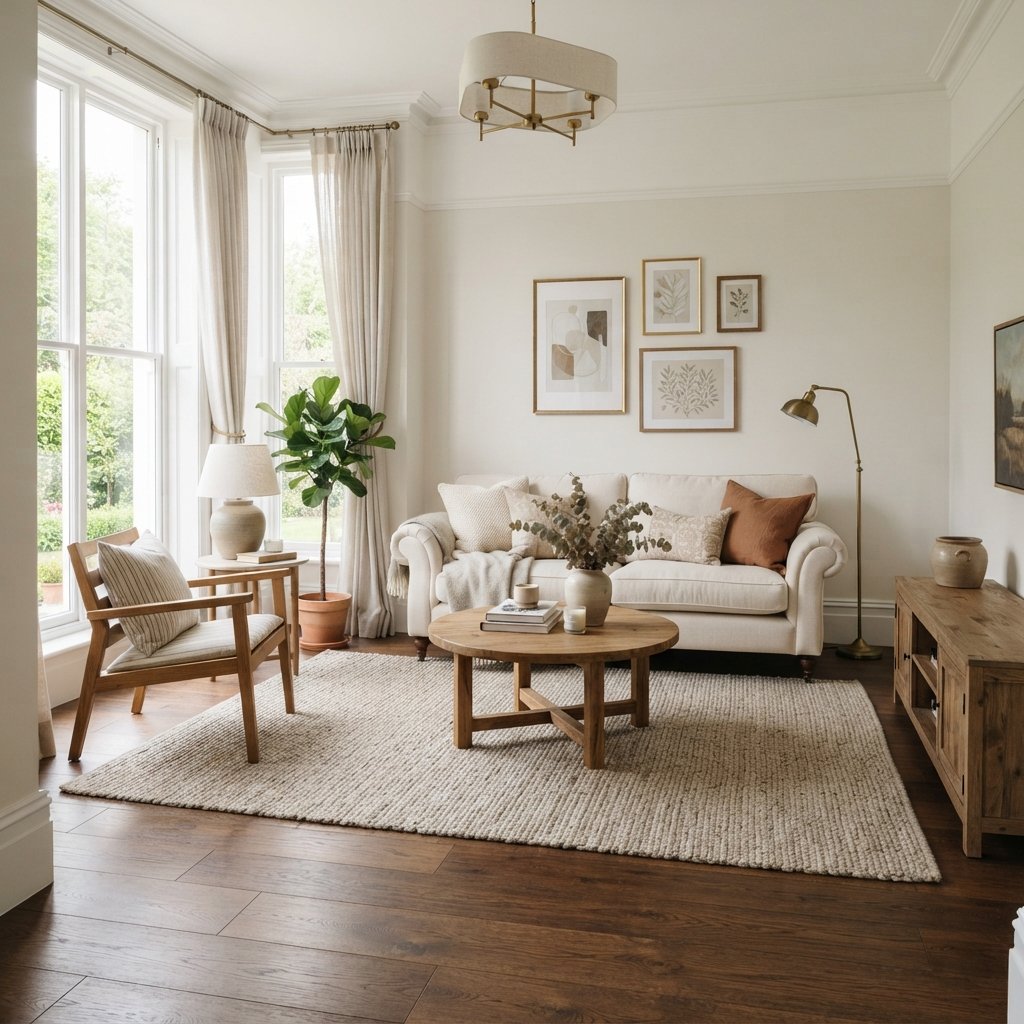
Dark wood floors can make a room feel rich, warm, and grounded, but choosing the right wall color can be tricky.
If the walls are too dark, the entire space may feel heavier than you intended. If they’re too cool, they can clash with the warmth in the flooring. And if you automatically reach for bright white, the contrast between the walls and floors can sometimes feel harsher than expected.
The best wall colors that go with dark wood floors depend on the undertones in the flooring, the amount and direction of natural light, your furniture, and the atmosphere you want to create.
Warm whites and soft off-whites can create beautiful contrast. Greige and taupe can soften the transition between light walls and dark floors. Sage, muted blue, and earthy colors can introduce personality while still allowing the flooring to anchor the room.
And yes—you can use dark wall colors with dark wood floors too.
Here are 17 wall color ideas to consider, along with practical tips for coordinating paint with espresso, walnut, dark brown, and other deep wood flooring.
Start With the Undertone of Your Dark Wood Floors
Before choosing paint, look closely at the flooring.
“Dark wood” describes the depth of the color, but it doesn’t tell you the undertone.
Dark flooring might lean:
- Warm brown
- Red-brown
- Orange-brown
- Yellow-brown
- Neutral brown
- Cool espresso
- Nearly black
Those undertones matter.
A paint color that looks beautiful beside neutral dark brown flooring may react very differently next to a reddish mahogany tone.
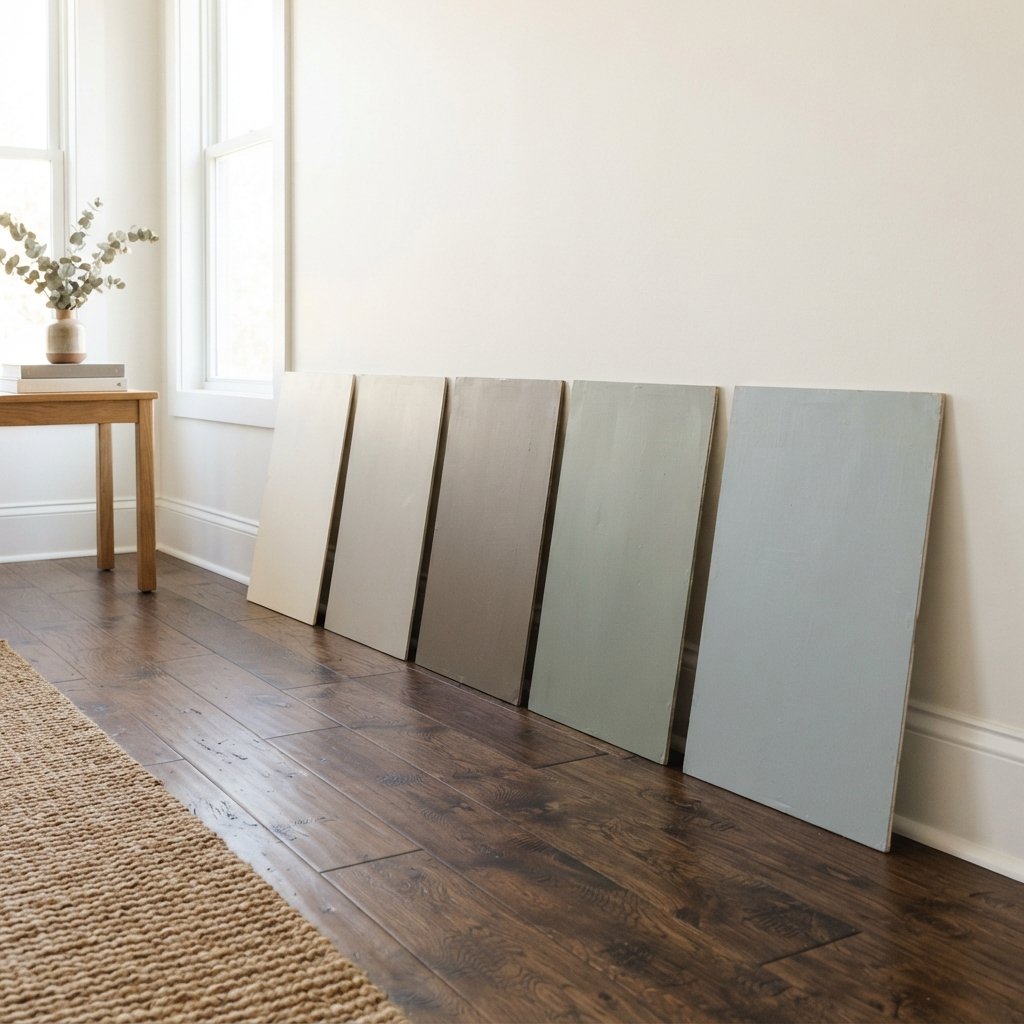
Instead of trying to identify the undertone from a photograph, place actual paint samples directly beside the flooring.
The relationship should look intentional rather than accidental.
1. Warm White
Warm white is one of the easiest wall colors to pair with dark wood floors.
The lighter walls provide contrast while the subtle warmth keeps the room from feeling stark.
Warm white can work particularly well with:
- Walnut
- Dark oak
- Espresso
- Warm brown floors
Add cream upholstery, natural textiles, and medium wood furniture to bridge the contrast between the light walls and dark floor.
This creates a classic combination that can work with traditional, transitional, farmhouse, and modern interiors.
2. Soft Off-White
If bright white feels too sharp, try a softer off-white.
Off-white can create a gentler transition between dark flooring and light walls.
Look for colors that coordinate with the flooring rather than fighting its undertones.
A simple palette might be:
Dark wood floors + soft off-white walls + cream upholstery + medium wood + black accents
The result can feel warm and layered without becoming beige.
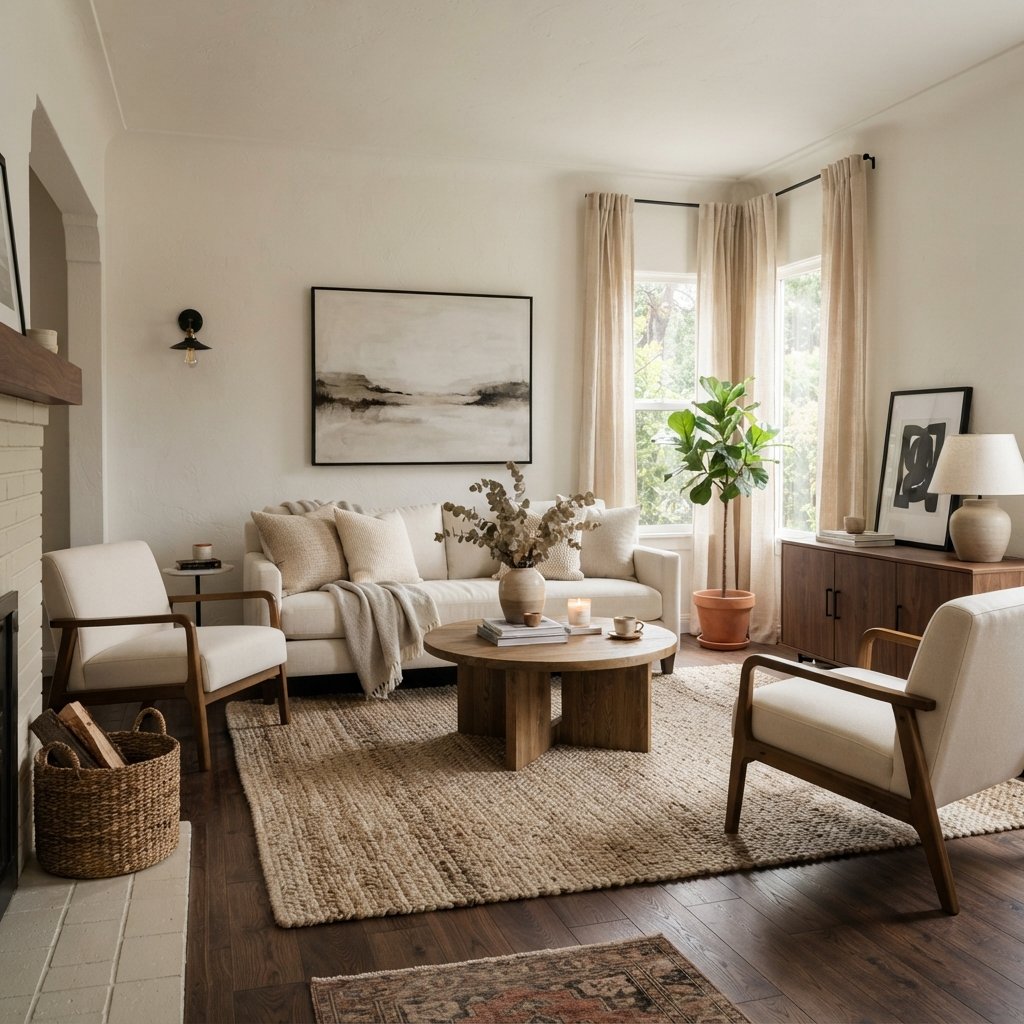
3. Cream
Cream can be beautiful with warm dark wood.
This combination creates a cozy, traditional feeling.
Cream works especially well when the room also contains:
- Beige
- Brown
- Warm stone
- Brass
- Warm wood furniture
However, be careful when the flooring has strong red or orange undertones.
A very yellow cream may amplify those colors more than you want.
Always sample.
4. Light Greige
Greige combines characteristics of gray and beige, making it a useful bridge between warm flooring and neutral furnishings.
A light greige can soften the contrast of dark wood without making the room feel overly warm.
It can work particularly well in homes that combine:
- Dark floors
- Cream upholstery
- Black accents
- White trim
- Mixed wood furniture
Greige varies enormously, so compare samples carefully.
Some greiges lean strongly beige, while others appear much cooler.
5. Warm Beige
Beige has made a strong return to interiors because of its warmth and versatility.
With dark wood floors, a light or medium warm beige can create a cozy tonal palette.
Pair it with:
- Cream
- Brown
- Black
- Olive
- Natural materials
This combination works particularly well if you want a room that feels warm rather than crisp.
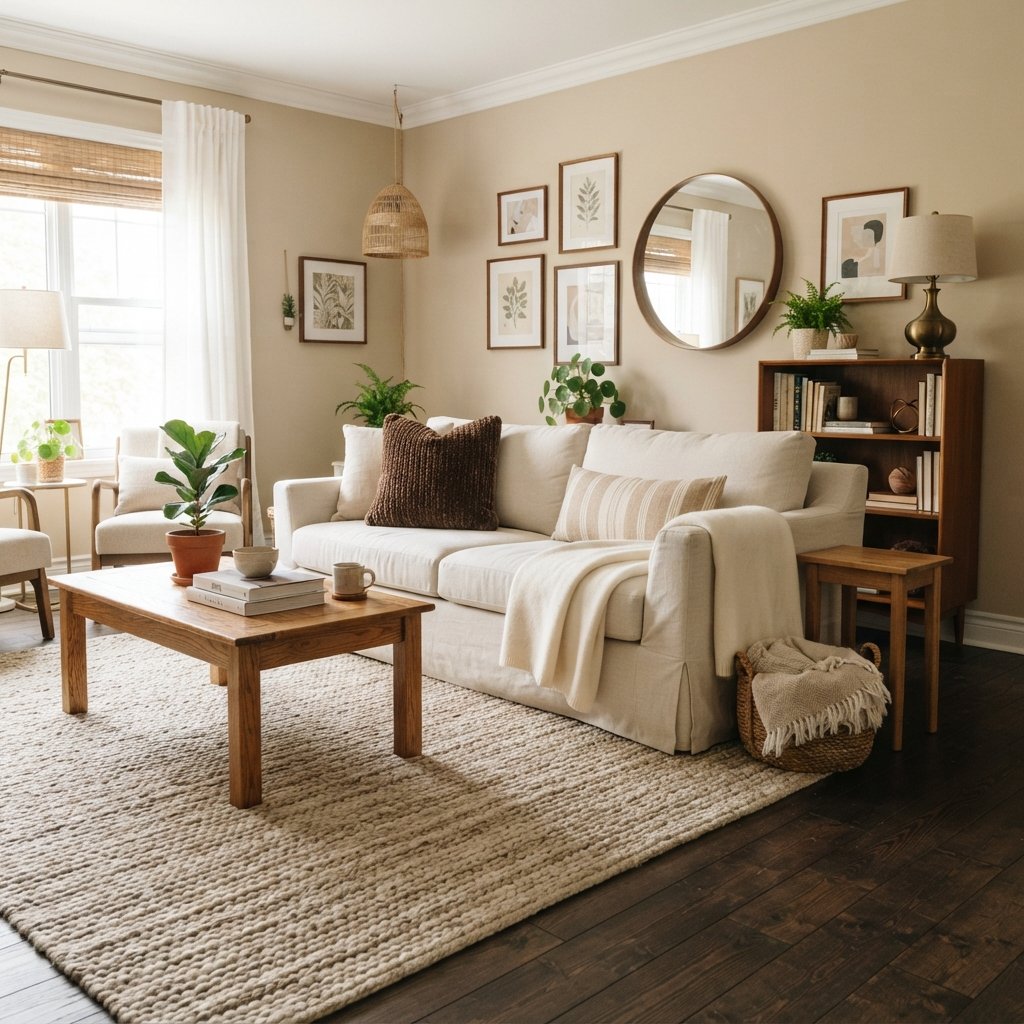
6. Soft Taupe
Taupe can be an excellent choice when you want slightly more depth than beige.
It can bridge dark brown flooring and light upholstery beautifully.
Try:
Dark walnut floors + soft taupe walls + cream sofa + black accents
Taupe is particularly useful in bedrooms and living rooms where you want a sophisticated, calm palette.
Some taupes can show pink, violet, gray, or green influences depending on their formulation and surroundings, so sampling is essential.
7. Mushroom
Mushroom is an earthy neutral somewhere in the broad beige-taupe family.
It can create a beautiful layered effect with dark floors because it doesn’t produce the extreme contrast of white.
Mushroom works nicely with:
- Walnut
- Espresso
- Cream
- Olive
- Black
- Warm metals
Use lighter furniture and textiles if you want to keep the room from feeling too heavy.
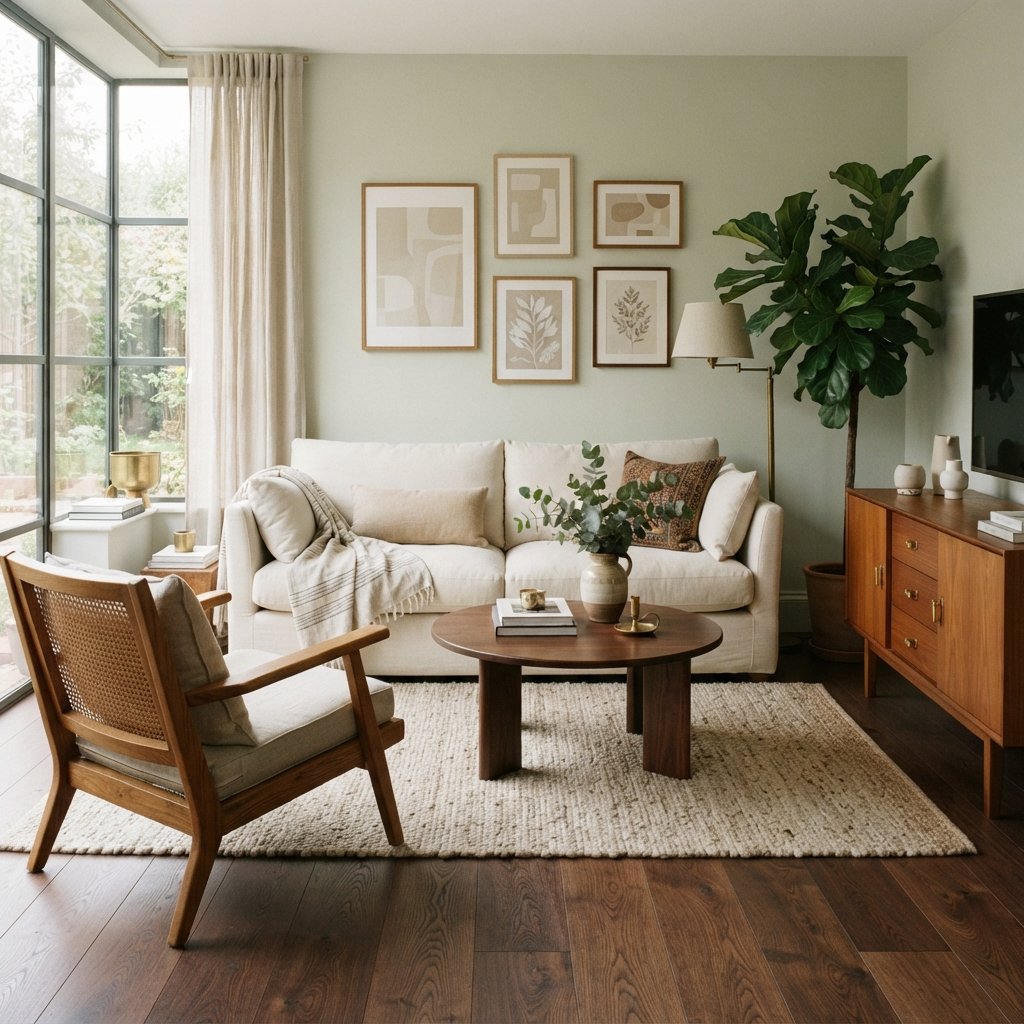
8. Pale Sage Green
Green and wood naturally complement each other.
A pale sage wall can add color without overpowering dark flooring.
Sage works particularly well with:
- Dark walnut
- Warm brown wood
- Cream
- Beige
- Natural linen
- Brass
Choose a muted sage rather than an extremely saturated green if you want the room to remain calm.
9. Muted Olive Green
For a richer look, move from sage toward olive.
Olive adds more depth while maintaining an earthy connection with wood.
Try:
Dark wood + muted olive + cream + warm metal
This can create a beautiful library, dining room, bedroom, or cozy living space.
If the room has limited natural light, test several depths before committing.
10. Dusty Blue
Blue can create an attractive contrast with warm brown flooring.
Instead of a bright blue, consider something muted.
Dusty blue works nicely with:
- Dark brown floors
- Cream
- Warm white
- Walnut
- Cognac
- Brass
The coolness of blue can balance a floor with significant warmth.
But if the floor has a very red undertone, check the combination carefully to make sure the contrast feels intentional.
11. Blue-Gray
Blue-gray offers a quieter, more neutral version of blue.
It can work beautifully in bedrooms, bathrooms, and living spaces with dark flooring.
Pair it with warmer elements to keep the room balanced:
- Cream
- Warm white
- Brown leather
- Natural wood
- Woven textures
Avoid choosing blue-gray from a tiny chip.
Its blue undertone may become much more noticeable once it’s covering an entire room.
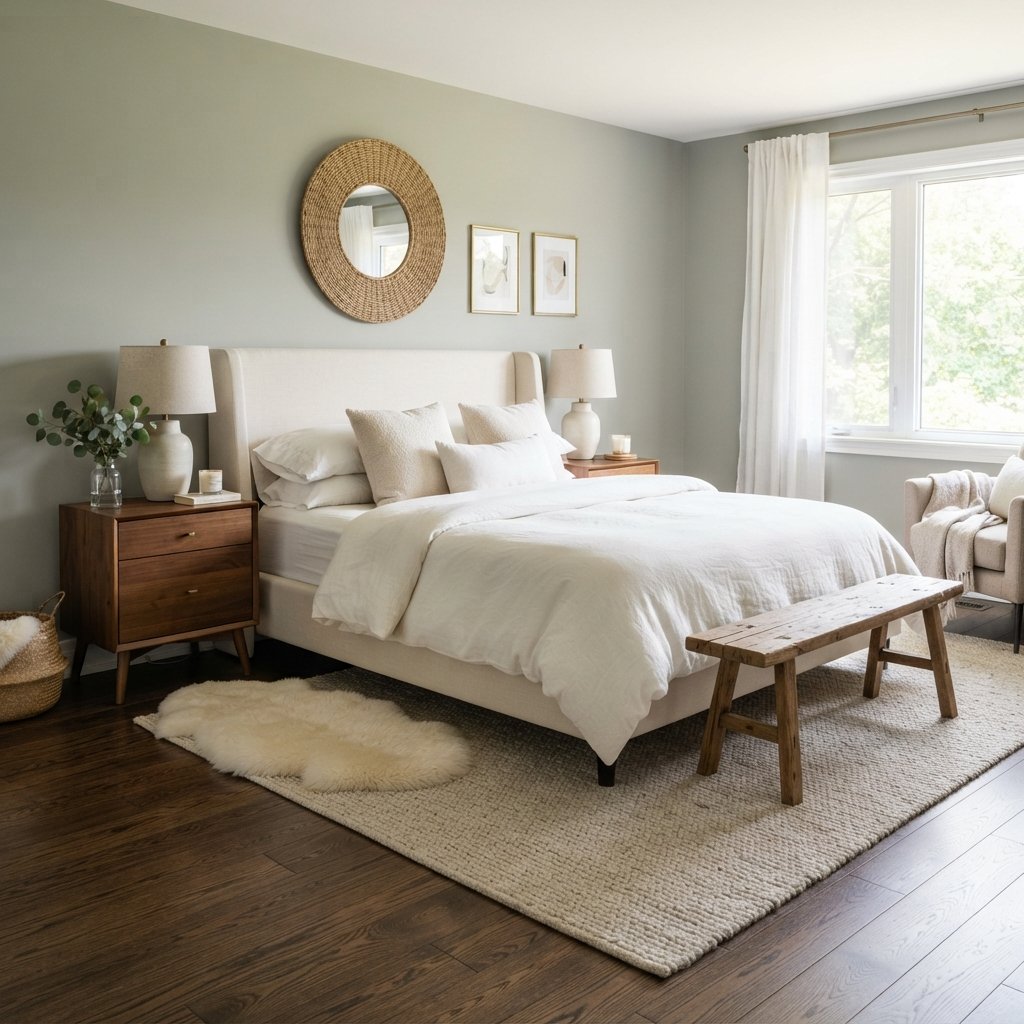
12. Muted Green-Gray
A soft green-gray can provide a subtle color that still behaves much like a neutral.
It can work particularly well if the room includes both warm and cool elements.
For example:
Dark brown floor + green-gray walls + cream sofa + black accents + oak furniture
This creates variation without requiring a bold wall color.
13. Pale Blue-Green
A muted blue-green can bring freshness to dark floors.
This is especially useful if the flooring makes the room feel visually heavy.
Pair pale blue-green walls with:
- Warm white
- Cream
- Light wood
- Dark wood
- Woven materials
The combination can work well in coastal, transitional, and relaxed traditional interiors without requiring obvious beach-themed decor.
14. Muted Clay
Dark wood doesn’t have to be paired only with cool or neutral walls.
A soft clay color can create a warm, earthy room.
Choose a muted version rather than a highly saturated orange.
Pair it with:
- Cream
- Dark brown
- Olive
- Natural wood
- Black
This palette can feel especially cozy in dining rooms and bedrooms.
15. Dusty Rose
Dusty rose can be surprisingly sophisticated with dark brown flooring.
Look for muted, earthy pink rather than a bright sugary pink.
Combine it with:
- Cream
- Chocolate brown
- Burgundy
- Walnut
- Warm metal
The dark floor helps ground the softness of the wall color.
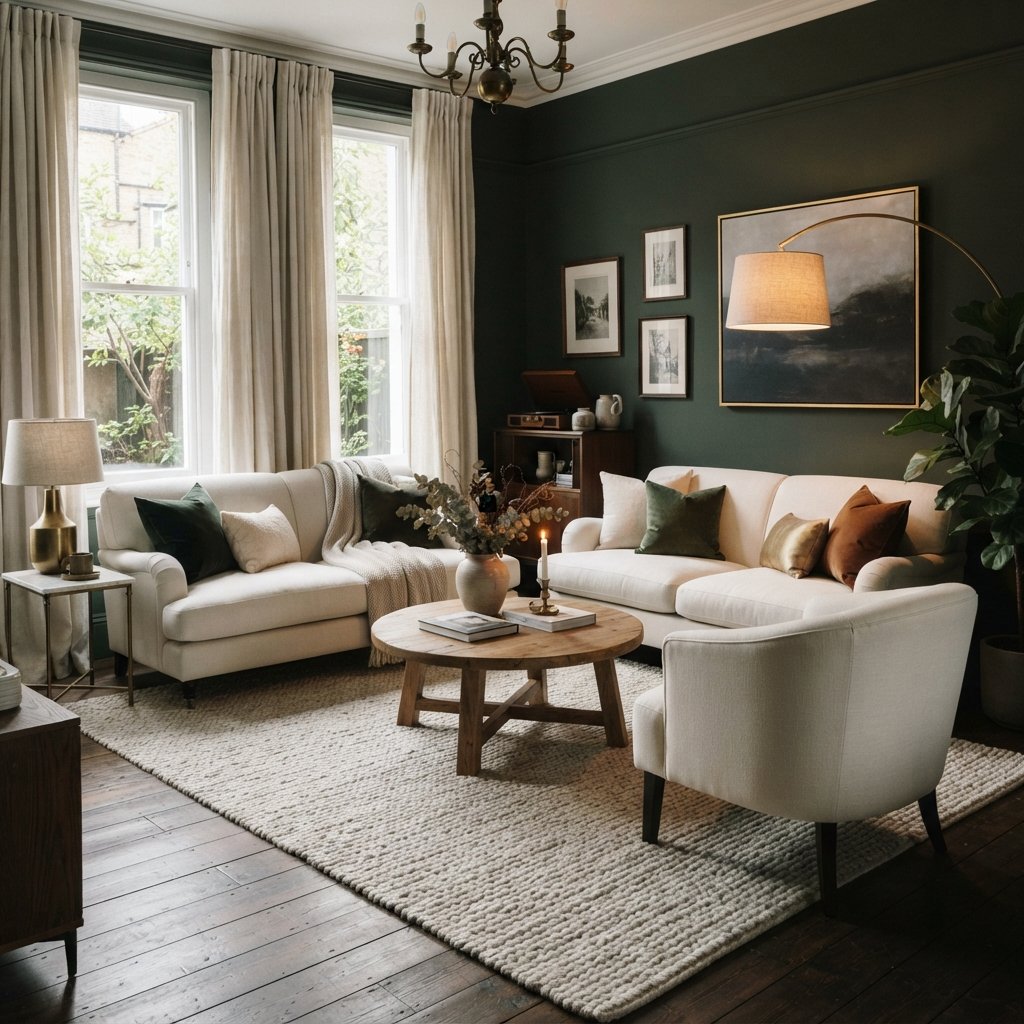
16. Deep Green
Dark walls and dark floors can absolutely work together.
Deep green creates a dramatic, enveloping room.
To keep the palette balanced, introduce lighter elements through:
- Curtains
- Rug
- Bedding
- Upholstery
- Artwork
For example:
Dark wood floors + deep green walls + cream curtains + ivory rug + walnut furniture
The contrast comes from the lighter furnishings rather than the floor and walls.
17. Charcoal
Charcoal walls with dark wood floors create a sophisticated, dramatic look.
This combination is best when intentional.
Use lighter materials to prevent everything from blending together.
Try:
Dark floor + charcoal walls + cream sofa + pale rug + warm wood
Charcoal can work particularly well in:
- Dining rooms
- Bedrooms
- Offices
- Libraries
Good lighting becomes important because both the floor and walls absorb more light than pale finishes.
What Wall Color Goes With Dark Brown Floors?
If your floors are a relatively neutral dark brown, you have plenty of options.
For a light look, try:
- Warm white
- Off-white
- Light greige
- Beige
For subtle color:
- Sage
- Dusty blue
- Green-gray
For drama:
- Deep green
- Charcoal
Use your furniture and desired mood to narrow the choices.
What Wall Color Goes With Espresso Floors?
Espresso floors can appear extremely dark, especially in rooms with limited natural light.
If you want contrast, try:
- Soft white
- Warm off-white
- Pale greige
- Light taupe
If you want a moodier room, use:
- Olive
- Deep green
- Charcoal
A large light-colored rug can also break up the expanse of dark flooring.
What Wall Colors Go With Dark Walnut Floors?
Walnut often brings beautiful warmth into a room.
Consider:
- Warm white
- Cream
- Beige
- Taupe
- Sage
- Olive
- Dusty blue
Warm walnut and muted green are particularly natural companions.
For a more contemporary look, combine dark walnut with warm white walls and black accents.
Wall Colors for Dark Wood Floors and White Trim
White trim can provide useful definition.
Your walls don’t need to be very dark to contrast with it.
Try:
- Greige
- Taupe
- Mushroom
- Sage
- Green-gray
- Dusty blue
Even a subtle wall color can create enough difference for the white trim to stand out.
What Colors Go With Dark Wood Floors in a Living Room?
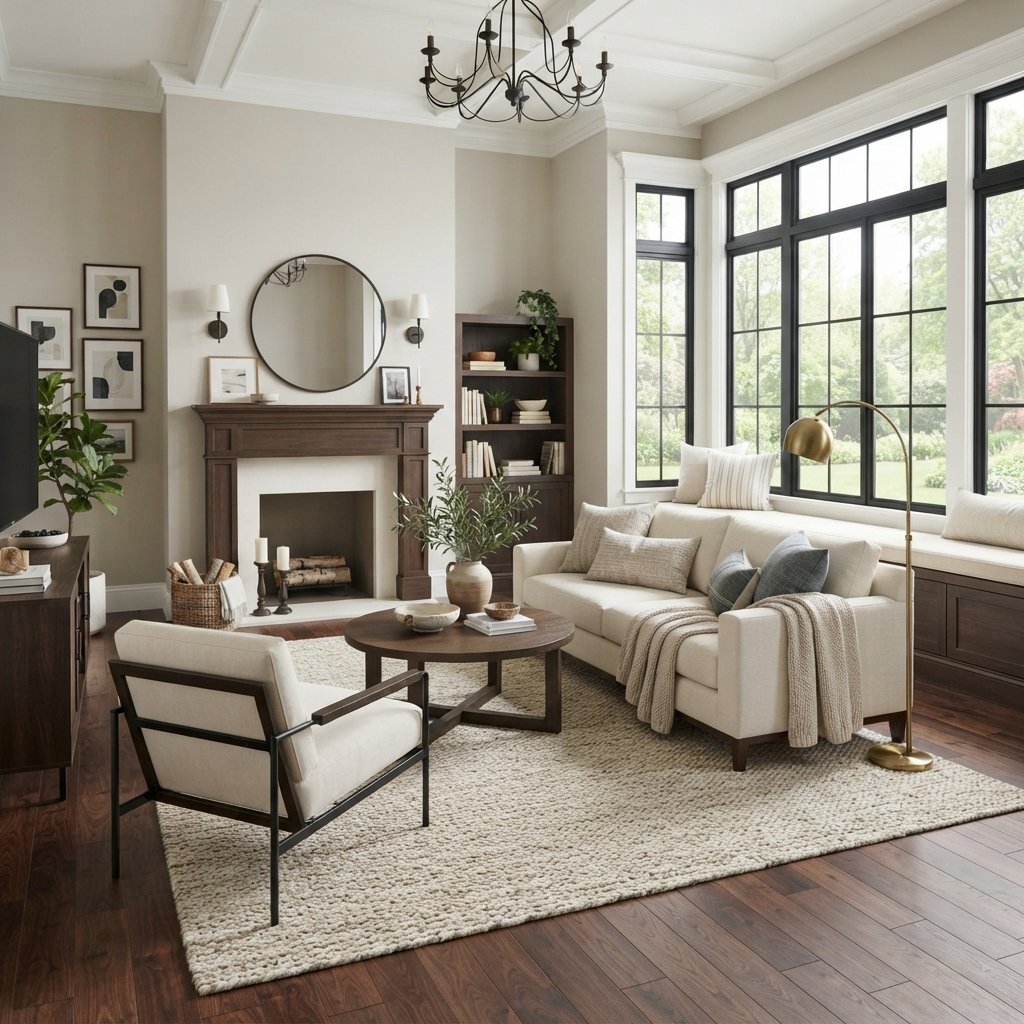
Living rooms usually contain more materials than almost any other room.
Before choosing paint, consider:
- Sofa
- Rug
- Fireplace
- Curtains
- Flooring
- Adjacent rooms
If you have a cream sofa and dark wood floor, warm white, greige, taupe, or sage walls can create a comfortable foundation.
If your furniture is also dark, use lighter walls and a large light rug to create separation.
Wall Colors for a Bedroom With Dark Wood Floors
Bedrooms can handle softer, slightly moodier colors.
Consider:
- Warm white
- Taupe
- Sage
- Green-gray
- Dusty blue
- Deep green
If both the bed and flooring are dark, lighter walls may provide needed contrast.
If the bed is cream or white, deeper walls can create a beautiful backdrop.
Wall Colors for a Kitchen With Dark Wood Floors
Kitchen wall colors need to coordinate with more than the floor.
Also consider:
- Cabinets
- Countertops
- Backsplash
- Appliances
If you have dark floors and white cabinets, soft off-white, pale greige, or muted green walls may work beautifully.
If both cabinets and flooring are dark, a lighter wall color can prevent the room from feeling overly heavy.
Wall Colors for Dark Floors and Dark Furniture
This is where rooms can start feeling visually heavy.
If both your floors and furniture are dark, introduce lighter values through:
- Walls
- Rugs
- Curtains
- Upholstery
- Bedding
Try warm white, off-white, light greige, or pale beige walls.
You don’t necessarily need to replace the dark furniture.
Creating contrast around it can completely change how it feels.
Wall Colors for Dark Floors and Light Furniture
With cream, beige, or white furniture, you have more freedom to use deeper walls.
Consider:
- Taupe
- Olive
- Deep green
- Dusty blue
- Charcoal
The light furniture provides contrast between the walls and flooring.
Should Walls Be Lighter Than Dark Wood Floors?
They don’t have to be.
Light walls are popular with dark floors because the contrast can keep the room feeling open.
But dark-on-dark palettes can be beautiful too.
The key is creating contrast elsewhere.
If the floor and walls are both dark, use lighter:
- Rugs
- Furniture
- Curtains
- Bedding
- Artwork
Think about the entire room rather than the wall and floor in isolation.
How to Make Dark Wood Floors Feel Lighter
You don’t need to replace the flooring.
Try:
Use a Large Light Rug
A cream, beige, or lightly patterned rug breaks up the dark surface.
Choose Lighter Upholstery
Cream and warm white furniture create contrast.
Use Light or Medium Wall Colors
This shifts more visual weight upward.
Add Reflective Surfaces Thoughtfully
Mirrors and appropriate lighting can help distribute available light.
Use Lighter Window Treatments
Heavy dark curtains can make a room with dark flooring feel even heavier.
Improve Layered Lighting
Combine ambient, task, and accent lighting as appropriate.
How to Warm Up Dark Wood Floors
If your flooring looks cool or nearly black, introduce warmth through:
- Cream
- Beige
- Camel
- Cognac
- Warm wood
- Brass
- Olive
Warm wall colors aren’t your only option.
Furniture and textiles can provide much of the warmth.
Should You Use Gray Walls With Dark Wood Floors?
You can, but choose gray carefully.
A cool gray next to warm brown flooring can sometimes make the floor appear more orange or red.
If you want a gray-like neutral, consider a warmer greige, taupe, or green-gray.
Compare large samples directly against the flooring before committing.
Should You Use White Walls With Dark Floors?
Absolutely.
White walls and dark floors create strong contrast.
But the type of white matters.
A stark cool white may create a very crisp result, while a warm or softened white can create a gentler transition.
If your floors are very warm, begin by comparing warmer and neutral whites.
What Color Rug Goes With Dark Wood Floors?
Rugs provide another opportunity to control contrast.
Try:
- Cream
- Beige
- Greige
- Vintage-inspired multicolor
- Muted blue
- Sage
- Warm taupe
A light rug can make dark floors feel less dominant.
A patterned rug can also help connect the floor with the wall color.
For example:
Dark brown floor + cream/green patterned rug + sage walls
creates a natural transition from one surface to another.
How to Test Wall Colors With Dark Wood Floors
Don’t choose paint with the sample held at eye level across the room.
You need to see how the paint interacts directly with the flooring.
Step 1: Choose Several Directions
Try:
- Warm white
- Greige
- Taupe
- Muted color
Step 2: Make Large Samples
Use large sample boards or another appropriate sampling method.
Step 3: Place Them Near the Floor
The wall color and floor need to be evaluated together.
Step 4: Check Different Walls
Natural light can make the same color look different around the room.
Step 5: Evaluate During the Day and at Night
Artificial lighting may alter the undertones significantly.
Step 6: Include Your Furniture
A wall color shouldn’t only work with the flooring.
It needs to coordinate with the whole room.
Common Mistakes When Choosing Wall Colors for Dark Floors
Ignoring the Floor’s Undertone
Not every dark wood floor is the same brown.
Automatically Choosing Bright White
A softer white may coordinate better.
Going Too Cool
Cool paint can exaggerate warmth or redness in some flooring.
Making Everything Dark
If the floors, furniture, walls, and rug are all dark, the room may lack definition.
Making Everything Light Except the Floor
An extreme jump from very dark flooring to stark white everything can sometimes feel disconnected.
Forgetting About Rugs
A rug can completely change the relationship between wall and floor.
Choosing Paint Before Furniture
The room needs to work as a whole.
Testing Only a Tiny Sample
Large samples make undertones much easier to evaluate.
Simple Color Palettes for Dark Wood Floors
If you’re stuck, use these combinations as starting points.
Warm and Timeless
Dark wood + warm white + cream + medium wood + black
Earthy
Dark wood + sage + cream + walnut + brass
Soft Neutral
Dark wood + greige + ivory + taupe + black
Moody
Dark wood + deep green + cream + warm brown + brass
Relaxed Blue
Dark wood + dusty blue + warm white + cognac + cream
Tonal
Dark wood + mushroom + cream + chocolate brown + beige
These palettes can be adapted to your home’s existing finishes.
FAQ About Wall Colors That Go With Dark Wood Floors
What wall color looks best with dark wood floors?
Warm white, off-white, greige, beige, taupe, sage, dusty blue, and muted green can all look beautiful. The best option depends on the floor’s undertone and the room’s lighting and furniture.
What color walls go with dark brown floors?
For a lighter look, try warm white, cream, light greige, or beige. For color, consider sage or dusty blue. Deep green or charcoal can create a moodier result.
What color walls go with dark walnut floors?
Warm white, taupe, beige, sage, olive, and muted blue can coordinate beautifully with dark walnut.
Do dark wood floors make a room look smaller?
Dark floors can create visual weight, but they don’t automatically make a room feel small. Wall color, lighting, rug size, furniture, and window treatments all influence the overall effect.
Should walls be lighter than floors?
They can be, but they don’t have to be. Light walls create obvious contrast with dark floors, while dark walls can create a sophisticated tonal room when balanced with lighter furnishings.
Do white walls look good with dark wood floors?
Yes. White walls and dark floors are a classic combination. A warm or softened white may create a gentler relationship with warm brown flooring than a very cool, stark white.
Does sage green go with dark wood floors?
Yes. Muted sage can complement the natural warmth of many brown wood floors and works particularly well with cream and natural materials.
Does greige go with dark wood floors?
Yes. Greige can bridge warm flooring and neutral furniture. Choose the specific greige carefully because some lean significantly warmer or cooler than others.
What colors make dark floors look lighter?
Light walls, cream or beige rugs, pale upholstery, and lighter window treatments can reduce the visual weight of dark flooring.
Can you use dark walls with dark floors?
Yes. Use lighter furniture, rugs, curtains, or bedding to create enough contrast and prevent the room from becoming visually flat.
Final Thoughts
Choosing wall colors that go with dark wood floors becomes much easier once you stop treating every dark floor as the same color.
Start by identifying whether your flooring appears warm, reddish, neutral, cool, or nearly black.
Then decide how much contrast you want.
For a bright, timeless look, warm white, soft off-white, greige, and beige are excellent directions to explore.
For subtle color, consider sage, olive, dusty blue, blue-gray, or green-gray.
And if you love moody rooms, don’t be afraid of deep green or charcoal. Dark walls can work beautifully with dark floors when you balance them with lighter rugs, upholstery, curtains, and artwork.
Most importantly, test your paint samples directly beside the flooring.
A wall color isn’t successful because it looks beautiful on a paint chip. It’s successful because it works with the floors, furniture, lighting, and materials already in your room.
Once those elements are considered together, dark wood floors can become one of the strongest foundations for a warm, layered, and beautifully coordinated color palette.