


If you’ve spent any time researching paint colors, you’ve probably seen three letters appear again and again: LRV.
But what is LRV, and does it really matter when you’re choosing paint?
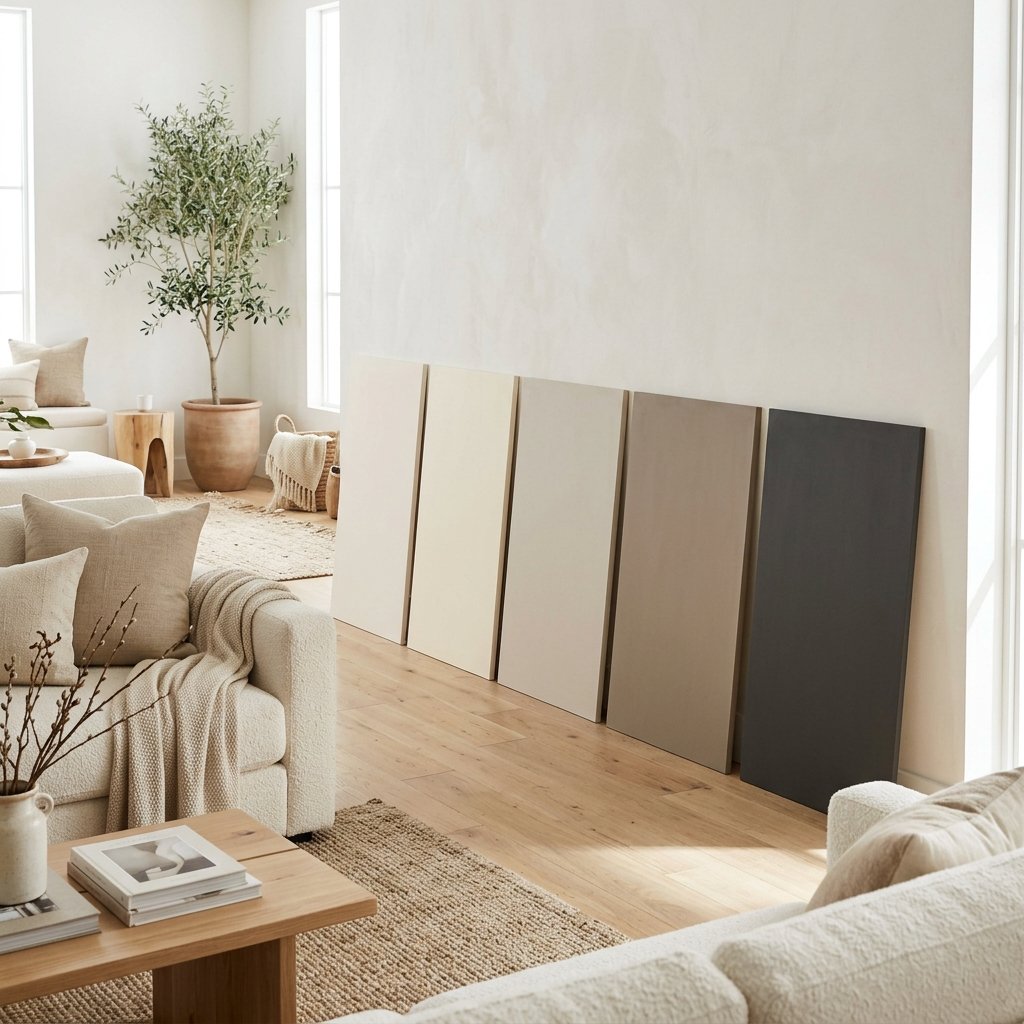
LRV stands for Light Reflectance Value. In simple terms, it’s a measurement used to describe how much visible light a color reflects compared with how much it absorbs.
Higher-LRV colors reflect more light and generally appear lighter. Lower-LRV colors absorb more light and generally appear darker.
LRV can be incredibly useful when you’re comparing paint colors for a living room, bedroom, kitchen, bathroom, hallway, or exterior. But it doesn’t tell you everything about a color.
Two paint colors can have similar LRVs and still look completely different because of their undertones, hue, surrounding finishes, and lighting.
So instead of using LRV to choose your paint color for you, think of it as one more useful piece of information.
Here’s how LRV works, what the numbers mean, and how to use it when choosing paint colors for your home.
What Does LRV Mean?
LRV means Light Reflectance Value.
It’s expressed on a scale from 0 to 100, with the ends representing theoretical absolute black and pure white.
In practical paint collections, colors generally don’t reach those absolute extremes.
A color with a higher LRV reflects more visible light.
A color with a lower LRV absorbs more visible light.
So, generally:
Higher LRV = lighter-looking color
Lower LRV = darker-looking color
That simple concept can help you understand why two colors that look similar on a tiny paint chip may feel very different once they’re covering an entire room.
What Is the LRV Scale?
Think of LRV as a spectrum from extremely dark to extremely light.
A simplified way to understand it is:
| Approximate LRV | General Appearance |
| 0–10 | Very dark |
| 10–30 | Dark |
| 30–50 | Medium to medium-dark |
| 50–70 | Medium-light to light |
| 70–90 | Very light |
| 90–100 | Extremely reflective/light |
These ranges aren’t strict decorating rules.
A color with an LRV of 48 isn’t automatically wrong for a small room, and a color with an LRV of 75 isn’t guaranteed to make a dark room feel sunny.
Use the numbers as a comparison tool rather than a formula.
Why Is LRV Important When Choosing Paint?
LRV helps you anticipate how light or dark a paint color may feel.
This can be useful when you’re deciding between several similar colors.
Imagine you’re comparing three greiges.
They may have similar undertones, but one is considerably lighter than the others.
The lighter color may create less contrast with white trim, while the deeper color may give the walls more definition.
LRV helps quantify that difference.
It can be especially useful when choosing colors for:
- Dark rooms
- Bright rooms
- Small rooms
- Open floor plans
- Hallways
- Bathrooms
- Exteriors
- Rooms with limited windows
But LRV shouldn’t be considered independently from lighting and undertones.
Does a Higher LRV Mean a Room Will Be Brighter?
Not necessarily.
This is one of the most important things to understand about LRV.
A high-LRV paint reflects available light.
It doesn’t create light.
If a room has very little natural or artificial light, painting it a high-LRV white won’t magically make sunlight appear.
The room may look lighter than it would with charcoal walls, but it can still feel dim.
This is why a dark room doesn’t automatically need white paint.
Sometimes a warmer mid-tone neutral or deeper color creates a more intentional result.
Does LRV Tell You How Much Natural Light a Room Has?
No.
LRV describes the color, not the room.
A room’s brightness is influenced by:
- Number of windows
- Window size
- Window direction
- Exterior obstructions
- Time of day
- Artificial lighting
- Flooring
- Furniture
- Other surfaces
A high-LRV paint in a dark north-facing hallway and the same paint in a sunny south-facing living room can look dramatically different.
High-LRV Paint Colors
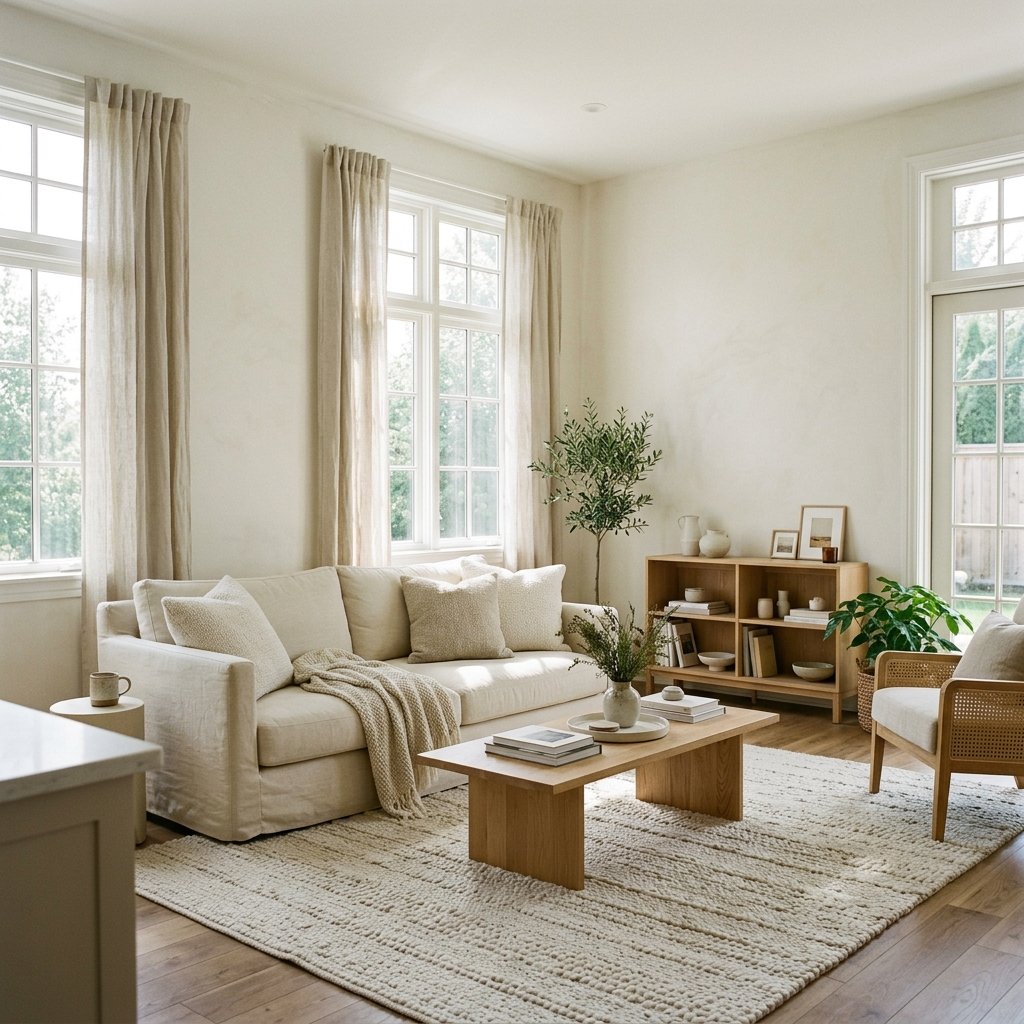
High-LRV colors are generally light colors.
This category often includes:
- Whites
- Off-whites
- Pale creams
- Very light beige
- Pale gray
- Very light greige
- Some pale pastels
These colors reflect a relatively large amount of available visible light.
They’re useful when you want a light backdrop or subtle contrast.
However, high-LRV colors can sometimes become washed out in extremely bright spaces.
They can also reveal undertones more clearly than expected.
Low-LRV Paint Colors
Low-LRV colors are darker and absorb more visible light.
Examples include:
- Black
- Charcoal
- Deep navy
- Forest green
- Dark brown
- Burgundy
- Very dark gray
Low-LRV colors can create:
- Drama
- Depth
- Coziness
- Contrast
- A more enveloping feeling
There’s no rule saying low-LRV colors should only be used in large rooms.
A small powder room, bedroom, office, or dining room can look beautiful in a deep color.
The goal doesn’t always have to be making every room appear as large or bright as possible.
Mid-Range LRV Paint Colors
Colors in the middle of the LRV scale can provide noticeable depth without becoming extremely dark.
This broad category includes many:
- Beiges
- Taupes
- Greiges
- Grays
- Muted greens
- Blues
- Earth tones
Mid-range colors often show more color on the wall than very pale neutrals.
They can also create stronger contrast with white trim.
LRV and Undertones Are Not the Same Thing
This distinction is essential.
LRV tells you about the relative amount of visible light reflected by the color.
It does not tell you whether the paint is:
- Warm
- Cool
- Blue
- Green
- Violet
- Pink
- Yellow
- Beige
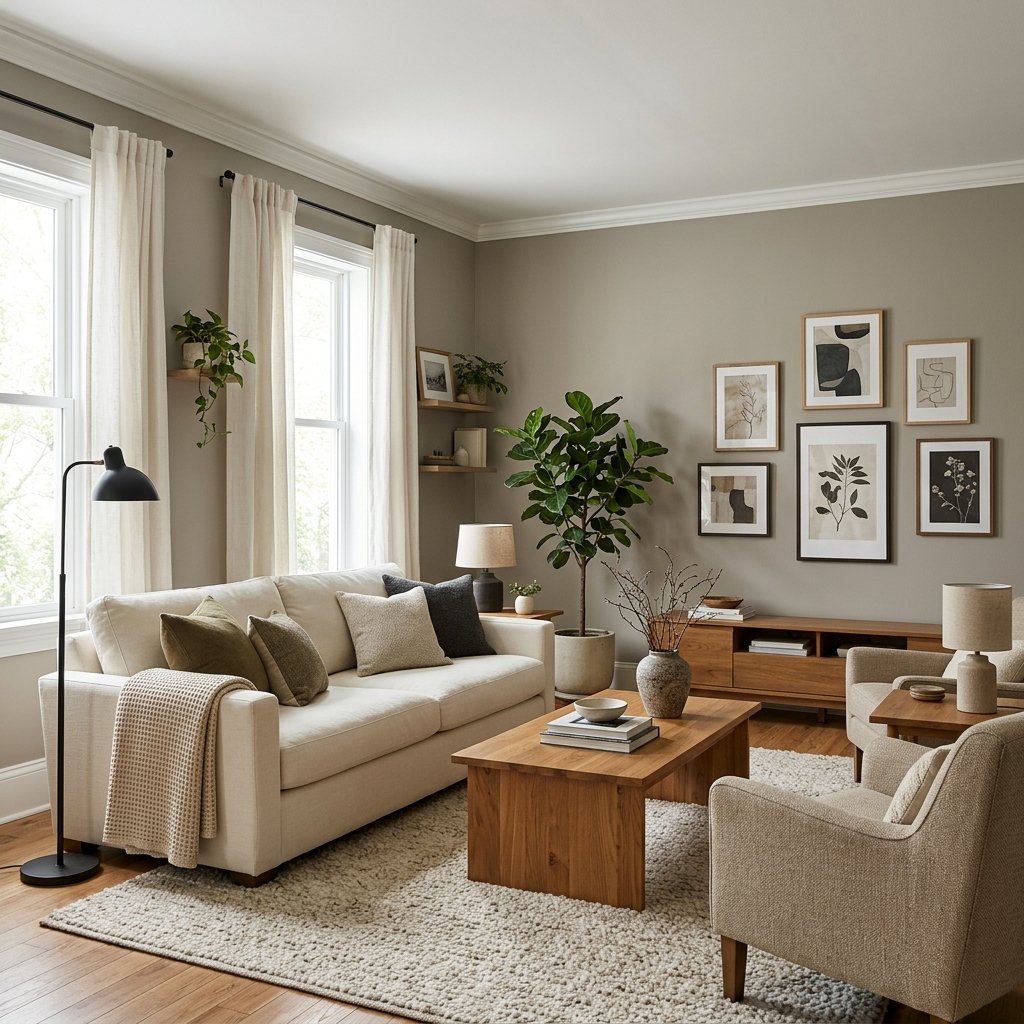
Two paint colors can have nearly identical LRVs but completely different undertones.
For example, imagine two similarly light neutrals.
One is a warm greige.
The other is a cool blue-gray.
Their LRVs may be similar, but they can look dramatically different beside an oak floor.
This is why LRV can’t replace understanding undertones.
LRV vs. Paint Undertone
Here’s a simple way to think about it:
LRV tells you approximately how light or dark the color is.
Undertone helps tell you which subtle colors influence its appearance.
You need both pieces of information.
If you’re choosing between paint colors, first decide whether the undertone works with your fixed finishes.
Then use LRV to help determine whether the depth is right.
Can Two Paint Colors Have the Same LRV?
Yes.
Two colors can have the same—or very similar—LRVs and look completely different.
A muted green and warm beige could have similar light reflectance while clearly being different colors.
Even two neutrals with similar LRVs can behave differently because one may have a green undertone while another leans violet or pink.
Never choose between colors based only on their LRV numbers.
How Does LRV Affect White Paint?
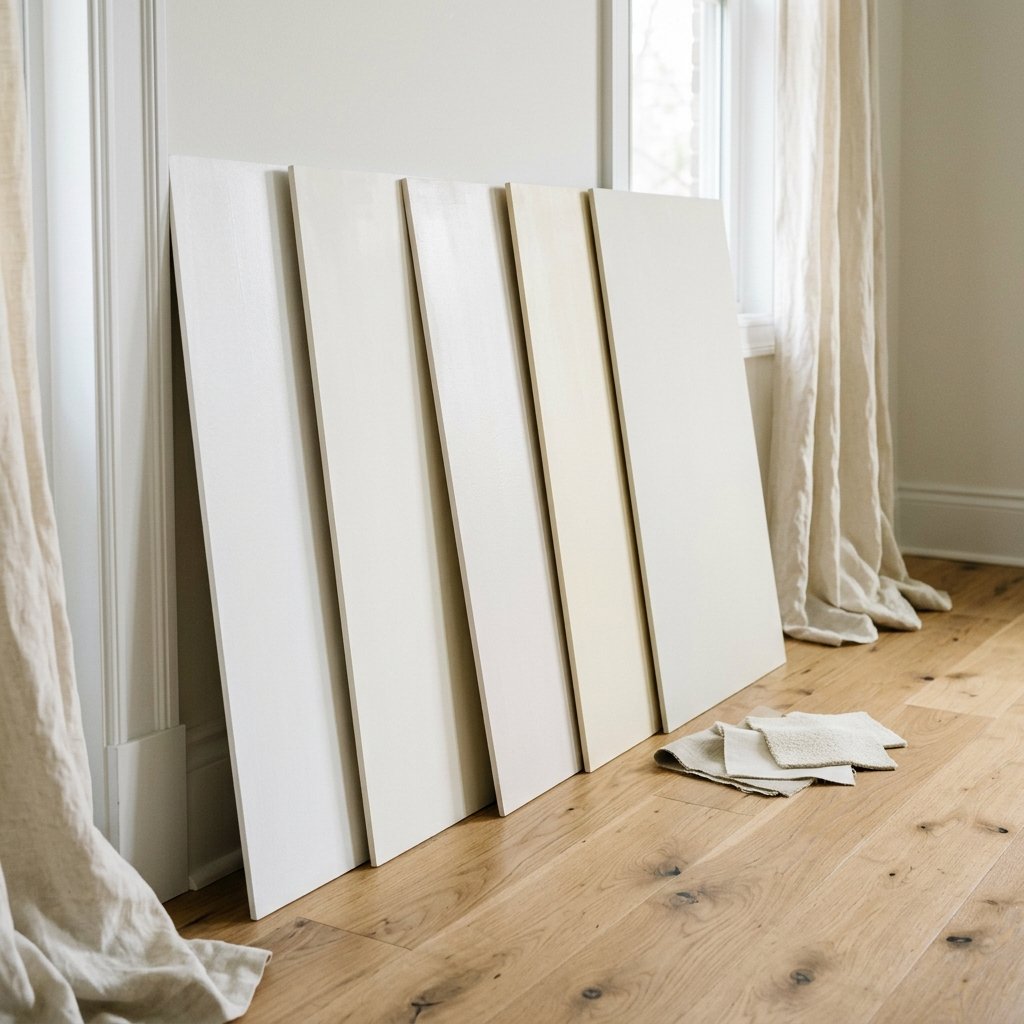
White paint typically has a high LRV, but whites aren’t identical.
Some whites are extremely bright and reflective.
Others are softer off-whites with more depth.
When choosing white paint, LRV can help you determine whether you’re comparing a very bright white with a softer white.
But undertones still matter.
A high-LRV cool white can feel very different from a creamy warm white.
How Does LRV Affect Gray Paint?
Gray is where LRV becomes particularly useful.
A very pale gray may behave almost like an off-white.
A medium gray will have noticeably more visual weight.
A dark charcoal can create an entirely different mood.
When comparing gray paint colors, use LRV to understand depth and samples to understand undertones.
A light gray can still have:
- Blue undertones
- Green undertones
- Violet undertones
- Beige warmth
The LRV doesn’t tell you which one.
How Does LRV Affect Greige Paint?
Greige combines gray and beige characteristics.
Because many popular greiges look similar online, comparing their LRV values can help you understand which are lighter or deeper.
For example, you may be choosing between:
- A pale greige
- A medium-light greige
- A deeper warm greige
LRV can help separate them by depth.
Then physical samples can help you compare the actual undertones.
What LRV Is Best for a Dark Room?
There’s no single correct number.
The common instinct is to choose the highest LRV possible.
Sometimes that works.
Sometimes it doesn’t.
If a dark room has little natural light, a very bright white may appear flat, shadowy, or cooler than expected.
Instead, you might prefer:
- Cream
- Warm beige
- Light greige
- Taupe
- Muted green
- A deeper dramatic color
Think about the atmosphere you want rather than trying to solve the entire lighting problem with paint.
Artificial lighting may make a bigger difference than moving a few points higher on the LRV scale.
What LRV Is Best for a Bright Room?
Bright rooms give you considerable flexibility.
You can use:
- High-LRV whites
- Pale neutrals
- Mid-tone colors
- Dark colors
Very bright natural light may make pale colors appear washed out.
A color with a little more depth can sometimes hold up beautifully in a sunny room.
Always test it throughout the day.
What LRV Is Best for a Small Room?
Room size doesn’t determine the correct LRV.
If you want a small room to feel light and airy, a higher-LRV color may support that goal.
But if you want a cozy bedroom, dramatic powder room, or sophisticated office, a lower-LRV color can work beautifully.
Don’t choose paint based on square footage alone.
LRV for North-Facing Rooms
North-facing rooms often receive cooler indirect light.
A light paint color may still appear cooler or more muted than expected.
High LRV doesn’t cancel a color’s undertone.
A high-LRV blue-gray can still look distinctly cool.
Warm white, cream, beige, or warm greige may be worth exploring if you want to balance the cooler quality of the room.
But always sample first.
LRV for South-Facing Rooms
South-facing rooms often receive stronger, warmer light.
High-LRV colors can appear especially bright.
Some very pale colors may become washed out during the brightest part of the day.
A slightly deeper color may retain more visual presence.
Again, there’s no required LRV range.
Evaluate the actual paint in the room.
LRV for East-Facing Rooms
East-facing rooms can change dramatically.
Morning sunlight may make the room bright and warm.
Later in the day, the same color may appear cooler and deeper.
Choose paint based on how the room is used.
If you’re primarily in the room during the afternoon, that’s the lighting you should prioritize.
LRV for West-Facing Rooms
West-facing rooms may be more subdued earlier in the day and become much warmer and brighter in the afternoon or evening.
A neutral can look dramatically warmer when direct western sunlight enters the room.
Check samples at multiple times.
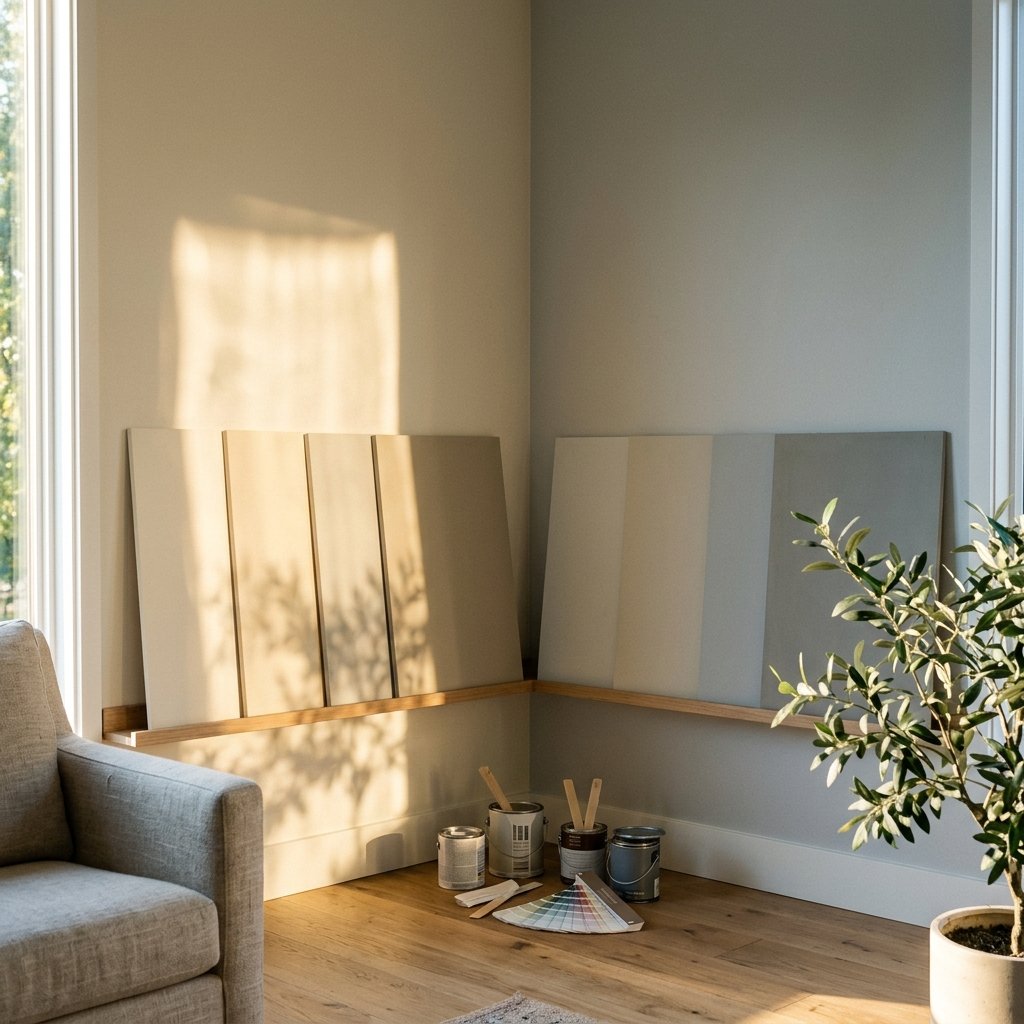
How Does Artificial Lighting Affect LRV?
Artificial lighting doesn’t change the published LRV number of a paint color, but it absolutely changes how you perceive the color.
Different light sources can emphasize different characteristics.
Your walls may look different under:
- Recessed lighting
- Table lamps
- Floor lamps
- Under-cabinet lighting
- Decorative fixtures
Instead of choosing paint under ideal daylight alone, check it under the lighting you actually use at night.
Can LRV Make a Room Look Bigger?
Indirectly, perhaps.
Light colors can reduce strong visual contrast and may contribute to an airy feeling.
But LRV isn’t a room-size calculator.
Furniture scale, clutter, lighting, flooring, layout, window treatments, and contrast all affect how spacious a room feels.
A dark room can still feel open.
A white room can still feel cramped.
Use LRV as one component of the overall design.
LRV and White Trim
LRV can help when you’re thinking about contrast between walls and trim.
Imagine:
Very light walls + bright white trim
The contrast may be subtle.
Now imagine:
Medium-depth walls + bright white trim
The trim will usually stand out much more.
If you want architectural trim to be noticeable, a greater difference in depth can help create that contrast.
But undertones still need to coordinate.
LRV and Ceilings
Ceilings are often painted white or another light color because lighter surfaces can reflect available light.
But white isn’t required.
Some designs use:
- Warm off-white
- Pale neutral
- Same color as the walls
- Deeper contrasting color
Using the same color across walls and ceiling can create an enveloping effect.
Remember that horizontal and vertical surfaces receive light differently, so the same paint may not appear identical on both.
LRV and Color Drenching
Color drenching often uses the same or closely related color across walls, trim, doors, and sometimes ceilings.
Even when the paint color is identical, it may appear different across surfaces because of:
- Light angle
- Paint sheen
- Shadows
- Surface orientation
This can create subtle dimension without changing the actual color.
Different surfaces may require different paint formulations or finishes, so follow manufacturer guidance.
LRV and Exterior Paint Colors
LRV can also be useful for exterior paint.
Outdoor light is dramatically stronger than typical indoor illumination, so exterior colors may appear lighter or brighter than expected.
Surroundings also influence the color.
Consider:
- Roof
- Stone
- Brick
- Landscaping
- Hardscaping
- Neighboring surfaces
There can also be practical requirements related to specific exterior materials. Some manufacturers may specify suitable paint colors or reflectance considerations for particular products.
Always follow the material and paint manufacturer’s requirements.
Is a Higher LRV Better?
No.
Higher doesn’t mean better.
It simply means more visible light is reflected.
A high-LRV color can be perfect for one room and disappointing in another.
Likewise, a low-LRV color can create exactly the atmosphere you want.
The best LRV is the one that supports your room, finishes, lighting, and design goals.
What LRV Should I Choose?
Instead of searching for one perfect number, ask these questions:
Do I want the walls to feel very light?
Look toward higher-LRV colors.
Do I want noticeable wall color?
Consider moving toward the middle range.
Do I want drama and depth?
Explore lower-LRV colors.
Do I want contrast with white trim?
Compare the relative depth of the wall and trim colors.
Is the room dark?
Decide whether you want to brighten the overall palette or embrace the room’s natural mood.
Do the undertones work?
This is essential regardless of LRV.
How to Compare Paint Colors Using LRV
LRV is most helpful when comparing colors rather than judging them individually.
Suppose you like three warm neutrals.
Start by checking:
- Undertones
- LRV
- Relationship with flooring
- Relationship with trim
- Relationship with furniture
- Appearance in natural light
- Appearance under artificial light
You might discover that all three have suitable undertones but one feels too pale.
That’s where LRV can help explain the difference.
How to Test Paint Colors Properly
Never rely solely on LRV.
Use physical samples.
A practical testing process is:
- Narrow your options to several colors.
- Check their LRV values for comparison.
- Obtain accurate physical samples.
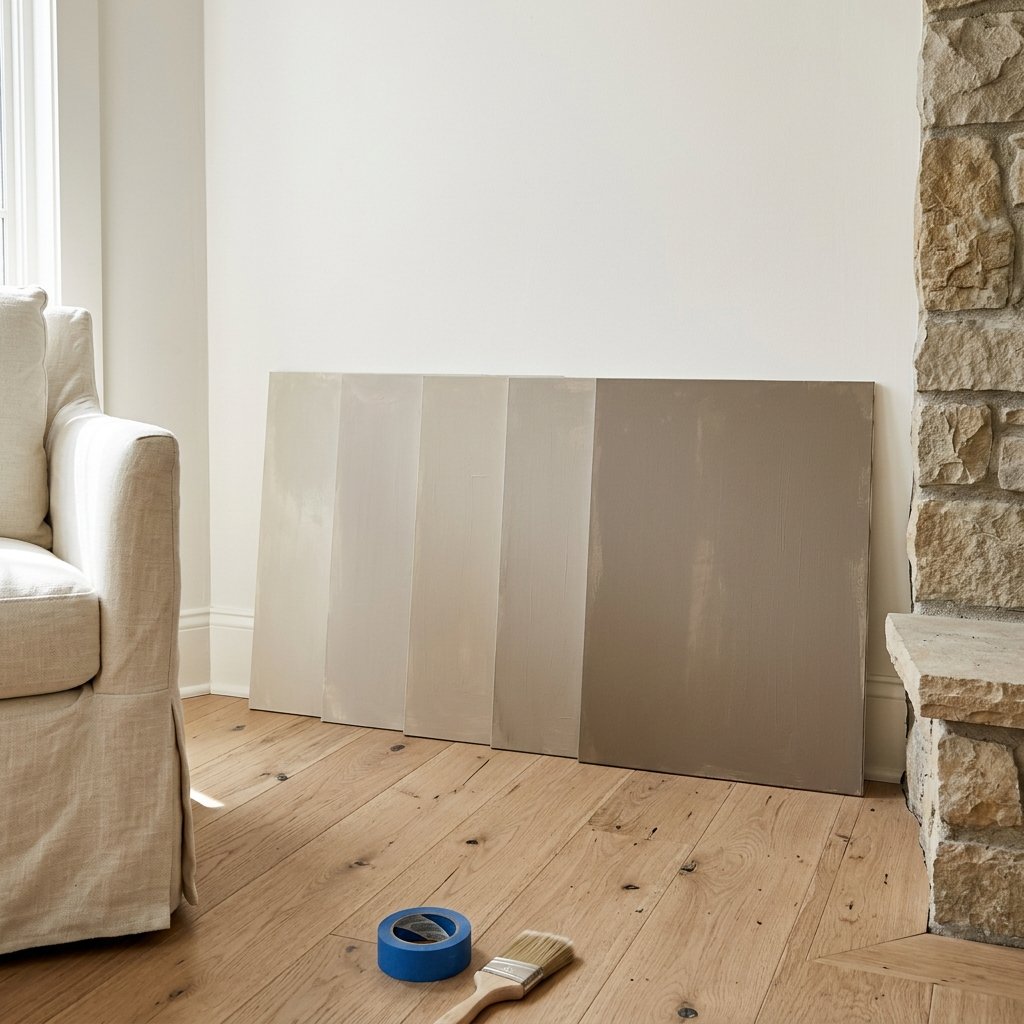
- Use large sample areas or sample boards.
- View samples vertically.
- Move them around the room.
- Compare them with flooring.
- Check them beside trim.
- Compare them with major furniture.
- View them throughout the day.
- Check them under your normal evening lighting.
If you’re painting actual test areas, let the paint dry according to manufacturer directions before making your final decision.
Common LRV Mistakes
Assuming High LRV Means Better
It doesn’t.
Choosing the Highest LRV for a Dark Room
Paint reflects available light; it doesn’t create it.
Ignoring Undertones
LRV tells you depth, not undertone.
Comparing Numbers Without Samples
Two colors with similar LRVs can look completely different.
Assuming Low LRV Is Bad for Small Rooms
Dark colors can be beautiful in compact spaces.
Forgetting Natural Light
Room exposure changes how paint is perceived.
Ignoring Artificial Lighting
Check paint at night.
Choosing From a Screen
Digital displays aren’t reliable for exact paint color.
A Simple Way to Remember LRV
Here’s the easiest way to think about it:
High LRV = reflects more visible light
Low LRV = reflects less visible light
Then remember one more thing:
LRV doesn’t tell you the undertone.
That’s the part that prevents LRV from becoming a shortcut for choosing paint.
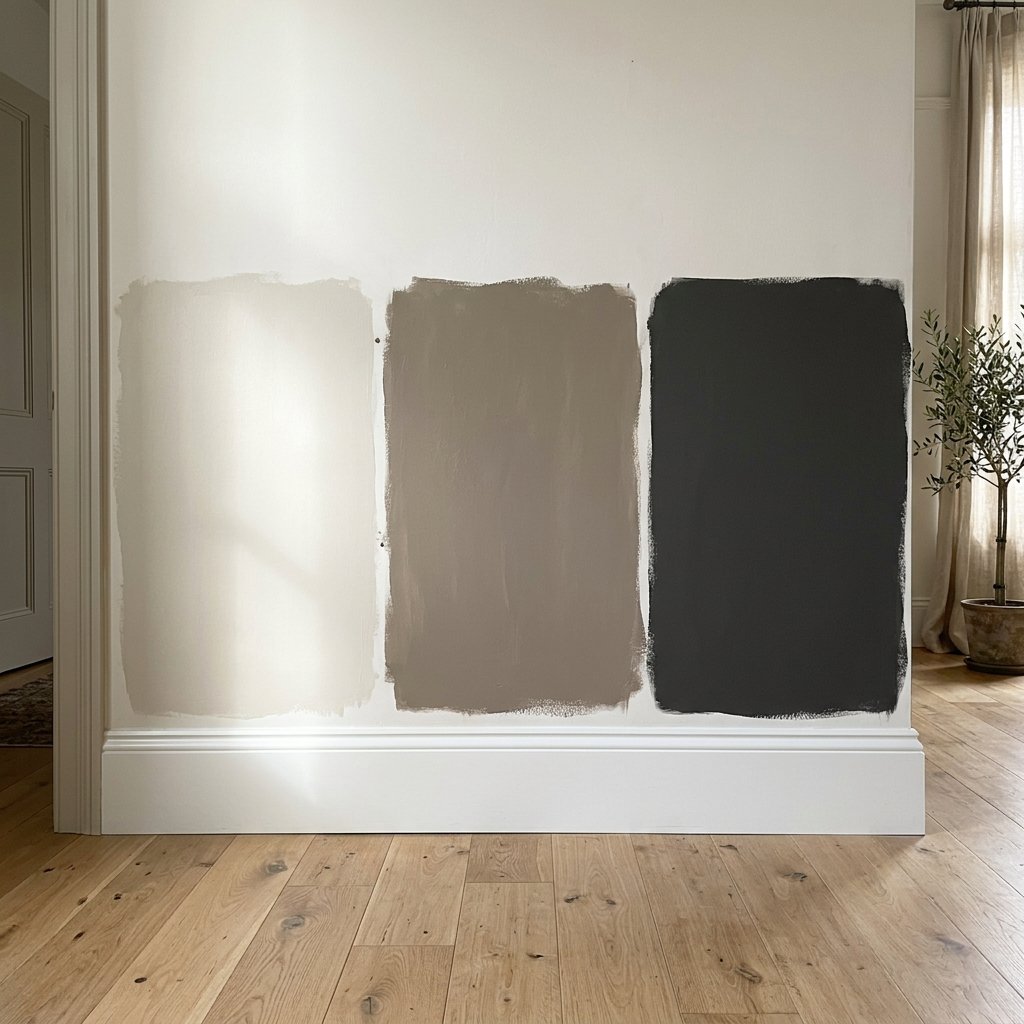
You still need to test the color.
FAQ About LRV
What does LRV stand for?
LRV stands for Light Reflectance Value.
What does LRV mean in paint?
LRV describes how much visible light a color reflects compared with how much it absorbs. Higher values indicate greater reflectance, while lower values indicate less.
Is a higher LRV lighter?
Generally, yes. Higher-LRV paint colors tend to appear lighter, while lower-LRV colors tend to appear darker.
What is a good LRV for interior walls?
There’s no universal ideal. The right value depends on the room, lighting, desired contrast, fixed finishes, and the mood you want.
What LRV is best for a dark room?
There isn’t one required LRV. A lighter color can reflect more available light, but it won’t create natural light. Warm mid-tone or even deep colors can also work beautifully in dark rooms.
What LRV is best for a small room?
Any LRV can work depending on the desired effect. Higher values may contribute to an airy look, while lower values can create a cozy, dramatic room.
Does LRV tell you the undertone?
No. LRV measures light reflectance, not whether a color has blue, green, violet, pink, yellow, or other undertones.
Can two colors have the same LRV?
Yes. Two colors with identical or similar LRVs can have completely different hues and undertones.
Does LRV change depending on lighting?
The published LRV of the color doesn’t change because you move it to another room, but the way you perceive that color can change dramatically with natural and artificial lighting.
Is LRV important for exterior paint?
It can be useful when evaluating exterior colors, and reflectance may also matter for certain building materials or manufacturer requirements. Always check applicable product specifications before painting.
Final Thoughts
So, what is LRV?
LRV stands for Light Reflectance Value, and it helps describe how much visible light a color reflects.
Higher numbers generally correspond with lighter colors.
Lower numbers generally correspond with darker colors.
That makes LRV an incredibly useful tool when you’re comparing paint colors—but it isn’t a formula for finding the perfect paint.
It doesn’t tell you whether a color will look blue.
It doesn’t tell you whether it will coordinate with your oak floor.
And it can’t tell you whether you’ll prefer a bright, airy room or a cozy, dramatic one.
Use LRV to understand the depth of a color.
Use undertones to understand how that color relates to the other finishes in your home.
Then use large physical samples to see how everything comes together in your actual lighting.
When you combine all three, choosing paint becomes much easier than relying on a tiny paint chip or online photo alone.